Category: General

Retail News Asia is committed to providing both local and global retailers with the latest General Retail news throughout the Asian market. This on a daily base.

  • Korean Government to Develop ‘Bojeong-dong Café Street’ in Indonesia

    Korean Government to Develop ‘Bojeong-dong Café Street’ in Indonesia

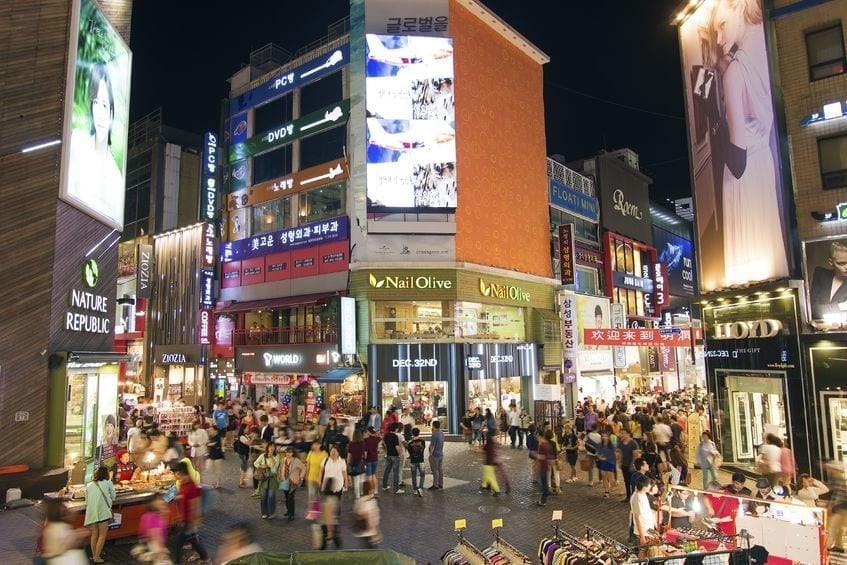
    The Small and Medium Business Administration (SMBA) announced its plans on August 3 to develop a small business K-town in Indonesia modeled after “Bojeong-dong Café Street” as a means of supporting the small business’ overseas expansion.

    The café street developed spontaneously from the mid 2000’s in the Bojeong-dong café street. Currently, total 126 stores are operating in the area of 22,000 ㎡, and small theme streets are developed in every eight alleys.

    Additionally, the SMBA announced its policy to co-operate K-culture and other by developing “small business K-town” in the peripheral region of Jakarta, around at the end of year 2018,

    For the policy, the SMBA proceeded a field investigation with Small Business Association, International Council for Small Business (ICBS Korea), Small Enterprise and Market Service (SEMAS), etc., and the Indonesian Government also has expressed a will to support the project.

    Joo Young-sup, administrator of the SMBA said, “The ultimate goal is to produce 1,000 successful similar cases until year 2020 by pushing ahead of the small business’ overseas expansion policy.”

    Categories:

  • Strong quarter buoys Matahari Putra Prima

    Strong quarter buoys Matahari Putra Prima

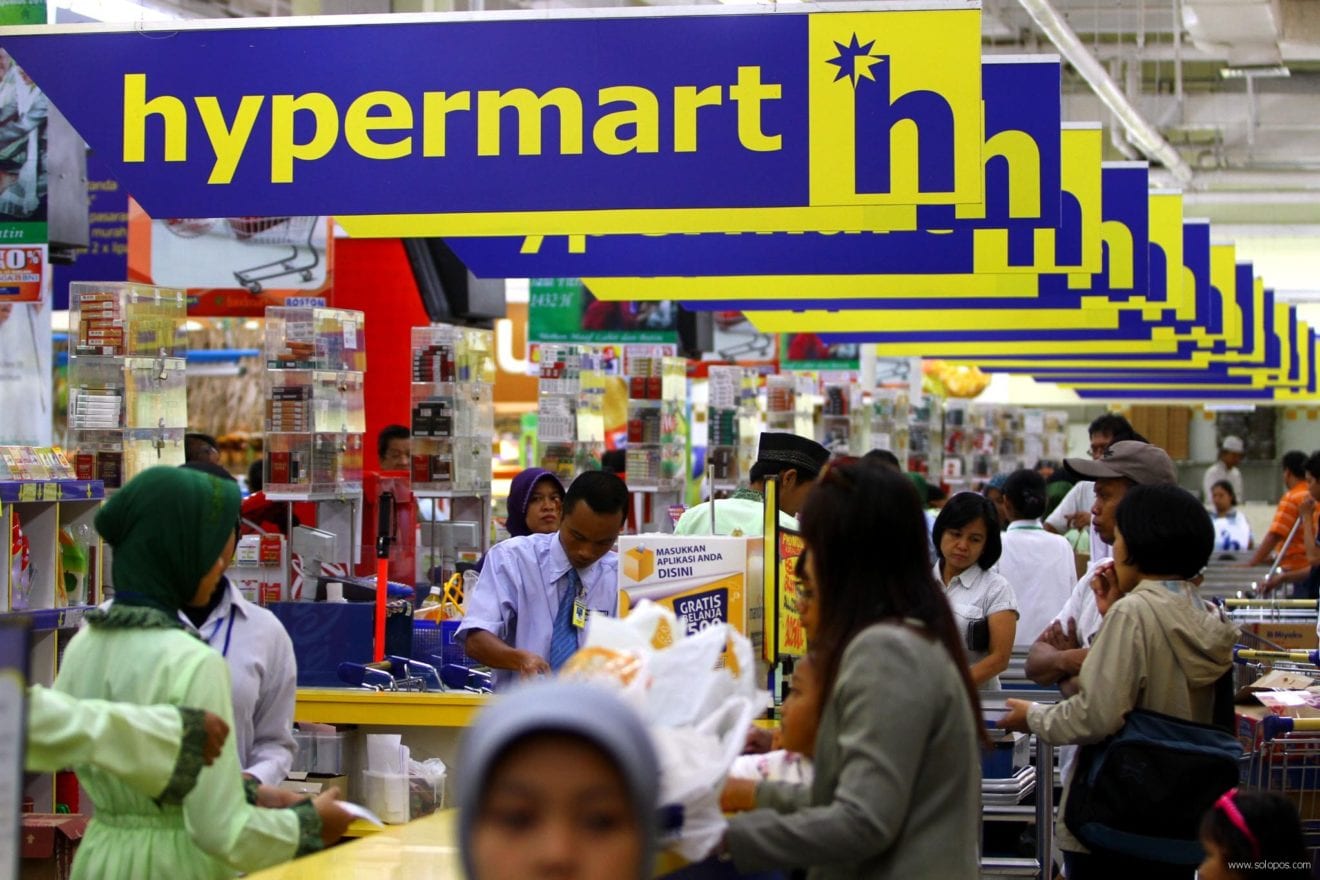
    A solid second quarter sent Matahari Putra Prima’s sales up 2.1 per cent in the first half to June 30.

    The Indonesian mixed format grocery retailer has reported net sales for the six months of Rp 7 trillion (US$560 million). Of that figure, 3.7 trillion was achieved in the second quarter, an increase of 6.5 per cent on the back of new store openings. Same store sales fell 0.3 per cent in the first half and rose 4.5 per cent in the second quarter.

    The company posted a net loss for the half of  20.7 billion ($1.66 million), after a healthy second quarter pared back a first quarter loss of 123 billion ($9.8 million).

    MPPA says its total sales growth improved from 2.1 per cent to 8.4 per cent during the first half, after the negative effects of poor economic conditions in Sumatera/Kalimantan and permanently closed stores are excluded.

    CEO Noel Trinder said second quarter sales were led by Lebaran (the two day Eid al-Fitr  holiday) and a strong performance in stores that have been renovated to the new generation G7 store format.

    “Aggressive inventory actions that negatively impacted earnings since the second half of 2015 have now finished, positioning MPPA well for future growth. We believe the resumption of growth which began in the second quarter will carry into the second half,” he said.

    “In addition, MPPA continues to exploit the future growth opportunity of new channels by increasing our shareholding in PT GEI, operator of MatahariMall.com, to 10 per cent in June.”

    As of June 30, MPPA operated 297 stores across Indonesia (112 Hypermart, 25 Foodmart, 106 Boston, 52 FMX and two SmartClub). During the first half MPPA closed three Hypermart stores (one permanently closed, one converted to Foodmart and one converted to SmartClub).

  • Indonesia joins Malaysian halal e-commerce

    Indonesia joins Malaysian halal e-commerce

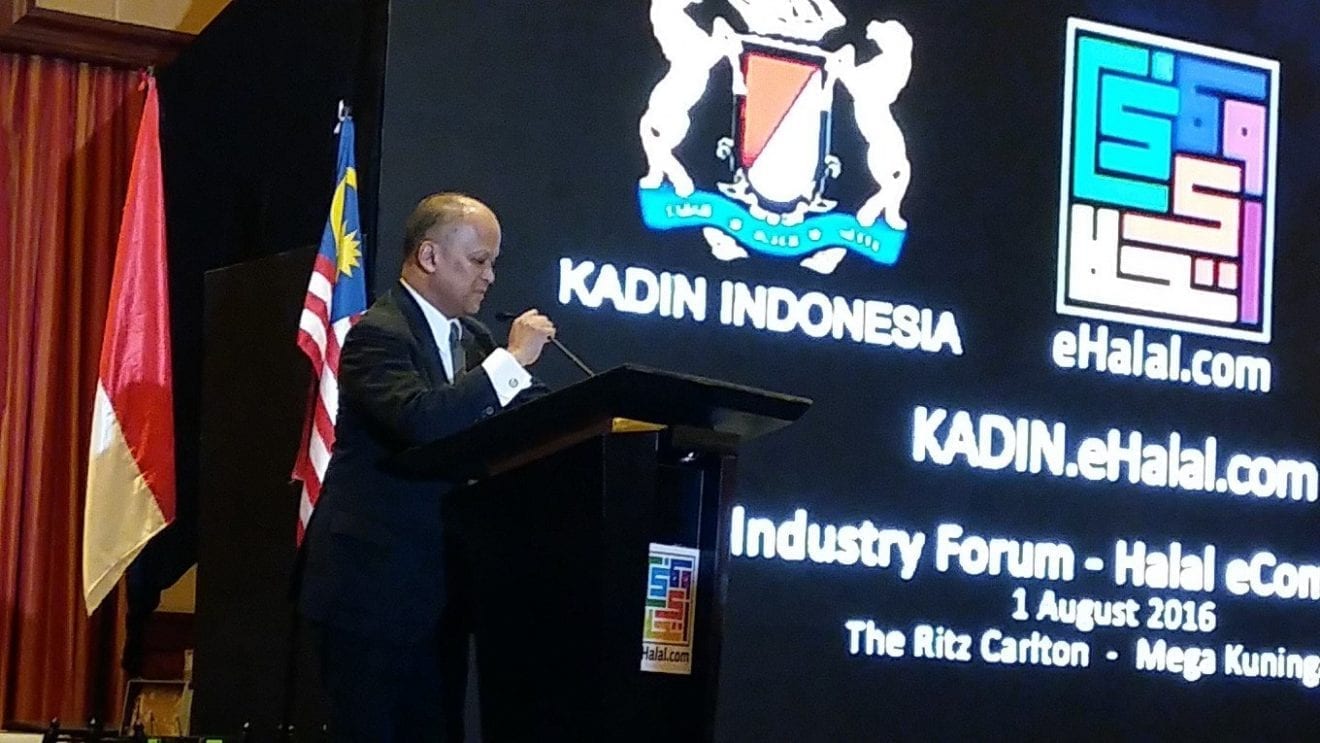
    The Indonesian Chamber of Commerce and Industry (Kadin) has joined Malaysia’s halal e-commerce website to tap into a larger international consumer base for local products, while at the same time giving local consumers easier access to imported halal products.

    The halal business sees a large market of 1.8 billion Muslims worldwide with a variety of products ranging from food, cosmetics, to pharmaceuticals. Markets for the halal business include the ASEAN region — led by countries such as Indonesia, Malaysia and Thailand, which have a large Muslim population — as well as the Middle East and North Africa.

    Now that Indonesian businesses have joined Malaysia’s e-Halal, a commerce directory portal of halal products not only from Malaysia but other countries such as China and India, Kadin chairman Roslan P. Roeslani said the country should not only be a market for halal products but also a producer and supplier.

    E-commerce platforms are becoming increasingly popular to showcase Indonesia’s potential, from big players to smaller enterprises, he added.

    Current trends show that the halal business and market will continue to grow. In 2014, the global halal market value reached US$2.3 trillion.

    “As long as there are Muslims in this world, the halal market will continue to thrive. We must see the business opportunity in this, while still upholding Islamic values,” Rosan said during an event to introduce e-Halal in Jakarta on Monday, adding that Indonesian products can be accessed through the official portal, kadin.ehalal.com.

    Malaysia’s halal industry is more developed and advanced than Indonesia’s, but the latter could still
    work to catch up and learn from Malaysia’s experiences. Indonesia’s potential is not only in food and beverage, Roslan explained, but also cosmetics, such as the popular Wardah, and fashion.

    E-Halal director Michael Teh said although most of its suppliers were Malaysian, it hoped to add Indonesian suppliers to its list from the cooperation with Kadin. E-Halal was launched in Malaysia in May and now has hundreds of products, from prawn crackers and baby food to fresh vegetables and bath salts.

    Michael said suppliers may join e-Halal for free, so long as their products are certified halal from the local issuing authority. From Indonesia, for example, products must receive halal certification from the Indonesian Ulema Council (MUI).

    “All our suppliers must be certified, and we will verify the certifications they upload. Our concept is to enable and safeguard halal suppliers to reach the world of e-commerce,” he said during the same occasion.

    Malaysian International Trade and Industry Ministry’s Halal Industry Development Corporation (HDC) CEO Dato Seri Jamil Bidin said Malaysia and Indonesia must cooperate in developing the halal industry, which holds large economic potential.

    “Amid the increasingly borderless global trade, it is important to seize opportunities and develop with sophisticated technology like e-halal,” Jamil said.

  • Thailand’s Central declares $89.6 mln tax on Big C Vietnam deal

    Thailand’s Central declares $89.6 mln tax on Big C Vietnam deal

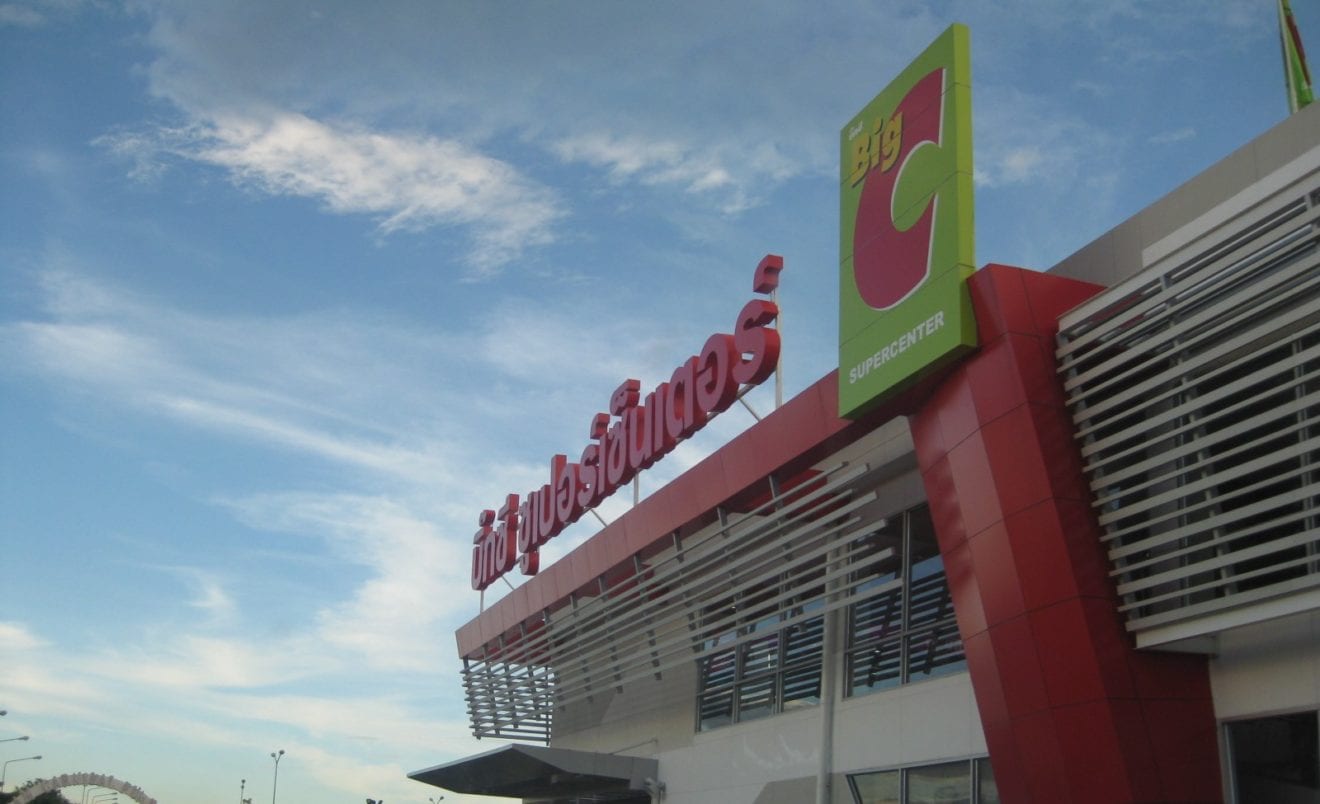
    Thai retail giant Central Group has declared around VND2 trillion (US$89.6 million) in tax on its acquisition of Vietnam’s biggest foreign-owned supermarket chain Big C, local media reported.

    Big C Vietnam, which declared the tax on behalf of its new owner, has paid VND380 billion ($17.03 million) of the amount, Tuoi Tre newspaper said on Monday, citing an unnamed source from the Ministry of Finance. The rest is expected to be collected later.

    The source did not comment on why the sum was much lower than the official estimate of VND3.6 trillion ($159 million) by the ministry’s General Department of Taxation.

    In June the department sent letters to Central Group and France’s Casino Group, the chain’s former owner, demanding them to pay tax on the $1.04 billion deal and threatening to block the ownership transfer.

    It reportedly said in the letters that the companies were far behind their tax obligation. According to the department, Vietnam’s laws stipulate that businesses have 10 days to pay taxes on the sale of their holdings after their negotiation is completed. The Big C deal was made public on April 29.

    At the end of last month, the tax authority reminded the companies of the tax again, saying they will be fined 0.05-0.07 percent per day for late payment.

    Big C is the largest foreign-owned retail chain in Vietnam with 33 supermarkets and 11 convenience stores. Many big players such as Vietnam’s largest retailer Co.op Mart, Japan’s Aeon, Thailand’s TCC and South Korea’s Lotte were interested when Casino announced its sale plan at the end of last year.

    Vietnamese electronics retailer Nguyen Kim, 49 percent owned by Central Group, also joined the Thai conglomerate in the acquisition of Big C. Their respective stakes have not been disclosed.

  • ‘Modest’ growth for Dairy Farm International

    ‘Modest’ growth for Dairy Farm International

    Pan-Asia retailer Dairy Farm International Holdings reports “modest” sales growth for the six months ended June 30.

    Underlying profit was slightly ahead as higher contributions from food, home furnishings, restaurants and China hypermarket Yonghui offset a lower contribution from the group’s health and beauty division. The group is seeing the benefits from investments made last year.

    Sales for the period, excluding associates and joint ventures, were down 1 per cent but up 2 per cent at constant exchange rates. Sales were impacted by the closure of underperforming stores in Indonesia and Singapore.

    The operating profit was stable at US$197 million, compared with $201 million in the first half of last year.

    Under pressure

    In the food division, sales within supermarkets and hypermarkets were up 2 per cent despite deflationary pressures.

    In Hong Kong, sales increased modestly but profits were impacted by higher rental and labour costs. In Indonesia and Singapore, profitability improved despite reduced sales following store closures. Sales were flat but profits lower in Malaysia, while the Philippines had good sales growth and improved profitability.

    Convenience stores in Hong Kong and Macau performed satisfactorily in a difficult trading environment, while overall sales in Singapore were flat because of the cutback in stores yet sales were positive and profits higher.

    Store expansion continued in mainland China, and there was good sales and profits growth.

    In the health and beauty division, sales improved in Hong Kong but Macau and Malaysia were behind with lower profitability.

    Like-for-like sales were positive in China, and in Indonesia “encouraging” improvements were made in sales and profits following a store rationalisation program.

    In the Philippines, good progress continues to be made on the integration of Rose Pharmacy.

    In home furnishings, Ikea performed well, producing growth in both sales and profits in its three markets. Store expansion opportunities are being pursued.

    Still expanding

    In the restaurant division, Maxim’s maintained its impressive track record with higher sales and profits in China and Hong Kong. The group is growing its presence on the mainland and continues to expand its Starbucks network in Cambodia and Vietnam.

    Yonghui reported 18 per cent revenue growth in the first half.

    In February, PT Hero agreed to sell its remaining Starmart stores in Indonesia. The transfer of the stores is expected to be completed in the fourth quarter.

    In March, the group refinanced short-term borrowings of $900 million, to be used in part to invest a further $191 million in Yonghui. This will maintain the group’s 19.99 per cent interest following the placement by Yonghui of a 10 per cent shareholding to JD.com.

    In April, Maxim’s acquired the Cova patisserie and restaurant franchise in Hong Kong, which has 10 outlets. Maxim’s also opened its first The Cheesecake Factory in Shanghai Disney Town.

    At the end of June, Dairy Farm, including Yonghui, had about 6500 outlets across all formats and employed 180,000-plus people.

    “While sales and profit performance in the first half have been encouraging in a challenging
    trading environment, the outlook remains uncertain with consumer confidence fragile in most
    Markets,” says chairman Ben Keswick.

    Incorporated in Bermuda, Dairy Farm International Holdings has its primary listing on the London Stock Exchange with secondary listings in Bermuda and Singapore. The group’s businesses are managed from Hong Kong by Dairy Farm Management Services through its regional offices. Dairy Farm is a member of the Jardine Matheson Group.

  • This Soho property boss is “on a mission” to make China town less Chinese

    This Soho property boss is “on a mission” to make China town less Chinese

    China town is getting a revamp – and it’s going to become less Chinese.

    Speaking to City A.M., the chief executive of Shaftesbury – which owns 3.2 acres of land in Chinatown – said there are too many Cantonese restaurants in China town, and he hopes to attract more varied set of restaurateurs to the heart of London.

    “We’re on a mission to bring more variety to China town – make it more pan-Asian,” CEO Brian Bickell said. “But we probably couldn’t think of a new name for it.”

    Some restaurants are also finding it difficult to bring in chefs from mainland China because of the government’s point-based immigration system, Bickell said.

    Shaftesbury is undertaking a major redevelopment scheme in area, and is talking to restaurateurs in Asia about setting up shop in the UK for the first time. Bicknell says the company is seeking out new dining brands and concepts from overseas, and wants to steer clear of the big chains that can be found on every high street in the UK.

    The development, anticipated to finish mid-2017, will open up 32,000 sq ft of retail space on Charing Cross Road and 13,500 sq ft of restaurant space facing Newport Place and Newport Court – which will become part-pedestrianised. The £14.6m scheme will benefit from the Crossrail station opening on Tottenham Court Road.

  • Indonesia Intensifies Awareness Campaign on Tax Amnesty Program

    Indonesia Intensifies Awareness Campaign on Tax Amnesty Program

    The Administration of President Joko Widodo (Jokowi) is racing against time to make its tax amnesty program a success, in order to increase the much needed state revenues.

    Officially launched on July 1, the tax amnesty program is effective from July 18, 2016 until March 31, 2017.

    The first period of its implementation is from July 18 until September 30, 2016; the second is from October 1 until December 31, 2016; and the third period is from January 1 until March 31, 2017.

    The tax amnesty program has a specific period, therefore there should be no delay in its implementation, President Jokowi was quoted as saying by new Finance Minister Sri Mulyani Indrawati recently.

    He particularly asked Finance Minister Sri Mulyani to complete all regulations on implementation of the tax amnesty.

    Regulations on the tax amnesty must be completed soon, so the program could be carried out successfully, Minister Mulyani said at the presidential palace, here on July 28, after receiving a directive by the President on the tax amnesty for officials of the tax directorate general of the finance ministry.

    The tax amnesty program is designed to be a significant incentive for taxpayers, since the compensation interest to be charged is only two percent, according to the minster.

    “We are trying, during the period from now until September, to create trust building, convenience and, finally, success in developing a tax system,” she said.

    The president asked every tax officer to not only be ready and proactive in the implementation of the tax amnesty program, but also to secure the state revenue, in general.

    For that purpose, tax officers should be honest, professional and have no conflicts of interest.

    In his directives, President Jokowi said he believed that the momentum to carry out the tax amnesty is right at present, as the public has been enthusiastic in attending the tax amnesty education sessions that have been held.

    The tax amnesty socialization activities have been well received, as the number of people attending the events were larger than those invited for the events, he explained.

    “From three socialization activities that we have carried out, I have seen huge enthusiasm from the public and businessmen. In Surabaya, 2,000 people were invited, and 2,700 people came. In Medan, it was even more. 3,000 people were invited, and 3,500 people came to the event,” the President said.

    Jokowi is scheduled to carry out the tax amnesty sessions in Makassar, Jakarta, and even Singapore in the near future.

    The Indonesian government has implemented a new tax amnesty program to boost tax revenues by encouraging the repatriation of funds stashed abroad.

    The government will impose a two to five percent tax on assets repatriated to the country by March 2017.

    These assets must be invested in Indonesia for a period of three years in funds managed by appointed banks and can be invested in several ways, including government bonds.

    The government said many rich Indonesians have parked thousands of trillions rupiah abroad to evade tax.

    At least Rp4,000 trillion of the fund are expected to be declared and Rp1,000 trillion of which would be repatriated and invested in the country.

    When launching the tax amnesty program on July 1, Jokowi urged the countrys business community, whose members had so far been stashing assets overseas, to avail the government`s program.

    “This is an opportunity that will not come again. Anyone who wishes to make use of it can go ahead and the rest should be prepared for the consequences,” the President stated.

    “So, we hope these funds are repatriated immediately. We will need Rp4,900 trillion in the next five years to develop infrastructure. The national budget can only provide Rp1,500 trillion and the rest must come from investment and businesses. There is no other alternative,” he explained.

    In the meantime, the Indonesian Police (Polri) will guarantee legal certainty and safety of tax amnesty applicants.

    Polri is supporting the governments tax amnesty program and has helped maintain the investment climate by not disturbing activities of investors already in Indonesia, the Head of Polris Crime Investigation Department (Bareskrim), Commissioner General Ari Dono Sukmanto said on July 28.

    The National Police is implementing the instructions of the President Joko Widodo and Law No. 11 Year 2016 on Tax Amnesty, to guarantee safety and legal certainty of the applicants, he added.

    Detectives should focus not only on merely finding wrongdoings of tax payers, particularly tax amnesty applicants, he remarked.

    Polri, in cooperation with several financial institutions, such as Indonesias Financial Services Authority (OJK), Bank Indonesias regional offices, and the Tax Directorate General, will issue appeals to businessmen and individuals, who have stashed their money overseas, to return their money to Indonesia and keep them in domestic banks.

    “Polri will also guarantee the secrecy of data of tax payers applying for amnesty. Those who leak the data will be punished,” he said.

    Furthermore, State-owned bank PT Bank Rakyat Indonesia (BRI) has set a target to collect funds at least worth Rp60 trillion from the tax amnesty program, through both bank and non-bank products.

    “The target would not be achieved without the dissemination of information that the BRI is ready to offer tax amnesty services to the clients and public, both in the country and overseas,” PT BRI Director Sis Apik Wijayanto noted at an event to raise awareness on the tax amnesty program in Lampung, on July 28.

    The BRI has disseminated information on its tax amnesty-related products and services across all its branches in the country.

    In Lampung Province alone, 14 branches and 97 units of BRI are ready to offer tax amnesty services, he remarked.

    The event was attended by 100 people, mostly businessmen from Lampung.

  • Indonesia, France to Boost Economic Cooperation

    Indonesia, France to Boost Economic Cooperation

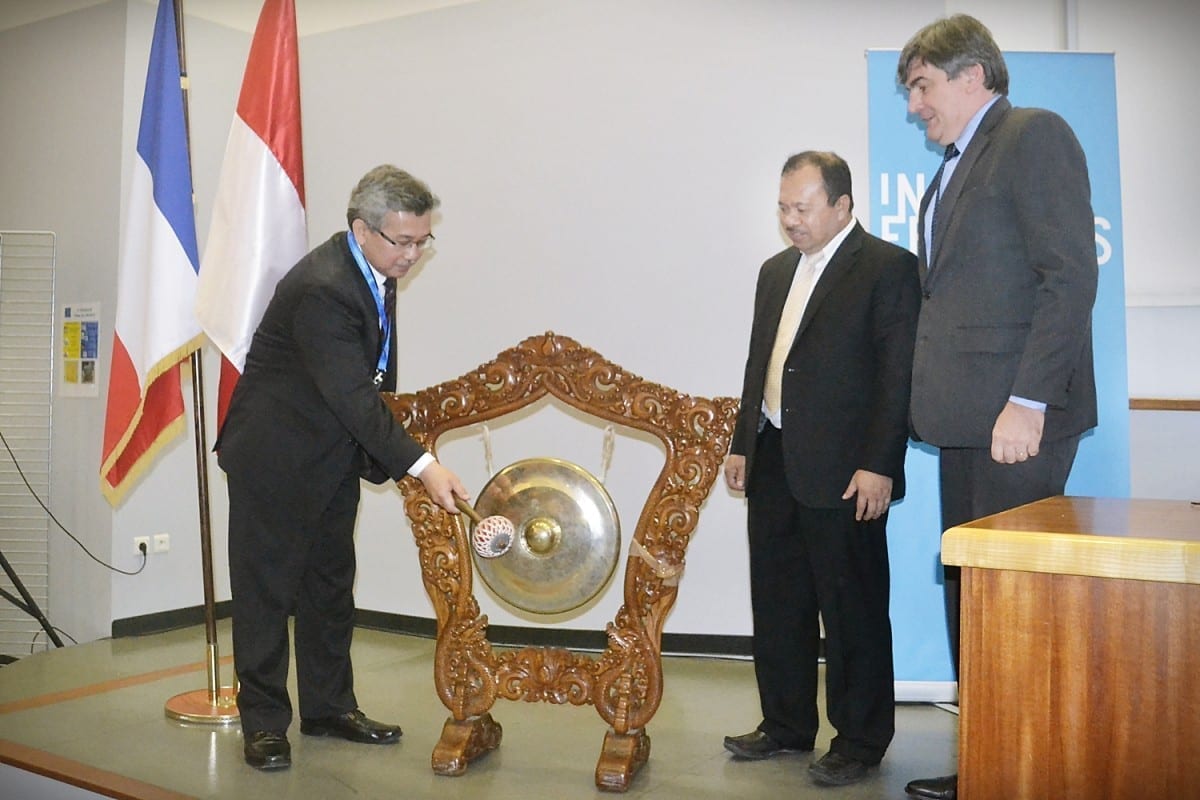
    Indonesian Coordinating Minister for Economic Affairs Nasution said Indonesia is ready to explore economic cooperation with France.

    He mentioned that France is a strategic trading partner for Indonesia.

    Nasution made the statement during a meeting with French Ambassador to Indonesia H.E. Mrs. Corrine Breuzé, on Friday, (July 29).

    “I believe that the economy of Indonesia and France are complementary. Therefore, it is important to increase economic cooperation in several sectors,” he said on Saturday (30/7).

    Based on data released by the Ministry of Trade in 2015, the total trade volume between Indonesia and France amounted to US $ 2.3 billion. This figure decreased by 9.4 percent compared to that of the previous period, which reached US $ 2.35 billion, while French investment realization in Indonesia was US $ 131.6 million for 197 projects.

    The business that is in great demand among French investors in Indonesia are among others, transportation, communications, electricity, gas, water, food industry, chemical and pharmaceutical goods sectors.

    Nasution further said the investment realization bilateral cooperation between Indonesia and France in the future could be further increased and spread particularly in ​​eastern Indonesia.

    Therefore, in order to boost the value of the investment, the Indonesian Government has made a breakthrough through a series of Economic Policy Package issued since September 2015.

    “This package contains a variety of policies ranging from streamlining the investment license, the revised negative list of investment, the acceleration of infrastructure development and more,” the minister said.

  • Korean retail sales rise

    Korean retail sales rise

    Korea retail sales rose in June according to government data measuring major department stores and discount chains.

    The government said the year-on-year increase was fuelled by more holidays.

    The combined sales of three department stores – Hyundai, Lotte and Shinsegae – increased 11.8 per cent on-year in June, while those of major discount retailers – E-Mart, Lotte Mart and Home Plus – edged up 0.9 per cent during the same period, according to the data compiled by the Ministry of Trade, Industry and Energy.

    The ministry said sales went up as the number of holidays increased by one day from a year earlier.

    Sales at convenience stores jumped 18 per cent on-year last month, boosted by “a dramatic rise in food sales”, mostly of instant food. Convenience stores have retained double-digit growth rates since the last quarter of 2014 amid rising single-person households.

    The number of single-person households was estimated at 5.06 million in 2015, 7.7 times higher than the 661,000 households of 1985, according to the report by the state-run Korea Institute for Health and Social Affairs.

    Meanwhile, sales at hypermarkets, mostly run by large retailers, slid 7.8 per cent on-year.


  • Indonesia`s economy improves

    Indonesia`s economy improves

    The central Bank of Indonesia has said that Indonesia’s economy will continuously improve, along with the stability of the economy, the continuation of fiscal stimulus, and the implementation of structural reforms.

    “In the medium-term, Indonesias economic growth will be higher, more inclusive, and more sustainable,” the Director of Economic and Monetary Policy at Bank of Indonesia, Solikin M Juhro, said here on Thursday.

    He noted the consistent implementation of structural reforms is a key to the improvement of the domestic economic outlook.

    According to Solikin, amid various external and domestic challenges, Indonesias economic performance during 2015 recorded a positive development.

    The macroeconomic stability becomes better, and the stability of the financial system has been maintained, he added.

    “After being slow, the nation’s economic growth began to increase in the second half of 2015,” Solikin said.

    He explained that such success was supported by the Bank of Indonesias policies, as well as close coordination with the government in safeguarding the economic stability, promoting economic growth, and accelerating structural reforms.

    Further, according to Solikin, the consistent implementation of structural reforms should be continued through the optimization of infrastructure developments, such as roads, electricity, and irrigation, including the development of human resources.

    “The economy of Indonesia keeps growing at a rate of 4.8 to 5.5 percent. We are able to grow above 6 percent, if we apply economy diversifications,” he added.

  • Pokemon fever too good to resist for struggling HK retailers

    Pokemon fever too good to resist for struggling HK retailers

    Major Hong Kong tourism and shopping hotspots have been rushing to cash in on the citywide Pokemon Go craze with numerous events being organised, centred entirely around the smash-hit mobile game, to reinvigorate the city’s lacklustre retail sector.

    Three park and shopping mall operators — Ocean Park, Sun Hung Kai and Swire Properties — told the Post they were in talks with Pokemon Go’s developer Niantic over potential cooperation on future campaigns themed with the augmented reality game.

    Niantic is part-owned by Japanese videogame giant Nintendo.

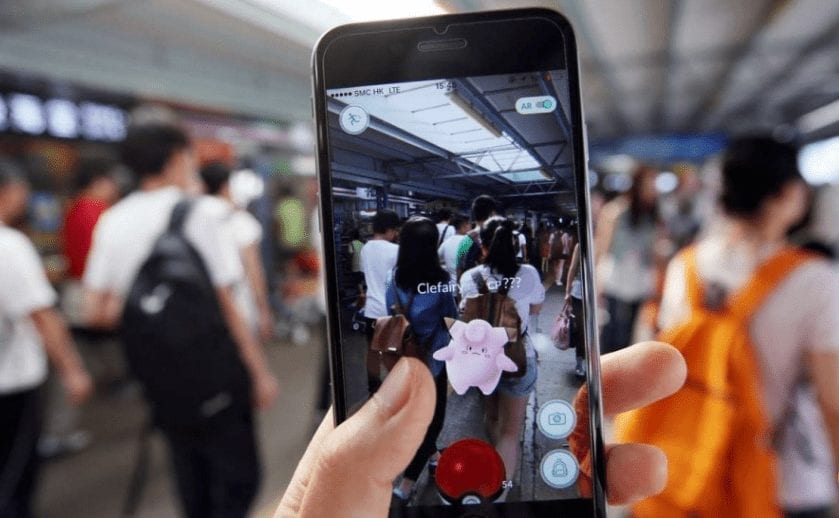
    Since its launch in the city on Monday, Pokemon Go, which allows players to use their phones’ GPS and camera to capture virtual Pokemon in the real world, has been all the rage across the city’s most bustling districts.

    “We are seeking collaboration opportunities with the game’s creator, with more details to be announced soon,” said Maureen Fung, director with Sun Hung Kai Development (China).

    “We expect to see a double digit growth in our traffic and an 8-10 per cent leap in retail sales during the Pokemon Go event period,” Fung said.

    A spokesman for SHKP’s APM mall in Kwun Tong said it had implemented more “Lure Modules” — a function that makes it easier for players to find and catch the Pokemon — around the shopping centre, and updated the whereabouts of the virtual monsters on its social media pages “on a frequent basis.”

    Fung said the developer now plans to roll out Pokemon-related events at 12 of its shopping complexes.

    The Pokemon Go mania comes as traditional retailers continue to struggle against their online counterparts, both in Hong Kong and around the world.

    Terence Chan, head of retail, Hong Kong, at real estate consultant JLL, said the sudden rush in interest offered a great opportunity for outlets to cash in.

    “It is a nice marketing tool for stores and restaurants, particularly those looking to attract youngsters,” he added.

    Another leading property developer, Swire Properties, is utilised its Facebook and Instagram accounts to help customers spot Pokemon at its three flagships Cityplaza, Pacific Place and Taikoo Place.

    “We have a large number of Pokestops and a few Pokegyms,” said a Swire Properties spokesperson.

    “Additionally, we have approached Niantic Labs for further potential collaborations.”

    Pokestops and Pokegyms are where players can train and battle their Pokemon.

    Elsewhere, six shopping arcades operated by Sino Group, including Olympian City in Kowloon and Citywalk in New Territories, are running promotions.

    While a spokeswoman for Ocean Park revealed that the 39-year-old theme park had already become involved in discussions with US-based Niantic before the game even landed in Hong Kong.

    “The talks are currently underway and may take into account issues like copyright,” she added.

    But at least one leading retail site owner said he would not be relying on luring and accommodating gamers to turnaround its fortunes.

    Chiu Kwok-hung, chairman of Fortune Real Estate Investment Trust told local media on Tuesday that his malls did not intend to join hands with Pokemon Go as “an influx of people who don’t actually shop in the malls will in turn hinder your business”.

  • ‘Pokemon Go’ boosts local businesses in Sokcho

    ‘Pokemon Go’ boosts local businesses in Sokcho

    South Korean retailers are capitalizing on the explosive popularity of Nintendo’s augmented-reality mobile game “Pokemon Go” with new products and services targeting local Pokemon game enthusiasts and fans.

    From a sudden rise in consumer spending at select Pokemon-appearing cities in Korea to the launch of Pokemon-inspired hotels, tour packages and goods, the smash-hit game appears to be leaving a notable imprint on the local retail sector.

    Pikachu is surrounded by children during a Pokemon festival in Tokyo on July 18

    “Pokemon Go,” produced jointly by Nintendo and U.S.-based Google spinoff Niantic, Inc., is a GPS-based mobile game that has users running through real-life locations to discover and collect virtual monsters, such as the all-famous Pikachu, via their smartphones.

    Though the game has yet to officially launch in Korea, it has been operational in parts of the country, including Sokcho of Gangwon Province since mid-July and most recently parts of Ulsan and Busan, where the game’s GPS signal is active due to technical glitches.

    Eager to play, thousands of avid Pokemon fans here have been flocking to such locations in the past few weeks, boosting business at local retailers in the region and prompting online retailers to introduce an array of Pokemon-inspired products.

    A sign welcoming Pokémon Go players hangs inside at a convenience store inside Sokcho, Gangwon Province, one of the few cities in Korea where the mobile game is active.

    Among the biggest beneficiaries are convenience stores in Sokcho which have been enjoying a sudden sales boom thanks to peaking demand for cell phone battery charging services as well as portable battery chargers.

    CU, the nation’s top convenience store operated by BGF Retail, said its outlets in Sokcho saw their sales from July 11-17 almost double compared to the previous week, thanks to the legions of “Pokemon Go” players in the area.

    During the period, sales of “battery charging” services at CU stores in Sokcho rose by 388 percent from the week before while sales of small electronic devices including portable batteries and earphones rose by 82.4 percent, BGF Retail said.

    A smartphone case featuring Pikachu on sale at Gmarket (Gmarket)

    Game players in Sokcho have been frequenting convenience stores in the area to rest and stock up on necessities such as ice, ice cream and water to fight the summer heat as well, boosting the stores’ daily sales, a CU official said.

    Joining other smaller businesses which have embraced unique forms of “Pokemon Go” marketing, discount supermarket chain E-mart’s Sokcho branch said it has begun offering free ice water to “Pokemon Go” players who capture a Pokemon on its premises.

    Targeting Sokcho-bound travelers, scores of mobile-commerce companies including Ticket Monster, 11st Street, Gmarket and Auction began organizing day-trip bus services from Seoul to Sokcho starting from July 12.

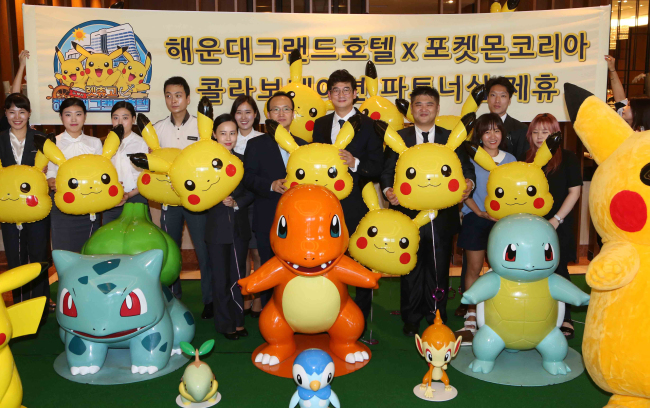
    The Haeundae Grand Hotel in Busan and Pokémon Korea celebrate their partnership during a ceremony held at the hotel on July 21. The hotel is offering diverse Pokémon-themed rooms, merchandise and eateries this summer as part of its joint promotion with Pokémon Korea.

    Meanwhile in Busan, the beachside Haeundae Grand Hotel has partnered with Pokemon Korea Co., in charge of all Pokemon merchandising in Korea, to offer specialized Pokemon-themed rooms, merchandise and eateries that tug at the hearts of local fans.

    Reflecting Pokemon’s resurgent appeal, sales of Pokemon-related toys, stationery and mobile accessories have surged as well. 11st Street saw sales of Pokemon items during July 11-17 rise by 57 percent compared to the previous week while Ticket Monster said sales of such products rose by 211 percent during the same time frame.

    Online retailer 11st Street is even holding a promotional event inspired by “Pokemon Go” — dubbed the “11Mon Go,” in which users can find and collect “11Mon” character while shopping on the website. Those who collect all the characters are eligible for prizes including round-trip bus tickets from Seoul to Sokcho, according to 11st Street.

  • ‘Pokemon Go’ catapults c-store sales in Korea

    ‘Pokemon Go’ catapults c-store sales in Korea

    Convenience stores in some areas in South Korea are enjoying a boom in sales brought by the latest mobile game craze ‘Pokemon Go’.

    ‘Pokémon Go’, an augmented reality app developed by Niantic, requires players to walk around and catch creatures called Pokémon using one’s smartphone.

    The hit game is not yet available in the country but a technical glitch made it accessible in a few locations such as Sokcho, Ulsan, and Busan driving people to flock to these areas, according to The Korea Herald.

    Top South Korean c-store operator CU reported that its outlets in Sokcho saw a jump in sales notably in battery charging services which rose by 388 percent and mobile accessories such as portable batteries and earphones by 82.4 percent.

    A rise in demand for ice cream and cold beverages due to summer heat has also been seen so the Sokcho branch of retail chain E-mart offers free ice water, as part of its marketing campaign, to ‘Pokémon Go’ players who can catch Pokémon creatures on its premises.

    Travel agencies, hotels, and retailers selling Pokémon merchandise are also cashing in on the game phenomenon.

  • 7-Eleven, Amazon UK test drone deliveries

    7-Eleven, Amazon UK test drone deliveries

    On opposite sides of the Atlantic, two major global retailers are testing delivery by drone.

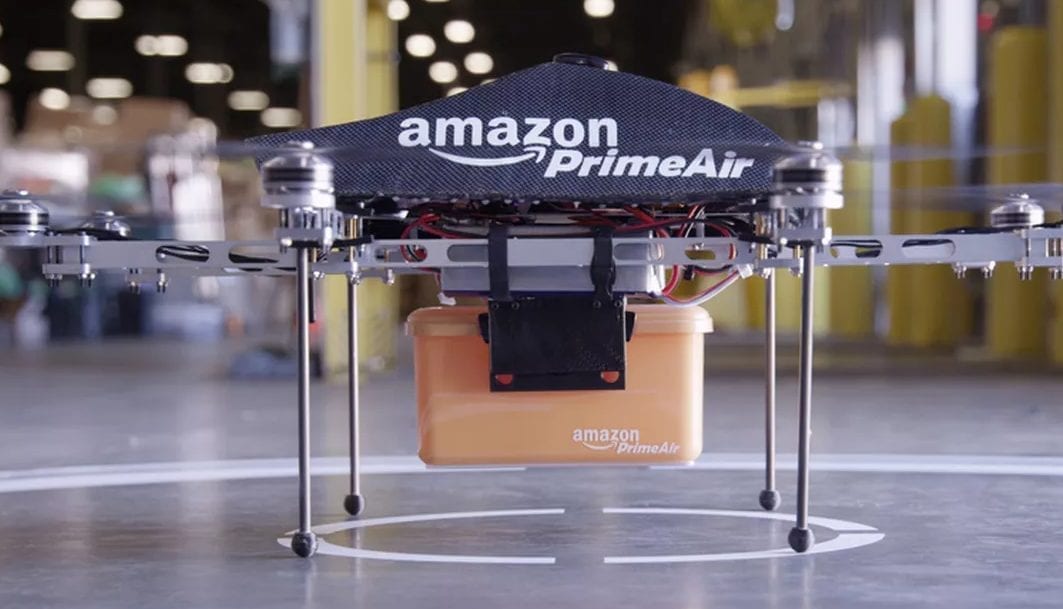
    In the UK, eCommerce giant Amazon has partnered with the government to test some aspects of its drone delivery parameters.

    And in the US, 7-Eleven has partnered with Flirtey, an independent drone delivery service, to complete the first fully autonomous delivery to a customer’s residence to advance research toward integrating drones into the US national airspace system.

    The Amazon tests include piloting the machines beyond the line of sight of its operators, testing sensor performance to make sure the drones can identify and avoid obstacles and flights where one person operates multiple highly-automated drones are to begin immediately with the support of the UK Civil Aviation Authority.

    Amazon drone

    “The UK is a leader in enabling drone innovation; we’ve been investing in Prime Air research and development here for quite some time,” said Paul Misener, Amazon’s VP of Global Innovation Policy and Communications.

    “This announcement strengthens our partnership with the UK and brings Amazon closer to our goal of using drones to safely deliver parcels in 30 minutes to customers in the UK and elsewhere around the world.”

    Amazon’s Prime Air is a future delivery system designed to safely get packages up to 2.5kg to customers in 30 minutes or less using small drones.

    Amazon and the UK government said the partnership will enable them to understand how drones can be used safely and reliably in the logistics industry. It will also help identify what operating rules and safety regulations will be needed to help move the drone industry forward.

    “Using small drones for the delivery of parcels will improve customer experience, create new jobs in a rapidly growing industry, and pioneer new sustainable delivery methods to meet future demand,” said Misener.

    “The UK is charting a path forward for drone technology that will benefit consumers, industry and society.”

    Meanwhile, in Reno

    Meanwhile, at a Reno, Nevada 7‑Eleven store, two deliveries were successfully completed.

    The 7-Eleven drone delivery is the first time a US customer has received a package in their home via drone. The delivery coincides with the celebration of the convenience store chain’s 89th birthday.

    https://www.youtube.com/watch?v=_sysBQ5-tZA


    “This delivery required special flight planning, risk analysis, and detailed flight procedures ensuring residential safety and privacy were equally integrated,” said Chris Walach, director of operations for Nevada Institute for Autonomous Systems (NIAS).

    7‑Eleven merchandise – including hot and cold food items – were loaded into a unique Flirtey drone delivery container and flown autonomously using precision GPS to a local customer’s house. Once at the family’s backyard, the Flirtey drone hovered in place and gently lowered each package.

    The purchases were delivered to the family in the span of a few minutes. Products included Slurpee drinks, a chicken sandwich, donuts, hot coffee and 7-Select candy.

    In the future, both companies expect drone packages to include “everyday essentials” such as batteries and sunscreen.

    The deliveries also mark Flirtey’s largest commercial relationship to date and bring the drone delivery startup even closer to its vision of reinventing the delivery process for humanitarian, online retail and food delivery industries.

    Building on this initial collaboration, the two companies have plans to expand drone delivery tests and work closely together, according to 7‑Eleven EVP and chief merchandising officer Jesus Delgado-Jenkins.

    “Drone delivery is the ultimate convenience for our customers and these efforts create enormous opportunities to redefine convenience. This delivery marks the first time a retailer has worked with a drone delivery company to transport immediate consumables from store to home. In the future, we plan to make the entire assortment in our stores available for delivery to customers in minutes,” he said.

  • Spar International Expands to Mongolia

    Spar International Expands to Mongolia

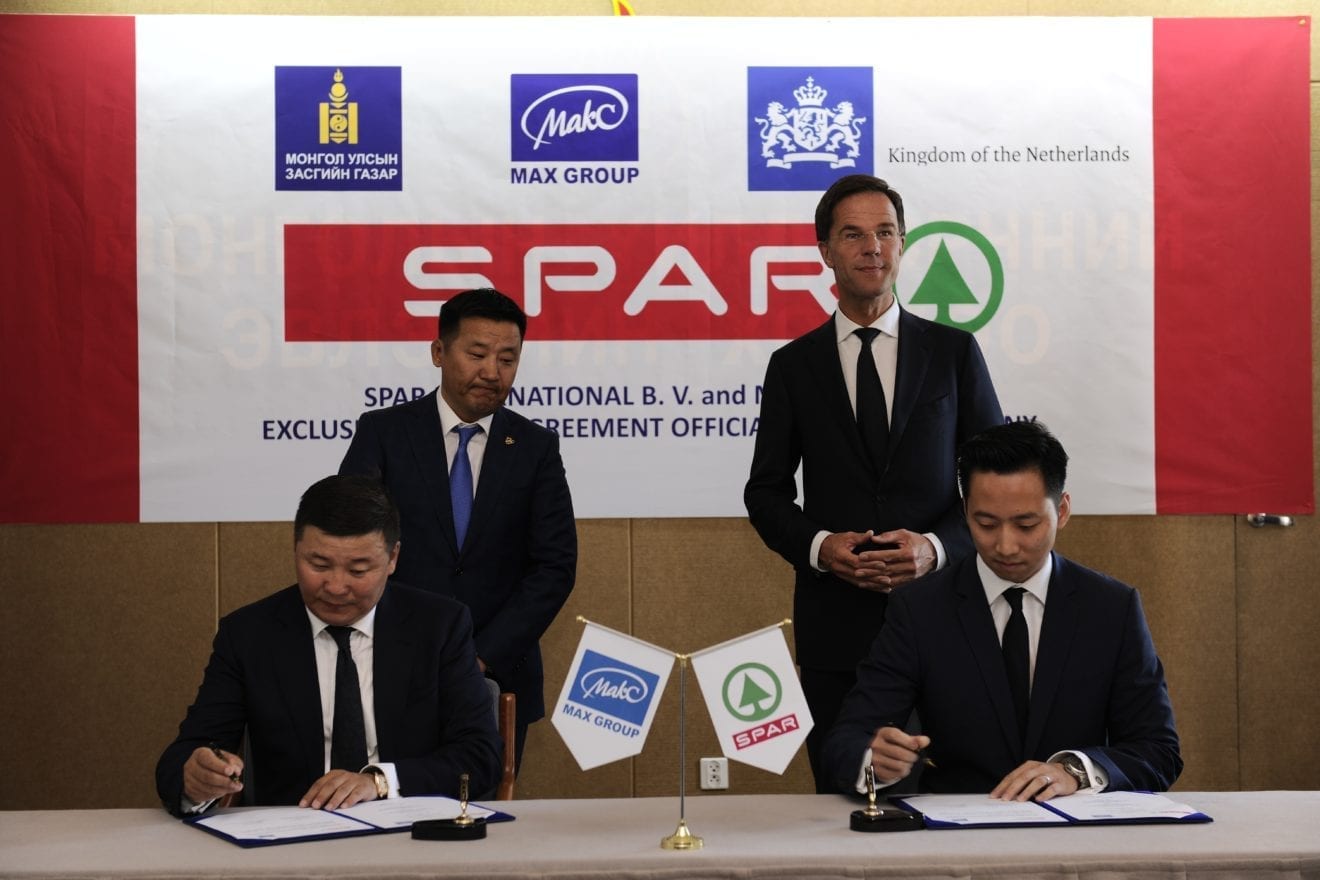
    SPAR, the world’s largest food retail voluntary chain, has announced a new partnership with conglomerate Max Group LLC, to open its first stores in Mongolia. The partnership, which will see up to 60 SPAR-branded multi-format stores in Mongolia by 2020, was made at an official signing ceremony which took place during the visit of the Dutch Prime Minister, Mark Rutte, to Mongolian capital Ulaanbaatar. 

    Max Group is one of Mongolia’s leading retailers operating the existing chain of Max Food Supermarkets.  The new partnership will see these stores transfer to the SPAR brand, and the opening of new SPAR supermarkets from 2017 onwards. The Netherlands-based SPAR International reported global retail sales in 2015 of €33 billion from over 12,100 stores across four continents. Mongolia brings to 43 the number of countries where SPAR has operations globally.

    Prime Minister Rutte was visiting Mongolia to attend the 11th Asia-Europe Meeting (ASEM) Summit and to promote trade with the Netherlands in the region. Speaking at the signing of the contracts between SPAR and Max Group, the Prime Minister Rutte, said, “It is greatly encouraging to see a company like SPAR, which started as a partnership of Dutch retailers and wholesalers more than 80 years ago, helping bring retail best practice to the Mongolian marketplace.”

    SPAR International Managing Director, Tobias Wasmuht said “SPAR is delighted to be launching in Mongolia in partnership with the Max Group.  We see Mongolia as a dynamic and rapidly developing consumer market with a growing demand for modern world class food retail. We are highly confident that we can build on our strong presence in the region by leveraging our scale with the SPAR operations in neighbouring Irkutsk, Russia and Inner Mongolia, China. This collaboration combined with our modern retail formats, supply chain and international sourcing as well as investing in the training and development in people locally will act as a significant support structure for the growth and development of SPAR in Mongolia. I would like to take the opportunity to thank the Ministry of Foreign Affairs of the Netherlands who were instrumental in facilitating the partnership between SPAR and the Max Group.” 

     Max Group LLC is a family business established in the 1990s which has a wide variety of operations and business interests including supermarkets, fast food restaurants, department stores, real estate, precious metal mining and is the country’s largest dairy producer and milk bottler. Max Group LLC already employs over 2,500 people in Mongolia. Max Group President, Ganbaatar Dagvadorj said “Bringing the words leading retail chain, SPAR, to Mongolia is not just beneficial to Max Group it is a big opportunity for Mongolia as well and I am very excited about this partnership. Max is dedicated to bringing the SPAR’s commitment to excellence in fresh, passion for quality, outstanding service and exceptional value to consumers in Mongolia.”