Category: Living

Retail News Asia is committed to providing both local and global retailers with the latest Living news throughout the Asian market. This on a daily base.

  • ‘Deadpool’ boosts Fox earnings

    ‘Deadpool’ boosts Fox earnings

    group 21st Century Fox, most of which is being sold to Walt Disney Co., on Wednesday topped earnings expectations with help from the latest film devoted to anti-hero Deadpool.

    The company reported a profit of US$4.48 billion (RM18 billion) in the fiscal year that ended June 30, compared with net income of US$3 billion (RM12 billion) the previous year.

    It credited tax reform in the United States with giving it an accounting gain of US$1.5 billion (RM6 billion) at the end of 2017.

    The company’s film studio, 20th Century Fox, boasted of winning Academy Awards for six movies – including a best picture Oscar for The Shape of Water – and said it ended the year with “the strong theatrical success” of Deadpool 2.

    The sequel, starring an unkillable, potty-mouthed super hero from Marvel Comics, grossed more than US$730 million (RM3 billion) at theater box offices worldwide, according to the earnings report.

    Revenue for the recently-ended fiscal year increased seven-percent to $30.4 billion (RM124 billion), the company said.

    Adjusted earnings for the company were in line with analyst expectations. Fox shares were down a fraction of a percent to US$45.42 (RM185) in after-market trades.

    The company said its profit in the final fiscal quarter was US$925 million (RM3.8 billion) on revenue that was up 18% from the same period a year earlier.

    “As we move closer to combining our businesses with Disney and establishing new Fox, we are convinced that the paths we are creating for our iconic businesses will drive enduring and growing value for our shareholders,” executive chairmen Rupert and Lachlan Murdoch said in the earnings release.

    A media-entertainment megadeal enabling Disney to take over a large part of the Murdoch family’s 21st Century Fox empire moved a step closer to fruition last month when shareholders of both firms approved the tie-up.

    The US$71.3 billion (RM291 billion) deal – which must still get past regulators – will give Disney prized assets being sold by Rupert Murdoch’s group, including the Fox studios in Hollywood and important film and television production operations.

    US cable and entertainment group Comcast has been in a bidding war with Fox for British-based pay TV group Sky, of which Fox already owns 39%.

    The big media-entertainment firms are pursuing deals as they seek to slow the rise of streaming media platforms like Netflix and Amazon, and prepare for the entry into the sector of Silicon Valley giants like Google and Facebook.

  • Wutopia Lab has transformed Building 25 of the Sinan Mansions in Shanghai into Bookstore

    Wutopia Lab has transformed Building 25 of the Sinan Mansions in Shanghai into Bookstore

    Chinese design house Wutopia Lab has converted a multi-story house in Shanghai into a bookstore which provides “a space for learning and thinking” for city-dwelling public.

    The project – Sinan Books: Shanghai Sanctum – was commissioned by Shanghai Century Publishing Group and Yongye Group in Building 25 of the Sinan Mansion.

    The design team envisioned the store “as a person with a system of acquiring knowledge while discovering oneself and the surrounding”.

    The entrance level of Building 25 is set on the second floor which features a cafe, an area for literature and the public and an “intimate Sinan living room”. On the floor above, there is an area focused on art, a peaceful Sinan music room and flexible spaces that can host exhibitions, book club events, and small concerts.

    “It’s a perfect place to experience the charm of art,” explained the Wutopia Lab design team.

    On the fourth floor, a writer’s study “symbolises the bookstore’s thoughts”.

    “Small cultural saloons will be held here; it’s a place for conversations and debates.”

    A basement was conceived as the bookstore’s ‘sub-consciousness’, hosting a collection of history and philosophy books. Here, a labyrinth made of bookshelves offers visitors their own space. On the west side of the labyrinth is a special selection from the London Review Books, a sister bookstore of Sinan books, while on the east side, a large study room features a central table displaying creative product design.

    Spaces underneath the building’s two staircases are used to create two reading rooms for individuals and pairs. The underused south patio was redesigned into a flower porch, using planters to create a vivid backdrop for the bookstore.

    The Wutopia Lab team says it believes a monochromatic colour scheme cannot sufficiently depict the diversity of the period.

    “Colour has always been closely related to people’s feelings and emotions. Relating Sinan Books to a human body, its color should be a perceived colour, experienced in relation to the light of the day as well as one’s mental state at a given moment.”

    The store’s entrance features a red arcade, indicating Sinan books’ attitude of openness. Different hues of green offset the exhibition spaces, while the gold of the reading room offers “a hidden surprise”.

    To view the full pictures, check the gallery below (5 images) :

    • Images copyright Wutopia Lab.
  • Jeju Air net profit rises 10 percent in second quarter

    Jeju Air net profit rises 10 percent in second quarter

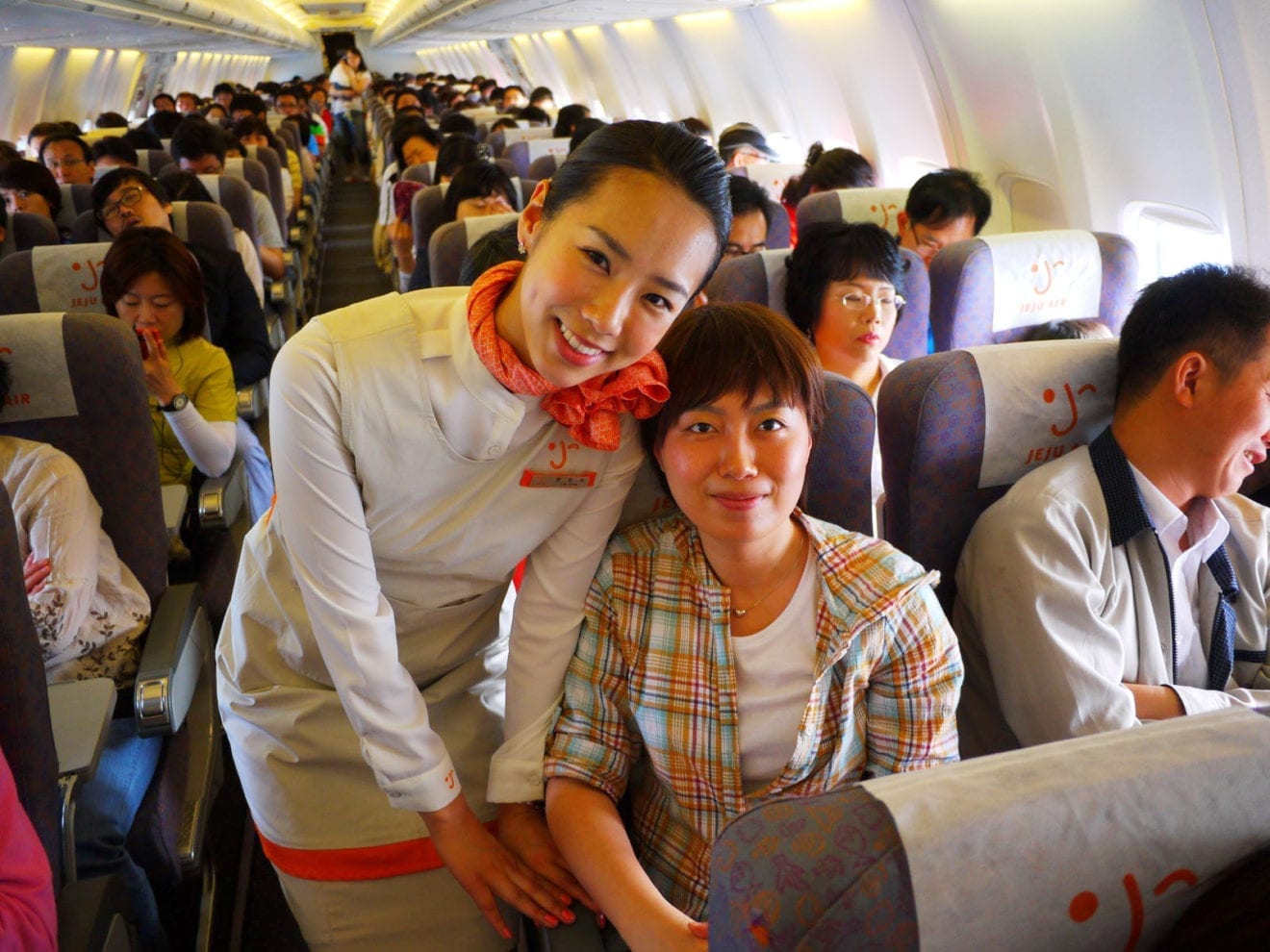
    Jeju Air, Korea’s biggest low-cost carrier by sales, said Tuesday its second-quarter net profit rose 10 percent from a year earlier, helped by oil and currency hedging plans.

    Net profit for the three-month period that ended in June climbed to 16.83 billion won ($15 million) from 15.27 billion won a year earlier, the company said in a regulatory filing.

    “The company has hedged on oil prices and major settlement currencies due to its heavy exposure to volatility. The move helped it secure a certain level of profitability in the past quarter,” the airline said in a statement.

    But operating profits fell 28 percent to 11.63 billion won in the April through June period from 16.18 billion won a year ago. Sales were up 24 percent to 283.26 billion won from 228 billion won during the same period last year, it said.

    An increase in jet fuel prices and a decreased number of holidays had an impact on the quarterly operating income, the statement said.

    For the first half of 2018, net profit jumped 66 percent to 53.77 billion won vis-a-vis 32.31 billion won in the previous year. Operating income climbed 34 percent to 58.06 billion won in the first half from 43.41 billion won a year ago. Sales rose 26 percent to a record 591.84 billion won from 468.2 billion won.

    Looking ahead, Jeju Air said it is on track to achieve sales of over 1 trillion won this year on the back of a strengthened fleet and profitable routes.

    The budget carrier plans to expand its fleet to 39 B737-800NG planes by the end of this year from the current 34.

  • Grab Raises $1b to Expand in Indonesia, Eyes More Funds

    Grab Raises $1b to Expand in Indonesia, Eyes More Funds

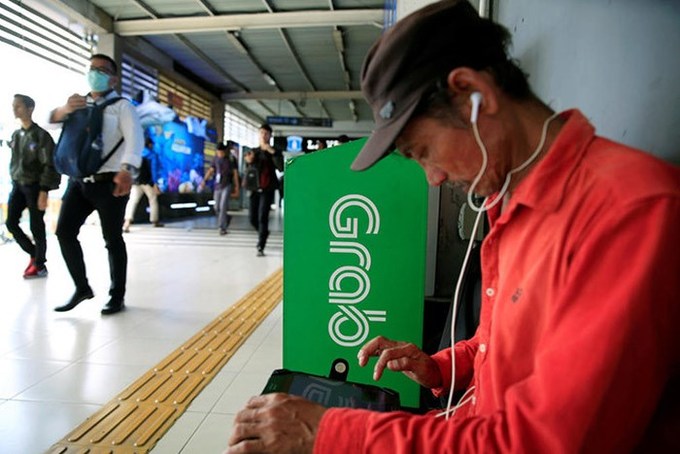
    Singapore-based Grab said on Thursday (02/08) that it has secured $1 billion in fresh funding and will consider raising further cash, as the ride-hailing firm aggressively expands in Indonesia, Southeast Asia’s biggest economy.

    The latest fundraising comes less than two months after it secured $1 billion from Toyota Motor Corp and values the six-year-old startup at around $11 billion, a source close to the company said.

    The firm was valued at around $6 billion earlier this year when it bought Uber Technologies’ regional operations.

    “We will continue opening the financing for certain investors that we think will add value,” Grab president Ming Maa said on Thursday, declining to give any funding target.

    He added that Grab was seeing significant demand from investors globally, both financial and strategic.

    The latest funding in Grab came from global asset manager OppenheimerFunds, China’s Ping An Capital, Microsoft Corp co-founder Paul Allen’s Vulcan Capital, Macquarie Capital and Lightspeed Venture Partners, among others.

    Grab already counts deep-pocketed investors such as Chinese ride-hailing firm Didi Chuxing and Japan’s SoftBank Group Corp among its backers.

    It plans to use the new funds to expand its online-to-offline services, and invest a major portion of the proceeds in Indonesia, as competition heats up with Indonesian rival Go-Jek that is plotting an expansion to Singapore, Vietnam and Thailand.

    Grab said it had earmarked Indonesia, an emerging battleground for technology firms looking to serve a population of over 250 million people, as a priority market.

    The ride-hailing firm is also seeking to transform itself into a consumer technology group, offering services such as digital payments and food delivery.

    Maa said parts of Grab’s business, including transportation, were already profitable in some markets, and an initial public offering was not a focus for the company in the short term.

    Ride hailing services in Southeast Asia are expected to surge to $20.1 billion in gross merchandise value by 2025 from $5.1 billion in 2017, according to a Google-Temasek report.

  • Korean Air launches new route to Boston with Delta

    Korean Air launches new route to Boston with Delta

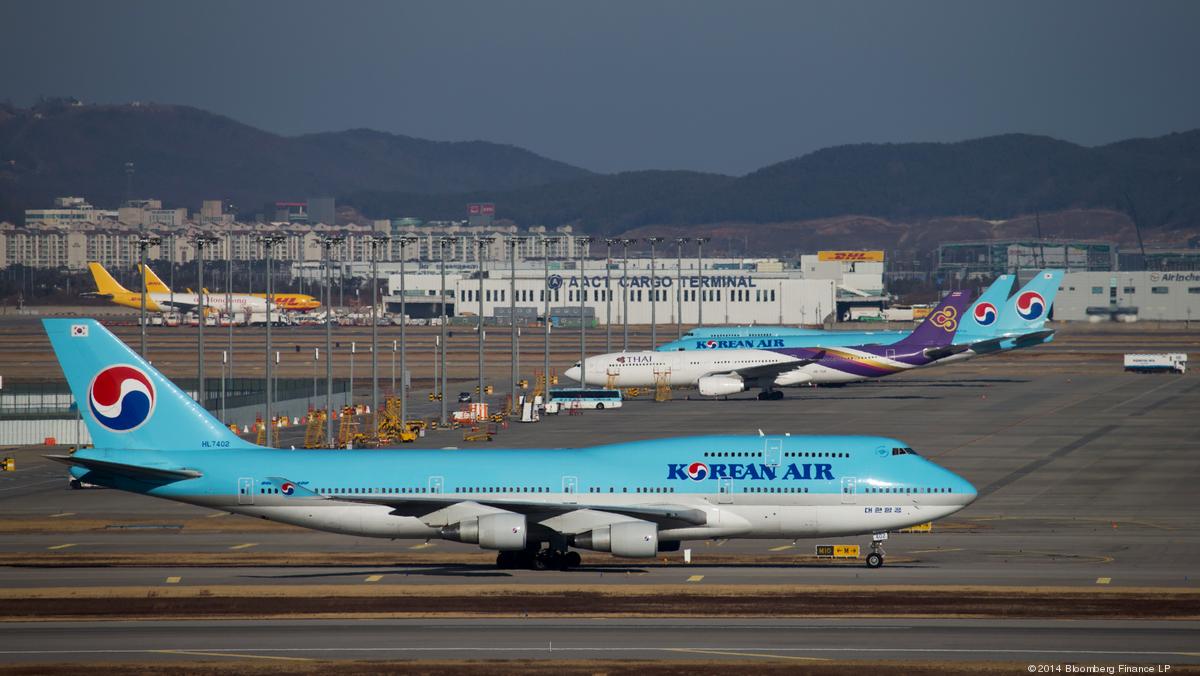
    Korean Air Lines, the country’s flag carrier, said Monday it will open a new route to Boston in April next year as part of a joint venture with Delta Air Lines.

    Korean Air plans to use Boeing 787s to provide five flights per week on the Incheon-Boston route, beginning April 12, the company said in a statement.

    Delta Air will allocate its Boeing 777-200ER to serve on the Incheon-Minneapolis route on a daily basis from April 2.

    On May 1, the two airlines launched a joint business that permits Korean passengers to use multiple routes when traveling to the United States by taking flights from either Korean Air or Delta Air.

    The partnership has allowed local travelers to fly on 370 routes to 192 cities in the U.S. since May. Until April, Korean Air customers leaving the country could only enter the United States for travel or business trips at a handfuls of airports.

  • Vietnam government likely to sell stake in PV Oil next year

    Vietnam government likely to sell stake in PV Oil next year

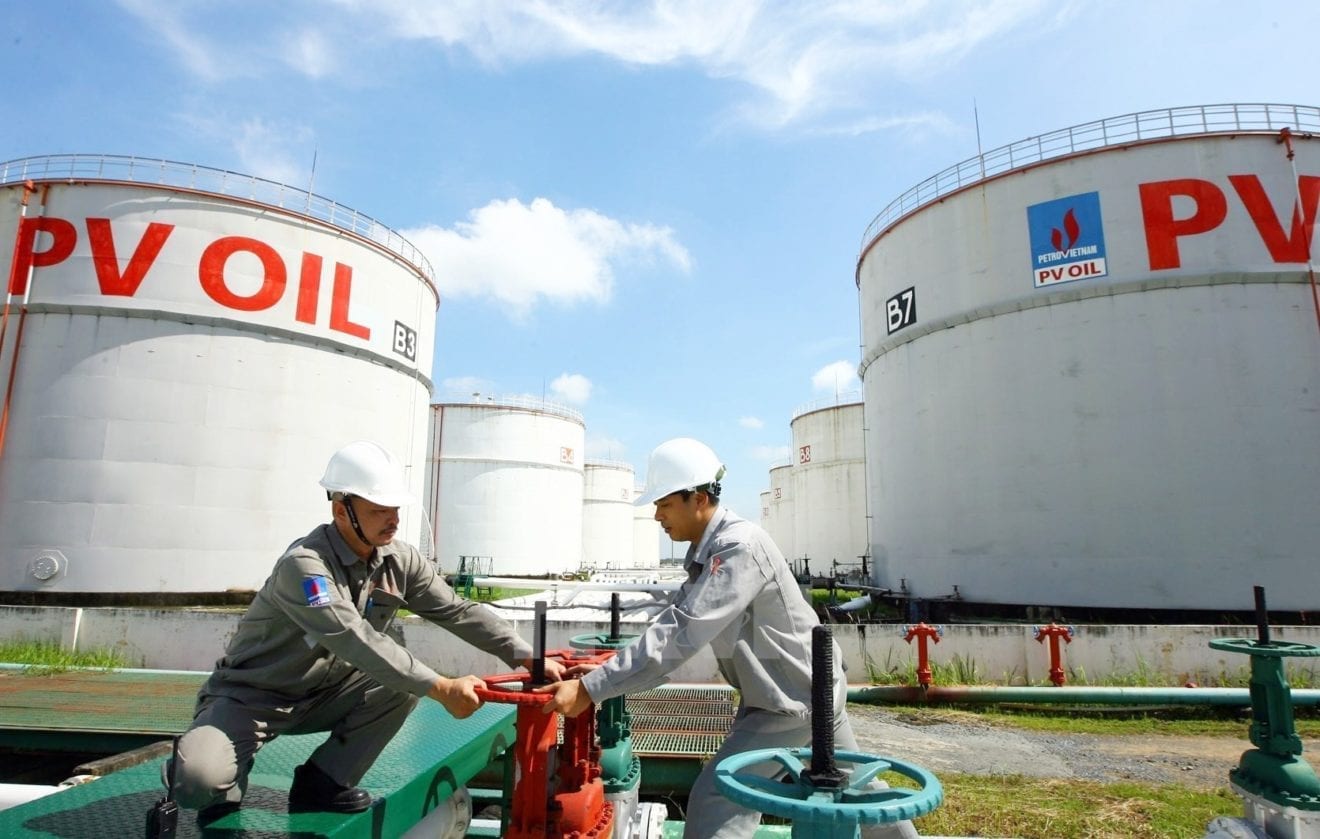
    The government is expected to reduce its stake in PV Oil, a major trader of crude oil and petroleum products, to 35.1 percent in 2019 from the current 80.52 percent.

    CEO Cao Hoai Duong told shareholders at the annual general meeting on July 30 that the firm is now seeking guidance on the foreign ownership cap.

    “After a maximum of 45 days from this meeting, we will send our proposal to state authorities. We will convince authorities to set the ceiling at 49 per cent,” he said.

    Last December PV Oil announced plans to sell a 44.72 per cent stake to foreign strategic shareholders.

    This aroused much interest among potential investors, including South Korea’s SK Energy, Japan’s Idemitsu, private lender HDBank, and multi-sector private group Sovico Holdings.

    They made bids to buy 2.78 times the number of shares PV Oil was offering.

    However, PV Oil’s proposal for a four-month extension of the strategic sales process to July 31 was rejected by the government.

    Foreign investors now own 6.62 percent of the company.

    The company held an IPO last year, and Duong said the earliest it is likely to list on the Ho Chi Minh stock exchange is 2019.

    Its shares are traded now on the Unlisted Public Company Market or UPCoM.

    At the AGM, shareholders approved a new board of directors for 2018-2023 made up of seven members – five from state-run PetroVietnam, one independent member and one representing other shareholders, Tran Hoai Nam, who is also deputy CEO of private carrier Vietjet Air.

    Duong said expanding to achieve 35 per cent market share in petroleum retail sales through mergers and acquisitions remains PV Oil’s long-term strategy.

    It now has 611 gas stations and a 22 per cent market share.

    Its major competitor, Petrolimex, has around 2,500 gas stations and about a 50 per cent share.

    Duong said quick divestment by the government would help the firm achieve its expansion ambitions more easily.

    PV Oil’s IPO fetched the government VND4 trillion ($172 million).

  • AirAsia bullish on Indonesian market

    AirAsia bullish on Indonesian market

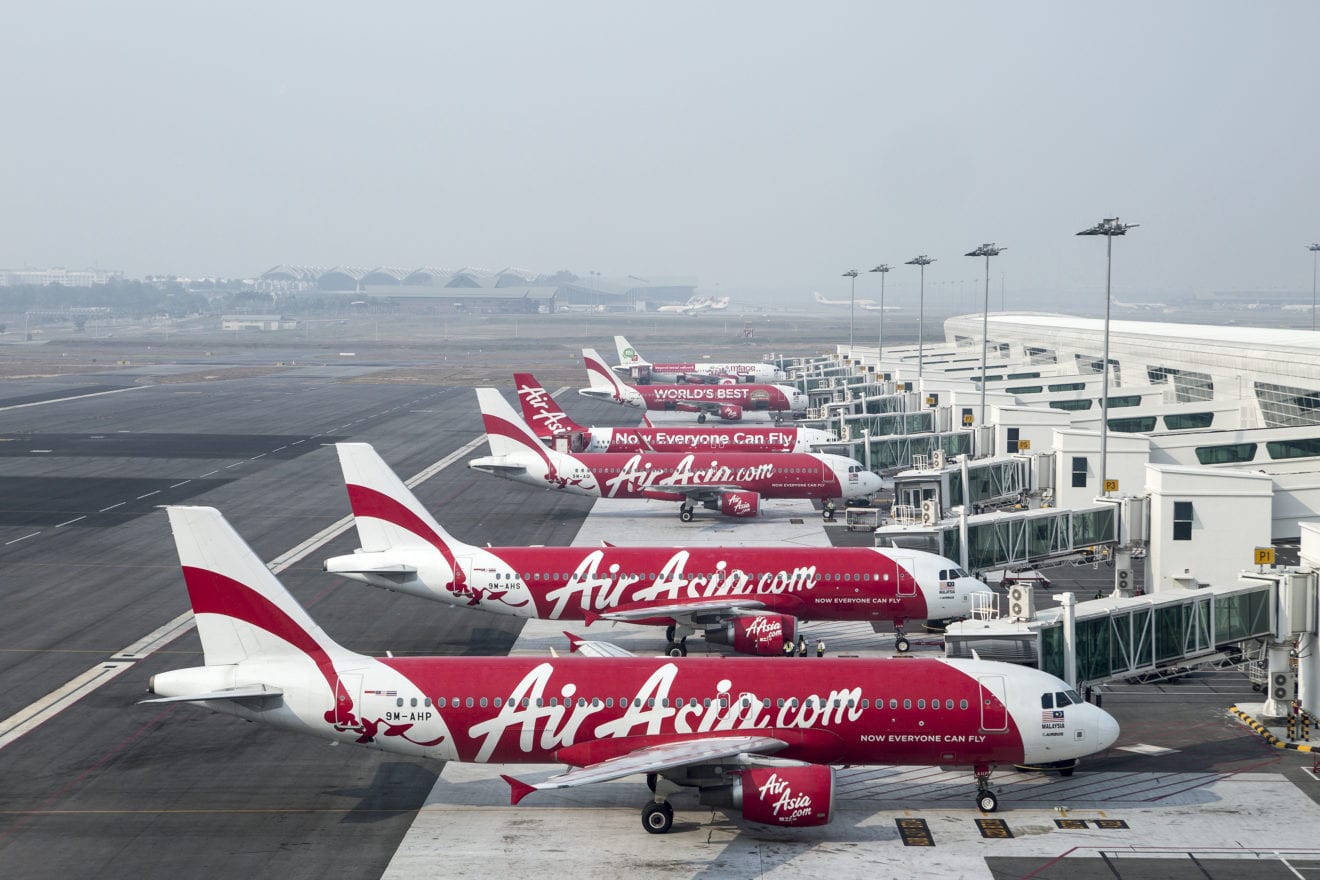
    Malaysian low-cost carrier AirAsia, which will start flights to Silangit Airport, Indonesia, the main gateway to Lake Toba from Oct 28, is looking to increase its services in Indonesia, a market in which it sees huge potential.

    Speaking at a press conference in conjunction with the official launch of the new route today, AirAsia Group CEO Tan Sri Tony Fernandes said the airline is eyeing more routes from Malaysia to Indonesia such as Belitung, Banyuwangi as well as Raja Ampat.

    “We are very bullish about Indonesian tourism. Indonesia is a huge priority for us,” Fernandes said.

    “We have already started talking about Kuala Lumpur-Belitung (route), which we see as a huge potential. There are so many places within Indonesia, as I’ve always said Indonesia is much more than just Bali.”

    In addition, Fernandes said the airline is also looking at cruise business in Indonesia, noting that coupled with the low-cost airline, it would be a huge potential for the state’s tourism industry.

    According to Indonesia’s Tourism Ministry, AirAsia made the highest contribution of all airlines to the number of international tourists flown to the country, bringing in 25% of the total figure.

    The four times weekly direct flights from Kuala Lumpur to Silangit Airport is the 21st route launched by the airline into the state.

    Fernandes said the new route marks the carrier’s commitment to support the government of Indonesia in developing the 10 priority tourism destinations, including Lake Toba.

    “Prior to Silangit, travellers wishing to visit Lake Toba had to take a six-hour bus ride from Medan. Today, they can fly direct to Silangit and reach Lake Toba in just an hour.

    “In addition to building new airports, Indonesia is converting Terminal 2 at Soekarno-Hatta International Airport into a low-cost carrier terminal. We believe this is a step in the right direction and we will continue to fully support Indonesia to achieve 20 million tourist arrivals by 2019,” he added.

    AirAsia is offering promotional all-in fares from RM39.10 for one way till Aug 12 for travel between Oct 28 and March 29, 2019.

    Besides Silangit, AirAsia also flies to 15 other destinations in Indonesia namely Jakarta, Lombok, Pekanbaru, Surabaya, Bali, Medan, Padang, Semarang, Banda Aceh, Pontianak, Yogyakarta, Palembang, Bandung, Makassar and Solo.

  • Facebook’s first time decline in monthly active user growth

    Facebook’s first time decline in monthly active user growth

    Facebook has long been set for growth.

    Its monthly active users have always been rising over time but the company’s second quarter earnings announcement last Wednesday has changed the tone.

    If Asia-Pacific stayed on track jumping from 873 to 894 million users while the US remained at a stable 241 million monthly active users, Europe seems to have lost its way.

    For the first time in history, monthly active users dropped by 1 million between the first and second quarters, falling to 376 millions.

    Facebook has recently been facing many challenges from its latest setback in setting up an innovation hub in China to tanking share price and scandals over user data. The latter is how the company justified its decline.

    Indeed, Europe has recently passed the GDPR, The General Data Protection Regulation, which strengthen numerous personal data rights. The regulation affects every company, but it is of paramount importance to those processing large amounts of consumer data. Facebook therefore could not escape it. The company’s CEO, Mark Zuckerberg, confirms the hit the regulation brought on the industry and defines it as an “important moment” which led to “a decline in monthly actives in Europe, down by about 1 million people as a result.”

    The GDPR was instated on May 25, that is, two-thirds of the way through Facebook’s second quarter. Thus, it is expected to still see some knock-on effects in the third quarter.

    Moreover, Facebook’s compliance with the regulation is under question as the platform has blocked the use of certain of its features to those refusing to share certain types of data. This very policy goes against the spirit of the GDPR which states companies are not to penalize users for not sharing information.

    The social media giant has developed its platform and turned it into one of the biggest advertising online space. However, a significant share of that advertisement comes from the use of consumer data and Europe is a market Facebook cannot overlook as it brings more revenues than Asia-Pacific, in spite of its smaller user’s numbers, with $3.3 and $2.3 billion respectively.

    Facebook acknowledges the weight of users’ engagement in retaining their advertising business. As Sheryl Sandberg, COO, notes, “as we look further out, we recognize that there’s still risk we’re going to watch closely”.

  • Facebook blocked by China’s Great Firewall

    Facebook blocked by China’s Great Firewall

    Earlier last week, the rumor of Facebook’s comeback to China was spreading fast.

    Banned since 2009, the technology giant was apparently trying to gain a foothold into the country with the establishment of an innovation hub. The word spread as screenshots of the subsidiary’s registration in Hangzhou were released on the Internet.

    By Thursday, the filing had vanished from the website of China’s National Enterprise Credit Information Publicity System. According to the New York Times approval was withdrawn after the national internet regulator, the Cyberspace Administration of China, disagreed with the provincial government’s approval of the subsidiary.

    Moreover, all terms related to the operation were censored on Chinese social media.

    The country has the media and Internet on a very short leash. Foreign companies strive every day to operate in the region as they face legions of ministries, regulators and local and central authorities. But the Chinese market is a very attractive one as it is the world’s biggest Internet market with over 710 million users as of 2017 (Forbes).

    The numerous bans and difficulties foreign companies are experiencing have favored the emergence of a monopolist in the market: WeChat. Indeed, along with Facebook, Twitter is also banned in China while messaging apps such as WhatsApp work intermittently. Apple and Google services are also very restricted.

    The legal status of Facebook’s expansion remains uncertain. Nevertheless, we are a long way from fully removing the ban of the platform even should the innovation hub manage to go through. Speaking of the company’s efforts in China, Mark Zuckerberg said they are “a long time from doing anything”.

    2018 has so far been a hard year for the social media giant as the company is facing many other challenges from slower user growth and tanking share price to scandals over user data.

  • A US$1 Million post – Instagram’s most paid celebrities

    A US$1 Million post – Instagram’s most paid celebrities

    After having its net worth valued at US$900 million by Forbes earlier this July, Kylie Jenner has now become the world’s most paid Instagram celebrity according to HopperHQ.com’s Instagram Rich List 2018.

    The annual ranking reveals which celebrities, athletes, models and influencers generate the most revenue from posting on the famous social media platform.

    Estimated at $400,000 in 2017, the youngest of the Jenner-Kardashian clan now reaps $1 million per sponsored post that she shares with her 111 million Instagram followers.

    With her 139 million followers, Selena Gomez trails in second at $800,000 per post despite having more followers.

    Surprisingly, Kim Kardashian and Beyoncé are relinquished to the 4th and 5th spot as famous football player Cristiano Ronaldo takes the 3rd position; earning roughly $750,000 per post.

    Discover the top 10 below:

    1. Kylie Jenner — $1,000,000 per post
    2. Selena Gomez — $800,000 per post
    3. Cristiano Ronaldo — $750,000 per post
    4. Kim Kardashian — $720,000 per post
    5. Beyoncé Knowles — $700,000 per post
    6. Dwayne Johnson — $650,000 per post
    7. Justin Bieber — $630,000 per post
    8. Neymar da Silva Santos Junior — $600,000 per post
    9. Lionel Messi — $500,000 per post
    10. Kendall Jenner — $500,000 per post


  • AirAsia Q2 load factor down 3% to 86% on seat capacity expansion

    AirAsia Q2 load factor down 3% to 86% on seat capacity expansion

    AirAsia Group Bhd’s operations in Malaysia, Indonesia and the Philippines saw a 3% drop in its load factor to 86% for the second quarter of 2018 (Q2 18) compared to the same period of 2017.

    Seat capacity for the quarter under review, however, increased 17%.

    The low-cost carrier said in a statement that it carried 10.88 million passengers in Q2 18, representing a 13% increase against the 9.61 million passengers flown in Q2 17.

    AirAsia Group’s total fleet size grew to 124 aircraft comprising 88 in Malaysia (AirAsia Bhd), 15 in Indonesia (PT AirAsia Indonesia Tbk) and 21 in the Philippines

  • Smart Trends eyes Asian, African markets

    Smart Trends eyes Asian, African markets

    Smart Trends International Sdn Bhd, a training recruitment and consultancy specialist, is looking to expand its operations in the emerging Asian and African markets.

    Smart Trends offers corporate training and technical programmes, which are designed to equip workers and non-workers with specific skills and abilities to perform their jobs efficiently and helps in improving their skills and enhancing their performance.

    The company had also recently signed a strategic partnership with NCFE (UK) to develop specially tailored technical and vocational courses for the Asean region. NCFE is an awarding organisation by the qualification regulators for England, Wales and Northern Ireland.

    “We are trying to venture into these markets in the fourth quarter of this year because we feel that there is a lot of potential especially in terms of vocational education,” Smart Trends chairman and group CEO Datuk Dr Emmanuel Benson said on the sidelines of the Global Leadership Awards 2018 recently.

    “Africa is an emerging market and they need education, especially on vocational and technical training. Not everyone (there) can afford to attend college or university,” he added.

    Smart Trends currently has presence in Sri Lanka and Vietnam with the opening of its training centres in these countries.

    In 2017, it has successfully trained and placed over 1,200 Malaysians with global multinational companies (MNCs) and Malaysian manufacturing, construction and oil & gas firms, according to its website.

    Going forward, Benson said he believes that there will be a lot of multinational job opportunities coming in to Malaysia, driven by surging foreign direct investments (FDIs) into the country as well as growing industries.

    “Training industry is an evolving and growing sector where you know micro-skilling is always needed.

    And what we are lacking (here) is that our graduates are not able to get a job and many people are getting retrenched, so micro-skilling is pivotal and plays an important role in order to get one employed,” he added.

    During the event, Benson bagged two awards, namely the “Masterclass CEO of the Year” and “Leadership Excellence in Human Capital Development Through Technology Innovation”.

  • Foreign investors target Vietnam’s huge sports betting market

    Foreign investors target Vietnam’s huge sports betting market

    Choi Hak Soo, president of South Korea’s Golden Horse, said during a meeting with leaders of Bac Ninh last week that his company plans to set up a subsidiary in the northern province to build a racecourse.

    He expected the $500 million investment plan to be ready by October for submission to the government for approval, saying his company is in the process of mobilizing funds.

    Golden Horse had first proposed the plan to Bac Ninh last year when the National Assembly (NA) was wrapping up its discussion on legalizing sports betting.

    The 400-hectare entertainment complex will include a horse racecourse, a resort and a residential area, and create 5,000-10,000 jobs.

    The NA late last year approved a bill legalizing sports betting, and last month the government promulgated a decree regulating the sports-betting business, throwing open opportunities for foreign investors.

    Illegal sports betting used to be rampant in the country.

    A year earlier the government had also cautiously opened casino doors to locals.

    There are no official reports on the value of illegal sports betting, but a study by Prof Ha Ton Vinh, who has spent much of his professional life studying Vietnam’s gambling and sports betting activities, said Vietnamese used to spend an estimated $800 million a year overseas on gambling.

    The police have in the last two years busted dozens of illicit online gambling and sports betting operations worth hundreds of millions of US dollars.

    At the meeting in Bac Ninh, Choi said Golden Horse faces many rivals in sports betting in this country.

    Amplefield, a Singapore-listed company, is the latest name to enter the industry here. Last April it signed a memorandum of understanding to set up a joint venture for building a racecourse in HCMC.

    Amplefield will hold a 60 percent stake in it while Malaysia’s Equine Sanctuary, a provider of horse care services and horse-racing consultancy services in Singapore, will hold the rest.

    According to Amplefield, the joint venture will build a 300-hectare racecourse and property complex in Sing Viet City. It will include a residential component with some 16,000 units, horse racing, gaming and golfing facilities.

    “This is the first step towards the development of the racino facilities, and we are excited about what lies ahead as this has tremendous potential to be a huge draw for both tourists and locals and stimulate further development activities in the area,” Yap Weng Yau, executive director of Amplefield, said in a statement.

    Another South Korea firm, G.O.Max, is also pursuing a giant horse racing and entertainment complex in the province of Vinh Phuc at an estimated cost of $1.5 billion.

    It had been proposed to the Vinh Phuc People’s Committee as long ago as in 2005 as a $570 million investment, but was not approved. Now, following the new developments, the investor has again decided to throw its hat in the ring.

    G.O.Max has projected building a horse racecourse on a site of 200 hectares and running three races a week. Seventy betting points will be set up in 54 cities and provinces around the country, as well as an online betting system.

    Jung Young Jin, strategy director of G.O. Max, has indicated to the media there will be revenues of $972 million and taxes of $100 million a year in the first five years.

  • Velesto Energy bags RM101m job from Shell

    Velesto Energy bags RM101m job from Shell

    Velesto Energy Bhd’s (formerly known as UMW Oil & Gas Corp Bhd) wholly owned subsidiary Velesto Drilling Sdn Bhd (VED) was awarded a US$25 million (RM101 million) contract from Sarawak Shell Bhd/Sabah Shell Petroleum Company Ltd for the provision of jack up drilling rig services.

    Velesto will assign its Naga 7 for the contract, which will go on from Aug 1, 2018 to Sept 30, 2018.

    The provision of the services is expected to contribute positively to the group’s earnings and net assets during the contract period for the financial period ending Dec 31, 2018.

    Velesto shares were unchanged at 30 sen on 21.64 million shares done.

  • New Bike-Sharing Service Set to Help Jakarta Combat Air Pollution, Bad Traffic

    New Bike-Sharing Service Set to Help Jakarta Combat Air Pollution, Bad Traffic

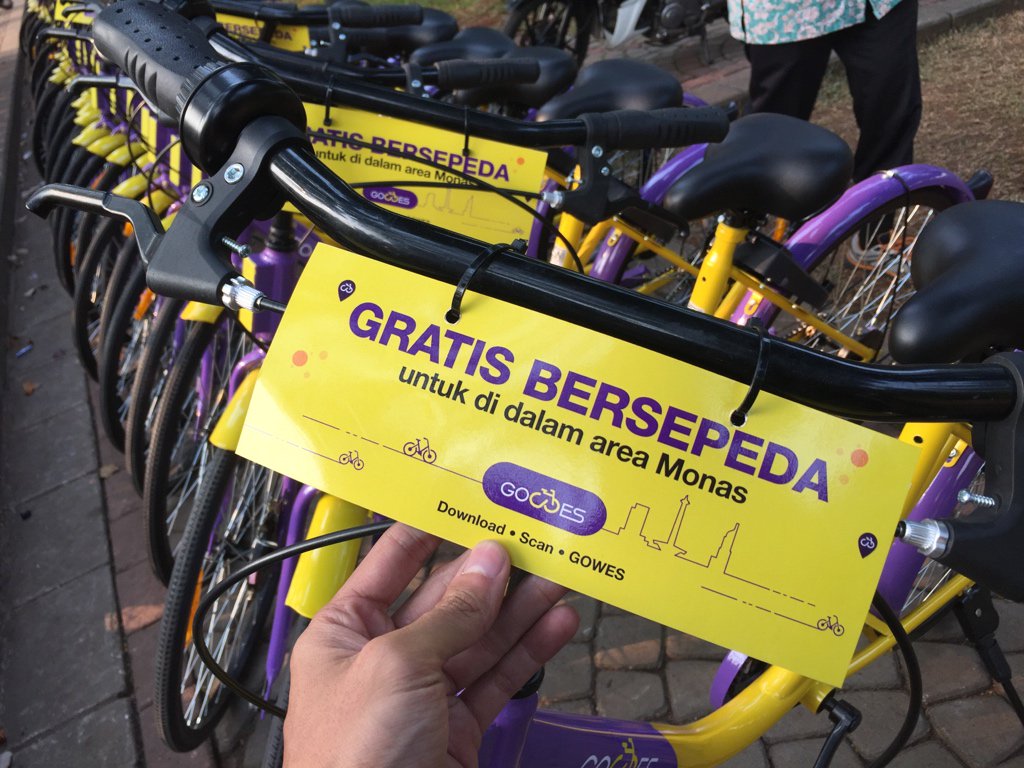
    Surya Teknologi Perkasa, a subsidiary of digital self-service kiosk operator M Cash Integrasi, has introduced an online-based bicycle-sharing service dubbed Gowes, aimed at providing an emission-free transportation alternative to help Jakarta combat air pollution and traffic congestion.

    Bicycle sharing is still relatively new business in the capital, where motorcycle ride-hailing services such as Go-Jek Indonesia and Grab have been dominating over the past few years.

    Jakarta Deputy Governor Sandiaga Uno, who attended the inauguration event at the National Monument (Monas) in Central Jakarta on Friday (27/07), said there will be a three-month trial of the bicycle-sharing service, during which time people will be allowed to ride for free in the Monas area. This will be done to test demand for the new service.

    The trial will take place in collaboration with the Jakarta provincial government and the Institute for Transportation and Development Policy.

    “We are pleased with the trial. We expect support from the government and all parties to make bicycles Jakarta residents’ preferred option for short-term transportation as it reduces air and noise pollution, while also being affordable and safe for all ages,” Surya Teknologi Perkasa president director Iwan Suryaputra said in a statement.

    He said the company will continue to support the government’s efforts to reduce carbon emissions and mitigate traffic congestion in the capital through the bike-sharing system.

    Jakarta is consistently among the top-10 most polluted cities in the world, according to data provided by air quality monitoring app AirVisual.

    A study by US-based research company Inrix has shown that Jakarta is the 17th most congested city in the world after Bangkok and Russia’s Kansk, noting that its residents spend on average 63 hours in congestion per year.

    Gowes, which means “to paddle,” in Indonesian, is already available in Bintaro, Banten and several locations in Bali. Equipped with tracking devices, users do not need to return the bicycles to their original location after use. Instead, they can park it anywhere with Gowes’s operational area.

    The Gowes smartphone application also offers other digital products and services, such as internet data packages, phone credit and more, similar to those offered by Go-Jek. The services are also in line with the parent company M Cash’s core business.

    M Cash was the second digital startup to list on the Indonesia Stock Exchange (IDX). It raised Rp 300 billion ($21 million) in October last year from the sale of 25 percent of its enlarged capital. Since then, the company has acquired mobile wallet service provider Matchmove Indonesia and cloud-based digital advertising firm Digital Marketing Indonesia.

    M Cash reported net income of Rp 45 billion in the first half of this year, compared with Rp 3.8 billion in the corresponding period last year.