Category: Living

Retail News Asia is committed to providing both local and global retailers with the latest Living news throughout the Asian market. This on a daily base.

  • Vietnam Casino fined $15,000 for tax evasion

    Vietnam Casino fined $15,000 for tax evasion

    The Quang Ninh Tax Department says it has found the casino violating corporate tax and value-added tax regulations after inspecting returns filed in 2017 and its value-added-tax receipts until February 2018.

    The department has levied total fines of $15,000, including $10,500 for faulty reporting of value added tax and $3,700 for using illegal invoices.

    The Casino Gaming Club is the only gambling facility approved to serve foreigners exclusively in Ha Long Bay City, but it has been in the red since 2013.

    Last October, the company’s financial report stated that its losses in the third quarter had jumped 23 times from a year ago to more than $3.04 million.

    Managers said most of its customers were from Taiwan and mainland China, but their numbers have dwindled in recent times.

    In the first three months of this year, the company earned nearly $2.92 million in revenue, and around $69,000 in after tax profits. This is a sharp increase compared to a $908,000 loss during the same period last year.

    However, the company’s accumulated loss is estimated at more than $7.4 million on a total capital investment of $30.5 million.

    Vietnam has six casinos that are open exclusively for foreigners, and four of them are reporting losses.

    Earlier this year the government lifted a long standing gambling ban on Vietnamese nationals, allowing them to patronize two casinos, one on the southern resort island of Phu Quoc and the other at the Van Don Special Economic Zone in the northern province of Quang Ninh.

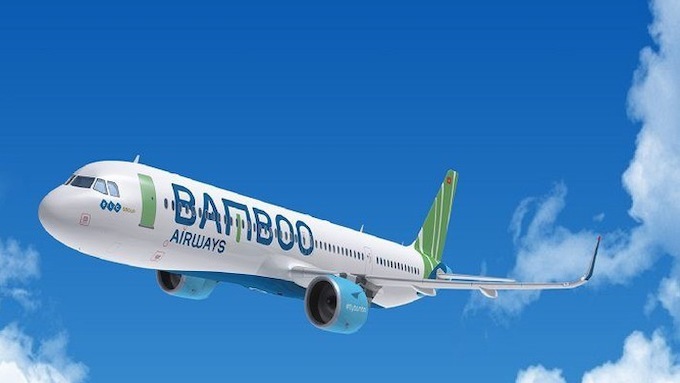
  • Bamboo Airways expected to take off in October

    Bamboo Airways expected to take off in October

    According to an FLC Group spokesperson, the first passengers will be offered various discounts on services offered by FLC Group such as golfing and accommodation at its resorts.

    Bamboo Airways will become Vietnam’s fifth airline.

    Dinh Viet Thang, general director of the Civil Aviation Administration of Vietnam (CAAV), said his agency has not granted the airline an operating license and it is still under consideration.

    This month the airline increased its charter capital to over $56 million with a fresh infusion of $26 million.

    The airfreight project, which has a 50-year operating license, is expected to cost $30 million and be implemented in 2019-23.

    Bamboo Airways is expected to buy 24 narrow-body Airbus A320NEO and 20 Boeing B787-9 Dreamliner aircraft at a list price of $8.6 billion.

    Bamboo is expected to be a hybrid carrier combining full-service and budget models.

    Vietnam’s four airlines are flag carrier Vietnam Airlines; budget operator Jetstar Pacific Airlines which is partly owned by Vietnam Airlines; budget carrier Vietjet Aviation and Vietnam Air Services Co.

    The country’s airport capacity has been reaching its limits as fast economic growth means more people in the nation of 90 million are taking flights.

    Hanoi-based FLC, whose main businesses are housing, resorts and golfing, had said it planned to operate international flights through Bamboo Airways to tourist spots in Vietnam including where FLC has properties and also plans domestic flights.

  • Eclipse China to execute big expansion

    Eclipse China to execute big expansion

    Mattress manufacturer Eclipse International is joining with its Chinese licensee Shenzhen Meiting Creation Furnishing to open more than 100 mattress specialty stores nationwide.

    The Eclipse China rollout, which will proceed over the next three years, is anticipated to expand Eclipse’s market share in the country.

    Shenzhen Meiting has been a licensing partner of Eclipse since 2003.

    Eclipse CEO Stuart Carlitz said: “There is a huge appetite in China for US-branded luxury goods, and our portfolio of brands has been so well received by consumers there. These retail stores will take our 15-year partnership with Shenzhen Meiting to the next level.”

    The Eclipse China stores are expected to predominantly appear in major cities in each Chinese province.

  • Vietnam in danger of becoming a dump as China says no to trash

    Vietnam in danger of becoming a dump as China says no to trash

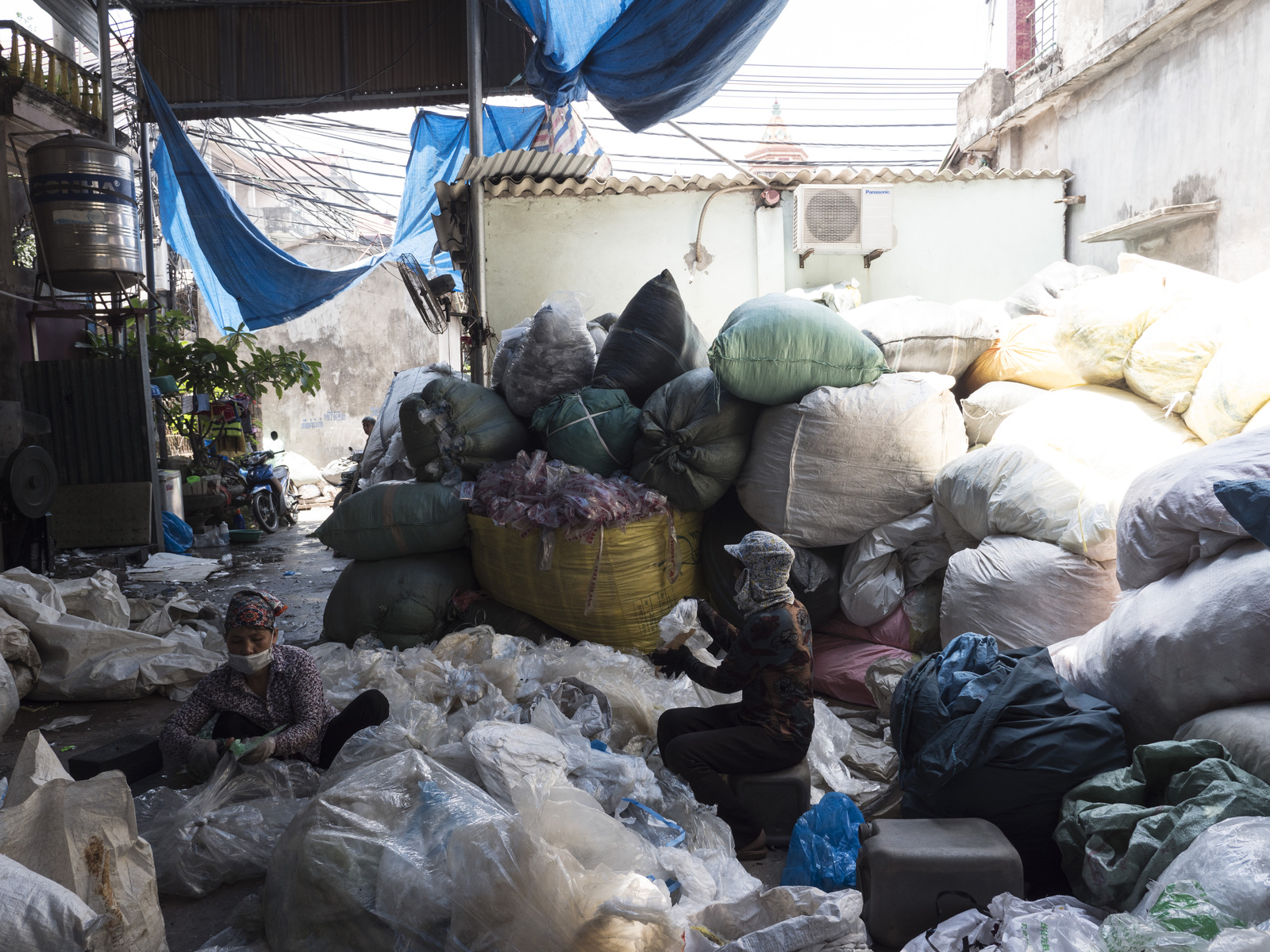
    It’s another waste-full day in Minh Khai, Hung Yen Province.

    Blocks of plastic bags sprawl on the ground, fill up alleys, besiege houses; machines groan and toss shredded plastic pieces into the air; sewage carrying debris leaks onto the streets; and kids splash themselves in a dark, murky pond.

    It is a scene similar to the recycling dead zones in China –exhaustively detailed in documentaries such as Plastic China and books like Adam Minter’s Junkyard Planet.

    There’s a big difference, though.

    China’s recycling villages are cleaning up their act in haste.

    Since January 1, the world’s biggest waste importer and recycler has said no to old mobile phones, paper, textiles and plastics it had always imported from the world for decades. It wants to take back its blue sky.

    While a blue sky has not been a frequent sight in industrial Hung Yen or polluted Hanoi, it has been definitively gray in Minh Khai, one of Vietnam’s largest plastic recycling villages.

    It’s noon, traditional Vietnamese nap time, but in Nguyen’s 100-square-meter workshop, the machines are still roaring.

    The 31-year-old recycler is overseeing five employees as they cut, melt and mold plastic, even as she darts between heaps of translucent bags and her kitchen to cook her family of six a quick lunch.

    These days, Nguyen, who declined to give her full name, can’t afford to take a long break. Her pellet-making machine handles about 1.5-2.5 tons of plastic per day, about 50-75 tons a month. Trash is pouring in from all over the world, Nguyen said, but mostly from Germany, Japan and the U.S.

    Nguyen has been a recycler for about two decades but only in the past year has she seen such a surge in the volume of foreign waste.

    She cannot cite figures; all Nguyen knows is that Chinese brokers hand her cash and tell her they need no contract. “I don’t even know who they are but every month, I buy about three containers from them,” Nguyen said.

    Like many recycling households in Minh Khai, Nguyen will sell her pellets back to China, where they are made into cheap plastic tables, stools, containers that find their way back to compete in Vietnamese market.

    Minh Khai has 1,000 households, of which more than 90 percent recycle plastic at home. Hanoi lacks an effective official recycling scheme, so for more than three decades, Minh Khai has been one of the major informal recycling hubs that handle plastic for the capital and the Red River Delta.

    Until 2017, only 143 households were registered businesses.

    “It’s only in the past two years that our village started buying more from Chinese brokers,” a 64-year-old recycler named Hoang remarked. “Truck after truck brings up to a thousand tons of plastic a day.”

    “My neighbors are not only working by day but they have started to run the machines at night as well to handle the new waste. I can’t get enough sleep,” Hoang complained.

    In May, a national TV channel estimated that around 1,000 tons of plastic waste was arriving in Minh Khai every day, a ten-fold surge since mid-2017.

    Hung Yen authorities acknowledge the surge in waste, but are not able to locate its origins. And until they find a way to sort this problem, informal recycling hubs like Minh Khai are not the only destinations that will see foreign waste pile up.

    From January to November 2017, Vietnam increased its imports of PE and PET plastic by more than 166 percent and 137 percent year-on-year, respectively. In November 2017, it was also the biggest importer of scrap plastics marked “mixed/other.”

    In the first quarter of 2018, Vietnam imported nearly 79 million pounds of recovered plastics, up from 40 million pounds over the same period in 2017. It became one of the U.S.’s largest scrap plastic buyers, Resource Recycling Inc. quoted the U.S. Census Bureau as saying.

    International dumping ground

    In 2011, China introduced its Green Fence program, an attempt to slowly close its doors to contaminated materials.

    China had been importing 45 percent of world’s plastic waste since 1992, and according to a research article published on Science Advances this June, the Chinese ban will displace an estimated 111 million metric tons of plastic waste by 2030.

    While major exporters like Europe and the United States are diverting their trash to Southeast Asia, industry insiders say that China’s recycling industry itself could shift to other destinations in the region, such as Vietnam.

    According to a report, Chinese recyclers are already moving much of their capacity abroad, as the curbs on imported trash have deprived them about half the materials they normally need to produce plastic pellets.

    The report says over 1,000 Chinese recyclers already investing in Southeast Asia, particularly Malaysia and Thailand, hoping to indirectly move processed foreign scrap in higher-grade form to meet their country’s new standard.

    However, the new routes have not been smooth since shipments have faced delays, while Thailand and Malaysia were also tightening regulations. One China-invested importer was already forced to close in Thailand, while Malaysia has not been accepting import permit applications since mid-May.

    In Vietnam, fears of the country turning into “an international dumping ground” are growing.

    Despite a halt in issuing scrap import permits since 2017, Vietnamese seaports have been clogged with thousands of containers of foreign scrap.

    As of May 2018, nearly 28,000 containers were stuck in seaports across Vietnam, according to the Vietnam Maritime Administration. The goods range from electric cords, outdated household appliances, secondhand fabric and used cars to plastic and paper scrap, which makes up the majority.

    Tan Cang Cat Lai, one of Vietnam’s largest shipping terminals, had more than 8,000 TEUs (1 TEU equals a 39-cubic-meter container) of plastic waste and paper as of May 21.

    The Tan Cang Cai Mep International Terminal also said that the large volume of plastic waste containers the port has received has caused troublesome backups and delays. Both terminals, which are operated by the Saigon Newport Corporation, say they are not accepting plastic scrap until October 15.

    Customs officials are ramping up inspections after a recent report of the  Vietnam Customs described numerous violations in scrap paper and plastic waste imports – including materials not meeting quality standards, mislabeling, forged import permits and even lack of permits.

    In a recent National Assembly session in Hanoi, Tran Hong Ha, Minister of Natural Resources and Environment, responding to concerns that the country can become a landfill of industrial and radioactive waste, said Vietnam has to start saying no to scrap import because the country is not able to deal properly with solid waste.

    “Waste in Vietnam is different from the world and even the advanced technologies that other developed countries use to treat their waste have turned out to be inappropriate in Vietnam,” he said.

    Many domestic waste treatment plants do not operate effectively and if those plants cannot meet technical and environment criteria, they should be shut down, the minister added.

    Until developed nations find a concrete solution for the new-found crisis, it appears that the burden will be borne by Vietnam’s seaports and its limited recycling infrastructure.

    For informal recyclers like Hoang and Nguyen of Minh Khai, business will remain hectic, but they are not complaining.

  • Two foreign brands dominate personal hygiene market in Vietnam

    Two foreign brands dominate personal hygiene market in Vietnam

    Among the 10 most popular personal care brands in the country, Diana and Kotex hold a whopping 80 percent of the domestic market share.

    Unicharm, the Japanese company which owns the Diana brand, has been in Vietnam for 27 years.

    Diana brand products earned revenues of VND5 trillion ($218 million) in 2016, up 10.6 percent over 2015, for a net profit of VND819 billion ($35.7 million), making it the market leader by far.

    In second place is the Kotex brand, owned by the U.S. based Kimberly-Clark Corporation, which reported revenues of VND4.9 trillion ($214 million) in 2016, a year-on-year increase of 9 percent, for a net profit of VND485 billion ($21 million).

    With a large proportion of young people in its population of 93 million, both brands expect the Vietnamese market for personal sanitation products to grow significantly in the coming years.

  • Prudential BSN Takaful Malaysia aims for 1 million customer base

    Prudential BSN Takaful Malaysia aims for 1 million customer base

    Prudential BSN Takaful (PruBSN) is hoping to increase its customer base to one million with two of its new takaful packaged solutions namely the PruBSN Setia and PruBSN Impian, which provide customisable and comprehensive protection.

    The takaful operator’s current customer base stands at around 850,000. The targeted increase is expected to be further supported with other new product launches this year.

    To address escalating healthcare cost, the PruBSN Setia is a health protection coverage for working adults which covers medical, critical illness, accidental and income replacement riders.

    “When it comes to health protection, many working adults in Malaysia rely solely on their employer to provide medical benefits. Given today’s economic environment and living conditions, they will need to enhance their existing coverage to fully support their protection needs,” said PruBSN chief marketing offer Wan Saifulrizal Wan Ismail.

    “With PruBSN Setia, employees can take advantage of the multiple rider options to add up on to their life insurance or takaful plans. We want to help strengthen the future financial safety net for working adults and their families,” he added.

    Meanwhile, the PruBSN Impian provides expectant mothers with comprehensive prenatal, medical, critical illness and saving solutions for their children from as early as 14 weeks of pregnancy to 100 years old. This further extends to long term savings plan for the child’s education.

  • UFC Gym plans Tokyo expansion

    UFC Gym plans Tokyo expansion

    UFC Gym has announced plans to open 20 franchise locations in Japan starting from next year.

    The gym, which creates its own training programs inspired by UFC athletes’ training regimens, has opened more than 150 locations worldwide since first opening in 2009.

    UFC Gym president Adam Sedlack said: “We are thrilled to announce the addition of Japan to the UFC Gym family. The overall passion for sports, entertainment and fitness is strong in Japan, and we believe this market will be a perfect fit for our ‘Train Different’ philosophy.”

    The gym is seeking enquiries from potential franchisees both domestically and internationally.

  • City’super plan to open more stores in mainland

    City’super plan to open more stores in mainland

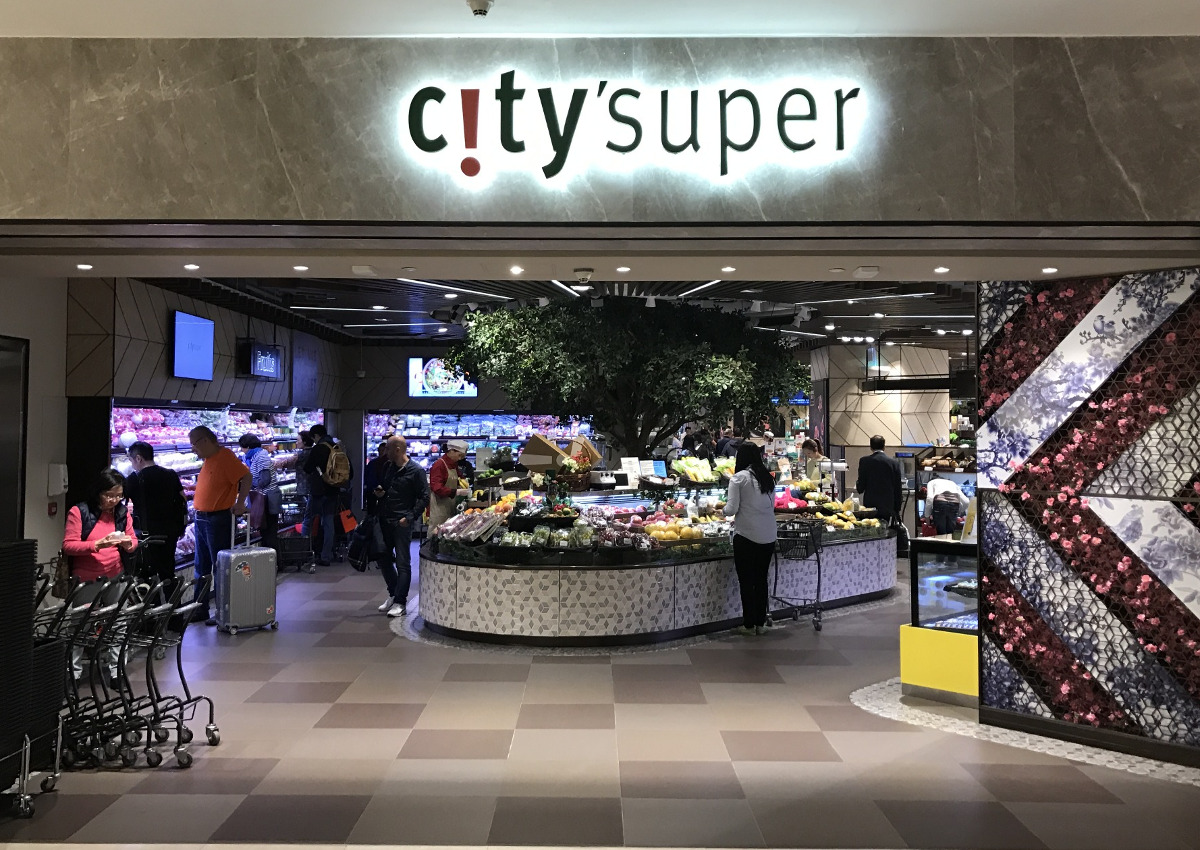
    Upmarket Hong Kong supermarket operator City’super says it is planning to expand on the mainland.

    Currently the company has four supermarkets in Hong Kong and five in Shanghai. It opened its first store in Times Square in Causeway Bay in 1996 and its first in Shanghai’s IFC Mall in Pudong in 2010.

    President Thomas Woo said that the company believes there is an opportunity to serve the increasing ranks of middle class Chinese consumers who are growing a taste for premium foods.

    The company will initially focus on the Yangtze River Delta outside Shanghai.

    Woo says mainlanders seem more ready to spend on items such as imported liquor than Hongkongers.

    “We felt that the potential on the mainland has yet to be tapped by City’super,” he said. “We don’t aim to expand across the mainland, but we are setting eyes on the affluent region of East China.

    “We felt that there is no wealth gap between mainland and Hong Kong shoppers. Chinese consumers’ attitude about life has become more exquisite as they pay more attention to food origins to ensure healthy eating.”

  • European Union ‘open to palm oil’

    European Union ‘open to palm oil’

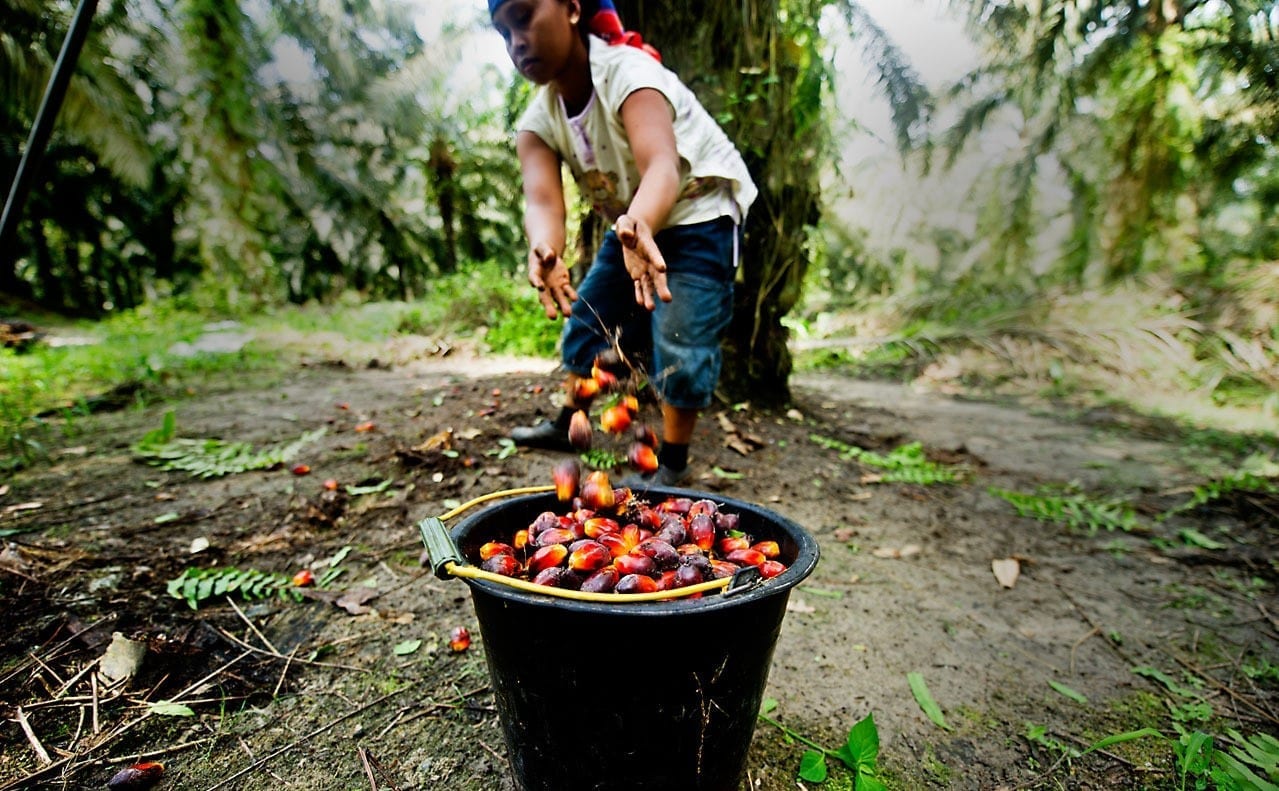
    The European market is open to palm oil and there is no ban on the commodity, said Ambassador and Head of European Union Delegation to Malaysia, Maria Castillo Fernandez.

    Clarifying the stance of Europe on palm oil, she said there is a discussion in the region to reduce the use of biofuels in order to reach the European Union’s goal of achieving 32% renewable energy target by 2030.

    She clarified that palm oil has not been singled out as this extends to all types of biofuels.

    “There is no singling out on palm oil. It’s all crops (and) it’s on biodiesel that doesn’t mean you are banning anything but you will have to use less biodiesel coming from all the crops for your renewable energy target,” she explained.

    On how this will come to play, she said that will depend on the adoption of the delegated act next year.

    Europe is the second largest market for Malaysian produced palm oil.

    Fernandez reiterated that Malaysia’s trade relations is not just limited to palm oil, as the EU is Malaysia’s third largest trading partner.

  • Vietnam postpones plans to increase fuel tax

    Vietnam postpones plans to increase fuel tax

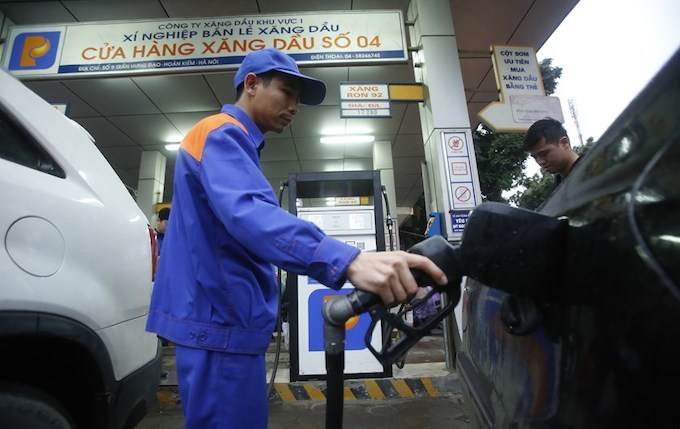
    Top legislator Nguyen Thi Kim Ngan on Thursday approved the delay after listening to experts’ concerns that the tax will affect Vietnam’s goal to contain inflation below four percent this year.

    “Although increasing the environmental tax on fuel will bring trillions of Vietnamese dong to the state budget,” there is uncertainty in price changes for the rest of the year,” Ngan said.

    As the trade tension between the U.S. and China has been escalating, and the fact that stormy weather during the second half of the year often increase commodity prices in Vietnam, it would be more appropriate to raise the fuel tax at a later time, said Nguyen Van Giau, chairman of the External Affairs Committee of the National Assembly.

    Giau proposed that the tax be imposed two months after the next Vietnamese Lunar New Year, which will fall on February 2019.

    Earlier this year, Vietnam’s Finance Ministry proposed that the environmental tax on petrol and diesel be increased by 33 percent, or VND4,000 (17 cents) per liter for petrol and VND2,000 per liter for diesel.

    The proposed hike, which is the highest rate permitted in Vietnam, has met with strong public opposition. But the ministry defended its proposal by saying that it was supported by many ministries and departments, and that fuel prices in Vietnam is still lower than in 120 other economies in the world.

    The proposed tax can bring VND57.3 trillion ($2.4 billion) each year to state coffers, an annual increase of VND15.7 trillion ($650 million) from current collections, it said.

    The Standing Committee of the National Assembly will discuss the proposal again in August.

  • When robots strolling around at Incheon Airport

    When robots strolling around at Incheon Airport

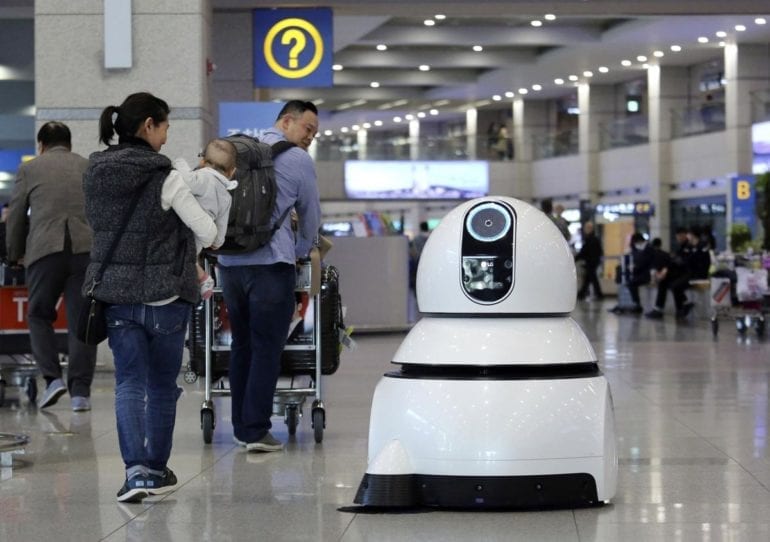
    Incheon International Airport will deploy robot guides that can escort travelers to immigration and baggage claim areas from 21 July, in time for the summer peak season.

    The airport said it is first in the world to put robots into service, as opposed to testing them.

    The second-generation robot, dubbed Airstar, is an upgraded version of guide robots that were tested in the airport last year.

    Airstar robots have improved driving and voice recognition features compared to the test versions and are also capable of expressing 14 different emotions.

    The self-driving feature was upgraded by using more sensors including three-dimensional camera sensors that help avoid obstacles and ultrasonic sensors that recognize very close objects, the airport said.

    As for voice recognition, the new robot is designed to distinguish voice commands from other noises in the airport. The robot speaks four languages: Korean, English, Chinese and Japanese.

    The robots will escort travelers, tell them how busy immigration desks are, what products are restricted on board and the way to gates after scanning barcodes on boarding passes.

    The robots can also take photos of travelers in the airport and send it to them by email or text message.

    The second-generation robot hardware was designed by Puloon Technology and LG’s IT service unit LG CNS developed the software starting last September.

    Eight robots will be deployed in Terminal One and six in Terminal Two, which opened at the beginning of this year.

    “We plan to make Incheon a cutting-edge smart airport by adopting drones, Internet of Things technology and autonomous shuttle buses,” said Chung Il-young, CEO of Korea’s largest airport.

  • AirAsia celebrates Avalon Airport launch with $99 flights to Asia

    AirAsia celebrates Avalon Airport launch with $99 flights to Asia

    Earlier in the year, Avalon Airport and AirAsia announced they would be teaming up to offer the first ever international flights out of Melbourne’s second airport, Avalon.

    Now, tickets for first flights are finally out and to celebrate they are on sale for as little as $99 each way.

    These are to AirAsia’s home city Kuala Lumpur and, to be perfectly frank, are actually on sale for $12 each waywith airport taxes coming in at $87. Put the two together and you get your flight fare.

    Whichever way you look at it, it is super cheap and is definitely not one to be missed.

    The Melbourne to Kuala Lumpur route will operate twice daily on AirAsia’s long haul carrier AirAsia X on an A330-300 aircraft. While it’s the focus flight of this launch, it isn’t the only one from Avalon Airport on sale. Direct flights from Melbourne (Avalon) to Bangkok are also available from $154 each way while over 70 indirect flights via Kuala Lumpur are also available to snap up for cheap. This includes Melbourne to Singapore from $140, Melbourne to Phuket from $147, Melbourne to Male (Maldives) from $201 and Melbourne to Tokyo from $249, to name a few.

    Again all these fares are one-way with returns costing double.

    Travel is open across a more-than-generous period, ranging from 4 December 2018 to 13 August 2019. This includes peak season dates such as Christmas, though these are limited so you may need to be flexible with your dates around high-season to keep to your intended budget.

  • Walmart looks to exit Japan

    Walmart looks to exit Japan

    U.S. retailer Walmart Inc (WMT.N) has decided to sell Japanese supermarket chain Seiyu and has already approached major retailers and private equity funds.

    If realized, the sale could amount to around 300 billion to 500 billion yen ($2.7 billion to $4.5 billion), the Nikkei said, without citing its sources.

    Walmart said it does not comment on market speculation.

    A sale would be the latest exit by Walmart from a lower-growth market as it looks to shake up its overseas business and invest in places like China and India.

    The world’s biggest retailer said last month it had sold an 80 percent stake in its Brazilian operations to private equity firm Advent International, exiting an underperforming business in its third major international deal since April.

    In addition to competition from online retailers such as Amazon.com (AMZN.O), Japan’s supermarkets are being squeezed by chains such as convenience stores and discount drugstores in a sluggish consumption environment.

    In January Walmart said it was launching an online grocery service with Rakuten Inc (4755.T), in what Rakuten CEO Hiroshi Mikitani said he hoped may be a precursor to greater global cooperation.

    Walmart has struggled to replicate the success of its low-price model with Seiyu despite the introduction of an “everyday low price” pledge and frequent discounting.

    Japanese supermarkets, with lots of workers preparing fresh food and high levels of customer service, are famous for their low margins and are proving a drag for many retailers.

    Recent industry consolidation saw the creation of FamilyMart Uny Holdings Co Ltd (8028.T) in 2016, a deal that focused on expanding the number of FamilyMart convenience stores. Such stores have increasingly become a priority for retailers as a growth driver.

    Discounter Don Quijote Holdings Co Ltd (7532.T) has taken a 40 percent stake in Uny as it looks for room to expand. Earlier this year Seven & i Holdings Co Ltd (3382.T) announced a tie-up with regional general merchandise store chain Izumi Co Ltd (8273.T).

    Japan’s supermarket industry has proved difficult for foreign retail giants, with exits by Tesco (TSCO.L) in 2011 and Carrefour (CARR.PA) in 2005.

  • Grab Aims to Dominate Indonesian Market With Open Platform Strategy

    Grab Aims to Dominate Indonesian Market With Open Platform Strategy

    Ride-hailing company Grab has launched GrabPlatform and GrabFresh to tap further into the Indonesian market, its representatives said on Tuesday (10/07).

    Grab is going to upgrade its app to focus on people’s daily needs and make it become an everyday superapp.

    For this purpose it just launched GrabPlatform, a new interface which provides transportation, news, e-commerce and food delivery services. The food feature, GrabFresh, is operated by HappyFresh, Southeast Asia’s leading online grocery shopping company.

    Now the company is testing the news feed feature, which is intended to engage users more while they are using the company’s ride-hailing services.

    “Partnering strategy, or we call it open platform strategy, has been favored by us to offer more to customers. It has been proved very effective in boosting our business” said Grab co-founder and chief executive Anthony Tan said on Tuesday.

    In 2017, Grab acquired Kudo, Indonesia’s leading online-to-offline payment service, which according to Tan has been very helpful for the company’s expansion.

    “After partnering with Kudo, we’ve grown tremendously across cities in Indonesia. And then with OVO, who is the country’s leading e-wallet. We recognize that we can’t be the best in everything, so we find the best partners. Kudo was the best agent network, OVO is the best e-wallet and TPI [ride-hailing service Teknologi Pengangkutan Indonesia] is one of the best rental partners,” he said.

    “If it wasn’t for Kudo, we could not have grown in Indonesia that fast. We went operational from 20 cities to over 100 cities in Indonesia, because of Kudo.”

    The region’s leading ride-hailing app is facing rivalry from local competitor Go-Jek, which in May announced expansion to Singapore, the Philippines, Thailand and Vietnam.

    According to App Annie, Go-Jek was leading in Indonesia, recording 15 million active users every week last year, much better than Grab with 2.5 million users.

    In March, Grab merged with ride-hailing giant Uber for the latter’s Southeast Asian operations.

  • Malaysia 2011 furniture exports may rise to USD2.8b

    Malaysia 2011 furniture exports may rise to USD2.8b

    Malaysia’s 2011 furniture exports are likely to improve by 9 percent to MYR8.7 billion (USD2.84 billion), provided the US dollar stabilises at the current level and manufacturers are able to secure enough foreign workers at their factories.

    Malaysian Furniture Industry Council president Richard Lee said there was growing demand for Malaysian-made furniture from the US and Australia, especially now as American consumer spending is showing signs of recovery and Australians need to refurbish their homes after the big flood.

    Traditional markets like the US and Europe tend to favour Malaysia over low-cost producers like China and Vietnam due to better quality control and reliable after-sales services.