Category: Living

Retail News Asia is committed to providing both local and global retailers with the latest Living news throughout the Asian market. This on a daily base.

  • HBO tops SVOD customer satisfaction

    HBO tops SVOD customer satisfaction

    HBO Now ranks highest for customer satisfaction in 11 of 14 categories among subscription video on-demand (SVOD) services examined, a new report released by Strategy Analytics shows.

    The report measured customer satisfaction in 14 categories across three key areas — the number and availability of TV shows/films, how easy it is to find them, and the overall value of the service.

    HBO Now had the highest score for all but three of the categories examined – availability of children’s programming (Hulu scored top), content recommendations and the cost of the subscription (Netflix topped both).

    Hulu outscored Netflix in six of the 14 categories, while Amazon Prime was at the bottom in every one.

    When compared to the other three services, HBO Now scored particularly highly in the availability of current and past season’s TV shows as well as the number of hit movies and original programs.

    Wu Zhaowen, digital media strategies analyst at Strategy Analytics,  said that though HBO Now has a much smaller library than other SVOD services, it has more blockbuster movie and hit series such as “Game of Thrones” and “Westworld.”

    When subscribers were asked to give a single “overall” score for the services, however, Netflix came out on top, with Hulu very narrowly ahead of HBO.

    Michael Goodman, director of digital media strategies said people have been talking about it being a Netflix vs. Amazon battle in terms of which service viewers choose, with the others left to pick up the scraps.

    “However, if HBO continues on this vein, we’re more likely to see a situation where people will have one ‘blockbuster’ service like HBO or HBO Now and either a Netflix or Amazon in support,” said Goodman.

  • JV aims to boost Muji brand in Philippines

    JV aims to boost Muji brand in Philippines

    Specialty retailer SSI Group has signed a JV agreement with Japan’s Ryohin Keikaku in a bid to boost the Muji household supplies brand in the Philippines.

    SSI Group’s board of directors has approved the JV between its wholly owned subsidiary Stores Specialists and RKJ, dubbed Muji Philippines. It is expected to launch on April 1 with the mandate to own and run Muji stores in the Philippines.

    SSI Group says the move will enable cost efficiencies.

    Stores Specialists owns and runs specialty retailing boutiques for a range of international brands covering luxury, casualwear, fast fashion, footwear, luggage and accessories as well as personal-care brands. RKJ is engaged in the planning, development, procurement, logistics and processing of goods under the brand name Muji, as well as running Muji retail stores and wholesaling Muji goods.

    The deal is pegged at P175 million (US$3.5 million), with Store Specialists holding a 51 per cent stake. Store Specialists is investing more than P89.2 million, while RKJ is injecting up to P85.7 million.

  • This is what Hanoi’s first subway train may look like

    This is what Hanoi’s first subway train may look like

    French company Alstom has signed a $340 million contract to provide 10 modern train sets and build 12 stations. Hanoi Metropolitan Railway Management Board has signed a $340 million contract with French company Alstom for a metro system.

    Under the contract, the French urban mobility supplier will supply and integrate 10 train sets, each with a capacity for 900 passengers, for the city’s Metro Line 3, linking Nhon and Hanoi Station.

    It will also build 12 stations and one depot for maintenance.

    The contract is sponsored by the French government and will be carried out in four years.

    The 12.5-kilometer line is designed to carry 8,600 people per hour for each direction. It is one of several planned for the capital’s metropolitan area. Together they will form a rail network that is hoped to help ease traffic congestion and reduce emissions.

    Work on the line began in 2010, with the cost estimate originally set at $1.2 billion and operation scheduled in 2017. But funding delays may stretch the deadline to 2021.

    Hanoi officials said the city will need billions of dollars to develop transport infrastructure over the next five years, but funding is tight and this could affect the city’s growth prospects.

    There are more than five million motorbikes on Hanoi’s roads and the city is adding as many as 19,000 newly registered vehicles each month.

    With the number of vehicles growing 10 percent and road space at only 2 percent a year, traffic in Hanoi is on course for crippling gridlocks, experts say.

  • Raja Ampat to organize various festivals to lure tourists

    Raja Ampat to organize various festivals to lure tourists

    The district administration of Raja Ampat in West Papua Province will organize various festivals to lure tourists to the island.

    The planned festivals will be part of the tourism campaign for the region, according to the Head of Raja Ampat tourism office, Yusdi Lamatenggo, on Saturday (Jan. 21).

    This years list of festivals include a maritime festival, a flute and drum festival, the Wonderful Misol festival, the Wonderful Salawati festival, the Wonderful Waigeo festival, a fish cooking festival and a Red and White festival.

    There will also be a spiritual festival, a blue sea festival, the Raja Ampat Fair and the Raja Ampat childrens reading festival.

    The events are also intended to preserve and promote the regions local culture and arts, he added.

    In an effort to improve transportion access to Raja Ampat, the government has also launched several key infrastructure projects on the islands.

    Regular transportation will be made available from the regional capital of Waisai to other islands, including Misol Island.

    “Foreign and local tourists will now be able to visit the islands without having to hire expensive speedboats,” explained Lamatenggo.

    The Wing Air Lion Group will also operate direct return flights from Jakarta to Manado and Waisai to improve the access to West Papua from outside the region, he said.

    “At the moment, tourists wishing to visit Raja Ampat have to take a long flight from Jakarta to Sorong,” he added.

    The Indonesian archipelago of Raja Ampat, fondly called the Living Eden or Paradise on Earth, was a lesser-known tourist destination and was familiar only to intrepid travelers and avid divers.

    Considered to be a crown jewel in Indonesia, Raja Ampat has crystal clear turquoise waters and islands covered by dense green forests and mangrove swamps.

    Located in an area called the “Coral Triangle” between the Pacific and Indian oceans in eastern Indonesias West Papua province, the world is now taking notice of Raja Ampat after the Indonesian government intensified its tourism campaign to promote the region.

  • Bali expected to lure 40% of 2017 tourist arrivals

    Bali expected to lure 40% of 2017 tourist arrivals

    Bali is expected to attract 40 percent of the total target of 15 million foreign tourists to Indonesia in 2017.

    The province has been given a bigger portion than other regions because it still remains the prime destination for foreign tourists, according to the Assistant Deputy for Tourism Human Resource Development, Wisnu Bawa Tarunajaya, on Saturday (Jan. 21).

    “Bali is still number one compared to the other regions in Indonesia,” he said.

    The capital Jakarta is expected to attract 30 percent, while Batam in the Sumatran province of Riau Islands is expected to get 20 percent. All other regions of the country are expected to get the remaining 10 percent.

    The three major regions will play important roles in meeting the targets for attracting foreign tourism in Indonesia, added Tarunajaya.

    In order for the other regions to compete, the Ministry of Tourism is also planning to develop new tourist destinations. These include Toba Lake in North Sumatra, Tanjung Klayang in Bangka-Belitung province, Thousand Islands in Jakarta and Tanjung Lesung in Banten province, West Java. Mandalika in Lombok in West Nusa Tenggara, Labuhan Bajo in East Nusa Tenggara, Wakatobi in Southeast Sulawesi and Morotai in North Maluku are also listed for potential development.

    Through careful planning and sustainable development, the Ministry of Tourism is hoping to boost the promotion of new tourist destinations to attract more foreign visitors, said Tarunajaya.

    He also mentioned that most of the foreign tourists that are expected to visit this year are likely to come from China and other ASEAN countries, as well as Australia.

  • Vietnam OKs casino gambling for locals

    Vietnam OKs casino gambling for locals

    Citizens over 21 years old with a monthly income of at least $445 will be allowed to enter local casinos from mid-March. Betters in gambling-mad Vietnam will soon be allowed to stake their fortune in some casinos across the country, the government said Friday, in a pilot scheme aimed at opening up the lucrative industry.

    The government has long-banned locals from gambling in casinos, despite their popularity among foreigners and hot demand from Vietnamese.

    The government said Friday it would allow citizens over 21 years old with a monthly income of at least 10 million dong ($445) to hedge bets in local casinos from mid-March under a three-year pilot program. Vietnam’s average annual income was around $2,200 last year.

    “After three years… the government will decide whether to continue Vietnamese people’s access to casinos,” a statement on the government website said.

    International casino developers, for whom Asia has become a global gaming engine following the stagnation in the U.S., have been circling Vietnam for some time now.

    With a population of nearly 92 million, analysts said that by lifting the gambling ban, Vietnam could reignite interest in investors who had previously pulled out of casino projects due to tough entry barriers.

    A study by Augustine Ha Ton Vinh, an academic who has researched Vietnam’s gaming industry extensively, showed the country is hemorrhaging as much as $800 million a year in tax revenue from gamblers who cross the border to Cambodia. Vietnamese authorities have endorsed this study.

  • China bans imports of South Korean air purifiers

    China bans imports of South Korean air purifiers

    China has banned imports of South Korean air purifiers, industry sources said Friday, amid growing concerns Beijing is retaliating against Seoul’s move to install an advanced U.S. missile defense system.

    Air purifiers made by LG Electronics Inc., Shinil Co. and two other South Korean firms were listed as disqualified by Chinese authorities on Dec. 20, along with air purifiers produced by four other foreign manufacturers, due to safety problems and poor performance, the sources said.

    China is believed to be economically retaliating against Seoul’s decision in July to have the Terminal High Altitude Area Defense (THAAD) system deployed on South Korean soil late this year. South Korea says the missile system will not target China but only counter threats from North Korea.

    China recently rejected shipments of bidets made by 22 South Korean manufacturers, citing poor power connection and instructions.

    China has also banned imports of South Korean cosmetics that are widely consumed by Chinese women influenced by the popularity of Korean pop culture in the world’s most populous country.

    Several Lotte Department Stores and its affiliated outlets in China have been under strict tax, safety and hygiene inspections since November, although Chinese authorities have denied any connection to THAAD.

    Lotte, a South Korean retail giant, is expected to conclude a deal soon for the swap of a golf course in Seongju County, North Gyeongsang Province, for a piece of land near Seoul owned by the Defense Ministry for the deployment of THAAD.


  • Mitsui Sumitomo Insurance Welfare Foundation awards research grants to 4 projects

    Mitsui Sumitomo Insurance Welfare Foundation awards research grants to 4 projects

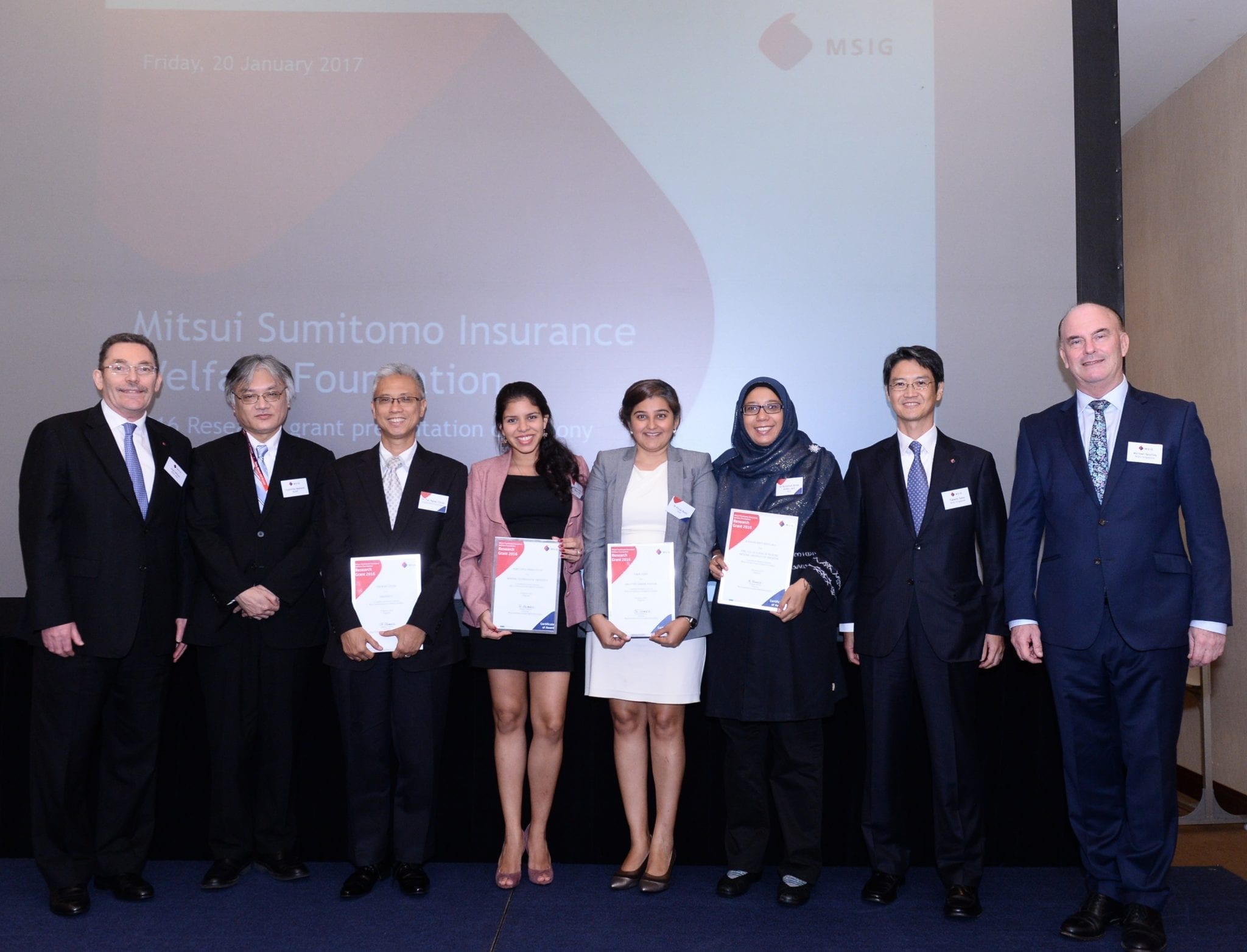
    This year’s winners of the Mitsui Sumitomo Insurance Welfare Foundation (MSIWF) research grant, awarded for exceptional insight and potential, comprised of some of Singapore’s leading researchers that aim to make a difference by solving Singapore’s key traffic and healthcare issues for the nation’s ageing population.

    The 2016 winners are:

    • Ms Maria Cecilia Rojas Lopez, PhD candidate at the School of Civil and Environment Engineering at Nanyang Technological University, for her research that will lead to the development of traffic schemes and policies for the safety of cyclists and pedestrians on footpaths. For this project, Rojas Lopez will study cyclists’ behaviour and their interaction with other path users, which is a potential issue since bicycles have been allowed on footpaths in Singapore since March 2016.
    • Dr Tan Ngiap Chuan is a Family Physician, Senior Consultant and Director, Research at SingHealth Polyclinics. His proposed study aims to find out how common is the age-related loss of muscle mass and muscle function, known as “sarcopenia” among elderly patients. Sarcopenia has been shown to be worse amongst the elderly with diabetes. Muscle weakness resulting from the reduced muscle bulk and strength will subject the elderly to increased risks of frailty, falls, fractures, hospitalisations and even premature deaths. The findings from this study will allow doctors, nurses and other healthcare professionals to identify the reasons leading to sarcopenia, so that solutions can be developed and assessed if they are effective in reducing the muscle bulk loss, in maintaining or even strengthening their muscle functions.
    • Dr Kinjal Doshi, principal clinical psychologist at Singapore General Hospital, aims to create a better tool for use in identifying loss of functional abilities among the elderly. 
    • Dr Rufaihah Binte Abdul Jalil, assistant professor at the NUS Yong Loo Lin School of Medicine, will design a diagnostic tool for atherosclerosis, a main illness known to harden the arteries usually affecting the elderly.
    • MSIWF is a non-profit organisation that is part of the Mitsui Sumitomo Insurance Company, Limited, and supports researchers in Japan, Singapore and Thailand for practicable research in two key areas: senior citizen welfare and traffic safety. The MSIWF research grant is unique compared to others, as it supports interdisciplinary research at its early stages, where it is generally tougher for researchers to obtain funding elsewhere. 

    This year marks the 10th anniversary of MSIWF grant support in Singapore, which was introduced in 2007 for the first time outside of Japan. Since then, MSWIF has supported 38 research projects and has disbursed grants worth more than about S$363,000.

    “At MSIG, our focus goes beyond financial profits. It is our mission to help secure a sustainable future for the communities at large. With a growing ageing demographic in Singapore, solutions for improving the quality of life are critical for sustainable growth. This grant from Mitsui Sumitomo Insurance Welfare Foundation aims to empower talented researchers to do just that,” said Mr Alan J. Wilson, Regional CEO of MSIG Holdings (Asia) Pte Ltd. 

    The call for the 2016 grants was launched in June last year, and a total of 246 applications were received globally. The winning projects will conduct their research over the next 12 months and their findings will be published in scientific journals as well as shared with the Foundation during next year’s presentation ceremony in 2018.

  • Alpecin Opens Official Retail Channel in China

    Alpecin Opens Official Retail Channel in China

    The power of Chinese overseas retail shoppers has again caught the attention of international media. This time several German media channels have covered the story “First milk powder, now shampoo – Chinese consumers, again, go crazy for our products” — now Chinese cross border shoppers have discovered the German anti-hair loss caffeine shampoo brand “Alpecin”.

    Germany’s biggest business newspaper FAZ reports that the massive interest of Chinese importers, especially for the well-known anti-hair loss product “Alpecin” has led to a situation where some major German retailers have run out of stock due to increased demand.

    Dr Wolff and the retailers are considering to limit sales quantities for Alpecin in Germany to avoid further stock shortages.

    Price increases and stock shortages in China are not be expected.

    Many Chinese consumers are searching for new ways and channels to purchase Alpecin products from abroad, not knowing if the products are real or fake. There is, however, a safer and quicker way to purchase the Caffeine Shampoo Brand as the company entered the Chinese market in April 2016.

    Alpecin’s 3 best selling products are available in over 2,000 Watsons stores in Shanghai, Beijing, Guangzhou etc., and the brand has also initiated online distribution via the online platform Tmall. The brand pledges to its Chinese customers that all its products, whether sold in Germany or China, preserve the same quality standard.

    “We are very happy about the trust of the Chinese customers in our products. We know that this trust is mainly based on the ideal of quality ‘Made in Germany’,” says CEO of Dr. Wolff Mr Eduard Doerrenberg. Knowing that this massive demand for infant formula in Germany led to a massive price increase in Asia “We are not willing to allow any such price surge. We have a regional stable pricing strategy and will not take advantage out of the current situation.”

    Alpecin, a product developed by the scientific research team of the German company Dr. Wolff in the year 1930, is a product that prevents hereditary hair loss. According to studies, 80% of men that suffer from hair loss are prone to that problem due to genetic reasons. Alpecin’s main ingredient that battles this kind of hereditary hair loss is “caffeine”. It penetrates the hair root and promotes longer hair growth phases and therefore prevents hair from falling out early.

  • Indonesia’s CT launches cinema blitz to boost retail chain

    Indonesia’s CT launches cinema blitz to boost retail chain

    Indonesia’s CT Corp. is partnering with cinema operators to open movie theaters in its commercial complexes. The retail and media conglomerate hopes to tap growing demand for entertainment and gain an edge over other retailers.

    On Wednesday, CT retail arm Trans Retail announced a partnership with Graha Layar Prima, operator of the CGV cinema chain (formerly known as Blitz Megaplex), to develop cinemas at CT’s Transmart Carrefour stores across Indonesia.

    CT officially launched its Transmart centers, which feature restaurants, apparel stores and supermarkets, in 2016 and currently operates 13 outlets across the archipelago. It plans to invest $3 billion to expand the number to 100 by 2019.

    “For the next three years, we will deliver [a] minimum of 500 [cinema] screens” to Transmart centers, CT founder and Chairman Chairul Tanjung told the Nikkei Asian Review on the sidelines of a recent business conference in Hong Kong.

    GLP will open CGV cinemas in four Transmart centers in Java and Sumatra in May, with plans to add four more by the end of the year. Each cinema will have five screens. CGV theaters stand out for their 4-D entertainment systems, sofa-type seating for couples and VIP spaces that serve drinks and snacks. CT is targeting the country’s growing middle class, which is expected to account for nearly half the population by 2030, compared with 19% in 2010, according to a 2012 report by McKinsey Global Institute.

    Mall operators have been keen to invest in the growing entertainment market to set themselves apart amid stiff competition from convenience stores and online retailers. Lippo Group, the largest mall operator in Indonesia, is aggressively expanding its own cinema business, with plans to have 2,000 screens across 85 cities by 2024.

    The relative scarcity of entertainment facilities and scorching temperatures in Indonesia have made movie theaters an increasingly popular destination there. GLP said its cinemas attracted over 10 million visitors in 2016, up 150% from 2012. The top-grossing domestic film this year raked in a record 205 billion rupiah ($15.3 million), according to local media.

    GLP aims expand its network of cinemas to 40 from the current 27. The partnership with CT provides it a major retail platform for increasing its footprint at a time when cinema operators are bracing for fiercer competition amid a wave of deregulation. In 2016, the government removed film projection, production and distribution from its list of businesses with foreign investment caps. In December, Singaporean sovereign wealth fund GIC announced that it will acquire an undisclosed stake in Nusantara Sejahtera Raya, Indonesia’s largest cinema operator, for 3.5 trillion rupiah.

    Satria Hamid, a spokesperson for Trans Retail told that the company signed a deal in December to install NSR’s Cinema XXI movie theaters in at least four Transmart stores in 2017.

    Even as cinema and mall operators take steps to gain an edge over traditional and online retailers, a new wave of competition is emerging in the form of online streaming services, such as Netflix.

  • University of Hong Kong sees increase in Indonesian student applications

    University of Hong Kong sees increase in Indonesian student applications

    Shopping, entertainment and leisure may be the three words synonymous with Hong Kong. However, those are no longer the only reasons for Indonesians to visit the region as it has become a destination to pursue higher education.

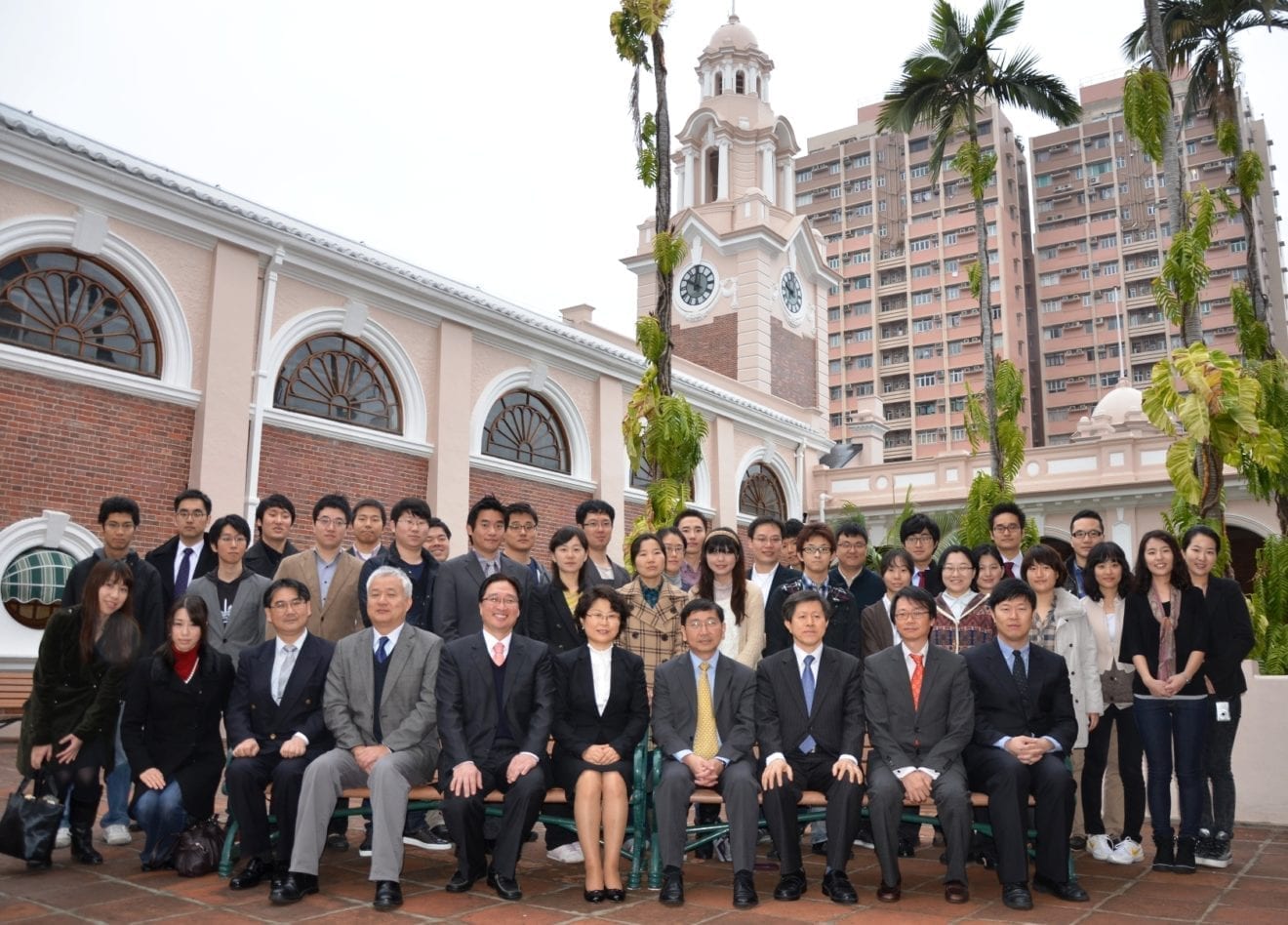
    Phillip Beh, chairman of the University of Hong Kong (HKU) Undergraduate Admissions Committee told on Saturday that the university had seen an increase in applications from Indonesian students since it opened its first undergraduate admission interviews in Indonesia in the academic year of 2014/15.

    Beh said on average 200 applications are received from Indonesian students annually. However, applicants face tight competition as only 400 international students are accepted into the university each year. At present, there are about 90 Indonesian students enrolled in HKU, mostly majoring in Food and Nutritional Science and Risk Management.

    Pinto ‘Pipin’ Rasika Tasdyata (center-left) and Jelita Amidjaja (center-right) talking with other Indonesian students who act as observers in HKU’s open house, undergraduate admission interviews at South Jakarta, Saturday.(JP/Masajeng Rahmiasri)

    Jelita Amidjaja, alumni of BPK Penabur 1 High School Jakarta currently studies Actuarial Science in HKU. She chose Hong Kong mainly because of its reputation as the melting pot of Asian and Western culture, besides its proximity to mainland China which allows her to study Chinese culture. “Right now, China is a strong country, so you would want to learn about the culture,” she said.

    Pinto “Pipin” Rasika Tasdyata studies Business Administration (Internal Business and Global Management) in HKU.  She said that what appealed to her about Hong Kong apart from its culture was the business prospects of the region. “It is the business hub that people recognize. I know Hong Kong and China will grow,” she said.

    Global university ranking publication, QS World University Rankings ranked HKU at 27th place in its 2016 world rankings, while UK-based education publication, Times Higher Education puts HKU in third position in its international outlook in 2016. Apart from its academic reputation, Indonesian students Pipin and Jelita also aim to gain future opportunities via HKU’s connections.

    “It is a very connected university. There are opportunities that I can get from there, from internships, overseas partners, and many more,” Pipin said, adding that the university also sends daily emails to students containing news about internships and various opportunities.

    Indonesian parents who send their children to HKU take into consideration the relative tuition fees. Taman Djojomitro, a parent who accompanied his son to HKU’s open house last Saturday highlighted the study cost comparison with the United States, “It’s quite expensive to study in America, especially when the exchange rate is Rp 13,000 to the dollar now.”

    Yearly tuition fees for international students in HKU start from HK$146,000 (US$18,824). With accommodation fees within the range of HK$12,000 to HK$26,000 plus living costs of approximately HK$40,000 per year, it is a significant difference to what normally constitutes average spending when studying abroad. According to QS World University Rankings, the average total cost of studying in a public university in the US currently averages $39,890 for international students.

  • Tourist arrival number 32m sets new Thai tourist record

    Tourist arrival number 32m sets new Thai tourist record

    The Tourism Authority of Thailand (TAT) says a new record was broken at the end of December when it received its 32-millionth visitor. The red carpet was laid out to welcome the fortunate arrival as part of ’Thailand’s Luckiest Visitor’ campaign which was originally started in 2015 to recognise and reward every millionth visitor to Thailand, from the 13 millionth to 29 millionth during June to December.

    TAT says that this campaign has subsequently proved to be hugely popular, with both tourists and media helping to enhanced Thailand’s brand image.

    So much so, that Thailand is expecting to earn total international tourism revenue of around Baht1.62 trillion (US$46bn) in 2016, representing a year-on-year increase of 11.68% compared to 2015.

    BIG PUSH TO ENCOURAGE MORE ARRIVALS

    To boost these numbers further, TAT says that several initiatives have been put in place to encourage more tourist arrivals, including visa waiver fees for visitors from 19 countries from 1 December, 2016, to 28 February, 2017 and a halving of visa-issue fees on arrival over the period.

    Meanwhile, the Tourism Authority of Thailand and the Tourism Ministry have announced newly revised tourism revenue targets for 2017 Bt2.71 trillion ($76.1bn) which represents an 8.2% rise on 2016.

    This follows earlier statements suggesting that Thailand’s tourist numbers for 2016 are now expected to total around 32.6m when the final count is in – an increase of around 8%.

    In addition, TAT has confirmed that it is bringing back its Thailand Tourism Festival (TTF) to coincide with Chinese New Year 2017 between 25-29 January this month. It is hoping his will attract more than 650,000 visitors.

  • Vietnam unemployment rate at 2.3%

    Vietnam unemployment rate at 2.3%

    The Ministry of Labor, Invalids and Social Affairs said in its report that the ministry has focused efforts on looking for solutions to develop the labor export market as the domestic market is having trouble.

    Around 1.6 million people were offered jobs last year, a 1% year-on-year increase. Of which some 1.5 million employees earned jobs in the country, up 0.3%, and 126,000 were sent overseas as guest workers, up 9.6%. The unemployment rate was 2.3%, broken down into a high rate of 3.18% in urban areas and 1.86% in the countryside.

    However, there are still many shortcomings in creating jobs, especially for young adults and fresh college and university graduates. The third quarter of last year saw 202,000 with university or higher degrees unemployed. The number of students enrolled in vocational schools was still limited.

    In addition, the number of Vietnamese working overseas illegally after the expiration of their work contracts has declined but still quite high in South Korea and Taiwan.

    The number of workers sent overseas for guest work in 2016 grew by over 9%. However, Deputy Prime Minister Vu Duc Dam warned there should be stringent regulations towards Vietnamese employees working overseas. Otherwise, potential and major markets like Japan and South Korea will reject Vietnamese workers in the future.

  • Fuel prices increase at pumps in Cambodia

    Fuel prices increase at pumps in Cambodia

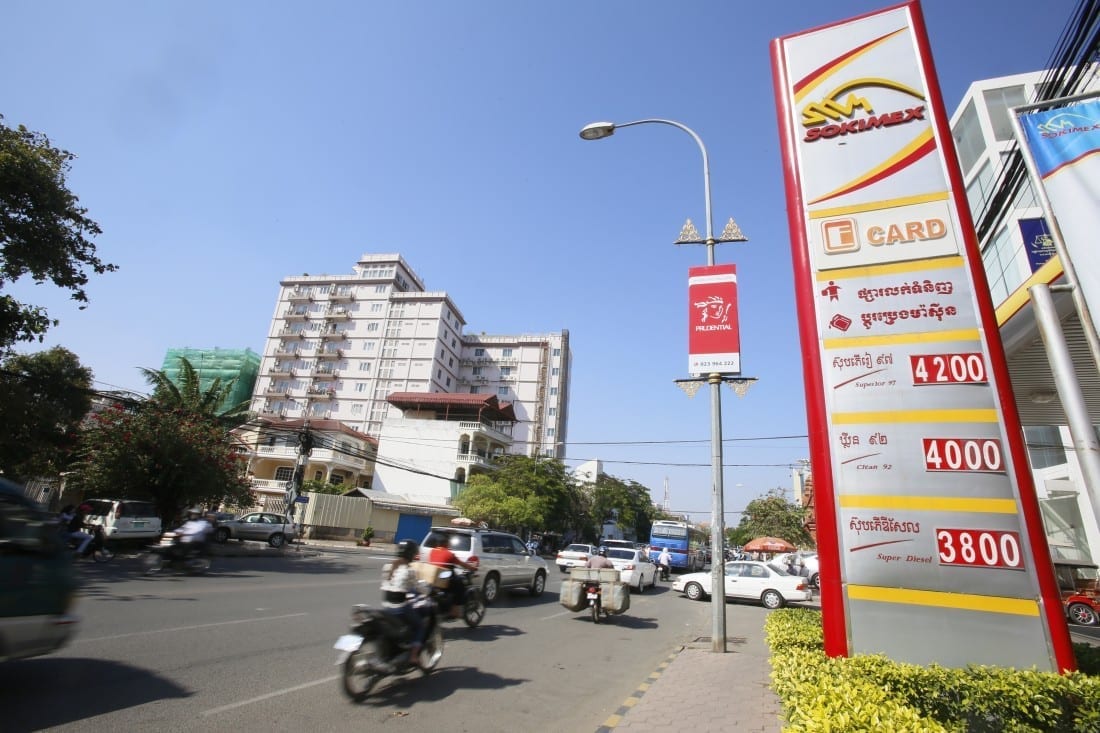
    Road users can expect to pay up to 500 riel ($0.12) more per liter of fuel due to the increase in global crude oil prices after the government last March pegged local prices to that of the international market, a Commerce Ministry official said yesterday.

    From today until January 21, drivers can expect to pay 3,850 riel ($0.95) per liter for Gasoline 95, up 500 riel ($0.12), 3,750 riel ($0.93) per liter for Gasoline 92, up 450 riel ($0.11), and 3,450 riel ($0.85) per liter for diesel, up 450 riel ($0.11).

    “Please understand that the mechanism is just to prevent gas prices from increasing higher than that of the global gas price or when global gas prices go down, all local retail gas stations in Cambodia are also compelled to bring down the prices,” Commerce Ministry spokesperson Soeng Sophary said.

    “This formula is not intended to keep gas prices in Cambodia low even when global gas prices are on the rise.

    “We just want to prevent retailers from increasing their prices beyond that of global prices. We will follow the global market price,” she explained.

    Gas prices have been steadily increasing since November last year.

    The government last March announced that it would be standardizing retail gas prices in Cambodia by pegging them to world oil prices in the wake of the plunging global crude oil price the year before.

    The Commerce Ministry was tasked with releasing updated prices to all retail stations every 10 days, on the first, 11th and 21st of each month.

    Ms. Sophary attempted to quell dissatisfaction over the increase in prices by explaining that the new mechanism of calculating prices made Cambodia susceptible to world oil prices, which fluctuate according to global markets.

    “We are easily affected if there is any issues going on within those larger economies,” she said. “We cannot ask to lower gas prices when the global economic system is always changing since we have to follow the global situation.

    “The price could go down after US President-elect Donald Trump takes office later this month or it could increase if there are any issues in the EU or if there is ongoing terrorism in Turkey,” she said, adding that Cambodia would only be able to experience consistently low gas prices if it could produce its own refined product.

    PTT (Cambodia) deputy managing director Bin Many Mialia told yesterday that he understood the price hike given the new pricing mechanism, but remained optimistic as given the uncertainty of the global political climate, world oil prices could see a reduction next month.

    “The price for gas in Cambodia goes up and down since we are solely, 100 percent dependent on international gas prices. We cannot adjust the price, increase it or lower it, we cannot predict what the gas price will be. It’s up to the international market price,” Mr. Many Mialia said.

    “Now we see the trend of the oil price being high, but we will wait and see next month whether it continues to increase or if it will fall. All the countries don’t know what the US policy will be like or what the regional situation will be,” he added.

    According to a report from the Cambodia Import-Export Inspection and Fraud Repression Directorate-General, oil imports to Cambodia increased by one percent in the first 11 months of 2016, while the value of oil imported dropped by about 28 percent.

    The report showed that from January to November 2016, Cambodia imported 1.5 million tons of oil, compared with 1.49 million during the same period in 2015.

    Gas prices decreased by 16 percent, while diesel and petroleum prices dropped 19 percent and 28 percent respectively.

    The value of the oil imported throughout those 11 months last year stood at $615 million compared with $858 million the year before.


  • Insurer Sun Life Indonesia values qualified agents

    Insurer Sun Life Indonesia values qualified agents

    Life insurer Sun Life Indonesia aims to have more qualified agents to market their products rather than just make the numbers, the company top executive has said.

    The firm gathered on Friday 1,000 of its most high-achieving agents for the annual “Year Start” event in Jakarta to brief them of the insurer’s vision this year and to ensure them to be ready to face a more competitive insurance industry.

    “We are launching several new initiatives in 2017, which are designed to improve our marketing agents’ productivity and to also encourage them to develop their skills and capacity,” Sun Life president director Elin Waty said.

    She added that the agency’s contribution reached around 55 percent of the firm’s insurance distribution last year and the company planned to have a similar share this year.

    The insurer uses a contract maintenance system, which obliges its agents to achieve certain targets or their contracts will be terminated to ensure the company has capable agents.

    “If this contract maintenance system wasn’t implemented, my agents would probably number 100,000,” Elin said.

    Currently, Sun Life has around 10,100 agents nationwide, a steady increase from its 9,000 agents in 2015.

    “We aim to do better in 2017 by focusing on our human resources, technology and brand,” said Sun Life Asia president Kevin Strain.