Category: Living

Retail News Asia is committed to providing both local and global retailers with the latest Living news throughout the Asian market. This on a daily base.

  • Pilot shortage puts Vietnamese airlines on standby

    Pilot shortage puts Vietnamese airlines on standby

    Big bonuses are being offered by airlines to woo more pilots. Vietnamese airlines are grappling with what they believe to be a serious shortage of professional pilots, so to keep the pilots they currently have on their payrolls and to lure new ones, they are offering hefty bonuses.

    “Vietnam’s airline market is growing rapidly, so there’s a huge demand for qualified professional pilots,” Lai Xuan Thanh, the director of the Civil Aviation Administration of Vietnam, said at a recent meeting of transport authorities.

    He added although salaries in the airline industry have increased significantly in recent years and many airlines have even offered fat bonuses to attract and retain professionals, the supply remains below the demand. According to the aviation administration, that demand is growing at 5 percent per year.

    The CAAV has mainly blamed the shortage on the fast-growing airline market.

    Vietnam’s airline industry is growing at the third-fastest pace in the Asia-Pacific region with the number people traveling by air in 2016 jumping by 29 percent from 2015 to about 52 million.

    To meet the demand, local carriers have expanded in recent years, buying more planes, opening new routes and increasing the number of flights.

    “At present, the shortage of pilots is endemic throughout the airline industry,” Thanh said. “For example, only 30 percent of national flagship Vietnam Airlines’ pilots are Vietnamese. The figures at low-cost carriers Vietjet Air and Jetstar are much lower.” he said, implying that domestic airlines are having difficulties hiring enough pilots to replace retirees and to support expansion.

    The aviation administration suggested that airlines could offer more bonuses and even set up partnerships with flight centers.

    “The CAAV will not issue executive orders to help ease the shortage. Airlines will have to transform themselves to retain workers,” said Thanh.


  • Chinese tourists visiting Bali up 41.28 percent in number

    Chinese tourists visiting Bali up 41.28 percent in number

    The number of visits by Chinese tourists to Bali rose 41.28 percent to 907,028 in the first 11 months of 2016 from 642,000 in the same period in 2015.

    “Most of them flew directly to Bali via the Denpasar International Airport of Ngurah Rai with only 886 of the visits by sea as passengers of tourist boats, head of the Provincial Central Bureau of Statistics (BPS) Adi Nugroho said here on Thursday.

    He said Chinese made up 20.22 percent of the total number of 4.48 million visits by foreign tourists to Bali in the January-November period of 2016.

    China is now the second largest country of origin of foreign tourists to Bali after Australia.

    Adi Nugroho said the number of visits by Australian tourists to Bali in the same period totaled 1.04 million, up 19.46 percent from 876,748 visits in the same period in the previous year.

    Australia accounted for 23.35 percent of the total number of visits by foreign tourists to Bali topping other countries, he added.

    Meanwhile, tourism observer Tjokorda Gde Agung said Chinese, who had come in throngs for holidaying in Bali could soon overtake Australians in number.

    “It is very likely especially with the growing number of direct flights between Denpasar and Chinese cities,” Tjokorda said.

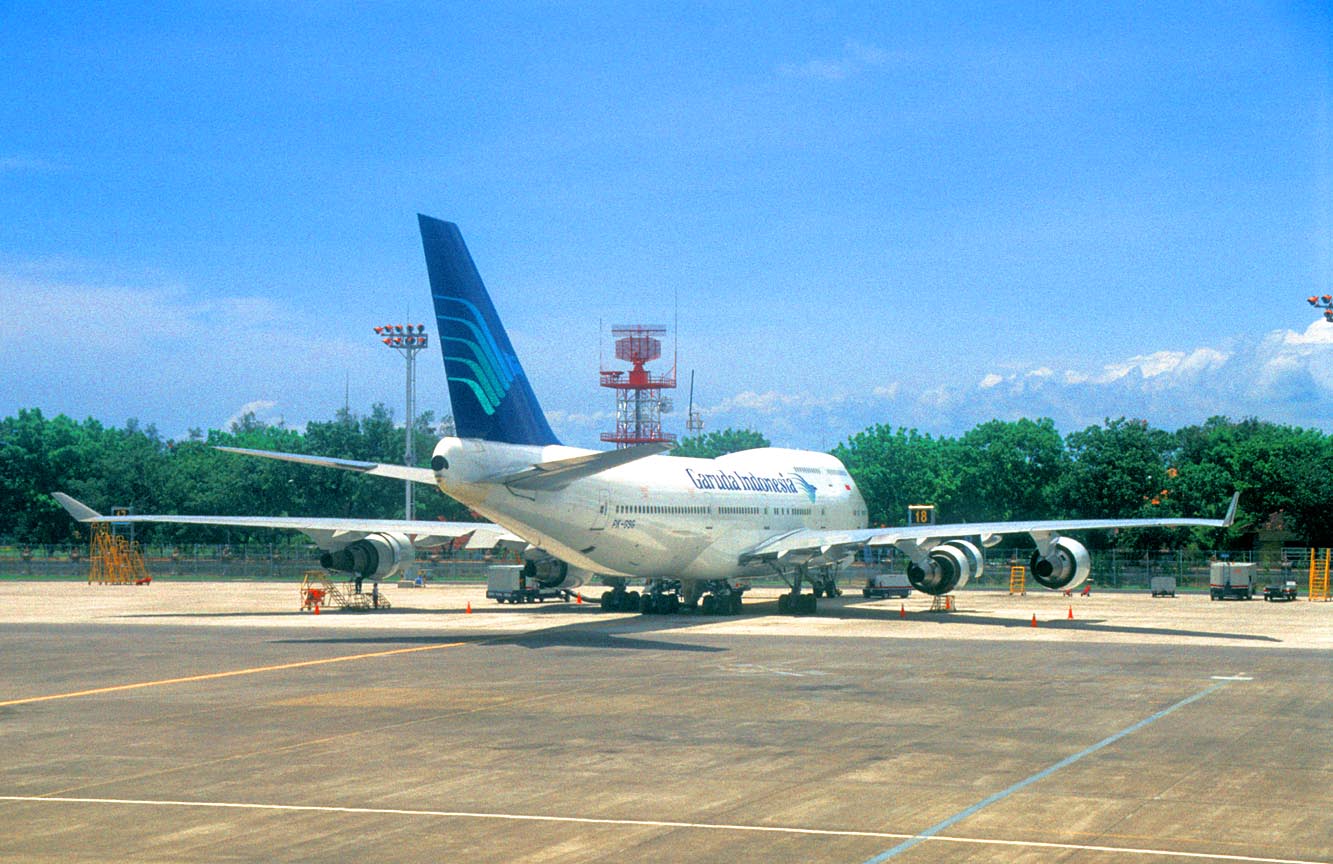
    The nations flag carrier Garuda Indonesia itself already served regular flights directly between Bali and China, he said.

    “The direct flights would certainly contribute greatly to growing number of Chinese tourists to Bali,” he said.

    The 41.28 percent increase was the second highest after a 60.59 percent increase recorded in the number of Indian visitors to Bali in the same period.

    The number of visits from 10 largest countries of origin all increased excepting from Malaysia and South Korea.

    With the trend , the target of 5.5 million visitors to Bali set for 2017 is expected to be easily reached.

    Indonesia hopes to draw more Chinese tourists to meet its target of 20 million visits by foreign tourists in 2019 from the target of 12 million in 2016.

    China has become a potential tourism market. A record high of 133 million Chinese tourists were estimated to make outbound trips by the end of 2016, according to the report released by the China Tourism Academy and the financial services company UnionPay International.

    The figure would mark an 11.5 per cent rise from 2015.

    Hong Kong, Macau and Taiwan remain the top choices for mainland tourists, according to a report.

    Chinese tourists are increasingly getting involved in leisure activities and learning about local lifestyles when traveling overseas rather than just shopping, according to the report.

    Chinese tourists spent US$104.5 billion overseas in 2015, up 16.6 per cent from 2014, and a growing number of foreign countries including Indonesia are relaxing their visa requirements for Chinese tourists to tap their purchasing power.

    Tourists from China along with many other countries are offered visa free travel by Indonesia.

  • Spotify launches programmatic audio campaigns in APAC

    Spotify launches programmatic audio campaigns in APAC

    Spotify and Rubicon Project have launched programmatic audio advertising campaigns in APAC for the Australia, New Zealand, Hong Kong and Singapore markets following the music streaming service’s foray into global programmatic audio solution earlier this year. With the launch of the campaigns, brands will be able to target audiences based on Spotify “moments” such as commute, party and workout.

    Spotify users do not just browse for music by genres or artists, but also playlists that express the moods of those moments. Programmatic audio advertising allows buyers to target those moments based on users’ age and gender in real time. Its audio inventory is traded programmatically via private marketplaces on Rubicon Project’s platform.  In a statement, Joanna Wong, head of business marketing at Spotify for APAC, said the campaign presents advertisers with a new channel to reach consumers.

    “Since the launch of our programmatic audio campaign in August we have seen an incredible response in APAC,” said Wong. “Programmatic audio advertising means that buyers can reach individuals at scale based on not just the usual age, gender and geographical identifiers, but on a whole new data trove–their taste in music,” she added.  “Spotify’s programmatic audio proposition demonstrates the future of all media going programmatic.

    Our recent ventures into out of home, TV and now audio are all a part of this broader automation trend, and we look forward to continuing to collaborate with innovative partners like Spotify to offer buyers innovative ways to engage with consumers,” said Rick Mulia, managing director of JAPAC at Rubicon Project. A Tech Navio report mentioned that APAC will be the fastest-growing region in the music streaming market with around 21 percent compound annual growth rate by 2020.

    Widespread smartphone penetration and high speed data connectivity are expected to further augment the growth of the music streaming market in APAC over the next four years.

  • Apple may produce original TV and movie content

    Apple may produce original TV and movie content

    Apple has reportedly become the latest technology company to plan a foray into producing original television and movie content.

    Sources told that Apple is preparing to produce original content for its $10 per month music streaming service, to help it better compete against Spotify.

    Apple Music has been testing the water with some documentary content about musicians but now plans to make the jump into premium programming.

    According to the report, Apple hopes its content could prove to be as internationally popular and critically loved as programming such as Netflix’s Stranger Things.

    But the company does not appear to be planning to spend the vast sums that would be required to become a direct competitor to Netflix and comparable services or premium cable networks such as HBO. Instead, Apple has firmly set its sights on Spotify, which currently has around twice the paying subscribers as Apple Music, at around 40 million to around 20 million.

    Apple has been exploring directly entering the entertainment business for years, but nothing has yet eventuated, the report states.

    But with the smartphone market rapidly maturing and competition intensifying in key markets such as China, the company needs to find replacement revenue streams to compensate.

  • Central province boosts tourism

    Central province boosts tourism

    The central province of Thừa Thiên-Huế expects to see a surge of investment in tourism this year in light of interest expressed by investors last year.

    Lê Văn Thu, director of the investment promotion and support centre of Thừa Thiên-Huế, said the province will conduct  more investment promotion to attract investors in 2017.

    In 2015, the province granted only nine Foreign Direct Investment (FDI) projects for a total of $451 million. In all, the province attracted 88 foreign direct investment projects with total investment capital of US$2.1 billion from 2000 to 2016.

    Thu said the PSH Group from Spain is eyeing development of a resort in Vinh Thanh with a registered capital of $145 million, while the BRG Group has approached authorities with plans to develop a resort and golf course complex in Vinh Thanh-Vinh Xuân with an investment of VNĐ2 trillion ($88.5 million).

    Bitexco also plans to invest VNĐ545 billion ($24.1 million) in the hot-spring resort in Mỹ An.

    According to the centre, Bitexco Group was granted an investment license for an eco-resort and an urban project in Lập An lagoon with a registered capital of VNĐ3.3 trillion ($146 million).

    The My Way Hospitality company also plans to invest in Bạch Mã resort with an estimated investment of VNĐ1.5 trillion ($66.4 million).

    Thu said the province is seeking investment in high-tech, tourism, logistics, health care and high-tech agriculture, offering competitive labour and land costs.

    Several financial incentives have been provided to attract investors, such as tax exemptions for the first four years of operation, a 50-per cent tax reduction for the next nine years, and a 50-per cent tax rate reduction for high-income employees, according to Thu.

    He said one of the largest planned tourism projects is a $875-million complex being financed by the Banyan Tree Group of Singapore.

    The Huế City area has 128km of coast and 22,000ha of lagoon for tourism development in connection with UNESCO-recognised world heritage sites in the central region.

    The province has developed six industrial zones to attract garment, industry, food processing and mining, projects and create nearly 14,000 jobs.

  • Household consumption key to achieving economic growth in 2018

    Household consumption key to achieving economic growth in 2018

    The head of Indonesias National Development Planning Agency (Bappenas), Bambang Brodjonegoro, has said household consumption and inflation will be the key to achieving higher economic growth in 2018.

    “To ensure consistent growth, the best recipe is to maintain the rise in household consumption, while keeping the growth at five percent or more,” Bambang said as he provided directives at a Bappenas consultation gathering in Jakarta on Friday.

    According to Bambang, household consumption will rise only when consumers have confidence about economic outlook and spend money.

    Bamang stressed that the central and regional governments should be able to ensure a perception of a normally-running economy so that people are willing to spend money.

    “If people spend money (to shop), it means household consumption is increasing, which boosts economic growth. When people shop, retail trade increases, large trade also rises, and the economy registers growth,” explained Bambang.

    Meanwhile, inflation itself should be kept as low as possible. According to Bambang, controlling inflation was the most effective way of maintaining purchasing power.

    If inflation is allowed to erode purchasing power, he added, the growth in household consumption will also be affected.

    When it comes to inflation itself, three factors can have an impact. These are a rise in food prices, change in government-set (administered) prices and core inflation. As far as core inflation is concerned, it is the task of Bank Indonesia to control the availability and demand for money. The administered price falls under the central governments authority.

    Bambang reminded that at times, two aspects can be controlled but food prices can become volatile. As a result, inflation seems higher than it should be.

    “This becomes a matter of concern in the region. Of course, there are no specific instances in the region about dealing with inflation, and response should be coordinated. But it needs to be consistently ensured that inflation should be kept as low as possible by maintaining food price stability and meet the peoples food needs,” Bambang concluded.

  • Indonesia seeks to boost tourist visits from Europe

    Indonesia seeks to boost tourist visits from Europe

    Indonesia is seeking to lure more European tourists to visit the country by promoting its national tourism industry in the Matka-Nordic Travel Fair 2017 that will be held from January 19-22 in Messukeskus, Helsinki, Finland.

    “Indonesia has set the target of attracting at least 2.1 million European tourists to Indonesia,” Deputy Assistant of Europe, Middle East, America and Africa Market Development of the Tourism Ministry Nia Niscaya said here Monday.

    Pointing out that the travel fair will be held in Finland, Niscaya stated the Nordic countries, including Denmark, Finland, Iceland, Norway and Sweden, offered great potentials for the countrys tourism industry.

    In 2015, the official data showed that as many as 98,960 tourists from the Nordic countries had visited Indonesia.

    “The number is predicted to be more in 2016, as until October itself, the number of tourists from the Nordic nations visiting Indonesia had reached 95,196,” Niscaya revealed.

    During the largest travel exhibition in Northern Europe, Indonesia will showcase several industries that will present and promote the countrys tourism potential at the Pavilion Indonesia booth.

    Several Indonesian traditional dances will also be performed during the travel fair. Visitors would also be invited to taste Indonesias traditional drink in the exhibition booth, Niscaya mentioned.

    “Using the tagline Wonderful Indonesia Explore Further, we want to showcase its biodiversity, unique handicrafts, music, variety of culinary delights, tourism destinations and most importantly, its diversity and the hospitality of the people,” Niscaya explained.

    The government of Indonesia has set a target of increasing the number of tourist visits from 9.5 million in 2014 to 20 million in 2019.

    The country has also developed 10 prioritized destinations, namely Lake Toba in North Sumatra, Tanjung Kelayang in Belitung, Mandalika in South Lombok, Wakatobi in Southeast Sulawesi, Morotai in North Maluku, Seribu Islands in Jakarta, Tanjung Lesung in Banten, Borobudur Temple in Central Java, Mount Bromo in East Java, and Labuan Bajo in East Nusa Tenggara.

    The government has also provided short stay free visa on arrival for tourists from 169 countries, including Finland, to increase the number of tourist visits.

  • Why Vietnam should care about how much Chinese tourists splurge

    Why Vietnam should care about how much Chinese tourists splurge

    More spending by Chinese visitors can boost Vietnam’s GDP by 1 percentage point. As more Chinese travel around the world, they leave bigger impacts wherever they go. Now experts say for countries that receive a large number of Chinese arrivals, including Thailand and Vietnam, their economic growth will be influenced by the spending habits of these visitors.

    A 30 percent increase in spending by Chinese tourists would boost Vietnam’s gross domestic product by nearly 1 percentage point, citing Credit Suisse. For Thailand, that would be around 1.6 points.

    Vietnam’s economy is expected to expand 6 percent this year, before speeding up to 6.8 percent next year.

    Mainland China accounted for 30 percent of all tourists to Vietnam, with more than 2.48 million coming in the first 11 months this year, up 54 percent from the same period last year. It was the biggest source market, and only came after Hong Kong in terms of growth.

    In October, the Chinese Tourism Administration released a top 10 list of favorite destinations for Chinese travelers, ranking Vietnam at seventh.

    Edward Lee, an economist with Standard Chartered Plc in Singapore, said that tourism in Southeast Asia will benefit from the growing Chinese demand.

    The number of Chinese tourists into Asia as a whole has grown tenfold since 2000, Lee said. They now account for a quarter of tourists in Thailand, which came first in the China’s list of top 10 favorite destinations.

    “Chinese tourism is pretty big for ASEAN now, and all the countries rely on Chinese visitors to keep coming and keep spending,” Lee was quoted as saying.

    Many direct flights are serving Vietnamese major cities from China. A large number also entered via northern border provinces, particularly Quang Ninh, home to the much loved Ha Long Bay.

    Quang Ninh has announced that it will ease visa requirements for Chinese visitors from January 1, allowing groups of Chinese travelers to stay for up to three days without a visa.

    Harry Sa, a research analyst at the S. Rajaratnam School of International Studies, told that “China can do wonders for the economy and the countries in the region understand.”

    Most countries welcome that, even those that have tensions with China, he said, referring to the overlapping claims in the South China Sea (which Hanoi calls the East Sea) that involve Malaysia, the Philippines and Vietnam.

  • Hanoi announces transport plan to 2030

    Hanoi announces transport plan to 2030

    According to the plan, from now to 2030 Hanoi will develop a system of highways with 4-8 lanes linking Hanoi-Lang Son, Hanoi-HCM City, Hanoi – Thai Nguyen, Ha Noi – Hai Phong, Hanoi – Ha Long, Hanoi – Hoa Binh, Tay Bac – Highway 5, Hanoi-Ho Chi Minh Highway, and turn Thang Long Boulevard and Phap Van – Cau Gie Highway into urban highways.

    From now until 2030 Hanoi will also complete its belt roads and build 18 bridges crossing the rivers of Red, Duong, Day and Da.

    The city will give priority to developing public transport systems, which aims to serve up to 50-55% of the travel demand in the inlying areas and 40% in the suburbs.

    The plan also specifies that about 33,237 hectares of land will be devoted to traffic system development and the total funding needed for this plan is estimated at over $55 billion.

    The capital is expected to come from the state budget, ODA loans, and from private investors through transport projects in the forms of BT (build-transfer), BOT (build-operate-transfer), PPP (public private partnership), and BOO (build-own-operate).

    The capital city of Hanoi was extended in accordance with Resolution No. 15/2008/NQ-QH12 on May 29, 2008 of the National Assembly with a total area of more than 3,344 sq.km. However, its transportation system has fallen short of requirements for urban development at present and for the future.

    In late 2012, Hanoi submitted to the Ministry of Construction a Master Transport Plan for 2030, with a vision to 2050, and the master plan was approved by the prime minister on March 31, 2016.

    Accordingly, the population of Hanoi is forecast to grow to 7.44 million by 2020, around 9.2 million by 2030, and 10.8 million by 2050. The plan sets a target to increase the public transit share to over 30-35% by 2020, 50% by 2030, and 70% after 2030.

  • Vietnam lottery firms hike prizes amid tough competition

    Vietnam lottery firms hike prizes amid tough competition

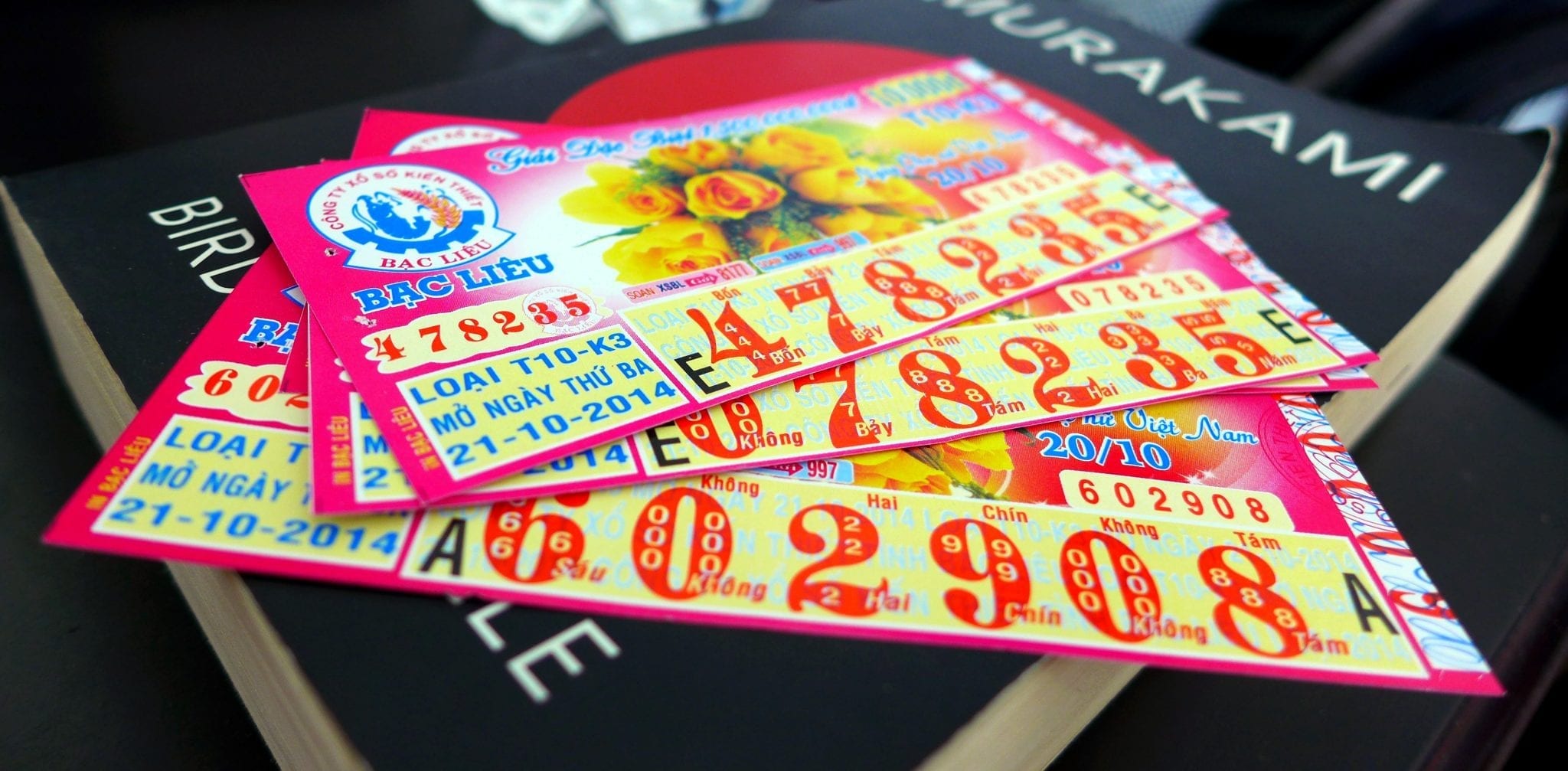
    Traditional lottery companies throughout Vietnam’s south have officially raised their top prizes by a third in an effort to compete with a new emerging American-style jackpot.

    Effective January 1, the firms increased their top prizes to VND2 billion (nearly $86,100), up 33.3 percent from VND1.5 billion ($64,600).

    The hike was based on a decision made by the Southern Lottery Council in October of 2016. Prior to that, traditional lottery prizes in Vietnam topped out at VND1.5 billion ($64,600). Companies who sold the numbered tickets have complained that the mega jackpots have eaten up their businesses.

    A manager at a traditional lottery in Ho Chi Minh City told VnExpress in early October that the number of tickets sold in recent months had declined by about 10-30 percent due to competition from Vietlott.

    On Christmas day, Vietlott, the operator of the American-style lottery, announced that two winners had split a $7 million jackpot–the largest to date. The pair represented the seventh and eighth winners of the lottery, which began two months prior.

    Vietnam’s annual average income was around $2,100 in 2015, according to the World Bank.

    Vietnam generally does not allow its citizens to gamble, but lottery tickets are popular across the country.

  • Kimia Farma to open 100 new outlets

    Kimia Farma to open 100 new outlets

    Kimia Farma Apotek, the operator of hundreds of dispensaries all over the country, will open 100 more dispensary outlets this year. The subsidiary of the state owned pharmaceutical company Kimia Farma said the new outlets would bring the total number of the companys dispensaries to 1,000 units this year.

    Chief Executive of Kimia Farma Apotek Imam Fathorrahman said the management has set aside Rp20 billion for the plan to increase the number of its outlets.

    “Currently the company already has 900 dispensaries with sales valued at a round Rp1.3 trillion last year,” Imam said here on Sunday.

    He said to coincide with its 14th anniversary in January, Kimia Farma Apotek will start entering the market of e-commerce.

    “Holders of smart phones have reached 126 percent of the total population and internet owners around 52 percent. This is an extraordinarily big e-commerce market,” he said.

    In the first phase, the company will eye the Jabodetabek (Greater Jakarta) market and cooperate with order shopping service between Go-Mart.

    “In principle through this service we could be accessed by customers in the Jabodetabek area, Bandung, Surabaya, Bali, and Makassar with more than 250 selected locations of our dispensaries,” he said.

    The digital service, however, is only for non-ethical medicines that could be sold without doctors prescription.

    “This access has become a requirement . People dont have to go to dispensary for cosmetics and drugs that could be bought without doctor prescription,” he said.

  • Myanmar needs to stub out growing tobacco usage

    Myanmar needs to stub out growing tobacco usage

    Myanmar is experiencing tremendous economic growth. With a young, growing population and a liberalised economy, it has been slated as one of 20 ‘markets of the future’ that will offer the most opportunities for consumer goods companies.

    Tobacco has been identified as one of Myanmar’s top 20 key industries. Its market size is worth an estimated US$450 million — up there with dairy products and dried processed foods. The compound annual growth rate from 2013–18 for tobacco is 16 per cent, overtaking apparel (14 per cent) and consumer appliances and electronics (15 per cent).

    With market liberalisation, British American Tobacco (BAT) re-entered Myanmar in 2013 a decade after it exited the country. When re-establishing itself in the country, it announced that it will invest US$50 million in a tobacco manufacturing factory. BAT already has a significant 22 per cent market share in the growing cigarette market.

    Myanmar currently has over 6 million smokers. Like other Asian countries, a high percentage — 44 per cent — of adult men smoke. This number is set to increase given the growing adolescent smoking population.

    In 2010 cigarette sales in Myanmar were about 13 billion sticks, but these sales are projected to almost double to 25 billion sticks in 2018. Myanmar’s projection is the highest increase among all ASEAN countries. This is bad news for the public health system given that Myanmar already has more than 70,000 tobacco-related deaths annually. Myanmar also has the lowest Human Development Index among Asian countries with a global ranking of 148 out of 188 and public health expenditure is a low 1.8 per cent of GDP.

    Myanmar is a typical developing country in that the bulk of smokers are from the lower-income category. Cigarettes are also extremely cheap in Myanmar and within easy reach for the poor. The most popular pack of cigarettes costs only US$0.57. A survey on smoking indicates that about 40 per cent of Myanmar’s youths can purchase cigarettes from a store. Even more worrying is that 15 per cent of non-smoking youths have indicated that they intend to start smoking next year — again the highest percentage in the ASEAN region.

    Myanmar has some basic tobacco control measures in place to address the problem. Since ratifying the global tobacco treaty in 2004 — the WHO Framework Convention on Tobacco Control (FCTC) — the country has passed legislation banning all tobacco advertising and making public places smoke-free, but there is still plenty of room for improvement.

    Myanmar needs to further increase taxes on tobacco products and put it out of reach for the poor and youths. While tobacco advertising and promotions are banned, there are loop holes that can be exploited. Myanmar faces sleek marketing tactics from transnational tobacco companies who take advantage of government officials’ inexperience.

    For example, in 2016 Myanmar passed legislation requiring a 75 per cent pictorial health warning on tobacco packs, making it the second largest health warning in the region after Thailand’s 85 per cent. Japan Tobacco International placed an ‘announcement’ in a major newspaper (Myanmar Times) in October on how it will be complying with the Health Ministry’s requirements. The announcement showed photos of all its packs with and without the pictorial health warnings —  an outright advertisement for its brands.

    Penalties for violations are miniscule for wealthy tobacco companies. Even if authorities act against a company for non-compliance of pictorial health warnings, the fine is a paltry US$7.95 for the first offence.

    This is where civil society groups come into play, they should play a more prominent role in exposing the unethical and exploitative practices of transnational tobacco companies operating in Myanmar.

    It is important for Myanmar to keep abreast of ASEAN countries’ achievements on tobacco control measures. Most countries have already banned advertising at points of sale. Brunei, Thailand and Singapore have banned pack displays at retail outlets. These are the next steps for tobacco control in Myanmar.

    But Myanmar lacks the resources needed for enforcement — particularly staff. It is the only country in the ASEAN region that has not committed national funds for tobacco control efforts. Strengthening tobacco control measures and allocating more resources to enforcement will send a strong message to the public and private sector that the government is serious about protecting public health from the ravages of tobacco.

  • Scavolini to look for new growth opportunities in China

    Scavolini to look for new growth opportunities in China

    Scavolini, a leading kitchen manufacturer, aims to continue to grow by double digits in China and is preparing to launch a new investment plan in the first half of 2017 as it seeks to turn its strongly-domestic brand into an international one.

    At a recent trade show, Chief Executive Fabiana Scavolini announced the company’s expansion plan with eight store openings to support the company’s international strategy.

    “We have interesting development plans in Africa and Asia, let alone Europe, where we will soon open a store in Madrid,” the CEO said.

    As part of the group’s international expansion, China represents a strategic market where Scavolini has been present for years and which “still offers huge opportunities (Federlegno expects design and furniture sales to increase 40% by 2019, Ed’s note), with a good distribution system and solid roots,” the top manager said.

    Scavolini opened its office in office in Shanghai in 2014 and is also present within the Diesel Living space.

    The 460-square meter Scavolini store in Changzhou, recently opened, is located inside the Red Star Macalline Furniture mall, at about one-hour train from Shanghai; it’s the only showroom in the mall visible from outside, thanks to its three big windows, and is Scavolini’s largest store in China. The Chengdu store is located in the city’s most important shopping center, along with 72 top international brands.

    By June 2017, the company will also open in Shenzhen, Hangzhou, Nanjing, Zhengzhou, Xiamen and Wuxi, for a total of 11 stores in China.

    China’s growth is part of Scavolini’s international retail expansion. Last month, it opened a new store in Boston, and a new opening is expected in New York, where the company already operates a showroom on West Broadway.

    “We have exported to the United States for more than 20 years,” the CEO said. “It’s a double-digit growth market and we are very happy with it, both when we work with final consumers or in the contract segment. We expect additional important growth in 2017,” the manager said.

    The “Scavolini Store” plan is part of a larger distribution strategy, with constant investments to grow the distribution network, especially abroad, where the group operates 300 stores, 150 of which in Europe, around 60 in Russia, 30 in North America, 20 in central and south America, another 20 in Asia and Oceania, for a total of over 1,300 stores worldwide.

    Scavolini, which employs 660, celebrated last year its 55th anniversary and reported revenues of €220 million, 20% of which originated abroad.

  • Over 4.48 million tourists visit Bali

    Over 4.48 million tourists visit Bali

    More than 4.48 million foreign tourists visited Bali via the resort islands Ngurah Rai Airport from January to November 2016, up 23.52 percent from 3.63 million in the same period last year.

    Some 4.48 million tourists traveled to Bali by air, and 70,449 others by sea, Chief of the Central Statistics Agency (BPS) Office in Bali, Adi Nugroho said here Tuesday.

    The number of foreign tourists visiting the resort island from January to November 2016 exceeded the target of tourist arrivals for all of 2016 at 4.2 million, he said.

    Bali has set the target of tourist arrivals for 2017 at 5.5 million.

    In November 2016 alone, the number of tourist arrivals in Bali reached 413,232 consisting of 396,150 who traveled to the island by air and 17,082 by sea.

    The figure increased 52.52 percent compared to the same month a year earlier but declined 4.39 percent compared to the previous month.

    The number of tourists from eight out of top ten sources of tourist arrivals in Bali increased significantly, Nugroho said.

    The eight countries were Australia, China, Japan, Britain, India, France, the United States, and Germany, while the number of tourists from Malaysia and South Korea declined.

  • Malaysia Fuel prices up 15-20 sen in January 2017

    Malaysia Fuel prices up 15-20 sen in January 2017

    Fuel prices will increase between 15 to 20 sen just as Malaysians usher in the New Year at midnight tonight, according to the Petrol Dealers Association of Malaysia (PDAM).

    The widely used RON95 petrol will cost RM2.10 per litre from tomorrow, and diesel RM2.05 per litre, an increase of 20 sen.

    The RON97 petrol will see an increase of 15 sen, to RM2.40 per litre.

    This comes after the Finance Ministry’s lengthy explanation yesterday justifying an increase in fuel prices in 2017 as inevitable.

    PKRs Rafizi Ramli had predicted a 30 sen increase in fuel prices following an 18% hike in world crude oil prices.

    “With the current strengthening of the US dollar against the ringgit, the cost of purchasing crude oil will also increase.

    “Hence, the surge of the retail fuel price in Malaysia,” said Finance Ministry strategic communications director, Lokman Noor Adam.