Category: Living

Retail News Asia is committed to providing both local and global retailers with the latest Living news throughout the Asian market. This on a daily base.

  • Muji next expansion plan

    Muji next expansion plan

    Japanese lifestyle clothing and accessories brand Muji Canada is expected to expand to Vancouver next year.

    Known for its minimalist approach, Muji already has three stores in Toronto. It has about 300 stores outside Japan.

    Vancouver’s retail sector continues to outperform other Canadian markets with annual sales-per-square-foot at more than C$1000 (US$762). Toronto is second at about C$860.

    “Vancouver is a very young retail market and many brands have not yet opened street stores,” says real-estate group CBRE executive VP for retail in Vancouver Mario Negris. “We anticipate a vast number of new entrants into the downtown retail landscape.”

    Most brands entering Canada have their first outlets at Toronto’s Yorkdale Shopping Centre and Eaton Centre, says the Vancouver Sun. This is because of Vancouver’s relative lack of space.

    Brands such as Forever 21 and Victoria’s Secret actually made their Canadian debut in Alberta, while Vancouver is the preferred entry point for luxury brands such as Berluti, Jaeger-LeCoultre, Rolex and St Laurent.

    Other brands reportedly lining up to open in Vancouver next year include coffee boutique Nespresso and H&M’s Cos brand.

  • The sectors expected to hire in Singapore Q1 2017

    The sectors expected to hire in Singapore Q1 2017

    A challenging employment outlook persists into the first three months of 2017 (Q1) as Singapore’s net employment outlook stands at a modest +9%, after the data is adjusted for seasonal variation.

    Of the 620 employers surveyed in the latest ManpowerGroup Employment Outlook Survey, 15% expect to increase staffing levels while 7% anticipate a decrease, and 71% foresee no change.

    Linda Teo, country manager of ManpowerGroup Singapore, commented that while hiring prospects remain relatively stable, there is a growing mismatch between jobs and skills, expected to worsen if not addressed by workers and employers.

    She added: “Lower skilled workers and PMETs with out-of-date skills will face the brunt of the recession – if it happens. With the slowing economy, unemployment figures for these groups of workers are likely to rise as employers put into action cost-saving measures.”

    Domestic hiring sentiment by sector

    Employers in six of the seven industry sectors surveyed expect to grow staffing levels during the first three months of 2017 [figure below]. The finance, insurance and real estate sector reports the strongest hiring sentiment with an outlook of +19%.

    Employers in the transportation and utilities sector forecast steady hiring activity with an outlook of +11% while employers in the manufacturing sector disclose an outlook of +9%.

    Elsewhere, employers in the public administration and education sector, and the services sector report outlooks of +8%. However, a decline in payroll for the wholesale trade and retail sector is foreseen as the outlook stands at -2%.

    manpower group - sectors hiring intentions

    Asia Pacific hiring outlook for Q1 2017

    Taiwan reports the region’s most robust Q1 hiring intentions with one of every four employers expect to add to their workforce. Opportunities for job seekers in Japan remain strong, with a quarter of all employers anticipate adding to their payrolls in the first quarter of 2017.

    Despite an overall slowdown in retail and tourism activity in Hong Kong, services sector employers report the first quarter’s strongest outlook, and steady hiring in the mining and construction sector.

    Employers in China remain cautiously optimistic with some payroll growth estimated in all industry sectors and regions.

    Meanwhile in India, the hiring pace is projected to decelerate for the fourth consecutive quarter. However, an active labour market is expected to continue, with more than one in five Indian employers intending to add to their payrolls through the next three months.

    ManpowerGroup global net employment outlook Q1 2017

    Over in Australia, efforts to emphasise non-mining sectors of the economy seem to be maintaining traction. Employers across all sectors and regions expect varying degrees of payroll gains. Employer hiring plans are also uniformly positive in New Zealand, with the most activity forecast in the transportation and utilities, and mining and construction sectors.


  • Tourists visiting Singapore chase bargains, not baccarat

    Tourists visiting Singapore chase bargains, not baccarat

    Research from HSBC shows a growing number of Chinese tourists visiting Singapore fuelled a 44 per cent increase in retail spending in the first half of this year, versus the same period last year. That put retail ahead of casinos in terms of tourist spending for the first time in five years.

    The number of  Singapore-bound Chinese tourists totalled about 2.1 million in 2016 – twice the number of 2009, the year before the country opened the first of its two casinos.

    Erwan Rambourg, London-based global co-head of consumer and retail research with HSBC, said Chinese, Indonesian and Indian visitors were the top three spenders in the second quarter of 2016, accounting for 40 per cent of total tourist spending. A quarter of spending went on shopping – up from just 18 per cent in the same period last year.

    Last year, Chinese spent S1.15 billion in Singapore stores – compared with just $175 million spent by Indians and $112 million by Japanese. But they spent less than any other nationality on food and accommodation.

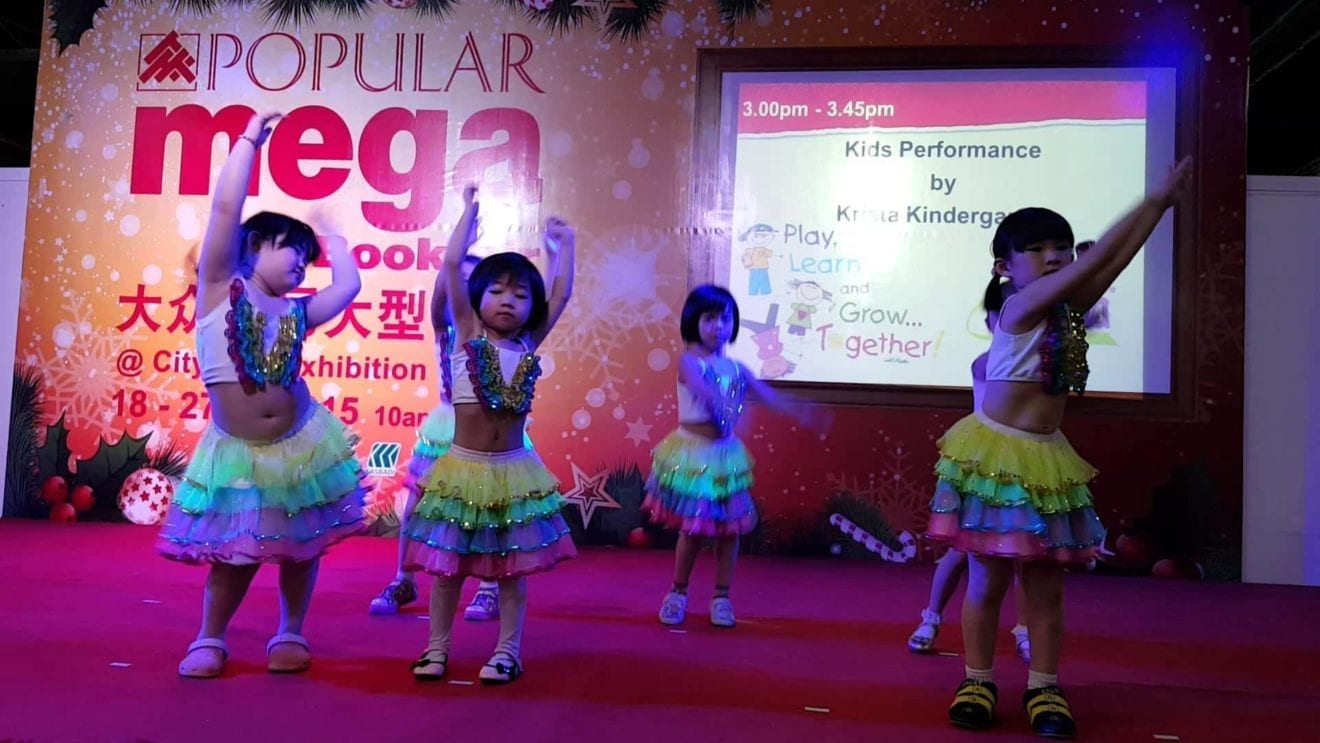
  • Popular Mega bookfair draws 90,000 visitors

    Popular Mega bookfair draws 90,000 visitors

    Malaysia’s trusted bookstore, Popular, achieved its goal of inculcating love for reading to around 90,000 visitors during its 10-day long Sabah Popular Mega Bookfair 2016.

    Popular Book Co (M) Sdn Bhd senior retail manager Samantha Tai said the third edition of the event maintained the previous years momentum with visitors traveling from across the state to visit the mega bookfair.

    Tai believes this further enforces the relevance of educational materials and that parents would not be stingy when it comes to equipping their children with the necessary tools for them to be competitive in the real world.

    “I still believe parents would not ignore education,” she said on the last day of the mega bookfair at 1Borneo Hypermall yesterday.

    “When it comes to education, I don’t think, whether economy is bad or good, parents will still spend,” added Tai, reiterating the journey of knowledge is also lifelong learning experience.

    In addition, she said the Daily Specials deal, which offers exclusive large discounts on a rotation of selected items, is one of the main factors attracting visitors to the Popular Mega Bookfair 2016.

    Popular Book Co (M) Sdn Bhd senior retail manager Chin Pau Choi said the bookstore will continue to organize the event at the same location to fit in their vast array of educational materials and other related products for the large number of customers.

    “We need a big platform to do the Popular Mega Bookfair and need at least 25,000 sq feet for it,” explained Chin.

    “At the moment only 1Borneo Hypermall has the space to accomodate that need,” he added.

    Popular has around 20,000 members in the state today and will open its seventh Sabah outlet in Tawau in March 2017.

    “This is due to the good response. People in Tawau come all the way to Kota Kinabalu to purchase a lot of books from us,” said Tai.

  • Indonesia, Singapore cooperate in tourism

    Indonesia, Singapore cooperate in tourism

    Coordinating Minister for Maritime Affairs Luhut Binsar Panjaitan said Indonesia and Singapore have agreed to cooperate in a number of sectors such as tourism and energy.

    The fields of cooperation include tourism, development of liquefied natural gas (LNG), development of IT Park and sea waste processing into electricity energy.

    “We hope they will all be realized at the end of 2017. In the tourism sector, Singapore agreed to invest in the development of Lake Toba, the Buddhist Borobudur Temple and the Mandalaika,” the coordinating minister said in a written statement in Jakarta on Sunday.

    Indonesia has set itself the target of 20 million foreign tourist arrivals in 2019. The government is making all efforts to achieve the target by building a number of supporting facilities.

    Therefore, in its cooperation with Singapore, Indonesia is planning to build cruise terminals.

    According to the minister, the government is planning to develop the terminals in Tanjung Benoa, Palembang, Medan and Semarang. This is to attract some 300 cruise ships per annum.

    So far, the number of cruisers visiting Indonesia is still small, despite the fact that Indonesia is part of foreign destinations.

    Luhut has the target that in the coming two to three years, at least 150 cruisers will come to Indonesia.

    “On Wednesday, we will hold a meeting to discuss the plan to develop the cruise ship terminals,” he said adding that Singapore also agreed to provide tourist service training assistance.

    Regarding LNG, Luhut added that Singapore agreed to develop power generating plants in isolated islands in Indonesia.

    Singapore is viewed to have the technology for increasing the electrification in Indonesia.

    He also referred to the plan to develop IT parks in the form of data reading centers. On the plan, minister Luhut said he would communicate with the Ministry of Communications and Informatics.

  • China expansion plan for Nitori Holdings

    China expansion plan for Nitori Holdings

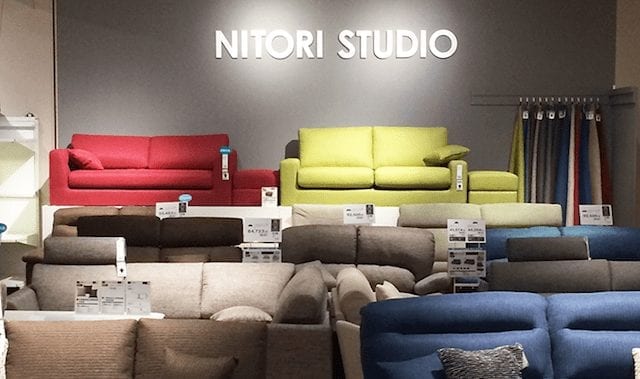
    Japanese furniture and home-accessory retailer Nitori Holdings is ramping up its presence in China to kick-start its global expansion.

    It plans to open add more than eight outlets in 2018 to its present 10.

    Nitori aims to have 2000 stores overseas as well as 1000 at home by 2032. It now has 41 stores abroad and 420 in Japan. Nitori opened its first overseas outlet in Taiwan in 2007, where it now has 26 stores. It also has five stores in the US.

    China is the main focus of its international expansion strategy, with plans for 1000 to 1500 outlets. It intends to initially concentrate in the cities of Shanghai and Wuhan to quickly boost its brand profile and establish dominance.

    Other options are also being explored in China, including online retailing and package offerings of home furniture.

    nitori-studio-1

    Monthly sales in China, where its first store was opened in Wuhan in 2014, have continued to exceed year-earlier levels by about 20 per cent for past several months. The Chinese outlets have prices similar to those in its Japanese stores as the company does not add tariffs to price tags and economises on logistics.

    In Taiwan its stores took six years to achieve profitability, while its business in the US is still in the red.

    Meanwhile, a new outlet in Tokyo’s Takashimaya Times Square commercial complex in Shinjuku is targeting overseas tourists, serving as “a starting point of our brand recognition” among overseas customers, says Nitori Holdings senior MD Fumihiro Sudo.

  • China drives Ikea growth

    China drives Ikea growth

    China has been cited as one of the major contributors to a year in which Ikea’s profits surged 19.6 per cent.

    Ikea growth was strongest in China, while the company’s largest markets were Germany, the US, France, Britain and Sweden.

    The Stockholm-headquartered furniture and homewares retailer reported a profit of 4.2 billion euros ($US4.5 billion). Total sales rose 7.1 per cent to 34.2 billion euros for the 2016 financial year ending in August, the company said.

    In the past year Ikea has opened 12 new stores and 19 pick-up and order points worldwide, and in the coming year planned to open its first stores in Serbia and in Hyderabad, India.

    “Growth and profitability give us freedom to choose our own way, the flexibility to move fast and the independence to think and invest long term,” Peter Agnefjall, Ikea Group CEO, said in a statement.

    The retailer registered 783 million visits to its 340 stores in 28 countries during the 12-month period but was also expanding its online offers. In addition, 49 stores are operated by other franchises.

    As part of its efforts to reduce its environmental footprint, the company said it was to invest 1 billion euros in sustainable materials. This included forestry and firms involved in recycling, renewable energy and developing biomaterials.

    It said 71 per cent of the energy it used in 2016 came from renewable energy sources such as solar and wind farms. Ikea plans to be energy independent by 2020.

  • Shinsegae support for handcraft market

    Shinsegae support for handcraft market

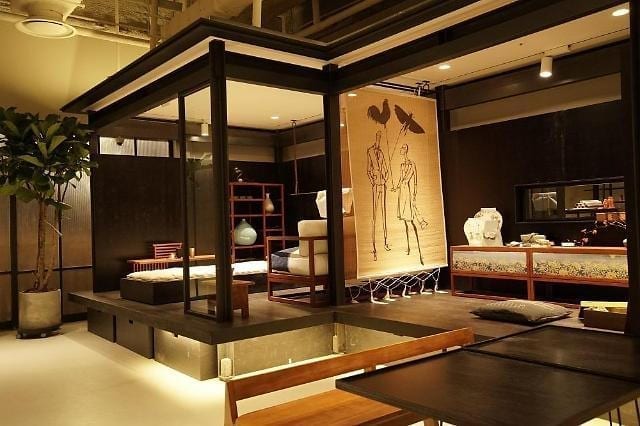
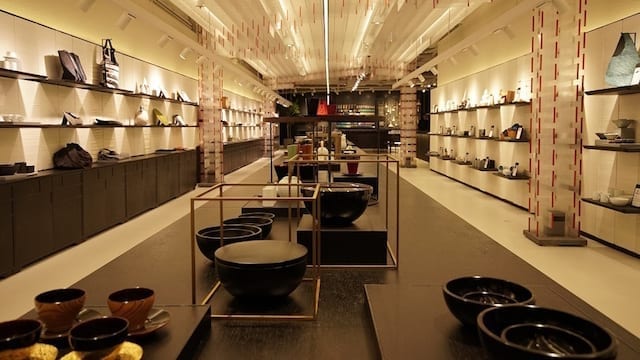
    Shinsegae Duty Free has launched Han Soo, an open space where visitors can experience and buy Korean traditional handcrafted items, at Mesa Building mall in Seoul’s shopping district of Myeongdong.

    The 1016 sqm store displays products made by dozens of artisans, including 15 government-certified craftspeople.Works span from simple pottery to furniture, including traditional items integrated with modern elements.

    shinsegae-duty-free-han-soo-2

    Officials expect Han Soo to become an important venue for foreigners wanting to experience Korean traditions and goods. It will offer not only the craftworks, but also introduce the raw materials used to produce them. There will also be special exhibitions.

  • Hong Kong’s Ocean Park sees record deficit, announces entry fee hike

    Hong Kong’s Ocean Park sees record deficit, announces entry fee hike

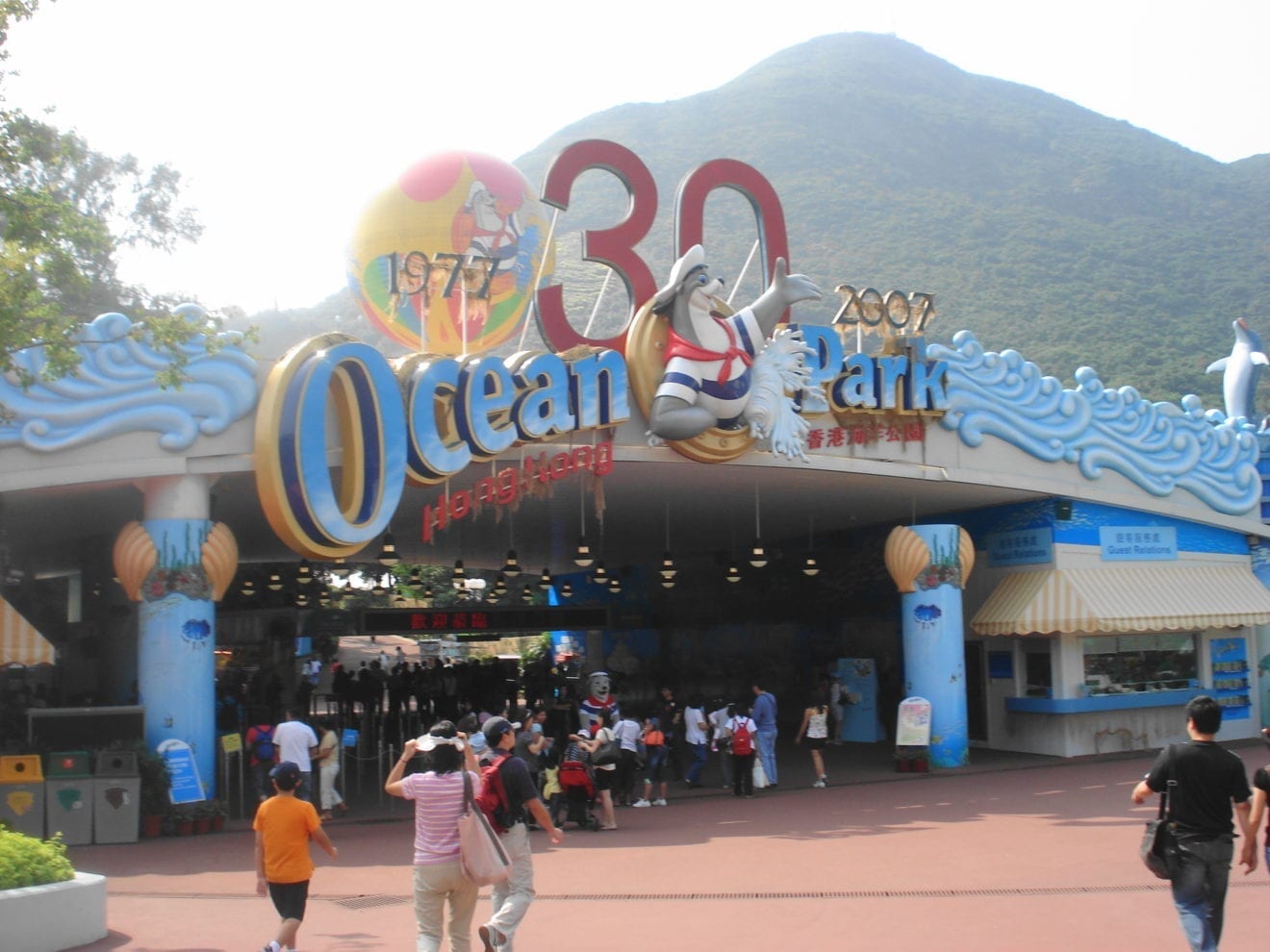
    Iconic Hong Kong theme park Ocean Park announced an entrance fee hike after recording its first deficit since 2003, local media reported on Wednesday.

    The park recorded a deficit of HK$241.1 million (S$44.2 million), its largest since 1987 according to the South China Morning Post. It announced that entrance fees would be raised to HK$438 for adults and HK$219 for children from Jan 1 next year, a 13.8 per cent increase.

    “The 2015/2016 fiscal year has been challenging for both the tourism and retail sectors in Hong Kong, and Ocean Park has not been immune,” Ocean Park chairperson Leo Kung told the South China Morning Post.

    He blamed a drop in tourism to Hong Kong and slowing economic growth in mainland China. In Ocean Park’s Annual Report for 2015-2016, Kung said that the drop in tourist arrivals to Hong Kong resulted in a 18.8 per cent drop in attendance to six million guests.

    “The number of inbound tourists to Hong Kong has dropped due to a combination of factors,” said Kung to the South China Morning Post. “These include intensified competition from other regional destinations, the strengthening Hong Kong dollar against the renminbi and other currencies, and slowing economic growth in China, which has affected mainland visitor flows to the city.”

    He added that there would be no redundancies or pay cuts to full-time staff.

    The park will launch a new entertainment and dining area at the entrance to woo visitors, Ocean Park executive director of sales and marketing Vivian Lee told the South China Morning Post. She added that the park would boost efforts to attract regional visitors from markets such as South Korea, Indonesia and Taiwan.

  • Tourism a driving force behind Vietnam’s economic growth

    Tourism a driving force behind Vietnam’s economic growth

    The country is on track to welcome more than 10 million visitors this year.Driving economic growth in Vietnam, the country’s government portal reported yesterday.The country’s economic growth prospects are strongly driven by its travel and tourism sector, the EIU said.

    Foreign arrivals reached more than 9 million from January – November this year, a staggering 25 percent increase from a year ago, the EIU noted, citing official data from the National Tourism Administration.

    The country is on track to welcome more than 10 million visitors by the end of this year, the administration forecast, which would exceed the target by 17.6 percent and last year’s arrivals by 26 percent.

    The EIU said that tourism continues to make a significant contribution to Vietnam’s economy. The tourism sector has not only created job growth in the wider economy, but also supported the development of other sectors such as retail.

    The study attributed the tourism industry’s growth prospects partly to Vietnam’s efforts to relax its visa policy to pave the way for a bigger inflow of international tourists.

    It has already offered visa exemptions for tourists from South Korea, Japan and those from Southeast Asian countries, as well as extended its visa-free policy through to June next year for travelers from the United Kingdom, France, Germany, Spain and Italy.

    With the aim of giving the tourism industry an even bigger push, the Vietnamese government has approved much-touted online visas for travelers on short holidays or casual business visits. The new visa rule, which is expected to come into effect from February next year, but it will be limited to those arriving from Vietnam’s top tourist markets.

    Vietnam’s top 10 tourist markets include China, South Korea, Japan and the United States.

    According to the World Tourism and Travel Council, tourism revenue directly contributed 6.6 percent of Vietnam’s gross domestic product last year. If you take into account that tourism drives other areas like spa and wellness services, dining and retail, the sector contributed around 13.9 percent of GDP.

    EIU experts suggested the Vietnamese government should improve the quality of transport infrastructure, which will in turn further boost growth in the tourism sector.

  • Thailand tourism breaks records and welcomes 30 millionth visitor to the kingdom

    Thailand tourism breaks records and welcomes 30 millionth visitor to the kingdom

    Mr. Yuthasak Supasorn, Governor of the Tourism Authority of Thailand (TAT) said, “This has been an amazing year for tourism in amazing Thailand as shown by the huge numbers of visitors. We have reached 30 million and the high season has only just kicked off. We know that more people will be coming to enjoy the cool weather and holiday festivities. Thailand has so much to offer the world and we know that the Thai people make every visitor feel as welcome as we made Ms. Huang Junyi feel today.”

    Ms. Huang Junyi receives a certificate naming her as “Thailand’s Luckiest Visitor – The Amazing, Smashing Success” from Mr. Yuthsak Supasorn, TAT Governor

    Ms. Huang Junyi,“Thailand’s Luckiest Visitor – The Amazing, Smashing Success”, was greeted at Suvarnabhumi Airport with a fantastic welcoming ceremony co-hosted by the Tourism Authority of Thailand (TAT), Thai Airways International and True Corporation.

    Ms. Huang’s prize will be two economy-class return tickets to Thailand from her original destination, which are valid for a year. She will also be given a voucher for a five-night stay in one of Thailand’s luxury hotels in Bangkok, Pattaya or Hua Hin as well as a mobile phone with a 4G sim card and seven days of Internet usage and a certificate naming her as “Thailand’s Luckiest Visitor – The Amazing, Smashing Success” so that she can remember this day forever. The lucky 30 millionth visitor was also given an exclusive limousine transfer from the Airport to her accommodation in Bangkok.

    This is the second time that Ms. Huang Junyi has travelled to Thailand. During this trip, she will be spending 10 days in Bangkok and Pattaya.

    The “Thailand’s Luckiest Visitor” campaign was launched in 2015 to welcome and reward every millionth visitor to Thailand from June to December. The campaign was a great success and garnered interest from the public and media organisations across the world, boosting Thailand’s tourism sector and brand image. It has been brought back in 2016 to welcome the 30th and 31st million visitors and will continue till the end of 2016.

    In 2016, Thailand is projecting total international tourism revenue of 1.62 trillion Baht (USD 46 billion), representing a year-on-year increase of 11.68% over 2015.

    To boost tourism numbers, various initiatives have been put in place to encourage tourists to visit and spend. This includes the waiver of tourist visa fees for visitors from 19 countries from 1 December, 2016, to 28 February, 2017, and the price of visas issued on arrival will be halved. To encourage more domestic travel, a long New Year holiday of four days including 31 December, 2016, and 1 to 3 January, 2017, has been confirmed.

  • TiVo, Netflix ink product, IP deals

    TiVo, Netflix ink product, IP deals

    TiVo and Netflix have signed licensing agreements that allow both companies to deliver a better entertainment experience to consumers.

    A product agreement calls for TiVo to continue integrating Netflix into TiVo set-top boxes available to consumers through a select, but growing number of pay-TV providers and retail stores.

    Customers will benefit from the integrated offering, which includes unified search across the content catalog and a Netflix button on remote controls.

    “The partnership between Netflix and TiVo dates back to our early days of streaming video,” said Bill Holmes, Netflix global head of business development. “Building on this history, the agreements provide consumers freedom to watch their favorite TV shows and movies whenever and wherever, with an integrated experience across more devices.”

    A separate intellectual property agreement provides Netflix a license to the TiVo patent portfolios and a license to the Intellectual Ventures patent portfolio for over-the-top offerings.

    This agreement represents one of the first licenses granted under the exclusive partnership with Intellectual Ventures announced earlier this year.

    “Our agreements with Netflix represent a major milestone for TiVo as we expand our offerings for the fast-growing OTT space, and further demonstrates our commitment to delivering innovative technologies to new and emerging markets,” said Tom Carson, CEO, TiVo.

    “From products to patented technologies, TiVo is helping companies quickly adapt to a rapidly changing media industry and create beautiful user experiences that keep consumers connected to their favorite entertainment,” said Carson.

  • GIC buys $370 million ticket to the movies in Indonesia

    GIC buys $370 million ticket to the movies in Indonesia

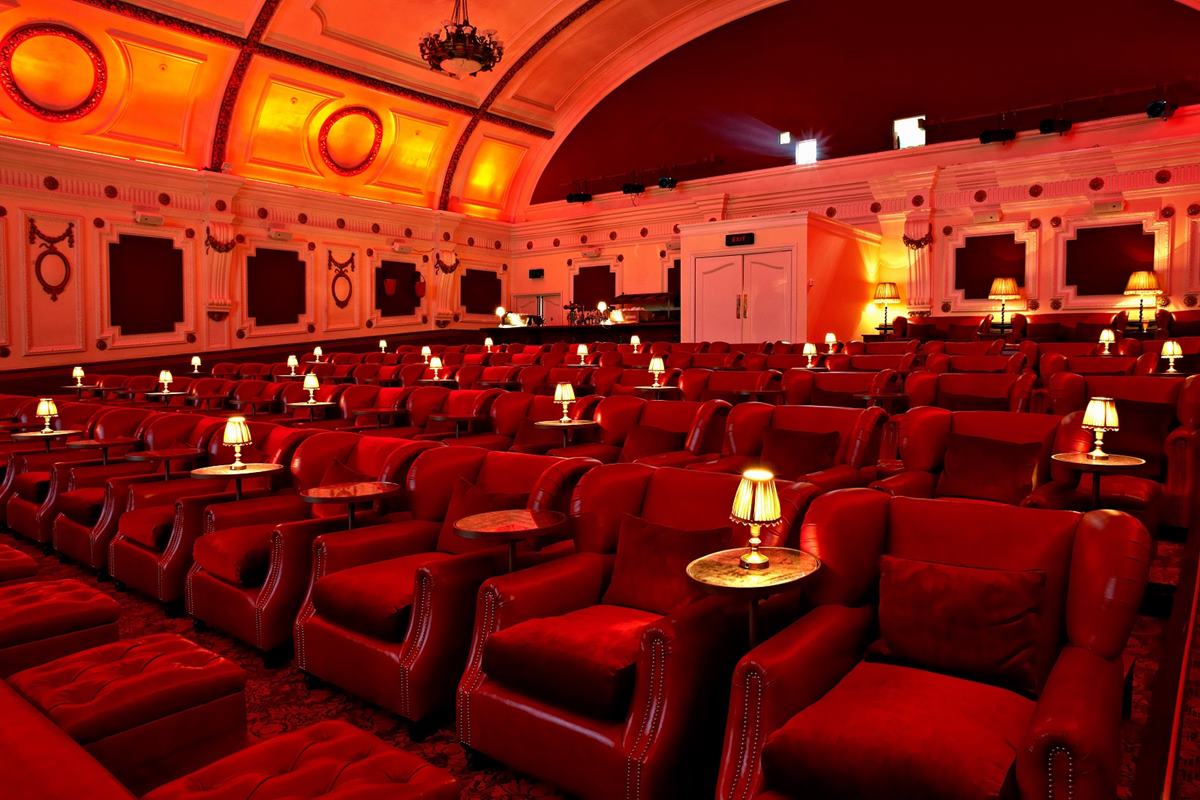
    GIC is investing 3.5 trillion rupiah (S$370 million) in Indonesian cinema operator PT Nusantara Sejahtera Raya (NSR) as the Singapore sovereign wealth fund hopes to capture a slice of Indonesia’s economic growth.

    The investment is intended to help NSR further anchor its market position and to prepare for the next stage of growth, GIC and NSR said in a press release.

    “The investment by GIC reflects our confidence in Indonesia’s long-term growth potential,” said Amit Kunal, GIC’s head of direct investments group for South-east Asia, private equity and infrastructure.

    “NSR’s operational expertise and portfolio of high quality cinemas positions it well to benefit from the rapidly expanding consumer class and economic development in Indonesia. We look forward to working with the team at NSR to accelerate its presence nationally and to achieve the vision of providing best-in-class cinematic experience to the country.”

    NSR owns the Cinema 21, Cinema XXI and The Premiere brands in Indonesia.

    The company operated 864 screens in 157 cinemas across 36 cities in the country as at December 2016.

    The NSR investment is in line with GIC’s stated long-term optimism about the region’s economic prospects.

    In GIC’s investment report in July, the fund noted that it held more emerging market equities than a reference portfolio.

    About 19 per cent of the fund’s portfolio was invested in emerging market equities as at March 31, 2016, up slightly from the 18 per cent allocation a year earlier.

    “We have assessed that emerging market equities will benefit from the sustained structural improvements in these economies, and contribute positively to the long-term real returns of the GIC portfolio,” GIC said.

    “We have maintained this assessment even though emerging market equities have underperformed developed market equities in recent years.”

    The worldwide cinema industry is expected to continue to grow over the next few years, with Asia-Pacific outpacing the global average, according to an analysis by PwC.

    In a recent report, PwC estimated that the Asia-Pacific cinema business could grow at a rate of 11.8 per cent per year from US$14.2 billion in 2015 to US$24.7 billion in 2020.

    The expected global average is a more modest 5.8 per cent per year over the same period.

    Box office sales in the region are estimated to grow at 12 per cent per year through 2020, about double the global outlook of 5.8 per cent per year.

    Asia-Pacific cinema advertising is expected to grow at 6 per cent every year through 2020, more than two times faster than the expected global average of 2.8 per cent.

  • Six Flags is Blazing a Trail to Vietnam

    Six Flags is Blazing a Trail to Vietnam

    John Odum is President of the company’s international division. He believes the country’s growing tourist market and rising middle-class make it a land of opportunity for Six Flags. “The dynamics fit nicely with what we bring to a market,” he says. Odum embodies the American dream – he joined Six Flags Over Georgia as a costumed character when he was just sixteen.

    He knows the business inside out, having worked his way through the ranks in a number of departments including operations, finance and retail. Among his many roles, he has been President of Six Flags St. Louis and Six Flags San Antonio before a stint in the corporate world, overseeing lesser parks from an operational perspective.

    “And then, a couple of years ago, Jim Reid Anderson, our CEO at the time, came to me and asked me if I’d be interested in starting up the international division of Six Flags,” he says.

    “We felt that, domestically, we were very strong and solid. We had found a good business model that had been working well for several years, and we were ready to take that step internationally.

    “That brings me to where I am today. In my role as the President of our international division, we are really leading the charge in finding new markets and building new parks and bringing Six Flags to the world.

    “In the 43 years that I’ve been with Six Flags I’ve experienced a lot of different things. It’s been quite exciting. It’s great to be able to take that depth of experience and spread it throughout the world.”

    Lands of Opportunity

    Asia’s theme park industry, while growing quickly in certain regions, is broadly still very much in its infancy.  This is particularly true of Vietnam, which has so far escaped the attention of any of the big-hitters.

    Yet, despite being under the radar, Odum believes it is ripe for theme park development.

    “It has a growing middle class with an increasing propensity to spend. It also has a travel market that’s starting to feed Vietnam. We really think the dynamics fit nicely with what we bring to a market.”

    What’s more, detailed psychographic research in the area has revealed that, despite what one might expect, people already ‘get’ the Six Flags brand.

    “What we’ve found is our brand is so well-known, much more so than any of us had anticipated it might be. People know exactly what we are: we are all about thrill.

    “People tell us they’re eager to see the biggest and best rides. Some say ‘I’m not sure I’m ready to get on the largest and the best – but I love seeing other people do it.’

    “We’ve got such a diversity of rides that it really gives a thrill to all ages. We feel we’re a good fit for a region that’s really growing very quickly.”

    The Six Flags Franchise Model

    “The business model that has been found to be optimal for Six Flags and its partners is a franchise-type model. With this, the chosen partners take on all capital investment in the park, while Six Flags charges a fee for bringing the brand name and licenced IP.

    “We will bring the management expertise to the park. The right people that understand the safety that is so critical to our business, and understand how to operate a strong financial model while protecting that safety. Nobody does safety better than we do.”

    “Six Flags will also bring the design and project services, helping design the park, its layout, overseeing construction and procuring the rides.

    “They will gain the value of all of our negotiating clout – we buy rides so much more cheaply than anybody else; they get the benefit of our buying power.”

    Because Six Flags does not invest any money, it costs them nothing to enter these partnerships. It also gives the new operators the flexibility to run things in a way that suits their particular market.

    “Most of our partners are interested in a bigger resort development.  They may be adding hotels, they may be adding retail, dining and entertainment and all of the other resort amenities,” explains Odum.

    “What this model allows them to do is to operate a little differently from the way we would. If they want to put heads in beds in the hotels, they might discount the park a little bit more, or run ‘specials’ at times that we might not normally be open.

    “There are no operating encumbrances on the way they can operate the park when we go in with a franchise-type model like this.

    “We think it’s the best for both partners. It seems to be working really well so far.”

    The First Six Flags Theme Park in China

    Six Flags has already announced its first theme park in China. It will be located in Haiyan on the coast of Hangzhou Bay in Zhejiang province.

    China is already well-served by big name brands such as Wanda, DreamWorks and Disney. However, Odum insists the market is a long way from reaching anywhere close to saturation point.

    “In the US, we have about 300 theme parks the size of a Six Flags park or larger. These serve 320 million people. In China, there are around 150 parks of this size or larger, serving 1.2 billion people.

    “When we look at the sheer numbers, we feel there’s tremendous untapped potential for growth and development of this market set. Especially as we see this growing middle class. We also see the family size growing from the single child to the multi child family and as we see the middle income growth and prosperity that is developing in China.”

    “In fact, I would say the Chinese theme park industry is probably where the North American theme park industry was 20 or 30 years ago. We feel like we’re moving in at the right time and there are tremendous opportunities for this market.”

    Chinese Love the Regional and the Thrill

    Odum dismisses the generally-held belief that China is less interested in thrill rides than other markets. He cites data from recent psychographic research:

    “What that market told us is. We love thrills in all different forms. And, with Six Flags, while we’re known best for our world record roller coasters and the larger rides, it comes in all forms. There are a lot of smaller types of rides that are unique to Six Flags.

    “The ability to match up that different level of thrill to the different components of a family, we believe, is really a thing that will help us grow and prosper in the market.”

    “The Chinese know Six Flags. They are very eager for Six Flags to come to China,” he says. “One of the things they have also told us they especially like about Six Flags is the fact that we are a regional theme park. Each of our parks is different and built to focus on that region of the country.”

    Unlike the giant brands that reproduce the same model time and again, each Six Flags park will be customised to a particular region, taking on the local culture, the local foods.

    “Yet, we will also offer enough Western experience that they will get a sense of the best of both worlds,” says Odum.

    Relevant Storytelling

    Odum believes that storytelling relevant to the local market will be crucial to each park’s success.

    “One of the first things we do when we go into a region is send in a team to study the history and culture. They talk to the people of the area and try to understand the types of things that they hold important in their history; the things that they like to honour.”

    “What we have done for our first theme park in Haiyan is to take a section of our park and replicate the local ancient tale of a sailor who went off to sea while his girlfriend stayed behind waiting on him.  There’s this whole story of how he went through battles and adventures then came back to meet her and they lived happily ever after.

    “We’ve replicated the entire story. Everything from the big ships and the sailing town, and all those things that make that story come to life.”

    But, he says, it is still very much a Six Flags park:

    “There are sections of the park that reflect much of the Western culture. There are things the Chinese might enjoy learning about North America.”

    Rising Customer Expectations in a Tech-Savvy Market

    Customer expectations are constantly changing in the light of developing technology. This is particularly true, Odum says, across much of Asia, where the market is innovative and tech-savvy.

    “This is another reason why they really like Six Flags. It is because they see us as being on the cutting-edge of technology,” he says.

    “We were the first in the entire industry to introduce VR in our rides. We went into our roller coasters and partnered with Samsung and RealD 3-D and Oculus. Then we put together an experience that cannot be replicated anywhere else.”

    “We took some of the older rides intentionally. They weren’t quite as popular. We created storylines, and we created these virtual worlds. In some you’re a fighter pilot, and some we’re adapting to our Hallowe’en experiences and you’re fighting gargoyles.

    “As we get towards the holiday in the park you’ll be flying in Santa’s sleigh. There are a lot of ways that we can use VR. We can really take some of the older rides and bring them into a new world.”

    VR – Lifting Existing Rides to the Next Level

    Technology has also been used to take some of the newer rides to another level.

    “The Superman ride is popular. We have been able, through VR, to create an opportunity for people on the Superman ride to literally fly with Superman.”


    “We were pitching this concept to the head of the licensing with Warner Brothers. After we had taken him through it, he sat back and said: ‘You know what? The reason I joined DC Comics and Warner Brothers was because as a little kid I had always wanted to fly with Superman.’ He was one of the first ones on the ride when we introduced it.

    “VR is one of the many different things that we are doing to really take the entertainment of the theme park industry into this new world.”

    Dubai Parks and Resorts

    A Six Flag theme park is currently in development at the UAE’s mammoth leisure destination, Dubai Parks and Resorts.

    “It’s just an unbelievable market,” says Odum. “When I first visited seven or so years back it had tremendous potential. I was amazed at what the city was. And then, when we came back a second time. I was blown away at how far it had come in those few years.

    “We had studied the market early on. I think we realised this is a burgeoning market that is just growing like none other in the world.”

    The economy has largely recovered from the effects of the global recession. This had put ambitious developments such as Dubailand on hold.

    “I think, in that earlier phase, they were growing so very rapidly so it probably hit them harder,” he says.

    “When things settled to a more positive economic climate and we went back in, it is just unbelievable what they are doing to develop that market.  I’m especially excited about the resort that DPR is creating. We will be one of four major theme parks in this resort. There will be tremendous retail, dining and entertainment, a world-class resort and many other amenities including a large upscale outlet mall that really fills this out as an entertainment mecca.

    “Dubai is bound in intent to be the Orlando of the Middle East. They are well on their way to doing just that.

    “We’re going in with some of our biggest and best; we’re excited in that development because each of the parks fills a unique niche.

    “As long as there’s a unique niche filled, instead of dividing the pie into more pieces, you just make the pie bigger,” says Odum.

    “And, a rising tide raises all ships.”
  • B2LiNK eyes global K-beauty market beyond China

    B2LiNK eyes global K-beauty market beyond China

    The Group of Two’s recent protectionists policies followed by Donald Trump’s victory in the U.S. presidential election and China’s economic retaliation against Korea over the deployment of a Terminal High Altitude Area Defense system seem to be serious risks for Korean exporters.

    B2LiNK CEO Lee So-hyung, however, confidently said no government can interfere with macro-trends in the market. The 33-year-old is one of the co-founders of the IT-based business-to-business startup which distributes Korean beauty brands to global retail channels in the most effective way possible.

    “The U.S. will not restrict small areas. It may impose anti-dumping tariffs on steel, but consumer goods ― especially Korean cosmetics ― will not be regulated as they are not in the majority of the market,” Lee said in an interview with The Korea Times on Friday.

    “Most people fear that trade with China will be threatened, but local Chinese firms actually earn more money than Korean businesses through the cosmetics trade. Chinese authorities will be unlikely to regulate the trade, as most Chinese consumers purchase Korean cosmetics via their local online platforms.”

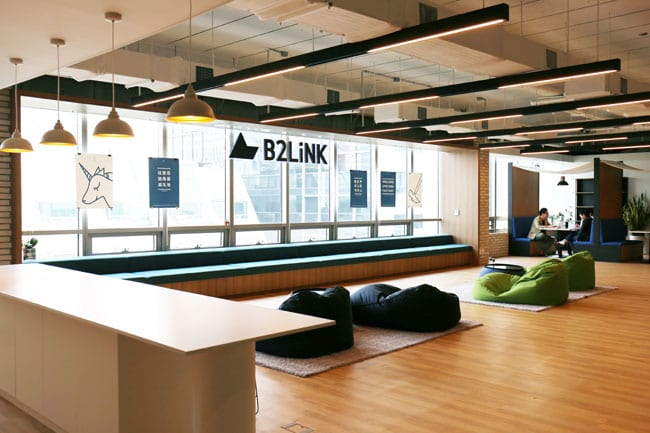
    An inside view of B2LiNK office in Gangnam

    After working in many industries in several countries as a consultant of McKinsey & Company for four years, Lee decided to operate a business that introduces Korean consumer goods to the world. He said, “The industry in which Korea has an advantage over other countries is in consumer goods.”

    His company initially targeted the Chinese market and has expanded its presence there. The Seoul-based company established local offices in Tianjin and Shanghai. It also signed supply contracts with China’s top commerce firms including Watsons China and RuHnn.

    “When I began to run my business in 2014, China’s economy was growing rapidly with its e-commerce market which was growing much faster,” Lee said. “The rate of cosmetics consumption, on the other hand, was still low at that time, so I thought there might be a chance for a success.”

    However, B2LiNK is drawing up a blueprint to globally expand the presence of K-beauty beyond China. Lee said, “Korean consumer goods have depended too much on China so far, and we want to help the firms gain competitiveness in the global market. Demand for Korean consumer goods is rising in the U.S., Europe, Africa and the Middle East.”

    B2LiNK began to supply Korean cosmetics to retail channels in Southeast Asia this May and posts more than 100 million won ($85,000) in monthly sales there. It plans to establish an office in the U.S. next year, which will be the company’s first base camp toward the developed market.

    “We are actively recruiting employees in the U.S. and Southeast Asia,” Lee said. “We will hire local people to lead our subsidiary companies there.”

    Lee said B2LiNK wants employees who can build their careers in the company, rather than those who already have experiences in similar industries. “Our basic concept is to develop less advanced industries. Expertise is an old-fashioned concept in B2LiNK,” he said.

    Among young “B2LiNKers” whose average age is 29, B2LiNK posted more than 11 billion won in sales last year. The company estimates its sales will be over 30 billion won this year.