Category: Living

Retail News Asia is committed to providing both local and global retailers with the latest Living news throughout the Asian market. This on a daily base.

  • South Korea detects first Zika virus case

    South Korea detects first Zika virus case

    South Korean authorities have detected the first Zika virus case in the country, the Korea Centres for Disease Control and Prevention (CDC) announced on Tuesday.

    A 43-year-old man, who had made business trips to Brazil between February 17 and March 11, was tested positive for the mosquito-borne virus, Xinhua news agency quoted the agency as saying.

    The patient began developing fever and muscle ache from March 16.

    Zika is known as a virus that spreads through bites from a specific mosquito. It is particularly risky for pregnant women as the virus is thought to be linked to a rare birth defect, microcephaly.

    Microcephaly causes newborn babies to have an unusually small, damaged brain.

  • Cambodia duty-free store opened by DFS

    Cambodia duty-free store opened by DFS

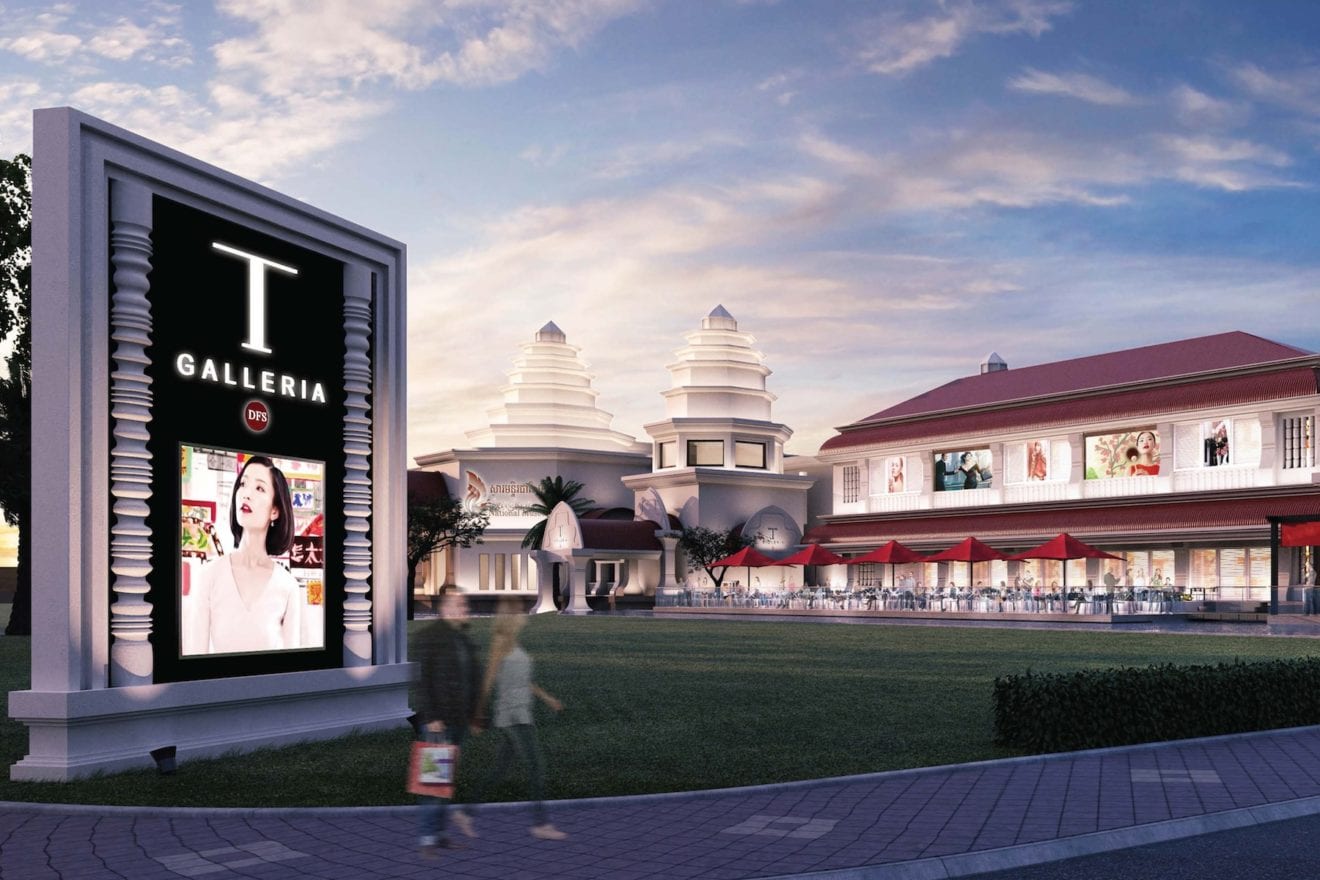
    Luxury travel retailer DFS Group has opened its first T Galleria by DFS store for Cambodia in the resort town of Siem Reap.

    Near the ancient temple of Angkor Wat, T Galleria by DFS, Angkor is the largest Cambodia duty-free luxury department store, offering an integrated retail, hospitality and leisure experience.

    The store is opening in phases until June, bringing 170 brands to the 86,000 sqft (7990 sqm) space, including fashion and accessories, watches and jewellery, wines and spirits, and beauty and fragrances as well as locally handcrafted artisan products.

    Next to Angkor National Museum and overlooking a park, the new outlet features traditional Khmer motifs and carvings by Cambodian artisans. Stone columns feature panels carved in styles reflecting the nearby temples and palaces of Angkor Wat, intricately patterned wall screens and floor tiles evoke local architecture, and a 20m art installation suspended above the store’s vaulted atrium, was inspired by the hues of Buddhist monks’ robes. More than 200 local sales associates will welcome customers.

    Several firsts for Cambodia duty-free come with the opening of the store, such as watches and jewellery brands Bulgari, Carl F Bucherer and Tiffany & Co and international fashion brands Burberry, Bottega Veneta, Fendi, Gucci, Ralph Lauren, Saint Laurent and Zegna. There are also 12 exclusive beauty and fragrance brands such as Bobbi Brown, Cle de Peau Beaute, Mac and Sulwhasoo.

    Among Cambodian artisans featured are Angkor Artwork, whose master craftsmen Eric and Thierry Stocker produce lacquer and straw marquetry using traditional techniques. There is also Golden Silk, one of the last fully integrated silk producers in the world to use the rare yellow silkworm indigenous to Cambodia, and Samatoa, an eco-friendly accessories brand that has revived the technique of lotus-fibre weaving.

    T Galleria by DFS, Angkor has also teamed up with Artisans d’Angkor, a socially conscious business aimed at revitalising Cambodia’s traditional craftsmanship while pioneering a sustainable working environment. Its exclusive collection of handwoven silks and fine crafts were designed by and will benefit local artisans.

    An onsite restaurant, Crystal Jade, will open in June, the first outlet in Cambodia for the Singapore brand. It will serve traditional Chinese cuisine and dim sum dishes in a casual setting overlooking gardens and reflecting pools.

  • Merck foresees healthy growth ahead in Indonesia

    Merck foresees healthy growth ahead in Indonesia

    Publicly listed Merck, founded in 1970 as the Indonesian unit of German life science group Merck KGaA, expects double-digit growth in total sales in 2016 following a similar growth in its healthcare business last year.

    The biopharma business, for example, rose by 14.5% in 2015, above the industry average of 8% to 9%. On the other hand, the consumer health business soared by 16%, according to the Jakarta Post.

    The Indonesia unit will also strengthen its current strategy of maintaining partnerships with both private and government organizations such as the Health Ministry and the Jakarta Administration, through which Merck will expand public awareness about health issues, encourage public acceptance and broaden market access for Merck’s pharmaceutical products.

    Merck is also currently expanding the production capacity of its factory in TB Simatupang, South Jakarta, to further boost future sales.

    These and other key industry news will be discussed next week at CPhI SEA, the only trade exhibition dedicated to the pharma industry in the region, to be held at the Jakarta International Expo during April 6-8.

  • Metro Retail income soars 20.6 per cent

    Metro Retail income soars 20.6 per cent

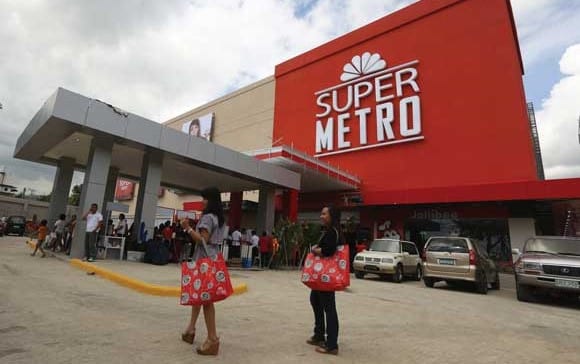
    Metro Retail Sales, Visayas’ largest retailer, has reported a rise in after-tax income of 20.6 per cent to P758.6 million (US$16.4 million) for 2015.

    Metro Retail (MRSGI)’s net sales grew 13.9 per cent to P32.5 billion last year from 2014, said the company in a disclosure to the Philippine Stock Exchange. Earnings before interest, taxes, depreciation and amortisation rose 18 per cent to P1.49 billion in the same period, due to reduced operating expenses.

    The company’s same store sales grew by 8.8 per cent on the back of strong performance of its hypermarkets, department stores and supermarkets.

    Several milestones for the 33-year old Metro Retail made 2015 an exceptional year for the company. It saw the expansion of its store network nationwide, with 24 supermarkets, 12 hypermarkets and 10 department stores, with a total gross floor area of approximately 400,000 sqm by December 2015.

    Said chairman and CEO Frank Gaisano: “2015 has certainly been a banner year for Metro Retail, as our strong financial performance clearly shows. I believe that 2016 will be another record year for Metro Retail, being well on track with our store expansion and logistics efficiency initiatives to support our goal of doubling our footprint in the next five year.”

    The company was listed in November 2015, having the largest new equity issuance at P3.6 billion for that year.

    Its entry into the local bourse is seen not only to support the company’s expansion plans, but also underscore Metro Retail’s capability to compete with other industry players in serving the value conscious market.

    Metro Retail partnered with Ayala Land for the establishment of its stores in four new Ayala commercial developments – a department store and supermarket in Bacolod City, Negros Occidental; a supermarket in Iloilo City; a supermarket in Cebu City; and a department store and supermarket in Pasig City.

    Metro Retail also expanded its department store network with the acquisition of the department store assets of SIAL Specialty Retailers, a joint venture between ALI and Stores Specialists in March. Located at Fairview Terraces Mall and the UP Town Center, the stores have a combined gross floor area of approximately 25,000 sqm and will increase Metro Retail’s department store network to 12.

  • HKIA February traffic +4.9% to 5.7m pax

    HKIA February traffic +4.9% to 5.7m pax

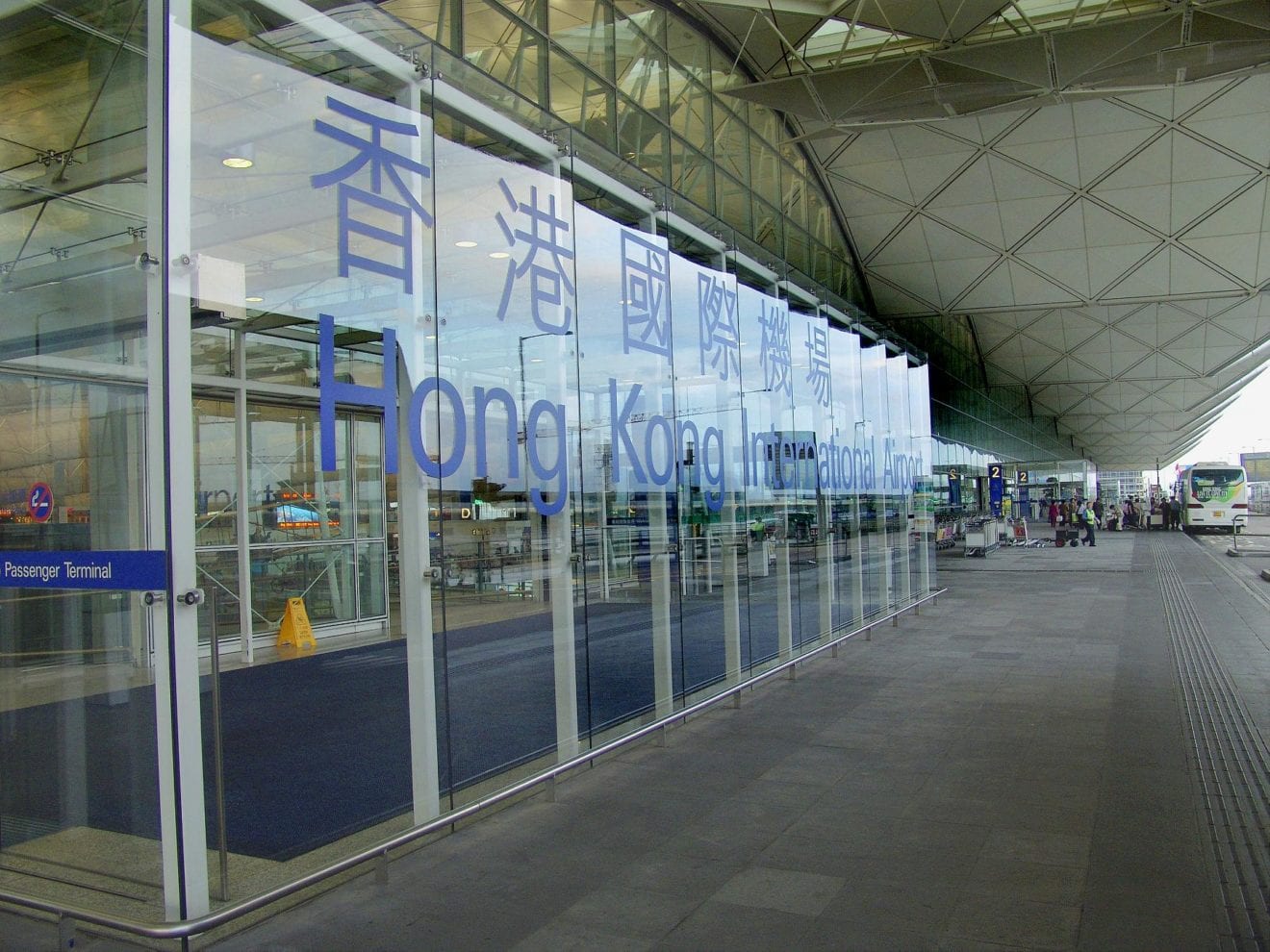
    Hong Kong International Airport (HKIA) has reported that its February passenger traffic grew by 4.9% to 5.7m, while flight movements increased by 4.5% to 32,625 during the month.

    Airport Authority Hong Kong said that growth was mostly thanks to a 16% rise in Hong Kong resident travel compared with January 2015, with passenger numbers to and from Southeast Asia and Japan showing the biggest increases.

    IN PRAISE OF TECHNOLOGY

    Commenting, Executive Director of Airport Operations of Airport Authority Hong Kong C K Ng said: “To enhance the travel experience for HKIA’s passengers we strive to provide customer-centric services by leveraging the latest technology, including the introduction of the ‘HKG My Flight’ mobile application in 2013 that provides airport information, real-time flight status and more.”

    Hong Kong airport large

    New technology is also helping passengers find the information they want at HKIA, according to airport management.

    He added: “With the application of iBeacon technology, passengers using the ‘HKG My Flight App’ can receive push notifications of airport information, including dining and shopping offers and promotions at the airport.

    “While arrays of initiatives are in the pipeline, we will continue exploring the application of different technologies in daily operations, aiming to enhance mobility, automation, efficiency and convenience for passengers,” added Ng.

    He said HKIA is also delighted that ‘HKG My Flight’ recently won the Gold Award in the Best Location-based Marketing Category at the Mob-Ex Awards 2016 organised by Marketing magazine.

    HKIA Departures 2

    Hong Kong International Airport traffic rose by 4.9% to 5.7m passengers in February 2016.

    Having said that, there was no technology available to help halt the decline in cargo throughput for February, which was mainly attributed to a 23% year-on-year drop in exports. AAHK added that the fall in cargo volume was also partially due to the industrial action at ports on the US west coast in the first quarter of 2015.

    In the first two months of 2016, HKIA handled 11.6m passengers and 67,820 flight movements, up 9.0% and 5.0% from the previous year respectively. Cargo traffic dropped 6% year-on-year to 619,000 tonnes.

    On a rolling 12-month basis, HKIA handled 69.5m passengers and 409,255 flight movements, marking year-on-year increases of 8.4% and 3.8%, respectively.


  • Jucker votes for Big C buy

    Berli Jucker shareholders have voted in favour of the US$6.2 billion acquisition of a majority stake in Big C Thailand.

    The vote – virtually unanimous – followed news the listed company had secured funding for the purchase from a syndicate of 15 banks and means the deal is now all but complete. Settlement is expected late this month.

    But while the future of Big C Thailand now appears to be resolved, negotiations continue over the fate of Big C Vietnam, a smaller, less profitable business controlled by France-based Casino Group, which is shedding overseas assets to reduce its debt exposure.

    Casino has a 58.6 per cent controlling interest in Big C Thailand, which Berli Jucker will now acquire.

    In Vietnam, Thai tycoon Charoan Sirivadhanabhakdi, through another business, has recently purchased the Metro hypermarket business from Metro AG of Germany, to bolt on to Berli Jucker’s B’Smart convenience store network.

    Charoan was thus a favourite to acquire the Big C Vietnam operations to build even greater critical mass, and lodged a bid prior to the first round deadline with his soon to be Big C Thailand partner, Central Group.

    But sources within Asia’s business community are now confident Korea’s Lotte and Japan’s Aeon are frontrunners. Lotte runs the market leading Lotte Mart hypermarket business in Vietnam and would gain a significant foothold in the nation if it could secure Big C as well.

    Aeon, which is building shopping centres in Vietnam main cities, reportedly submitted an offer that valued the business at more than US$800 million according to sources quoted in Vietnam media.

    Lotte also submitted a bid prior to the first round deadline.

    Casino has declined comment on the Vietnam sale other than to say it was “progressing well” when it reacted to ratings agency Standard & Poor’s decision to cut its credit rating to junk status  on Monday

  • Cruise business up 14% in Singapore last year

    Cruise business up 14% in Singapore last year

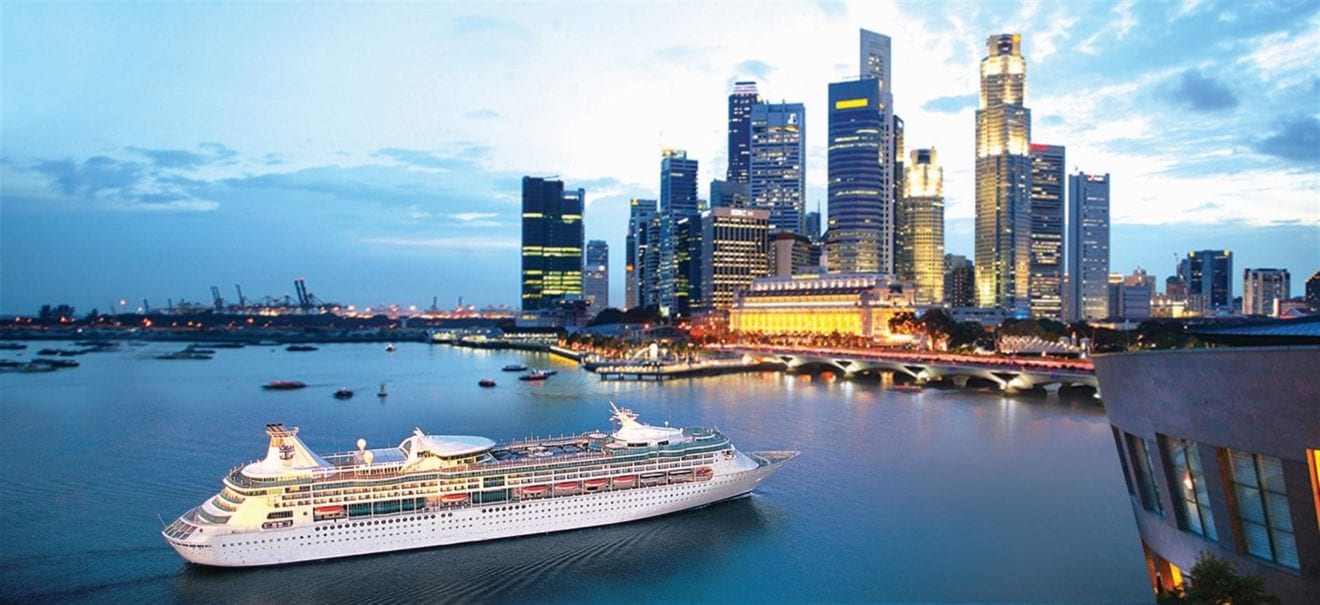
    The Singapore Tourism Board (STB) reports that the country witnessed encouraged growth in the cruise and business segments as the Singapore Cruise Centre (SCC) was named the number one cruise port in Asia in 2015.

    Interestingly, the cruise industry saw a 14% year-on-year increase in cruise passenger throughput last year to more than one million.

    In addition, the country welcomed a total of 385 cruise ships, including international cruise brands such as TUI cruises, and Royal Caribbean, as well as nine maiden calls – new to Singapore and Southeast Asia.

    GROWING CRUISE INCENTIVES…

    The STB added that Singapore also launched the inaugural unified Southeast Asia Cruise brand​ and forged MOUs with Vietnam and Thailand to develop the regional cruise business. ​

    The tourism body also manages the Cruise Development Fund (CDF) which actively supports the ‘home-porting’ of new cruise ships or extension in deployments of existing home-ported cruise ships out of Singapore, with the aim of growing Singapore’s cruise industry and tourism generally.

    Significantly, the Royal Caribbean International cruise company signed its first-ever multi-million dollar marketing collaboration with STB and the Changi Airport Group (CAG) last year to promote overseas fly-cruising out of Singapore.

    This tripartite agreement now operates between 2015 and 2018 and all parties are estimating it could attract an additional 170,000 overseas visitors to Singapore on Royal Caribbean cruises over this aforementioned period.

    DFS AND HEINEMANN

    All of which is good news for DFS Singapore, which operates the departure-transit and arrivals transit shops alongside Ocean Duty Free’s outlets at the Singapore Cruise Centre.

    Heinemann Asia Pacific opened its third and largest duty free shop (157sq m) in partnership with the Singapore Cruise Centre (SCC) at the Harbourfront Ferry Terminal last January. Around 5m passengers use this terminal each year-Ed.

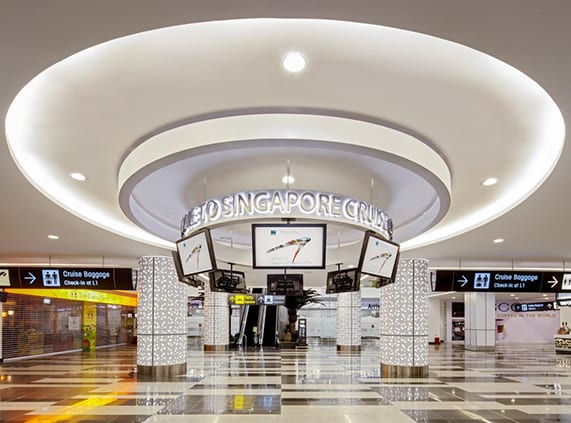
    The grand looking SCC

    The grand looking Singapore Cruise Centre.

    As reported, the STB is now forecasting that this year’s total tourism receipts will be between S$22bn and $22.4bn ($16bn to $16.3bn) representing a growth range between 0% and 2%. By contrast, it is forecasting international visitor arrivals of between 15.2m and 15.7m – a growth of between 0% to 3%. ​

    This follows a year when international visitor arrivals grew by 0.9% to 15.2m in 2015. However, tourism receipts declined by -6.8% to S$22bn ($16bn) with this attributed mainly to the decline in BTMICE visitor arrivals and spending. By contrast, leisure visitor arrivals grew by 2%.

  • New Muji Singapore flagship planned

    New Muji Singapore flagship planned

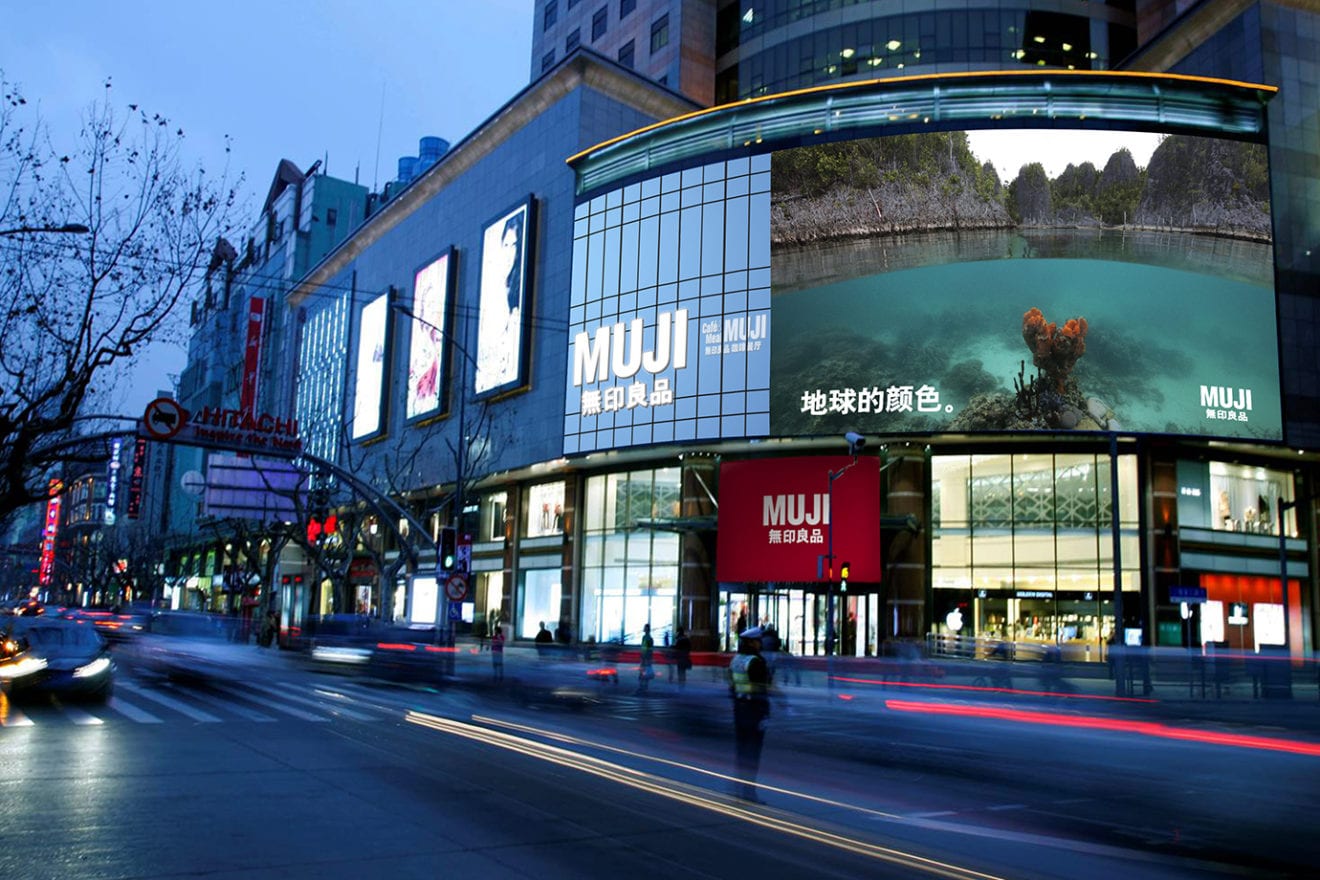
    A new Muji Singapore flagship store is planned – but the Japanese lifestyle brand is coy about the opening date.

    Featuring an expanded array of lifestyle concepts, the new store will measure about 3300 sqm, according to the chairman of Muji’s parent company Ryohin Keikaku, Masaaki Kanai.

    “Apart from the usual Muji products, we will have an ‘Open Muji’ concept where we invite community creators to interact and collaborate with the company, in line with our objective to create an interactive society,” said Kanai, who was a keynote speaker at the Innovation by Design Conference in Singapore.

    Muji has 10 stores already in Singapore, including a Muji To Go store at Changi Airport’s Terminal 2 and Cafe & Meal Muji, which opened at Paragon last year.

  • Takashimaya Tokyo going duty free

    Takashimaya Tokyo going duty free

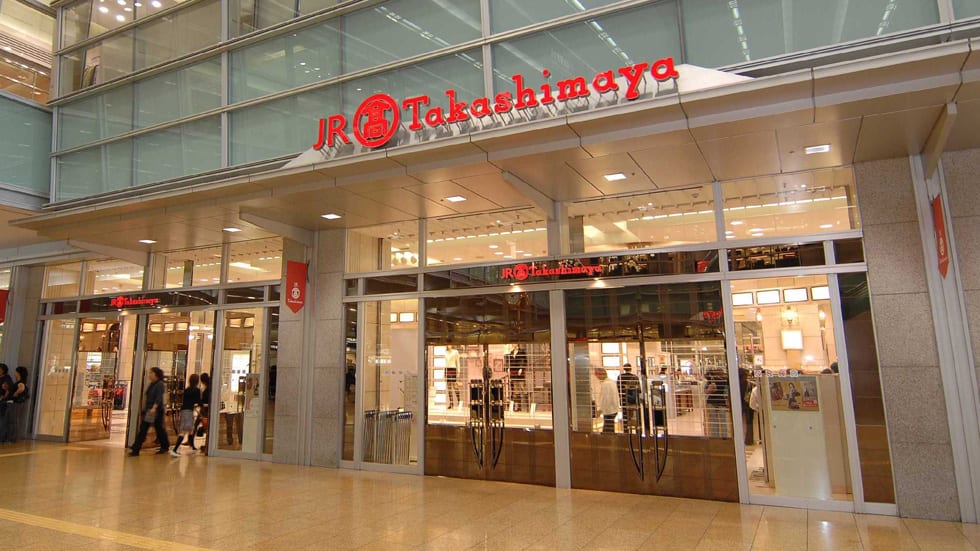
    Eyeing the growing tourist market, Japanese department store Takashimaya is going duty free with an airport-style store in Tokyo.

    Not only sales tax, but also alcohol and tobacco duties will be waived under the venture, in which the Takashimaya Tokyo store is partnering with ANA Holdings and South Korea’s Samsung Group.

    Takashimaya will contribute more than half of the capital for the outlet, establishing an oversight company with All Nippon Airways Trading and Hotel Shilla of the Samsung Group. Scheduled to open next spring, the store will probably be on an upper floor of Takashimaya’s Shinjuku branch. Depending on its performance, the partners may roll out further stores.

    Shoppers will be able to buy items in-store to pick up later at Haneda or Narita airport after completing departure procedures.

    Hotel Shilla, which runs hotels and duty-free stores, generated sales of 3.25 trillion won (US$2.73 billion) last year. The company is second only to the Lotte Group for duty-free stores in South Korea, and its international presence includes Singapore’s Changi Airport.

    ANA Trading runs airport souvenir shops.

    Visitors to Japan increased 47 per cent last year to 19.73 million, according to the Japan National Tourism Organization. More people are travelling there multiple times a year and visiting localities outside greater Tokyo via train and bus. A major bus terminal is slated for completion in Shinjuku this spring.

    Takashimaya rival Isetan Mitsukoshi Holdings opened a similar duty-free store in Tokyo’s Ginza area in late January.

  • Hong Kong airport cuts back on bookshops: Page One out, new mainland-based operator takes over

    Hong Kong airport cuts back on bookshops: Page One out, new mainland-based operator takes over

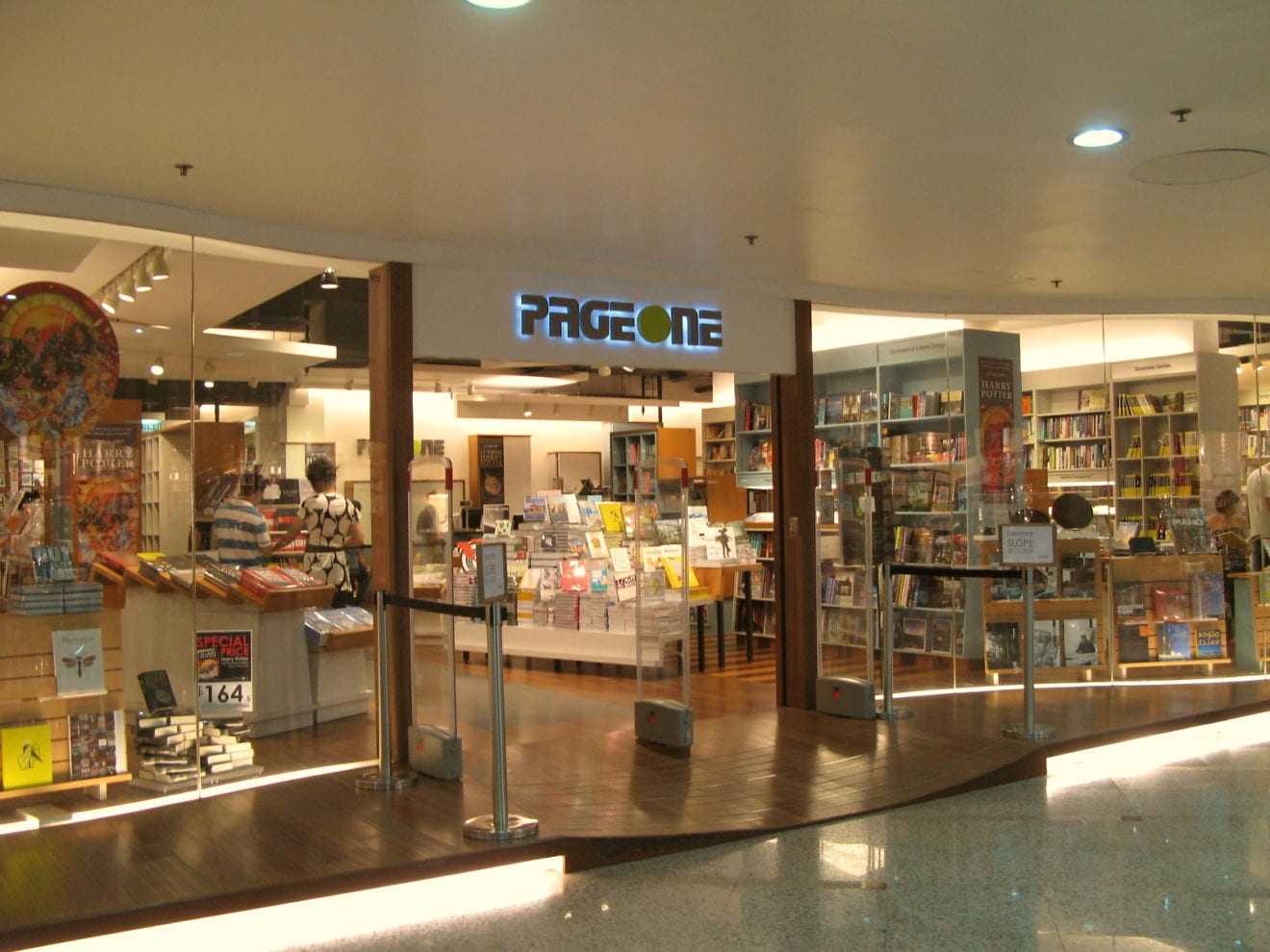
    Hong Kong International Airport is cutting back sharply on the number of bookshops for departing passengers and replacing all Page One stores with new outlets run by a mainland-based firm.

    The overhaul includes the ­replacement with high-end fashion stores of the airport’s two biggest bookshops in the departure area – once popular with mainland travellers buying books and magazines banned across the border.

    At a time of major controversy over Hong Kong’s banned-book trade, the number of airport bookshops is being reduced from 16 to 10, and four remaining shops moved, mostly to smaller sites positioned near departure gates.

    The two biggest bookshops – the 250 sq m Relay and Page One stores in prime positions near gates 20 and 21 in departures at Terminal One – are being replaced by luxury fashion stores MCM and Hermes respectively.

    Singapore-based chain Page One has lost all six of its airport bookshops while French-owned Relay, which has been doing business at the airport for 11 years, has had its number of outlets cut from 10 to five.

    Five of the 10 remaining bookshops at the airport will be run by a new operator, mainland publisher and bookstore chain Chung Hwa, under the new arrangement which comes into effect in April.

    The cutback in book retail space has triggered concerns that the Airport Authority might have come under pressure to shut down shops selling politically sensitive titles or exercised self-censorship in the wake of the ongoing controversy.

    Five Hong Kong booksellers went missing last year, sparking fears they had been kidnapped by mainland agents operating beyond their jurisdiction, but they later turned up on the other side of the border, saying they had gone there voluntarily in connection with an investigation into the smuggling and sale of banned books.

    However, an Airport Authority spokeswoman said the decision had been taken to reduce bookstore space because of a “change in reading habit and advancement in technology” following regular customer surveys on travellers’ needs.

    Relay and Page One were granted their most recent licences to run 16 bookshops at the airport in 2009. With the leases expiring in April, the Airport Authority invited bids for the relocated spaces in June last year and decided the winners in August.

    A spokesperson for the marketing department of Page One Hong Kong declined to say if the chain lodged a bid but said: “The proposed units’ allocation for the latest tender offered by the Airport Authority [was] not appropriate for us to continue our presence.”

    Because of that and the tourism downturn and sluggish economic conditions, Page One had decided to re-evaluate and restructure plans for retail stores to “match the current retail downturn”.

    Lisa Leung Yuk-ming, associate professor from the department of cultural studies at Hong Kong’s Lingnan University, said Chung Hwa had “quite a strong mainland Chinese background” and people might surmise political reasons for the changes.

    “Airport book shops became a haven for all these controversial books about Beijing government officials and their sex lives and how they made their way [to power] through corruption,” she said.

    “They were a haven not only for books but for magazines publishing gossip tabloid stories about the mainland Chinese government.

    “This might be a reprisal for bookshops selling these kind of things or it might be self-censorship by the airport themselves to try to weed out these problematic bookshop labels.

    “It might be a more proactive strategy to let more pro-Beijing commercial presses have space at the airport as a way to toe the official line – [and say] these are the books you should be reading rather than these problem [ones].”

    The Airport Authority spokeswoman repeatedly declined to address concerns over a possible political motive for the reduction in bookshop space.

    “The selection of books to be offered in the shops is decided by bookstore operators,” she said.

    The decision to cut back on book shops contrasts with the authority’s comments in 2009 when the previous contracts were awarded. Then, the authority said its surveys found books, magazines and newspapers were among the best-selling categories for departing passengers.

  • Smiggle plans Hong Kong, Malaysia roll-out

    Smiggle plans Hong Kong, Malaysia roll-out

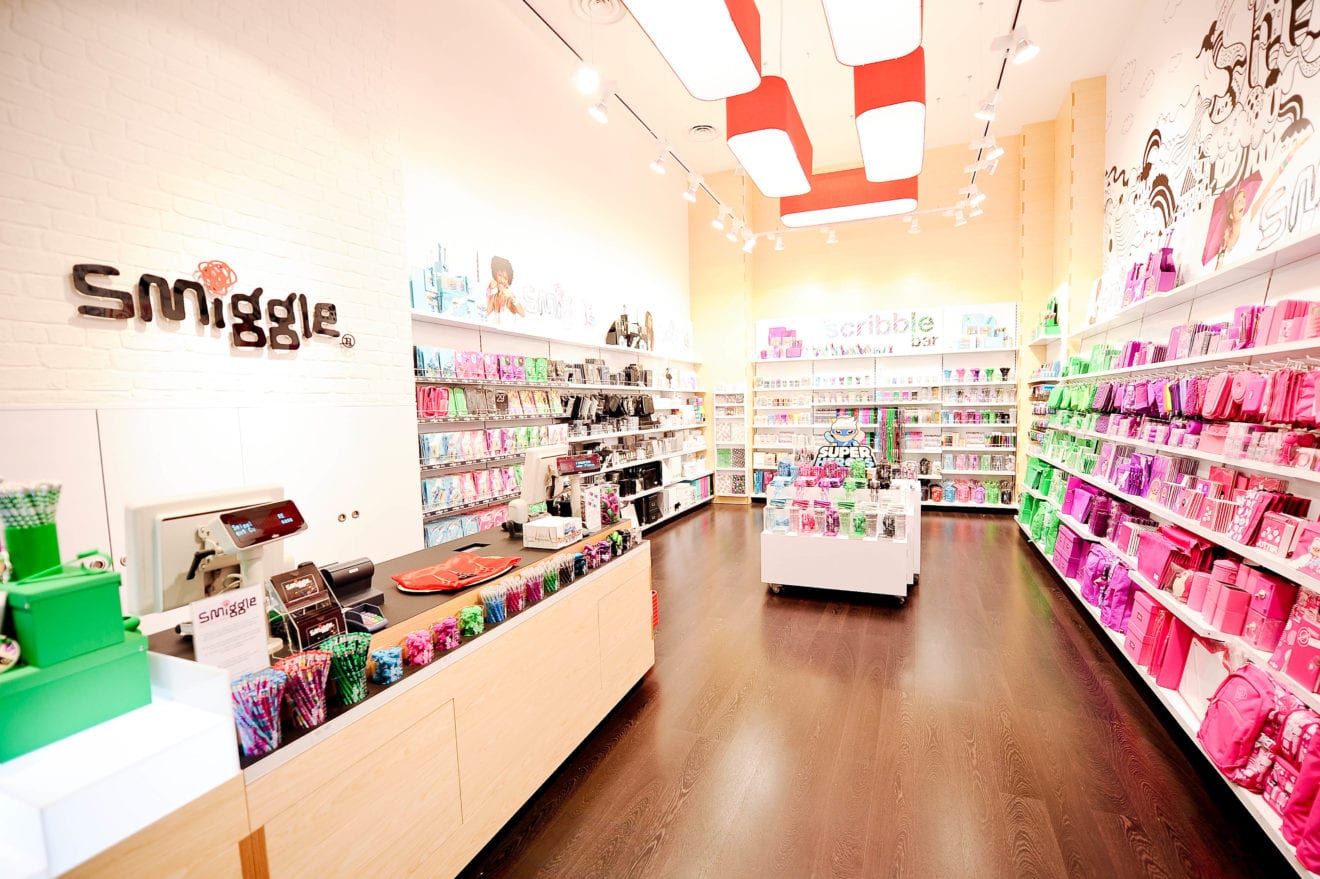
    Trendy stationery retailer Smiggle says it will open two more stores in Hong Kong in the next six months.

    Smiggle, owned by Australian-listed multi-brand retail group Premier Investments, also plans its first store in Malaysia before July 31 and expects to build a network of 50 stores across Hong Kong and Malaysia during the next five years.

    The chain already has 42 stores trading in the UK, plans 18 more over the next six months, and targets 100 there by Christmas.

    The Smiggle plans were revealed in the parent company’s half year result to January 30, The company, which also owns the Peter Alexander nightwear, Dotti, Jay Jays, Just Jeans, Portmans and Jacqui-E retail chains, predominantly trades in Australia and New Zealand. But Smiggle is a standout.

    Premier’s chairman, Solomon Lew, says Smiggle will remain and strong growth driver for the group.

    “Smiggle delivered global sales growth of 46.5 per cent and our UK roll-out is progressing well ahead of schedule. We continue to believe that Smiggle has the potential to become a truly global brand.”

    The company reported a net profit of AU$98.3 million (HK$583.625 million) for the half ended 30 January 2016, up 24.9 per cent year-on-year, before tax and interest.

    Total sales were up 15.1 per cent to AU$565 million, while like-for-like sales were up 6.9 per cent.

  • Analog TV signs off in Singapore in 2017

    Analog TV signs off in Singapore in 2017

    Analog television broadcasts in Singapore will stop by the end of 2017, according to the Ministry of Communications and Information.

    Public broadcaster Mediacorp converted all seven of its free-to-air (FTA) TV channels to the digital terrestrial transmission (DTT) format in December 2013, but continues to broadcast in analog. This will end next year.

    Minister Yaacob Ibrahim said that the freed-up spectrum will provide more capacity for mobile broadband and better support Singpaore’s Smart Nation development.

    Analog broadcasting in Singapore could be turned off before 2020. Viewers who want to continue watching FTA television channels after digital migration will need to buy either a new TV set with a built-in digital tuner or connect a digital set-top box (STB) and an indoor antenna to their existing TV sets.

    A label issued by the Media Development Authority (MDA) indicates whether the TV set or STB is compliant with Singapore’s digital format.

    The MDA also offers free digital STBs to low-income households, and says it has installed digital TV receivers to almost half of the 77,000 homes that automatically qualified for assistance.

  • End of year launching for Metro Myanmar

    End of year launching for Metro Myanmar

    Metro Myanmar is looking to launch by the end of 2016 as the German hypermarket operator gives Southeast Asia another shot.

    The move will surprise observers given Metro Group’s disastrous previous experience in Southeast Asia – where it chalked up millions in losses and got into an expensive dispute with local taxation authorities before off loading the company to Thai interests in late 2015.

    At the time the company stressed it was still pursuing opportunities in Asia.

    “Asia will remain an important growth region for Metro Group, and we will continue to invest there in the further development of the Metro Cash & Carry business,” said group chairman Olaf Koch in a media statement.

    “Myanmar is benefiting from opening up politically and has a high growth potential,” Koch said on Friday.

    The company is also planning to launch in Iran, newly freed from western trading sanctions.

    “We’ll decide by the end of the year which way our journey is headed,” said Koch.

    Metro Cash and Carry operates in 25 countries across Europe and Asia with 750 stores.

  • Hong Kong Ponders Plan to Boost Tourism From Mainland

    Hong Kong Ponders Plan to Boost Tourism From Mainland

    Beijing has reportedly asked Hong Kong officials to present a plan for boosting tourism from mainland China following a 3 percent decline last year amid growing anti-mainland sentiment in the territory.

    A plan for drawing tourists to Hong Kong could include cruises between the mainland and Hong Kong and an expansion of the number of cities from which people can travel to Hong Kong without joining a tour. Currently, residents of 49 mainland cities can travel to Hong Kong individually.

    Hong Kong and Beijing officials have also discussed ways to limit tour groups that force people to shop in Hong Kong.

    Joseph Tung, executive director of the Travel Industry Council of Hong Kong, said the mainland Chinese market is important to Hong Kong’s economy.

    “China is a main market, and everyone, all over the world, is trying to induce or promote tourism from China to their countries,” he said.

    The decline in mainland tourists is affecting Hong Kong’s economy, which is expected to grow 1 or 2 percent this year.

    Raymond Yeung, a senior economist with ANZ bank, said the mainland tourists who continue to visit Hong Kong are spending less.

    “The spending pattern of Chinese tourists has changed,” he said. “They no longer think Hong Kong is the place to buy luxurious products. With the opening of individual visas for Chinese tourists to go to Europe, traveling on an individual basis, this trend will continue.”

    Fear of disturbances

    Protests have also scared some mainland tour groups from visiting the city.

    In 2014, Hong Kong’s pro-democracy umbrella movement filled the city’s streets for nearly two months to protest Beijing’s decision to vet all candidates for the territory’s top job. Since then, local groups have staged demonstrations against traders from the mainland who cross the border to buy Hong Kong goods that then will be resold back home.

    In February, there was a violent riot in Mong Kok that injured dozens of people. The riot was sparked when police attempted to clear food stands during the Chinese New Year holiday. Protesters said they were demonstrating against the gradual erosion of Hong Kong local culture.

    But even if protests ease in Hong Kong, the new Chinese middle class, with its rising discretionary income, may increasingly choose to travel elsewhere.

    “A lot of the mainland tourists have been to Hong Kong many times, and they are all traveling farther, to Japan, Korea, Europe, the U.S.,” said Mariana Kou, a retail analyst at the brokerage firm CLSA. “But at the same time, even without this expansion, the local government is putting out a number of initiatives to try to support the tourism sector, by putting out a number of products and expanding their festival circuit and number of events.”

    Hong Kong authorities expect the number of tourists to drop another 2 percent this year.

  • DFS partners with Jeju Tourism Organisation

    DFS partners with Jeju Tourism Organisation

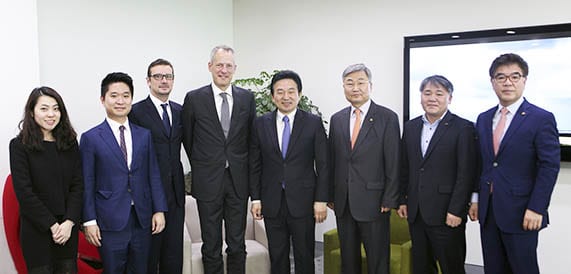
    Top DFS and JTODFS Group has signed a new supply partnership with the Jeju Tourism Organization (JTO) ‘to raise awareness and attract international tourism to Jeju Island, South Korea, as well as to provide an elevated retail experience for international tourists’.

    This new partnership has been forged after many months of discussions between the two parties, with DFS agreeing to use its global network and marketing reach to encourage tourism to Jeju. In return, it has also reached agreement to supply international luxury merchandise to JTO’s new duty free store, which is due to open in Jungmun in Southern Jeju later this year.
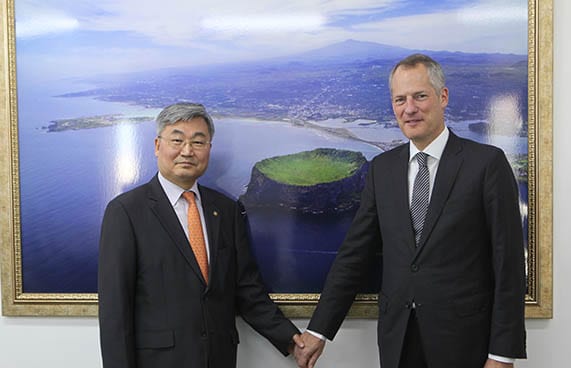
    Kab-Yeol Choi, President of JTO with Philippe Schaus, DFS

    Kab-Yeol Choi, President of JTO and Philippe Schaus, DFS CEO.

    [DFS says The Jeju Duty Free will open in its second phase by May 2016, with all brands and product offerings in place by the fourth quarter-Ed].

    According to DFS: “The store, called The Jeju Duty Free, will be located in one of the largest 5-star beachfront and gaming resorts in Jungmun and will carry global brands, as well as local offerings. There is scope for the partnership to extend to other channels in future.”

    It adds that its ‘long history’ of working with partners in Okinawa, Bali and Hainan ’is well-suited for this shared vision’.

    Kab-Yeol Choi and Philippe Schaus sign the agreement

    Kab-Yeol Choi and Philippe Schaus sign the agreement.

    Adding his comments, Hee-ryong Won, the Governor of Jeju said: “As a provincial government entity of Jeju Special Self-Governing Province, we must elevate Jeju’s value as a tourism destination by bringing high-quality duty free shopping services. We look forward to positively contributing to the development of Korea’s duty free industry.”

    Kab-Yeol Choi, President of JTO added: “We highly respect DFS’ dedication to JTO’s vision in developing Jeju as a preferred destination for tourism. The strategic partnership between JTO and DFS will allow Jungmun to offer the best duty free shopping experience and be of great assistance in attracting more international tourists to Jeju.”

    1 DFS and Jeju


    Last, but not least, Philippe Schaus, Chairman and CEO of DFS said the retailer greatly admires JTO’s creativity and foresight in developing Jungmun and the surrounding area as an international tourist destination.

    He added that the company is pleased to be able to contribute to these efforts by providing travellers with a tailored selection of high quality, luxury products.

    As announced by Korean Customs earlier this year Jeju outlets and all other specialist shops (including diplomatic) generated $481.1m in 2015.
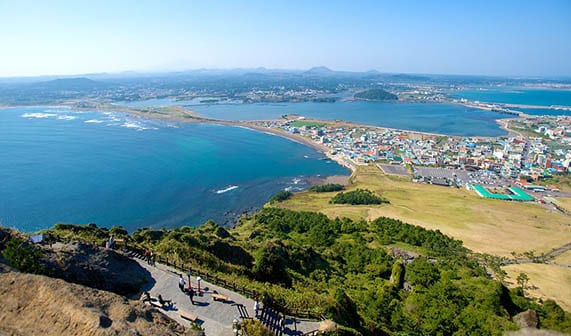
    Seongsan-Ilchulbong-Peak

    Seongsan Ilchulbong, or Sunrise Peak on Jeju Island – sometimes referred to as ‘the Hawaii of South Korea’.

    GOOD POTENTIAL FOR CHINESE VISITORS

    As DFS notes, Jeju Island is a self-governed province and Korea’s largest island, located south-west of the Korean Peninsula. A leading tourism destination in North Asia, it has been referred to as ‘the Hawaii of South Korea’, renowned for its dramatic natural beauty and boasting three UNESCO World Heritage Sites, as well as offering a wide range of leisure and cultural pursuits.

    Jungmun, in the south of the island, attracts visitors with its beaches, golf courses, high-end resorts and casinos, and an international convention centre.

    Jeju Island is forecast to attract four million visitors in 2016 and has recorded an average 44% growth in foreign travellers per year since 2010.

    DFS says that to further support the growth of international tourism, the Jeju Provincial Government, through the efforts of JTO, has begun a programme of strategic development in Jungmun to further attract ‘discerning overseas travellers’ seeking a combination of adventure and excitement but who also value luxury and convenience.

    DFS added: “In addition to several new large-scale integrated resorts and casinos, a cruise port is planned for completion in 2017 with an estimated handling capacity of one million passengers annually, enabling large cruise liners to dock near Jungmun and alleviating the limited capacity at the current port in Jeju City.”