Category: Living

Retail News Asia is committed to providing both local and global retailers with the latest Living news throughout the Asian market. This on a daily base.

  • Korean downtown duty free licence system under review

    Korean downtown duty free licence system under review


    In news that rocked the Korean travel-retail and duty-free world last November, Lotte Duty Free and Walkerhill Duty Free lost major downtown licenses to Shinsegae Duty Free and Doosan Group respectively, following a ground-breaking decision by the Korea Customs Service (KCS). But could they be granted a reprieve following a public hearing this week which discussed ways of easing regulations?

    The KCS’ decision to float key licenses—Lotte flagship and Lotte Tower stores, Walkerhill Duty Free’s downtown Seoul shop and Shinsegae’s Duty Free Busan operation—was in line with new regulations introduced in 2013. This meant contracts would expire after five years instead of the previous 10 and competition for licences would be encouraged at national level.

    The new regulations and KCS’ decision to rob Lotte of its invaluable World Tower Licence and SK Networks (Walkerhill Duty Free) of its flagship downtown duty-free operation it had operated for more than 25 years — DFNIonline understands both stores continue to trade until their futures are resolved once and for all— prompted strong criticism in Korea. It was widely believed such developments would hinder long-term investment and perhaps undermine global competitiveness of the country’s duty-free industry.

    During Wednesday’s hearing, The Korea Herald revealed officials proposed the issue of more licenses for duty-free shops in Seoul and return of 10-year expiration terms – previous terms were for five years. According to the publication, under the new proposals, the government could grant more duty-free licensees if the portion of foreigners and money spent at local duty-free shops exceeded 50% over the previous year. It could also do so if foreign visitors increased more than 300,000 in each municipality.

    While the Korean government believes the proposed new measures would make the local duty-free market more attractive compared to competition elsewhere and promote the tourist industry, the new operators do not share the same view. They believe they would only succeed in instigating “excessive rivalry” in a currently saturated market and re-invigorate Lotte and Shilla, which would not do them any favours. DFNIonline understands and appreciates both perspectives but the reality is that changes must be made for the sake of the industry.

    Quoting data released by the Seoul City government, indicating visitor numbers in the capital dropped 10.6 million last year from 11.4 million the year before, the Korean Herald report said: “The number of foreigners entering Korea via Incheon International airport and Gimpo airport also tumbled 5.9% and 11% respectively.

    ”The Korea Herald suggests the likes of Doosan Group, the heavy industry conglomerate, which confirmed to DFNIonline it is due to open its first store at the Doosan Tower in Dongdaemun in May and Shinsegae Duty Free, which already opened its new downtown store in March, believe the government has been “misled” by exaggerated tourism numbers.

    It also quoted an industry insider who commented: “New duty-free operators are set to invest K1.07trn ($896m) and hire 14,200 workers. But if we are going to have more operators even before setting the businesses, this would kill the entire duty-free market.”

    Lotte and Walkerhill Duty Free, however, refuted these claims, indicating the winners had previously urged the government to introduce more operators in the market, only to change their position once securing the licenses.

    Speaking to DFNIonline in December 2015 Lotte Duty Free marketing division managing director Bo Joon Kim said: “The reason why the duty-free market in Korea can be the world’s best is the constant investment and tremendous effort to attract foreign tourists to Korea.

    “However, if the operator changes every five years, the instability of the investment will not only hinder long-term investment, but create increased competition, which will eventually curtail service.”

    Kim also said a repeated change of operators would harm the global competitiveness of tourism in Korea and the duty-free market – Lotte Duty Free directly attracted 1.55 million foreign tourists to Korea in 2014 equating to 10.9% of the total number, he said.

    If local media reports are to be believed, the Finance Ministry will finalise the plan on duty-free operations this month. Do Lotte and Walkerhill really believe they will be granted new duty-free licences and is there a realistic chance these proposals will be implemented? Time will tell, but one thing is certain. Something has to be done.


  • Changi makes it four as World’s Best Airport

    Changi makes it four as World’s Best Airport

    For the fourth year running Singapore Changi Airport has been voted the World’s Best Airport by air travellers at the Skytrax 2016 World Airport Awards, held at the Passenger Terminal EXPO in Cologne, Germany.

    The Skytrax awards are the most comprehensive on the planet, based on 13.25m ‘customer nominations’ across 106 nationalities of air travellers using 550 airports worldwide. The survey evaluates customer satisfaction across 39 key performance indicators for airport service and product – from check-in, arrivals, transfers, shopping, security and immigration, to departure at the gate.

    Changi Airport was also voted Best Airport in Asia, as well as the Best Airport for Leisure Amenities, with the latter award recognising the airport’s music bar lounges, cinemas, music deck, swimming pool, napping and rest areas – plus its in-terminal Transit Hotel.

    In order, the Skytrax best airport ranking 2016 placed Singapore Changi first, ahead of second placed Incheon, Munich Airport (3); Tokyo Haneda (4); Hong Kong (5); Chūbu Centrair Nagoya (6); Zürich Airport (7); Heathrow (8); Kansai (9); and Hamad International Doha (10).

    Mr Lee Seow Hiang (left), CEO of Changi Airport Group, receiving the World’s Best Airport award from Mr Edward Plaisted (right), CEO of Skytrax. This is the seventh time that Changi Airport has picked up this top title at the World Airport Awards.

    Commenting on the award to Changi, Edward Plaisted, CEO of Skytrax said: “To be voted by customers as the world’s Best Airport four years in succession is a most remarkable achievement for Changi Airport Singapore, and is clear testament to the airport’s popularity amongst air travellers.

    “Changi Airport continues to innovate in both product and service options for its customers and focus on making the customer experience at the airport as enjoyable and relaxing as possible.

    “To be named by global travellers as the world’s favourite airport for the 6th time in ten years is great reward not only to Changi Airport management, but for staff across every section of the airport who contribute in every little way to Changi Airport operations.”

    Adding his comments, Mr Lee Seow Hiang, Changi Airport Group CEO said: “To be named the World’s Best Airport by Skytrax for the fourth year running is a significant achievement for Changi Airport and a clear affirmation that we continue to hit the right notes in our pursuit of service excellence.”

  • China Takes Over Australia’s Domination of Bali’s Tourist Arrivals

    China Takes Over Australia’s Domination of Bali’s Tourist Arrivals

    Chinas tourists have taken over the domination of Australian tourists who so far top the list of foreign tourist arrivals in the Indonesian tourist resort Island of Bali.

    “I have predicted that the number of Chinese tourists visiting Bali will increase after the government provides them with a visa-free facility and the opening of smooth direct flights to China,” Tourism observer Dewa Nyoman said here on Sunday.

    This condition has been observed since in the past several months. Moreover, the economic conditions in Australia are not conducive of late, he said.

    In the meantime, he said, the Chinese economy is relatively encouraging now.

    Indonesian flag carrier Garuda has also expended its flight routes linking Denpasar with Shanghai after it has previously opened a flight route that connected Denpasar with Beijing and Guangzhu in 2015.

    It seems that Garuda Indonesia is focusing on its flight expansion in China as the countrys foreign tourists which conduct overseas trips are large reaching some 100 million.

    He said that based on the records of Balis Tourism Service, the number of Chinese tourists arriving in Bali increased by 30 percent in the first months of 2016, topping the foreign tourist arrivals list.

    In the January-February period, a total of 189,594 Chinese tourists arrived in Bali, up from 145,747 in the same period in 2015.

    In January – February 2015, the number of Chinese visitors in Indonesia was still recorded in the second position.

    The Australian tourists holidaying on the island of Bali in the January – February period this year declined by 0.96 percent to 154,892 people. In the same period in 2015, the number of Australian visitors were recorded at 156,395.

    Japanese tourists occupied the third place with 39,371 visitors recorded last January and February, down 2.89 percent from 40,544 in the same period last year.

    Duwa Putra expressed convince that this year the number of Chinese tourists will continue to increase, replacing the domination the Australian tourists. After all, the volume of flights from Australia is increasingly limited.

    Besides, Garuda also services passengers with its routes covering Beijing, Guangzhou and Shanghai via Denpasar and Jakarta.

    The numerous flights facilitate the desires of young Chinese who want to spend their honeymoon in Bali, he said.

  • Tourism ministry promotes Wonderful Indonesia in Auckland Festival

    Tourism ministry promotes Wonderful Indonesia in Auckland Festival

    The Indonesian tourism ministry joined the Auckland International Cultural Festival to promote Wonderful Indonesia on March 20, I Gde Pitana, deputy tourism minister in charge of the international tourism market development, said here, Sunday.

    New Zealand is a potential tourism market that needs to be exploited optimally, according to him.

    The ministry will be more serious in exploiting market in New Zealand whose people have a high prosperity level, he stated.

    In the international festival, Indonesia would present cultural and art performances, he said.

    The Indonesian delegation to the festival is headed by Titik Lestari, head of a sub-department in charge of culinary and music, of the tourism ministry.

    The delegation includes members of the Sanggar Gea Asmara art group.

    “They will present traditional dances during the Auckland International Cultural Festival, such as Bajidor Kahot dance, Cendrawasih dance, Alusia dance, and Piring dance,” he said.
    (T.H016/Uu.F001)

  • Czech CEO boosts Filipino spending

    Czech CEO boosts Filipino spending

    David Minol, who grew up in the Czech Republic, describes the Philippines as a hot country, not only because of its tropical climate but also in terms of its rapidly growing economy.

    His company, Home Credit Philippines, is taking advantage of the large Filipino population and their growing penchant for appliances, electronics, mobile devices, computers and other gadgets.

    Home Credit Philippines lends to ‘unbanked’ people aiming to buy appliances, electronics or furniture on an installment basis.  Two and a half years after it set up its shop in the country, the company lent nearly P2 billion to 200,000 borrowers and recruited 1,700 Filipinos mostly for its salesforce.

    “We call it consumer finance, which means we are in financial services, but in retail business.  Our customers are in our mind.  Our company is a customer-centric organization, focused on the retail,” Minol says in an interview at a restaurant in Makati City.

    “Our customers are unbanked.  Typically, they do not have the bank account, they do not have access to the traditional banking system.  We are the ones that are giving them the first-time experience in financial services.  We try to support the financial literacy program here,” he says.

    Minol says Home Credit Philippines is a non-banking financial institution, accredited by the Securities and Exchange Commission. “Having the experience from other countries, the application process and obtaining the license from SEC was one of the quickest in the Asian market.  We really had very professional experience from the SEC,” he says.

    Home Credit, the parent company based in the Czech Republic, infused P2 billion worth of equity capital in the Philippine unit, which has offices in Ortigas and Cubao.  Minol, who first arrived in the Philippines in July 2013, now lives in Dasmariñas Village, Makati City, along with his wife and two children. His daughter, the youngest, was born in the country.

    “We operate in mostly emerging markets.  First, typically a significant proportion of the population is unbanked.  There is a strong demand for financial services by the middle and lower-middle class.

    This is actually the spot, and the market segment that we are looking at.  We are serving the people who are not served by traditional banking organizations,” says Minol.

    “If they go to the shop of SM Appliances, Automatic Centre and other big retailers, instead of paying cash or using the credit card, they can buy the goods and enjoy an affordable installment plan from Home Credit. This is our operation.  We have our own people in the shop.  We help customers in application process, within 30 minutes.  It is really easy, simple and fast procedure for the customer to get a loan, and he can leave the shop already with the electronic or mobile phone for example in his hand.  That is our value proposition,” he says.

    Minol says borrowers prefer to pay in installment because they want to keep their cash.  “We recently ran some marketing research about that.  It is really about the available cash.  For some of the customers, they prefer to keep their cash for other purposes. They would rather pay the downpayment, and pay in installment.  For some of them, it is about upgrade.  Instead of buying cheap feature phones, they prefer smartphones, with Internet functions, that they can use to find jobs.  So they would use the money for the downpayment or upgrade … We can really see a rich demand from mass and sub-mass population for installment financing,” he says.

    The company, encouraged by the rapid pace of growth in the Philippines, now plans to introduce more financial products and even apply for a quasi-banking license with Bangko Sentral ng Pilipinas.

    Minol says the mass market comprises Home Credit’s customers.  “It is the people who have income, either employed or self-employed or recipients of remittances from abroad, and who typically do not have credit cards,” he says.

    He says Home Credit also teaches financial literacy among customers.  While customers ventilate their grievances in the Internet over the alleged aggressive collection tactics by Home Credit collectors, Minol says it is important for the company to exercise risk management.

    “That is the cornerstone of our business.  We manage the risk to make it a value proposition for the client,” he says.

    Home Credit provided its first loan in the Philippines in October 2013, making the country its youngest market in Asia.  It provides loans ranging from P2,000 to P60,000, with an average size of P8,000. Average tenor is 12 months, although it could range from six months to 18 months, depending on the commodity and the preference of customers.

    “We are growing.  We already have 200,000 customers. Our average loan is P8,000.  If you do the calculation, we will be already lending P2 billion in the first two and a half years of operation.  We have invested significantly in the technology and the people.  We are looking for profitability in the coming years,” he says.

    Minol, a chartered certified accountant and who has a Master’s degree in finance from the University of Economics, Prague, has worked with Home Credit since 2006, acting as deputy to the CEO and later chief financial officer for Home Credit China.  He served as chief financial officer for Asia from 2011 to 2013, before he was tapped to form the Philippine unit in July 2013.

    Borrowers can apply for in-store financing to purchase consumer durable goods by presenting at least two valid IDs, completing an application form and paying the downpayment. Applications are processed within 30 minutes, says Minol.

    Minol says Home Credit is now present in nearly 1,000 stores nationwide.  Among its merchant partners are Acer, Automatic Centre, Lenovo, Memo Xpress, MyPhone, Oppo, Samsung, Silicon Valley, SM Appliance and Robinsons Appliances.

    “Our people are physically present in those shops.  If you go to the Automatic Centre, for example, you can see Home Credit employees wearing the red uniform. You can immediately apply for a loan from Home Credit.  Instead of paying cash, you will get the gadget and pay in installment,” he says.

    Monthly installments are settled at BDO, RCBC, Malayan Bank, SM Stores, Bayad Center, LBC, Villarica Pawnshop, Prime Asia Pawnshop, Cebuana Lhuillier, 7-Eleven and various payments centers.

    The company is on an expansion mode and began operating outside Metro Manila, including Cavite, Pampanga, Cebu and recently Isabela.

    Home Credit started in 1997 in a village near Brno, the second biggest city in the Czech Republic. Its parent company is PPF (První privatizační fond), which is owned by billionaire Petr Kellner, the richest person in the Czech Republic.  “Having a strong leadership and capital for expansion, he is one of the elements behind the Home Credit expansion as well,” Minol says.

    “After a couple of years, we expanded to Russia.  It is still one of the biggest markets for us.  Then we went to ex-Soviet Union countries.  We have business for years already in Kazakhstan, Belarus and in 2006, we started operating in Asia.  It is the first wave of Asian expansion, which had China and Vietnam,” he says.

    “I went in 2006 to China.  Three or four years ago, we started looking at other opportunities in Asia. So we opened in India, Indonesia and the Philippines.  So the Philippines is the youngest market.  Now, the last country that we are going to open in is the US.  We have already signed a joint venture agreement.  We will be opening our US operation in a month’s time,” he says.

    “We can see that the business is strictly diversified.  It is in Europe, Russia, Asia and now the US.  We are finally becoming a global company.  We started in Czech Republic 20 years ago,” Minol says.

    On what makes Home Credit different, Minol says “the essence of the business is risk management.”

    “We believe that over the years, we have developed a unique know-how for the emerging market.  If you look at most of our countries, they are emerging countries.  We develop a set of procedures and train the people on how we do the risk management,” he says.

    Minol says Home Credit now has a significant operation in terms of the number of people.  “Here in the Philippines today, we have 1,700 employees, which is after two and a half years of operation.  That is a significant number. We keep hiring 100 to 200 people every month.  In the horizon of next two to three years, we should be aiming at 5,000 people.  Majority of the employees are in the sales force,” he says.

    Home Credit has emerged as the biggest employer among Czech companies in the Philippines.  “In April, we will be opening our 1,000th shop.  Today, that number is 960 something, so we will have 1,000 shops operating.  And we will keep growing.  We still see the potential, as the customer demand is much bigger than 1,000 shops. So we will continue with the expansion to bring our services to the broader population,” says Minol.

    “As of today, we have 200,000 customers.  It is really the beginning. We have to be careful.  We are looking for a significant number in terms of customers,” he says.

    Minol says the Philippines is an interesting market, because it has a long history of consumer finance that began in the 1960s.

    He says interest rates on Home Credit products range from 4 percent to 5 percent, depending on the commodity and maturity of the loan.  “We now have selective producers and retailers with zero interest campaign, where customers do not pay any interest. We also have this campaign that if you pay all the installment on time, the last month is a gift from us.  Instead of paying the 12th month installment, and you paid all the 11 months on time, the 12th month is for you and it is a gift. So it is a combination of different products.  On average, I would say the interest is about 4 percent to 5 percent, monthly,” he says.

    Minol says Home Credit is in the Philippines for the long term, with a target to have 1 million customers in the coming years. “We don’t do this business for the short term.  It is for the long term.  The point here is to be in the Philippines basically forever.  That’s why we don’t like the short cut.  We want to build the business from the beginning,” he says.

  • Indonesia waives visa requirements for 79 more countries

    Indonesia waives visa requirements for 79 more countries

    Indonesia has waived visa requirements for 79 more countries, expanding the list to 169 visa-free nations as it continues its efforts to boost foreign visitor numbers.President Joko Widodo on March 2 signed a decree granting visa-free entry to tourists who wish to travel in the country for 30 days, said a statement published on the Cabinet Secretary website on Friday.

    “The presidential decree comes into effect once it is ratified, ” the statement said, noting that the Legal and Human Rights Ministry authorised it on March 10.

    According to the statement, Australia is included in the list of countries after the country was mooted three times last year but later the reciprocal issues were dropped over, Xinhua news agency reported.Throughout last year, the Indonesian government expanded the list to 90 from 15 visa-free countries.

    The government has set a target to attract 20 million foreign tourists annually by 2019 as an effort to boost growth in Southeast Asia’s largest economy.Last year alone, 9.73 million tourists visited the Indonesia.

  • Seven & I store closures hit regions

    Seven & I store closures hit regions

    Losses have forced two Seven & I store closures in regional Japan, both outlets after 40 years of trading.

    Seven & I Holdings, which owns the Sogo and Seibu department store chains, is closing a Sogo store in Kashiwa, Chiba Prefecture, and a Seibu store in Asahikawa, Hokkaido. Both are scheduled to shut their doors on September 30, and the company has not revealed any plans for either site.

    Japan’s regional department stores have been hit hard by competition from major shopping developments and other factors. Also, they are not easily accessible for foreign tourists, so have not benefited from the tourism boom.

    “It has been difficult to attract customers and we cannot continue to run deficits,” says Seven & I Holdings president Noritoshi Murata.

    Sogo and Seibu are known for having a higher ratio of regional outlets than other major department store chains, says The Japan News. Since their sales peaked in the 1990s, both Sogo Kashiwa and Seibu Asahikawa have been on a downward trend.

    Many other regional department stores have already closed. The Kenmin Department Store in Kumamoto, in business for more than 40 years under different names, shuttered in February last year. The Imari Tamaya store in Imari, Saga Prefecture, closed in January, citing a shrinking population, poor sales and other factors.

    Run by Isetan Mitsukoshi Holdings, the Marui Imai department store in Hakodate, Hokkaido, has reported a 4.8 per cent drop in sales to ¥6.3 billion (US$55.46 million) for the nine months ending December compared to the same period the previous year. In contrast, the Mitsukoshi Ginza store in Tokyo logged ¥64.3 billion in sales during the same period, up 19.6 per cent from the previous year. The Ginza outlet has been helped by increased foreign tourism.

    Department stores in 10 major cities sold about ¥12.1 million per 100 sqm in January, compared to about ¥5.68 million in regional stores, according to the Japan Department Stores Association.

    “It will be difficult to close the gap,” says an association official.

    Meanwhile, Isetan Mitsukoshi Holdings plans to increase small and midsize stores nationwide from 102 to 180 by the end of the 2018 fiscal year.

    Takashimaya last year created in-store displays of cosmetics and other products available online instead of at the regional outlets themselves.

  • U&B supermarket, Hong Kong

    U&B supermarket, Hong Kong

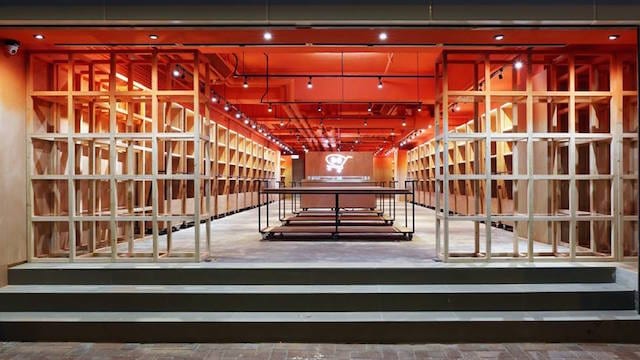
    Within the confines of a limited budget, a Hong Kong design company has created a flexible hybrid space for new local grocery brand, U&B.

    “Low budget doesn’t mean no creativity,” says designer Wesley Liu of award-winning PplusP Designers.

    PplusP Design -U&B grocery store 6

    He used mono materials and colour to transform the space in an engaging way for customers. The store’s interior embraces the elements of U&B’s brand logo, a shopping trolley, and its corporate colour, orange.

    PplusP Design -U&B grocery store 7

    Rather than a traditional white ceiling, it is tangerine and left bare to complement the concrete flooring and generate the feeling of unprocessed surroundings. This is further enhanced by unfinished plywood shelves with black metal highlights, and is in keeping with the store’s non-luxury products.

    PplusP Design -U&B grocery store 3

    PplusP Design -U&B grocery store 5

    PplusP Design -U&B grocery store 2

    All the display units are movable, which gives a great amount of flexibility for layout in the store. Track mounting kits on two sides of the wall panels can be used for suspended display systems.

    Wooden frames at the entrance are used for decoration or seasonal promotions, rather like a window display.

    These unified and simple elements encourage customers to concentrate on the products.

    PplusP Design -U&B grocery store 4

    PPlusP Designers leader Wesley Liu handled the design of the Whampoa Garden, Hung Hum, store. The design company’s team includes architects, interior designers and graphic artists, providing a range of multidisciplinary services for art installations, corporate design, hotels, hospitality, restaurants and retail.

    PplusP Design -U&B grocery store 1

  • New Muji flagship store in Singapore in the works

    New Muji flagship store in Singapore in the works

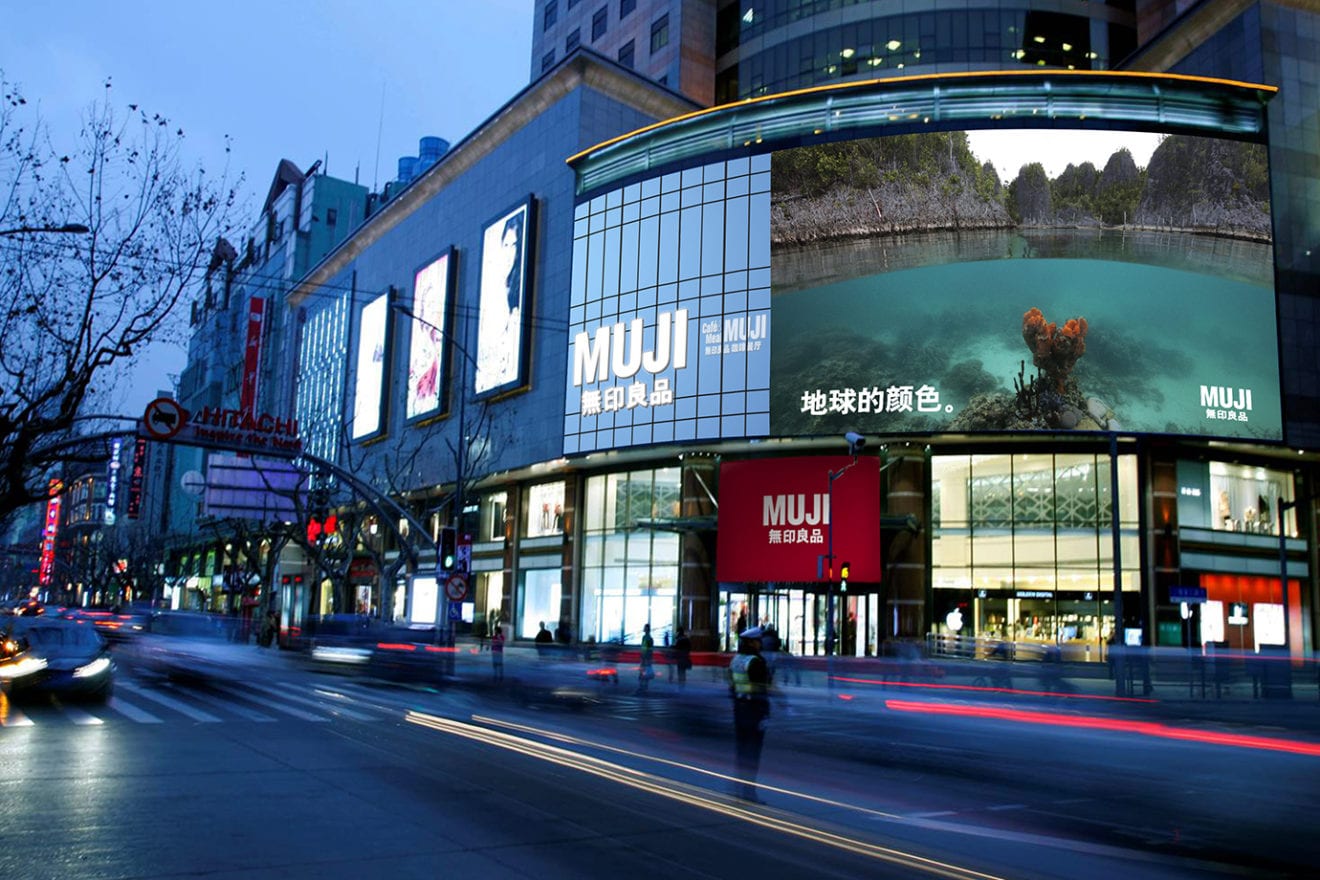
    Japanese lifestyle brand Muji is planning a new flagship store in Singapore.

    Masaaki Kanai, chairman of Muji’s parent company Ryohin Keikaku, said on Tuesday (Mar 15) that the new flagship store is estimated to be around 3,300 square metres and will feature more lifestyle concepts.

    “Apart from the usual Muji products, the store will have an ‘Open Muji’ concept where community creators are invited to interact with us. This is in line with our objective to create an interactive society,” said Mr Kanai, who was speaking to the media at a roundtable interview following his keynote presentation at The Innovation by Design Conference in Singapore.

    Muji, whose full name Mujirushi Ryohin translates to “no brand, good quality”, declined to reveal the specific timeline for the opening of the new store.

    The Japanese retailer currently has 10 outlets in Singapore, including a travel-concept store Muji To Go located at Changi Airport Terminal 2 and Cafe & Meal Muji, which opened at Paragon last year.

    GLOBAL EXPANSION

    The plan to add to its stores in Singapore comes as the lifestyle brand, known for its unorthodox no-brand philosophy and focus on well-designed and practical household items, is carrying out a global expansion.

    According to Mr Kanai, by 2017 Muji will likely have more overseas stores than the 284 it has in Japan, as it seeks for growth outside its mature domestic market.

    Among the top two key growth markets are China and the United States.

    “China is leading the growth due to its big population, while we had a good start in the USA where we are seeing 300 billion yen in annual turnover,” said Mr Kanai, who has worked at Muji since its founding.

    Even as concerns continue about slowing growth in China and the spending power of its consumers, Muji remains upbeat about the world’s second-biggest economy, where it intends to increase its pace of store openings to 50 per year from 2017.

    Ryohin Keikaku had 128 stores in China as of end-May 2015, its biggest market outside Japan.

    “I’m not so worried because the generation born after the 1980s are relatively well-off and they emphasize on a good lifestyle, and that’s in line with our philosophy.”

    Despite the rapid worldwide expansion, Mr Kanai emphasized that the Japanese retailer does not intend to “grow too big” and prefers to stay as a “small and medium-sized enterprise (SME)” so as to stay true to its design philosophy.

    “When a company grows too big, it’s not a good thing because the management will tend to emphasize more on ensuring a profit. That’s not our objective,” the chairman said.

    “Our objective is still to offer something useful to our consumers.”

    BRACING FOR SALES TAX HIKE

    Back in its home market, Muji is keeping an eye on the planned increase in the consumption tax, from 8 per cent to 10 per cent, in April 2017.

    Aimed at reining in Japan’s massive public debt, the sales tax was first raised from 5 per cent to 8 per cent last April. The move, however, took a toll on consumer spending and the country’s retail sales.

    To combat the negative impact, Muji lowered the retail prices of its products following the tax hike, and opted for cost-cutting measures.

    When asked whether Muji is worried about the impact of a second increase in the sales tax, Mr Kanai said: “There was certainly an impact on profit and sales during the last sales tax hike in 2014. If there’s a raise again next April, retail sales will likely come down.”

  • Index, One-stop shop for homeowners

    Index, One-stop shop for homeowners

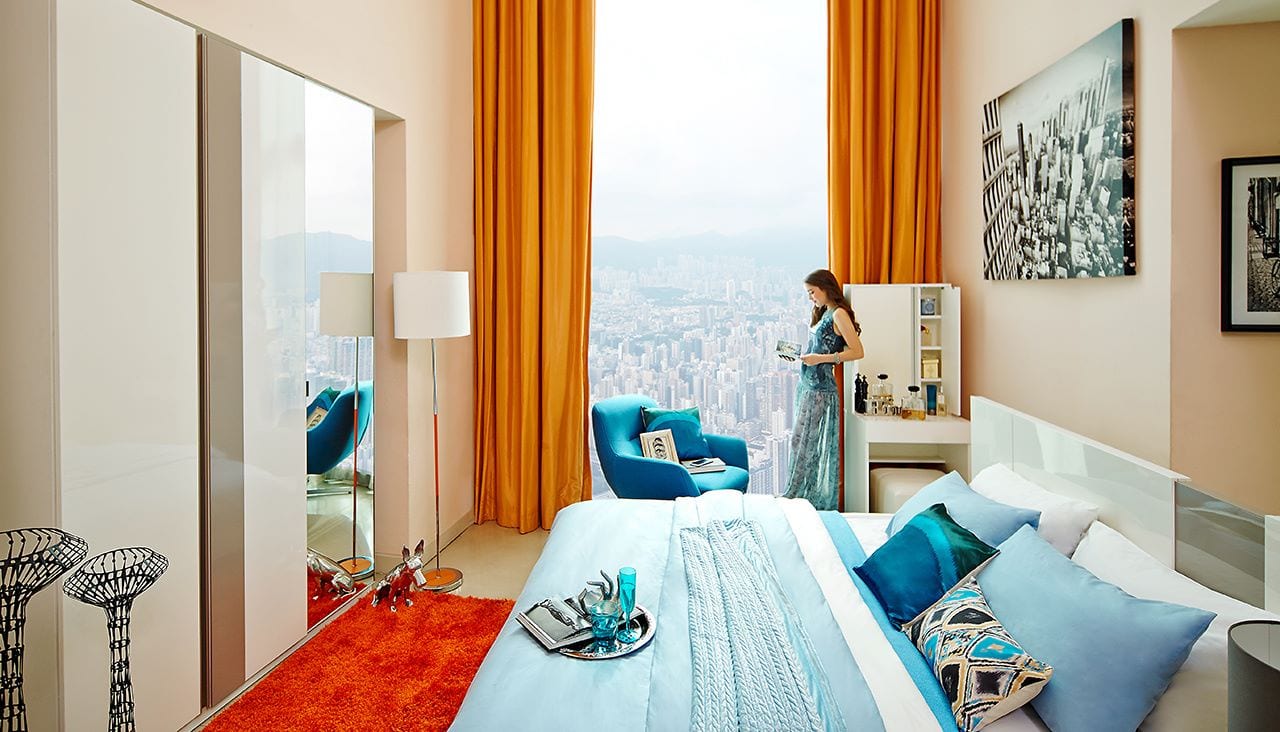
    Index Living Mall aims to be every homeowner’s one-stop shop that can transform an ordinary living area into a space that is worth boasting. AFTER its debut in Malaysia two years ago at IOI City Mall Putrajaya, Index Living Mall is making headlines again with its latest store at AEON Mall Shah Alam.

    This is the second store in the country for the home furnishing and decorative retail brand from Thailand. Index Living Mall aims to be every homeowner’s one-stop shop that can transform an ordinary living area into a space worth boasting about.

    The new two-storey shop is larger than the first, spanning across more than 6,000sq m with a wide range of home decorative items and furniture to suit everyone’s preference.

    Leave it to Index Living Mall to think of everything, because it also displays living room and bedroom decorating ideas for studio and one-bedroom apartments. Its professional team of designer specialists offers complimentary three-dimensional (3D) room design service while its sleep specialists are there to help you get the best mattresses available for a good night’s rest.

    Besides assisting customers with furniture selection, the store at AEON Mall Shah Alam offers free delivery and assembly service, which stays true to the brand’s commitment of delivering the best to its customers. The launch of the store was made official by the Royal Thai Embassy minister and deputy chief of mission Sirintra Chantapan.

    AEON Index Living Mall Sdn Bhd director Nur Qamarina Chew expressed excitement over the opening of the second Index Living Mall in Malaysia.

    “Partnering with AEON, we look forward to expanding the home furnishing brand locally and continuously catering to homeowners’ growing demand for unique, world-class designs,” said Nur Qamarina. Index Living Mall prides itself in offering reasonable prices without compromising on quality, a stress-free assembly service, and unique products by leading international designers.

    As part of its 12-day opening special ending March 21, the first 150 shoppers with a minimum purchase of RM1,500 will receive a RM150 voucher. During the same period, shoppers can sign up for a free JOYCard membership and enjoy weekly offers that will be available until April 3.

    AEON Credit Service is further sweetening the deal by offering its credit card holders a 10% cash back of up to RM30 per person for a minimum spend of RM100.

    As part of its expansion plans, Index Living Mall will open in AEON Mall Kota Baru in the second quarter of the year.

  • HKIA passenger numbers grow as new stores open at Midfield Concourse

    HKIA passenger numbers grow as new stores open at Midfield Concourse

    Hong Kong International Airport (HKIA) recorded steady growth in passenger volume and flight movements last month. During the month, passenger traffic rose 4.9% year-on-year to 5.7 million, while flight movements increased by 4.5% to 32,625.

    The growth in passenger traffic in February was mainly driven by Hong Kong resident travel, which registered a 16% year-on-year growth over the same month last year. Passenger traffic to / from Southeast Asia and Japan increased most significantly.

    In the first two months of 2016, HKIA handled 11.6 million passengers and 67,820 flight movements, up 9% and 5% from the previous year respectively.

    On a rolling 12-month basis, HKIA has handled 69.5 million passengers and 409,255 flight movements, marking year-on-year increases of 8.4% and 3.8%, respectively.HKIA

    Last month Airport Authority Hong Kong (AA) opened nine new retail shops and a café in the recently-inaugurated Midfield Concourse at HKIA. Additionally, eight retail and three catering outlets are soon to be opened at the 105,000 square metre concourse, including a new multi-category store concept from DFS. The catering outlets will offer café and casual-dining options to departing passengers who have limited time before boarding.

    “The Midfield Concourse will be able to serve an additional 10 million annual passengers in order to meet the increasing passenger volume at HKIA.

    “We are proud to offer extended retail and catering options throughout the concourse, which will let the passengers have a pleasant and enjoyable last-minute shopping and dining experience,”  said Cissy Chan, executive director, Commercial, Airport Authority Hong Kong.

    The airport has also introduced a mobile application, which provides travel information and says it hopes to explore more advances with airport technology.

    HKIA 2C K Ng, executive director of Airport Operations of Airport Authority Hong Kong, said: “To enhance the travel experience for HKIA’s passengers, we strive to provide customer-centric services by leveraging the latest technology, including the introduction of the HKG My Flight mobile application in 2013 that provides airport information, real-time flight status and more.

    “With the application of iBeacon technology, passengers using the HKG My Flight app can receive push notifications of airport information including dining and shopping offers and promotions at the airport. While arrays of initiatives are in the pipeline, we will continue exploring the application of different technologies in daily operations, aiming to enhance mobility, automation, efficiency and convenience for passengers.”

  • Chemist Warehouse to launch in Malaysia

    Chemist Warehouse to launch in Malaysia

    Australian based CW Retail Asia has entered into a joint venture in Malaysia to roll out a chain of pharmacies under the Chemist Warehouse brand.

    Chemist Warehouse Berjaya Asia will be run by Morning Charm, a company just acquired by Berjaya Corp (BCorp), in partnership with Melbourne-based CW Retail Asia.

    BCorp has taken an 80 per cent equity interest in the venture for RM80,000 (US$19,520).
    “The project will enable the BCorp Group to expand and strengthen its pharmacy distribution and retail businesses under the co-brand names, as well as making its foray into the pharmacy warehousing business sector,” says BCorp.

    In Australia, CW Retail supplies goods and services to pharmacies and operates pharmacy retail chains.

    The two partners in the venture say while the initial focus will be on the Malaysian market they may open stores in other Asian countries in due course, under the Chemist Warehouse brand or another.

    The new company will also supply goods and services to Cosway Pharmacies, which will be re-branded as Berjaya My Chemist pharmacies, and to Tigas Alliance pharmacies. Chemist Warehouse Berjaya Asia and Berjaya My Chemist pharmacies are members of Tigas Alliance, a pharmacy banner group in Malaysia.

  • Singapore, Indonesia drag Dairy Farm Group food division

    Singapore, Indonesia drag Dairy Farm Group food division

    Weak performances in Singapore and Indonesia eroded underlying profits in multinational retailer Dairy Farm Group’s food division last year.

    Last week, Dairy Farm reported a 5 per cent overall increase in sales on a constant currency basis, but a 14 per cent decline in underlying profit due to the “challenging” operating environment across Asia. Sales totalled US$11.137 billion, profit fell from $509 million to $424 million.

    Dairy Farm’s interests span convenience stores, hypermarkets, supermarkets, fast food restaurants, cafes, pharmacies, beauty stores and Ikea franchises. While all divisions reported mixed results by markets, it was the core food division where the gaps seemed widest.

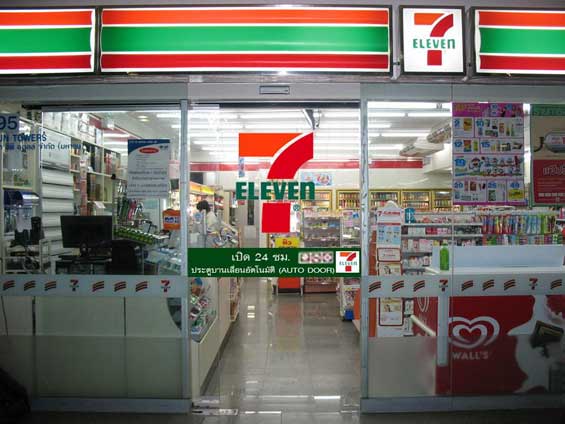
    CEO Graham Allan said Wellcome supermarkets and 7-Eleven convenience stores in Hong Kong traded well, and Wellcome Taiwan also delivered encouraging results with its targeted focus on upscale customers.

    In Hong Kong, despite a competitive trading environment and declining Mainland visitor traffic, Wellcome achieved gains in both sales and market share, he said.

    “In the face of steep increases in rental costs, profitability remained strong due to sales growth and prudent management of other costs. In 2015, the group acquired and successfully integrated the San Miu supermarket business in Macau, which delivered a higher than expected profit contribution.”

    Food (excluding the Yonghui China business in which Dairy Farm acquired a 19.99 per cent stake during the year) reported US$8.2 billion in sales, a decrease of 2 per cent, while operating profit declined by 21 per cent to US$236 million principally driven by disappointing results for supermarkets and hypermarkets in Singapore and Indonesia.

    In Mainland China, 7-Eleven showed further improvement despite the market slowdown. But in Singapore, “further margin erosion resulted from higher labour costs and rents, soft consumer sentiment, a weaker Singapore dollar” and intense competition in the supermarket sector.

    “Operating profit was significantly lower than in 2014, mainly due to lower margins from Cold Storage’s price campaigns, a store rationalisation program and operational challenges. In a difficult segment, Giant ended the year with improvement in both sales and profits.”

    Allan says in 2016, the group will optimise its product offer with improved fresh items and ready-to-eat meals, with the aim of growing market share, boosting stock management capability and fine tuning brand positioning.”

    In Malaysia, the introduction of GST in April and weak consumer confidence dampened retail spending and profitability.

    “Post-GST consumer apprehension, currency weakness, lower subsidies and political uncertainty brought consumer sentiment to its lowest point in 10 years and negatively impacted sales in the remainder of the year.

    “Nevertheless, improved retail execution, assortment enhancements and tactical investments in margin to improve price perception have helped to maintain sales in a soft market,” said Allan.

    “In the Philippines, the upscale and community supermarkets reported sales growth, while hypermarket sales were slightly positive. The group opened three new Rustan’s and three new Wellcome stores, and ended the year with 56 outlets. Enhancing the quality and breadth of the fresh offer, embracing more impactful merchandising and display practices and building corporate brands are central to the group’s plans for 2016.”

    In Indonesia, profitability declined significantly as a result of higher labour costs, price investments to drive customer traffic and changes associated with more rigorous stock management, Allan said. While its Giant supermarkets there enjoyed a better year and produced double digit sales growth, and its larger Giant hypermarkets also grew, Hero supermarkets sales were steady.

    “While overall margins improved, partly due to excellent growth in fresh food, earnings suffered from increases in labour costs, stock clearance activities and store rationalisation.”

    Results from PT Hero were also depressed by 12 per cent with the weakening rupiah affecting the outcome on translation. Hero, majority owned by Dairy Farm Group, has sold the majority of its Starmart convenience stores and will close the remaining ones.

    And in Vietnam, Giant achieved strong like-for-like sales with increases in both customer traffic and basket size.

    “Facing strong competition from new entrants and existing players, the group repositioned its fresh strategy with lower prices and a wider product offer to grow market share.”

    Convenience stores

    Operating profit in the convenience store division of the broader food business dropped by 12 per cent to US$64 million.

    Allan said in Mainland China, 7-Eleven saw a pleasing increase in sales and profits over the previous year, with like-for-like sales growth and store network expansion. Despite signs of an economic slowdown in China, profitability improved. Ready-to-eat was the leading category in terms of sales and contribution and this category will continue to be a major area of focus in 2016.

    “In Hong Kong, the group achieved excellent like-for-like growth and gained market share across most categories. Rapidly escalating operating costs, especially store labour and rental expenses, crimped profit growth. Sales momentum in Macau slowed during the second half of the year due to an increase in cigarette taxes in July and reductions in tourist numbers from Mainland China,” he reported.

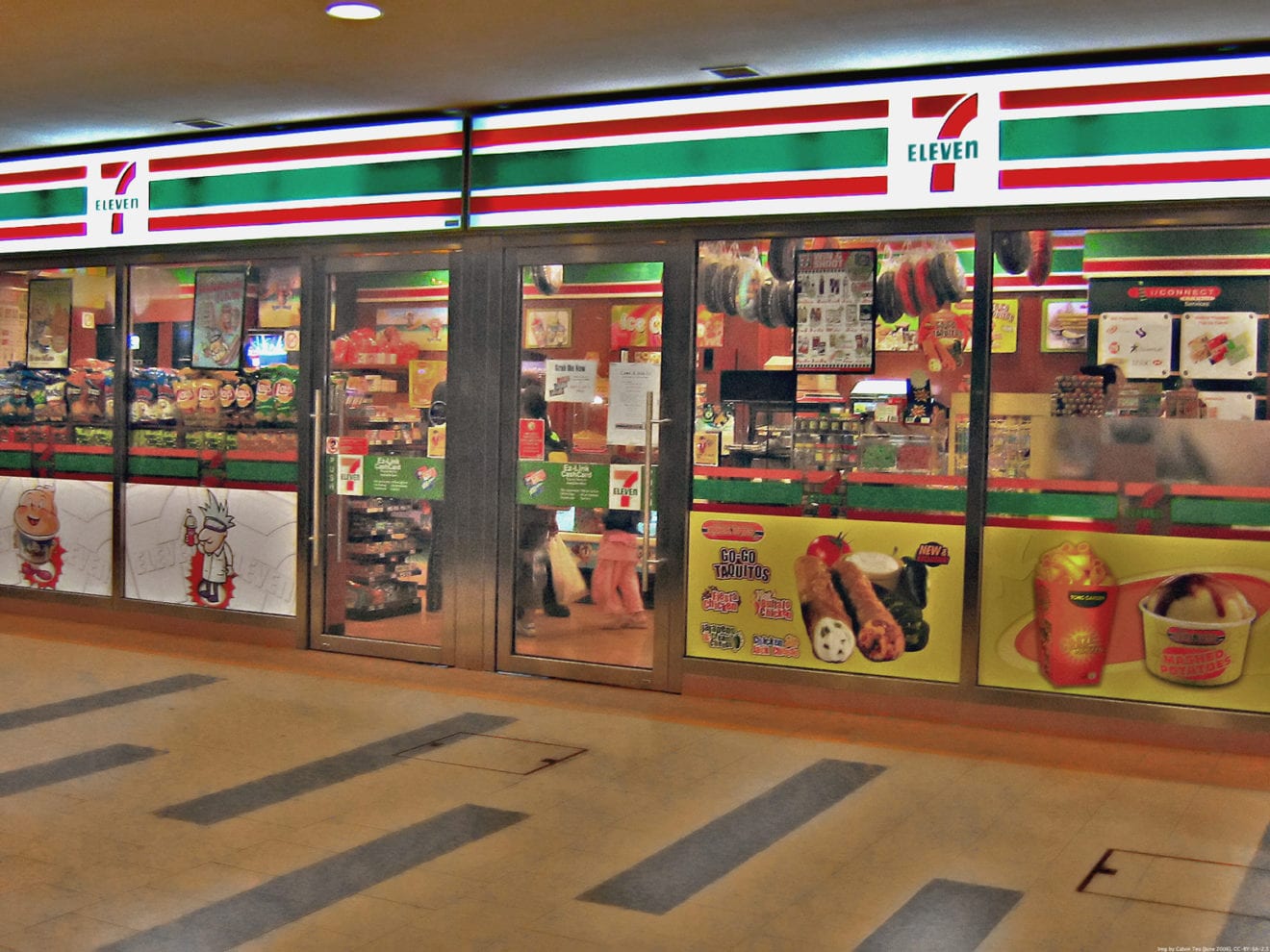
    In Singapore, 7-Eleven’s results were impacted by lower sales from the tourist segment, by lower liquor sales partly due to new regulations curtailing late night alcohol sales, and by increased store labour costs and operating costs in the Distribution Centre.

    “Major initiatives for the coming year will focus on strengthening the ready-to-eat supply chain.”

  • Indonesia to woo more visitors from India

    Indonesia to woo more visitors from India

    Indonesia is to participate in a major Indian major cultural festival in New Delhi in an attempt to seduce the growing middle-class in the South Asian nation into visiting the archipelago.

    The three-day festival, organized by international spiritualist NGO The Art of Living, will last from March 11 to 13. As one of the biggest stages in the world, it will attract around 3.5 million participants from around the globe. It is expected that more than 36,000 artists will come to demonstrate their musical skills; thousands of them will play 50 different musical instruments at the same time to create an alluring rhythm and harmony.

    “We hope the World Culture Festival can encourage better understanding between people of different religions, nationalities and backgrounds by exposing their diverse cultures, dancing, music, arts and also yoga,” Sri Ravi Shankar, the founder of Art of Living, said in a press release.

    To take part in the major event, 27 professional Indonesian dancers from iKreasindo, a cultural angklung workshop, will work with 80 artists from the Art of Living to present a joint angklung and dance performance entitled “Cendrawasih Menebar Pesona,” accompanied by the traditional Betawi folk song “Jali-Jali”.

    The government hopes that through this performance, Indonesia will be able to expose its culture to the world and attract more foreign tourists, especially Indians, to Indonesia.

    Home to the world’s second-largest population, India ranks 7th on the list of major markets for Indonesian tourism.

    In 2015, the number of Indian tourists coming to the archipelago rose to 271,252, a 15 percent increase from the previous year. This year, the Tourism Ministry expects at least 350,000 Indian tourists to visit popular destinations such as Bali, Jakarta and Batam.

    The lack of direct flights, however, hampers the flows of tourists from India to Indonesia.

    “We are now depending on Malindo Air and Singapore Airlines, because there still aren’t any direct flights from India to Indonesia. With Garuda opening direct flights in August, we expect more Indians tourists to come to Indonesia,” said Vinsensius Jemadu, the director of Asia-Pasific Tourism Promotions.

    This August, Garuda Indonesia is to launch direct flights from Jakarta to Mumbai; the flights will run three times a week. Besides Garuda, the Tourism Ministry also plans to work together with AirAsia to begin direct flights from India to Indonesia.

    Another government effort to increase the number of foreign tourists from India is to promote Indonesia’s tourist destinations by organizing a visit of media, tour operators, hoteliers and wedding organizers to major cities in India including Mumbai, New Delhi, Bangalore, Calcutta and Hyderabad.

    Besides India, the government is also striving to lure visitors from other countries, especially Singapore, Malaysia, China, Australia and Japan, in order to reach its target of hosting 12 million foreign tourists in 2016 and 20 million in 2019.

    The ministry recorded 9.73 million foreign tourist arrivals last year, short of the 10 million target, with the sector disrupted by haze and volcanic eruptions for a good part of the year.

  • Indonesia Offers Investment in Film Industry to China

    Indonesia Offers Investment in Film Industry to China

    Indonesia has offered an investment opportunity in the film industry to China with regard to developing national film industry.

    “We are offering 100 percent foreign ownership to support creative industry in Indonesia,” the head of Investment Coordinating Body (BKPM), Franky Sibarani, said at an Indonesia Business Forum on Thursday.

    He said Indonesia has the fourth biggest population in the world or 250 million population but the number of cinemas in the country totals only 1,100.

    The Indonesian government has revised the list of sectors not allowed for foreign investment and has opened investment opportunity of up to 100 percent foreign ownership in the film industry.

    The decision covers film making, distribution and exhibition or cinemas.

    When asked about interesting parties Franky said so far only South Korea that has expressed its interest while the US still has yet to study the policy.

    Regarding 100 percent foreign ownership he said that although foreign investment opportunity has been opened 100 percent “there is a provision requiring foreign parties to prioritize up to 60 percent national films. It would be better if our films could be exported.”

    Franky said Indonesian film industry must develop more professionally including in their making and distribution so that they can compete with foreign films.

    “We need investors to advance national film industry until it can export,” he said.

    Chinese film industry is growing quite well with the box office last year increasing 36 percent to US$4.77 billion supported by ticket sales for both domestic and Hollywood films.

    According to figures released on January 1 by the State Administration for Press, Publication, Radio, Film and Television Affairs (SAPPRFT) local film production raked US$2.6 billion in 2014.

    Although it has contributed successes in terms of production Chinese film production drops.

    In 2014 China produced 618 films down from 638 in 2013. From overseas sales their contribution has also declined collecting only US$304 billion last year.

    Critics have blamed tight censorship on films considered sensitive politically for reducing the worlds interest in local films.