Category: Living

Retail News Asia is committed to providing both local and global retailers with the latest Living news throughout the Asian market. This on a daily base.

  • Build-A-Bear builds back profits

    Build-A-Bear builds back profits

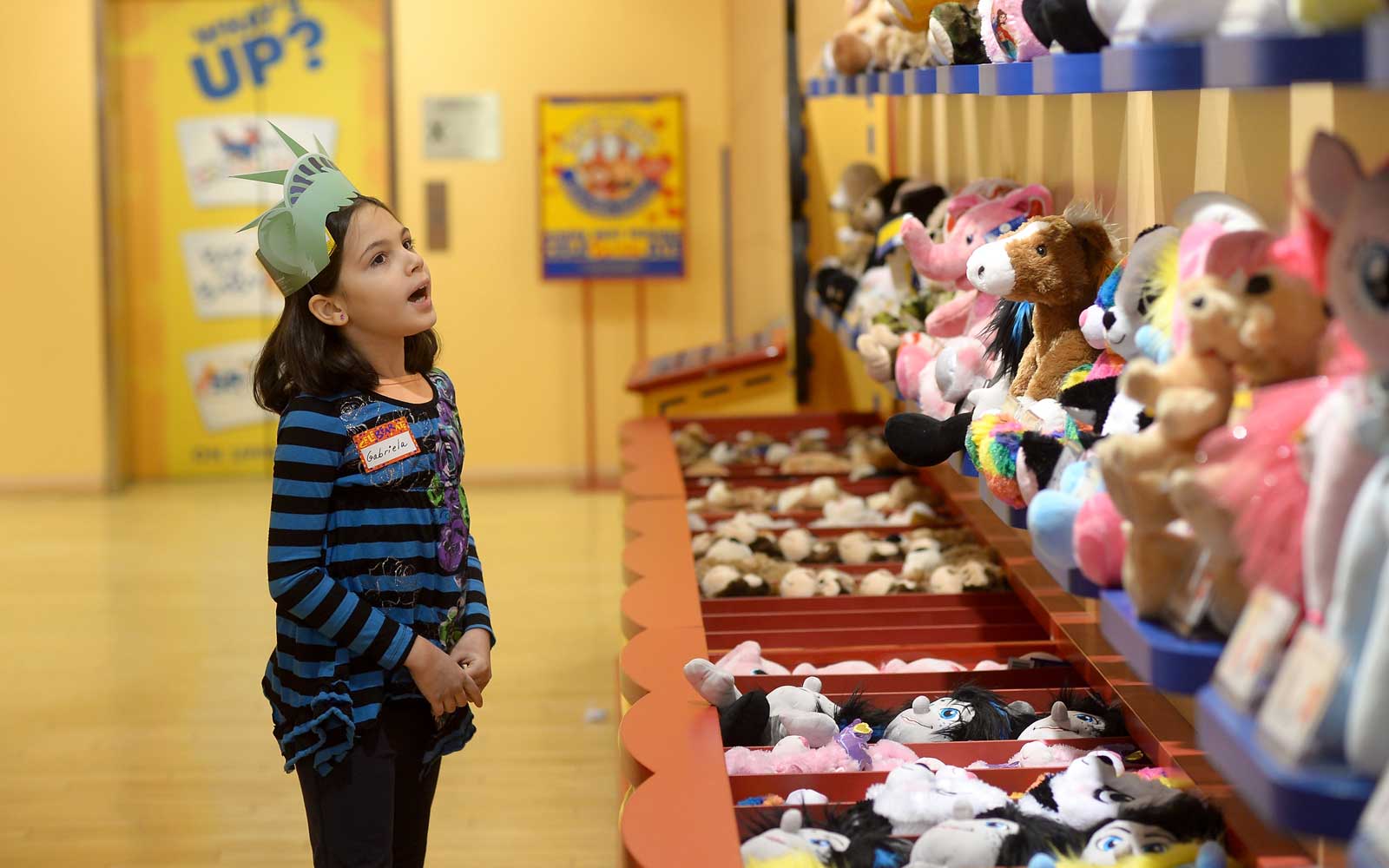
    Build-A-Bear Workshop has recorded its third consecutive year of increased profit.

    CEO Sharon Price John has attributed the ongoing improvement in the once-challenged children’s experiential workshop concept to initiatives including store remodelling in the new Discovery format, which generated double-digit growth compared to our heritage stores, focusing on key consumer segments and investing in infrastructure.

    “We made steady progress toward our stated long-term sales productivity goals as we achieved the highest average transaction value in our history and highest units per transaction since 2008. We remain committed to the ongoing disciplined execution of our strategy while we continue to leverage our powerful brand in order to deliver both sales and profit improvement,” she said.

    In the 52 weeks to January 2, 2016, Build-A-Bear achieved total revenues of US$377.7 million, compared to $392.4 million in the previous financial year (which had 53 weeks, hence the higher figure).

    Same store sales rose 1 per cent – growth was flat in North America, but increased 4.8 per cent in Europe, and online sales rose 11.8 per cent.

    The company’s retail gross margin expanded 150 basis points to 47.1 per cent compared to 45.6 per cent in the previous year. Pre-tax profit  improved 11.7 per cent to $17.9 million.

    During 2015, the company closed 20 stores and opened 25 locations, including 11 in its new Discovery format, to end the year with 329 Company-owned stores; 269 in North America and 60 in Europe. The company’s international franchisees ended the year with 77 stores in 11 countries.

    In June this year, Build-A-Bear Workshop will open a new store in the new Disneytown retail precinct at the Shanghai Disney Resort in China.a

  • Indonesian Cities Now Charging Shoppers for Plastic Bags

    Indonesian Cities Now Charging Shoppers for Plastic Bags

    The policy is imposed on all retailers, including supermarkets, stores and vendors at traditional markets.

    Bandung is adopting a more conservative approach, charging customers the minimum Rp 200 per bag, mayor Ridwan Kamil said at the initiative’s launching ceremony in Jakarta. The world renowned architect said that by charging customers for plastic bags, the city will not only reduce waste but also generate revenue.

    “Buying plastic bags can generate Rp 1 billion a day for the city government. In a year we should have Rp 360 billion from plastic bag sales. That can be earmarked to buy dump trucks, build incinerators or a recycling plant,” he said.

    Bogor, in the outskirts of Jakarta, also demanded retailers and stores charge Rp 200 per plastic bag.

    “The government [central and local] have agreed that the lowest price for each plastic bag is Rp 200. What matters most is to reduce the use of plastic bags,” Bogor mayor Bima Arya said.

    “If we do not see a significant impact from the policy, then there might be a possibility to raise the price.”

    Roy Madey, chairman of the Indonesia Retailers Association (Aprindo), said that the association would also help the government educate the public about the negative environmental impact of plastic bags through various social media platforms and posters displayed at retail stores.

    During the public awareness campaign, retailers will subsidize each bag in order to maintain a price of Rp 200.

    “If the policy calls for the fee to go above Rp 200 per plastic bag, we are concerned that it will decrease the number of customers shopping at modern retail stores. The government has to protect every industrial sector to allow it to grow, including the retail industry,” Roy said.

    Indonesia is ranked the world’s second largest plastic waste producer, using 187.2 million tons each year according to a study published last year in the journal Science. China stands at number one, producing 262.9 million tons of plastic waste, most of which ends up in the ocean.

  • JAJU continues quiet battle with Muji

    JAJU continues quiet battle with Muji

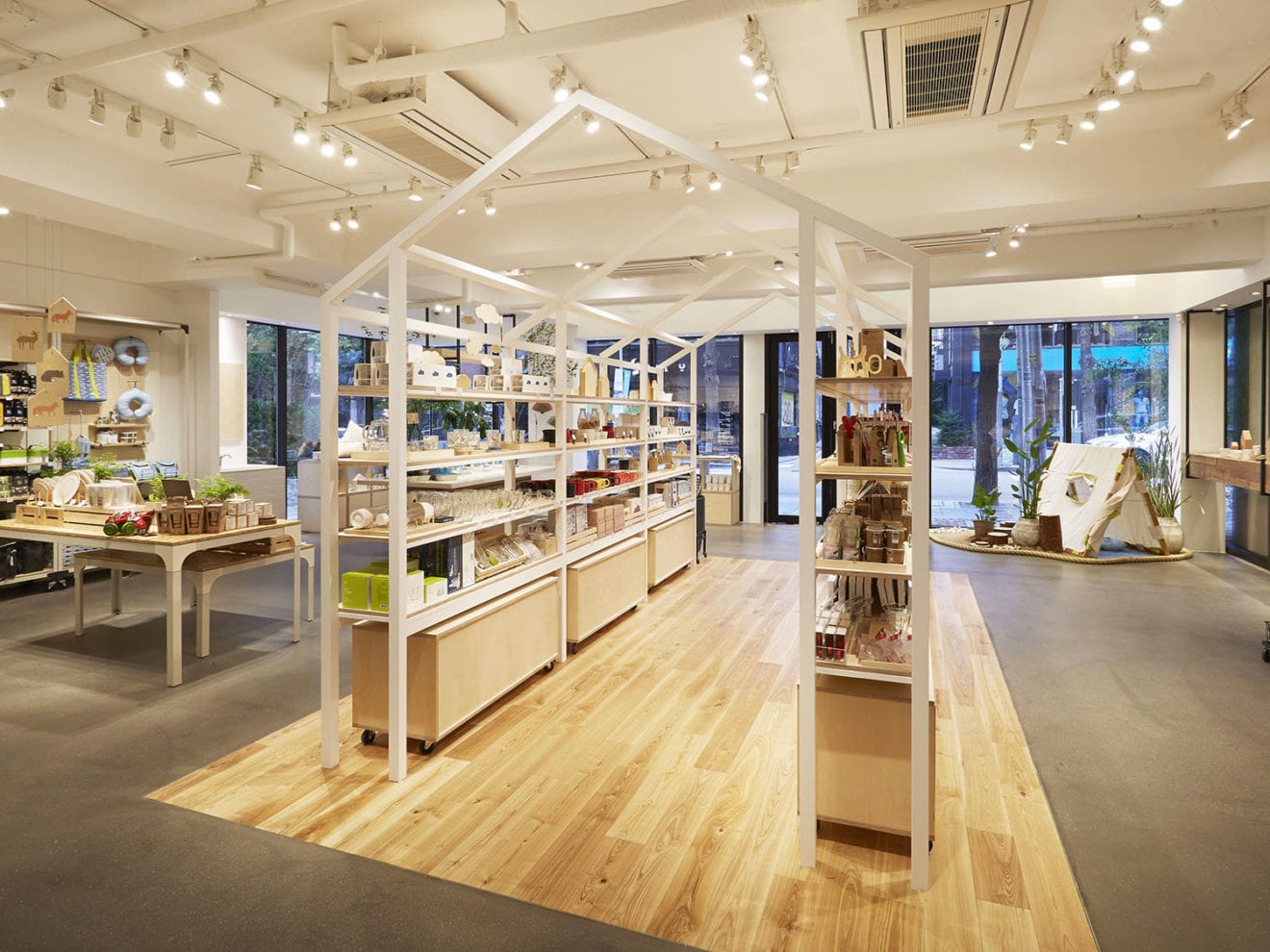
    The flagship store of JAJU, a retail brand by Shinsegae International, is all clean lines, muted colors and minimalist goods.

    Everything from notepads and diffusers to kitchen products, body cushions and clothes are on display for prices that make even the thriftiest shopper comfortable.

    JAJU is the first Korean lifestyle brand by a major conglomerate to offer a huge array of goods including housewares and daily supplies, a segment pioneered by brands like Japan’s Muji.

    Shinsegae International has never explicitly said it hopes to emulate the success of Muji, but the core brand concept – no-frills products at cheap prices – speaks for itself.
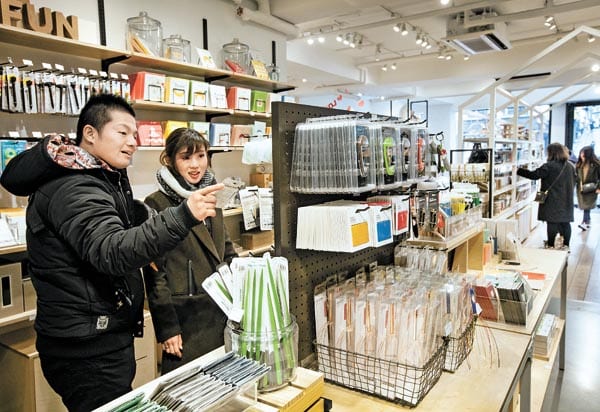
    The combination of simplicity, affordability and decent quality has boosted JAJU’s appeal among local consumers who appreciate a deal, but the similarities with Muji might hinder its expansion into the global market, which is Shinsegae’s ultimate goal.

    The five-story flagship store in the posh Garosu-gil area of Gangnam District, southern Seoul, symbolizes Shinsegae’s ambitions for the brand.

    “An average of 2,500 people visit this store each day on weekdays and some 4,000 to 5,000 people on weekends,” said Han Seung-min, head of the flagship store.

    In terms of sales, JAJU outperforms Muji in Korea thanks to its presence in stores like E-Mart, Shinsegae’s discount supermarket chain, and other shopping outlets.

    JAJU posted 175 billion won ($142 million) in revenue in 2014, while Muji Korea recorded 48 billion won.

    But the sales gap isn’t a big consolation for the local brand, since it operates a drastically larger number of stores.

    Muji has only 14 stores in the country whereas JAJU has 148.

    The brand maintained a humble presence only a few years ago, located solely inside of E-Marts.

    Until 2010, the brand name was Jayeonjui (which translates to “naturalism” in Korean) and was managed entirely by E-Mart.

    But since Shinsegae International, the fashion-oriented affiliate of Shinsegae Group, acquired the brand and changed its name to JAJU, the category of products has expanded.

    The company is also focused on diversifying the location of its stores beyond E-Mart to stave off the perception that JAJU is merely an in-house label.

    Along with the flagship store that opened in 2014, JAJU added an additional branch in the COEX Mall in Samseong-dong, southern Seoul.

    Still, E-Mart remains the largest channel, with 132 branches accommodating the shop.

    “We are looking for different properties to house JAJU to reach different customer bases,” said Park Cho-rong, a public relations representative of Shinsegae International.

    Appeal of simplicity

    The colors, patterns and materials of JAJU products are understated. But the plainness helps keep manufacturing costs low, resulting in lower prices.

    The prices of most goods at JAJU are low even compared to Muji, a major selling point of the brand.

    Muji’s socks start from 4,000 won ($3.25), but those at JAJU are in the 3,000 won range.

    Shinsegae said that the standard design and simple packaging pushes the prices lower, even though 90 percent of the products are made in Korea.

    And the plain-looking goods appear to be appealing to customers’ tastes.

    “When I place plain white dishes and cups together, it gives off a modern and pleasant vibe,” said Choi Hee-young, a 33-year-old woman who was perusing kitchenware at the JAJU flagship store.

    “Because they can form some kind of uniformity, they are easy to match together compared to fancy, carefully designed items with colors.”

    As part of its efforts to enhance design, Shinsegae tapped well-known designer Oh Joon-sik as the creative director for JAJU last year.

    Catering to Korea

    JAJU is trying to carve out a niche for itself by making its products more explicitly “Korean.”

    “Based on the understanding of the Korean lifestyle, JAJU tries to offer quality goods at affordable prices,” said Kim Woong-yeol, head of the sales division at JAJU.

    For example, the brand sells small onggi, or crock pots, designed to better keep traditional dishes such as kimchi and soybean paste. The pots typically come only in big sizes because they are placed outside in bulk.

    “This type of onggi is designed to keep temperatures so that the food inside is better preserved,” said Han, the head of the flagship store.

    “But now the size of households is becoming smaller, and we learned that there is a demand for smaller pots,” she said.

    JAJU stores gained insight into its consumers’ tastes by inviting stay-at-home moms to offer their opinions in the development stage.

    Their thoughts are particularly reflected in kitchenware and kids’ products.

    “Cooking spoons made by overseas manufactures are rather big, which is inappropriate for Korean users,” Han said, “So we surveyed the ideal size of cooking spoon for consumers and adjusted the size.”

    When the retailer revamped its brand in 2010, JAJU added a line of designer furniture, as well as items for kids and travel.

    To boost its furniture collection, JAJU teamed up with global furniture company Fritz Hansen and Sigga Heimis, a former designer for Ikea.

    Of its existing categories, JAJU has boosted aromatherapy, home decor and body care products in response to the growing demand.

    “With the rise of single-person households, we found that products used to decorate houses or as a little treat are really doing well,” Han said.

    “They are not essentials, but the items can cause a little joy or make for a more pleasant atmosphere.”

    Global ambitions

    Shinsegae International said in 2014 that it will develop JAJU into a global brand with annual sales of 500 billion won by 2020.

    The retail unit, headed by Chung Yoo-kyung, a daughter of Shinsegae’s founding family, has yet to elaborate on its global expansion plan.

    Some analysts predict JAJU will focus on local markets for the next year or two because the brand’s revenue drives sales growth for Shinsegae International.

    “JAJU plans to open 10 more stores by the end of this year,” said Yoo Jeong-hyun, an analyst at Daishin Securities.

    “Revenue that comes from each JAJU store is very high, and the combined sales account for 20 percent of Shinsegae International’s sales.”

    But industry insiders say JAJU needs a more distinctive identity and brand strategy to distinguish itself from the better-known Muji.

    The product categories overlap with those of Muji, and some products offer similar functionalities.

    “The key to success in the global market depends on how JAJU can create its own brand concept distinct from Muji,” said a retail analyst who requested anonymity.

    “But right now, the distinction is not enough to pull off the same success as Muji.”
  • Construction of second Bangkok Ikea store starts

    Construction of second Bangkok Ikea store starts

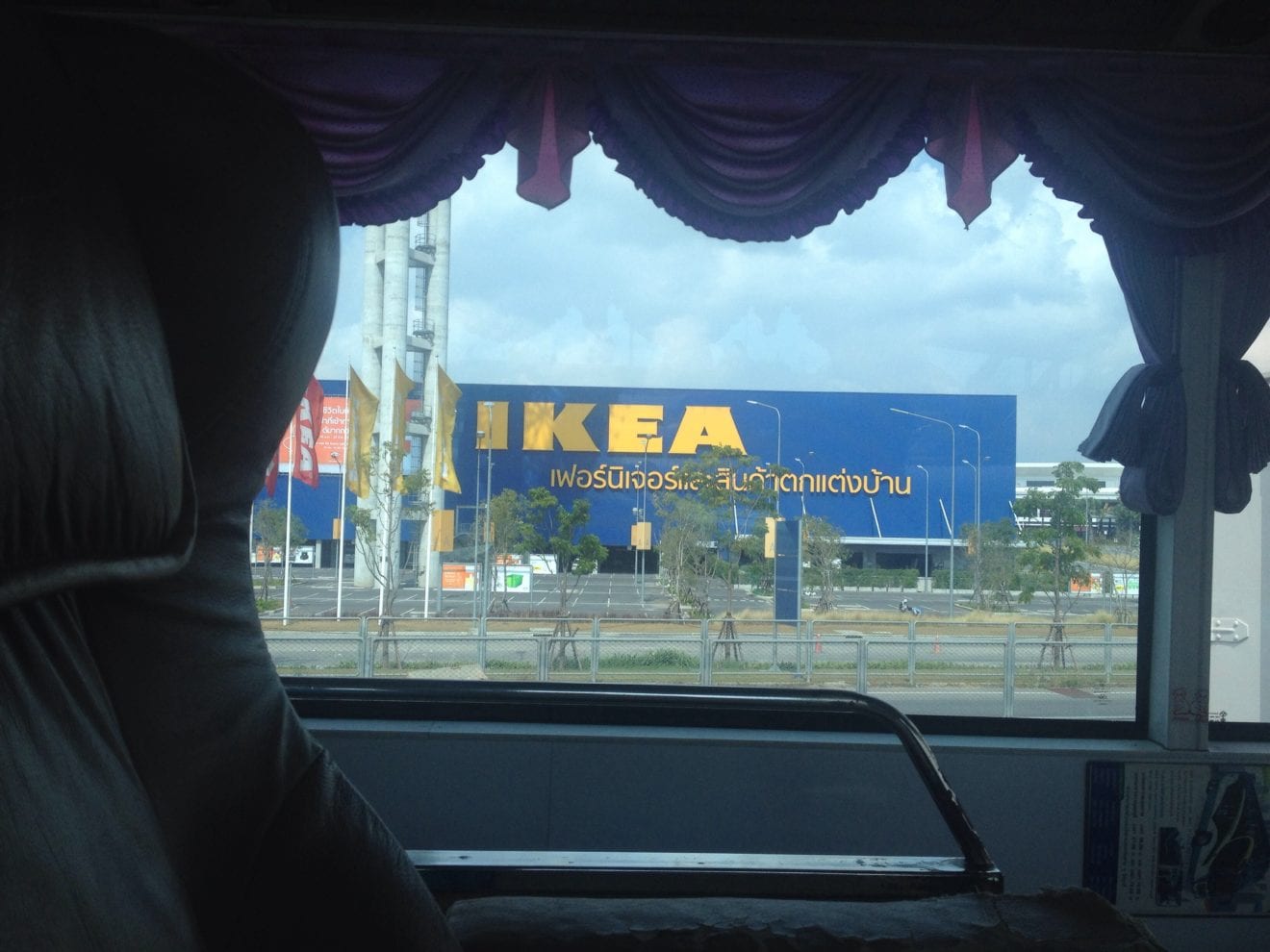
    On 18 February 2016 Ikano and Central Pattana representatives broke ground at the site for Thailand’s second IKEA second store in West Bangkok.

    IKEA-Bangyai-Ground-Breaking2

    From left to right: Ms. Amornrat Bunyongsin GM-Central Plaza Westgate; Ms. Lacia Sherlock, IKEA Retail Project Leader for Ikano Private Limited; Mr.Sebastian Hylving, Expansion Director for Ikano Private Limited; Mr. Narit Ratanaphichetchai, Executive Vice President-Business Development Central Pattana Public Company Limited; Mr. Isareit Chirathivat, Vice President of Property Management, Central Pattana Public Company Limited; Mr. Mike King, the IKEA Retail Director for Ikano Private Limited

    The site is in Bangyai, to be fully integrated into Central Plaza Westgate shopping centre with wide open entrances at all levels of the mall and direct link to the upcoming MRT (public transportation) line.

    “We are creating the world’s best integration of an IKEA store into a shopping centre,” said Sebastian Hylving, Expansion Director for Ikano Private Limited, owner of the IKEA franchise in Singapore, Malaysia and Thailand.

    In a highly complex design, the showroom and a market hall are housed inside an expansive two-storey concourse building that creates a bridge to the Westgate mall. The self-serve warehouse will be on the ground floor.

    IKEA-Bangyai-Ground-Breaking

    “This is not going to be the usual blue box,” said Lacia Sherlock, IKEA Retail Project Leader for Ikano. “This will be our only store that offers customers an opportunity to enter and checkout at every level. We will deliver a fantastic customer experience.”

    Ms. Sherlock explained that the 50,278m2 building includes 1,900 parking spaces, a dedicated area for outdoor furniture, and two unique cafes – one will “float” over the showroom in an open mezzanine. The 6.3 billion THB project also aims to reach new heights in Thailand terms of sustainable construction and operation. It will be fitted out with hundreds of rooftop solar panels, 100% LED lighting and other features that are expected to earn this IKEA store the highest level of LEED certification.

    Mike King, the IKEA Retail Director for Ikano, is confident many of the 1.6 million people who live in Bangyai and the surrounding area – including a growing population of young families – will make the trip to the new store when it opens at the end of 2017.

    IKEA-Bangyai-perspective

    “There may be a lot of competition in the home furnishing business here in Thailand, but no other retailer offers the whole family a great day out in the way IKEA does,” said Mr. King. “No other retailer provides customers both an inspirational showroom and 9,500 functional, well-designed products – flat-packed and ready to take home the same day.”

    In November last year, the company opened a second store in Kuala Lumpur and a Pick Up and Order Point in Phuket. The Bangyai project marks Ikano’s first collaboration with Central Pattana Public Company Ltd.

    Isareit Chirathivat, Vice President of Property Management, Central Pattana Public Company Limited said: “We are honored to join hands with Ikano to develop the newest model of IKEA store. We are confident IKEA will help Central Plaza Westgate achieve its vision of being ‘The Most Complete Super-Regional Mall in Southeast Asia’. We will attract Thai and foreign customers alike and create a truly great destination for people to shop, dine and play in West Bangkok.”

  • Colgate-Palmolive keeps the Philippines smiling on its 90th year

    Colgate-Palmolive keeps the Philippines smiling on its 90th year

    2016 marks the 90th year of Colgate-Palmolive in the Philippines and with that, the various global brands that have helped improve the lives of Filipinos. These brands include: Colgate, Palmolive, Gard, Tender Care, Axion and Ajax.

    Colgate continues to be the Oral Care brand most recommended by Dentists* and Palmolive remains to be the #1 Personal Care brand, in the Philippines**.

    Keeping Philippines Smiling has been the mission of the company since it first opened its doors in 1926 at Binondo, Manila. For almost 20 years, Colgate-Palmolive has been driving oral health education in public schools across the country, together with the Department of Education thru the Colgate Bright Smiles Bright Futures Program. This program provides oral health education as well as oral care kits (toothbrush, toothpaste) to every first grade public student in the Philippines. In 2015 school-year alone, 2.3 Million students benefited from this program.

    The company is also the exclusive partner of the Philippine Dental Association since 2001 to raise oral health awareness during Oral Health Month. This February, we will offer free dental check-up and free fluoride treatment to 100 kids in 100 barangays. That’s 10,000 kids that will have healthier smiles at the end of the month.

    The team has also been working closely with Public Health agencies to further improve the reach of oral health education and fluoride treatment application, among communities that need this support the most.

    In addition, aspiring dentists have the opportunity to receive scholarship grants from Colgate-Palmolive and the Philippine Association of Dental Colleges. Our first scholar in the 1980s: Ma. Jona Godoy, DMD became Dean of CEU’s College of Dentistry and is an active officer representing the Philippines at the International Association for Dental Research (Southeast Asia Division) since 2000. Since the partnership was officially forged in 2001, Colgate-Palmolive and PADC have granted 248 scholarships.

    _OLE3673

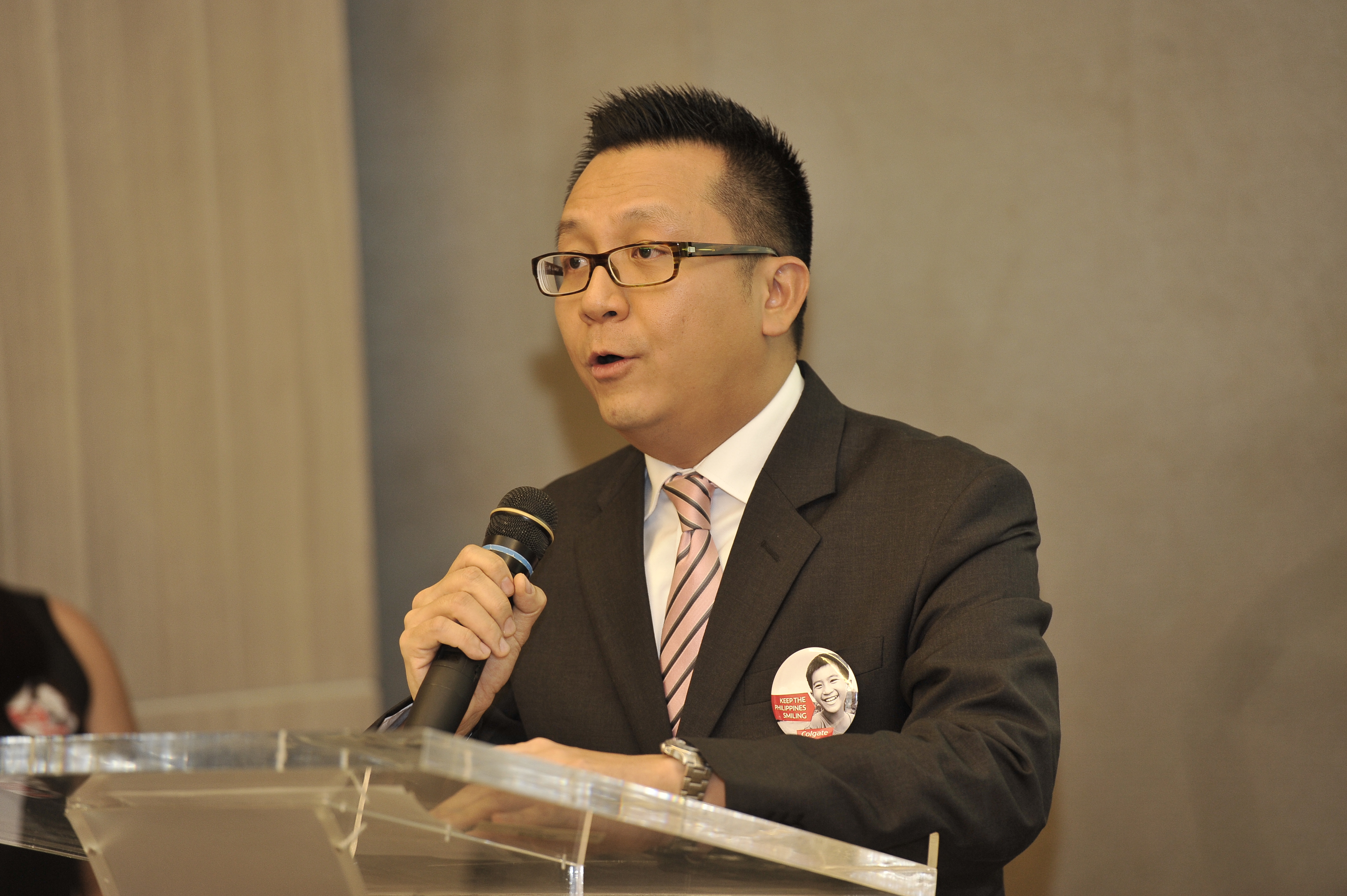
    Stephen Lau, Vice-President & General Manager for Colgate-Palmolive Philippines announces the company’s theme “Keep Philippines Smiling” for its 90th year.

    Stephen Lau, Vice President and General Manager for Colgate-Palmolive Philippines explains “Indeed, the company feels privileged to have this opportunity and capacity to make a meaningful impact to the community. At Colgate-Palmolive, we firmly believe that good oral health is a basic right of every citizen.”

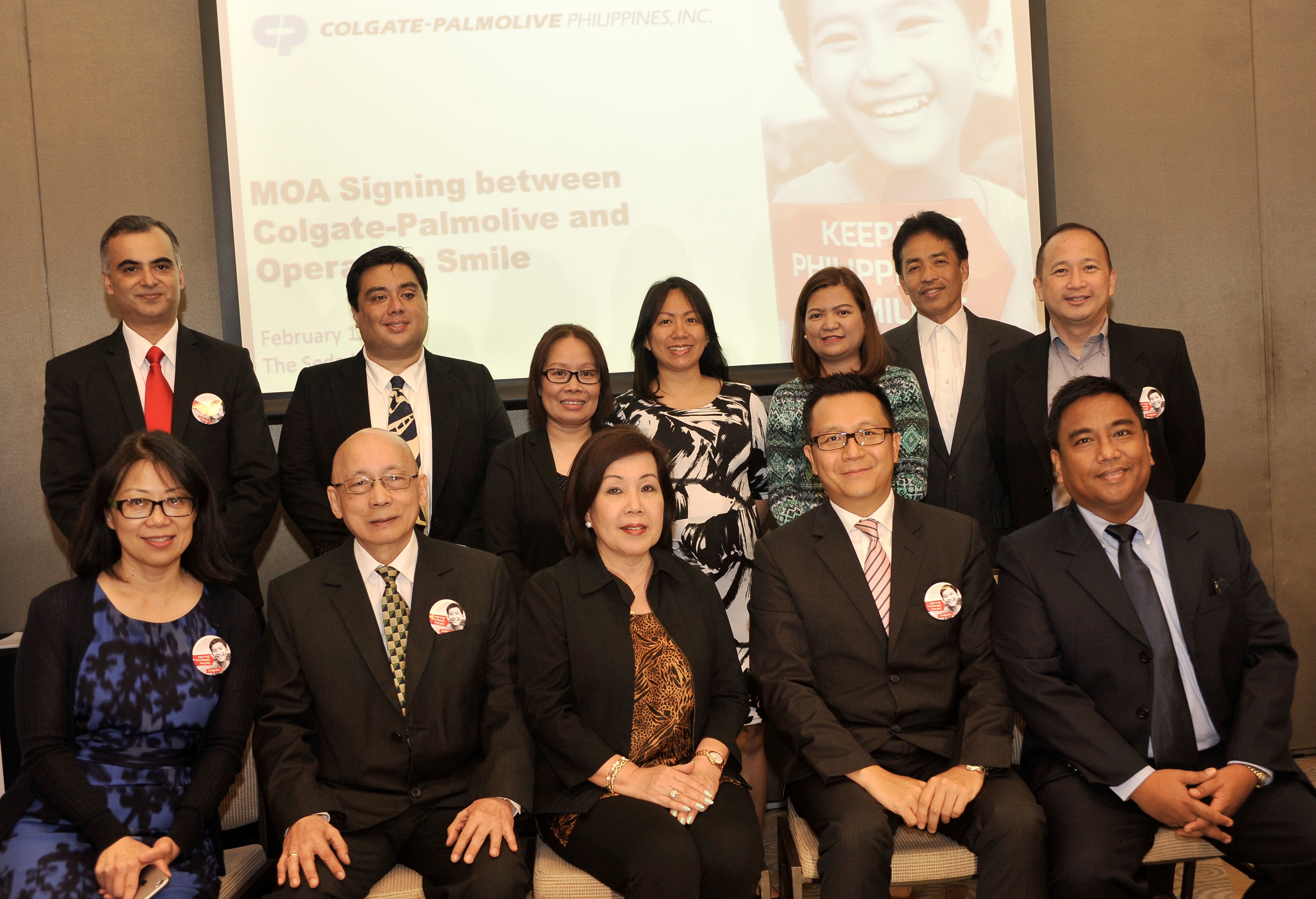
    Management Teams of Colgate-Palmolive Philippines, Operation Smile Philippines and Puregold Price Club Inc. have joined forces to raise funds for oral cleft surgeries and dental check-up. This kicks-off a series of community service programs to commemorate Colgate- Palmolive’s 90th year in the country

    Management Teams of Colgate-Palmolive Philippines, Operation Smile Philippines and Puregold Price Club Inc. have joined forces to raise funds for oral cleft surgeries and dental check-up. This kicks-off a series of community service programs to commemorate Colgate-
    Palmolive’s 90th year in the country

    To Keep the Philippines Smiling even more in 2016, Colgate-Palmolive has teamed up with Operation Smile Philippines Foundation, Inc.. Operation Smile brings groups of medical volunteers from across the world to help indigent children afflicted with oral cleft. It is estimated that 1 in every 500 new-born babies in the Philippines has oral cleft. This life-changing surgery not only improves the child’s oral health but significantly boosts their confidence and self-esteem.

    Puregold is the retail partner for this endeavour to help raise funds for surgeries, dental check-up and fluoride treatment. When Puregold shoppers buy participating Colgate products from February 15 to April 17, the amount of Php5 from every product purchased will be donated to Operation Smile.

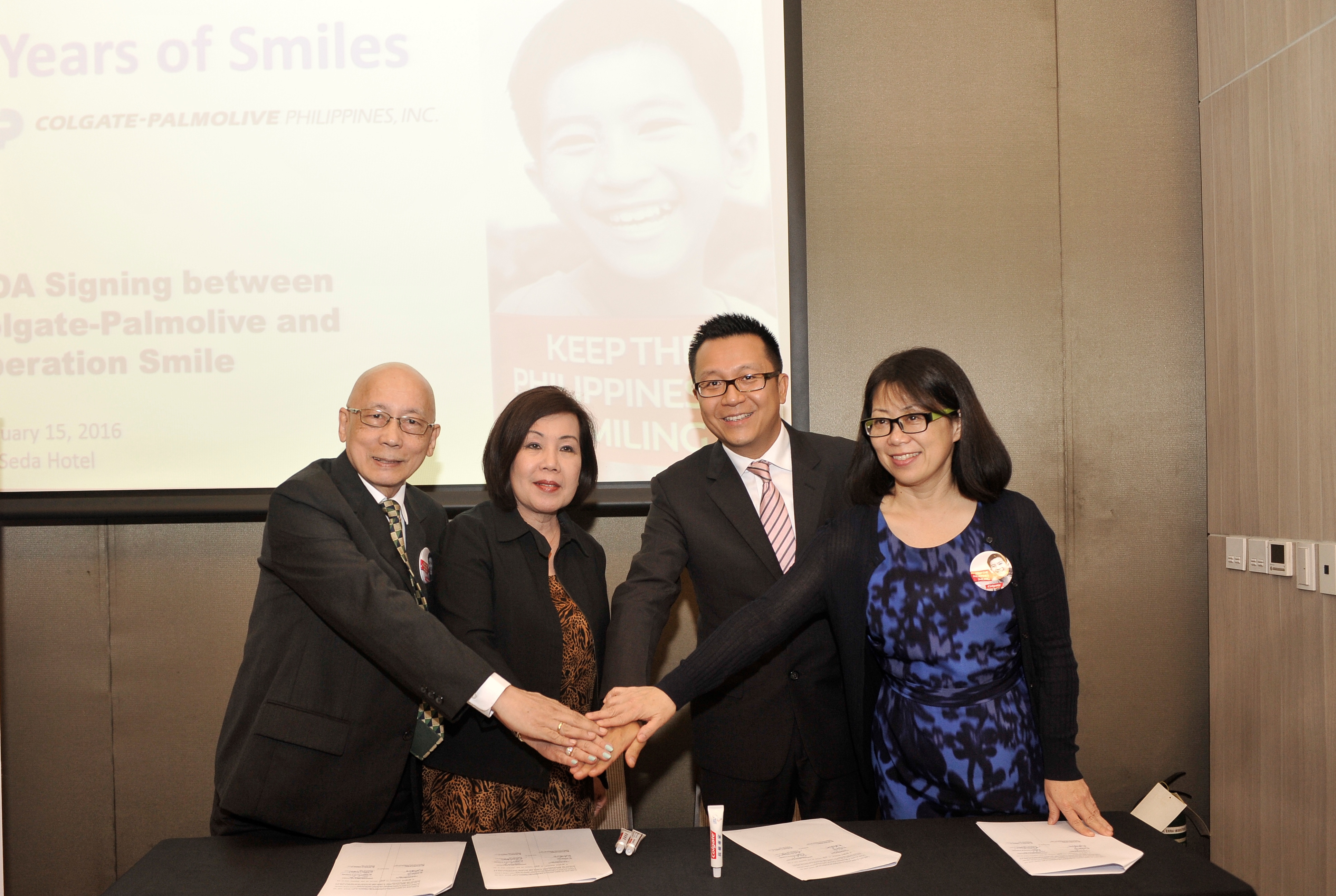
    To Kick-off the company’s 90th Year, a MOA was signed between Colgate-Palmolive Philippines and Operation Smile Philippines to bring brighter smiles to children with oral cleft. In the picture (L-R): Bobby Manzano (Country Director of Development for Operation Smile Phils), Edith Villanueva (Chairman Board of Trustees, Operation Smile Phils), Stephen Lau (Vice-President/General Manager, Colgate-Palmolive Phils) and Jennifer Peng (Finance Director, Colgate-Palmolive Phils)

    To Kick-off the company’s 90th Year, a MOA was signed between Colgate-Palmolive Philippines and Operation Smile Philippines to bring brighter smiles to children with oral cleft. In the picture (L-R): Bobby Manzano (Country Director of Development for Operation Smile Phils), Edith Villanueva (Chairman Board of Trustees, Operation Smile Phils), Stephen Lau (Vice-President/General Manager, Colgate-Palmolive Phils) and Jennifer Peng (Finance Director, Colgate-Palmolive Phils)

    “This collaboration with Operation Smile is only one of several activities that Colgate-Palmolive Philippines will implement on its 90th year. We have allocated significant resources for this year-long campaign of giving back to the Filipinos. I am proud to see that the entire organization is extremely dedicated towards Keeping the Philippines Smiling more each day”, declares Stephen Lau.

  • Hong Kong’s Disneyland struggling to work its magic

    Hong Kong’s Disneyland struggling to work its magic

    As Walt Disney readies to open its first Disneyland resort in mainland China and its sixth in the world by June, its decade-old theme park in Hong Kong has tumbled back into a loss, portending challenges ahead amid the country’s slowing economic growth.

    Hong Kong Disneyland recorded a loss of HK$148 million (S$27 million) in the year ended October last year, its first loss in four years, after fewer Chinese tourists visited the city. The resort had suffered seven years of losses from its opening in 2005, before turning in its first profit in 2012.

    The former British colony has already seen retail sales slump as fewer mainland Chinese tourists visit, hurt by a combination of China’s slowdown and a weak yuan, relative to the Hong Kong dollar, that has dulled the city’s attractiveness.

    WHY HONG KONG

    It’s very easy for us to visit Shanghai. We will definitely go later… There are more things to do in Hong Kong, as well as other famous attractions like Victoria Peak.

    MS LU MEI-YIN, 45, a graphic designer from the northern coastal city of Qingdao in China, who visited Hong Kong Disneyland earlier this year.

    WHY NOT HONG KONG

    Who will go to Hong Kong Disneyland when we have one at our door? Even if we want to visit a foreign Disney park, I will go to Tokyo, which many of my friends have recommended.

    MS HUANG SHILIN, a 33-year-old mother of two children from Hangzhou, in Zhejiang province.

    • MIXED FORTUNES FOR ASIA’S DISNEYLANDS

    • Hong Kong Disneyland

      Opened: Sept 12, 2005

      Visitor numbers: 6.8 million last year, down 9.3 per cent from the year before

      Ticket prices: General adult entry fee is HK$539 (S$98); the park is planning to give discounts

      Size: 126ha

    • Shanghai Disneyland

      Opening: June 16, 2016

      Visitor numbers: 15 million people expected in the first year; projected yearly visitor numbers of 25 million to 30 million

      Ticket prices: Peak period adult ticket costs HK$590 per day; HK$438 at other times

      Size: 400ha

    • Tokyo Disneyland

      Opened: April 15, 1983

      Visitor numbers: Traffic for the entire fiscal year expected to fall 3 per cent to 30.4 million for the fiscal year through next month. Attendance in 2013 and 2014 was up sharply, due to factors such as the park’s 30th anniversary and the launch of large attractions

      Ticket prices: Starting from April 1 this year, adults will pay 7,400 yen (S$91) for a single-day ticket, a 500-yen increase

      Size: 200ha

    Revenue at the Hong Kong resort fell 6.4 per cent to HK$5.1 billion, while annual attendance slipped 9.3 per cent to 6.8 million, it said.

    With Disney’s Shanghai park set to open on June 16, more Chinese could be lured away. Mainland Chinese customers helped boost Hong Kong Disneyland to a record profit of HK$322 million in fiscal year 2014.

    Last year, they formed the biggest group of visitors to Hong Kong Disneyland, accounting for 41 per cent, followed by Hong Kong residents at 39 per cent, and international visitors at 20 per cent, the resort said in a statement on Monday.

    It will be contending with a sister resort in Shanghai that is three times larger in size, and with similar ticket prices.

    Adult tickets at Shanghai Disneyland will be more expensive than at its counterpart in Hong Kong during peak times, such as at weekends and on holidays, but cheaper during other periods.

    Recruitment and staff training are now under way at the Shanghai theme park, the South China Morning Post (SCMP) reported.

    “The next two years will be very challenging,” Hong Kong Disneyland managing director Andrew Kam told reporters on Monday.

    In anticipation of the stiff competition, Hong Kong Disneyland will offer discounted entrance fees and hotel room rates, he said.

    A one-day ticket, for example, would cost about 400 yuan (S$86) and include lunch, while hotel room rates would be discounted by up to 30 per cent, SCMP reported.

    A 750-room hotel is due to open next year.

    Mr Kam said new attractions this year include a revamp of the Space Mountain roller coaster, with elements from the Star Wars movies, and a themed area based on Marvel’s Iron Man franchise.

    “Our asset is really differentiation,” he was quoted as saying by Nikkei Asian Review. “We will focus on serving customers around the region.”

    Falling numbers from China have encouraged the theme park to look harder at South-east Asian markets, including countries like Indonesia, the Philippines and Thailand.

    Hong Kong Commerce and Economic Development Secretary Greg So said the Shanghai park highlights more Chinese characteristics, while Hong Kong is an “international playground”.

    Hong Kong’s other big tourist attraction, Ocean Park, is also feeling the heat, with profits down 53 per cent at HK$45.2 million for the fiscal year that ended last June. It has announced plans to seek new markets in Asia and boost its retail and food sectors, SCMP reported.

    In an editorial published on Wednesday, the Hong Kong English-language newspaper said mainland tourists are increasingly spoilt for choice amid a proliferation of theme parks in the region. It called on Hong Kongers to change their attitude towards mainland Chinese visitors.

    “There is another cloud in Disneyland’s outlook that only Hong Kong people themselves can disperse – anti-mainlander sentiment, which has a negative impact on Hong Kong’s image as a safe, welcoming city.

    “Sadly, it is compounded by violent incidents such as the Mongkok riot,” SCMP said.

  • Ikea breaks ground for Bang Yai outlet

    Ikea breaks ground for Bang Yai outlet

    “We are creating the world’s best integration of a Ikea store into a shopping centre,” said Sebastian Hylving, expansion director for Ikano Private Ltd, holder of the Ikea franchise rights in Singapore, Malaysia and Thailand.

    The branch will offer wide-open entrances at all levels of the CentralPlaza WestGate shopping centre and a direct link to the future mass-transit line.In a highly complex design, the showroom and a market hall are housed inside an expansive two-storey concourse that creates a bridge to the WestGate mall.

    The Ikea self-service warehouse will be on the ground floor.

    “This is not going to be the usual blue box,” said Lacia Sherlock, Ikea retail project leader for Ikano.

    “This will be the only Ikea store that offers customers an opportunity to enter and check out at every level. We will deliver a fantastic customer experience.”

    Mike King, the Ikea retail director for Ikano, is confident that many of the 1.6 million people who live in Bang Yai and the surrounding area – including a growing population of young families – will make the trip to the new store when it opens at the end of next year.

    “There may be a lot of competition in the home furnishing business here in Thailand, but no other retailer offers the whole family a great day out in the way Ikea does,” he said.

    The Bang Yai Ikea store is an integral part of the overall expansion plan for Ikano. In November, the company opened a second store in Kuala Lumpur and a pick-up and order point in Phuket.

    The Bang Yai project marks Ikano’s first collaboration with Central Pattana, developer of the shopping centre.

  • Chinese medicine group expanding

    Chinese medicine group expanding

    Traditional Chinese medicine brand Tong Ren Tang has accelerated its overseas expansion, opening nine stores abroad last year.

    It has developed 31 branches in 25 countries and regions, has 115 retail sites, clinics and health centers, and served more than 30 million patients.

    Beijing Tong Ren Tang Group chairman Mei Qun says there have been three steps in its international development: in 1993, it started its overseas development in Hong Kong; in 2003, it established Beijing Tong Ren Tang International in Hong Kong; and in 2013, Beijing Tong Ren Tang Chinese Medicine was listed in Hong Kong and started developing in major European markets.

    Group deputy-GM Ding Yongling says the group opened nine new stores last year in six countries and regions, including Hong Kong. Apart from Chinese medicine stores, the group also developed Chinese medicine clinics and health centres overseas.

  • Courts Asia continues to defy downtown

    Courts Asia continues to defy downtown

    Electronics and furnishings retailer Courts Asia has reported a modest 0.3 per cent increase in profits for the third quarter – against a background of a stagnant domestic market.

    The company’s sales grew a healthy 6.1 per cent – mostly due to increased sales of high value electronics such as iPads and smartphones. Total revenue was S$204.7 million; net profit $4 million.

    “In Singapore, the macro environment is very much against the consumer market at the moment,” CEO and executive director Dr Terry O’Connor said during a conference call briefing on the result.

    “The [Singapore] economy is going through some restructuring in terms of the residential property market, the total debt servicing ratio, the labour market and restrictions,” he said.

    However, O’Connor remains upbeat about the domestic market, predicting the “sluggish” current trading environment would eventually pass.

    Singapore, which accounts for nearly 70 per cent of Courts Asia’s sales, saw sales grow 7.9 per cent and in Malaysia sales rose 20 per cent. Indonesia, which now accounts for 1.7 per cent of Courts Asia’s sales, reported an increase of 6.1 per cent.

    The company’s gross margin fell by 2.4 percentage points to 29.7 per cent which O’Connor said was due to a shift in the sales mix towards electrical goods and a higher ratio of bulk sales which return smaller margins.

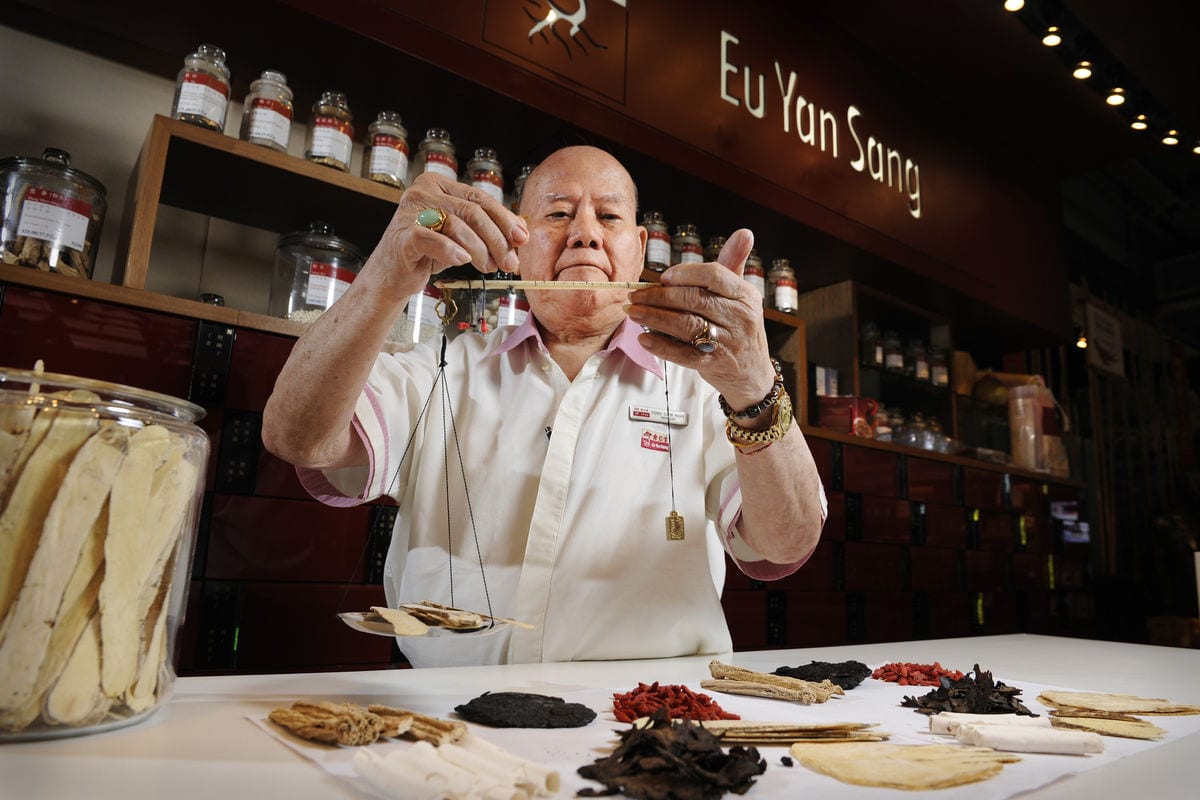
  • Profits plunge for Eu Yan Sang

    Profits plunge for Eu Yan Sang

    A 75 per cent plunge in net profit has been reported by Singapore health and wellness company Eu Yan Sang International for its second quarter.

    However, higher sales in Singapore and Australia helped it post marginal improvements in revenue. This edged up 1 per cent over the three months ended December 31 to reach S$85.61 million ($61.14 million) compared to the same period a year earlier.

    Lower foreign exchange gain couples with higher distribution and selling expenses dragged its net profit down to S$498,000 from S$1.98 million, the company says.

    For the half-year, revenue dipped by 4 per cent year-on-year because of lower revenue from its wholesale segment in Hong Kong and the overall weakening of the Malaysian ringgit.

    Net profit for the period fell 87 per cent to S$348,000.

    “We are glad that Hong Kong’s rate of decline is showing signs of moderation and that there is an improvement in Malaysia,” says chief executive Richard Eu.

    Lower spending by mainland tourists a continuing challenging retail environment were blamed for the lower Hong Kong sales.

    “We are looking to expand the retail network within Australia and Malaysia, as well as the wholesale network in Singapore, to continue on this revenue rejuvenation journey for the group,” says Eu, who notes an “encouraging” outlook in China through strategic joint ventures.

  • China’s Ambassador to Qatar takes HIA tour

    China’s Ambassador to Qatar takes HIA tour

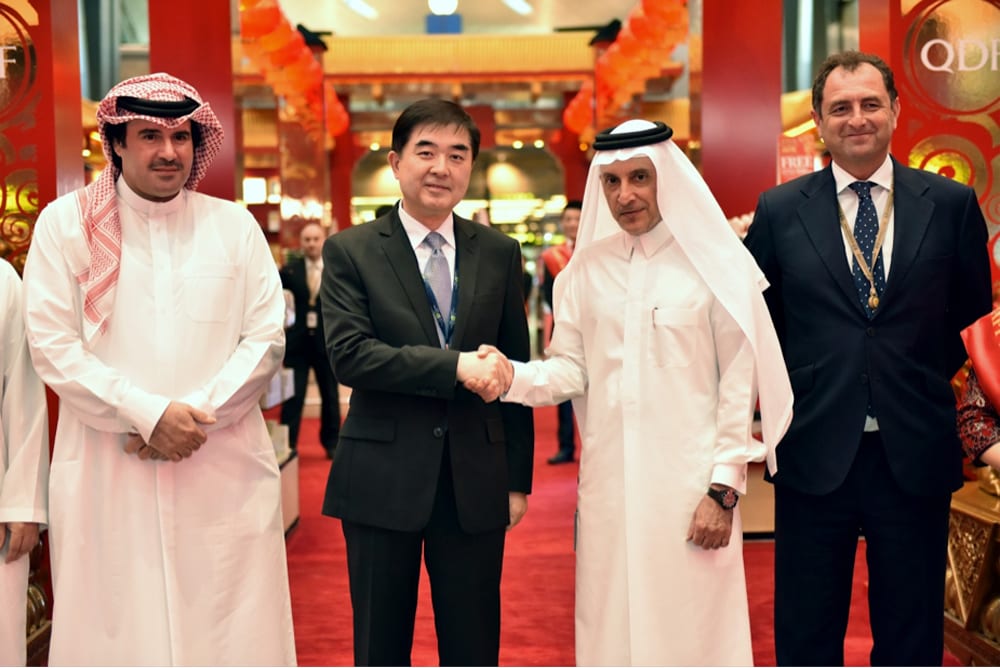
    China’s Ambassador to Qatar, His Excellency Li Chen, and Qatar Airways Group Chief Executive, His Excellency Akbar Al Baker, commemorated  Chinese New Year, with a visit to Qatar Duty Free’s traditional Chinese pavilion on 10 February 2016.

    Hany Al Deeb, UnionPay Regional Country Manager, joined H.E. Mr. Li Chen and H.E. Mr. Al Baker on a tour of a Chinese pagoda located in Hamad International Airport (HIA).

    As reported, the pavilion is offering passengers discounts of up to 20%, spending rewards and an array of enticing promotions to mark China’s Year of the Monkey.

    UnionPay and Qatar Duty Free have also collaborated to offer passengers traditional red envelope retail vouchers worth QR100 for customers who purchase items valued at QR1000 (US $274) and above using a UnionPay payment card.

    H.E. Mr. Al Baker, said: “I am honoured to visit Qatar Duty Free’s Chinese Pavilion with His Excellency Mr. Li Chen. Chinese New Year is an important time for families to gather together and enjoy each other’s company.

    “For many families, this means travelling to see their loved ones, to enjoy the traditional New Year’s feasts and special holiday markets. For those travelling, we wanted to bring a taste of this tradition to their actual travel experience, by again building our version of the holiday market, with special products and promotions.”

    The traditional red and gold pavilion is positioned directly behind the famed Lamp Bear at HIA, serving as a ‘festive attraction’ as well as a ‘starting point for bespoke shopping tours’ designed specifically for Chinese passengers. Chinese language-dedicated Qatar Duty Free staff, fluent in Mandarin, Cantonese and other Chinese dialects, are available upon request to lead passengers around HIA showcasing their favourite brands and products, says QDF>

    Passengers will discover an array of specially curated products inside the elaborate Chinese pagoda, which will remain in HIA until mid-March in recognition of the Qatar-China 2016 Year of Culture.

    Savings of up to 20% are being offered on Qatar Duty Free fragrances, cosmetics, skincare, confectionery, luxury watches, fine jewellery, and other gift items in the Chinese pavilion.

    Additional Chinese New Year discounts of up to 10% are also available on brands in selected boutiques in HIA. Passengers can choose from a wide variety of duty free products at amazing prices, including promotions from Tiffany, TAG Heuer, Chopard, and Bulgari. Popular products available within the Chinese pavilion include Godiva chocolates, Prada perfume, La Prairie skin care, Swarovski jewellery, Harrods bags and Marmalade Market gift items.

  • Indonesia bans Tumblr over porn

    Indonesia bans Tumblr over porn

    Indonesia has banned the blogging platform Tumblr, saying that the site distributes pornographic content.

    Azhar Hasyim, e-business director at Indonesia’s Information Ministry, told the BBC the decision had been made without consultation with the New York-based company, which is owned by Yahoo.

    “We must ban the site first, and tell them later,” Mr Hasyim said.

    Earlier this month, Indonesia ordered social networking sites to remove any emojis representing same-sex couples.

    Unlike Facebook and some other social networks, Tumblr allows adult content on its site.

    The closure was part of a wider crackdown, with nearly 500 sites shut down by authorities, according to Indonesian media.

    Earlier this month, Netflix was blocked by Indonesia’s biggest internet service provider, which said it had concerns about the content the platform was offering.

    And last May, video-hosting site Vimeo was blocked in the country for alleged carrying pornographic content.

    Indonesia has in the past asked social media companies such as Twitter to put in place a special filter for pornographic content.

    Companies that don’t comply can be charged according to Indonesian law.

    Tumblr has been approached for comment.

  • Indonesia to ban 477 websites over adult-rated content

    Indonesia to ban 477 websites over adult-rated content

    Indonesia will block 477 websites, including social network and microblog Tumblr, over alleged “pornographic contents”, a top official said on Wednesday.”I have signed off the letter and sent it to the internet service provider. These websites should be blocked in the next two or three days,” Xinhua quoted Azhar Hasyim, e-business director at the Communication and Information Ministry in Jakarta, as saying.

    He said that these websites have violated the country’s information and electronic law which prohibits sharing posts that contain vulgarity.Azhar said that his office had not warned the owners of the websites in advance but would communicate later on.”Once they have agreed to clean up their websites from pornographic content, then we will immediately reopen the access,” said Azhar.The Indonesian government has in the past banned access to websites with adult-rated and pro-terrorism content.

  • Rakuten Closes Marketplaces in South-East Asia

    Rakuten Closes Marketplaces in South-East Asia

    Japanese e-commerce platform Rakuten has announced plans to close a number of global operations as part of a new strategic focus.

    As of March 2016, the company will shutter its marketplaces in Singapore, Malaysia and Indonesia. It is also looking to sell off its Thailand-based platform Tarad.com, which it acquired in 2010.

    The closures will mean the loss of about 150 jobs, although the company said it will provide redundancy compensation above the legal requirements and will help to find new jobs for those affected.

    Rakuten’s regional Asian headquarters in Singapore will remain operational, as will its e-commerce business in Thailand, which is reportedly performing well.

    According to Rakuten’s Vision 2020 statement, the closures are part of a strategy that will see the company focusing more on its stronger markets in Japan and Taiwan.

    In place of the South-East Asia marketplaces, Rakuten is looking to focus on a consumer-to-consumer app called Rakuma — a marketplace app that enables transactions between individuals (similar to Carousell).

    Rakuten is also an investor in Singapore-based C2C marketplace Carousell. It’s unclear at this stage how the company will integrate the competing Rakuma into the region. Rakuten has not yet commented on this rollout.

    As part of its strategy realignment, Rakuten’s operations in Brazil will shift from a marketplace model to a SaaS model.

    Rakuten’s Vision 2020 is focused on three core principles: strong, smart and speed. The decision to refocus the company’s strategy in the emerging markets of Brazil and South-East Asia may represent the still-evolving nature of e-commerce in these markets. By focusing on mobile apps and SaaS in emerging markets, the company looks to be shoring up its future in these uncertain markets.

  • Ayala eyes expansion of healthcare business

    Ayala eyes expansion of healthcare business

    The country’s oldest conglomerate Ayala Corporation plans to expand its investments in the healthcare sector with the roll out of 100 retail clinics under the brand-name FamilyDoc over the next 3 years.

    Ayala Managing Director Paolo Borromeo said in an interview that the conglomerate, through its unit Ayala Healthcare Holdings Incorporated, experimented on developing a smaller primary care clinic in December last year.

    Borromeo said the proposed clinic will house a pharmacy, a diagnostic center, and physicians to handle consultations.

    So far, it has two FamilyDoc clinics located in Las Piñas and Imus, Cavite.

    “If this becomes successful, we plan to build 100 clinics over the next 3 years,” Borromeo said.

    The initial investment for a 100-square meter clinic is from P6 million ($124,879.86) to P7 million ($145,693.17).

    Borromeo said Ayala plans to build this chain of retail clinics in middle income communities across the Philippines.

    Each clinic will have one doctor, two nurses, one pharmacist, and one radio technician.

    Operating hours are between 7 am to 9 pm. The consultation fee is P350 ($7.28) per patient.

    In 2015, the Ayala group entered the affordable retail healthcare space with the acquisition of a 50%-stake in the Generika group.

    Generika is one of the pioneers in the retail distribution of quality generic medicines in the Philippines, with 570 stores nationwide to date.

    The conglomerate entered the health care sector in 2014 through QualiMed, Ayala Land, Incorporated’s chain of hospitals and satellite clinics, in partnership with the Mercado medical group.

    Ayala had said it plans to invest $50 million in healthcare and education business over the next few years to make the most of the growing Philippine population and rising consumer spending.

    Ayala is one of the country’s largest conglomerates, with investments in banking, real estate, telecommunications, water utility, infrastructure, and power generation.