Category: Research

Retail News Asia is committed to providing both local and global retailers with the latest Research throughout the Asian market. This on a daily base.

  • Despite Climate Agreements and Court Decisions, Indonesia Keeps Betting Big on Coal

    Despite Climate Agreements and Court Decisions, Indonesia Keeps Betting Big on Coal

    Though Indonesia has one of the world’s fastest-growing economies, its electrical grid is faltering, with blackouts common and many factories and homes relying on expensive diesel-powered generators as backup. In 2011, Indonesian coal mining magnate Samin Tan and his company, Borneo Lumbung Energi & Metal, stepped into this energy void. Tan hoped to acquire the rights to a potentially rich coal mine in Borneo, one of the more heavily forested of the islands comprising the 3,000-mile-long tropical archipelago. But he needed $1 billion to do it. That deal’s unraveling reveals how years of effort by environmentalists and regulators may in the end have proved less effective at limiting greenhouse gas emissions in Southeast Asia than was a pistol-packing attorney, with enormous potential ramifications for how the fourth-most-populous nation on Earth develops its energy sector—and for the global climate.

    Tan’s company found itself in trouble when the price of coal crashed last year, driven by falling demand from China, where manufacturing has cooled and the government has ordered cuts to imports to protect its mining industry. One of Indonesia’s most important markets for its abundant coal was flagging. In April, the British bank Standard Chartered, the largest investor in a group that loaned Tan $1 billion to finance the mine, suddenly worried Tan wouldn’t be able to sell the coal and called in the paper. Tan refused to repay the bank.

    Coal projects in Indonesia have been able to race ahead not only because the country needs the energy but because investors outside the country have been happy to provide the funding and often receive help from their home governments’ export credit agencies. “National export agencies can support export of technologies,” said Jan Vandermosten, sustainable finance policy officer at World Wildlife Fund’s European Policy Office in Brussels. For example, Indonesian coal mining companies lacking the capital or a key technology to build a coal-fired electrical plant often strike deals with partners overseas, whose home governments help finance the investment, assisting companies in their country to get lucrative deals over foreign rivals. “It’s not about mining coal. It’s about companies that go to developing countries and construct coal plants, importing technology like boilers or other equipment,” said Vandermosten.

    In January, a $3.4 billion coal power project financed in large part by Japan’s public export credit agency, the Japan Bank for International Cooperation, moved forward in Central Java, a large province on Indonesia’s most populous island, where it will provide electricity for nearly 13 million people. JBIC is providing $2 billion, or nearly 60 percent of the project’s capital, and it will be operated by a partnership of Japanese and Indonesian energy companies. The 1,900-megawatt installation is slated to come online in 2020, when it will be the largest coal-fired plant in the country of 250 million people. Elsewhere in Asia, new coal plants in Bangladesh and India have been made possible with American and European financing and expertise.

    Coal’s share of Indonesia’s electrical portfolio has been climbing over the last decade, from 36 percent in 2007 to 41 percent in 2015, according to Kurnya Roesad and Frank Jotzo, climate researchers at Australian National University. In September, they reported that 55 percent of Indonesia’s new electricity will be from coal by 2025, if the expansion of the grid continues at its current pace—despite the government’s pledge to get 23 percent of all electricity from renewable sources by then. But the financing behind complex, expensive coal projects is proving a weak spot in the country’s energy plans.

    In January 2017, a new agreement among Organisation for Economic Co-operation and Development member countries will curtail many coal projects’ ability to receive necessary financing from overseas. Negotiated before last year’s Paris climate talks, the deal could restrict as much as three-quarters of the world’s coal energy pipeline, though early estimates are untested. Indonesian miners may be able to avoid the agreement’s most stringent restrictions, said Vandermosten, who was involved in its conception, by opting for cleaner coal technologies. But they would nevertheless crowd out funding for renewable technologies.

    Where financing can’t be publicly backed, that will drive Indonesian miners and their foreign partners to private financing like the deal with Standard Chartered.

    Which is where a flamboyant attorney named Hotman Paris Hutapea comes in. Hutapea became famous during a high-profile drug smuggling trial a decade ago for sporting a hairstyle reminiscent of mid-1980s Van Halen, keeping a white-handled pistol in a holster in his suit, and flaunting romantic relationships with local celebrities.

    Tan hired him to fight Standard Chartered’s insistence that it be paid. The trial quickly became a test case for a string of other coal projects in Indonesia, including the Japanese-backed project. If digging up coal to fire power-generating plants using 19th-century technology was to be Indonesia’s energy policy of the future, the industry would need to show—even more than that it had the coal—that it could finance the multibillion-dollar infrastructure projects needed to dig it up and turn it into electricity.

    Reports vary, but the British bank’s liability on just the single loan is usually estimated to fall between $630 million and $750 million. That’s a large enough amount that a problem with just this one client could kneecap a major London institution’s stock price and send the rest of the coal market tumbling. The overall package of loans to Tan was the largest debt extended to a single person in all of Asia that year.

    Other large multinationals not in the habit of throwing away millions had been minority partners in the deal, and if the Indonesian court invalidated the terms of the loan—blocking Standard Chartered’s attempt to collect from a company Tan said was not bankrupt—they too would lose between tens and hundreds of millions. Among the investors was Caterpillar, the Peoria, Illinois–based manufacturer of bulldozers and other heavy equipment used in the mining industry, which was in for just over $100 million.

    The trial would take place in Jakarta, and a better place for a show trial about a coal mine may not exist. The capital of a nation of coral reefs and dense rainforest, Jakarta is home to 20 million residents surrounded by toxicity. It’s hard to take a walk along Jalan M.H. Thamrin, the heart of the business district, without the risk of stepping into an open sewer. “The combination of untreated domestic sewage, solid waste disposal, and industrial effluents has led to a major public health crisis” along Jakarta’s main river, the soupy Ciliwung, the Asian Development Bank found in 2012. (ADB helps arrange funding for many public works projects, such as water treatment plants, in Indonesia and elsewhere. Little evidence exists for any improvement in water quality or sanitation since the ADB’s report.) Air pollution—mainly from vehicle exhaust—is so bad that in May, U.S. Ambassador Robert Blake proudly announced that two air quality meters had been installed in a complex housing American diplomatic staff, whose worries about the city’s pollution had converted it into a hardship posting. Sixty percent of people in Jakarta had seen their health harmed significantly by the smeary air, said Blake, citing results of a 2013 joint Indonesian-American study. If a lawyer ever wished to argue against a coal mine by bringing the judge to the courthouse steps to sniff the air, Jakarta was the place.

    As the trial got under way in March, Hutapea was preparing to argue that a bank enabling a coal mine should not be allowed to collect on a $1 billion loan. It wasn’t his first time arguing in court that an Indonesian company working in an environmentally shady industry shouldn’t have to pay back a foreign partner: In 2001, he represented local companies in a $14 billion case brought by American creditors against Indonesian logging company Asia Paper & Pulp, which owned plantations in Borneo. Hutapea argued that the contracts establishing the loans had been invalid. He won.

    His argument in the Standard Chartered case: There had never been a loan to Borneo Lumbung in the first place, the $1 billion that changed hands notwithstanding.

    The Standard Chartered–led consortium had lent Tan the money so he could buy a stake in a rival mining company called Bumi Resources (“bumi” means “Earth” in Indonesian). Tan used mines owned by his company as collateral. But Hutapea argued that Indonesia’s coal is a state asset, even if mined privately. So Tan needed the Indonesian government’s approval to use his own coal mines as collateral for the loan—and he hadn’t requested that. Standard Chartered hadn’t either. The loan, Hutapea maintained, was therefore invalid. There was nothing to collect.

    In April, the court ruled in Tan’s favor. As with the Asian Pulp & Paper case 15 years earlier, Hutapea had saved a company led by an Indonesian oligarch hated by local environmentalists. “You screw my country’s laws, my country’s laws will screw you,” he told a finance industry newsletter.

    Yet Hutapea became the environmentalists’ most unlikely ally, because the victory fouled the entire Indonesian coal economy as badly as the air above Jakarta.

    The world of energy finance, predictably, went nuts. “Any creditor on the hook to Indonesia’s coal mining industry will not be sleeping easily these days,” wrote International Financing Review, a trade publication. Like most commentators, IFR seemed unclear why Indonesia wanted to continue digging coal mines in the first place. Despite plans to expand the country’s coal portfolio, wrote credit analyst Jonathan Rogers, “the fact is that Indonesia’s coal sector is a sunset industry that is likely to shrink substantially in size in the face of collapsing demand from China, its biggest client.”

    China was shifting to wind and solar power, another reason it was buying less Indonesian coal.

    Hutapea’s victory has been closely watched beyond Jakarta and London. In Tokyo, where $3.4 billion was riding on the Central Java coal-powered electrical plant, JBIC issued a statement saying it intended to stick with the project and had faith its loan would be repaid even if the plant went bankrupt. The announcement had the effect, presumably unintended, of telling the world that the Japanese interest was worried. By persuading an Indonesian court to approve what appeared to be an Indonesian company’s swindle of $1 billion from Standard Chartered’s consortium, Hutapea sent a chill across every banking office from New York to Tokyo with a bet on a coal mine in Indonesia, one of the places still aggressively courting those bets.

    Will that money dry up? So far, it hasn’t. But if Indonesia keeps investing in coal, it may not be the environmentalists fighting hardest against it. It’ll be the bankers. It’s hard to breathe most days in Jakarta. But lose your shirt in London, and you’ll end up twice as sick.

  • Mobile financial services booming in emerging markets

    Mobile financial services booming in emerging markets

    The total transaction value of mobile financial services in emerging markets will reach $500 billion in 2021, up from $198 billion in 2016, Juniper Research estimates.

    The estimates include revenue from domestic money transfers, deposits on loans, insurance products, and savings accounts.

    The research argues that by introducing insurance offerings, operators had the opportunity to substantially reduce churn levels.

    It cited the example of Telenor Suraksha life insurance scheme in India, which has seen nearly 50% of its 45 million user base sign up since its December 2015 launch.

    “The model underpinning the Surakhsa scheme – requiring consumers to top-up airtime on a monthly basis to receive the insurance cover – should be widely replicated. It enables operators to maintain average revenue levels within low-income, low-ARPU prepaid environments and allows consumers to reap the benefits of micro-insurance cover,” said Lauren Foye, research analyst, Juniper Research.

    However, the research cautioned that a key challenge would be tailoring financial service products to the needs of individual markets. It cited the case of several early implementations of mobile financial services in markets such as India, the Philippines and Nigeria achieving limited adoption where products were often ill-suited to their target audience.

    Opportunity in New Markets

    The research also highlighted the Asia-Pacific as a region which, while currently under-served due in part to the complexity of national regulations, has strong potential for future product launches.

    Whilst restrictions have been in place previously, largely due to cultural beliefs, Juniper found that attitudes are changing in under-served regions, with Indonesia acquiring its first ever microloans product Kashmi in 2017.

    Additionally, specialized products have been launched to address religious requirements, such as Achuwat in Pakistan which provides interest free loans to meet Sharia requirements.

  • Privacy is paramount to online consumers

    Privacy is paramount to online consumers

    More than half (55%) of consumers globally have decided against buying something online due to privacy concerns, a recent KPMG International survey indicates.

    The survey also revealed that less than 10% of consumers feel they have control over the way organizations handle and use their personal data. Respondents in most countries say privacy controls are more important than the potential convenience gained from sharing personal data.

    “An executive would be at risk of being fired if half their customer base disappeared after they made a crucial business decision,” said Mark Thompson, Global Privacy Lead at KPMG.

    “Failure to embed privacy into the DNA of their business strategy could ultimately lead to the extinction of a business given how closely consumers and regulators alike are paying attention to how organizations collect, store and use personal data.”

    The survey further revealed that 82% are not comfortable with the sale of their data to third-parties in exchange for the speed, convenience, product range, home delivery and price comparison that online shopping offers.

    Over two-thirds of people are not comfortable with smartphone and tablet apps using their personal data. In all markets but one, at least 75% of respondents said they were uneasy with their online shopping data being sold to third-parties.

    About 55% said a free fitness tracking device that monitors the well-being of users and produces a monthly report for them and their employer is also crossing the line.

  • Food Retail Market Analysis, Size, Share, Development and Demand Forecast to 2020

    Geographically, Asia Pacific dominated the global food retail market in 2014; it is then followed by Europe. Growth of food retail market in Asia Pacific …

  • Low-end smartphones hinder music streaming business

    Low-end smartphones hinder music streaming business

    Music streaming is quickly becoming a favored service, offering Indonesia’s music-seeking public a legal means to access music. However, with a majority of Indonesians possessing low-end smartphones, the outlook may not be as rosy as some think.

    According to a new report by McKinsey, the prevalence of low-cost smartphones among mass market consumers in Asia, including Indonesia, has hindered the take-up of music streaming apps.

    Indonesia experienced a particularly busy time for music streaming services in the first half, with the entrance of foreign-based names such as Spotify, Apple Music, Yonder Music and JOOX coming in around the same period, tapping into the potentials and eagerness of the largest Southeast Asian digital market.

    Services that previously entered and operated in Indonesia include Guvera, Deezer and Rdio, which closed operations in November last year.

    It turns out that 34.7 percent of Indonesians listen to JOOX, followed by 12 percent with Musixmatch, 10.2 percent with SoundCloud, 10.1 percent with Langit Musik and 9.8 percent with Spotify, the report shows.

    However, “in markets such as Indonesia, low-end smartphones cost as little as [US]$75 per device. These devices are slower and possess less memory capacity than other smartphones, posing a dilemma for music streaming services”, the report said.

    “They can optimize music streaming apps for these lower-end smartphones at the cost of functionality that is critical to the customer experience of more affluent consumers or retain the full functionality of streaming apps to maximize the customer experience for affluent customers at the cost of limited access to mass market consumers.”

    Among the most popular smartphone brands in Indonesia in the second quarter of 2016 were Samsung, OPPO, Asus, Advan and Lenovo, all of which offer low-end smartphones.

    Services usually offer an “offline” option, through which listeners can download certain tracks onto their phone for internet-less listening. Usually, streaming relies on an internet connection, making online connectivity necessary.

    Many services offer rates that have adjusted with the market’s emphasis on affordability, with fees as low as Rp 35,000 ($2.67) to Rp 50,000 per month, and varying payment methods aside from the usual credit card option.

    To make their products affordable and wide-ranging, the services partnered with telecom companies, with partnerships including Spotify with Indosat Ooredoo, Yonder with XL Axiata and JOOX and Guvera with Telkomsel.

    However, in terms of low-end smartphone capacity, some services are confident that their apps will give listeners optimum quality regardless of weak Indonesian bandwidth or poor connectivity in some areas.

    For one, Guvera operations and marketing director Onny Robert said that because its service primarily targeted “users who prefer not to pay for their music”, its bundling plans included latching onto smartphones themselves such as Lenovo devices in order to secure listeners.

    After evaluating field connections, Onny said Guvera was able to deliver a capable service even at 3G speed.

    “Bandwidth or phone capacity won’t really matter to Guvera users because our app is practically small in size, 20 megabytes, and because it is bundled with Lenovo devices, it will drive more interest into using our service,” he said recently.

    Guvera has 1.5 million active subscribers, with under-25s dominating their demographics.

    Yonder Music CEO Adam Kidron earlier said the service aimed to further cultivate the music streaming tradition and make it more affordable and accessible.

    Spotify, meanwhile, has seen its users stream over 100 billion minutes of local and international music and listen to an average of 90 minutes of music per day, since its launch in March.

  • South Korea among G20’s top IoT-ready markets

    South Korea among G20’s top IoT-ready markets

    The United States, South Korea, and the United Kingdom ranked as the three countries in the G20 most ready to contribute to and benefit from the IoT, according to IDC.

    The research firm said  the US scored particularly well on measures such as ease of doing business, government effectiveness, innovation, and cloud infrastructure, as well as technology spending as a percent of GDP.

    Meanwhile, South Korea scored extremely well on IoT-specific spending and has a business environment that fosters innovation and promotes attractive investment opportunities.

    Similarly, the UK scored very highly on measures of ease of doing business, government effectiveness, regulatory quality, start-up procedures, innovation, and broadband penetration.

    The standout country in the ranking, however, proved to be Australia, which, despite its relatively small GDP, scored exceptionally high on ease of doing business and start-up procedures, government effectiveness and regulatory quality, and innovation and education.

    The original index was first published in 2013 but the updated index is now comprised of 13 criteria that IDC views as necessary for sustained development of the IoT and reflects each nation’s economic stature, technological preparedness, and business readiness to benefit from the efficiencies linked to IoT solutions.

    “Countries are keen to become or maintain a competitive advantage and, as such, are looking to the Internet of Things as one of those initiatives,” said Vernon Turner, senior vice president, Enterprise Systems and IDC fellow for the IoT.

    “Knowing where a country stands in the IoT Index will help global and local IT vendors know what opportunities lie ahead of them as they line up their strategies at federal, local, and enterprise levels.”

  • Global Advertising Spend Growth to Slow Next Year

    Global Advertising Spend Growth to Slow Next Year

    The latest Consensus Ad Forecast from Warc, the marketing intelligence service, indicates that global advertising spend will rise by 4.5% during 2016 as a whole, before the growth rate slows to 4.2% in 2017.

    With the exception of newspapers and magazines, all major media channels are expected to record adspend growth this year and next. However, the two largest, TV (+1.1%) and internet (+13.0%) are forecast to see their growth rate ease during 2017. The same is true for mobile, though it is still set to be the fastest-growing ad channel over the period.

    Warc’s Consensus Ad Forecast is based on a weighted average of adspend predictions at current prices from ad agencies, media monitoring companies, analysts, Warc’s own team and other industry bodies.

    Current sources include Carat, eMarketer, GroupM, Magna Global, Nikkei Advertising Research Institute (NARI), Pitch-Madison, Pivotal Research Group and ZenithOptimedia.

    All 13 markets covered in the report are forecast to see the amount invested in advertising rise both this year and next, though for eight of these the growth rate will be softer in 2017.

    India is expected to see the strongest annual rise in adspend this year, up 13.3%, with a similar rate of growth anticipated next year. The world’s largest ad market, the US, is expected to post adspend growth of 5.1% this year – buoyed by the presidential election campaigns and the Rio Olympics. US adspend growth is then forecast to cool next year – rising by 2.8% – as the impact of these events is lost.

    Adspend growth by country

                           2016 vs 2015     2017 vs 2016

                          y-o-y % change   y-o-y % change

    India                      13.3             13.4

    China                       7.8              7.1

    Russia                      5.8              6.1

    Spain                       5.8              5.2

    UK                          5.6              4.3

    US                          5.1              2.8

    Australia                   3.8              3.8

    Brazil                      3.3              2.1

    Italy                       2.8              1.6

    Germany                     2.1              1.8

    Canada                      2.0              2.4

    Japan                       1.7              1.7

    France                      1.3              0.8

    Global                      4.5              4.2

    Source: Warc’s Consensus Ad Forecast, November 2016 (www.warc.com)

    Despite the uncertainty surrounding the “Brexit” process by which the UK will leave the European Union in 2017, the nation’s ad market is forecast to record adspend growth of 5.6% this year and 4.3% next; both above the global respective rates.

    All four BRIC markets, India (+13.4%), China (+7.1%), Russia (+6.1%) and Brazil (+2.1%), are expected to post rises in ad expenditure this year and next. France is forecast to record muted growth of +0.8% in 2017, the softest rate of the 13 markets studied.

    All media, barring newspapers and magazines, are predicted to record year-on-year growth in 2017, with mobile expected to see the greatest adspend rise, up 34.2%. Total internet (including mobile) growth is expected to be 13.0% next year, while TV, the world’s largest ad channel by spend, is forecast to post growth of 1.1%.

    Global adspend growth by medium

                           2016 vs 2015     2017 vs 2016

                          y-o-y % change   y-o-y % change

    Mobile                     47.1             34.2

    Internet                   14.6             13.0

    Out of home                 3.4              3.2

    Cinema                      3.1              5.1

    TV                          2.8              1.1

    Radio                       0.4              0.3

    Magazines                  -5.9             -4.5

    Newspapers                 -8.0             -6.1

    Source: Warc’s Consensus Ad Forecast, November 2016 (www.warc.com)

    James McDonald, Senior Research Analyst at Warc, said: “The latest consensus results present a positive outlook for advertising investment at both a global and local level. All 13 markets studied are expected to record adspend growth in the short term, and this despite their contrasting socio-economic environments.”

    “We have identified a common trend among more mature markets whereby increasing investment in internet – particularly mobile – ad formats is driving headline growth. Applying consensus trends to Warc’s adspend data shows that mobile will grow to be the world’s third-largest ad channel by the end of 2016.”

  • Connectivity and collaboration in the ICT industry: the key to socio-economic development

    Connectivity and collaboration in the ICT industry: the key to socio-economic development

    Why is it so important to ensure that as many people in the world as possible have access to information and communication technologies? And why does collaboration within and across the ICT industry matter so much in driving socio-economic development?

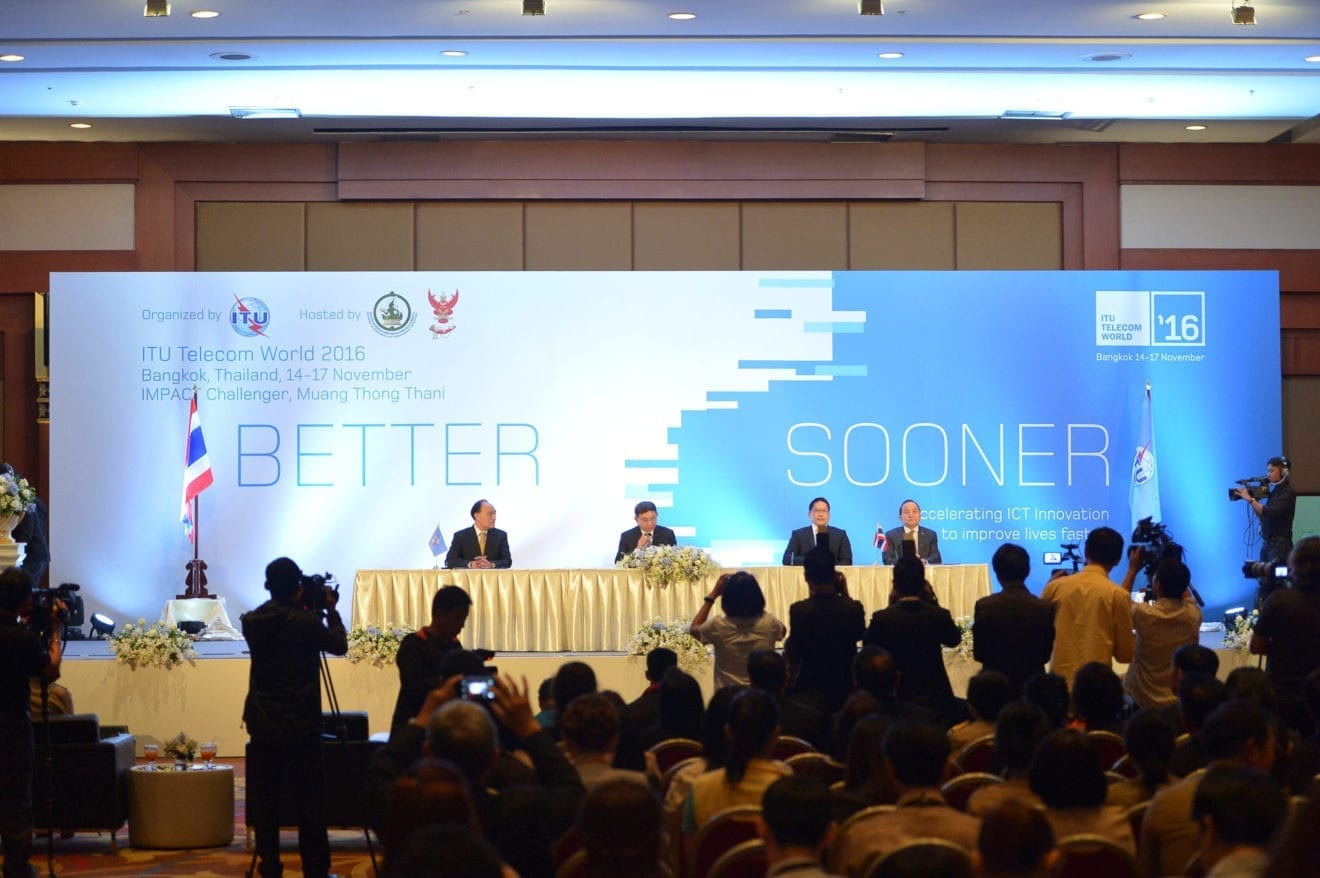
    These questions are at the very heart of ITU Telecom World 2016, the annual platform for governments, corporates and small and medium enterprises (SMEs) within the ICT industry. Organized by ITU, the United Nation’s specialized agency for ICT matters, and taking place this year in Bangkok, Thailand, from 14 – 17 November, ITU Telecom World features an international exhibition of digital solutions, a world-class forum of debates, a programme of targeted networking activities and an Awards programme recognizing the best in innovative ICT solutions with social impact.

    On the agenda in the forum, on the stands and pavilions in the exhibition and amongst the networking leaders of governments and businesses big and small, the focus will be on working together to speed up innovation in ICTs to improve lives everywhere.

    ICTs are the cross-cutting enablers behind sustainable development throughout the world, in emerging and developed markets alike. This means, quite simply, that ICTs are the essential backbone, the infrastructure behind development in economies, businesses, societies and homes everywhere. The transformative potential for ICTs is unprecedented: from e-health to e-education, digital financial services to e-government, agriculture and transport, there is not one vertical sector or field of activity which does not both rely on and benefit from ICTs.

    The Sustainable Development Goals, adopted by the global community in September 2015, set a new international agenda for the period up to 2030 – and recognize the enormous potential of ICTs in improving development outcomes worldwide.  Not just by measuring progress and enhancing the effectiveness of initiatives designed to meet the SDGs, but by providing access to a whole range of new digital products and services which can grow local economies, build on local innovation and strengthen local communities.

    Millions of children currently without access to primary level schooling; millions of deaths from easily-preventable non-communicable diseases; millions of unbanked or underbanked living outside national economies;  those without adequate basic sanitation, without access to water or electricity, let alone to government services – innovative ICT-based solutions can meet all of these challenges.

    Providing connectivity is the key: once everyone is connected, the speed of progress towards attaining the SDGS will be extraordinary, as emerging technologies such as IoT, artificial intelligence, robotics and data-driven innovation truly take off on a global scale.

    Getting everyone connected, however, is not so straightforward. More than half the world’s people are still offline, and the ICT sector’s commitment to connecting an additional 1.5 billion by 2020 is highly ambitious. It calls for innovative approaches to universal connectivity to tackle the multiple barriers of access, affordability, education and relevance.

    Building out networks, whether fixed, fibre, mobile, satellite, wifi, or any combination thereof, is the first step in providing access to the unconnected. The price of handsets, of network access and of products and services must be affordable for local communities.  And to be useful and sustainable both socially and financially, those products and services must be relevant to local needs and practices – in local languages, offering content that is valued and understood by local users. Finally, educating end-users disadvantaged by remote locations, illiteracy, gender or age, and increasing skills and capacity in local communities, are critical to ensure internet take-up and entry into the digital economy.

    The barriers are huge, the challenges significant – but the potential benefits to humanity are enormous. This is why connectivity is so important. It is also why the theme of ITU Telecom World 2016 is so pertinent: “Collaborating in the digital economy”.

    Because no one can do this alone. The private sector building out the networks, providing the equipment, products and services is reliant on government policies, on financial incentives, on supportive regulation. Public private partnerships are often the only solution to increasing access in remote or underserved regions.

    Within the private sector, the ongoing radical transformation of the ICT industry also calls for new partnerships, new business models and new approaches. A complex mix of factors is coming together: the rise of internet companies providing services over operator networks; the growth of SMEs throughout the world working in niche or innovative areas; new markets in the borderless digital global economy; new technologies and customer behaviours, from social media to 5G and IoT; and the collision of markets, ways of doing business, cultures and mindsets as ICTs cross into vertical sectors such as health, agriculture and education.

    Which is why collaboration within and across the global ICT ecosystem is so crucial. Working together in one way or another is the only way to extend connectivity, expand access and drive socio-economic development. It’s the only way to meet the SDGs and improve the lives of the world’s citizens everywhere.

    This is also why events such as ITU Telecom World 2016 are so important. By providing a meeting point and market place for the governments, regulators, international organizations and companies, both corporate and SME, of the world, the event opens the door to partnerships. To exchanging views and perspectives, to understanding challenges and needs, to debating policies, strategies and models. To meeting face-to-face to meet the needs of the world, now and in the future.

    To find out more about ITU Telecom World 2016, its full programme of debates, exhibits and activities, and to register to take part, visit telecomworld.itu.int.

  • The importance of collaboration in the digital economy

    The importance of collaboration in the digital economy

    What’s the future for the connected car, for digital financial services, or for smart and sustainable cities in the new industrial reality? How are innovations and technical developments in 5G, the Internet of Things and spectrum management impacting on future networks and future businesses? And if meaningful, affordable connectivity is the single best bet for accelerating socio-economic development and meeting the UN’s sustainable development goals (SDGs), how can we ensure we reach the billions of unconnected most in need?

    These are some of the key questions at the heart of the agenda at ITU Telecom World 2016, four days of debate, networking and exhibition on the theme of “Collaborating in the Digital Ecosystem.” In an industry and era of intense transformation, collaboration is essential to make sense of the possibilities – and make a success of it for us all.

    Rapid technological developments, societal changes and radical new business models are enriching and enlarging the ICT ecosystem. Never before has connectivity offered so much potential for economic growth and social development in the digital economy. And never before have the challenges of extending that connectivity to all been so pressing, from providing universal access to technology to meaningful local content, fair and open competition, up-to-date regulation, security and education.

    More and new stakeholders are involved in making it happen. Governments decide policy and shape regulation. Major ICT companies face competition from new internet players and innovative small and medium enterprises (SMEs). New technologies open up new markets, often involving new partners in vertical sectors such as transport, health or agriculture. The borderless world of the digital economy opens up business in developed and emerging markets across the globe.

    Finding the right public sector policies, the business models and market strategies for success may not be easy. It will certainly involve new approaches to cross-sector partnerships, whether between public and private organizations, or between new industries or market players. The benefits of collaboration need to be balanced against competition, commercial interests and embedded cultures.

    A good example is 5G. As the technology evolves and develops to meet the growing demands of societies and economies, so does the potential for new opportunities. Delivering on the promise of effective future networks won’t be possible, however, without some form of collaboration on the standards that take solutions to scale and at speed. The mix of players, established and new, manufacturers, vendors and application developers, may lead to interesting joint ventures to streamline investment. The long-heralded convergence of fixed broadcast and mobile may be given a boost by the new technology. But then again, competition and entrenched mindsets may kill off any new form of shared investment or working together.

    Or take the connected car. Intelligent transport systems and self-driving vehicles are speeding towards widespread commercialization. The focus is on developing communication technologies that use the internet to integrate cars with smart devices – bringing a whole range of new players into the mix. Car manufacturers and suppliers must negotiate and collaborate with app developers, communication technology companies and OS developers. Combining such different industries, cultures, regulatory and business approaches as software and automotive cannot be without challenges. And given the key issues of security, safety, liability and public policy, it’s clear that the government will have an important role to play, too.

    The same balance between opportunity and challenge, between collaboration and competition and between multiple, often new, stakeholders applies to digital financial services. In a world where around 2 billion adults have no access to basic financial services, digital technology has the unprecedented potential to offer secure, cheap and reliable transactions for the unbanked or underbanked. Financial inclusion is a critical step to socio-economic development. Leapfrogging traditional banking to deliver financial services can have a profound impact on the underprivileged throughout the emerging world.

    But success here relies on the creation of a new ecosystem of government, business and individuals – centred around a sound working relationship between financial and ICT sectors. In its early stages of development, the market calls for convergence between mobile network operators, banks, microfinance institutions, payment platform providers and payment services providers. This dizzying array of players and potential partnerships must establish joined-up regulatory approaches, standards to enable cross-market interoperability, and accepted international good practice. All of which is not possible without collaboration.

    The smart integration of manufacturing and advanced information and communication technology – or Industry 4.0 – is making it possible to deliver tailored products to individual customer specifications at low cost and in high quality. The impact on companies, economies and societies across the globe is potentially enormous. But this, too, depends on the harmonious and fruitful coming together of a number of players, orchestrated to different degrees in different markets by committed government leadership.

    The digital economy is the single most important driver of innovation, competitiveness and growth worldwide. ICTs have tremendous potential to improve development outcomes in both emerging and developed markets, from measuring progress and success in the meeting the UN’s ambitious Sustainable Development Goals  (SDGs) to enhancing the efficiency and effectiveness of development initiatives, and providing access to a whole new range of digitally-enabled products and services which strengthen local economies, innovation and communities. Meeting the SDGs through ICTs, however, will only be possible if the industry can work together with corporate social responsibility departments, public sector, non-governmental and development organizations to build feasible business models.

    Any way you look, across all fields of ICT activity, in the macro digital economy and in the detail of each potential future market, it’s all about working together. Finding new partners, exploiting new opportunities, considering new stakeholders and new markets. Using new services, segments, solutions and devices to drive revenue and increase socio-economic development.

    But will there be stronger collaboration or will industry players default to a winner-takes-all approach? How clear are the benefits of working together both within the telco sector and with web players, disruptive market entrants, customers and the open source community, to stimulate and sustain growth in the industry?

    How can public policies and industry incentives attract investment into the network infrastructure and technologies that are the backbone to the digital economy? Can cross-regional, even international, initiatives maximize opportunities at scale? And what are the key innovative technologies and collaborative initiatives focused on expanding connectivity through access, affordability and relevance?

    These are the questions that the Forum debates at ITU Telecom World 2016 will discuss, with expert speakers, international perspectives and a unique audience of public and private sector leaders from emerging and developed markets, from SMEs fresh to the market to established major corporate players. The event itself works on the principle of collaboration, of coming together face-to-face, of meeting, exchanging knowledge, ideas and experiences, debating, working together – the very principle of collaboration on which the future success of the industry, our societies, economies and world may be built.

  • Big data market to grow three times faster than tech overall

    Big data market to grow three times faster than tech overall

    Forrester’s latest forecast predicts that the big data technology market will grow at a 12.8% CAGR over the next five years.

    In the first forecast of its kind from Forrester, the market is segmented into six buckets — enterprise data warehouse, NoSQL, Hadoop, big data integration, data virtualization, and in-memory data fabric.

    Forrester data found that, in 2016, almost 40% of firms are implementing and expanding big data technology adoption. Another 30% are planning to adopt big data in the next 12 months.

    In-memory data fabric is taking off. In-memory data fabric will grow 29% annually over the forecast period, according to Forrester data.

    Interest in non-relational databases (NoSQL and Hadoop) is increasing. NoSQL will grow 25%, and Hadoop will grow 33% annually over the forecast period.

    Among respondents, 41% have implemented and are expanding use of NoSQL, and another 20% plan to implement NoSQL in the next 12 months.

    Also, 30% of respondents implemented Hadoop in 2016 versus only 26% in 2015. The increase in unstructured data stored in the cloud using Hadoop increased from 29% in 2015 to 35% in 2016.

    Further, market growth varies by industry. In the next five years, the pharmaceutical, transportation, and primary production industries will see the highest adoption of big data technology. Currently the professional services, telecoms, government, and financial service sectors are the largest users.

  • Digital coupons to grow 60% by 2021

    Digital coupons to grow 60% by 2021

    The number of coupons issued via mobile and online channels will grow by more than 60% over the next five years, reaching 362 billion in 2021 Juniper’s latest research shows.

    The study, “Mobile & Online Coupons: Loyalty & Beacon Engagement 2016-2021,” found that highly targeted, personalized offers to consumers are driving the growth in digital coupon volumes.

    According to the research, brands will increasingly deploy bots, artificial intelligence applications which can interact with consumers via social media and messaging applications such as Facebook Messenger.

    The research cited Domino’s Pizza and Iceland Air as companies which have already utilized this strategy. Meanwhile, mass adoption of social media has spawned a number of dedicated coupon aggregators operating within that space, including Coupy in India and PennyCat in North America.

    Meanwhile, large-scale deployments of beacons – Bluetooth devices which can send offers to consumers whilst they shop – have been constrained. The research claimed that the key hurdle was the need for consumers to have opted in to online engagement with a brand or retailer, either through having installed a store’s application on their smartphone, or to be following their account on social media.

    The research, however, argued that with some beacons (such as Google’s Eddystone) allowing a wider range of online engagement channels including web browser interaction, retailers will have a far more encompassing product moving forwards.

    “For retailers one of the major tools is knowing their customers. Tracking user movements in store via beacons allows for targeted marketing and offers, this can also aid in providing invaluable data and statistics to a company, this then later applied to drive sales,” said research author Lauren Foye.

  • ICT vendors must prepare for China’s 13th Plan

    ICT vendors must prepare for China’s 13th Plan

    As China moves to implement its 13th Five-Year Plan, ICT vendors need to reassess their positions to take advantage of the major business opportunities it will offer, according to IDC.

    China’s 13th Five-Year Plan, and the decisions and policies introduced at the Third Plenary Session of the 18th Central Committee of the Communist Party of China will serve as the roadmap and action plan for the country’s economic development over the next five to ten years.

    Based on these two guiding documents and amid a challenging macroeconomic environment, the Chinese government has rolled out a host of policies and initiatives to advance the cause. These efforts will bring huge opportunities and become the cornerstone of China’s IT market in coming years, IDC predicts.

    IDC sees six areas that will be the foundation for China’s economic development as follows:

    1. Some 165 major projects to maintain economic growth – IDC estimates that total investment in these 165 projects will exceed 6 trillion yuan ($900 billion), generating over 500 billion yuan ($ 75 billion) in ICT business opportunities, with 300 billion yuan ($45 billion) alone in the rollout of 5G.

    2. Innovation to advance economic restructuring – The Chinese government has established innovation and entrepreneurship as two of its top policy initiatives to facilitate economic restructuring. IDC believes that such government-led endeavors will generate immense business opportunities for ICT vendors in ICT infrastructure; cloud computing and big data; mergers and acquisitions of startups; and the transition of traditional industries to digital.

    3. Policies to improve public well-being – In 2016, the State Council issued a joint initiative to promote Internet+Government services and kicked off 80 pilot cities with the One Window One Network plan that introduced interregional sharing of electronic certificates and public service information across government offices.

    For ICT vendors, the main business opportunities will be ICT infrastructure, cloud computing and services, big data platforms, smart community, and mobile apps, which are seen as the basis for the digital transformation of government.

    4. The Belt and Road Initiative to facilitate globalization – Initially introduced in 2013, this initiative has connected 18 of China’s provinces with nearly 40 countries along its route across Asia and Europe. For ICT vendors, IDC predicts the initiative to  give rise to abundant business opportunities as Chinese companies venturing abroad upgrade their IT systems, countries along the route construct their IT infrastructures, and China develops its own big data platforms for the initiative.

    5. Expanding Free Trade Zones – The first Free Trade Zone (FTZ) was established in Shanghai in 2013. In 2014, the second batch of FTZs was established in Tianjin, Guangdong, and Fujian. In 2016, Liaoning, Zhejiang, Henan, Chongqing, Sichuan, and Shanxi provinces were approved to set up FTZs. Currently, 11 FTZs have been established across China. Collectively, they support the Belt and Road Initiative in promoting globalization and the smooth development of China’s economy.

    According to IDC, ICT vendors should focus on developing smart parks, smart transportation, smart logistics, and other smart city projects, in addition to utilizing the cloud platform infrastructure to support the digital transformation of FTZ regions.

    6.China as an internet powerhouse – China’s national IT development strategy was first introduced in 2006 and has acted as the basis of many of China’s IT development policies since then. In 2016, the Chinese government introduced an outline that standardizes and guides the next 10 years of China’s IT development.

    To remain competitive in this market, multinationals will have to radically transform many things, including their domestic business models, strategic investment, technology transfer, equity transfer, and joint investment strategy.

    “ICT vendors should capitalize on China’s supportive policies and economic environment, making use of ICT technologies and displaying their strengths to discover the opportunities being brought by Digital Transformation,” IDC China VP and chief analyst Lianfeng Wu said.

  • Multi-device use on the rise in Asia

    Multi-device use on the rise in Asia

    Multi-device usage is on the rise in Asia, and users in the region interacting with their screens in increasingly complex ways. according to a new report from marketing company Appier.

    The report is based on an analysis of Appier-run campaigns and websites embedded with Appier site tag in Japan and across the region, and entails the company analyzing over one trillion campaign data points.

    According to the report, multi-device use is accelerating in Asia, and the number of multi-device users using more than four screens have increased by 40% compared to the second half of 2015.The number of users on more than four screens increased at a faster rate than those using three in markets such as Hong Kong (+16%), Japan (+11%), Malaysia (+17%) and Singapore (+15%). Moreover, cross screen campaigns outperform single screen campaigns to the tune of 67% in North Asia, 10% in developed markets and 16% in developing markets.For marketers, the evidence is that Asian users are ‘cross screening’ more than ever, and is an area that is crucial for marketers here. Moreover, the report also noted that the high number of devices in use also lends itself to usage patterns that will only get more complex and interconnected.

    Indeed, a wide variation in the final converting device among cross screen conversions paths across Asia was observed, with PCs and smartphones playing the greatest role in both driving awareness and conversions.

    “This latest report shows that cross screen is key in Asia, as users move between a growing number of screens in increasingly complex ways. One size does not fit all, and businesses need to consider how different messages and formats can help them connect with their audience across all screens,” said Caroline Hsu, the CMO of Appier.

    “Understanding these interconnections will allow marketers in the region to reach their users at various touch points in their journey, leading to more meaningful engagement throughout,” she said.

    PCs and tablets still relevant

    Smartphones are driving the greatest number of cross screen conversions at place like Hong Kong, Philippines, Malaysia, South Korea and Vietnam, though countries such as India and Singapore are seeing conversions on PC that outweigh those on smartphones.

    But while smartphones generate a greater number of page views and non-purchase actions taken on websites, PCs dominate in Asia when it comes to actual purchases. And with PC and tablet accounting for nearly a quarter and a fifth of conversions, respectively, there is no question that they are still relevant.

    Moreover, an examination of usage patterns also highlights the continuing significance of PCs and tablets in the region. Despite representing only about a third to a fifth of reachable devices, PCs generate 70% more volume of web usage than smartphones.

  • Global m-banking userbase to hit 2b by 2021

    Global m-banking userbase to hit 2b by 2021

    Over 2 billion consumers worldwide will have used their mobile devices for banking purposes by the end of 2021, up from 1.2 billion this year, Juniper Research predicts.

    Growth in mobile banking is being driven by consumer adoption of banking apps the changing way consumers manage their finances, the research firm said.

    The study found that the number of mobile banking logins are now exceeding that of internet banking logins in many markets. For example, the BBA (British Trade Association for Banking) announced that banking app logins in the UK reached a record 11 million per day during 2015, compared to 4.3 million internet banking logins during the same period.

    Meanwhile, a recent consumer survey conducted by Juniper Research found that around 65% of mobile banking customers in the US and the UK use an app to conduct banking services.

    The report found that banks are becoming increasingly concerned that their market position is being undermined by tech companies and pure-play vendors enabled by technology and regulations to enter the marketplace.

    Additionally, by 2017, banks in the EU will be compelled to open their APIs. This will result in many innovative new products that analyze (with permission) user data to create more attractive financial services for customers.

    “Recent industry shifts highlight why traditional banks must respond rapidly to retain market share by cultivating new revenue channels and enhancing existing base through sustained innovation,” research author Nitin Bhas said.

    “However the challenge here for new players is to increase market share and maintain profitability in the long-run.”

  • RFID market is growing

    RFID market is growing

    IDTechEx Research has tracked the RFID market since 1999. IDTechEx find that in 2015, the total RFID market is worth $10.1 billion, up from $9.5 billion in 2014 and $8.8 billion in 2013. This includes tags, readers and software/services for RFID cards, labels, fobs and all other form factors, for both passive and active RFID. IDTechEx forecast that to rise to $13.2 billion in 2020.

    In retail, RFID continues to be adopted for apparel tagging – that application alone will demand 4.6 billion RFID labels in 2016 – which still has some way to go with RFID penetrating about 15% of the total addressable market for apparel in 2016. RFID in the form of tickets used for transit will demand 800 million tags in 2016. The tagging of animals (such as pigs, sheep and pets) is substantial as it continues to be a legal requirement in many more territories, with 420 million tags being used for this sector in 2016.

    In total, IDTechEx expects that 8.9 billion tags will be sold in 2015 and 10.4 billion in 2016. Most of that growth is from passive UHF RFID (RAIN RFID) labels. However, in 2015 UHF (RAIN RFID) tag sales by value will only be 11% of the value of HF tag sales, mainly because HF tags where used for security (such as payments, access etc) have a higher price point versus the cheaper, usually disposable UHF (RAIN RFID) tags used for tagging things.