Category: Research

Retail News Asia is committed to providing both local and global retailers with the latest Research throughout the Asian market. This on a daily base.

  • Modern Trade back for Growth for 2nd quarter of 2016

    Modern Trade back for Growth for 2nd quarter of 2016

    Kantar Worldpanel, the global market leader in consumer panels, reports the spending in fast moving consumer goods (FMCG) in 2nd quarter of 2016 grew by 4.6% year on year, faster than the 2.0% growth rate reported in 1st quarter of 2016.

    Modern trade (including hypermarkets, supermarkets, and convenience stores) showed a similar trend of improving growth, 1.4% positive growth in the second quarter in comparison to a decline of -0.5% in the 1st quarter. Modern trade’s growth was most prominent in county level cities and their surrounding urbanized counties – growth rates of 2.0% and 3.9% respectively. From a regional perspective, modern trade in the East and West performed much better than South and North regions. The East region grew at 2.8% – helped by strong performance of Sun-Art Group and Wal-Mart Group – while the West region grew at 3.6% driven by Wal-Mart Group and Yonghui Group.

    International retailers suffer from continuous share drop

    Wal-Mart Group has seen relatively stable performance in 2016, gaining 0.3 share points year on year in the latest quarter. Other international retailers such as Carrefour, Tesco and Lotus suffered from continued share erosion resulting in the overall poor performance of international retailers. Sun-Art Group and Yonghui lead the growth of Chinese players. Sun-Art group managed to grow its shopper base through both the continued development of existing stores and incremental opening of new one. Their growth was most marked in the competitive East region market; share increased from 13.5% of 2nd quarter of 2015 to 16.0% in the latest quarter – widening their leadership over competitors.

    Yonghui consolidates position as a top 5 national retailer: Yonghui continues to perform well in 2016, a fast pace of growth in penetration and basket size enabling its share to continue to exceed Lianhua Groups in Q2 after first overtaking it in Q1. Despite this strong performance – Yonghui still faces challenges in the East region. Strong growth of Sun-Art Group and Wal-Mart’s gradually recovery have meant that Yonghui’s acquisition of Lianhua has yet to see any sustained effects.

    Brick and Mortar and eCommerce retailers looking for cooperation: Continuous FMCG slow down combined with the impact from eCommerce growth in China, has pressured physical retailers into finding new solutions to drive growth. Kantar Worldpanel latest data show, 52 week end June.17th, show total FMCG eCommerce penetration% reached 49%, growing 10% from last year. The growth of online is leading by Tmall and JD, both with spend growth rate over 80%. While continuing to experiment with their own e-tailing platforms; the major retail chains are now seeking to bolster performance through strategic partnerships with existing digital players. Wal-Mart’s corporation with JD.com enables Wal-Mart to reach new online shoppers while allowing JD.com to utilize YHD’s broad footprint in East region. Vanguard’s strategic investment in the XinMeiDa (previously Meituan & Dianping) and Feiniu’s corporation with Shihui, both show brick-and-mortar chains’ new efforts to better realize their O2O strategy.

  • For Indonesia, assisted e-commerce may just be the next big thing

    For Indonesia, assisted e-commerce may just be the next big thing

    In the case of Indonesia, only a small portion of the population can enjoy such benefits despite the rapid growth of smartphone sales. Over the past few years, the boom of e-commerce has opened up many possibilities for Indonesians. From the rise of young entrepreneurs to a chance to purchase rare goods from overseas, we have seen how the internet drives the interactions between marketers and buyers onto the next level.

    Among the litany of advantages, it is evident that consumers would benefit the most from the thriving e-commerce through price competition. The availability of e-commerce platforms allows buyers to browse varieties of products and pick those that are offered at the most reasonable price.

    Putting aside the argument that blames e-commerce for promoting consumerism, the new shopping platform has undoubtedly helped customers make informed decisions and ensure prudent spending of their money.

    In the case of Indonesia, only a small portion of the population can enjoy such benefits despite the rapid growth of smartphone sales. That is because, in part, only 20 per cent of the country’s population of 250 million own bank accounts, a prerequisite for making payments on many e-commerce platforms. Meanwhile, only about 5 million of Indonesia’s 125 million-strong workforce have credit cards and hence more convenient access to e-commerce.

    Apart from the technical barriers, lack of trust has halted potential customers from shopping online. Futhermore, while many Indonesian e-commerce players have been focusing on attracting tech-savvy end users, these unbanked, technology illiterate segments have remained untouched in the business. With such a huge gap, there are a number of reasons why assisted e-commerce — in which online purchases are made with assistance from a third party — serves as an alternative model to help more people access e-commerce and relish its benefits.

    Filling the Gap

    The first and foremost factor is, of course, the huge room for expansion in the local e-commerce market. Although they have been enjoying continuous growth in the number of registered sellers and transactions, major players such as online marketplaces Bukalapak and Tokopedia have been mainly relying on purchases made by end users who browse and buy products for their own use. The abundant parts of the society who have neither means nor knowledge to make online purchases, meanwhile, will remain at a distance in the absence of efforts or innovations that can help them understand and, therefore, access online shopping platforms.

    And this is where the assisted e-commerce providers start to fill the gap. Jakarta-based Kudo, for instance, claims that it has managed, as of last week, to recruit more than 100,000 marketers, or agents, across the archipelago within just a few months after the launching of its application early this year. Running on the Android operating system only, the Kudo application serves as a mobile online store for its agents, who receive a certain commission for every product they manage to sell to people around them.

  • App economy driving job growth

    App economy driving job growth

    The application economy has positively impacted job growth, economic competitiveness, and the ability of governments to provide better services to citizens, according to a survey conducted by he Economist Intelligence Unit (EIU) for CA Technologies.

    Moreover, collaboration exists between the public and private sectors across the Asia-Pacific and Japan (APJ) region, the research found.

    More than 74% of government respondents in APJ have indicated that application start-ups are crucial or important in driving growth of the application economy and 79% say the same for large enterprises who have application-based products and services

    More than 95% of government respondents, 90% of enterprises and 81% of start-ups also said they have seen collaboration among the three groups.

    Meanwhile, 85% of government respondents in APJ see the technology sector as an important and often crucial driver of economic growth in their regions.

    “Across Asia Pacific and Japan, we are witnessing digital transformation becoming an integral part of the national agenda for many governments. In the application economy, where every business is a software business, growing digital capabilities has become the key to staying competitive,” CA Technologies president and general manager Kenneth Arredondo said.

    “Governments, startups, and even large enterprises are not only beginning to understand the necessity of this but that partnership, be it technology integration or B2B sales, can be a boon to their growth,” he added.

    All parties, however, agreed that there is still more that can be done. For one, government respondents named a shortage of tech talent stemming from a lack of educational or training programs as the largest barrier to the growth of the application economy (48%). This was followed by one-third of APJ government respondents pointing to a lack of public funding.

  • Only four Asian nations safe for data storage

    Only four Asian nations safe for data storage

    Only four Asian nations are considered truly secure for data storage, according to a new report by secure data center operator Artmotion.

    Combining independent data from the United Nations, World Economic Forum, Transparency International and several other leading privacy groups, the report titled “Data Danger Zones” ranks over 170 nations on their abilities to keep digital information safe, private and secure.

    Globally, the benchmark identified Switzerland as the safest nation for data storage, receiving a “potential risk score” of only 1.6%. Singapore was ranked as the the safest Asian nation, with a risk score of 1.9% as a result of the island state’s independent privacy legislation and political stability.

    Hong Kong (5th place), Taiwan (6th place) and South Korea (15th place) also join Singapore in the top 15 safest nations globally, ahead of the United Kingdom and the United States of America which ranked 23rd and 38th respectively.

    Despite Asia’s growing role as a market for data storage, the new benchmark suggests that it is falling behind other regions when it comes to data security and privacy. While only a few IT managers have chosen to store data in Afghanistan or Yemen, rapidly expanding data center markets such as China did not even qualify for the top 50 safest nations.

    More surprisingly, India, one of Asia’s key technology hubs and home to the largest data center in the world, ranked only 107th on the list, falling below Russia and Turkey.

    Commenting on the new study, data privacy expert Mateo Meier said: “It’s very easy for businesses and individuals to forget the importance of physical location when selecting a cloud hosting service or data hosting provider.

    “Especially in today’s volatile world, businesses need to not only consider data privacy regulations, but also take into account other risk factors such as political environments, geographic locations and physical infrastructure.

    “In support of this point, the Data Danger Zones report examines over 3.5 trillion IP addresses in 170 assessing countries, providing one of the most comprehensive guides ever created for data safety. Through this analysis, we want businesses to be able to make a more informed decision of how and where to store their data, and have a better understanding whether or not it is truly safe.”

  • Companies expect Olympics to strain their networks

    Companies expect Olympics to strain their networks

    The vast majority of companies (85%) plan to more closely monitor the performance of their applications and networks, including Wi-Fi, because of potential strain due to employees accessing Olympic content.

    A survey conducted by Riverbed Technology revealed that only 2% stated that they were very unlikely to monitor any differently during this the Olympics.

    The network strain in office is likely to be prevalent in Singapore, with national broadcaster Mediacorp only being able to air delayed telecasts of the Olympics due to broadcasting rights.

    “The time zone difference mean that finals will be aired during working hours, and with no live telecast in Singapore, sports fans are likely to turn to live streaming to cheer on Team Singapore – on company networks. IT organizations need to come together and prepare for the significant increase in network traffic that will occur as a result of employees streaming and accessing online content,” said Bjorn Engelhardt, SVP, Riverbed, Asia Pacific and Japan.

    Companies expected employees to access Olympic content using the company’s networks, including Wi-Fi, most frequently via their desktops and laptops (48%); followed by smartphones (34%); and then tablets or other non-smartphone devices (18%).

    The reason for monitoring employees’ access to Olympic content could potentially be linked to companies being unable to quickly pinpoint and resolve performance issues of critical business applications:  Less than half of the companies surveyed, 43%, were very confident that their organizations could safeguard critical applications during high network traffic events such as the Olympics, while 12% were not confident that their companies could handle the added strain and traffic.

    In one of the most revealing statistics, companies were asked if they’ve had an issue, even once, with their networks, including Wi-Fi, specifically because employees were accessing content during a popular event such as the Olympics. The majority of companies responded yes (69%), with 30% of these same companies saying that they have experienced more than one episode of issues. The survey also found that the majority (70%) of companies said they would limit or probably limit employees from accessing Olympic content through company networks, including Wi-Fi, in some way, with 24% saying they will definitely limit content and 46% saying they would probably limit content.

    “The results of the survey highlight how popular events such as the Olympics and the impact of BYOD are affecting companies and the need for greater visibility to safeguard networks and business critical applications. IT must take a proactive approach to managing application performance with end-to-end visibility across the network from the server to the end user,” said Engelhardt.

  • Illegal, unlicensed and completely unregulated … so why is Airbnb booming in Hong Kong?

    Illegal, unlicensed and completely unregulated … so why is Airbnb booming in Hong Kong?

    Cushions with cartoon dogs on, neatly rolled towels and fresh flowers are the small details that mean the most for Airbnb guests and hosts.

    For one host in Hong Kong, those personal touches are replicated across 52 listings, including at least 31 flats in one building near Lan Kwai Fong.

    Taking up three quarters of the flats in one building on Glenealy, the Airbnb apartments share a common rooftop and range in price from around HK$500 per night to more than HK$2,200 for a four-bedroom flat.

    The flats, which do not appear on the Home Affairs Department’s list of licensed guest houses, are among a growing number of short-term rental properties being rented illegally in Hong Kong.

    Airbnb listings in the city have grown by 59 per cent since September to 6,124 rooms or apartments available for rent at the beginning of June, according to data compiled by Murray Cox, the founder of Inside Airbnb and a data activist.

    Cox found 60.5 per cent of listings were from hosts with more than one room or property listed on the site, suggesting these are commercial operations rather than individuals renting a spare room.

    “The main metric that stands out for Hong Kong is the large number of hosts that have multiple listings,” Cox said. “Cities such as London, New York or Berlin, which have introduced regulations that prohibit commercial Airbnb use of residential properties, generally focus their enforcement efforts first on commercial hosts with many listings.”

    Luxury ‘superyacht’ for HK$58,000 a night: Inside Hong Kong’s most expensive Airbnb

    The highest number of listings can be found in Central and the Western district, as well as Yau Tsim Mong – the area including Tsim Sha Tsui, Yau Ma Tei and Mong Kok – with 1,474 and 2,519 respectively, according to data by Cox. The average rental per night across the city is HK$785.

    When the we called the telephone number for the Lan Kwai Fong Airbnb host given by a person at the property, the woman answering denied she owned the flats. She said she rented other Airbnb flats without a licence, but the government had forced her to stop renting some of those near the University of Hong Kong.

    Airbnb was founded in 2007 in San Francisco by two roommates who were struggling to pay their rent and decided to rent out air beds in the living room to attendees of a design conference. The company is now seeking financial investments, based on the company’s potential valuation of US$30 billion.

    Airbnb here to stay in Hong Kong as the sharing economy takes flight

    The site has faced opposition from regulators in cities from San Francisco, Berlin and London as well as from campaigners that say properties that would normally be let on a long-term basis are being rented by landlords for short stays affecting the supply of housing.

    Regulation has moved to include provision for Airbnb properties in some cities. Laws introduced last year in London allow home owners to rent their properties for up to 90 days a year without any form of registration, but opposition remains even in the service’s home city.

    Premises that offer sleeping accommodation for a fee for any period less than 28 days must be licensed, according to Hong Kong’s Hotel and Guesthouse Accommodation Ordinance.

    The maximum penalty for operating an unlicensed guest house is a HK$200,000 fine and two year’s imprisonment. There is also a fine of HK$20,000 for each day the offence continues.

    Enforcement is carried out by the Office of the Licensing Authority under the Home Affairs Department, and a spokeswoman said the office now has a dedicated team to browse the internet for suspected unlicensed guest houses.

    Last year the Office secured 132 convictions relating to unlicensed guest houses, some of which had been rented over the internet.

    Airbnb told us it “encourages hosts to comply with locally set rules and regulations in Hong Kong.”

    The company did not share the number of listings in the city and said Inside Airbnb data had flaws such as the price per night as this was based on an average of available listings rather than what has been booked or what guests are paying.

    I don’t think this is something you should do for too long. It’s not legal … I’m very surprised that we’ve lasted that long

    Airbnb landlord S

    Airbnb also said there was no reliable way to scrape data for the average income for a host each month or the average number of nights booked. The company did not supply the accurate data from its own internal sources.

    Flats or rooms available on Airbnb in Hong Kong range from small, functional rooms in Mong Kok to penthouses with harbour views and houseboats moored in Discovery Bay.

    While the Inside Airbnb data revealed hosts with as many as 80 listings and at least 20 with 22 or more listings, there are hosts in Hong Kong who rent just one flat or one room.

    S, who asked not to use her full name, is a 33-year-old French woman working in retail in Hong Kong, who rents her 500 square foot apartment in Sheung Wan for around HK$1,000 a night fitting Airbnb guests around visits from family.

    She said she has been renting the flat, which she and her husband own and previously lived in, since July last year and has seen 90 per cent occupancy . On average the flat brings in HK$30,000 a month, she said.

    Eight tips for using Airbnb and similar travel websites safely

    While S knows Airbnb is illegal, she feels the company protects her and her guests if there is any damage or dispute. If the laws were changed to allow short-term rentals, she said she would be happy to be taxed if she could still rent through Airbnb.

    Maintaining the flat and organising bookings is time consuming, S said, as she likes to provide a good service to her guests, but she does not see it as a long term plan.

    “I don’t think this is something you should do for too long. It’s not legal. I might rent it out on a permanent basis,” she said. “I’m very surprised that we’ve lasted that long.”

    Another Airbnb host, who asked to be referred to as Mary, rents out her spare room in the two-bedroom flat she shares with her boyfriend in Sheung Wan for 15 days each month to offset the rent.

    Mary lets the room for HK$500 to HK$600 a night and has made between HK$6,000 to HK$7,000 each month since late last year.

    She said her landlord does not know about the couple using Airbnb, but she is not concerned about the legality of Airbnb, even after a friend was evicted by their landlord for using the service.

    Most of the guests from mainland China are respectful, Mary said, although the couple did once come home late to find chaos in their living room.

    “We just opened the door and found stuff all over the living room. The luggage, some bath towels on the sofa, a bra hanging on my room door,” she said.

    “They were quite surprised to see us. So we kindly asked them to maybe put the stuff in their room.”

  • Cloud infra services up 52% year on year to $9.5b

    Cloud infra services up 52% year on year to $9.5b

    Worldwide cloud infrastructure services expenditure grew 52.3% year on year in Q2 2016, reflecting the ongoing adoption by businesses and expanding use of consumer-centric services, such as social media, gaming and video streaming.

    Amazon’s AWS remained the leading cloud infrastructure services provider, accounting for 30.4% of total spend, according to a new report from Canalys Research.

    Its early mover advantage, aggressive pricing, broad geographic coverage and wide range of service offerings are key factors behind its success. But it is under growing pressure from Microsoft Azure, Google Cloud Platform and IBM SoftLayer.

    Overall, these four providers represented 60.5% of total worldwide cloud infrastructure services spend.

    Daniel Lu, analyst at Canalys Research said, “The need for scalable and on-demand infrastructure is being driven by application testing, development and hosting; content delivery, big data and analytics; machine learning, IoT, disaster recovery and back-up; plus storage.”

    “But not every organization and every workload will migrate to the cloud. Cost is a major issue, but also compliance and regulations, security concerns, and application readiness are determining factors in cloud migration strategies. The adoption of hybrid cloud and on-premises solutions is prevalent as organizations seek to get the best of both worlds,” Lu noted.

    The total value of the cloud infrastructure services market was $9.5 billion in the second quarter of 2016.

    North America remained the largest market, representing 55.3% of the worldwide total, followed by EMEA at 24.7%, Asia Pacific at 15.9% and Latin America at 4.0%. For full-year 2016, Canalys predicts that the worldwide market will grow 50.3% to reach $37.8 billion.

  • Security on cloud still a major challenge for global firms, says study

    Security on cloud still a major challenge for global firms, says study

    Despite the continued importance of cloud computing resources to organizations, companies are not adopting appropriate governance and security measures to protect sensitive data in the cloud.

    This is just one of the findings of a Ponemon Institute study titled “The 2016 Global Cloud Data Security Study,” commissioned by digital security firm Gemalto.

    The study surveyed more than 3,400 IT and IT security practitioners worldwide to gain a better understanding of key trends in data governance and security practices for cloud-based services.

    According to 73% of respondents, cloud-based services and platforms are considered important to their organization’s operations and 81% said they will be more so over the next two years. In fact, 36% of respondents said their companies’ total IT and data processing needs were met using cloud resources today and that they expected this to increase to 45% over the next two years.

    Although cloud-based resources are becoming more important to companies’ IT operations and business strategies, 54% of respondents did not agree their companies have a proactive approach to managing security and complying with privacy and data protection regulations in cloud environments. This is despite the fact that 65% of respondents said their organizations are committed to protecting confidential or sensitive information in the cloud. Furthermore, 56% did not agree their organization is careful about sharing sensitive information in the cloud with third parties such as business partners, contractors and vendors.
    Larry Ponemon, chairman and founder of Ponemon Institute, said, “Cloud security continues to be a challenge for companies, especially in dealing with the complexity of privacy and data protection regulations.”

    “To ensure compliance, it is important for companies to consider deploying such technologies as encryption, tokenization or other cryptographic solutions to secure sensitive data transferred and stored in the cloud,” Ponemon said.

    Jason Hart, VP and CTO for Data Protection at Gemalto, said, “Organizations have embraced the cloud with its benefits of cost and flexibility but they are still struggling with maintaining control of their data and compliance in virtual environments.”

    “It’s quite obvious security measures are not keeping pace because the cloud challenges traditional approaches of protecting data when it was just stored on the network. It is an issue that can only be solved with a data-centric approach in which IT organizations can uniformly protect customer and corporate information across the dozens of cloud-based services their employees and internal departments rely every day,” Hart said.
    More customer information is being stored in the cloud and is considered the data most at risk.
    According to the survey, customer information, emails, consumer data, employee records and payment information are the types of data most often stored in the cloud. Since 2014, the storage of customer information in the cloud has increased the most, from 53% in 2014 to 62% of respondents saying their company was doing this today.

  • More than half the world is still offline

    More than half the world is still offline

    Despite falling prices for ICT services, more than half of the world’s population is still not connected to the internet, the latest ITU figures show.

    The UN agency estimates that 3.9 billion people remain cut-off from the vast resources available on the internet.

    The newly released report ICT Facts & Figures 2016 shows that developing countries now account for the vast majority of internet users with 2.5 billion users compared with one billion in developed countries. Internet penetration rates, however, tell a different story.

    In developed countries, internet penetration is pegged at 81% of the population, compared with 40% in developing countries and 15% in the least developed countries. It is also higher for men than for women in all regions of the world.

    The report noted that the global internet user gender gap actually grew from 11% in 2013 to 12% in 2016. The regional gender gap is largest in Africa, at 23%, and smallest in the Americas, at 2%.

    By early 2016, international internet bandwidth had reached 185,000 gigabits per second, up from a low of 30,000 gigabits in 2008. However, bandwidth is also unequally distributed globally, and lack of bandwidth remains a major bottleneck to improved Internet connectivity in many developing and least developed countries.

    ITU Secretary-General Houlin Zhao said more needs to be done to bridge the digital divide and bring the more than half of the global population not using the internet into the digital economy.

    “ITU, given the tremendous development of ICTs, has a key role to play in facilitating their attainment,” affirmed Brahima Sanou, the Director of the ITU’s Telecommunication Development Bureau.

  • The seven reasons for Alibaba’s success ; Alibaba’s development and framework

    The seven reasons for Alibaba’s success ; Alibaba’s development and framework

    Alibaba was initially founded in Jack Ma’s apartment in Hangzhou in 1999, before Alibaba.com was launched later that same year. In 2003, as the number of Internet users in China reached 80 million,[1] Taobao.com was launched as an online market. Shortly afterwards, both Alipay and Aliwangwang (instant messenger on Taobao) were launched to complete the purchasing process in Taobao. In 2007, the number of Internet users in China rose to 210 million[2] and Alimama was launched as an advertisement transaction platform. Taobao started to monetize that same year. Tmall was launched in 2008, as Alibaba ran both B2C and C2C platforms. In 2009, Alibaba Cloud computing was founded, illustrating Alibaba’s commitment to prioritize big data as part of its strategy. In 2010, the following three platforms were launched as part of Alibaba’s increasing focus on mobile payment: Juhuasuan (a platform for C2B); AliExpress (a global consumer marketplace) and Mobile Taobao App.

    Alibaba’s framework is based on the three following targets:

    1. Chinese customers: Taobao (online shopping destination), Tmall (brands and retail platform), Juhuasuan (group buying marketplace), 1688.com (Chinese wholesale marketplace).
    2. Customers abroad: AliExpress (global consumer marketplace), Alibaba.com (global wholesale marketplace).
    3. Support platforms: Alipay (online payment service); China smart logistic (logistic information system); Alimama (online marketing services); Alibaba cloud computing (platform for internal and third-party use).
     

    Screenshot 2016-07-19 09.20.09

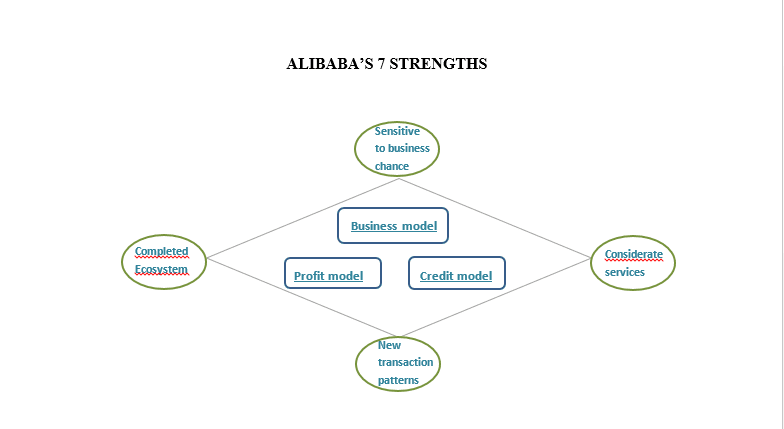
    The three core factors that influence Alibaba are its Business model, Profit model and Credit model. In addition, there are four subsidiary factors namely considerate service, sensitive for business chance, new transaction patterns and completed system supporting Alibaba to gain its success.

    1. Alibaba’s unique business core to provide services mainly to small enterprises and individual defines a unique business opportunity which not only emancipates the productive forces of small enterprises but also offer much more diversified consumption choices for consumers.

    Alibaba’s service offer focuses on small enterprises. Whether we talk about 1688 – a B2B eCommerce platform specifically aimed at wholesale and procurement business – Taobao (including Tmall business shopping mall) – a B2C & C2C eCommerce platform gathering numbers of individual sellers – or YiDaTong (the largest Chinese professional import and export agent) which not only subsidizes small enterprises but also helps them accumulate credit through history data, all three of Alibaba’s core businesses mainly focus on providing services to small enterprises helping them create value which could not be accomplished by any of them individually (such as cost control). Additionally, the three core businesses represent a complete eCommerce ecosystem.

    The focus on small enterprises also leads to a phenomenon whereby a large variety of goods are available to a large variety of target consumer groups (age, profession, wealth, etc.) on the platform. In 2014, the Alibaba platform as a whole experienced a total transaction volume of 2.3bn CNY (close to 330 bn EURO).

    1. Alibaba’s profit model that Alibaba gets profits by charging services in marketing and technical supports rather than by charging admission fee contributes to a large and robust market share made up of loyal customers.

    Alibaba’s profits mainly come from advertisements and keyword bidding within platforms, which in total represents 57% of profits. The second most important source of profits is the variety of technical services based on big data of consumer behaviors, representing 25% of profits. One of the important reasons why Alibaba could beat eBay China can be found in their strive to cultivate the online transaction habit among Chinese customers by allowing sellers to register for free and by removing intermediate fees. EBay China, on the other hand, was in a rush to harvest the Chinese market by charging fees for all transactions completed on the platform. Taobao thus gathered a large number of sellers, thereby encouraging an even larger number of customers to purchase via the Taobao platform. Hence, Alibaba successfully developed a strong and loyal online customer base.

    Nowadays, the Alibaba platform represents more than 0.5bn registered users, among which there are more than 0.23bn active buyers and more than 8m active sellers. The Annual orders already exceed 11bn. [3]Thanks to the large number of customers on the platform, Alibaba can make use of advertisement, keyword bidding and customer’s data for profit. Advertisements on Taobao can generate thousands of clicks for a single brand; the bidding for keywords contributes to the higher ranking of brands in search results; technical services assist sellers in the management of their online store and relationship with customers through analysis of customers’ preferences and feedbacks.

    1. Alibaba’s accurate credit model, which builds a third-party payment platform as a bridge between consumers and e-stores to standardize payment process and to protect consumer’s rights, helps to develop a good and trustworthy reputation among customers.


    • All sellers on the eCommerce platform are requested to pass an online certification test to verify their identity information.

    Such certification ensures the supervision of sellers on the platform at all times and reduces the possibility of illegal transactions.

    • All transactions are recorded and can be traced back by both sellers and customers. Based on the records, Taobao set up a system to measure the degree of integrity of both actors.

    Such a system ensures that any fraudulent behavior is published for everybody to see and can lead to a significant loss in the number of future transactions because of the lack of the other party’s trust. The system protects the legitimacy of each transaction and helps customers chose more reliable sellers.

    • Alipay is an online payment platform, combining ease of use, safety and efficiency. Payments are first transferred to Alipay. Once the buyers have received their product and ensured they are not faulty, the payment is transferred to sellers from Alipay. If the product is faulty or does not meet the expectations of the buyer and returned, so is the payment.

    When eCommerce first appeared in China, the safety of online purchases was the most important problem that concerned customers. Alipay provides a reliable solution which has won the trust of Chinese customers. Because of its convenience, Taobao attracts more and more online shoppers. Nowadays, people can use Alipay to pay for any fees arising in their lives in general. Besides, Alipay allows customers to purchase goods on credit used in the current month and paid back the following month. Up to 2013, the number of users in Alipay approached 0.3bn while the number of transactions reached 900bn CNY (about 128bn EURO) and the active users of the Mobile terminal reached 0.1bn which exceeded the number of users on PayPal.

    • Online feedback is largely encouraged. The more comments a customer writes for products, the more discount coupons he receives.

    Word of mouth can strongly influence customer’s behavior, especially when all information concerning a particular product is more difficult to find. The large amount of comments can guide and encourage customers in their purchasing experience and help them pick out their preferred product, while reducing post-purchasing regrets.

    1. Alibaba’s considerate service offer provides a comfortable purchasing environment and a positive online customer experience leading to high user engagements.

    Based on the analysis of its large customer base, Alibaba always knows how to provide the most suited services for optimal customer satisfaction. It helps sellers to maintain positive interaction with buyers; it offers online business training for various stores; it introduced a special coding system to manage the large number of stores on the platform; it developed its own instant communication tool to improve seller-buyer communication exchange; it enables the reimbursement of any product ensuring payment return within the following seven days, and so on. Those support services help sellers grow their business while helping buyers to find their preferred products, thus generating more and more transactions.

    1. Alibaba excels at identifying and seizing unique business opportunities, thereby positioning itself as a leader and developing customer loyalty.

    In China, two festivals have a major impact on people all over the country: Spring Festival (the Chinese New Year) and ‘Double 11’ (a festival created by Taobao).

    The ‘Double 11’ festival falls on November 11th, just between Chinese National Day and Christmas when people would prefer physical in-store shopping (offline). Although most customers would typically be avoiding shopping during that period, Taobao developed a campaign encouraging consumption, so much so that the day became an actual shopping festival. On that day, various brands offer different discounts and even launch new products. Customers pick out their various preferred products and purchase them online on November 11th. In 2014, ‘Double 11’ generated over 1bn CNY in total trading volume for Tmall within the first three opening minutes. Within the first 14 minutes 2 seconds, volumes exceeded 5bn CNY. Total volume for the day reached 53bn CNY (approximately 7.6bn EURO)! In a single day, Taobao generated revenue of 1.5bn CNY and net profit of more than 0.5bn CNY (approximately 71m EURO).[4]

    The ‘Double 11’ day has successfully developed a new popular shopping event for the majority of customers in China. At such an event, the various Tmall sellers’ needs for advertisement and software services increase largely. Alibaba thus gains enormous profits from the event, while both sellers and buyers rely more on the open platform. Alibaba’s advantage in cloud computing also represents a valuable asset for the shopping festival.

    1. Always keeping an eye on customers’ evolving needs, Alibaba dares to challenge the traditional transaction patterns and explores new ways to create more value for customers.

    C2B transaction model: When customers are in particular predominance for a certain transaction, Alibaba deploys the C2B transaction model to reduce costs in the traditional supply chain and shortens the time required for product turnover, thereby increasing customer satisfaction. On the one hand, Alibaba gathers a large number of scattered customers who express the similar needs to form a powerful purchase group that can buy single products at a wholesale price. On the other hand, Alibaba takes advantage of its massive online customer behavior data to develop products suited to particular customer habits. For example, the analysis may show that customers based in south regions use their dryers more frequently on account of the wet weather and therefore need more resistant machines while other customers may not like vacuum cleaners which require the user to bend down when using it. In that case, Alibaba takes charge of 12 product lines in 12 brands and exerts total control over the production schedule to ensure the production of the selected products which are predicted to be in high demand within shortened production cycles. Lastly, Alibaba integrates the product the production with front-end sales to bring instant personalized products to customers. Within the single day of May 8th 2014, Tianmao sold 180,000 sets of the 12 products which equated the sales volume for a period of 3 months on the internet.

    O2O strategy: In Alibaba’s plan, customers can purchase a product by scanning two-dimensional codes and then receive products with another code which involves the interaction of the instruction and after-sales functions. Customers can also take part in various brand-run initiatives and receive targeted advertisements by scanning corresponding codes. In order to accelerate the plan execution, Alibaba is actively developing its expansion to mobile terminal areas – “Alipay Wallet” represents one such significant trial. “Alipay Wallet” not only provides different ways for payment such as code scan and direct cash-transfer, but also partners with different banks in order to provide an assistance service to customers for managing their many bills and coupons. Along with many other purchased Apps covering other domains including taxi services, maps, weather, music and travel, “Alipay Wallet” aims to transfer the content and activities of customers’ daily lives onto the O2O service.      

    1. Rather than positioning itself as a simple eCommerce company, Alibaba focuses on providing excellent service quality to both sellers and buyers, by introducing easier ways to do business for the former and developing a positive purchasing experience for the latter.

    In order to achieve its goal in terms of positioning, Alibaba keeps expanding its core business to many different domains such as advertising services, logistic network, financial services and mobile terminal services.

    1. Alimama: Alimama is an advertising platform which operates as Alibaba’s B2B system: owners of advertisement positions such as blog owners post the positions in Alimama and advertisers purchase their favorite positions according to their own criteria. Nowadays, Alimama focuses on three dimensions: Big Data, “Taobao Ke” (cost per sale mode) and the combination of video and mobile terminals. Through these dimensions, Alimama aims to help merchants find their specific target customers and help customers achieve their preferred products easily.
    2. Big Data: Besides the massive internet flow, transactions and database that Alimama represents, Ali also integrates comprehensive data resources that cover almost every aspect of customers’ daily lives through the acquisition of software companies in many other domains such as map, weather, taxi, music and travel. The accurate and diversified data can thus help advertisers select the most appropriate website advertising channels and reach customers effectively.
    3. “Taobao Ke” is a group of people dedicated to assisting merchants in the promotion of their products who receive a commission when a transaction is completed (cost per sale billing model). CPS is useful for eCommerce since people who successfully identify customers and convince them to complete a purchase are rewarded by commission.
    4. The combination of video and mobile terminal: In April 2014, Taobao bought 16.5% shares of China’s largest video site, intending to leverage the strengths of video in both PC and mobile to enable the interaction of an advertisement between the two terminals. When the audience watch advertisements during videos, Taobao will send the related information to the mobiles of people in the audience in various forms, including games and coupons to entice clicks from the audience.
    5. Ali micro finance: Ali micro finance mainly provides micro deposits and loans. It uses the data collected directly from the Ali platform: credit data and behavioral data. It translates the online customer behavior data into businesses and categorizes individual credit ratings by small enterprises according to their eligibility to apply for small loans from Ali micro finance (eg. small amount, short-term, momentarily borrow and return), as these small structures usually experience difficulty in obtaining loans in the traditional banking channels. Meanwhile, Ali’s small loan service also attaches great importance to the use of new technologies. It relies a lot on the cloud computing technology to determine whether there is a particular match between a certain buyer and a seller, whether they speculate credits, what rate the risk possibility stands at and so on. This not only ensures the safety and efficiency of the service but also reduces operating costs. In addition, the Internet makes it possible to provide a set of financial services, 24/7, 365 days a year, to large-scale small enterprises at the same time. This meets the major demand for capital resulting from the increasing number of small enterprises being founded in China.
    6. CSN (China Smart Network) project: CSN project was launched by Ali in collaboration with the four most influential logistics companies in China. Ali hopes to achieve the goal of enabling the delivery of products to buyers within 24 hours of ordering via the platform. Different logistic networks belonging to different logistic companies are integrated into forming the single most effective network in terms of parcel turnover for customer delivery. Different logistic companies focus and provide their expertise on specific portions within the network to maximize efficiency. Meanwhile, based on data analysis, Ali selects the most suitable logistic company for different portions of the network and allocates delivery businesses according to performance. As a consequence, logistic companies need to improve service quality and reduce costs, while ensuring continuous delivery. Moreover, customers can choose their favorite types of deliveries such as ‘fastest’, ‘cheapest’, ‘safest’ and ‘best service’ since the CSN can deploy the work capacities of the logistic companies.


    ALI’S FUTURE DEVELOPMENT

    Globalization

    In November 2014, Ali expanded its commercial transaction worldwide for the first time. Since that date, Ali’s global ecosystem consisting of its eCommerce platform, logistic network, cloud computing and big data has been developed further and communicated on publicly. On Tianmao International’s platform, Chinese customers can purchase goods of popular retail brands abroad directly and customers from other countries including Russia, Brazil, the US and Canada can also purchase products from China directly. Due to the reduced amount of procedures required in foreign trades without importers, Ali is able to transfer the profits from the importers to the merchants and thus cut down transaction costs. The CSN network represents a global coverage of countries to increase the convenience for parcel delivery to customers. For example, CSN developed a special supply chain in Russia allowing customers to receive products within 35 days. It also increases the cooperation with banks in other countries to improve the payment system.

    Besides the globalization of its eCommerce activities, Ali is also developing its finance business abroad. Recently, Ali has cooperated with Lending Club – the biggest online loan platform. The cooperation signifies that small American enterprises which get loans from Lending Club can now look for Chinese producers and supply sources on Alibaba’s platform.

    Taobao Village

    Focusing on eCommerce development in rural areas of China is one of Ali’s most important future strategies. In the same way that it always looks for business opportunities among small enterprises and individual customers, Ali fosters the online purchase forces in thousands of villages across China. Taobao village represents the village where active online shops reach more than 10% of local households and trading volume amounts to more than 10m CNY. The high concentration of online shops in these villages makes it possible to form an eCommerce chain made up of producers, suppliers, shops and logistics, thereby facilitating development and economies of scale. Moreover, Taobao village helps to address the problem of local unemployment (Taobao village brings about more than 280,000 jobs and the average income at Taobao village is 2.19 times higher than that found in normal villages); it contributes to the transfer of the environmental advantage into an economic advantage (since the natural and original product is welcomed by customers); and it helps to diminish the purchase gap between urban and rural areas. Up to December 2014, 211 Taobao villages were developed. Ali provides support through credit and loans, talent training and promotion.

    Develop more offers suited to more fields in customers’ daily lives

    Yulebao: An investment platform for television work with approximately 7% annual return on investment. Investors have the opportunities to meet with directors of various TV projects, take part in premieres, travel to the filming locations of certain TV programs, etc. The customer’s preference is better evaluated and will truly influence the Chinese entertainment trends. Besides, it helps high quality projects which do not necessarily have the matching high budget to get investment for production. Yulebao was launched in March 2014.

    Ali future hospital: In August 2014, Ali collaborated with a renowned hospital in Shanghai, installing Alipay to allow patients to complete their own registration process, payment and report-fetching online. Most importantly, Alipay is combined with medical insurance in order to deliver a fully automated service to customers.

    [1] The data comes from  Alibaba’s prospectus: https://www.sec.gov/Archives/edgar/data/1577552/000119312514184994/d709111df1.htm

    [2] The data comes from  Alibaba’s prospectus: https://www.sec.gov/Archives/edgar/data/1577552/000119312514184994/d709111df1.htm

    [3] The data comes from  Alibaba’s prospectus: https://www.sec.gov/Archives/edgar/data/1577552/000119312514184994/d709111df1.htm

    [4] Data comes from “Le single day Chinois bat tous les records de ecommerce”:

    https://www.le-webmarketeur.com/2013/12/10/le-single-day-chinois-bat-tous-les-records-de-e-commerce/


    Author :

    Prof. Xavier Pavie

    Associate Academic Director, MSc in Management, ESSEC Business School

    Director of iMagination Center


    Yixuan Luo

    Master student at ESSEC Business School
  • History of barcodes in the World

    History of barcodes in the World

    Barcodes originated from the increasing need to create a system to manage retail operations in a more efficient manner.  Retailers were getting bigger and bigger and stock control was becoming more and more difficult.  They needed a system to make it simpler.   In 1952, Norman Joseph Woodland and Bernard Silver stepped up to the plate and developed the modern barcode.   They based their barcode on morse code, using dots and lines. Woodland created his first barcode from sand on the beach.

    Later, in 1959, David Collins became aware of the need to automatically identify railroad cars. He created a system for monitoring and controlling railroad carriages also using blue and red reflective stripes attached to the side of the cars which encoded a six digit company identifier and a four digit car number.  He called this system Kar Trak. This is an example of what the Kar Trak system looked like.

    Both of these barcodes developed by Woodland and the Kar Trak Barcodes had problems due to the fact that the scanner could not read the barcodes easily if they had any dirt on them.   They didn’t have the technology they needed to create the modern day barcode scanner.  The whole system was abandoned in 1970s but later in the 1980s a new system emerged which utilised radio tags.

    In the beginning, barcodes were scanned by special optical scanners called Barcode Readers.  Later technology improved and scanners and interpretative software were used on devices including desktop printers and even smartphones.

    As the years progressed, barcodes were improved and transformed into the barcodes we find today.  With the development of technology, barcodes scanners were also improved which made the retail process simple and easy for both the supplier and the retailer as well as for the customer.

    Barcodes became very widely used to manage retailer checkout systems. Their use has spread to a variety of other tasks such as automatic identification and data capture.  The very first Universal Product Code (UPC) was scanned in June 1974 at the Marsh Supermarket in Ohio.  It was on a packet of Wrigley Company chewing gum.  The packet of gum was bought by Clyde Dawson and the cashier was Sharon Buchanan.  It cost 67 cents. This packet of gum and the receipt are now on display in the Smithsonian Institution’s National Museum of American History in Washington.

    In 1966, the National Association of Food Chains (NAFC) got involved in the barcode business.  They wanted to develop a system where checkouts at retailers could be automated and controlled.  They created a committee which created guidelines for the development of barcodes and assisted in creating a standard approach to implementing barcodes in retailers.

    As more and more retailers invested in purchasing the equipment needed to scan the barcodes, these stores benefited greatly.  It allowed for more responsiveness to customer needs by revealing which products were in higher demand.  Sales increased by 10 – 12 % and the operating costs decreased by 1 -2%.  This enabled the retailers to lower their costs and thereby increase their market share.  By 1988, 8000 retailers were converting to using barcodes per year.

    However, there were people who were against the launch of barcodes.  This scepticism mainly came from conspiracy theorists who believed that barcodes were an intrusive surveillance technology.   Also, some Christians believed that barcodes hid the number 666 which represents the number of the beast.

    Despite these protests, barcodes took the world by storm, and were adopted by more and more stores throughout the world, as well as in South Africa.  In these modern days, you can’t walk into a store without seeing a barcode.  Barcodes have come a long way since 1960.  They have revolutionised retailers by increasing their efficiency and control over stock, thereby increasing their profit level and generally making the retail business as smooth as possible. Barcodes are now used throughout the world for a huge variety of products ranging from beauty products to gardening tools all the way to groceries.

    This is one of the reasons why it is necessary to buy barcodes South Africa for any product you want to sell in South Africa or Asia, including china. These will be registered with your chosen retailers who can then begin selling your product.  When you buy barcodes in South Africa, you are becoming part of history.

  • Telcos should follow teenagers’ digital lifestyle

    Telcos should follow teenagers’ digital lifestyle

    Only 12% of teenagers feel service providers understand their lifestyle and offer services to match it, according to a study from Amdocs.

    Conducted by Vanson Bourne , the study surveyed 4,250 respondents aged 15-18 from the United Kingdom, United States, Canada, Brazil, India, Germany, Russia, Mexico, Philippines, and Singapore.

    Among those polled, 30% report experiencing bad customer service from their CSP over the past year, and 46% say they will not use that CSP again. A third of respondents then shared this information with families and friends.
    Findings also show that 43% of teenagers believe their smartphone makes them smarter and “cooler”; 52% check their social media accounts first thing in the morning; and over 30% say they would probably not meet someone again if they lacked a Facebook or WhatsApp account.

    Almost half of respondents say they prefer using emojis (47%) and posting photos (45%) to sending emails as emojis express how they feel more clearly than words.

    Teens require constant internet connectivity, with respondents saying they are more likely to feel anxious and alone if separated from the internet (56%) than when separated from their family (52%. The value of internet access is so significant that the majority (55%) strongly believe fast internet access to be a human right.

    A majority stream movies (53% streaming; 17% downloading), TV (51% versus 11%) and music (47% versus 29%); and they are typically doing so for free with less than a third saying they ever pay for any content.

  • Mobile video revenue on pace to $25b by 2021

    Mobile video revenue on pace to $25b by 2021

    Worldwide revenue from mobile video will reach $25 billion by 2021, according to the latest research by Strategy Analytics.

    Growth in mobile video revenue is expected to be driven by advertisers seeking to reach an increasing audience of users that are consuming video on their smartphones and tablets.

    The report also predicts users of mobile video to more than double to 2 billion users by the end of 2022, equal to 36% penetration among the global mobile users.

    Social platforms with audience scale, like Facebook, Twitter, WeChat and others are increasingly looking to video to increase user engagement rates while reducing churn, but will offer potential for monetization in future.

    Source: Strategy Analytics

    “Despite growing video consumption on mobile devices, advertiser expenditure on mobile video has yet to catch-up with this growth,” said Nitesh Patel, director at Strategy Analytics.

    “Furthermore, new modes of mobile video services such as live streaming platforms like Periscope and Facebook Live are focused on building audience before revenue,” said Patel.

    “Currently, social networks have launched live video streaming as a tool to increase user engagement and to extend the time spent by users while inside of social networks, but we expect direct monetization to follow.”

  • Global pay TV subs rise 2% in Q1

    Global pay TV subs rise 2% in Q1

    The worldwide number of pay television subscribers reported by informitv’s Multiscreen Index rose by 6.9 million or 1.7% in the first quarter of 2016.

    Three in five (60%) of the 100 leading pay-TV services in the latest index report showed net subscriber gains in the quarter.

    The greatest quarterly subscriber gains were in the Asia-Pacific region, where there were 5.35 million subscriber additions. Six operators in India added a total of 4.71 million between them, with SITI Cable Network reporting 1.1 million new digital subscribers.

    The 10 services with the largest quarterly subscriber losses had just under a million fewer television customers between them. They were headed by AT&T U-verse, which shed 382,000 subscribers, although these losses were almost matched by gains of 328,000 for satellite subsidiary DIRECTV.

    The top 10 services from the United States in the index closed the first quarter with just 18,000 subscribers more than at the start of the year, but they were down by over 880,000 year-on-year.

    In the United Kingdom and Ireland, Sky and BT added 136,000 television subscribers, while Virgin Media and TalkTalk lost 21,000.

    Canal+ in France lost the most subscribers in Europe, with its numbers declining by 200,000. Orange and Free added 234,000 subscribers in France.

    Also, 81% of around 400 million homes subscribing to the services covered by the index now have access to some form of multiscreen viewing. The actual adoption and usage of multiscreen services is much lower.

    “North, Central and South America still contribute over a third of the subscribers in the index,” said informitv analyst Sue Farrell. “They gained just 0.54 million subscribers, compared to 1.41 million in the first quarter a year ago.”

    “The Multiscreen Index shows an overall gain in subscribers, with more services gaining rather than losing television subscribers,” said the editor of the report William Cooper. “Although mature markets like North America are relatively saturated, it shows that there is still room for growth in other regions.”

  • Average internet speeds grow 12% during Q1

    Average internet speeds grow 12% during Q1

    Global average internet connection speeds grew 12% sequentially during the first quarter to 6.3Mbps, according to Akamai’s latest State of the Internet report.

    The report aslso shows that the global average peak connection speed increased 6.8% to 34.7 Mbps over the same period.

    Global broadband adoption of 10Mbps, 15Mbps, and 25Mbps connections also grew significantly during the quarter, posting year-over-year gains of 10%, 14%, and 19% at each threshold, respectively.

    Meanwhile, average mobile connection speeds ranged from a high of 27.9Mbps in the United Kingdom to a low of 2.2Mbps in Algeria during the period, while average peak mobile connection speeds ranged from 171.6Mbps in Germany to 11.7Mbps in Ghana.

    “What this means,” said Rob Morton, Director of Public Relations, Akamai Technologies, in a video message, “is that more people around the world can take advantage of video streaming with higher bit rates, resulting in a better quality viewing experience.”

    David Belson, editor of the State of the Internet Report, said the expectation is that this summer’s biggest sporting events will be watched by more online viewers than ever.

    “Global connection speeds have more than doubled since the summer of 2012, which can help support higher quality video streaming for bigger audiences across even more connected devices and platforms,” he affirmed.

    The report noted that at the country level, South Korea continued to have the highest average connection speed in the world at 29.0Mbps, an 8.6% gain over the fourth quarter of 2015, while Singapore maintained its position as the country with the highest average peak connection speed at 146.9Mbps, an 8.3% quarterly increase.

    It said South Korea also led the world across the 10Mbps, 15Mbps, and 25Mbps broadband tiers once again, with adoption rates of 84%, 69%, and 42% respectively, after seeing robust quarterly gains across all three metrics.