Category: Research

Retail News Asia is committed to providing both local and global retailers with the latest Research throughout the Asian market. This on a daily base.

  • 3 things you need to know about Hong Kong’s online shoppers

    3 things you need to know about Hong Kong’s online shoppers

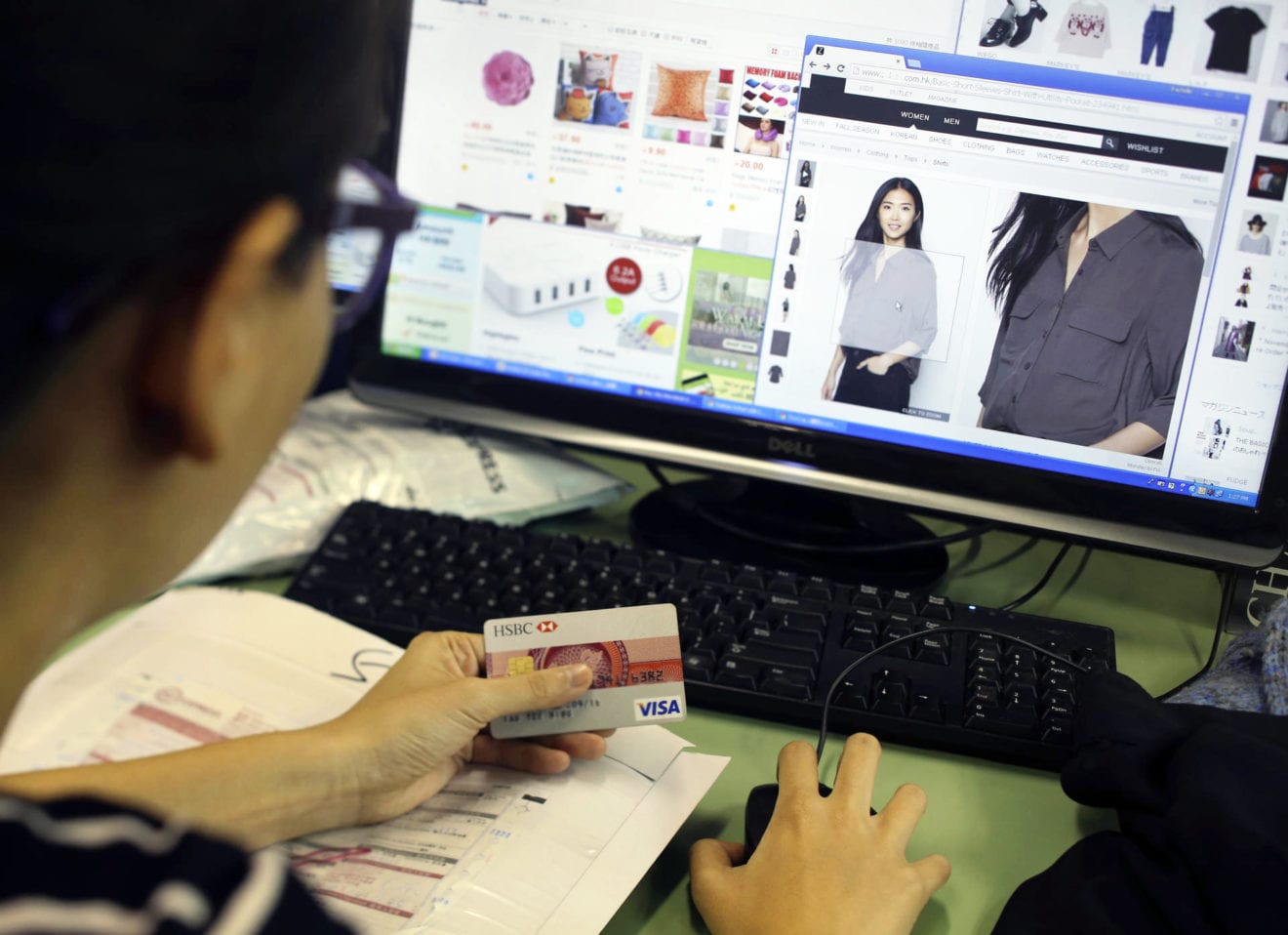
    The line between browsing and buying online and offline in Hong Kong is blurring as technology enables nearly everything to become a digital touch point for consumers. Following the success of e-commerce boom in China, Hong Kong retailers are also keen to leverage the “online shopping fever” these years, and some e-tailers have started organizing similar Online Shopping Festivals in Hong Kong. But the real question is: what are the consumer perceptions toward these shopping events?

    Based on our recent study, here are some highlights you ought to know about Hong Kong e-shoppers:

    LESSON 1: KNOW YOUR CONSUMERS

    Generally speaking, 88% of Hong Kong consumers shopped online in the past 12 months. The young generation (aged below 30) are all active e-shoppers, while one-third of the e-shoppers in Hong Kong purchased online within one week.

    LESSON 2: KNOW YOUR POINT OF SALES

    Over 80% consumer shop online through desktop computers, while two-out-of-five online shoppers choose their smartphone for e-shopping.

    LESSON 3: KNOW YOUR PRODUCT STRATEGIES

    The top three most popular categories for e-shoppers are clothing, travel package/ air tickets/ hotels, and restaurant coupons.

    E-commerce is quickly becoming crucial to growth because creating a relevant, integrated and engaging shopping experience means winning offline as well.

  • Here’s why new NFC-enabled SIM cards may flop in Singapore

    Here’s why new NFC-enabled SIM cards may flop in Singapore

    The service is too costly. Singapore’s telco operators recently unveiled new NFC-powered SIM cards, which will allow commuters to pay fares using their mobile phones. The SIM cards will also be accepted at 30,000 ez-link terminals across the island.

    However, the new SIM cards might fail to gain enough popularity because of several stumbling blocks, according to a report by DBS.

    The report noted that the popularity of iPhones in Singapore is a big hurdle to the rise of the new SIM cards. The NFC-powered SIM cards are incompatible with iPhones, which only support Apple Pay and make up a third of mobile phone sales in the country.

    DBS also highlighted that ez-link is not accepted at 7-11 stores and many other retail outlets, which prefer NETS and credit cards.

    Apart from these hurdles, the cards are also extremely expensive at $37.50 apiece.

    “EZ-link is not widely popular for retail transactions even in Singapore. Plus NFC enabled payment is not adding any security feature to the ez-link card while “Apple Pay” adds security to credit card transactions. So we do not see that the NFC enabled SIM based payments will be widely used. Anyway, telcos may not get much commission out of the transactions, as the bulk may go to ez-link for its large customer base using it for buses and trains,” the report noted.

  • 7 Tips for a Safe and Low-Priced Online Shopping Experience

    7 Tips for a Safe and Low-Priced Online Shopping Experience

    The possibilities for online shopping seem endless. To buy clothing, electronics and even your groceries you don’t have to leave the house anymore. Buying online is usually cheaper than buying in store too, because you can find really great discounts and deals online.

    But can you trust your mailman to deliver the package, won’t someone steal your package from your mailbox and how about the safety of online payments? Here we will share with you how to find discounts for your online shopping adventures and how to shop safely.

    1. Choose cash on delivery

    Well known webshops such as Lazada and Zalora give you the option to choose ‘cash on delivery’ (COD) as a payment method. In short, this means that you pay the delivery man in cash when he hands over the package to you on your doorstep. This way you only pay when you actually receive your package. Most of the time the delivery is free of charge. If you don’t want the hassle of staying at home until the postman arrives you can also let them deliver your package at work.

    2. Look at reviews

    Not too sure about the webshop you are about to order from? Get advice from others! You can check Trusted Company to view experiences per webshop from fellow shoppers.

    3. Check payment security systems

    Check if a webshop is Norton Secured and/or PCI DSS approved. The Norton Secure seal means that sensitive data is protected and the PCI DSS seal tells you that the security standards for account data protection are high. Your payment details are most likely to be secured when a webshop shows the two seals.

    4. Shop at international shops

    European and American shoppers have been shopping and paying online for ages already. They are not hesitating to pay online, simply because it always goes smoothly. Big international merchants, like Asos and The Body Shop are not trustworthy but also have good customer service. The only downfall is that international shipping will take longer.

    5. Use discount code websites

    Websites like Saleduck collect all discount codes and deals from webshops for you. When you are in the check-out process of a webshop and about to pay, a lot of webshops give you the option to fill in a discount code. If you don’t have a discount code, most of the time you can find one at a discount code website.

    6. Get in app discounts

    A lot of webshops really want to promote their app so they offer you a great discount when you download it. If you purchase something through their app for the first time, you can count on a nice discount, for example 15%.

    7. Use credit card discounts

    If you own a MasterCard, Citibank or CIMB Bank creditcard, you are in luck. A lot of webshops have special promotions for customers that pay with these cards. Discounts go up to an additional 25% off. Sometimes these offers are only valid on certain days, like MasterCard’s Monday promotions.

  • All eyes on Indonesia’s e-commerce pie

    All eyes on Indonesia’s e-commerce pie

    Squinting at the electronic tablet screen, shopkeeper Maihar tapped the colourful icons to top up her customer’s mobile phone credit.

    “Today I sell phone credits. Tomorrow I will run an online grocery store from my bed,” the 59- year-old told The Sunday Times from her small provision shop in Jakarta, which she has been running for the past 20 years.

    “I used to be ‘gaptek’. I knew only how to switch the computer on and off,” she said, using the Indonesian slang “gagap teknologi”, which refers to people who are technologically backward. “But the Internet is changing the way we do business so I am learning to use it.”

    Madam Maihar made the plunge into cyberspace four months ago when she was introduced to Kudo, a local tech start-up which allows “agents” like her to sell clothes and concert tickets from its 10-odd merchant partners through a shopping application installed on its tablets.

    So far, she has used it to pay utilities and phone bills for her customers. In return, she gets shopping discounts from Kudo.

    GETTING ON THE DIGITAL BANDWAGON

    I used to be ‘gaptek’. I knew only how to switch the computer on and off. But the Internet is changing the way we do business so I am learning to use it.

    MADAM MAIHAR, an Indonesian shopkeeper, using the Indonesian slang “gagap teknologi” to refer to people who are technologically backward.

    Small-time entrepreneurs like Madam Maihar as well as big capital owners and tech start-ups like Kudo and others, including from Singapore, are all eager for a piece of Indonesia’s e-commerce pie, valued at US$12 billion (S$16 billion) in 2014 and US$18 billion last year.

    Billed as the next frontier in e-commerce after China and India, Indonesia’s market is expected to swell to US$130 billion in 2020, with an annual growth of 50 per cent, Information and Communications Technology Ministry spokesman Ismail Cawidu told The Sunday Times.

    The government wants e-commerce to become “Indonesia’s backbone in digital economy so we can become the biggest in Southeast Asia in 2020”, he said. It will soon roll out a road map for the industry that will provide clear guidelines on logistics services, financing for start-ups, consumer protection, taxes and cyber security.

    Recognising Indonesia’s digital potential, Singapore’s Foreign Minister Vivian Balakrishnan during a visit to Jakarta in January proposed a new partnership between the two neighbours.

    “We believe Indonesian universities and technical institutes will produce many graduates with digital skills and we are thinking of launching a scheme in which Singapore companies which are looking for talent will be able to recruit talent here, deploy them here and provide services for the rest of the world,” Dr Balakrishnan said.

    With nearly a third of its 250 million population able to access the Internet, seven in 10 of whom do so on their smartphones, Indonesia has a ready captive market.

    This, coupled with low labour costs and growing affluence, is a big draw for budding tech firms.

    Mr Ivan Tan, IE Singapore’s group director of South-east Asia Group, which has helped 50 Singapore firms to collaborate with Indonesian players, said: “The increased spending power of the middle class and the rapid adoption of new technology will drive e-commerce growth in this country.”

    While traditional on-demand transport, food and shopping services such as Go-Jek motorcycle-hailing service and Tokopedia online marketplace continue to dominate the industry, new ventures such as UangTeman, which provides short-term micro loans online, and HaloDiana, a private virtual assistant, have sprung up.

    Low Internet penetration rates and service gaps such as poor infrastructure which drive up logistical costs, patchy mobile connectivity and limited banking facilities have spawned a new breed of innovative businesses.

    For instance, Kudo, whose investors include two from Singapore, targets the “have-nots” by recruiting agents in rural locations to shop on behalf of their less technologically savvy communities.

    Bareksa, an investment portal start-up, allows people to start mutual funds online with only $10 without stepping into a bank.

    Singapore firms also are jumping on the bandwagon, despite challenges such as language barrier, few business connections, foreign investment restrictions, bureaucracy and online payment problems.

    SingPost said it has “a special arrangement with Pos Indonesia” with full online tracking and work sharing at a discounted price that helps to lower logistic costs and cut delivery times for Chinese e-commerce giant Alibaba merchants selling to the Indonesian market.

    Mr Henry Chan, business development head at ShopBack, which returns a portion of cash to shoppers who buy through the website, said while China has high demand, its “competitiveness is also very, very high”.

    “Indonesia is closer to home and something we can relate to a lot more on a cultural basis,” he said.

    Despite an “imperfect ecosystem”, from unclear government regulations to Indonesians’ love for haggling, it is only a matter of time before the country completely embraces the idea of e-commerce, technology experts say.

    Said Indonesian Internet Service Providers Association chairman Jamalul Izza: “There’s no way but up. When we are lazy to go out or get stuck in a traffic jam, what else is there to do but shop or buy food online?”

  • Everything you need to know about payments, ecommerce, and venture capital in Indonesia

    Everything you need to know about payments, ecommerce, and venture capital in Indonesia

    Macquarie’s annual conference in Jakarta on telecoms, technology, and ecommerce is one you shouldn’t miss. Last week, it brought together top decision makers in Indonesia’s digital economy.

    Macquarie Group’s corporate advisory branch Macquarie Capital gained relevance in Asia’s tech industry through advising startups and tech companies on capital raising, IPOs, as well as mergers and acquisitions. It’s, for example, responsible for advising aCommerce and PropertyGuru on their recent fundraises.

    Speakers at the event included Indonesia’s tech minister Rudiantara; executives of the three major telcos Telkom, Indosat, and XL; CEOs of retail giants; venture capitalists; and founders and CFOs of Indonesia’ most talked-about startups.

    Here are two days of back-to-back panels, distilled into digestible insights.

    1. A new ‘light touch’ approach to internet regulations

    Indonesia produced its share of confusing headlines about internet policies. Suddenly it wants to regulate everything: ecommerce, transportation, foreign investments.

    The new mantra is a “light touch approach” – allow change to happen and regulate where necessary.

    While opaque announcements caused concern, it’s obvious the current administration sees the digital economy as a key factor defining Indonesia’s future. It’s willing to go great lengths to support its growth.

    If you listen to tech minister Rudiantara or trade minister Thomas Lembong speak on the subject, you’ll hear their new mantra is a “light touch approach” – allow change to happen and regulate where necessary.

    It may still take some time for the administration to adopt the new mantra, but Rudiantara demonstrated he walks the talk when he refused transportation minister Jonan’s request to block access to app-based transportation services Grab and Uber. The Macquarie event coincided with a day of massive street protests organized by the taxi industry.

    Indonesia’s information and communications technology minister Rudiantara.

    Indonesia’s information and communications technology minister Rudiantara at a Tech in Asia event.

    2. Retail’s inevitable shift to ecommerce is on the way

    Similar to the changes in the transportation industry, a shift to ecommerce from offline retail is inevitable, Lippo Group director John Riady said. Consumers would eventually demand the higher convenience and product variety made possible by ecommerce.

    Lippo Group was an early mover last year when it launched its ecommerce endeavor Matahari Mall. This year, most of the big traditional retailers in the archipelago are getting on board with ecommerce plans of their own. Luxury brand retailer Mitra Adiperkasa is one of them, launching Map Emall in February.

    Lippo and Mitra Adiperkasa have taken different paths to achieving this shift to digital. Lippo’s strategy was to assemble a team of ecommerce professionals to start Matahari Mall from scratch as a separate corporation. Mitra Adiperkasa prefers to keep things close to home and manages its ecommerce site from within.

    Both John Riady and Ravi Kumar, COO at Mitra Adiperkasa, agreed that logistics and payments are still challenges to overcome. Indonesian shoppers lack trust in online payments.

    Facebook’s Head of ASEAN Kenneth Bishop offered advice on how to encourage customers to build trust: ecommerce applications should consider adding social features that let buyers ask questions before making a purchase.

    vp-sharma-map-emall-

    Mitra Adiperkasa’s VP Sharma launches Map Emall.

    3. A mobile world means engaging with customers around the clock

    The challenges of creating online services for a mobile-first market cropped up often in the discussions. Large parts of Indonesia’s young generation are coming online for the first time with smartphones, and don’t have access to desktop computers.

    Anthony Fung, the CEO of Zalora, and Fajrin Rasyid, CFO at Bukalapak, both observed that visits and transactions from mobile devices had overtaken those from desktop computers.

    Along with the shift to mobile comes a shift to new shopping behaviours. Whereas most online shopping used to occur during work hours, that pattern is starting to fade. Potential customers can now be engaged throughout the day, and even late in the evening.

    This requires brands to build even stronger emotional bonds with their customers. Zalora for example does this by focusing not only on selling products, but having a sense of fashion of its own. “If we want to be a fashion player, we need to be fashionable, know the trends, or even create them” said Anthony.

    4. More Youtube stars and on-demand video portals

    A more robust mobile infrastructure and Indonesia’s shift to 4G means streaming video on mobile devices is easier than ever.

    mobile-messaging-indonesia-BBM

    Mobile phones are part of everyone’s lives.

    This will likely lead to a digital video explosion this year. On one side that’s going to be user-generated content created by Indonesian millennials on platforms like YouTube, where social media stars like comedian Raditya Dika are already raking in millions of views on popular videos.

    There will be an explosion of digital video content this year.

    On the other are video streaming portals like iFlix, that offer quality international and regional video content for a subscription fee. iFlix will come to Indonesia in a tie-up with one of the local telcos, iFlix special advisor David Goldstein said at the Macquarie event.

    It must have learned from US-based competitor Netflix’ mistakes. Netflix got blocked by Indonesia’s state telco Telkom and its mobile operator subsidiary Telkomsel after it launched here last month.

    Video streaming is a sensitive issue in Indonesia for two reasons – first, content provided by on-demand portals will have to undergo the scrutiny of the local censorship body, and second, it eats up a lot of bandwidth, which is a challenge for the telcos.

    Regional players who understand Indonesia’s cultural sensitivities and partner with telcos could have the upper hand in the archipelago – that’s clearly the path Malaysia’s iFlix intends to take.

    5. Southeast Asia grows closer through startup mergers and acquisitions

    Tech startups growing into regional enterprises in Southeast Asia is an ongoing trend.

    Adrian Vanzyl, co-founder and CEO of Thailand-based Ardent Capital just went through a major merger with one of Ardent’s portfolio companies, Moxy. The women-focused ecommerce portal merged with Indonesia’s Bilna, forming Orami.

    “Mergers and acquisitions are a really good way to expand into markets with speed and efficiency,” Adrian said.

    After an initial phase of bringing together the teams and creating a new company culture, an effective merger or acquisition can be cost saving compared with trying to conquer a new market alone. “You’re in a new league of traction numbers and you can talk to a new league of investors,” Adrian explained, which is why he’s confident that we’ll see more merger and acquisitions in Southeast Asia’s tech sector this year.

    Orami-launch-event-team

    Moxy and Bilna rebrand as Orami after a completing one of the biggest ecommerce mergers Southeast Asia has seen so far.

    6. Profitability can wait

    The potential in Indonesia’s digital economy is so good that startups should focus on growth and brand building, not immediate profitability.

    Startups should focus on growth and brand building, not immediate profitability.

    Most of the players in Indonesia’s startup ecosystem, whether big ecommerce companies like Matahari Mall or on-demand services like Go-Jek, are not profitable yet.

    But that’s not the issue, John Riady said. “Focus on long-term value, not immediate profitability, make sure you can withstand trends and fluctuations,” he suggested.

    What’s necessary is a clear path toward profitability. Bukalapak’s Fajrin Rasyid said ideally, a startup should be able to switch between a profitability mode and growth mode at will. However, the panel agreed, there are also market forces at play which may force a startup to spend more to stay in the race.

    7. Waiting for a breakthrough in online payments

    What’s needed to catapult Indonesia’s digital economy to the next level is an online payments system that is widely accepted, works smoothly on mobile devices, and makes it easy and safe for customers to pay for things online.

    So far, there’s no such solution. Online payments are fragmented and complicated, which leads to many customers abandoning transactions.

    “Ecommerce payment methods have changed little in the past year,” said Chris Eyles from Fusion Payments who moderated the fintech panel at the Macquarie Event. “Over 50 percent of ecommerce transactions are still paid for via asynchronous offline payments such as cash on delivery and bank transfers which is limiting ecommerce growth and costing online retailers a lot of lost orders,” he added.

    startups-lending-money-poor-indonesia

    Payments are best done offline in Indonesia.

    One problem is that banks are still on the fence about their strategy in dealing with online transactions, which is holding back the entire ecosystem.

    Indonesian banks, for now, seem to prefer mobile wallet systems, but it has led to a situation where each bank offers its own ewallet version.

    Telcos also each have their own ewallets, but are planning closer collaboration in the future, which could possibly lead to the merger of the wallets of the three major telcos – a silver lining in Indonesia’s siloed payments landscape.

    Chris also observed that Indonesia’s fintech ecosystem lacks funding. “Why has Indonesia yet to see any major investments in the fintech space despite hundreds of millions being invested in the local ecommerce industry?” he asked.

    It could be due to unclear regulations, the dominance of banks, economic uncertainty, or a lack of suitable companies to invest in – most likely a mixture of all four factors.

    What became obvious is that Indonesia needs a breakthrough in online payments for its digital economy to make a leap. If there’s no local solution, it could fall into the hands of a global player to fill that gap.

    8. Investors continue to find value in Indonesia’s tech sector but are getting pickier

    Indonesia-landscape

    Anupam Garg, who leads Macquarie Capital’s telcos, media, and technology investments advisory in Asia, observed that the investing community still shows a great deal of optimism on the Indonesian technology space, despite there now being a higher focus on unit economics when assessing the value of individual businesses.

    “We expect tech fundraising to continue to thrive in Indonesia with some potential pickup in M&A activities,” he said.

    The general outlook was optimistic on a panel with VCs from some of the most active funds in Southeast Asia. The advice was to pick investments wisely, and to avoid certain verticals..

    Steven Venada form CyberAgent Ventures said that there already are three big winners in the ecommerce space: classified, retailers, marketplace. He doesn’t see many more opportunities for startups in this space, “unless you can outgrow them by 10x,” he warned.

    Better chances, according to him, are now in different verticals and niche markets.

    Stefan Jung from Venturra Capital explained his own caution about investing in fintech. “Should I wait until the regulation in this space becomes more clear?” he asked. “But then maybe I’m too late. Fintech is one of the most outstanding opportunities on a global level.”

  • Here’s why Samsung wants to act like a startup

    Here’s why Samsung wants to act like a startup

    Samsung Electronics, the world’s largest maker of phones, memory chips and television sets, plans to revamp its authoritarian, top-down corporate culture to become more like a lean startup as it copes with sluggish demand and growing competition.

    The company said Thursday its executives and workers pledged to reduce hierarchical practices, unnecessary meetings and excessive working hours in a “Startup Samsung” ceremony held Thursday at its headquarters in Suwon, South Korea.

    The first step in this new culture of flexibility? Requiring all its executives to sign a statement promising to scrap the company’s traditional authoritarian ways.

    Samsung is searching for new business strategies as a father-to-son leadership transition looms. Lee Jae-yong, 48, is expected to succeed his ailing father, Lee Kun-hee, at a time when Samsung’s mainstay semiconductor and phone businesses face intensifying competition from Chinese rivals. Samsung has its eye on expanding into health care and pharmaceuticals, but has responded slowly to hot Silicon Valley trends such as autonomous driving and artificial intelligence.

    The company says it will announce in June how it plans to reorganize its workers and eliminate red tape. It said new vacation systems would allow employees to spend more time with their families and take breaks for self-improvement.

    “By starting to reform the corporate culture, it means we will execute quickly, seek open communication culture and continue to innovate as a startup company,” Samsung said in a statement.

    Samsung says it has been trying to reform its very Korean corporate culture to suit its identity as a global company and to answer criticisms that it stifles creativity and grassroots input from workers. Like most Korean companies, its management tends to mirror the authoritarian ways of South Korea’s past, when a military dictator ruled the country.

    But analysts said Samsung faces a huge challenge in leveling a seniority-based corporate that is decades old. Some suggested the campaign also might be aimed at identifying underperforming workers and trimming the company’s managerial ranks to cut costs.

    Samsung’s regimented, authoritarian ways may have helped it quickly catch up with Sony and other Japanese manufacturers, but they also have hindered recruitment of top talent. That has been a liability as the company competes with Silicon Valley firms that allow workers more independence and flexibility.

    Last year, 26,000 Samsung employees participated in online debates, pitching in ideas. Some have been allowed to build products or launch services outside their original job descriptions at internal Samsung “startups.” The company also introduced flexible working hours last year though current employees said work hours are still too long.

  • Mobile apps collecting alarming amounts of data

    Mobile apps collecting alarming amounts of data

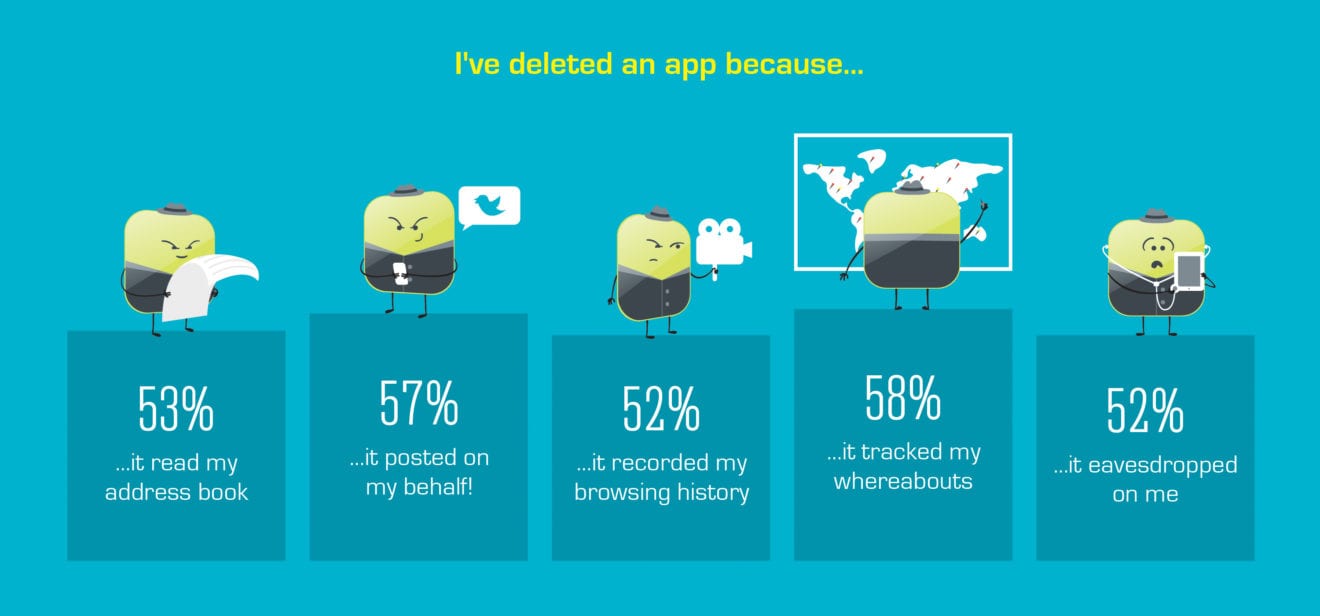
    More than half of mobile applications are collecting “alarming” quantities of data, a new study indicates.

    Hewlett Packard Enterprise’s HPE mobile application security report 2016 analyzes scans of more than 36,000 iOS and Android mobile apps, and reveals the impact of increasing data collection.

    As mobile applications become more prevalent in the work environment, it’s essential that organizations understand the security vulnerabilities of mobile applications and implement mobile security best practices and policies required to protect today’s digital enterprise. Adversaries are shifting their focus to mobile platforms, with more than 10,000 new Android threats discovered per day in 2015, and an iOS malware growth rate of more than 230%.

    “Modern mobile applications are collecting, transmitting and storing a wide range of data that often is not necessary to the application’s function, and can cause significant financial and reputational damage if a vulnerability is exploited,” said Jason Schmitt, vice president and general manager, HPE Security Fortify at Hewlett Packard Enterprise.

    “With attackers’ growing interest in mobile, it’s critical that developers build security into applications from the onset, and organizations take a proactive approach to data security to better protect both personal and corporate data.”

    Not all apps need to track your location

    A majority mobile applications track your location, but not all of them need to. More than 50% of the scanned applications accessed geolocation data. This can create serious privacy implications in the event of an attack, as an attacker can gain access to the physical location of otherwise anonymous, unsuspecting users.

    While it makes sense for a traffic application to track location, the study found that more than 70% of education applications on iOS did as well. This is disturbing as education applications are often marketed towards children.

    The report also found that calendar data was accessed by more than 40% of the iOS games and more than 50% of the iOS weather apps scanned. Calendar data can be particularly sensitive, detailing not just when business meetings take place, but also the topics and invitees.

    Ad and analytics frameworks are commonplace in application development, with more than 60% of applications scanned using these frameworks. A framework that is misconfigured – or insecure to begin with – could be storing or transmitting a significant amount of highly specific and potentially sensitive data about users.

  • Hong Kong Television Network: A Rare Combination Of Growth And Net-Net

    Hong Kong Television Network: A Rare Combination Of Growth And Net-Net

    HKTV has a very interesting story and background. The company’s original name was “City Telecom” which was built by CEO and founder Wong Wai Kay in 1992.

    Mr. Wong was born and graduated in Hong Kong, worked in IBM and later became an immigrant of Canada. In 1992, he started City Telecom, conducting long distance telephone business at the beginning. At that time, international long distance phone call was very expensive and was under monopoly by Hong Kong Telecom. Wong started his discounted phone call plan and had success in reducing the rate significantly.

    Since year 2000, he started an ambitious plan to build broadband internet for local residents in Hong Kong. At the beginning, many investors thought that plan was crazy, and the company indeed had many years of large losses, but eventually he successfully built the first broadband network and covered 90% of the Hong Kong families by 2010.

    After this success, he sold all the broadband network and telecom business to CVC Capital Partners, a global private equity firm, for HK$4.87 billion in 2012, and then he changed his focus to building a TV program business, the current HKTV. Since the company was then rich in cash after the sale, he issued a HK$2.5 special dividend or HK$2 billion to shareholders in 2012.

    However, after 2012, a new drama began as the company was trying to apply for TV broadcasting license. Rumor says that because Wong had offended the local government, Hong Kong government rejected the license application from HKTV. Many Hong Kong residents apparently thought this was totally unfair, since between 36,000 and 80,000 protesters gathered and protested the government’s decision. Later, HKTV also filed a lawsuit against the government and actually won the lawsuit in some sense with the Hong Kong High Court ordering the Executive Council to reconsider the proposal. However, it seems that Executive Council filed another lawsuit after that and the decision is still pending with no expected date of resolution.

    Since HKTV failed the application for traditional TV broadcasting, it tried to turn into digital mobile TV broadcasting, but that was again getting into trouble since the government claimed that it has to require a license too if it uses DTMB (Digital Terrestrial Multimedia Broadcast) transmission standard to do broadcasting. HKTV then filed another lawsuit to this claim but failed in court this time in late 2015. Now the company is trying to consider other transmission standards to do broadcasting, but whether it will get government approval is still highly uncertain.

    Since the path to build a good TV programme business is at least temporarily blocked, Wong suspended the TV programme activities and turned his focus to building the first large scale online retail platform in Hong Kong: HKTVMall.

    Online Retail In Hong Kong

    Unlike mainland China and many other developed countries, online retail never got very popular in Hong Kong. The primarily reasons are:

    1. Shipping cost is high.

    Shipping cost from overseas such as Japan, US and Europe is too high. The shipping cost from mainland China is relatively cheaper, but it is still cross boarders and not as cheap as shipping within the mainland China.

    With shipping cost high, returning a product becomes even harder and uneconomical.

    2. Lack of trust in products from sellers in mainland China.

    Some official report from China says only 41% of sample online purchases meet the quality standards when buying from online sellers in mainland China. It might not be a big problem for people who live in China since they might be experienced enough to know a few tricks to identify the best sellers (relying solely on reviews and ratings usually don’t work), but for Hong Kong residents, it might not be that simple. Personally, I had a few purchase experiences a couple years ago when purchasing on TaoBao, and the experience was very bad, nothing comparable to the experience in Amazon, but this might have changed in the recent years.

    Also, a lot of the “trust” problems are not just with the online sellers, but also with the producers of the goods. As IP is not widely respected in China, good brand names often get copied without severe punishment, which in turn discourages any effort/investment on building a good brand.

    3. Small local area.

    Hong Kong is a fairly small city with a lot of retail shops. Therefore, shopping in local retail store is pretty convenient and doesn’t require much traveling at all. However, people might still need to wait in lines from time to time though.

    4. Small market.

    With about 8 million people, it is a small market. Therefore, it is not very attractive to big corporations such as Alibaba (NYSE:BABA).

    For the reasons above, large scale online retailing was virtually non-existence in Hong Kong before HKTV tried to enter this market.

    HKTVMall

    Click to enlarge

    HKTVMall started the online retail platform in late 2014. The platform invites product listings of many local merchants and the delivery services are also sometimes provided by these local merchants. For merchants without resource to prepare listings, the company would help them on that and the company has its own delivery team for fast and high quality delivery service.

    Serious marketing campaign didn’t start until Summer 2015. Due to the large scale local campaign and promotion activities, the web site was very popular at that time.

    However, the real high organic growth probably didn’t start until late 2015 or early 2016. As Wong said, comparing to November 2015, the sales volume had gone up 100% by January 2016, and he planned to expand the delivery team by tripling its size by the end of 2016. He also said the growth of sales had been in double digits every month.

    At the same time, the web site also got much better over time. Not only it became much prettier, it also got easier to search products. Recently, there are more and more reviews with the listed products, which can provide good information for consumers.

    Since it is called HKTVMall, along with the shopping, customers can also view TV programs online or on mobile, as well as the promotional TV ads for the products on sale.

    So far, HKTVMall has about 1 million active users, or about 12% of Hong Kong population.

    Advantages of online retail

    To better understand HKTV’s business model, it might be good to have a review on the advantages of online shopping:

    1. Convenience.

    For people who don’t really enjoy shopping by itself, but need to buy needed products anyways (like me), online shopping can become an almost exclusive shopping method. After all, considering all the time to drive to store, search for products in a physical store, wait in lines to check out and drive back, a few clicks on a web site or a mobile app can save a lot of time. This time saving provides a lot of intangible value to consumers.

    It should be mentioned that the increasing popularity of mobile devices also helped online shopping.

    Although this advantage may be less obvious for Hong Kong residents (since they live pretty close to the retail shops), it can still save them the time for waiting in line or walking over.

    2. Low cost.

    Online retailers can save the expense of renting a physical store. This saving can be especially significant in Hong Kong as the local rent has gone up significantly in the last few years. According to Wong, rental expense is about 25% of the retail price for those local retail stores.

    So far, HKTVMall has not achieved a cost advantage over local stores yet, due to its present small scale. However, as the scale gets bigger, there is likely a cost advantage later.

    3. More selection and easy to search.

    One big advantage for online shopping is the vast selection of products which is very hard to achieve in a local store. It is also much easier to search products online.

    4. More information transparency.

    Information transparency should be considered as a new source of efficiency, since this reduces the waste on marketing, and increases competition on price and real quality of the products. Because of information transparency, consumers can easily compare prices between retailers and producers, and can get feedbacks about the product quality through ratings and reviews.

    Many shoppers go online to shop because they can get these feedbacks to help them find the best product.

    Of course, there are also some disadvantages in online shopping:

    1. Shipping cost.

    It depends on the item’s price and size, but shipping cost is generally significant for many products.

    2. Time delay.

    Again, it depends on the products. Some are very time sensitive, others are not.

    3. Not able to see or try the products.

    For a well-known brand and product, this might not be a problem, but generally this is an issue that stops online shopping for many products.

    4. Difficult for returns.

    This might be less of a problem in Hong Kong and China than in US, since it is my impression that it is pretty difficult to return products there in local stores too, but maybe Hong Kong is quite different from China.

    Overall, some products are more suitable for online shopping, but some others are not. But in general, online shopping should be on the trend to get much more popular, even in Hong Kong, mostly it is a habitual behavior that will be gradually changed. Also, online retail has significant networking effects, so its attractiveness will increase over time too as the network gets larger.

    Why It is Cheap

    1. Burning cash

    Since the TV programme business has failed (at least temporarily), and the new online retail platform is still being built, the business is burning cash at a fast rate.

    Recently, the company’s earnings warning announcement indicated that the loss in year 2015 increased 200% relative to the 16 months in 2014. This means the second half of 2015 may have a loss of about HK$460 million, or about twice of the first half of 2015. Considering that this company only had a $1.4 billion market cap at the current price, there is no doubt that this is a very big loss that will scare many people away.

    However, when we take a closer look at the announcement, we can find that the “cash loss” may be much smaller:

    The increase in loss for the Year is mainly attributable to:

    1) the impairment loss on certain assets resulting from the uncertainties on the media business; and

    2) the increase in programme costs charged to the profit or loss over the showing period while the revenue from licensing of programme rights and net advertising income was not increased proportionally; and

    3) the e-commerce business was officially launched on 2 February 2015 and is still in its early investment stage to be financially material to the Group.

    As we can see, the impairment loss may be related to the HK$370 million intangible asset which includes the right of using network capacity of former subsidiary, which should be a non-cash charge. There is also HK$132 million programming cost on balance sheet as a part of current asset which should be charged off as the company suspended all TV programs. So the actual cash loss may be just HK$200 million or less in the 2nd half of 2015. However, this is just my estimate, and we will have to find out the fact in the coming annual report of 2015.

    2. Unproven business model

    Although HKTVMall has achieved fast growth recently, the business model is still not fully proven and there is still a lot of uncertainties associated with it.

    The same can be said about the movie and mobile TV businesses. As Mr. Wong invests into these two new businesses, there are a lot of uncertainties ahead.

    3. Small market cap.

    The current market cap is about HK$1.415 billion, which is less than $200 million. This small market cap will not bring much interest from many professional large investors.

    Protection From Downside

    The stock is currently trading at a discount to its liquidation value, but it might not be obvious if someone uses a screener. This is because a large part of the asset is in the long-term financial asset (which is counted as non-current asset).

    According to the semi-annual report, the company currently has HK$1.66 billion financial assets. Most of that asset is in debt securities. Since it is level 2 asset valued at market quoted prices, it is likely to be some relatively illiquid corporate debt. $1.28 billion of this is long term (more than 1 year maturity date), so it is classified as non-current asset, and won’t be showing in the net current asset in a screener. However, it should certainly be considered as liquid asset in the consideration for liquidation value.

    Below is a summary and classification of all assets on the balance sheet:

    Number in HKD millions
    Current asset 1106
    Programming asset (part of current asset) 132
    Long term financial asset 1285
    Investment properties 230
    New media center 450
    Current liabilities 477
    Click to enlarge

    Since the programming cost should be charged off over time, it shouldn’t be a part of the liquidation value. The value of investment properties is calculated from 20 times of rental income listed in the annual report. If we assume half of the real estate value for liquidation purpose, the net liquidation value should be the following:

    1106 – 132 – 450 + 1285 + (230 + 450)/2 – 477 = HK$1672 million.

    Here we excluded HK$450 million from current asset as the contracted cost to build the 31,777 square meter media center, which is expected to finish by October, 2016.

    Notice that this is based on the figures on 6/30/2015. As shown above, the recent earnings announcement may indicate another HK$200 million cash loss in the second half of 2015, if we count this in, the actual liquidation value may be $1472 million, just a little above the current market cap ($1415 million).

    The net cash is 1106 – 132 – 450 + 1285 – 477 – 200 = HK$1132 million. Here, I have included the HK$200 million cash loss in 2nd half 2015, and treated the debt securities as “cash” asset since it can be liquidated or used as collateral to borrow bank loans.

    Enter the Movie Industry

    Since the company failed to acquire mobile TV license, the decision to continue the suspended construction of the large media center seemed to be surprising to many. The CEO said the following in the semi-annual report:

    I remain my belief that Hong Kong needs its own creativity, as well as local dramas and movies. Therefore, we would consider to invest and participate in movie production, contributing to the movie industry of Hong Kong.

    Given the fact that existing TV programs were generally welcome by the local residents and considered as high quality programs, it is hopeful that the new movie production and/or mobile TV production can also be promising. However, in any case, there will likely be significant cash drains at least at the beginning of those developments.

    Checking the details in 10k, I found that if HKTV doesn’t finish the construction by February 2017, it will have to give up the construction completely and lose the existing investment of HK$150M on it. So maybe Wong didn’t really want to enter movie industry any time soon, but need to finish the construction by the deadline and prepare for the future needs.

    Recently, there is also more news about the TV license front. The company expected to get another final decision from the government 1-2 months later. The CEO also mentioned his intention on continuing TV program development in the future.

    Competitions

    As I mentioned above, online retail is likely to get more popular in Hong Kong since online shopping has many advantages. However, it doesn’t mean competitors can’t get popular later or squeeze the margin of HKTVMall to make its success less attractive.

    Still, I believe there are several advantages of HKTVMall over the potential competitors:

    1. Scale advantage.

    Although its scale can’t be compared with online retail giants like Alibaba, at least in the local area, it can achieve a large scale, which can allow it to beat other local online retailers, and achieve a low-cost advantage in the local area.

    Again, there is significant networking effects and first-mover advantage here.

    2. Local delivery of grocery products.

    Many online retailers in US and China have been trying to get into the grocery business such as vegetables and meat, but without much success. Looking at the recent HKTVMall activity, it seems that a lot of the sales were actually on frozen meat and seafood. This can work maybe because local stores have more significant rental expense, or because the city has high density, or both. If it can actually work in a larger scale, it will be a significant barrier for outside competitors.

    3. Focus on quality, service and trust.

    Recently, the company had an official announcement that all merchants who sell on its platform have to use authorized suppliers. This is to assure the quality and genuineness of the products. This could be an attempt to differentiate from TaoBao. Although it might affect the chance of getting super-cheap supplies, I consider this as a positive move, since differentiation is important here.

    Also, comparing to TaoBao, customers buying from HKTVMall may enjoy the convenience of returns for some returnable products which is nearly impossible when buying from TaoBao, due to the shipping cost and logistics.

    4. Familiarity to local culture.

    Hong Kong has its own local culture due to its unique history, language and territory. This can help many of its marketing efforts. Local residents may also be more acceptive to local merchants.

    5. Support from local residents.

    There is evident support to the company from local residents in Hong Kong. Many people have expressed their supports in comments and reviews, along with sympathy to the CEO regarding the denial of TV license.

    Why I Like It

    1. Good management.

    The most attractive part here is the CEO’s ability and ambition. On one hand, he might be brave and takes more risks than usual; on the other hand, he may also bring a lot of upside potential to the investment.

    The CEO also has the track record of achieving something others would think very hard or even unbelievable. For example, a local online retail platform looked very hard to many and nobody was even thinking about trying, at least not on a big scale. So as I was following the company since 2014, I was surprised by the fact that Mr. Wong could actually pull it off and achieve today’s success.

    Since the CEO owns 44% of the stock (the top two insiders own 50%), this is also a typical owner-operator stock, with the management’s interest aligned with shareholders. The CEO also has a track record of returning value to shareholders through large special dividend, not like some other family businesses which often hoard on cash.

    The CEO also has a focus on customer experience. Using his words, he doesn’t like to outsource the customer support to 3rd parties because he wants to control what could affect customer experience.

    2. Good business model.

    The track record of the CEO shows that the businesses he created brought a win-win situation to all parties, including shareholders, customers and employees. This is exactly the kind of entrepreneur our society needs. The long distance calling plan reduced cost for consumers. The broadband internet brought high speed internet to local residents.

    The recent business plan on HKTVMall may also bring a brand new way for local shopping, therefore bring a lot of value to Hong Kong residents.

    As mentioned above, online retail platform tends to have significant networking effect and scale advantage, therefore can potentially create a barrier for new entrants.

    Online retail platform also has high ROIC since it has much less fixed cost comparing to the traditional retailers (almost no working capital needs, and no operating leases for store rentals).

    3. Downside protection.

    Since it is a net-net stock, there is some downside protection. However, given the significant cash burn, this protection is not as strong as the other net-nets.

    4. Huge growth potential.

    Given today’s small market cap, if the online retail business or the TV/Movie business can be successful, the upside is very big. Looking out for 3-5 years, the upside could well be 3-10 times of the current price. In some sense, this is the main benefit of investing in small-cap growth opportunities.

    5. Active stock.

    Although it is a small-cap stock, it is pretty active too, especially when there is news about it. This is because the company has good visibility and support from local residents. An active stock is generally a good thing for value investors.

    6. Support from local residents.

    As mentioned, many local residents have shown their support to the company and the CEO. This could be a strong plus in terms of marketing and attracting talents.

    7. Clean accounting.

    Due to the background of the CEO and announced cash transaction for the sale of City Telecom business, the balance sheet should be clean and trustable. This may be less of a problem when investing in US, but I think this added assurance can be more important when investing overseas.

    8. Relatively cheap stock market in Hong Kong.

    In general, due to gloomy outlook of Hong Kong economy and mainland China’s economy, the Hong Kong stock market has many more cheap stocks than US. This makes selecting good value stocks much easier and much less risky in the Hong Kong market.

    Risks

    The main risk is the uncertainties associated with the new businesses in online retailing and movie/mobile TV. If these fail, the cash burn may reduce the liquidation value pretty fast, so the downside protection may be not that good. In other words, the current net cash may only last 3 years. With each year passing, the liquidation value will be reduced.

    Another risk comes from the fact that this is a Hong Kong stock in retail and media businesses. Many of the shareholders are likely more familiar with the business, and therefore may have an information advantage over overseas investors like me.

    Conclusion

    HKTV is a unique opportunity as it presents significant growth potential, but also has some downside protection from liquidation value.

    Although the downside risk is still large because of the cash burn and still immature business model, I believe the growth potential is much bigger than the downside risk, and therefore, it should be attractive to growth investors and quality-value investors.

    Although this is an OTC stock, the liquidity is not too bad, since it was once listed in major exchanges. Investors who have access to Hong Kong stock market may also consider purchase in Hong Kong market too (Symbol 1137).

    Disclosure: I am/we are long HKTVY.

    I wrote this article myself, and it expresses my own opinions. I am not receiving compensation for it (other than from Seeking Alpha). I have no business relationship with any company whose stock is mentioned in this article.

    Editor’s Note: This article discusses one or more securities that do not trade on a major U.S. exchange. Please be aware of the risks associated with these stocks.
  • China Consumption Growth To Stay Strong In 2016

    China Consumption Growth To Stay Strong In 2016

    China’s consumption will grow at a quick pace in 2016, the country’s Minister of Commerce Gao Hucheng assured investors Tuesday, while tackling issues such as impact of yuan devaluation, building more free trade zones and the U.S.-led Trans-Pacific Partnership (TPP) at a news conference.

    A slowdown in China’s traditional economic drivers — heavy industries and manufacturing — last year sent jitters in global financial markets and commodity markets, as China’s policymakers look to shift the balance of the economy toward a consumption-led growth.

    “China realized a major transformation of economic growth, from growth mainly driven by investments and foreign trade to one mainly driven by domestic demand, especially by consumption,” the minister said. In terms of consumption, China’s total retail sales of consumer goods rose 10.7 percent to hit 30.1 trillion yuan ($4.59 trillion) in 2015, he added.

    Consumption accounted for 66.4 percent of China’s GDP growth in 2015, the Chinese statistics bureau said in January.

    A weaker yuan has not had a direct impact on China’s foreign-trade growth, Gao said, adding: “I don’t believe yuan exchange-rate volatility since the August reform can have big impact on our trade.” The renminbi, has declined by a further 3 percent against the U.S. dollar after China devalued its currency by nearly 2 percent on Aug. 11 last year.

    Earlier in February, China had announced monthly trade figures that missed expectations with exports slipping 6.6 percent in January compared to a year earlier, while imports fell 14.4 percent year-on-year.

    China’s trade decline in 2015 was much lower than those of its main trading partners and the world in general, Gao said Tuesday.

    Gao also said that the ambitious TPP agreement, signed earlier in February among twelve Pacific Rim countries — of which China is not a member — and the China-led Regional Comprehensive Economic Partnership, are moving in the same direction.

    “Bejing does not think that the (TPP) targets China,” Gao said.

  • Mobile shopping is doubling in China each year

    Mobile shopping is doubling in China each year

    On the back of strong growth in household income and wealth, retail spending has been one of the few shining lights for the Chinese economy of late. The pace of growth, no matter what method used to measure it, has been phenomenal since the turn of the century.

    According to analysis produced by UBS equity analysts Xinyu Liao and Yunyun Hu, retail sales of consumer goods grew at a compound average growth rate (CAGR) of 13.8% since 2000, leaving the total amount spent by Chinese households last year at a mammoth 30 trillion RMB (US$4.6 trillion).

    From the levels of 2000, that represents a more than six-fold increase.

    As as the chart below from UBS shows, despite a recent deceleration in the pace of growth, retail sales of consumer goods, let alone services, is still growing at a rate of around 10% per annum.

    Breaking down the retail sales figure further, there’s one component that stands head and shoulder above the rest when it comes to annual growth: online retail sales.

    It grew by an astonishing 33.% in 2015, accounting for more than 10% of total retail sales, a figure that dwarfs comparable online spending figures from the US and Japan.

    With mobile usage in China exploding, so too is retail spending on mobile devices. It grew by over 100% in 2015, continuing the trend seen since late 2013.

    According to Xinhua, citing a research report from the China Internet Network Information Center (CINIC), Chinese internet traffic through mobile devices surged by 36.79 million people in the first six months of 2015, taking the total number accessing the web through smartphones to 594 million.

    Massive growth, and combined with Chinese demographics, one that looks set to see spending on mobile devices skyrocket even further in the years ahead.

    Of China’s more than 1.3 billion people, 43% are aged between 10-39 years. While less than half of the population, what they lack in numbers, comparatively speaking, they make up for in terms of internet usage.

    Nearly 80% of China’s internet users come from this age group, presenting an enormous opportunity for retailers as their numbers, and wealth, increase.

    “With younger people set to become China’s most influential group of consumers in the next few years, we expect growth in online and mobile consumption to continue, say Liao and Hu. “Equally importantly, their consumption habits are likely to influence the next generation, as more of these younger consumers go on to become parents. Thus, we believe the shift from offline to online channels could have far-reaching implications for the spending habits of Chinese consumers.”

    Based on the changes witnessed in Chinese household spending patterns over the past 25 years, those firms offering discretionary items look set to do well.

    Like most economies making the transition from developing to developed status, the proportion of household spending directed to necessities has been steadily falling, replaced by discretionary spending such as education and housing.

    Clearly the opportunities to tap into marketplace are immense, as discovered by many firms in and outside of China over recent years. However, the formula to do that successfully, particularly for foreign firms, might not be so easy to crack.

  • Travellers and shoppers prefer apps to browsers

    Travellers and shoppers prefer apps to browsers

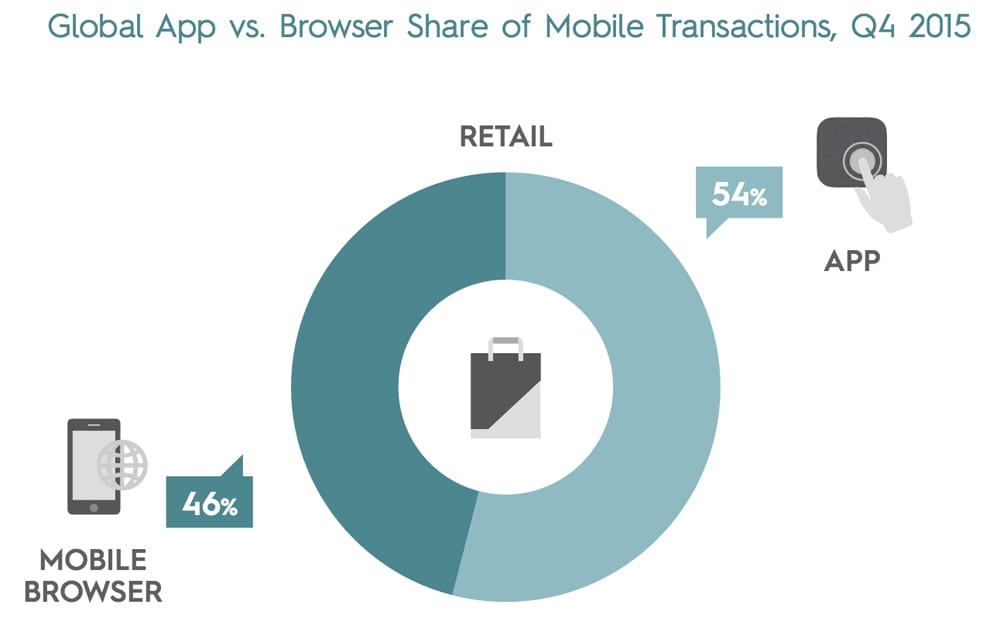
    Criteo’s analysis of shopping data from Q4 2015 demonstrates that mobile is an established channel for retail transactions and that apps have overtaken mobile browsers for the very first time as a vehicle for purchasing.

    Interestingly, the number of mobile transactions carried out on travel apps (58%) outstripped those made via travel mobile browsers in this period (42%). The figure rose from 42% in Q2, to 49% in Q3 and the balance finally tipped in Q4 to 58% of mobile transitions. This should be of interest to travel retailers as it is indicative of how travellers are purchasing.

    Having a fully functioning website may no longer be enough, as travellers increasingly prefer to make transactions via applications instead. Thankfully these are relatively easy to set up in tandem with an existing retail website.

    Criteo-q4-2015-report-1

    Continuing the trend from past quarters, the overall share of app transactions consists of half or more of all transactions.

    “Nearly four-in-ten transactions occurred on multiple devices and were completed on a mobile device almost a third of the time,” says Criteo. “Dedicated shopping apps dwarf the mobile web at all points on the path to purchase, from browsing products to the sale itself.

    “Retailers whose apps focus on providing shoppers relevant and useful products and remove barriers to purchase drive a higher share of transactions than mobile web.”

    Continuing the trend from past quarters, the overall share of app transactions consists of half or more of all transactions.

    Criteo-q4-2015-report-2

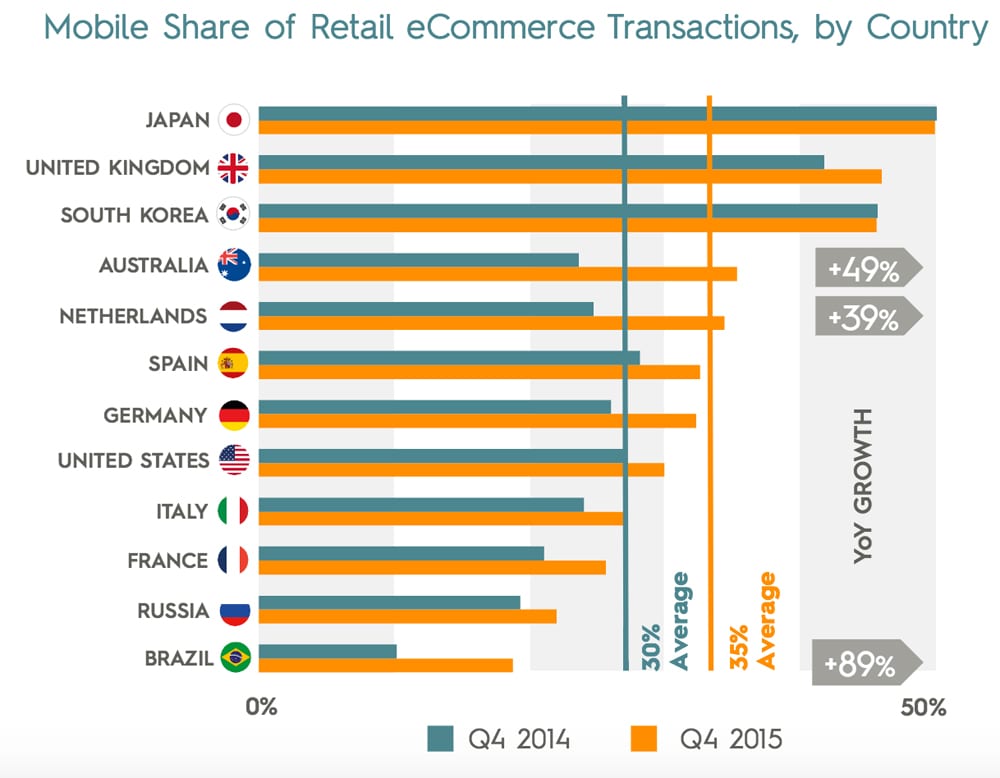
    Japan, UK and South Korea make up the top three countries ranked by mobile share of transactions, globally. Advanced mobile countries remained constant while others are catching up.

    Due to the native environment and additional control of the purchase path, retailers see a higher conversion rate on their apps than both mobile web and desktop.

    “Technologies like deep linking and mobile re-targeting can help retailers drive sustained engagement and transactions in their apps,” says Criteo.

    “Not only do apps convert a higher percentage of your customers, they also bring in more revenue per transaction. Controlling the environment allows retailers to give customers engaging product content (i.e. videos, images, reviews) targeted to things like buying history and browsing behavior. This is more effective than generic targeting signals found on mobile web and desktop sites.”

    In terms of overall transactions made on mobiles – whether through apps or browsers – Japan, UK and South Korea make up the top three countries ranked by mobile share of transactions, globally. Advanced mobile countries remained constant while others are catching up.

    The biggest gainers were UK, which passed South Korea for second, and Australia, which leapfrogged five countries to land in fourth.The US remains in the middle of the pack, but trails the global average along with Germany, France and Spain.

    Criteo-tablet-use-generic

    Tablet transactions were the most likely to have multiple devices in the path to purchase, indicating that tablet buyers are most likely browsing on devices like desktops and smartphones before purchasing.

    “For retailers with a strong mobile shopping experience, mobile transactions neared parity with desktop in 2015. They successfully met consumers on their devices and shifted browsers into buyers.”

    In Q4 2015, mobile hit 30% of transactions versus 27% in 2014. Top quartile retailers, as ranked by percentage of transactions occurring on a mobile device, increased mobile’s share of all transactions even faster – from 35% to 44%

    Criteo-q4-2015-report-4

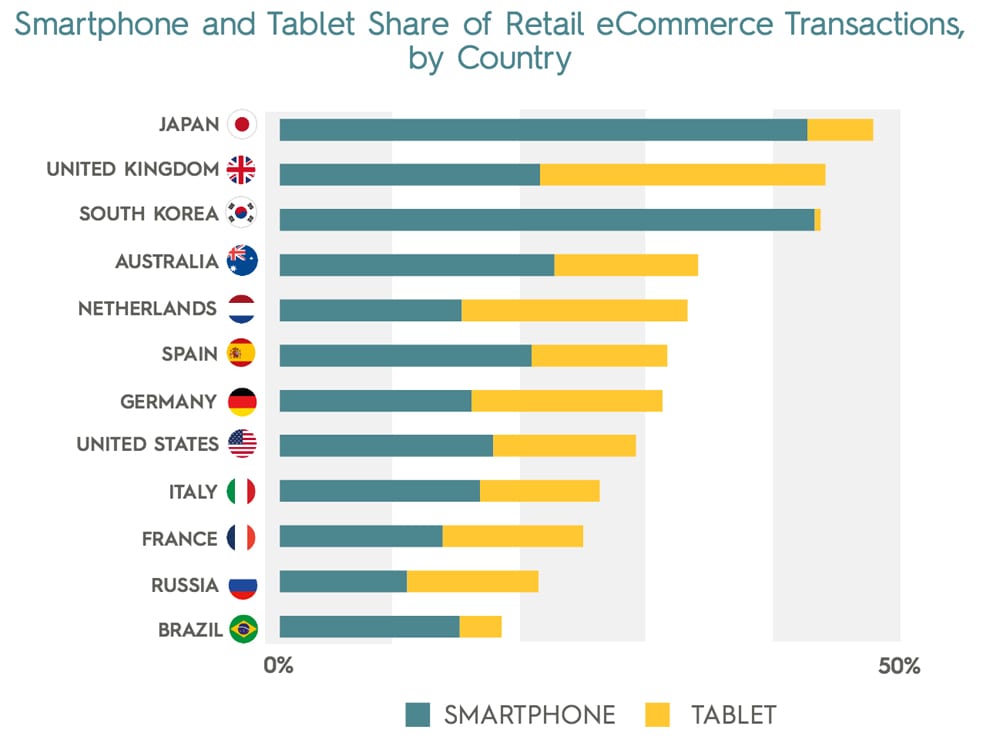
    Japan, UK and South Korea continue to lead the globe in mobile transactions, and smartphones lead tablets in most countries.

    “Mobile is becoming an integral part of the shopping experience, particularly for verticals such as fashion and mass merchants,” adds Criteo. “Health & beauty transactions saw the largest increase in mobile share at 38% year over year, followed by home and mass merchant categories.”

    Smartphone’s share of mobile transactions grew by more than 15% year over year, now accounting for 60% of all mobile transactions in the US. The combination of better transaction channels, ubiquity, more phone models with big bright screens and fast wireless broadband is giving retailers better options for displaying their goods on mobile devices – ultimately leading to more transactions.

  • E-commerce expansion primed for Indonesian market

    E-commerce expansion primed for Indonesian market

    As smartphones become more commonplace in Indonesia, apps are enjoying a surge in popularity, suggesting that e-commerce – for both goods and services – is filling market voids and strengthening its economic foothold.

    Online trading and transport apps in particular are generating interest, offering a solid foundation for other start-ups, and attracting international players and financiers to the country.

    However, technology companies will be looking to further improvements in related services, such as logistics, and changes to foreign investment regulations to support continued expansion.

    The era of the app

    Since launching its mobile app in early 2015, Go-Jek, the Indonesian two-wheeled motorbike taxi service, has seen its market value rise as high as $400m and the number of registered drivers jump from 500 to 200,000.

    Also seeing the opportunity in the market, in May Malaysia’s Grab expanded into Jakarta, launching its GrabBike service, before introducing a car-based service several months later. The company is now active in at least five cities around the country, with plans to expand further in the coming year.

    The scale of the popularity of e-services was evidenced by the major backlash that Ignasius Jonan, minister of transport, faced last December when he attempted to ban transport apps like Go-Jek. Amid a public outcry and #SaveGojek trending on Twitter, the government quickly reversed its decision.

    Voicing his support for ride-hailing apps, President Joko Widodo told local media, “Innovation among the younger generation should not be stifled. Applications such as Go-Jek exist because they are in demand.”

    The growing use of ride-hailing apps signals a wider expansion under way across the country in e-commerce and mobile transactions.

    According to the Indonesian eCommerce Association, the country’s online market is projected to triple between 2014 and 2016 to reach Rp283trn ($20.8bn).

    While online sales represented around 1% of all retail sales in Indonesia in 2015, research firm eMarketer expects this share to grow to 4.4% by 2019, with e-commerce spending forecast to rise from $3.2bn to $10.9bn over the period.

    Major players moving in

    With a population of around 250m, Indonesia’s e-commerce potential has captured the attention of global technology and investment giants.

    In late January US-based e-commerce platform eBay confirmed plans to open an office in Indonesia, following in the footsteps of Twitter, which has had a base in the country since March. The move will see eBay build on its local partnership with state-owned telco Telkom, through which it operates the online shopping portal Blanja.

    For its part, the Chinese internet search company Baidu announced plans to boost investment in Indonesia, where it operates the MoboMarket app store with more than 500,000 products available for download.

    Major new domestic players are also entering the e-commerce scene. MatahariMall.com launched its operations in early September with $500m in backing from Indonesian real estate developer Lippo Group. Describing itself as the Alibaba of Indonesia, the firm said it hopes to become a driving force for e-commerce in the country.

    Hadi Wenas, the company’s CEO, suggested the site was created to mimic a brick-and-mortar shopping experience.

    “Just like an offline supermall, you enter, walk around and shop by floor. Each floor focuses on different categories,” he told media at the launch.

    Leading start-ups in Indonesia are also benefitting from international venture capital interest. Go-Jek, for example, attracted $6m in seed funding in mid-2014, with another $15m raised from US-based Sequoia Capital in April of last year.

    Further investment in the industry is likely to be spurred by the easing of foreign ownership limits in the e-commerce segment. Previously included on the country’s negative investment list, the government recently ruled to allow up to 33% foreign ownership of e-commerce ventures.

    More to be done

    However, some obstacles to sector growth remain. While internet connectivity is rapidly growing, it is coming from a smaller base than other countries in the region.

    The number of internet users in Indonesia reached 73m in 2015, or approximately 29% of the population, according to the Ministry of Communications and IT, significantly less than Malaysia (67.5%), Thailand (55.9%) or the Philippines (43%).

    A fragmented logistics landscape and underdeveloped payment infrastructure also present hurdles to expansion, with just 6% of Indonesians holding credit cards, according to a 2014 report by UBS.

    App developers will need to keep the characteristics of the market in mind when planning expansion. For example, a targeted approach is likely needed to attract Indonesia’s traditionally risk-averse and brand-loyal shoppers. A survey by McKinsey last year found that 63% of Indonesian consumers only buy products from brands they already know, suggesting word of mouth may be an important tool for growing local market share.

    E-commerce solutions are increasingly being used to bridge gaps in Indonesia’s infrastructure, with some start-ups helping firms extend their reach to rural areas.

    Start-ups looking for innovative ways of reaching rural customers are also employing a tactic known as assisted e-commerce, which uses technology to connect local stores with product distributors, helping to minimise geographic challenges and overcome low penetration of credit cards.

    Kudo, for example, which was founded in early 2014, offers online shopping through physical point-of-sale kiosks in public places.

  • Asians to invest more in properties beyond the region

    Asians to invest more in properties beyond the region

    Real estate markets in Asia will likely remain less appealing than those in the US and Europe this year, with Asia plagued by anaemic economic growth and waning rents and capital values amid a supply deluge.

    In a recent interview with The Business Times, CBRE head of global research Nick Axford flagged that there will be greater outbound capital flow from the region this year by Asian real estate investors, who snapped up some US$39.7 billion (S$55.3 billion) of properties outside the region last year, a 26.8 per cent jump from 2014.

    He said: “If you look at parts of Europe and North America, there is strong economic growth, recovering demand, rising rents and not much developments. In many Asian markets like Singapore and Hong Kong, it is almost the opposite – strong pricing, but weakening economic growth and demand.

    “The balance of attractiveness has shifted towards Europe and North America.”

    Asian investors invested US$14.3 billion in real estate within the region last year, a 12.3 per cent rise from 2014, going by CBRE’s preliminary estimates covering office, retail, industrial, hotel and mixed-use projects; the figures exclude residential projects and development sites.

    Rising interest rates will generally fuel upward pressures on capitalisation rates – the ratio of a property’s net operating income to its market value. With the spread between interest rates and property yields near historical highs in many markets in Europe, Dr Axford noted that it is possible that rising interest rates will be “absorbed” in the normalisation of spreads.

    Sovereign wealth funds (SWFs) in the region such as Singapore’s GIC have trained their eyes on Europe and North America as they re-balance their portfolios. CBRE estimates that some US$8.1 billion was invested outside the region by Singapore-based investors, compared to the US$6.6 billion they ploughed into properties within the region.

    Based on preliminary data from real estate data and analytics firm Real Capital Analytics (RCA) as at Jan 12, Singapore-based investors purchased a record US$26.3 billion in overseas real estate in 2015, up 49 per cent from US$17.6 billion in 2014.

    These outbound Singaporean investments were driven by big-ticket purchases by heavyweights such as GIC and Global Logistic Properties (GLP), Temasek Holdings, Mapletree, ARA Asset Management Group and Ascendas Real Estate Investment Trust.

    RCA’s database covers transactions above US$10 million in asset classes such as development sites, office, industrial, retail, apartment, hotel and serviced apartments.

    Dr Axford said that while rental declines are seen across all property segments in Singapore, investors can make opportunistic buys with a time horizon of five to 10 years.

    In Hong Kong, the retail and logistics segments have softened; the office sector is holding up. Last year, Hong Kong Central Business District office rents rose 14 per cent, with prime office rents hovering at levels more than double those in Singapore.

    Dr Axford said: “There is still demand from the Chinese in good-quality office space in central Hong Kong. We are expecting rental growth of 5 to 10 per cent for Hong Kong office this year.”

    He views the recent volatility in the Chinese stock markets as an over-reaction to negative news from China – even though there has been no significant change to its economic outlook over the past six months.

    But with the probability of further weakening of the renminbi against the greenback, there will be sustained interest from Chinese investors wanting to put their capital to work outside China, in European and North American real estate, he added.

    Capital outflow from China was evident last year. CBRE’s estimates indicate that real-estate investments outside Asia by Chinese investors jumped 35.9 per cent to US$13.1 billion, against a 7.5 per cent drop to US$9 billion which they sank into domestic real estate.

  • The power of Western brands in China

    The power of Western brands in China

    Jimmy Choo increased their annual global revenue in 2015 by 7 per cent to £318m thanks in part to its eight new stores in China.  This demonstrates the continuing popularity with western brands in the country. Retail sales in China for December 2015 were up 10.1per cent year on year despite the worries about the overall economy as the nation continues to be a hotbed for retailers.

    To sell successfully online it is critical that retailers offer a localised online service for the country, as 32 per cent of Chinese consumers’ state they shop online to access a wider range of brands, highlighted particularly amongst those who live away from the major cities.  This is key given the vast size of China.

    And we know they love to buy from abroad. A recent payments report stated that thirty-five per cent of online shoppers in China are now buying cross-border.  This is driven by consumers wanting the guarantee of high quality goods that is ensured from buying direct from foreign brands. This quality assurance is the reason that 51 per cent of consumers in China use eCommerce. For businesses, developing a direct eCommerce strategy reinforces this brand integrity, while offering a localised  website for the Chinese economy allows for convenience, easy access and simple payment acceptance.

    Andy Muldoon CEO of PowaWeb, a leading eCommerce provider to global retailers’ comments: “It’s great to see how resilient the Jimmy Choo brand has been in the Chinese market, yet by adopting a direct online retail approach, they can also significantly increase their potential consumer-base. With the high-street store having a relatively limited reach due to the size of the country, retailers must take full advantage of the penetration rate of online shopping which stands at roughly 55.7 per cent.”

    Online purchasing in China is not limited to low-cost goods, on average 17 per cent of consumers spent RMB1515 on their most recent purchase, with another 17 per cent having spent at least RMB2000 on a single product. With total eCommerce sales about to reach $1 trillion in China by 2019, it is of vital importance that retailers establish their strategy and avoid falling behind competitors in this fast growing market.

    Andy Muldoon continues: “With such large amounts being spent online in China, retailers need to offer a direct to consumer eCommerce solution that compliments the brick-and-mortar stores to create a dedicated omni-channel environment for their consumers. To not offer this is damaging to retailers  particular as the rising middle-class are often the biggest spenders on high-quality products, are located away from the major cities.”

  • Multi-channel shopping gives malls a shake-up

    Multi-channel shopping gives malls a shake-up

    With the rising trend of consumers buying lower-value goods online, shopping malls are likely to attract higher-priced fashion and beauty brands, while malls that integrate digital-savvy retailers are likely to gain market share, research from property consultancy JLL has shown.

    Ms Regina Lim, national director, Advisory & Research, Capital Markets at JLL, said: “We expect to see more Singapore residents using multiple channels to shop over the next three years. Online purchases of non-experiential goods such as groceries, household and electronic goods are likely to grow exponentially.

    “Suburban malls may cut back on space for these trades while increasing the allocation to clothing/footwear, health/beauty, F&B, and gifts and toys. Well-managed suburban malls could do well in 2016, gaining market share in a challenging market. By pro-actively managing the tenant mix and attracting more higher-priced brands, suburban retail mall rents could remain healthy and grow,” she added.

    As more consumers shopped online, and with more Singaporeans shopping overseas while tourist retail spending dropped, retail sales growth in Singapore has slowed over the last three years, leading to islandwide retail rents falling by 4 per cent in 2015, said JLL.

    About 1.44 million Singapore residents shopped online in 2014, 30 per cent higher than in 2012, the property consultancy cited Infocomm Development Authority data as showing. The sharp increase came from shoppers over 35, as those in this group who used portable devices to access the Internet rose 50 per cent over two years. Over 70 per cent of those under 35 had already shopped online in 2012, showed the data.

    More shoppers buying groceries, computer equipment online

    Other than airline and movie tickets, Singapore residents are increasingly buying clothing, footwear and groceries, as well as household and electronic goods, online, according to the study by JLL. The number of shoppers buying groceries and computer equipment rose about 70 per cent in the last two years, it said.

    Online sales of groceries and electronic goods are expected to grow exponentially in the next three years, said JLL. Over 60 per cent of shoppers already buy some clothing/footwear online, and this seems to have stagnated. Increasingly, shoppers buy lower-value goods online and higher-value goods priced above S$500 in a physical store, it added.