Category: Research

Retail News Asia is committed to providing both local and global retailers with the latest Research throughout the Asian market. This on a daily base.

  • Technology bringing more personalised experience to shopping

    Technology bringing more personalised experience to shopping

    The launch of the second plan aims to build on the same momentum – helping retailers with manpower-saving technologies. But beyond resolving the industry’s manpower crunch, technology is also changing the way retailers sell.

    Stock-taking is the bane of retailers, as it is typically an arduous task that takes hours. But with radio frequency identification (RFID), the same job can now be done in under an hour.

    Home-grown retailer Decks has managed to save more than 2,300 man-hours a month, since it started using the technology for inventory management.

    “In the future we know that the manpower issue will become more serious than it is now. In order to be more attractive to employ better workers, I think we should engage all this technology to help to lighten the workload of every employee,” said Mr Kelvyn Chee, managing director of Decks.

    RFID is just one of the many technologies available to the retail sector, even though they may not be widely adopted.

    PLAYING CATCH-UP

    Industry players and market researchers have said that retailers in Singapore are behind their international peers in technology adoption. Besides cost, another reason is that they have not seen the need to innovate until now, with the e-commerce sector nipping at their heels.

    “The development of e-commerce in Singapore has been at the lower level than many other parts of the world. But that’s changing very dramatically. I think that’s what’s sort of giving rise to some of this tension where the retailers have not needed to change quite as quickly, when e-commerce was falling behind, but it is really taking up,” said PwC Singapore’s digital business leader Greg Unsworth.

    The innovation arm of the Singapore Institute of Retail Studies is helping retailers to play catch-up. It showcases and advises retailers on the various technologies available.

    “Companies want to embark on data analytics because these are things that will help the business going forward,” said Mr James Fong, deputy manager of programme development at Singapore Institute of Retail Studies. “With knowledge, it does help the business to be more agile, it helps the business to be more able to predict the trend and so forth. So data analytics, having said that, is one of the new areas will take some time for this to evolve.”

    Pushing the frontier of data mining is the use of video analytics, a move that Decks has embarked on. The technology solutions company behind the in-store CCTV camera is able to interpret the images and provide critical business intelligence.

    “Examples of what we can provide them in terms of data and insights would be how many people come to the store, when they come to the store what do they do, how they spend their time going through the store,” explained Mr Tan Liong Hai, sales director of Kai Square.

    With this information, Decks has been able to come up with more targeted marketing campaigns, which it says have helped to boost sales by 10 per cent.

    The retailer continues to look at new innovations, for example, having a smart dressing room to enhance in-store experience, or incorporating the Automated Retrieval and Storage System to streamline backend operations.

    Said Mr Chee: “Everybody thinks that all these technology implemented is to replace the human beings but I think otherwise. We just want the staff or the sales assistant to focus more on customer rather than spend time on unnecessary tasks. So we want to make the shopping experience more personalised, more service-oriented.”

    Mr Unsworth added that technology could result in a convergence of physical and online retailers.

    He explained: “I think retail at the moment – you sort of have the established large retailers, who tend to have a mainly physical presence, you have e-commerce companies who tend to have an online presence. I think everything is going to merge in the middle. So you have this sort of convergence of the two coming together where increasingly, it will be a multi-platform approach that consumers are looking for and that retailers will have to provide.”

    While some retailers in Singapore on both sides of the spectrum have started moving in that direction, experts have said they are still in the early stages.


  • Countries must improve ICT sectors

    Countries must improve ICT sectors

    Countries must continue to invest and pursue reforms in information and communication technology (ICT) to serve the nearly 60 percent of the world’s population who remain excluded from the digital economy, a new World Bank report said.

    In its “World Development Report 2016: Digital Dividends” report, the Washington-based lender noted that the internet, mobile phones and other digital technologies were spreading rapidly.

    “Digital technologies are transforming the worlds of business, work, and government,” said Jim Yong Kim, president of the World Bank Group.

    The anticipated digital dividends of higher growth, more jobs, and better public services, however, have fallen short of expectations, the World Bank said.

    To deliver fully on the development promise, it said countries must pursue “analog complements” to digital investments.

    This means regulations must be strengthened to ensure competition among business, adapting workers’ skills to the demands of the new economy, and fostering accountable institutions.

    Digital development strategies need to be much broader than ICT strategies, it added.
    To reap the greatest benefits, countries must create the right environment for technology, with regulations that facilitate competition and market entry, skills that enable workers to leverage the digital economy and institutions that are accountable to people.

    It noted that in the Philippines, business process outsourcing has few entry barriers and that firms use digital technology intensively, which is not the case for the retail sector.

    “The Philippine retail sector has substantial restrictions to domestic and foreign entry and is dominated by a few incumbent firms, while few firms use ICTs,” the World Bank said.

    Foreign retailers that aim to establish a commercial presence need to pass prequalification procedures, meet minimum capital requirements, deal with limitations to foreign equity participation, and have the majority of their boards comprised by Filipinos, it stressed.
    “Only about 20 percent of retail firms (with at least five employees) sell online in the Philippines,” it added.

    In contrast, the Philippine outsourcing sector is characterized by high entry rates and few regulatory barriers to competition.

    “It is intensive in ICT-related services such as software development, animation, contact centers and transcription. These ICT-specific services experienced high productivity growth in recent years and provided about 1.2 million jobs in 2015,” it said.

    Investing in basic infrastructure, reducing the cost of doing business, lower trade barriers, facilitating the entry of start-ups, strengthening competition authorities and facilitating competition across digital platforms were some of the measures suggested in the World Development Report.

    Digital technologies can transform economies, societies and public institutions, but changes are neither assured nor automatic, the report stressed.

    “Countries that are investing in both digital technology and its analog complements will reap significant dividends, while others are likely to fall behind. Technology without a strong foundation risks creating divergent economic fortunes, higher inequality and an intrusive state,” the World Bank said.

  • Singapore male youth burn more money shopping online than women

    Singapore male youth burn more money shopping online than women

    About 5 in 10 say they spend more than $100/month. Singapore male youth spend more than women on online purchases, according to Singapore Polytechnic’s survey of 816 youth aged 15 to 35. About 5 in 10 (50.6%) males say they spend more than $100 per month on online purchases, compared to about 4 in 10 (41.3%) women.

    On the other hand, the survey revealed that women shop online more often. About 2 in 10 (20.4%) female respondents browsed for products and services online daily, compared to 14.5% of male respondents.

    More males (29%) also purchase from stores that stock limited edition items, compared to 32.5% of women. Meanwhile, female respondents (47.6%) purchase from online stores they liked or are subscribed to on social media, compared to 32.5% of male respondents.

    For male youth, the most popular purchase categories include apparel, technology, and movies. Meanwhile, young women’s top purchase categories include apparel, beauty, and travel.

    The survey also showed that Singapore youth prefer to keep their online shopping habits private. Almost 6 in 10 (59.5%) indicated that they shop online to purchase items without their friends or family knowing, while 57.9% do so to keep their identity private. Also, more male respondents (61.8%) agreed that they shop online as it gives them privacy, compared to women (54.1%).

    It was also revealed that young shoppers were more receptive to special online deals, peer influence and social media. Celebrity endorsements appeared to be the least effective sales strategy, as only 11.4% of respondents purchased from stores endorsed by their favorite celebrity.

  • What to expect in 2016 as Singapore economy hits slowest growth since 2009

    What to expect in 2016 as Singapore economy hits slowest growth since 2009

    GDP is seen to likely remain stuck in the 2-3% yoy range. The 4Q15 GDP growth flash estimate was a breathtaking +2.0% yoy (+5.7% qoq saar), which beat market consensus forecast marked a sweet end to 2015. OCBC Bank notes that the surprise factor came from construction which doubled to 2.2% yoy (+7.0% qoq saar) in its strongest showing since 2Q15 due to public sector construction activities, and supported by the still resilient services sector which expanded 3.2% yoy (+6.5% qoq saar) in 4Q15 on the back of wholesale & retail trade and finance & insurance sectors. Manufacturing remained the main drag, contracting for the 5th straight quarter and actually deteriorating further from the 5.9% decline in 3Q15 to -6.0% in 4Q15.

    But 2015 GDP growth is still the lowest since 2009’s -0.6% performance.

    The 4Q2015 GDP figure brought the full year growth to 2.1% which is close to the official growth forecast of “close to 2 percent” but is nevertheless a moderation from the 2.9% growth registered in 2014.

    Here’s what analysts had to say:

    Selina Ling, analyst, OCBC Treasury Research

    Notably, this data set reinforced that growth has likely stabilized since 3Q15 after avoiding a technical recession earlier in the year. The 2015 outperformer remained services which accelerated from 3.2% growth in 2014 to 3.6% last year, followed by construction at 1.1% (2014: 3.0%), whereas the 4.8% drop in manufacturing was the worst since 2001 (-11.6%).

    Looking ahead, 2016 growth will likely remain stuck in the 2-3% yoy range.

    Headline GDP growth may not deviate from the 2+% yoy range in the near-term. We expect that manufacturing may continue to be in the doldrums and shrink 0.2% yoy in 1Q16 and constrain overall GDP growth to 2.4% yoy. Note the latest SME business surveys suggest greater caution for the first half of this year. Our full-year 2016 GDP growth forecast remains at 2-3%, which is at the upper end of the official 1-3% forecast. The downside risks remain the ongoing deceleration and policy risks in China, as well as the sustained US monetary policy normalization (given market perception continues to differ significantly from the median dots graph). It is interesting that the two-track growth trajectory in China, with the service PMI outperforming the manufacturing PMI, heralds a trend towards servitization that could be also apparent for the rest of the region.

    Inflation could remain subdued in 2016, with core inflation picking up slightly. Headline CPI prints may stay deflationary in 1H16 but edge back to positive territory before the year is out. That said, headline CPI inflation may remain flat in 2016 as asset price deflation in housing (especially with private residential prices having fallen for nine straight quarters and official rhetoric hinting at no lifting of cooling measures in the near-term) and private road transport sustains, and the pass-through from the tight labour market into the broader cost environment has been fairly limited. Given the benign crude oil price environment, the CPI basket components that would contribute positively to inflation are likely to be food (due to La Nina), healthcare and education costs. At this juncture, we do not see any game-changers that warrant a third monetary policy easing this year as the 4Q15 flash GDP growth estimate is “water under the bridge” so to speak.

    Policy settings will remain within comfort zones for now. The 3-month SIBOR has been relatively stable post-Oct15 MPS, but the SOR have tracked higher as the US FOMC initiated lift-off with a 25bp rate hike to 0.5% in mid-Dec15. The spread between the 3-month SOR-SIBOR has widened to more than 50bps, which is the largest since March 2009, but we anticipate that the gap will narrow to around 30bps as the SIBOR plays catch-up to SOR. Our end-2016 forecasts for 3-month SIBOR and SOR are 2.03% and 2.05% respectively, assuming that the FOMC continues to hike at a benign pace of 100bps next year.

    Francis Tan, analyst, UOB

    The main support in 4Q came from the robust services sector which grew 3.2% y/y, as the wholesale & retail trade and finance & insurance sectors maintained healthy growth paths. The construction sector also expanded 2.2% y/y, compared to the 1.1% y/y growth in 3Q.

    Singapore’s manufacturing engine remained weak as the sector contracted for the fifth consecutive quarter to register a decline of 6.0% y/y due to the decline in output from the electronics, transport engineering and precision engineering clusters.

    Although Singapore’s manufacturing sector is not out of the doldrums yet, we remain optimistic that there could be some pickup in manufacturing growth in2016 and we are projecting the manufacturing sector to grow by a modest 2.5%, compared to the 4.8% decline in 2015.

    The services sector will continue to be a bright spot, although growth for 2016 may slow to 2.7%, from 3.6% in 2015. This is due to the higher base effects for the wholesale & retail trade to hurdle past; While the finance & insurance sector may grow at a slower pace, resulting from the US interest rate normalization that could impact on the overall loans demand in 2016.

    With this, we maintain our forecast for Singapore’s 2016 GDP to grow 2.7%.

    Regarding monetary policy, we hold to our view that the Monetary Authority of Singapore (MAS) will likely leave the current policy of the “modest and gradual appreciation” of the SGD NEER unchanged at our estimated 0.5% pa rate.

    The monetary policy divergence between the US and Singapore will likely see the USD/SGD continue on a weaker path to reach 1.46/USD by the middle of this year. However, the increased trade and investment flows from a stronger US economy will probably see a direction reversal by 2H 2016, where we forecast the USD/SGD to end 2016 at 1.42/USD.

  • How online and offline will dominate retail in Asia in 2016

    How online and offline will dominate retail in Asia in 2016

    Innovations in technology are predicted to make progressive strides related to online and offline commerce, thus improving the retail experience significantly in 2016.

    With new developments like Google’s Physical Web and Eddystone, we’ve started to get a glimpse of what the future might look like in a perfect online to offline marketing world. But is this futuristic new line of digital marketing really so far away, or are we on the cusp of a new reality?

    Here are major trends that I anticipate will lead to progressive shifts in how online retail addressed this year in the Asia Pacific region:

    1. Full integration of online and offline

    In my last column, I talked about Google’s Physical Web and Eddystone. Technologies like these will enable users and shoppers to communicate via their mobile devices with physical objects, sending their real-time location and behavior to marketers who can now identify them, in exchange receiving more personalized and customized experiences when visiting offline shops.

    With these new innovations, the traditional challenges of user anonymity are being resolved. Therefore, we can expect to start seeing user retail experiences that truly bridge the gap between offline and online (O2O) by the mid-2016.

    2. Deep customer insights meet highly targeted displays

    How to drive traffic the most effective and efficient traffic to your website is an ongoing challenge for marketers. By “most effective traffic,” I mean traffic that comes from the cheapest source, and “efficient traffic” refers to the frequency at which your traffic will eventually convert (ideally instantaneously).

    In the past, one solution was to use a large proportion of marketing budgets to acquire new customers using Google SEM. However, this has proven to be very expensive and less efficient in driving qualitative traffic to a website over time. It is also only focused on capturing demand.

    This has driven marketers and budgets to Facebook, where interest-based targeting could be used to find new users. And what happens when everyone does the same thing? Eventually the channel becomes more expensive and less efficient.

    Publishers can now address this challenge via the use of an Audiences feature. Both Google and Facebook now have Audiences as a core function in their display offerings, allowing advertisers to target more accurately when uploading emails or finding specific audience demographics. Such technology enables advertisers to deliver the right ads, to the right people, across devices.

    Many platforms also use sophisticated look-alike modeling, which lets advertisers target similar profiles of those already targeted, specifically by email. There are also retargeting technologies that can find people that have browsed a particular website, and present them with ads or even specific products from that site.

    To complete the value proposition, marketers are provided with reporting that highlights conversions and contributions to online sales. But here’s a little secret: revenue from abandoned carts contribute significantly to these sales numbers.

    How many times have you been presented with display ads for products that you’ve already purchased? Well, here is how this happens; let’s say someone has a basket full of goodies, but bounces over to a different site momentarily, before coming back to their basket and completing their purchase. This will cause a view-through conversion, which means that revenue will be attributed to the retargeting campaign, even if the purchase occurs without clicking on the display ad. Retargeting companies focused on pricing for cost per click (CPC) or cost per action (CPA) models make a lot of money this way.

    counting money youtube screenshot

    Going back to Google and Facebook, the ability to target someone specifically is great, however it is important to know the context in which a user/shopper is being targeted. How do we link both audiences and standard retargeting to the purchase cycle as well as to the interaction a user has with your brand?

    In 2016, we will start to see the emergence of more quality identification technology that is able to work across mobile devices and computers. Marketers will be able to find users and send contextual display ads that feature the right product or coupon, on the right device, with incentives based upon insight regarding what really makes the user tick. This delivery will also be matched with the right objective based on where the customer is in the lifecycle.

    In the beginning, identification will probably range between 30 and 50 percent of the users, but I predict we’ll see these numbers increase as the technology evolves. Though these advancements are on the horizon, this level of sophistication will only occur once matching email addresses to third-party cookies becomes feasible. More importantly, this cannot happen unless multifaceted user insights are aligned with intelligent advertising platforms.

    3. AI driven marketing

    Artificial intelligence will be one of the hottest topics in the tech industry in 2016. Just recently, Google launched TensorFlow, a very powerful artificial intelligence and machine-learning open source software.

    Added to this is a recent announcement to commit $1 billion to researching artificial intelligence from a group of Silicon Valley entrepreneurs, which includes Elon Musk, chief executive officer (CEO) of Tesla.

    How does all this come into play for the marketing landscape?

    Marketers today are very operative. First, they think about an idea or a campaign, then they automate it with either display ads, email campaigns, push messaging, social releases, and so on. After that, they test against it and continue to optimize. They go through this process again and again and again, and do so because of the vast amount of variables and data sets that need to be taken into account to get the best results. With this process, solutions rooted in artificial intelligence will change the lives of the marketers and their audiences, helping each make more informed decisions.

    Think about the type of software needed to create the customer journey and then execute after uploading all the necessary data and required content; this year, marketers can expect some of the functionality affiliated with this process to be automated. Expect this progress to in ways that will cover most of the operational decisions marketers make today, and for this evolution to continue over the next three to four years.

    4. Messaging dominates media activity

    Over the past five years, messaging has become one of the fastest growing online channels, according to Activate’s Tech and Media Outlook 2016. Messaging has developed more quickly than social media, coming only in second to the time spent online by users globally. By 2018, messaging is expected to grow by an additional 1.1 billion users.

    The global messaging space continues to be dominated by Facebook Messenger and WhatsApp. In the Asia Pacific region, local players include China’s WeChat, Japan’s Line, and Korea’s KakaoTalk.

    Messaging services are now accessible by third-parties, thus resulting in an explosion in of real-time offerings for services, including booking taxis, making payments for practical necessities like utilities bills, music and television entertainment, games, stickers, e-commerce capabilities, video, and live voice calls. The messaging app has transformed into a hub of communication and consumption of services for users, creating monetization possibilities for both for media owners and third-party developers.

    So, what can digital marketers ultimately expect for 2016?

    In conclusion, the integration of online and offline real-time marketing opportunities isn’t something we can hope to see somewhere in the future, as what was once a fantasy is finally materializing into reality. Now that these technological innovations have made linking these contrasting realms much easier, wise marketers and retailers will take advantage of this progress immediately….will you?

  • Why More Retailers Could Default in 2016

    Why More Retailers Could Default in 2016

    Last year was grim for retailers. This year could be even worse. Despite a late surge in holiday sales, companies like J. Crew Group Inc. and 99 Cents Only Stores are struggling under debt they took on in leveraged buyouts years ago. Their bond prices have plummeted — in some cases to as little as 25 cents on the dollar — as investors brace for possible defaults.

    The industry has been limping along for a while now due to a variety of forces. Spending has migrated to the Internet, lenders have turned wary and the debt burdens of pre-crisis buyouts will make it tough to revive struggling merchants. Eleven retailers defaulted last year through Dec. 14, the highest annual tally since 2009, according to Standard & Poor’s data. And the near future doesn’t look much brighter.

    “We expect more retail defaults in 2016 than 2015 and 2014,” said Robert Schulz, an S&P credit analyst.

    The credit market is echoing that sentiment. Bonds of indebted retailers dropped further last year in anticipation that some will need to restructure.

    This wave of distress is different from the tough times of the Great Recession, said Patrick Dalton, chief executive officer of Gordon Brothers Finance Co., an asset-based lender that works with retailers. Now, “it’s an industry issue, not an economy issue,” he said. Shoppers are seeking value and turning away from pricey logos, which is hurting the teen-clothing category in particular. “What looks the same but costs three times less is where everyone’s going,” Dalton said.

    In general, shoppers are spending less on stuff and more on experiences such as going out to eat. They’re also saving more. And retailers that once reigned in America’s shopping malls are losing customers to online rivals like Amazon.com Inc.

    “Amazon is crushing everybody,” Dalton said.

    Buyout Burden

    Bond prices of the most distressed companies reflect those problems. J. Crew’s bonds lost 7.4 percent in December, dropping to a record low of 25 cents on the dollar on Dec. 22, reflecting creditors’ lack of confidence that the retailer will be able to shoulder $2.1 billion of debt from a 2011 leveraged buyout by TPG Capital Management and Leonard Green & Partners.

    Bon-Ton Stores Inc.’s 8 percent notes last traded at 33.4 cents on the dollar on Dec. 23, according to Trace, the bond-price reporting system of the Financial Industry Regulatory Authority.

    Margot Fooshee, a J. Crew spokeswoman, declined to comment. Angela Thurstan at 99 Cents Only and Christine Hojnacki at Bon-Ton didn’t respond to requests for comment.

    Restructuring advisers have already started circulating names of retailers proposing various debt-renegotiation plans as bond prices continue to drop.

    “It’s going to be a busy year of restructuring for retailers,” said Steven Ruggiero, a credit analyst focusing on retail at RW Pressprich & Co. in New York. “Hedge funds and private-equity investors that were taking a pause at the end of the year waiting to see how December sales would pan out and how redemption was for their funds are now ready to pounce.”

    Things could have been a lot worse. Sales during November and December rose 3.4 percent, according to research and consulting firm Customer Growth Partners. An uptick in shopping during the week between Christmas and New Year’s helped mitigate what Craig Johnson, the research firm’s president, called a terrible year for margins, as retailers jockeyed to win over lukewarm shoppers.

    The days when retailers could load up on debt and hope to sell their way out of it appear to be over. In the meantime, obligations heaped on during pre-2008 leveraged buyouts are coming due.

    Refinancing Debt

    Sports Authority Inc., for example, has a $300 million term loan due in May 2017, but its private-equity owner Leonard Green & Partners is already under pressure to refinance it while there’s still more than a year to maturity. Once an obligation passes that threshold, it becomes current, which is considered more difficult to deal with in a restructuring.

    Although the sportswear retailer received a $95 million infusion in late 2015 to shore up vendor confidence, addressing that debt appears to be a challenge. Kellie Kerwin, a spokeswoman for Sports Authority at ICR, didn’t comment.

    Even healthy retailers are posting disappointing results. Bed Bath & Beyond Inc. said third-quarter profit and comparable-store sales will be less than forecast. Department stores including Macy’s Inc. and Nordstrom Inc. have cut their annual forecasts. Some of that is due to record-high temperatures, which have produced a glut of coats, sweaters and other seasonal goods.

    “The merchants that have been lagging don’t have the luxury to lag anymore,” said Jonathan Eyl, a consumer analyst at Nasdaq Advisory Services in New York.

  • Study reveals Asian dining spending trends

    Study reveals Asian dining spending trends

    One in three millennials in Asia are eating at fine dining restaurants at least once a month – more often than those aged over 30.

    The surprise finding is one of a list of revelations uncovered by a MasterCard survey of Asian dining trends away from home. It featured consumers in 17 Asia Pacific markets: Australia, Bangladesh, China, Hong Kong, India, Indonesia, Japan, Malaysia, Myanmar, New Zealand, Philippines, Singapore, South Korea, Sri Lanka, Taiwan, Thailand and Vietnam.

    The most frequent fine-diners in Asia Pacific are millennials (18-29 year olds) from China – on average they visit more expensive establishments two or three times a month. This is higher than the average for millennials across the region and higher than any other age group.

    When choosing where to eat, consumers in Asia Pacific still prefer to rely on word of mouth and recommendations from friends and family (50 per cent). This was applicable for all consumers, regardless of age group, with even millennials trusting word of mouth recommendations (52 per cent) more than online reviews (38 per cent).

    This is despite the fact that more than a third of millennials (36 per cent) post comments and reviews of their dining experiences online. This is especially true of Chinese (61 per cent) and Thai (52 per cent) millennials, where more than half of the young people polled regularly post reviews after a meal.

    Beyond millennials, people in Thailand (39 per cent) and China (30 per cent) are also the most likely to spend more on dining over the next six months with around one in three indicating they plan to eat at more expensive establishments.

    But while consumers may be enjoying fine dining, they are still cost conscious. Sixty-four per cent of consumers in Asia Pacific regularly check for discounts or dining deals from coupon websites, mobile applications or credit card promotions. Sixty-eight per cent of millennials regularly look out for deals before choosing a place to eat.

    Eric Schneider, regional head, Asia Pacific, with MasterCard Advisors, said Asia has always had a strong dining out culture and so it is not surprising that affluent millennials in the region are ‘foodies,’ with many sharing their dining experiences on social media and posting reviews online.

    “While the survey has shown that people are increasingly moving from the hawker centres and into restaurants, young people are still cost conscious, taking a practical and savvy approach by looking for discounts and deals. Young people also still rely on word of mouth recommendations, despite many posting online reviews of dining spots. As Asia’s economies continue to grow, and with technology and social media revolutionizing the dining experience, people will increasingly demand top quality experiences when dining out,” he said.

    Other findings from the survey included:

    • Overall, consumers in Asia Pacific are not looking to make any significant changes to their dining out plans with 61 per cent of all consumers indicating they will look to eat out at the same frequency in the next six months. Twenty per cent plan to eat out more and 19 per cent plan to eat out less in the next six months.
    • The most popular dining option for consumers in Asia Pacific are mid-range restaurants and cafes, followed by fast food outlets and then hawker centres and food courts.
    • Consumers in the Philippines (44 per cent) are looking to tighten their belts with close to one in two planning to eat at less expensive venues in the next six months. Forty-nine per cent also plan to eat out less regularly.
    • A significant proportion of older consumers are going online to check for dining discounts whether on coupon websites/applications or credit card promotions. More than one-third of consumers aged 55 years old and above (36 per cent) indicated they regularly do so before deciding on a dining option.
    • Consumers in China (58 per cent), Taiwan (44 per cent) and Thailand (44 per cent) are the most likely to book dining deals on coupon sites or coupon applications; while consumers in Bangladesh (1 per cent) and Indonesia (11 per cent) were least likely to do so.
    • Diners in Thailand (60 per cent) and China (57 per cent) are most likely to post comments or reviews on social networking sites like Facebook and Twitter with about one in two respondents in these markets reporting that they regularly post comments online following their dining experience.

    The results are based on interviews with 8698 individuals aged 18 to 64 years-old.

  • Digital Push In China: Can This Impact Starbucks’ Revenues In The Region?

    Digital Push In China: Can This Impact Starbucks’ Revenues In The Region?

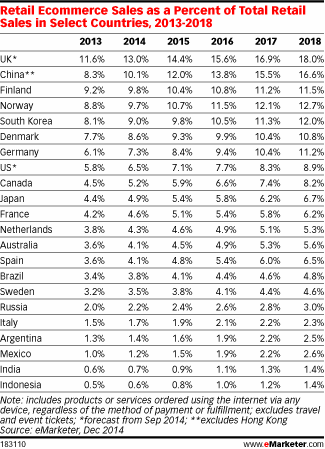
    Recently, Starbucks Corporation China announced the opening of its first online store in China’s popular ecommerce site, Tmall, which will feature unique and specially designed e-cards, Starbucks cards and coffee vouchers providing an easy gifting option. [].While this initiative is part of the company’s increased focus on digital presence, it could tap into the significant growth of retail ecommerce in China. According to eMarketer, retail ecommerce sales in China are projected to grow at more than 30% each year, over the next three years and reach more than $1500 billion by 2018. []. While mobile is expected to account for nearly half of the total ecommerce sales in China in 2015, this figure is expected to increase to 70% by 2019. []. We believe Starbucks’ ecommerce initiative in China should benefit from the growing internet users in the region and the online shopping habits of Chinese consumers.

    More Than 16% Of Total Retail Sales In China Through Ecommerce By 2018

    It is estimated that in 2015, ecommerce sales will account for nearly 7% of the total retail sales in the U.S., while this number is much higher at 12% for China. By 2018, it is estimated that these figures will increase to nearly 9% for the U.S. and more than 16% for China.

    183110

    Given the preference of Chinese consumers towards online shopping, we believe Starbucks’ initiative to expand its digital presence in the region is the right strategy.  China is a growth market for Starbucks. For the fiscal year 2015, comparable store sales in the China Asia Pacific region grew by 9% compared to a 7% number for the Americas. This growth was driven by a 8% increase in traffic while the corresponding number for Americas was 3%. []. The company plans to double its store count in the China Asia Pacific region to 10,000 stores in the next five years, with the store account in China projected to be 3,400 by the end of 2019. As the Chinese economy shifts from an export focussed industrial region to one relying on services and domestic demand, we believe Starbucks will benefit from this trend with the urban middle class increasing and becoming well off. With aggressive expansion plans in China, which the company expects will be its biggest international market; we believe the ecommerce entry could drive growth in the region and also provide a boost to the Starbucks loyalty program.


  • How native apps complement China’s retail experience

    How native apps complement China’s retail experience

    When planning a retail mobile app strategy for China, there are many options available, including developing a mobile-friendly website, setting up a store on any one of the thousands of Chinese e-commerce platforms and developing a native app. So how do you choose which one is best for your brand?

    The big players

    There are a number of key platforms that retail brands in China can consider. The mighty WeChat, for example, has both reach and resonance with a vast audience (more than 600 million monthly users, to be more precise), as well as built-in, trusted payment facilities. Tmall and JD.com are just two examples of the thousands of e-commerce platforms in China. (Even Amazon has a store on Tmall). They offer easy-to-use, well-established e-commerce functionality that can include logistics, warehousing and payment facilities.

    For retailers wanting to take the quickest route to market, establishing a shop on one of these existing services is an easy solution. And of course, investing in a mobile website is also a good alternative.

    Both of these options have a place in the overall marketing mix and should be part of any robust business strategy. But retailers looking to compete in a complex and ever-changing marketplace like China need to consider the advantages of developing a native app and ‘owning’ a space on consumers’ devices.

    What’s so good about native apps?

    While it’s clear that people love to use the major consumer platforms, it’s important not to underestimate the power of an app specifically developed for a brand’s fans and followers.

    According to a report from The Internet Retailer, 42 percent of all mobile sales generated by the world’s leading 500 merchants in m-commerce last year came from mobile apps. Caixin, one of China’s leading business media groups, backs this up, saying that shopping via app in China grew by 168 percent in 2014, with shopping app users making up 39 percent of all mobile users.

    The numbers stack up, but what about the practicalities?

    Native app versus existing e-commerce platforms

    When working with an e-commerce platform, the brand doesn’t have full control over the user experience. Tencent and Alibaba set the rules for look, feel and layout, as well as e-commerce capabilities and payments. Overall functionality is limited to each platform’s abilities. It might not be possible to implement brand-specific features, innovative activities or marketing campaigns that lie outside of its framework.

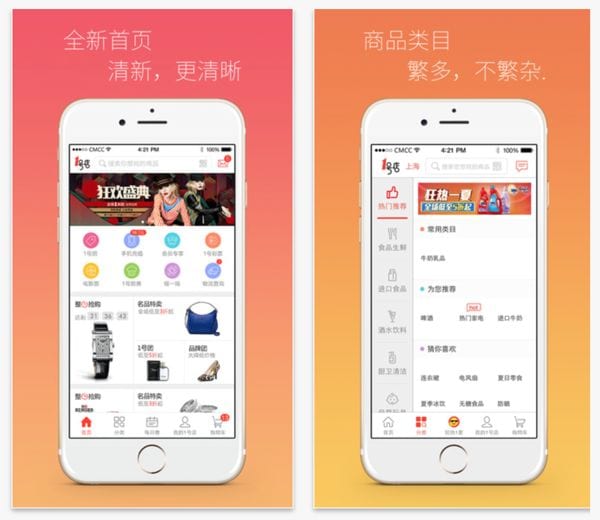
    This app from online supermarket retailer Yihaodian is a great example of how to fully exploit smartphone functionality for an engaging customer experience.

    China_Apps_Yihaodian_600

    While there’s usually a way to open basic storefronts for free, other marketing activities, such as advertising and special promotions, tend to come at a cost.

    China’s existing e-commerce platforms are an excellent way to begin market entry, as they offer an instant, fully functional digital storefront within trusted, well-established parameters. However, a native app which gives retailers the freedom to develop unique features and marketing opportunities will complement these advantages, leveraging multiple platforms for a true omnichannel experience.

    Native app versus mobile web app

    A web app has technical limitations based on the browser it was set up for. The app will not be able to fully access smartphone capabilities.

    For example, the phone’s built-in features cannot access the user’s address book, offer an unrestricted integrated camera experience, use location services and the accelerometer, or access in-store beacons.

    Web apps cannot offer a personalized experience. Whereas native apps can store and apply a wealth of user data to deliver targeted alerts, discounts, promotions and loyalty schemes based on store proximity and previous activity.

    Another issue with web apps is that if the Internet connection is lost, the user can no longer access it. Native apps on the other hand, allow for offline browsing.

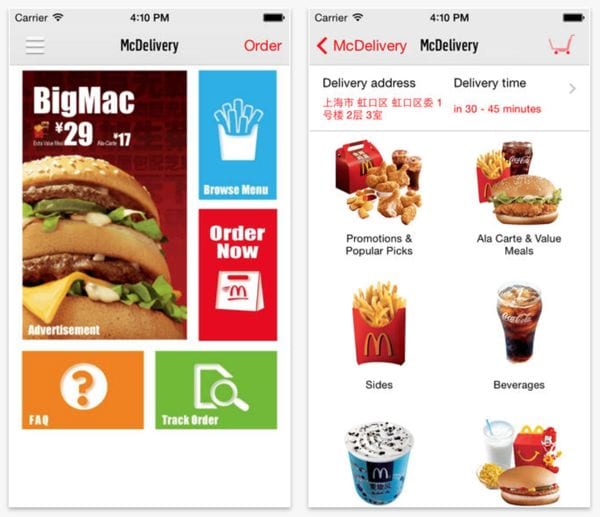
    McDonald’s McDelivery app is a good example of this. It makes a feature of the fact that people can look at the menu ‘any time, anywhere.’

    Apps_China_McDonald's_600

    Native apps allow retailers to send push notifications, an option not possible via a web app. This is an important consideration when it comes to marketing campaigns. Fashion retailer Milanoo makes full use of this in its app.

    Apps_China_Milanoo_600

    Well-made native apps get additional promotion through platform app stores; they may even be featured in top 10 charts and editor picks. This adds to the credibility and popularity of both the app and the retailer.

    Web apps are a viable, speedy way to get content onto users’ mobiles. But they’re not primarily designed for smartphones and while it is essential to make web content available in a mobile-friendly way, smartphone users expect a specific experience.

    Retailers can reap the benefits from this enthusiasm by developing apps for consumers using their phone capabilities to the full.

    The key to success in the world’s biggest mobile market is to have a well-rounded mobile strategy encompassing all trading platforms – and that includes native apps.

  • Singapore Food and Drink Report Q1 2016 Market Report

    Singapore Food and Drink Report Q1 2016 Market Report

    Food consumption will remain modest over our forecast period, registering a compound annual growth rate of 2.1% over 2014-2019.Technological innovations and cost-saving measures by mass grocery retailers will be realised in 2017, and a steady rise in food consumption will be observed. We forecast real GDP growth of 2.5% in 2016, with economic activity remaining tepid over our forecast period.

    A tight labour market will continue to put upward pressure on labour costs, reducing food manufacturing competitiveness. Rising incomes will bode well for the food and drink industry; however, low consumer confidence will partially offset growth in the short term.

    Headline Industry Data
    – Total food consumption growth in 2016: +1.8%; compound annual growth rate (CAGR) to 2019: +2.1%
    – Per capita food consumption growth in 2016: +0.1%; CAGR to 2019: +0.4%
    – Alcoholic drinks sales growth in 2016: +4.5%; CAGR to 2019: 5.1%
    – Soft drink sales growth in 2016: +2.7%; CAGR to 2019: +2.1%
    – Total mass grocery retail sales growth in 2016: +2.7%; CAGR to 2019: +3.0%

    The Singapore Food & Drink Report features Publisher Research’s market assessment and independent forecasts for food and drink expenditure, consumption, sales, and imports/exports and forecasts for the mass grocery retail sector. The report also includes analyses of major regulatory developments, the background macroeconomic outlook and competitive landscape comparing national and multinational companies by leading products and services, sales, investments, partners and expansion strategies.

    Publisher’s Singapore Food & Drink Report provides industry professionals and strategists, sector analysts, business investors, trade associations and regulatory bodies with independent forecasts and competitive intelligence on the food and drink industry and the mass grocery retail market in Singapore.

    Key Benefits
    – Benchmark Publisher’s independent food and drink industry forecasts for Singapore to test other views – a key input for successful budgeting and strategic business planning in the Singaporean food and drink market.
    – Target business opportunities and risks in Singapore through our reviews of latest industry trends, regulatory changes and major deals, projects and investments.
    – Exploit latest competitive intelligence on your competitors, partners and clients via our Company Profiles (inc. SWOTs, KPIs and latest activity) and Competitive Landscape Tables.

    Coverage
    Summary of Publisher’s key industry forecasts and views, covering food and drink manufacturing and consumption and the mass grocery retail market.

    Industry SWOT Analysis
    Analysis of the major strengths, weaknesses, opportunities and threats within the food, drink and mass grocery retail sectors and within the broader political, economic and business environment.

    Publisher’s Food and Drink Risk Reward Index
    Publisher’s Risk Reward Index provides investors (food and drink manufacturers and mass grocery retailers) looking for opportunities in the region with a clear country-comparative assessment of a market’s risks and potential rewards. Each of the country markets are scored using a sophisticated model that includes more than 40 industry, economic and demographic points. These provide indices of highest to lowest appeal to investors, with each position explained.

    Food Forecasts
    Publisher’s food chapter is divided into sections such as meat, fish, confectionary, dairy and canned foods, and provides insight into each market’s food industry, centred on a forecast to end-2019 for the sector.

    The chapter includes the following elements:
    – Industry Forecast Scenario: Historical data series and a forecast to end-2019 for growth of key indicators within a market’s food industry. Indicators include food consumption, food consumption as % of GDP, canned food sales, confectionery sales and food and drink imports and exports, among others.
    – Industry Developments: A summary of corporate developments, including news on M&As, FDI, expansions, closures and financial results, in addition to analysis and explanation of the latest industry events and how these could influence further investment.
    – Market Overview: An overview of the structure of the market, introducing the key players and discussing underlying trends.

    Drink Forecasts
    Segmented the same way as Publisher’s food chapter, the drink section provides insight into each market’s drink industry, centred on a forecast to end-2019 for the sector. Forecast indicators include alcoholic and soft drink sales by value, volume and sub-sector and tea and coffee sales, among others.

    Mass Grocery Retail Forecasts
    Segmented the same way as Publisher’s food and drink chapters, the mass grocery retail section provides insight into each market’s grocery retail industry, centred on a forecast to end-2019 for the sector. Forecast indicators include mass grocery retail sales by format (including supermarkets, hypermarkets, convenience and discount stores) and a breakdown of the organised retail sector versus the traditional sector, among others.

    Competitive Landscape
    Illustration of the mass grocery retail and food and drink industries via rankings tables comparing revenues, number of outlets and number of employees. This chapter also includes data-rich, in-depth regional analysis of the market position, business strategies and investment potential of the region’s leading mass grocery retail and food and drink operators.

    Company Profiles
    – Examines the competitive positioning and short- to medium-term business strategies of key industry players. Strategy is examined within the context of Publisher’s industry forecasts, our macroeconomic views and our understanding of the wider competitive landscape to generate company SWOT analyses.
    – The latest financial and operating statistics and key company developments are also incorporated within the company profiles, enabling a full evaluation of recent company performance and future growth prospects.

    Sources
    The Food & Drink reports draw on an extensive network primary sources, such as multilateral organisations, government departments, industry associations, chambers and company reports.

  • Malaysia is Poised for E-commerce Growth through Better Mobility

    Malaysia is Poised for E-commerce Growth through Better Mobility

    Today, there are a total of 252.4 million Internet users around Southeast Asia, with Malaysia emerging as the third country that recorded the highest percentage of Internet users (67%) after Singapore and Brunei.

    The promising Internet penetration result indicates Malaysia’s enormous potential for e-commerce market growth. Leveraging on the rise of Internet usage, indeed 2015 have been a fruitful year for all online businesses and e-commerce as Malaysia recorded one of the highest online transactions per capita in Southeast Asia.

    Nevertheless, this only represents the tip of an iceberg – Malaysia’s e-commerce market owns approximately 2% of the total retail market and countless opportunities still remain untouched if we look at what has been accomplished by other advanced e-commerce markets such as Korea, which accounts for approximately 15% of the total retail market.

    Over the past five years (2010-2014), Malaysia’s e-commerce market size has seen 31% increase in CAGR. Viewing from a logical standpoint, we anticipate it will follow a similar growth rate and achieve USD 3.1 billion by 2018. As for 2016, we foresee mobility, better Internet and logistics, and security will be the three key drivers to push for the local e-commerce development.

    1) The ‘mobility’ trend will continue to grow

    The mobile penetration in Malaysia has reached 136% this year, and the growth of connected devices have paved the way for a positive increase in the e-commerce sector with 47% of Malaysians using their smartphones to shop online.

    Furthermore, Malaysia ranks third in the rate of growth of mobile shopping in Asia (over 20%; from 25.4% in 2012 to 45.6% in 2014) according to a Mobile Shopping Survey and with these results, it is not surprising to know that more than 50% of traffic to 11street is generated on mobile devices.

    What shoppers can expect next year

    This promising result has encouraged us to make a bigger commitment for mobile users. We believe the ‘mobility’ trend will continue to grow and next year, 11street will put a stronger focus to serve mobile shoppers through a two-pronged approach.

    Mobile shoppers can expect more curated content from 11street’s app, with an improved user interface and user experience designs (UI/UX). Additionally, we will lift it with additional personalized features, and introduce more mobile exclusive deals for an exciting mobile shopping experience.

    2) Internet penetration and improved logistics will further enhance local e-commerce activities

    While the government has allocated RM1.2 billion for Malaysian Communications and Multimedia Commission (MCMC) to offer High-Speed Broadband to rural areas starting next year, we are also pleased with the government’s initiative to improve the logistics – a crucial element to boost the e-commerce development in Malaysia.

    Driven by the progressive e-commerce landscape, the logistic industry, especially the courier segment has seen exponential growth over the past one year. For instance, courier service contributed 60% of POS Malaysia’s total earnings in FY15, as compared to 41% in FY14.

    In preparation to serve shoppers better in 2016, we believe these supportive initiatives suggested by the government will aid sellers to meet future demands, by providing shoppers a seamless online buying experience with more timely delivery service.

    What shoppers can expect next year

    Online marketplaces like 11street place high importance on offering pleasant shopping experiences from the moment a consumer start shopping online, all the way through to the delivery of purchased items. Several measures that the company has been implementing since its establishment include (i) Thoroughly brief and train sellers on product delivery management (ii) Provide shoppers with a tracking system to keep them informed on location, time of arrival, and delivery status of their purchased products.

    With a solid Internet and logistics infrastructure, 11street trusts that Malaysians will enjoy online shopping even more in the coming years.

    3) User confidence, especially safe and secure online shopping is a priority for shoppers

    Security issues discourage shoppers from heading online. Malaysia Computer Emergency Response Team (MyCERT), a department within CyberSecurity Malaysia, reported that the number of online scams in the country is on the rise. A total of 743 fraud cases were received in Q1 2015, of which is the second most reported incidents (25.54%) in total reports.

    Shoppers are always urged to make transactions with only trusted platform that offers product return policies, customer reviews on products, seller’s rate or scoreboard, as well as a trustworthy payment system. Online sellers and marketplaces have to bear this in mind and update their security measures from time to time in order to establish shoppers’ confidence.

    What shoppers can expect next year

    11street implemented the ESCROW system, which is a financial instrument of placing a buyer’s money on hold and releasing it to the seller only when the delivery of the purchased item is fulfilled, thus protecting buyers from frauds. The ESCROW system has helped to prevent many fraud cases and it will continue to be invested by 11street in the future.

    Our website is also strengthened with abilities to monitor all products, transactions from buyers and sellers to detect suspicious activities such as counterfeit product listing. Moreover, a number of other efforts include a stringent application process and regular product quality inspections will be enhanced to provide shoppers a safe & secure shopping experience.

    A budget-conscious year ahead

    2016 will be another budget-conscious year for Malaysians in view of the rising cost of living caused by GST implementation and the ringgit devaluation. To assist consumers to ‘shop smart’, we are gearing up to double our variety of product listings for ‘Shocking Deals’ with the lowest price guarantee by early 2016.

    It is also worth noting that cross-border trading (CBT) trends can be observed from the increasing searches for popular international products on the Internet in Malaysia. However, with the higher exchange rates and international shipping fees, today local shoppers might find it challenging to get their favorite overseas brands or items. In view of this, 11street is committed to bring in more popular overseas product, including cosmetic, fashion, and food items, especially from Korea in 2016. These products will be imported and affordably priced at the online marketplace in order to satisfy Malaysian shoppers’ needs.

    Undeniably, the overall e-commerce market in Malaysia is poised to flourish positively. The next step would be to sustain the market potential and all industry players need to work together to ensure this. As a market expert, 11street is delighted to work with close partners such as Multimedia Development Corporation (MDeC) and Google. We look forward to collaborating with even more industry leaders in the coming year. In closing, we would like to urge sellers to stay alert on the evolving mobile & purchasing trends in the market to give shoppers a satisfactory experience, as this will build upon Malaysia’s vibrancy as a profitable market for e-commerce.

  • China’s growing upper middle class to drive consumption by 2020

    China’s growing upper middle class to drive consumption by 2020

    The dramatic rise of China’s upper middle class and affluent families is expected to become a major driver for domestic consumption, which will grow fast despite the nation’s sluggish economy.

    A report released by consulting firm BCG and AliResearch, the research arm of China’s largest e-commerce company Alibaba Group, said the combined number of upper-middle class households, whose annual disposable income ranges from US$24,000 to US$46,000, and affluent households, with disposable income over US$46,000, would double to 100 million by 2020.

    By then, they will account for 30 per cent of urban households, up from 17 per cent today and only 7 per cent five years ago.

    “During the past few decades, China’s consumer economy has been powered by the ascent of hundreds of millions of people from poverty to an emerging middle class,” said Kuo Youchi, a principal with BCG Greater China who helped draft the report.

    “But China is entering a new era. The real driver for the future will be upper-middle class and affluent shoppers.”

    The report projects that affluent and upper-middle class consumers will account for 55 per cent of China’s urban consumption and 81 per cent of its incremental growth by 2020.

    Compared to tier-one cities like Beijing, Shanghai and Guangzhou, smaller mainland cities would see faster growth in the number of well-off shoppers. Half of the upper middle class and affluent households to emerge during the coming five years were likely to be in fourth-tier or even smaller cities, it said.

    China’s economy has been undergoing a structural transformation while its gross domestic product growth has cooled in recent years. The government hopes domestic consumption willoffset the sluggish export and investment sectors.

    The report is bullish about China’s consumption market, predicting it to grow 9 per cent annually to US$6.5 trillion by 2020, outpacing GDP growth which is expected to remain at around 6.5 per cent over the next five years.

    In addition to an increase in wealthier consumers, another force to boost consumption is from the younger generation of shoppers who were born in 1980s and 1990s.

    A separate BCG survey found that 42 per cent of Chinese aged 18 to 25 disagreed with the statement, “I feel I have enough things and feel less need to buy new ones”. That compared to 36 per cent in the US and European Union and 32 per cent in Japan.

    Meanwhile, e-commerce, as a more important retail channel in China, will also help stimulate demand and is expected to account for 42 per cent of growth in private consumption.

    Alibaba recently announced plans to buy the South China Morning Post and all other media assets owned by the SCMP Group.

  • More than half of Hongkongers surveyed say they plan to buy no Christmas presents

    More than half of Hongkongers surveyed say they plan to buy no Christmas presents

    Christmas holidays are usually the peak consumption season for both tourists and local residents, but this year retailers are expecting a grimmer picture amid the economic downturn affected by the slowdown in China and strong local currency.

    A study shows that Hong Kong people are cutting their Christmas budget to tackle the difficult economic environment this year, with 64 per cent people saying they won’t spend more than HK$1,000 on Christmas shopping and 52 per cent saying they won’t buy any Christmas gifts this year.

    The survey, conducted by Hong Kong Research Association, found Hong Kong citizens are rather cautious about this year’s Christmas consumption, as only 16 per cent of 1,084 interviewees expect spending more money than last year, while 23 per cent said they would reduce spending .

    Adding to the problem, it seems that even if Hongkongers do plan to go shopping for Christmas, they prefer to buy overseas.

    “Even local people wouldn’t buy stuff in Hong Kong ,” said Mariana Kou, retail analyst at brokerage CLSA, adding consumer products are much cheaper in Japan and Korea, as they benefited from weaker local currencies.

    She expected the poor consumption this year will further dampen sales during Christmas, the traditional shopping season, which has already been challenged by the declining tourist arrivals in last six months.

    “The Christmas sales this year will decline for sure” she said, adding the luxury sector would be the one suffering the most.

    Even though most Hong Kong people are cutting their Christmas shopping lists to save money for rainy days, the enthusiasm for shopping is still running high among top earners in the city.

    The same research showed that the wealthiest social class was the only one among the four that has responded with growing budgets for shopping this Christmas, with 13 per cent more interviewees planning to increase Christmas consumption this year than those who plan to reduce spending.

    “Despite the volatilities in the financial and property markets, rich people still have a decent wealth base.” said Wyman Ng, research officer at Hong Kong Research Association, adding “ their behaviour is less affected”.

    Meanwhile, holiday shoppers in Causeway Bay who looked up yesterday would have seen seven people climbing above the huge screen in Times Square to make a statement against the fashion of wasteful consumption during holiday seasons.

    The Greenpeace activists unfurled a huge banner across a big television screen at the iconic shopping mall, featuring the message “Buy Smart Buy Less”.

    The group said Hongkongers trash garments at an alarming speed, which has put a heavy burden on the environment. It urged shoppers to step up and break the cycle of overconsumption

    The Census and Statistics Department also revealed yesterday that the Consumer Price Index (CPI) figures for November rose by 2.4% over the same month a year earlier, the same as that in October 2015.

  • Online data disrupts how consumers buy cosmetics in Singapore

    Online data disrupts how consumers buy cosmetics in Singapore

    The global market research firm TSN just released the results of a study—The Connected Life—that found nearly nine out of every ten shoppers (88%) in Singapore research products before making a purchasing decision.

    “It’s unsurprising that Singaporeans are exceptionally good at shopping,” says retail expert Fabio Trabucchi of TNS Singapore, in his recent commentary piece for the Singapore Business Review. “With more high-end malls per capita than anywhere else in Asia, shopping is now a well-entrenched national past-time.”

    Pre-shopping

    A preponderance of personal care items consumers in Singapore investigates products and prices before actually shopping to buy.

    “Ever keen for a bargain, almost eight in ten (78%) shoppers say they do pre-purchase research for personal care products such as skin care, perfume, and cosmetics, and 66% for hygiene items such as deodorant and shower gel,” explains Trabucchi, referring to data from The Connected Life study.

    This marks a shift in consumer behavior that could inform brand strategy to good effect, aligning packaging, branded content and ingredient information with new consumer preferences.

    “Previously these categories used to be a prime area for impulse buying, but thanks to the ease of the internet, Singaporean shoppers are getting savvier about the products they chose and the rationale behind it,” remarks Trabucchi.

    Information age

    Getting informative content in front of consumers is the key to capturing shoppers’ attention and dollars today.

    Multinational companies are ahead of the game, producing beauty content that resonates with consumers. L’Oréal recently opened an in-house branded content studio in Canada , where employees can create dynamic messaging to reach consumers with information that matters.

    “As consumers in Singapore adopt a more considered approach to their purchases, brand owners and retailers can provide the information – and incentives – they need to make up their minds,” confirms Trabucchi in his post for the Singapore Business Review.

    “Whether online or offline, businesses need to understand researching behaviours and ensure they are providing shoppers with relevant content that informs their purchase decisions,” he believes.

    Concluding, “this means they must stop thinking in terms of advertisements and start becoming content providers that offer relevant information and offers at every stage of the shopper journey.”

  • Expats in Asia-Pacific, including Singapore, highest paid in the world

    Expats in Asia-Pacific, including Singapore, highest paid in the world

    Expatriates in the Asia-Pacific are among the highest paid in the world, with Singapore in the top five in the region for disposable income and savings, according to HSBC’s latest Expat Explorer survey.

    The region’s appeal for professionals is set to increase further with the formalisation of the Asean Economic Community (AEC). The eight edition of the Expat Explorer survey was completed by 21,950 expats from 198 countries through an online questionnaire in March, April and May 2015 and released on Monday (Dec 21).

    The study found that the annual average salary for expats across the Asia-Pacific is US$126,000 (S$178,000), the highest compared to the global average of US$104,000.

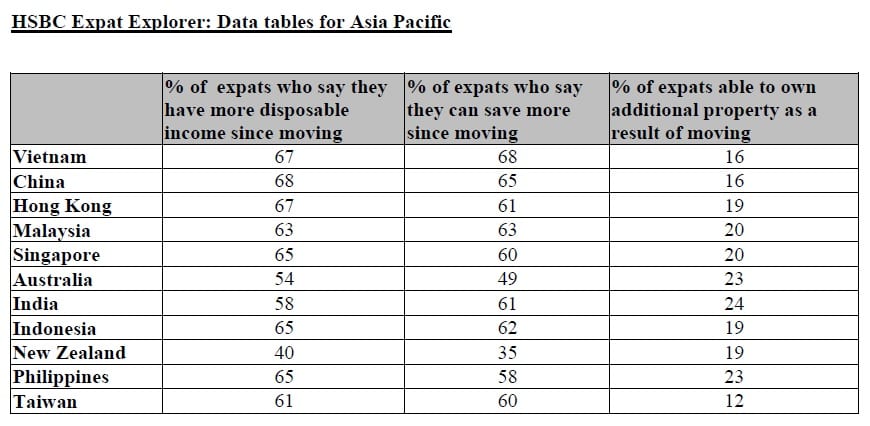
    South-east Asian countries – including Vietnam, Malaysia and Singapore – along with China and Hong Kong, stand out for offering expats the chance to save more money and enjoy greater disposable income.

    According to the survey, 65 per cent of expats in Singapore report greater levels of disposable income (compared to a global average of 57 per cent), 60 per cent are able to save more (global average is 52 per cent) and 20 per cent say they have been able to buy additional property as a result of moving (global average is 17 per cent).

    The ability to save more, enjoy greater disposable income or acquire real estate assets are all important considerations for expats moving to a new country.

    Said Mr Matthew Colebrook, HSBC Singapore’s head of retail banking and wealth management: “Managing finances is a key draw-card for living abroad, whether that be in helping to ascend the housing ladder or opening up lifestyle choices for later life. However, it does come with complexities and often means expats need to consider financial planning not in one, but two or more countries.”

    Apart from the financial incentives, South-east Asia’s appeal will be heightened as mobile professionals will be able to access a wider job market via the formalisation of the AEC.

    The AEC – which comes into effect on Dec 31 – aims to integrate South-east Asia as an economic region by reducing barriers to cross-border trade and investment, and allowing freer flow of professionals to work in other markets in the region.

    Said Mr Colebrook: “Asia offers some of the most rewarding job opportunities, allowing expats to experience and learn skills while at the same time, boost their standard of living and raise lifestyle aspirations. As the Asean countries move closer to economic cohesion, skilled workers will be needed to raise the region’s competitiveness and help companies and sectors to offset locational skill shortages or mismatches.”

    Singaporeans are one of the most globally mobile workforces in the region, with some 212,500 citizens living overseas as of June 2015, according to the Department of Statistics.

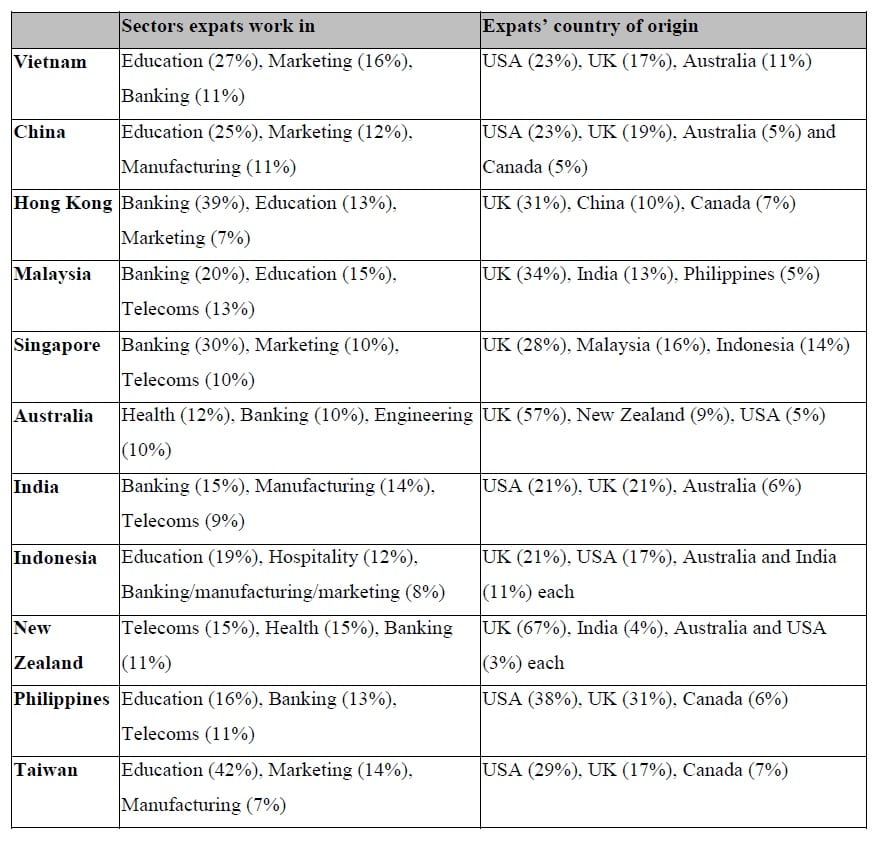
    Based on the sample of respondents surveyed in the latest edition of the Expat Explorer, expats in the Asia-Pacific originate from Australia, Canada, China, India, Indonesia, Malaysia, New Zealand, Philippines, United Kingdom and the United States. They work in industries such as education, marketing, banking, health, engineering, telecommunications, manufacturing and hospitality.