Category: Research

Retail News Asia is committed to providing both local and global retailers with the latest Research throughout the Asian market. This on a daily base.

  • China’s cross-border e-commerce boom is a boon for small retailers abroad

    China’s cross-border e-commerce boom is a boon for small retailers abroad

    After years of tepid growth, sales at several Australian vitamins, minerals, and supplements companies suddenly shot up by 20, 30, or even 40% in 2015. For those who know what happened that in China in late 2014 the source of this growth probably isn’t a big mystery: Regulators expanded a tax exemption to cross-border e-commerce.

    The resulting growth in trade has been dramatic, and for firms who have long eyed the big Chinese market but are too small to invest in finding a distribution partner or building a physical presence on their own, the boom of 2015 has delivered a revelation: They, too, can access the mainland market.

    E-commerce has of course been big in China for years, and in 2014 online retail sales totaled nearly US$430 billion, accounting for roughly 10% of all retail sales.  (The same figures for the United States were US$300 billion and 6.4%, respectively.)  Until recently, however, this activity was nearly all domestic – i.e., goods produced in or already shipped to China being sold to Chinese consumers.

    That makes perfect sense in light of the retail explosion of recent years:  China has more than 300,000 pharmacies, more than 2,000 mid-to-high end department stores, and supermarket catchment areas in urban areas are even smaller compared with the United States because of smaller formats and the lack of parking (and, until recently, widespread car ownership). Within this rapidly-developing retail landscape, however, some factors are driving consumers to prefer foreign products, whether bought once in China or ordered from abroad.

    Driving demand

    Food scandals are well-known and heavily publicized, from the baby-killing melamine-laced formula scandal of 2008 to the discovery this year of decades-old “vampire” meat.  In September, fake rice made from tiny pieces of rolled-up paper was even uncovered in Guangdong.  In light of such underhanded tactics, it is understandable that consumers might perceive foreign brands as safer and of higher quality.
    Price pressures pushing up consumer prices is another key issue.  Commercial rents, especially in first-tier cities such as Shanghai and Beijing, rival those in developed nations.  At the end of 2014, rents in Beijing’s Wangfujing averaged $480 per square foot per year vs. $360 for Singapore’s Orchard Road.  Wages, while still lower compared to western economies, are also rising quickly.

    Finally, Chinese consumers are becoming more sophisticated and better able to differentiate between local brands trying to pass themselves off as foreign and the real thing.  With travel increasing and the transparency in commerce that the internet can bring, tastes in products are becoming more global.

    Historic developments

    By as early as 2005, a Chinese consumer could order an album on Amazon and wait a few weeks for it to arrive—though naturally taxes and shipping often added to the price of the CD itself. But it wasn’t until the fourth quarter of 2014 that cross-border e-commerce really exploded.  The impetus was the application of a previously obscure piece of the tax code to cross-border e-commerce, implemented in a number of pilot cities.

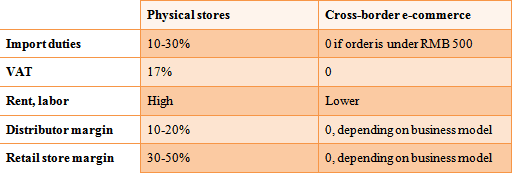
    The personal effects tax originally targeted Chinese travelers who had emigrated abroad and were bringing back gifts – such as small appliances – for relatives.  Small items were exempt, but the tax was set at 10% for nearly everything else.  In late 2014, though, the government proclaimed that this personal effects tax also applied to cross-border e-commerce in certain pilot areas.  The effect was dramatic, as can be seen in the price differentials illustrated below.

    Obviously some costs, such as freight and insurance, are incurred whether selling through physical stores or cross-border e-commerce.  However, the price differential can be observed in following key areas, demonstrated with VMS products as an example:
    The nuts and bolts

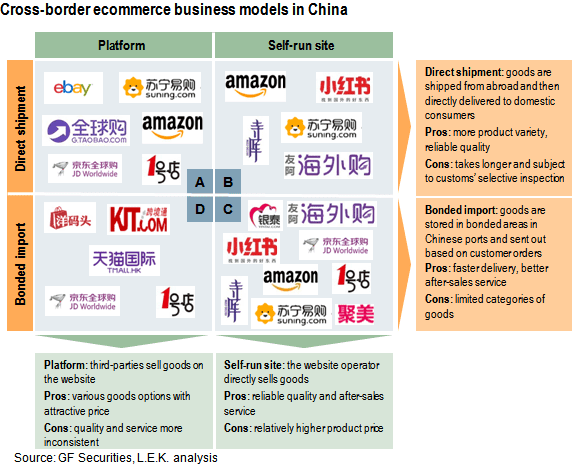
    Business models for cross-border e-commerce can be viewed across two main dimensions: Whether the site serves as a platform that aggregates multiple sellers or sells its own products, and whether delivery to the consumer is made from the source country or from a bonded warehouse.

    Each model has its own quirks (see graphic below), and it is not yet clear whether there is an obvious winner.  It is likely that multiple models will co-exist –for example, a self-run, bonded import model could work for goods with the highest turnover (such as diapers and infant formula), while direct shipment models might better suit the long tail of less-frequently ordered items.
    In terms of product flow, though, the bonded import model has the clear advantage in terms of speed.  Consumers can receive product within days – sometimes only one or two – rather than weeks.
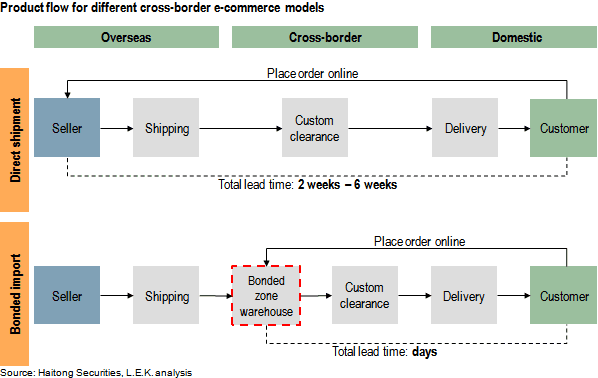
    With both models the seller can choose how much to take on internally, and how much to either outsource or hand over to a partner.  Hundreds of cross-border e-commerce companies have already sprung up in China, providing services that run the gamut from simple customs clearance all the way to a full consignment model.

    Local interests

    While e-commerce, including the cross-border variety, is here to stay, the advantages that it has over traditional imports may not last forever, depending on the product category.  In June of 2015, for example, China’s government lowered import duties on skin care products, which harmonized online and offline prices to an extent.  In 2016, import duties on additional products including handbags and suitcases are also slated to be slashed.

    Regulatory vacuums will likely be filled step-by-step as well.  For example, vitamin potency levels are regulated for products registered and sold in China, but currently these rules are not applied for cross-border e-commerce imports.  Local players are crying foul, and regulators will no doubt feel pressured to act.

    For now, though, cross-border e-commerce is helping to level the playing field by allowing smaller-scale companies to profitably access the vast China market while providing a huge boon in the form of savings and product diversity to Chinese consumers as well. Chalk one up for the little guys on both sides of the border.


  • ‘Uberization’ of Asia retail industry seen

    ‘Uberization’ of Asia retail industry seen

    Increased mobile accessibility and broadband penetration are disrupting the traditional grocery-buying business model, enabling consumers to purchase groceries anywhere, at any time.

    “We are seeing an ‘uberization’ of the retail industry in Asia,” HappyFresh CEO Markus Bihler said. “The outlook has never been more promising.”

    Citing a report by Telefonaktiebolaget L.M. (Lars Magnus) Ericsson, Bihler said mobile penetration in the Asia-Pacific region (excluding China and India) reached 110 percent in the first quarter of last year, surpassing the global average of 99 percent.

    “Opportunities abound in this region with its sophisticated food-loving consumers, growing wealth and rapid urbanization. The continued increase in mobile adoption and broadband penetration has helped boost our online grocery sales.”

    HappyFresh is an online grocery delivery service provider based in Jakarta, Indonesia. Last year, the company completed a $12-million Series A funding led by Vertex Venture, the venture arm of Temasek Holdings, and Sinar Mas Digital Ventures, the venture arm of Sinar Mas Group of Indonesia.

    “Ordering online for home delivery is gaining in popularity in the region. Currently, two out of five online shoppers want to receive real-time offers via their smartphones while they shop. We foresee a double digit growth ahead for the online grocery business,” Bihler said.

    According to Bihler, since its inception, HappyFresh has seen a ten-fold increase in the downloading of its mobile app in the region.

    “The increased popularity of online grocery shopping in Asia has been fueled by two social developments: traffic congestion and long working hours.”

    Traffic congestion is a characteristic of most Asian cities, the company said. The Southeast Asian cities of Jakarta, Bangkok and Surabaya are in the Top 10 cities with the worst traffic congestion globally. “For this reason, few people want to push their way through a crowded supermarket after a long day at work,” Bihler said.

    Asian countries also tend to have the longest working hours, according to Bihler sans citing a source. Asian countries, he said, have the highest proportion of people who spend more than 48 hours a week at work. This number is expected to rise as Asia becomes even more affluent, Bihler added sans citing his source.

    “Customers are also becoming very selective when it comes to quality foods. Today’s shoppers are seeking fresh, natural and minimally processed foods with ingredients that help fight disease and promote good health,” Bihler said citing a study by The Nielsen Co.

    According to him, this situation “presents a tremendous opportunity among niche consumer segments, especially in the healthy eating space and other categories that may be more difficult to find on in-store shelves.”

    “As a result, a number of specialty retailers have emerged in the health and wellness space, from national online grocery delivery services with extensive fresh sections to local produce delivery services.”

  • Mobile e-commerce to fuel Chinese retail

    Mobile e-commerce to fuel Chinese retail

    Despite the slowdown in China’s GDP growth, the Alibaba Group believes the country’s consumer economy will weather the storm and grow handsomely, largely fuelled by mobile e-commerce.

    According to a recent report titled The New China Playbook by he Boston Consulting Group (BCG) in association with the with AliResearch, Alibaba Group’s research arm, even if China’s GDP growth slows to 5.5 per cent, which is a full point below the 6.5 per cent government target, the country’s consumer economy will expand by more than half to $6.5 trillion in 2020 from $4.2 trillion in 2015.

    According to the report, e-commerce is expected to play a major role in the development of China as a consuming nation, a transition that is being accelerated by the growth of shopping via smartphones and other mobile devices.

    “One of the most revolutionary changes in the Chinese consumer economy has been the astounding growth of e-commerce,” the BCG said. In 2010, online transactions made up only 3 per cent of total private consumption in China; online channels today account for 15 per cent of the total, a share that BCG projects will rise to 24 per cent in 2020 (in contrast, online shopping currently accounts for about 7.5 per cent of private consumption in the US).

    The BCG does not foresee a marked slowdown in the growth of e-commerce. Over the next five years, private online consumption is expected to surge at a compound annual growth rate of 20 per cent, compared with 6 per cent annual growth in offline retail sales. Chinese consumption will grow by more than half to $6.5 trillion over the next five years from $4.2 trillion in 2015. E-commerce on the whole will account for 42 per cent of that growth.

    BCG identified three distinct “megatrends.” First, rising incomes are fueling greater spending, and in new areas not seen before. Then there’s the growing prominence of China’s “young generation.” And finally, the shift from bricks-and-mortar retail to e-commerce will continue to play an ever-bigger role in China’s economy.

    Overall, an incremental $2.3 trillion in annual consumer spending that China is expected to add over the next five years is almost like adding another Japanese consumer market onto the global economy, the report said.

  • Criteo notes eCommerce spike

    Criteo notes eCommerce spike

    In the two weeks leading up to the Chinese New Year, eCommerce sales in Asia grew by 40 per cent with 25 per cent more consumers shopping online.

    Three in 10 transactions were completed on a mobile device, according to performance marketing technology company Criteo in Hong Kong. Its findings are based on an analysis of 174 million online transactions in Hong Kong, Malaysia, Singapore, Taiwan and Vietnam.

    “Because of the traditional practice of wearing new clothes to symbolise a new beginning, consumers are doing a tremendous amount of online shopping two weeks before Chinese New Year,” says Criteo South-east Asia/Hong Kong/India/Taiwan MD Yuko Saito. “Based on 2015 data, sales on mobile devices in particular have hit record numbers.”

    In its eCommerce Industry Outlook 2016, Criteo cites three trends impacting Asian shoppers during the Chinese New Year season…

    Smartphone shopping will keep gaining ground: Smartphones are the first point of internet access or brand interaction for many consumers. In South-east Asia, Hong Kong, India and Taiwan, on aggregate, more than 45 per cent of online transactions are happening on mobile devices, compared to 29 per cent in the second quarter of last year. Indonesia was the highest at 56 per cent, followed by Singapore at 45 per cent.

    Retailers will see a high web influence on their in-store sales: Most consumers are researching online before or while visiting a store. According to Google, 80 per cent of 10 shoppers use a smartphone inside the store to help them with product research and price comparisons. Criteo says retailers can acquire a better view of customer behaviour by connecting with them via branded apps or beacon technology, before matching each customer’s email ID with loyalty programs at in-store POS terminals.

    Instant delivery services will become common: Order fulfilment will be a big focus for retailers this year, with many offering delivery options to match Amazon’s Prime Now service. Both online and “click-and-brick” retailers will be trying this strategy through specialised third-party eCommerce logistics providers. Faster delivery at lower charges will also drive growth of cross-border shopping.

    “During special occasions like Chinese New Year, we observe instances of intensive, last-minute shopping, where consumers take less time to consider a purchase and require products to be delivered on short notice for personal use or gift-giving,” says Saito. “Taking a three pronged approach – engaging consumers on the mobile web or on mobile apps, leveraging consumers’ web-browsing data to deliver personalised in-store and mobile shopping experiences, and investing in instant delivery services will be crucial to increasing sales conversions.”

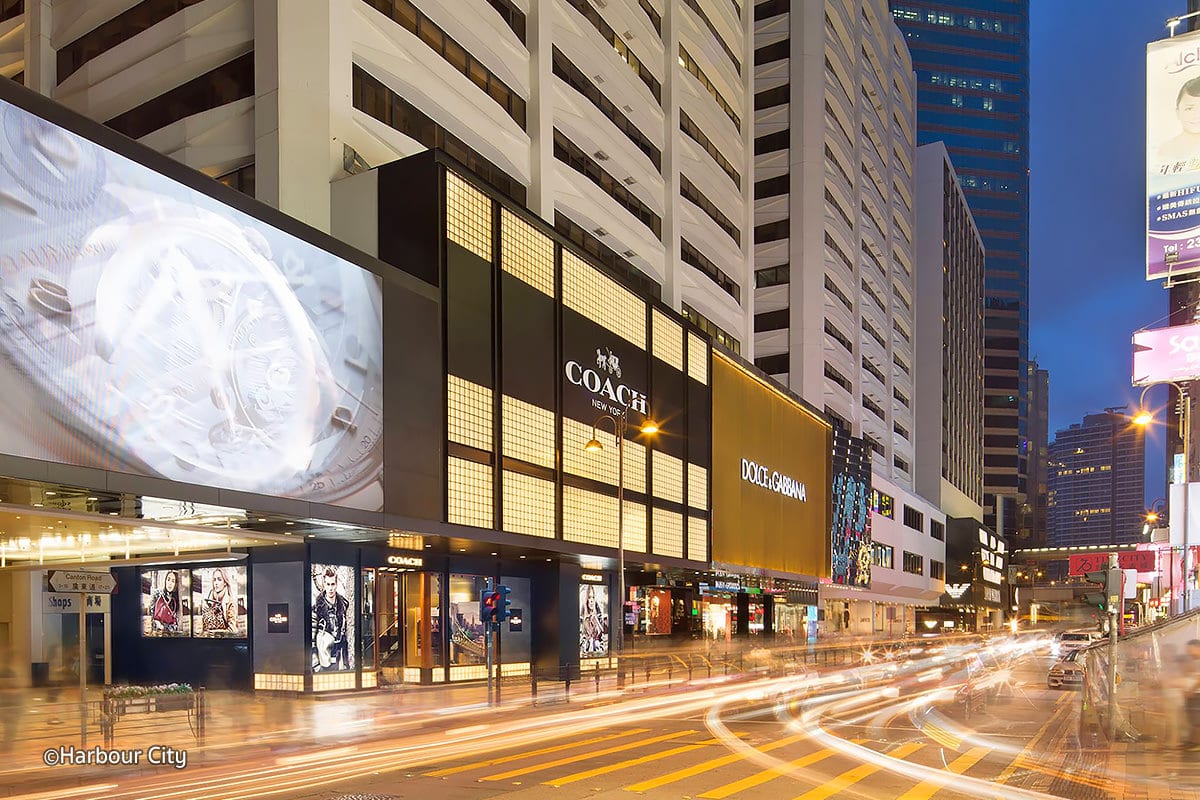
  • Is HK still a ‘cool’ place for luxury shopping?

    Is HK still a ‘cool’ place for luxury shopping?

    Retailers in Hong Kong preparing to welcome Chinese mainland tourists over the Lunar New Year festive period face a real crisis: Canny shoppers don’t think the special administrative region is cool enough.

    HSBC’s global co-head of consumer and retail research, Erwan Rambourg, said luxury goods are now cheaper in other markets, bringing the wealthy, sophisticated Chinese travelers to places such as Japan, Korea, and Australia.

    “There were a lot of attractions in Hong Kong for mainlanders to come in and purchase here,” Rambourg told CNBC’s “Squawk Box”. “It used to be cheaper than a lot of other places in the region. That’s not the case anymore, given the strength of the Hong Kong dollar.”

    The Hong Kong dollar is pegged to the U.S. dollar, which implies if the latter strengthens, the former follows.

    “Price arbitrage doesn’t work anymore [in Hong Kong],” Rambourg said. “It’s actually cheaper to buy in Seoul, in Tokyo, and elsewhere.”

    Between Hong Kong and Japan, and the strength of their respective currencies, he said “the difference is you reclaim VAT [Value-added tax] when you go to Japan,” which makes luxury goods slightly cheaper there.

    Retail sales were also battered in Hong Kong as a result of lower consumer spending, mostly from mainland Chinese tourists. Sales were down 8.5 percent on-year in December to HK$43.7 billion ($5.62 billion) in value terms, the biggest percentage decline since January 2015. In volume terms, sales declined by 6.1 percent.

    Hong Kong’s lack of entertainment and diversity outside of shopping is also an issue as it sends wealthy tourists to other, more exciting locations, added Rambourg.

    A quick look at tourism numbers in Hong Kong show tourist arrivals fell 2.5 percent in 2015 to 59.32 million.

    Chinese mainlanders, who comprise a bulk of Asia’s luxury consumers, purchase mostly personal items such as handbags and apparels, according to David Dubois, an assistant professor of marketing at business school INSEAD.

    “This is because of the importance of luxury as a social signal, which puts focus on a product’s conspicuous features – example, it’s logo,” Dubois told CNBC by email. “The strong gift-giving culture also fuels such a drive for highly recognizable goods.”

    Rambourg noted in a recent report there are several factors that propel Chinese shoppers to make their luxury purchases abroad, instead of at home. Consumption taxes, moves in the foreign exchange market, and price differences in different geographies for a single product are motivations for travel.

    Most luxury companies have wide pricing discrepancies, the report noted, and on average, prices in mainland China are at a 37 percent premium compared to euro zone prices.

    For example, data compiled by HSBC show a Hermes plain silk twill tie costs 160 Euros ($177.69) in France and Italy; it costs 1,600 Yuan in China ($243.37) – a 36.9 percent premium -, $180 in the United States, 25,920 yen ($219.74) in Japan, and HK$1,650 ($211.79) in Hong Kong.

    HSBC also calculated how different products cost across regions relative to the euro. Here’s how a few of them stack up:

    Many brands are dealing with price gaps through new products whose prices will not vary much among regions. “The Prada brand, for instance, is set to launch collections for the spring, which will have prices in mainland China at a [estimated] 10 [percent] premium to Italy vs. a current [estimate of] 40 [percent],” the HSBC report said.

    There are non-economic considerations too.

    Easing of travel regulations, authenticity of the product, validation – such as buying a Hermes tie in Paris instead of Kunming – and perception that in-store experience will be better also factor in, the HSBC report noted.

    But overall luxury consumption in China, Dubois said, has slowed in the last two years over weaker growth prospects while luxury consumers from newer engines of growth such as Malaysia, Vietnam, and Thailand are emerging with better access to luxury products.

    “This was expected as there is a well-known correlation between GDP growth and luxury consumption,” he said.

  • Retail in India, The opportunities and challenges retailers can expect

    Retail in India, The opportunities and challenges retailers can expect

    The country presents retailers with growth opportunities, including some advantages that can’t be found in China

    Lately there’s been much talk and worry about China’s long-term growth prospects and what that means for retailers counting on expanding in the country. Certainly, China seems to be in a time of transition, in which consumption seems destined to fall after years of strong and steady surges.

    Meanwhile, India also presents retailers with growth opportunities, including some advantages that can’t be found in China.

    Already, American brands constitute a large 35% of all foreign brands in India, followed by U.K. brands, at 12%, Italian and French brands at 8% each, and Japanese, Swiss, and German brands at 5% each, according to a 2015 Indian retail report from London-based real estate consultancy Knight Frank.

    In fact, Apple Inc. just last week confirmed that it has applied to India’s Department of Industrial Policy and Promotion to open and run its own stores there, a sign that it sees potential in the country.

    “I expect to see a lot of action in the next 10 years in India,” Venkat Viswanathan, founder-CEO of LatentView Analytics Corporation, told Retail Dive. “I believe we are still at a very early stage of realizing the potential of a market the size of India, and that it’s only a matter of time that India becomes an equally big part of the [business] ecosystem.”

    Language, just the beginning

    English is an official language in India, and serves as a common language for many of the sub-populations there. Therefore, language isn’t the barrier for businesses doing business there, including retailers selling to Indian consumers.

    Furthermore, while in China there’s a Chinese equivalent to Facebook, Twitter, and other social media platforms, the most widely used ones in India are the very ones that are widely used in the U.S. India gives Facebook its second-largest membership base, after the U.S. That means brands have one less barrier to bust through when reaching Indian consumers.

    And, while the Indian government’s official statistics aren’t quite as credible as those released by U.S. government agencies, says Viswanathan, they’re deemed by most as more solid than numbers released by the Chinese government, which are widely seen as untrustworthy and even confusing. (Something that has only served to increase the level of uncertainty and worry about China’s future.) India’s equivalent of the Federal Reserve is considered highly credible, says Viswanathan, and what he calls the “reasonably strong English press,” a strong judiciary, and the open and democratic parliamentary system that supports questioning and debate—plus the strength of the private sector—all help give companies doing business in India some solid ground to build on.

    Growth potential

    But above all, our experts say, India, with a population that includes a large young, mobile-first generation and a growing middle class, presents a lot of growth potential for retailers.

    A study from the Internet and Mobile Association of India last year found that there were 52 million new internet users there in the first six months of 2015, bringing the country’s total user base to 352 million as of June. And of those, 213 million, more than 60% accessed the web through their mobile devices.

    As internet and mobile use has exploded, not surprisingly, so has e-commerce. India’s top 25 retail websites took some 62% of all traffic there, according to digital market intelligence company SimilarWeb. While e-commerce is still a small fraction of retail in India—some 4% to 6%—it’s growing rapidly and expected to scale up exponentially in coming years.

    How Amazon is changing the game

    Amazon, as it has done here, is giving retailers in India fits. India’s best known online marketplace, Flipkart, looks like it’s being overtaken by Amazon, even though Amazon India wasn’t established there until two years ago. In December, for example, Amazon India registered 163.1 million monthly web visits (mobile plus desktop) compared to Flipkart’s 122.8 million, according to SimilarWeb. However, Flipkart still dominates via its mobile app, which is installed on 35% of mobile devices in India, according to SimilarWeb, at least for now.

    “Amazon is giving all the India players a run for their money,” says Viswanathan. “Step by step they’ve introduced all the new concepts have in the U.S., including Prime, which this year is expected to change the way all these marketplaces operate.”

    Challenges in India

    While many startups in India have garnered attention and money, Viswanathan says that some of that will ease up as investors get pickier about where they put their money (a smaller version of the tech bubble that many expect will burst before long, or at least deflate).

    But a more concrete challenge for retailers is the reality that, while mobile is well established and e-commerce is growing, the physical infrastructure needed to get goods from point A to point B is in need of further development, says Viswanathan.

    While retailers are used to being able to offer two-day shipping to just about anywhere in the U.S. or Europe, he says, that’s just not possible in many parts of India.

    “Many retailers assume such things exist in India and then have to completely reinvent their logistics,” he says. “Anyone with physical goods will encounter the real India, and have to adapt to the logistics realities in India.”

    However, that could also mean that state-of-the-art fulfillment capabilities like drones could do well there, especially as demand for such goods heats up.

  • Bluetooth Beacons – Malaysia’s Retail Future

    Bluetooth Beacons – Malaysia’s Retail Future

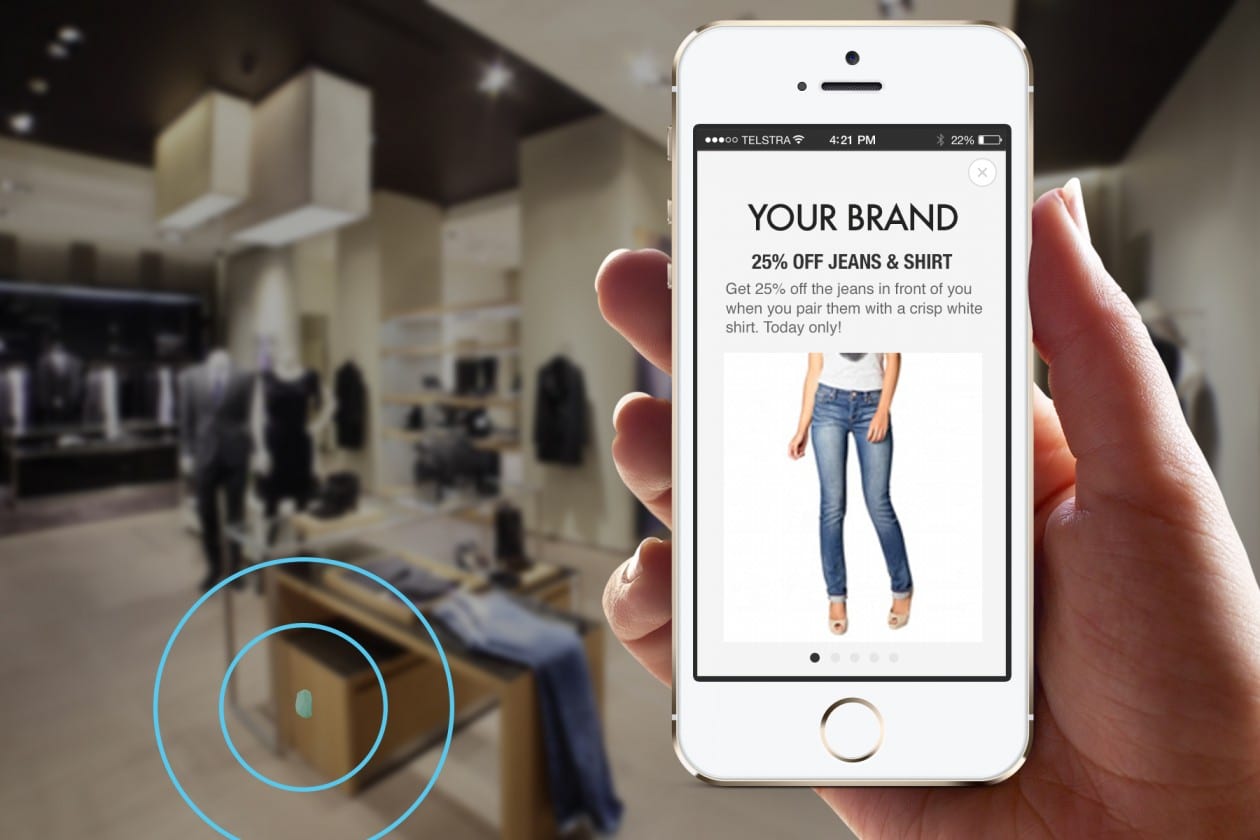
    Picture the following scenario: You walk into your favourite apparel store and your smartphone beeps with a push notification “Welcome back Linda! Only for today, we are giving you a 20% discount on all skirts”. You decide to finally get that blue skirt you have your eyes set on for weeks and decide to take a stroll through the accessories section when you stop to admire a particular necklace, after a few seconds of contemplation, your smartphone beeps again with the message “Hey Linda! Get a necklace to match your outfit, we’ll throw in a 30% discount on any necklace of your choice”. You leave the store with a new skirt and necklace at a bargain.

    You end up a happy customer, and the apparel store makes additional sales –  a win-win situation for all involved.

    The above situation may sound like a utopian future where the Internet of Things (IoT) have become a reality. However, the future is closer than we know it with the arrival of iBeacons by Apple in 2013 and Google unveiling Eddystone Beacons in July 2015.

    What Are Bluetooth Beacons?

    Beacons are transmitters which have the ability to sense nearby portable smart devices and “talk” to them via push notifications. Beacons are the most accurate form of locational based tracking device and may work with existing GPS and WiFi tracking capabilities to further enhance location tracking via triangulation.

    How Do They Work?

    Beacons use Bluetooth Low Energy (BLE) proximity sensing to broadcast universally unique identifiers (UUID) which are picked up by compatible apps and operating systems (OS). This means that users will need to have beacon-compatible apps (a relatively simple process can enable any app to be beacon-compatible) installed and have their Bluetooth switched on in order for their smartphones to interact with these beacons.

    Why Would Users Leave Their Bluetooth Switched On?

    This is a question which frequently surfaces during discussions with potential beacon adopters. It is true that a majority of smartphone users never and might even hesitate to turn on or leave their Bluetooth switched on due to the concern that the Bluetooth would contribute to a huge drain on their battery life.

    That is until 2011 when the new BLE technology were incorporated into the new iPhone 4S smartphones and subsequently, all smartphones released after that period. With the new Bluetooth Smart standard, worries of Bluetooth drainage on phone battery life were a thing of the past as the power needed to power Bluetooth is now so low that it is negligible.

    Other than that, most smart devices that are making their way into our everyday life such as smart wearables (e.g. FitbitJawboneApple Watch), Bluetooth-enabled car audios, and smart kitchen appliances require the use of Bluetooth-enabled smart devices.

    With over 10,000 Bluetooth-enabled products listed with Bluetooth SIG along with the immense growth (>100% in 2014) of the Smart Home, Consumer Electronics and Beacons markets, coupled with the growing number of users coming to understand the new Bluetooth technology as well as the growing need of users to have Bluetooth-enabled to run their everyday smart lifestyles, 24/7 Bluetooth-enabled devices will soon be a lifestyle choice much like the 24/7 WiFi-enabled devices which are part of everyday life now.

    What It Means For Retail Businesses

    With the ability to understand what interests consumers and know when they are in the proximity, brick and mortar retailers can now interact digitally with potential customers to encourage more foot traffic into their outlets and achieve higher sales conversion by sending the right message, to the right people, at the right time.

    However, the use of beacons in retail businesses does not stop at pushing promotional messages and general information. With beacons, retailers are also able to provide a personalised shopping experience to each individual customer as seen in the aforementioned story above. Depending on the nature of the business, beaconised businesses will have a a plethora of uses for beacons such as, helping customers navigate a store and providing in-store concierge services by utilising the tracking abilities of beacons. Think shopping on Amazon or Zappos, but in real life.

    press-beacon-product-2.ae0092e2

    The longer a retailer adopts the beacon technology, the more they will begin to understand their customers – who they are, what their preference is, where they like to shop, are they high or low spending customers. This is all possible as more and more data on these users are collected and analysed -allowing businesses to produce individualised ads and engage in behavioural retargeting.

    With the arrival of beacon technology, retailers with physical outlets will finally be able to gather data on their customers in real life in real time and run the most effective and efficient campaigns to target the most relevant consumer segments while providing a highly personalised shopping experience. The future of retail globally, especially here in the South East Asian region and in Malaysia, is in beacons and any retailer slow to adopt this breakthrough tech as part of their arsenal will be at a huge disadvantage moving into the future.

  • The key transformation of Indonesia’s economy

    The key transformation of Indonesia’s economy

    Industrial production was transformed by steam power in the nineteenth century, electricity in the early twentieth century and automation in the 1970s. These waves of technological advancement did not reduce overall employment, however. Although the number of manufacturing jobs decreased, new jobs emerged, and demand for new skills grew. Today, another workforce transformation is on the horizon as manufacturing experiences a fourth wave of technological advancement: the rise of digital industrial technologies that are collectively known as Industry 4.0.

    The industrial transformation will create a critical juncture affecting almost every country. Countries that allow and incentivize their citizens to invest in new technologies could grow rapidly. Indonesia is still at a relatively early stage of economic development. Its markets have progressively opened, and a lot of basic infrastructure has been put in place, but its business environment is still raw and volatile.

    The government’s Master Plan for the Acceleration and Expansion of Indonesia’s Economic Development (MP3EI) 2011–2025 seeks to address challenges that persist due to Indonesia’s geographical spread and rapid urbanization. Its main goal is to ensure sustainable development of resources and labor, aiming to grow per-capita income to US$15,000. This goal calls for an average economic growth rate of 8-9 percent from 2015 to 2025 while seeking to rein in inflation of 5-6 percent currently to an average 3 percent in the next decade.

    The government recently restated the importance of reorienting future economic development from a consumption-led economy to one driven more by production. That message recognizes that the industrial sector’s contribution to gross domestic product (GDP) has been declining over the past 20 years. Indonesia needs to actively encourage e-commerce, industrialization and entrepreneurship.

    Inclusive economic institutions will enforce economic dynamism and culminate in the industrial transformation. Without changes to the development strategy, there will be little chance for Indonesia to benefit from Industry 4.0 innovation and new technologies. There are at least three challenges to Indonesia’s Industrial transformation: human capital development, financial inclusion as well as political inclusion and bureaucracy reforms.

    The Indonesian school system is immense and diverse. With more than 50 million students and 2.6 million teachers in more than 250,000 schools, it is the third-largest education system in the Asian region and the fourth-largest in the world.

    Indonesia has made impressive progress on many fronts in the education sector since the 1997-1998 Asian crisis, such as coverage of basic education.

    Many challenges remain, including expanding enrolment in secondary and tertiary education, increasing the quality and relevance of subjects taught and making governance and finance more responsive.

    In order to achieve its goal of becoming a developed economy, Indonesia must be an innovation power. While the government commits 20 percent of state budget funds to education, the quality of teachers, the standard of educational facilities and the quality of research and development remains a problem. The ratio of engineers in the population is low compared to other ASEAN countries at only 2,671 per 1 million inhabitants. Neighboring countries have achieved ratios of 3,337 engineers per one million. The Central Bureau of Statistics reports that only 2 percent of business operators in the industrial sector are graduates of higher education, a large group has only junior to high school education, and the largest portion only graduated from elementary school.

    This suggests that the capacity of business people to absorb new science and technology to drive their companies forward is very limited. Only with reliable education and good training can good industrial development be achieved.

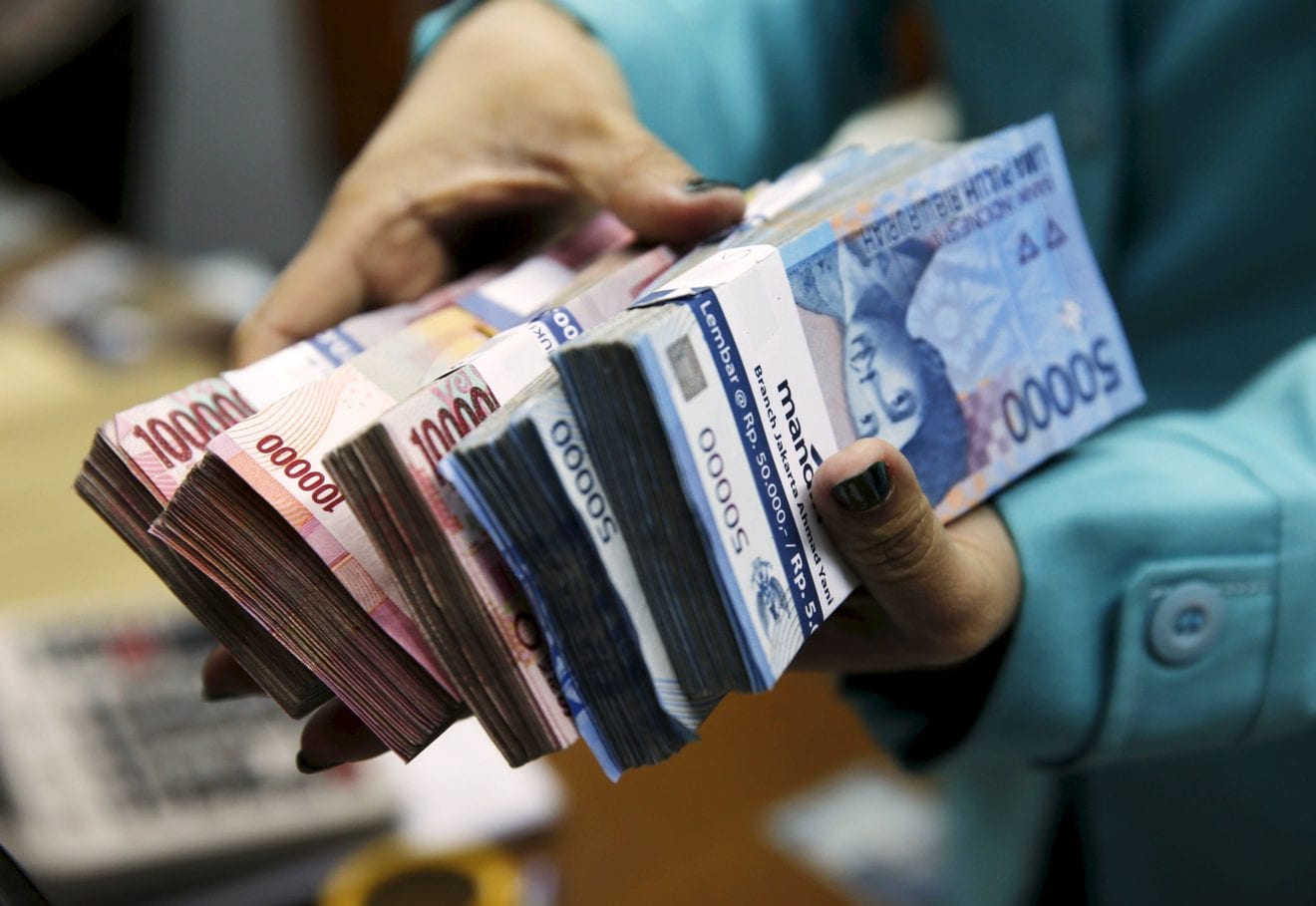
    The level of financial inclusion in Indonesia is at a critical level. Fifty-three percent of the Indonesian people are excluded from banking deposit products and 83 percent are excluded from financing products. Micro, small-and medium-sized enterprises (MSMEs) dominate business units with up to 99.9 percent of total business units and employ around 97.7 percent of the total labor force.

    Unfortunately, the contribution of MSMEs to GDP is still relatively low, at only about 57.8 percent. Meanwhile, large enterprises, which account for only 0.01 percent of the total number of enterprises, contribute 42.2 percent to GDP and receive loans of more than Rp 3.2 quadrillion (US$230 billion) or 82 percent of total bank loans.

    Moreover, MSMEs still get a small portion of bank financing. Based on Bank Indonesia data, outstanding loans of MSMEs total Rp 716.37 billion or 18 percent of total outstanding bank financing. Medium-scale enterprise loans dominate MSME credit with a share of 49.51 percent of total MSME loans. Micro enterprises, which account for 98 percent of all business units, take a share of just 3.8 percent of total bank loans, equivalent to Rp 153 trillion.

    Inclusive economic institutions foster economic activity, productivity growth and economic prosperity. Inclusive economic institutions create inclusive markets, which not only give people the freedom to pursue the vocations in life that best suit their talents but also provide a level playing field that gives them the opportunity to do so. Those with good ideas will be able to start businesses, workers will tend to go to activities where their productivity is greater, and more efficient firms can replace less efficient ones.

    Indonesia adopts an economic planning approach under the purview of several competing agencies, notably the National Development Planning Agency and the Office of the Coordinating Economic Minister. Interdepartmental communication has been growing in recent years, allowing for the formulation of coherent long-term planning that takes into account the broad scope of Indonesia’s national economy. However, problems central to economic policymaking remain: a lack of civil service reform, a lack of strong oversight in the planning process, a high incidence of corruption and difficulty in coordinating between the regions and the center.

    The key leadership skill today is the ability to identify long-term, large-scale opportunities and build the capabilities to turn them into reality. Countries differ in their economic success because of different institutions, different rules influencing how the economy works and the different incentives that motivate people.

    The critical juncture of Industry 4.0 has very different effects in different parts of the world. Societies that have already taken steps toward political and economic institutions have taken advantage of these new economic opportunities and started a process of rapid economic growth.

  • E-commerce in Asia grows 32%

    E-commerce in Asia grows 32%

    E-commerce grew to $835 billion in Asia in 2015, the kind of expansion that beckons web retailers around the world. But moving into cross-border e-commerce means mastering the different market conditions from country to country, according to Internet Retailer’s new 2016 Asia 500.

    The lure of Asia, and particularly China, for international merchants is strong and growing stronger: Chinese consumers alone purchased $589.61 billion worth of goods online in 2015, an increase of 33.3% over the same period a year earlier, according to the National Bureau of Statistics in China. By comparison, online retail sales in the U.S. grew by 15.5% per year from 2011 to 2014 and were up by nearly 15% in the first three quarters of 2015, according to the U.S. Commerce Department.

    The largest domestic e-commerce players are driving the bulk of the sales and growth in China. The 266 China-based merchants ranked in the new Internet Retailer 2016 Asia 500—the largest online retailers in Asia as measured by their annual online sales—grew 65.7% in 2015 to $173.69 billion from $104.82 billion, representing 79% of total Asia 500 sales of $220.00 billion and 89% of the growth. By comparison, the 30 United States-based retailers ranked in the Asia 500 grew online sales 24.2% to $21.91 billion last year—the bulk of that for most of them coming from Chinese customers.

    Indicative of e-commerce growth in Asia overall, total 2016 Asia 500 online sales were up 54.5% in 2015 to $220.00 billion from $142.42 billion in 2014.

    When factoring in the roughly $411 billion transacted through the seven largest online marketplaces, including those owned by Rakuten Inc. and Alibaba Inc., Internet Retailer estimates the Asia-Pacific e-commerce market is worth $834.71 billion, up 32.1% from $631.81 billion in 2014.

    E-retail growth in Asia and China remains far ahead of that in the U.S., one reason many U.S. brands and retailers are looking to expand into these markets. For the first nine months of 2015, adjusted U.S. e-commerce sales totaled $251.98 billion or 7.2% of total retail sales (excluding foodservice) of $3.51 trillion, according to U.S. Commerce Department data.

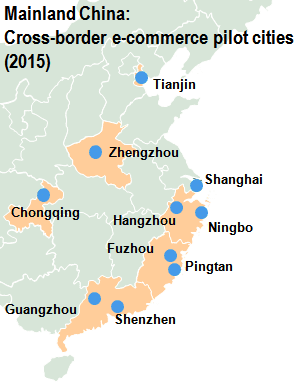
    Such heady online growth isn’t lost on merchants based outside Asia, particularly those targeting Chinese consumers that crave foreign goods. As added incentive for buyers and sellers, the Chinese government in recent years has made it easier for consumers to buy overseas goods via the web. That includes setting up free trade zones in 10 cities where China’s customs service provides fast clearance of small orders from Chinese consumers. Foreign companies can ship the orders from abroad or store goods in these areas without them clearing customs, and then, as orders are received, send them through the streamlined customs process.

    One way U.S. retailers are reaching shoppers in Asia is through marketplaces. For example, when BCBG Max Azria Group LLC wanted to step up its presence online in China, the U.S. women’s apparel manufacturer and retailer decided the best place to start was Tmall Global, Alibaba’s marketplace for imported goods. BCBG previously shipped online orders to China, letting international e-commerce fulfillment specialist Borderfree handle orders. But growing sales justified a bigger investment in China, says Michelle Magallon, senior vice president of digital commerce and omnichannel.

    In November 2015 BCBG signed a deal with VoyageOne to manage its website on Tmall Global, including marketing and fulfillment, Magallon says. BCBG is in the early stages of putting together a multichannel distribution strategy in China, which includes two stores in Singapore. The company also has five stores in Taiwan.

    BCBG isn’t alone among merchants in the U.S. and other countries looking to sell to the growing number of Asian online shoppers, notably the 375 million Chinese consumers who buy online. But those retailers aiming to enter or expand their online sales in Asian countries all face similar challenges, regardless of home country. To succeed online in Asia, retailers in the U.S. and other nations first are assessing the challenges of marketing, logistics, culture and regulations—and associated costs—for conducting e-commerce in each country.

    For companies like BCBG, which is not yet ranked in the Asia 500 but is No. 424 in the Internet Retailer 2015 Top 500 Guide with online sales of $37.9 million in 2014, the key to connecting with online shoppers in Asian countries is understanding what shoppers want and then evaluating the local vendors who can provide the services needed in each market, Magallon says.

  • Myanmar Year in Review 2015

    Myanmar Year in Review 2015

    A decisive victory for the opposition in Myanmar’s general elections in late 2015 generated a fresh wave of investor optimism, raising hopes of increased economic stability in 2016 after a somewhat uncertain year.

    Victory at the polls in November for the National League for Democracy (NLD), under Daw Aung San Suu Kyi, will see greater civilian participation in government, although the military will retain control of the Ministries of Defence, Interior and Border Affairs in the new Cabinet, alongside a minimum of 25% of seats in parliament and substantial economic holdings.

    Growth leaders

    Growth was robust in 2015 despite cooling in the global economy, with Myanmar posting GDP growth of 8.5%, according to the IMF. This ranks ahead of average growth among the five original ASEAN member nations – Indonesia, Malaysia, the Philippines, Singapore and Thailand – which stood at 4.6%, and average global growth, which reached 3.1%. GDP growth is expected to remain relatively steady in 2016, easing somewhat to 8.3%, as per IMF forecasts.

    Strong consumer demand helped drive expansion in Myanmar’s retail sector, while also boosting the appeal of the industry to foreign brands. International brewers like Heineken and Carlsberg opened in-country production facilities through joint ventures with local partners during the year, and Japan’s Kirin acquired a 55% stake in market leader Myanmar Beer for a reported $560m in August.

    The year also saw strong growth in commercial property development, buoyed by rising demand for prime business space, particularly in Yangon, the country’s financial and business capital. Such demand should help sustain activity in Myanmar’s construction sector, which already has several infrastructure projects on its books.

    In a key development for the country’s financial services sector, nine foreign banks granted licences to operate in the market commenced operations, albeit on a limited scale, by early 2016.

    Trade and budget prospects

    However, the incoming NLD government, expected to be formally sworn in this March, will inherit an economy faced with ongoing structural challenges, including a widening fiscal deficit, projected to reach 5.5% of GDP, according to the IMF.

    Rising inflation also weighed on Myanmar’s economic performance somewhat in 2015, having gained momentum on the back of high levels of liquidity, rising demand and food shortages caused by mid-year nationwide flooding. In its latest Article IV consultation with Myanmar, the IMF projected inflation would rise to 13.3% by the end of FY 2015/16, up from 7.4% in FY 2014/15.

    Price increases have been exacerbated by depreciation of the kyat, which lost around 21% of its value against the US dollar over the year, driving up the cost of imports and affecting both consumers and firms that rely on overseas technology and equipment for expansion.

    To ease pressure on the kyat and rein in inflation, the Central Bank of Myanmar announced plans in late November to raise the reserve requirement ratio of banks and increase the value of its fortnightly deposit auction, with an interest rate hike also signalled as a possibility.

    A weaker kyat contributed to a widening of the trade deficit, with the gap between imports and exports reaching MMK3.1trn ($2.4bn) for the first six months of FY 2015/16, up 27% year-on-year.

    Major flooding weakened export trade further in mid-2015, after damage to farmlands led to lower production. To maintain food security and stabilise domestic food prices, the government imposed a six-week freeze on rice exports, one of the mainstays of Myanmar’s foreign trade.

    Investment forecast

    Foreign investment has also slowed somewhat, reaching $4.1bn as of December 2015, according to the Directorate of Investment and Company Administration. By the end of FY 2015/16, foreign investment was expected to reach $6bn, down from $8bn in FY 2014/15.

    The oil and gas sector has attracted the bulk of the investment to date, accounting for more than $2bn of the total as at December, while transportation and communications saw $736m worth of investments and manufacturing received $685m.

    Investment inflows are expected to ramp up again in 2016, with a smooth election in hand and the promised transition of government scheduled in the coming months.

    According to U Aung Naing Oo, secretary of the Myanmar Investment Commission, greater investment from EU countries in particular is forecast during the first six months of 2016.

  • Luxury Retailers Scale Back China Brick-and-Mortar Expansion in 2016

    Luxury Retailers Scale Back China Brick-and-Mortar Expansion in 2016

    As Chinese luxury spending decreased in China, yet rose globally last year, luxury retailers are hitting the brakes on brick-and-mortar store expansion for 2016.

    According to a report on retail in China published this month by UBS, wariness toward store expansion is at an all-time high. It found that 94 percent of retailers surveyed have a “moderate” attitude toward China expansion in 2016, rising from 85 percent in 2015 and 72 percent in 2014. A total of 67 percent said they will expand by less than 10 percent in 2016, while 6 percent said they will expand from 10 to 20 percent. Meanwhile, 22 percent of retailers plan to close stores this year.

    The retailers with the biggest expansion plans are generally department stores, according to the report, but that’s not necessarily due to sales growth. It notes that larger stores generally plan their expansion at least five years in advance, so many department stores were preparing openings happening now during China’s era of rapid growth.

    Among luxury retailers, Louis Vuitton was one of the most highly-publicized brands to halt expansion in China last year as it closed stores in Guangzhou, Harbin, and Urumqi. In addition, Chinese media reported this week that Gucci closed a Chengdu store as it readjusts its flagship arrangement in China.

    Although the shift in spending abroad and online are factors in these decisions, luxury retailers are also focusing on recalibrating their location choices. U.S. think tank The Demand Institute wrote in a report last year that many foreign brands had expanded into smaller cities when they should have been focusing on the first tier. It stated that “overly optimistic growth and consumption projections for China have misled foreign investors” into expanding too far into lower-tier cities.

    This appears to be Louis Vuitton’s position, as it opened stores in Beijing and Hangzhou last year even as it closed its other locations. A report by CBRE last year stated that slowing sales and over-saturation in the mainland “have prompted retailers to consolidate their existing store networks and slow their rate of entry into new markets focusing on operational efficiency.” This includes not only relocation of stores, but revamping design and adding lifestyle elements such as cafes, art exhibitions, and pop-ups.

  • Jack Ma versus George Soros: who do you trust on China’s economy

    Jack Ma versus George Soros: who do you trust on China’s economy

    No one really trusts China’s official statistics. In the past ten days since the government announced the economy grew at the much-slower-but-still-solid pace of 6.9 per cent last year, a roll-up of economists and money managers have been putting forward their own best estimates for growth.

    Billionaire investor George Soros raised Beijing’s ire by claiming last week the current growth rate was probably around half the official figure at 3.5 per cent and said a hard landing was “unavoidable.”

    Other economists say growth is somewhere between four and six per cent, which leaves investors looking around for alternative measures of the economy.

    When it comes to a gauge for consumption, it’s hard to go past the profit result for China’s biggest e-commerce company, Alibaba, which now accounts for about 80 per cent of the online retail market.

    And there was much to cheer about in Alibaba’s better-than-expected third-quarter results, released on Thursday in the United States.

    Revenue jumped 32 per cent to 34.5 billion yuan ($7.4 billion) compared to the same period a year earlier, while profit more than doubled to 12.5 billion yuan, largely driven by consumers shopping on their mobile devices.

    Despite the strong result, there were some signs of China’s slowdown.

    The value of overall product sold across Alibaba’s retail platforms – the so-called gross merchandise revenue (GMV) — rose 23 per cent to 964 billion yuan, much slower than this time last year.

    Still, it’s a strong result and the smaller increase in GMV might be partly due to the company’s efforts to crackdown on the sale of counterfeit goods on its platforms.

    Alibaba said China’s growing middle-class was driving sales especially to younger people, who are more likely than their parents and grandparents to spend money rather than save.

    Alibaba’s founder Jack Ma set up the company in his Hangzhou apartment, an hour’s train trip from Shanghai, in 1999. At the time, it was an online listings service, connecting Chinese manufacturers to potential customers. But four years later he launched Taobao, revolutionising China’s online retail market. He followed Taobao with Tmall, which allows global brands such as Nike and Gap to sell direct to consumers and the company listed on the New York Stock Exchange in 2014.

    More than 400 million people are now active buyers on Alibaba’s retail marketplaces.

    The company is also investing in financial services, video and media content and cloud-computing to diversify its earnings.

    Investors had been betting against Alibaba this year because of China’s economic woes, pushing its shares down 14 per cent before the result came out. Alibaba fell 3.8 per cent to $US66.92 in New York on Thursday.

  • Indonesia’s Low Internet Penetration Rate Curbs Economic Growth

    Indonesia’s Low Internet Penetration Rate Curbs Economic Growth

    Each day the world’s Internet users watch an average of 8.8 billion YouTube videos, share 186 million photos on Instagram, make 152 million Skype calls, purchase 36 million products through Amazon, send 207 billion emails, post 803 million Tweets, and make 4.2 billion searches on Google.

    Although digital technologies have spread rapidly across the globe, the World Bank says digital dividends have lagged behind for part of the global population. The Washington-based financial institution defines digital dividends as “the broader development benefits from using these technologies”. For example, the business community can use digital technologies to expand their business, people can use these technologies to find jobs and the government can use it to enhance services. In other words, digital technologies support financial inclusion, job creation, and overall economic growth.

    However, the fruits of these dividends are unevenly distributed. One of the key solutions in order to let all people enjoy the benefit of digital technologies is to enhance Internet connectivity. But the World Bank also states that well developed Internet access alone is not enough. “Countries also need to work on the ‘analog complements’ by strengthening regulations that ensure competition among businesses, by adapting workers’ skills to the demands of the new economy, and by ensuring that institutions are accountable.

    In essence, two factors are the cause that digital dividends cannot be enjoyed by part of the world population. Firstly, almost 60 percent of the world population still lacks Internet access, hence cannot participate in the digital economy in a meaningful way. Secondly, some of the perceived benefits of digital technologies are offset by emerging risks.

    The first factor should be combated by governments by encouraging (affordable) access to the Internet (and other digital technologies) for its citizens, while creating conducive regulations for the Internet and mobile operators.

    After India and China, Indonesia has the highest amount of people who are not connected to the Internet. The World Bank report stated that the Indonesian government is on the right track to address these aforementioned issues. For example, the Indonesian government is currently finalizing an e-commerce road-map that aims to improve and develop the country’s e-commerce industry. Previously, the Indonesian government said it may allow foreign investors to own a 100 percent stake in Indonesian e-commerce companies in this road-map.

    According to the Association of Internet Service Providers in Indonesia (APJII), Indonesia had around 88.1 million Internet users in 2014, up 22 percent (y/y) from 71.9 million in the preceding year. Given that the total population of Indonesia numbers more than 250 million individuals, Indonesia’s Internet penetration ratio stood at around 35 percent in 2014. This low rate implies there is still ample room for growth in the online business industry.

  • Printed Media Enters Twilight Period

    Printed Media Enters Twilight Period

    In line with the increasing popularity and knowledge of internet in the society, many online media have successfully attract readers and printed media advertisers. “This is what we call the twilight of print media,” said Communications and Informatics Minister Rudiantara on Tuesday, January 26, 2016.

    According to Rudiantara, the progress of online media can be seen from the constantly improving financial performance of the companies. “Just look at their balance sheets in the stock market,” said Rudiantara.

    Rudiantara added that compared to printed media, online media can be considered to have the upper hand in presenting information. By accessing a digital news website, consumers can read texts, see pictures and watch videos almost at the same time. In addition, readers who wish to interact with writers can just leave a comment and immediately receive responses.

    Such advantages also attract advertisers. Rudiantara predicted that more advertisers will prefer to advertise through online media. “For advertisers, online media offer advantages, ranging from placement to payment,” Rudiantara said.Ari Fadyl, head of transformation and innovation at AXA Indonesia, also said that it is easier to attract consumers through online media. Only by clicking links, prospective consumers can enter a company’s homepage or mobile app. “This is important because to buy an insurance, for example, people need to be assured with explanations or ‘experiences’,” said Ari.

    Ari explained that ‘experiences’ can be in the forms of online test to identify a children’s talent in relation to finding the right school, which will eventually attract parents to apply for an educational insurance. Such method, Ari claimed, is proven to be effective in gathering customers. “We just started using digital platform two years ago, and now we have around eight million customers from [online platform],” Ari said

  • China’s overseas luxury spending shifting to the web

    China’s overseas luxury spending shifting to the web

    Changes in spending on luxury goods by mainland Chinese consumers might dictate a revamp in how luxury retailers do business in that market. More shoppers than ever are buying overseas because items are more expensive in China, according to Bain’s 2015 China Luxury Market Study.

    Overall luxury spending by Chinese consumers in 2015 fell 2% to 113 billion yuan ($17.2 billion), driven by falling sales of watches, men’s wear and leather goods. Overseas luxury purchases grew 10%, especially in Japan, where their spending increased more than 200%, but also in South Korea, Europe and Australia, thanks to favorable exchange rates and competitive pricing. Meanwhile, luxury spending of mainland Chinese in Hong Kong and Macau fell 25%.

    Because of crackdowns by the Chinese government designed to tighten imports and bring spending back, including new rules discouraging the use of personal shoppers, or “Daigou” who make duty-free purchases overseas for their Chinese customers, more Chinese are buying their luxury goods via websites and mobile sites instead. “Buying overseas has been a trend for years, but destinations have changed,” Bain partner and report author Bruno Lannes said in a statement.

    In 2014 and 2015, brands with strong fashion heritage and track record of original designs did better in the Chinese market. And, while transitions in China’s economy are causing some turmoil in markets and worry among investors, the general environment for luxury retailers will remain more or less the same—though the still-rising middle class will continue to become more sophisticated about luxury brands, Bain says. Global pricing will become more important, the report notes.

    Luxury brands should strengthen digital platform building and digital content creation, with an emphasis on localization to reflect local market preferences, Bain says. Nearly 80% of survey respondents said they get their luxury brand information from the internet or apps, and 60% said social media sites Weibo and WeChat are their source for that information. That’s why brands on average spend 35%—and growing—of their marketing budget on digital.

    Luxury brands must also emphasize youth and fashion to turn the heads of the next generation of luxury customers in China, Bain said. This year and forward, there will be even more of a focus on “exclusivity” in product design and store footprint, according to the report.

    Some changes are already underway. Luxury retailers in China, for example, have begun streamlining their approach to brick-and-mortar in the country, with a greater focus on fewer, larger and better located stores. Many brands have realized the need to regain a sense of exclusivity, which was marred by too many stores, according to the report.

    “Despite persistent macro, economic and industry challenges in China, all hope is not lost for luxury brands,” said Lannes. “There are plenty of growth opportunities for those with more exclusive and fashion collections, digital platform engagement and digital content creation, as well as with pricing that encourages Chinese consumers to spend locally.”