Category: Telecom

Retail News Asia is committed to providing both local and global retailers with the latest Telecom & Telco news throughout the Asian market. This on a daily base.

  • Ericsson reshuffles management team

    Ericsson reshuffles management team

    Ericsson has announced changes to its management team, with the departure of three senior vice presidents and several promotions, as part of a boarder reorganization of the company into five business units and one dedicated customers-service unit.

    Anders Lindblad, currently head of Business Unit Cloud & IP, will head Ericsson’s new Business Unit IT & Cloud Products.

    The new Business Unit IT & Cloud Services unit will be headed by Jean-Philippe Poirault, currently Ericsson’s Head of Consulting and Systems Integration.

    Fredrik Jejdling, currently head of region sub-Saharan Africa, will become SVP and head of Business Unit Network Services.

    Charlotta Sund, currently head of region Northern Europe and Central Asia, will take up the role of SVP and head of Customer Group Industry & Society.

    Niklas Heuveldop will become SVP, chief customer officer and head of Group Function Sales. Heuveldop is currently Ericsson’s head of Global Customer Unit AT&T.

    Lindblad, Poirault, Jejdling, Sund, Heuveldop will also join the Ericsson executive team.

    The three top executives leaving Ericsson as part of the shakeup include Jan Wäreby, Anders Thulin and Mats H. Olsson.

    Magnus Mandersson, currently EVP and head of Segment and Business Unit Global Services, will hold the position as head of Segment Global Services, EVP and Advisor to the CEO.

    Angel Ruiz, currently head of Ericsson’s North America region, will be replaced by Rima Qureshi. Qureshi is currently Ericsson’s SVP and head of Group Function Strategy and Head of M&A. Ruiz will continue with the company as chairperson of regions North and Latin America.

  • Telenor confirms it may pull out of India

    Telenor confirms it may pull out of India

    Norway-based Telenor has confirmed it may exit the Indian market if the operator is unable to procure spectrum at affordable rates, as operating losses from Telenor India mount.

    Announcing its financial results, Telenor group CEO Sigve Brekke said the operator’s long-term presence in India is dependent on the ability to secure additional spectrum at a price that can be justified.

    Telenor is looking into participating in upcoming auctions and into potential spectrum trading options, but will remain open to other alternatives in case the price doesn’t justify the move. Brekke said the company is looking at all options for a sustainable business model.

    æThe news comes as Telenor India reported a substantially wider operating loss of 3.1 billion krone ($381.5 million) for the first quarter of 2016, despite an 11% increase in revenue.

    The company recorded an impairment loss of 2.3 billion krone for the first quarter of 2016 due to network equipment and spectrum depreciation.

    Indian media reports from earlier this month suggested that Telenor is considering withdrawing from the Indian market even as the operator gears up to launch LTE services across its footprint.

    As part of its LTE rollout, the company has already launched services in one city, and plans to expand this to at least 6-8 more in the next 60 days.

  • Celcom excludes Nokia from 4G upgrade project

    Celcom excludes Nokia from 4G upgrade project

    Malaysia’s Celcom Axiata has excluded Nokia from its new five-year 4G network upgrade project, cutting its selection of vendor partners down to just Huawei and Ericsson.

    The company has signed an infrastructure agreement with Huawei and Ericsson for a project expected to have capex costs of up to 2.2 billion ringgit ($566.7 million).

    Celcom’s existing network infrastructure was built based on a three-partner collaboration of Nokia, Ericsson Malaysia and Huawei. But Celcom chief of operations Ramanathan Sathiamutty said the operator is cutting its partners down to two to streamline partner management

    Under the new contract, Ericsson and Huawei will be responsible for the full turnkey delivery of a radio access network to support the 4G rollout and prepare for the introduction of 5G.

    Celcom has budgeted between 1.8 billion and 2.2 billion ringgit as capex for the rollout. The amount spent will be contingent on whether Malaysia introduces spectrum refarming for the 900-MHz and 1800-MHz bands – if refarming is announced, the budget will be 2.2 billion ringgit.

    The operator said the upgrade will allow the company to offer broader coverage with fewer sites, allowing it to realize group-level cost savings.

  • Mobiles sold in India must have panic button from 2017

    Mobiles sold in India must have panic button from 2017

    India’s telecoms ministry will mandate that all mobile phones sold in the country from 2017 must include a ‘panic button’ providing easy access to emergency services.

    As part of the new norms phones sold from 2018 will also have to include GPS navigation systems.

    While it is not yet clear what form the panic button system will take, it is likely to allow customers to call emergency services by pressing or holding a single button or pressing the power button several times in a row.

    The regulation also applies to feature phones, and will likely be achieved by holding down a button on the keypad.

    The move forms part of a wider campaign to help ensure the safety of women in the wake of growing reports of violence including rape and molestation. Women’s safety has been a political priority since the high-profile fatal gang rape of a 23 year old student on a Delhi bus in 2012.

    While India currently lacks a central number for calling emergency services, the government is aiming to introduce one this year.

    Manufacturers selling devices in India – including international smartphone giants like Apple and Samsung – will need to be compliant with the new regulations from next year.

  • Indonesia’s H3I taps Nokia for core network upgrade

    Indonesia’s H3I taps Nokia for core network upgrade

    Hutchison 3 Indonesia (H3I) has contracted Nokia to expand its core network to meet growing mobile data demands in the market.

    Under the agreement, Nokia will supply H3I with packet core technology in cities including Surabaya, Semarang, Solo and Yogyakarta – the most densely populated cities in the country.

    Nokia will also provide network planning, optimization, implementation and care services, as well as its Flexi convergent mediation device and its NetAct operations support system. The contract is also aimed at laying the groundwork for future network upgrades to meet emerging demands.

    H3I has been seeing data traffic double around every nine months as a result of rapid smartphone and 3G data adoption in Indonesia’s growing economy.

    Mobile is playing a leading role in providing internet connectivity to Indonesians. As of the start of 2016 there were over 320 million mobile subscribers across Indonesia, while fixed broadband penetration remained under 2%.

    “We are pleased to have Nokia’s services and technology expertise at our side as we evolve our core network to meet the speed and quality needs of a growing number of connected consumers and business users in Indonesia,” H3I president director Randeep Singh Sekhon said.

  • Australians benefit from telco sector competition

    Australians benefit from telco sector competition

    Australian consumers are reaping the benefits of competition in the telecommunications sector in the form of increased data allowances, new services, and lower prices, according to a report from competition regulator ACCC.

    “Consistent with the trend in recent years, consumer demand for data is continuing to increase and is affecting both fixed and mobile networks. On fixed networks, data consumption grew by 40% to 1.3 million terabytes (TB) of data. On mobile networks, data consumption increased by 35% to 110,000 TB,” ACCC Chairman Rod Sims said.

    “The increase in demand for data is largely due to the popularity of audio-visual streaming services, including the introduction of subscription video on demand (SVOD) services such as Netflix, Presto, and Stan.

    Industry members have responded to the increase in demand by investing in their fixed and mobile networks to make sure that they have sufficient capacity to meet the data traffic.

    Service providers have also responded by increasing data allowances. During 2014-15, data allowances increased by over 70% for DSL internet services and more than doubled for post-paid mobile services.

    At the same time, overall prices fell by 0.5% in real terms from 2014 to 2015.

    “While a smaller reduction than in the previous eight years, which has seen a 3.3% fall each year on average, this indicates that competition on factors other than price has been a feature of the market,” Sims said.

    “Given this, the ACCC will continue to take a particular interest in ensuring consumers receive accurate information about network performance.”

  • Singtel launches a new cyber security institute

    Singtel launches a new cyber security institute

    Singtel has launched a first-of-its kind cyber security institute in APAC aimed at helping business and governments in the region enhance their cyber security skills and preparedness.

    The Singtel Cyber Security Institute (CSI) is designed as a hybrid between an advanced cyber range and an educational institute. It aims to test and train companies in dealing with sophisticated cyber threats.

    “Based on our engagements with companies in Singapore, more than 85% do not have robust cyber response plans nor the opportunity to conduct realistic drills to test and sharpen such plans,” Singtel CEO group enterprise Bill Chang said.

    “This lack of cyber preparedness is worsened by the severe global shortfall of trained cyber security experts, which Forbes puts at some 1 million in 2016. This is why we’ve stepped up to the plate. We know we have to help companies secure themselves against a potential slew of increasingly sophisticated cyber attacks.”

    Housed in a permanent space of over 10,000 sq ft, the institute provides cyber skills development and education programmes tailored to the varying needs of company boards, C-suite management, technology and operational staff. Boards and C-suite level participants will be trained in the areas of cyber threat awareness, risk management, business continuity planning and crisis communications preparation. The cyber operations team will be trained in defence and response capabilities to sharpen their skills.

    “Cyber security is no longer just a technical issue to be tackled only at the operational level. It needs to involve all levels within an organisation including boards and C-suite management, and even external stakeholders such as regulators. We hope to arm enterprises and public agencies with the necessary know-how to counter cyber threats in a holistic manner. This will help them mitigate the risks and costs associated with cyber disruptions,” Chang said.

    In conjunction with the launch of the CSI, Singtel announced that it is the first company in Singapore to work with the Infocomm Development Authority of Singapore on the Cyber Security Associates and Technologists (CSAT) program to train infocomm professionals in cyber security.

    Under this program, Singtel will train fresh infocomm technology professionals and equip them with basic cyber security skills. At the same time, Singtel will also provide experienced cyber security professionals with the opportunity to enhance their skills by training with leading cyber security experts. Through this two-prong approach, Singtel aims to build a cyber security talent pipeline to drive its cyber security initiatives.

    David Koh, Chief Executive of the Cyber Security Agency said, “A strong pool of cyber security talent is necessary to build a dynamic cyber security ecosystem that can support Singapore’s Smart Nation journey. With the introduction of the Cyber Security Associates and Technologists (CSAT) program and the setup of the Institute, we hope to encourage more to join the profession as well as enable cyber security professionals to hone their skills and stay a step ahead in the ever-evolving cyber security landscape.”

    The CSI can emulate the environments and operations of enterprises using state-of-the-art technologies. Like other cyber ranges the facility can simulate cyber attacks in order to test a company’s inherent vulnerabilities, defence and response capabilities.

    Unlike other ranges however, the new facility is designed to easily replicate any company’s operating environment and use the latest range of cyber threats, including an extensive library of viruses and malware, to simulate attacks.


  • Bangladesh to disconnect unregistered SIMs soon

    Bangladesh to disconnect unregistered SIMs soon

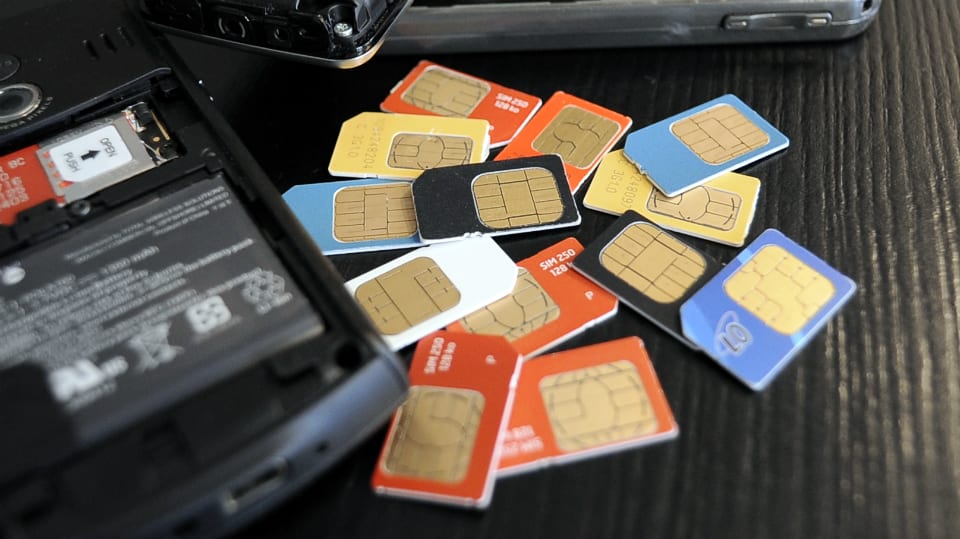
    Bangladesh’s telecom minister Tarana Halim has revealed that SIMs that remain unregistered with biometric authentication will be deactivated shortly after the April 30 registration deadline.

    The minister said the unregistered SIMs will at first be deactivated for three hours on May 1 as a warning.

    SIMs that remain unregistered will be deactivated permanently “in a very short time” thereafter, she said.

    Only around 70 million of the nation’s 130 million mobile users have currently reregistered their SIMs through the biometric authentication system. But Tarana expressed hope that the registration process will be complete by the deadline.

    Bangladesh introduced the requirement to register SIMs with biometric authentication as part of efforts to prevent criminal activities including the illegal operation of VoIP businesses. Nearby Pakistan has already introduced such a requirement.

    The government, regulator BTRC and operators are now working to raise awareness among mobile users about the need to reregister their SIMs in time for the deadline.

  • Akamai addresses mobile performance challenges

    Akamai addresses mobile performance challenges

    Akamai Technologies has upgraded its flagship web performance solution Akamai Ion to improve the platform’s mobile capabilities.

    Ion is designed to accelerate the delivery of websites, web applications and mobile apps over fixed and cellular connections. The new Ion release focuses on overcoming key problem areas, which can result in much faster experiences for all users.

    Ion offers optimizations that are designed to address the challenges imposed by the realities of today’s modern web. For example, the prevalent use of CSS in web design can result in poor mobile experiences because rendering web pages is dependent on when CSS files are delivered to browsers. Further, increasing amounts of third-party content, including links to social networks, advertising and sponsored content, can also create performance bottlenecks.

    The introduction of new web protocols and standards, such as HTTP/2, also means site owners will need to deliver content to all users and ensure the best possible experience independent of whether users’ browsers support these protocols or not.

    Ion also  features a number of new capabilities designed to deliver better and more consistent mobile experiences by addressing the unique challenges associated with mobile devices such as cellular connections and underpowered devices.

    Ion offers improved browsing experiences by focusing on the ability to re-sequence CSS files, so that mobile audiences can view and interact with mobile web pages sooner, even over cellular connections.

    Ion also introduces Preconnect to help prevent embedded third party URLs from becoming bottlenecks in web page performance by establishing connections with embedded third-party hosts even before the browser asks for those connections.

    Akamai is now making HTTP/2 support broadly available to all customers – the first CDN to offer such broad availability of the new standard.

    To help all users realize the best possible experience, the new version of Ion offers HTTP/2 aware Front End Optimizations (FEO). This means Ion can apply the most appropriate client-side performance optimizations whether the browser supports HTTP/2 or not – without the need for custom setup.

  • Thai government leans on AIS to surrender 8m users to True

    Thai government leans on AIS to surrender 8m users to True

    A newspaper report has accused deputy prime Minister Wissanu Krea-ngam, NBTC Secretary-General Takorn Tantasit and ICT Minister Uttama Savanayana of trying to strongarm AIS into handing over 8 million 2G customers to TrueMove in a meeting last week.

    In a report, Thai-language newspaper Manager said that the three – along with ICT Permanent Secretary Songporn Komolsuradej, AIS CEO Somchai Lertsutiwong and True CEO Supachai Chearavanont – recently held a meeting in which Takorn had drafted an MOU for the participants to sign.

    The MOU would force AIS to sign a new roaming agreement with True and scrap its current 2G roaming agreement with Dtac. Another key point was that it would also give the NBTC oversight and jurisdiction in number portability from AIS to TrueMove. The MOU allegedly stipulated that the NBTC’s judgement in this matter would be final and there would no appeal.

    The report said that Takorn kept trying to coerce the AIS CEO into signing the MOU but Somchai refused, saying he had to consult with his board first and that besides there was no need as of yet as AIS was going to bid for the 900-MHz spectrum and even if that failed, they had the 2G roaming agreement with Dtac.

    Manager quoted the MICT source as saying the NBTC-drafted MOU clearly was illegal not just under NBTC’s own laws, but under Thailand’s WTO obligations.

    Manager quoted another anonymous source in the NBTC saying that the meeting was called under the orders of the “big boss” who wants the matter to be done and dusted as soon as possible. The source also highlighted conflict of interest pointing out that Deputy Prime Minister Wissanu’s son was now working at one of AIS’ competitors.

    Wissanu’s son, Dr Witchaya Krea-ngam, is currently a specialist for government relations at True Corporation.

    The draft MOU has also been leaked online by someone calling themselves @NBTCnews on Twitter.

    Earlier the issue of number portability had descended into a fierce war with True launching an aggressive campaign and paperless MNP request system that Dtac and AIS refused to acknowledge as legally binding. The NBTC ordered Dtac and AIS to accept the paperless porting requests, to which the two telcos stood their ground saying they would obey the law.

  • Dell launches IoT solutions partner program

    Dell launches IoT solutions partner program

    Dell is building an ecosystem of partners to help customers navigate the fragmented IoT landscape and identify the right technologies to develop IoT solutions.

    The Dell IoT Solutions Partner Program will provide participating partners with access to Dell’s  product portfolio and support.

    The program will combine a global network of experienced independent software vendors with the portfolio of Dell’s IoT assets. These include purpose-built, intelligent gateways and embedded PCs, security and manageability tools, data center and cloud infrastructure, and data integration and analytics software like Boomi and Statistica.

    The IoT partner program launched with more than 25 partners including GE, SAP, Software AG, Microsoft, OSIsoft and others, many of which are using the Dell Edge Gateway 5000 Series to power their own IoT solutions. Dell also continues to build relationships with systems integrators with vertical expertise and deployment scale.

    The Dell Edge gateway runs on Windows 10 for secure, reliable, and streamlined support and is Microsoft Azure Certified for IoT. Customers can depend on the Edge Gateway for seamless and security-enhanced data with the Azure IoT Suite, so they can get their projects running quickly.

    Dell, Kepware, and Software AG are collaborating to develop IoT-enabled predictive maintenance models using distributed analytics to address the industry’s biggest operational challenges, such as unplanned downtime, overall equipment effectiveness, maintenance cost and return on assets.

    With Microsoft and Blue Pillar, Dell is delivering Automated Demand Response solutions which help utilities maintain grid reliability and enable customers to realize significant value through dispatch of onsite power generation or reduction in consumption.

    Dell and SAP are also collaborating to bring business to the edge with models designed to help address the industry’s biggest operational challenges, such as business continuity, overall equipment effectiveness, maintenance cost and return on assets.

    Additional partners include Azeti, Blue Pillar, Datawatch, Eigen Innovations, Flowthings, Flutura, GE, Kepware, Lynx Software, Microsoft Azure, OSIsoft, Relayr, SAP, Software AG, and Thingworx.

  • Alibaba Cloud launches IoT platform

    Alibaba Cloud launches IoT platform

    Alibaba Cloud has unveiled a series of new products aimed at expanding its IoT, hybrid cloud, storage and security capabilities.

    At its Shenzhen Summit last week, Alibaba Cloud launched version 1.0 of IoT, its one-stop platform for IoT and cloud computing. The service will provide infrastructure for IoT deployments in areas including medical, energy, smart home and intelligent campus networks.

    IoT Version 1.0 combines an IoT foundation kit, an intelligence dissemination platform and smart device and ecosystem functionality. It is compatible with a range of protocols to allow devices to connect quickly to the cloud and other devices.

    At the event, Alibaba Cloud also launched Apsara Stack, a dedicated cloud platform for hybrid clouds. Apsara Stack can be used to obtain public cloud capabilities in a fully-isolated environment within an enterprise data center.

    For enterprise level database and storage needs, the company unveiled a number of services including data migration, storage engines, access protocols and usage models.

    The company also introduced a concept it calls “light computing”, involving providing a cloud storage application interface that allows users to create “instant-on”data processing applications or modules.

    Finally, Alibaba Cloud revealed it has upgraded its AliCloud CDN to support HTTPS encrypted communication, certificate authority services and other enterprise-class security services.

  • Dtac won’t participate in 900-MHz re-auction

    Dtac won’t participate in 900-MHz re-auction

    Thailand’s Dtac has decided not to participate in the upcoming re-auction of 900-MHz spectrum due primarily to the high reserve price.

    The operator has informed regulator NBTC that it does not plan to bid in the auction

    Dtac will instead rely on its 20 MHz of 1800-MHz bandwidth held under a concession agreement due to expire in 2018. The operator also has 15 MHz on the 2100-MHz band under a 3G licensing agreement.

    But Dtac CEO Lars Norling has urged the regulator to bring the 1800-MHz spectrum up for auction before its concession expires.

    Rival operators AIS and True Move have both expressed a strong interest in securing the spectrum, and have both picked up bid documents for the June auction, the report states.

    This is despite the military government’s decision to set the reserve price at the 75.65 billion baht ($2.16 billion) bid by Jas Mobile Broadband before it defaulted on its first instalment payment, triggering the need to reallocate the spectrum.

  • Thai telecoms regulator weakened in new frequency act

    Thai telecoms regulator weakened in new frequency act

    Thailand’s military cabinet has approved a new frequency act that puts the formerly independent regulator under the control of the new digital economy commission while the selection process now goes through the executive branch.

    The new National Broadcasting and Telecommunications Act calls for a single seven-member board (down from two five-member boards and one chair, one for broadcasting and one for telecommunications).

    Selection will be through a committee consisting of the president of the constitutional court, the president of the supreme court, the president of the administrative court, chairman of the national anti-corruption commission, the auditor-general, the chairman of the national human rights commission and the governor of the Bank of Thailand. The committee will select 14 individuals which are passed to new Digital Economy Ministry (previously the ICT Ministry) which will forward them to the senate for selection which will forward the final selection to the Prime Minister.

    The new NBTC act stipulates that the NBTC will have to follow the policy of the Digital Economy Commission and abide by the government policy statement. The new DE Commission is chaired by the Prime Minister.

    The DE Commission will have the final say if there is dispute whether the NBTC is complying with government policy or not.

    Matters of satellite and orbital slots are no longer a matter for the NBTC.

    Spectrum allocation for telecommunications will be by auction except for certain designated uses.

    In an earlier draft it was understood that the DE Commission could allocate spectrum for good causes and only let the NBTC handle commercial spectrum.

    Another key change is in the NBTC budget which must be efficient and economical and the NBTC must obey any orders given by the auditor-general.

    In the transition period, the existing NBTC will continue until their term is over in September 2017 unless there are less than four NBTC board members remaining in which case the entire NBTC board will be considered expired.

    Meanwhile the new computer misuse act was also approved and will be put to the military-appointed legislature later this week. Leaked drafts show the bill to be draconian with the Digital Economy Ministry having immense power.

    The DE Ministry will have the power in censoring websites without the need for judicial review. It can arrest and fine hackers without any recourse for appeal or review in a court of law.

    Elsewhere Deputy Junta leader and defence minister General Pravit Wongsuwan has ordered police to closely monitor social media and to report any political activities to the military’s cyber warfare division over the course of the next five years.

    Junta leader and prime minister General Prayuth Chanocha last Friday announced a five year transitional period to democracy.

  • XL Axiata swings back to profit in Q1

    XL Axiata swings back to profit in Q1

    Indonesia’s XL Axiata swung back to a net profit for the first quarter during what CEO Dian Siswarini said was a “promising start to 2016.”

    The operator reported a net profit of 20 billion rupiah ($1.5 million) during the period, which compares to a loss of 758 billion rupiah in the same quarter last year.

    Profit for 2016 was positively impacted by the strengthening of the rupiah against the US dollar this year, compared to a weakening in the first quarter of 2015.

    Revenue meanwhile grew 2% year-on-year during Q1 of 2016, with core usage revenue up 5%, driven by a 23% year-on-year growth in the data segment. Data traffic grew 94% year-on-year and total data users grew to 22.8 million, or 54% of XL’s total base.

    XL commented that LTE has become a key part of the operator’s mobile internet leadership strategy. By the end of the quarter, XL expanded its LTE footprint to cover 3,286 sites in 36 Indonesian cities and areas. The company’s total BTS footprint as of the end of March was 59,040.

    “We have made a promising start to 2016 with further improvements in our operating and financial performance, and we hope to build momentum as we execute on our transformation agenda,” Siswarini said in a statement.