Category: Telecom

Retail News Asia is committed to providing both local and global retailers with the latest Telecom & Telco news throughout the Asian market. This on a daily base.

  • Lower Prices for International Calls to Indonesia with TeleponIndonesia.com

    Lower Prices for International Calls to Indonesia with TeleponIndonesia.com

    TeleponIndonesia.com has great news for everyone making calls to Indonesia! The international calling website now offers more affordable rates for Voice Credit calls to mobiles and landlines in this country. With TeleponIndonesia.com, calls to Indonesia are now as low as 4.5¢/min.

    Voice Credit rates have never been lower! Calling a landline in Indonesia used to cost 4.9¢/min, but this price now dropped to 4.5¢/min. As far as mobiles are concerned, their rate decrease is even more spectacular, as it went from 6.9¢/min to 4.5¢/min.

    In order to benefit from this great calling rates, customers who want to call Indonesia have to buy Voice Credit. They can try the service for as little as $2, or buy $10 that will now offer them 222 min to landlines or mobiles in Indonesia.

    TeleponIndonesia.com offers a wide variety of calling options, to suit every need. Customers can call from:

    • any phone, through the use of local or toll free access numbers;
    • any computer, through the Web Call application;
    • any smartphone, as TeleponIndonesia.com offers a free app, for both iOS and Android devices, called KeepCalling.

    Beside Voice Credit, TeleponIndonesia.com also offers Mobile Recharge, a service through which customers can recharge mobile phones anywhere in the world. The process is fast and secure and the credit reaches its destination instantly. The mobile operators available for recharges to Indonesia are Telkomsel, Indosat, Axis, Ceria, Smartfren, Esia Bakrie Telecom, Three, and XL Axiata.

    TeleponIndonesia.com runs a policy focused on integrating superior customer service, while maintaining the highest quality standards at affordable rates. That is why TeleponIndonesia.com is the best solution for international calls.

    What makes the service even more reliable are the 100% transaction security, the 24/7 Customer Service available by phone, chat, and email in both English and Spanish, and the comprehensive Help Center.

  • Axiata Group buys Nepal’s Ncell for $1.36b

    Axiata Group buys Nepal’s Ncell for $1.36b

    Malaysia-based Axiata Group has entered the Nepal telecoms market with the acquisition of the nation’s largest mobile operator Ncell.

    Axiata has paid $1.36 billion for an effective 80% stake in Ncell from previous owners TeliaSonera UTA Holdings and Reynolds Holdings’ SEA Telecom Investments.

    Local partner Sunivera Capital Ventures will retain a 20% direct stake in Ncell, as required under Nepalese law.

    Axiata group CEO Dato’ Sri Jamaludin Ibrahim commented that Ncell represents a perfect expansion opportunity for the group.

    “One key ambition we have is to effectively offer high-speed data connectivity, and exciting products and services to meet the demands of a young and maturing Nepali market,” he said.

    “There are tremendous opportunities for us to grow with the nation for the longer term. As a Group respected for its commitment to corporate responsibility and governance, we will play an integral role with the Nepali government and civil society, and contribute towards the socioeconomic development of the country and her people.”

    Axiata is already exploring synergies including opportunities to serve Nepal’s overseas foreign workers segment, which number around 1 million in Malaysia alone.

    The operator plans to launch special products for Ncell customers offering discounted prices for Ncell customers roaming within the Ncell footprint.

    Axiata Group said its combined footprint in South and Southeast Asia now covers a total population of over 2 billion.

  • Huawei launches 4K ultra HD video offering

    Huawei launches 4K ultra HD video offering

    Huawei has launched a new 4K ultra HD streaming video offering during its Big Video Summit in Indonesia.

    The vendor recently successfully trialed the technology in collaboration with Telkom Indonesia.

    Huawei’s 4K technology combines fiber broadband and 4K ultra HD video services to help operators develop innovative new broadband and video services.

    At the summit, held in Jakarta last week, more than 250 industry executives from governments, mobile operators, service and content providers and consulting companies met to discuss the future of Big Video in APAC.

    During a keynote presentation, Telkom VP ISG Pramasaleh Hario Utomo laid out the operator’s video-centric network strategy.

    Grey Juice Lab VP of business development for APAC Chairil Anwar also pointed out that the 4K industry chain is maturing, and predicted that 2016 will be the inflection point for 4K ultra high definition video.

    The event was inaugurated by Huawei Indonesia CEO Sheng Kai, Huawei South Pacidic CMO Lim Chee Siong, Indonesian Ministry of Communication and Information Technology acting director general of ICT resources Basuki Yusuf Iskanda and PRC economic and commercial counselor for Indonesia Wang Liping.

  • Massive data breach exposes all Philippines voters

    Massive data breach exposes all Philippines voters

    The Philippines’ 55 million voters are now susceptible to fraud and other risks after a massive data breach leaked the entire database of the Commission on Elections (Comelec), security firm Trend Micro has warned.

    The defacement of the Comelec website by a hacker group called Anonymous Philippines happened at near midnight on March 27. In a message to the government, the group said they want the poll body to implement tighter security measures on the precinct count optical scan (PCOS) machines to be used in the May 9 polls.

    “But what happens when the electoral process is mired with questions and controversies? Can the government still guarantee that the sovereignty of the people is upheld?” the hackers posted in the defaced Comelec website.

    A report said a second hacker group called LulzSec Pilipinas posted within day an online link to the Comelec’s whole database. The following day, the group also reportedly updated the post to add three mirror links to an index of files that could be downloaded.

    Trend Micro said the leak may turn out as the biggest government-related data breach in history, surpassing the Office of Personnel Management (OPM) hack in 2015 that leaked personally identifiable information (PII), including fingerprints and social security numbers (SSN) of 20 million US citizens.

    While the Comelec has given assurances to the public the day after the hacks that the no sensitive information was compromised and the country’s second automated polls will be secure, the securty firm believes otherwise.

    “Based on our investigation, the data dumps include 1.3 million records of overseas Filipino voters, which included passport numbers and expiry dates. What is alarming is that this crucial data is just in plain text and accessible to everyone,” the security firm said in a blog post.

    “Interestingly, we also found a whopping 15.8 million record of fingerprints and a list of people running for office since the 2010 elections,’” it added.

    “Among the data leaked were files on all candidates running on the election with the filename VOTESOBTAINED. Based on the filename, it reflects the number of votes obtained by the candidate. Currently, all VOTESOBTAINED file are set to have NULL as figure.”

    Regardless whether the hacking could affect the elections, the security firm said there is still the issue of all voter information that was leaked.

  • Tata Comms to provide MPLS WAN for Air France-KLM

    Tata Comms to provide MPLS WAN for Air France-KLM

    Europe’s second largest airline Air France-KLM has handed Tata Communications a multi-million dollar deal to provide next-generation network connectivity to 170 sites.

    Tata Communications will provide Air France-KLM with an MPLS WAN in the Middle East, Africa and Asia Pacific, supported by the operator’s global subsea cable network.

    The multi-year contract will see Tata Communications roll out a fast, intelligent network which will power Air France-KLM’s mission-critical systems, including passenger check-in, flight operations and departure control applications, as well as corporate programs in the Middle East, Africa and Asia Pacific.

    Air France-KLM, which carried 87.4 million passengers in 2014, is the first major European airline group to move away from the legacy networks widely used in the airline industry.

    Tata Communications’ global network – which today connects more than 300 locations for leading airlines worldwide – will enable Air France-KLM to offer a range of digital services in regions that have been identified by the International Air Transport Association (IATA) as the future growth drivers of the industry.

    Currently eight of the ten fastest growing airline markets are located in Africa. By 2034, IATA expects 1.3 billion passengers to touch China – up from 850 million at present – and India is set to see an additional 260 million passengers. Europe will act as key transfer hub to these emerging markets, with 1.4 billion passenger journeys in 2034 – nearly 600 million more than today.

    “Investing in emerging markets and cutting-edge digital technologies is at the heart of our growth strategy. We’re introducing a range of innovative services, such as travel apps for smartwatches, to provide a seamless, personalized travel experience for our tech-savvy passengers,” Air France-KLM CIO Jean-Christophe Lalanne said.

    “Tata Communications’ global next-generation network will act as the foundation for these services in the Middle East, Africa and Asia Pacific, empowering us take customer service to the next level and capitalize on the huge growth opportunities that these markets offer.”

  • Alibaba Cloud AI aims to predict singing contest winner

    Alibaba Cloud AI aims to predict singing contest winner

    Alibaba Cloud’s “Ai,” an artificial intelligence program was put on the spot to predict the winner at the grand finale of “I’m a Singer,” the popular Chinese reality television produced by Hunan TV.

    The competition is major annual event and attracts significant public participation in China. Ai predicted the winner by using neurological networks, social computing and emotional perception.

    Min Wanli, chief scientist for AI at Alibaba Cloud said the result was jointly created by TV audience, public judges, as well as the seven contestants.

    “It is very random and almost impossible to predict using human intelligence, and we aim to achieve real-time prediction by Ai,” said Min.

    “In a previous round, Ai predicted two of the top three winners on April 1,” said Min. “We believe that it will achieve a better performance after learning and evolving over the past week.”

    The program has the potential to understand human emotions, gather insights in real-time, and evolve through strong computing and machine-learning capacity.

    With this capability, Ai identified and assessed factors that may affect the result, including popularity of the songs, the singers’ voice pitch and energy, audience response and online discussions, to name a few.

    The program created and used a dynamic computer model to predict the result by computing both fact-based logical data and subjective emotion-based data.

    Ai’s prediction and the judges’ voting were processed independently and did not affect each other.

    In the future, Ai will be applied to areas such as personal assistance, weather analysis, smart cities and social trend predictions.

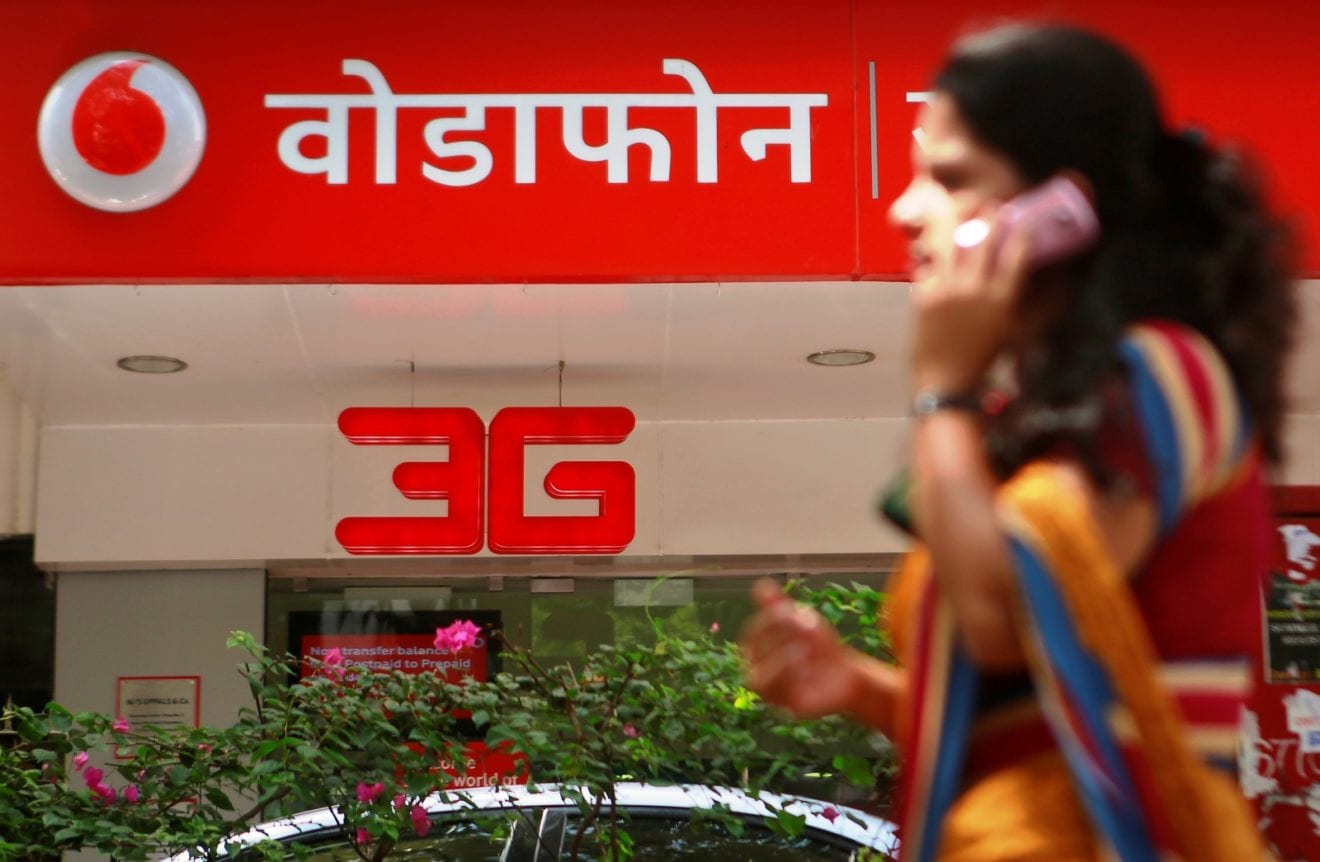
  • Vodafone said to start preparations for Indian IPO

    Vodafone said to start preparations for Indian IPO

    The company has asked interested investment banks to sign NDAs so it can provide more detailed information about the unit, citing people familiar with the matter.

    Vodafone may be ready to pick advisers by next month, the sources said. Around 10% of the Indian unit could be sold as part of the IPO. Vodafone India has a potential valuation of around $20 billion, which would make the IPO the largest in India to date.

    Vodafone has been planning to conduct an IPO for Vodafone India for some time, but macroeconomic, regulatory and market conditions have stood in the way.

    On the record, Vodafone spokesperson Matt Morgan commented that “[w]e have previously stated that we have started preparations for a potential IPO, which includes private conversations with banks, but this is a lengthy process and no decision will be made until we are at the end of it.”

  • Telenor may exit the Indian market

    Telenor may exit the Indian market

    Telenor India is gearing up to launch LTE services across its footprint, but according to reports Telenor’s days in India’s telecom sector may be numbered.

    CEO Sharad Mehrotra told that the operator has already upgraded 7,000 mobile sites to LTE.

    Telenor India plans to have its entire network upgraded by the end of the current financial year, which in India ends on March 31.

    The operator has awarded Huawei with a 12.4 billion rupee ($186.3 million) contract to modernize all 25,000 of its base stations across the six circles.

    But according to a separate report, Telenor is also considering exiting the Indian telecom market due to its negative experiences to date.

    Besides only holding spectrum in seven circles, Telenor India also has limited data spectrum and no 3G services. The company has only around a 5% share of India’s mobile market with its 2G-only operations.

    Despite investing over $3 billion since 2008 trying to build its Indian business, the loss of its Indian telecom licenses during the 2012 spectrum scandal was a setback the operator has been unable to come back from.

    According to the report, Telenor is seeking a valuation of $1.6 billion to $1.8 billion for its Indian business, but experts believe the company could find it difficult to find a buyer at this price.

  • Singtel, Inmarsat join forces on maritime cyber security

    Singtel, Inmarsat join forces on maritime cyber security

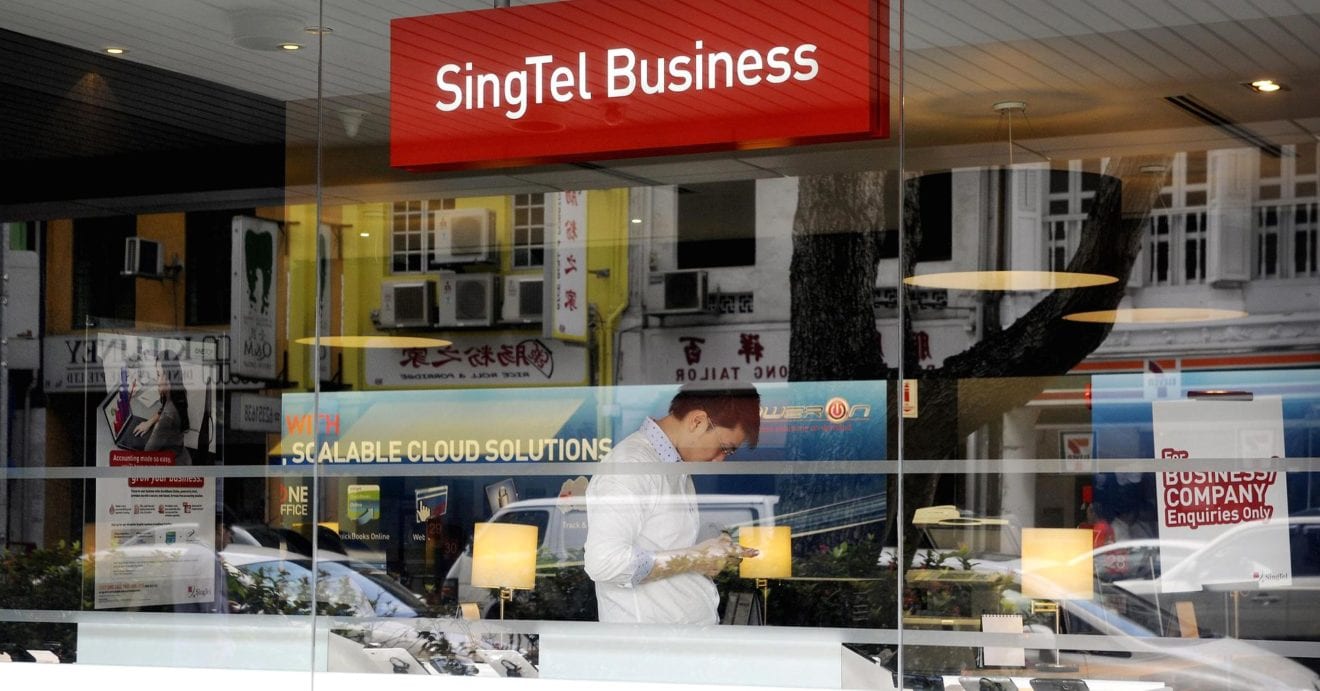
    SingTel has forged a strategic alliance with Inmarsat to jointly offer cyber security tools for the global maritime industry.

    Under the partnership, Trustwave, the cyber security arm of Singtel, will provide its Unified Threat Management (UTM) managed solution, to be integrated with Inmarsat hardware onboard ships, to protect data reduce cyber risk for maritime companies.

    Singtel said the UTM service offers a suite of cyber security defenses, such as advance firewall, anti-virus, intrusion prevention and web-filtering.

    Singtel and Inmarsat plan to launch the new maritime cyber security service in the second half of 2016, the companies said a joint statement.

    The new service will be delivered through FleetXpress, the highly anticipated high-speed broadband communication service Inmarsat launched in March for maritime and offshore operators.

    Andrew Lim, managing director of business group at SingTel’s Enterprise Group, said the partnership with Inmarsat is important for the company as it marks the first phase in rolling out Singtel cyber security services for Inmarsat.

    “As maritime systems become more digital, it is imperative for the industry to protect data onboard ships against all forms of cyber attacks. Our partnership with Inmarsat will provide maritime companies with a cyber security solution to meet rapidly evolving cyber threats, globally,” the executive said.

    Gary Gagnon, Inmarsat’s senior vice president of global cyber security, said the partnership with Singtel supports the company’s commitment to the market and elevates the benchmark for maritime cyber security.

    “The landscape of shipping is changing. As we move from traditional shipping into the ship intelligence era, the threat of cyber attacks have never been more real,” commented Ronald Spithout, president of Inmarsat Maritime.

    “Risks from malicious attacks and unlawful access to a ship’s intelligence, its system infrastructure and networks cannot be ignored, and the shipping industry needs to take action.”

    The Singtel-Inmarsat collaboration comes a day after Inmarsat announced it will use its new Global Xpress satellite fleet to provide in-flight connectivity services for the airline industry.

  • RCom to upgrade CDMA network to 4G from May

    RCom to upgrade CDMA network to 4G from May

    India’s Reliance Communications (RCom) has revealed plans to progressively upgrade its CDMA customers to 4G starting in May.

    The operator will upgrade its CDMA network to LTE using the newly liberalized 800-MHz spectrum starting on May 4, citing a letter sent from the company to the Department of Telecom.

    RCom will progressively move its roughly 5 million CDMA customers onto 4G as the rollout progresses.

    RCom has already liberalized its 800-MHz spectrum in 16 of India’s 22 telecom circles and recently received clearance from India’s cabinet to do the same in four more.

    The first round of spectrum liberalization cost a hefty 53.83 billion rupees ($806.5 million), while the second will cost around 1.3 billion rupees. In the remaining two circles, RCom has already paid for liberalized 800-MHz spectrum.

    The sources stating that RCom plans to take advantage of its spectrum sharing pact with Reliance Jio Infocomm by deploying its own network but mostly using Reliance Jio’s infrastructure to provide the 4G services.

    RCom and Reliance Jio plan to leverage each others’ spectrum to ensure they are both capable of providing pan-India 4G coverage and competing against the nation’s three largest operators, Bharti Airtel, Vodafone India and Idea Cellular, which have already launched 4G.

  • Nokia starts cutting jobs after ALU merger

    Nokia starts cutting jobs after ALU merger

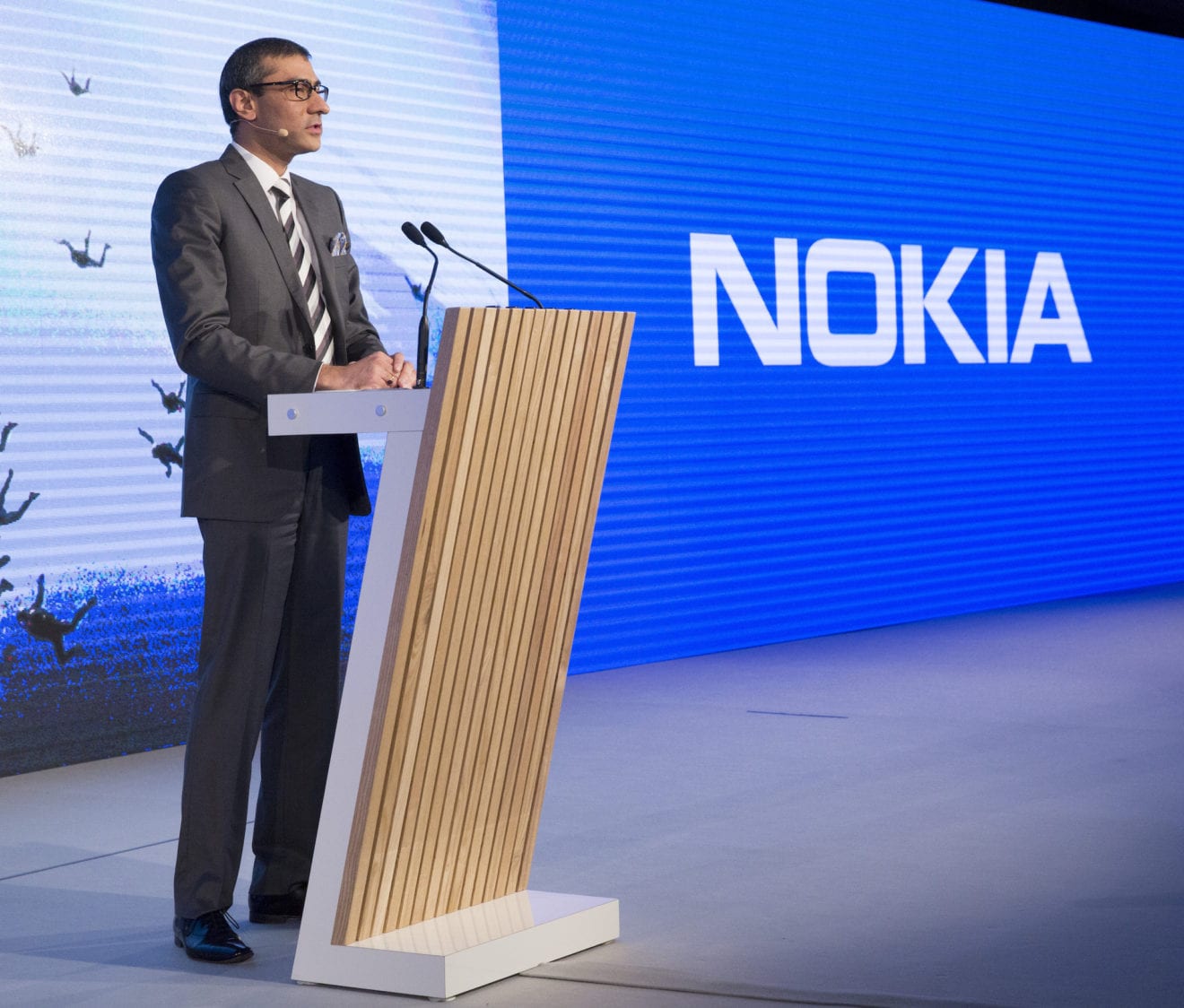
    Nokia has commenced a program to cut thousands of jobs worldwide as part of the cost-cutting and transformation program associated with the takeover of Alcatel-Lucent.

    The company plans to cut 1,300 jobs in Finland, 1,400 in Germany and 400 in France as part of the headcount reduction program, which will take place between now and the end of 2018.

    But Nokia also agreed to create 500 new R&D jobs in France as a condition of receiving approval from the French government to acquire Alcatel-Lucent.

    Nokia has not yet revealed how many jobs will be eliminated worldwide. The company has around 104,000 employees.

    The job cuts form part of a program aimed at achieving €900 million ($1.02 billion) in annual operating cost synergies by 2018. Nokia said the program is also aimed at adapting to challenging market conditions and shifting resources to important new and upcoming technologies including 5G, the cloud and the IoT.

    “These actions are designed to ensure that Nokia remains a strong industry leader,” commented Nokia president and CEO Rajeev Suri.

    “When we announced the acquisition of Alcatel-Lucent we made a commitment to deliver €900 million in synergies – and that commitment has not changed. We also know that our actions will have real human consequences and, given this, we will proceed in a way that that is consistent with our company values and provide transition and other support to the impacted employees.”

  • Equinix launches data hub service

    Equinix launches data hub service

    The ways in which enterprises assemble their network infrastructure have been evolving rapidly as the industry-wide shift to the cloud accelerates. This week Equinix offered another piece of its ongoing response to that shift, unveiling a new Data Hub service that lets enterprises store their data next to the clouds they use but keep control over it.

    Equinix already has Cloud Exchange, providing connectivity to an ecosystem of cloud providers, as well as Performance Hub, which gets the enterprise WAN into the data center.

    This new offering simply bundles the space and power needed to house big data in a pre-configured package and with partners lined up to help with the particular storage technology.

    The idea is to let folks put their data as close as possible to the cloud services that use it, while at the same time not ceding control or access to it.

    That might be for compliance reasons, it might be to leverage a common data store from multiple cloud providers, it might be simply for data protection or replication, or simply to keep latency as low as possible for things like IOT.

    It’s all part of the industry shift toward caring where data actually is on the internet. From low latency trading, to sovereignty issues, to the caching of content at the edge, to small cells, to proximity to renewable energy, the recurring theme in this era of internet infrastructure has been the old real estate saying, ‘location, location, location’. It’s a quite different theme from the prior decade, in which everything was about achieving scale.

  • Fujitsu switches on Tatebayashi Data Center

    Fujitsu switches on Tatebayashi Data Center

    Fujitsu has commenced operations at its new Tatebayashi Data Center. The newly opened Annex C, featuring optimized air conditioning systems and operating environment, meets Japan’s highest environmental performance standards.

    Fujitsu built the facility with a particular focus on support for hybrid clouds to support burgeoning demand, as well as for robust security and resiliency to disasters.

    Fujitsu is using the data center as the core facility for its digital business platform MetaArc, which supports the digital business of customers, and is helping to bring greater dynamism to the businesses of its customers.

    By optimizing the air conditioning systems, operating environment, and the ICT equipment environment, the new annex increases the use of outside air for cooling to roughly 7,000 hours per year, from roughly 3,250 hours for previous data centers.

    In addition, Fujitsu developed a new architectural structure and air conditioning method that maximizes the use of natural convection for airflow, thereby reducing the amount of electricity used for air conditioning and other equipment by approximately 60%. It is designed to achieve power usage effectiveness (PUE) of 1.20, the most efficient level in Japan.

    In addition to connections with other Fujitsu data centers throughout Japan and Fujitsu’s cloud services, the new annex uses standard equipment for closed networks to enable connections with third-party clouds, thereby providing fast support for hybrid cloud usage needs.

    The new annex is equipped with three different types of server rooms to meet diverse customer needs. The Standard rooms are high-quality server rooms equivalent to Tier 3. The Cloud rooms are for the exclusive use of clouds and use new air conditioning methods and support high integration and high power supply capacity.

    Thirdly, the FISC-compliant rooms are for customers in the financial services industry. The new annex complies with the Center for Financial Industry Information Systems (FISC) security standards, and uses an electricity distribution system with a UPS with reliability that exceeds Tier 4 standards.

  • Inmarsat to debut GX Aviation this year

    Inmarsat to debut GX Aviation this year

    Inmarsat has announced it will use its new Global Xpress (GX) satellite fleet to provide in-flight connectivity services for the airline industry.

    The company will launch its Global Xpress Aviation offering this year, and has already arranged to serve initial customers including Lufthansa, Singapore Airlines and Jazeera Airways.

    Inmarsat’s GX network entered commercial service in December. It currently includes three Ka-band satellites with sufficient capacity to meet existing and near-term demand for Airlines.

    A fourth GX satellite has already been commissioned, and is completing construction and testing by Boeing. Inmarsat said it will build on this capacity to meet more long-term demand.

    Inmarsat has also contracted Airbus Defence and Space to build the first two satellites for its sixth-generation fleet, the first of which is due for delivery by 2020.

    The new sixth-generation satellites will support both the Ka-band and L-band. Inmarsat expects to use the Ka-band payload to augment the capacity of the GX network in busy regions, and use the L-band capacity for a new generation of aviation safety services.

    Inmarsat is also building the European Aviation Network, which will integrate a satellite network with an LTE-based ground network provided by Deutsche Telekom. Aircraft will automatically switch between satellite and terrestrial connectivity.

  • Telstra conducting network review after outages

    Telstra conducting network review after outages

    Australia’s Telstra and vendor partners Ericsson, Cisco and Juniper have assembled a team of engineering experts to conduct an end-to-end review of its network after the company experienced three mobile network outages in two months.

    During a recent speech at the CommsDay summit, Telstra Operations COO Kate McKenzie said the company has already implemented changes based on reviews of the network to increase the capacity and path diversity of critical signaling channels.

    The company also plans to shortly augment the capacity of the HLR front end that managers customers’ subscription data.

    While the review is underway, Telstra Operations is working under a heightened awareness plan including requiring executive-level review of any changes planned for the mobile and core IP networks.

    “Our network is resilient and we are determined to get the best advice from around the world to help ensure that it stays that way. Our focus is on ensuring our network is the best available and rebuilding our customers’ trust by meeting their expectations every day,” McKenzie said.

    Telstra has offered its customers two separate free data days as compensation for the outages, including one last Sunday. McKenzie revealed that its mobile customers consumed 2.68Tb of data by the end of the day, three times the amount downloaded on a normal weekday and 46% downloaded during the last free data day in February.