Category: Telecom

Retail News Asia is committed to providing both local and global retailers with the latest Telecom & Telco news throughout the Asian market. This on a daily base.

  • PCCW Global to build international carrier exchange in Hong Kong

    PCCW Global to build international carrier exchange in Hong Kong

    PCCW Global has entered into a long-term collaboration agreement with Keppel Data Centres Holding to co-develop and market an international carrier exchange in Hong Kong.

    PCCW Global is the international division of major operator HKT, and Keppel Data Centres is a joint venture between Keppel Telecommunications & Transportation (Keppel T&T) and Keppel Land. These companies are themselves subsidiaries of Singapore-listed Keppel Corporation.

    The exchange will be fitted to Tier III specifications to ensure uptime of up to 99.982%. Construction is expected to be complete in the fourth quarter.

    The new facility will offer connectivity-related managed services to facilitate interconnects. It will be located in the same building as the Hong Kong point of presence for the 100Gbps Asia-Africa-Europe 1 subsea cable, which is also expected to be ready for service in Q4.

    The building will also be connected to PCCW Global’s backhaul network to link the international carrier exchange to numerous subsea cable landing stations. This will allow the exchange to be used as a gateway to mainland China.

    “We are happy to partner with PCCW Global for our first investment into the Hong Kong colocation market, which benefits from the city’s status as a key telecommunications and financial hub, as well as its connectivity to other hubs in Singapore, Amsterdam, London, and Sydney,” Keppel T&T CEO Thomas Pang said.

    “The expansion of Keppel’s data center footprint to Hong Kong is another step towards creating a data center value ecosystem that goes beyond colocation to providing value-added services and connectivity for our valued clients.”

  • Singapore’s StarHub adds support for Apple Pay

    Singapore’s StarHub adds support for Apple Pay

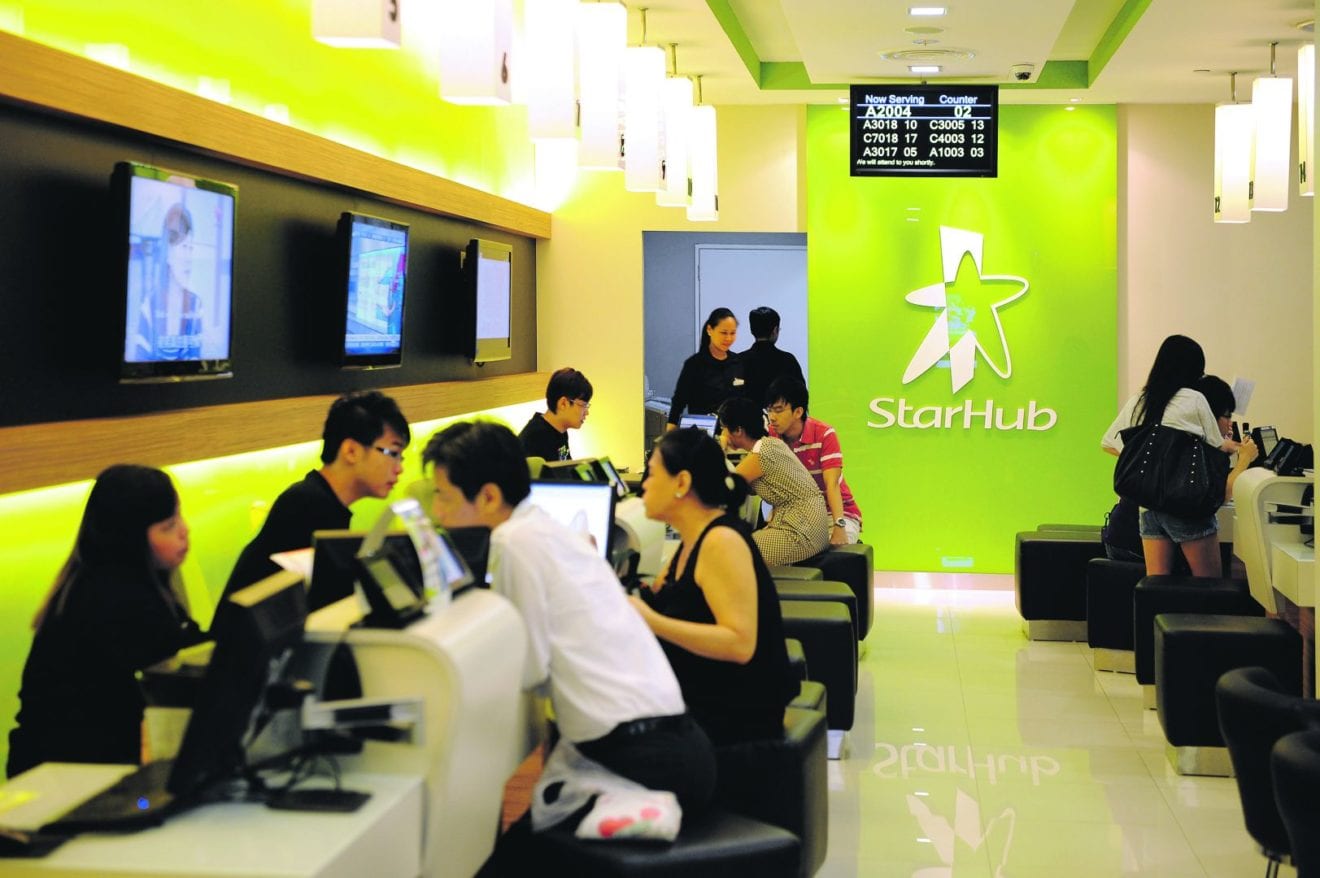
    Singapore’s StarHub has introduced the ability for its customers to use Apple Pay for secure mobile payments.

    When customers use a credit or debit card with Apple Pay, the actual card numbers are not stored on the device, nor on Apple servers.

    Instead, a unique Device Account Number is assigned, encrypted and securely stored in the Secure Element on the device. Each transaction is authorised with a one-time unique dynamic security code.

    “Digital commerce is fast catching on with Singapore consumers, and we want to be at the forefront of enriching our customers’ lifestyles using technology,” StarHub’s head of business strategy Yeong Mun-Ling said.

    “Being among the first Apple Pay-enabled merchants in Singapore, we are pleased that customers can now conveniently tap to pay at StarHub Shops using their iPhone and Apple Watch,” said Yeong.

    In stores, Apple Pay works with iPhone SE, iPhone 6s, iPhone 6s Plus, iPhone 6, iPhone 6 Plus and Apple Watch.

    Online shopping in apps accepting Apple Pay can be authorized with the touch of a finger with Touch ID.

  • CenturyLink expands cloud platform to Australia

    CenturyLink expands cloud platform to Australia

    CenturyLink has announced the availability of CenturyLink Cloud in Australia.

    The CenturyLink Cloud platform delivers enterprise-class control, agility, scalability and security backed by an industry-leading global network.

    Businesses based or operating in Australia can now turn to a single, trusted provider for public and private cloud infrastructure, managed services, colocation, network connectivity and support for advanced hybrid solutions.

    The Sydney cloud node joins the company’s other available cloud locations in the US, UK, Canada, Germany, and Singapore.

    Gery Messer, CenturyLink managing director, Asia Pacific, said “Launching the CenturyLink Cloud node in Australia signals our strong commitment to this key growth market.

    “We’re seeing increased customer demand for IT services in Australia, which is one of the most connected countries in the world. Thanks to our continued investment in Asia Pacific, many more organizations are achieving success on their hybrid IT journeys,” the executive said.

    Business research and consulting firm Frost & Sullivan predicts cloud spending in Asia Pacific will reach $20 billion in 2018.

    CenturyLink’s presence in Asia-Pacific dates back to 1999. Numerous regional and multinational corporations in Australia are customers.

    The Australia cloud node is one of several recent cloud advancements for CenturyLink. In early March, the CenturyLink Development Center opened in St. Louis with a focus on building cloud-based managed services that help drive increased value for businesses. In January, the company launched Relational Database (DB) Service, a MySQL-compatible database-as-a-service designed to meet application developers’ rapid software requirements and drive more agile IT.

  • Telstra to launch Cloud Gateway in June

    Telstra to launch Cloud Gateway in June

    Australia’s largest operator Telstra will launch a product for businesses needing to connect to multiple cloud environments.

    The company has also added Amazon Web Services (AWS) to its list of supported cloud platforms. The service, named Cloud Gateway, will launch in June 2016.

    Cloud Gateway aims to provide private and secure connectivity directly into multiple public cloud platforms. This one-to-many “gateway” model connects an IP network service to the cloud with data carriage, cross connect in the hosting data center, configuration and support.

    Organizations are expected to be able to access their chosen cloud platform from around the world simply and securely, with increased application performance via Telstra’s IP network.

    Initially, Cloud Gateway will offer customers around the world connectivity to AWS and IBM SoftLayer, while Australian customers can also connect to Microsoft Azure, Office365 and VMware vCloud Air. More infrastructure and SaaS platforms are expected to join over time.

    Telstra executive director for global products and solutions Philip Jones said Cloud Gateway aims to help customers take full advantage of multiple cloud-based workloads.

    “Most organizations don’t realize the full value of cloud out of a single service. Instead, our customers are investing in sophisticated hybrid cloud environments, which come with their own range of fragmented networking challenges,” said Jones.

    “These include managing multiple vendors, portals and contracts, while trying to maintain a high level of security, performance and operational efficiency. We believe that just because these solutions are sophisticated, doesn’t mean that they should also be complex. Cloud Gateway is Telstra’s simple way to connect multiple clouds, and create hybrid environments.”

  • Telkomsel’s LTE footprint reaches 100 cities

    Telkomsel’s LTE footprint reaches 100 cities

    The company has to date deployed more than 4,500 base stations in Sumatra, Java, Kalimantan, Sulawesi, Bali, Nusa Tenggara, and Papua.

    According to the operator, 4G subscriber take up is strong. The company has around 5 million 4G subscribers, and is aiming for 12 million by the end of the year.

    The latest city to be covered by Telkomsel’s LTE rollout is Ambon in the Maluku province. The company has established 29 base stations in the seaport city, and aims to roll out 373 in the Maluku region.

    Telkomsel’s current focus is on expanding its LTE network in the ‘buffer zones’ of Jakarta and Bandung, the company revealed.

    Telkomsel was Indonesia’s first mobile operator to launch LTE services in late 2014, using the 900-MHz band. The company – along with its four major rivals – also launched LTE over the 1800-MHz band in July last year.

  • Virgin Mobile Australia launches unused data ‘auction’

    Virgin Mobile Australia launches unused data ‘auction’

    Australian MVNO Virgin Mobile has launched a publicity stunt to promote its new data rollover postpaid plans by hosting an auction allowing local consumers to ‘bid’ for items using unused data allocations.

    The company will auction off 30 items over 30 days, with the top prize being an A$43,000 ($33,000) vacation package to the private Wadigi Island in Fiji.

    Consumers can place ‘bids’ on Virgin Mobile’s Facebook page by posting their most recent mobile bill showing how much unused data was left over. The person with the highest amount of unused data wins the prize for that day, or in the event of a tie whoever placed a bid first will win.

    Virgin Mobile Australia head of brand and consumer marketing Philippa Duant commented that the stunt aims to raise awareness of the company’s data rollover plans, that are designed to give subscribers a second chance at using their allocation.

    “Terabytes upon terabytes of unused mobile data are being taken back from consumers every month by other telcos,” she said.

    “At Virgin Mobile we don’t think it’s fair that something they’ve paid for is snatched away – they should get a second chance to use it and what better way than through a unique auction that offers the opportunity to live like [Virgin Group co-founder] Sir Richard Branson on your own private island.”

  • M1, IDA launch trial Wi-Fi service for public buses

    M1, IDA launch trial Wi-Fi service for public buses

    The Infocomm Development Authority of Singapore (IDA) and M1 have launched a trial Wi-Fi service for public buses.

    Commuters on selected SMRT Service 176 buses can now use Singapore’s first WiFi-On-The-Go service, as part of the heterogeneous network (HetNet) trials.

    The HetNet Trials are meant to validate advanced telecommunication technologies, and a network’s capabilities in providing pervasive and seamless connectivity in a real-life setting.

    Each connected bus is linked to M1’s 4G+ network through an intelligent in-vehicle unit that boosts the bandwidth available to the on-board wireless network.

    Commuters on the buses, a trunk route service linking Bukit Merah Interchange and Bukit Panjang Temporary Bus Park can go online by connecting to the “Wireless@SG” network on their smart devices. Commuters will be able to identify the two WiFi-enabled buses through on-board signages highlighting the service.

    M1’s carrier WiFi service will also be available on the buses by end-April. The M1WiFi service, with download speeds more than ten times faster than available through Wireless@SG, will seamlessly handover customers between M1’s mobile network and the WiFi-On-The-Go service before, during and after their journey, to enable them to able to enjoy activities such as streaming HD video content without interruption.

    In addition to passenger benefits, WiFi-On-The-Go can help business by enabling new applications. For instance, inbound tour operators can now provide tourists with WiFi on board their tour buses. Vehicle fleet operators can also use the enhanced connectivity to stream live video and collect other relevant information from the vehicle, as well as provide transactional services.

    “HetNet technological innovation is expected to bring about immediate and long term benefits for citizens. With the enhanced infrastructure, as a start, users in trial areas such as MRT stations and selected buses powered by M1, can now experience better coverage with seamless connectivity, IDA assistant CEO Khoong Hock Yun said.

    “Beyond the trials, we look forward to working closer with companies in the tech, engineering and R&D space to develop solutions that can meet pressing connectivity challenges.”

  • Malaysia’s P1 rebrands as webe

    Malaysia’s P1 rebrands as webe

    Malaysia’s Packet One Networks (P1) has rebranded as webe as part of its transformation into a digital mobility service provider.

    But the operator has not yet announced when it plans to launch mobile services or provide details on any mobile plans.

    The operator, which was acquired by Telekom Malaysia in 2014, plans to differentiate from its established rivals in the mobile network services market with a focus on being a community-driven brand.

    To support these ambitions the company has launched a mobile app to promote community projects. The initial seven projects include an app to highlight and alert uses on dengue prone areas, a project to create additional ICT classrooms for disabled students and the first Malaysian-made feature length zombie movie.

    Announcing the rebranding, webe CEO Puan Chan Cheong said the operator is last to market in the mobile industry and therefore needs to stand out by being significantly different.

    “Being last to market means we are also able to learn from mistakes – some our own, and some from others we’ve seen in the marketplace,” he said.

    “The past two years have been hard work for us as we sought to understand how we could build a better company and a brand you could love. The answer we arrived at: by having a higher purpose and a deeper connection with our communities.”

    He said the decision not to provide details on plans or products at the launch of the new brand was intentional as part of these promotional efforts.

    The launch will mark Telekom Malaysia’s re-entry into the mobile market following the demerger of its mobile unit (now Axiata Group) in 2008.

  • TOT to take charge of Thai rural broadband project

    TOT to take charge of Thai rural broadband project

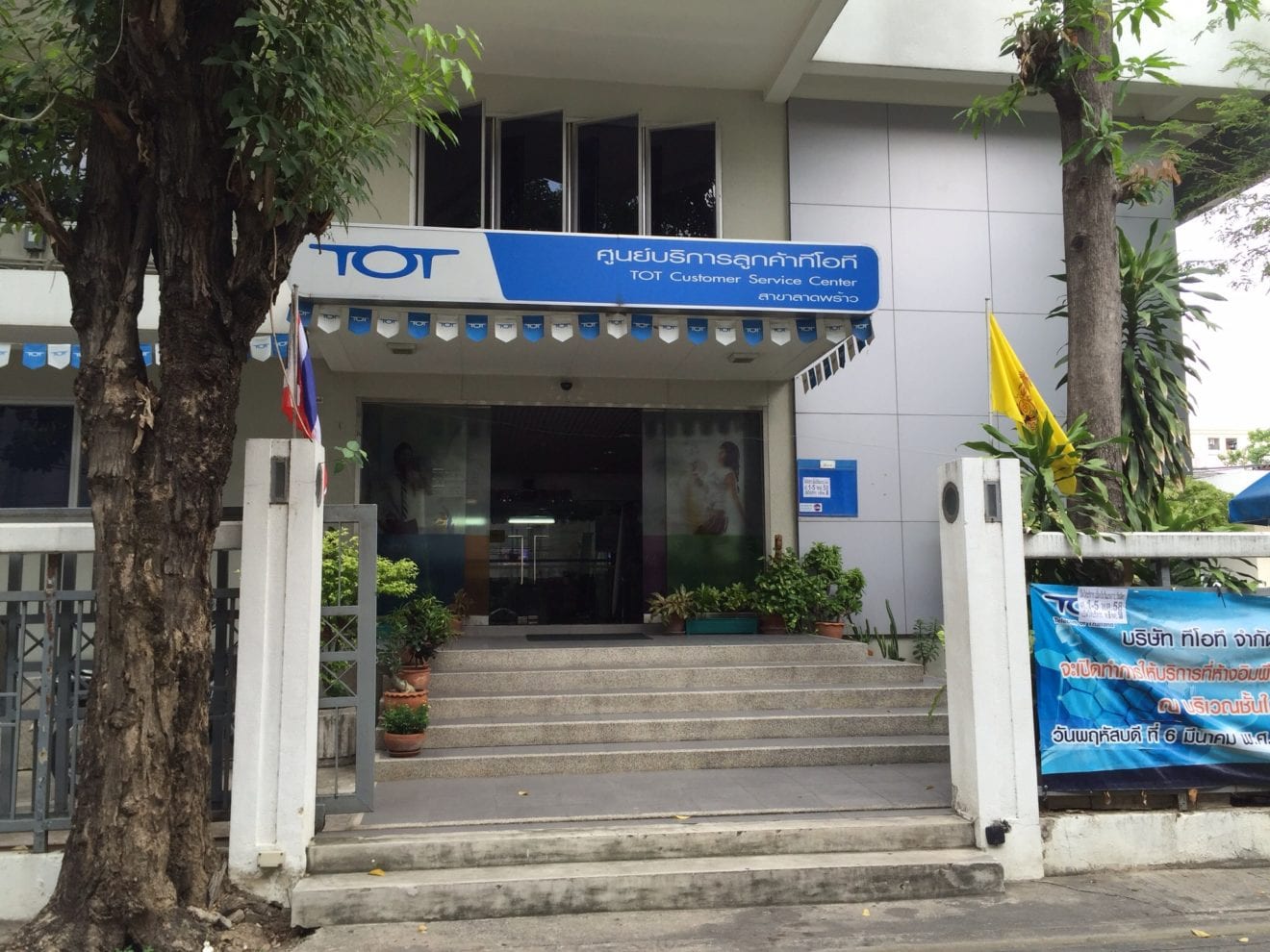
    Thai state-owned operator TOT has been instructed to go it alone in a project to build a national broadband network connecting 30,000 villages across the nation.

    TOT will take sole responsibility the project to bring broadband to the majority of Thailand’s villages that currently lack broadband connectivity.

    Initially the government had planned to have TOT and CAT Telecom jointly oversee the 15 billion baht ($427.5 million) project, but the ICT ministry decided that given TOT should take control of the project due to its existing extensive infrastructure.

    CAT has been told to focus on further investment in international internet gateway infrastructure to support the government’s policy of promoting Thailand as a digital hub for the Asean region.

    Construction of the network is expected to be complete by May 2017. The state will use the network to provide free broadband connectivity in public places in all villages, while TOT plans to offer at least 20Mbps plans with affordable tariffs.

    The national broadband project is expected to be partly funded from private sector investments. It forms part of the government’s five year master plan that aims to improve Thailand’s telecom infrastructure to lift the minimum standard for broadband speed across the nation.

  • Yooya exceeds 4b views

    Yooya exceeds 4b views

    Yooya said it has achieved over four billion lifetime views, with more than 2.75 billion added in the last seven months, driven by a combination of an increasing number of distribution partners and a growing stream of compelling new content.

    This development coincides with Yooya securing $3 million at a post-money valuation of $13 million in its Series Seed financing round.

    FastForward Innovations led the latest investment round, with previous investor Dream Incubator of Tokyo also joining the round.

    Yooya has been instrumental in helping content producers monetize China’s fragmented online video market by providing a single platform for content distribution, rights management, and advertising solutions.

    Yooya brings together many key components essential to the equation, including licensing at scale, automated ad sales, consolidated data and analytics, and simplified content distribution.

    For advertisers looking to tap into the large-scale engagement online video in China offers, Yooya provides a single point of contact to access distribution across all major video platforms and access to hundreds of channels, covering key advertising demographics and interest categories.

    “This growth means that finally there is a viable managed platform on which to build better monetization and more effective video-based advertising,” said Yooya CEO Rick Myers.

    Currently with over 200 million network views on average per month, Yooya predicts it will hit more than 800 million video views per month before the end of 2016, representing month-on-month growth of 40%.

  • Viettel to roll out 3G-only network in Myanmar

    Viettel to roll out 3G-only network in Myanmar

    Vietnamese military-run operator Viettel has provided details of its plans for entering the Myanmar mobile market, including a goal of connecting 95% of the country’s population within three years.

    Viettel was recently selected as the international partner for a consortium of 11 local technology and other companies selected to become Myanmar’s fourth mobile operator.

    As part of this consortium, Viettel announced plans to roll out a 3G-only network on the 900-MHz and 2100-MHz frequency bands. The operator also aims to launch 4G services on the 1800-MHz bands if it secures the required licenses.

    The consortium will have a total investment of $1.5 billion, and Viettel will take a 49% stake in the venture.

    “We enter Myanmar at this historic phase in the country’s reform era, when the country is forecast to witness accelerated economic growth, enhanced also through increased foreign direct investment,” Viettel deputy general director Le Dang Dung commented.

    “Advancing the country’s telecom infrastructure will help us drive a surge in mobile and smartphone subscription penetration, to achieve the government’s target of reaching 90% of the population by 2020. We believe that the role of telecommunications is fundamental in driving Myanmar’s next phase of economic growth.”

    The consortium will be competing with Telenor Myanmar and Ooredoo Myanmar, as well as the joint venture between Myanmar Posts and Telecom and Japan’s KDDI.

  • Zong Pakistan, Fortumo team for direct carrier billing

    Zong Pakistan, Fortumo team for direct carrier billing

    Mobile payments company Fortumo and China Mobile Pakistan (Zong) have entered into a direct carrier billing partnership in Pakistan.

    Digital content merchants and app stores using the Fortumo carrier billing platform can now collect payments from 26 million Zong customers in the country. Fortumo is the only global direct carrier billing provider in Pakistan, where the company has been working together with Telenor Pakistan since July 2014.

    “Millions of people in emerging markets are accessing the internet only from their phones,” said Gerri Kodres, chief business officer at Fortumo. “This new digital audience is connected to the world but cannot access paid content as a majority of them do not own credit cards.”

    An estimated 56 million Pakistanis now have a smartphone. The adoption of smartphones in the country is helped by both Zong and Telenor Pakistan launching 3G networks in 2014.

    Fortumo’s direct carrier billing platform allows users to make payments over a data connection by confirming purchases with one click on their phone. Payments are processed without any additional information required from the mobile user which provides a significant conversion improvement compared to any other online payment method.

    Fortumo’s direct carrier billing platform is currently available to over 1.3 billion people in 16 Asian countries. Globally Fortumo covers 95 countries and reaches over 3 billion end-users with its carrier billing solution.

  • Smart starts deployment of LTE-Advanced

    Smart starts deployment of LTE-Advanced

    The Philippines’ PLDT, through wireless subsidiary Smart, has commenced the rollout of LTE-Advanced carrier aggregation.

    The operator has initially deployed the technology in the popular tourist destination of Boracay, marking the first implementation of the technology in the Philippines.

    Smart said the Boracay LTE-A network has posted speeds of up to 250Mbps. The company started testing the technology in Boracay and other locations in 2013, and has commenced the rollout now commercial devices that support LTE-A are available.

    “Combined with our other network improvement initiatives for both our mobile and fixed line networks, the introduction of LTE-A will help boost internet services in the country and enable more Filipinos to enjoy and benefit from the fast-growing range of digital services that PLDT and Smart offer,” PLDT and Smart CTO and information adviser Joachim Horn said.

    These initiatives include a program to integrate the networks of PLDT mobile brands Smart and Sun to improve network quality for subscribers of both. This is expected to improve the effective coverage for subscribers by anywhere from 50% to 100% depending on service area.

    Horn said particular attention is being paid to enhancing 3G coverage because 90% of Smart and Sun’s mobile internet users have 3G handsets.

    “We are also planning ahead, in anticipation of future advances in technology. Our current investments in network facilities are already being done in a way that will enable us to be ready for 5G when it arrives sometime in 2020. For this purpose, we are working closely with NTT DoCoMo, which is one of the global pace-setters in the development of 5G,” Horn added.

  • Thai junta takes control of 900-MHz re-auction

    Thai junta takes control of 900-MHz re-auction

    Thailand’s military junta has overruled the telecoms regulator for the 900-MHz auction, bringing it up one month to May 27, curtailing public debate on and possibly allowing TrueMove in for another chance to claim the entire 900-MHz band. The opening bid will be Jasmine’s winning bid of $2.1 billion (75.65 billion Baht). Jasmine failed to secure payment and defaulted, giving rise to the need for a new auction.

    The junta, formally known as the National Council for Peace and Order, issued its 16th decree under article 44 of the interim constitution, commonly referred to as the absolute power clause. This means that the order is final and cannot be appealed in any court. The order was signed by Prime Minister General Prayut Chanocha in his capacity as NCPO chairman.

    Earlier reports suggested that moving the auction up a month would mean there would be little or no public consultation as is required under the frequency act, though this was not made explicit in the order.

    The NCPO also ordered the National Broadcasting and Telecommunications Commission to amend the auction rules in order to ensure value for the country and healthy competition. Any changes will have to be agreed to by the NCPO. This puts the NCPO in direct control of the auction.

    While again this was not explicit in the wording of the order, earlier reports suggested that the junta was keen to allow TrueMove to participate in the auction, despite an NBTC ruling to exclude TrueMove from the new auction by imposing a spectrum cap as it had already won half the 900-MHz band in the December auction.

    The deadline for applying for the auction is May 18.

    The NCPO also ordered TrueMove’s 900-MHz licence to be extended to match the new expiry date of the new licence.

    The NCPO order allows AIS to continue using the 900-MHz spectrum for its 2G customers until June 30 or until the NBTC issues a new licence for the auction winner. AIS’ 900-MHz was originally scheduled to be turned off in a couple of days on April 14.

    AIS CEO Somchai Lertsutiwong thanked the NCPO for decisively using article 44 to settle the matter and to prevent 2G AIS customers from losing connectivity over the long weekend that is the Thai new year.

    “The NCPO has truly returned happiness to the people. I want to shout at the top of my voice, ‘The government is acting in the best interests for the people’”, he said.

    The AIS CEO said that the situation had changed and that the regulator has now made it clear that there would be no more cheap spectrum available, hence the starting price for the new bid is reasonable.

  • Singtel adopts web chat to improve customer service

    Singtel adopts web chat to improve customer service

    Singtel has improved its real-time customer engagement capabilities with the implementation of a web chat system from online and mobile messaging platform provider LivePerson.

    The cloud-based chat solution allows Singtel to take advantage of  predictive intelligent targeting and behavioural intent tools to enhance web assistance services and customers’ overall communication experience with Singtel.

    “As Singtel continually grows its suite of next-generation communications and digital services, we are also investing in new IT capabilities to support these services,” Singtel vice presiden of consumer operations Candy Chua said.

    “We want to give customers a seamless and effortless experience when they look for information or transact with us. For example, with the LivePerson web chat, we can proactively reach out to customers to render timely support when they are surfing our website.”

    Steven Fitzjohn, LivePerson’s APAC Regional Vice President added that “there is a gap between the way we choose to communicate with our friends and family – mostly through digital and social channels – and the way brands communicate with us, which is predominantly through outmoded voice channels. Singtel is differentiating itself by taking action to bridge this gap. It is presenting customers with a channel that is familiar and simple to use, and offers customers a better experience overall.”