Category: Telecom

Retail News Asia is committed to providing both local and global retailers with the latest Telecom & Telco news throughout the Asian market. This on a daily base.

  • Facebook scandal creates opportunity for cellcos

    Facebook scandal creates opportunity for cellcos

    The Facebook and Cambridge Analytica data harvesting scandal has eroded trust in digital service companies, which has opened a window of opportunity for mobile operators, according to new research from Openet.

    A survey of consumers in the Philippines, the UK, US and Brazil found that more than 50% of consumers are now less likely to share personal data with digital services companies.

    Consumers now see their mobile operator as more trustworthy than both social media platforms and digital services companies such as Netflix, Spotify and Skype.

    More than nine in ten (92%) consumers would be happy to consider mobile operator delivered digital services as an alternative.

    In addition, 66% would now prefer to pay for services if it means more control over their data, which could even signal the beginning of the end of the Freemium era, Openet said.

    Openet CEO Niall Norton noted that despite having an abundance of subscriber data, mobile operators have traditionally had a much more conservative approach to making use of this data compared to digital service providers.

    “For a long time, this conservative approach to data use has been used as an unfavorable measure for operators’ digital efforts, especially in comparison to other digital-first companies. But times are changing and it’s clear that consumers expect more if they are to hand over personal data in exchange for services,” he said.

    “Mobile operators have earned the right to answer this call. But to be successful, they must learn from the mistakes made by social media and digital service companies alike. Transparency around data collection and opt-in processes are now top priorities for consumers. Operators must bear this in mind when seizing new digital opportunities.”
  • Telstra, Ericsson, Intel claim another 5G first

    Telstra, Ericsson, Intel claim another 5G first

    Australian operator Telstra, Ericsson and Intel announced they have jointly completed the first end-to-end 3GPP non-standalone 5G data call on a commercial network in a multi-vendor setup.

    The trial at Telstra’s 5G Innovation Centre on the Gold Coast used licensed 3.5-GHz spectrum, and Ericsson 5G new radio, baseband and packet core solution, a Telstra SIM and the Intel 5G Mobile Trial Platform.

    The trial involved a network connection to an Ericsson virtualized 5G packet core running on Ericsson’s network functions virtualization infrastructure. The 5G slice was then connected into the existing Telstra mobile network.

    Ericsson and Intel jointly completed the first lab-based end-to-end non-standalone 5G data call earlier this month, and the live demonstration builds on this milestone.

    Demonstrating this 5G data call end-to-end using my own personal SIM card on Telstra’s mobile network is the closest any provider has come to making a ’true’ 5G call in the real world-environment, and marks another 5G first for Telstra,” Telstra group managing director for networks Mike Wright said.

    Previous 5G firsts have included the first 5G data call over 26-GHz spectrum, Australia’s first 5G connected vehicle trial and its first 5G mobile gaming demonstration.

    “We continue to work with global technology companies Ericsson and Intel as well as global standards bodies to advance the deployment of commercial 5G capability in Australia,” Wright concluded.

  • Telekom Malaysia launches cheaper broadband plans, says more to come

    Telekom Malaysia launches cheaper broadband plans, says more to come

    Telekom Malaysia Bhd (TM) unveiled new broadband plans Thursday and pledged that it will continue to come up with more packages in line with the government’s aspiration for cheaper services by year-end.

    “We will continue, of course. This is the continuation of giving better and better (plans) to our customers, be they households or businesses. We started back in 2010 (launched unifi), then we had the upgrades in 2016 and 2017. So it is a continuation,” said acting group CEO Datuk Bazlan Osman.

    Speaking at a briefing on the new plans, Bazlan said it will consider feedback from customers, stakeholders and the government, and will continue to come up with more packages, based on demand.

    TM unveiled unifi Basic, a broadband-only plan at 30Mbps with a 60GB monthly usage quota for RM79 per month. This plan is only for households with monthly income of RM4,500 and below.

    The RM79 per month is 56% lower than the current 30Mbps unifi Home plan, which is priced at RM179 per month. Unifi Basic is available starting Aug 15 and pre-orders open on July 15.

    TM will provide upgrades of up to 800Mbps for existing unifi Home customers under its unifi turbo plan. Starting Aug 15, they will be upgraded in phases up to 10 times the current broadband speed, for the same price.

    For example, an existing 30Mbps unifi Home customer will be upgraded up to 300Mbps while a 100Mbps unifi Home customer will be upgraded up to 800Mbps. New customers who subscribe to any existing unifi plan before Dec 31 will also enjoy the speed upgrade in phases, beginning 2019.

    In addition, TM will upgrade over 340,000 Streamyx customers in unifi coverage areas to unifi while those who are not in unifi coverage areas will have double the speed they get now.

    Executive vice-president Imri Mokhtar said TM will continuously invest in fixed and wireless technologies to bring high speed broadband to its customers with more than 350,000 Streamyx customers expected to enjoy faster broadband soon.

    “Though the broadband plans unveiled today are primarily for home customers, we certainly have not forgotten our SME customers,” he said, adding that new plans for its business/SME customers will be announced in the next few months.

    Meanwhile, the unlimited unifi Mobile postpaid plan was announced today at a promotional price of RM99 per month, available from July 15 exclusively for its existing broadband customers.

    “These new plans mark our commitment to bring better affordability/price, speed and coverage for all Malaysians to enjoy a seamless digital experience with unifi. We expect the new broadband plans to place Malaysia alongside the top broadband nations in the region,” said Bazlan.

  • Weaker Q2 earnings expected for major carriers

    Weaker Q2 earnings expected for major carriers

    Two of Korea’s three major telecom carriers are presumed to have posted weaker earnings for the April-June period from a year earlier, industry watchers said Sunday, apparently on increased mobile user discounts and changed financial reporting standards.

    According to the data compiled by market tracker FnGuide, SK Telecom, the country’s largest telecom network operator, is expected to report 366.2 billion won ($328 million) in operating profit in the second quarter, down 13.5 percent on-year. Its sales are forecast to decrease 1.6 percent to 4.278 trillion won.

    KT likely posted an operating profit of 387.8 billion won, down 13.3 percent, with sales largely unchanged at 5.87 trillion won.

    The operating profit of the third carrier and the smallest, LG U+ is forecast to grow 3.7 percent to 215.7 billion won on 3.04 trillion won in sales, up 1 percent.

    Analysts said the cut in SK Telecom’s and KT’s revenues is attributable to the increased number of users who signed up for monthly discounts of 25 percent.

    Smartphone users here are allowed to choose between a one-off discount and the sharp monthly cut in rates. The government policy aims to provide more affordable telecom services for local households and ban mobile network operators from rolling out excessive discounts on devices to lure each other’s clients.

  • China, Japan and Korea enter 5G alliance

    China, Japan and Korea enter 5G alliance

    The ICT ministers of South Korea, Japan and China have jointly agreed to collaborate on the standardization of 5G technology.

    Korean minister for science and ICT Yoo Young-min, Chinese minister for industry and information technology Miao Wei and Japanese minister for internal affairs and communications Yoo Young-min convened last week to discuss ways to promote cooperation in communications policies and regulations.

    The meeting marked the first ministerial meeting between the three countries in seven years, and the sixth overall.

    The ministers agreed to collaborate on accelerating the commercialization of 5G technology, reducing roaming fees between the three countries and facilitating the deployment of 5G and other advanced technologies for the 2020 Summer Olympics in Tokyo and the 2022 Winter Olympics in Beijing.

    At the summit, more than 200 government and business leaders from the three countries also agreed to cooperate on the development of emerging technologies including 5G, IoT and AI.

    Meanwhile Korea’s ICT ministry has set today as the deadline for applications to participate in South Korea’s first 5G auction.

    The nation’s three mobile operators SK Telecom, KT and LG Uplus are expected to all apply to participate in the auction, which is scheduled to commence next Friday. Spectrum in both the 3.5-GHz and 28-GHz bands will be put on the block.

  • Telstra launches mobile satellite small cell

    Telstra launches mobile satellite small cell

    Australia’s Telstra has launched a new offering providing satellite-based small cell solutions for remote areas, and has signed on the first customer for the service.

    The Mobile Satellite Small Cell product offering is designed to provide most of the benefits of Telstra’s LTE-Advanced services at a lower cost.

    People and organizations in remote areas will be able to use the service to extend coverage in underserved remote areas.

    According to Telstra, the service can support voice, email, messaging and internet browsing but is not intended to support data-heavy applications such as video streaming or calling.

    The operator is targeting the offering at local councils, tourist attractions, agricultural businesses and other organizations seeking to extend coverage where none exists.

    Telstra aims to sell up to 500 satellite small cells over the next three years after having tested the technology for the last 12 months. The first two small cells will be deployed for Queensland’s Winton Shire Council.

    “The Telstra 4GX-lite Mobile Satellite Small Cell is a way to bridge the gap between what customers want and what is financially viable. This solution gives consumers, businesses and local councils more control over where they can get mobile coverage, making them part of the decision making process,” Telstra group managing director for networks Mike Wright said.

    “We’ll continue to look for innovative ways to expand our network across the country so that all Australians can have access to the latest technology and stay connected to the things they love.”

  • Kakao’s technical glitches cause disruptions Monday

    Kakao’s technical glitches cause disruptions Monday

    Korea’s top mobile messenger Kakaotalk resumed normal services after experiencing disruptions around 5 p.m., its operator Kakao said Monday.

    Kakao said the messenger suffered problems for around an hour before being normalized at 5:48 p.m. It claimed there seems to have been some sort of error while the system was being updated.

    Earlier in the day, deliveries of messages on its platform were delayed, and the personal computer version of the program was also not working properly.

    The company said the service is now fully normalized.

    KakaoTalk is the most popular mobile messenger app in Korea, boasting a whopping 40 million users.

  • Naver to invest $134 million on overseas comics business

    Naver to invest $134 million on overseas comics business

    Korea’s top portal operator Naver said Monday it will invest 150 billion won in its online comic platform to better penetrate into overseas markets.

    Naver said it will make the investment through a paid-in capital increase program and acquire 300,000 additional shares in its wholly-owned affiliate, Naver Webtoon.

    Naver Webtoon said it plans to use the cash to expand its presence in foreign markets like the United States and Japan.

    The portal operator has been making various efforts to beef up its comic business, also investing some 60 billion won in January in its affiliate.

    Naver said it currently has some 5 million active users in the United States, claiming the investment will help Naver Webtoon achieve further growth going forward.

  • Telekom Malaysia tumbles 12% in early trade on news of lower broadband prices by year-end

    Telekom Malaysia tumbles 12% in early trade on news of lower broadband prices by year-end

    Shares of Telekom Malaysia Bhd slumped as much as 12.1% this morning to a low of RM3.19 in anticipation of a drop of at least 25% in broadband prices by year-end.

    At the noon break, the stock fell 39 sen or 10.7% to RM3.24 on 39.82 million shares done.

    Multimedia and Communications Minister Gobind Singh Deo said yesterday that discussions by relevant parties on the final charges are expected to conclude by August, after which lower priced broadband packages are expected to be offered.

  • Huawei launches intent-driven network solution

    Huawei launches intent-driven network solution

    Huawei has launched a new industry-oriented intent driven network (IDN) solution at CEBIT 2018, targeted at vertical industries including ISPs, retailers and government customers.

    The new solution aims to drive in-depth integration of ICT infrastructure, AI and industry-specific production systems to help customers accelerate digital transformation.

    Huawei’s IDN solution is customized to the needs of various verticals and applications. For high-performance AI computing, the solution incorporates an ultra-high-speed lossless Ethernet AI fabric to shorten AI training times by up to 40%.

    For the finance industry, the solution has been designed to help financial services organizations build ultra-large cloud data center networks scalable to up to 100,000 servers per cluster system.

    For retailers, the solution converges Wi-Fi and IoT technology to allow all-wireless support for both networks, while for government and enterprise campus networks, the solution provides full lifecycle cloud based management leveraging big data analytics and AI.

    Meanwhile Huawei has also announced an upgrade to its CloudFabric solution designed to make it easier for customers to adopt intent-driven networking for their data centers.

    The intent-driven networking for CloudFabric solution helps enterprises identify intent to implement automatic network configuration, predictive analysis, and intelligent operations and maintenance with continuous verification and optimization, the company said.

  • 3 HK calls for transparent 5G spectrum roadmap

    3 HK calls for transparent 5G spectrum roadmap

    Hutchison Telecommunications Hong Kong Holdings’ (HTHKH) mobile division 3 Hong Kong has joined the call for reforms to the market’s spectrum policy and roadmap to expedite the launch of 5G services.

    In a submission to the government’s consultation on arrangements for the allocation of spectrum in the 3.4-GHz to 3.6-GHz band, 3 Hong Kong urged the government to introduce a transparent and long-term spectrum policy with a 10-year rather than 3-year spectrum supply plan.

    The operator raised concerns about issues including the Communications Authority’s proposal to establish large scale 5G restriction zones to minimize interference to the satellite services operated in the band for satellite remote testing, tracking and control.

    3 Hong Kong said such zones would have a negative impact on both 5G communications and the deployment of M2M connectivity across Hong Kong, which will be a key component of the HKSAR government’s smart city ambitions.

    Mobile operators have proposed a number of alternatives to the restriction zones, including relocating the telemetry, tracking and control station from Tai Po Industrial Estate to a remote area, adding shielding coverage to telemetry stations and optimizing radiation from mobile base station antennae.

    The operator also opposed a suggested spectrum cap of 100MHz at the upcoming auction, citing concerns it may lead to a scenario of only two successful licensees dominating 5G markets.

    Meanwhile the reserve price should be set at a minimal level to encourage 5G infrastructure investment, the submission states.

    Finally, 3 Hong Kong joined HKT in urging the government to provide operators with a right of access to enter buildings, shopping malls, MTR premises and road tunnels to install 5G equipment.

    But in its own submission, Asia’s top satellite operator AsiaSat has expressed significant concerns about the proposal to reallocate the C band to 5G services, and argued that the proposed exclusion zones are not an adequate solution.

    The C-band provides a variety of services including contribution and distribution of TV services, broadcasting data and information such as meteorological data, maritime/aeronautical related safety, disaster relief and emergency communications services, AsiaSat said.

    Reallocating the band will significantly limit Hong Kong and Greater China’s satellite operators’ ability to control and monitor their satellite fleet and earth stations, the submission states.

    Links for safe monitoring and operation of satellites may be lost and numerous satellite TV dishes mounted on buildings across Hong Kong would need to be readjusted.

    AsiaSat has recommended that the government require operators to find alternative mitigation methods to minimize interference, and that operators should bear the cost of implementing these methods.

  • GCX, BMC UK facilitate live broadcast of World Cup

    GCX, BMC UK facilitate live broadcast of World Cup

    Reliance Communications’ Global Cloud Xchange (GCX) subsidiary and Broadcast Media Communications (BMC UK) have teamed up to deliver end-to-end connectivity for the live broadcast of the FIFA World Cup 2018 to audiences around the world.

    The tournament kicked off in Russia on June 14. This event will be carried across GCX’s network, via BMC, from Frankfurt to the London Broadcasting House of British Broadcasting Corporation (BBC) and used exclusively by BBC Sport to broadcast the matches to British audiences.

    GCX’s end-to-end network solution will provide fast, dedicated and reliable connectivity, enabling BMC to deliver live video contributions into BBC’s coverage of the FIFA World Cup, as well as active monitoring of the transmission over GCX’s global network, ensuring consistent broadcast quality for global audiences.

    FIFA World Cup matches are among the most watched and followed sporting events in the world, especially important for soccer fans across Europe and the Asia-Pacific region. It is, therefore, critical for us to provide these fans with smooth, uninterrupted access to the game,” said Lee Russell, operations director at BMC UK.

    “With GCX’s expansive Global Network and its proven media capabilities, we are confident that we will once again deliver an unrivaled viewing experience to our viewers.”

    “We are delighted to partner with BMC UK again to provide high-quality connectivity, enabling live broadcasts of the FIFA World Cup to global viewers who can enjoy this highly anticipated event,” said Mark Russell, managing director, GCX International.

    “The broadcast from Frankfurt to BBC London Broadcasting House is being facilitated through the integration of GCX’s privately-owned Global Network with BMC’s resilient Media Quality Network, tailored to meet the high-quality connectivity standards of sports, news and special broadcast events.”

    GCX’s privately-owned global network offers geographic coverage and the ability to provide both subsea and terrestrial connectivity across the globe, optimized for the high-performance delivery and distribution of content, typically required by media and broadcasting companies.

    The FIFA World Cup concludes with the Finals being held at Moscow’s Luzhniki Stadium on July 15, 2018.

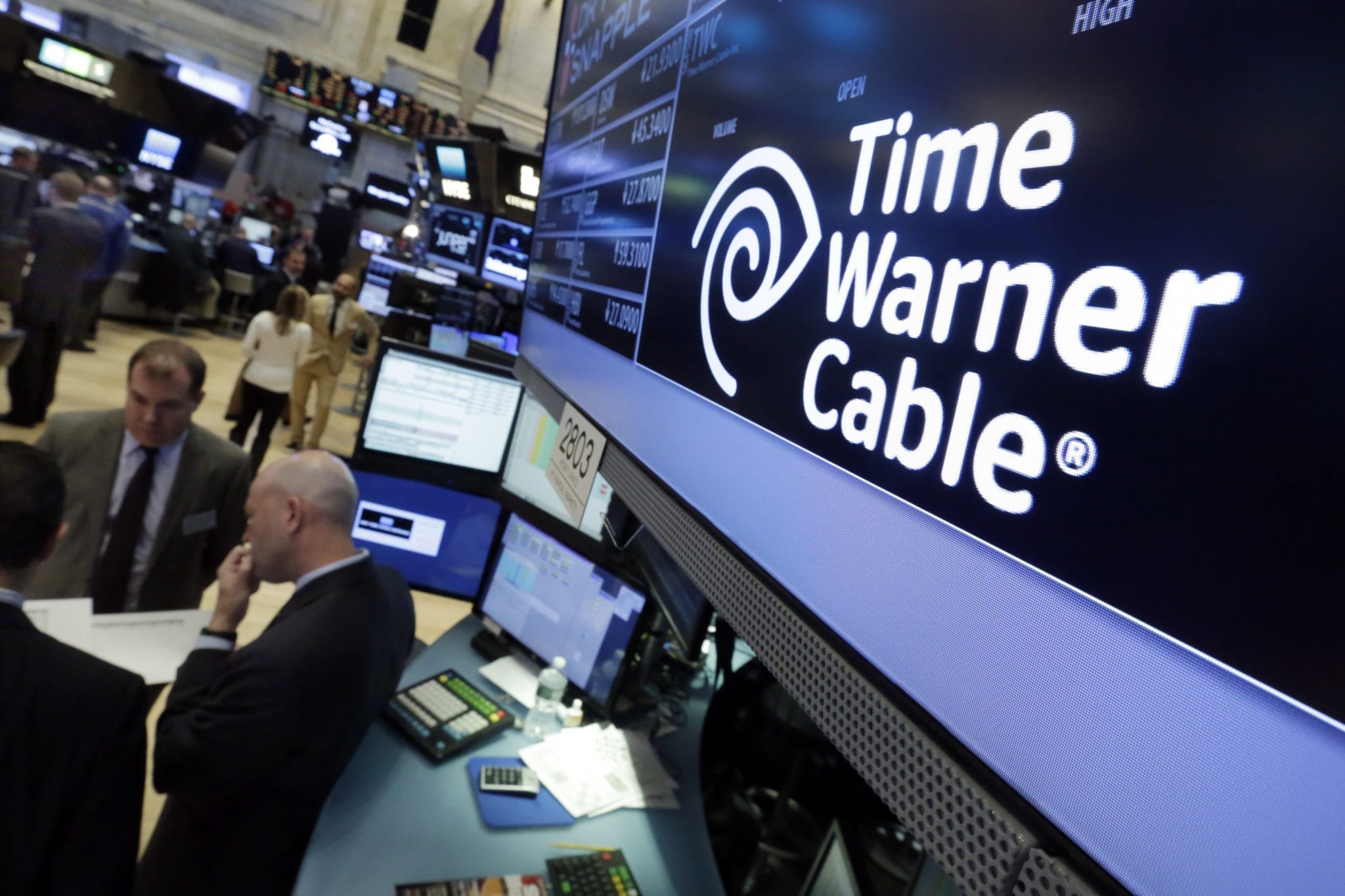
  • AT&T completes acquisition of Time Warner

    AT&T completes acquisition of Time Warner

    Well, they certainly wasted no time. Two days after a federal judge nixed the federal government’s objections to the deal, AT&T has completed its acquisition of Time Warner.

    The final purchase prices was $42.5 billion in cash plus 1,185 million shares of AT&T’s common stock. AT&T now expects $1.5 billion in cost synergies by the end of year 3, as well as another $1 billion in revenue synergies.

    AT&T CEO Randall Stephenson will lead the combined company, while John Donovan will lead the US communications side, John Stankey will lead the media business, Lori Lee will lead the international business, and Brian Lesser will head up the ad and analytics business. Time Warner’s now former CEO Jeff Bewkes will remain on for a transition period as a senior advisor.

    The deal significantly reshapes the content and network markets, combining AT&T’s fixed and wireless network reach with the likes of Warner Bros, HBO, and CNN. Mixing content and distribution like this is of course the hot topic of the year, but there are dangers alongside the opportunities.

    The communications side will have to keep the focus on network quality and investment even as the headlines go where they’ve been tending to lately, to the content side of things.

    Attention will now shift to the next potential mega deals, with Comcast’s bid for Fox taking its turn in the spotlight. But I suspect the integration process at AT&T may be the key action to watch over the next few quarters.

    There are a lot of synergies to achieve, and most of them involve finding a new balance between very different business cultures. It’s one thing to say that the federal government shouldn’t stand in the way, and an entirely different thing to prove that the whole shebang was a good idea in the first place.

  • Singapore telcos expect partner ecosystem boom

    Singapore telcos expect partner ecosystem boom

    Half of communications service providers in Singapore expect to improve revenue by at least 16% in just two years by leveraging partner ecosystems, according to a new study from BearingPoint.

    Over 80% believe that partner ecosystems can help them remain competitive and 70% expect that ecosystems can improve the customer experience.

    But most operators are yet to embark on the execution of ecosystem strategies due to a series of technological challenges, including lacking  the right technology in place to manage monetization across the partner ecosystem.

    Other significant challenges include overcoming complex IT environments that may not be able to support minimum viable products and having the right technology to manage the partner ecosystem.

    Only 30% of operators in Singapore have embarked on partner system execution, while 40% are about to do so, 10% are analyzing their options and 20% are at the very start of their journey, the survey found.

    “Based on our research, companies leveraging digital platform-based business models have already doubled their growth rate compared to businesses that have stayed stagnant in their CSP transformation efforts,” BearingPoint Asia Pacific senior representative Dr Chris Stephenson said.

    “That only a fifth of CSPs appear to be in the initial stage is a matter of concern.  A lot of CSPs today continue to rely on rapid product commoditization rather than proactively taking steps to create new more compelling products that will drive profits now and in the future.”

  • Huawei tests 3GPP R16 standards

    Huawei tests 3GPP R16 standards

    Huawei has announced it has completed verification testing for a series of new technologies and functions due to be introduced in the 3GPP Release 16 5G phase 2 standards.

    The company has tested and verified ultra-reliable and low latency communications (URLLC) scenarios including cellular vehicle to everything (C-V2X), as well as massive machine type communication (mMTC) and enhanced mobile broadband (eMBB).

    The C-V2X test involved a roadside unit and mobile edge computing technologies in a self-driving vehicle scenario including reacting to a car in front conducting an emergency lane change.

    Video signals were sent to a vehicle-to-everything control center to make a decision such as implementing a lane change or braking, and transmitted back to the vehicle as instructions.

    Meanwhile mMTC involved using 5G NR for uplink to enable video enabled services over 5G networks as well as 5G-enabled AI on university campuses.

    “Currently, the formation of 5G standards is at a critical juncture. June 2018 is a pivotal moment in history with the formation of standalone (SA) standards and the release of R15,” Huawei said in a statement.

    “It also serves as a great starting point for researches on R16 study items and work items. December 2019 is expected to see the completion of a full set of 5G standards meeting all ITU. Huawei is fully committed to preparing for the finalization of R16 standards and supporting the standardization of 5G enhanced technologies.”