Category: Telecom

Retail News Asia is committed to providing both local and global retailers with the latest Telecom & Telco news throughout the Asian market. This on a daily base.

  • Telenor Myanmar to offer free iflix access

    Telenor Myanmar to offer free iflix access

    Telenor Myanmar has teamed up with streaming entertainment service iflix to offer customers with unlimited streaming access to promote the operator’s new fixed broadband offerings.

    Access will be provided to customers on Telenor’s 5Mbps, 10Mbps and 15Mbps broadband plans at no additional cost, giving customers the ability to consume thousands of hours of movies, TV shows and original programming.

    Myanmar subtitles are available in both Zawgyi and Unicode and the content selection and marketing will be tailored to local audiences.

    The iflix service is now available to over 1 billion customers throughout Asia and the MEA, with a focus on emerging markets.

    In Asia-Pacific iflix is currently available in Malaysia, Indonesia, the Philippines, Thailand, Brunei, Sri Lanka, Pakistan, Myanmar, Vietnam, Cambodia, Bangladesh and Nepal.

    “Data demand is growing in Myanmar and people especially in major cities are accessing educational and entertainment content online more,” Telenor Myanmar head of fixed broadband and wholesale Tan Sian Tuang said.

    “With Telenor’s broadband service, currently available in Yangon and Taunggyi, our customers can enjoy most consistent experience without worrying for data. Enriching our customers’ digital lives is a key part of our focus in Myanmar, and the partnership with iflix complements our efforts in delivering digital entertainment services that our users love.”

    Telenor Myanmar has started introducing fiber-based home broadband services to augment its mobile offerings in the market.

  • COAI appoints Vodafone India’s Sunil Sood as chairman

    COAI appoints Vodafone India’s Sunil Sood as chairman

    Indian telecoms industry body COAI has appointed Vodafone India managing director and CEO Sunil Sood as chairman and Bharti Airtel COO Ajai Puri as vice chairman.

    Sood was vice chairman of the industry body for the last two years. He succeeds Bharti Airtel MD and CEO for India and South Asia, Gopal Vittal.

    Puri has been with Bharti Airtel since 2004 and has held several senior leadership positions.

    The new leadership was announced at COAI’s annual general body meeting for the financial year held on June 8.

    On the appointments, COAI director general Rajan S Mathews said: “We would like to thank our leadership for their guidance and support during one of the most challenging periods in the telecoms sector and further express confidence in their ability to steer the association and the sector towards long term health and stability. “

    Ina Lui joins AsiaSat as VP of business development and strategy

    Asia Satellite Telecommunications Company Limited (AsiaSat) has named Ina Lui as vice president of business development and strategy, a role responsible for driving new business and strategic initiatives for the company.

    Liu has more than 25 years of experience in the satellite, telecommunications and technology sectors, covering areas in sales, marketing, product and business development.

    She has worked in Singapore, South China and Hong Kong, and has held senior management positions at ABS, Intelsat, PanAmSat and Hong Kong Telecom.


    NTT Com names global business planning director and Korean operations chief

    NTT Communications, the ICT solutions and international communications business within the NTT Group, has appointed Takuya Enoshima as its director of planning, global business.  Enoshima currently serves as president of NTT Korea.

    Hideaki Niikura, who currently serves at NTT Singapore, will replace Enoshima as president of NTT Korea.

    Both appointments takes effect June 11, NTT Com said.

  • 3GPP freezes standalone 5G NR specifications

    3GPP freezes standalone 5G NR specifications

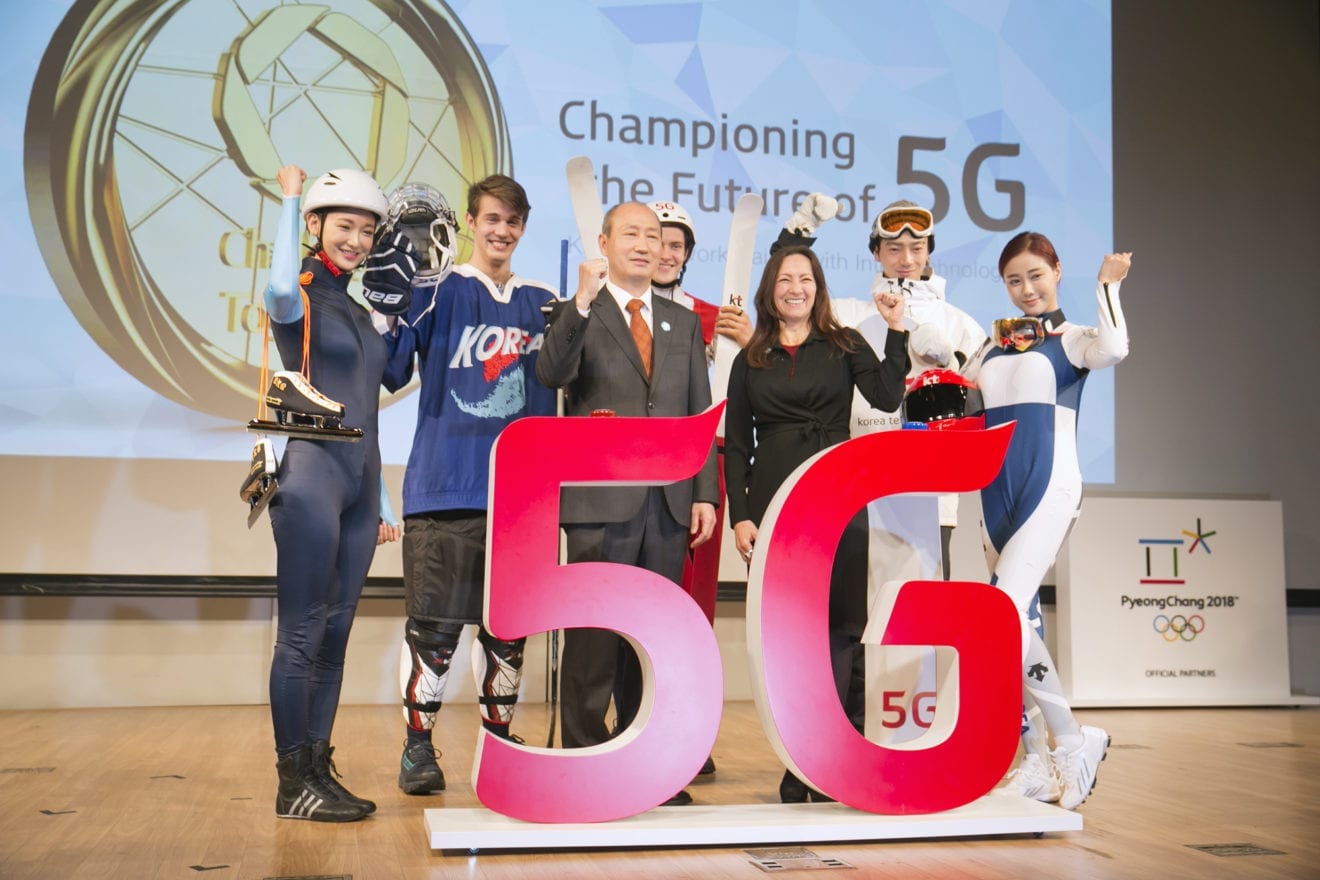
    The 3GPP has approved the completion of standalone Release 15 specifications for 5G at the Technical Specifications Group’s 80th plenary meeting.

    The meeting brought together more than 600 representatives of the world’s major operators and network, smartphone and chipset vendors to witness the historic freeze of standalone 5G new radio (5G NR) specifications.

    It flows the release of the 5G NR specifications for non-standalone operation in December, and paves the way for the expected launch of the first 5G mobile broadband networks in the US later this year.

    The new standard introduces a brand new end-to-end architecture for mobile network and will facilitate the introduction of new business models and an era of unparalleled connectivity.

    “The 5G System specification has now reached its official stage of completion, thanks to the intense efforts of hundreds of engineers over the past three years,” 3GPP TSA chairman Erik Guttman said.

    “A special acknowledgment is due to those who led this remarkable effort in diverse committees. 5G promises a broad expansion of telecommunications, as an ever more central component of our economies, societies and individual activities.”

    Telecoms industry representatives at the meeting included delegates from China Mobile, APT, the China Academy of Information and Communications Technology (CAICT), China Telecom, China Unicom, Chunghwa Telecom, KDDI, KT, LG Uplus, NTT Docomo, SK Telecom, Softbank,  Vodafone.

    Multiple equipment vendors were also represented, including Ericsson, Huawei, Fujitsu, LG Electronics  Lenovo, NEC, Nokia, Samsung, Sony Mobile Communications, Xiaomi and ZTE.

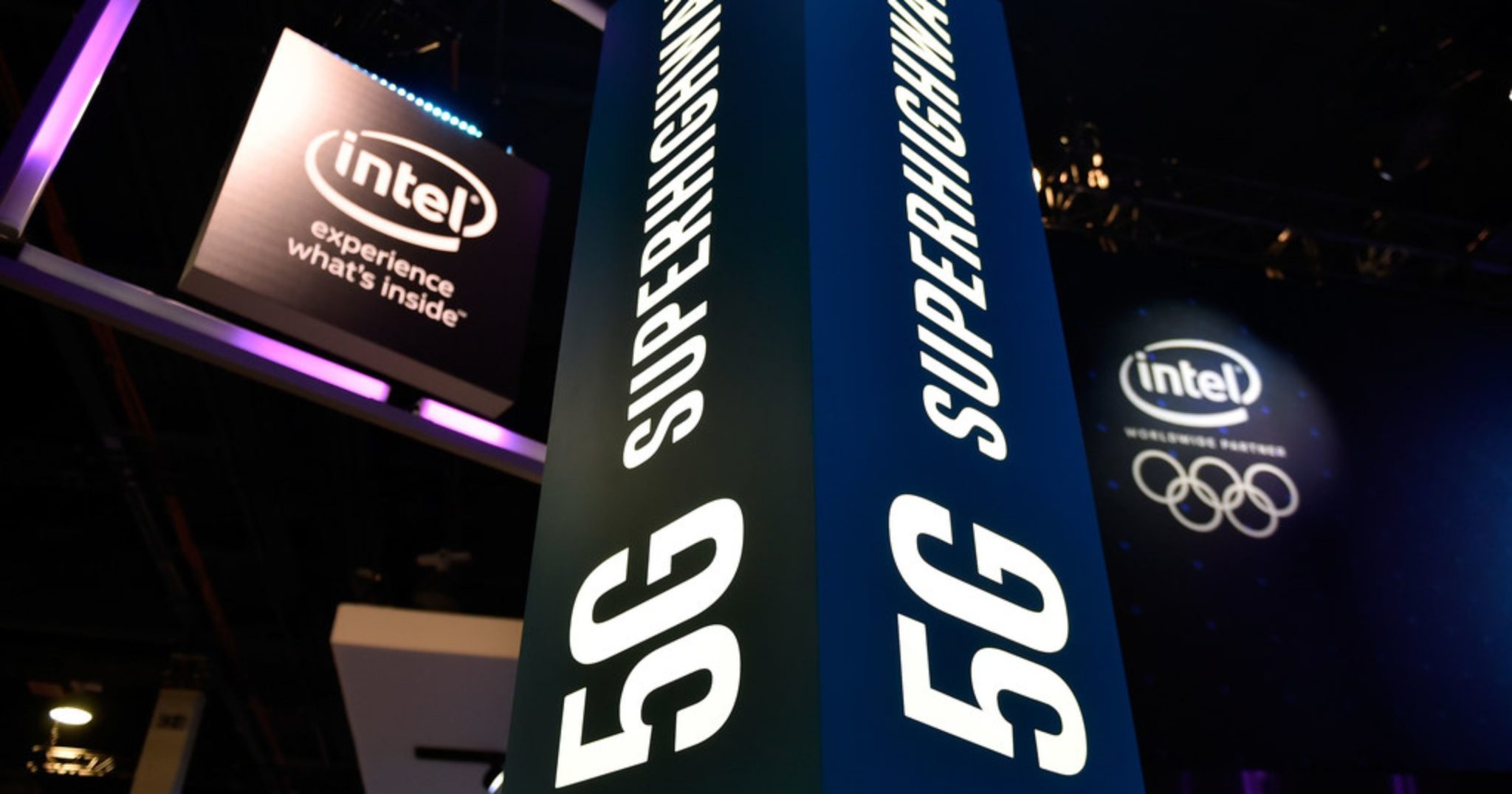
    Meanwhile Ericsson, Intel, the China Mobile Research Institute and China Mobile Jiangsu have announced the completion of the first live 3GPP compliant standalone 5G new radio interoperability tests.

    The tests, which were completed based on the shared physical layer specifications of the non-standalone and standalone 5G NR standards, used Ericsson’s 5G NR base stations and Intel’ 5G mobile trial platform in a live network operating on 100MHz of 3.5-GHz midband spectrum.

    “Successfully completing the first 3GPP-compliant Standalone 5G NR call marks another milestone with our ecosystem partners on the path to 5G commercialization, building on our years of research and standardization,” Ericsson EVP and head of networks Fredrik Jejdling said.

    “Together, we’re delivering on our commitment to realize a standard-compliant and easily deployable technology that will bring benefits to our customers and end users.”

  • MyTel reaches 70% population coverage

    MyTel reaches 70% population coverage

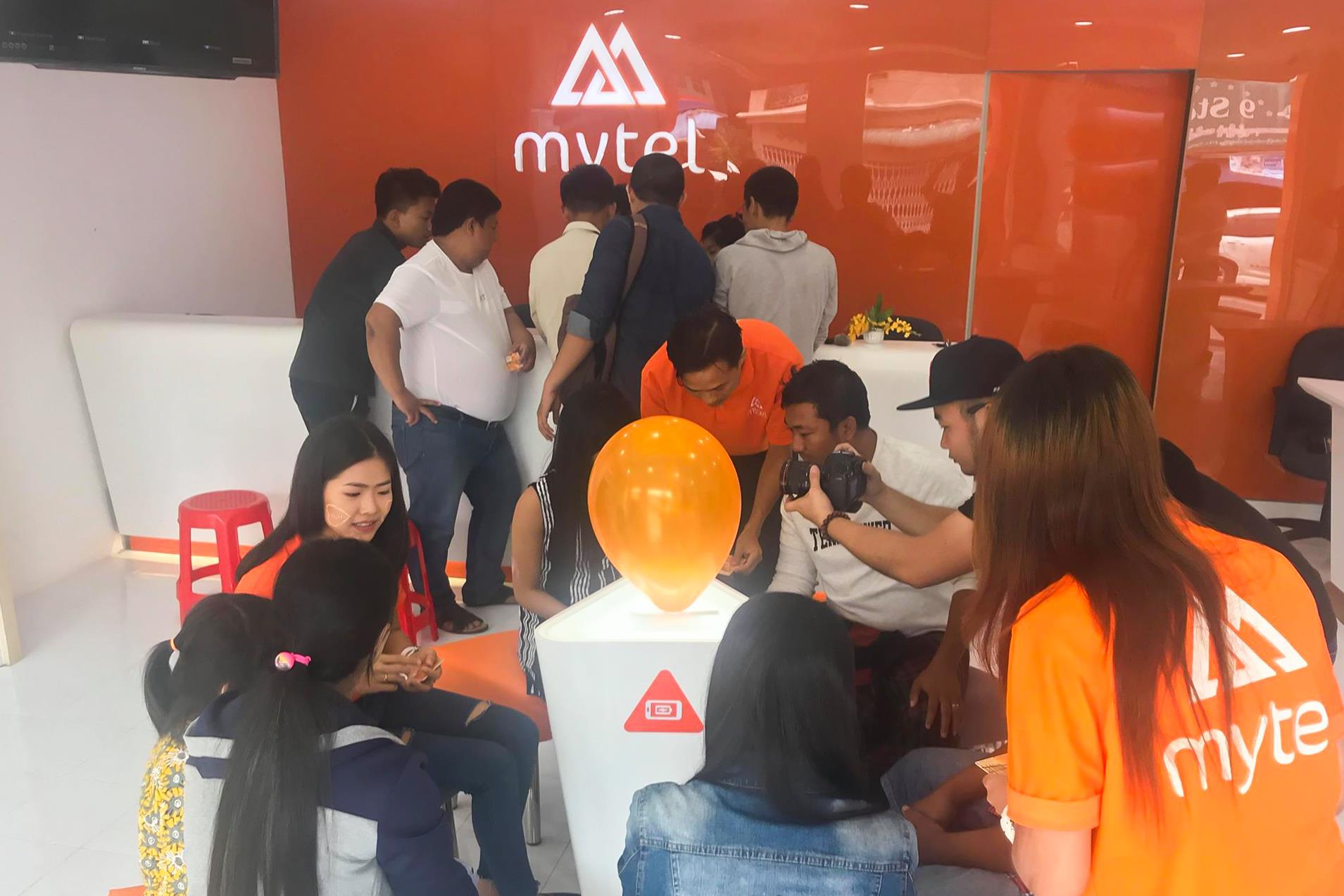
    Myanmar’s MyTel has announced it has achieved 70% population coverage with its 4G network mere months after launch.

    MyTel, the joint venture between Vietnam’s Viettel and a consortium of local technology companies, launched services in March in Nay Pyi Taw, eastern Bago and Kayin State.

    Now the operator’s network covers nearly all townships in the Yangon Region, citing comments from the company’s chief external relations officer Y Zaw Min Oo.

    Meanwhile the operator has signed on around 100,000 users and distributed three million SIM cards. These 4G SIMs are available at 50 dedicated MyTel shops and 50,000 distribution retail outlets.

    In the past year MyTel has also laid a total of 30,000km of fiber backhaul, accounting for 50% of fiber deployments in the country, the report adds.

    MyTel has previously announced a target of attracting 2 million to 3 million customers this year. The operator also plans to become the market’s first operator to offer nationwide 4G services and to deploy 7,000 4G base stations in its first year of official operations.

  • Huawei releases SAP HANA TDI solution

    Huawei releases SAP HANA TDI solution

    Huawei has launched a tailored data center integration (TDI) solution for SAP HANA designed to meet the data center and business consolidation needs of large enterprises.

    The HANA TDI solution is based on Huawei’s all-flash high performance storage platforms, and has been designed to support up to 200 SAP HANA nodes, each expandable to 32TB.

    The solution is designed to allow SAP HANA databases to be seamlessly integrated into existing data enter infrastructure to improve flexibility, reliability, management and maintenance and allow for the reuse of existing data center IT investments.

    Dedicated management plugins allow the solution to work with the SAP Landscape Management platform.

    The solution is also capable of automatically manage SAP applications, databases, networks and IT infrastructures, and uses Huawei storage snapshots to greatly improve setup speeds.

    “Huawei’s all-flash storage meets the storage requirements of enterprise-class applications such as databases, virtual desktops, and server virtualization. This allows it to effectively meet solid-reliability and high-performance standards in SAP HANA scenarios,” Huawei president of storage products Meng Guangbin said.

    “This allows it to effectively meet solid-reliability and high-performance standards in SAP HANA scenarios. Huawei will work with SAP to build a high-performance data processing platform that helps enterprises accelerate core data processing.”

  • FCC’s C-Band plan prompts fresh concerns

    FCC’s C-Band plan prompts fresh concerns

    Those with a vested interest in C-Band spectrum, which is being eyed for terrestrial wireless use, continue to cite concerns about harmful interference if the US FCC decides to change the rules.

    Comcast and NPR are two of the more recent entities to reiterate concerns with the FCC. In separate meetings and filings, they’re talking about the central role that C-Band spectrum plays in their distribution networks.

    NPR executives who met with FCC Chairman Ajit Pai on June 5 discussed concerns about possible changes to the commission’s rules regarding the use and licensing of C-Band spectrum—the 3.7-GHz to 4.2-GHz band—on which the public radio system depends for reliable distribution of programming to the 475+ public radio earth station downlinks.

    They also explained that sharing of individual C-Band frequencies with commercial wireless services can’t be accomplished without causing harmful interference.

    “There is no panacea for the interference created by wireless mobile devices, whose roaming, dynamic signals cannot be coordinated with the fixed, low-power downlinks on which public radio stations depend,” NPR said in an ex parte filing(PDF), echoing previous statements (PDF).

    “Instead, opening up C-band frequencies for co-frequency sharing by wireless broadband devices will result in widespread interference that will disrupt public radio broadcasts and could significantly impair the PRSS [Public Radio Satellite System] as a reliable, cost-effective means of program distribution across the nation.”

    NPR has recommended that the FCC subdivide the C-Band rather than enforce co-frequency sharing to ensure a portion for exclusive use of fixed satellite service without harmful interference. It also suggests reserving a portion of C-Band spectrum exclusively for PRSS.

    For its part, Comcast says (PDF) it receives the majority of the primary signals of its cable channels via C-Band spectrum—about 84%—but it also has agreements with 11 programmers, in addition to NBC Universal, to receive their primary content via fiber. In those situations, the programmers continue to use C-Band for redundant delivery of the content to their systems.

    Pai has said he will put the C-Band item on the FCC’s agenda for July 12, with the aim of making more intensive use of the 500 MHz of spectrum, including seeking additional input on making it available for commercial terrestrial use.

  • Nokia completes 4G/5G dual connectivity data call

    Nokia completes 4G/5G dual connectivity data call

    Nokia has announced the successful completion of a 5G New Radio (5G NR) data call based on 4G/5G dual connectivity during a demonstration in China.

    The demonstration, conducted as part of China’s Ministry of Industry and Information Technology’s (MIIT) 5G R&D trials, involved a dual connectivity call conducted using a 5G NR system on the 3.5-GHz spectrum band as well as LTE in the 2.1-GHz frequency band.

    Nokia said the successful demonstration is an important step in the verification of 5G in sub 6-GHz frequency bands, which will be required for wide-area coverage.

    The data call used the Nokia AirScale Cloud RAN, Nokia AirScale baseband unit, Nokia 5G Massive MIMO Active Antenna, Nokia Cloud Packet Core and Nokia home subscriber service. PRISMA Telecom Testing provided a 5G end user equipment simulator.

    As well as the 3.5-GHz trials, Nokia also plans to work with the MIIT to trial 5G in the 4.9-GHz frequency bands.

    “We are pleased to showcase our end-to-end capabilities in 5G in this successful call and trial with MIIT,” Nokia president of mobile networks Marc Rouanne said.

    “Nokia is ready to support dual connectivity with the AirScale radio access portfolio as it is upgradeable via software to 5G and provides single RAN support for 4G, 4.5G Pro and 4.9G as well as legacy technologies. As a result we can help our customers meet their early 5G deployment schedules and initial coverage demands.”

  • BlackBerry to secure operations centers for G7 Summit

    BlackBerry to secure operations centers for G7 Summit

    BlackBerry is collaborating with the government of Canada to modernize their operations centers during international ministerial meetings and the 2018 G7 Summit.

    Using BlackBerry AtHoc, a crisis communication platform that includes AtHoc Alert for mass notification and AtHoc Collect for field reports, the operations centers are able to efficiently mobilize and secure the flow of critical information by delivering updates to targeted lists of recipients in real-time.

    “We are honored that the government of Canada has chosen BlackBerry to support their operations,” BlackBerry AtHoc SVP and GM Sanjay Saini said.

    “Whether in times of crisis or during a high-profile event like the G7 Summit, reliable and secure communications are crucial. BlackBerry AtHoc technology enables real-time information exchange across organizations, their people and devices, providing them with the necessary details to make informed and safety-critical decisions.”

    Additionally, BlackBerry is one of the companies that has been selected to demonstrate its innovative solutions at the 2018 G7 Innovation Showcase.

    Many G7 government departments and agencies, including the Parliament of Canada, US Department of Homeland Security, US Department of Defense and New Zealand Parliamentary Service, use BlackBerry security software.

  • Juniper Networks unveils 5G-ready routing platform

    Juniper Networks unveils 5G-ready routing platform

    Juniper Networks has announced plans to launch a 5G and IoT ready routing platform to help operators, cloud providers and enterprise customers manage the growing complexity of next-generation service delivery.

    The MX Series 5G Universal Routing Platform will support extensive feature programmability, as well as hardware accelerated 5G control and user plane separation (CUPS) functionality.

    The 3GPP CUPS standard is designed to allow customers to separate the evolved packet core user plane and control plane to allow operators to scale each independently as needed.

    Juniper’s new Penta Silicon chipset will power the new platform. The company said the new chipset supports both MACsec and an IPsec cryptography engine, and can originate and terminate thousands of IPSec sessions without sacrificing performance.

    According to Juniper Networks chief product officer Manoj Leelanivas, research from the company found that operators consider the cost and complexity of orchestrating a distributed network to be among the top challenges associated with being able to offer 5G and other next-generation network services.

    “Cloud is eating the world, 5G is ramping up, IoT is presenting a host of new challenges and security teams simply can’t keep up with the sheer volume of cyber attacks on today’s network,” Leelanivas said.

    “One thing service providers should not have to worry about among all this is the unknown of what lies ahead. That’s why we’ve continued innovating our flagship MX platform to deliver more speed, flexibility, programmability and security capabilities, giving our customers the peace of mind they need as a variety of demands continue to put pressure on the network.”

    The first router products powered by the new platform are expected to launch during the second half of the year.

  • China drives rebound in PON market

    China drives rebound in PON market

    After five consecutive quarters of decline, global sales of passive optical network (PON) gear rebounded in the first quarter of 2018, according to a new report by Dell’Oro Group.

    The rebound is mainly driven by the growth in China, where broadband subscribers pushed optical networking terminal (ONT) shipments to a record level, said the report.

    “China added over 11 million new broadband subscribers in 1Q18, and network operators such as China Mobile purchased large volumes of ONTs to connect those customers to high-speed Internet services,” commented Alam Tamboli, senior analyst at Dell’Oro Group. “Huawei was the primary beneficiary of the surge, capturing the largest ONT market share.”

    Despite the encouraging growth, Tamboli said the research firm expects this rebound is short-lived, however.

    “While 2018 may be off to a great start for the PON market, we expect demand to soften for rest of the year as China Mobile is expected to add subscribers at a significantly lower rate,” Tamboli explained.

    “Huawei and ZTE, the top ranked PON vendors, are working to diversify their customer base in anticipation of reduced demand in China, as operators in China accounted for over four-fifths of each company’s PON revenue in 1Q18.”

  • China Mobile Hong Kong plans more 5G trials

    China Mobile Hong Kong plans more 5G trials

    China Mobile Hong Kong has participated in the Hong Kong 5G Industry Forum 2018 organized by the Communications Association of Hong Kong.

    The forum addressed Hong Kong’s 5G mobile development roadmap and the crucial role that mobile operators will play in supporting the HKSAR government’s smart city and 5G development plans.

    At the event, CMHK principal engineer for network planning and implementation Alex Cheng said the company commenced 5G testing in March after being assigned trial permits and since launching its China Mobile 5G Innovation Center Hong Kong Open Lab.

    He said the operator plans to continue rolling out more 5G lab tests and demonstrations from the open lab, and expects to be able to release results from the first round of tests from the second half of the year.

    Cheng also expressed support for the government’s 5G spectrum release plan, which is expected to be announced as early as next year.

    The company is working with business partners on constructing a trial 5G network environment and testing applications over the network. In addition, CMHK intends to collaborate with local universities to promote the development of 5G applications. These activities will cover areas including 5G technical research and IoT application innovations.

  • SK Telecom invests 10 billion won in content provider Make Us

    SK Telecom invests 10 billion won in content provider Make Us

    SK Telecom invested 10 billion won ($9.2 million) in mobile video content provider Make Us, the company said Monday.

    Local start-up Make Us creates video clips related to various categories including music, food, travel and beauty and distributes them through its own channels on Facebook and YouTube.

    Korea’ largest mobile carrier hopes to use the start-up’s expertise in making creative content while launching its new music streaming platform in the second half of this year.

    One of most well-known content created by Make Us is its music channel Dingo Music, which offers music videos cropped to appear on a vertically-oriented phone screen.

    The two are considering jointly producing music programs to be broadcasted on mobile channels.

    According to the mobile carrier, the start-up’s content is most popular among people under the age of 40. Based on last year’s data, it has a total of 33.6 million subscribers to its pages on Facebook, YouTube and Instagram.

  • Net1 Indonesia Available in 10 Exotic Destinations

    Net1 Indonesia Available in 10 Exotic Destinations

    Net1 Indonesia, a 4G LTE mobile data broadband provider, has announced its availability in 10 exotic tourism destinations in Indonesia. This aims to provide sufficient internet access for those who are traveling back to hometown and spending long holiday. By providing 4G LTE service in tourism destinations, especially those in remote area, Net1 Indonesia hopes to help people to share their holiday story and photos through social media.

    The ten destinations covered by Net1 Indonesia are Samosir Island in North Sumatera, Takengon Fresh Sea Lake in Aceh, Tiu Kelep Waterfall in Lombok – West Nusa Tenggara, Tanjung Kelayang Beach in Belitung, Situ Cileunca in Pangalengan – West Java, Tanjung Bira in Bulukumba – South Sulawesi, Bukittinggi in West Sumatra, Gili Trawangan in Lombok, Karimun Jawa Island in Central Java, and Mandalika in West Nusa Tenggara. Some of these destinations have been included in “10 new Bali,” a program released by the government through the Ministry of Tourism.

    “The existence of Net1 Indonesia in those 10 tourism spots with adequate 4G LTE based internet access is to facilitate the travelers and tourists to stay in touch with family and friends, yet still exist in social media. The connection provision in those spots is also reflecting our commitment to support the government programs to boosting the tourism industry through the brand of Wonderful Indonesia,” said Larry Ridwan, Chief Executive Officer of Net1 Indonesia.

    Further, Larry highlights that the availability of internet connection will leverage the tourism spots in order to be noticed and widely known by international publics. Thus, with adequate internet connection, visitors can help to expose and popularize those new destinations.

    “Travelers, especially millennials, cannot be separated from their smartphone and 4G data connections, they will stay exist during their trip to hometown and the whole long holiday. They usually share photos of food or unique tourist spots through social media. In line with this trend, Net1 Indonesia is triggered to expand its coverage in tourism destinations especially in rural areas,” Larry added.

    Net1 Indonesia’s effort to expand the coverage area in tourism destinations is also reflected by conducting digital activity #MauAda4Gdimana from 7 May to 7 July 2018. This digital activity is pursuing the society to be actively involved in voting a certain locations to get covered by Net1 4G LTE services. Participants who are interested in joining this activity can open microsite, then choose the location in the provided column then simply click VOTE.

    The development of destinations in Indonesia has driven investment growth in the tourism sector. According to data from the Investment Coordinating Board (BKPM) of the Republic of Indonesia, the investment in this sector in 2017 has increased by 31 percent, or valued at US$1.7 billion and is targeted to reach US$2 billion by end of this year. Indonesia’s tourism sector is projected to contribute 15 percent of gross domestic product (GDP), valued at IDR280 trillion for foreign exchange with 20 million of foreign tourist arrivals, 275 million of domestic tourists travel and able to absorb 13 million work force by 2019.

    Tourism is mentioned to be one of sectors with potential investment growth this year beside e-commerce. Indonesia’s tourism is considered to be the most sustainable commodity yet reaching to the lowest level of society. This sectors is rapidly growing compared to other leading commodities, among others are oil & gas, coal, and palm oil. Furthermore, the tourism sector will grow more economic centers throughout the country.

    Based on data from The World Economic Forum, Indonesia’s tourism competitiveness is continuously making positive leap from the ranks 70th in 2013 to 50th in 2015. In 2017, Indonesia’s tourism competitiveness index has climbed 8 places to 42th and is targeted to reach the 30th position by 2018.

    Collaborate with Local Governments

    Blessed with natural resources and regional cultures is a motivation for Indonesia to grow the tourism sector by increasing tourists visits, both from domestic and foreign. The local governments, starting from province to the lower level, districts and cities, are having the same spirit to develop tourism destinations in their regions. They aim to reach the target of 17 million foreign tourists visit this year and will increase to 20 million tourists by 2019.

    The commitment of Net1 Indonesia to support the tourism program, especially in the provision of 4G LTE broadband data access is reflected by the cooperation with a number of local governments ranging from City, District, to Province in Indonesia. So far, Musi Banyuasin Regency (MuBa), West Halmahera Regency, Talaud Islands Regency, Tual City, Siau Tagulandang Islands District Biaro (Sitaro), Sangihe Islands Regency, Bintuni Bay District and Kaimana Regency have signed Memorandum of Understanding with Net1 Indonesia to build 4G LTE-based communications infrastructure, including in tourism destinations.

    The characteristics of 450 MHz low frequency, which able to reach wide coverage than the higher bands, is providing benefits for Net1 Indonesia and the local government when they have to build telecommunication infrastructure such as Base Transceiver Station (BTS) as Net1 Indonesia only need one BTS to cover radius 100 kilometers area. Another advantage of the 4G LTE 450 MHz technology is its ability to support the launch of machine-to-machine (M2M) communication services in rural settings, such as video surveillance, telemetry, and tracking.
  • Lisa Lim Poh Lin appointed as independent non-executive director of Axiata Malaysia

    Lisa Lim Poh Lin appointed as independent non-executive director of Axiata Malaysia

    Axiata Group Bhd has appointed Dr Lisa Lim Poh Lin as its independent non-executive director to further strengthen the board’s diversity mix and expertise.

    The appointment came into effect on June 8.

    “We constantly strive to build a board composition of relevant business expertise, global experience and diversity of backgrounds. As an accomplished Malaysian scholar with high-profile global corporate experience, Lisa’s deep experience in the competitive world of business, technology and finance will significantly contribute to our board deliberations. We are pleased to have her join us and we look forward to her contributions,” said Axiata chairmanTan Sri Azman Mokhtar in a statement.

    Meanwhile, Axiata president and group CEO Tan Sri Jamaludin Ibrahim said Lim’s experience will add another dimension to the board’s composition and her passion for nurturing and developing digital talents and entrepreneurs is aligned with the group’s aspirations of building a vibrant digital ecosystem within Asean and South Asia.

    Lim has over 18 years’ of experience in management consulting, academic research and investment management and has served as a fund manager at Columbia Threadneedle. She was also a sector leader for Global Telecoms Research.

    She holds a first class honours (BA and MEng) in engineering and a PhD in engineering from Cambridge University.

    She was a recipient of Malaysian Public Services Commission scholarship and The Cambridge Commonwealth Trust Scholarship. She is also a certified financial analyst (CFA) charterholder.

  • Malaysia’s Astro group CEO Rohana to step down on Jan 31, 2019

    Malaysia’s Astro group CEO Rohana to step down on Jan 31, 2019

    Astro Malaysia Holdings Bhd group CEO Datuk Rohana Rozhan will step down from her role Jan 31, 2019 and will be succeeded by group chief content and consumer officer Henry Tan.

    In a filing with Bursa Malaysia today, Astro said Rohana, 55, will resign to pursue other goals. She will remain on the board of directors as a non-executive director following her resignation.

    “Rohana has been an inspirational leader to all at Astro, having led the team in setting many firsts and milestones for the media industry in Malaysia. We respect her decision to step down as group CEO and wish her all the very best and a bright future ahead,” said Astro chairman Tun Zaki Azmi.

    Rohana who has been with the group since 1995, is the principal architect of the company’s growth strategies which includes growing its presence in Southeast Asia.

    Under her tenure, Astro saw its customer base grow from two million to 5.5 million, while revenue grew RM1.79 billion to RM5.53 billion for the financial year ended Jan 31, 2018.

    “The business that we built at Astro over the years is attributable to one thing: the passionate, committed and talented individuals that make up Team Astro. It is my honour to have been part of this amazing team, moving as one, to achieve far more than I ever dreamt possible in a fast-evolving and dynamic industry. As Team Astro, our passion has always been to better serve our customers, which has been our privilege and our continued responsibility,” said Rohana.

    Her successor, Tan, has been with the group for more than 10 years.

    Yesterday, the group reported a 10.77% drop in net profit for the first quarter ended April 30, 2018 to RM174.72 million from RM192.35 million a year ago due to higher net finance cost. Revenue for the quarter fell 1.1% to RM1.31 billion from RM1.32 billion due to a decrease in subscription revenue.

    At 11.09 am, Astro’s share price fell 4.92% to RM1.74 with some 5.29 million shares done. Trading of Astro’s securities was temporarily halted between 9.39 am and 10.39 am.