Category: Telecom

Retail News Asia is committed to providing both local and global retailers with the latest Telecom & Telco news throughout the Asian market. This on a daily base.

  • Edotco signs landmark deal with Ooredoo Myanmar Limited, expands business model to provide energy services

    Edotco signs landmark deal with Ooredoo Myanmar Limited, expands business model to provide energy services

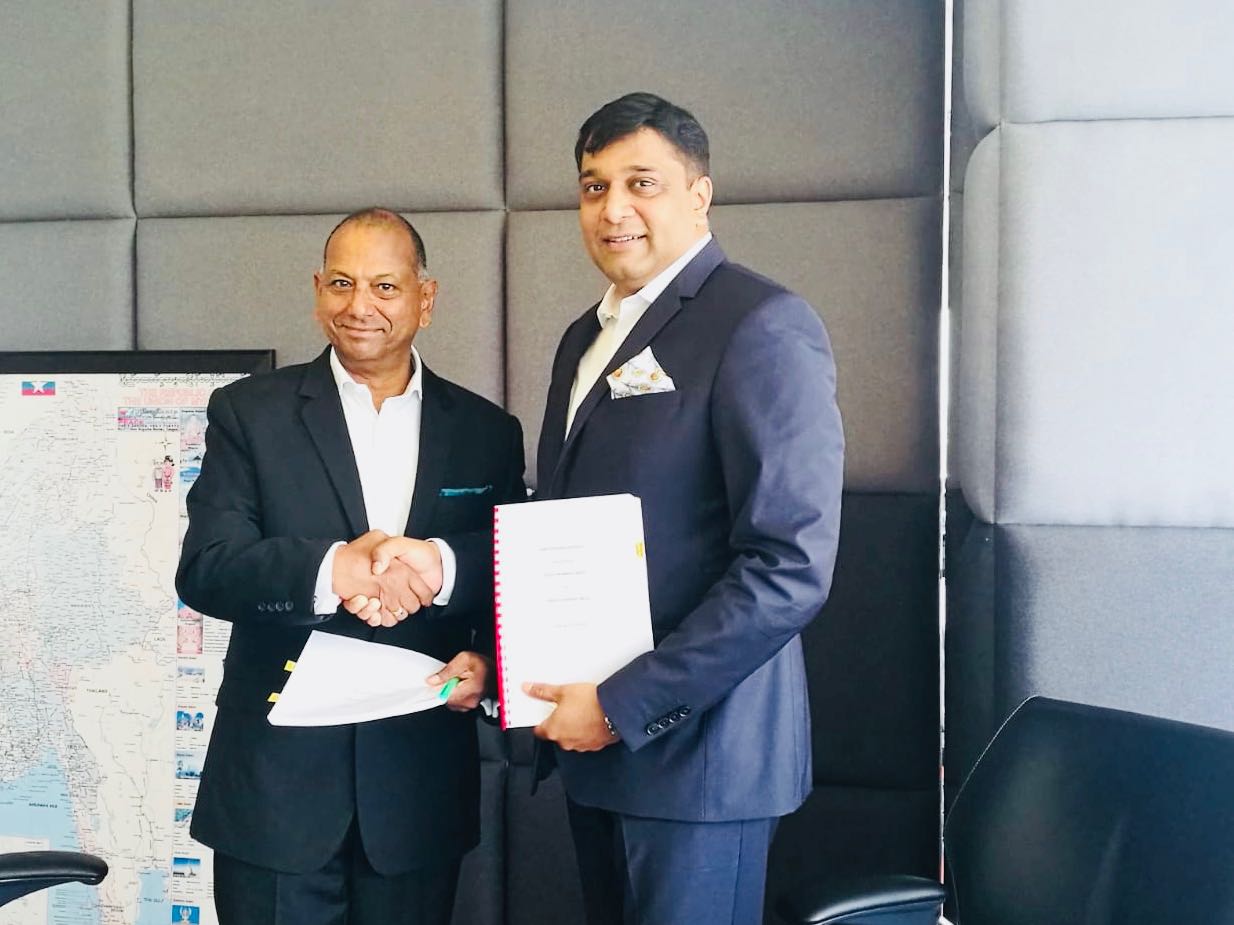
    edotco Myanmar (edotco MM), an integrated telecommunications infrastructure services company in Myanmar today signed with Ooredoo Myanmar Limited (OML), a telecommunications service provider to take over energy assets and management on 1,250 telecommunications tower sites across the country. This milestone agreement marks a significant step for edotco in Myanmar, where it will now be able to provide and manage energy for all tenants on these sites. The consolidation of systems is set to not only enhance operations but also create energy and environmental efficiencies.

    “This is a significant shift in business model for edotco in Myanmar as we move from providing tower services to tower plus power services. By operating and maintaining the overall power management systems, we will be able to optimise energy systems and energy pass through management at the sites. Apart from that, edotco will provide remote monitoring which will boost operational efficiency by allowing us to address energy management issues as and when they occur, helping to reduce network downtime” said Vijendran Watson, Country Managing Director for edotco Myanmar.

    In addition to increasing operational and energy efficiencies, through sharing energy systems with all tenants edotco will simultaneously improve community relations by reducing noise and environmental pollution caused by multiple operators owning individual diesel generators on sites.

    “We benefit from energy efficiencies, lower downtime and improved experience at both an operational and environmental level through improved overall performance of the power systems at the sites. This partnership with edotco allows us to focus on meeting our operational and customer’s needs with confidence that edotco will be efficiently managing all our energy needs on these sites” said Vikram Sinha, Chief Executive Officer, OML.

    “Across the countries in which we have a presence, our efforts go beyond the provisioning and maintenance of telecommunication infrastructures. We see an opportunity to increase efficiency through our solutions that place a strong emphasis on energy management, which is a crucial requirement by network operators today. As a socially responsible business, we are committed to championing solutions that reduce the impact on the environment and communities surrounding our towers” said Suresh Sidhu, Chief Executive Officer, edotco Group.

    edotco MM, part of Malaysia’s edotco Group, has been working closely with local partners to advance the telecommunication industry since 2015, following the acquisition of Myanmar Tower Company. Today, edotco owns and operates more than 1,500 tower sites across the country with OML as their anchor tenant.
  • Net1 Ready to Support Broadband Internetin Rural Area of Indonesia

    Net1 Ready to Support Broadband Internetin Rural Area of Indonesia

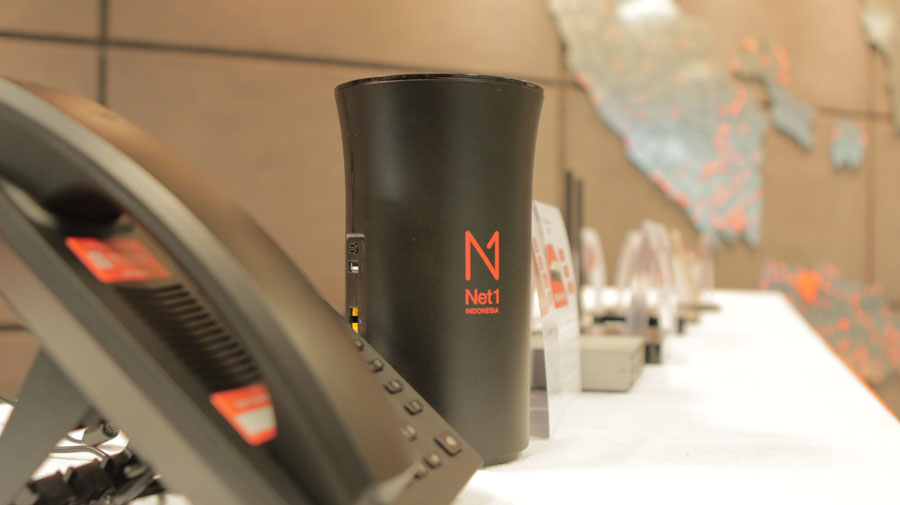
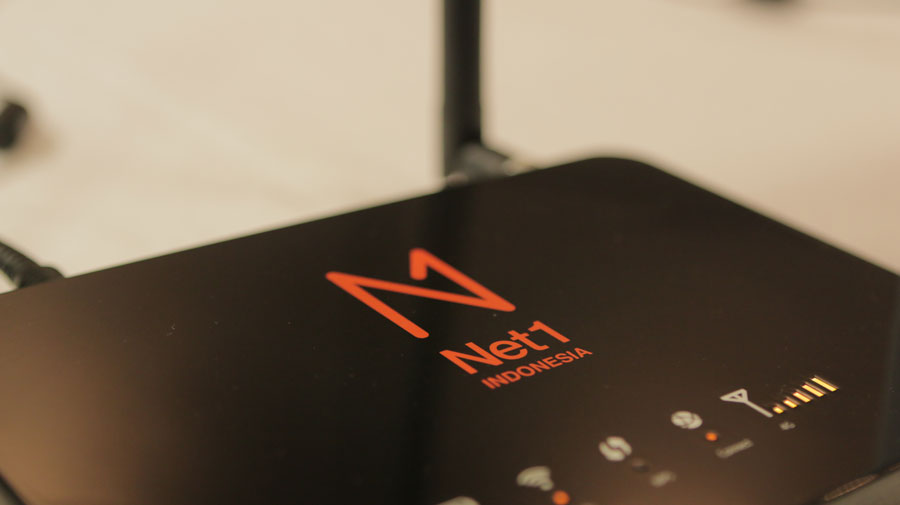
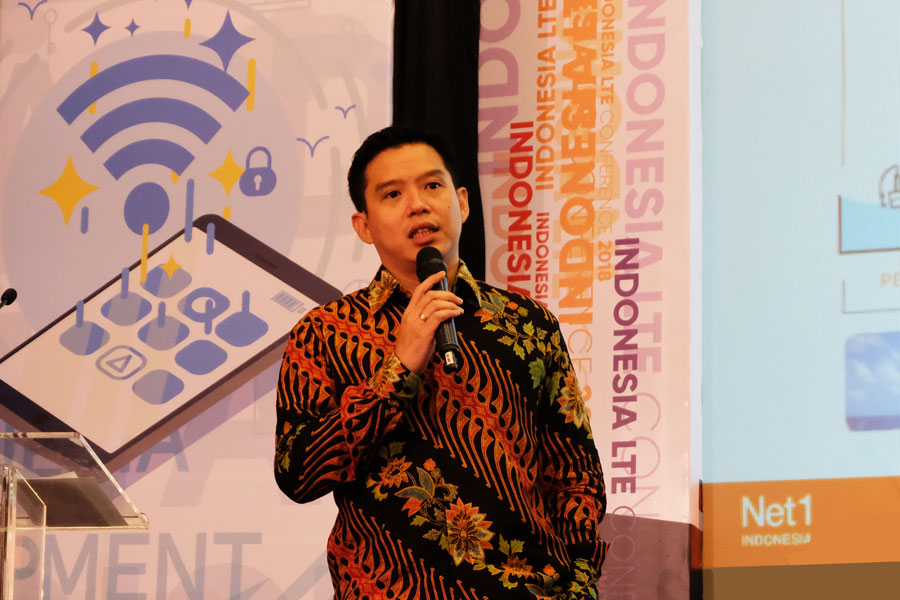
    Net1 Indonesia is ready to support the government in accelerating the provision of internet connections in rural areas, especially in frontier, outermost and least (3T) developed regions of the country. Net1 Indonesia’s mission to spread the internet access in the rural area is in line with the government nine agenda priorities or often referred to Nawa Cita, which mentions developing Indonesia’s rural area within the framework of Republic of Indonesia.

    One of the pillars of those points is realizing the availability of telecommunication infrastructure and network connectivity in the regions. Currently, the Government, through the Ministry of Communications and Informatics, is spurring the availability of internet network for rural areas. According to data from the ministry, currently 73% of villages/sub-lower districts already have internet connection based on 3G technology.

    Meanwhile, the LTE 4G network only 55%. By 2019, the government is targeting to provide 3G-based internet for more than 83,000 villages. Another target for the upcoming year is covering total of 514 districts/cities by 4G LTE network. So far, only 64% of them have access to 4G LTE.

    “The advantage of Net1 4G LTE network is running at 450 Mhz frequency, which is perfect for rural area geographic character, with large area but low density. The characteristic of low-frequency is not pursuing the access speed, but covering the larger area,” said Larry Ridwan, CEO of Net1 Indonesia, in a discussion forum on Universal Service Obligation (USO), held by Indonesia LTE Community (ILC), at Balai Kartini Exhibition and Convention Center, Jakarta (24/05).

    Net1 Indonesia can serve the markets or areas that geographically are difficult to reach and economically are very costly by other operators. Most of 450 Mhz 4G LTE operators in other countries also operate in special areas, such as suburban and rural areas or targeting a very segmented market, such as corporations (mining, plantation, fishery), Machine-to-Machine (M2M) and others.

    Larry added that the biggest challenge in deploying internet networks in rural areas is the varying of geographical conditions, ranging from mountains to coastal areas, with scattered populations. This kind of conditions is requiring a large investment for operators. Meanwhile, observed from the business side, developing telecommunication infrastructure in rural area with less population is less profitable.

    However, this condition will not break Net1 Indonesia’s spirit to continuously supporting the government’s program in rolling out the Internet network for rural areas. “Net1 4G LTE Network at 450MHz is able to reach 50-60 Km, even up to 100 Km, from a base transceiver station (BTS), so it is suitable for archipelago country like Indonesia which has 16,056 islands. In terms of infrastructure investment in developing the site, it is certainly more efficient,” revealed Larry.

    Therefore, Net1 Indonesia can reduce the investment of building 4G LTE network for rural areas more efficiently and effectively. Investment can be pushed much lower. So far, Net1 has deployed 4G LTE service in 19 Provinces spread across Indonesia. A total of 306 districts/cities have accessed Net1 4G LTE network, consisting of 25,279 villages. Overall, 126,299,415 populations have been reached by Net1 Indonesia.

    Net1 Indonesia has also cooperated with a number of local governments in district and province level throughout Indonesia. The local governments cooperate with Net1 Indonesia to provide data broadband access for societies in sub urban and remote areas in their domain. Among others, Musi Banyuasin Regency, West Halmahera Regency, Talaud Islands Regency, Tual City, Siau Tagulandang Biaro (Sitaro) Islands Regency, Sangihe Islands Regency, Teluk Bintuni Regency and Kaimana Regency, have signed a Memorandum of Understanding (MoU) to working together building 4G based communications infrastructure with Net1 Indonesia.

    The cooperation with a number of local governments that have been started since 2017 is a first step for Net1 Indonesia to be able to meet the needs of data access for up to 260 million Indonesian populations who lives in more than 14.000 islands.

  • ITU Telecom World Awards launches 2018 edition

    ITU Telecom World Awards launches 2018 edition

    The International Telecommunication Union (ITU) – the United Nations specialized agency for information and communication technologies (ICT) – is now accepting entries for the ITU Telecom World Awards 2018, recognizing the most outstanding and innovative initiatives around the globe using ICTs for social good.

    Entries can be submitted online today through 3 August 2018. A distinguished jury of experts will select a shortlist of entrants who will pitch their solutions onsite at ITU Telecom World 2018. The winners will then be announced by ITU Secretary-General Houlin Zhao at a high-profile ceremony during ITU Telecom World 2018, taking place 10-13 September in Durban, South Africa.

    First launched in 2015, the ITU Telecom World Awards initiative recognizes the innovative application of ICTs for social good created by entrepreneurs; small- and medium-sized enterprises (SMEs), and large industry players alike. It also facilitates knowledge sharing of best practices, while providing a platform from which to network, mobilize investment, explore partnership potential and create new business opportunities.

    The ITU Telecom Awards 2018 welcomes entrants in the following categories:

    1. Global Corporate Awards for the most promising innovative solutions with social impact within large companies in two categories: sustainable development and smart emerging technologies.
    2. Global SME Award for the most promising solutions from SMEs making innovative use of ICTs for social impact, in a number of different categories.
    3. Host Country SME Award for the best and most innovative SME or solution from the Host Country.
    4. Government Award for the National Pavilion at ITU Telecom Word 2018 with the most promising innovative SMEs present at the event, entering the Global SME Award.

    All ITU Telecom World 2018 sponsors and exhibitors, either participating within a National Pavilion or Thematic Pavilion, as an Independent Stand, or with an SME Workstation, are eligible to enter the awards.

    “Previous ITU Telecom World Awards winners have represented the innovative application of ICTs in the areas of e-health, e-education, digital finance, and smart emerging technologies. Winners earn global recognition, helping them to expand and scale up their businesses, while improving livelihoods through their innovative use of technology,” said ITU Secretary-General Houlin Zhao. “ITU is proud to have developed this platform for promoting innovative examples of ‘tech for good’ and I look forward to exploring the next wealth of winners this September in Durban.”

    ITU Telecom World is a global platform for accelerating ICT innovations, and is organized annually by ITU. It aims to deliver economic development and social good faster through its exhibition for digital solutions, forum for sharing knowledge, and networking hub connecting nations, organizations and individuals.

    “The network and connections you can build at ITU Telecom World are invaluable – from a business perspective, an investor perspective, and a networking perspective,” said Matthias Brodner of South Africa’s Simplus Innovation, winner of the 2017 Global SME Award for best business model.

    ITU Telecom World 2018 takes place 10-13 September at the Durban International Convention Centre in Durban, South Africa. Under the theme Innovation for a smarter world, it will combine an international tech exhibition, a forum for sharing knowledge, a networking hub for corporates, governments and SMEs, in addition to the influential ITU Telecom World Awards. It provides a unique international platform that brings together developed and emerging markets, public and private sector leaders, and industry representatives from across the entire ICT ecosystem.

    For more information on ITU Telecom World 2018 and the ITU Telecom World Awards, visit www.telecomworld.itu.int

    Discover what’s been said on social media via the hashtag #ITUworld

  • Idea Cellular-Vodafone merger to take off by Q3

    Idea Cellular-Vodafone merger to take off by Q3

    After much delay, Axiata Group Bhd is positive that the merger between its Indian associate company Idea Cellular Ltd and Vodafone India will materialise by the beginning of the third quarter of this year, as just two more approvals are required.

    Speaking to reporters after the group’s AGM yesterday, Axiata president and group CEO Tan Sri Jamaludin Ibrahim said that a foreign direct investment approval and a nod from the department of telecommunication are required before India’s second and third largest telco player can merge to become a single entity.

    The huge Indian telco market has seen quite a shake up since the entry of Mukesh Ambani controlled Reliance Jio, resulting in mergers as well as exits by telco players.

    While the merged entity is expected to face challenges in the first year of operations in the hyper-competitive Indian market, Jamaludin is optimistic that Idea could see a turnaround in two to three years time, negating a need to exit the market.

    Axiata, which currently holds a 16.3% interest in Idea, will see its stake diluted to around 8% after the merger.

    Axiata fell into the red in the first quarter ended March 31, after registering a net loss of RM147.41 million against a net profit of RM239.02 million a year ago due to the share of losses reported by Idea.

    Excluding Idea and foreign exchange impacts, Axiata is cautiously optimistic on its financial performance for this year.

    Meanwhile, as for its infrastructure and services company edotco Group Sdn Bhd, Axiata is looking at two or three major acquisitions in Asean and South Asia, in a bid to become the fifth largest independent tower company in the world by 2021 from the eighth.

    On May 16, Axiata announced that edotco Pakistan Private Limited (edotco PK) has successfully obtained approval from the State Bank of Pakistan (SBP), allowing local lenders to fund the acquisition of 13,000 tower assets currently under Deodar Private Limited (Deodar).

    On funding to support its goal of becoming the fifth largest in the world, Axiata is currently engaging with bankers and financial advisers to weigh several funding options, including an initial public offering (IPO) exercise.

    Axiata will also be focusing on its digital-centric five year plan known as Triple Core Growth Engine plan – with key focus on digital telco, digital business and infrastructure, which started last year and is expected to go on until 2021.

    The group is also looking at keeping four of its 30 digital business and selling the rest as part of the plan.

    On the abolishment of the Goods and Services Tax (GST) and reinstatement of the Sales and Services Tax, Jamaludin said that more details are required on the new ruling before the impact of it can be determined.

    “We have to find out what is the higher ruling. The question is who will bear the cost. In the case of GST, Malaysian Communications and Multimedia Commission decided that they will bear half we will bear half,” he added.

  • Axiata Malaysia slips into the red in first quarter

    Axiata Malaysia slips into the red in first quarter

    Axiata Group Bhd fell into the red in the first quarter ended March 31 registering a net loss of RM147.41 million against a net profit of RM239.02 million in the same quarter a year ago, due to the share of losses reported by its associate company Idea Cellular Ltd, which operates in a backdrop of devastating price wars and a hyper-competitive Indian market.

    Axiata recorded a non-cash dilution loss of RM357.6 million from non-participation of preferential new shares issued in Idea. Axiata holds a 16.3% stake in Idea.

    The share of results from associates and joint ventures were also lower as the losses widened to RM86.1 million from RM30.5 million as the India associate continues to face intense market aggression.

    Excluding the impact of Idea, Axiata’s net profit would have been up by 34.6% or RM386.9 million.

    Axiata’s revenue fell 2.3% to RM5.75 billion from RM5.88 billion in the previous year’s corresponding quarter, mainly due to unfavourable foreign exchange translation impact arising from a stronger ringgit.

    “While we remain in line with expectation, our investment in Idea continues to be challenging. The current state of the industry in India has led to foreign operators either exiting the market or consolidating. Delays in the proposed merger between Idea and Vodafone India will bring further impact to Axiata. We also expect regulatory matters in Sri Lanka, Malaysia and Bangladesh as well as currency fluctuations as challenges for the year,” said Axiata president and group CEO Tan Sri Jamaludin Ibrahim in a statement.

    He, however, said the group is set to gain from edotco’s growth and expansion. It will also continue to invest in key digital businesses such as digital financial services and enterprise solution/Internet of Things.

    At market close, Axiata’s shares fell 1.17% to RM5.07 with some 1.26 million shares done.

  • Net1 Indonesia Holds Digital Activity #MauAda4Gdimana?

    Net1 Indonesia Holds Digital Activity #MauAda4Gdimana?

    Net1 Indonesia, provider of 4G LTE broadband data services, holds an exciting digital activity named #MauAda4Gdimana meaning “where should 4G access exist?”, from May 7 – July 7, 2018. Basically, this is a competition to invite people playing an active role to determine certain locations in Indonesia where data broadband should be easily accessed. People from all around the country can select a number of locations in Indonesia to obtain LTE 4G network that will be realized by Net1 Indonesia.

    So far, many areas in Indonesia cannot access internet yet. Adequate 4G data access can be something priceless for people in remote area to support their activities. According to a data from the Ministry of Communication and Information Technology, Republic of Indonesia, by end of 2017 there have been 55.000 eNodeB or Long Term Evolution radio network elements (LTE) to support 4G signal coverage in Indonesia. Net1 Indonesia is committed to increase these figures. One of its effort to mapping the location is by holding #MauAda4Gdimana digital activity.

    Meanwhile, katadata.co.id mentioned that 73.53% of provinces in Indonesia or 25 provinces have been exposed with 4G network. However, only 55.05% among the villages/sub-lower districts in Indonesia (45,811 villages/sub-lower districts) can be reached by 4G signal service. Based on the data and as a data broadband service provider, Net1 Indonesia is eager to provide internet connection, especially in rural areas and remote areas in Indonesia.

    “Digital activity #MauAda4Gdimana is an initiative from Net1 Indonesia to invite the community to have an active role and participate in our big mission, which is spreading the data broadband services to regions where 4G does not exist yet, especially for society in underserved, rural and remote area. Thus, we are committed to present 4G LTE service in the most voted area,” said Larry Ridwan, CEO of Net1 Indonesia.

    Competition #MauAda4Gdimana is open to all Indonesian citizens ages 18 years old above. As a further requirement, participants who are interested in entering this competition must have an active Facebook account and Like the Fanpage Facebook of Net1 Indonesia, following Instagram @net1_id and Twitter @net1id.

    Competition Mechanism

    Participants interested to join #MauAda4Gdimana competition can open microsite www.mau4g.net1.co.id to select #MauAda4Gdimana. Then, participants can choose a location that is championed as a 4G network receiver from Net1 by selecting VOTE in the options provided.

    Before joining the campaign of #MauAda4Gdimana, participants need to register by filling some information in the provided form, then participants can login with mobile phone number. To get support for a voted location in order to win the 4G LTE access from Net1 Indonesia, participants can invite their Facebook friends and promote it through their Facebook account using hashtag #MauAda4Gdimana. Most voted location will be prioritized to obtain 4G LTE network from Net1 Indonesia.

    Net1 Indonesia will select the win voters and appreciate with 9 units of Net1 Argo mobile Wi-Fi device, 99 credits worth IDR100,000 and 999 credits worth IDR50,000. Winners will be announced on July 14, 2018 through www.mau4g.net1.co.id and all Net1 Indonesia social media accounts at the end of the competition period. #MauAda4Gdimana competition is free of charge for the participants.

    Net1 Cooperation with Local Government

    Net1 Indonesia has also cooperated with a number of local governments in district and province level throughout Indonesia. The local governments cooperate with Net1 Indonesia to provide data broadband access for societies in sub urban and remote areas in their domain. Among others, Musi Banyuasin Regency, West Halmahera Regency, Talaud Islands Regency, Tual City, Siau Tagulandang Biaro (Sitaro) Islands Regency, Sangihe Islands Regency, Teluk Bintuni Regency and Kaimana Regency, are mentioned to sign a Memorandum of Understanding (MoU) to working together building 4G based communications infrastructure with Net1 Indonesia.

    The cooperation with a number of local governments that have been started since 2017 is a first step for Net1 Indonesia to be able to meet the needs of data access for 260 million Indonesian population who lives in more than 140.000 islands.

  • Singapore tops list of app install fraud rates in Asia

    Singapore tops list of app install fraud rates in Asia

    Advertisers around the world lose as much as $700 to $800 million annually to mobile app fraud, according to a new global study.

    The State of Mobile Fraud Q1 2018 report by mobile marketing analytics and attribution platform AppsFlyer put Singapore, Indonesia and Hong Kong at the top of the list for app install fraud rates in Asia.

    According to the report, mobile app marketers were exposed to 30% more fraud compared to the 2017 quarterly average.

    Indeed, the share of fraudulent installs has also grown by 15% tainting 11.5 percent of all marketing-driven installs, with shopping, gaming, finance and travel apps the hardest hit – shopping apps is the most heavily hit vertical with $275 million exposed.

    The report concluded that bots are now the most dangerous threat, having replaced device farms as the most popular form of attack responsible for over 30% of fraudulent installs. A previous AppsFlyer study on “Device ID Reset” fraud had blamed device farms for costing advertisers up to $1.3 billion annually.

    And while the Android platform is more vulnerable to fraud, the iOS platform is also a target. Of course, the greater difficulty of device fraud on iOS means that fraudsters are resorting mainly to click flood methods. However, Android rates are higher for all other categories of fraud.

    While new protective measures are introduced, fraudsters are also adapting their techniques. The result is a slew of new measures, and new countermeasures in yet another game of cat and mouse. Ultimately, mobile marketing fraud has become a high stakes arms race as both sides leverage increasingly sophisticated methods.

  • Singtel posts record full-year profit

    Singtel posts record full-year profit

    Singtel has reported a record full-year profit of S$5.45 billion ($4.06 billion) for the 12 months ending in March, mostly as a result of the windfall the company received from the NetLink NBN Trust IPO last year.

    Singtel was required to divest 75% of its 100% stake in NetLink NBN Trust, the network company for Singapore’s next-generation national broadband network (NG-NBN), as a condition of the operator winning the tender for the NG-NBN project.

    NetLink NBN Trust completed an IPO that was more than two times oversubscribed in July, providing Singtel with a roughly S$2.3 billion windfall.

    Excluding this impact, underlying profit fell 8% as a result of a lower contribution from regional mobile associate Bharti Airtel and the lower economic interest in NetLink NBN Trust as a result of the divestment.

    Revenue for the year grew 5% to S$17.64 billion, driven by growth in mobile and fixed broadband customer numbers at Singtel’s wholly-owned Australian subsidiary Optus, as well as higher contributions from the group’s Digital Life division.

    Optus’ full-year revenue grew 3% as the company added 384,000 new mobile customers and 225,000 new NBN broadband customers.

    But Singtel’s share of pre-tax earnings from Singtel’s network of regional mobile associates fell 13.2% to S$2.3 billion due in part to the ongoing challenges faced by Bharti Airtel.

    For the current year, Optus is projecting a low single digit growth in consolidated revenue and flat ebitda. Dividends from Singtel’s network of regional associates are meanwhile expected to be around S$1.4 billion.

  • A2P SMS to bring new life to aging messaging market

    A2P SMS to bring new life to aging messaging market

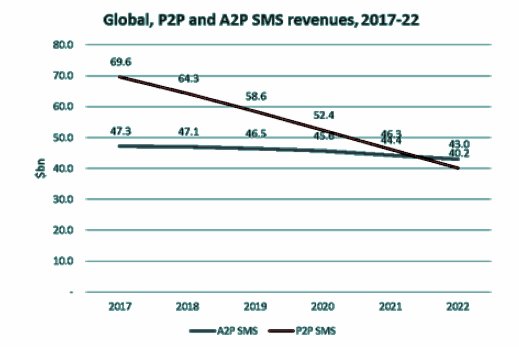
    SMS is not dead – not yet anyway. Ovum’s Mobile Messaging Traffic and Revenue Forecast: 2017-22 forecasts global revenues from application-to-person (A2P) SMS will finally exceed revenues from person-to-person (P2P) SMS by 2022, totalling $43 billion, even though A2P SMS traffic will be less than half of P2P SMS traffic by that time.

    P2P SMS revenues will generate just $40.2 billion in revenues by the end of the forecast period, but P2P SMS traffic will total 3.4 trillion messages in 2022, by comparison to 1.5 trillion A2P SMS.

    Figure 1: Global P2P and A2P SMS revenue, 2017-2022

    Figure 1: Global P2P and A2P sms revenue, 2017-2022Source: Ovum 2018

    The bulk of P2P and A2P SMS traffic and revenues will come mainly from the mobile-first, powerhouse markets of China, India and Indonesia.

    “Unfortunately for most telcos, P2P SMS has become essentially value-less, since they have had to bundle unlimited SMS into mobile tariffs to remain relevant to their customers, an increasing number of whom use chat apps such as WhatsApp, WeChat and Facebook Messenger. However, telcos can still charge a per-message termination rate for A2P SMS, which means it remains a more valuable source of revenues, since enterprises still value SMS for its global reach, affordability and mature ecosystem,” said Pamela Clark-Dickson, practice leader of Ovum’s communications and social team.

    Ovum forecasts chat apps will have 3.2 billion unique monthly active users (MAUs) by 2020, connecting enterprises with consumers via their platforms. Telcos and the wider ecosystem are therefore under pressure to protect their A2P revenues, driving them to upgrade from SMS to Rich Communication Services (RCS).

  • China leads global 5G race by narrow margin

    China leads global 5G race by narrow margin

    China holds a narrow lead in overall 5G readiness ahead of South Korea and the United States, according to Analysys Mason. In a separate report, Recon Analytics said US 4G leadership drove significant economic benefits suggesting the need for the US to maintain its global leadership in the burgeoning new communication standard.

    In evaluating the current status of the global race to 5G, Analysys Mason studied 5G spectrum and infrastructure policies as well the commercial industry plans of ten countries and ranked these in terms of their 5G readiness.

    Establishing 5G leaders

    At the top of the pole is China, followed by South Korea, the United States and Japan. China’s narrow lead is due to a combination of both proactive government policies and industry momentum. The United States is hanging on to its position mostly on the back of significant investments in next-generation networks by the country’s wireless operators.

    All major Chinese providers have committed to specific launch dates and the government has committed to at least 100MHz of mid-band spectrum and 2000MHz of high-band spectrum for each wireless provider.

    Countries around the world are moving quickly to make spectrum available for 5G. This year alone, the UK, Spain, and Italy are all holding 5G spectrum auctions.

    Meredith Attwell Baker, CTIA president and CEO noted that “today’s research highlights the importance of policymaker action in 2018 to reform local zoning rules and unlock access to mid-band spectrum as part of a broader spectrum pipeline plan. I’m optimistic we will leapfrog China because key leaders in the Administration, on Capitol Hill, and at the FCC are focused on the reforms needed to win the race.”

    At the end of 2018, the USA will rank sixth out of the 10 countries in mid-band (3–GHz to 24-GHz) spectrum availability, a critical band for 5G. The USA joins Russia and Canada as the only countries currently without announced plans to allocate mid-band spectrum on an exclusive basis to mobile by the end of 2020.

    Kester Mann, principal analyst covering operators at CCS Insight, corroborated Baker’s analysis, adding that “the industry might be struggling to establish the business models for investment in 5G, but this isn’t stopping leading operators battling for bragging rights to launch the first networks. Competitive forces and the need for capacity are the leading drivers of early deployment, although we caution this could set unrealistic expectations for initial network capability”.

    Countries like the UK and regions like the European Union are taking significant steps to modernize infrastructure rules to facilitate the deployment of 5G networks.

    “When countries lose global leadership in a generation of wireless, jobs are shed and technology innovation gets exported overseas,” Recon Analytics founder Roger Entner said.

    “Conversely, leading the world in wireless brings significant economic benefits, as the USA has seen with its 4G leadership. These are the serious stakes that face American policymakers in the escalating global race to 5G.”

    Losing wireless leadership had long-term negative effects on Japan and Europe, contributing to job losses and the contraction of their domestic wireless industries.

    Opportunity

    CCS Insight’s forecast estimates total global 5G connections in 2020 at almost 60 million, rising more than 50% against October 2017 estimates, and presenting a stronger outlook for 2021 at 280 million connections — a 25% improvement. CCS Insight still expects the 1 billion mark to be breached in mid-2023, and its projection for 2025 has inched up to 2.7 billion.

  • NEC applies AI to subsea cable networks

    NEC applies AI to subsea cable networks

    NEC has announced it has applied AI to subsea cable networks to push the capacity limits of the transmission networks.

    During joint research with Google, NEC applied AI and probabilistic shaping using 64 quadrature amplitude modulation (64QAM) to the FASTER subsea cable linking Taiwan, Japan and the US west coast.

    The study demonstrated that the 11,000km FASTER cable can be upgraded to a spectral efficiency of 6 bits per second per hertz. This would represent a capacity of more than 26Tbps, over two and a half times the capacity originally planned for the cable.

    According to NEC, the team used probabilistic shaping techniques that near the Shannon limit, the theoretical maximum transmission speed over a telecoms network before the signal is drowned out by noise, at a modulation of 64QAM.

    For the first time on a live cable, AI was used to analyze data for the purposed of nonlinearity compensation (NLC). The trial used an NEC developed compensation algorithm based on deep neural networks to accurately estimate signal nonlinearity.

    “Other approaches to NLC have attempted to solve the nonlinear Schrodinger equation, which requires the use of very complex algorithms,” NEC GM of submarine networks Toru Kawauchi said.

    “This approach sets aside those deterministic models of nonlinear propagation, in favor of a low-complexity black-box model of the fiber, generated by machine learning algorithms. The results demonstrate both an improvement in transmission performance and a reduction in implementation complexity.”

  • China Tower files IPO application

    China Tower files IPO application

    Chinese state-backed tower company China Tower has filed an application for an IPO on the Hong Kong Stock Exchange (HKSE) that could raise as much as $10 billion.

    The company, which was created to hold the tower assets of China’s big three state-backed operators China Mobile, China Telecom and China Unicom, filed its IPO documents on Monday.

    The report cites unnamed sources as stating that China Tower is expected to seek a valuation of up to $40 billion, although the final size of the offer will depend on market sentiment.

    China Tower is the world’s largest tower company, operating around 1.9 million tower sites across China. The company’s net profit grew more than 25 times last year to 1.9 billion yuan, according to its prospectus.

    China Tower was established in 2015 as part of a government-directed initiative to eliminate inefficiencies and duplication of assets. China Mobile, China Unicom and China Telecom agreed to transfer their tower assets to the joint venture in exchange for a 38%, 28.1% and 27.9% stake respectively. State-owned asset manager China Reform Holding took the remaining 6%.

    The joint venture had initially planned to hold its IPO early this year, but had reportedly faced delays in securing the needed approvals.

    China Tower’s IPO could be the second $10 billion public offer on the HKSE this year. Earlier this month Chinese smartphone maker Xiaomi filed documents for its own IPO.

  • 5GAA, Audi, Ford, Qualcomm demo C-V2X direct comms

    5GAA, Audi, Ford, Qualcomm demo C-V2X direct comms

    The 5G Automotive Association (5GAA), Audi, Ford and Qualcomm have announcedwhat they claim is the world’s first demonstration for cellular vehicle-to-everything (C-V2X) direct communications technology operating across vehicles from different manufacturers.

    Using the C-V2X chipset from Qualcomm in Audi and Ford vehicles, demonstrations showcased various scenarios of how C-V2X communications can alert nearby vehicles to potential hazards when the driver’s view may be obstructed. A case in point is to use vehicle-to-vehicle (V2V) communications to alert surrounding vehicles when cars were turning left or braking.

    Additional use cases were featured, including a vulnerable road user (VRU) demo showcasing what can be possible with future vehicle-to-pedestrian (V2P) communications, 5GAA said in a statement.

    Use cases for vehicle-to-infrastructure (V2I) communication were also demonstrated, which showcased how direct communications can work closely with traffic signal controllers to ensure reduction in carbon emissions and optimization of traffic efficiency in cluttered intersections and dense environments.

    5GAA said the demos showcased the benefits of using C-V2X real-time direct communications on the 5.9-GHz Intelligent Transport Systems (ITS) spectrum for V2V collision avoidance and improved road safety, independent of the cellular operator network involvement, credentials or coverage.

    In addition, initial field test results of the demos showed C-V2X direct communications had more than twice the range of 802.11p radio technology.

    The 5GAA, Audi, Ford and Qualcomm are scheduled to showcase another live C-V2X interoperability demo at the upcoming Intelligent Transportation Society of America (ITS-A) World Meeting in Detroit from June 4-7.

  • NetLink NBN Trust beats IPO earnings forecast

    NetLink NBN Trust beats IPO earnings forecast

    Singapore’s NetLink NBN Trust, the network company for Singapore’s next-generation national broadband network (NG-NBN), has beat its post-tax profit targets for the financial period between June 19 and March 31 by 10.8%.

    The operator reported a net profit for the period of S$50 million ($37.4 million). This compares to a projection of S$45.1 million included in the prospectus for its S$2.3 billion IPO, which was completed in July last year.

    NetLink NBN Trust attributed the higher than expected profit to lower operation and maintenance costs, staff costs and other operating expenses

    NetLink NBN Trust reported revenue of S$228.6 million, 1.8% lower than forecast, due mainly to lower installation-related revenue. But this was partly offset by higher than expected recurring residential and non-residential connection revenue.

    For the fourth quarter, the operator reported a 6.4% lower than expected profit after tax of S$15.3 million and 4.4% lower than forecast revenue of S$80.7 million.

    “Our better-than-forecast earnings reflects the resilience of our business model,” NetLink NBN Trust CEO Tong Yew Heng said.

    “The growth in the number of connections for residential, non-residential and segment fiber for the relevant financial period was higher than the forecast.”

    As the network company for the NG-NBN, NetLink NBN Trust designs, owns, builds and operates the passive fiber network infrastructure for the network. As of the end of March, the network spanned around 76,000km of fiber cables, 16,200km of ducts and 62,000 manholes.

  • MyRepublic targets service industry with Cisco Meraki

    MyRepublic targets service industry with Cisco Meraki

    Singapore-based ISP MyRepublic has launched a new complete networking solution for the services industry in collaboration with Cisco Meraki.

    The new MyRepublic Connected Business solution is designed to meet the end to-end needs of companies in the retail, food and beverage and hospitality sectors.

    MyRepublic will assume the role of both consultant and solutions provider to help design and deliver a network that meets a company’s specific requirements.

    MyRepublic Connected Business can provide solutions including high-performance wireless networking, secure firewall services, as well as traffic and use analytics to provide insight into the network.

    The platform provides central management and connection of wireless access points, security cameras, VoIP phones, network switches and other devices connected to the network.

    “MyRepublic understands many of the challenges facing businesses in the retail, hospitality and F&B sectors,” MyRepublic CEO Malcolm Rodrigues said.

    “Our customers want and need solutions that are not just innovative, but streamlined and hassle-free. MyRepublic Connected Business is exactly that, and we are excited to work with a well-established partner like Cisco Meraki to resolve these challenges.”