Category: Telecom

Retail News Asia is committed to providing both local and global retailers with the latest Telecom & Telco news throughout the Asian market. This on a daily base.

  • India’s DoT approves Airtel-Telenor India merger

    India’s DoT approves Airtel-Telenor India merger

    India’s Department of Telecom (DoT) has approved the planned merger between Telenor India and Bharti Airtel, which will create an operator with a subscriber base of around 334 million.

    The department has signed off on the merger after being directed to by the Supreme Court.

    The DoT had petitioned the court seeking to compel the operators to submit a security deposit of around 17 billion rupees ($251.6 million) before approving the merger. This deposit would cover unpaid spectrum fees from Telenor and a one-time spectrum charge on Airtel for the spectrum that the operator will acquire through the merger without an auction.

    But the court has dismissed the petition and instructed the department to approve the merger.

    With the acquisition, Airtel will acquire an additional 43.4 MHz of spectrum in the 1800-MHz band, spread across seven of India’s 22 telecoms circles.

    The company will also absorb Telenor’s subscriber base in these circles, which will leave the incumbent operator with nearly twice as many subscribers as new entrant Reliance Jio Infocomm.

    As a condition of approval, Airtel has been instructed to reduce its market share based on adjusted growth revenue in the Bihar telecoms circle to the limit of 50% within one year of completing the merger.

    Norway-based Telenor is meanwhile fulfilling its goal of exiting the Indian market due to the intense competition and the high cost of spectrum.


  • New form of Hide and Seek IoT malware discovered

    New form of Hide and Seek IoT malware discovered

    Security researchers from BitDefender have discovered a new form of the ‘Hide and Seek’ IoT malware, which targets several generic devices.

    The most worrying aspect of this new strain is its ability to persist despite a reboot. With previous versions, equipment owners could always remove IoT malware from their smart devices, modems, and routers by resetting the device.

    Hide and Seek’s original version, discovered in January 2018, was notable for using a proprietary peer-to-peer network for both C&C and new infection communication. With persistence now added to the feature mix, the botnet has become a more pressing concern for owners of the 90,000+ IoT devices already infected and other equipment that are vulnerable and still unprotected.

    “The botnet seems to undergo massive development as new samples compiled for a variety of architectures have been added as payloads,” said Bogdan Botezatu, senior e-threat analyst at Bitdefender, in a blog post concerning the new variant of the malware.

    According to the Bitdefender researchers, there are at least 10 different versions of executables that can run on 10 different system variants.

    Botezatu said that new binaries now include code to leverage two new vulnerabilities to compromise more IPTV camera models. “In addition to the vulnerabilities, the bot can also identify two new types of devices and pass their default username and passwords,” he said.

    The malware targets several generic devices. Once infected, the device scan for neighboring peers for the presence of the telnet service. As soon as the telnet service is found, the infected device attempts brute-force access.

    “New variations of the Hide and Seek malware continue to exploit common issues with system/software hardening in deployed IoT devices,” Irdeto global head of software protection John O’Connor said.

    “The current generation of the Hide and Seek botnet could effectively be stopped in its tracks if diligent system hardening was applied during development, including proper management of applications, permissions, ports and user IDs/passwords. As a result, hardening should be a baseline requirement of a system in the development phase.”

  • Asia outpacing Europe by TETRA adoption

    Asia outpacing Europe by TETRA adoption

    Terrestrial trunked radio (TETRA) technology is gaining popularity in Asia, as well as in new markets beyond public safety, according to IHS Markit.

    The research firm estimates that TETRA deployments worldwide grew 16% in 2017, due to both refreshes in mature markets as well as fresh deployments in new areas.

    Europe remains the largest market for the European Telecommunications Standards Institute (ETSI) developed TETRA standard, but the Asian and Latin American markets for the technology are expected to grow at a faster rate than Europe over the next few years.

    Asia already posted its largest growth in deployments in 2017, with deployments across airports, metro systems and other transport hubs, the company said.

    TETRA has emerged as the technology of choice for emergency services, but is also seeing adoption in industries such as transport, utilities and the industrial sector.

    As well as land mobile radio (LMR) based TETRA systems, LTE is emerging as an alternative. Private LTE networks have been deployed in China, Australia, South America and several MEA markets, IHS Markit noted.

    The research firm said LTE might be used as a substitute for TETRA and other high-end LMR technologies over the next five to ten years. But in the short term, LTE is expected to be used to complement critical voice communications with data capability rather than replace LMR altogether.

  • NEC to help Docomo upgrade to 5G

    NEC to help Docomo upgrade to 5G

    Japan’s NTT Docomo has entered an agreement with NEC covering the supply of control units for 5G base station equipment to help commercialize 5G services.

    NEC plans to develop technology to enable existing telecoms equipment such as high density base station equipment to be fully compatible with 5G. Docomo plans to leverage this technology to meet its goal of launching 5G services in 2020.

    Under the agreement, NEC will achieve 5G compatibility through software upgrades and a minimal replacement of hardware to maximize the use of existing high-density base station equipment, using the base station technology NEC first launched in February 2015.

    The upgrade will allow Docomo to continue providing LTE and LTE-Advancedservices even after the equipment is upgraded to be made compatible with 5G.

    “Docomo aims to deploy and expand our commercial 5G services efficiently by maximizing the use of existing communications equipment,” NTT Docomo CTO and board member Hiroshi Nakamura said.

    “This agreement with NEC is in line with that policy and we expect it to make a significant contribution to our 5G services. Going forward, Docomo accelerates co-creation of new services and businesses with vertical industry partners.”

    The operator has separately announced that its board of directors has proposed a number of changes in executive positions for approval at next month’s shareholders meeting aimed at further developing the company.

    Among the proposed changes include the appointment of five senior executives to the board, the hiring of a new executive vice president, and the promotion of four candidates to senior vice president.

  • 3 HK wins permit for 26-GHz, 28-GHz 5G trials

    3 HK wins permit for 26-GHz, 28-GHz 5G trials

    Hutchison Telecommunications Hong Kong Holdings’ mobile division 3 Hong Kong has secured a temporary permit to conduct 5G new radio trials.

    Hong Kong’s Office of the Communications Authority (OFCA) has granted 3 Hong Kong permission to conduct network trials using 26-GHz and 28-GHz millimeter wave spectrum, the operator said.

    The permit will allow 3 Hong Kong to possess, establish, maintain and use transmitting and receiving stations for indoor and outdoor 5G trials, which are expected to commence in the third quarter.

    The operator successfully applied for a 5G indoor test permit for the 3.5-GHz band last August and completed a number of tests over the remainder of the year.

    “3 Hong Kong is determined to launch a 5G service at the earliest opportunity, after 5G spectrum specifications and standards have been finalized,” the company said.

    OFCA has previously announced plans to ensure Hong Kong is one of the earliest adopters of 5G technology by setting the regulatory groundwork for commercial services to be launched in 2020.

    In March, 3 Hong Kong activated Hong Kong’s first five-carrier aggregation (5CC CA) LTE-Advanced services, using its 900-MHz, 1800-MHz, 2100-MHz, 2300-MHz and 2600-MHz spectrum. During network trials, the company achieved speeds of 1.1Gbps over the network.

  • Trump intervening to get ZTE back in business

    Trump intervening to get ZTE back in business

    n an unexpected twist in the ongoing saga over the ban on ZTE importing US components, president Donald Trump has indicated he may throw a lifeline to the Chinese vendor.

    On Sunday, Trump tweeted on his official account that he is working with Chinese president Xi Jinping on a resolution that will allow ZTE to resume operations.

    “President Xi of China, and I, are working together to give massive Chinese phone company, ZTE, a way to get back into business, fast. Too many jobs in China lost. Commerce Department has been instructed to get it done!,” he wrote.

    ZTE was forced to cease major operations last week as a result of the import ban imposed on the vendor by the US Department of Commerce’s Bureau of Industry (BIS) in April.

    The ban was originally imposed last year but automatically suspended on the condition that ZTE comply with its settlement agreement over the investigation into the vendor’s sale of telecoms equipment including US components to Iran, in violation of US sanctions.

    Trump’s announcement comes as the US and China are conducting trade talks aimed at resolving the disputes between the world’s two largest economies. Chinese vice premier Liu He reportedly met with officials in Washington on Friday, while Xi’s top-ranking economic adviser plans to visit this week to continue the

  • Touché announces appointment of new Chief Legal Officer

    Touché announces appointment of new Chief Legal Officer

    Singapore based technology company Touché has announced the appointment of Mr Arvind Vij to the position of Chief Legal Officer with effect from 01 May 2018. Arvind is joining Touché’s experienced executive leadership team.

    Arvind brings with him 20+ years of international legal experience across different sectors, both as an in-house lawyer and in private practice. He founded and served as the Chief Executive Officer of Illuminati Humanista Solutions, providing specialised and customised services in the areas of Legal, Compliance and Corporate Secretarial support to a diversified range of clients in the areas of Corporate, Commercial Banking and Finance, Information Technology and Intellectual Property.  Arvind will continue to be involved with Illuminati.

    Prior to that, Arvind spent more than 14 years at JPMorgan in Singapore, Mumbai & New York and was most recently Managing Director & Associate General Counsel, Global Head Legal Entity Management and General Counsel and Head of Compliance for Offshoring and Outsourcing. Prior to JPMorgan, Arvind was with Drew & Napier in Singapore, Milbank, Tweed, Hadley & McCloy in Singapore & New York and Pillsbury Winthrop in Singapore & New York.

    Arvind will report directly to Sahba Saint-Claire, Chief Executive Officer and co-founder of Touché.

    “Arvind’s unique blend of multinational legal expertise and business acumen makes him a great addition to the team as we realise our plans to redefine payment transactions into value-added interactions, in the region and globally. He joins us at an exciting time with multiple partnerships being discussed with leading banks and merchants across APAC and the Middle-East,” said Saint-Claire.

    “Touché is a dynamic company that is uniquely positioned to reshape the payments industry and provide personalised customer experiences through its comprehensive biometric based system. I look forward to joining the team and helping Touché develop and implement new strategies on legal matters,” said Arvind.


  • Zong 4G – No.1 Data Company of Pakistan Continues its Expansion Nationwide

    Zong 4G – No.1 Data Company of Pakistan Continues its Expansion Nationwide

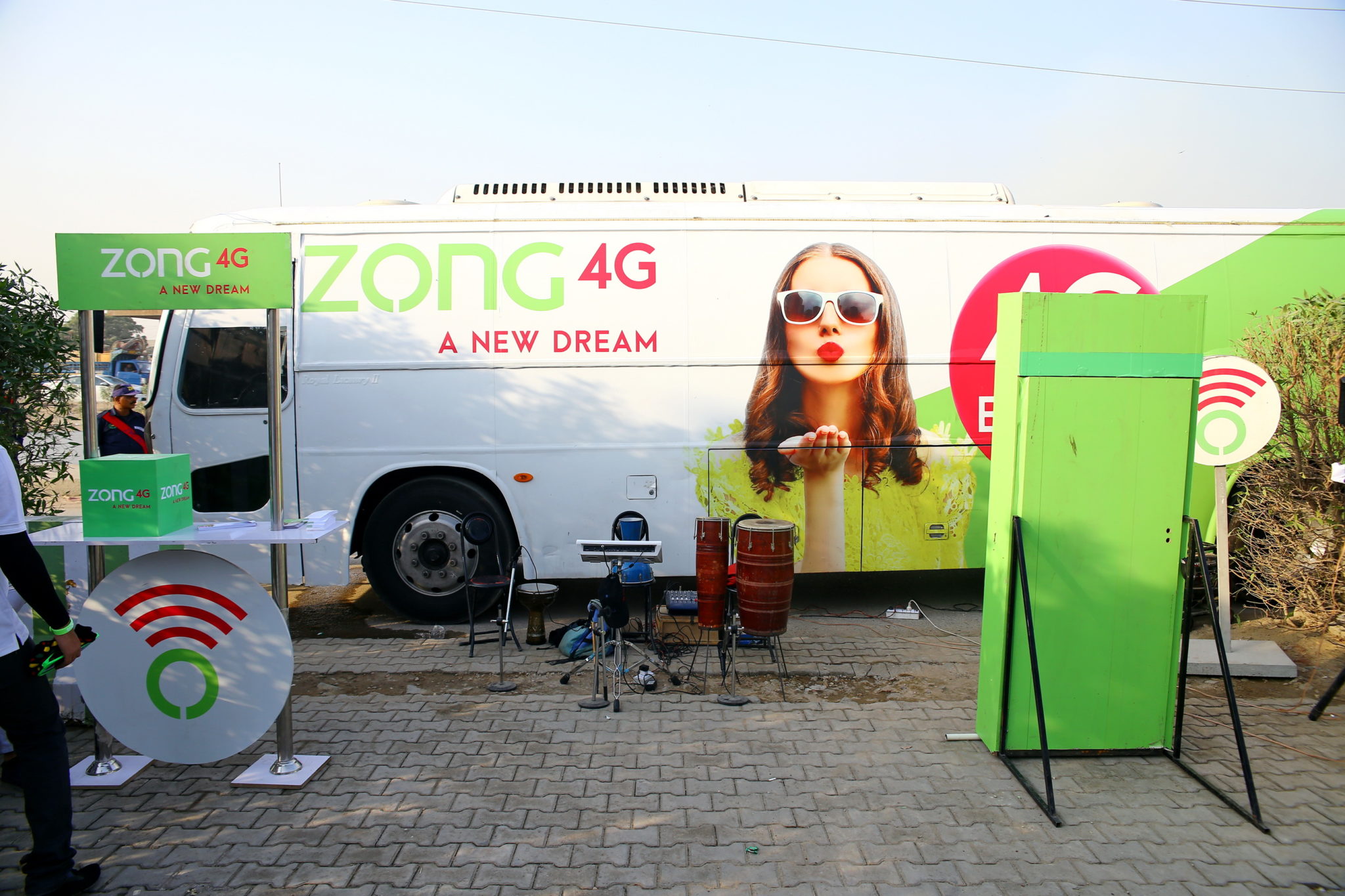
    In a prolific development, Pakistan’s largest telecom network Zong 4G has launched its operations in the port city of Gwadar, a future international business hub which has already seen foreign and local investment amounting in billions of dollars and rupees.

    The launch of fastest 4G services in Gwadar implies that foreign citizens from across the globe and local residents who have been pursuing their respective business endeavours in the port city will have unhindered access to the fastest 4G technology against reasonably affordable tariff. The move is likely to boost online businesses in the fast developing international city and the adjoining belt of rural Sindh.

    With its 4G consumer-base already having exceeded the 6 million mark, Zong eyes to keep expanding its matchless voice and data services.

    “Zong 4G’s network expansion symbolises our customer-centric approach to ensure that the interests of consumers stay above all the rest by offering them best and affordable network,” the telecom company said in a statement.

    “We keep expanding our operational portfolio to ensure enhanced operations in cities, towns, villages, and far-flung areas,” it said.

    The ongoing momentum of the rapid network expansion implies that Zong 4G continues to invest heavily in modernisation of the mobile network to respond to growing market needs.

    Innovation, performance and reliability have long been Zong’s hallmark. The No.1 Data Company of Pakistan epitomises professional excellence and digitised supremacy coupled with its customer-oriented policies with an aim to deliver the best but at highly affordable rates.

  • Cathay Pacific taps Red Hat for hybrid cloud transition

    Cathay Pacific taps Red Hat for hybrid cloud transition

    Airline Cathay Pacific is using Red Hat solutions and services to transform its legacy infrastructure into a modern hybrid cloud architecture.

    Using Red Hat OpenStack Platform and Red Hat OpenShift Container Platform, Cathay Pacific created a more efficient and scalable platform for developing and delivering new services, enabling the company to ultimately create a better overall experience for their customers.

    Based in Hong Kong, Cathay Pacific is an international airline offering passenger and cargo services to 200 destinations in 52 countries and territories worldwide. Digital capabilities are a critical function of the company’s business strategy for growth, with the heart of this initiative emphasizing a responsive and adaptable customer experience.

    Cathay Pacific’s legacy infrastructure and development process posed a challenge, making it difficult for the airline to maintain a high level of performance from its internal systems and customer-facing applications. Its existing systems were inflexible and time consuming to modify, forcing the company to handle an increasing level of technical debt dedicated to system maintenance and “keeping the lights on.”

    Using Red Hat’s open standards-based, enterprise technologies and guided by Red Hat’s technical expertise, Cathay Pacific migrated from its legacy infrastructure to a hybrid cloud architecture, consisting of a private cloud environment that includes Red Hat OpenStack Platform which can provision workloads as needed into public cloud instances.

    Forming the bridge to the public cloud is Red Hat OpenShift Container Platform, which supports more than 50 consumer-facing applications.

    With Red Hat OpenShift Container Platform, Cathay Pacific is able to move applications in a more streamlined fashion across its hybrid infrastructure and is able to scale computing resources up and down as demand requires.

  • NTT Docomo trials 5G at 305km/hr

    NTT Docomo trials 5G at 305km/hr

    Japan’s NTT Docomo, parent company NTT and vendor NEC have jointly achieved the first 5G transmission between a 28-GHz base station and a 5G mobile station in a car moving at 305km/hr.

    The trial also achieved a 1.1Gbps high-speed data transmission to a 5G mobile station moving at 293km/hr as well as fast handover between 5G  base stations and a 5G mobile station moving at 290km/hr.

    During the trial at the Japan Automobile Research Institute, a test environment was created using a car traveling at speeds similar to that of Japan’s bullet train high-speed railways.

    To overcome the challenges associated with long-range transmission of 28-GHz radio waves, the base and mobile stations were both equipped with beamforming and beam tracking technology.

    The 5G base station also used massive MIMO antennas with 96 elements and supporting up to two beams, and two antenna units per base station.

    Docomo also succeeded in a wireless live transmission of 4K, 120 frame per second video from a car moving at speeds of 200km/hr using NTT’s real-time 4K high frame rate HEVC codec.

    Sony Business Solutions Corporation provided the 4K camera for the trial, while Docomo Team Dandelion Racing manager Dandelion Limited tuned the trial car for an ultra-high-mobility environment and operated the car on the test course.

  • Expats confused over Vietnam’s profile picture requirement for phone users

    Expats confused over Vietnam’s profile picture requirement for phone users

    Some have no idea about the requirement, others find it invasive while network providers can’t guarantee help in English. Expats are having issues with Vietnam’s new regulation which asks phone users to submit a profile picture to their network provider.

    The Ministry of Information and Communications requires mobile subscribers to provide photographic proof of their identities before April 24, or they will be locked out of their network.

    Ryan, 28, is a Briton working in Hanoi. He had no ideas about the new regulation until we contacted him because the profile photo request was sent to his phone in Vietnamese.

    “I’ve never had to do this in the U.K. or in any other countries I’ve travelled through,” Ryan said, adding that he finds the requirement “invasive”.

    In light of recent data breaches by companies as large as Facebook, Ryan is concerned that his information could fall into the wrong hands. “I don’t know if I could trust my network provider with my information,” he said.

    The government claims the requirement will result in better control of network subscribers and prevent spam accounts.

    But while network providers claim user data will only be used to manage subscribers as stated by law, experts believe the regulation has loopholes that could be taken advantage of.

    The images could slip through the network security holes, a scenario in which the responsibility of the network provider has not yet been clearly defined, said lawyer Vu Tien Vinh.

    A photo taken by a customer and sent to a network provider cannot be authenticated, Vinh added.

    Having been to many Asian countries, Mark from Canada finds the regulation odd. “Why would a phone company need my photo?” he said.

    Ryan and Mark are not the only expats who are having issues with the regulation. Many foreigners are also confused as local mobile operators don’t seem to provide the assistance they need.

    On Saturday, customer service centers of all major network providers were packed with customers coming in to have their photos taken.

    Amid the chaos, employees at the centers suggested that foreigners could bring in their passport, or take a photo of their passport and submit it to the companies’ websites. But, they could not guarantee there would be anyone who speaks English available to help.

    Vietnam has 118.7 million mobile subscriptions, according to official data and there are 82,000 foreigners living and working in the country. As of last week, at least 38 million mobile phone users have not provided adequate personal information to network providers, said Nguyen Duc Trung, a senior telecommunications official at the Ministry of Information and Communications.

    Mark is one of them. The 35-year-old is not planning to do anything yet. “I’ll see if they actually lock my account,” he said.

  • CMHK signs NB-IoT agreement with Sino Group

    CMHK signs NB-IoT agreement with Sino Group

    China Mobile Hong Kong (CMHK) and property developer Sino Group have signed an agreement to deploy a narrowband IoT network across Sino Group’s residential and commercial properties.

    The partnership aims to develop pre-5G infrastructure initially focused on the provision of smart home, smart shopping mall and smart property management solutions.

    The deployment will support Hong Kong’s transformation into a smart city and help accelerate social development, the companies said.

    Under the partnership, IoT and big data technologies will be applied to enhance the agreement of Sino Group’s commercial tenants, improve the group’s property management efficiency and facilitate environmental protection.

    “The 5G evolution is crucial to shaping Hong Kong into a smart city, and CMHK is imperative to proactively develop 5G mobile service applications towards advancing the development of Hong Kong’s 5G mobile communication network,” CMHK director and CEO Sean Lee said.

    “With plans to upgrade our existing base station equipment, we are well poised for the arrival of 5G and the future Internet of Things. We are extremely excited about our partnership with Sino Group to further its property network coverage, and support its future development.”

    CMHK was awarded the first trial permit for 5G tests among Hong Kong operators by the Office of the Communications Authority in March. The operator plans to commence lab tests with 5G commercial equipment using the assigned 5G trial spectrum later this quarter.

  • ZTE on life support after US export ban

    ZTE on life support after US export ban

    ZTE has been forced to cease its global operations as a result of the crippling sanctions imposed on the company by the US government.

    In an announcement to shareholders, ZTE said [PDF] that the major operating activities of the company have ceased due to the activation of the denial order from the US Department of Commerce’s Bureau of Industry (BIS).

    This order prohibits US companies, including ZTE’s major suppliers such as Qualcomm and Google (for Android), from exporting their products to ZTE for a period of seven years.

    The denial order was initially imposed but automatically suspended in March last year on the condition that ZTE adhere to a settlement agreement which included penalizing the senior officials responsible for the decision to contravene the Iran sanctions.

    But the BIS activated the denial order last month after accusing ZTE of violating these conditions by offering full bonuses to executives implicated in the case and failing to issue letters of reprimand in a timely manner.

    The sanction relates to an investigation into ZTE’s alleged sale of telecommunications equipment containing US components to Iran in violation of US sanctions imposed on the country.

    ZTE’s announcement states that the company has sufficient cash to remain in business “as of now”, and is actively seeking a modification or reversal of the denial order from various US government departments.

    But in light of the ongoing trade war between the US and China, the Trump administration may not back down so easily, which would threaten ZTE’s ongoing existence.

  • GCX to upgrade HAWK cable

    GCX to upgrade HAWK cable

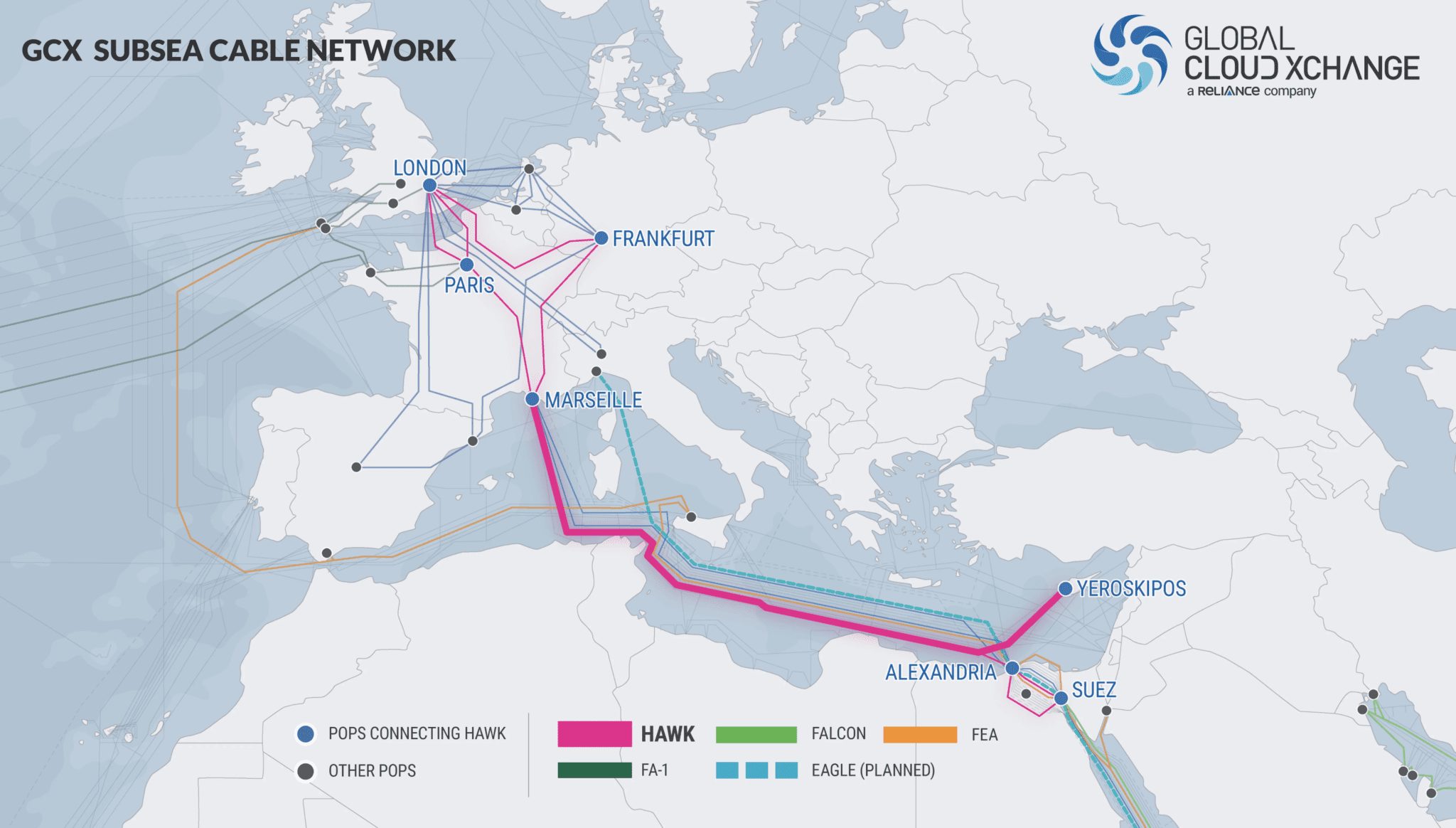
    Reliance Communications’ Global Cloud Xchange (GCX) has announced plans to upgrade a branch of the HAWK subsea cable to meet growing demand for bandwidth between Europe and emerging Asia and the Middle East.

    The company will work with Cyprus’ incumbent operator PrimeTel to upgrade the HAWK branch into Cyprus to 100Gbps.

    The HAWK cable system links Marseille and Paris in France, London in the UK, Frankfurt in Germany, Yeroskipos in Cyprus, and Alexandria in Egypt, and connects to GCX’ global subsea and European backhaul network.

    The cable is integrated with PrimeTel’s Cyprus gateway and hub, which was activated in 2011 to enable ultra-high bandwidth services across the Emerging Markets corridor.

    “With the recent upgrade, we have now broadened our reach into PrimeTel’s Cyprus Hub in Yeroskipos, providing enhanced coverage to meet the growing demand for high-performance, low-latency connectivity across the emerging markets in the Middle East and Asia,” GCX COO Wilfred Kwan said.

    “The network enhancement has already started to attract interest across key growth markets and we are pleased that the first 100Gbps wavelength connection for a major carrier is already in the process of being activated.”

  • EllaLink gets anchor customer for trans-Atlantic cable

    EllaLink gets anchor customer for trans-Atlantic cable

    The Atlantic will be getting yet another subsea cable system it seems, but this time it’s on a route rarely travelled.

    EllaLink has won a key anchor customer for a cable system connecting Portugal with Brazil. The research and education networks GEANT and RedCLARA are putting €25 million ($29.6 million) up for direct capacity between Europe and South America.

    As currently planned, EllaLink will bring some 72Tbps of connectivity between the two continents. In South America it will land at both Fortaleza and at Praia Grande near Sao Paolo, two popular cable destinations with plenty of interconnection options.

    In Portugal the system will come ashore at Sines, not far from Lisbon and at a new location distinct from other cables landing in the region and with terrestrial access over to Madrid of course. In between are several islands that will probably see branches, such as Madeira and Cabo Verde.

    We haven’t seen a cable on this route since ATLANTIS-2, and unlike most new builds it doesn’t seem to be on the radar of the big cloud/content guys. That may change as interest in the nearby interconnection market of Madrid continues its rapid growth.

    EllaLink offers a bypass route between Europe and Latin America that doesn’t land first in the eastern US. By taking the direct route and avoiding North America, latency will be substantially reduced, probably by about half or more.

    Alcatel Submarine Networks will be handling the installation, which is envisioned to be complete sometime in 2020.  With much of its funding in place, it looks as if this cable system is ready to move onto the marine survey and construction.