Category: Telecom

Retail News Asia is committed to providing both local and global retailers with the latest Telecom & Telco news throughout the Asian market. This on a daily base.

  • Telstra outage leads to 000 disruption

    Telstra outage leads to 000 disruption

    Australian incumbent operator Telstra has repaired a damaged fiber cable that led to intermittent disruptions to the nation’s 000 emergency call service in half of the nation’s states.

    The operator said a preliminary investigation indicates that the disruption was caused by fire damage consistent with a lightning strike.

    The disruption commenced at around 2am on Friday, and persisted until impacted routers were restored at about 4:50am, after which services progressively returned to normal. The cable was fixed at around 11am.

    While most call traffic was diverted to alternative cable and equipment, an issue occurred with the routing of some traffic which resulted in intermittent disruptions to 000 calls.

    The disruption impacted some callers in Queensland, NSW, Victoria and South Australia. The Queensland Ambulance Service has identified 11 emergency calls that experienced delays calling through its operations centers as a result of the disruption, while a NSW Ambulance commissioner complained that the operator did not inform it about the outage.

    Other representatives of emergency services departments have stated that it is difficult to ascertain how many emergency calls failed to get through, or if anybody died or was harmed as a result of the outage.

    The damage also reportedly caused disruptions to other telephony services as well as EFTPOS machines and street lighting.

    The federal government has revealed it will conduct a formal investigation into the outage, including the cause of the fire and the failure of Telstra’s contingency plans. The operator may face significant financial penalties as a result of the investigation.


  • Hawaiki Cable deployment nearly complete

    Hawaiki Cable deployment nearly complete

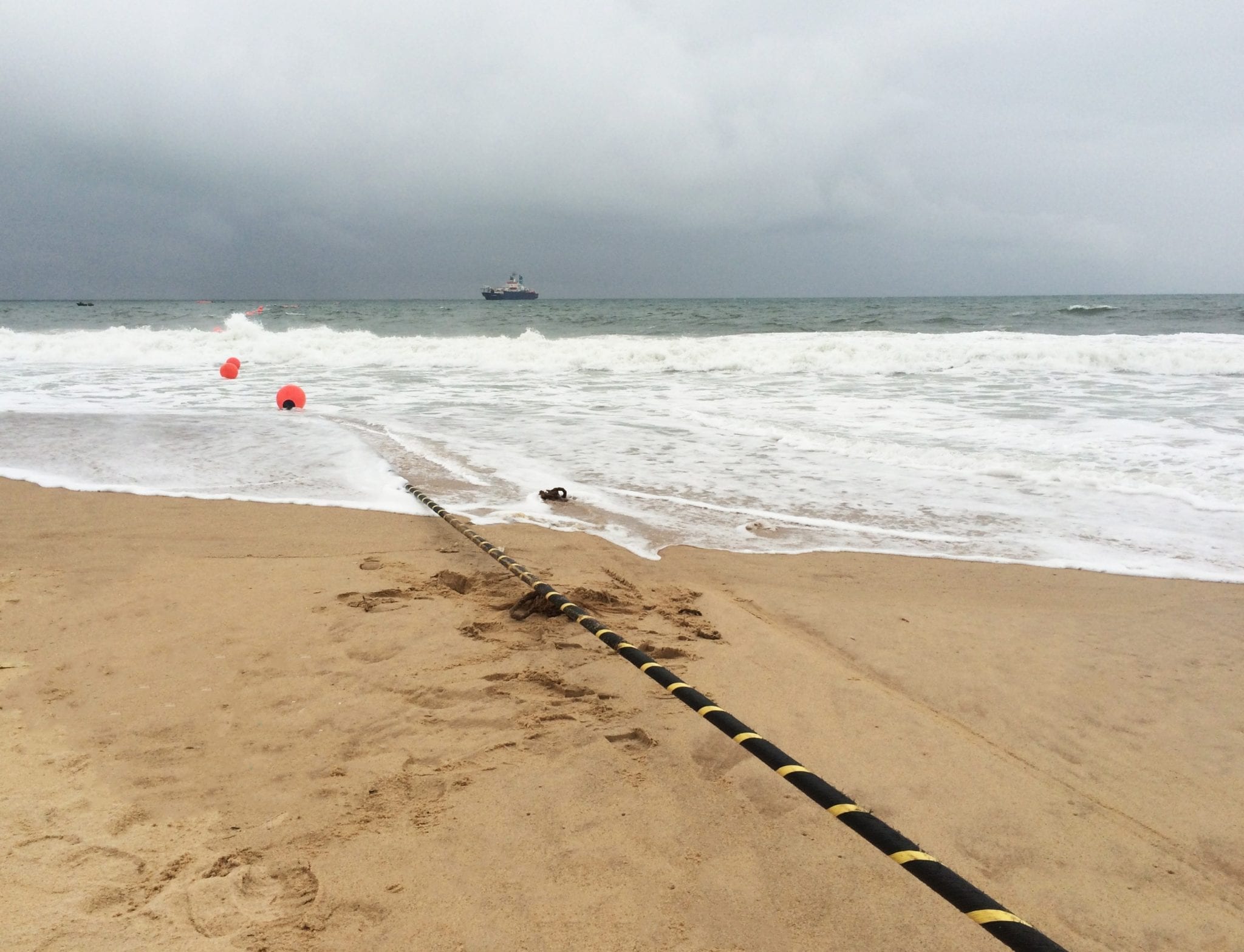
    The Hawaiki cable is nearly complete, according to the company and TE Subcom. Each of the cable landings is complete, the final splice has been made, and final testing will begin shortly. That puts them on track to officially bring the cable online next month.

    The 15,000km Hawaiki cable Cable System will connect Oregon with Australia and New Zealand, making stops in American Samoa and Hawaii along the way. There are also stubbed branch units for New Caledonia, Fiji, and Tonga for the future.

    The system’s theoretical capacity is 43Tbps, which will add significantly to that which is available on the direct route down under. It has taken many years and iterations by those involved to make it happen.


  • South Korea to hold 5G auction June 15

    South Korea to hold 5G auction June 15

    The South Korean government has announced plans to hold an auction for 3.5-GHz and 28-GHz 5G spectrum on June 15.

    The government has also decided to go with its first proposed option of distributing the spectrum evenly among the nation’s three operators – SK Telecom, KT and LG U+ – rather than allocating the largest portion of spectrum to the highest bidder.

    Likewise, the government plans to limit bid amounts to stop the auction from being overly competitive and burdening the winners with high spectrum costs.

    With the move, the ICT ministry hopes to set the stage for the commercialization of 5G technology in South Korea.

    South Korean operators are expected to be among the earliest adopters of 5G technology. Currently KT has announced plans to launch commercial 5G services in March, and is expected to be the first South Korean operator to go live with the technology. But both KT and LG U+ have significant 5G rollout plans of their own. The operators already trialed 5G during the recent PyeongChang Winter Olympics.

  • MyRepublic gets $52m funding injection

    MyRepublic gets $52m funding injection

    Singapore-based ISP MyRepublic has secured a S$70 million ($51.9 million) investment to pursue further regional expansion and establish MVNO operations.

    The investment from the Makara Innovation Fund will be used to expand the company’s geographical footprint and further develop its platform, MyRepublic CEO Malcolm Rodrigues said.

    “We have been developing our proprietary cloud platform for the past five years, which has enabled us to deploy a single operational platform across countries and break industry records by turning EBITDA-positive within two years of entering each new market,” he said.

    “The investment will supercharge the platform’s development, support our aggressive growth path to expand our regional footprint within a record-breaking timeframe and deliver an even wider range of services.”

    Possible new markets include Malaysia, Philippines, Vietnam, Myanmar, Thailand, Cambodia and Sri Lanka, he said.

    As part of this expansion drive, the company is pursuing launching MVNO operations in each of its four current operating markets – Singapore, Australia, Indonesia and New Zealand.

    MyRepublic had initially been planning to commence MVNO services in Singapore only by the end of this year, but due to its expanded ambitions launch plans will be held over to the first quarter of 2018.

    MyRepublic is meanwhile targeting MVNO launches in Australia and Indonesia by the middle of next year.

  • Korean telcos object to universal fare plan

    Korean telcos object to universal fare plan

    South Korean operators are protesting the government’s proposed introduction of a “universal fare plan” that would require the market’s top operator to provide a low-cost plan to help households reduce mobile costs.

    The government is planning to revise the Telecommunications Business Act to require the top ranked operator to offer a plan including 200 minutes of voice calls and 1GB of data for around 20,000 won ($19).

    While the regulation would technically only impact incumbent SK Telecom, rivals KT and LG U+ have complained they would have no choice but to release similar plans to remain competitive.

    The three operators are protesting the government’s plans on the basis that it could be devastating to their profitability – SK Telecom estimates that operating profits for the three companies could be reduced by up to 60% as a result of the move – and that it imposes too much state intervention into their businesses.

    This would be coming at a time when operators will need to make huge investments in 5G infrastructure to support their goals of launching 5G services in early 2019.

    Government and SK Telecom officials failed to reach a consensus during a meeting to discuss the proposed change by the Regulatory Reform Committee late last month, the report states. The committee plans to hold a new meeting next week to continue the discussion.

    Under the proposal, the universal fare plan would be revised every two years. But SK Telecom has argued that the plan would effectively force operators not to conduct marketing activities and eliminate the incentive to compete with each other.

  • MyRepublic signs MVNO agreement with StarHub

    MyRepublic signs MVNO agreement with StarHub

    Singapore fiber ISP MyRepublic has formed an MVNO agreement with StarHub to support its intention of launching mobile services.

    The agreement will allow MyRepublic to provide mobile services despite failing to win the auction for Singapore’s fourth telco license.

    Announcing the agreement, MyRepublic said it was encouraged to continue with its mobile ambitions by the strong response to a request for registrations of interest during its HetNet Mobility Trial in Jurong.

    We made a promise and we want to stand by that promise,” Myrepublic CEO Malcolm Rodrigues said.

    “We promised that MyRepublic would bring a better kind of mobile service to Singapore, and we believe we can still do that. And we definitely want to thank our friends and supporters for believing in us.”

    The company has been building an MVNO platform in the cloud in advance of the launch of mobile services.

    MyRepublic has revealed plans to target its mobile services at younger and more technology savvy Singaporeans. The company said it plans to launch the services “very soon.”

    MyRepublic has also previously announced plans to pursue MVNO operations across its other operating markets of Australia, Indonesia and New Zealand.

  • Huawei Marine, EGS launch PEACE project marine survey

    Huawei Marine, EGS launch PEACE project marine survey

    Huawei Marine announced Wednesday that the marine survey for the Pakistan East Africa Cable Express (PEACE) submarine cable, which connects South Asia with East Africa, is now underway.

    The PEACE submarine cable system will connect Pakistan, Djibouti, Kenya, Egypt, and other countries along the Red Sea with a total system length of 8,800km.

    Huawei Marine said it is working with its long-term partner EGS Ltd. to conduct a hydrographic and geophysical survey of the seabed along the planned cable route.

    According to Huawei Marine, EGS’ specialized survey vessel the RV Ridley Thomas, has arrived in the region to commence offshore survey operations.

    The PEACE project, signed in November 2017 between Huawei Marine and Tropical Science, is expected to be delivered in the fourth quarter of 2019.

    Zhang Hongxiang, project director for Huawei Marine, said the cable system, which is  based on 200G WDM technology, will support the rapid development of the East African regional economy and facilitate connectivity between Asia, Africa and Europe.

  • T-Mobile and Sprint announce merger plans

    T-Mobile and Sprint announce merger plans

    US operators T-Mobile US and Sprint have announced an agreement to merge in an all-stock combination. The combined company will be named T-Mobile, will initially serve some 127 million customers, and will be led by current T-Mobile US CEO John Legere.

    The deal is an important step toward 5G for both companies, which were facing some big capex bills if they tried to do it alone. While the integration of the two companies’ networks will be quite a task, the fact that they can combine their 5G buildout efforts at an earlier stage will surely help a lot.

    Well, it will if the deal gets approved relatively quickly. So now that the companies have made up their minds, all eyes will turn toward the Trump administration’s regulators and, umm, twitter. The last time T-Mobile US and Sprint were close to a deal, regulators threw ice water on the concept. There are reasons to expect the situation to be different this time, but there is plenty of uncertainty in just what the response will be.

    As for the deal, each Sprint shareholder will receive 0.10256 T-Mobile share per Sprint share, which puts the total enterprise value of the combined company at $146 billion. DT’s share of the company will be about 42%, while Japan’s Softbank would own 27%, the rest being publicly traded. Synergies of about $6 billion in annual cost savings are anticipated.

    One sector that probably would in some ways have preferred to not have a deal is the metro fiber infrastructure space, which would understandably like to build out four 5G backhaul networks rather than three. But on the other hand, what they might see is one effort start earlier with the funding to do it right rather than two efforts trailing the field and cutting corners.

  • Bharti Airtel launches wholesale voice digital platform

    Bharti Airtel launches wholesale voice digital platform

    India’s Bharti Airtel has launched what it says is a first-of-its-kind carrier digital platform for wholesale voice services.

    The new Global Voice service will allow global operators to enter wholesale voice arrangements with Airtel at the click of a button.

    The platform will offer paperless sign-up, quick voice interconnects and real-time traffic analysis for carriers worldwide.

    Customers will be able to buy voice termination services from Airtel and propose sell rates for their target markets.

    Airtel said Global Voice can reduce on-boarding time to a matter of hours. It also offers live rates for routes across the world for faster decision making during traffic exchange.

    Users will also be able to access various real-time online reports based on usage analytics tracking KPIs such as traffic, traffic rates and payments for a selected destination.

    Airtel also plans to soon provision a single window on the digital platform for product discovery, on-boarding, billing, payment, enquiry, and support across multiple B2B products.“

    “This is yet another digital innovation from Airtel to empower our customers, who can now leverage Airtel’s global voice network on a real-time basis with high quality voice termination,” Airtel director and CEO for global voice and data Ajay Chitkara said.

    “The platform will bring enhanced efficiency, convenience, agility and transparency and further strengthen our position as the preferred partner for customers across the world.”

    Airtel’s worldwide network covers 250,000 route kilometers across 50 countries in five continents and already terminates 23 billion voice minutes globally.

  • LG U+ teams with Netflix to promote unlimited mobile plan

    LG U+ teams with Netflix to promote unlimited mobile plan

    To promote its unlimited mobile data service, South Korea’s LG U+ has entered an agreement with Netflix to offer three months’ free service to customers signing up until the end of June.

    LG U+ launched what it says is the South Korean market’s first truly unlimited (non-speed capped) LTE mobile data plans in February.

    As a promotion for the unlimited services, eligible customers signing up to the unlimited high-speed mobile data plan will be given a complementary three month subscription to Netflix.

    The subscription covers Netflix’ basic plan, which allows for streaming of HD content on up to two screens simultaneously, as well as the ability to resume watching a show or movie from where they left off while switching devices.

    The unlimited data plan also allows users to share up to 40GB of data per month with family members or friends.

    “After introducing the unlimited high-speed data plan, we are continuously enriching our content offering, such as the recently-launched U+ Professional Baseball and U+ Golf, so that users can maximize their joy from the plan,” said LG U+ director of marketing Nam-soo said. “This promotion with Netflix further benefits customers under this plan.”

    The deal could meanwhile help Netflix further build traction with its South Korean operations. Netflix first entered the Korean market in 2016 and has been building a line-up of original Korean programming.

  • Singtel, Razer to create SEA’s largest e-payments network

    Singtel, Razer to create SEA’s largest e-payments network

    Singtel Group and gaming hardware manufacturer Razer have entered an agreement to collaborate in the areas of e-payments, eSports and gaming related digital media and telecoms services in the Southeast Asian region.

    The two companies will seek to capitalize on the growth of the mobile payments market in Southeast Asia, which is predicted to be worth around $32 billion by 2021.

    As part of the partnership, the companies aim to create the largest e-payments network in Southeast Asia by enabling the interoperability of their respective e-payments systems to create an integrated regional network.

    Singtel Group has already announced plans to interconnect the mobile wallets of Singtel and its network of regional mobile associates into an interoperable platform linking over 50 million wallet users.

    Razer meanwhile recently announced plans to acquire MOL Global, the operator of one of the largest e-payment networks in the region, for $61 million. MOL Global handled over $1.1 billion of digital payments in 2017.

    The two companies also plan to leverage Singtel’s regional footprint to develop the Southeast Asian eSports ecosystem and community. The companies will hold joint activities including regional invitational events and seek to cultivate eSports talent.

    Finally, the two companies will explore the development of gaming-related telecommunications and digital media products and services such as broadband plans, mobile services and eSports content for customers in the region.

    As a Group devoted to connectivity, we are making a big push to create an ecosystem of digital services for our customers. Digital services from mobile payments to entertainment have become a big part of their lives, especially the millennials,” Singtel International CEO Arthur Lang said.

    “Our collaboration with Razer, which shares our vision on e-payments and eSports, will help advance our goal to empower customers to spend seamlessly across borders and experience the thrill of eSports. We look forward to working with gaming partners and supporting community initiatives to grow eSports in the region.”

  • Japan’s KDDI sets sights on extended reality

    Japan’s KDDI sets sights on extended reality

    KDDI is branching out into the emerging world of extended reality (XR) – which includes virtual reality, augmented reality and mixed reality – by forging partnership with US-based Osterhout Design Group (ODG) to jointly plan and develop XR-based smartglasses for the Japanese market.

    The Japanese operator is also teaming with various partners to conduct business trials and create XR services as the company moves toward developing new business operations using virtual characters and other XR technologies to create new business models for the coming era of widespread 5G use.

    The partnership with ODG, announced last week, will see KDDI help with the development of domestic Japanese products using the R-9 smartglasses developed by ODG. The operator will help optimize the potential of smartglasses for the Japanese domestic market through practical testing.

    According to KDDI, the R-9 smartglasses to be used in future verification tests are equipped with the Qualcomm’s Snapdragon 835 chipset and compatible with an AR/VR app that enables stand-alone position tracking for users.

    The R-9 smartglasses will feature a wide 50° viewing angle, and will be compatible with wide-screen displays using 22:9 and 16:9 aspect ratios. The R-9 smartglasses will also include dual stereo cameras; front camera with 13-megapixel resolution; and simultaneous Localization and Mapping (SLAM) compatibility.

    KDDI and ODG also plan to work with Qualcomm toward equipping future models with a modem function to bring cellular communications capability to smartglasses in addition to existing Wi-Fi functionality.

    KDDI and various partner companies, such as Japan Airlines, plan to begin practical testing of smartglasses in Japan in June.

    Collaborating with partners to create virtual characters and XR services

    In a separate announcement, KDDI said it is planning to start conducting business trials on the XR technologies with various partner companies beginning this month.

    Through business trials with various partner firms and applications of this technology, KDDI aims to create worlds in which people and virtual characters can communicate interactively.

    So far KDDI has worked with Crypton Future Media for the development of the Miku☆Sampo AR application. Moving forward, the operator plans to expand the AR presentation developed through Miku☆Sampo to enable users to communicate more naturally with the character.

    This will be accomplished through virtual character development capabilities unique to AI, which enable the character to recognize and understand objects and sounds, etc., in the surrounding environment, KDDI said.

    In addition, this project will include a real-time image recognition engine provided by Couger. Couger will also cooperate with virtual character AI-related technology.

    KDDI’s announcements signal the increased interests from telecoms operators in VR/AR. According to GlobalData, telecoms operators – who have a key role in enabling VR/AR services as providers of broadband and mobile network services – are exploring  revenue opportunities in VR/AR that are beyond 5G data and connectivity.

  • Alibaba Cloud enters partnership with ASL

    Alibaba Cloud enters partnership with ASL

    Alibaba Cloud and Hong Kong IT service provider Automated Systems Limited (ASL) have entered a strategic partnership aimed at facilitating the development of the cloud market in Hong Kong and Macau.

    Under the collaboration, both companies will collaborate on areas including go-to-market, solution creation, and cloud security services.

    The companies will also invest to create joint teams that will offer innovative cloud solutions and services for businesses in the two markets.

    Alibaba Cloud will contribute security solutions and services for ASL’s Security Operation Center Plus offering. The two companies will also establish a joint solution lab working on new offerings for the healthcare, property, financial services and other industries.

    Meanwhile Alibaba Cloud will provide ASL with support to create a technical team to handle presales, solutions architecture and solution delivery, and ASL will acquire cloud talent through the Alibaba Cloud Associate and Alibaba Cloud Professional certification programs.

    “We are excited to work closely with Alibaba Cloud, the leading digital transformation expert in the world,” ASL executive director and CEO Wang Yeou said.

    “The partnership will further our mutual vision of fostering the development of the cloud market in Hong Kong and Macau. In the age of cloud computing and digital transformation, this partnership will build and strengthen ASL’s brand and position as a leading and industry-specific cloud service provider in Hong Kong and Macau.”

  • Megaport supporting Google Cloud Partner Interconnect

    Megaport supporting Google Cloud Partner Interconnect

    Australia-based network as a service (NaaS) provider Megaport has introduced support for Google Cloud’s Partner Interconnect with its global SDN.

    The new service will allow Megaport customers to provide connectivity from their facility to the nearest Google edge PoP.

    Customers can select from a range of sub-rate interface speeds varying from 50Mbps up to 10Gpbs.

    The Partner Interconnect service is available across the Megaport SDN, which spans over 200 data centers globally. Megaport is enabling deeper integration between the SDN and Google Cloud via its API to enable provisioning of network capacity to Google virtual private clouds.

    “Scalable connectivity to Google Cloud Platform ensures that cloud-enabled applications perform to meet mission-critical business requirements,” Megaport CEO Vincent English said.

    “Google Cloud brings tremendous value to the Megaport Ecosystem and empowers our customers to address a wide variety of business needs. We have been working with Google Cloud since our inception and we are excited to grow and evolve our integration to ensure the next generation of business growth.”

    Megaport also recently announced a partnership with Colt Data Centre Services to allow Colt customers to access direct connectivity to a range of major cloud service providers via the Megaport SDN.

  • Telstra to launch unlimited mobile data plan

    Telstra to launch unlimited mobile data plan

    Australia’s Telstra will tomorrow launch Australia’s first unlimited smartphone-based mobile data plan, although the “unlimited” plan is subject to a data cap at 40GB.

    The new A$69 ($52) Telstra Endless Data BYO plans also come with unlimited talk, text and MMS to standard domestic numbers as well as unlimited Wi-Fi data at Telstra’s network of Telstra Air hotspots.

    Data will be uncapped up to 40GB, after which speeds will be limited to 1.5Mbps, and lower during peak hours. The plan is also subject to Telstra’s fair use policy, Telstra said.

    Telstra boasts a 4G population coverage of more than 99% with a 3G coverage of 99.4%. The company’s 4G network covers a landmass area of 1.6 million square kilometers.

    To further augment its coverage, Telstra has also announced the launch of a new intelligent antenna solution designed to improve mobile coverage or provide coverage to most places it is unavailable.

    The Telstra Go Repeater is available in a stationary version designed for residential and commercial premises, as well as a portable version designed to improve coverage in a road or sea vehicle.

    It works by receiving mobile signals through an external antenna and then enhancing and re-transmitting this signal to a single indoor or in vehicle antenna. The repeater operates on Telstra’s 3G and 4G networks, including its “4GX” LTE-Advanced network.