Tag: airasia

  • Air Asia X named cheapest airline in the world

    Air Asia X named cheapest airline in the world

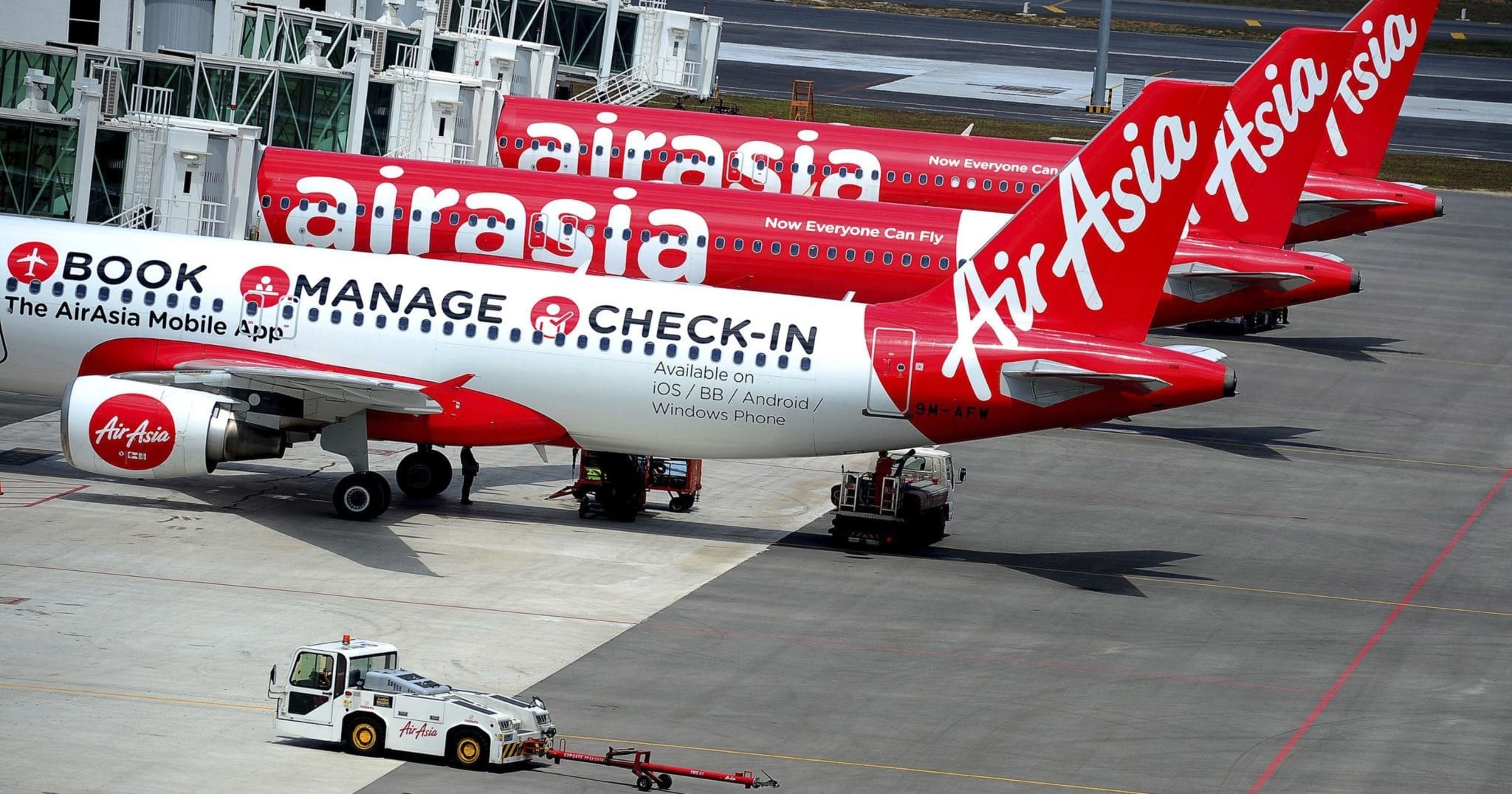
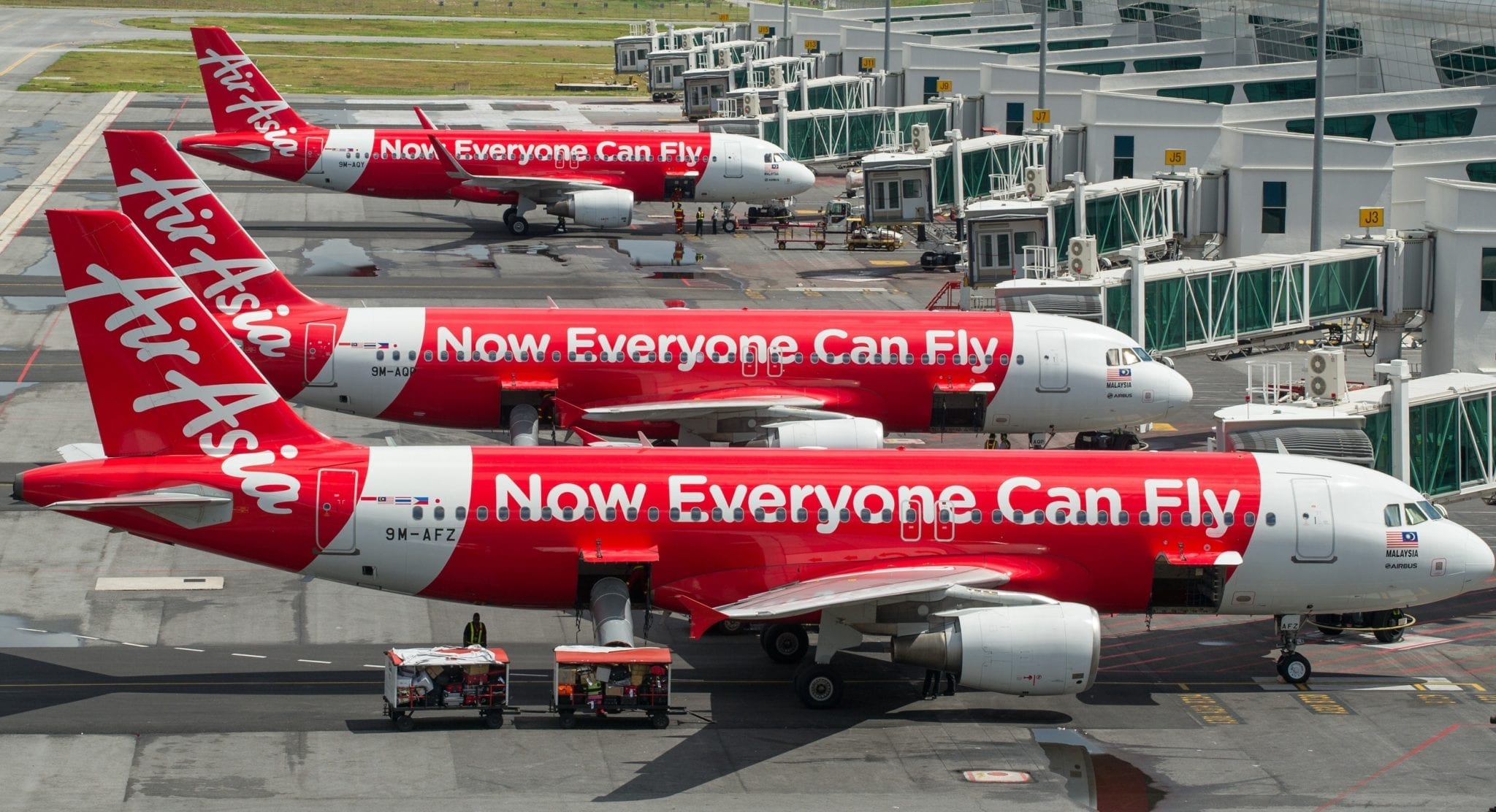
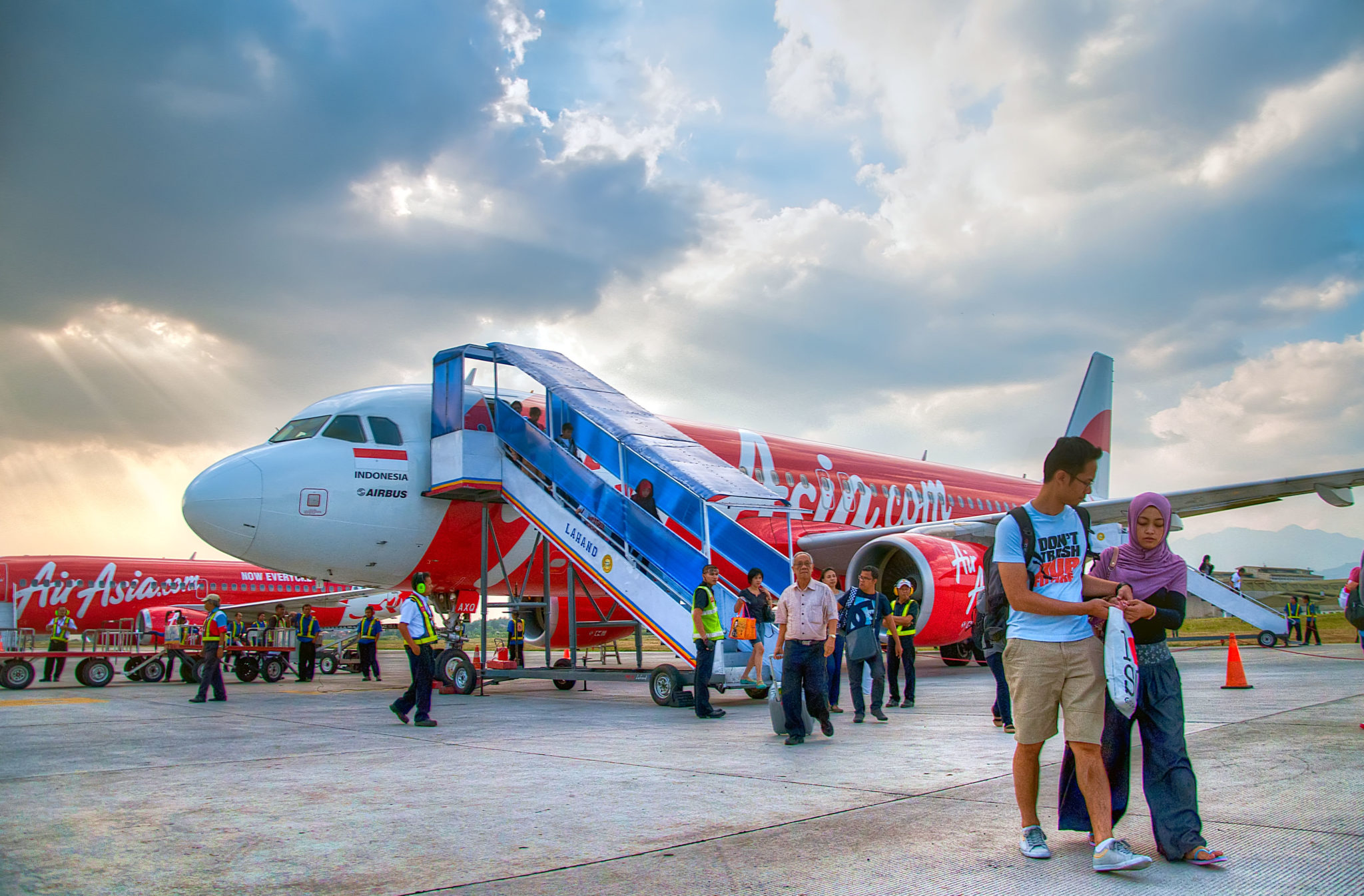
    ASIA dominates the world’s cheapest airlines list, but the other results may surprise you.You’d think it would be difficult to find out which operator is the cheapest since airlines don’t all share the same routes on the same days. But Rome2Rio’s expert team of data scientists analyzed economy-class airfares sold on the site over  a two-month period to get the definitive answer.

    AirAsia X was declared the cheapest airline in the world for economy class tickets based on price per kilometre in US dollars. According to the survey, the carrier’s international flights cost US$0.07 per kilometre – cheaper than driving.

    Trailing closely behind AirAsia X is Air India Express, Indonesia AirAsia, Primera Air (Iceland), and IndiGo. Further down the list at number 18 is AirAsia Philippines, meaning AirAsia brands dominate the top 20.

    This, however, may not come as a surprise to those who have flown with any of the AirAsia brands before. The airline is constantly offering travel promotions, including the latest Free Seats deal where flyers only have to pay airport taxes.

    The surprising results

    However, there were a few unexpected results in the top 25 cheapest airlines, including higher-end airlines such as Etihad, Qatar Air, and Emirates.

    “Although Qantas ranks highly for value, we are often seeing travelers from the UK to Asia and Australia booking with carriers such as Etihad, Royal Brunei Airlines, China Southern and Emirates,” Rome2Rio chief operating officer Kirsteene Phelan told.

    Rome2Rio found Etihad’s economy tickets to be the fifth cheapest in the world at US$0.10 per kilometre. Etihad Airways’ first class service couldn’t look more different though. The airline boasts the world’s only three-room suites on board a commercial airline.

    Travelers flying from Abu Dhabi to New York, London, Melbourne, Sydney, and Paris can enjoy a living room, bedroom, en-suite shower and a personal Savoy-trained butler for the cool price of US$17,000.

    The report revealed “minor shifts” in pricing and ranking for airlines since the last gathered information in 2016.

    “In general, the low end of both the international and domestic rankings have shifted up in cost per km,” the report stated. “With reports of flight prices headed upwards, largely due to increased fuel costs, this may, unfortunately, be a trend that continues.”

    As aviation proceeds to push boundaries in the sky, flyers can only anticipate how airlines will keep costs down and improve economy comfort.

  • Higher oil prices to weigh on AirAsia X

    Higher oil prices to weigh on AirAsia X

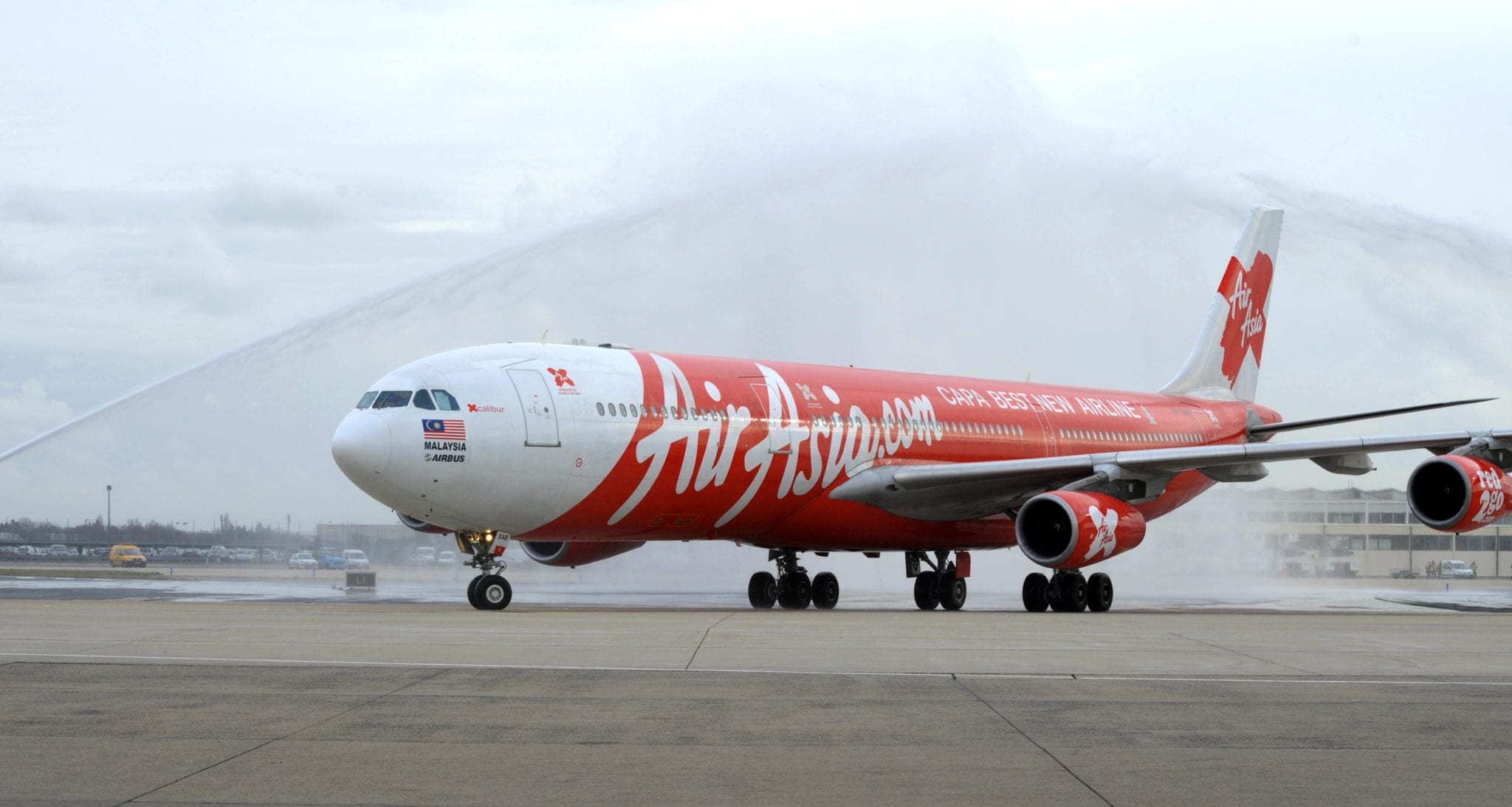
    CIMB Equities Research expects significantly weaker performance for the rest of the year for long-haul low-cost carrier AirAsia X due to higher oil prices, with FY18F estimated to be loss-making.

    The research house said on Wednesday that based on prior-year quarterly trends, AAX’s 1Q18 core net profit (CNP) of RM91mil was 30% more than its previous full-year forecast.

    While Malaysia AirAsia X (MAAX) reported in-line CNP, Thai AirAsia X’s (TAAX) CNP was 80% more than expected due to strong inbound tourist arrivals into Thailand.

    “We downgrade our call from Hold to Reduce and lower target price to 29 sen, based on a lower CY18F P/BV multiple of 1.3 times (one standard deviation below mean), from 1.5 times previously,” it said.

    CIMB Research raised its spot jet fuel price assumption from US$75/bbl to US$85/bbl for all forecast years; jet fuel is trading at US$88/bbl currently.

    With a light hedge of only 12% at US$68/bbl, AAX is caught unprepared. AAX also does not have a fuel surcharge mechanism in place, it said.

    “Separately, MAHB is entitled to collect RM73/pax airport tax from Feb 1 but AAX is still collecting only RM50/pax. AAX is on the hook for the remaining RM23/pax or c.RM50m up to May 31, which we have factored into our FY18F forecasts,” it said.

    CIMB Research said MAAX reported CNP of RM36.8m, up RM8.3m on-year (+29%) due to a lower net interest expense position as the net debt balance was cut on loan installment repayments.

    MAAX’s EBIT was merely flat on-year while cargo revenue grew and ASK capacity expansion of 10% was well absorbed without any load factor or yield dilution. Operating costs rose at a faster rate of 13% on-year due to the 33% on-year rise in fuel prices to US$88/bbl, partially offset by the 12% depreciation of the US$.

    TAAX was the star of the show, growing 1Q18 CNP by 151% on-year.  AAX’s 49% share of TAAX’s 1Q18 CNP amounted to RM47.7m, up 151% on-year from RM19m in 1Q17.

    Passengers carried rose 19% on-year as inbound tourist arrivals into Thailand rose 15% on-year. TAAX grew its ASK capacity 19% on-year and kept its load factor unchanged at 94%.

    On top of that, TAAX managed a 25% on-year rise in average base fares to US$163/pax in 1Q18 from US$130/pax in 1Q17.

    Indonesia AirAsia X (IAAX) reported a breakeven CNP in 1Q18, against RM31m losses in 1Q17 as it relaunched services since 2Q17 on two routes, Bali-Mumbai and Bali-Tokyo Narita. The 1Q18 performance was commendable given that one of its two A330s had been sent for scheduled maintenance.

    MAAX currently has 22 A330s and plans to add two to three more planes this year via operating leases, with all-economy seats.

    “Given its excellent performance, TAAX plans to take delivery of three to four more operating lease planes (all-economy seats) to add to its current fleet of six A330s.

    TAAX launched Don Mueang-Sapporo in April and more North Asia route launches are expected throughout the year.

    As for IAAX, it cancelled its Bali-Mumbai route in May, presumably due to route underperformance, replacing it with Jakarta-Tokyo Narita, and its fleet of two A330s will remain unchanged.

  • AirAsia X net profit up fourfold in first quarter

    AirAsia X net profit up fourfold in first quarter

    Low-cost, long-haul carrier AirAsia X Bhd saw a more than fourfold jump in net profit in the first quarter ended March 31, 2018 to RM41.5 million from RM10.34 million in the same quarter a year ago.

    Revenue for the period under review rose 7.2% to RM1.27 billion from RM1.18 billion on the back of a 13% increase in passenger volume.

    Despite a slight reduction in the average fare of 3% compared with the same quarter last year, the airline maintained its load factor at 84% in addition to delivering an additional 231,855-seat capacity, representing a year-on-year increase of 14%.

    “The company recognises the challenges posed by the recent hike in fuel prices, and best mitigative efforts are being put forth through the boost in ancillary and capacity numbers. The company is confident of presenting the results from these measure during the third and fourth quarters of the financial year,” AirAsia X said on its prospects.

    It noted that based on the current forward booking trend, forward loads are trending better than in the previous year.

    “Barring any unforeseen circumstances, including but not limited to terrorist attacks, natural disasters, epidemics, economic downturn, fuel price hike and fluctuation in foreign currencies against the ringgit, the company expects its prospects to remain positive,” it added.

    On Bursa Malaysia yesterday, AirAsia gained 1.33% to 38 sen on volume of 10.76 million shares.

  • Philippines AirAsia targets 70-aircraft fleet by 2028

    Philippines AirAsia targets 70-aircraft fleet by 2028

    Chief executive Dexter Comendador tells FlightGlobal that PAA will operate 22 Airbus A320s by end of 2018, and add five new aircraft annually between 2019 and 2028. Flight Fleets Analyzer shows that PAA now operates 20 A320s.

    Should the plan proceed as planned, the airline will have a fleet of around 70 jets by 2028.

    The chief executive however notes that the airports in the Philippines, such as those in Manila, Cebu and Kalibo are slot-constrained, and that PAA is hence looking at building up Clark for its growth.

    “I chose to go to Clark because I have room for my 50 new planes. Definitely in Manila, I cannot place my 50 planes. Manila is too full,” says Comendador.

    “Moving forward, Clark will be established as the LCC hub of the Philippines. With the development of Clark, we hope to do something like what Thai AirAsia executive chairman, Tassapon Bijleveld did with Bangkok Don Mueang airport.”

    He adds: “The challenge is for the infrastructure to be able to cope with the order of planes that will be coming in. Cebu Pacific ordered planes, so did Philippine Airlines, which will be delivered within the next 5 years. That will be a lot of planes coming into the Philippines.”

    He also does not rule out PAA taking some of the 100 A321neos that AirAsia Group has on order. This is especially since the airline may need to upgauge its flights due to slot constraints at the airports.

  • AirAsia boss Tony Fernandes wants to help Malaysian football

    AirAsia boss Tony Fernandes wants to help Malaysian football

    Malaysian businessman and AirAsia’s  chief executive officer Tan Sri Tony Fernandes has expressed interest to work with the Football Association of Malaysia (FAM) after visiting the national body for a meeting on Monday.

    “At the meeting, Tony, through his company AirAsia, expressed his interest to collaborate with FAM in the future for various aspects such as referees, national teams, and youth development programmes,” said FAM secretary-general Datuk Hamidin Amin through a statement.

    “FAM certainly welcomes the support and involvement of a businessman such as Tony in our efforts to jointly rebuild football in Malaysia.”

    The airline company owner has his fingers firmly dipped in sports, also being the major stakeholder of English Championship club Queens Park Rangers.

    Tony’s AirAsia Group also owns PJ Rangers FC, who play in the Malaysian third-tier FAM league.

    The lifelong West Ham United fan is set to have a professional relationship with a soon to be new regime in FAM that are bound for elections in July.

    Hamidin is most likely succeed Tunku Sultan Ismail as president despite surprise contention from politician Tan Sri Annuar Musa and Malaysian National Sports Institute chairman Datuk Seri Abdul Azim.

    Tony’s business sense and passion for the game will certainly work in FAM’s favour if they come up with a successful blueprint in the said areas.

    The business tycoon has previously backed the national ‘Harimau Muda’ team by emblazoning a logo of them across the AirAsia plane.

    Also present at the Monday meeting were national Under-23 coach Datuk Ong Kim Swee and PJ Rangers deputy president Simon Lim.

  • AirAsia X named world’s cheapest airline for international flights

    AirAsia X named world’s cheapest airline for international flights

    AirAsia X has been named the world’s cheapest airline for international flights.

    According to the 2018 Global Flight Price Ranking released by travel planning website Rome2Rio, the low cost carrier’s international flights cost 0.07 US cents per kilometer, making it the cheapest in the world.

    For international flights, the top three rankings were dominated by Asian airlines, namely AirAsia X, Air India Express and Indonesia AirAsia.

    Kirsteene Phelan, told that the AirAsia Group dominated the rankings with three of its airlines in the top 20.

    “Although Qantas (eighth) ranks highly for value, we are often seeing travelers from the UK to Asia and Australia booking with carriers such as Etihad (sixth), Royal Brunei Airlines ( 19th ), China Southern ( 20th ) and Emirates ( 25th ),” said Phelan, “This suggests that while overall value may be high for one airline over another, specific route pricing can vary greatly and travelers need to be vigilant for deals to ensure the best price to their destination.”

    As for domestic flights, Tigerair Australia was named the cheapest with 0.06 US cents/km followed by Jetstar with 0.08 US cents/km and Indonesia AirAsia with 0.09 US cents/km.

    The ranking was compiled based on the airline price comparison on economy-class airfares displayed on the website in January and February.

    “Airlines sometimes offer highly non-competitive fares for shopping queries, so for this analysis we included only fares that fell within two times the cheapest price available for each shopping query,” stated Rome2Rio, stressing that they only focused on economy-class for this study.

  • AirAsia ‘working’ to fly to new Palawan paradise

    AirAsia ‘working’ to fly to new Palawan paradise

    AirAsia is waiting for the government to provide the adequate infrastructure so that it can fly to San Vicente, the latest Palawan municipality to catch tourists’ attention. San Vicente’s nearly 15-kilometer white sand beachfront is one of the emerging beach destinations in the Philippines after Boracay Island was closed to tourists in late April.

    As of last month, most tourists would have to take either a chartered flight or a 4- to 6-hour trip by land from Puerto Princesa City to reach San Vicente’s famous Long Beach.

    “We’d like to fly to San Vicente, Palawan but the runway is still short,” AirAsia Philippines President Dexter Comendador told reporters here.

    Comendador said they have been working with the provincial government of Palawan to develop the airport so that more tourists can enjoy the attractions of San Vicente.

    “We’ve been working with them. Our plans are still based on how fast infrastructure can cope, how fast they can lengthen the runway,” he said.

    The search for the next Boracay: San Vicente, Palawan.

    AirAsia, however, is careful not to open too many flights to an island destination that may lead to the exploitation of an area, the airline’s chief Tony Fernandes said.

    “The Borcacay closure was a great eye-opener for us. When we go to a new business destination, we make sure that the infrastructure can take a wave of tourists,” he said.

    The government earlier banned tourists from entering Boracay for 6 months as the island undergoes a half-year clean-up and rehabilitation.

    The island is expected to open by late October, or as soon as the government completes its road widening projects, sewage clean-up, and the recovery of wetlands and forestlands in the island.

  • AirAsia wants travel tax waived in Clark to lure more passengers

    AirAsia wants travel tax waived in Clark to lure more passengers

    AirAsia has asked the government to waive travel taxes and grant other incentives for Filipinos who will opt to fly from Clark to help decongest the main airport in Manila, the airline said Thursday.

    The Southeast Asian carrier also said it was transferring its main office to Clark, a former American military base that the government has transformed into an industrial hub.

    “We are requesting for the removal of travel tax for Filipinos. Hopefully, we can do that in Clark first para naman maakit sila to fly from Clark,” AirAsia Philippines President Dexter Comendador told reporters here.

    Filipinos are required to pay a travel tax of P1,600 when leaving the country.

    Comendador said the airline is also counting on the government’s “Build, Build, Build” program to make flying from Clark more appealing to travelers.

    “There are prerequisites to that which is the connector roads, mass transit system. So it’s [dependent on] how fast the government can build,” he said.

    AirAsia wants to turn Clark into the country’s low-cost carrier hub so that budget airlines would not have to queue along with international carriers at the Ninoy Aquino International Airport (NAIA), Comendador said.

    Last month, the Manila International Airport Authority (MIAA) proposed terminal reassignments for at least 26 carriers at NAIA to decongest the country’s main airport.In 2015, about 150 to 200 flights were delayed daily at the NAIA, airport officials said. NAIA serves about 7.5 million passengers annually, when its capacity is only at 5.5 million.

    AirAsia also intends to make Clark its main hub within 5 years as it increases its fleet size to 72 from 22 within a decade.

    “If I add 50 planes, where can I put them in Manila?” he said noting that they are already having problems finding space for their 22 planes in the capital.

    The airline is also planning to develop airports in Panglao, Puerto Princesa and Davao as secondary hubs, he said.

  • AirAsia eyes new flights from Philippines

    AirAsia eyes new flights from Philippines

    Southeast Asian budget airline AirAsia is looking to add several more flights to its operations this year, including a route from Manila to Osaka during the last quarter of 2018.

    This development comes just weeks after Philippines AirAsia opened its Manila-Bangkok route which has been fully booked since it was offered to the public.

    According to Capt. Dexter Comendador, Philippines AirAsia chief, they were looking to open flight routes from Cebu, Clark and Manila to a host of Asian cities this 2018, including Hangzhou and Shenzhen in China, Taipei in Taiwan and Osaka, Japan.

    Comendador said that they were also hoping to add Narita, Japan to this list this year.

    Comendador and AirAsia Group CEO Tony Fernandes said that one issue they needed to deal with in expanding their routes was the capacity of airports to accommodate new flights.

    “Partly, the airport has been an issue in getting slots, etcetera, so we just been told that we can apply for Manila to Busan,” Fernandes told reporters during the company’s celebration of servicing its 500 millionth passenger.

    Comendador said that difficulties in getting slots for their flights were one reason why the Manila-Bangkok route was opened only last month instead of the original target of first quarter of 2018.

    In big tourist markets such as China, another issue that AirAsia is facing is the limited airway given to flights coming from the Philippines as there is only one gateway for Filipino planes.

    “It’s the design of the airway. Probably, China designed it that way to monitor the flights going into China,” he said during an interview with Philstar.com, adding that this can delay a significant number of flights from the country by several minutes to two hours.

    He said that President Rodrigo Duterte’s order to shut down Boracay for six months affected Philippines AirAsia’s thrust for this year.

    With Boracay’s closure, Comendador said that AirAsia prioritized helping their passengers to try to find ways to help them to go to other destinations in the country such as Bohol and General Santos City.

    He said that Bohol should serve as a template for other regions and provinces in the country in developing their tourism industry.

    The Philippines AirAsia’s CEO said that Bohol had been able to prepare the needed infrastructure needed for tourism even before the opening of its airport later this year.

    Bohol also marketed itself as a province and not just in terms of its individual tourist attractions, Comendador said.


  • AirAsia, Garuda cancel flights to and from Yogyakarta due to Merapi eruption

    AirAsia, Garuda cancel flights to and from Yogyakarta due to Merapi eruption

    AirAsia and Garuda Indonesia have cancelled a total of at least 26  flights to and from Yogyakarta after the eruption of Mount Merapi forced the ancient Javanese city’s airport to close.

    The cancelled AirAsia flights are AK 346, AK 347, AK 348 and AK 349 (Yogyakarta – Kuala Lumpur, Kuala Lumpur – Yogyakarta), QZ 659 (Singapore – Yogyakarta), QZ 7557, QZ 7550, QZ 7551, QZ 7552 and QZ 7553 (Yogyakarta – Jakarta, Jakarta – Yogyakarta), XT 8448 and XT 8449 (Bali – Yogyakarta, Yogyakarta – Bali).

    Passengers of cancelled flights will be given the option of rescheduling, rerouting their journey or a refund or credit. AirAsia also advised passengers to check AirAsia’s website and social media accounts for further updates.

    Meanwhile Garuda, Indonesia’s national carrier, cancelled 14 flights.

    Yogyakarta’s Adisutjipto International Airport, 520km south-east of Jakarta, was closed at about 10:42am on Friday local time, and reopened at 2:17pm, state air-navigation operator AirNav Indonesia said in a statement Friday.

    Mount Merapi’s eruptions are minor, caused by accumulation of volcanic gases, and shouldn’t lead to further outbursts, the Centre for Volcanology and Geological Hazard Mitigation at the nation’s Energy and Mineral Resources Ministry, said in a statement, adding its status is “normal.”

    Other airlines that canceled flights include those operated by the Lion Group.

    It said it would inform passengers of affected flights through email and text message.

    “AirAsia strongly encourages all guests to update their contact details at airasia.com to ensure that they are notified of any updates to their flights,” AirAsia said in a statement on Friday.

    Indonesia is located on the so-called Pacific Ring of Fire, an arc of volcanoes and geological fault lines surrounding the Pacific Basin. According to the Volcanological Survey of Indonesia, the archipelago has about 120 active volcanoes. It has had two of the world’s biggest volcanic eruptions in the past two centuries: Mount Tambora in 1815 and Krakatau in 1883.

    Last year, Mount Agung on the neighbouring island of Bali erupted and forced the airport at the popular holiday destination to close several times. Yogyakarta is also a prominent tourist spot for Buddhist pilgrims.

    The volcanic ash and gases spewed can be dangerous to planes passing through the plume. In 1982, all four engines on a British Airways Boeing Co. 747 stalled when the plane encountered the debris from Mount Galunggung in Indonesia.

    The plane dropped for almost four miles before the pilot was able to restart three engines and make an emergency landing in Jakarta.

  • AirAsia under selling pressure

    AirAsia under selling pressure

    Shares in AirAsia Group Bhd plunged by  nearly 13% or 47 sen on the first trading day after the general election last Wednesday. Selling pressure emerged on counters that are perceived to be linked to the incumbent Barisan Nasional, the low cost carrier is among them.

    Meanwhile, CIMB Investment Bank Bhd downgraded the stock on the back of higher oil prices and a return to losses at its Indonesia and Philippines operations, which was exacerbated by currency depreciation.

    This morning, AirAsia shares opened at RM3.25, down 12.16% from its previous close price of RM3.70.

    However, the shares have since pared down its losses and at 9:57am, the counter was trading at RM3.54. The stock saw 27.2 million shares traded, valuing AirAsia at a market capitalisation of RM11.83 billion.

    “We downgrade our recommendation on AirAsia from Add to Hold on the back of what we believe to be sustainably higher oil prices,” CIMB analyst Raymond Yap said in a note to clients today.

    “Additionally, the Indonesian rupiah and Philippine peso have been showing signs of sustained weakness against the US dollar and the current exchange rates are already weaker than what we have incorporated into our forecasts.”

    In line with the stock downgrade, CIMB has also cut AirAsia’s target price to RM3.84, from an earlier forecast of RM5.31.

    According to CIMB, AirAsia’s core net profit is at risk from the oil price rise, the latter of which have rallied by 15% to US$77 per barrel year-to-date.

    The anticipated lower earnings has prompted CIMB to trim down its forecast of AirAsia’s core net profit by 30% to RM882 million in financial year ending Dec 31, 2018 (FY18), from an earlier forecast of RM1.31 billion, as it take into account of higher jet fuel price assumption of US$85 per barrel from US$75 per barrel previously.

    “Even with our lower core earnings forecasts, it appears that the risks are to the downside,” CIMB added.

    For 2018, CIMB noted that AirAsia, as a group, only hedged about 12% of its jet fuel requirements at an average strike price of US$68.55 per barrel, which was in contrast to the position it took in 2017, where it had hedged 75% of its requirements at an average price of US$60 per barrel.

    “As a result, the AirAsia group is largely exposed to the spot price of jet fuel,” CIMB said.

    Going forward, CIMB assumed that AirAsia will only be able to recoup 15% of the hike in jet fuel prices from higher ticket prices, since the rise in the price of jet fuel has been faster than expected. At present, CIMB said AirAsia does not currently have fuel surcharge mechanisms in place.

    “The impact of higher oil prices will be felt more keenly from the second quarter of 2018 onwards since the pricing of jet fuel purchases tend to be lagged by one month,” it added.

    As for the currency depreciation, CIMB said the US dollar has, since the start of this year, appreciated by 3% against the rupiah and by 5% against the pesos.

    “More upside for the US dollar is possible against these two currencies due to the impact of higher oil prices on their economies,” CIMB said.

    CIMB said the depreciation of these two currencies, in addition to the higher oil prices, is expected to drive Indonesia’s AirAsia and Philippines’ AirAsia (PAA) back into the red for FY18, although both airlines delivered profits in FY17.

    As for PAA, CIMB said it is expected to come under severe pressure from the six-month closure of the Boracay island resort from late-April to late-October 2018, given that the island traffic accounts for 22% of its seat capacity.

    In FY17, CIMB said PAA increased its fleet by three aircrafts and added a staggering four planes in 1Q18F alone, bringing the total fleet to 21 planes.

    “The fleet growth could not have come at a more inopportune time,” it said.

    Despite the higher oil prices, CIMB said PAA should deliver slightly stronger core earnings due to yield recovery in the domestic aviation space as well as continued robust growth of inbound Chinese tourist numbers.

  • AirAsia Group records 87pct load factor in Q1

    AirAsia Group records 87pct load factor in Q1

    AirAsia Group Bhd recorded a load factor of 87 per cent for the first quarter ended March 31, 2018 (Q1 2018), down two percentage points from the same period last year.

    In a statement on its operating statistics released on Friday, the budget carrier said its seat capacity rose 19 per cent  year-on-year (y-o-y) during the quarter under review.

    “The number of passengers carried increased 16 per cent y-o-y to 10.65 million, in line with the added capacity,” it said.

    AirAsia said in Q1 2018, the group’s total fleet size grew to 123 aircraft, comprising 87 in Malaysia, 15 in Indonesia (PT AirAsia Indonesia Tbk) and 21 in the Philippines (Philippines AirAsia Inc).

    “Malaysia increased frequencies on 13 routes, namely seven from Kuala Lumpur, five from Kota Kinabalu and one from Johor Bahru,” it said. Indonesia commenced operations of three new routes: two from Medan and one from Padang, while the Philippines commenced operations of four new routes, all originating from the Clark International Airport since establishing the airport as a hub.

    The company also reported that Thai AirAsia posted a load factor of 91 per cent in Q1 2018, improving two percentage points from the same quarter in 2017.

    As for AirAsia India, the budget airline said its load factor was down by six percentage points y-o-y to 83 per cent for the first three months of the year, while AirAsia Japan achieved a load factor of 79 per cent in Q1 2018, up 15 percentage points quarter-on-quarter.

  • After Clark, AirAsia developing hubs in Puerto Princesa, Bohol

    After Clark, AirAsia developing hubs in Puerto Princesa, Bohol

    With a goal of increasing its fleet to 70 jets, Philippines AirAsia Incorporated is developing hubs in Puerto Princesa, Palawan and Panglao, Bohol, which are two of the country’s top tourist draws.

    “We are opening up Panglao when it opens up and Puerto Princesa. These will be opened up as hubs because we are lacking space in Manila. In the next 10 years, we should have 70 planes,” AirAsia president and chief executive officer Dexter Comendador told reporters on the sidelines of an event in Mandaluyong City last week.

    Comendador had reiterated the airline’s goal to make the Clark International Airport its main hub for operations, as the Ninoy Aquino International Airport (NAIA) has inadequate space for the budget airline’s fleet expansion.

    In the next 3 to 5 years, Comendador said Philippines AirAsia targets to double its fleet. By 2032, it aims to have 70 planes.

    “We need to distribute the planes to the countryside. It will spread then development will follow,” the chief of Philippines AirAsia added.

    In 2013, the local unit of AirAsia moved its operations to the NAIA Terminal 4 in Manila after its then-affiliate Zest Airways Incorporated suffered heavy losses. It was in March 2017 when AirAsia moved back to its Clark roots.

    In line with its goal to increase its fleet, Philippines AirAsia is also increasing its flight frequencies to China, including Cebu-Shenzhen, Shanghai, and Guangzhou within the month.

    Comendador said Philippines AirAsia is looking to launch direct flights between Manila and Osaka, Japan by the 3rd quarter of 2018.

    “We’re trying to share each other’s tourists in the AirAsia group to bring them in here. Boracay is just a glitch. There’s Panglao, Puerto Princesa, Davao, Cebu. There are other places,” Comendador added, referring to the 6-month closure of Boracay to tourists.

    Philippines AirAsia operates a fleet of 17 aircraft with domestic and international flights out of hubs in Manila, Cebu, Kalibo, and Clark.

    It flies to Manila, Davao, Cebu, Kalibo, Tacloban, Tagbilaran, Puerto Princesa, Clark, Shanghai, Taipei, Incheon, Hong Kong, Macau, Kuala Lumpur, Kota Kinabalu, and Singapore

  • AirAsia Campaign Encourages Thai Travelers to Travel During the Week

    AirAsia Campaign Encourages Thai Travelers to Travel During the Week

    BDO Bangkok has released a follow up to a clever print campaign to encourage Thais to travel on AirAsia during the week, rather than over the weekend when Thailand’s tourist destinations are busier.

    To illustrate this, the campaign uses scenes from ordinary life to look like calendars – emphasising that the weekdays are less hectic.

  • AirAsia India to connect Surat from Bengaluru starting this June

    AirAsia India to connect Surat from Bengaluru starting this June

    Budget carrier AirAsia India today announced expansion of its route network with the launch of a flight to Surat from Bengaluru, starting next month, taking the total number of destination operated by the carrier to 20.

    The Tata-AirAsia-invested airline, which completes four years of its operations in June, will fly daily to Surat from Bengaluru with an Airbus A20 plane, a release said today.

    AirAsia India currently flies to 19 destinations, with its hubs in Bengaluru, New Delhi and Kolkata covering Kochi, Goa, Jaipur, Chandigarh, Pune, Guwahati, Imphal, Visakhapatnam, Hyderabad, Srinagar, Bagdogra, Ranchi, Indore, Nagpur, Bhubaneshwar and Chennai.

    AirAsia India is the first airline to connect Bengaluru with the textiles city with flights from June 1, for which bookings have already commenced, the release said.

    Surat is a business hub, with a dominant presence of diamond and textile industries, and a large number of merchants travelling out of Surat for various business engagements and this provides an opportunity for AirAsia India to open up the market for the air travellers, the airline added.