Tag: apple

  • Apple receives a patent for a major new Apple Pencil feature

    Apple receives a patent for a major new Apple Pencil feature

    Apple has received a patent that could change the way the Apple Pencil is used. Titled “Multipurpose stylus with exchangeable modules,” the patent covers the tips (or nibs) used on the Apple Pencil. There are various reasons why an Apple Pencil user might want to change the nib on the (with all due respect to the late Steve Jobs) stylus. One, the current nib on the digital pencil could be wearing down and a replacement needed. But another reason to change the Apple Pencil tips would be to change the functionality of the accessory.

    Or as Apple explains it in the patent, “The stylus can provide interchangeability of various removable components, such as removable functional end modules that cover a connector for charging and communicating with the stylus. The various removable components each provide distinct features, thereby allowing the user to select various capabilities by employing each of the various functional end modules.”

    Some of the changes that Apple discusses in the patent includes “a color, a shape, a thickness, a size, a brightness, or an opacity.” The nib (called the “end connector” in the patent) would be removable from the main body and would have a number of sensors. A tactile sensor would detect when the nib touches a surface. Other sensors listed in the patent include a “contact sensor, a capacitive sensor, a touch sensor, a camera, a piezoelectric sensor, a pressure sensor, or a photodiode.” Other possible features found in the accessory could be a an orientation detector, a gyroscope, an accelerometer, a biometric reader, a display, a switch, a button, a speaker, a compass, a microphone, a camera, or a voice coil.

    Currently, Apple offers two different generations of the Apple Pencil which are compatible with certain iPad models. Offering interchangeable tips might not only be a revenue-generator for Apple, it obviously could be an easy way for users to expand the functionality of the accessory. The million-dollar question (which might actually be a millions dollar question as far as Apple is concerned) is whether Apple will finally add Pencil support to the iPhone. Consider that Samsung’s multi-functional S Pen now works with the 6.8-inch screen on the Galaxy S21 Ultra 5G. However, unlock the Galaxy Note line throughout the years, the accessory has to be purchased separately and there is no place to house the S Pen on the phone.

    While there have been rumors for years about the Apple Pencil coming to the iPhone, this has not taken place yet. Is Apple trying to honor the memory of its late co-founder and CEO Steve Jobs? The executive famously put down the use of a stylus when he introduced the iPhone in January 2007. At that time, before the touchscreen was widely used, many smartphones came with a stylus to help the user navigate through the UI. It needs to be pointed out that these styluses were not as multi-functional as the digital pens are today. Most were merely made of plastic with a sharp tip.

    There are some manufacturers who build phones today that come with a stylus. One popular mid-range model is the LG Stylo which early this year is expected to launch a 5G version of the phone which will be the seventh-generation of the model. Last year, Motorola released the mid-range Moto G Stylus.

    Just because Apple has received a patent for this technology, it doesn’t mean that it definitely will be used. Still, it seems like offering exchangeable tips for the Apple Pencil could be a win-win for users and for Apple. The patent number is 10,921,907 and the technology was originally filed for protection by Apple back in April, 2017.
  • ApplePay will now allow users to make purchases using Bitcoin

    ApplePay will now allow users to make purchases using Bitcoin

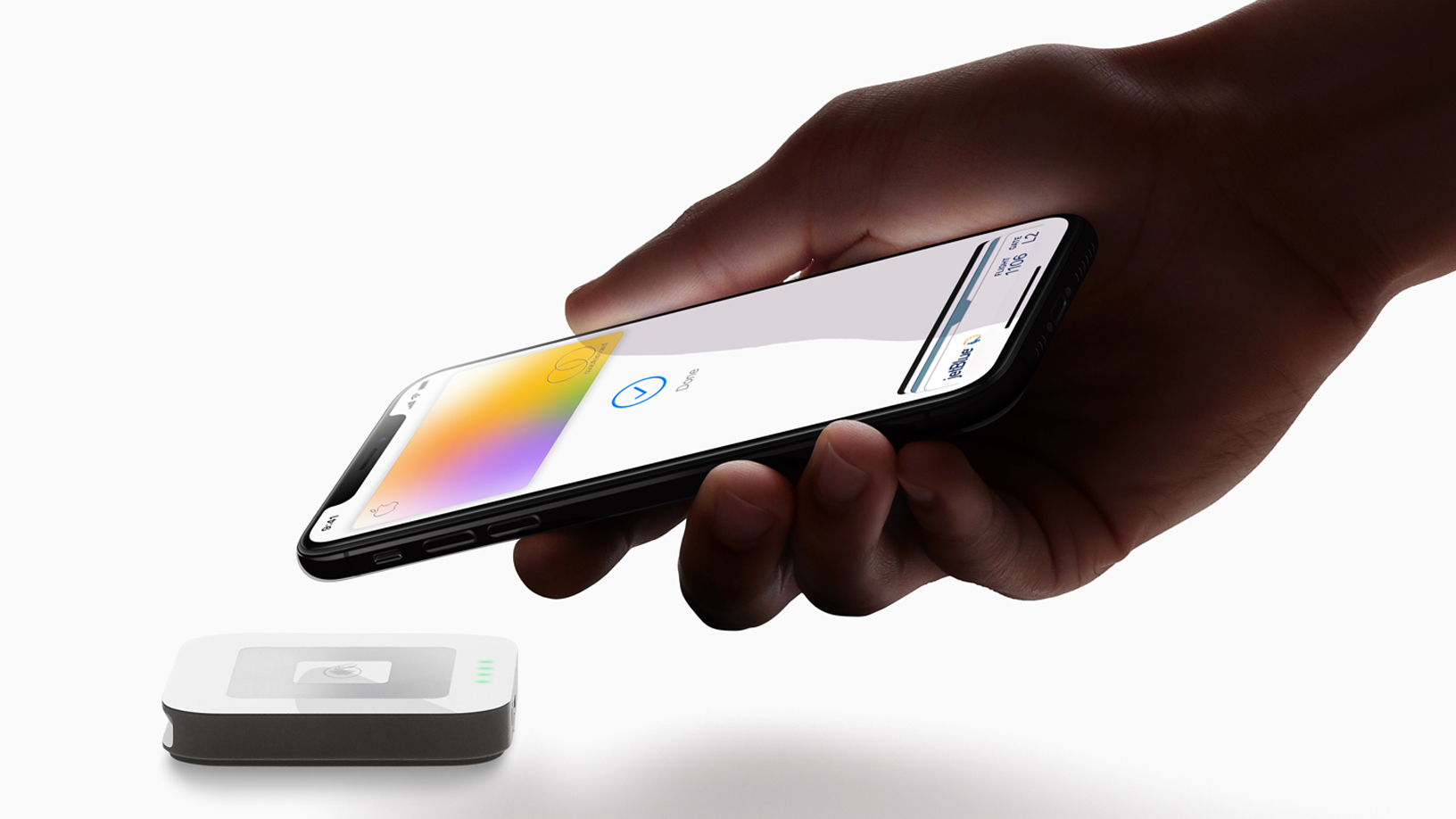
    Bitcoin is still the most famous cryptocurrency. And at Friday’s close, each Bitcoin was valued at close to $48,000, more than double the valuation of the digital currency about a year ago. Not only can you buy more with your Bitcoins, but you can also find it easier to spend thanks to the Apple Pay mobile payment service. The BitPay wallet app’s Prepaid Mastercard can be added to the Apple Wallet and Apple Pay can help Bitcoin owners spend the cryptocurrency online, through apps or in a store.

    The BitPay wallet app not only works with Bitcoin, but will also work with Ether, Bitcoin Cash and as well as the dollar-pegged stable coins USD Coin, Gemini Dollar, Paxos Standard and Binance USD. The stable coins are based on a 1:1 ratio with the U.S. Dollar. For every Gemini Dollar in circulation, there is a corresponding U.S. Dollar held by the State Street Bank and Trust Company.

    There are plans in the work to add support for the BitPay Wallet by the end of next month with other mobile payment services Google Pay and Samsung Pay. This will allow Android users to more easily spend Bitcoins and other cryptocurrencies including the aforementioned names that are pegged to the U.S. Dollar.

    To add your BitPaycard to Apple Wallet, you need to have the latest version of the BitPay app. The latter, which can help you securely store, spend, and manage Bitcoin, can be installed from the App Store and the Google Play Store. BitPay CEO Stephen Pair (both of him) said, “We have thousands of BitPay Wallet app customers using the BitPay Card. Adding Apple Pay and soon Google and Samsung Pay makes it easy and convenient to use the BitPay Card in more places.”

    Apple should do even more when it comes to digital currencies; should Apple add a cryptocurrency exchange it could generate over $40 billion. RBC analyst Mitch Steves believes that this would allow Apple’s shares to rise 25%. RBC noted that “Square takes in $1.6 billion a quarter through bitcoin-trading revenue from its roughly 30 million active users. Apple has an install base of about 1.5 billion people, signaling that it could make up to $40 billion a year from a Wallet-based crypto exchange.” The report adds that “if Apple went down this path, the USA would likely acquire the most crypto assets from a global perspective. If the USA owns the most crypto assets (be it Bitcoin or other assets), it would not make logical sense in our view to ban it. In addition, with Apple’s secure and world-class software, the USA would be able to have confidence in user information and balances if needed in the future.”

    Apple’s big move comes right after Tesla CEO Elon Musk showed interest in cryptocurrency Dogecoin. Tesla says that it soon will accept Bitcoins as payment toward the purchase of a Tesla vehicle. RBC’s Steves notes that the combination of Apple’s interest in Bitcoin and Apple’s popularity in the tech world can help the U.S. become the technological leader in cryptocurrencies for as long as the next 20 years.

    Thanks to the Blockchain technology, the method used to keep track of Bitcoin transactions, using the cryptocurrency is secure. Data on transactions is kept inside blocks and when a block is full, it is chained to the previous one. If someone wants to steal Bitcoin and hacks into the Blockchain to alter the information in one the blocks, it can’t be done without all members of the Blockchain spotting the changes. There are smartphones that can store and verify cryptocurrency transactions such as the HTC Exodus 1s.

  • Huawei founder and CEO says Apple makes the best 5G phones

    Huawei founder and CEO says Apple makes the best 5G phones

    Huawei is not the company it was a couple of years ago when it was on its way to becoming the world’s largest smartphone manufacturer. Restrictions placed on the firm by the U.S. forced Huawei to sell its Honor sub-brand in order to get Honor out from under the thumb of the U.S. The manufacturer that could have been number one this year is more likely to be number seven by the end of the year.

    Huawei is aware that in one major regard, it is much closer to being like Apple than it is to be like other Android manufacturers in its class such as Samsung and arguably Google. Like Apple, Huawei has more control over both the hardware and software used on its phones. The head of Huawei’s U.K. consumer business told Forbes last year that “we are one of only two companies globally that can have this hardware and software solution for our own ecosystem… Only Huawei and Apple can do this—it’s our long-term strategy.”

    A couple of years ago, Huawei founder and CEO Ren Zhengfei admitted that he uses an iPhone and even buys them for his family. Ren said in 2019, “iPhone has a good ecosystem and when my family are abroad, I still buy them iPhones, so one can’t narrowly think the love for Huawei should mean loving Huawei phones.” That same year, the executive said,”Apple is the world’s leading company… Apple is my teacher; it is advancing in front of us.” When Ren’s daughter, Huawei CFO Meng Wanzhou, was arrested in 2018 under a U.S. warrant for fraud and conspiracy to commit fraud, she had in her possession a MacBook, an iPad, and an iPhone.

    Zhengfei says that the 5G iPhone 12 series features the best 5G enabled handsets currently available. He calls them “the world’s best” 5G phones and has talked up the quality of the technology found in the 2020 iPhone lineup. He has also used Apple’s 5G iPhone models as a way to promote the quality of Huawei’s 5G networking equipment; Huawei remains the world’s largest supplier of networking equipment. “We support the progress made by Apple’s iPhone 12,” Ren said, pointing out that the device “has been able to achieve download speeds of 1.82 Gbps, making it the best in the world… We helped build the best 5G networks in many cities around the world: Berlin, Munich, Madrid, Zurich, Geneva, Amsterdam, Vienna, Barcelona, Seoul, Bangkok, Hong Kong, Riyadh… Our networks in Europe top global network performance tests.” As the company started just last week, “Huawei has undertaken hundreds of 5G networks worldwide. According to the results of 5G network experience test in global major cities conducted by many third-party organizations around the world, in cities such as Seoul, Amsterdam, Madrid, Zurich, Hong Kong, and Riyadh, Huawei’s contracted operators ranked number one in 5G network experience.”

    Ren also complimented Apple’s dominance of the high-end premium phone sector and said that Huawei’s networking equipment is good for iPhone users. Ren commented that “Many high-end device users in Europe use iPhones, and the way those phones operate on our networks in Europe actually is a sign we are also doing well. The fact high-end users can use the iPhone 12 to its fullest effect on our 5G networks in Europe is a testament to the quality of our networks. This is helping balance opinions towards Huawei in Europe.” Zhengfei pointed out last year that “there are only two big players with ecosystems,” he said, “Apple and Google. It will not be a problem to have a third one. In any industry, three top players is reasonable.” Huawei has since added its own ecosystem and we could see the company’s own HarmonyOS debut on a smartphone with the upcoming P50 line.

  • Apple tests a new location for ads in the App Store

    Apple tests a new location for ads in the App Store

    Besides allowing mask-wearing Apple iPhone users with an Apple Watch to unlock their handset without using a Passcode or Face ID, the iOS 14.5 beta has something else new. In an attempt to make some more money from the App Store (beyond Apple’s 30% cut of in-app revenue), Apple is placing ads on the App Store’s Search tab. The advertised app is listed as a suggested one for iPhone users to install.

    Keep in mind that since this is showing up only on the iOS 14.5 beta, there is a chance that it won’t be kept for the final version of the build. In that case, things would revert to how they used to work now with ads appearing only when advertisers bid on certain keywords. If Apple does keep the new feature, the ads appear before any type of keyword to search for is typed in by the user. It could be that Apple is using the beta period to collect important stats on how often users engage with the ads in this particular slot in order to decide whether to keep the ads in that location.

    The money generated by the ads will be included as part of Apple’s Services unit, its largest division by revenue. This group includes AppleCare+, iCloud, the App Store, Apple Music, Fitness+, Apple Arcade, Apple TV+, Apple News+, Apple One, Apple Pay, and more. Last year, the Services unit grossed $53.77 billion allowing Apple to meet and beat a goal to achieve $50 billion in revenue for the division by the fiscal year 2020.

    Apple Store search ads started in 2016. And Apple has started including ads for its Services features in the Settings app. This has upset many iPhone users who point out that they are paying over $1,000 for their phones in many cases and shouldn’t be subject to receiving ads designed to make Apple more money. But Apple likes to promote how it keeps iOS users’ data private. Soon, Apple’s App Tracking Transparency feature will demand that iOS user opt-in if they want to be tracked for advertising purposes. The average mobile app has six trackers that send user data to other apps. While most iPhone users are expected not to opt-in to be tracked, there are some who like the convenience of having ads for what they are shopping for found online.

    Facebook and Snapchat are believed to be the two apps most affected by Apple’s App Tracking Transparency (ATT) feature. Months ago, Facebook said that Apple’s moves could lead to a 50% drop in ad revenue for the year which would be an annual hit of more than $40 billion. A more recent analysis calls for quarterly declines of 2.11% to 13.59% for the second quarter of this year, when Apple’s ATT is expected to debut to all iOS 14 users. Worldwide, in the best-case scenario, this analysis sees 30% of Facebook users on iOS opting-in to be tracked, and only 10% in the worst-case scenario.

  • Hyundai No Longer In Talks With Apple On Autonomous Electric Cars

    Hyundai No Longer In Talks With Apple On Autonomous Electric Cars

    South Korea’s Hyundai Motor Co said on Monday it is not now in talks with Apple Inc on autonomous electric cars, just a month after it confirmed early-stage talks with the tech giant, sending the automaker’s shares skidding. Wiping $2.1 billion off its market value, Hyundai’s stock slumped 4.2% by 0330 GMT. Shares in its affiliate Kia Corp, which had been tipped in local media reports as the likely operational partner for Apple, tumbled 12% – a $4.3 billion hit.

    The announcement brings the curtain down on weeks of internal divisions within Hyundai Motor Co Group – parent to both automakers – about the potential tie-up, with some executives raising concerns about becoming a contract manufacturer for the U.S. tech giant.

    “We are receiving requests for cooperation in the joint development of autonomous electric vehicles from various companies, but they are at an early stage and nothing has been decided,” the automakers said on Monday, in compliance with stock market rules requiring regular updates to investors regarding market rumors.

    Apple, known to keep product plans under tight wraps, has never acknowledged talks with the automaker about building vehicles
    “We are not having talks with Apple on developing autonomous vehicles.”

    Kia shares had jumped 61% after Hyundai appeared to confirm a local media report early in January that Apple and Hyundai were in discussions to develop self-driving electric vehicles by 2027 and develop batteries at U.S. factories operated by either Hyundai or Kia.

    “Apple and Hyundai are in discussion, but as it is at an early stage, nothing has been decided,” Hyundai said, before releasing subsequent statements that removed all mentions of Apple but said Hyundai was receiving electric car cooperation requests from parties it didn’t identify.

    Reuters reported in December that Apple was moving forward with autonomous car technology and aimed to produce a passenger vehicle that could include its own breakthrough battery technology as early as 2024.

    Apple, known to keep product plans under tight wraps, has never acknowledged talks with the automaker about building vehicles and wasn’t immediately available for comment outside business hours in the United States.

    Analysts said talks might have collapsed over leaks of the partnership plan to media, or over possible insistence by Apple that Hyundai’s role in any tieup would be that of an equipment manufacturer, rather than a strategic partner.

    “With numerous news reports over discussions between the two companies, which should have been held to non-disclosure agreements, it would have been uncomfortable,” said Kwon Soon-woo, an analyst at SK Securities.

    Kevin Yoo, an analyst at eBEST Investment & Securities, said, “It seems clear that Hyundai Motor Group has not been too happy with dealing with Apple. They made it clear that they do not want to be treated just as Apple’s supplier or manufacturer.”

  • Apple returns to 4th place in Vietnam smartphone market

    Apple returns to 4th place in Vietnam smartphone market

    Apple surpassed VinSmart to become the fourth-largest smartphone brand in Q4 of 2020 as sales of iPhone 12 surged.

    With a market share of 11 percent, it was behind China’s Vivo (13 percent), which climbed two places from the previous quarter, Singaporean technology market analysis firm Canalys said in a recent note.

    South Korea’s Samsung stayed on top with a 24 percent market share followed by China’s Oppo (16 percent), but their sales plummeted by 19 percent and 28 percent year-on-year.

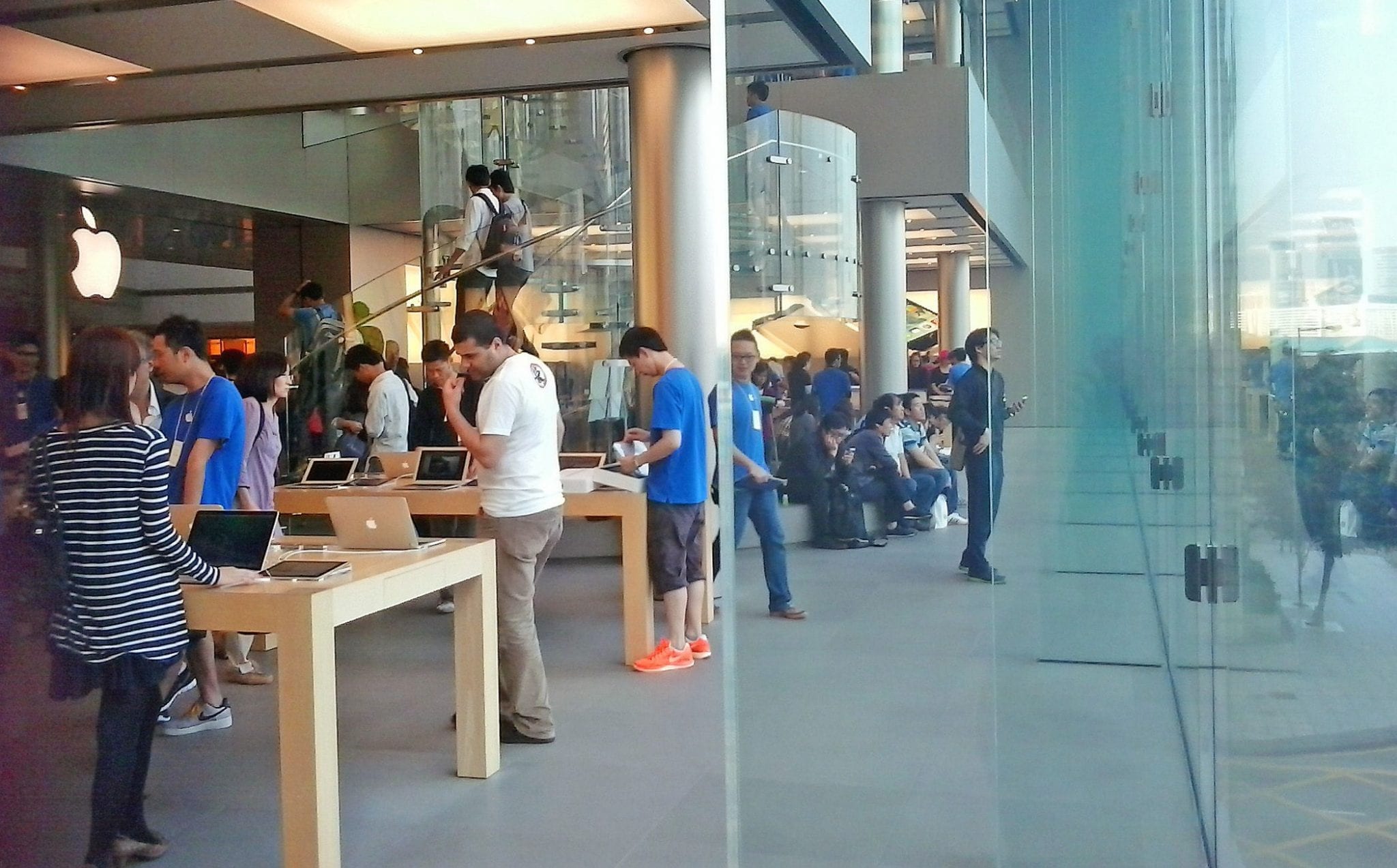
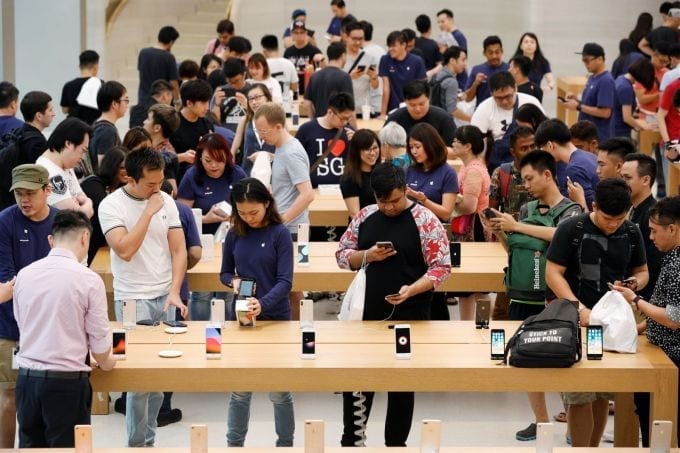
    Hundreds of people queued up in front of Apple stores to become the earliest owners of iPhone 12 late last year.

    Almost 10 smartphone brands have been vying for third place in recent years, with Apple, Xiaomi, and Vivo the most notable names. None has remained in that position for more than six months.

    Around 75 million people, or almost 80 percent of the population, use smartphones, according to We Are Social, a social media marketing and advertising agency.

  • Tim Cook calls Facebook’s business model violent and says that it leads to divisiveness

    Tim Cook calls Facebook’s business model violent and says that it leads to divisiveness

    Earlier this morning, we told you that Facebook was reportedly planning to attack Apple-in court. The social media network is believed to be ready to accuse Apple of violating antitrust laws by using the iPhone’s popularity to force a major change on third-party app developers. In order to keep iOS users from constantly being served up targeted ads, iPhone and iPad users would have to opt-in and allow themselves to be tracked. Since you could assume that most iPhone users would prefer not to be tracked, this change is going to negatively impact outfits like Facebook that derive a large percentage of their business from posting online ads.

    Today, Apple CEO Tim Cook gave the opening address during a panel at the European Computers, Privacy & Data Protection (CPDP) conference. Cook discussed Apple’s privacy initiatives pointing out the dangers of business models that rely on collecting personal information from users. During his address, Cook stated, “As I’ve said before, if we accept as normal that everything in our lives can be aggregated and sold, then that we lose so much more than data. We lose the freedom to be human.” The executive did not mention Facebook specifically although those who have been following recent events had a good inkling about which company he was talking about.

    Discussing the dangers of businesses that collect personal user information, Apple’s CEO said, “If a business is built on misleading users, on data exploitation, on choices that are no choices at all, it does not deserve our praise. It deserves scorn.” Cook also said that such businesses could lead to polarization, distrust of life-saving vaccinations, and violence set off by extremist groups. Many of these outcomes are already being seen in the United States. Cook also spoke about Apple’s decision to protect its users’ privacy “to create ripples of positive change across the industry.”

    Cook said, “At Apple, we made our choice a long time ago. We believe that ethical technology is technology that works for you. It’s technology that helps you sleep, not keeps you up. It tells you when you’ve had enough, it gives you space to create, or draw, or write or learn, not refresh just one more time. It’s technology that can fade into the background when you’re on a hike or going for a swim but is there to warn you when your heart rate spikes or help you when you’ve had a nasty fall. And with all of this, always, it’s privacy and security first, because no-one needs to trade away the rights of their users to deliver a great product.”

  • Apple revenue accelerates after record iPhone sales, China strength

    Apple revenue accelerates after record iPhone sales, China strength

    Apple delivered its largest quarter by revenue of all time on Wednesday at $111.4 billion in its first-quarter earnings report for fiscal 2021. It’s the first time Apple crossed the symbolic $100 billion mark in a single quarter, and sales were up 21% year over year.

    Apple stock dropped 2% in extended trading. Apple’s results for the quarter ending in December weren’t just driven by 5G iPhone sales. Sales for every product category rose by double-digit percentage points. Apple’s earnings per share and sales handily beat Wall Street expectations.

    Here’s how Apple did versus consensus Refinitiv estimates:

    • EPS: $1.68 vs. $1.41 estimated
    • Revenue: $111.44 billion vs. $103.28 billion estimated, up 21% year over year
    • iPhone revenue: $65.60 billion vs. $59.80 billion estimated, up 17% year over year
    • Services revenue: $15.76 billion vs. $14.80 billion estimated, up 24% year over year
    • Other Products revenue: $12.97 billion vs. $11.96 billion estimated, up 29% year over year
    • Mac revenue: $8.68 billion vs. $8.69 billion estimated, up 21% year over year
    • iPad revenue: $8.44 billion vs. $7.46 billion estimated, up 41% year over year
    • Gross margin: 39.8% vs. 38.0% estimated

    Apple CEO Tim Cook said the results could have been even better if not for the Covid-19 pandemic and lockdowns that forced Apple to temporarily shutter some Apple stores around the world.

    “Taking the stores out of the equation, particularly for iPhones and wearables, there’s a drag on sales,” Cook said.

    Cook said that Apple’s total install base for iPhones is over 1 billion, up from the previous data point of 900 million. The total active install base for all Apple products is 1.65 billion.

    Apple did not provide official guidance for the upcoming quarter. It hasn’t offered investors forecasts since the beginning of the pandemic.

    But even the lack of guidance could not diminish what was a blowout quarter for the iPhone maker. Apple has benefited during the pandemic from increased PC and gadget sales as people who are working or going to school from home because of lockdowns look to upgrade the devices they use.

    Apple released new iPhone models in October. The four iPhone 12 models are the first to include 5G, which investors believed could drive a “supercycle” of users clamoring to upgrade. iPhone revenue was up 17% from the same period last year.

    “They’re full of features that customers love, and they came in at exactly the right time, with where 5G networks were,” Cook said.

    Apple’s other products category, which includes Apple Watch and headphones such as AirPods and Beats, was up 29% from last year to $12.97 billion, even as people are spending less time commuting and traveling. Apple released a high-end set of headphones, AirPods Pro Max, in December, with a steep $549 suggested price.

    Macs and iPads, the Apple devices most likely to be used for remote work and school, were also up this quarter. Apple released new Mac computers powered by its own chips instead of Intel processors in December to positive reviews that said they were superior in terms of power and battery life to the old models.

    Apple’s services business, which the company has highlighted as a growth engine, was up 24% year over year to $15.76 billion. That product category is a catch-all: It includes the money Apple makes from the App Store, subscriptions to digital content such as Apple Music or Apple TV+, licensing fees paid by Google to be the iPhone’s default search engine and AppleCare warranties.

    Apple highlighted in its release that international sales accounted for 64% of the company’s sales, up from 61% in the same quarter last year.

    How new iPhone models fare in China, the company’s third-largest market, is a constant topic of discussion among investors. Sales in what Apple calls greater China, which includes Taiwan and Hong Kong, were up nearly 57% to $21.3 billion.

    “China was strong across the board,” Cook said.

    Apple also declared a cash dividend of $0.205 cents per share and said that it had spent over $30 billion on total shareholder return, which includes share buybacks, during the quarter. Apple’s first fiscal quarter is typically its largest of the year and includes critical holiday sales during December.

    Wednesday’s blowout earnings are also a recovery story for Apple. Two years ago, Apple warned that its projection for its holiday quarter sales was lower than the company expected, a rare warning that raised questions about whether Apple was losing its momentum. On Wednesday, Apple revealed that revenue is up over 32% since that report.

  • Apple ups Vietnam production of smart devices

    Apple ups Vietnam production of smart devices

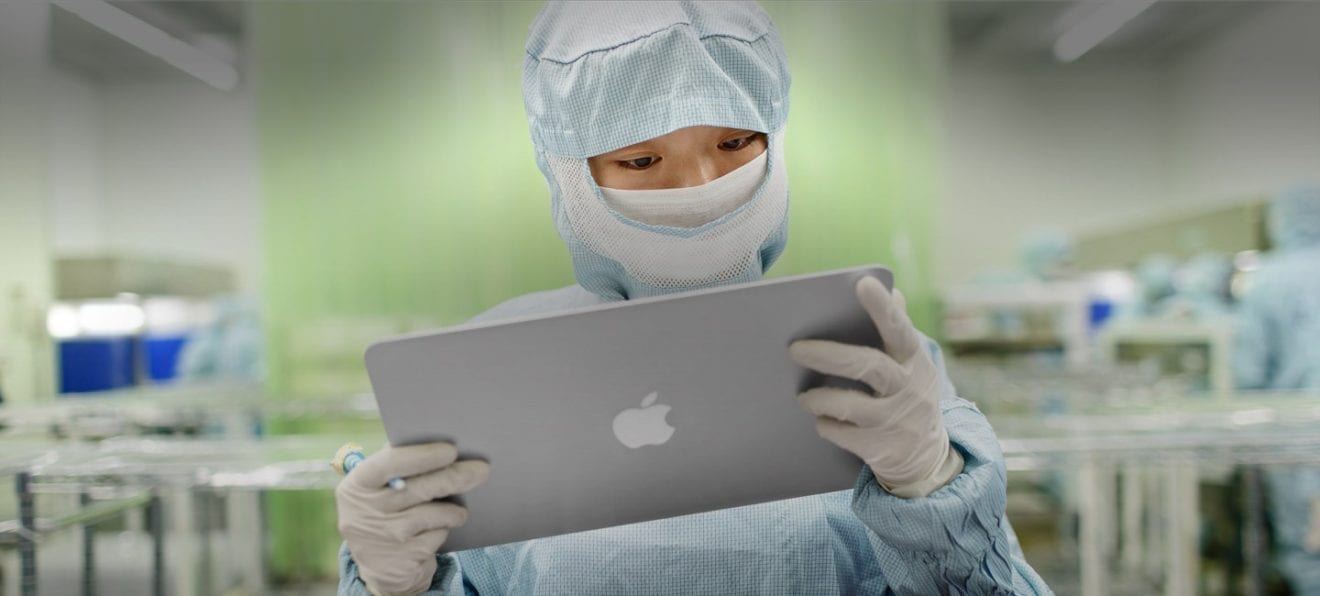
    U.S. tech giant Apple Inc. is increasing its production of smart devices in Vietnam as it diversifies its supply chain outside of China.

    It will begin to produce the iPad tablet in Vietnam as early as the middle of this year, a Nikkei report says, citing sources.

    The company is also mobilizing suppliers to expand production capacity for the latest model of its smart speaker, the HomePod mini, which has been produced in Vietnam since it was introduced last year.

    The company is also set to move a part of its Macbook production from China to Vietnam this year, the report adds.

    Apple suppliers have also been expanding operations in Vietnam. Taiwanese tech giant Foxconn this month received its license to set up a $270 million plant in northern Vietnam.

    Luxshare Precision Industry (Luxshare-ICT) is increasing its capacity in northern Vietnam to make the HomePod mini.

  • Apple’s AirPods held sway over all competitors in the TWS Bluetooth Headset market

    Apple’s AirPods held sway over all competitors in the TWS Bluetooth Headset market

    According to research firm Strategy Analytics, Apple’s AirPods dominated the market for True Wireless Stereo (TWS) Bluetooth headsets in 2020. Overall, the accessory remains one of the hottest products in tech as the category saw sales soar 90% last year. Even after last year’s growth, there is room for more.

    Ville-Petteri Ukonaho, Strategy Analytics’ Associate Director, notes that globally, only one in 10 people own a Bluetooth headset. Ukonaho says that with companies like Apple and Samsung no longer including wired earphones in the box with new handsets, Strategy Analytics sees “huge potential” for Bluetooth headset sales.

    Ken Hyers, Director at Strategy Analytics, said, “TWS headsets drove global sales volumes in the Bluetooth headset segment. While the pandemic slowed demand briefly during the first half of the year, sales rebounded strongly during the second half. The Work From Home shift benefited the entire Bluetooth headset category in terms of sales volume growth.”

    Hyers also touched on Apple’s current domination of the TWS Bluetooth headset market while also pointing out that the tech giant’s share is shrinking thanks to competition this year from Samsung, Huawei, and Xiaomi. Hyers said, “Apple maintained a commanding lead in the TWS segment in 2020, but its commanding share is shrinking as competition intensifies. Strong competition is expected from Xiaomi, Samsung, and Huawei in 2021. The TWS headset market is already hugely overcrowded and despite a strong sales outlook, there will inevitably be consolidation in the years ahead.”

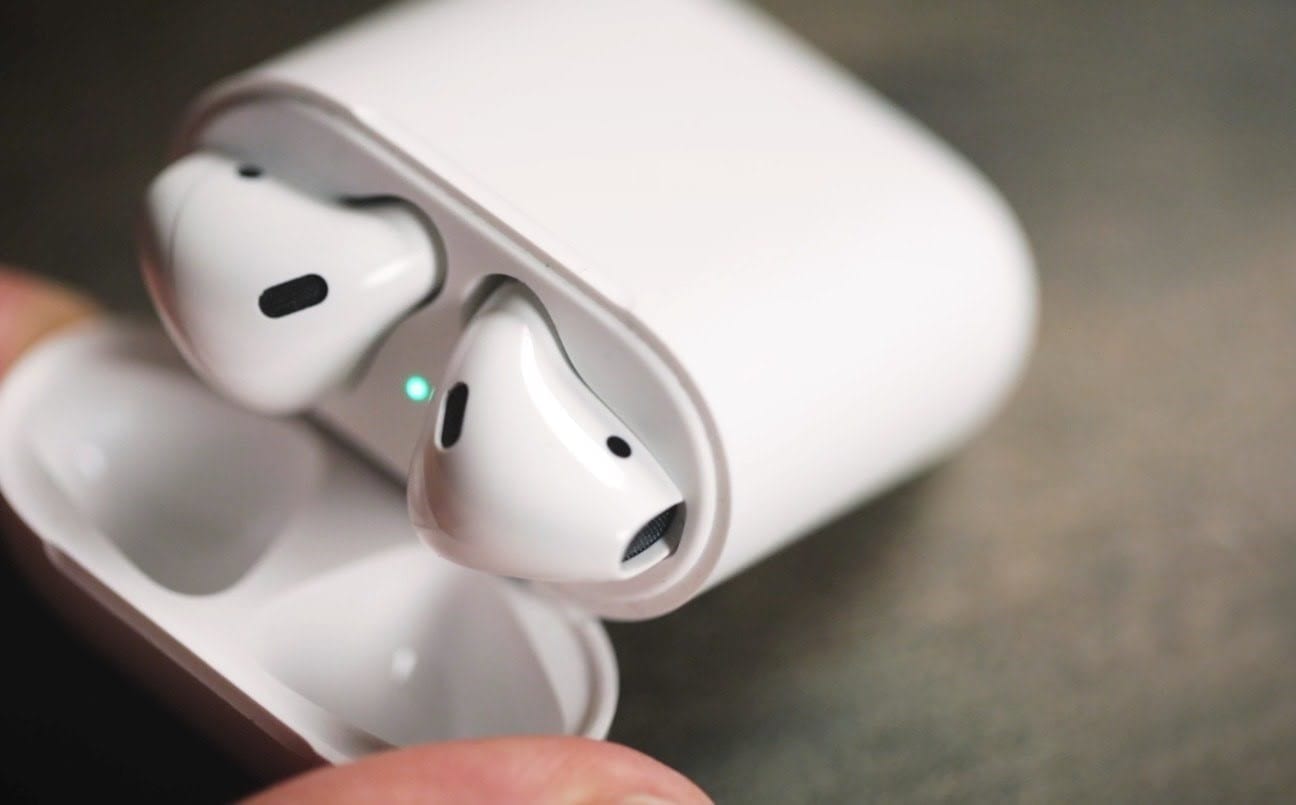
    Apple is expected to unveil two new AirPods versions this year, the third-generation AirPods and the second generation AirPods Pro. The new models could see the light of day this March. The first generation AirPods were released on December 13th, 2016 with the second-generation model launched last March. On October 30th, 2019, the AirPods Pro hit the market with new features including Active Noise Cancellation to remove ambient noise, and the Transparency mode to allow outside noises to be heard.

  • Apple doubles iPhone sales in India during the calendar fourth quarter

    Apple doubles iPhone sales in India during the calendar fourth quarter

    With Apple set to report its fiscal 2021 first-quarter earnings report tomorrow (check-in around 5 pm ET), it looks as though things are off to a good start. According to research firms Counterpoint and CyberMedia, Apple delivered over 1.5 million iPhone units in India during the fourth calendar quarter (from October through December). This was a 100% improvement on a year-over-year basis.

    The increase doubled the iPhone’s market share in the world’s second-largest market for smartphones to 4%. Despite its ranking behind only China, India is a developing country where the average person earns an annual salary of $2,000 USD; this means that consumers are looking for value and explains why Xiaomi has been doing so well in the country with its value for money strategy.

    Apple saw higher sales in India during the quarter for its 2019 iPhone 11, 2018 iPhone XR, this year’s 5G iPhone 12, and the “more-affordable” iPhone SE (2020). For all of last year, iPhone sales in India rose 60% year-over-year to 3.2 million units. Apple has been beefing up its operation in the country and has started manufacturing newer models in India. It also opened its online Apple Store and is offering AppleCare+ to Indian Apple device buyers. It also used some attractive promotions to jump-start iPhone sales with a free pair of AirPods wireless Bluetooth earbuds to those purchasing an iPhone 11. It hopes to open India’s first physical Apple Store later this year.

    The iPhone models that Apple makes in India are not impacted price-wise by an import tax. But models that are assembled in other countries have the tax added to the price of the device making the price prohibitive for the average Indian consumer. For example, the starting price of the iPhone 12 Pro Max in the U.S. is $1,099 compared to the equivalent of $1,781 in India. The $249 AirPods Pro is $341 in the country while the AirPods Max cost an Indian consumer $815 compared to the $549 price tag in the states. Surprisingly, some prices have been adjusted downward.

    For example, Apple Music costs $9.99 per month in the states but is only $1.35 monthly in India. The Apple One bundle including Apple Music, Apple TV+, Apple Arcade and 50GB of iCloud, costs the equivalent of $2.65 a month in India compared to $14.95 monthly in the U.S.

    Jayanth Kolla, chief analyst at Convergence Catalyst, told TechCrunch, “Unlike most foreign firms that offer their products and services for free in India or at some of the world’s cheapest prices, Apple has focused entirely on a small fraction of the population that can afford to pay big bucks.

  • Suit accuses Apple of profiting from illegal gambling

    Suit accuses Apple of profiting from illegal gambling

    Hearing that Apple is being sued is not a surprise since it seems to happen often. Every attorney has the phone number of Apple General Counsel Katherine Adams in his or her Rolodex. Today, a lawsuit against Apple was filed in the U.S. District Court for the Northern District of California. The complaint alleges that Apple is making money and profiting from illegal gambling.

    The suit, focuses on free-to-play casino apps that allows users to buy in-game currency using real money. These so-called “social casino apps” allow smartphone and tablet owners to experience Vegas-style gambling using virtual slot machines. However, Chips won can only be used by players to continue playing the virtual slot machines. While players can’t make real money, Apple is since it gets 30% of in-app purchases including those for casino chips. The complaint says, “By utilizing Apple for distribution and payment processing, the social casinos entered into a mutually beneficial business partnership.”

    The lawsuit points out that through the App Store, Apple helps in the distribution of these apps, gives developers data and other info on users, and uses its in-app payment platform to process in-app payments. The plaintiffs argue that Apple ends up with a cut that is higher than what the house earns in a real-life casino.

    The plaintiffs also state that “The result (and intent) of this dangerous partnership is that consumers become addicted to social casino apps, maxing out their credit cards with purchases amounting to tens or even hundreds of thousands of dollars.” According to the filing, $6 billion was spent by consumers on virtual casino chips last year. The lawsuit seeks class-action status adding that Apple is in violation of California law which bans slot machines. It also accuses Apple of racketeering and collection of unlawful debts.

    The plaintiffs, Donald Nelson, and Cheree Bibbs, spent at least $15,000 each in virtual casino currency both of whom are social casino users who have spent “at least $15,000 each” in virtual casino currency. The plaintiffs want Apple’s actions to be ruled unlawful. They also want damages in the number of their losses and want the court to order Apple to give up its “ill-gotten gains.”

  • New app allows Apple’s iMessage to run on an Android phone

    New app allows Apple’s iMessage to run on an Android phone

    While there are Android users who are always putting down iOS for its notification system, Siri’s aggravating weak points, and for other issues, one thing that is off-limits for discussion is the iOS iMessage app. Even those who have updated to Google’s Rich Communication Service (RCS) based Message platform still would prefer Apple’s messaging system instead. A new app launching today called Beeper can make it happen. It isn’t a streamlined process as you will see. But it does deliver iMessage capabilities to Android users while at the same time creating a unified inbox that covers a number of messaging apps.

    For example, Beeper will create one in box with all of the unread messages from apps such as:

    • Whatsapp
    • Facebook Messenger
    • iMessage
    • Android Messages (SMS)
    • Telegram
    • Twitter
    • Slack
    • Hangouts
    • Instagram
    • Skype
    • IRC
    • Matrix
    • Discord
    • Signal
    • Beeper network

    All of the messages look the same since the idea is to use a single interface for all of your chats. And yes Virginia, Beeper says that it can connect with Apple’s iMessage even if you are using an Android phone. But for this to take place, you need to use an Apple device as a bridge. This can be done using one of two options. One method requires that you keep a Mac awake and continually connected to the internet. Using the Beeper Mac app, your Android phone can be connected to iMessage. With the other method, Beeper will send you a jailbroken iPhone 4s with the Beeper app installed to connect you with the iMessage app. “This is not a joke,” says Beeper’s website.

    Using Beeper will cost you $10 per month and with the last update received by the iPhone 4s taking place 17 months ago, you have to wonder how secure your iMessages will be. If you’re trying to figure out how Beeper got iMessage to work on Android and Windows, here is the response:

    “This was a tough one to figure out! Beeper has two ways of enabling Android, Windows and Linux users to use iMessage: we send each user a Jailbroken iPhone with the Beeper app installed which bridges to iMessage, or if they have a Mac that is always connected to the internet, they can install the Beeper Mac app which acts as a bridge. This is not a joke, it really works!”

  • Apple is a “lifestyle company” says incoming Intel CEO in bid to motivate employees

    Apple is a “lifestyle company” says incoming Intel CEO in bid to motivate employees

    There was a time before the Apple iPhone and other smartphones roamed the earth when people relied on their PCs to access the internet. Back then, Intel was said to be the Gold Standard of chip makers. But that was then and these days Intel no longer has the same reputation. Intel also has had problems with its 10nm process node and delayed until 2022 the release of its 7nm manufacturing process.

    There has been talk about Intel turning to contract manufacturer TSMC or Samsung Foundry to produce some of Intel’s chip designs. In fact, recently Intel decided to outsource the production of its second-generation discrete graphics chip to TSMC. That is the company responsible for the manufacturing of Apple’s 5nm A14 Bionic chipset and the powerful 5nm M1 chip that is replacing Intel components on some Macs

    Last week, Intel CEO Bob Swan flew away from the company effective on February 15th. His replacement, Pat Gelsinger, is returning to the flock; an Intel veteran with over 30 years experience at Intel, Gelsinger recently spent his days as CEO of VMare. While Gelsinger doesn’t take over until the middle of next month, he apparently is feeling the heat from Apple’s M1 chip. The latter is equipped with 16 billion transistors. Compare that to the 11.8 billion transistors that are sardined into the A14 Bionic (which was a 38% hike from the 8.5 billion transistors found in the A13 Bionic).

    The incoming Intel CEO met with company employees during the week and dropped what some might consider an insult on Apple. While addressing the troops, Gelsinger reportedly said, “We have to deliver better products to the PC ecosystem than any possible thing that a lifestyle company in Cupertino” makes (italics added). Perhaps Mr. Gelsinger hasn’t checked out the performance of the chips designed by that “lifestyle company in Cupertino.” The M1 is delivering improved performance and battery life and the addition of the Apple-designed component put a jolt into the demand for Macs.

    Perhaps Intel’s next CEO was just trying to motivate the firm’s employees. The point of the comment is that Intel is a company that produces chips, chips, and chips. As a result, the chips it produces should be better than the ones designed by Apple which makes different products to improve consumers’ lives. In other words, Gelsinger is looking at the M1 and is saying that how could we let ourselves be outdone by a company that really doesn’t focus on chips and is into consumer electronics instead.

  • HTC has reported revenue growth for the second consecutive month

    HTC has reported revenue growth for the second consecutive month

    It’s that time of the month when we review HTC’s latest revenue numbers and brace for disappointment. But in an unexpected twist, this time the Taiwan-based brand has positive news to report.

    For the last month of 2020, HTC reported NT$615 million ($21.96 million) in unaudited consolidated revenue. That’s a small increase of 1.02% versus the same period a year earlier, much better than the median decline of 42.03% experienced throughout 2020.

    The impact of the all-important annual holiday season was visible in HTC’s latest numbers too. In comparison to November, the company’s monthly sales numbers climbed a decent 10.68%.

    As a direct result of these results, December has become the second-consecutive month that HTC has posted both month-on-month and, more importantly, year-on-year growth.

    The last time HTC reported two consecutive months of year-on-year revenue growth was four years ago, specifically February and March 2017 before the launch of the flagship HTC U11.

    Whether or not these positive trends continue into 2021 will remain to be seen. But at the moment, it seems HTC is mostly focused on its lineup of VR products rather than the smartphone segment, despite the occasional launch.