Tag: apple

  • Apple had strong App Store sales in 2020

    Apple had strong App Store sales in 2020

    The Apple App Store generated over $64 billion in revenue last year. That would be a 28% increase over the $50 billion that the iOS digital storefront collected in 2019; it would also represent a 3.1% hike over 2018’s revenue of $48.5 billion. Part of the reason for the surge in the top line has to do with the global pandemic which led businessmen working from home and children engaged in remote learning to download certain apps from the App Store. In addition, there were apps installed to help both kids and adults kill time. Mobile games come to mind as does the short-form video app TikTok used to create 15 seconds and 60-second videos

    The App Store is part of Apple’s Services division which garnered over $50 billion in gross for the first time ever in fiscal 2020. This helped the company achieve a major goal of doubling Services revenue from $25 billion to $50 billion over five years. Consider the businesses that are included in this unit and you’ll see why it is the fastest-growing business unit inside Apple. The Services division houses the App Store, Apple Pay, AppleCare+, Apple Music, Apple News+, Apple Arcade, iCloud, Apple TV+, Fitness+, Apple Books, and more. Apple Music has grown to 85 million subscribers in just five years which Loup Ventures says, “illustrates the power of services built on top of default apps.” Apple’s services sector grew by 16% last year to $53.7 billion in sales and Loup Ventures sees another 15% hike next year. And consider that the App Store makes up 35% to 40% of Services Revenue.

    Loup Venture’s Andrew Murphy sees Apple creating more services that would add new features to some of the tech giant’s existing or default Services platforms.  Some examples could include:

    • Stocks+ could allow Apple to provide trading and advisory services for users.
    • Maps+ could be monetized by Apple by suggesting destinations to users that would be based on input from them.
    • Mail+ would be a premium email service offering productivity, inbox management, scheduling and more.

    In 2019, Apple CEO Tim Cook explained that Apple’s Services sector had a goal to “help our customers get the most out of the products and to enrich lives” by making companion apps “more entertaining, more useful and more informative.” The original plan for the Services sector was to generate recurring revenue allowing Apple to collect flows of cash even in years when the iPhone just isn’t selling. These recurring revenues are high margin allowing Apple to bank large sums of money.

    Loup Ventures used Fitness+ for a case study noting that it adds value to Apple Watch users who can view biometric data on their watch screen. Besides integrating with the Apple Watch, it also integrates with the Apple iPhone, Apple TV, and AirPods.

    Based on revenue, Apple’s Services business is just about the size of a Fortune 50 firm. Would Apple ever decide to spin it off as a separate company? It is a possibility but nothing that is being looked at right now. During the holidays, App Store customer spending was up 27% year over year. In 2019, App Store customer spending was up 16% on an annual basis.

    Apple, as many of you know, takes a 30% cut of in-app purchases made using the App Store’s “in-app” platform. Because iOS is a closed system, Apple’s customers can’t sideload apps and are forced to buy paid apps through the App Store even if they can be purchased for less money from another app store. As a result, Apple is being investigated by some regulatory agencies for monopolistic behavior. Recently though, Apple dropped its cut to 15% for the purchase of apps created by developers with less than a $1 million in annual sales.
  • Foreign automaker says it is in talks with Apple to develop self-driving car

    Foreign automaker says it is in talks with Apple to develop self-driving car

    Late last month we discussed speculation that the self-driving Apple Car would undergo production as soon as 2024. There were thoughts about whether Apple would be able to handle the onerous task of manufacturing a vehicle. Many pointed out that it is not the same thing as producing a phone. As a result, some theorized that instead of making an automobile from scratch, Apple would provide its self-driving technology to a mainstream car developer for a price, perhaps via a royalty deal.

    On Thursday, South Korea’s Hyundai Motors said that it is in talks with Apple about working together to develop a self-driving car. News of the talks electrified investors who sent Hyunda’s shares up over 20%. CNBC’s Chery Kang was told by Hyundai earlier today, “We understand that Apple is in discussion with a variety of global automakers, including Hyundai Motor. As the discussion is at its early stage, nothing has been decided.” A report from the Korea Economic Daily said that it was Apple that suggested working with Hyundai and that the latter firm was in the process of reviewing the proposed terms of a collaboration between the two companies.

    Development of the vehicle and the battery were reportedly included in the proposal. The car could be released in 2027 said CNBC’s report. Speaking of the battery, last month we pointed out that the cell rumored to be used on the vehicle is considered to be “next level” and would feature a “monocell” design. More room would be made available inside the battery for the placement of additional active materials. This would allow a car to travel longer distances between charges.

    TF Securities analyst Ming-Chi Kuo, the man who knows more about what Apple will do in the future than anyone outside of CEO Tim Cook, says that everyone is getting too bullish about the Apple Car. Part of the reason why Kuo made this comment is that by his reckoning, the vehicle might not be released until 2028. The project, known as Project Titan inside Apple, has supposedly passed a review inside Hyundai. An approval is still required from Hyundia chairman Chung Eui-son.

  • Apple leads in Vietnam smartphone awareness survey

    Apple leads in Vietnam smartphone awareness survey

    Apple is the most popular smartphone brand in Vietnam with 46 percent of respondents thinking about it first.

    Samsung is second with 36 percent, followed by Oppo (9 percent) and Nokia (2 percent), according to a survey of nearly 600 respondents conducted by Ho Chi Minh City-based market research firm Q&Me.

    Top reasons cited for favoring Apple were high quality (78 percent), good brand (71 percent), good security (65 percent), good design (59 percent) and good camera (57 percent).

    The survey found Apple was much loved by young people, while Samsung was popular among those aged 30 and above.

    The survey’s results also showed 79 percent of Vietnamese users buy smartphones at electronics chain stores, 14 percent from e-commerce sites and the remaining from friends or relatives.

    It says 44 percent of Vietnamese users give highest consideration for Apple products for their next purchase, followed by Samsung (26 percent) and Vingroup’s Vsmart (6 percent).

    Hundreds of Vietnamese people last month queued up in front of Apple stores to become the earliest owners of iPhone 12.

    Around 75 million people, or almost 80 percent of the country’s population, use smartphones, according to We Are Social, a social media marketing and advertising agency.

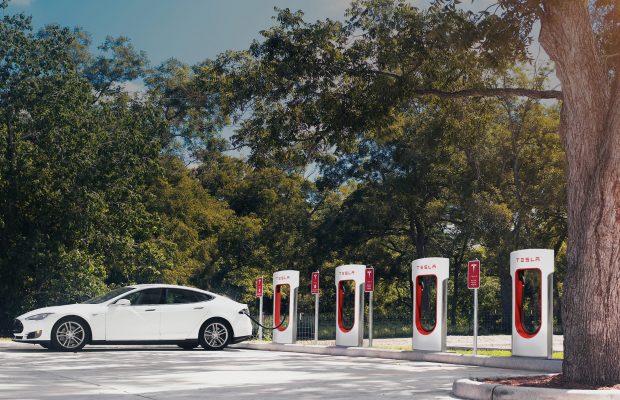
  • Tesla Working On Amazon And Apple Music Integration

    Tesla Working On Amazon And Apple Music Integration

    One of the biggest influences for the massive in-dash display for the Tesla Model S was the iPad. But even though Teslas have offered this sophisticated in-car infotainment experience, what’s strange is that lack of native Apple Music and Amazon Music integration. Instead, Tesla’s offer native Spotify integration. But this is set to change.

    Tesla notably doesn’t support phone mirroring options like Apple’s CarPlay and Android Auto so if you use Apple Music or Amazon Music as your streaming service of choice you can only play music via Bluetooth but not enjoy the advances of a deep user interface integration.

    Elon Musk has already stated that Tidal, lossless high fidelity audio streaming service will be integrated into the dashboard experience of the Teslas. However, now Electrek is reporting that the world’s largest automaker is also integrating Apple Music and Amazon music into the dashboard.

    The Electrek report cites a hacker called “green” who has spotted early versions of the integration in Tesla’s UI which he has also shared in a post on Twitter. He noticed this update in a recent software update which has enabled Tidal, Pandora, SiriusXM, and Audible. TuneIn Radio, Amazon and Apple Music remain disabled. But they should be coming soon as Audible is also owned by Amazon.

    There is no timeline as to when this will become official but considering Tidal is already active, it seems to be the furthest along in development. Apple Music and Amazon Music will almost certainly have a more delayed official release.

  • Key Apple supplier is one step closer to building its new U.S. factory

    Key Apple supplier is one step closer to building its new U.S. factory

    Back in May, the world’s largest foundry, Taiwan Semiconductor Manufacturing Co. (TSMC), was going to announce that it was building a U.S. based chip manufacturing facility. The U.S. facility moved one step closer to reality. Taiwan’s ministry of economic affairs gave the go ahead for TSMC to proceed with the first phase of building the factory in Arizona with an investment of $3.5 billion. The total cost of the facility is expected to be close to $12 billion.

    The country’s ministry of economic affairs has the job of authorizing major investments made overseas by Taiwan companies. TSMC’s application has been approved by the ministry according to an announcement made earlier today. The plant is expected to be operating by 2024 and churn out chips made using the 5nm process. By that year, the most cutting-edge integrated circuits will be made using the 3nm process. TSMC’s Arizona factory will turn out 12-inch wafers with as many as 20,000 a month rolling out of the facilities.

    The factory was originally planned by President Donald Trump as a sign that the U.S. would become a leader in tech production. While many U.S. companies design their products in the states like Apple does, the actual manufacturing is usually done overseas in Taiwan or China. For example, the iPhone is designed in Cupertino but is assembled by three Taiwan firms. Trump had asked TSMC to announce its plans prior to the U.S. election as he figured that his chances for re-election would get a shot in the arm if he could announce that the world’s largest chip manufacturer was building a plant in the states. However, it looks as though Trump will be out of office by the time the factory in Arizona starts volume production.

  • Apple ties up much of TSMC’s 5nm chip production for next year

    Apple ties up much of TSMC’s 5nm chip production for next year

    These are the Golden days for Apple’s in-house chipsets. For example, benchmark tests reveal that the A14 Bionic used to power the iPhone 12 series outperforms the upcoming Snapdragon 888 chipset (which will be found in 2021 Android flagship phones). Even more interesting, last year’s A13 Bionic, which drives the iPhone 11 family, also produced a better score than the Snapdragon 888. Both A-series chips are designed by Apple and are produced by TSMC, the largest independent foundry in the world. The Snapdragon 888 is designed by Qualcomm and will be manufactured by Samsung using its new 5LPE process node.

    Apple happens to be TSMC’s largest customer; Huawei was second until the U.S. changed an export rule that now blocks foundries using American-made tech from shipping chips to the Chinese based manufacturer. TSMC’s advanced 5nm production capabilities for 2021 have been “booked out.” Apple has reserved much of this production (80% according to the report) for 5nm A14 Bionic and A15 Bionic Application Processors for the 2020 and 2021 iPhone models. Apple also has booked 5nm production for its ARM related M1 computer processor. Apple replaced some Intel processors for new MacBook models with the home-grown M1; the latter contains a whopping 16 billion transistors inside. The higher a chip’s transistor density (number of transistors packed inside a dense square mm space), the more powerful and energy-efficient the component is.

    TSMC’s revenue is expected to hit an all-time high this year with another record high due for 2021. The company also plans to begin Risk Production of 3nm chips next year. Part of the process of designing and manufacturing new chips includes Risk Production. These are cutting-edge chips that are sold to manufacturers willing to buy them without having to go through testing. That puts the risk squarely on the buyer. The foundry says to expect a performance boost of 10% to 15% with its 3nm chips along with a 20% to 25% increase in energy-efficiency.

    Last month, a report stated that the A16 Bionic chip for the 2022 iPhone 14 will reportedly be manufactured using the 4nm process node. However, this past summer another report said that the A16 Bionic would be manufactured using the 3nm process node. Next year’s iPhone 13 line will be powered by the A15 Bionic and produced once again by TSMC using the 5nm process node.

    To show you how far this technology has advanced over the last decade, consider the Apple A4 chip. Designed in-house for the very first time, the A4 was manufactured for 2010’s iPhone 4 by Samsung using the latter’s 45nm process node. Speaking of Samsung, the company and TSMC are the only foundries currently capable of producing 5nm chipsets.

  • Apple to build a car by 2024, with ‘next level’ battery

    Apple to build a car by 2024, with ‘next level’ battery

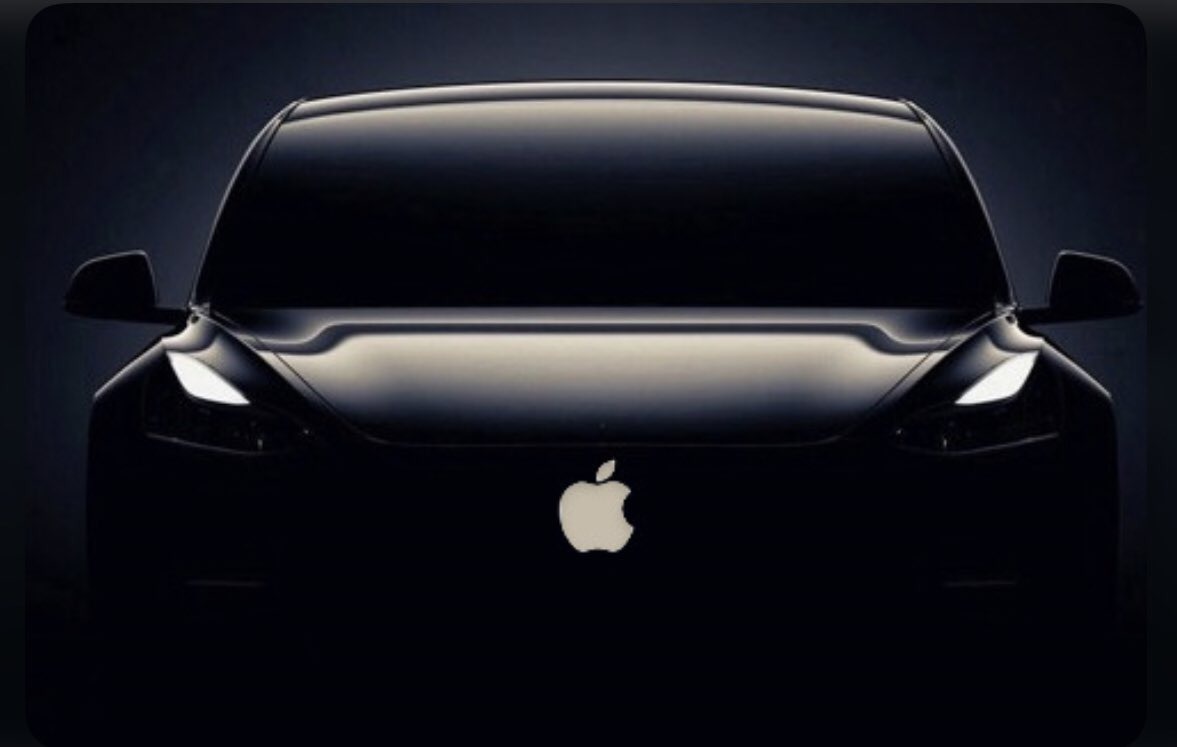
    Apple Inc is moving forward with self-driving car technology and is targeting 2024 to produce a passenger vehicle that could include its own breakthrough battery technology, people familiar with the matter said.

    The iPhone maker’s automotive efforts, known as Project Titan, have proceeded unevenly since 2014 when it first started to design its own vehicle from scratch. At one point, Apple drew back the effort to focus on software and reassessed its goals. Doug Field, an Apple veteran who had worked at Tesla Inc, returned to oversee the project in 2018 and laid off 190 people from the team in 2019.

    Since then, Apple has progressed enough that it now aims to build a vehicle for consumers, two people familiar with the effort said, asking not to be named because Apple’s plans are not public. Apple’s goal of building a personal vehicle for the mass market contrasts with rivals such as Alphabet Inc’s Waymo, which has built robo-taxis to carry passengers for a driverless ride-hailing service.

    Central to Apple’s strategy is a new battery design that could “radically” reduce the cost of batteries and increase the vehicle’s range, according to a third person who has seen Apple’s battery design.

    Apple declined to comment on its plans or future products.

    Making a vehicle represents a supply chain challenge even for Apple, a company with deep pockets that makes hundreds of millions of electronics products each year with parts from around the world, but has never made a car. It took Elon Musk’s Tesla 17 years before it finally turned a sustained profit making cars.

    “If there is one company on the planet that has the resources to do that, it’s probably Apple. But at the same time, it’s not a cellphone,” said a person who worked on Project Titan.

    It remains unclear who would assemble an Apple-branded car, but sources have said they expect the company to rely on a manufacturing partner to build vehicles. And there is still a chance Apple will decide to reduce the scope of its efforts to an autonomous driving system that would be integrated with a car made by a traditional automaker, rather than the iPhone maker selling an Apple-branded car, one of the people added.

    Two people with knowledge of Apple’s plans warned pandemic-related delays could push the start of production into 2025 or beyond.

    Shares of Tesla ended 6.5% lower on Monday after their debut in the S&P 500 on Monday. Apple shares ended 1.24% higher after the news.

    Apple has decided to tap outside partners for elements of the system, including lidar sensors, which help self-driving cars get a three-dimensional view of the road, two people familiar with the company’s plans said.

    Apple’s car might feature multiple lidar sensors for scanning different distances, another person said. Some sensors could be derived from Apple’s internally developed lidar units, that person said. Apple’s iPhone 12 Pro and iPad Pro models released this year both feature lidar sensors.

    Apple had held talks with potential lidar suppliers, but it was also examining building its own sensor.

    As for the car’s battery, Apple plans to use a unique “monocell” design that bulks up the individual cells in the battery and frees up space inside the battery pack by eliminating pouches and modules that hold battery materials, one of the people said.

    Apple’s design means that more active material can be packed inside the battery, giving the car a potentially longer range. Apple is also examining a chemistry for the battery called LFP, or lithium iron phosphate, the person said, which is inherently less likely to overheat and is thus safer than other types of lithium-ion batteries.

    ”It’s next level,” the person said of Apple’s battery technology. “Like the first time you saw the iPhone.”

    Apple had previously engaged Magna International Inc in talks about manufacturing a car, but the talks petered out as Apple’s plans became unclear, a person familiar with those previous efforts said. Magna did not immediately respond to a request for comment.

    To turn a profit, automotive contract manufacturers often ask for volumes that could pose a challenge even to Apple, which would be a newcomer to the automotive market.

    “In order to have a viable assembly plant, you need 100,000 vehicles annually, with more volume to come,” the person said.

    Some Apple investors reacted to the Reuters report on the company’s plans with caution. Trip Miller, managing partner at Apple investor Gullane Capital Partners, said it could be tough for Apple to produce large volumes of cars out of the gate.

    “It would seem to me that if Apple develops some advanced operating system or battery technology, it would be best utilized in a partnership with an existing manufacturer under license,” Miller said. “As we see with Tesla and the legacy auto companies, having a very complex manufacturing network around the globe doesn’t happen overnight.”

    Hal Eddins, chief economist at Apple shareholder Capital Investment Counsel, said Apple has a history of higher margins than most automakers.

    “My initial reaction as a shareholder is, huh?” Eddins said. “Still don’t really see the appeal of the car business, but Apple may be eyeing another angle than what I’m seeing.”

  • Chinese smartphone shipments continue to fall although iPhone deliveries rose last month

    Chinese smartphone shipments continue to fall although iPhone deliveries rose last month

    Brokerage firm Goldman Sachs analyzed smartphone data compiled by the China Academy of Information and Communications Technology (CAICT). The numbers revealed that November smartphone shipments in China amounted to 29.6 million units last month, down 15% from last year. On a sequential basis, shipments rose 13% from October. Shipments of international brands, of which Apple is believed to be the leader, were up a whopping 99% to 6.9 million units last month from the same month in 2019. From October 2020 to November 2020, international shipments rose 18%.

    The aforementioned 15% decline in November smartphone shipments in China compares to year-over-year declines of 13%, 36%, and 27% for August, September, and October respectively. Goldman’s Rod Hall said that despite strong demand for 5G enabled phones, the overall smartphone market was weak in the country. Hall told clients, “We see these ongoing weak trends as interesting given Chinese 5G units have been better than we expected but not enough to offset the very weak overall demand environment.”

    According to Goldman Sachs, Apple iPhone deliveries in China were up during November. In the investor note, Hall stated, “In our opinion, the overall market weakness that we continue to see in China may be beginning to translate into higher-end demand stagnation at Apple. We also note that lower-end market strength in China is important for the absorption of refurbished/2nd hand iPhones which could have a negative effect on device resale pricing and the trade-in value that new iPhone buyers experience.”

    Hall is bearish on Apple and expects the price of the stock to drop from the current $122.10 to $75 over the next 12 months. That would be a 39% decline; the analyst maintains his “sell” rating on the stock. While the consensus expects Apple’s first 5G iPhone models to generate growth in China, Hall says that year-over-year growth “may not be as pronounced as many investors believe it will be in the iPhone 12 cycle.”

  • Apple Services to outperform the iPhone by 2024

    Apple Services to outperform the iPhone by 2024

    In the first quarter of 2017, Apple iPhone sales peaked at 78 million units worldwide. Worried that sales of the device were dropping off, Apple decided to start focusing on selling services to the 728 million iPhone users worldwide as the second quarter of 2017 started. Apple set a goal to double its services related revenue to $50 billion from $25 billion by 2020. This was best accomplished by having iPhone users sign up to make recurring monthly payments for subscription services such as Apple Music, Apple News+, and more. And for fiscal 2020, which ended in September, Apple generated $53.77 billion in services revenue topping its goal right on time.

    Within the next four years Apple will be generating the majority of its revenues from Services instead of the iPhone. This will take place even though the growth in Services revenue will decline to 11% a year from the 22% growth rate that the division has enjoyed over the last four years. By Fiscal 2024, the services unit will bring in $81.5 billion says Forbes as Apple relies on the growth of both subscription titles and the apps purchased from the App Store. While Apple’s Services businesses continue to grow, iPhone gross should grow at an annual rate of only 5% per annum over the next five years to approximately $167 billion. Between 2016 and 2020, iPhone revenue was flat.

    Also interesting is a word that Apple’s Services units are now experiencing stronger profit margins than what Apple’s hardware has been generating. During the fiscal year 2020, profit margins for Apple’s hardware products came to 31.5% compared to a much stronger 66% for services. If margins remain at current levels, gross profits for Services would be $54 billion in the fiscal year 2024 topping the iPhone’s $53 billion gross profit for the same year.

    Some of these forecasts are dependent on what happens with the Justice Department’s suit against Google. The latter pays Apple to be the default search engine on iPhone models and if the DOJ blocks Google from making these payments, the result could negatively impact Apple’s Services growth.

  • Data from Qualcomm suggests that Apple could produce 176 million 5G iPhone units this year

    Data from Qualcomm suggests that Apple could produce 176 million 5G iPhone units this year

    With a little bit of math and plenty of fingers and toes, Sina Finance has calculated that Apple purchased approximately 176 million 5G modems from Qualcomm for this year. This calculation dovetails with estimates calling for Apple to produce 5G and non-5G iPhone models in the neighborhood of 190-200 million units for 2020. On the other hand, another report written by Taiwan’s Appledaily calls for Apple to roll out 120 million 5G iPhones this year indicating that the higher figures overestimate reality. Another possibility is that Apple expects strong sales for the iPhone 12 series this year and next year. One other option is that Apple ordered more modem chips than they needed because the company plans on using them on some future Apple devices. There has been talking about a 5G iPad tablet in the future and Apple might have ordered enough chips for such a device.

    Each 12-inch wafer that TSMC ships to Qualcomm can yield 2,211 modem chips for Apple; with 80,000 wafers shipped, we can estimate that Apple received 176 million 5G modem chips. This tells us that Apple expects to deliver 176 million 5G handsets this year. You might recall that Apple and Qualcomm were the Silicon Valley equivalent of the Hatfields and McCoys in 2019 with both firms taking each other to court for various patent infringements. Apple was frantically trying to find a source for 5G modem chips. On April 16th, 2019, just after Apple concluded its opening statement in a court battle with Qualcomm, a settlement between the two companies was announced. In return for a large sack of cash from Apple (estimated to be $4.5 billion), the chip designer gave Apple a six-year licensing agreement with an option for an additional two years. The settlement also included a supply agreement that covers the purchase by Apple of Qualcomm’s 5G modem chips. All legal action filed by both companies against the other was dropped.

    In more news related to this subject, Qualcomm is now TSMC’s largest customer for chips made used the 7nm process node. The process node is based on the number of transistors that fit in a square mm. TSMC’s 7nm process node sports 96.5 million transistors in that little space compared to 171.3 million with the latest 3nm process node. The larger the number of transistors inside a chip, the more powerful and energy-efficient it is. The 7nm process is used to manufacture the Snapdragon X55 modem chip and the current flagship Snapdragon 865 and Snapdragon 865+ chipsets.

    Apple does not ever want to be in the position again where it needs a specific component from a third-party supplier. So it has been working on developing its own modem chip. This would be dome similar to how Apple designs its own chipsets and has it built by a contract foundry such as TSMC or Samsung. Last year, Apple spent $1 billion to acquire most of Intel’s smartphone modem chip business. 2,200 Intel employees joined Apple with the transaction. Apple hopes to start using its own 5G modem chips perhaps by 2023. This could save Apple some money which in turn might allow the firm to cut pricing on future 5G enabled devices.

    That Apple went ahead and purchased Intel’s smartphone modem business suggests how strongly it wants to design its own chips. A $1 billion acquisition is unusual for Apple which usually involves itself in smaller transactions covering niche components that it plans on using for the iPhone or other devices within the next year or two. The largest acquisition made by Apple was its purchase of Beats Audio for $3 billion in 2014.

  • Apple to open second South Korean store

    Apple to open second South Korean store

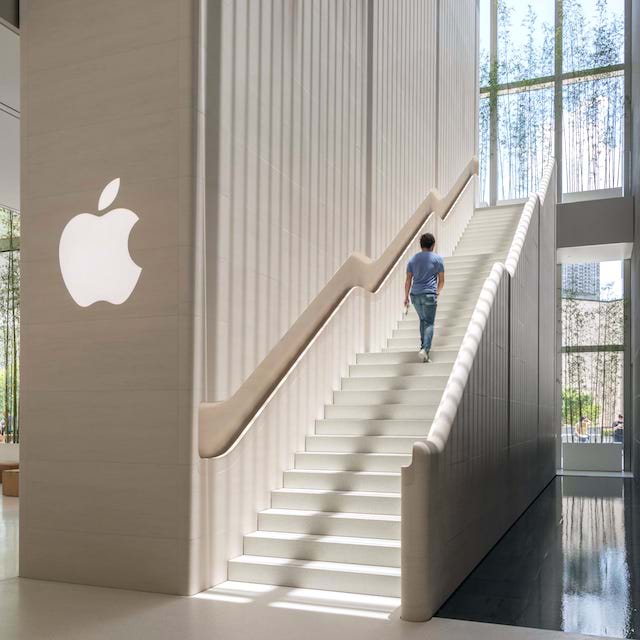
    Apple is preparing to open its second retail store in South Korea. Located in Seoul’s main finance district, Apple Yeouido will make direct sales and support accessible to a whole new community.

    Apple first welcomed customers in South Korea in 2018, when Apple Garosugil opened in Seoul’s Gangnam area. The same experience is coming to Yeouido, an island bordered by the Han River and southwest of the Myeong-dong shopping district.

    Apple Yeouido is located on L1 of IFC Mall Seoul, an indoor shopping center directly below the angular office towers of IFC Seoul and near the iconic 63 Building. Shoppers enter the mall through a glass pavilion just steps from Yeouido Park. Three floors of fashion, cinema, and food are tucked below ground.

    In the future, visitors can expect Apple to host educational and creative Today at Apple sessions that engage the store’s surroundings.

    Like all recent Apple Store openings, Apple Yeouido will follow strict safety guidelines including reduced capacity and a mask requirement. Apple Garosugil was the first Apple Store outside of Greater China to reopen during the pandemic and served as an important signal tower for Apple’s global reopening strategy.

  • iPhone 12 mini fails to enthuse Vietnamese customers

    iPhone 12 mini fails to enthuse Vietnamese customers

    The iPhone 12 mini is ostensibly the least popular of Apple’s four new smartphones in Vietnam, with consumers apparently preferring bigger and more expensive models. Data from four major smartphone distributors shows that of 30,000 inquiries made about the four new iPhone 12 models Apple unveiled last month, less than 10 percent were about the mini.

    Half was for the Pro Max, the largest and most expensive model, and 64 percent costlier than the mini.

    Since they are not officially in Vietnam yet, they are sold at a premium by individual sellers who buy them in places like Singapore and Hong Kong.

    But many said they do not import the mini because there is almost no demand for it.

    A smartphone seller in District 10, Ho Chi Minh City, who asked not to be identified, said most iPhone 12 buyers now in Vietnam are affluent people who want to own one early and often buy the most expensive models.

    Sellers also said the small screen and low battery capacity of the mini are also negatives.

    Most stores in Hanoi and HCMC have the iPhone 12, iPhone 12 Pro, and iPhone 12 Pro Max, and customers have to pay VND20-21 million ($862-905) in advance if they want the mini.

    “Some women buyers are interested in the mini, but I tell them to wait for another two weeks for the official release,” Nguyen Hoang, owner of a store in Hanoi, said.

  • Apple suppliers have started testing foldable iPhone prototypes

    Apple suppliers have started testing foldable iPhone prototypes

    Samsung and Motorola have been selling foldable smartphones to the public for quite some time, but Apple is still in the development phase. However, according to one report, Apple’s foldable prototype testing has now started.

    Economic Daily News claims Apple recently sent out prototype foldable iPhone units to assembly partner Foxconn with the aim of releasing the final version of the device as soon as September 2022, presumably alongside the iPhone 14 series.

    The focus of testing, per sources familiar with the matter, is the foldable display. Apple is evaluating the use of either OLED or micro-LED tech, as well as their respective assembly methods.

    Before heading into mass productions, laptops like the MacBook Pro need to be opened and closed between 20,000 and 30,000 times. With the foldable iPhone, Apple has asked Foxconn to evaluate everything over 100,000 opening and closing tests.

    Apple has relied on Samsung for recent iPhone OLED panels and it appears the South Korean company has been chosen to supply foldable iPhone panels too. Whether there will be other suppliers too remains to be seen.

    The overall design of the product wasn’t described in today’s report. However, tipster Jon Prosser previously revealed that early prototypes offer a Microsoft Surface Duo-like design with separate displays and a slim forehead for Face ID.

  • Apple brings 100 new emoji and more to the iPhone with release of iOS 14.2

    Apple brings 100 new emoji and more to the iPhone with release of iOS 14.2

    Emoji fans using an iPhone should be happy to see that iOS 14.2 has been released. Why? Because the latest build of Apple’s mobile operating system features a large number of new emoji including a transgender pride flag, a dodo, a pinched finger emoji, an anatomical heart, lungs, a man feeding a baby, and more. You can see the entire list of new emoji that comes with iOS 14.2 by visiting the Emojipedia website.

    One of the fun new features for iOS 14.2 brings music discovery app Shazam to the Control Center. We first told you about this back in September when Apple dropped a public beta for iOS 14.2. Shazam is able to listen to a song playing in the background and fairly quickly, it will post the name of the tune, the artist who sings it, the lyrics, and more. The app was one of the first to be featured by Apple in a series of iconic ads for the brand new App Store that told us that whatever we are doing, “there’s an app for that.” Three years ago, Apple decided to purchase Shazam for $400 million.

    The update includes eight new wallpapers in both light and dark mode. Those with an iPhone 12 series handset can use the magnifier app to detect people nearby and measure their distance away by using the LiDAR depth sensor. The Time-of-Flight sensor computes how long it takes for a beam of infrared light to bounce off of a subject and return to the phone. With this data, more accurate depth measurements are computed allowing the iPhone 12 Pro and Pro Max to deliver enhanced AR capabilities and improved bokeh blurs on portraits. Speaking of the iPhone 12 series, iOS 14.2 adds support for the Leather Sleeve MagSafe accessory. Leather cases with MagSafe will be available to be pre-ordered starting today. The sleeves and the MagSafe Duo Charger. Both the leather sleeves and the MagSafe Duo Charger will be released at a later date, possibly not until 2021.

    The update to iOS 14.2 also helps provide optimized battery charging for the AirPods slowing the rate at which the wireless Bluetooth earbuds batteries age. Users will receive a notification whenever the audio levels on their headphones are too loud and could cause problems to users’ hearing. New AirPlay controls can stream entertainment throughout your home. And there are many more items on the changelist.

    The update also fixes a number of issues including one that keeps the iPhone screen black while viewing Netflix content, and one that makes the camera viewfinder appear black when the camera app is open. Some of the resolved issues revolve around widgets such as the weather widget that displays the temperature in Celsius even when it is set to Fahrenheit. One bug forces the Apple Watch app to unexpectedly close when opened and in some cases, Apple Pay won’t send or accept cash via Siri. One bug prevents devices from charging wirelessly.

    To update your iPhone go to Settings > General > Software Update. If the update is on your device, tap on Download and Install. As we said, iPadOS 14.2 is also available to be installed on a compatible iPad tablet, and to do so, use the same directions we told you for the iPhone. The new update to watchOS 7.1 contains “new features, improvements, and bug fixes.” To update your Apple timepiece, first, make sure that your iPhone is running the latest version of iOS. Make sure that your Apple Watch is updated to at least 50% and connect your iPhone to Wi-Fi. Keep your iPhone nearby your Apple Watch and the update will take place over several minutes to an hour. Thus, you might want to wait to update overnight.

    You can also try to update your Apple Watch using the iPhone:

    • Keep your Apple Watch on its charger until the update completes.
    • On your iPhone, open the Watch app, then tap the My Watch tab.
    • Tap General > Software Update.
    • Download the update. If asked for your iPhone passcode or Apple Watch passcode, enter it.
    • Wait for the progress wheel to appear on your Apple Watch. It could take from several minutes to an hour for the update to complete.

    If your Apple Watch is running watchOS 6 or higher, you can update your Apple Watch without using the iPhone. Follow these directions:

    • Make sure that your watch is connected to Wi-Fi.
    • On your watch, open the Settings app.
    • Tap General > Software Update.
    • Tap Install if a software update is available, then follow the onscreen instructions.

    Leave your Apple Watch on its charger while the update completes. Don’t restart your Apple Watch, and don’t quit the Watch app. When the update completes, your Apple Watch restarts on its own.

    Apple also released a special update that adds security updates to older iPhone, iPad, and iPod touch units. The update installs iOS 12.4.9 to iPhone 5s, iPhone 6, iPhone 6 Plus, iPad Air, iPad mini 2, iPad mini 3, and iPod touch (6th generation).

  • Apple Watch picks up another update today

    Apple Watch picks up another update today

    Today is a happy day for Apple fans, as the Cupertino-based company is rolling out new software updates for three of its popular products: iPhone, iPad, and Apple Watch. If you’re rocking one of the first two, you should be able to download iOS 14.2 today.

    On the other hand, Apple Watch owners can download watchOS 7.1, a rather important update that brings some interesting new features for select users. The first one is the ability to be notified when your headphone level could impact your hearing.

    Then, we have a fix for an issue that prevented some users from unlocking Mac with Apple Watch. Another fix included in the update should address an issue where the screen may be dark on wrist raise for some people using the Apple Watch Series 6.

    The next two new features are specifically aimed at Apple Watch users in two countries: Korea and Russia. Those users living in one of the two countries will finally get support for the ECG app on Apple Watch Series 4 or later, as well as support for irregular heart rhythm notifications.

    Make sure that you check your Apple Watch app via your iPhone to see whether or not the new watchOS 7.1 update is available for download. You should find it by heading to General / Software Update.