Tag: apple

  • Apple Singapore’s floating store opens this week

    Apple Singapore’s floating store opens this week

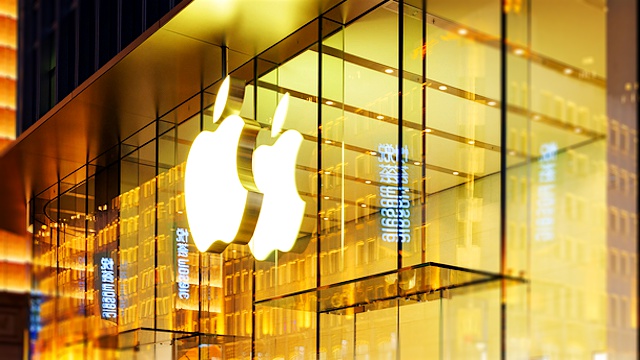
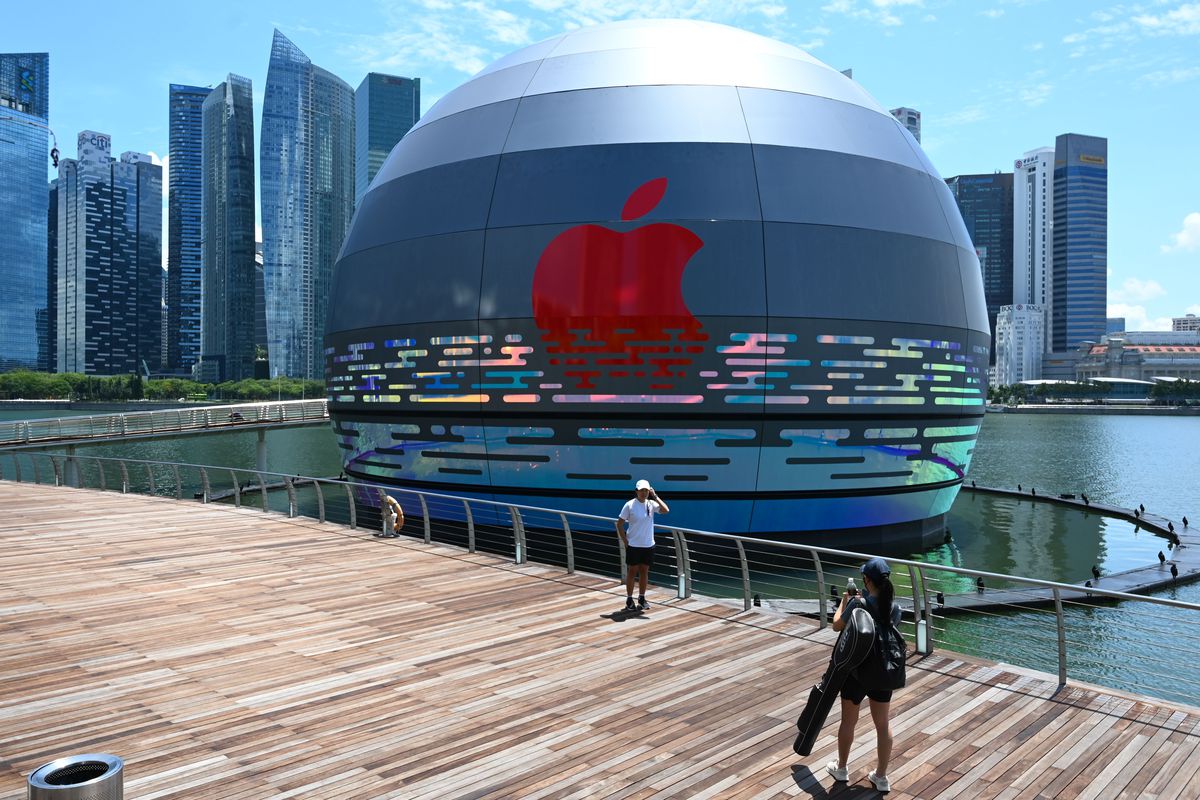
    Apple’s most ambitious store project yet will open its doors to the public this Thursday, a round structure that appears to float on Singapore’s harbor.

    The spherical shaped store features an all-glass dome structure above the waterline, with 114 panes of glass, affording 360-degree panoramic views of the city.

    Inspired by the Pantheon in Rome, an oculus is built at the apex of the dome, letting a ray of light flood the interior. Custom baffles, which are uniquely shaped, helps counter sun angles and create a nighttime lighting effect, according to Apple.

    Indoor trees are placed in a circular line, “providing additional shading and soft shadows through the foliage”.

    “We couldn’t be more excited to open the breathtaking Apple Marina Bay Sands in Singapore, building on our commitment to this special place that began more than 40 years ago,” said Deirdre O’Brien, senior VP of Retail + People at Apple.

    “Our passionate and talented team is ready to welcome this community to our new store and deliver the care and support that our customers around the world love.”

    Apple Marina Bay Sands houses The Forum meeting pace and a giant video wall, where Today at Apple sessions featuring Singapore’s artists and creators will be held. Apple’s first underground ‘Boardroom’ located on the lower level beneath the waterline is where entrepreneurs and developers can receive training and advice from the Apple team.

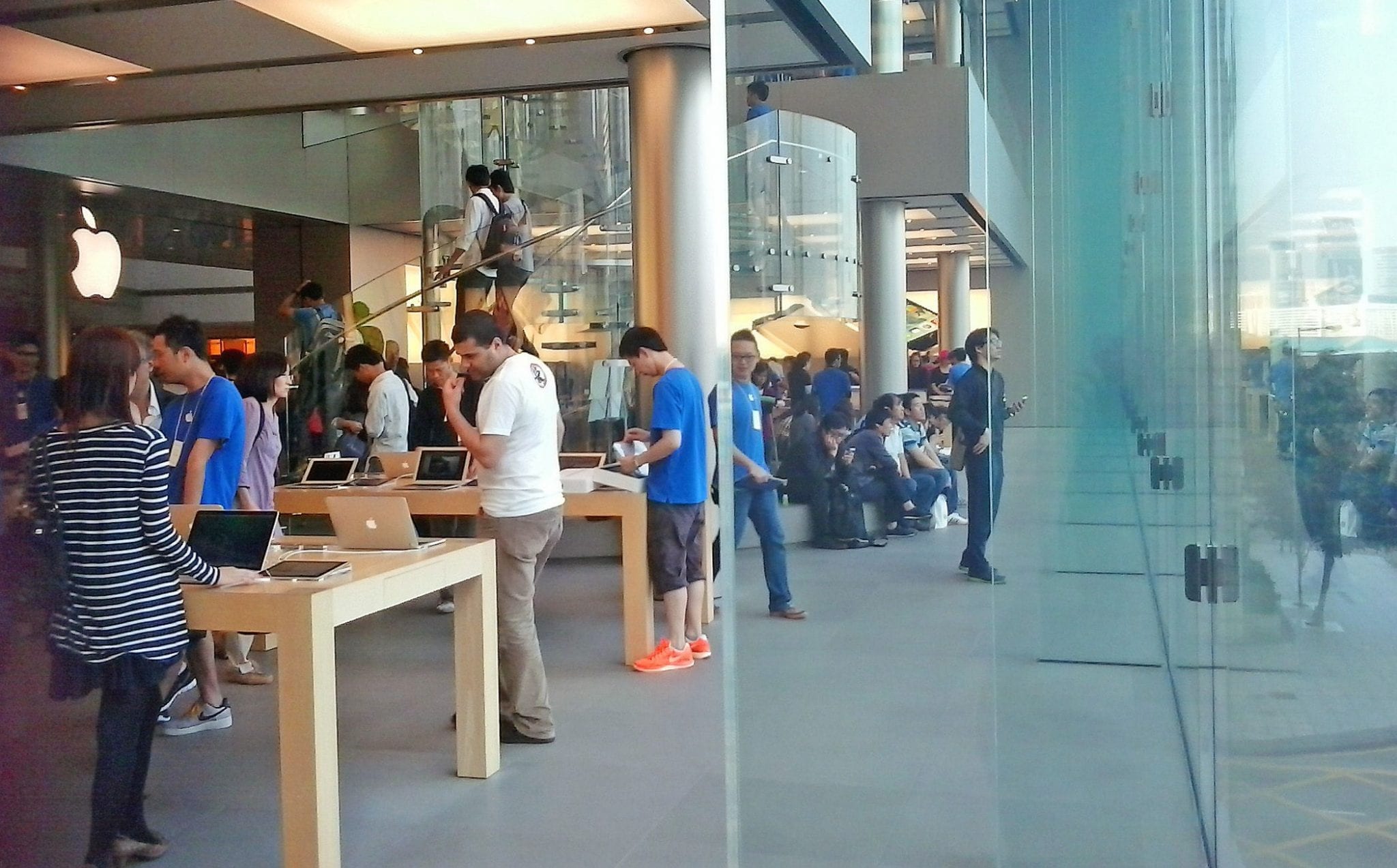
    On the opening date, store capacity will be limited and access will be by appointment only. Temperature checks will be taken, masks required and social distancing enforced.

  • Japan Display to sell LCD factory to Sharp and use the cash to pay back Apple

    Japan Display to sell LCD factory to Sharp and use the cash to pay back Apple

    Back in 2014-2015, Japan Display (JDI) was considered to be Apple’s major smartphone display supplier. At that time, the iPhone 6 and the iPhone 6 Plus were bringing larger-sized LCD screens to iPhone users. The original 3.5-inch display found on the first iPhone models rose to 4-inches with the iPhone 5 and to 4.7-inches on the iPhone 6. The iPhone 6 Plus carries a screen size of 5.5-inches and those sizes remained the same until 2017’s iPhone X weighed in with a 5.8-inch OLED screen.

    The iPhone X was the beginning of the end of Japan Display’s importance to the iPhone since the supplier was late to embrace OLED. JDI borrowed $1.5 billion from Apple to build a new LCD plant. With smartphone manufacturers-including Apple-turning away from LCD, JDI’s new factory was running at only 50% of capacity. Friday Japan Display announced that it will sell a smartphone display factory and the land it sits on to Sharp for 41.2 billion yen (the equivalent of $386 million). The Hakusan LCD factory along with equipment that will be sold to a customer believed to be Apple, will bring Japan Display $668 million while at the same time cutting excess capacity that has negatively impacted its earnings. This specific factory has been idle since 2019.

    The facility was supposed to have been sold by the end of this past March but the global pandemic caused the plans to change. When the factory was built, Apple covered most of the 170 billion yen cost ($1.61 billion USD) of the facility. Production started in late 2016 with up to seven million smartphone panels manufactured each month. As time went on, the number of panels churned out by the factory declined on a monthly basis. Japan Display will use the funds it receives from the sale of the plant to pay back Apple for the prepayment it made toward the facility.

    Sharp, which is owned by iPhone assembler Foxconn, will rent the necessary equipment from Apple that will allow it to produce LCD displays for older iPhone models. Sharp also expects to use the facility for developing and producing the next generation of displays including microLED screens which use millions of tiny light-emitting-diodes to produce a sharp display (no pun intended). Sharp does plan to spin-off its LCD panel business in October.

    Japan Display has lost money in 11 consecutive quarters and the company does produce the AMOLED displays that grace the Apple Watch.

  • Apple to opens online sales in India

    Apple to opens online sales in India

    Tech giant Apple will launch an e-commerce store in India next month, according to a report by Bloomberg News.

    The firm will be timing its launch to begin trading in time for India’s busiest spending season, the Diwali festival. It follows CEO Tim Cook’s statement several months ago that Apple will start retailing within the territory next year.

    The firm’s smartphones are currently retailed via third parties within India, including existing online channels under Amazon and Walmart-owned Flipkart.

    Roughly a third of India’s 1 billion wireless subscribers do not use smartphones, representing a huge potential market for industry players in a region offering low pay rates to workers in manufacturing.

    A raft of Apple products are already being produced in southern India.

  • Anonymous sources say that more U.S. Apple Stores will reopen this month

    Anonymous sources say that more U.S. Apple Stores will reopen this month

    Besides delaying the release of the 5G Apple iPhone 12 family, COVID-19 has also interfered with Apple’s retail stores. Back in January, Apple started closing retail locations in China.  By the following month, all 42 Apple Stores in the country were closed only to reopen a month later. But as the virus made it’s way west, Apple shut all of its stores outside of China by the middle of March. Quite optimistically, the tech giant at first hoped to reopen them on March 27th. But it wasn’t until May that Apple started turning the lights back on inside its U.S. retail locations.

    But this is 2020 so of course, that wasn’t the end of the story. As May was coming to a close, protesters looted several state-side Apple Stores following the police-related death of George Floyd. What the looters didn’t know was those iPhone units snatched from an Apple Store won’t work. One store in Minneapolis was looted, boarded up, looted again, and boarded up again. Another store in Portland had tall windows smashed on all sides just two days after reopening from the COVID-19 shutdown. At that point, of the 271 U.S. Apple Stores, 140 had reopened.

    Apple plans on reopening a small number of U.S. Apple Stores late this month. These locations had closed due to the uptrend of coronavirus cases in certain markets. People with knowledge of the situation say that for the immediate future, the stores will operate on an appointment-only basis. The sources say that employees have been informed by Apple of its plans; the company says that the stores will each follow local guidelines to determine the maximum number of shoppers allowed inside at one time and the social distancing required. During the peak of the pandemic with most U.S. stores shuttered, some Apple Store employees ended up handling technical support calls from home while others continued to get paid while waiting around for the store they worked at to reopen.

    Apple would surely like to have most of its retail store infrastructure at full strength as it prepares to introduce some new devices for the fall including the first 5G iPhone models, a new tablet, and the next Apple Watch.

  • Apple Korea makes US$84 million offer to ease anti-competitive concerns

    Apple Korea makes US$84 million offer to ease anti-competitive concerns

    Apple’s South Korean unit has offered 100 billion won (US$84 million) worth of programs for consumers and mobile phone carriers, in an effort to address concerns about the company’s alleged violation of competition law.

    Apple Korea has been under probe by the Korea Fair Trade Commission (KFTC) over allegations that it had required the country’s three mobile operators — SK Telecom Co, KT Corp and LG Uplus Corp — to pay the cost of television advertisements and warranty service for its iPhones.

    The KFTC has said Apple Korea holds a clear advantage over local mobile carriers and that handing over the cost of advertisements is only another means to squeeze their profits.

    Under the programs, Apple Korea promised to spend $33.7 million to build a research-and-development center for local small and medium-sized firms in the smartphone-manufacturing sector.

    Another $21 million will be spent to give consumers 10-per-cent discounts on repairs and a smartphone insurance service, the KFTC said.

    Apple Korea will spend another $21 million to set up an education center to train professionals in the sector of information, communication, and technology, the KFTC said, and give mobile carriers more say in sharing their advertising costs and approving their ads.

    Song Sang-min, director-general handling the issue at the KFTC, said such measures are expected to help reduce the advertising burden on mobile carriers.

    Apple Korea had unilaterally ordered mobile carriers to set ad costs, but the measure will help Apple Korea and mobile carriers discuss how to share such costs, Song said.

    The KFTC said relevant parties will discuss whether to accept Apple Korea’s proposal by October 3.

    If relevant parties decide to accept the measures by Apple Korea, the KFTC will finally endorse them.

    South Korean law allows a company accused of anti-competitive practices to state a correction scheme without deliberating whether those practices violate the country’s competition law.

    In a statement, Apple pledged to step up cooperation with its business partners and consumers in South Korea.

    “We are looking forward to deepening our relationships in Korea by enhancing support for education, small businesses and facilitating future generations with new skill sets,” the statement said.

  • Microsoft says that Apple’s punishments against Epic will hurt game developers and players

    Microsoft says that Apple’s punishments against Epic will hurt game developers and players

    Microsoft is taking sides in the court battle between Epic Games and Apple. As you might recall, Epic added a screen to its hit game Fortnite that allows players, even those who installed the game from the App Store, to pay for in-app purchases from the developer’s own in-app payment system. Payments made through Epic’s own payment system bypass Apple’s system from which the tech giant takes a cut of 30%. The so-called 30% Apple Tax is being investigated by regulatory agencies in the U.S. and Europe who will determine whether it is anticompetitive.

    For now though, the battle between Apple and Epic is solely over whether Apple has the right to punish Epic by removing Fortnite from the App Store and closing Epic’s developer account. That will leave it unable to provide updates to iOS and Mac users although those who have already installed the game on their iPhone can continue to play. Apple says that it will allow the game to return and give the developer its account back, but only if Epic shuts its in-app payment portal. Epic has sued and seeks a temporary restraining order (TRO) that would block Apple from removing Fortnite and closing Epic’s developer accounts until the issue can be adjudicated.

    Microsoft filed a declaration with the court on Sunday in which a Microsoft senior engineer said that closing Epic’s developer account would prevent it from offering its Unreal Engine. The latter is a game engine for developers and is a framework for the creation of 3D graphics. It is licensed to game developers in return for 5% of sales although that fee is waived if a game is published in the Epic Game Store. Starting last May, Epic waived its portion of the fees for games developed in Unreal Engine until a developer earns his first million dollars. A declaration is a written statement sworn to be true under penalty of perjury by any person who has knowledge about the issues in a court case.

    Kevin Gammill, Microsoft’s general manager for Gaming Developer Experiences, said in the declaration that “If Unreal Engine cannot support games for iOS or macOS, Microsoft would be required to choose between abandoning its customers and potential customers on the iOS and macOS platforms or choosing a different game engine when preparing to develop new games. Gammill went on to say that, “Apple’s discontinuation of Epic’s ability to develop and support Unreal Engine for iOS or macOS will harm game creators and gamers.” And the Microsoft GM points out that there are very few alternative gaming engines with the same functionality and a large number of features.

    Epic says that the punishments imposed by Apple will produce an impact affecting more than the Unreal Engine. Epic’s vice president of engineering, Nicholas Penwarden, says that the developer has received “numerous inquiries and expressions of concern” from companies that have licensed the Unreal Engine.

    Besides filing the suit against Apple, Epic has filed a similar suit against Google. The latter’s Android app storefront, the Google Play Store, also takes a 30% cut of in-app payments for Google. The difference is that while iOS users are locked into using the App Store to find and install apps, Android users are allowed to sideload apps from third-party app stores.

    Apple’s strategy in court is to show that Epic has created this problem by itself and that it can be easily fixed by following the agreement that Apple has all developers sign. Apple has threatened to close Epic’s development account on August 28th. On the same date, the developer will lose access to iOS and Mac developer tools.

  • Apple hits two trillion in valuation

    Apple hits two trillion in valuation

    August 2nd, 2018 was a red-letter day for Apple. The little company that was founded by Steve Wosniak and Steve Jobs in April 1976, was worth $1 trillion making it the first public company in the U.S. to hit that figure. And now here we are again, two iPhone cycles later, and the company has become the first publicly traded U.S. firm with a valuation of $2 trillion. However, by the end of the day, Apple’s valuation had fallen back under the two trillion dollar mark.

    Apple closed at $224.37 on March 23rd when the pandemic first started making its presence known in the U.S. At today’s close of $462.83, the stock has more than doubled in almost five months. Just last month, Apple’s valuation surpassed that of state-owned oil giant Saudi Aramco making the tech giant the most valuable publicly traded company in the world. Hitting the $2 trillion mark comes after Apple reported record revenue of $59.7 billion during its fiscal third-quarter earnings report released on July 30th.

    Analysts are calling the 60% gain in Apple’s stock price this year more proof of the outstanding leadership provided by Apple CEO Tim Cook. Part of the reason that the iPhone manufacturer has a rich stock price is that the company is trading less like a tech hardware outfit and more like a sexy software firm. You can see that in Apple’s price-to-earnings ratio (PE) which shows that the company is trading at 33 times earnings. Edward James analyst Logan Purk says, “Over the past four months, the market has really been valuing Apple as a software company. The services business is growing nicely — it seems to give them a multiple over 30, and gives them all the credit in the world for this subscription business. They’re starting to get compared to some really big software heavyweights.” For example, software leader Microsoft trades at 36 times earnings while Amazon’s stock has a PE over 123.

    Tim Cook should get much credit for this. Back in 2015, the year that iPhone shipments peaked, the company decided that instead of trying to focus on selling new iPhone models, it would be able to obtain higher profit margins by selling recurring subscriptions to a large number of iPhone users worldwide. Apple set a goal of doubling its Services revenue from the $25 billion earned in the fiscal year 2016 to $50 billion by this fiscal year. And three quarters into fiscal 2020, the company has generated $39.2 billion in Services revenue; barring a major global economic meltdown in the current quarter, Apple should hit at least $50 billion in Services revenue for this fiscal year.

    The Services unit includes ApplePay, the App Store, iCloud, iTunes, Apple Arcade, Apple TV+, Apple News+, AppleCare+, Apple Music, and more. There are about 1 billion active iPhone users that the company is mining for gold.

    The stock hike helps Apple executives’ restrictive stock units (RSU) gain in value and recently Tim Cook joined the billionaire’s club. It has been a heady rise for Cook who joined Apple in March 1988 as a Senior Vice President. In January 2009, Steve Jobs took a leave of absence leaving Cook in charge. After the ailing Jobs returned, his deteriorating condition forced him to step down for good and in August 2011, Cook once again took the CEO position. The executive has had that position over the last nine years running and during that time, Apple’s valuation has soared from $348 billion to $1.9 billion.

    Later this month, Apple will split its shares 4 for 1. That means that an investor with 100 shares of Apple that currently trades at $462.83, will own 400 shares trading at (approximately) $115.71.

  • Epic Games dares to challenge the 30% Apple Tax and gets its developer account closed in return

    Epic Games dares to challenge the 30% Apple Tax and gets its developer account closed in return

    Apple and Fortnite developer Epic Games are in the middle of a, well, epic battle. The fight is over Apple’s in-app payment system and the 30% cut that the company takes on in-app payments. Apple says that it will revoke Epic Games’ developer privileges by shutting its accounts starting later this month. Last week, Apple told the developer to “remove the ‘Epic direct payment feature’ that bypasses Apple’s in-app payment system which counts seven beans for Epic and three for Apple with each purchase. On Epic’s website, the developer wrote, “Apple is keeping prices high so they can collect 30% of your payments, and is blocking.

    Epic, very publicly, is revealing what is going on. A Tweet disseminated by the game developer revealed that Apple has removed Fortnite from the App Store and will terminate its developer accounts on Friday, August 28th. Epic will not have access to iOS or Mac developer tools starting on that date. Epic filed a lawsuit today seeking a Temporary Restraining Order against Apple; the suit requests that the latter be restrained “from removing, de-listing, refusing to list or otherwise making unavailable the app Fortnite, including any update thereof, from the App Store on the basis that Fortnite offers in-app payment processing through means other than Apple’s In-App Purchase…”

    Epic’s Preliminary Statement included with its court filing explains everything from Epic’s point of view. It says, “Apple has for years used its complete monopoly over the distribution of apps to the billion users of iOS, the Apple operating system running on all iPhones and iPads, to coerce app developers into using Apple’s payment platform, In-App Purchase (IAP) for all in-app purchases of digital content used in their apps. By tying IAP to app distribution, Apple eliminates all competition in the market for in-app payment processing, allowing it to impose an exorbitant 30% “app tax” on all in-app purchases of in-app content.”

    The filing goes into more detail as Epic explains what took place earlier this month. “Just over two weeks ago, Apple’s CEO Tim Cook was asked during a Congressional hearing whether Apple has “ever retaliated against or disadvantaged a developer who went public about their frustrations with the App Store”. Mr. Cook testified, “We do not retaliate or bully people. It’s strongly against our company culture.” But Apple has done just that. When Epic gave users of its app Fortnite a choice of how they wanted to make purchases, Apple retaliated by removing Fortnite from its App Store. Then when Epic sued Apple to break its monopoly on app stores and in-app payments, Apple retaliated ferociously. It told Epic that by August 28, Apple will cut off Epic’s access to all development tools necessary to create software for Apple’s platforms—including for the Unreal Engine Epic offers to third-party developers, which Apple has never claimed violated any Apple policy.”

    Apple has said that it is willing to work with Epic but the developer notes that “Apple’s actions will irreparably damage Epic’s reputation among Fortnite users and be catastrophic for the future of the separate Unreal Engine business.” The optics just do not look good for Apple especially since the App Store and the tech giant’s 30% cut are under the regulatory microscope in the states and Europe.

    Epic believes that it is “likely to succeed on the merits of its claims,” but is asking for the restraining order anyway. That is because it is concerned that it will be irreparably harmed before the court reaches a final decision. It should also be pointed out that Epic is not asking for monetary damages, nor it is asking for a ruling that would favor it above other companies. What Epic is asking for is “injunctive relief to allow fair competition in these two key markets that directly affect hundreds of millions of consumers and tens of thousands, if not more, of third-party app developers.”

  • Apple removes Fortnite from the App Store after Epic added its own purchase system

    Apple removes Fortnite from the App Store after Epic added its own purchase system

    Apple has quite strict rules when it comes to App Store, so developers who want their apps on the iOS ecosystem must respect Apple’s policies. That’s one of the reasons Microsoft couldn’t bring its upcoming Project xCloud streaming service to iOS and, more recently, why Apple has removed Fortnite from the App Store.

    Epic Games introduced earlier today its own purchase system for Fortnite on Android and iOS, which will skirt Apple and Google’s 30% fee on every purchase made through its app stores.

    The company announced a permanent discount on V-bucks, the in-game currency Fortnite is using to buy cosmetics, as well as other cash purchases in the game of up to 20%. In a statement published today, Epic Games said that these are the new prices for Fortnite’s currency on mobile since it introduced its own purchase system that won’t go through either the App Store or Google Play Store.

    Basically, this means that Epic Games no longer pays 30% fees for each transaction it makes in Fortnite through App Store or Google Play Store. As such, the company decided to offer what would have been paid to Apple and Google to the players in the form of a permanent discount on V-bucks. By offering an alternate payment system, we’re not only offering players more choice, but we’re able to pass along the savings to players.

    Unfortunately, the move didn’t remain unsanctioned by Apple, as the company decided to completely remove Fortnite from the App Store just hours after Epic Games added its purchase system in the game.

    The way Epic Games decided to get around App Store’s fees probably infuriate some people at Apple, which decided to show them otherwise. Apple claims that the reason it removed Fortnite from the App Store is that Epic Games rolled out an update for the game without getting permission from Apple. The update introduces the changes to the payment system that we’ve detailed above and would’ve probably rejected by Apple.

    Epic Games took the unfortunate step of violating the App Store guidelines that are applied equally to every developer and designed to keep the store safe for our users. As a result, their Fortnite app has been removed from the store. Epic enabled a feature in its app which was not reviewed or approved by Apple, and they did so with the express intent of violating the App Store guidelines regarding in-app payments that apply to every developer who sells digital goods or services.

    The statement also mentions that there will be no negotiations with Epic Games, so unless the developer doesn’t abide by App Store’s rules, Fortnite won’t return to the iOS store. Apple also states that there’s no room for exceptions, so any Epic Games decision that violates the App Store’s terms and guidelines will be rejected.

    Epic has had apps on the App Store for a decade, and have benefited from the App Store ecosystem – including its tools, testing, and distribution that Apple provides to all developers. Epic agreed to the App Store terms and guidelines freely and we’re glad they’ve built such a successful business on the App Store. The fact that their business interests now lead them to push for a special arrangement does not change the fact that these guidelines create a level playing field for all developers and make the store safe for all users. We will make every effort to work with Epic to resolve these violations so they can return Fortnite to the App Store.

    Fortnite would’ve have been the only app that features its own payment system. Other apps like Best Buy, Uber, and a lot of others don’t pay the 30% fee to Apple for transactions and are allowed to operate normally.

    It’s not surprising that Epic Games’ move comes only days after Microsoft complained about Apple’s strict App Store rules. It looks like several giants that do business with Apple are starting to show their discontent about the way the Cupertino-based company chose to treat their successful products. It’s like Apple wants a piece of everyone else’s pies at any cost, even if that means losing some customers in the long run.

  • Apple Glass could put you anywhere in the world

    Apple Glass could put you anywhere in the world

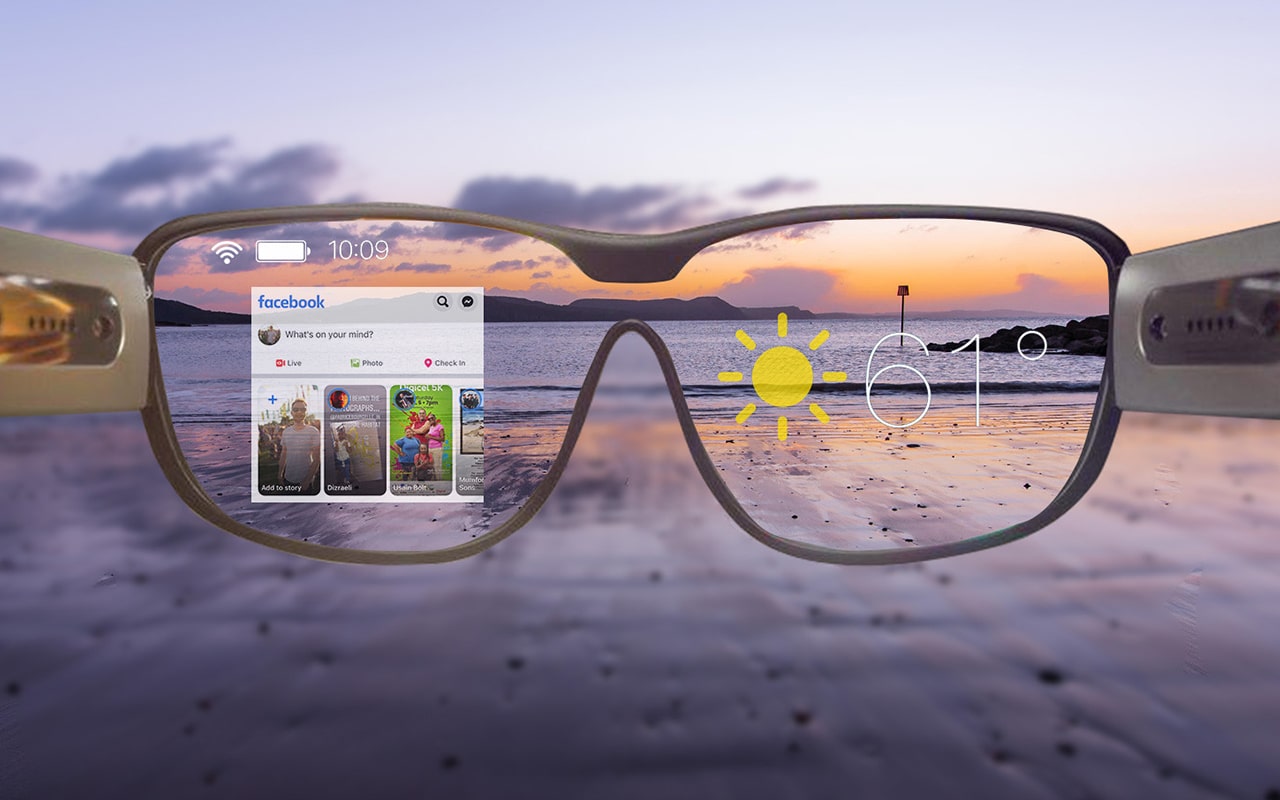
    Apple is considering a system that will allow the wearer of Apple Glass or another Apple-made headset to choose the background that will appear when someone is standing in front of them. The technology is similar to the “green-screen” used on television shows and movies that make it look as though an actor is somewhere else rather than standing in front of a screen on a studio lot.

    Unlike the 2D system used by Skype and Zoom, Apple’s patent application envisions the use of a 3D system that lets the Apple Glass user replace the background of a subject while he or she is moving and walking around. As Apple’s patent application notes, “Low latency is a key element required to achieve great immersion (often called “Presence”). The color keying processing which is embedded in the Head-mounted display (HMD) detects the selected range of color and mixes in the virtual content coming from the HMD itself or from an external source such as a connected computer. Virtual content can also be composited on top of the color-keyed area to allow mixed-reality content occluding real-life objects.”

    The patent application was filed in February and published today by the U.S. Patent and Trademark Office (USPTO). It is titled “Low latency chroma keying embedded in a head-mounted display for mixed reality.” The low latency used with this system is important because it allows the processing to be done at a speed that prevents users from getting ill when viewing the fake backdrop stutter and lag. And the low latency is made possible by embedding the processor inside the HMD.

    Interestingly, the current thought is that at least in the early days of Apple Glass, users will need to pair the wearable with an iPhone and allow the handset’s processor to do the heavy lifting. That is what Apple first did with the Apple Watch; the latter originally required the processor from a user’s iPhone to run most features before Apple released a standalone version of the timepiece. As a result, the technology mentioned in the patent might not be employed on Apple Glass until the third-generation of the AR glasses or later.

    The patent application explains that “The system achieves mixed reality by having a user look at a display through wide-angle lenses (with a field-of-view of 110 degrees or more). Two cameras located behind the HMD display capture the environment from viewpoints located a few centimeters in front of each eye.”

    If you don’t mind the patent jargon, Apple says, “While chroma keying is usually a post-production effect or done live with dedicated equipment/software, it can be applied in the context of augmented reality (AR) headsets, also referred to as mixed reality (MR), where virtual elements are composited in real-time into the real-world environment seen by the user through the head-mounted display. One example is a crane simulator where the controls would be real objects and where a color screen would be replaced by a virtual crane and a virtual environment. Another example would be a social MR experience using a color screen that covers the whole field of view and only the user’s hands and/or body are not replaced by virtual content (unless their color is the same as the screen). This example application is sometimes classified as virtual reality (VR) but for simplicity, we here consider it as augmented reality (AR).”

    As with any patent application filed by the company, or even with a patent received by the tech giant, there is no guarantee that Apple will actually use the patented technology. Apple applies for and receives a large number of patients each year and while some are for innovative technologies actually employed by the firm, some ideas are just patented to protect Apple from the competition.

  • Apple denies report claiming that it is interested in buying TikTok

    Apple denies report claiming that it is interested in buying TikTok

    U.S. President Donald Trump is giving Microsoft until the middle of September to work out a deal with China’s ByteDance to own and operate TikTok in the United States, Canada, Australia, and New Zealand. The administration is concerned that Chinese tech firms collect data from U.S. consumers and corporations and send that data to a server in Beijing. It is this possible tie to the communist Chinese government that has led the U.S. to call companies like Huawei and ZTE national security threats. This could be the reason why the president prefers to see the short-form video app in U.S. hands or banned from the U.S. altogether.

    A class-action lawsuit filed by parents of over 70 U.S. children who use the app claim that it gathers data including facial features, the kids’ locations, and their contacts. The suit alleges that this information is quietly sent to servers in China, although the Chinese government is not specifically mentioned.

    While Microsoft seems to be the only U.S. company that has expressed interest in shelling out the big bucks to buy TikTok, Axios reported that other U.S. firms are believed to be interested in the app, which has been installed over 2 billion times from the Google Play Store and the App Store. One of the companies that are reportedly looking at a deal to buy TikTok is Apple.

    Axios’ Dan Primack wrote that he has been told by multiple sources that Apple is interested in TikTok. He did note that none of these sources works inside Apple and pointed out that TikTok’s app works on both iOS and Android. Primack later wrote that he was told by Apple that there are no discussions underway with ByteDance and that the company isn’t interested in TikTok. A purchase of TikTok would certainly cost Apple more than the $3 billion that the tech giant spent to purchase Beats Audio back in 2014. That is the largest acquisition ever made by Apple which usually restricts purchases to smaller companies with a technology that is one to two years away from being used in a product like the iPhone.

    While TikTok would seem to fit into Apple’s largest business segment, Services, the apps in that unit generate revenue from recurring subscription fees paid by the user. Instead, TikTok is a free app supported by advertisers. Even if we were to assume that Apple’s denial of any interest in TikTok was to be a negotiation ploy, it is hard to see how the company and its customers would benefit from such a purchase.

    By putting a September 15th deadline on completing a deal, Trump might have pained himself into a corner. Because of TikTok’s valuation, this is not an easy deal to complete. If September 15th comes and goes without a transaction taking place, the president is going to be forced to ban an app that is immensely popular even among those of voting age. Meanwhile, the implications of a deal are having effects everywhere. In China, TikTok parent ByteDance is being branded as a traitor for agreeing to sell TikTok to a U.S. firm. While TikTok itself doesn’t operate in China, ByteDance is a Chinese firm.

    In the states, TikTok users are jumping to rival platforms. Short-term video app Clash launched months earlier than planned to take advantage of the confusion surrounding TikTok and Instagram’s Reels is also close to launching. Snapchat is taking on TikTok with a service it is testing, and there are other apps already available such as byte and Triller. A 15-year-old TikTok user named Kyle Thomas told the Journal, “I spend all of my time on it. As much as it is my job, it’s also my entertainment. If I can’t have it, I wouldn’t be sure what to do.”

    Yesterday, President Trump made a comment about the U.S. Treasury collecting a percentage of any deal that results in the purchase of TikTok by a U.S. company. White House economic adviser Larry Kudlow said, “It may be that the president was thinking because the Treasury has had to do so much work on this, there are a lot of options here. I’m not sure it’s a specific concept that will be followed through…Regarding fees or anything like that, all that remains to be seen.” Having the U.S. government profit from what the Chinese government sees as a forced sale of TikTok is sure to make the current relationship between the two economic powers much worse.

  • Long time Apple marketing chief Phil Schiller is replaced

    Long time Apple marketing chief Phil Schiller is replaced

    Apple has announced that its long-time marketing chief Phil Schiller is leaving his current position and is being replaced by Greg Joswiak. The 60-year old Schiller, whose exact title was Senior Vice President of Worldwide Marketing, joined Apple in 1987. In 1993 he left to join FirePower Systems and in 1995, he moved to Macromedia. He returned to Apple in 1997. He now becomes an Apple Fellow and will continue to run the App Store and Apple Events. Under his new position, he will continue to report to CEO Tim Cook.

    Speaking of Cook, Apple’s Chief Executive said, “Phil has helped make Apple the company it is today and his contributions are broad, vast, and run deep. In this new role, he will continue to provide the incredible thought partnership and guidance that have defined his decades at Apple. Joz’s many years of leadership in the Product Marketing organization make him perfectly suited to this new role and will ensure a seamless transition at a moment when the team is engaged in such important and exciting work. I’m thrilled that the whole executive team will benefit from his collaboration, ideas, and energy.”

    Schiller recently helped Apple plan and prepare for the virtual presentation of WWDC 2020. The Developers Conference was streamed online this year because of the coronavirus, and Apple put on an amazingly polished show. Schiller has seen just about everything during his years at Apple; he was featured prominently in many new product announcements even taking a phone call from Steve Jobs during the 2007 unveiling of the original iPhone.With Steve Jobs on medical leave in 2009, Schiller unveiled the iPhone 3GS. He also worked at Apple on marketing the of products like the iMac, MacBook, MacBook Pro, iPod, macOS and subsequent devices. He’s also credited with coming up with the click wheel interface used on the iPod.

    “It has been a dream come true for me to work at Apple, on so many products I love, with all of these great friends — Steve, Tim, and so many more,” Schiller said. “I first started at Apple when I was 27, this year I turned 60 and it is time for some planned changes in my life. I’ll keep working here as long as they will have me, I bleed six colors, but I also want to make some time in the years ahead for my family, friends, and a few personal projects I care deeply about.”

    Replacing Schiller as the SVP of Worldwide Marketing, as we mentioned at the beginning of this article, is Greg (Joz) Joswiak. During the past four years, he has been the vice president of Worldwide Product Marketing and has over 20 years of experience working at Apple handling product management and product marketing for several “breakthrough products including the original iPod and iPhone.” Apple says that he will be “responsible for Apple’s product management and product marketing, developer relations, market research, business management, as well as education, enterprise, and international marketing.”

    This should be an interesting time for Joswiak with Apple set to release four new iPhone models at the same time, all of them expected to connect to 5G signals for the first time. And Apple could be introducing its first Apple Glass headset, a completely new product, as soon as this year. Other rumored products that Joswiak could be in charge of marketing include wireless charging pad AirPower and Apple’s Ultra-wideband tracking system Apple Tags.

  • Opening date revealed for Apple Thailand’s second Bangkok store

    Opening date revealed for Apple Thailand’s second Bangkok store

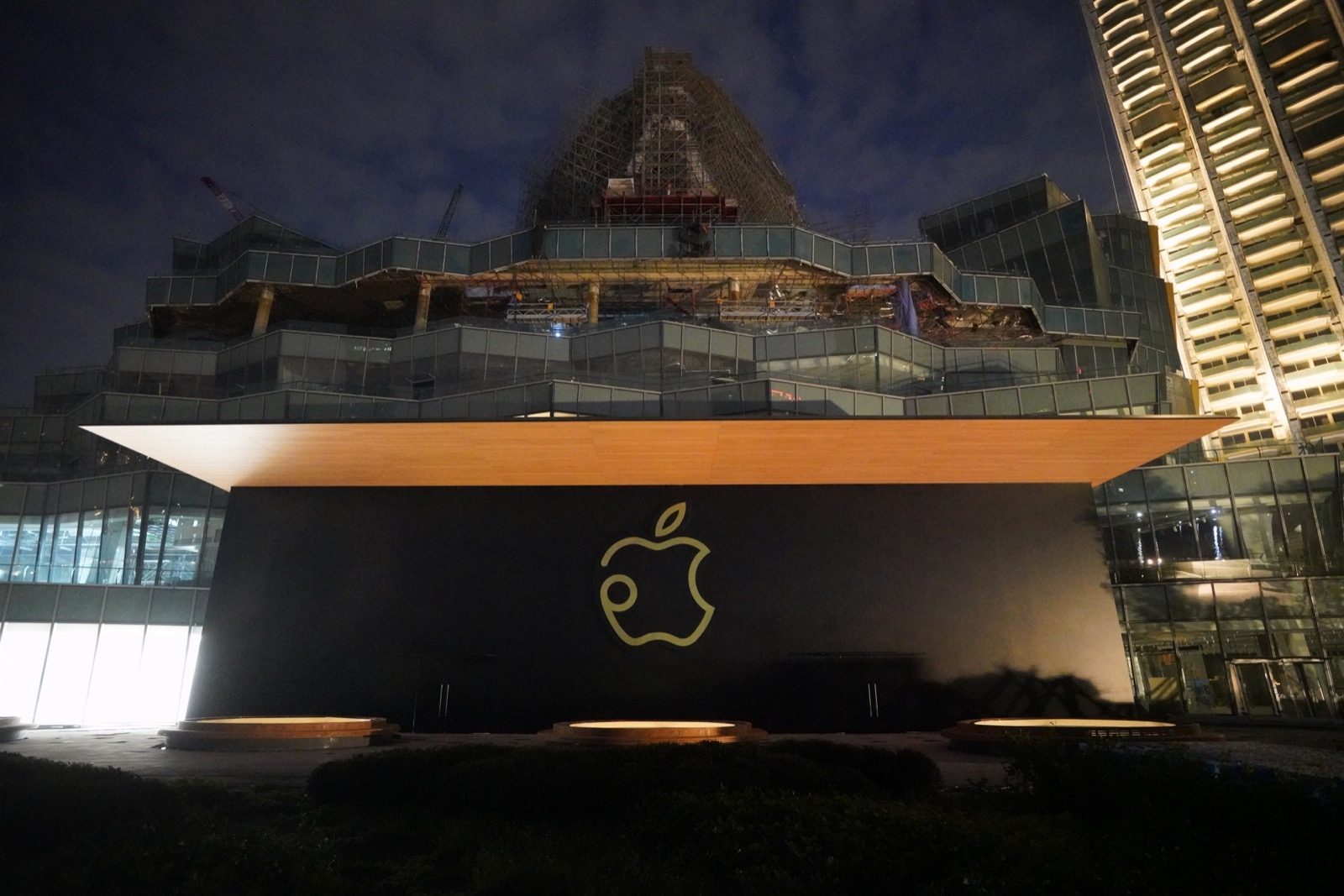
    Apple Thailand’s second retail store in Bangkok will open at the CentralWorld shopping center this week. A reliable local source says the opening date is scheduled for Friday, July 31. However, Apple’s Thai website has posted a colorful version of the brand’s logo with Thai lettering inside, teasing that the Apple CentralWorld store is “coming soon”.

    The website also features a tagline ‘Intersection of the creative idea and inspiration’, which refers to the Ratchaprasong intersection where Apple’s new space is located.

    Earlier this year, photos of the Apple Thailand’s second store were leaked on Twitter, showing a preview of what the store will look like. Apple Thailand’s second store features a unique design with a whirling cylinder of glass and curved timber radiating in concentric circles. It is located on part of a large courtyard outside the mall.

    The Apple CentralWorld store reflects the brand’s confidence in the Thai market, despite the Covid-19 situation in the country.

    Apple Thailand opened its first store at the IconSiam shopping center in Bangkok in November 2018.

  • Apple commits to reach carbon neutrality by latest 2030

    Apple commits to reach carbon neutrality by latest 2030

    Joining the growing list of businesses creating sustainable roadmaps to fuel future growth, technology giant Apple has committed to reaching carbon neutrality in its supply chain and production by 2030.

    Apple is already carbon neutral in its global corporate operations, but with this commitment, Apple will be removing 75 percent of its total carbon footprint while offsetting the remaining 25 percent with carbon removal solutions.

    “Businesses have a profound opportunity to help build a more sustainable future, one born of our common concern for the planet we share,” said Apple CEO Tim Cook.

    “Climate action can be the foundation for a new era of innovative potential, job creation, and durable economic growth. With our commitment to carbon neutrality, we hope to be a ripple in the pond that creates a much larger change.”

    Moving forward, Apple will lower its emissions through a number of initiatives, including a low carbon product design, investments in expanding energy efficiency, a continued focus on utilizing renewable energy, process, and material innovations, and the removal of carbon emissions.

    “We’re proud of our environmental journey and the ambitious roadmap we have set for the future,” said Apple’s VP of environment, policy, and social initiatives Lisa Jackson.

    The shift will be supported by Apple’s $100 million Racial Equity and Justice Initiative, which focuses on addressing education, economic equality, and criminal justice reform.

    “Systemic racism and climate change are not separate issues, and they will not abide by separate solutions,” Jackson said.

    “We have a generational opportunity to help build a greener and more just economy, one where we develop whole new industries in the pursuit of giving the next generation a planet worth calling home.”

    Apple’s ten-year commitment mirrors that of many of its contemporaries, with Microsoft announcing in January not only would it be carbon negative by 2030, but it would retroactively remove all carbon it had emitted since the business’ founding in 1975 by 2050.

    Swedish furniture firm Ikea, as well, is looking to become climate positive, or carbon-neutral, by 2030. The end goal is for all Ikea products to become 100 percent circular, using renewables and recycled materials.

    “That means we will reduce more greenhouse gas emissions than our value chain emits while growing the Ikea business,” Ikea said.

    “Our responsibility stretches across the entire value chain of our business: from the materials we use, manufacturing and transporting of products, our stores, customer travel and home deliveries, product use in customers’ homes and product end-of-life.

    “By taking a scientific approach and working together with our partners, suppliers, and customers around the world, we will make it happen!”

    And just last week, global retail marketplace and tech business Amazon announced a partnership with the We Mean Business coalition to further the Climate Pledge – an Amazon co-founder.