Tag: apple

  • Apple defends its 30% cut of in-app purchases

    Apple defends its 30% cut of in-app purchases

    This coming Monday the CEOs of Apple, Alphabet, Amazon, and Facebook will testify before the U.S. House Judiciary Antitrust Subcommittee. Each of the four firms is being investigated for alleged anti-competitive behavior. Alphabet is Google’s parent company and Google is being accused of putting its products ahead of the competition when it comes to search results. It also is accused of forcing phone manufacturers to use Google Search and Chrome as the default search engine and browser on phones using the licensed version of Android. Amazon’s large share of the e-commerce market is under scrutiny and Facebook has a large share of the social networking scene.

    And that leaves Apple. The company is being investigated for taking a 30% cut of in-app payments and subscriptions made through the App Store (although the cut on subscriptions drops to 15% after the first year). Because Apple doesn’t allow iOS users to sideload apps from third-party app stores, it forces users to pay Apple’s prices for apps. The so-called 30% Apple Tax has led companies like Spotify and Netflix to stop accepting new subscribers from the App Store. And to make matters worse, Spotify competes directly with Apple’s own Apple Music app.

    The App Store is part of Apple’s fast-growing Services unit. After the number of iPhones it shipped peaked in fiscal 2015, the company decided that it would be a shrewd move to concentrate on a large number of active iPhone users worldwide. Apple could continue to generate profits from these consumers even without selling them a new iPhone by having them sign up for a service with a recurring subscription plan. Apple set a goal to hit $50 billion in Services revenue by fiscal 2020 from the $25 billion it took in during fiscal 2016. So far, halfway through fiscal 2020, Apple is on track to take in $52 billion in services revenue for the year. This unit includes Apple Music, Apple Pay, Apple News+, Apple Arcade, iCloud, iTunes, Apple Care+, the App Store, and more. Speaking of the App Store, it brings in twice the revenue of the Android app storefront, the Google Play Store.

    It is estimated that the App Store brings in $15 billion in revenue for Apple annually which is approximate twice the haul brought in by the Google Play Store despite the much larger share of the smartphone market that is owned by Android. The latter has approximately 85% of the connected handset market, but still, it trails badly when it comes to collecting revenue from its app storefront.

    The Wall Street Journal published Apple’s defense and the tech giant says that it does not run a monopoly. Instead, it says that the revenue it takes in from the App Store comes from a small percentage of the two million apps that are available from the store. One argument that Apple often cites on its behalf is that the 30% it charges is still cheaper than what software developers were paying to distribute their products to stores prior to the 2008 launch of the App Store.

    Apple decided to run a comparison study that sought to compare the App Store with other “digital marketplaces” including ones run by Amazon, Microsoft, Uber, and Walmart. Economists at Analysis Group, commissioned by Apple, came to the conclusion that the 30% cut charged by Apple is in line with the cut taken by Google and other peers. It is below 37% and 31% cuts taken by ticket sellers StubHub and Ticketmaster, respectively.

    European competition attorney Damien Geradin, who co-authored a study on this topic a couple of months ago, said that the App Store fee structure is “uneven.” He notes that while apps like Tinder pay 30% of their App Store sales to Apple, Uber and Airbnb don’t pay anything. “Problems are much deeper than the 30%,” he said.

  • The world’s second largest smartphone market sees shipments drop in half during Q2

    The world’s second largest smartphone market sees shipments drop in half during Q2

    A double whammy negatively impacted the second-largest smartphone market in the world during the second quarter of the year. The global outbreak of coronavirus led to the shutdown of smartphone production in the country. And the demand for handsets dropped sharply as retailers both online and offline were not allowed to sell them. This was the case in India until the middle of May; that means that COVID-19 affected smartphone supply and demand in India for half of Q2.

    Xiaomi, with its value for money approach that is tailor-made for a developing country like India, remained the top smartphone manufacturer in the market during the second quarter. Even though shipments, at 5.3 million units, declined 48% year-over-year (the company shipped 10.3 million phones during the same quarter last year), Xiaomi’s market share barely declined from 31.3% during Q2 2019 to 30.9% during this year’s second quarter.

    Vivo was second during Q2 after delivering 3.7 million phones during the three months. Even with a 36% decline in the number of phones shipped, the manufacturer’s market share rose from 17.5% to 21.3% from April through June of this year. Samsung saw phone shipments in India declined by 60% on an annual basis as the number of phones it delivered dropped from 7.3 million to 2.9 million. Even the popular Galaxy A series couldn’t stop the bleeding as Sammy saw its slice of the Indian smartphone market decline from 22.1% to 16.8%.

    Oppo finished fourth for the quarter with a 27% decline in shipments from 3 million to 2.2 million, allowing the company to expand its market share from 9.2% to 12.9%. And in fifth place during the quarter was Realme. The latter shipped 1.7 million phones during the three months, one million or 35% fewer than during the same quarter last year. Realme owned 10% of the Indian smartphone market in Q2, which was up from the 8.1% share it had during Q2 of 2019.

    Canalys Analyst Madhumita Chaudhary said, “While vendors witnessed a crest in sales as soon as markets opened, production facilities struggled with staffing shortages on top of new regulations around manufacturing, resulting in lower production output. The fluidity of the lockdown situation across India has had a deep-rooted effect on vendors’ go-to-market strategies. Xiaomi and Vivo have undertaken an O2O (offline-to-online) strategy to support their massive offline network. Online channels, too, while seeing a positive effect of the pandemic on market share, have seen sales decline considerably.”

    What might negatively impact Chinese phone manufacturers like Xiaomi, Vivo, Oppo, and Realme in India during the current quarter is a border skirmish between the two countries. 20 Indian soldiers were killed by the Chinese and India started holding up shipments from China into the country. Canalys says that 96% of all smartphones sold in India last year were made locally. Despite this, Canalys analyst Adwait Mardikar notes that the lure of lower pricing on phones from Chinese companies like Xiaomi will help those manufacturers sell their wares in India. He says, “Vendors are driving the message of ‘Made in India’ to consumers and are eager to position their brand as ‘India-first.’ Despite the sentiment, the effect on Xiaomi, Oppo, Vivo, and Realme is likely to be minimal, as alternatives by Samsung, Nokia, or even Apple are hardly price-competitive.” Canalys analyst Chaudhary says that manufacturers are hoping that new 5G handsets lead to increased sales. He noted that “The transition to 5G is the next big opportunity, and Jio’s announcement of readiness to deploy 5G, as soon as spectrum is made available, has provided a ray of hope to most vendors who have been beaten by the current pandemic.”

    Speaking of Apple, the company turned in the best performance out of India’s top 10 smartphone manufacturers with a 20% year-over-year decline in shipments. The number of iPhones delivered in India was slightly over 250,000 units. Even though pricing makes iPhones luxury items in China, another iPhone assembler is working on building a new plant in India joining Foxconn and Wistron. Bloomberg reports that Pegatron, the second-largest iPhone assembler in China after Foxconn, will eventually start producing iPhone models in India. Apple is looking to move up to 20% of iPhone production out of China to avoid the possibility of tariffs in the future as the tense relationship between the U.S. and China continues.

    Overall for the quarter, 17.3 million handsets were shipped in India down 48% from the 33 million that were delivered during the same quarter last year.

  • Zoom sets a new App Store record during the second quarter

    Zoom sets a new App Store record during the second quarter

    If there ever was an app tailor-made for the coronavirus it is Zoom. The video conferencing app can host video chats consisting of up to 100 participants. During the three months from April through June, when COVID-19 was keeping most Americans inside, Zoom generated a new App Store record 94 million installs on iOS. During the first quarter, just before the pandemic became a major issue in the states, short-form video app TikTok had the previous record with 67 million App Store installations.

    How amazing are those achievements made by Zoom and TikTok? Before this year, no non-game iOS app ever had more than 50 million downloads in a single quarter. And when you throw in the number of downloads sourced from the Google Play Store during the second quarter, Zoom was installed over 300 million times during the three months from April through June. Also topping 300 million installs during the quarter was TikTok; the latter was downloaded 71 million times from the Apple App Store during Q2; that is a 154% gain year-over-year.

    During the second quarter, total downloads in the U.S. App Store (2.2 billion) beat out downloads in the Chinese App Store (2.1 billion) for the first time in years. On an annual basis, the number of iOS app downloads in the U.S. was up 27% compared to Q2 compared to just 2% in China. Globally, App Store downloads rose by 22.6% in the second quarter to 9.1 billion. Second-quarter downloads in the Google Play Store worldwide hit 38.7 billion, up 34.9%.

    With many Americans communicating through Zoom as the pandemic continues to wreak havoc in the states, the app should continue to show strong growth during the current quarter. TikTok also should continue to show growth in the U.S. as Americans create TikTok videos to distract themselves from all of the stress caused by COVID-19.

  • Apple could be fined up to $26 billion as EU investigates Siri

    Apple could be fined up to $26 billion as EU investigates Siri

    Children are told often that when they fall off their bikes, the best thing to do is to get right back on them and ride again. And the same advice is apparently taught to adults.  Take   European Union Competition Commissioner Margrethe Vestager. Just yesterday Vestager had a ruling go against her as a lower European Union court in Luxembourg found in favor of Apple in a case involving $14.9 billion in back taxes that the EU claimed that Apple owed Ireland. From 1991-to 2005, Apple paid little to no taxes on profits it made doing business in the country.

    But Vestager has climbed back on the horse and is looking for information from 400 companies to see if there are any issues with voice assistants such as Apple’s Siri, Google’s Assistant, and Amazon’s Alexa that could result in the filing of antitrust charges. Such inquiries have to lead to cases and hefty fines imposed against other industries including energy, financial, and pharmaceutical firms.

    Vestager told a news conference that by seeking information from 400 companies, it gives Apple, Amazon, and Google the message that the EU is watching them closely to make sure that they toe the line. The commissioner said that the UK became interested in investigating the voice assistants because of the large amount of consumer data used in “Internet of Things” devices. the EU wants to make sure that the leading players in the voice assistants game don’t use their control of this data to break rules, prevent competition, and harm rivals. Vestager said, “Interoperability is of the essence if we want to make this market accessible.”

    If the EU finds that one of the companies’ voice assistants broke rules regarding competition, it can be fined up to 10% of its global revenue. For example, Apple had revenue of approximately $260 billion for its latest fiscal year. That means that it could be fined as much as $26 billion if found to have broken EU rules.

    There is no guarantee that Vestager and her team will find any issues that require the EU courts to get involved. And it will probably take some time to complete the investigation. So with this in mind, all we can add at this juncture is “stay tuned.”

  • Apple releases iOS and iPadOS 13.6 with CarKey, bug fixes, and more

    Apple releases iOS and iPadOS 13.6 with CarKey, bug fixes, and more

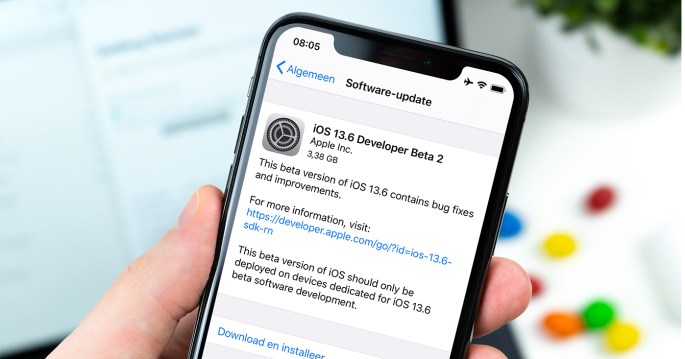
    Even as the iOS 14 public beta remains in its early days, Apple today released iOS and iPadOS 13.6. With the update, users can decide to download iOS and iPadOS updates but not install them. Or, users can decide to download iOS and iPadOS updates and install them overnight. The devices taking advantage of the automatic software updates must be charging and connected to the internet via Wi-Fi to finish updating. You can customize this feature by going to Settings > General > Software Update > Customize Automatic Updates

    The update adds new categories in the health app for symptoms that come up in the Cycle Tracking and ECG apps. It also adds new symptoms including fever, chills, sore throat, or coughing, and allows iOS and iPadOS users to share these symptoms with third-party apps. The iOS 13.6 update also adds audio features to the Apple News+ subscription app for the iPhone and iPad. It also enables the CarKey feature for the iPhone. This allows you to control a compatible automobile using your handset. Apple just posted a new support page. The key is added to the iOS Wallet app and the feature will also work with the Apple Watch Series 5. CarKey is available for the iPhone SE (2nd generation), iPhone 11 Pro, iPhone 11 Pro Max, iPhone 11, iPhone XS, iPhone XS Max and the iPhone XR.

    Check out the support page to see how to set up the feature. If you use Express Mode you can put your iPhone near the car door to unlock it. And placing the iPhone near the car’s key reader will start the engine. If you turn off the Express Mode, you will have to authenticate every time you want to use your phone as a car key. Even if your iPhone battery needs to be charged, in ExpressMode it still will be able to run CarKey for up to five hours after it starts using power reserve. And you can share your digital keys with someone you trust by sending it to them via iMessage. The other party must have a compatible iPhone.

    The update also adds FaceTime to users in the United Arab Emirates (UAE). The country had banned the video chat app and even with today’s update, Apple failed to mention this in its support notes. The update also exterminates some bugs including one that drained users’ batteries after the iOS 13.5 and iOS 13.5.1 updates.

    Right now, the first Apple iOS 14 public beta is available for those who don’t mind taking a risk. Beta software is usually buggy and the battery life might suffer; as a result, you probably do not want to install the first public beta on your daily driver. The lure of new features this year is irresistible, however, and includes Android-style widgets, the App Library that separates apps by category and allows users to search for apps by name. It is the closest that iOS users have to an app drawer at the moment.

    With iOS 14, Siri’s UI no longer covers the entire screen and the digital assistant reportedly gets smarter. And incoming phone calls no longer hijack the entire screen and are greatly reduced to a small notification banner at the top of the screen. And App Clips allows an iPhone user to use a third-party app that he or she has yet to install. This is done by scanning a QR code or using an NFC signal to open only the necessary part of an app required to complete a task.

    If you feel tempted to install the iOS 14 public beta, keep in mind that the final version of the operating system will probably be ready in September. That is pnly a couple of months away.

  • Apple helps Samsung report stronger than expected Q2 earnings estimate

    Apple helps Samsung report stronger than expected Q2 earnings estimate

    Recently Samsung revealed what its second-quarter earnings numbers should look like when it soon reports the final figures. The manufacturer says that it expects to report a 7% annual decline in second-quarter revenue to 52 trillion Korean won. At current exchange rates, that works out to $46 billion U.S. dollars. Operating profit for the three months ended June is estimated at 8.1 trillion Korean won ($6.6 billion USD), up 23% year-over-year.

    The results topped analysts’ consensus estimates of 51 trillion won in revenue and operating earnings of 6.5 trillion won. Helping Sammy top the analysts’ forecasts was a one-time payment of $950 million that the company received from Apple. DSCC says that the money was due to Samsung when Apple purchased fewer OLED panels from the company than called for by the terms of their contract. Thanks to this payment, Samsung’s display devices unit reported a profit for the quarter instead of a loss. During the same quarter last year, Apple reportedly paid Samsung $770 million for a shortfall in orders for OLED panels. The contract required Samsung to deliver 100 million panels at approximately $70 a pop.

    Apple has been trying to reduce its dependence on Samsung as an iPhone supplier. After all, does Coke buy cola syrup from Pepsi? Samsung has been Apple’s largest supplier of OLED panels for the iPhone and Apple has been looking to add glass from LG and Beijing Oriental Electronics (BOE). However, earlier this year it was alleged that BOE had failed a quality test conducted by Apple. Ironically, BOE reportedly failed a quality test conducted by Samsung who is supposedly considering the company’s OLED displays for the 2021 Galaxy S21 flagship models.

    Samsung’s semiconductor business saw strong demand for memory chips used by cloud computing companies looking to expand their capacity as more people are forced to work from home. With prices for DRAM and NAND flash memory chips on the rise, Samsung earned an estimated 5 trillion Korean won during Q2. Samsung’s mobile and consumer businesses were hurt by the pandemic during the three months, but results were not as bad as expected. Still, the company’s flagship Galaxy S20 series is doing poorly in the states trailing the numbers put up by the Galaxy S10 and Galaxy S9 lines in 2019 and 2018 respectively. On August 5th, Samsung is expected to introduce the Galaxy Note 20 line. We also should see in the near future the Galaxy Z Note 2 and the Galaxy Z Flip 5G foldable.

    Sammy’s troubles at the cash register could be seen in other data. In April and May Huawei became the top smartphone manufacturer in the world. May’s numbers showed the Chinese manufacturer with a hair-thin lead over Samsung; Huawei was responsible for 19.7% of global smartphone shipments in May compared to Samsung’s 19.6%. What might really hurt Samsung in the U.S. is the ravaged economy. Millions of Americans remain out of work and money that normally could be used to purchase an expensive handset now must be used to put food on the table.

    The full second-quarter earnings report will be released sometime later this month. As for Apple, the flip side of the coin is that when it reports its fiscal third-quarter earnings on July 30th, it will have to account for the payment to Samsung somewhere in its financial report. Most investors are able to shrug their shoulders at one-time payments like this so it shouldn’t have an effect on Apple. The only negative is that Apple can’t seem to end its addiction to Samsung.

  • Apple iPhone production in India shuts down due to dispute with China

    Apple iPhone production in India shuts down due to dispute with China

    Battles along the India-China border last month left 20 Indians dead, and as we told you at the time, negatively impacted iPhone production in and shipments to India. Indian authorities were blocking shipments from China into India. This left Apple iPhone components held up at Indian ports and a lobby group representing U.S. companies in India wrote the country’s commerce minister to state that holding up shipments from China could dissuade U.S. firms from doing business in the country.

    India continues to make things difficult and is still blocking exports from China. Three sources inside India told Reuters that because Apple contract manufacturer Foxconn cannot receive supplies to its two factories in South India, hundreds of Foxconn employees had no work to do this week. Apple started manufacturing certain iPhone models in India starting with the OG iPhone SE. It now makes newer phones like the iPhone XR in India; by producing handsets in India, Apple is able to keep the country from imposing an import tax on them. Keeping the price of these phones down is important to the average Indian consumer; while it is the second-largest smartphone market in the world, India remains a developing country and for the most part, consumers there need to limit their phone purchases to low and mid-range models. Saving $100 to $200 by avoiding an import tax is a big deal to consumers in the market

    More than 150 shipments to Foxconn’s Indian facilities from its factories in China said to contain smartphones and other electronic parts, have been stuck at the port of Chennai and some are being cleared now. The manufacturer’s two plants in India are located in Tamil Nadu and Andhra Pradesh state. Besides assembling certain  Apple iPhone models in the country, the factories assemble some Xiaomi handsets; the latter’s value for money pricing plays very well in India. The plants have thousands of Indians on the payroll and many of them live in accommodations provided to them by Foxconn.

    One source discussing the matter with Reuters said, “Foxconn was in a very bad state … lots of workers stayed at the dormitory because there was no work.” Meanwhile, the Indian foreign ministry did not respond to a request by Reuters for comment. Two ministry officials did say that the extra scrutiny given all shipments imported into India are only temporary and will soon come to an end. One official in India said, “We cannot keep checking 100% of shipments forever … Shipments of non-Chinese companies being impacted will be cleared on priority.” Interestingly, customs has held back these shipments without a formal order.

    The delays to imports from China are hitting India at a time when the supply chain is still impacted by the coronavirus. U.S.-India lobby groups are asking the government to intervene. Today, China’s commerce ministry said that it hoped that India would stop its discriminatory action against Chinese companies ASAP. The country recently banned 59 Chinese apps including wildly popular short-form video app TikTok.

    As the planet’s second-largest smartphone market, the border battle between the two countries might have a negative impact on some of the top Chinese smartphone brands in India. Xiaomi’s 30% slice of the Indian smartphone phone might not be hurt that much because the brand delivers handsets at a good price and with good specs. Samsung could be the biggest beneficiary of this squabble since it is not a Chinese brand and the Galaxy A models feature viable cameras and long battery lives at a very reasonable price. The Samsung Galaxy A10 with 2GB of memory and 32GB of storage is priced at the equivalent of $109 USD.

    For now, production of iPhone models in India are held up by this dispute as Foxconn employees get an extended vacation.

  • Apple closes 30 more U.S. Apple Stores including all locations in Florida

    Apple closes 30 more U.S. Apple Stores including all locations in Florida

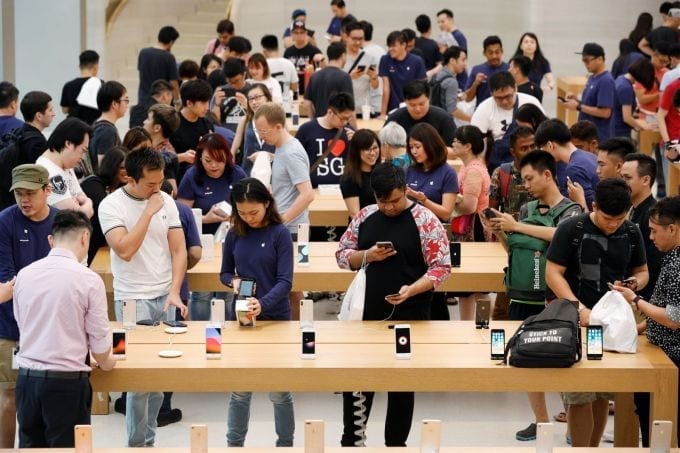
    As the number of coronavirus cases reported daily in several states starts to shoot back up, Apple is beginning to close more of its physical Apple Stores. Just a week ago, we told you that Apple was temporarily turning the lights off in 14 additional locations in Florida. We posted that article on June 25th and two days later the state hit a peak of 9,585 new cases announced.

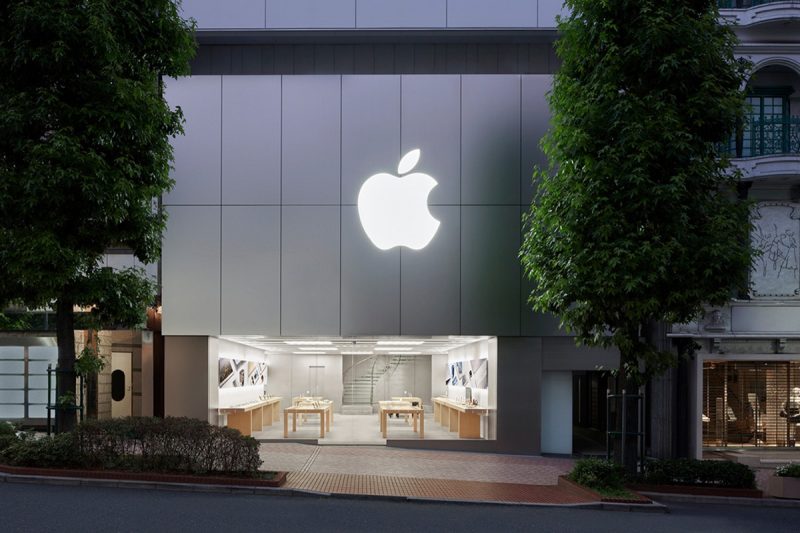
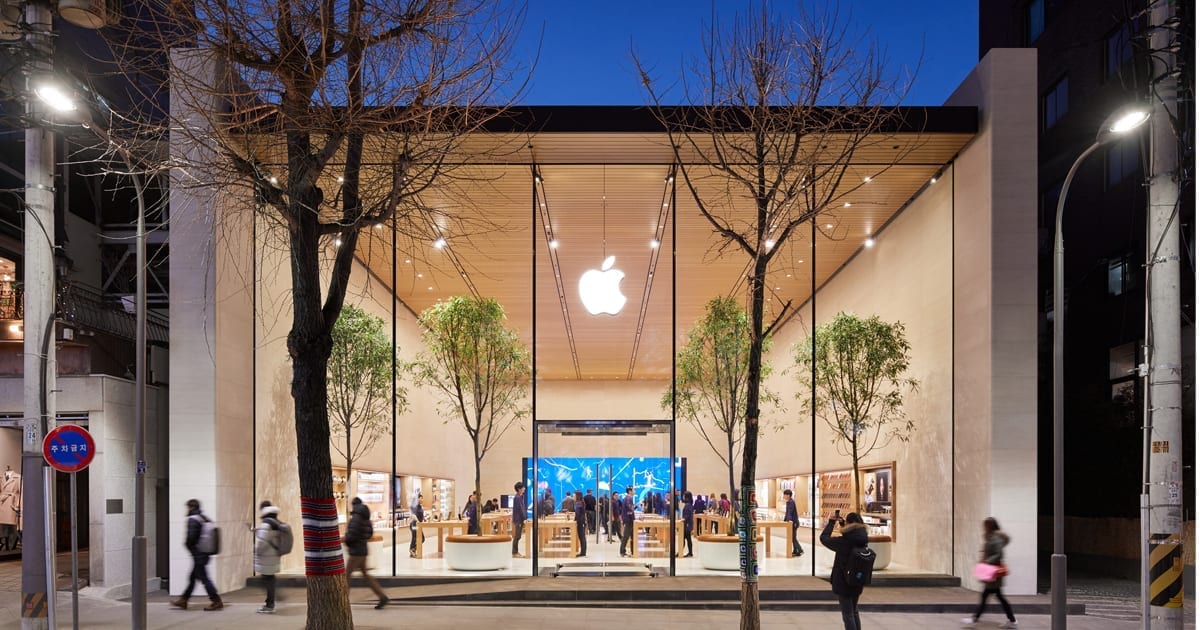
    Other states are hitting the pause button on reopening plans and today Apple said that 30 more brick and mortar stores in the U.S. will be closed. 77 Apple Stores have reclosed over the last few weeks. With the remaining two Florida-based Apple Stores turning the lights off and locking the doors today, all physical Apple Stores in the Sunshine State have now been shuttered.

    Besides the stores in Florida, locations near Los Angeles have also been closed. On Wednesday, the company said that Apple Stores in Florida, Mississippi, Texas, and Utah were closed immediately. Stores in other states such as Alabama, California, Georgia, Idaho, Louisiana, Nevada, and Oklahoma will close on Thursday. By tomorrow, 77 or 28% of the 271 U.S. Apple Stores in the country will not be open. An Apple spokesman says, “Due to current COVID-19 conditions in some of the communities we serve, we are temporarily closing stores in these areas. We take this step with an abundance of caution as we closely monitor the situation and we look forward to having our teams and customers back as soon as possible.”

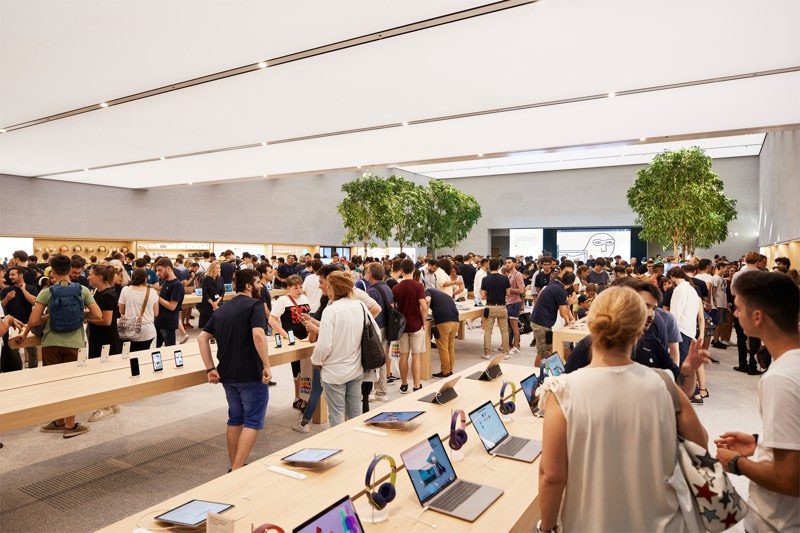
    Apple is taking precautions even in stores that remain open. At some stores, all business is being conducted curbside while at other locations customers need to make an appointment to go inside. At the latter stores, when customers arrive for their appointment. they will have their temperature checked and will be forced to wear a mask; social distancing is practiced as each customer must be separated by at least six feet.

    The Apple Stores that closed today include St. Johns Town Center, University Town Center in Florida; Renaissance at Colony Park in Mississippi; Barton Creek, Domain Northside, La Cantera, North Star, Knox Street, Northpark Center, Galleria Dallas, Ciello Vista Mall, Southlake Town Square, University Park Village in Texas.

    The Apple Stores that will close Thursday include The Summit in Alabama; Glendale Galleria, Northridge, Pasadena, The Grove, Third St. Promenade, Century City, Manhattan Village, Beverly Center, Sherman Oaks, Topanga, Los Cerritos, The Americana at Brand, Valencia Town Center, Victoria Gardens, The Oaks, The Summit in California; Cumberland Mall, Perimeter, Lenox Square, Avalon, Mall of Georgia in Georgia; Boise Towne Square in Idaho; Baton Rouge, Lakeside Shopping Center in Louisiana; Fashion Show, The Forum Shops, Town Square, Summerlin in Nevada; Penn Square, Woodland Hills in Oklahoma.

    So what can a consumer expect when visiting an Apple Store in the U.S. that has been reopened and remains so? Apple explains that “Before you enter an Apple Store, we will take your temperature using a thermometer that does not touch the skin to ensure that it measures below 37.5° C (99.5° F). No data from this procedure will be recorded. Prior to your store visit, please ask yourself the following health-related questions: Do I currently have a fever, chills, muscle or body aches? Do I currently have a cough or am I experiencing any respiratory issues? Do I have a headache, sore throat, runny nose, or congestion? Am I experiencing any nausea, vomiting, or diarrhea? Have I been in contact with any suspected or confirmed cases of COVID-19 in the last 14 days? If you answered YES to any of these please visit at a later date. You can get all the same great products and services from our online store with free no-contact delivery, and one-on-one shopping help from a Specialist via Chat, or by calling 1‑800‑MY‑APPLE. Shop Apple Store online.”

    Overseas where the coronavirus isn’t making a comeback, Apple is able to keep its stores open in most countries.

  • Apple Glass won’t need prescription lenses according to a new patent

    Apple Glass won’t need prescription lenses according to a new patent

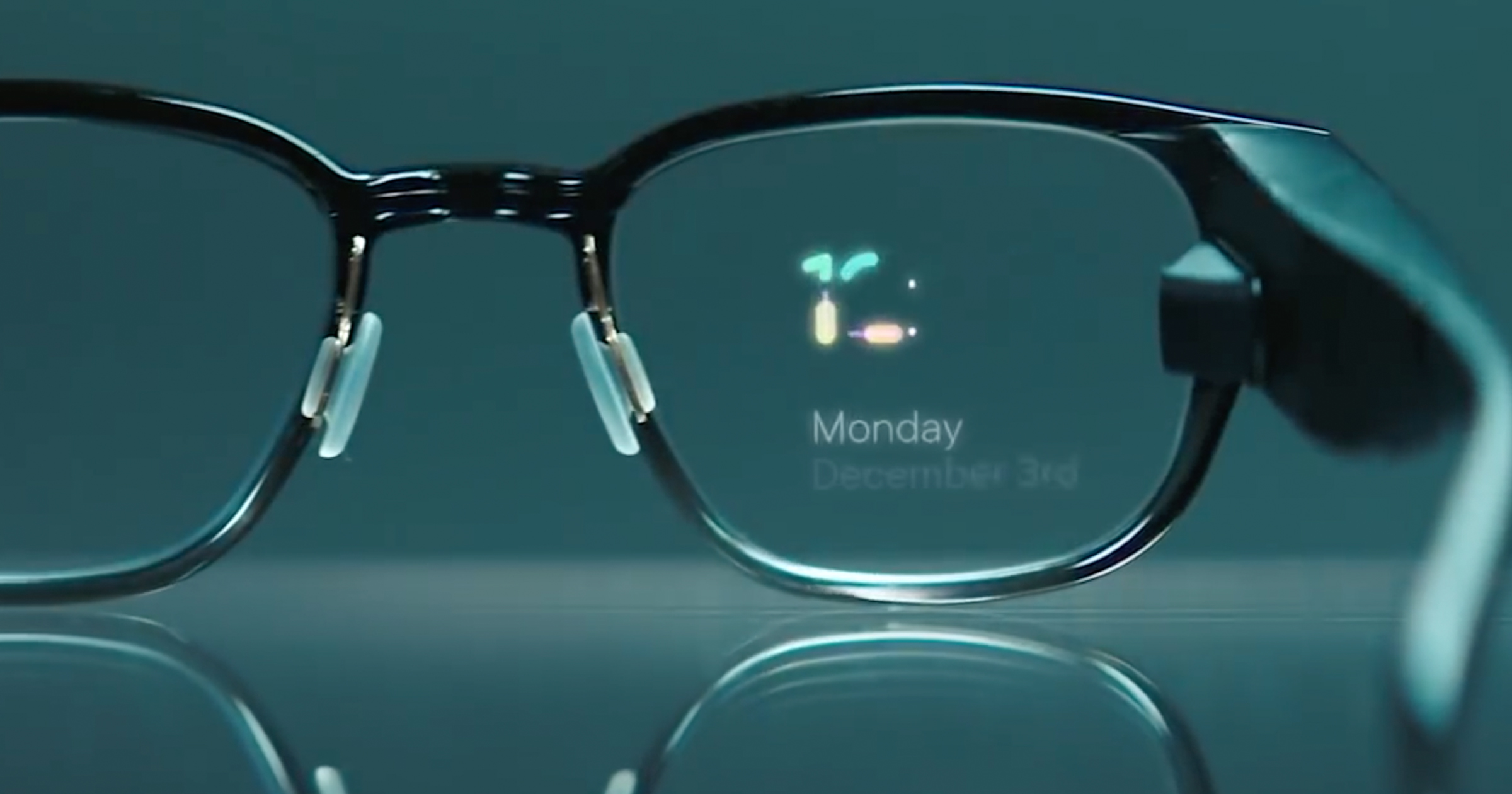
    Imagine wearing a pair of glasses that automatically adjusts to your eyes in order to correct any deficiencies; instead of wearing prescription lenses, the lenses would automatically make the necessary changes. Today, the U.S. Patent and Trademark Office (USPTO) awarded a patent to Apple for technology that would allow self-correcting lenses to be used on the rumored Apple Glass AR eyewear. The system seen in the patent illustrations shows a smartphone (like an iPhone) sliding into a frame. This would place the phone directly in front of the users’ eyes and allow it to plug into internal connectors so that it can be used as a display.

    Apple has used the title of the patent, “Head-mounted display apparatus for retaining a portable electronic device with a display,” multiple times with each use adding another change to the design. The latest version of the patent deals with a system to change the position and configuration of the device’s optical components in line with the user’s prescription. The beauty of this is that it would allow the user to wear the headset without having to put it on top of corrective lenses or contact lenses. Besides adjusting the lens configuration to make up for the user’s prescription, the display can be adjusted to make images look clearer; this can be accomplished by changing the position of images on the lens and resizing content. Right now, however, it doesn’t appear that Apple Glass will be available with tinted lenses for a sunglasses variant.

    The processing power required for the lenses to be automatically adjusted would come from a paired iPhone. In fact, like the original Apple Watch models which relied on a nearby iPhone to run many of the features on the timepiece, the first versions of Apple Glass will likewise obtain processing power from an iPhone. Eventually, it is hoped that Apple Glass users will be able to leave their iPhones at home and still have the AR shades handle tasks using on-demand processing.

    Apple Glass is expected to be unveiled next year. Last month, tipster Jon Prosser disseminated some leaks revealing that Apple Glass will look like a traditional pair of glasses with options for prescription lenses. This would indicate that the self-adjusting lenses won’t be offered by Apple for the first version of the device. Prosser says that the device will cost $499 and while prototypes of the glasses have a plastic build, a version with metal frames will eventually be available. While there will be no cameras mounted on Apple Glass, the wearable will have a LiDAR time-of-flight depth sensor. First employed by Apple on the 2020 iPad Pro models, the sensor computes how long it takes for infrared light to bounce off of a subject and return to the device. With this information, more precise depth measurements can be calculated and used for enhanced bokeh blurs on portraits, improved AR capabilities, and more.

    The camera available on Google Glasses became a controversial topic since users could snap photos of people without their knowledge. This led some bars to throw out patrons wearing Google Glasses and owners of the device were unceremoniously given the nickname “Glassholes.” Additionally, several movie chains, afraid that Google Glasses were being used to record bootlegs of newly released films, would not allow anyone wearing Google Glass to enter the theater. To prevent a repeat of this happening, Apple is reportedly going to employ a depth sensor only on Apple Glass.

    Prosser says that Apple Glass buyers will get a plastic stand right out of the box for wireless charging. A dedicated UI called “Starboard” will use gestures on the frames or via the LiDAR sensor.

  • Apple App Store ecosystem generated big bucks last year

    Apple App Store ecosystem generated big bucks last year

    Apple reported today that its app storefront supported $519 billion in billings and sales in 2019. A study was conducted by independent economists working for Analysis Group who calculated that since the App Store opened with 500 apps in 2008, Apple has paid developers more than $155 billion. A quarter of those payments were made last year. Developers share with Apple payments for paid apps, digital content or in-app purchases made by users through Apple’s in-app payment system.
    The economists that were studying the amount of money that flows through the iOS app ecosystem are underestimating the amount of money that is collected by Apple. That is because some developers decide to monetize their apps through other methods outside of the App Store. For example, digital goods and services can be sold outside of the App Store for use within apps on Apple devices. An example of that would be downloading the Netflix app from the App Store and going to the Netflix website to pay for a subscription. Another example, one that is very popular these days, involves installing a delivery app like Instacart or Shipt and paying the delivery firm directly for groceries through its website.
    Of the $519 billion in billings and sales that the App Store generated last year, physical goods and services accounted for $413 billion or 80% of total revenue. $61 billion, or 11.8% of revenue, came from Digital Goods and Services; that leaves $45 billion, or 8.7%, which came from in-app ads. Analysis Group says that the world’s largest smartphone market, China, was responsible for a leading $246 million or 47% of global App Store billings. That was followed by the $138 billion or 27% that comes from the U.S.
    While the report is based on 2019 data, AG says that the coronavirus has had an enormous, positive impact on App Store business. The Analysis Group says that it has seen increased use of educational and business collaboration apps during the pandemic, growth in demand for food and grocery deliveries, and a trend toward ordering food and then driving to the restaurant to pick it up. Other changes include an increasing trend toward mobile gaming and video streaming apps, and the increasing popularity of social apps which are replacing the gap felt by users during periods of social isolation.
    The report says, “With widespread social distancing around the globe, more consumers are turning to mobile to make purchases and to stay informed, connected, and entertained. Many companies and their employees have had to adjust to working from home, while universities, schools, and students have switched to remote teaching and learning. During this time, app downloads, usage, billings, and sales have seen an overall surge.
    Not all apps have been able to benefit from the pandemic. Apps related to businesses that have closed or have faced strict regulations (such as the hotel business, airlines and restaurants) or those that require face-to-face interaction (like the ride share business) have been seriously impacted. And as the global economy has taken a huge hit, digital advertising also has see a plunge as companies feel less of a need to advertise to a public that is not as liquid as it once was.
    Apple CEO Tim Cook, talking about the App Store says, “The App Store is a place where innovators and dreamers can bring their ideas to life, and users can find safe and trusted tools to make their lives better. In a challenging and unsettled time, the App Store provides enduring opportunities for entrepreneurship, health and well-being, education, and job creation, helping people adapt quickly to a changing world. We’re committed to doing even more to support and nurture the global App Store community — from one-developer shops in nearly every country to businesses that employ thousands of workers — as it continues to foster innovation, create jobs, and propel economic growth for the future.”
  • Some of Apple’s staff is returning to work at its offices

    Some of Apple’s staff is returning to work at its offices

    With the beginning of next week, June 15, Apple will have some of its employees return to work at its headquarters in Cupertino. According to sources, the company has informed its staff that this will only apply for a small number of employees, while most won’t have to return to their offices for at least a few more months.

    The very limited “phase 1” of bringing Apple employees back to HQ will only allow them in the offices on certain days, depending on the nature of their jobs, as the company wrote in a recent internal memo to its staff, promising more details later through the month.

    In the memo, the company has stated that only a limited number of people will be allowed in buildings and other work areas at the same time. Social distancing and mandatory temperature checks will be required every day. Sources also note that Apple strongly encouraged its staff to take Covid-19 tests provided by it, either at home or on-site, before visiting its headquarters. In addition, face masks will be required at all times, in all of Apple’s offices and campus locations.

    As the coronavirus pandemic took over the world, Apple, like many businesses, had to close its retail stores and offices, with some employees continuing to work from home, as long as their position allowed for it. Last month the company began gradually opening its retail stores again, and alternatively introduced Apple Store Online.

    Likely thanks to the lockdown, April showed Apple’s strongest growth for its App Store since late 2017, and was the fourth consecutive month of increasing App Store downloads for the Cupertino giant. App Store purchases for the iPad, in particular, hit a record $2.1 billion in the first quarter of 2020, as people were staying at home, with many relying on apps for work, entertainment and education.

  • Apple takes action to close most U.S. stores after looting occurs

    Apple takes action to close most U.S. stores after looting occurs

    Some Apple Stores were looted last night as the U.S. suffered through another night of violent protests related to the death of George Floyd. Floyd was killed when a Minneapolis police officer put his knee into the man’s neck for nine minutes even though he was handcuffed, compliant with all of the officers’ demands, and no longer a threat. All four officers were fired and one charged with third-degree murder.

    To protect its employees from the violence, Apple has decided to temporarily close some of its brick and mortar locations. These stores had only recently reopened after being shut down because of the coronavirus pandemic. Apple Stores that were damaged or looted included locations in Portland, Philadelphia, Brooklyn, Salt Lake City, Los Angeles, Charleston, Washington, D.C., Scottsdale, and San Francisco. Some of the stores that were heavily damaged are closed indefinitely while others will reopen on Monday. Apple today said, “With the health and safety of our teams in mind, we’ve made the decision to keep a number of our stores in the US closed on Sunday.”

    One Twitter subscriber named Brian Mitchel tweeted about the Apple Store Uptown located in Minneapolis. The store was looted, boarded up, looted again, and boarded up again. In Portland, the Apple Store at Pioneer Place had tall windows smashed on all sides. This location had just reopened two days ago and it now will take some time to repair the store to make it safe for customers. Video from Portland’s KOIN 12 shows people running into the aforementioned Apple Store and running out with boxes of iPhones and iMacs in their hands.

    What the looters probably don’t know is that the iPhones that they steal from looted stores won’t work. Since 2016, demo iPhones in a particular Apple Store do not work if removed from that store. In the latter situation, these demo units will only respond to “Find My iPhone.”

    Out of the 271 U.S. Apple Stores, 140 stores had reopened over the last couple of weeks. It isn’t clear whether the violence will delay the reopening of the remaining 131 locations. Apple’s retail chief Deirdre O’Brien said earlier this month that “Our new social distance protocol allows for a limited number of visitors in the store at one time so there may be a delay for walk-in customers. We recommend, where possible, customers buy online for contactless delivery or in-store pickup.”

    If you decide to visit an open Apple Store, O’Brien says, “In every store, we’re focused on limiting occupancy and giving everybody lots of room, and renewing our focus on one‑on‑one, personalized service at the Genius Bar and throughout the store. We’re also taking some additional steps in most places. Face coverings will be required for all of our teams and customers, and we will provide them to customers who don’t bring their own. Temperature checks will be conducted at the door, and posted health questions will screen for those with symptoms — like cough or fever — or who have had recent exposure to someone infected with COVID‑19. Throughout the day, we’re conducting enhanced deep cleanings that place special emphasis on all surfaces, display products, and highly trafficked areas.”

    Because of the COVID-19 pandemic, the fiscal third quarter for Apple was looking glum even before the looting forced the company to close most U.S. Apple Stores today. And again, stores with extensive damage are going to be closed for some time.

  • Apple 12 Is Likely to Arrive Much Later

    Apple 12 Is Likely to Arrive Much Later

    Over the years, we have come to expect that each new generation of Apple products usually comes sometime in September. Everyone thought that the same thing would happen with the upcoming Apple 12 lineup.

    If you tend to follow the news regarding Apple phones, you might already know that the new Apple 12 models are set to be released within the usual September and October timeframe, with slight differences depending on location.

    However, this might not turn out to be the case if the latest rumors are to be believed. According to MacRumors.com, the forthcoming iPhone 12 models are likely to arrive a little later. They are basing this on the production schedules for the 6.1-inch iPhone 12 Max and iPhone 12 Pro, which have the two phones set for production in July and August.

    Production schedules influence the release date greatly, and these seem to show that Apple won’t have enough time to release the phones in September. However, even if they were able to release these two phones in the usual timeframe, it seems that the smaller iPhone 12 with the 5.4-inch display and the massive 6.7-inch iPhone 12 Pro Max are set for production in August and September.

    Looking at these rumors, it seems likely that Apple will release all four models at different dates. The iPhone 12 Pro and iPhone 12 Max could come out in the usual timeframe, while the base model, iPhone 12, and the most expensive one, iPhone 12 Pro Max, could come out in November, or later.

    If that were to happen, it would be the first time for Apple to release its main models later than usual. In fact, it would be the first time in almost an entire decade.

    The displays are the likely culprits for the delay. The new iPhone 12 Pro and iPhone 12 Max are supposed to have separate touch screen layers that are easy to acquire from suppliers, but the iPhone 12 and iPhone 12 Pro Max are likely to feature a different technology called Y-OCTA.

    Even though this is the likely reason for a later release date, it’s still good news because the technology will allow for thinner panels. This will likely result in more accurate colors and thinner bezels. More importantly, it could result in a 120Hz display. Many smartphone manufacturers are already using 120Hz displays as they create a much smoother user experience.

    For example, if you are an avid gamer or an online casino aficionado, you would have a tremendously improved experience. This would be akin to what PC gamers tend to get from monitors with higher refresh rates. That way, if you were to play slots found on Japanslots.com, the experience would be a lot smoother than if you were using a standard 60Hz display.

    So, that one extra month of waiting could end up being a good thing. Naturally, the release dates are still only rumors and we could still get all the new Apple models much sooner. Only time will tell.

  • Apple is reportedly livid as iOS 14 leaks earlier than usual

    Apple is reportedly livid as iOS 14 leaks earlier than usual

    Even though the final version of iOS 14 isn’t expected to drop until September, Motherboard reports that leaked versions of Apple’s mobile operating system have been in the hands of some hackers, bloggers, and researchers since February. Unlike past leaks which consisted of segments and screenshots of the upcoming iOS release, in this case an entire version of the software has leaked.

    How the leak happened isn’t clear, but the report indicates that someone was able to get his hands on a developmental iPhone 11 with a version of iOS 14 dated last December. As you might expect, another person purchased the phone with the software for thousands of dollars. After the phone changed hands, the buyer was able to isolate and remove iOS 14 from the phone and he passed it along to hackers and jailbreakers (which for Apple has become ballbreakers).

    Motherboard brought a copy of the leaked software to the cybersecurity firm SIXGEN. Ryan Duff, Director of Cyber Products at the firm noted the final version of iOS 14 could be much different, but the amount of information that leaked out of Apple was impressive. Duff stated that “It gives insight into a decrypted copy of the iOS file system months before release so it could be very useful. It’s pre-release, lots could change, but it’s a trove of information. I can’t say this will give an easy jailbreak or anything like that, but it’s way more information about an upcoming iOS than we ever see normally.” At least one other cybersecurity firm has this version of iOS 14 in its possession and is studying it.
    There is a hashtag on Twitter for those who trade in leaked Apple software and hardware and it is #AppleInternals. For obvious reasons, no one uses their real name when working out a deal, but the Apple software and hardware that changes hands is usually legitimate. And the existence of this marketplace doesn’t make Apple employees feel good. One employee said succinctly “that sucks” after hearing about the iOS 14 leak for the first time. Others have reportedly been offered the leaked software but stayed away from it because they were concerned about what Apple’s response might be.
    The motherboard did check with three people who claim that they had a copy of iOS 14. One of the three said, “There’s a network of people who have access to such things.” And some of those looking to sell a copy of iOS 14 are doing so right out in the open. One Twitter user posted under the #AppleInternals hashtag, “Looking for iOS 14? Send me a DM.” He shared a copy of the OS with Motherboard and the latter was able to verify that the three people who had the software all have the same version.
    With the first public beta of iOS 14 expected to be released on June 22nd, this is the earliest that an iOS build has leaked. The copy that has been circulating is dated December 10th, 2019, and has been offered on the internet since February. And Apple is ready to crack down on those who are involved in leaking iOS 14. Will Strafach, a former jailbreaker who founded iOS security app Guardian Firewall, explains how laser-focused Apple is on the situation. “Shit is wild,” said Strafach. “I feel a bit bad for whoever is messing around as Apple does not take kindly to this.”
    Apple does have a history of seeking retribution in situations where it has been unable to keep its unannounced software or hardware under wraps. In 2011 a man named Sergio Calderon found an iPhone prototype on the floor of a San Francisco bar. Apple not only sent the cops to Calderon’s house to track it down, it reportedly had members of its security team dress as San Francisco cops to find the device. Calderon claimed that one of the cops threatened him and it was later discovered that the man wasn’t a cop after all but a member of Apple’s security team.
    Apple has declined comment about the iOS 14 leak.
  • Apple to reopen 25 U.S. Apple Stores this coming week

    Apple to reopen 25 U.S. Apple Stores this coming week

    Deirdre O’Brien, Apple’s Senior VP of Retail + People, published an open letter today on Apple’s website. In the letter, O’Brien notes that nearly 100 Apple Stores around the world have reopened. First, let’s have a little recap. The company was one of the first insides of China to take action right away, and by using social distancing Apple was able to slow the spread of the virus. Apple has continued to develop a set of rules that it has stuck within China and elsewhere, and this has allowed it to safely keep its stores open for months. It plans on bringing over these rules to the U.S.

    On March 13th, Apple reopened its retail stores in China, and on April 18th it opened its one location in South Korea. Last Monday, an Apple Store in Idaho became the first in the states to turn the lights back on again and as of today, there are 99 brick and mortar Apple Stores open for business. In the coming week, there will be 25 more U.S. stores re-opening along with 12 in Canada and 10 in Italy.

    O’Brien says, “Our commitment is to only move forward with a reopening once we’re confident we can safely return to serving customers from our stores. We look at every available piece of data — including local cases, near and long‑term trends, and guidance from national and local health officials. These are not decisions we rush into — and a store opening in no way means that we won’t take the preventative step of closing it again should local conditions warrant.

    You can check the status of any Apple Store by going to this website and typing in the store’s zip code. Each reopened store will limit the occupancy and make sure that everyone has sufficient room. The Genius Bar will focus on one-to-one personalized service. Team members and customers will be required to wear face masks and those without a mask will be provided one by Apple. Customers will have their temperatures taken at the door and posted health questions will screen for those with a fever or a cough, or who had recent exposure to someone affected. During the day Apple will allow the stores to be deep cleaned with “special emphasis on all surfaces, display products, and highly trafficked areas.” And many Apple Stores will provide curbside pick-up and drop off. Online orders can be picked up from an Apple Store or shipped to a home address. As O’Brien wrote, “you can continue to find the same excellent standard of customer service and support online and over the phone to help you with any questions you might have.”

    The executive in charge of the Apple Store, Deirde goes on to add, “The response to COVID‑19 is still ongoing, and we recognize that the road back will have its twists and turns. But whatever challenges lie ahead, COVID‑19 has only reinforced our faith in people — in our teams, in our customers, in our communities. Down the road, when we reflect on COVID‑19, we should always remember how so many people around the world put the well‑being of others at the center of their daily lives. At Apple, we plan to carry those values forward, and we will always put the health and safety of our customers and teams above all else.

    Thank you for all you’re doing to support the COVID‑19 response — whether that’s volunteering, donating, sharing gratitude for our medical workers, or maintaining social distance to protect the health of our communities.”

    Apple has 510 Apple Stores worldwide with 271 of them located in the United States.