Tag: apple

  • Apple makes significant progress on its first retail store in Singapore

    Apple makes significant progress on its first retail store in Singapore

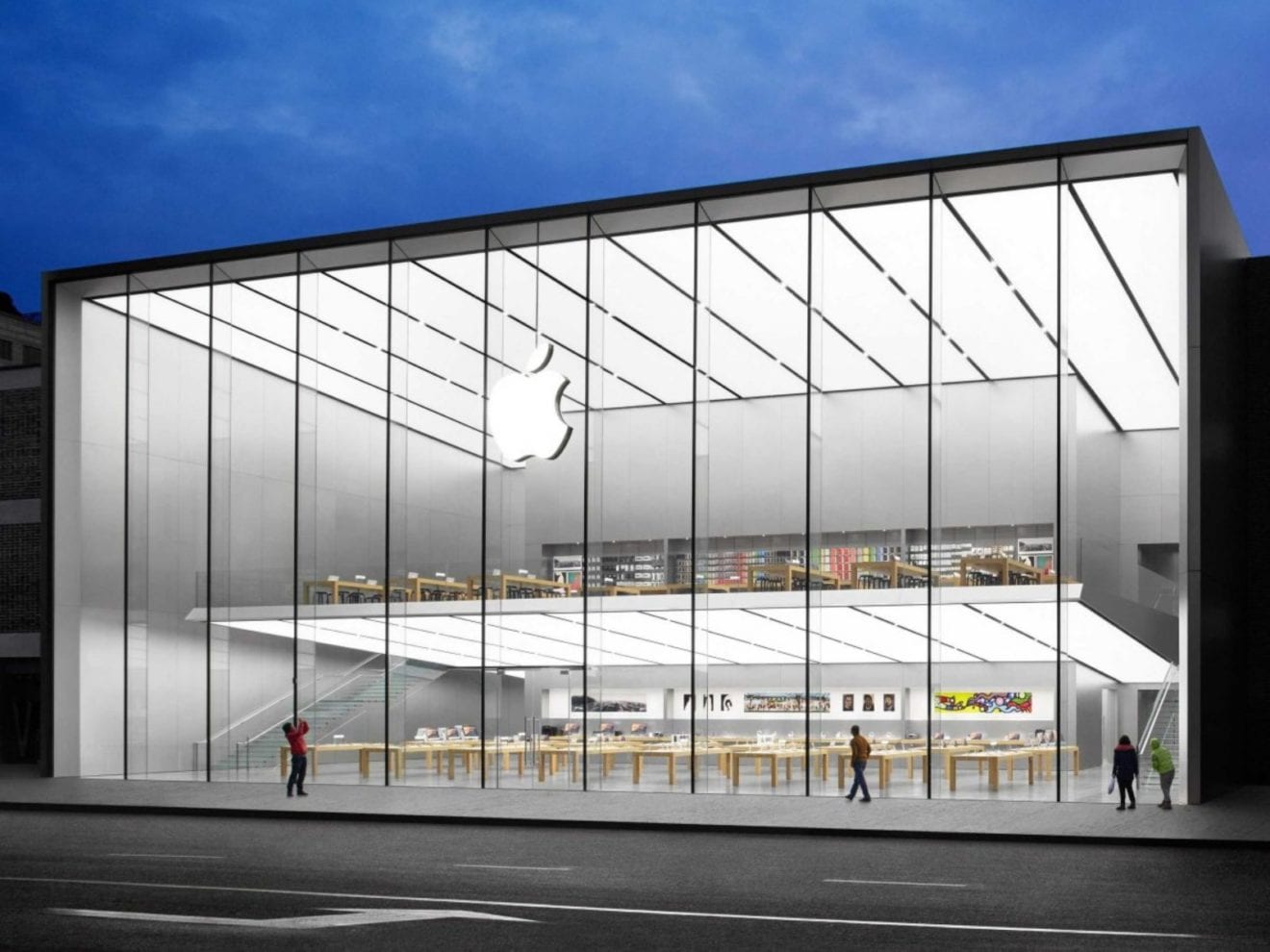
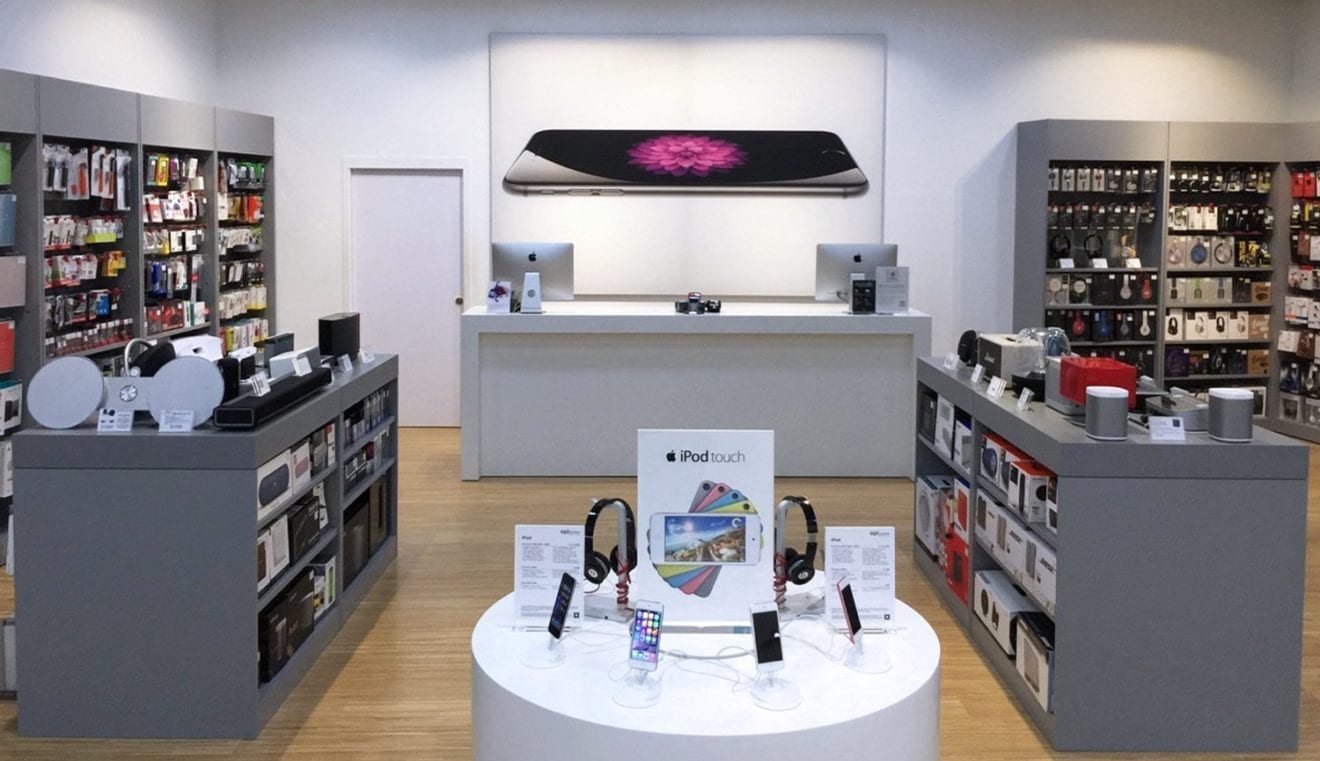
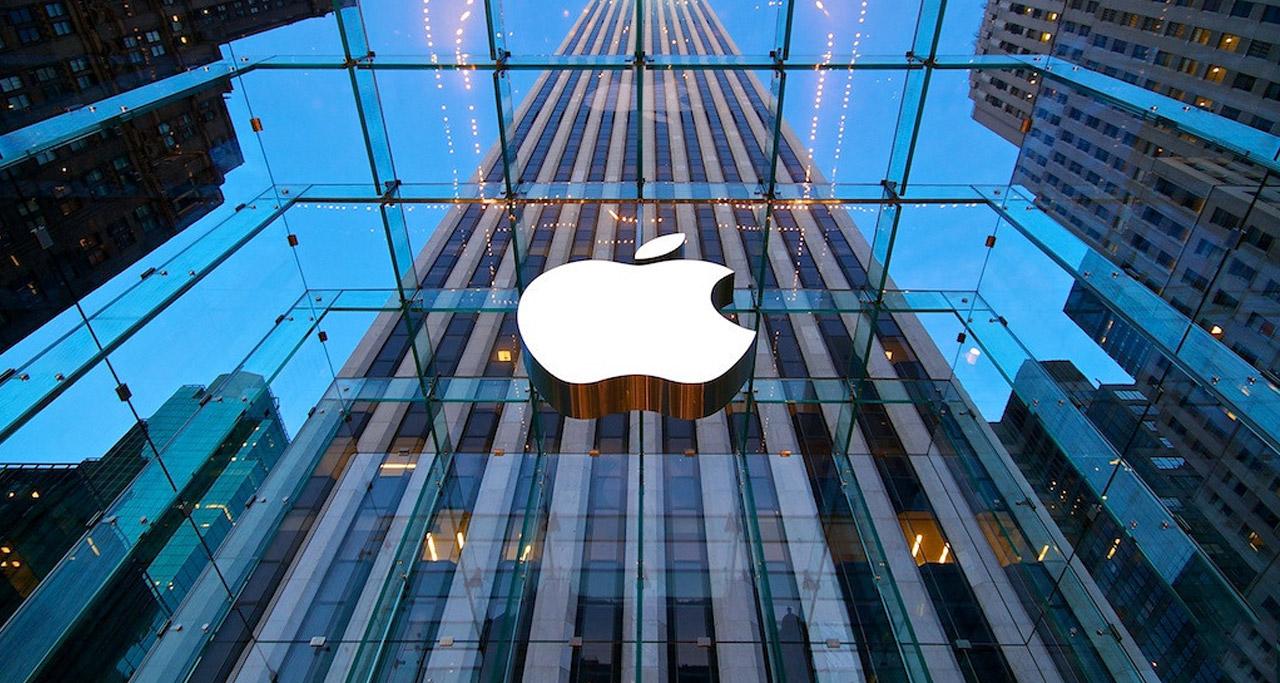
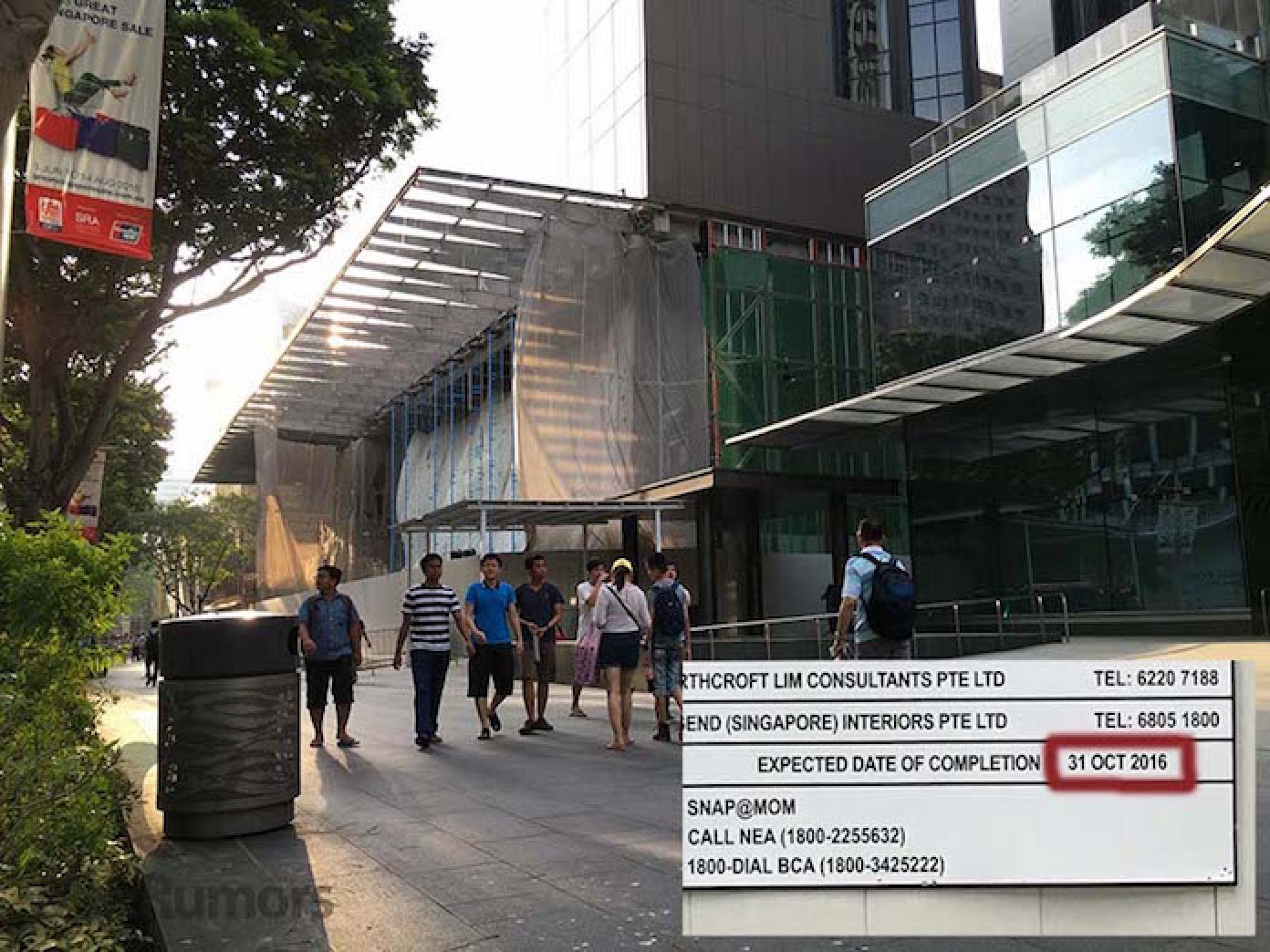
    Apple’s first retail store in Singapore appears to be progressing nicely, with new photos obtained by MacRumors proving that the construction of the store’s glass facade and canopy is now well underway. Apple confirmed in November 2015 that its first-ever store in the Southeast Asia city-state will be powered by hundred percent renewable energy, but did not provide a timeframe for the opening.

    The store location has been under renovation since earlier this year.

    Apple Store coming to Singapore

    The outlet is located in Singapore’s four-story Knightsbridge luxury shopping center.

    Fitness chain Pure Fitness and four other stores inside the Knightsbridge center are set to close next month to make way for an Apple store. In November 2015, Apple posted job listings seeking various positions for the Singaporean store as the company’s retail boss Angela Ahrendts told TechCrunch the following:

    We have more than 900 incredible employees working in our Singapore contact center and are thrilled to begin hiring the team that will open our first Apple Store in Singapore—an incredible international city and shopping destination. We can’t wait to deliver the service, education and entertainment that is loved by Apple customers around the world.

    “The project allegedly has an expected completion date of October 31, 2016, suggesting that the store could open as early as November,” notes the article.

    Apple store Singapore construction

    As per Reuters in November 2015, solar energy developer Sunseap Group will provide Apple with 100 percent renewable electricity from its solar energy systems built atop more than 800 buildings in Singapore, made possible through financing from Apple.

    “The deal will make Apple the first company in Singapore to run exclusively on renewable energy and marks a significant step in its bid to power 100 percent of its facilities and operations worldwide with clean fuel,” as per Reuters.

    Apple’s retail push in Latin America

    As reported, Apple’s retail push in Latin America has just begun with its first store in Mexico City’s Via Santa Fe now being constructed and additional outlets being planned in Guadalajara and Monterrey.

    Apple Stores may be also coming to Chile, Peru and Argentina, as per sources.

    Source: MacRumors

  • Is Apple Inc Losing Ground in China?

    Is Apple Inc Losing Ground in China?

    Apple Inc reported its third quarter of fiscal year 2016 (2QFY16) results after the closing bell on Wednesday. The company managed to beat both earning per share (EPS) and revenue consensus estimates. However, things aren’t as bright as it may seem since the tech giant witnessed declining iPhone sales for the second consecutive quarter.

    The company reported revenue of $42.4 billion, down 14.5% on a year-over-year (YoY) basis. Moreover, EPS came in at $1.42, surpassing the consensus estimate of $1.38.

    However, Tim Cook, Apple’s CEO seemed quite pleased with the results and said: “We are pleased to report third quarter results that reflect stronger customer demand and business performance than we anticipated at the start of the quarter.” Mr. Cook also added that the company was able to reduce its channel inventory by almost $3.6 billion, well above its own guidance of $2 billion inventory reduction.

    Net income for the quarter came in at $7.8 billion, down 27% compared to the same quarter last year. In 2015, Apple’s net income stood at $10.7 billion.

    Mr. Cook highlighted that sales of iPhone accounted for a major portion of channel inventory reduction. Similarly, he also stated that iPhone SE, Apple’s newly launched smartphone, also performed better-than-expected.TheSE contributed for almost 23% of the total iPhone sales made in the quarter.

    During the earnings conference call, the CEO commented: “At its launch, we said that the addition of the iPhone SE to the iPhone lineup placed us in a better position to meet the needs of customers who love a four-inch phone and to attract even more customers into our ecosystem.”

    Overall, the company’s top management seemed satisfied with the earnings results. It generated about 63% of its total sales from international markets. However, the result from its Asia Pacific region, especially from greater China, paints a completely different picture.

    Apple Greater China Performance

    Greater China sales for the quarter stood at $8.8 billion, down 33% YoY. In the same period last year, the company generated about $13.23 billion in sales from the greater China market. Similarly, on a sequential basis, sales in the region dropped by about 29%. Greater China, which was considered the company’s second largest market after the US, has been becoming a major concern amid stiff competition from domestic smartphones makers and a consistent economic slowdown. Moreover, Apple’s sales dropped more than 20% to $2.37 billion from $2.95 billion reported in 3QFY15 in other Asian countries.

    The company has faced quite a lot of problems in one of its strongest market in the past few years, ranging from regulatory issues and domestic competition to an economic slump. Apple, which used to generate more than 50% of its revenue from the mainland territory, has now lost a significant portion of its market share to home grown smartphone makers including Huawei Technologies and Xiaomi Technologies.

    Earlier this week, Huawei released its financial results for the first six months of 2016. The Chinese smartphone giant reported $36.67 billion (245.5 billion yuan) in revenue, well above the consensus estimate. In 2015, it reported about 175.9 billion yuan in revenue for the first six months. In addition, the company also said that it aiming to achieve the target of 140 million smartphones shipments by the year-end and looks set to achieve that milestone based on the first half results. In the first half, Huawei sold about 60 million smartphones, representing a 25% increase compared to first-half results of 2015.

    However, Mr. Cook seemed quite pleased with company’s progress in the emerging markets, especially in China. During the earnings conference he said: “We remain very optimistic about the long-term opportunities in Greater China and we continue to invest there. We opened our 41st Greater China retail store during the quarter, and we also made a $1 billion investment in Didi Chuxing.” Didi Chuxing is China’s largest ride hailing start-up backed by the Chinese e-commerce giant Alibaba Group Holding Ltd and Tencent Holding Ltd.

    He also highlighted that company’s installed base of iPhones in the Greater China region has surged 34% YoY. In addition, according to the data released by China Mobile, iPhone users on its network ranked the highest both in terms of data usage and loyalty.

    In addition, Luca Maestri, Apple CFO and Senior Vice President also highlighted that the company’s performance in the quarter was affected by some serious challenges in the Greater China region, including an economic slowdown and regulatory concerns.

    Apple China Challenges

    China has always been a key strategic hub for the iPhone maker, however, recent performances clearly indicates that the tech giant is losing ground in its second largest market in terms of revenue. Even in the second quarter, the company’s revenue from greater China fell 26% year-over-year (YoY).

    Beside a decline in iPhone sales, the regulatory issues are also haunting the Silicon Valley based smartphone maker. Earlier this year, Apple’s iTunes Movies and iBooks Store services were banned by the Chinese regulatory authorities, after only being available in the country for six months.

    Recently, Shenzhen Baili, a little known Chinese startup, won a surprise lawsuit against Apple. Shenzhen Baili accused the tech giant of violating a design patent. The Chinese court granted Baili a sales sanction against the tech giant. Apple was prohibited from selling its flagship iPhone 6 and 6 Plus in some Chinese cities where Baili operated. However, the sales sanction was lifted.

    In addition, Apple ranked third in terms of market share in China last year with about 13.4% of the market, according to the data released by International Data Corporation (IDC). Xiaomi ruled the Chinese market with about 15% share, closely followed by Huawei Technologies with 14.5% market share.Huawei is expected to surpass both Apple and Xiaomi this year to lead the smartphone market both locally and internationally.

    Tim Cook’s Optimism about China:

    Though the company’s overall financial results didn’t live up to its reputation, however, the company’s CEO is still optimistic about its long term growth prospects both locally and in the Greater China territory.

    With respect to the ban on Apple’s i iTunes Movies and iBooks Store, Mr. Cook indicated that those stores weren’t even making $1 million so the band is not a major problem. However, he also added: “we’re working very closely with the appropriate government agencies, and we hope to make books and movies available again to our customers there. And so we’ll see how that goes, but we’re optimistic there.” The company’s CEO says that China is a long-term investment and Apple is doing its best to give the Chinese customers the best product.

    Apple’s Alliance with Native To Fight Back in China:

    Back in May, Apple announced a strategic partnership with China’s biggest ride-hailing app, Didi Chuxing, as it invested $1 billion in the company. Analysts believe that the venture could boost Apple Pay in China by offering payment services to Didi’s 14 million drivers. In addition, the iPhone maker could also use Didi’s vast road data for its upcoming autonomous car project. Mr. Cook said about the partnership: “We are extremely impressed by the business they’ve built and their excellent leadership team, and we look forward to supporting them as they grow.”

    The partnership could assist Apple in growing its other services in the mainland territory; however, declining iPhone sales in the country is still a cause of concern.

    Future Outlook:

    Apple expects its fourth quarter revenue to come in between $45.5 billion and $47.5 billion. The increase in revenue guidance reflects the company’s aim to grow and give its investors solid returns. In 3QFY16, Mr. Maestri said: “We returned over $13 billion to investors through share repurchases and dividends.”

    We believe Mr. Cook’s optimism coupled with the company’s long term plans to expand in the Greater China region is yet to face a complete discontentment. However, if things move forward in the same trend, Apple’s long term hold over the Chinese market will come to a complete end. It is vital for the company to implement new strategies, build healthy relations with the regulatory authorities and give the Chinese customers something new and innovative.

  • Huawei retail plans 15,000 new stores

    Huawei retail plans 15,000 new stores

    Smartphone maker Huawei plans to open 15,000 retail stores internationally this year in a bid for a record-high shipment of smartphones and greater sales of premium-priced models.

    “We are optimistic and confident about reaching our target shipment of 140 million smartphones this year,” says its business group CEO Richard Yu Chengdong. That would mark a 30 per cent increase in smartphone shipments from 108 million units last year.

    Yu says the Huawei retail store expansion would help drive sales of its high-end smartphones in the US$500 to US$600 range.

    Huawei’s retail arm had 35,000 of its own stores around the world at the end of May, up 116 per cent year on year. It has 11,000 stores in mainland China, 6500 stores across the rest of Asia, 6200 in Europe and 1500 in South America. This compares with Apple’s 484 retail outlets in fewer than 20 countries.

    Huawai  is represented in more than 170 countries and territories, supported by a growing number of third-party shops. These include outlets in shopping malls and stores owned by mobile network operators like China Mobile.

    Its smartphone shipments grew 25 per cent year on year to 60.56 million units in the first six months of this year. Sales generated by the company’s consumer business group in the first half jumped 41 per cent to 77.4 billion yuan (US$11.6 billion), with more than half from overseas markets.

    Data from market research firm GFK shows that Huawei’s share of the global smartphone market reached 11.4 per cent at the end of May. Its share of the premium smartphone market was 25.7 per cent, up from 15.2 per cent at the end of March.

    The Shenzhen-based firm, which also sells network equipment to telecommunications service providers and other enterprises, reported this week that its total revenue in the first half of this year jumped 40 per cent to 245.5 billion yuan, up from 175.9 billion yuan for the same period last year.

  • China smartphone demand grows 17pc

    China smartphone demand grows 17pc

    China smartphone demand grew 17 per cent last month, according to technology research company Counterpoint’s monthly Market Pulse.

    It was the best-ever June in terms of sell-through for smartphones, despite the overall market having modest growth for the second quarter ending June 31.

    “The competitive environment in the world’s leading smartphone market has taken an interesting turn as domestic brands have significantly ramped up their positions in the smartphone market,” says research director James Yan.

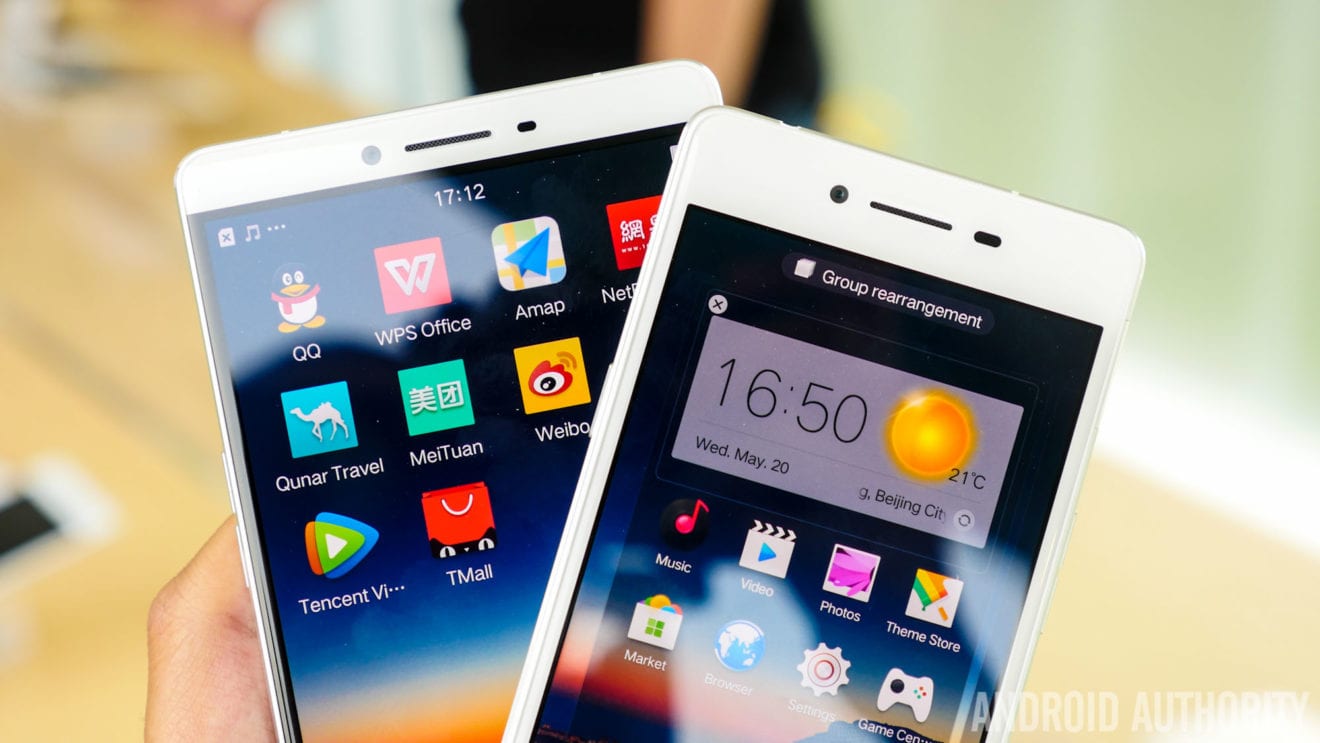
    Oppo became the top-selling brand in China for the first time ever in June, surpassing Huawei, Apple and Xiaomi with a 23 per cent market share and sales volumes leapfrogging 337 per cent.

    Also owned by the BBK group, Vivo also had a strong performance with the launch of a new model. Together, the sister brands captured a third of the Chinese smartphone market, up from a combined 13 per cent in the same month last year.
    Meanwhile, Apple’s market share slipped to 2014 levels.

    Counterpoint research director Neil Shah says Oppo adopted a simple but effective strategy – going after the offline market, which still contributes more than 70 per cent of total sales in China.

    “Aggressive marketing, promotions and sponsorships, greater offline retail penetration beyond tier-two and tier-three cities, better retail margins, dealer support and, above all, innovative smartphone designs have helped Oppo drive its sales in the past 18 months.”

    The brand had also focussed on design and key features such as camera, battery technology and materials.

  • Apple China’s quarter sales slump

    Apple China’s quarter sales slump

    Apple China’s sales fell 30 per cent in what one retail analyst described as “another fairly rotten quarter” for the tech giant globally.

    Apple’s international decline has accelerated with total sales revenue sliding by 14.6 per cent and operating income by 28.2 per cent.

    “That the numbers are down come as no real surprise given that Apple has launched very few significant products or initiatives since the last reporting period. However, that they are sequentially worse than last quarter is a cause for some concern, especially so as all geographies, bar Japan, are now in strong decline,” observed Neil Saunders, CEO of Conlumino.

    But Apple’s current problems are a lot more worrying for the company than a couple of bad sets of  quarterly figures, even though the company remains highly profitable and cash-rich. At the core of Apple’s challenge is the long period of sustained innovation and ingenuity seems to have dried up.

    The same day as Apple announced its latest results, one of the most reliable Apple leak sources, Evan Blass, revealed the next iPhone scheduled for release on September 16 will now be called the iPhone 6SE, because there are insufficient upgrades to warrant a new generation 7 model number. The iPhone – once the mainstay of Apple’s stellar rise – used to be the most-coveted smartphone handset on the market. But Samsung’s Galaxy Edge has well and truly evolved into the most beautiful handset on the market, and a raft of brands around Asia are producing phones with features and specifications equal to or better than the iPhone 6, usually at prices substantially lower.

    That partly explains why iPhone sales fell 23 per cent in revenue terms in the latest quarter: it’s just not as sexy as it once was; customers have a wider choice now, and owning an Edge has as much street cred as owning an Apple in many parts of the world.

    Laptop sales are weak globally as more and more consumers who do not need computers for work purposes find Phablets and tablets are more portable and just as convenient for social networking, email and watching videos. Mac sales fell 13 per cent last quarter – and again Apple has offered little reason to upgrade in recent years, save the high-resolution retina screens. New models are slated for later this year, but expect this to be another round of higher spec for a reduced price as Apple tries to hold its own against the likes of Samsung and arguably the biggest innovator in Windows-platform computers, Lenovo.

    Sales of other Apple physical products fell by 16 per cent.

    The only ‘innovation’ from Apple in the last two years is the Apple Watch, which, as Saunders observes, was supposed to be “the next best thing”.

    “However, its performance has been disappointing [because] it doesn’t really do very much.

    “In most cases it simply replicates what can be done on a phone, albeit less effectively. As such, other than as a status symbol, most consumers do not see the value in spending hundreds of dollars simply to remove the effort of having to lift up their phones. This is a great example of Apple’s genius in producing what remains a technically impressive and aesthetically pleasing device, while missing the bigger picture of how that device fits into people’s lives.”

    Ouch. But he is right: The Apple Watch is a solution searching for a problem. It is not a ‘must-have’, life-changing product, merely a gimmick; an expensive, flashy replacement for a pedometer which, wait, you can download onto your iPhone for free on iTunes…

    “All of this is characteristic of a company that, while still highly successful, has simply lost the edge that once persuaded consumers to continually upgrade and buy into more expensive pieces of kit.  Apple has become too obsessed with the technical minutiae of products rather than developing radically new devices which capture the imagination, and cash, of consumers,” says Saunders.

    Services a bright spot

    Saunders says the one bright spot in an otherwise gloomy set of Apple figures comes from the services segment. Here revenue grew by 19 per cent, thanks to more Apple Music subscribers and the strong performance of the App Store. “However, the ground gained here is nowhere near enough to make up for the decline in product revenue, which is where Apple takes the bulk of its sales and makes most of its profit.”

    Just what Apple is working on behind the scenes as it seeks its next life-changing product is uncertain. There have been long-running reports it is developing a motor vehicle, for example, a huge investment which the company certainly has the cash reserves to fund. But reinventing the motor vehicle is a hard concept to conceive. Elsewhere it seems to be searching for acquisitions which could aid its growth – among the recent rumours is a bid for Formula 1, one of the world’s most-watched televised sports which could bring access to technical innovation, and most importantly content for a planned TV concept and its existing devices. Neither F1 or Apple has denied those rumours.

    Saunders argues that if the company is to return to its once stellar growth, it needs either a radical step change in its existing product line-up or needs to come up with a completely new device that creates a whole new market.

    “This is easier said than done, but there are emerging areas of technology – like virtual reality – where Apple should be at the forefront of developments.”

    Saunders also praises Apple’s latest incarnation of its retail store.

    “Apple’s latest store format is impressive and provides just the type of experience that modern consumers enjoy and will engage with. However, without great products this new format will not deliver very much. As such, Apple needs to put the same sort of forward thinking into its kit as it has done its new shops.”

    He concludes: “As much as this may all sound harsh and critical, it is simply because Apple set such a high benchmark to begin with. It remains a very impressive business and retailer, but it is one that is in desperate need of that magical ‘one last thing’ to transform its trend of declining sales.”

  • Staff sought for Taiwan Apple Store

    Staff sought for Taiwan Apple Store

    US technology giant Apple has started advertising for staff for a Taiwan Apple Store.

    This follows the US technology giant raising US$1.38 billion in a bond offering last month on the island that is home to many companies in its supply chain.

    While Apple has confirmed plans to open its first store in Taiwan, the California-based company is tight-lipped on details. However, job postings on its website show it is seeking “a leader for personnel training plans for the Taiwan Apple Store” as well as other retail positions.

    Apple’s greater China revenue, which includes Hong Kong and Taiwan, slumped 26 per cent in its second fiscal quarter, with executives pointing the finger at Hong Kong for slipping sales. This year, its iPhones had their first-ever sales decline in the face of intense competition in the smartphone market.

  • Epicentre Asia raises cash for expansion

    Epicentre Asia raises cash for expansion

    Apple products retailer Epicentre Asia plans to raise S$11.45 million (US$8.44 million) by issuing 45.8 million private shares to new buyers.

    KGI Fraser Securities is the placement agent for the issue, with the price being not be less than 25 cents per new share. These placement shares represent 49.1 per cent of the current
    share capital of Epicentre.

    Epicentre has five stores in Singapore, including two on Orchard Rd which could be expected to take a big hit in turnover terms when Singapore’s first Apple Store opens later this year. It has six stores in Malaysia and also sells online.

    Half of the net proceeds raised by the share issue will be used to support business development and provide liquidity for expansion. The rest will be deployed for general working capital purposes, the company says.

    Earlier this year, Epicentre raised $1 million on debt crowd-finance platform MoolahSense, and the company says this debt will be repaid through the sale of merchandise.

  • Apple Ups China Game with $1 Million Donation for Flood Relief

    Apple Ups China Game with $1 Million Donation for Flood Relief

    Apple donated ¥7 million ($1 million) this week to the China Foundation for Poverty Alleviation(CFPA), a non-governmental relief agency. The money is intended to help relief efforts in south China, which has been racked with flooding on the Yangtze.

    Apple didn’t announce the donation, but the CFPA did, as reported. Apple CEO Tim Cook posted a statement of support on Weibo, saying, “Our thoughts are with all those devastated by the flooding along the Yangtze River.”

    The newspaper also noted that Apple donated some $8 million dollars for victims of the 2008 Wenchuan Earthquake in China’s Sichuan region.

    Apple has stepped up its philanthropic efforts under CEO Tim Cook, but most of what we hear about are efforts here in the U.S. Apple’s active involvement in China is part of a broader effort for the company to integrate itself with the insular country. It’s also the first donation from a U.S. company reported by the CFPA.

    Other recent activity by Apple in China includes a $1 billion investment in Didi, a Chinese ride-sharing firm. Apple has also opened numerous Apple Store retail locations in China. In May, Apple launched Chinese loops and instruments for Logic Pro X and GarageBand.

    Chinese Headwinds

    These moves come while China conducts an on-again, off-again campaign against Apple in state-owned media. The Chinese government also shut down iBooks and movie sales in iTunes in China, while new regulations could require Apple (and every other company) to become part of the Chinese surveillance machine. In Chinese courts, Apple has endured trademark and patent losses covering its iconic iPhone.

    But Apple clearly isn’t giving up on this market. Tim Cook has said on multiple occasions that China is important to Apple. Earning its place in the Chinese economy will require continued investment, significant lobbying, and substantial marketing efforts.

    This donation to the CFPA is not only the right thing for Apple to do, it’s smart business. And I don’t mean that cynically at all. I suspect Tim Cook would have authorized the donation whether or not it was smart business. To that end, I was unaware of the 2008 donation to earthquake victims, and it’s not like Apple advertised its gift to the CFPA.

    But it does remain smart business. The key to knocking down Apple’s barriers in China is to become more and more of a Chinese company. This donation is another small step in doing so.

  • BMW to develop driverless car technology with Intel, Mobileye

    BMW to develop driverless car technology with Intel, Mobileye

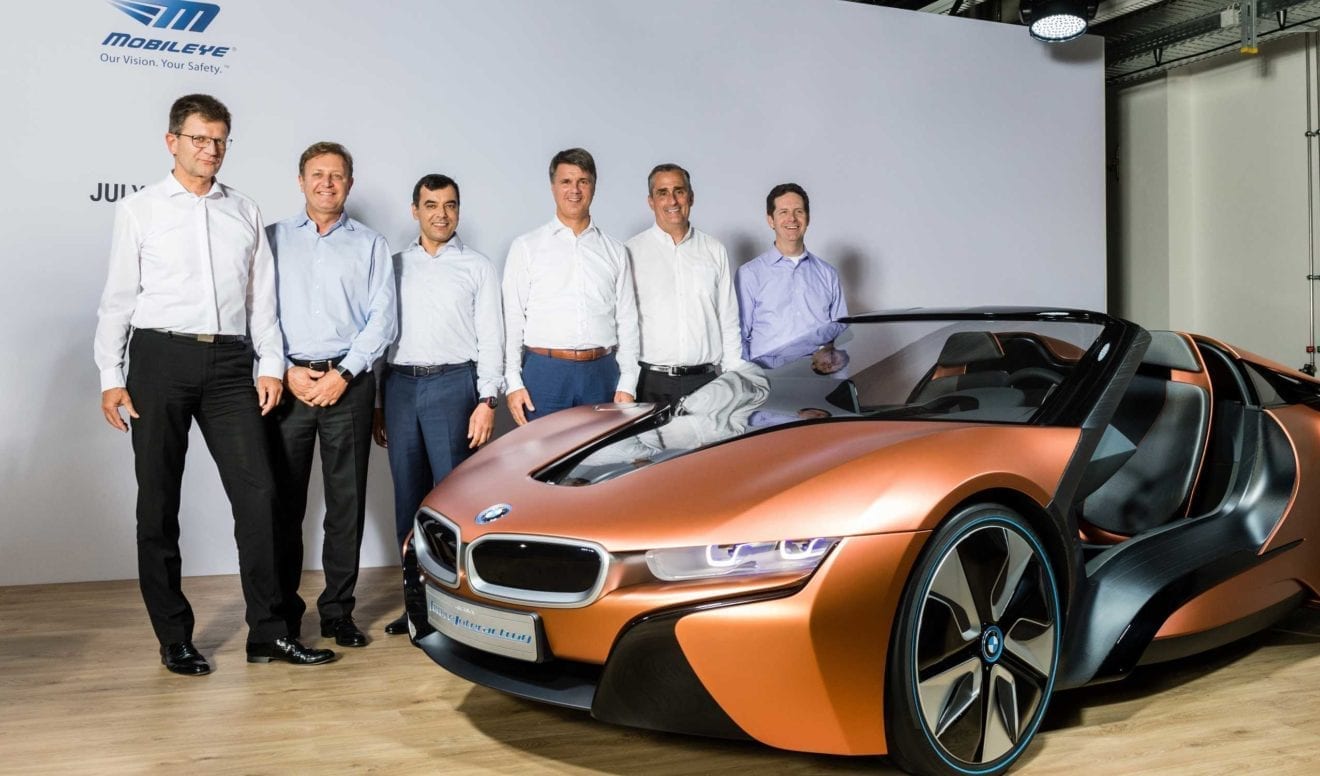
    BMW is teaming up with Intel and Mobileye to develop new technology for the auto industry that could put self-driving cars on the road by around 2021.

    The alliance highlights a shift in the dynamics of research and development in the car industry, which until recently saw automakers largely dictating terms for suppliers to manufacture their proprietary technologies at specified volumes and prices.

    Now carmakers are increasingly striking up partnerships with technology firms using open technology standards, seeking to harness their expertise in areas including machine learning and mapping as they race against Silicon Valley companies such as Google, Tesla and Apple to develop driverless vehicles.

    “Highly autonomous cars and everything they connect to will require powerful and reliable electronic brains to make them smart enough to navigate traffic and avoid accidents,” Intel Chief Executive Brian Krzanich said on Friday at a joint news conference announcing the alliance.

    The three companies said their new platform would be made available to multiple carmakers and they expected vehicles with highly and fully-automated driving would be brought into mass production by 2021. It is too early to say which other carmakers would join the alliance, BMW Chief Executive Harald Krueger said at a news conference on the outskirts of Munich on Friday.

    Sophisticated cruise control systems already enable “hands off” driving as cameras and computers allow cars to automatically brake, steer and accelerate in traffic at low speeds. But drivers are required to stay in control.

    Now BMW, Intel and Mobileye will develop cars with even higher levels of automation described as “eyes off,” “mind off,” and “driver off”. This requires much more computing power and software know-how, forcing traditional carmakers to collaborate more closely with technology specialists.

    Both industries see huge revenue opportunities in the market for autonomous vehicles, although it is unclear how many drivers will be prepared to relinquish control and how quickly laws will be put in place to allow fully autonomous vehicles on the roads.

    But creating common technology standards would help all manufacturers update their vehicles faster, Intel Chief Executive Brian Krzanich said. “That will be critical for advancing the safety aspects of this.”

    A common approach to standards will also make it easier for regulators to understand and approve the roadworthiness of a vehicle while still leaving enough scope for individual car manufacturers to customize their cars, Mobileye Chairman Amnon Shashua said.

    Beyond technological hurdles there are legal questions over who is responsible when a crash occurs. On Thursday, the driver of a Tesla Model S car, operating in Autopilot mode, was killed in a collision with a truck in the United States, prompting an investigation by federal highway safety regulators.

    When asked about the crash, BMW CEO Harald Krueger said: “The accident is very sad …. We believe today the technologies are not ready for series production,” he added, explaining the alliance had not forecast that until 2021.

    “For the BMW group, safety comes first,” he said.

    As part of the new alliance, Intel, the world’s largest computer chip maker which has been looking to expand into the automotive electronics market, will supply the microprocessors – or central processing units – to control an array of sensors.

    Auto camera and software maker Mobileye will supply its Road Experience Management (REM) technology and make its latest EyeQ5 chip available to be deployed on Intel computing platforms.

    The three companies said they would demonstrate their technology in a prototype in the near future.

  • Alibaba hosts intellectual property event

    Alibaba hosts intellectual property event

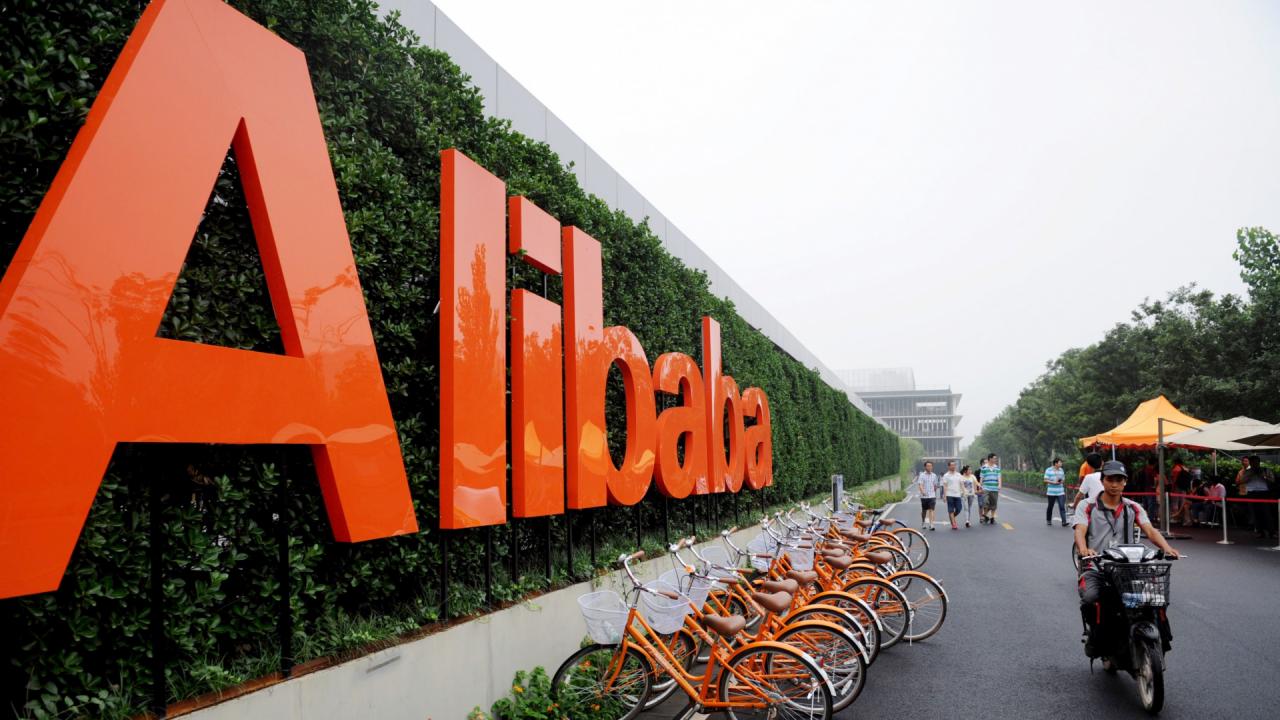
    Chinese online commerce giant Alibaba Group has hosted an inaugural Rights Holders Collaboration Summit involving international brands and the intellectual property (IP) enforcement community to enhance collaboration in the fight against infringements.

    More than 100 Chinese and international brands as well as trade associations attended the event, including Adidas, Apple, Burberry, Hewlett Packard, Louis Vuitton and Mars, the Chinese British Business Council (CBBC) and the Quality Brand Protection Committee (QBPC).

    Alibaba also announced the launch of the IP Joint-Force System, an online platform designed to streamline IP-related communications between the group and brands. The system aims to build a more collaborative working relationships with international brands as Alibaba continues its fight against counterfeits and IP infringement.

    New challenges

    With eCommerce becoming a way of life and the internet sector continues to evolve, brands and online marketplaces alike face new IP enforcement challenges, says Alibaba Group chief platform governance officer Jessie Zheng.

    “As the leading online marketplace, we have a responsibility to all our constituents to govern our platform and find innovative solutions. The Rights Holders Collaboration Summit and IP Joint-Force System are a couple of the many ways Alibaba is working closely with rights holders in our efforts to eradicate counterfeits both online and offline.”

    All brands in the “Good Faith Takedown” program are eligible for the IP Joint-Force System, which came into effect this month. This Alibaba program was launched last year to expedite the notice-takedown process for brands that submit valid counterfeit complaints. Many of the more than 700 brands involved in the program are participating in the first phase of the IP Joint-Force System, including Adidas, Apple, Mars, Philips and Procter & Gamble.

    With more than a billion products listed across its marketplaces at any given time, Alibaba Group’s data analytics and processing technologies enabled it to remove more than 120 million infringing product listings last year, which is eight times the number of counterfeit products removed based on takedown requests from brands.

    Dedicated support

    For the IP Joint-Force System, each participating brand is assigned a dedicated online portal and Alibaba account manager to enhance collaboration, heighten transparency around IP enforcement efforts, and reinforce mutual understanding and trust. The system enables Alibaba to directly and efficiently seek information from rights holders regarding suspected counterfeit product listings.

    It also lets brands identify the authenticity of a product and easily notify Alibaba of any infringements. Alibaba will then initiate the Good Faith Takedown process and immediately remove the listing without subsequent correspondence with the brand.

    “The IP Joint-Force System is a revolutionary industry solution that will redefine how IP enforcement is conducted in the digital age – where brands and eCommerce marketplaces work collectively and strategically to combat counterfeiters,” says Alibaba Group head of global IP enforcement Matthew Bassiur.

    “This is one of several game-changing approaches Alibaba will be advancing to both simplify and greatly enhance our overall enforcement process.”

  • Macau’s first apple retail store launched

    Macau’s first apple retail store launched

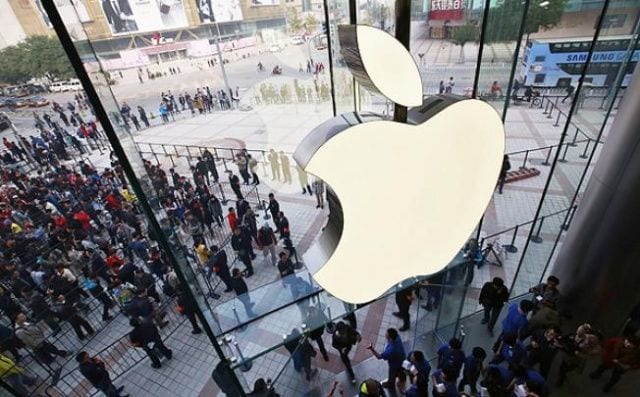
    APPLE Inc. launched its first retail store in Macau on Saturday, expanding the brand’s presence in Greater China to 41 stores.

    Hundreds of Apple fans queued at the new store at Galaxy complex in Cotai district before the store opened at 10 a.m.

    Macau is an incredibly important region for Apple, Denny Tuza, senior director for Apple Retail Asia Pacific told Xinhua, noting that”Macau is a rich commercial and industrialized city with 600,000 residents and 32 million tourists annually. The city has a unique hybrid urban culture, representing a peculiar blend of Oriental and Western influences.”

    This new two-layer outlet includes sales space where over 150 Apple latest designs are displayed for customers to experience hands-on, and a gathering place for workshops.

    According to Tuza, Macau store has 149 employees who are mainly hired locally, speaking nine languages including Mandarin, Cantonese and English and Portuguese.

    Apple also brought two free camp designed to help spark the imagination of kids ages 8 to 12, teaching them to make movies and create interactive books complete with their own illustrations and sound effects.

  • New Indian ruling appears to finally give Apple go-ahead to open retail stores

    New Indian ruling appears to finally give Apple go-ahead to open retail stores

    Amended foreign investment rules clear the way for Apple India stores, and the possibility for the US technology giant to start manufacturing there.

    Under the new rules, foreign retailers are exempted for three years from a requirement to locally source 30 per cent of the goods sold in company-owned stores.

    This means Apple, which now sells its hardware through resellers and first applied for store licences in January, can set up its own shops in India, the world’s fastest-growing major smartphone market with sales expected to rise more than 25 per cent this year.

    Apple, which has a less than 2 per cent share in India’s smartphone market, can resubmit its application for store licences.

    India has been lobbying Apple and its partner Foxconn to start manufacturing in India as part of Prime Minister Narendra Modi’s agenda to bring in foreign manufacturers to create millions of jobs. The rule-change announcement comes a month after Apple boss Tim Cook met Modi to discuss the company’s plans for retail and manufacturing in India.

    Meanwhile, India’s new look at retail rules may also help with expansion for Swedish furniture-retailer Ikea, which is setting up stores in Hyderabad and Mumbai.

  • Beijing tells Apple China to withdraw phone

    Beijing tells Apple China to withdraw phone

    A Chinese tribunal has ordered Apple China to stop selling its iPhone 6 in Beijing, claiming the design is too similar to a Chinese-made smartphone.

    Apple has appealed, and is continuing to sell its iPhone 6 while awaiting the decision.

    The Beijing regulator found that the iPhone 6 and iPhone 6 Plus look too much like the 100C smartphone made by Shenzhen Beili, a small Chinese brand.

    If its appeal fails, Apple will lose ground to such Chinese competitors as Huawei and Xiaomi. China accounted for more than a quarter of Apple’s revenue last year, making it the second-biggest source of income for the company.

    This dispute follows a series of problems for Apple in China. A Chinese court last month decided a company can use the iPhone trademark on its bags, wallets and other leather products, and in April, Apple had to suspend iBooks and iTunes Movies after the Chinese government said the services were breaking the rules for foreign publishers.

    Apple has also been pushing against fake Apple stores in China.

  • Apple Closer to India Stores After Government Eases Retail Curbs

    Apple Closer to India Stores After Government Eases Retail Curbs

    Apple Inc. may be closer to opening stores in India after the government eased onerous local sourcing requirements on retailers.

    The world’s second-most populous country on Monday announced the easing as part of a raft of measures intended to boost foreign direct investment and expand the leeway afforded multinational corporations. It loosened policies that require retailers to source at least 30 percent of their components locally before they can set up shop.

     Apple is pushing to increase its share of the world’s fastest-growing major smartphone market as device sales slow elsewhere. Chief Executive Officer Tim Cook visited the country for the first time in May and met with Prime Minister Narendra Modi to outline his ambitions for the burgeoning arena.

    Under the new regime unveiled Monday, single-brand retailers have a three-year grace period in which they can operate stores, before they have to comply with the local sourcing requirement. Companies that can show they are selling state of the art or cutting edge technology can benefit from a relaxed local sourcing regime for “another five years.”

    The government hasn’t ruled on whether Apple meets the cutting edge criteria. Apple didn’t respond to an e-mail seeking comment on the government’s decision.

    Apple will now have to apply anew for permission to open its first stores in India, Commerce Minister Nirmala Sitharaman told reporters Monday. The Cupertino, California-based company has used flagship stores in New York, Tokyo and Shanghai to promote its products and boost sales, but in India it sells through partners such as Redington India Ltd. as well as the retail units of Indian conglomerates Tata Group and Reliance Industries Ltd.

     “The relaxed rules give Apple a window to build up a credible brand and gives the company a chance to build up internal capability and familiarity with the supply base,” said Devangshu Dutta, chief executive officer of Third Eyesight. “For branding, a certain consistency is critical and this can be done by having retail control.”

    India is a challenging market because of the iPhone’s premium pricing. It now has less than 2 percent of an Indian market in which four-fifths of phones cost less than $150. The iPhone maker had sought permission to become the first company allowed to import and sell cheaper refurbished phones into the country, but was said to have been rejected.

    Still, Apple’s sales there jumped 56 percent in the March quarter, indicating that demand for the brand is growing. Cook called out the country’s “incredibly exciting” prospects during his last earnings conference and said his company will devote more energy to that market. Apple’s stores have always played a key-role in attempts a convey a unique image and feel for its products.

    “It gives Apple more branding and positioning strength. Having a direct presence will help it gain more mindshare,” said Vishal Tripathi, an analyst at research firm Gartner. “It can help create a well-fashioned brand in the Indian market.”

  • Apple previews iOS 10

    Apple previews iOS 10

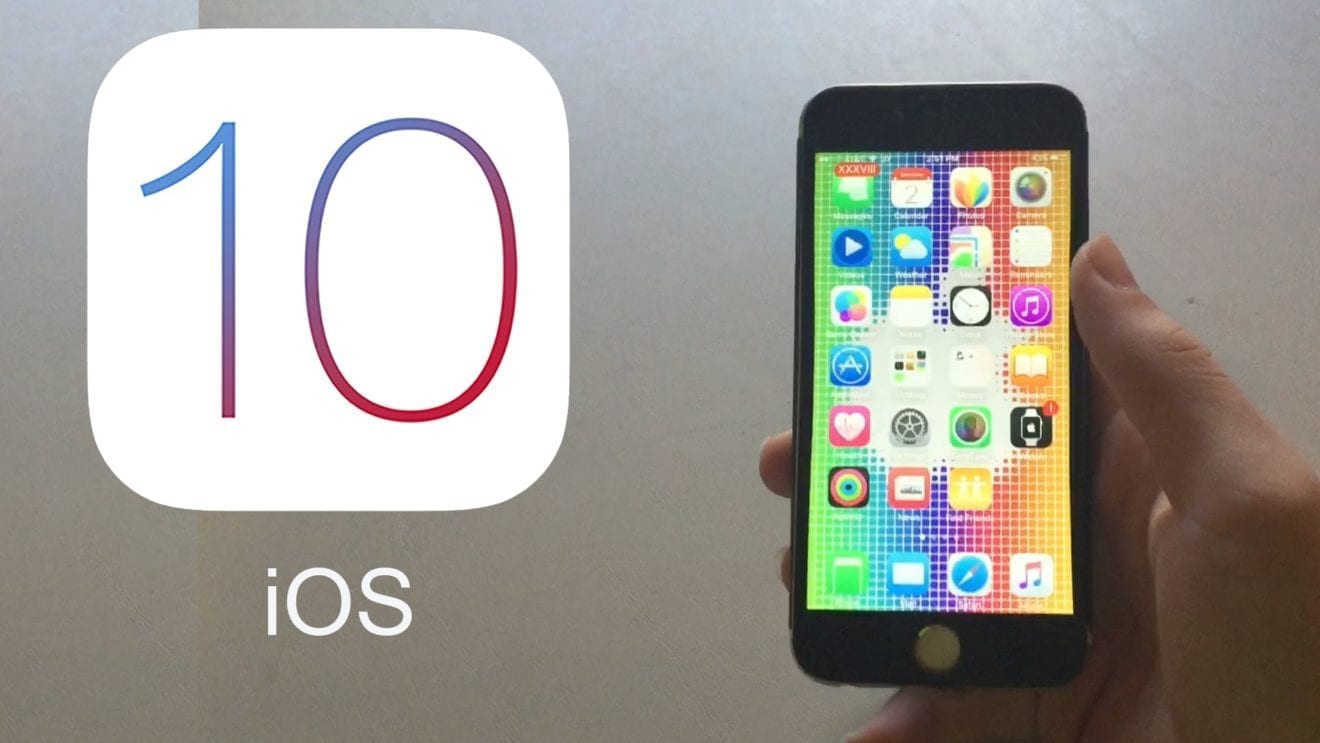
    Apple has previewed iOS 10, which the company is billing as be “the biggest release” ever of the mobile operating system.

    iOS 10 introduces the ability for Siri to do more by working with both internal apps as well as those from third parties.

    The update also includes redesigned Maps, Photos, Apple Music and News apps, and the Home app, promising to deliver a simple and secure way to manage home automation products in one place.

    “iOS 10 is our biggest release ever, with delightful new ways to express yourself in Messages, a native app for Home automation and beautifully redesigned apps for Music, Maps, and News that are more intuitive and more powerful, making everything you love about your iPhone and iPad even better,” said Craig Federighi, Apple’s SVP of software wngineering.

    “iOS 10 adds Siri intelligence into QuickType and Photos, automates your home with the new Home app and opens up Siri, Maps, Phone and Messages to developers — while increasing security and privacy with powerful technologies like Differential Privacy.”

    The update also includes updates to Messages, the most frequently used iOS app, introducing animated and personalized ways to message friends and family.

    Automatic suggestions make it easy to replace words with emoji, Tapback creates a quick and simple way to respond with just a tap and rich links lets the user see content inline and play media without leaving the conversation.