Tag: apple

  • Foxconn reportedly to return to China retail channel

    Foxconn reportedly to return to China retail channel

    Foxconn Electronics (Hon Hai Precision Industry) reportedly is planning to return to China’s retail channel, but instead of creating a specific department, Foxconn is separating the country into 8-10 areas for each of its sub-business groups to handle one segment, according to industry sources.

    The establishment of physical channel has been an important part of its long-term development, and related investment projects have been implemented accordingly, Foxconn said, but declined to elaborate on details.

    Foxconn’s latest development echoed company chairman Terry Gou’s recent remarks made after signing an investment pact with Sharp, saying that Foxconn will integrate and optimize its manufacturing strength to enable consumers globally to buy Sharp’s household appliances at affordable prices.

    Previously, Foxconn had tried several times to establish its own retail channels in China, but most of them had failed to achieve significant results, said the sources.

    Even so, Foxconn has continued its efforts to build its retail channel through the establishment of an online shopping platform, flnet.com, in 2015. The online shopping platform has built a number of experimental shops in China and Taiwan.

    One of the group’s subsidiaries has obtained the license from Apple to establish shops to sell Apple’s products in China, the sources noted.

    Meanwhile, under the new strategy, each sub-business group will be responsible for implementing its own plans to build up retail channel in the assigned region, as well as for profits and losses, said the sources.

  • Why Is Apple Opening More Retail Stores in Emerging Markets?

    Why Is Apple Opening More Retail Stores in Emerging Markets?

    Apple continues to remain optimistic about China despite the country’s economic slowdown. As a result of this optimism, Apple plans to open a number of retail stores in emerging markets such as China and India. Apple had 28 stores in China through the end of 2015, but it plans to add 12 more by mid-2016.

    In India, Apple had depended on subdistributors for the sale of its products until now. However, Apple has sought approval from the Indian government to open its own retail stores in India.

    Apple considers India to be an important market in the coming days, as the country is now the second-largest smartphone market in the world after China. Apple’s revenues in India grew by a healthy year-over-year (or YoY) rate of 38% in the quarter ended December 2015.

    Percentage of users buying iPhones from Apple US retail stores declining

    India has some positive macroeconomic factors that make it an attractive market. It is one of the fastest-growing economies with a huge young population. According to Apple’s CEO, Tim Cook, “The population of India is incredibly young. The median age there is 27. I think of the China age being young, at 36, 37 and so 27 is unbelievable. Almost half the people in India are below 25. And so I see the demographics there also being incredibly great for a consumer brand and for people that really want the best products.”

    The focus on retail in emerging markets is big for Apple, but it’s the opposite in the US. According to a report, citing research from Consumer Intelligence Research Partners, users are increasingly buying iPhones from telecom providers such as Verizon, Sprint (S), and AT&T (T) rather than its own stores. The above chart shows this trend. The main reason for this trend is that these providers offer consumers attractive leasing, installment plans, and exchange offers.

    Apple commands only 2% share of India’s smartphone market

    In the previous part of this series, we discussed the growing focus by Apple on India. According to Counterpoint, India recently overtook the US to become the second-largest smartphone market, behind only China. However, Apple still only commands a 2% share in India’s smartphone market.

    According to that report and as the chart below shows, Samsung led the Indian smartphone market last year, with Micromax, Intex, Lenovo, and Lava taking the up the remaining four positions among the top five players in this market. Microsoft lost its place among the top five players in this market due to the declining popularity of the Lumia line of smartphones.

    Apple Aims to Increase Penetration of India’s Smartphone Market

    Apple’s initiatives in India have yet to bear fruit

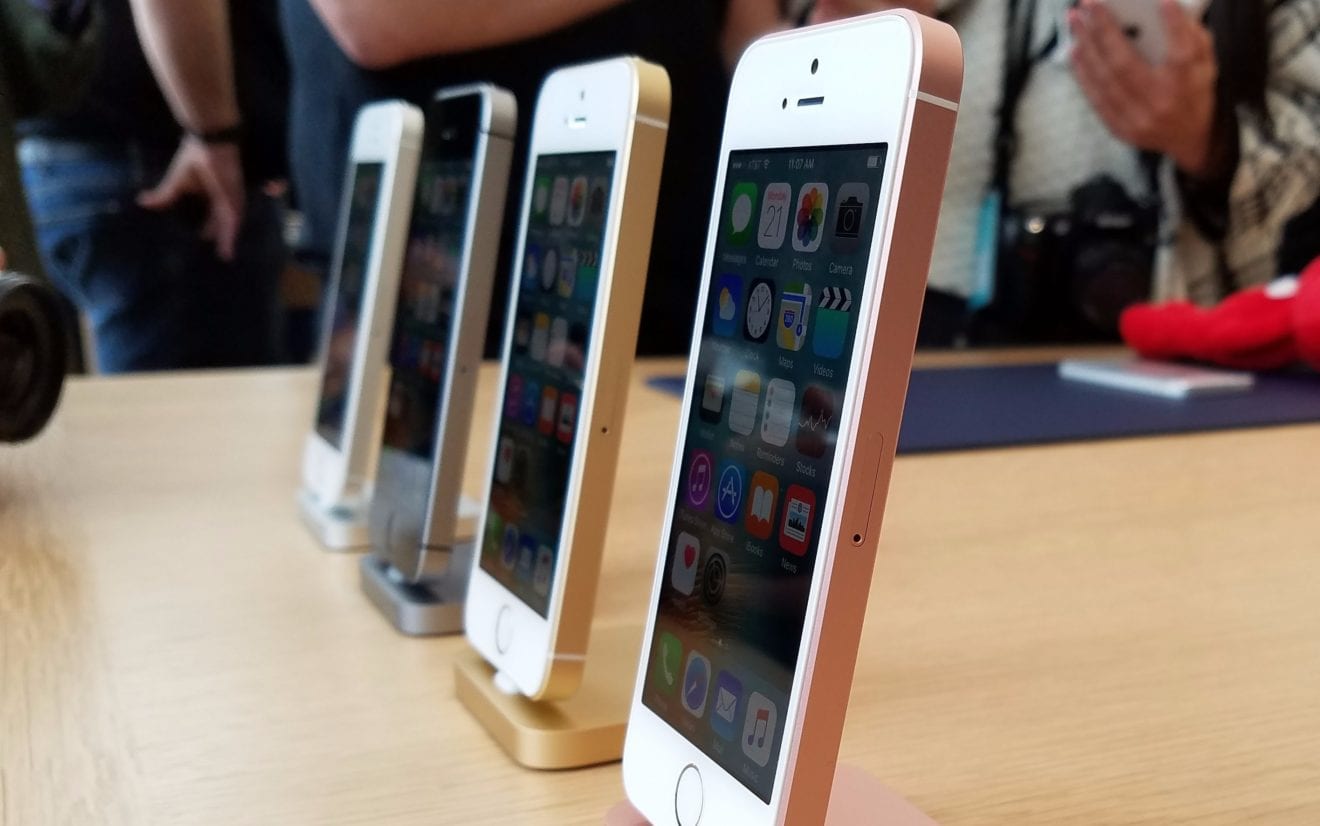
    Apple released the low-cost iPhone SE in March 2016, accompanied by high expectations. It released this smartphone in India in early March, but it has so far failed to garner much interest from users. The problem with the iPhone SE is that although it costs $430 in the US, it is sold at the higher price of $586 in India.

    iPhones cost more in India because Apple currently depends on third-party distributors to sell the devices in India, adding their commissions to the phone’s price. However, as discussed in the previous article, Apple plans to open its own stores in India, which could help bring down the prices of iPhones in India going forward.

    This isn’t the first time Apple has launched a cheaper version of the iPhone. In 2013, Apple launched the iPhone 5C at around $500.

    In 2015, Apple announced that it would slash the price of the iPhone 5S from $665 to $370, according to a report from the Times of India. However, all these efforts have still not helped Apple’s penetration of the Indian smartphone market. In our view, Apple would have to do much more to achieve that goal.

  • iPhone SE hits stores in Taiwan, received mixed reaction

    iPhone SE hits stores in Taiwan, received mixed reaction

    Sales of Apple Inc.’s latest smartphone offering, the iPhone SE, began in Taiwan Thursday, last April 7, with retailers and telecom companies reporting mixed consumer reactions.

    Data Express, a chain selling Apple products and accessories, said all iPhone SE devices available across its 51 outlets were sold out on the first day, and the 64G model was the best seller.

    The 64G model, priced at NT$19,500 (US$601.32), was also the most popular at electronics chain Tsann Kuen, since the model had sold out at all 300 stores during the first hour after sales began.

    Tsann Kuen also pointed out that over 80 percent of iPhone SE smartphones sold by the chain were either the gold or rose gold versions.

    Neither chain gave their exact sales figures.

    Telecom companies, which began accepting pre-orders March 29, did not see the same enthusiastic consumer response as the retail chains.

    Taiwan Mobile Co. said initial sales of the iPhone SE were weaker than the iPhone 6S that hit the Taiwanese market last October.

    Taiwan Star Telecom Corp., a smaller player in the mobile service market, also saw weaker sales of the iPhone SE than the iPhone 6S, citing local consumers’ preference for phones with a larger screen.

    The iPhone SE features a 4-inch screen, while the iPhone 6S comes in two sizes — the standard model with a 4.7-inch screen and the Plus model with a 5.5-inch screen.

    Taiwan Star said over half of the pre-orders for the iPhone SE it received were made by people aged between 25 and 34, and this showed the new phone’s lower pricing appealed to younger consumers.

    Far Eastone Telecommunications Co. said there were consumers asking about the iPhone SE at its outlets, but buying momentum is not expected to pick up until people learn more about the new model through word of mouth.

  • iPhone SE launch date revealed

    iPhone SE launch date revealed

    The Asia-Pacific iPhone SE launch dates have been revealed.

    In Asia-Pacific, customers in Australia, China, Hong Kong, Japan, New Zealand and Singapore will be able to order the new handset model beginning Thursday, March 24, with availability beginning Thursday, March 31.

    The iPhone SE will be available “in early April” in India and Taiwan, but release dates were not given for other Asian markets.

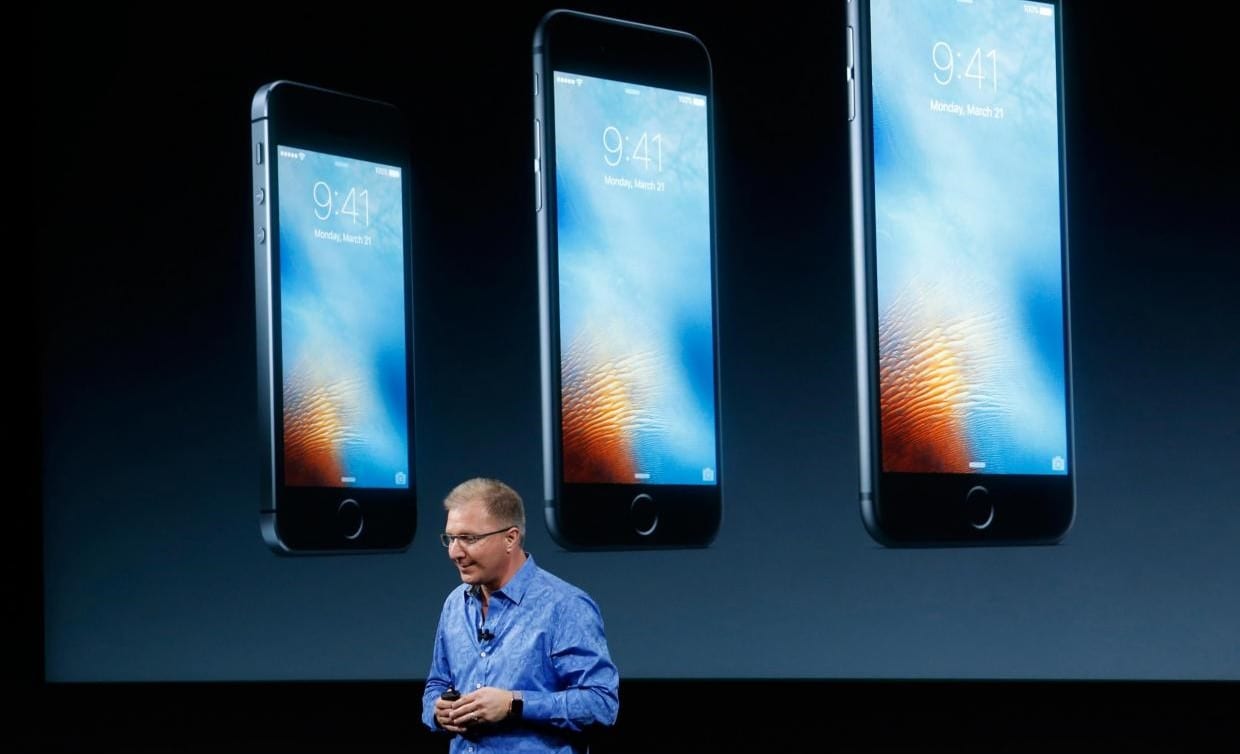
    The new iPhone SE marks a philosophical shift into a lower price bracket for the tech giant, with the SE essentially an evolution of the old iPhone 5 product with features previously only found in the larger iPhone 6 models.

    iPhoneSE-RsGld-3Angles-LockScreen-PR_US-EN-PRINT

    Apple says the SE is the world’s most powerful phone with a four-inch display, “reinvented from the inside out, giving customers a powerful, full-featured iPhone no matter which model they choose”.

    The 64-bit A9 chip, introduced in iPhone 6s and iPhone 6s Plus, offers iPhone SE customers two times faster CPU and three times faster GPU performance compared to iPhone 5s, offering longer battery life and less energy use. It features M9, Apple’s new generation motion coprocessor and faster wi-fi.

    Pricing will start at US$399 in the US for a 16Gb model, with prices yet to be revealed for Asian markets.

    But both the tech and business community appeared underwhelmed by Apple’s launch overnight, which also included a new 9.7 inch iPad Pro and cheaper models of the Apple Watch.

    “Given the softness of Apple’s performance last quarter, today’s event was an opportunity for the company to start regaining some of the momentum it has lost,” commented Neil Saunders, CEO of retail analyst Conlumino.

    “Unfortunately, this opportunity was largely squandered with fairly mundane product updates being the sole focus of the occasion. Gone was the sense of wow, gone was the sense of excitement that makes consumers want to dash out and get the latest Apple products.”

    Saunders says the technical ability and engineering prowess of Apple is indisputable, but the launch unveiled little more than tweaks.

    “As such they will likely little to persuade consumers, especially in saturated core markets like the US and the UK, to rush out and upgrade. The one slight positive is that some of the cheaper price points, across lines like Apple Watch and the new smaller iPhone, will allow Apple to penetrate some consumer segments that have, hitherto, found its products too expensive.

    “However, that Apple should need to focus on price is a worrying sign and a reversal on the previous position that its products were so innovative and cutting edge that it was able to command a premium.”

    Saunders concluded that Apple needs to come up with “revolutionary rather than evolutionary product” this year.

    “It has failed to do so at this event, which does not bode well for future sales or market share.”


  • Xiaomi India lodges FDI application

    Xiaomi India lodges FDI application

    Xiaomi India, the Chinese smartphone maker’s local subsidiary, has lodged an application with the government to operate single-brand retail stores.

    The move coincides with US tech giant Apple resubmitting a similar application as it attempts to gain formal Indian Government approval to operate its own Apple Stores in the heavily-regulated economy.

    Xiaomi currently sells handsets online and through a network of offline distributors.

    But to gain approval to open single-brand stores, companies must commit to sourcing at least 30 per cent of its stock or componentry locally. Apple is applying for a waiver of this clause on the grounds it makes “state-of-the-art” and”’cutting edge” technology products which cannot be sourced locally.

    “Chinese smartphone maker Xiaomi has submitted an application to the Department of Industrial Policy and Promotion (DIPP),” an official confirmed to Indian news media this week.

  • Is Dalian Apple Store world’s largest?

    Is Dalian Apple Store world’s largest?

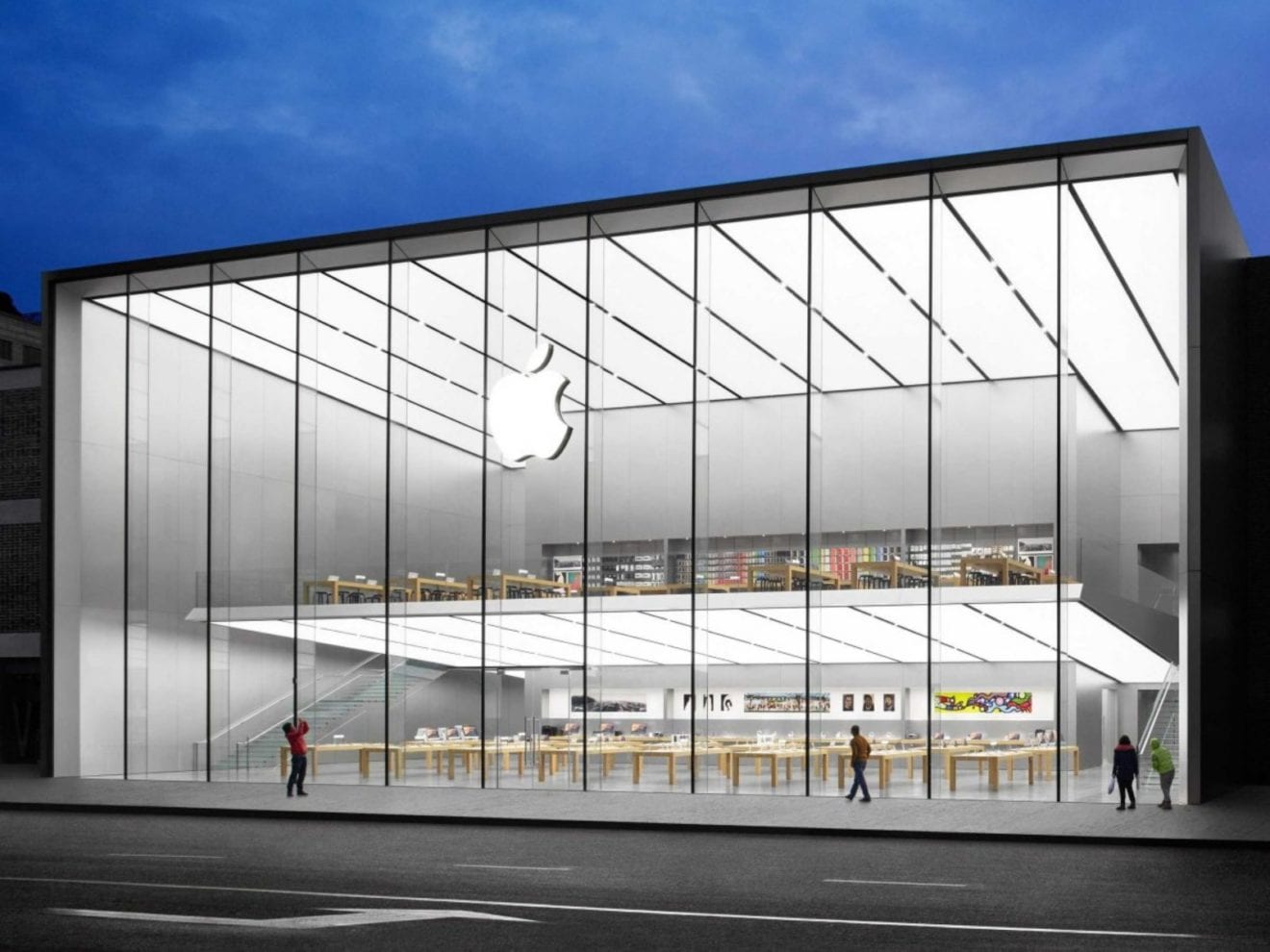
    Opening on Saturday, the second Dalian Apple Store is disputedly the brand’s largest flagship to date.

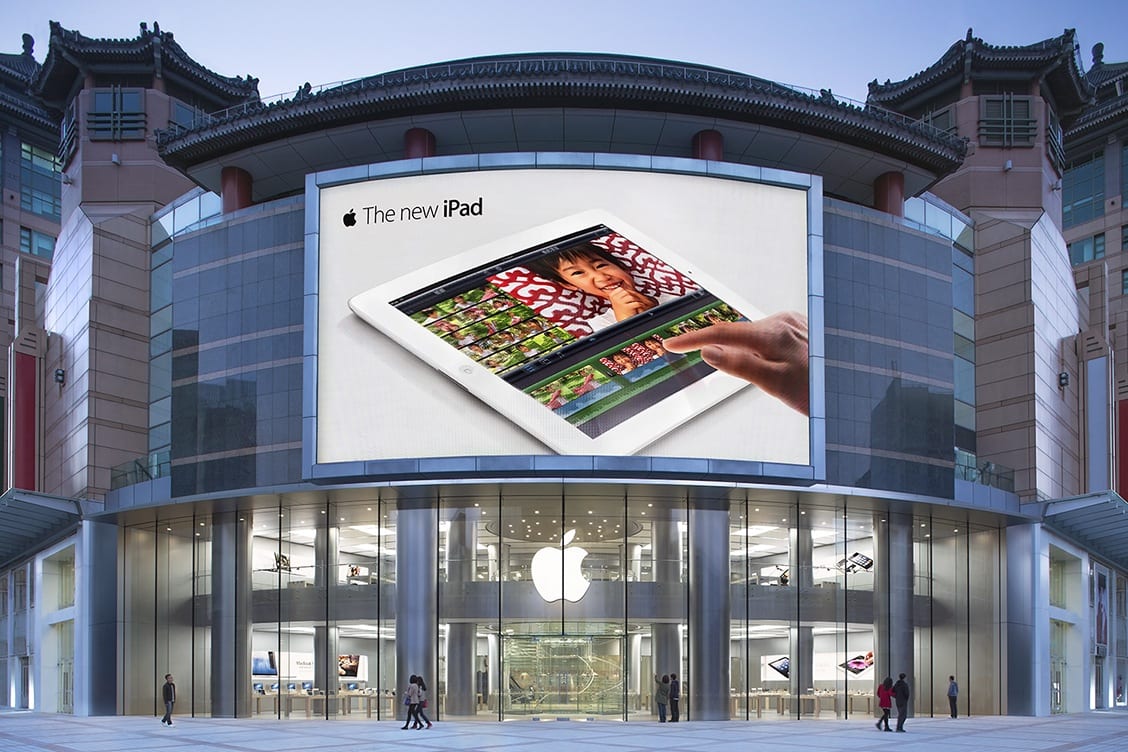
    It is located in the eight-storey Olympia 66 shopping mall in the Xigang district of the Chinese port city. Opened in December, the centre has won several awards, including Best Retail Architecture in Asia Pacific.

    The new shop takes Apple three-quarters of the way toward its goal of 40 stores in China by the end of the year.

    Dalian is known for its food and luxury shopping, attracting visitors from Japan and Korea, as well as China. It already has one Apple Store, at Parkland Mall (pictured), which opened in October.

    There has been confusion – and even vandalism – related to both stores regarding size, especially asApple does not tend to share area details of its stores. While the new store is being touted in the media as the world’s largest, Parkland Mall had signs up in 2012 saying “Apple’s World’s Biggest Flagship Store will be coming soon”, Cult of Mac reported in March that year.

    To add more confusion, when Apple barricades were put up outside Parkland, rival shopping centre Dalian Department Store sent a security team to push down the Apple banners, and there is video of the security guards destroying the barricades.
    It was not clear what the dispute was about, but local reports indicated the rival store opposed the Apple expansion of the mall.

  • Apple Stores in India could resemble the iconic 5th Avenue Store

    Apple Stores in India could resemble the iconic 5th Avenue Store

    Apple has stepped up its efforts to tap the Indian market by seeking government approvals for opening Apple Stores and selling and manufacturing refurbished devices in India. Now Apple is already said to be looking for space in key cities such as Mumbai, Delhi-NCR, Bengaluru and Pune for its first Apple Stores in the country.

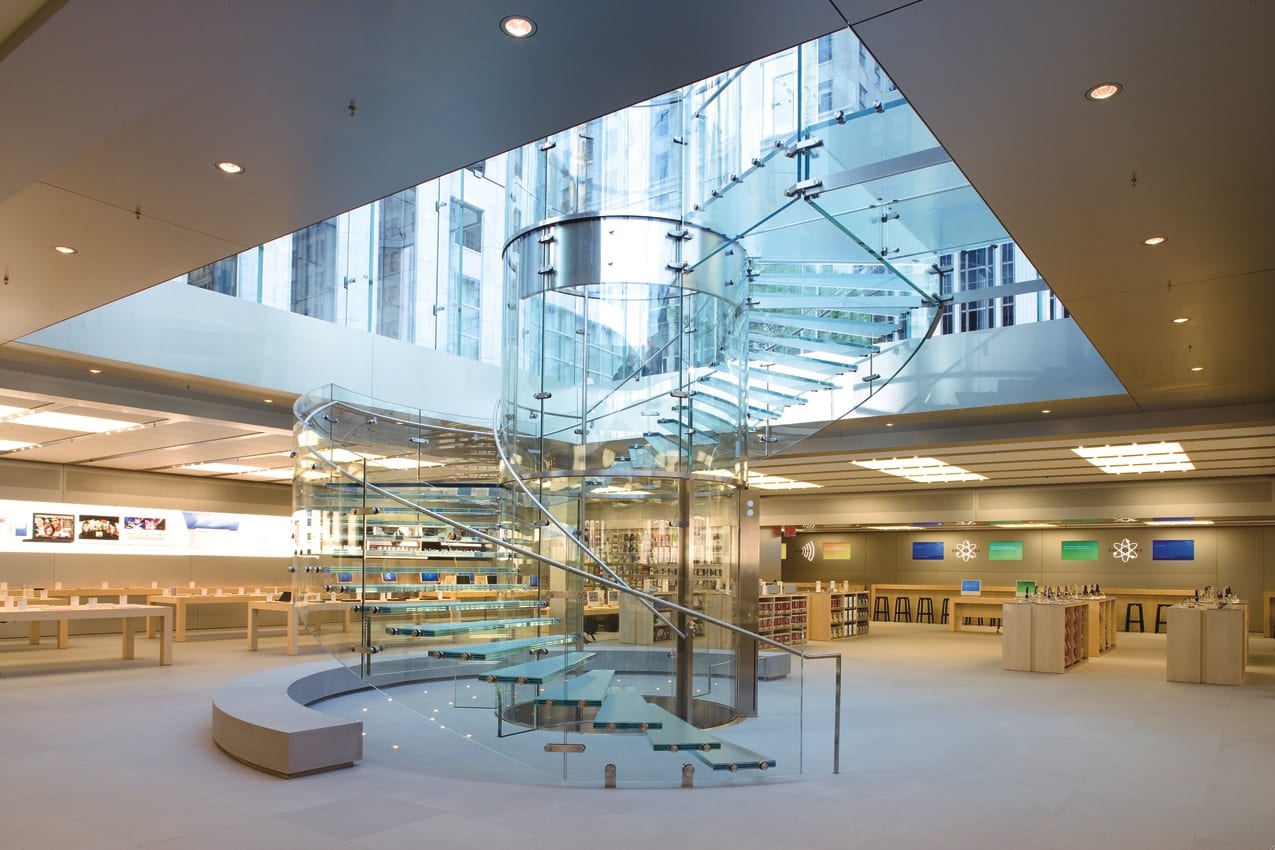
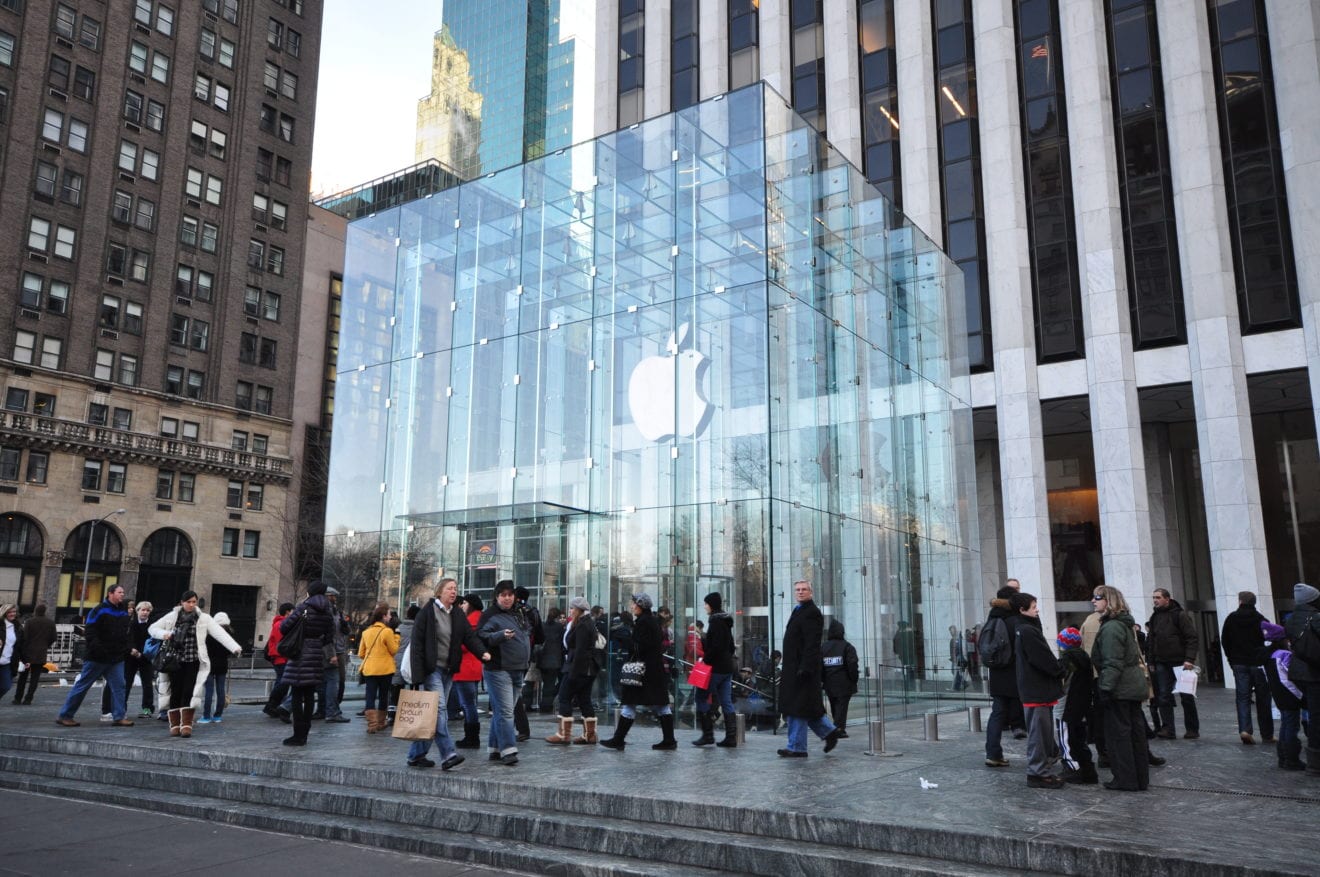
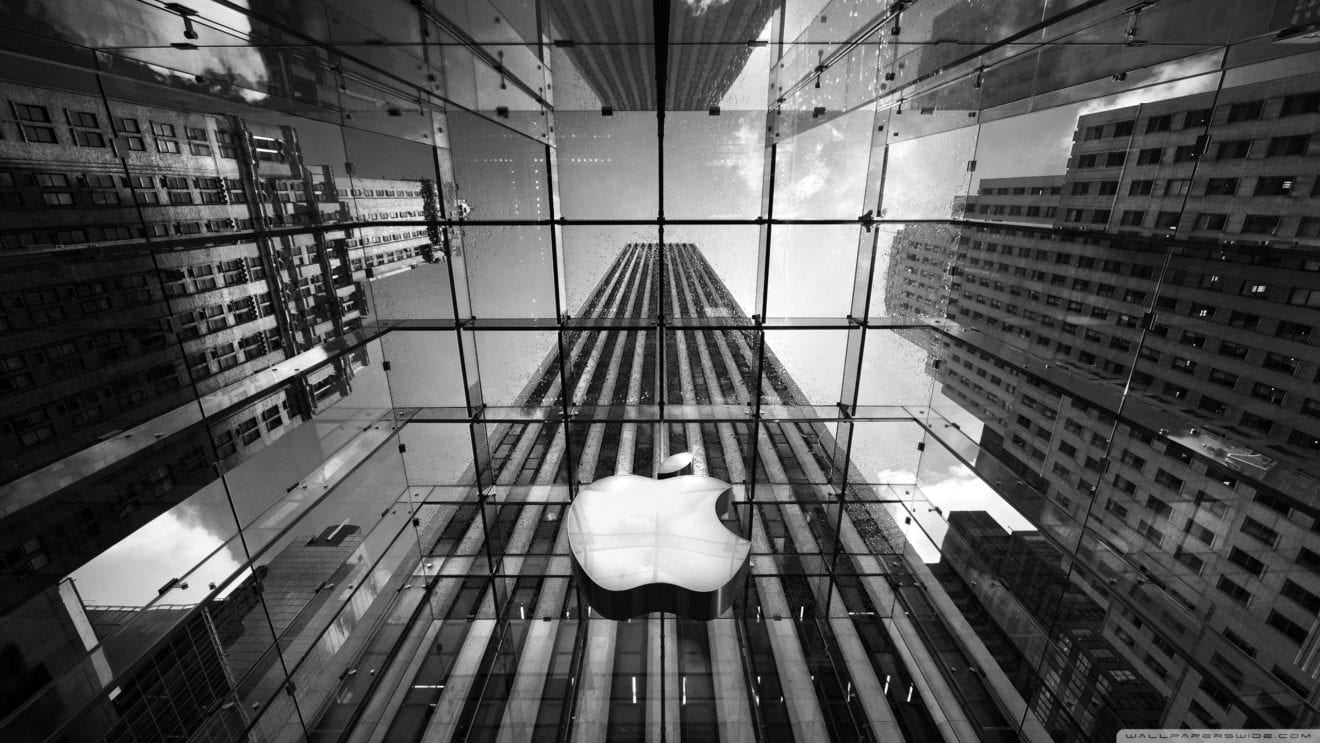
    The report further says Apple is planning to replicate its iconic Fifth Avenue Apple Store in New York City, along with smaller outlets in India. Apple’s Fifth Avenue store is popular for its unique glass cube design partly designed by the late Steve Jobs. The large cube encloses the entrance to the main store via an Apple patented glass staircase. The report points out the cube design will be for the flagship stores in India.

    According to the report, Apple is planning to set up 2,000-3,000 sqft stores in India that will also have space for tech support and small workshops — similar to the ones in the US.

    Apple stores are one of the critical elements of Apple’s business model. In fact, Apple leads the US’ retail market in terms of sales per unit area. So far it has 481 retail stores in 18 countries including neighboring China. These stores have helped Apple build itself as a luxury brand as well as giving users a premium experience before making a purchasing decision.

    With its main markets nearing saturation level, Apple has shifted its focus on emerging markets like China and India. Even as it has yet to begin its efforts in retail segment, Apple has already grown a lot bigger in China in the recent years. Apple’s sales to China market along with Hong Kong and Taiwan, grew 14 percent to $18.37 billion, in the December quarter. It now plans to increase its Apple Stores to 40 in China by the end of the summer this year.

    CEO Tim Cook has already revealed India is going to hold key for its success and is one of the most important growth areas for the next decade. It may be recalled that despite the global slowdown, Apple had recorded better figures in India, which has been long considered as a price sensitive market and is currently dominated by budget Android smartphones. According to the recent IDC figures, Apple edged past Xiaomi to grab no. 6 spot in 30 Indian cities.

    Apple Stores are likely to lay the foundation for Apple’s bigger foray into the Indian market, which it had largely ignored for several years. A Fifth Avenue-like store clearly show Apple’s intentions of company’s long-term strategy for the Indian market. We can expect Apple’s smaller outlets to be akin to the ones in the US and may initially target the urban consumers. These outlets are likely to offer uniform design and experience to the customers.

    But does Apple’s new efforts mean cheaper devices in India? Well, highly unlikely. Tim Cook recently said that the company has no intentions of launching a stripped down version of the iPhone to appease emerging markets. Cook added the company’s research indicates users in these markets are now willing to invest more for improved experience.

    But that being said, another interesting thing to watch out from Apple is its plans tosell refurbished iPhones in India. The pre-owned Apple devices are likely to attract price-sensitive consumers. This is likely to help Apple expand its foothold in the mid-range smartphone segment where Android is very huge.

  • Apple eyes Vietnam R&D centre

    Apple eyes Vietnam R&D centre

    US tech giant Apple is mulling a $1-billion regional data hub in Hanoi, according to the Dien dan doanh nghiep, the official publication of the Vietnam Chamber of Commerce and Industry.

    “Apple is studying the sites for the construction and completing the investment procedures,” the publication said, cited its source.

    This will be Apple’s first investment in Vietnam and it will be following in the footsteps of South Korean conglomerates Samsung and LG, and US-headquartered Microsoft, which have been present in the country for years.

    However, while the others have invested in manufacturing facilities in Vietnam, Apple will reportedly build a data centre meant for its entire Asian operations.

    Reuters reported in November last year that Apple had set up a subsidiary in the Southeast Asian country to import and sell its mobile phones directly in this market.

    Samsung is one of the biggest investors in Vietnam with $13 billion direct investment in factories and a research hub in Bac Ninh, Thai Nguyen and Ho Chi Minh City. LG Electronics is also building a $1.5-billion producing complex in northern Vietnam. Microsoft has shifted its smartphone production from China, Hungary and Mexico to Vietnam in 2014.

    Meanwhile, the iPhone maker has been aggressively investing in R&D with a spend of $8 billion last year. Apple already has R&D facilities in the UK, China, Taiwan, US, Israel and Japan.

    “It is unclear when Apple will deploy the Hanoi-based centre, but the size of the project has shown the high potential of the Vietnam market to the US tech major,” the Dien dan doanh nghiep commented.

    Samsung, as Apple’s biggest competitor in the Vietnam’s mobile phone market, is also investing in two R&D centres, a $300-million new one in Hanoi and a facility within the $1.4-billion complex in Ho Chi Minh City.

    Several other global tech and electronics firms have chosen Vietnam as base for their global back-end and manufacturing activities, including Hewlett-Packard, Panasonic and Nissan Techno.

    Vietnam is considered as the next manufacturing powerhouse of Asia, fueled by its growing economy, young and urbanised population and cheap labour cost.

    Also, US has been Vietnam’s biggest export market for the last couple of years, accounting for the largest proportion of 20.7 per cent of the total exports, according to a latest update of Trading Economics.

  • Apple’s iBeacon on trial at Central World

    Apple’s iBeacon on trial at Central World

    Nattakit Tangpoonsinthana, executive vice president of marketing, said yesterday that while urbanisation has driven the retail industry in recent years with the growth of shopping malls in the provinces, the new retail landscape is being reshaped by the Millennials and Generation Z shoppers.

    Millennials are people aged about 21-30 and Gen Z are 15-20. Although these two groups represent only 10-20 per cent of shoppers, they are leading the voices in social media and influencing purchases and consumption.

    “Retailers must give importance to these new-generation shoppers, who will be the game-changers of the retail industry and general businesses within five years,” he said.

    To fulfil the needs of these shoppers, CPN, which is aiming to become a leader in the regional retail industry, is creating a seamless experience, focusing on customisation and becoming a social enterprise.

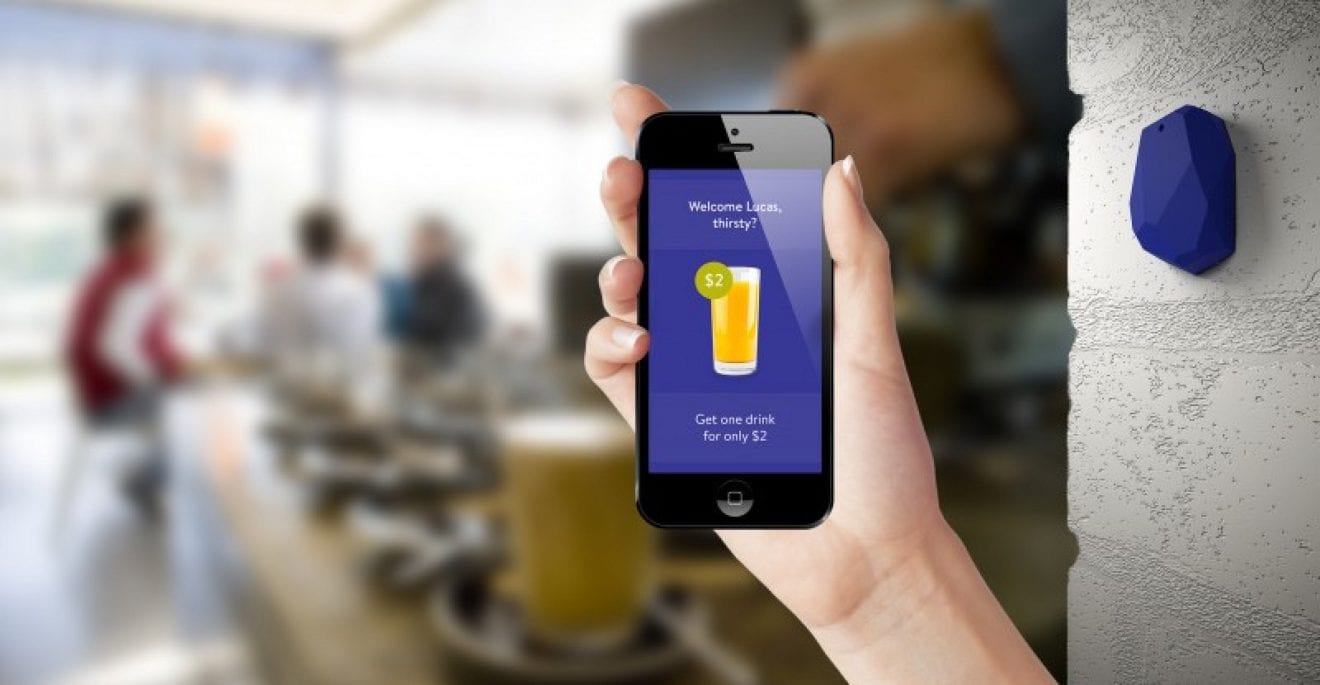
    iBeacon enables tenants to send tailored messages to shoppers who have loaded the CentralWorld app on their smartphones.

    CPN is also talking with a software company to mine Big Data from its The 1Card customer relationship management programme, which holds mountains of data on 8 million-9 million members.

    The Millenniums and Gen Z shoppers have already shaken up the fashion world, which has launched more frequent new collections and “limited editions”.

    To address the tastes of these groups who get bored fast, CPN will have to create more “wows” and “happenings”, launch concept stores and speed up store renovations from every eight to nine years in the past to every four to five years now.

    CPN has increased its digital marketing budget to 10 per cent of its Bt700 million marketing budget from just 3 per cent in the past.

    Marketing staff have to have digital literacy. Store managers must know not only on how to run their physical branches but also how to engage and converse with their shoppers online.

  • Huawei Japan experience store planned

    Huawei Japan experience store planned

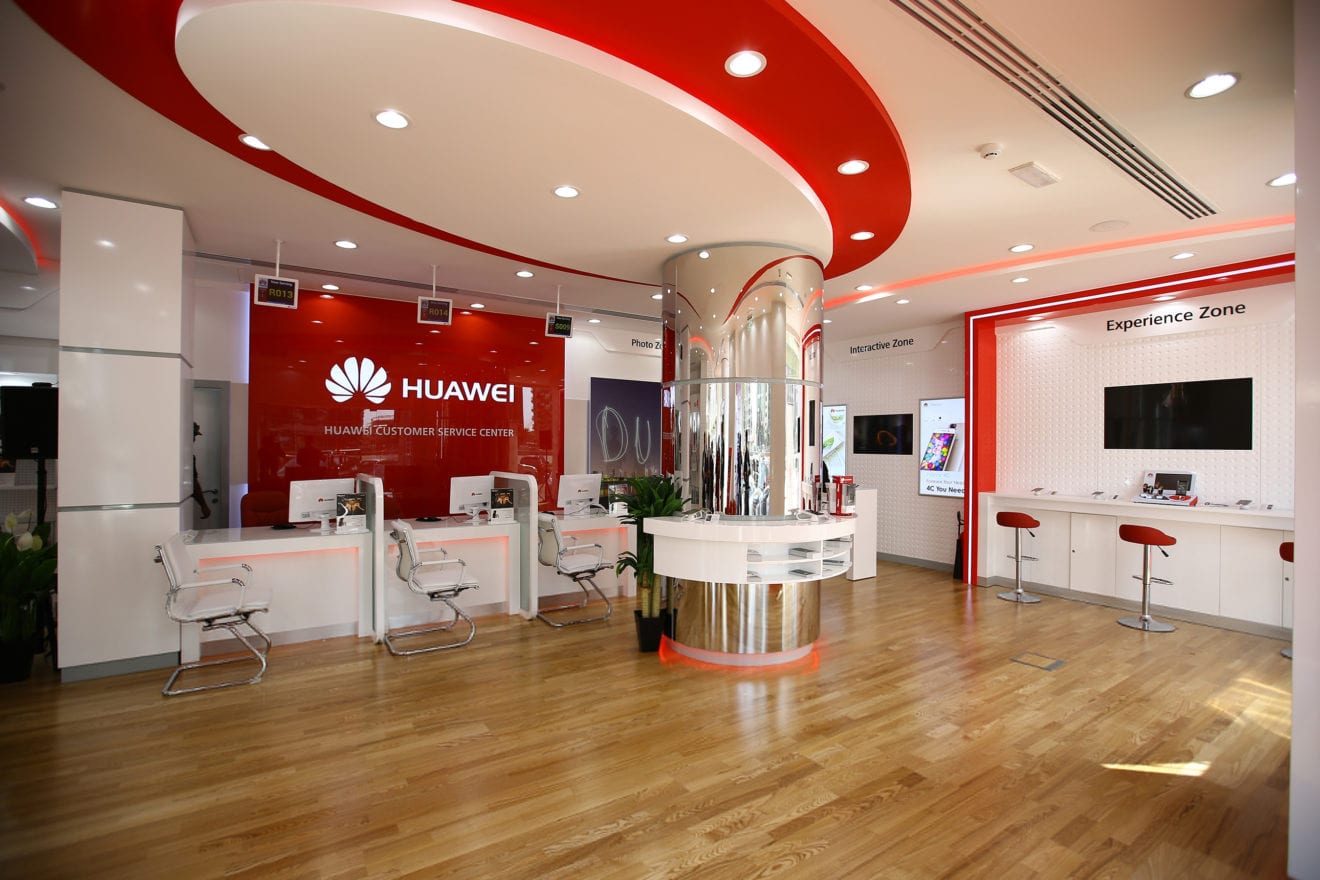
    Huawei Japan is to open its first smartphone experience store in Tokyo – but customers will not be able to buy a handset there.

    The Chinese phone manufacturer says it intends to use the outlet to provide services to users, improve brand influence and break the misunderstanding that low-price smartphones are not easy to use.

    While the store is scheduled to open in Tokyo before June, the company has yet to confirm the location.

    Meanwhile, Huawei plans to increase the number of its global smartphone stores from 23,000 to 40,000 – a 70 per cent jump. It is hoping to improve its sales performance in the smartphone sector, where growth has already started to slow.

    Huawei was ranked third by global smartphone shipments last year, trailing Samsung and Apple, and is aiming for second place.

  • Apple Continues Expansion in China with New Store Opening on March 19

    Apple Continues Expansion in China with New Store Opening on March 19

    Tech giant Apple has confirmed that a new Apple Store will open in Dalian, China, on March 19, 2016. The new store is part of the company’s ongoing mission to launch at least 40 new Apple Stores in China by October 2016.

    The new Apple Store will be located on 66 Olympia Plaza, marking it as Apple’s second retail outlet in the port city after it opened its first store In Dalian earlier in October 2015. Dalian’s central location and inflow of tourists from Japan and Korea will help the company further secure its tech presence in China, which Apple predicts will be its most dedicated market in the future.

    Apple’s agenda of launching 40 new outlets seems to be working out well after it opened stores in Nanjing, Hong Kong, Chengdu, Qingdao, Guangzhou, Xiamen, Beijing, and the “Green City” — Nanning, as part of its expansion plan. The brand new store will further strengthen Apple’s roots in China and prove great advertising for the iPhone maker in the hub of one of China’s most popular cities.

    The Dalian Apple Store will open at 10:00 am local time. Speculation suggests that this could be the same store which the company claimed to be its “largest flagship” outlet almost three years ago. However, there is no confirmation if the upcoming store will still be Apple’s largest company store to date. Considering that the iPhone maker has been working aggressively to establish its presence around the world, with new stores in Turkey and Singapore, there is a slight possibility that these former plans have changed slightly.

    Plans for Apple’s new store are already arousing curiosity regarding its architectural layout. The tech giant’s consistency in the architectural design of its stores helps give it a distinctive edge against other tech rivals, both local and international. Led by Angela Ahrendts and Jony Ive, the company’s focus on the design elements of its outlets is a clever marketing strategy for luring in more customers. The upcoming store is expected to feature some of Apple’s traditional store elements like a Genius Bar, JointVentures, workshops, and other Apple-based services.

    With the new store in Dalian, Apple could provide customers with an experience better than any other. Even though an Apple Store exists in Dalian, a brand new outlet might help drive more sales for the company.

    Therefore, judging by its fluent progress in opening new retail outlets in various regions of China, Apple seems well on track to fulfill its prophecy, and may even end up opening more than 40 stores by October.

  • Contactless mobile payments growing

    Contactless mobile payments growing

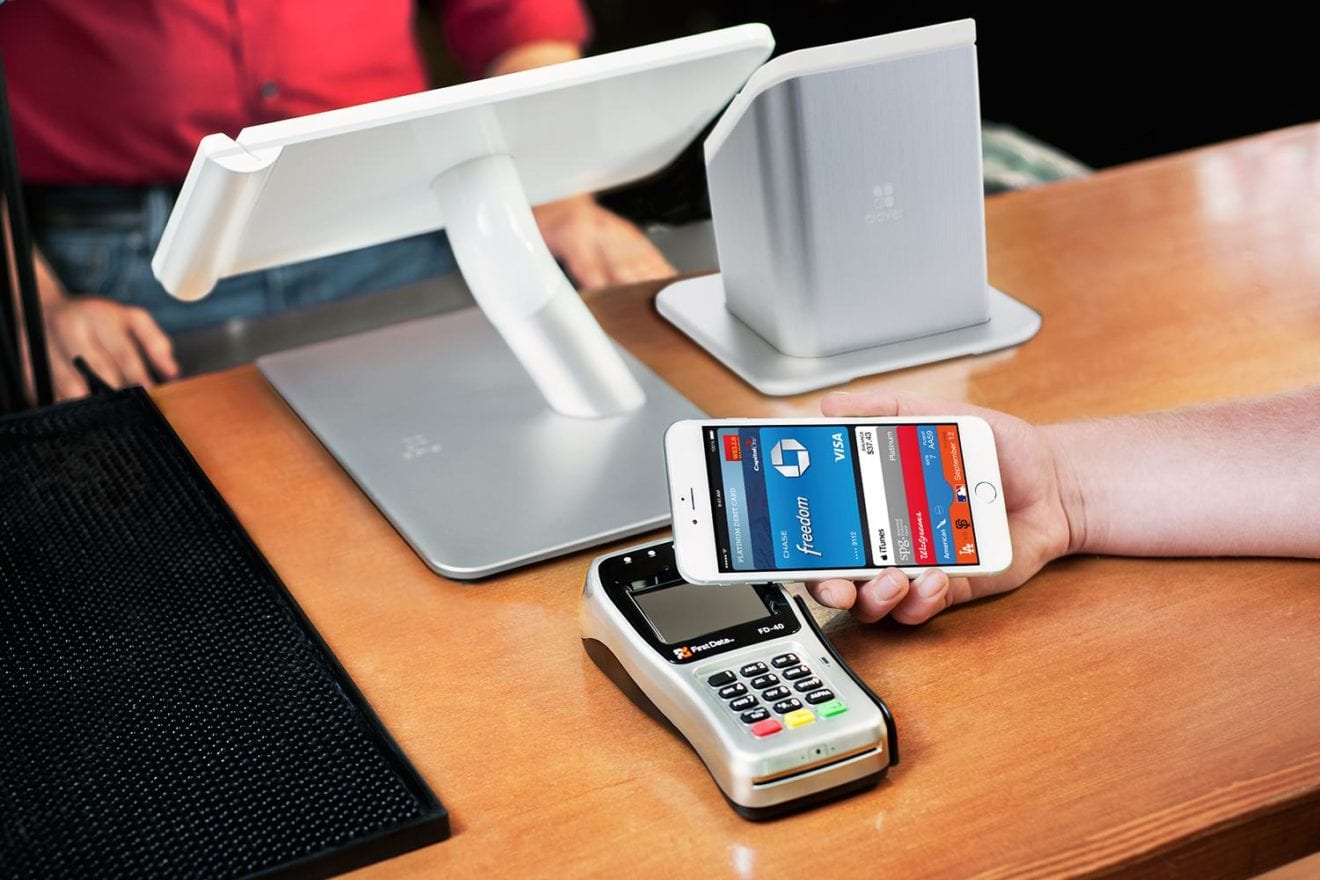
    The number of contactless payments made via mobile handsets will reach 148 million globally this year, according to a study conducted by Juniper Research.

    Samsung and Apple will account for approximately 70 per cent of new customers.

    The study showed consumers have been receptive to this payment method, predominantly because of their strategic placement. When Apple Pay was introduced in China, nearly 40 million payment cards were registered to the service in 24 hours in mid-February.

    Nearly one in five point-of-sale terminals in the US are now contactless-capable, with the report finding this will see smartphones be the number one driver of contactless payments in the US. The report also revealed banks and leading “over the top” players will deploy Host Card Emulation-based (HCE) models.

    “The combination of HCE and tokenisation is extremely attractive to banks. HCE means that they are not dependent on a mobile operator to enable the service; tokenisation reduces the burden on the issuer and allows them to use their existing infrastructure,” research co-author, Dr. Windsor Holden said.

    The study also found that NFC sticker-based solutions can be ‘risky,’ stating that in closed-loop solutions, ‘there’s a chance thieves could simply use all the money in the wallet at participating retail outlets.’

  • Virtual reality in retail stores

    Virtual reality in retail stores

    Virtual Reality, as a concept, has been around for over 50 years.

    In the beginning, it was literally the stuff of science fiction.  Then in the early 90’s it actually became reality, when physical prototypes were developed, using the modern technology of the era.  The results were underwhelming – imagine pixelated graphics and heavy, nausea inducing headsets. The concept lay dormant for 20 years before anyone thought to revisit its feasibility.

    That person was Palmer Luckey, the young inventor and founder of Oculus VR. What he discovered is that without anyone realising it, technology had quietly caught up with the requirements of VR. There were now low-latency head orientation sensors and small, high-refresh rate OLED displays which didn’t exist just five years ago.

    Using these off the shelf parts, he constructed a rudimentary hardware proof-of-concept which delivered an immersive experience far beyond what had been seen before.

    From this initial prototype, Oculus was founded, bringing on board many high profile experts in the field of computer graphics, alongside millions of dollars in funding. Their inaugural consumer VR product is about to be released to the public, and many smart people consider this to be a watershed moment.

    Will this be the event that introduces practical VR to the masses?

    Oculus (now owned by Facebook) is leading the way, but Apple, Google, Microsoft and Sony are all working on their own implementations of VR. There’s a full-on VR technology arms race happening, with the usual suspects involved.  They recognise the huge potential of the medium, and the unique ways it can complement their existing product offerings.

    VR 2.0

    This new generation of VR technology is in its infancy, and as with any nascent platform, pundits try to predict the types of experiences it will enable. Stereotypically, new mediums are often projected (interpreted) through the lens of the incumbent platforms which precede it.

    The first automobile was considered a “horseless carriage”. The first motion picture content was essentially just televised theatre. Simply re-imagining the experience of an old medium through a new one may be the path of least of resistance, but it ignores the unique elements of the new.

    So the theory goes, in order to fulfill its true potential, a new medium needs to abandon previous biases and embrace the characteristics and constraints which are unique to it.

    But does this calculus apply to VR? Perhaps not. Unlike all previous mediums, it is has no baked-in constraints. It is not simply a proxy for storytelling or communication. Its ambition is to replicate the reality we natively experience. It is, by design, the last medium.

    The obvious question becomes, what are the scenarios for which diving into an alternate reality becomes preferable to the “real” reality someone is experiencing. As mature as the underlying technology becomes, VR, for the foreseeable future, will forever be chasing the tail of “real life”.

    So what is the individual incentive to temporarily replace what we already (if we’re so lucky) get for free? Understanding the motivations that drive these virtual experiences can uncover the opportunities and jobs to be done of the medium.

    Applications

    In the context of VR, the virtual “reality” is simply “content”. As with all previous mediums, the success of this one will be intrinsically tied to the abundance and quality of content created for it. In this respect, authors and the tools they use to create with will be just as important as the technology that audiences use to consume with.

    These creation tools are also nascent, and consist of both hardware and software solutions.  Let’s explore a potential use-case for this technology within the realm of current domains.

    Virtual reality in retail: eCommerce and virtual stores

    A common current trend in the eCommerce space is the realisation that an online presence alone is not enough to deliver the ideal consumer experience. Even Amazon, the largest pure-play online commerce company has recently opened a “bricks and mortar” physical presence near its headquarters in Seattle.

    What is the impetus for taking this step “backwards” into the 20th century? Well, these companies have discovered that even with an (essentially) limitless online catalogue, the experience of browsing their catalogues online doesn’t compare to the act of literally walking down the aisles of a physical store. It is no substitute for the physical discovery process we take for granted.

    This applies not only to the type of merchandise that Amazon became famous for, like books, but especially so for more visual products like clothing and fashion. There is no substitute for the tactile experience of wandering through a curated store.

    But providing a physical presence requires sacrificing one of the key advantages of online commerce; having an effectively infinite reach, with the ability to target any consumer, wherever they are, independent of their physical location. Reaching global penetration at this physical scale is beyond the reach of all but the largest retailers.

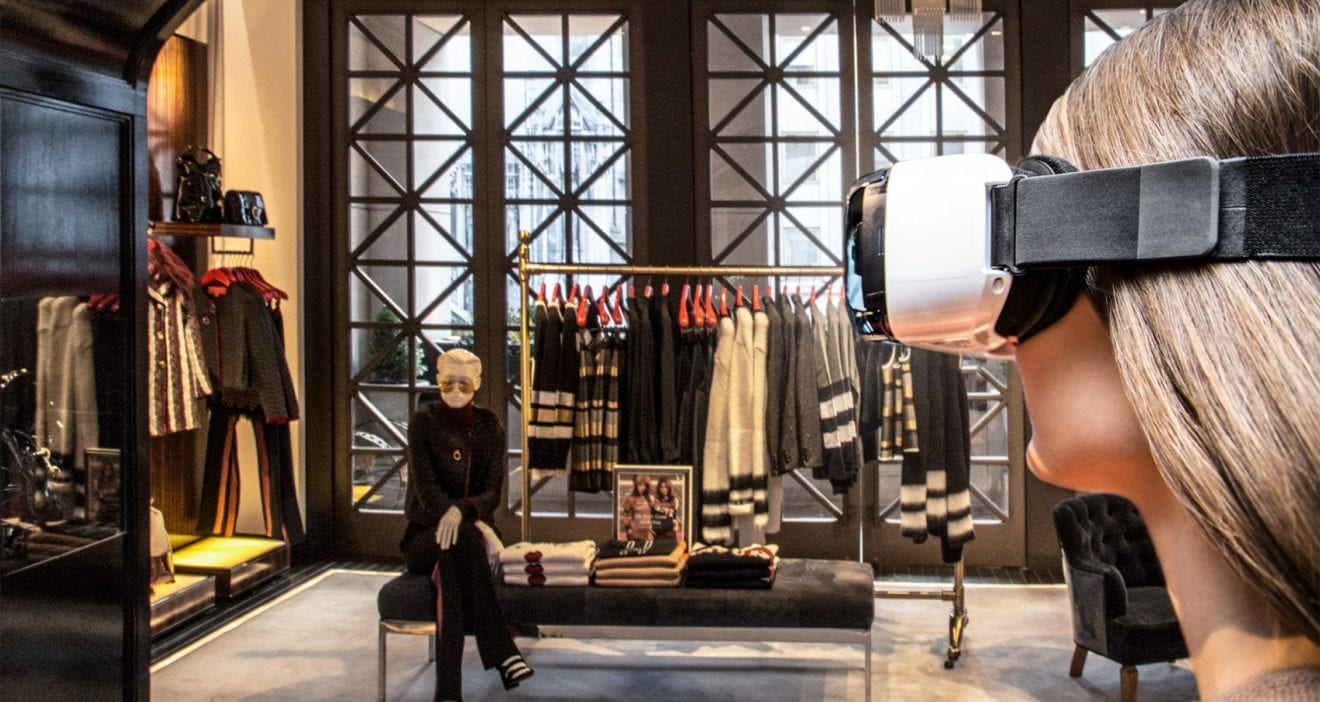
    Imagine consumers using VR to browse a virtual physical store, representing the catalogue (or a subset of) the online inventory. Even brands that have an existing physical retail footprint would benefit from the ability to amplify this bricks-and-mortar experience across markets they don’t have the scale or reach to address.

    Sizing has been an eternal struggle for online clothing retailers and consumers alike. How to know if the shirt you’re purchasing online will actually fit properly when it arrives?  Sizing charts are not standardised, and even if they were, there is no single reference body type to target a perfect fit.

    So how do you try before you buy? A virtual fitting room could come very close to replicating the experience of trying on clothes in a real physical fitting room. Imagine associating detailed physical dimensions of your body with your online shopping persona.

    Using this information, alongside similarly detailed sizing information for the individual clothing items could let you try on pieces of clothing in a virtual mirror. As you raise your arms or tilt your hips, you could see the fabric as it contours and hangs off your virtual body.

    Future opportunities

    This is just one creative application of VR hardware and virtual environments. The potential is almost limitless, and there isn’t a field or industry that won’t be touched in some way by this technology.

    While the incumbent hardware/software companies have all planted their stakes in the ground, there will be massive opportunities for all players in the ecosystem, especially content creators who understand how to create experiences on this new canvas.

    Once again, this illustrates the competitive advantage which exists for companies who can master the intersection of design and technology. Organisations who successfully combine these two disciplines will be in a unique position to benefit from the enormous future demand for virtual experiences.

    written by Marc Lamothe, Technical Director at Start Hong Kong
  • Apple Granted 4 Design Patents in Hong Kong

    Apple Granted 4 Design Patents in Hong Kong

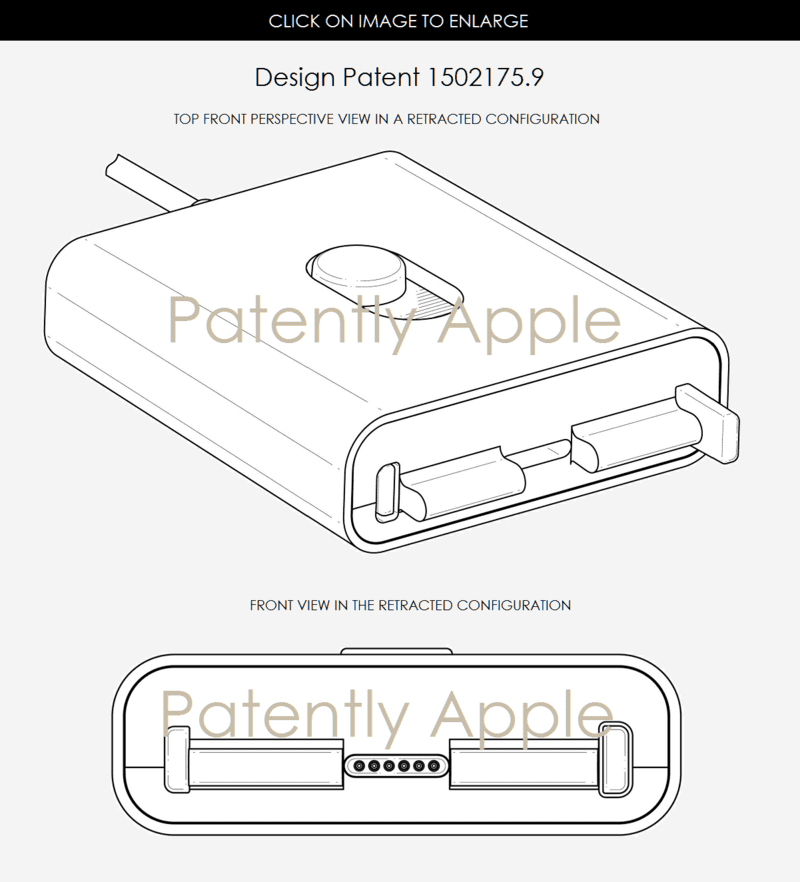
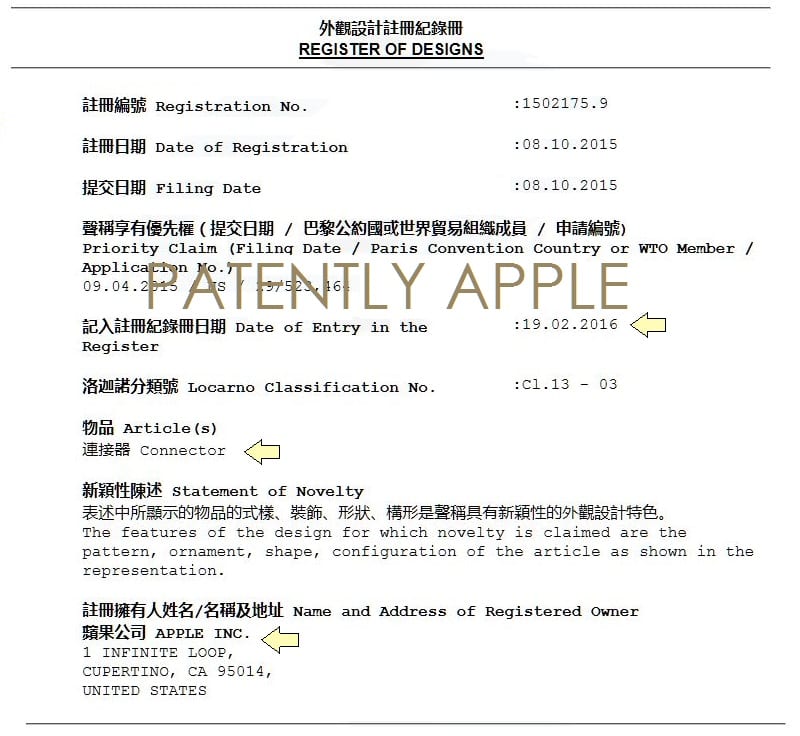
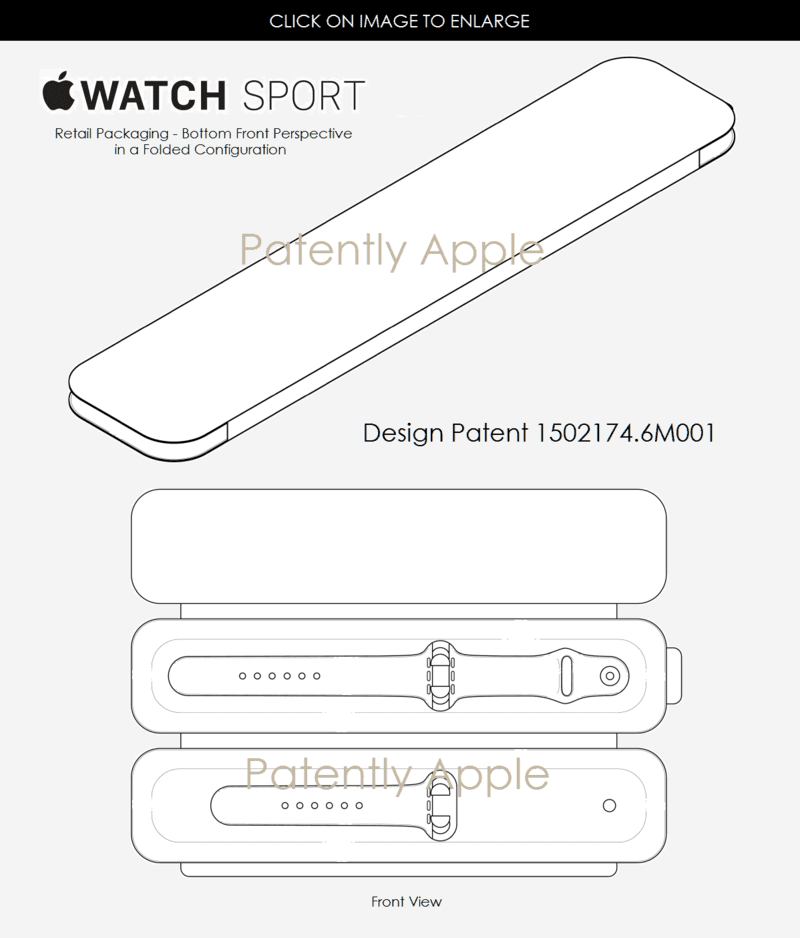
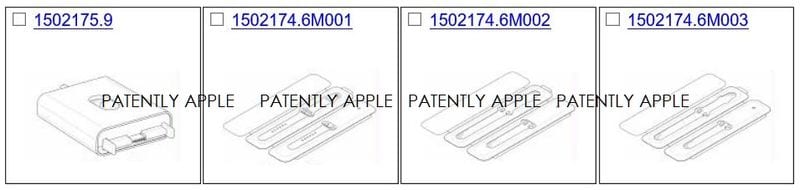
    Apple was granted four design patents yesterday in Hong Kong China covering the Apple Watch Sport’s retail packaging & a connector with an on-off switch at the top as noted in our cover graphic.

    Unlike “patent applications,” design patents published by the U.S. Patent and Trademark Office and/or any other Patent Office, don’t reveal pertinent information about a particular design. All we are given is a series of simple photos and/or line-art graphics of what was actually registered. The first design patent is a case in point. It’s a design patent for a ‘connector’ – but it’s not one that’s familiar. Without patent details, there’s no way to verify with certainty what the connector is for. .

    Design Patent: Connector

    Apple was granted a design patent in Hong Kong yesterday for a connector that is unidentified. If any reader is able to identify this connector, then please make note of it in our comment section below and we’ll update this report accordingly.

    2AF 55 CONNECTOR DESIGN PATENT

    Update 5:40 a.m.: Several comments suggested that the connector design was associated with the hidden data port. After going back to the design patent and conducting a more focused search online for this, I came a across a design for a charging strap as noted in the graphic below. It’s an accessory not made by Apple.

    Going back to the design patent there was a second part of the design, the male connector as presented below that’s to mate with the female connector as noted noted above. If this design is associated with the Apple Watch, then will Apple introduce this with the Apple Watch 2 design or are they licensing this design to accessory makers? Time will tell, but for now, it appears that our fan base may have had it right in suggesting the connector was for the hidden data port. Thanks to all who sent in comments on this in a timely manner. Cheers.

    2.88 AF 55 CONNECTOR

    3AF 55 CONNECTOR GRANTED DESIGN

    Design Patent: Apple Watch Sport Retail Packaging

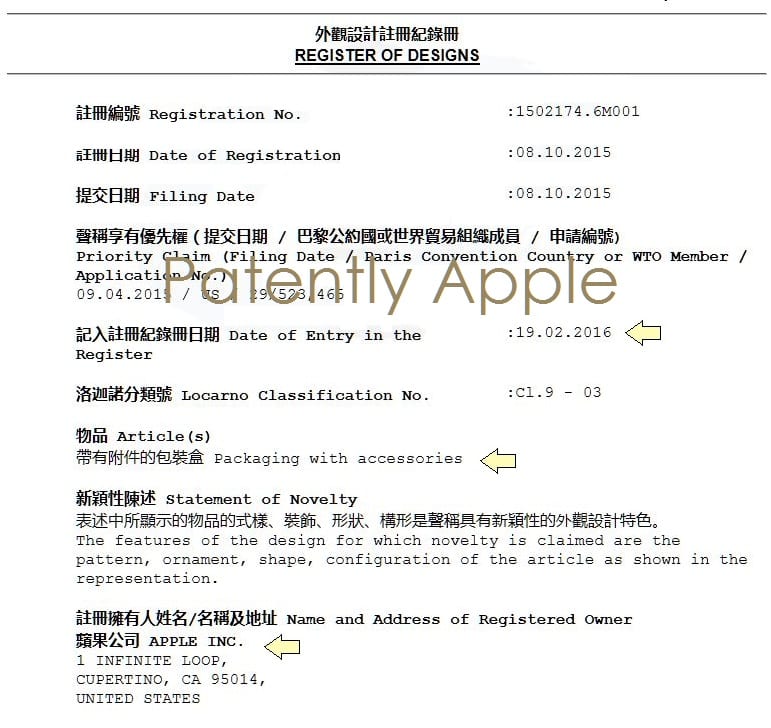
    Apple was granted three design patents yesterday in Hong Kong numbered 1502174.6M001 to .6M003 covering the retail packaging for the Apple Watch Sport as noted below.

    4af 55 apple watch sport retail packaging

    5af 55 apple watch sport granted patent

    6AF 55

  • Apple Pay’s China Launch: Who Will Win Over Chinese Luxury Consumers’ E-Wallets?

    Apple Pay’s China Launch: Who Will Win Over Chinese Luxury Consumers’ E-Wallets?

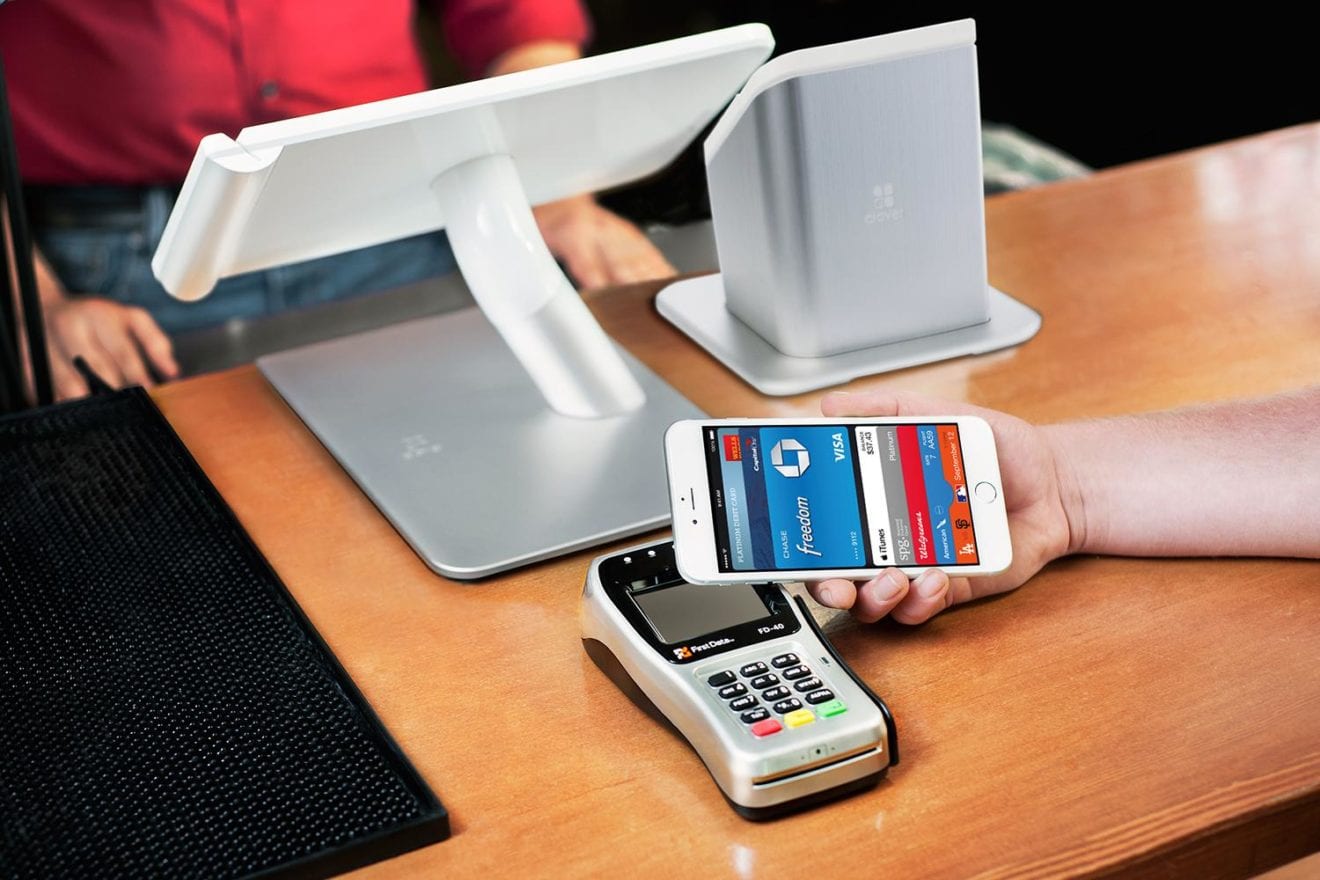
    With an optimistic plan to take on entrenched Chinese mobile payment rivals, Apple Pay made its move into mainland China on Thursday this week in hopes of making the country its biggest market.

    While some experts doubt the prospects of Apple’s high-tech payment system to compete with local giants including Alipay and WeChat, luxury retail is taking notice of the method. On the date of Apple Pay’s launch, Lane Crawford announced that all of its mainland China locations will offer Apple Pay, making it one of the first retail locations in the country to offer the service. “Offering Apple Pay as a payment option to our customers is another important step towards an even stronger connected commerce strategy, constantly evolving and leveraging on the digital and mobile world which is vitally important in Asia,” said Lane Crawford President Andrew Keith in a press release.

    The launch allows China’s only credit card company UnionPay, which has teamed up with Apple Pay, to take on Alipay and Tencent’s TenPay as they compete to win over Chinese consumers’ e-wallets.

    Limited to the iPhone, some experts are saying Apple Pay faces an uphill battle in China as local mobile options have already become incredibly popular. In addition to the fact that Apple will have to take on local giants, experts have found that many Chinese netizens are wary of Apple Pay for a variety of additional reasons. Online comments suggests that many are suspicious of giving their bank card number to a U.S. company and show a preference to earn interest from Alipay. Meanwhile, Apple Pay doesn’t have built in “shopping app” features and discounts found on Alipay and WeChat Wallet, including WeChat’s direct link to dining app Dianping.

    But as the iPhone remains a luxury status symbol for Chinese consumers, Apple Pay could possibly find a niche among affluent urbanites, depending on whether or not more retailers like Lane Crawford choose to make it available.

    The development of this competitive landscape is of equal importance to luxury retailers not only in China, but also abroad, which are scrambling to keep up with payment methods most popular with Chinese tourists. Many international luxury retailers now offer UnionPay, but a growing number of them are allowing Chinese customers topay with Alipay or with WeChat, giving them an advantage over those who haven’t moved past UnionPay. Regardless of whether or not Apple Pay manages to catch on with China’s jet-setting iPhone owners, retailers across the world will need to up their payment technology to keep up with their Chinese VIPs’ preferences.