Tag: asia

  • Forex storm hurt Bossini further

    Forex storm hurt Bossini further

    Foreign exchange losses hobbled the recovery of Hong Kong-headquartered fast-fashion label Bossini.

    In full-year results just released, Bossini reported a 3 per cent decline in total revenue to HK$1.958 billion (US$249.6 million), largely due to a decrease in sales from the export franchising business. However gross margin rose rose two percentage points to 53 per cent.

    While same-store profit rose by 1 per cent, the company reported a loss attributable to shareholders of $29 million, compared with a profit of $5 million last year.

    Mainland China and Taiwan were standout same-store sales performers, recording 6 per cent and 3 per cent growth for the year respectively. Bossini’s export franchising business added three new markets during the year: Laos, the Czech Republic and Rwanda, taking its footprint to 25 countries.

    In a stock exchange filing, Bossini said its operating profits from its retail businesses in Hong Kong, Macau, Mainland China, Taiwan and Singapore all improved. Hong Kong and Macau account for about 50 per cent of the brand’s sales.

    “Nevertheless, the group’s profit attributable to owners posted a decline mainly due to the foreign exchange fluctuation arising from Renminbi,” wrote chairman Man Kuen Bess Tsin.

    “The decrease in the profit derived from the export franchising business, as a result of the continuously weak and competitive apparel retailing environment, was another reason for the drop.”

    Same-store sales by market

    Same-store sales in Hong Kong and Macau slipped 2 per cent and in Singapore by 5 per cent – well below the respective falls of 9 per cent and 11 per cent the previous year.

    Same-store sales in Mainland China and Taiwan grew by 6 per cent and 3 per cent, a turnaround from drops of 5 per cent and 7 per cent last year.

    Company-wide same-store sales fell 1 per cent compared with an 8 per cent drop last year.

    As at June 30, Bossini had 938 stores internationally, 284 directly managed and 654 franchised. Its Hong Kong and Macau network held steady at 40.

    During the year, it opened one new store in Taiwan, taking its network there to 64, and it closed two in Singapore, for a net 16.

  • Walmart India opens 22nd cash and carry store in India

    Walmart India opens 22nd cash and carry store in India

    Walmart India, the wholly-owned subsidiary of Walmart Inc, Saturday announced the opening of its 22nd business-to-business Cash and Carry store in the country, making it the second Best Price Modern Wholesale store in Ludhiana and the sixth in Punjab.

    The new store simultaneously got integrated with the B2B e-commerce platform, making it the 22nd Best Price store to go online, a release said here.

    “I am very excited about opening the 22nd Cash and Carry store in India. It reiterates our commitment to India and our growth plans. Setting up a second store in Ludhiana and sixth one in Punjab reinforces our belief in the ease of doing business here in the state,” Krish Iyer, President and CEO, Walmart India said.

    The Best Price Modern Wholesale Store stocks over 5,000 items, including a wide range of fresh, frozen and chilled foods, fruits and vegetables, dry groceries, personal and home care items, hotel and restaurant supplies, apparel, office supplies, electronic goods and other general merchandise items.

    Punjab is an important sourcing destination for Walmart India and the company sources food items such as fresh vegetables, agri-commodities, staples, meat, and beverages and non-food items including plastic-ware, glassware, decor items, brooms, mattresses, among others.

  • US-based Simon Property inked Siam Piwat deal

    US-based Simon Property inked Siam Piwat deal

    US-based shopping mall operator Simon Property is planning expansion of its outlet malls format into the Southeast Asian market.

    The company has operated an outlet in Malaysia’s Johor since 2011, and opened a new property in Genting Highlands, near Kuala Lumpur, last year. Its first premium outlets in Thailand will open in Bangkok by the end of next year in collaboration with local property developer Siam Piwat.

    Simon Property’s director for international development and finance Uchenna Akujuo said the company’s success in the development of premium outlets, of which 29 out of 100 are outside the US, has stemmed from its strong relationship with top global brands, and revealed that Asia and Southeast Asia remain a strategic focus.

    “We are bringing to Thailand and Bangkok high-quality brands and a shopping experience. We understand the needs of customers and tenants. We are able to leverage different customers all over the world whether in Asia, North America or Europe,” he said.

    The company’s joint venture with Siam Piwat will see it developing three locations in Thailand within the next five years.

    Siam Piwat first executive VP for business development and investment Chollachat Meksupha said the company will invest around THB4 billion (US$123 million) into the first outlets.

  • ANZ Vietnam reports 75 pct fall in profit in H1

    ANZ Vietnam reports 75 pct fall in profit in H1

    ANZ Vietnam’s profits fell 75 percent in the first half of this year following the sale of its retail arm to Shinhan Bank.

    The bank’s financial report shows its after-tax profits were VND41 billion ($1.76 million), down from VND171 billion ($7.33 million) in the same period last year.

    Net interest income and net income from its foreign exchange business saw the biggest declines: 40 percent and 15 percent.

    ANZ Vietnam was one of the few lenders in the country to report negative credit growth, with loans outstanding edging down to VND12.6 trillion ($540 million) at the end of the second quarter.

    In the first half return on equity was only 25 percent of the rate a year earlier.

    But the poor performance notwithstanding, at the end of the first half its assets increased by 16 percent against the beginning of the year as deposits with the State Bank of Vietnam went up by VND320 billion ($13.72 million) and deposits with and loans to other credit institutions increased by VND4.15 trillion ($178 million).

    South Korea’s Shinhan Bank last year acquired ANZ’s retail business in Vietnam. The latter had around 125,000 individual customers, more than $231 million in loans outstanding and more than $578 million in deposits.

    According to the General Department of Taxation, the bank was the 156th biggest taxpayer in the country last year.

  • Giordano to open six more store in the Middle East

    Giordano to open six more store in the Middle East

    Giordano Middle East has opened six new stores and relaunched its e-commerce platform.

    The new stores are located at the Ajman City Center and Ibn Battuta Mall in the UAE, Riyadh Park, Villaggio Mall and Lulu Briman in Saudi Arabia and at Al Kout Mall in Kuwait.

    The Hong Kong-headquartered, global fast-fashion brand has also opened its first stores in France, South Africa and Mongolia this year.

    Ishwar Chugani, MD at Giordano Middle East, and part of the management committee of Giordano International, says the new stores feature a fresh new look “redefining simplicity and embracing a more classic and refined concept”.

    Space is maximised for product displays and customer interaction. The Giordano Middle East stores feature wider entrances and larger, more comfortable fitting rooms. Products are also showcased in different ways, with an emphasis on accessibility and demonstrating different matches and styles.

    Chungai says natural wood accents have been added to the interiors to create a feeling of warmth and comfort while energy-efficient LED lights enhance the customer experience and minimise the brand’s carbon footprint.

    “Our customers have been the main focus in the design of our new CIM (Customers In Mind) stores. Giordano embodies simplicity in design and quality in substance, and we have endeavoured to simplify and improve our customers’ shopping experience, enabling them to mix and match items and avail of excellent quality apparel at great value,” said Chungai.

    “We are committed to bringing our brand closer to our customers located across the region. The substantial investments earmarked for this expansion program stem from our confidence in the region’s current developments and future initiatives.”

    Giordano’s cardless loyalty program World Without Strangers boasts more than 500,000 members from the Middle East and 11 million worldwide. The brand has also increased its social-media engagement, with more than 3 million followers on Facebook alone.

    Founded in Hong Kong in 1981, Giordano opened its first store in the MIddle East in 1993. Giordano Middle East is a wholly owned subsidiary of Giordano International.

    The group operates more than 2400 stores in 30 countries across Asia, Australia, Africa, Canada, Central America, Eastern Europe, Central Asia and the Middle East.

  • Naver to contribute 99 billion won to venture capital fund

    Naver to contribute 99 billion won to venture capital fund

    Naver is contributing 99 billion won ($88 million) to a 100 billion won venture capital fund devoted to fostering and investing in start-ups, the top internet portal announced Tuesday.

    The fund is being launched by TBT, a venture capital firm founded by Lee Ram, a former CEO of Camp Mobile, a mobile app development subsidiary that merged earlier this year with Naver. TBT is coughing up the remaining 1 billion won to create TBT Global Growth No. 1 Investment Cooperative. The fund is meant to find and support companies with growth potential in the global market.

    TBT was established at the end of August by Lee and another executive with capital of 2 billion won.

  • Chanel buys stake in F.P. Journe parent company

    Chanel buys stake in F.P. Journe parent company

    International fashion brand Chanel has acquired a 20 per cent stake in the parent company of luxury Swiss watch brand F P Journe.

    The investment, the value of which has not been disclosed, follows the purchase of holdings in Romain Gauthier several years ago and Bell & Ross back in 1998.

    A statement by Chanel read that the purchase “is part of the desire to preserve and develop expertise and to support independent watchmakers who share the same values of creation and excellence as Chanel”.

    The sale, according to parent, watchmaker Francois-Paul Journe, was made to preserve the brand given that the watch manufacturing business would not be continued by his descendants.

  • Indonesia Imposes Three-Year Moratorium on New Palm Oil Plantation Licenses

    Indonesia Imposes Three-Year Moratorium on New Palm Oil Plantation Licenses

    President Joko “Jokowi” Widodo signed a moratorium on new oil palm plantation permits on Wednesday (19/09) and ordered a review of existing permits amid growing concern over deforestation in the country.

    The instruction, which is set to remain in place for three years, applies to new and submitted requests, as well as those approved but do not yet include set boundaries and those inside natural forests.

    Jokowi initially promised to issue the moratorium on April 2016, after months of forest fires and haze, which affected Indonesia and neighboring Malaysia and Singapore.

    He ordered ministers and regional governments to improve the management and productivity of sustainable oil palm plantations as part of efforts to preserve the environment, as laid out in a 2018 presidential instruction on license suspension and evaluation of oil palm plantations.

    In a report published earlier this week, Greenpeace International said 25 palm oil producers supplying some of the world’s largest brands, including Unilever, Mondelez and L’Oréal, have destroyed more than 130,000 hectares of natural forest in Indonesia since 2015.

    The Indonesian Forum for the Environment (Walhi) welcomed the long-awaited signing of the document and pointed to several issues the government still has to watch out for, including law enforcement against companies violating existing regulations.

    Walhi, the oldest environmental advocacy group in Indonesia, added that the wellbeing of oil palm farmers must also be considered as part of efforts to boost productivity of plantations.

    “In the long-term, this moratorium should ideally be in place for 25 years … because in our view, environmental recovery takes a long time,” the group said in a statement.

    It added that the license evaluation process must form an inseparable part of the president’s flagship land reform program.

    Meanwhile, the Indonesian Palm Oil Association (Gapki) said it supports government efforts to make palm oil sustainable and improve productivity in the sector.

    “However, because the presidential instruction was just issued recently, Gapki needs to study the document and coordinate with relevant ministries to avoid multiple interpretations and disincentives in the palm oil industry,” Gapki spokesman Tofan Mahdi said.

    Indonesia is the world’s largest palm oil producer. The country exports of the commodity reached its highest ever value last year at $23 billion, which was a 26 percent increase from 2016.

  • Swiggy India expands services in 8 new cities

    Swiggy India expands services in 8 new cities

    The new cities are Dehradun, Puducherry, Mysore, Vijayawada, Nashik, Guwahati, Kanpur and Ludhiana, Swiggy said in a statement.

    The company has partnered with over 1,200 restaurants in these cities, it added.

    Commenting on the development, Swiggy COO Vivek Sunder said, “Expanding to these eight new markets is very important to us”.

    Over the years, Swiggy has played an instrumental role in making food ordering and delivery more accessible, reliable and convenient for consumers across the country, he added. Founded in 2014, Swiggy is an online platform with over 40,000 restaurant partners spread across 27 cities.

  • Vietnam to increase environment tax on fuel

    Vietnam to increase environment tax on fuel

    The National Assembly’s Standing Committee decided at a meeting Thursday to hike the environment tax on fuel from next year.

    Starting January 1 the tax on petrol will increase from VND3,000 (13 cents) per liter to VND4,000 (17 cents), and on diesel from VND1,500 to VND2,000.

    The tax on kerosene will go up from VND300 to VND1,000, and on fuel oil and lubricants from VND900 (3.9 cents) to VND2,000 (8.6 cents).

    The hike is scheduled for next year so that the government’s goal to keep inflation under 4 percent will be guaranteed.

    Speaking at the meeting, Chairman of the NA Committee on Foreign Affairs Nguyen Van Giau expressed concern that the tax hike would have an inflationary effect.

    But Nguyen Van Hai, Chairman of the NA Budget Finance Committee, said the new rate is still only 39 percent on fuel base price, which is lower than the rate in neighboring countries such as Cambodia where it is 49 percent, China (52 percent) and Laos (56.5 percent).

    The new tax would only increase transport cost by 0.83 percent in the first three months, while power prices would basically be unaffected, he said.

    NA Vice Chairman Phung Quoc Hien said the hike would bring VND15.7 trillion ($676.8 million) each year to the government’s coffers, and this would be used to deal with environmental issues.

    House Chairwoman Nguyen Thi Kim Ngan said that the money must be used to protect the environment.

    “That way, people will see that the money is not spent for other purposes.”

    Fuel prices in Vietnam are still lower than in 120 other economies in the world, according to the Ministry of Finance.

    As Southeast Asia’s fastest-growing economy, Vietnam is facing an air pollution problem. The capital Hanoi enjoyed little more than one month of clean air last year, according to a January report by the Green Innovation and Development Center.

    Fuel is a major source of revenue for Vietnam. Import tariffs from fuel, which are paid by local businesses, now account for around 7 percent of the state’s income, according to the petroleum association.

    Vietnam gained VND42.4 trillion ($1.84 billion) in revenue from environmental protection taxes in 2016, jumping nearly 57 percent from 2015.

    During the same period, spending on environmental protection reached just VND12.3 trillion, accounting for 29 percent of the tax revenue.

  • Esprit confirms to experience heavy loss

    Esprit confirms to experience heavy loss

    Struggling fashion label Esprit is looking to a new CEO and incoming chairman to turn the business around after a horror year.

    The Hong Kong-listed company posted a loss of HK$2.554 billion (US$325.5 million) for the year to June 30, pretty much in line with a profit warning issued early last month.

    On the plus side, the result included a raft of write-downs, including costs of exiting the Australia and New Zealand markets, cancelling leases for non-performing stores and many other one-offs, leaving the new management team with a clean slate to commence a turnaround.

    With widespread store closures, total group revenue fell 11.1 per cent to $15.455 billion, yet overheads were trimmed just 3.3 per cent, widening the business’ operating loss. New executive chairman Dr Raymond Or Ching Fai, said in a stock exchange filing the sales decline was higher than expected with falling customer traffic at both online and offline stores.

    He said Esprit had been affected during the year by “the rapidly evolving retail industry, fueled by the continuous growth of e-commerce leading to changes in consumer consumption patterns, and the intensification of price competition driven by both pure digital players and fully vertical retailers”. To be fair, the same factors are affecting every fast-fashion and mid-tier fashion brand, yet few of them are performing as badly as Esprit.

    By region, in Germany, Esprit’s largest market accounting for about half of total sales, revenue of $7.79 billion was down 10.9 per cent on last year.

    For the rest of Europe, America and the Middle East, sales fell 9.8 per cent and in Asia Pacific, which accounts for just 12.3 per cent of total revenue, sales fell 15.2 per cent. Offline sales in Asia-Pacific fell 17.1 per cent and online sales fell 5.3 per cent.

    ‘Far from satisfactory’

    Or said the company recognises the results are “far from satisfactory” and the situation has challenged both the board and the management team.

    “We believe the fundamentals of the strategic initiatives as presented in our last annual report (namely brand rejuvenation, product elevation, channels next generation, markets rightsizing and expansion, and cost reduction) remain sound and are necessary to recharge the potential of the group. However, we concede that the progress to date has yet to reignite sales momentum or translate into a positive financial performance.”

    He said that despite the operating loss, the company remained in a healthy financial position, debt-free and with a net cash balance of $4.5 billion, $700,000 less than at the end of the previous year. Some of that cash – $237 million – was used to repurchase about 2.9 per cent of the company’s shares.

    New group CEO Anders Kristiansen, who took the helm on June 1, Is leading what Or describes as a “vigorous” update of the strategic plan, scheduled to be finalised within three months.

    “In our drive to support growth, we must sharpen the brand identity, create an inspiring omnichannel shopping experience for our customers, and launch stylish and geographically adapted collections to improve sales per square meter productivity. We will continue to leverage on the newly installed dual product engines organisation, whereby the main line focuses on catering to existing customers in our core markets, and the fast-to-market line aims to introduce trendier products for the online and Asia markets, particularly China,” he said.

    “These efforts will work in tandem with data generated from extensive consumer research to ensure that our brand, products and channels properly resonate with Esprit’s target customers. We will bring our customers and what Esprit stands for as a brand to the centre of everything we do in order to become more relevant to our customers again and provide them with a strong brand experience.

    “While we certainly have a lot of work in front of us, I am convinced that by aligning the execution of our Plan, the better days of Esprit are ahead of us.”

    However the company has warned shareholders of a further drop in sales for the current financial year in the “low double-digit percentage” range year on year, mainly due to the continuing rationalisation of its distribution footprint and further decline in customer traffic amid Esprit’s execution of a plan to rebuild store visitor numbers.

    This year marks the 50th anniversary of Esprit, and its 25th anniversary of listing on the Hong Kong stock exchange.
  • V-Mart Retail evaluating Omnichannel strategy to expand business

    V-Mart Retail evaluating Omnichannel strategy to expand business

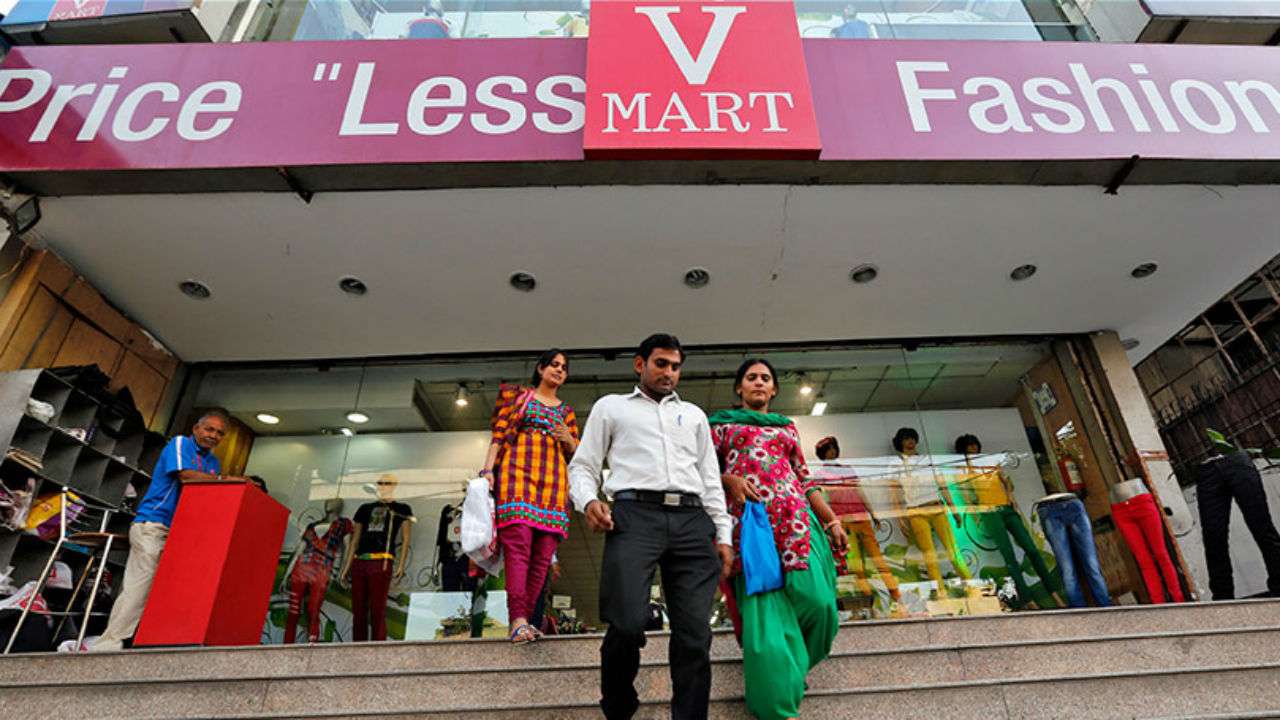
    Value fashion and lifestyle products retailer V-Mart Retail, which primarily operates in smaller towns, is evaluating a Omnichannel (offline and online retail) strategy to expand business and reach its customers.

    According to a report: The company is also looking at investing Rs 100 crore next fiscal to open new stores and setting up a new warehouse.

    V-Mart primarily operates in Tier II, III and IV cities and follows a cluster-based model approach to expand and has a set a target to invest Rs 300 crore to double store count and treble its turnover to Rs 3,500 crore in the next five years.

    “We are considering an Omnichannel strategy and plan to get into online retail to reach our customers. It may happen by end of next year,” Lalit Agarwal, Chairman and Managing Director, V-Mart Retail said.

    It currently operates about 185 outlets in over a dozen states in India. The company plans to add more than 200 stores in the next five years to create a network of 400 outlets.

    In 2017-18, the company had reported a revenue of over Rs 1,200 crore.

    The company also plans to invest Rs 100 crore next fiscal to open new stores and set up a new warehouse in the country.

    “We are looking at setting up a new warehouse to service our stores. It will come up in Uttar Pradesh or Bihar,” Agarwal further said.

    About 75 percent of V-Mart’s stores are located in just four states — Uttar Pradesh, Uttarakhand, Jharkhand and Bihar.

    V-Mart, at present, has a distribution centre located near Gurugram to service all its stores.

  • Zalora Basics is up for sale

    Zalora Basics is up for sale

    Online fashion retailer Zalora has released its own label, Zalora Basics.

    The collection features lightweight materials in neutral colours and styles, offering women’s wardrobe essentials designed to be comfortable to wear and able to be combined to create different looks. Planned upcoming collections will feature easy-to-wear blacks, whites, navies, greys, and some elements of colour.

    Zalora’s chief commercial officer Saskia Dejongh said Zalora seeks to delight fashion consumers in the region by ​creating high-quality basics that will never go out of style​.

    “Through Zalora Basics, we plan to be part of every woman’s wardrobe. This collection is not about having the latest fashion trends, but owning pieces that are good quality, basic clothing with good fabrics and cuts. Our Zalora Basics also ​fulfills the needs of a growing millennial market seeking a casual luxe look.

  • E-payment continues to go mainstream in globalizing Vietnam

    E-payment continues to go mainstream in globalizing Vietnam

    Electronic payments are becoming more and more common in Vietnam, according to Visa.

    Its data for the 12-month period until June 30 this year shows that the number of transactions on the Visa network increased by 45 percent from the previous year, the company said in a statement.

    E-payment is rising thanks to strong e-commerce spending. Between September 1 last year and August 30 this year, e-commerce spending rose 44 percent in terms of transactions, it said.

    The country is going through a period of “incredible economic change” and becoming more involved in the global economy, Sean Preston, Visa’s country manager for Vietnam and Laos said in the statement. “Electronic payments would play in a major part in this evolution.”

    E-payments in Vietnam grew 22 percent in 2017 from the previous year to $6.14 billion, as quoted data from Statista, a local market research firm, as saying. The figure is projected to double to $12.33 billion in 2022.

    According to economists, the potential for the e-payment sector is huge due to the expanding middle class and improved communications infrastructure.

    More than half of Vietnam’s population of nearly 92 million people are online.

  • Map apps offer tips to beat the Chuseok traffic

    Map apps offer tips to beat the Chuseok traffic

    Korea’s top navigation apps have released their projections on the best and worst times to travel from Seoul to the provinces for the Chuseok harvest holiday.

    The three-day Chuseok holiday starts on Sunday, but the government granted a substitute holiday on Wednesday, as Sunday is already a day off. The Chuseok holiday season is considered to run from Friday night until Wednesday.

    SK Telecom, which operates the country’s largest mobile navigation app, T Map, advised drivers headed for Busan or Gwangju to leave Seoul before 10 a.m. on Friday or after 3 p.m. on Saturday or Sunday based on its analysis of traffic data accumulated over the last five years.

    The worst traveling hour for people heading to Busan from Seoul will be around 11 a.m. on Monday. The mobile carrier said it would take more than eight hours to travel from Seoul to the coastal city then. If there’s no traffic, Seoul residents can reach Busan in a little over four hours.

    As for travelers to Gwangju, SK Telecom said the worst time to leave Seoul would be 4 p.m. on Friday.

    For those traveling back to Seoul from Busan or Gwangju, the mobile carrier suggested leaving before 8 a.m. on Monday or after 8 p.m. on Tuesday.

    The KakaoNavi app, operated by Kakao Mobility, also disclosed its own projections based on data it accumulated since 2011.

    Kakao advised drivers to leave Seoul between 6 and 8 p.m. on Sunday if they are headed to Busan. The company said the trip would only take about 4 hours and 30 minutes at that time.

    Kakao also gave exact times for travelers leaving Seoul for Gwangju, Daejeon, Daegu and Ulsan as well. It said the best time to leave for Gwangju will be 6:40 p.m. on Sunday. For Daejeon it will be 7:40 p.m. and for Daegu and Ulsan it will be 7 p.m.

    For those traveling back to Seoul from different destinations, the company suggested that drivers leave after 8 p.m. on Monday. Both companies, however, said that traffic will generally move at a crawl on highways on Monday until late at night.

    As drivers tend to be increasingly dependent on navigation apps during the holiday period to find less congested routes, SK Telecom spokesperson said it has secured extra server capacity for T Map. Last year, some navigation apps, including OneNavi, malfunctioned during the holiday due to traffic overloads.

    It is also gearing up to secure stable network connectivity during the holiday season, as failed data connections on roads could cause chaos even if the apps work well.

    According to SK Telecom, T Map usage increases by 51.5 percent and LTE data usage increases by 11.3 percent during the Chuseok season. To provide stable telecommunications networks, the mobile carrier added data capacity at existing base stations and extra WiFi equipment near dense traffic areas like highways, large discount stores and airports.

    It will operate an emergency response team consisting of roughly 2,200 staff members to manage network quality from Friday through Wednesday.

    Other carriers are also beefing up their networks. KT designated 700 places, including bus terminals, airports and department stores as areas that will be reinforced. The carrier said it plans to use 590 staff members to monitor LTE base stations in these areas around the clock. LG U+ said it will also operate an emergency response team to monitor its telecommunications network from Saturday through Wednesday.