Tag: asia

  • Sunnies Studios to expand into Vietnam

    Sunnies Studios to expand into Vietnam

    Filipino eyewear brand Sunnies Studios has announced plans to expand into Vietnam.

    The fashionable brand, specialising in affordable frames for women, has enjoyed a successful run in the Philippines with more than 40 branches. The Vietnam store, expected to open before the end of the year, will be its first international outlet.

    Sunnies’ creative director Martine said: “Now that the brand has been really established here, we can finally start looking global because that’s the original vision of Sunnies was always to be a truly global brand for the world – not just for the Philippines, but showing the world what the Philippines can produce also.

    “We’ve always wanted to expand in Asia. And Vietnam is so similar to the Philippines I think the market will be equally receptive to the brand.”

  • GS25 brings facial recognition to new shop

    GS25 brings facial recognition to new shop

    Convenience store chain GS25 has opened up a cashier-less store in Seoul that uses face-recognizing cameras to handle payments.

    The company’s first Smart GS25 started operation at LG CNS’ headquarters in Gangseo District, western Seoul, on Monday. LG CNS is a long-time provider of electronic systems to GS25 and one of the companies working to add state-of-the-art technology to the convenience store chain.

    The unmanned branch is only accessible to LG CNS staff. The store’s front entrance will allow customers to enter through face recognition after they register with a camera in front of the store. Payments can also be made through the face-scanning technology, and the store automatically charges customer’s bank accounts.

    “We aim to introduce and test 13 new smart solutions by the end of this year at the Smart GS25,” the convenience store said in a statement on Monday. “The [long-term] purpose is to apply them to our branches to reduce our franchisees’ labor costs.”

    The experimental GS25 has eight new tech features. Although GS25 is late to the game, as its competitors CU, 7-Eleven and Emart24 have already rolled out their own automated technologies, some of GS25’s features are new to Korean convenience stores.

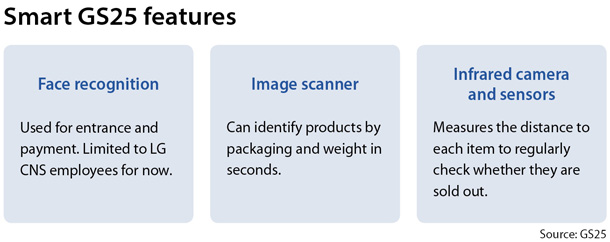
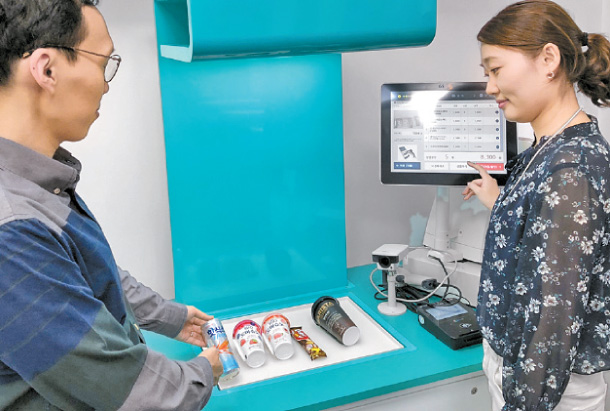
    One is the aforementioned face recognition technology for entrance and payments. Another is the image scanner at the cash register. Most convenience stores without a human cashier use barcodes to identify the products. GS25’s new system instead identifies an item by its packaging and weight.

    This allows customers to simply place items on the table before paying using facial recognition or a credit card. The company says it takes only about a second for the system to recognize five items at once, whereas with the conventional bar code system it would take 15 seconds to scan them one by one.

    An infrared camera and sensors are also installed at the store to regularly check which items need to be restocked.

    This system measures the distance to products to see whether there are any left on the shelf and automatically reports this information to the store supervisor.

    Other features include a smart CCTV that will track where customers spend the most time. This can help the store owner to decide where to place different items.

    “The Smart GS25 is not just an unmanned convenience store packed with tech gadgets,” said Lee Hyun-gyu, a manager of the new shop. “Its main function is to prove technologies that will enhance the convenience of store operation and relieve franchisees of the burden of labor costs. We expect some of the technologies tested here will be shown at our franchises by next year.”

    A GS25 spokesman added, however, that a Smart GS25 open to the public would probably not be autonomous.

  • Dunhill Ginza flagship store opens in Tokyo

    Dunhill Ginza flagship store opens in Tokyo

    Men’s clothing designer Dunhill London has opened a new flagship store in Ginza, Tokyo.

    The Dunhill Ginza store blends bar and barbershop environments to create “a masculine and contemporary space” alongside the latest collections by creative director Mark Weston. It also features a new tailoring room for bespoke and made-to-measure services.

    CEO Andrew Maag said the new Dunhill Ginza store brings a complete elevated brand experience to the brand’s most important market and further cements its position as the leader of British luxury menswea

    A bar on the first and second floors serves Japanese contemporary fusion food with a British twist, while on the first floor the Dunhill barber service offers tailored men’s grooming, shaving and treatments in partnership with The Barba Tokyo.

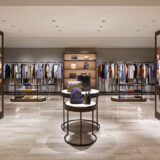
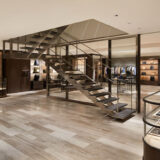
    The store’s design features bronzed brass and wood, together with signature black leather and black metal details, all recognisable codes of the brand’s stores.

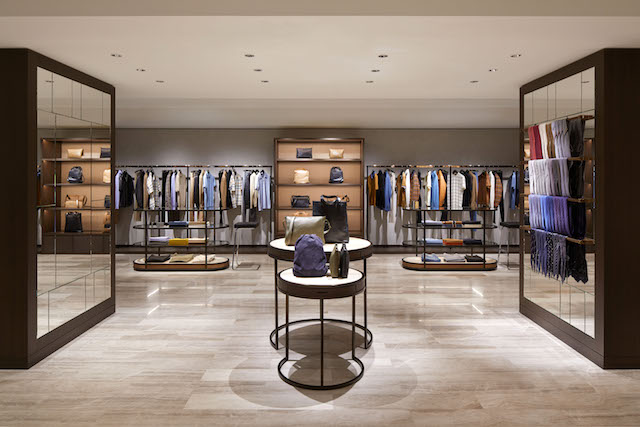
    A metal-and-glass facade leads to an open and clean space that showcases apparel in what Dunhill describes as “a subtle and approachable way”.

    A shoe lounge features marble and metal displays, highlighting Dunhill’s newly launched sneakers and handmade English shoes, alongside a tailoring room for Bespoke and Made-to-Measure services.

    View the pictures in the gallery below :

  • NeNe Chicken opens second store at The Starling Mall Malaysia

    NeNe Chicken opens second store at The Starling Mall Malaysia

    South Korean fried chicken chain NeNe Chicken has launched in East Malaysia.

    The brand’s fourth Malaysian restaurant opened at urban hub Plaza Merdeka Shopping Mall, featuring its offering of Korean-style fried chicken with a selection of sauces and marinades, along with some adaptations for the local palate.

    NeNe Chicken Malaysia MD Raymond Wong said: “Since the opening of our doors in our soft launch, we are amazed with the reception that has been given and we are putting in the hard work to keep the momentum going.”

    NeNe Chicken operates more than 1200 restaurants worldwide.

  • Indonesian trade deficit narrows in August

    Indonesian trade deficit narrows in August

    Indonesia’s trade deficit narrowed in August, but the gap was larger than expected as exports growth slowed, government data showed on Monday, adding to pressure on the rupiah and local stocks.

    Southeast Asia’s largest economy reported a trade deficit of US$1.02 billion (RM4.22 billion) for last month, much bigger than the US$680 million gap expected in a Reuters poll.

    The country had a revised US$2.01 billion trade deficit in July, the largest in five years.

    August imports were worth US$16.84 billion, up 24.65% from a year earlier, data released by the statistics bureau showed. This compared with expectations of a 26.53% t rise in the poll. Meanwhile, exports growth slowed to 4.15% from a year earlier to US$15.82 billion in August, compared with the poll forecast of a 10.03% increase.

    Imports of consumer goods posted the biggest annual growth last month, while exports of agriculture products fell nearly 21% from a year earlier, the data showed, contributing to the slowdown in exports. Higher oil and gas imports also contributed to the deficit, according to the statistics bureau.

    The rupiah slipped further after the data came in to trade at 14,885 per dollar, 0.57% below Friday’s close. The Indonesian currency traded at 14,880 per dollar before the data.

    The rupiah has been trading at 20-year lows after being sucked into an emerging market rout, with selling exacerbated by concern over the country’s ability to plug a yawning current account deficit.

    Jakarta’s benchmark stock index also extended falls to trade 1.8% lower, while the 10-year bond yield rose to 8.428% from 8.382% at yesterday’s opening.

    The tariffs were not applied in August, but analysts have said importers may have frontloaded overseas purchases ahead of the increases.

  • Burberry to stop burning unsold items after green criticism

    Burberry to stop burning unsold items after green criticism

    Luxury retailer Burberry on Thursday said it will no longer destroy unsold goods, but rather expand existing efforts to reuse, repair, donate or recycle items. The retailer will also stop using real fur and angora in products.

    The move comes after Burberry revealed in a presentation to investors in July that it had destroyed £28.6 million ($51.4 million) worth of unsold product in the previous year.

    The admission created a PR nightmare for Burberry, which suddenly became the poster child for the controversial yet fairly common practice among luxury retailers of destroying unsold goods, rather than allowing discounted items to diminish brand value.

    Burberry’s decision to end the practice is in keeping with steps other retailers have taken to operate more responsibly – whether that relates to the environment, use of low-wage labour, or internal diversity – in response to consumer pressure.

    Burberry CEO Marco Gobbetti said this is the new reality for brands today.

    “Modern luxury means being socially and environmentally responsible. This belief is core to us at Burberry and key to our long-term success,” he said.

    Five-year agenda

    Last year, the retailer launched a five-year responsibility agenda that focuses on three goals: driving positive change through 100 per cent of Burberry’s products, becoming carbon neutral and revaluing waste and positively impacting one million people.

    Since then, Burberry has become a core partner of the Make Fashion Circular Initiative and partnered with sustainable luxury company Elvis & Kresse to transform 120 tonnes of leather offcuts into new products over the next five years.

    The retailer also established the Burberry Material Futures Research Group with the Royal College of Art to invent new sustainable materials.

    Animal rights

    Alongside its decision to stop destroying unsold goods, Burberry announced on Thursday that it will no longer use real fur, which had been restricted for many years to rabbit, fox, mink and Asiatic racoon.

    The company said it will ban these materials as well as angora from future Burberry collections.

    Fashion retailers Asos and Gorman stopped using mohair this year, following pressure from animal-rights groups.

  • Axiata’s share price dip after edotco cancels Pakistan deal

    Axiata’s share price dip after edotco cancels Pakistan deal

    Axiata Group Bhd’s share price fell as much as 11 sen this morning after its subsidiary edotco Group Sdn Bhd canceled a US$940 million deal in Pakistan.

    The stock fell as much as 11 sen to a low of RM4.50 this morning from its last adjusted closing price of RM4.61. At 11.06am, the stock fell 1.3% or 6 sen to RM4.55 with 584,700 shares traded.

    Trading in Axiata’s securities was halted for an hour from 9am earlier before resuming at 10am.

    On Monday, edotco said it will not go ahead with the acquisition of 13,000 towers from Pakistan Mobile Communications Ltd, which would have made it the eight largest independent tower company globally.

    The US$940 million (RM3.9 billion) deal, which was in the works for more than a year, was terminated due to the non-fulfilment of a number of conditions within the timeframe stipulated under the sale and purchase agreement.

  • Starbucks Announces Global Greener Stores Commitment

    Starbucks Announces Global Greener Stores Commitment

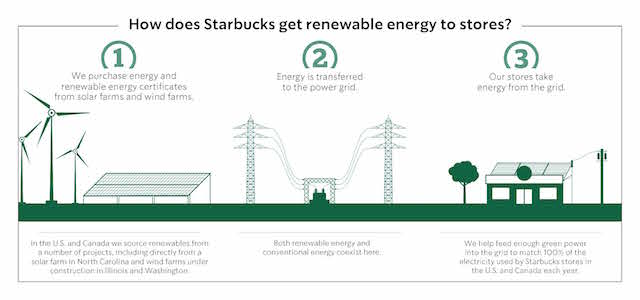
    Following strong consumer demand and internal support, global franchise coffee giant Starbucks has committed to designing, building and operating 10,000 “Greener Stores” globally by 2025.

    The brand has teamed up with sustainable building experts SCS Global Services and World Wildlife Fund to help with the implementation of the new initiative, which focuses on reducing waste, saving water and powering stores through 100 per cent renewable energy.

    The announcement was made overnight at The Global Climate Action Summit in San Francisco, and promises to deliver consumers a new standard in green retailing.

    The latest initiative will see the brand audit all existing company-operated stores in the US and Canada over the coming years, serving as a trial period for the proposed framework, before encompassing all remaining existing stores, new builds and renovations.

    “Simply put, sustainable coffee, served sustainably is our aspiration,” said Kevin Johnson, president and CEO of Starbucks.

    “We know that designing and building green stores is not only responsible, it is cost effective as well. The energy and passion of our green apron partners has inspired us to find ways to operate a greener store that will generate even greater cost savings while reducing impact.”

    The move is anticipated to save the company an incremental US$50 million in utilities over the next 10 years, building on the brand’s current decade long commitment to greener practices, which already equates to approximately $30 million in saved annual operating costs.

    Erin Simon, director of R&D at World Wildlife Fund, US praised Starbucks’ decision to open source the framework, enabling other retailers to engage in the initiative.

    “This framework represents the next step in how Starbucks is approaching environmental stewardship, looking holistically at stores and their role in helping to ensure the future health of our natural resources,” Simon said.

    “When companies step up and demonstrate leadership, other businesses often follow with commitments of their own, driving further positive impacts.”

    As a leader in the retail coffee space, the announcement is set to highlight the importance of sustainability in Australian outlets and competitors, many of whom recently established partnerships and green operations to curb growing consumer demand.

    Starbucks is also encouraging other businesses to get on board with the latest sustainable initiative.

  • SK Telecom cranks up speed of WiFi by four times

    SK Telecom cranks up speed of WiFi by four times

    SK Telecom said Monday it commercialized a next-generation WiFi service that is four times faster than existing services at key areas with dense traffic, including COEX in southern Seoul.

    The new technology offers a maximum of 4.8 gigabits per second (Gbps) data speeds, which is about four times faster than the WiFi service commercialized in 2013, according to the mobile carrier.

    The new “T WiFi AX” uses four antennas to transmit and receive radio waves and works on 160 megahertz bandwidth, twice as large as the bandwidth used by the existing WiFi services, according to SK Telecom. Broader bandwidth translates to faster data speeds just as eight-lane highways are better at relieving traffic congestion than four-lane highways. The bandwidth is spread across 2.4 gigahertz and 5 gigahertz bands.

    The mobile carrier also cooperated with fixed-line service operator SK Broadband to offer network stability even in crowded areas.

    Currently, SK Telecom has the new WiFi service operating in busy areas like COEX in Samseong-dong and U-Square, a large bus terminal in Gwangju. The mobile carrier said it will keep expanding services for nationwide coverage.

    Customers, however, will not be feel a dramatic increase in data speeds with their existing smartphones, according to the mobile carrier.

    “The WiFi service is built on a 802.11.ax standard set by the Institute of Electrical and Electronics Engineers but smartphones in the market do not carry chips that meet that standard yet,” a spokesperson from SK Telecom said. “Phones released next year will carry chips that let users experience 1.2 Gbps data speeds.”

    According to data from SK Telecom, the maximum data speeds for smartphones on WiFi connections until now was 866 megabits per second, and the speeds will continue to increase following upgrades in smartphone hardware.

    The mobile carrier developed the technology last October. After test operations in various traffic scenarios, its technology and network equipment was approved for deployment by the Ministry of Science and ICT last month.

  • Online retailers open brick and mortar stores

    Online retailers open brick and mortar stores

    While many traditional retail stores have embraced technology by having an online presence, online retailers are now opening physical stores (mainly concept stores) in Malaysia, in line with global trends, to gauge feedback on products.

    Retail consulting firm Retail Group Malaysia (RGM) managing director Tan Hai Hsin (pix) said there are still many customers who want to see, feel and touch the products before they decide to buy.

    “They cannot do this online. Customers do not want the hassle of returning products and re-ordering again. To meet this need, online retailers open physical stores,” he said.

    “Also, you can get better feedback on your products and services when you interact with your customers face-to-face. It is easy to give feedback online, but it tends to be short and not comprehensive,” he added.

    Tan said this is not just a trend in Malaysia, but also around the world, with the trend becoming common in the US, the most matured market for online retail.

    Online fashion retailers that have opened physical stores in Malaysia include Christy Ng (five stores), FashionValet (four stores), Bawal Aidijuma (22 stores), Poplook (three stores), Imaan Boutique (six stores), Reebonz (one store) and Finelycup (one store).

    Online foods & beverage retailers that have physical presence here include Fatbaby ice cream (one store), Foodmarket (one store) and Epic Fit Meals Co (three stores).

    Other online retailers that have joined the bandwagon include online grocery store Redtick (three supermarkets), electronics company Xiaomi (five Mi stores) and online jewellery store Jeoel (four stores).

    Tan pointed out that the main difference between (stores of) brick-and-mortar retailers and online retailers is that customers can order online while they are in the physical stores of online retailers.

    “Some customers may like a fashion item but the colour is not available in store but online.

    “They can order online immediately after they have inspected the product. Some customers do not want to carry the products with them after payment as they still want to walk around and visit other places. Some are buying the products for others and instead of carrying the items themselves, they can arrange for it to be delivered directly to the recipients,” Tan explained.

    In terms of locations, he said online retailers open their physical stores anywhere, with some choosing quality shopping malls to build their brand image. Some choose to open in shoplots that can be used as their office, distribution centre, central kitchen and/or storeroom. Some opt to open in locations where most of their customers are residing. Some select locations near their homes.

    “For traditional brick-and-mortar stores, the opening of physical stores by online retailers is seen as new competition to them. If they (brick-and-mortar retailers) do not offer e-commerce facility to their existing customers, they will be left out in the near future,” Tan said.

    Online retailers are setting up physical stores in shopping malls, but the number is still relatively low, he noted.

    “Retail trends change over time. Retailers need to change with time. Or else, they will be phased out.”

    Just like grocery trade in the last 50 years, Tan said it all started with provision shop, then evolving to mini-market, supermarket, overseas supermarket, foreign hypermarket, gourmet food hall, to today’s online grocery store.

    He pointed out that e-commerce would not be replacing physical stores anytime in the near future. In recent years, both sides of the retailing formats crosses over each other’s territory and this trend will continue.

    “The future of retailers should be multi-channel. A retailer is no longer able to operate solely based on physical store, they need to sell their products via other channels as well. Thus, winning retailers are those who are able to offer not only physical stores, but also online shopping sites,” said Tan.

  • Celcom Axiata’s Sabah customers to enjoy 100Mbps internet speed

    Celcom Axiata’s Sabah customers to enjoy 100Mbps internet speed

    Celcom Axiata Bhd will be gradually upgrading the internet speed of its existing Celcom Home Fibre customers in Sabah to 100 megabits per second (Mbps) until the end of September 2018 at lower prices or no cost at all.

    From Sept 16 onwards, in conjunction with Malaysia Day, the Celcom Home Fibre™ and Celcom Business Fibre™ plans will be available with internet speeds of up to 100Mbps at half the price.

    This is in line with the government’s call for nationwide high-speed broadband accessibility at affordable prices.

    Customers who are currently subscribed to the Home Fibre™120 package will see the speed of their internet increase by 10 times to 100Mbps at no extra cost.

    As for customers who are subscribed to Home Fibre™ 150 and 180 at 20Mbps and 40Mbps packages respectively, they will be automatically upgraded to internet speeds at a reduced price of only RM120 per month.

    For business owners, Celcom Business Fibre™ Gold Supreme offers unlimited high-speed fibre internet with speeds up to 100Mbps at only RM130 per month, while Celcom Business Fibre™ Gold offers unlimited high-speed fibre internet speeds up to 40Mbps at RM90 per month.

    The Celcom Business Fibre™ also comes together with free installation, a free dect phone and a free wireless router.

    “Celcom is making broadband services more affordable by reducing its Celcom Home Fibre™ and Celcom Business Fibre™ prices by half, while offering more than double the speed for internet, said Celcom’s CEO Mohamad Idham Nawawi in a statement.

    We will continuously work towards expanding our fibre technology and high-speed broadband internet access for businesses and communities in both urban and rural areas, further upholding the government’s agenda for nationwide broadband penetration,” he added.

    He noted that every Malaysian should have the opportunity to be digitally adept and have access to high-speed internet without being burdened financially.

    Celcom’s advanced broadband fibre service for homes and businesses has been enhanced in Sabah to deliver more than double the speed of high-speed internet fibre connection service at affordable prices.

  • Forever 21 and Kodak launch collaborative capsule collection

    Forever 21 and Kodak launch collaborative capsule collection

    Kodak and Forever 21 have teamed up to create an apparel collection featuring logos and designs from the Kodak brand’s history.

    The bright and vibrant apparel uses many of the original colors from Kodak branding and packaging from the 90’s and draws inspiration from the company’s days as a Nascar race team sponsor.

    The Kodak and Forever 21 collection offers women’s t-shirts, crop tops, jackets and lounge wear; the men’s line includes tees, polos, pullovers and jerseys. Altogether, 26 items will be available in more than 600 stores globally.

    Both Kodak and Forever 21 are enthusiastic about the collection which links back to the days when the Kodak logo was seen virtually everywhere.

    “Kodak is such an iconic brand that so many people love and respect, and we were excited to bring our customers a fun and unique way to celebrate photography,” says Linda Chang, VP of marketing at Forever 21.

    Kodak has been working on collaborations to drive brand awareness and advocacy with new audiences.

    “Rather than be a fad or trend, we want to retain an aspirational product aimed at our core audience and those that they influence,” said Dany Atkins, chief brand officer at Kodak. “What could be better for a brand transformation than everyone wearing your logo on a t-shirt?”

    The collection was produced with Hybrid Apparel, a Kodak Licensee who works closely with the company on brand licensing efforts in the apparel space.

    “Kodak has always been synonymous with our life’s best memories, including past, present and even future aspirations,” said Bonnie Segall, EVP of new business development at Hybrid. “We were able to capture this by leveraging the current streetwear trend and creating a new ‘Kodak moment’ for a new generation of enthusiasts.”

  • AirAsia incorporate’s new subsidiary in Thailand

    AirAsia incorporate’s new subsidiary in Thailand

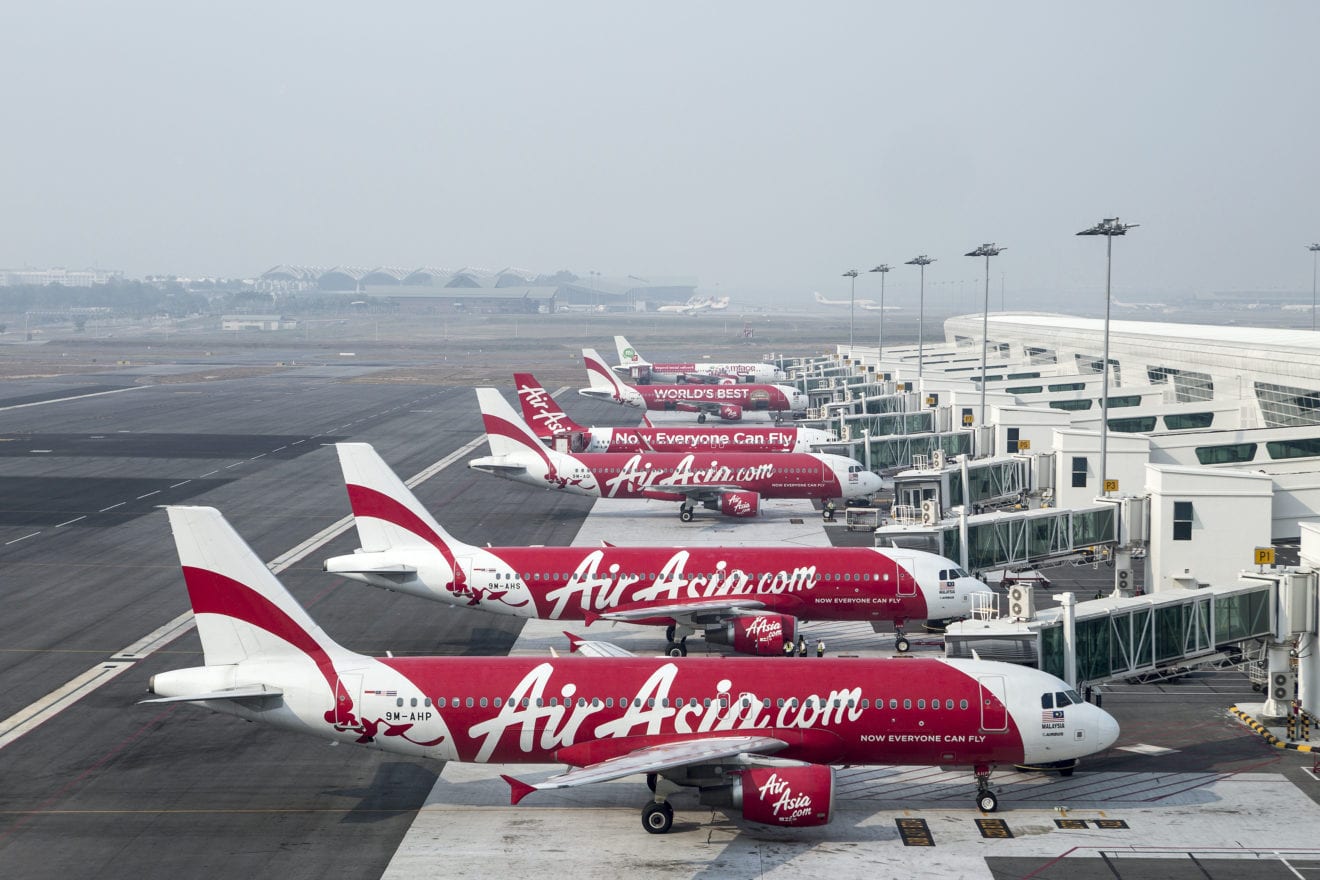
    AirAsia Group Bhd has incorporated a subsidiary in Thailand named AirAsia Group (AAGIHQ) Ltd which will be providing consultation and services to the company’s subsidiaries and associate companies.

    The group told the stock exchange that AAGIHQ was incorporated with a total issued share capital of THB20.0 million (approximately RM2.5 million).

    AirAsia holds 199,997 ordinary shares out of the 200,000 issued share capital of AAGIHQ while three other individuals hold one ordinary share each.

    The stock gained 0.97% to close at RM3.13 with 6.48million shares done

  • H&M launches sustainable collection soon

    H&M launches sustainable collection soon

    Two H&M sustainable collections just revealed will benefit global conservation work.

    The Swedish fast-fashion retailer has released an online-only recycled cashmere and velvet collection at hm.com and a separate childrenswear collection.

    Launching September 27, the collection “Conscious Exclusive F/W 2018” claims to “merge the life and journey of lost historical artifacts with the latest in sustainable fabric innovation.” Ten per cent of the sale price from each product will be donated towards WWF’s conservation work.

    The materials used in the collection are intended to highlight H&M’s innovations in fabric. By way of example, the company has put years of research into its new velvet made from recycled polyester to create a quality high enough for use in garments.

    H&M creative advisor Ann-Sofie Johansson said: “It started with a desire to create a statement coat in a sustainable material that could be worn for both special occasions and day-to-day life, but then evolved into something more substantial by merging the journey of historical artifacts with a modern design sensibility.”

    Head of sustainability at H&M Anna Gedda added: “We believe in a sustainable fashion future where fashion is made and consumed in a way that’s sustainable for the planet. We have an ambition to be fully circular, and as part of that we have set the goal to only use recycled or other sustainably sourced materials by 2030”.

    H&M group has been working in partnership with WWF, the world’s leading conservation organization, since 2011. The partnership focuses on water stewardship, climate action and sustainability strategy, with the aim of making H&M and the broader fashion industry more sustainable.

    WWF International’s head of corporate marketing partnerships David Bloch said: “This campaign, which is an extension of our long-term transformational work with the company, will not only raise funds for WWF’s conservation work but we hope it will also inspire a new generation of environmental champions.

    The collection stands testament to how it is possible to produce at scale clothing that is better for both the environment and little ones”.

    Childrens range

    Meanwhile, the second of the H&M sustainable collections, for babies and children up to 14 years old, includes pieces such as cozy sweatshirts, soft leggings and fun hood dresses. The colour palette runs from pastels and neutrals to black and grey and organic cotton is the key material used in the collection.

    AD: GUNILLA ENGDAHL, Styling: Jet Vervest, MUA: Maria Martinez, Production Company: Alana international production service,

    The range will be launched in more than 50 markets on September 27 and as with the Conscious Exclusive release, 10 per cent of the sale price of each product will be donated towards WWF’s conservation work.

  • E-commerce set to take 10 per cent of Thai retail sales

    E-commerce set to take 10 per cent of Thai retail sales

    Analysts are predicting e-commerce will account for 10 per cent of Thai retail sales within five years, according to a report.

    The observations have been sparked by the imminent entry of JD Central – a partnership between Chinese online services giant JD and local firm Central Group.

    Head of customer strategy for JD Central Jirasak Chirathivat said that the Thai retail business will be stimulated by higher competition, big data, AI and voice commands. “Price is not the only factor for consumers; experience and express delivery are also key motivations,” he said.

    “We are in the process of investing in a second logistics centre that serves countrywide delivery. We aim to achieve the standards seen in China, where JD.com delivers before 11am in the morning when users place their orders before 11pm the night before.”

    JD Central plans to offer 1 million products online, working with Tencent Thailand and Pomelo, each of which list JD as a shareholder.

    Pomelo’s CEO David Jou said e-commerce in Thailand still has room to grow, as it represents only 3–5 per cent of the total retail market compared with 30–35 per cent in China and 15 per cent in India.