Tag: asia

  • La Perla appoints Pascal Perrier as its new CEO

    La Perla appoints Pascal Perrier as its new CEO

    Following its acquisition by investment firm Sapinda earlier this February, the luxury underwear brand La Perla appointed Pascal Perrier as its new CEO. The company also promoted Alessandra Bertuzzi as head creative designer for the brand to take over Julia Haart.

    With over 30 years of experience in the luxury fashion sector, Sapinda Holding’s Chief Executive Lars Windhorst commented very few people have Pascal’s background and exceptional know-how. Those qualities will enable him to navigate La Perla through the opportunities brought by the rapid pace of change with which consumers and other cultural stakeholders are now engaging with luxury brands, he said.

    Pascal Perrier joins from Burberry Group where he held various roles since being brought on as executive vice president of business development.In his 13-year tenure, Perrier played a key role in developing the Burberry brand in Asia-Pacific, now one of the company’s most lucrative market.

    Prior to his career at Burberry, Perrier served in senior management roles at other luxury fashion players, including Gucci Group where he executed the acquisition and subsequent integration of Yves Saint Laurent as well as that of Balenciaga.

    Since its acquisition of the Italian luxury fashion and lingerie label, Sapinda has been carrying out a full restructuring and turn-around of the business and its operations to drive growth. To put the turnaround plan into place, the investment firm hired an experienced executive team, supported by management consultants Bain & Co with the aim of improving La Perla’s profitability and transforming it into a leading luxury player.

    Mr. Windhorst now counts on Mr. Perrier to “lead La Perla into a new era of growth”.

  • July inflation expected to be cushioned by zero-rated GST

    July inflation expected to be cushioned by zero-rated GST

    RAM Ratings expects the zero-rated goods and services tax (GST) to act as a cushion limiting inflationary pressure on Malaysia’s July inflation rate, which is projected to increase to 1% from 0.8% in June.

    Meanwhile, full-year inflation is expected to stand at 1.3 %.

    Transport fuel is seen as a trigger to higher inflation given the 12.4% rise in the average price of RON95 petrol in July (June: 9.9%) amid low-base effects. Prices had averaged RM1.96/litre in July 2017 compared with RM2/litre in June 2017 against the current subsidised level of RM2.20/litre.

    Commenting on the sales and services tax, RAM head of research Kristina Fong said initial assessment on the new tax regime and its potential inflationary impact does not indicate any destabilisation of prices or consumption at this juncture due to the smaller share of products in the consumer price index basket and its nature as a single layer tax applying to manufacturers rather than end-consumers directly.

    This is supported further by the less restrictive administrative costs of implementation and proposed exemptions on raw materials, components, and packaging for registered manufacturers.

    “In view of the deflationary pressure from the change in the taxation system, coupled with lower fuel prices from the reinstatement of fuel subsidies and a persistently weak growth trajectory for food prices, overall inflation is envisaged to average 1.3% this year,” she said.

    Given the lower core inflation and moderating GDP growth (4.9%), RAM said it appears to be a downward bias for the overnight policy rate (OPR) this year.

    However, it expects the interest rate to remain unchanged at 3.25% through the rest of 2018 on the back of lingering policy uncertainties and some macro risks may still pose a risk to capital outflows.

    “That said, we believe that monetary policy will play a bigger role because fiscal consolidation is perceived as a key trend going forward; hence less scope for additional pump-priming.”

  • Taipei Living Mall is for sale

    Taipei Living Mall is for sale

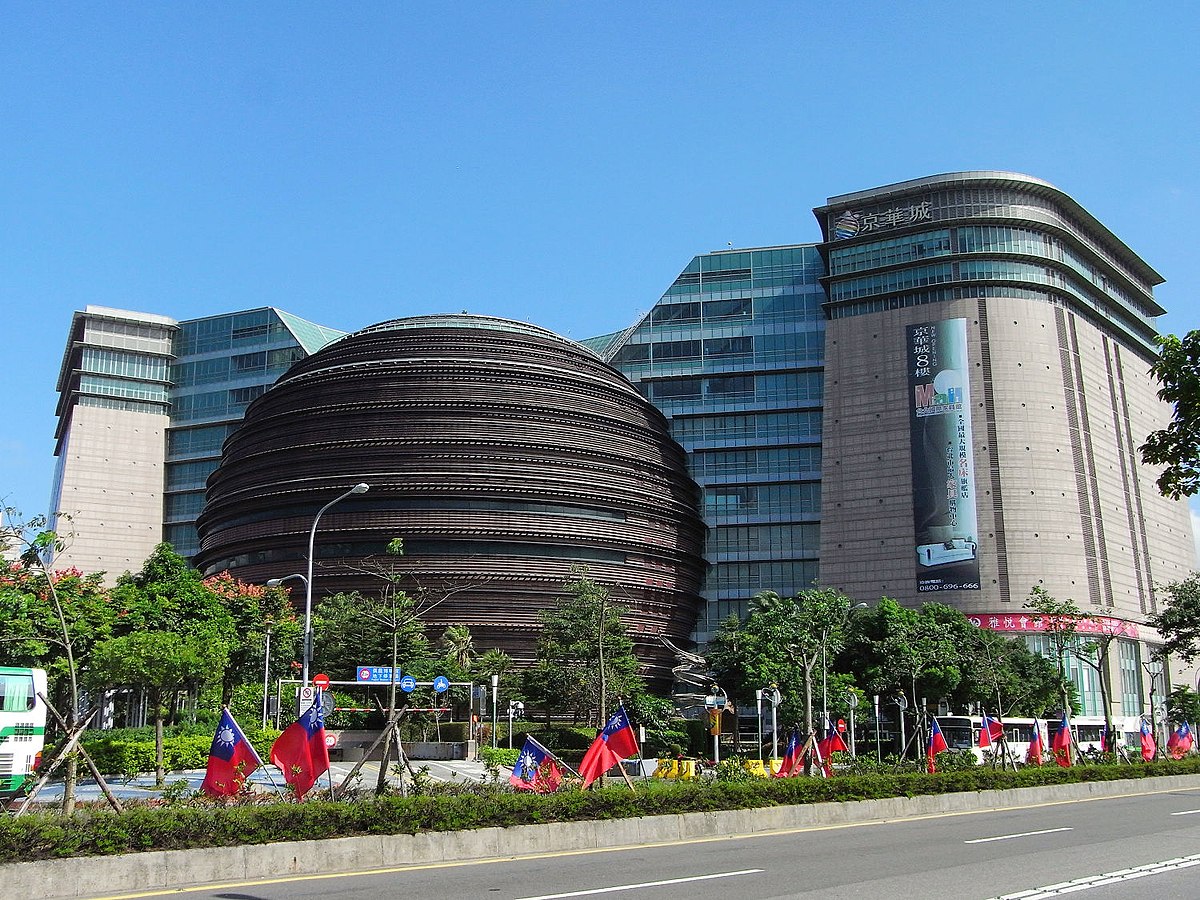
    The Taipei Living Mall retail complex is up for sale for NT$38 billion (US$1.23 billion).

    The mall’s owners, Core Pacific City, have described the project “a failure”. It was constructed on a syndicated loan of NT$12 billion two decades ago, and the debt is timed to mature next year. The 16,483sqm plot it stands on could potentially yield higher returns if converted to luxury rental properties.

    Taipei Living Mall is the largest private property made available for sale in decades. Cushman & Wakefield Taiwan GM Billy Yen commented: “It is not the best timing to sell properties these days, so I recommended a price concession and the owner accepted it.” The property could attract a significantly higher price in a boom market.

    Investors from Singapore, Hong Kong and China have submitted expressions of interest in the asset.

  • House 99 opens its first pop-up store in Asia

    House 99 opens its first pop-up store in Asia

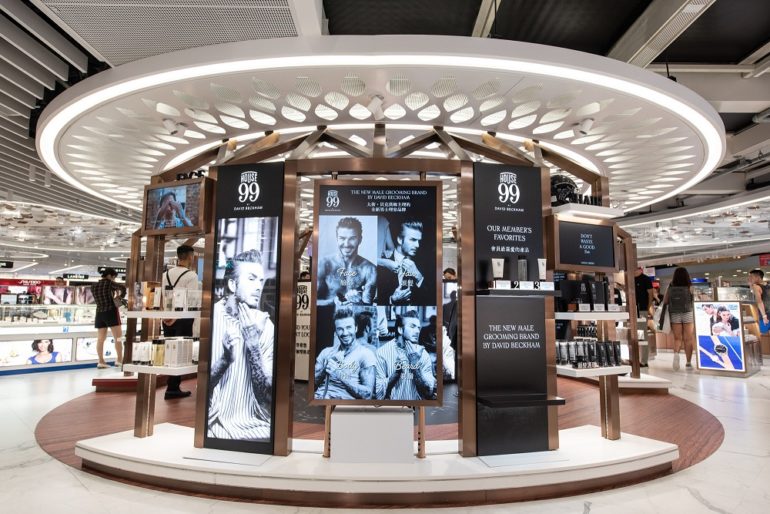
    House 99 by David Beckham, the global men’s grooming and skincare brand, has launched its first-ever pop-up store in Asia, in collaboration with Beauty&You – the new experiential retail concept by The Shilla Duty Free in the Hong Kong International Airport (HKIA).

    Following the brand’s HKIA debut in June, the barbershop-inspired concept – fronted by one of the most recognisable fashion icons in the world – has transformed the Curated Zone at Beauty&You’s largest outlet with an engaging, multi-dimensional brand showcase.

    Highlighting its signature product range together with unique grooming experiences, the Pop-up is designed to attract customers by showcasing Beckham’s personal styling rituals.

    The eye-catching displays and experiential components align with Beauty&You’s Curated Zone concept, where Shilla will collaborate with different brands each month to feature themed selections and fashionable looks of the season.

    Separated into four interactive zones, the Pop-up Store offers customers the opportunity to simulate looks in a magic photo booth, share personal styling experiences with friends and family through House 99’s postcard mailing service, create a new look and receive exclusive grooming tips from expert stylists.

    On Friday, 17th August, the brand held a toasting ceremony at Beauty&You to unveil the Pop-up concept. The lively event was attended by a host of VIPs, including House 99 brand representatives, as well as senior management from Shilla Travel Retail Hong Kong and Airport Authority Hong Kong.

    Among the evening’s guests included influential Chinese KOLs: 萌叔小熊貓, Ethan-007, Danso 旦 and 袁俊川 Aska. Chinese celebrity stylist, Val Lin (林蔚巍) was invited as a special guest to share his own hair and beard grooming experience; each KOL also had the exclusive opportunity of being personally styled by Val.

    Capitalising on the star power of these online influencers, the KOLs conducted live-stream sessions to share personal anecdotes on grooming successes, as well as their experiences within the stylish House 99 Pop-up.

    The event was broadcasted live on the KOL’s social platforms, while they also sent lucky fans postcards, Polaroid pictures and gave away House 99 products over the course of the live-streaming session.

    Several brands have been debuting at the Beauty&You – the new experiential retail concept by The Shilla Duty Free in the Hong Kong International Airport (HKIA). They are using travel retail as a way of testing the market, and eventually decide to go downtown.

  • True Religion’s Back Thanks to Bella Hadid

    True Religion’s Back Thanks to Bella Hadid

    Californian model Bella Hadid is the new face of True Religion Jeans.

    The popular supermodel’s signing marks a deliberate pitch by the denim brand to appeal to a younger consumer market as the brand continues to rebuild after a four-month spell in bankruptcy protection last year.

    Hadid “embodies all things True Religion, past, present and future; iconic, edgy and everlasting,” the company said in a statement announcing the appointment.

    “An inherit fan of the brand, Bella was the natural choice to meld the iconic essence of the brand with the modern view of its future.”

    Hadid, 21, the daughter of former Dutch-born model Yolanda Hadid and Palestinian-American real-estate developer, has previously been engaged by Dior makeup, Givenchy, Victoria’s Secret’s Pink brand, Fendi and Tag Heuer, among many others.

    For her True Religion Jeans debut, Hadid was photographed by Boo George and styled by Mimi Cuttrell to create a series of images and complementary looks “that usher True Religion into a new era that honours the heritage of the brand”.

    Despite its boasts of “heritage”, True Religion Jeans is a relatively young brand, founded in 2002. After its bankruptcy, which had the support of lenders and came with an exit strategy pre mapped out, the company emerged with a streamlined store network and a stronger financial position.

    Now, with “a quintessential, confident LA girl” as the new face of True Religion Jeans, the brand is looking to expand not just in the US, but internationally.

    “Bella’s voice was not only an inspiration, but an integral part in imagining this campaign, envisioning the brand through her eyes for the next generation of True Religion fans,” said the company.

  • Uniqlo plan to double its store in SEA

    Uniqlo plan to double its store in SEA

    Japanese apparel giant Fast Retailing is eyeing massive expansion in Asia-Pacific.

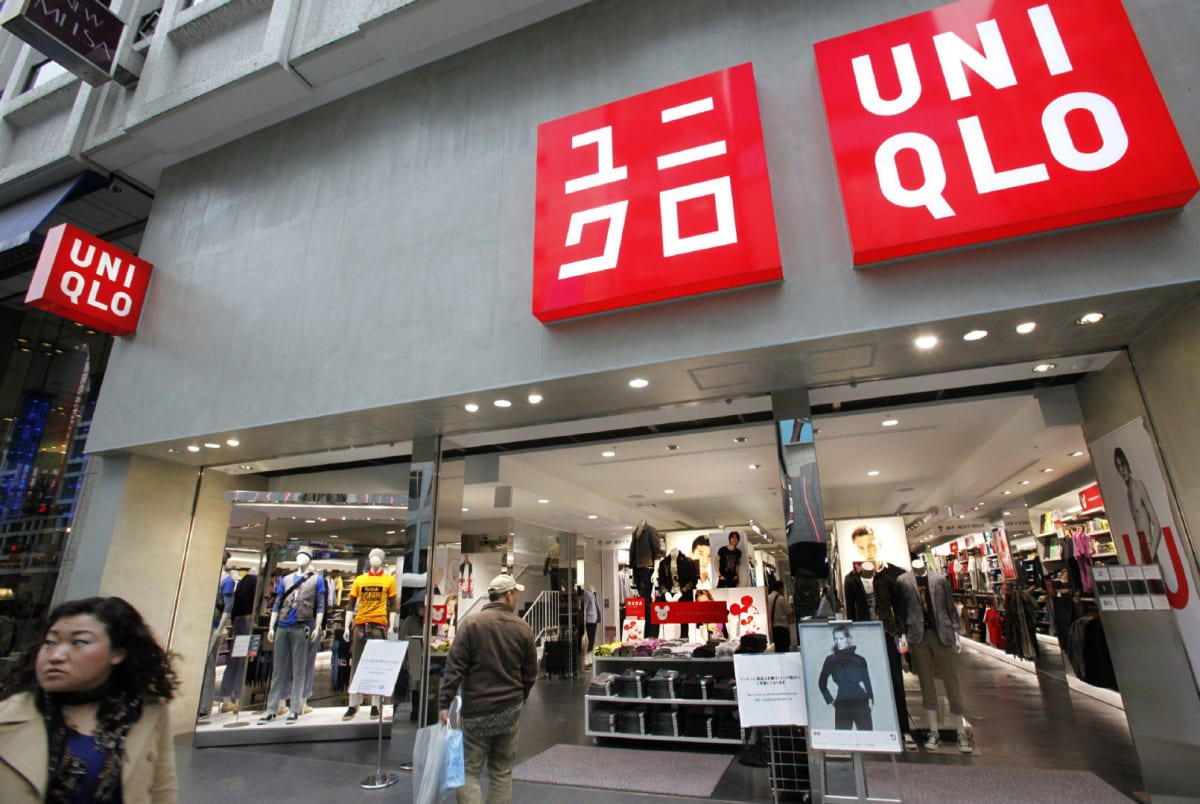
    The Uniqlo Southeast Asia and Oceania store network is set to double by 2022 to about 400 stores, Fast Retailing’s group senior VP Satoshi Hatase said in an interview.

    The company plans an emphasis on stand-alone suburban stores as it expands its Southeast Asian footprint, seeking to move beyond its traditional shopping mall locations.

    “We opened our first roadside store in Asean in Thailand in March, and it has been a huge success,” he said, adding that stand-alone stores in suburban locations were the key to Uniqlo’s original growth in Japan.

    Regionally, Uniqlo has now reached a level of recognition where “the timing is right” for suburban stores, he said.

    Fast Retailing executives in Thailand, Malaysia and the Philippines are talking with leasing agents to identify suitable sites for such stores.

    In Southeast Asian markets, middle- and high-income consumers are the ones which will fuel the Japanese company’s growth.

    “Lower-income people cannot buy Uniqlo [yet],” Hatase said. But in 10 years, “a significant number of Asean people will be able to”.

    Fast Retailing has previously said it aimed to triple its sales in the region to 300 billion yen (US$2.7 billion) in the year to the end of August 2022. Last year’s regional sales were 100 billion.

    Fast Retailing already has stores in Australia, Malaysia, Singapore, Indonesia and the Philippines. Its next target in the region is Vietnam.

    “We want to have stores in all countries [in the region],” Hatase said, especially Vietnam, Laos and Myanmar.

  • WeChat launches digital wallet in Malaysia

    WeChat launches digital wallet in Malaysia

    WeChat, China’s most popular social media app, has launched its digital payments platform in Malaysia. It is the platform’s first market in Asia beyond China and Hong Kong.

    The digital payment feature of WeChat allow its users to transfer money among themselves and make payments to offline merchants in ringgit. Rather than taking the common route of overseas expansion used by Chinese mobile-app providers catering to Chinese tourists or nationals living abroad, Tencent here seems to be building a local payment service.

    Malaysia’s central bank has been implementing policies promoting electronic payments in a bid to boost a network that lags behind other Southeast Asian markets. Their move has triggered the launch of digital wallets by other strong players, including Grab, the south-east Asia ride-hailing company.

    “Malaysia is a vibrant market. Technology-savvy Malaysians are embracing a digital lifestyle and to meet this shift, the payment experience has to evolve. Bringing WeChat Pay to Malaysia is our response to this,” said WeChat Pay Malaysia.

    SY Lau, senior vice-president at Tencent said in November when the company acquired a Malaysian epayment licence, that WeChat had 20m users in the country, equivalent to almost two-thirds of the population.

    The potential for mobile payments is vast in Malaysia, where cash is still king, but the number of mobile phones, mostly smartphones, outstrips a population of 32.1m by more than 10m, according to the central bank.

    But collaborations with local banks, of which WeChat has none, will be just as important for WeChat Pay to flourish there.

    At home, it took Tencent and Ant Financial, Alibaba’s electronic payments affiliate, years to build the links with hundreds of Chinese banks that make their services possible.

    Grab has already partnered with top local bank Maybank to bolster its mobile wallet, GrabPay. Coupled with its strong ride-hailing network in its market of origin, Grab is set to be a tough competitor for WeChat in Malaysia. According to Grab, its app and mobile wallet are already on half of all mobile phones in Malaysia.

    The number of emoney licences issued by Bank Negara to non-bank entities has almost doubled to 44 in the past two years as the central bank looks to reduce cash usage to curb tax evasion and corruption, according to Nor Shamsiah Mohd Yunus, Malaysia’s central bank governor.

    In Asia more broadly, however, some analysts say WeChat might struggle to expand beyond Malaysia, where the population is more than one-fifth ethnic Chinese.

    While the use of mobile payments is rapidly overtaking cash and cards for daily transactions by China’s smartphone users, WeChat Pay also faces the challenges of different local infrastructure and app-use habits in going abroad.

    WeChat Pay’s Malaysia launch comes at a tricky time for Tencent, whose second-quarter earnings were hit by domestic reforms delaying the licensing of new games.

  • Naver to pump 258.9 billion won into French affiliate

    Naver to pump 258.9 billion won into French affiliate

    Naver, Korea’s dominant internet portal and search engine, said Thursday it will invest 258.9 billion won ($230.8 million) in its wholly-owned affiliate in France to strengthen its presence in Europe.

    Naver will acquire 2 million new shares issued by Naver France to help the Paris-based affiliate secure operating capital, a company spokesman said.

    The company didn’t give a time frame for the investment.

    Naver set up the affiliate in France in June 2017 in a bid to make an investment in local internet startups and proceed with research and development activities to make a foray into European internet markets, the spokesman said.

  • Parkson Asia profit slumps as Vietnam gives disappointing number

    Parkson Asia profit slumps as Vietnam gives disappointing number

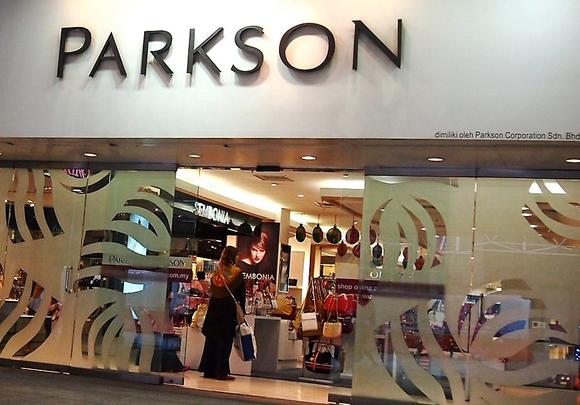
    Vietnam operations continue to be at the bleeding edge of Parkson Retail Asia’s ongoing losses.

    The company’s full-year results show declining same-store sales in its department stores in all four markets, with Vietnam the worst performing market. Sales fell 14.6 per cent in the last quarter and by 8.3 per cent over the full year. Sales in Myanmar and Indonesia both fell by 3.8 per cent and in the home Malaysia market by 1.5 per cent.

    Parkson Retail Asia finished the financial year with a pre-tax loss of S$17.6 million for the last quarter and of $40.1 million for the full year. It said that with the exclusion of a gain on the disposal of a subsidiary and allowances for doubtful debts, the reversal of impairments relating to closed stores, the group’s operational pre-tax loss would have been $29.9 million for the year.

    “This reflects the challenging operating environments encountered by the group as evidenced by the overall negative same-store sales growth, while new stores and ventures might require longer gestation period given the aforementioned backdrop.

    “We have been taking active measures in monitoring and assessing the viability of stores and ventures. With ongoing measures in place to rebuild top-line growth and monitor expenditures, coupled with the discontinuance of underperforming stores and ventures this year, the group expects its performance will show improvement in the coming financial year.”

    Addressing the Vietnam problems, the company said the operating environment there remains challenging amidst a crowded retail scene, and “intensive promotional activities had to be carried out to capture sales”.

    It said Indonesia’s sales were impacted by the downsizing of a store in Jakarta, as well as the aftermath of a volcanic eruption in Bali. Excluding those effects, Indonesia would have recorded a lower drop of 2.4 per cent for the year.

    The Myanmar operations were impacted by the closure of the first store at FMI Centre in January last year, with the replacement at Junction Square, Yangon, opening two months later.

    Throughout the network, “against the backdrop of competitive operating environments, we continue to take active measures in monitoring and assessing the viability of our stores and ventures,” the company said.

    While the group added four new stores (including one managed store) to its network, it also took steps to exit seven underperforming stores (including one managed) during the year.

    The company also closed its theme park and education centre operations to curb further losses, and exited its interest in the LOL-branded retail chain.

  • New China chief for Pandora

    New China chief for Pandora

    Only two weeks after the official announcement of Anders Colding Friis’ resignation as Pandora’s CEO, the Danish jeweller seems to be on a roll to bring some changes to the company .

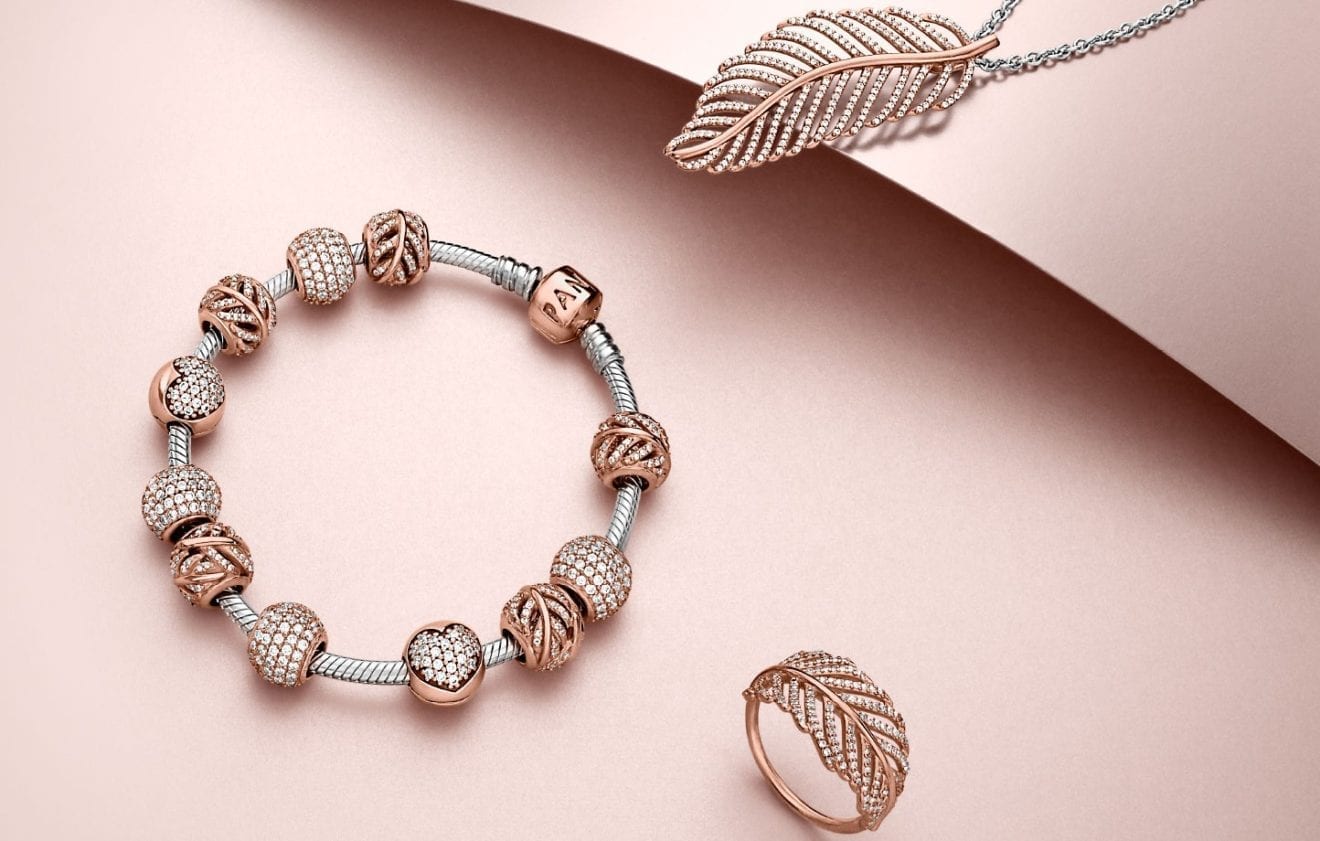
    The company tapped former Nike employee Geena Tok to head its business in China, where the Danish company has been challenged by a rise in sales on the grey market where an increasing number of jewellery pieces are being imported from other markets and sold online.

    Indeed, earlier this May, the Danish Jeweller announced a surprising slowdown in China, which accounted for about 12 percent of its total sales.

    With over 200 stores in the region, Pandora is striving to stay competitive and, in this scope, announced it would lower retail prices in the country by an average of 15 percent.

    Tok joins from Nike where she was leading the sports retailer’s stores and e-commerce business. In her 17-year tenure, Geena worked in the United States, Thailand, India and now China. She will now take over Anthony Asinas’ position following his appointment as Pandora’s Hong Kong and Macau chief.

  • Vietnam BMW importer faces fines for faking documents, evading tax

    Vietnam BMW importer faces fines for faking documents, evading tax

    Vietnam’s Finance Ministry has accused the sole importer of BMW cars of several violations, but won’t press criminal charges.

    The trader, Euro Auto, which was Vietnam’s sole official of BMW cars until this year, created fake invoices and packing lists for 133 BMW cars in December 2016, the ministry said in a letter recently sent to Prime Minister Nguyen Xuan Phuc.

    It plans to fine the firm VND40-80 million ($1,700-3,400) for this fraud.

    Euro Auto “did not list or listed incorrectly” VND105 million ($4,500) in expenses incurred in importing the cars, which resulted in a tax loss of about VND180 million ($7,700), the ministry said.

    It said it plans to fine Euro Auto 20 percent of the tax loss, apart from collecting the back taxes.

    The ministry will allow the cars, which are at the Vietnam International Container Terminal port in HCMC, to be returned to Germany, if it requests. It will also refund taxes paid if the cars are returned.

    If Euro Auto still wants to import these cars into Vietnam, the PM should take a final decision on this issue because current laws don’t deal with such a situation, the ministry said.

    It also said it plans to fine Euro Auto chairman Simon Adrew Rock for evading special consumption tax.

    From July 2016 to March 2017, Euro Auto evaded VND7.3 billion ($312,700) in taxes by listing wrong information about its imports.

    Although the HCMC Tax Department issued a warning and fined the firm in September 2016, it persisted with the practice.

    The company even produced fake invoices to legalize the purchase of auto parts for the BMW cars from the open market instead of authorized agencies.

    The letter noted that PM Phuc had decided not to criminally punish Simon Adrew Rock and other individuals involved in tax evasion in the spirit of maintaining good relations between Vietnam and Germany, Malaysia and the U.K., where these cars have been imported.

    In late November 2016, the Ministry of Finance ordered customs agencies to suspend clearance procedures for imported BMW cars in order to investigate alleged violations by Euro Auto.

    Ministry officials found that the importer had falsified purchase contracts and receipts while importing the cars and failed to provide certificates of origin and other required documents.

    Euro Auto rejected these allegations.

    In April last year, HCMC police arrested Euro Auto CEO Nguyen Dang Thao and two delivery employees for faking import documents.

  • S. Korea’s overseas direct purchases up sharply in H1

    S. Korea’s overseas direct purchases up sharply in H1

    South Korea’s direct purchases from foreign countries continued to increase at a sharp pace in the first half of this year on rising consumer demand for cheaper and quality products, customs data showed.

    A total of US$1.32 billion worth of foreign goods was directly bought by South Korean shoppers via overseas Internet shopping malls in the January-June period, up 35 percent from US$974.1 million tallied a year earlier, according to the data compiled by the Korean Customs Service (KTS).

    The number of overseas direct purchases jumped 36 percent on-year to a record 14.94 million cases over the same period, the data showed.

    The value and the number of direct purchases have been on a steep rise in recent years, with the half-yearly amount nearly doubling from two years ago.

    The customs office said booming demand for cheaper Chinese electronic goods, U.S.-made dietary supplements and Japanese toys led the sharp increase, with foreign foodstuffs, clothes and cosmetics still popular among South Korean shoppers.

    Purchases of dietary supplements jumped 34 percent on-year to 3.09 million cases in January through June, while 1.92 million purchases of garments and 1.68 million picks of electronic goods were reported, up 60 percent and 91 percent, respectively, from a year earlier.

    By country, the United States was the biggest seller with US$730.1 million in the six-month period, surging 55 percent from a year earlier, while some US$204.8 million worth of Chinese goods were shipped, up 16 percent from a year earlier. Purchases from Europe and Japan rose 19 percent and 6 percent to US$253.3 million and US$85.2 million, respectively.

  • Alibaba Group revenue jumps high

    Alibaba Group revenue jumps high

    Alibaba Group revenue soared 61 per cent in the second quarter as the behemoth achieved a record 576 million active annual consumers in its marketplace – 24 million more than three months earlier.

    Total revenue was RMB80.92 billion (US$12.229 billion), with revenue from core commerce increasing by the same rate to RMB69.188 billion (US$10.456 billion).

    Cloud-computing turnover rose 93 per cent, entertainment and media by 46 per cent and revenue from innovation initiatives and other activities by 64 per cent.

    The number of mobile monthly active users on China retail marketplaces reached 634 million in June 2018, up 17 million on three months earlier.

    Adjusted earnings before interest tax and amortisation for Alibaba’s core commerce operations was RMB32.797 billion (US$4.956 billion), an increase of 22 per cent year on year, representing a margin of 47 per cent. Net income attributable to shareholders was RMB8.685 billion (US$1.313 billion), down on the same period last year due to a one-off accounting adjustment relating to Ant Financial. Without that, profit would have risen about 33 per cent.

    “Alibaba had another excellent quarter, with significant user expansion and even more robust engagement across our growing ecosystem,” said CEO Daniel Zhang. “Our China retail marketplace business continues to gain share, with New Retail initiatives driving further revenue growth and enabling our retail partners to seamlessly serve customers.

    “We are executing our plan of providing more value and choice to users along the consumption continuum, with digital entertainment and local service offerings that tap into big addressable markets beyond core commerce,” he said.

    “We will continue to invest in strategic business opportunities and innovation to sustain our competitive advantage and for long-term growth.”

    CFO Maggie Wu said the company was pleased with the strength and rapid growth of its business at such significant scale.

    “The exceptional growth across our major segments of core commerce, cloud computing and digital media and entertainment validates our strategy of investing in customer experience, product, technology and infrastructure for the future. We remain confident

    in our ability to continue to gain market leadership by delivering unique value propositions to our business customers, partners and consumers,” said Wu.

    Taobao growth

    Alibaba Group says growing use of its Taobao app helped grow the number of active monthly users on the Taobao platform rise by 17 million during the quarter, taking the total to 634 million.

    “Ongoing improvements in search and personalised recommendations on the Taobao App supported the acceleration of Taobao paid gross merchandise volume (GMV) growth during the quarter,” the company said. “During the quarter, around 80 per cent of the increase in annual active consumers were from lower tier cities as the platform broadened its offerings and services into those regions.

    Tmall gains wallet share

    Tmall, meanwhile, continued to gain wallet share and expand Alibaba Group’s B2C market leadership, the company said.

    Excluding unpaid orders, physical goods GMV grew 34 per cent year on year during the quarter. “The robust growth was driven by continued increases in conversion rates and average consumer spending with strong performance from FMCG, consumer electronics, apparel and home goods categories.

    “Tmall gained further mindshare among domestic and international brands as the leading brand-building and distribution platform that is capturing increasing consumer exposure and spending by users in China. During the quarter, international brands such as MCM, Moschino and Giuseppe Zanotti launched flagship stores on Tmall and joined the Luxury Pavilion, its customised and premium shopping experience for consumers.”

  • Yohji Yamamoto official web store launched

    Yohji Yamamoto official web store launched

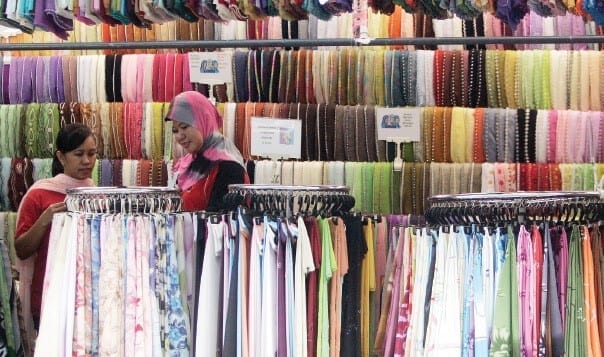
    Fashion designer Yohji Yamamoto has launched a global e-commerce website.

    The English-language site will trade using US dollars and present a variety of brands (each featured with their own page and lookbook) represented by the label, including online-only brand S’yte as well as other exclusive, web-only pieces.

    The S’yte and Ground Y brands are making their international debut on the platform. Global purchases can be delivered by EMS, reaching around 130 countries.

    The site will shortly be followed by an app to access the online platform, as well as a Chinese language version.

  • Vietnam welcome more US, Singapore real estate firms

    Vietnam welcome more US, Singapore real estate firms

    Major U.S. and Singaporean real estate firms have been coming to Vietnam, eyeing its thriving property market, especially the high-end segment.

    Singaporean real estate firm Propnex opened an office in HCMC last month with its eyes firmly fixed on the high-end segment of the country’s property market.

    Propnex has had a 30 percent share of the brokerage market in Singapore over the last five years. It also has offices in Malaysia and Indonesia.

    Last year U.S.-based Electronic Realty Associates (ERA) started operating in Vietnam through its franchise in Singapore. Together with property brokerage EuroCapital, it has incorporated ERA Real Estate Vietnam, whose major market is HCMC.

    ERA Vietnam, which has 800 employees and 600 potential staff and collaborators undergoing training, is also focused on the high-end segment.

    It aims to be one of the top real estate firms in Vietnam within five years with over 50 offices and 5,000 employees.

    Another Singapore firm, Huttons Real Estate Group, came to the country in 2016. For this third largest property company in Singapore, Vietnam is the third overseas market after Malaysia and the Philippines.

    Huttons said it strives to be the number one real estate agency in the country with multiple services including project sale, marketing, leasing, and assets management.

    In 2015, U.S.-based Keller Williams tied up with VinGroup and stated that it would focus on leasing properties and consulting.

    Industry insiders believe the entry of international players will have a positive impact on the real estate market.

    “Since 2015 foreign brokerages have been entering the Vietnamese real estate market, which has been booming,” Nguyen Anh Dao, CEO of real estate firm Viethome Investment said.

    Their arrival would push local ones to improve their standards, which would benefit customers, he said.

    But since foreigners can own up to 30 per cent of the apartments in a project under Vietnam’s housing laws, foreign firms need to have local sales teams to approach Vietnamese customers, he added.

    Employing and training locals is how foreign firms can compete with local businesses, which are getting larger and more professional, he said.

    The high-end segment accounted for the highest proportion of new launches in HCMC in the second quarter of this year — 54 percent — according to real estate consultancy CBRE Vietnam.

    In the last three years 35,000 luxury apartments have come into the market, it added.