Tag: asia

  • Michael Kors taps Yang Mi for Whitney bag line

    Michael Kors taps Yang Mi for Whitney bag line

    Luxury fashion brand Michael Kors has recruited Chinese actor Yang Mi for the design and promotion of a limited-edition take on the US accessories maker’s classic Whitney bag.

    Designed to celebrate Qixi, the Chinese equivalent to Valentine’s Day, the Whitney Qixi bags feature heart and star-shaped silver-tone hardware in a nod to the romance of the ancient Chinese day of love.

    The bags are available in both bright red and black leather, which Mi chose to reflect her personality and personal style, confirmed the actress in a press release.

    “Studs are always a part of my style, so I knew I wanted to use them in these designs. The heart shapes were perfect for symbolizing love this Qixi, while the star shapes were all about adding a little personality and attitude,” said the Michael Kors’ ambassador.

    The Qixi Whitney bags officially launched August 1, at a special event in Shanghai also attended by Mi, before becoming available worldwide.

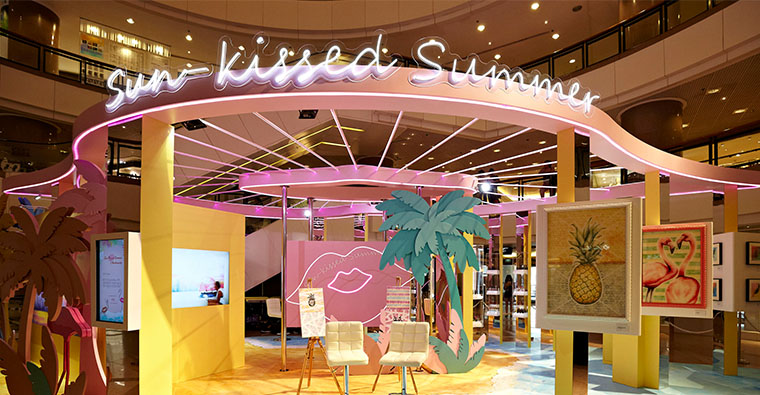
    The collection and launch event coincided with the unveiling of the Michael Kors x Yang Mi pop-up concept, which runs in Shanghai from 1 August to 19, before heading to Chengdu from 25 August to 2 September.

    As part of Kors’ efforts to further tap the local market, the Qixi bag is also available via its new WeChat Mini application, which allows customers to purchase all Kors products directly from the social media messaging platform.

    Finally, to mark the release, Michael Kors launched a fresh campaign featuring Mi, which was shot by Chinese photographer Chen Man. The global campaign will be distributed via print, outdoor advertising, digital advertising and social media, and an accompanying video will also be released.

    Michael Kors named Yang Mi as a global ambassador last September. It operates 135 stores in Greater China.

  • Convenience store in Korea enjoying revenue boost

    Convenience store in Korea enjoying revenue boost

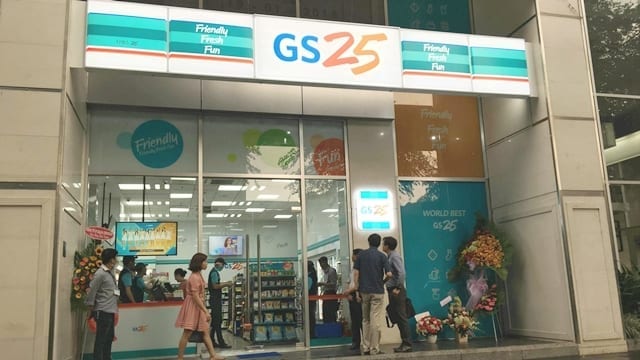
    South Korean convenience store operators GS25 and CU received a boost from in-house brands in the second quarter.

    GS Retail, which operates the GS25 chain, recorded a net profit jump of 11.1 per cent year on year to 45.8 billion won (US$41 million) in the April-June period, on sales up 5.3 per cent to US$2 billion.

    GS Retail attributed the growth to development of new products at its convenience stores, with 36.7 per cent of GS25’s sales excluding alcohol and cigarettes coming from its private-label products in July.

    South Korean convenience store operators have been developing private-label products to attract more customers.

    GS25’s main rival CU posted a net profit of US$60 million from April to June, an increase of 105 per cent from the first quarter of this year, on sales of $1.3 billion.

  • Vietnam’s VinFast in deal with Siemens for technology to make electric buses

    Vietnam’s VinFast in deal with Siemens for technology to make electric buses

    VinFast Trading and Production LLC has signed two contracts with Siemens Vietnam, a unit of Siemens AG.

    The contracts involve the supply of technology and components to manufacture electric buses in the Southeast Asian country.

    VinFast, a unit of Vietnam’s biggest private conglomerate, Vingroup JSC, said on Monday the deals will enable it to launch the first electric bus by the end of 2019.

    “Electric buses are an essential element of sustainable urban public transportation systems,” Siemens Vietnam President and CEO Pham Thai Lai said in the statement.

    VinFast will also produce electric motorcycles, electric cars and gasoline cars from its $1.5-billion factory being built in Haiphong City, it said.

    In June, General Motors Co agreed to transfer its Vietnamese operation to VinFast, which will also exclusively distribute GM’s Chevrolet cars in Vietnam.

  • Google tracks locations even when told not to

    Google tracks locations even when told not to

    Google wants to know where you go so badly that it records your movements even when you explicitly tell it not to.

    An Associated Press (AP) investigation found that many Google services on Android devices and iPhones store your location data, even if you’ve used privacy settings that say they will prevent it from doing so.

    Computer-science researchers at Princeton confirmed these findings at the AP’s request.

    For the most part, Google is upfront about asking permission to use your location information. An app like Google Maps will remind you to allow access to location if you use it for navigating. If you agree to let it record your location over time, Google Maps will display that history for you in a “timeline” that maps out your daily movements.

    Storing your minute-by-minute travels carries privacy risks and has been used by police to determine the location of suspects – such as a warrant that police in Raleigh, North Carolina, served on Google last year to find devices near a murder scene. So the company will let you “pause” a setting called Location History.

    Google says that will prevent the company from remembering where you’ve been. Google’s support page on the subject states: “You can turn off Location History at any time. With Location History off, the places you go are no longer stored.”

    That isn’t true. Even with Location History paused, some Google apps automatically store time-stamped location data without asking.

    For example, Google stores a snapshot of where you are when you merely open its Maps app. Automatic daily weather updates on Android phones pinpoint roughly where you are. And some searches that have nothing to do with location, like “chocolate chip cookies,” or “kids science kits,” pinpoint your precise latitude and longitude – accurate to the square foot – and save it to your Google account.

    The privacy issue affects some two billion users of devices that run Google’s Android operating software and hundreds of millions of worldwide iPhone users who rely on Google for maps or search.

    Storing location data in violation of a user’s preferences is wrong, said Jonathan Mayer, a Princeton computer scientist and former chief technologist for the Federal Communications Commission’s enforcement bureau. A researcher from Mayer’s lab confirmed the AP’s findings on multiple Android devices; the AP conducted its own tests on several iPhones that found the same behavior.’

    “If you’re going to allow users to turn off something called ‘Location History,’ then all the places where you maintain location history should be turned off,” Mayer said. “That seems like a pretty straightforward position to have.”

    Google says it is being perfectly clear.

    “There are a number of different ways that Google may use location to improve people’s experience, including: Location History, Web and App Activity, and through device-level Location Services,” a Google spokesperson said in a statement to the AP. “We provide clear descriptions of these tools, and robust controls so people can turn them on or off, and delete their histories at any time.”

    To stop Google from saving these location markers, the company says, users can turn off another setting, one that does not specifically reference location information. Called “Web and App Activity” and enabled by default, that setting stores a variety of information from Google apps and websites to your Google account.

    When paused, it will prevent activity on any device from being saved to your account. But leaving “Web & App Activity” on and turning “Location History” off only prevents Google from adding your movements to the “timeline,” its visualization of your daily travels. It does not stop Google’s collection of other location markers.

    You can delete these location markers by hand, but it’s a painstaking process since you have to select them individually, unless you want to delete all of your stored activity.

    You can see the stored location markers on a page in your Google account at myactivity.google.com, although they’re typically scattered under several different headers, many of which are unrelated to location.

    To demonstrate how powerful these other markers can be, the AP created a visual map of the movements of Princeton postdoctoral researcher Gunes Acar, who carried an Android phone with Location history off, and shared a record of his Google account.

    The map includes Acar’s train commute on two trips to New York and visits to The High Line park, Chelsea Market, Hell’s Kitchen, Central Park and Harlem.

    To protect his privacy, The AP didn’t plot the most telling and frequent marker – his home address.

    Huge tech companies are under increasing scrutiny over their data practices, following a series of privacy scandals at Facebook and new data-privacy rules recently adopted by the European Union.

    Last year, the business news site Quartz found that Google was tracking Android users by collecting the addresses of nearby cell phone towers even if all location services were off.


  • Trade wars to hit Malaysian steel sector

    Trade wars to hit Malaysian steel sector

    The Malaysian steel sector will be affected negatively in 2018 and 2019 due to the trade wars on the external front, said MIDF Research.

    “Changes in global trade policies, tepid global demand as well as the local steel mill cost structure will continue to impede any positive demand for the companies under our observation,” it said in a report.

    It expects the steel sector to experience more headwinds from the trade wars as China’s demand for steel is shaky, coupled with the slump in its construction industry.

    “The demand from China’s manufacturing sector takes up to 360 million metric tons annually, close to 60% of its annual consumption. But, the demand is expected to shudder further due to China’s environmental health and occupational safety policies,” MIDF Research said.

    It noted that steel players such as Ann Joo Resources, Lysaght Galvanised Steel, Southern Steel, SC Steel, Mycron Steel and Choo Bee Metal have reacted negatively to the announcements and influx of news on trade and tariff wars.

    It expects the trend to persist because globally, steel demand is projected to grow to 1,616.1 million metric tons this year and tepid growth will be plagued by low demand for 2019, growing to 1,626.7 million metric tons.

    “This means less demand for export for the local steel mill. Most of the local companies are affected by unwavering overhead costs and operational expenditure, making the sector unattractive,” said MIDF Research.

    Meanwhile, the government has announced the exclusion of sales and services tax for building materials and construction services, which would be a breather for the construction sector from the grim outlook of project cuts, it added.

  • Jin Air’s second-quarter profit falls 88 percent

    Jin Air’s second-quarter profit falls 88 percent

    Jin Air, the budget affiliate of Korean Air, said Friday that its second-quarter net profit fell 88 percent from a year earlier on increased fuel costs and a decline in travel demand.

    Net profit for the three months that ended on June 30 came to 1 billion won ($886,000), down from 8.1 billion won a year earlier, the company said in a regulatory filing.

    Operating profit dropped 50 percent to 6.2 billion won in the second quarter from 12.5 billion won a year ago. Meanwhile, sales rose 18 percent on-year to 226.5 billion won.

    The earnings results came as the South Korean government has been mulling whether to cancel the airline’s license over its illegal appointment of a foreign national to its board of directors.

    Under Korean aviation law, only Koreans can be registered as the directors of an airline.

    Jin Air named Cho Hyun-min – the younger daughter of Korean Air Chairman Cho Yang-ho – as its director between 2010 and 2016, even though she is legally an American citizen.

  • Singapore retail sales shows disappointing number in June

    Singapore retail sales shows disappointing number in June

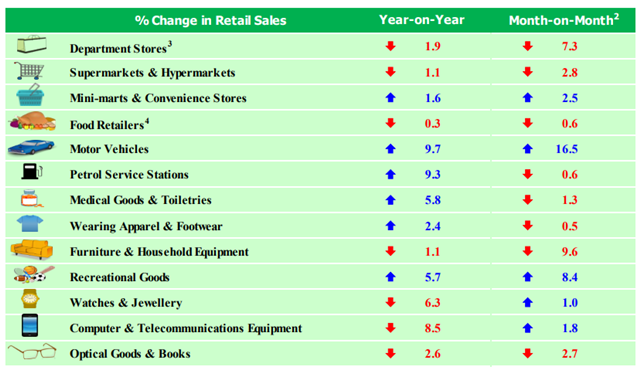
    June Singapore retail sales remained static in June, rising a mere 0.2 per cent after motor vehicles were excluded from the data.

    Month on month, retail sales excluding cars fell by 1.8 per cent.

    Considering higher fuel prices drove a 9.3 per cent increase in sales year on year, traditional retail sales probably did not increase at all in June. Statistics Singapore said that in volume terms, after removing the price effect, the increase recorded by petrol service stations was 0.2 per cent.

    Sales of medical goods & toiletries increased by 5.8 per cent, due to higher sales of cosmetics & toiletries. Sales of recreational goods rose by 5.7 per cent, mainly from sporting apparel during the FIFA World Cup.

    Sectors to record declines in June Singapore retail sales included computer and telecommunications equipment (down 8.5 per cent), watches & jewellery (down 6.3 per cent) and optical goods & books (down 2.6 per cent). Following sales growths in the previous month, sales of department stores and furniture & household equipment decreased by 1.9 per cent and 1.1 per cent, respectively.

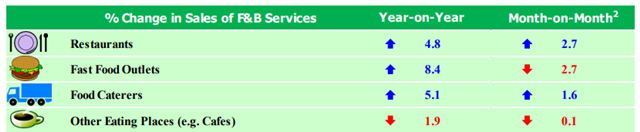
    Most food & beverage service industries achieved higher turnover in June this year, compared with last year. Fast-food outlets, food caterers and restaurants rose between 4.8 per cent and 8.4 per cent during this period.

    In contrast, sales of other eating places, such as cafes, fell by 1.9 per cent.

  • Jin Amy Yang appointed to lead Levi’s success in Greater China

    Jin Amy Yang appointed to lead Levi’s success in Greater China

    Effective 20 August, Jin Amy Yang will be taking over Nic Versloot’s position as Managing Director of Greater China as he moves on to a new role within the company.

    Alumni of the University of International Business & Economics in China with a Bachelor in Economics, Jin Amy Yang has over 20 years’ experience driving strategy and execution with top consumer brands.

    Formerly in charge of the global business development division of The Coca-Cola Company, Yang is now responsible for leading Levi’s commercial operations across all brands and channels while accelerating the brand’s growth in Greater China.

    Yang will report to David Love, Executive Vice President & President of Levi Strauss Asia, Middle East and Africa.

    Love says he is “confident she’ll unlock the company’s full potential in this market” which “represents a major growth opportunity for Levi Strauss & Co” and defines it as a “must-win market” for the company.

    Prior to joining Coca-Cola, Yang spent 13 years at P&G holding various global and regional leadership roles in both China and the U.S before becoming vice president of marketing for L’Oreal Paris.

  • Hyundai creates separate sound zones in cars

    Hyundai creates separate sound zones in cars

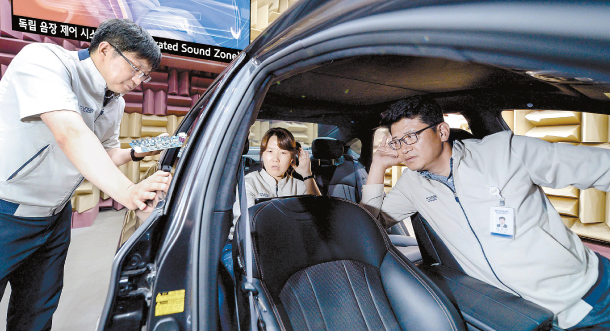
    Hyundai Motor has developed a sound system for vehicles in which passengers and the driver can hear different songs or make totally private phone calls.

    It is the first such system in the world, the carmaker announced Sunday, and will be offered in Hyundai Motor cars within a year or two.

    Korea’s largest carmaker calls the system a “separated sound zone” and unveiled it on its official website and on YouTube last Sunday.

    In the YouTube video, classical music plays in the front of the car where two parents are sitting, while pop music plays in the back for children.

    Separate sound zones are created by the artful placement of different speakers. There is also software that control the sound’s reflective wave and output level, the carmaker explained.

    Playing different types of music is the most basic thing the sound zones can do, according to the carmaker.

    A driver or passenger could have a private phone call as well. Calls on speaker are usually heard by all people in the car.

    With the system, passengers can enjoy individual choices of music while retaining the ability to converse among themselves, which isn’t possible if they are enjoying private music with earphones.

    Sounds that are necessary to the driver but that are disturbing to other passengers can be controlled too, such as audible directions from the navigation system or warning sounds from the driving assistance system.

    Music or direction guides that a driver is listening to won’t be heard by a sleeping child in the back seat.

    Hyundai Motor said it started developing the system in 2014 and is almost ready to install it in mass-produced cars.

    “This sound system will become necessary as the autonomous driving era nears and demands for entertainment inside a car evolve,” said Ih Kang-duck, a researcher in charge of developing the system.

  • Samjin makes debut in the Philippines market

    Samjin makes debut in the Philippines market

    South Korean fish cake brand Samjin has opened in the Philippines as part of a broader expansion plan for Asia.

    Its first store opened in Makati at the Ayala Malls Circuit, and is operated by South Korean entertainment and logistics company Wevenine.

    A spokesperson for the firm said: “We plan to market some 40 different kinds of fish cakes, including both semi-manufactured and completed products, using ingredients entirely from South Korea”.

    The brand has announced plans to follow up on the opening with four further branches in the territory by the year’s end, as well as establishing a presence in Indonesia.

    It has already opened in Singapore and is eyeing locations in China.

  • Online grocery shopping made easy with Shopee Mart

    Online grocery shopping made easy with Shopee Mart

    E-commerce platform Shopee Philippines has launched Shopee Mart, selling groceries online via smartphones.

    As Shopee grows its Asian footprint – it is now operating across Southeast Asia and in Taiwan – it is expanding the services offered in selected markets. Groceries was a logical extension in the Philippines.

    A raft of consumer packaged goods brands have signed up to the platform, including Nestle, Unilever, Lysol, Coca-Cola, Nivea, Colgate, Pampers, Garnier, Mamypoko and Olay.

    The grocery foray was launched with a special offer to consumers of up to 90 per cent off selected grocery items, ranging from food and beverages to toiletries and skincare products from Monday through Wednesday this week.

    “At Shopee, we … are committed to continuously innovating our platform in order to meet the different needs of our users,” said Shopee Philippines director Jane Lim.

    “For the launch of Shopee Mart, we hope to be able to cater to users who prioritise the ease and convenience of doing their grocery shopping online, and will continue to work closely with brand partners to bring them even more value-added deals and exciting campaigns going forward.”

  • M Bakery plans its debut in Southeast Asia

    M Bakery plans its debut in Southeast Asia

    New York’s Magnolia Bakery is opening its first Southeast Asia outlet this month, in the Philippines where it is branded M Bakery.

    Set to open on August 22 on the ground floor of One Bonifacio High Street Mall, M Bakery Philippines has an open kitchen that allows customers to watch as bakers make different cakes and cupcakes. The interior is full of pastel pink and teal, and hand-painted labels of baked goods.

    “We wanted to keep the same vintage feel of our flagship in New York’s West Village,” says Erick Larios, director of franchise operations for Magnolia Bakery.

    Founded in 1996 in New York City, Magnolia Bakery is best known for its signature Banana Pudding. The bakery has expanded around the US and internationally, before landing in Manila.

    “We love our sweets,” says Stewart Ong, managing partner of Phil Jacobe Ventures, which brought M Bakery to the Philippines. “We also have this very unique practice of pasalubong so I think M Bakery will be a good fit here.”

    The menu includes the classic Key Lime Pie, Banana Pudding, Vanilla Cupcake With Vanilla Buttercream, Ombre Ruffle cake.

  • The revival for brick-and-mortar fashion retailers?

    The revival for brick-and-mortar fashion retailers?

    These are dark times for brick and mortar fashion retailers. As e-commerce grows and consumer behavior changes, the US has seen over 7,000 store closings in 2017.

    Investment bank Credit Suisse even predicts 25% of American shopping malls to close by 2022. The UK is no different, with an average of 16 high street stores closing every day last year. In this scenario, many brick and mortar retailers are finding that a couple mannequins, clothing racks and nice lighting no longer suffice to lure shoppers into coming inside, let alone to turn them into loyal customers.

    In a quest to look more attractive, a growing number of fashion retailers are drawing inspiration from art galleries, museums and magazines to plan their stores’ architecture, décor and product display.
    “By presenting goods for sale in a ‘highbrow’ setting, they increase the perceived value of products, which also creates more of an experience for the consumer”, said Petah Marian, Senior Editor of Insight at the trend forecasting company WGSN.

    However, in the fast-paced times we live in, even the most eye-popping of shops still needs to revamp itself from time to time to keep consumers interested. While museums and art galleries may be a source of inspiration, the pace in which pieces are replaced shouldn’t resemble a museum at all. A recent study revealed that online stores which constantly launch new products tend to sell more than those which are perceived by consumers as stylish. However, the latter takes longer to change their collections.

    If even e-commerce companies must speed up to not be swept away by competition, what can be said of brick and mortar retailers?

    Another report by The Future Laboratory advised stores to become “hubs of activity, with ‘rewards’ such as exclusive products, immersive experiences or lifestyle services”. Indeed, no less than 75% of Generation Z consumers prefer stores that provide a “memorable and encouraging offer”.

    This dynamism imperative might explain why the biggest cities of the world are seeing a growing number of so-called “concept stores”. Although the term is sometimes used loosely to describe retail spaces that look different than usual, it usually refers to shops which, in addition to looking “artsy”, also offer an ever-changing curated selection of products from several categories.

    It’s a smart move: ever-changing, so that consumers always feel there’s something new to discover in store. Curated, because they often find it difficult to filter all the options they come across in a world saturated by information and products. Shoppers who are overwhelmed by choice tend to look for trustworthy sources to inspire their purchases, according to trend forecaster Pernille Kok-Jensen, director at Dutch research agency Mare.

    Think of the concept store as the retail equivalent of the social media influencer. Speaking of social media, that explains why so much attention is given to product display and décor: retailers aim to look “instagrammable”. After all, today’s consumers are avid social media users and Instagram is on a quest to become an e-commerce platform.

    But perhaps the most interesting thing to be noted about this type of shop is that fashion is placed alongside other product categories which used to be sold separately, such as books, homeware and food. Some even go as far as offering workshops, concerts and other cultural activities — just like a real museum or art gallery would. “Spending on clothing in developed markets is not growing at the same rate of other categories. In some markets, it is even in decline. That means retailers need to branch out in order to maintain profitable growth”, explained Marian. Fashion is now part of a more holistic view of style.

    Concept stores’ rise in popularity can, therefore, be related to the rise of “lifestyle”. As fashion brands expand into new product categories to have customers “fully immersed into their world”, as Gucci put it when releasing its homeware line, so do stores. After all, why restrict oneself to just one product category, when one can cater to more needs and be present at all moments of customers’ lives?

    “The books we read, the clothes we wear to the skincare we use are all indicative of the lifestyle we are aspiring to create”, explains Marian.

    No wonder established apparel giants, such as the H&M Group, are jumping in the concept store bandwagon as well. In addition to expanding H&M’s product offering to include homeware, the fast fashion giant has recently launched a new brand, Arket.

    Defined by H&M itself as a “modern day market”, the store features menswear, womenswear, childrenswear, homeware, beauty products and a café. Its website even includes a recipe section. At Arket, products are displayed in a minimalistic style reminiscent of Scandinavian museums — remember H&M’s motherland is Sweden.

  • Consumer goods, property most attractive sectors for acquisition in Vietnam

    Consumer goods, property most attractive sectors for acquisition in Vietnam

    The most promising sectors for mergers and acquisitions in Vietnam are consumer goods and real estate, says a global advisory firm.

    Food and beverage (F&B) tops the list followed by pharmaceuticals and real estate in joint second position and fast moving consumer goods, KPMG said in its latest outlook report for M&A released at the Vietnam M&A Forum (MAF) 2019 in HCMC last week.

    The firm came up with the report following a survey of more than 300 professionals working for private equity firms, securities companies and M&A advisory firms besides company owners.

    F&B takes the lead thanks to a booming young middle class, stable economic growth of 6.5 percent and increasing exposure to new concepts and cultures especially influenced by globalization.

    As for pharmaceuticals and life sciences, the survey found that while some foreign companies in this industry could see M&A as a faster means of obtaining the necessary licenses in Vietnam, several other arguments were also made in support of this trend: such as the government’s plan to simplify licensing policies and reforming regulatory frameworks, and the increasing demand for healthcare.

    Besides, the country’s rapid urbanization rate means the real estate sector will continue to remain a magnet for investment, especially the residential and hospitality segments.

    A report of the MAF 2019 stated that foreign investors in the consumer goods sector do not just have an eye for local brands but also their distribution networks.

    “Thai and South Korean investors have expressed interest in Vietnam’s consumer goods sector since M&A deals will help them access established channels to distribute Thai and Korean goods in the Vietnamese market,” said the report.

    As for the real estate sector, it noted foreign investors are interested in M&A because it often takes long to complete procedures for new real estate projects in Vietnam, and acquiring local firms would be a shortcut.

    Besides, the availability of land for new projects is limited, with local firms already buying up most of them, making it difficult for foreign investors to strike out on their own.

    MAF 2019 data showed that the total M&A value in Vietnam last year was $10.2 billion, the highest ever and 175 percent up from 2016.

    In the first six months of this year the figure was $3.55 billion, up 55 percent.

    Consumer goods and real estate accounted for the biggest slices of the M&A pie last year, with 57 percent and 27 percent, respectively.

    In H1 this year real estate surged to the top, accounting for 66.75 percent, followed by finance-banking with 19.06 percent.

    Experts at the forum said this year the M&A value could be lower at $6.5-6.9 billion.

    Last year it had been boosted by the biggest ever divestment deal in the country when Thai Beverage paid nearly $5 billion for a 54 percent stake in Vietnam’s top brewer Sabeco.

    KPMG’s survey found that Japan, South Korea and China would continue to be the top sources of M&A deals in the next three years.

    Warrick Cleine, chairman and CEO of KPMG in Vietnam and Cambodia, said the wave of investments from Asia into Vietnam would be huge and the Comprehensive and Progressive Agreement for Trans-Pacific Partnership (CPTPP) that Vietnam signed in March with 10 other Asia-Pacific countries would make Vietnam’s market even more attractive to investors from Japan and South Korea.

    Deputy Prime Minister Vuong Dinh Hue told the forum the government is amending and finalizing policies related to management of state-owned equity.

    The government will continue to push with its equitization of state-owned firms and tighten up rules to ensure those that have already launched IPOs list on the stock market, he said.

    The government is seeking to make things easier for investors. “The target is to cut 30-50 percent of business procedures within this year. Now 15 percent of such procedures has been axed. We will do the same with specialized inspection procedures to improve the investment environment in Vietnam to make it easier for the establishment of new firms as well as M&A activities,” the deputy PM added.

    Pham Van Thinh, CEO of advisory firm Deloitte Vietnam, said as the government continues to facilitate foreign investment and make the economy more open, Vietnam would remain an attractive market for the next five to 10 years.

    However, as most companies in Vietnam are small or medium-sized, which means many of them do not have strategic policies for long-term development, there is not much scope for strong growth in M&A in future, he said.

    Dominic Scriven, executive chairman of Dragon Capital, one of the top investment funds in Vietnam, said he is optimistic about the M&A prospects in Vietnam.

    But he noticed three factors that should be sorted out to bolster the M&A landscape: the government’s policy to attract foreign investment, a change in attitude of local firms many of whom still want to handle everything themselves and do not look at M&A as a solution to become stronger and how effectively Vietnam can handle possible disputes between partners in M&A deals.

  • In Ratio Shanghai, robot can create the perfect drink

    In Ratio Shanghai, robot can create the perfect drink

    A retail concept harnessing the power of technology to deliver personalised coffee and cocktails has opened in China.

    Ratio uses robots to craft personalised espresso coffee during the day and cocktails at night.

    Launched with a pop-up store at Shanghai’s K11 Art Mall, the concept is about to find a permanent home at Raffles City, People’s Square. Dozens more stores are in the pipeline at hotels and co-working spaces in Asia.

    “With Ratio, bespoke drinks and service, previously available only at high-end hotels and lounges are now accessible to everyone,” says co-founder and chairman of Chinese luxury retailer Mei.com,Thibault Villet, who is a cornerstone investor in Ratio.

    “The Ratio experience is a journey towards self-exploration and it and empowers individuals to live brilliantly.”

    At ratio, drinks are made to order, in the exact ratio customers prefer. For example, a 1.2 shot of espresso in a cappuccino, or an extra strong 120ml bourbon in an Old Fashioned cocktail.

    Ratio uses science to come up with the perfect blends.

    “An individual’s sensory capacity for bitter, sweet, and umami is determined by genetics,” explains founder Gavin Pathross. “The distribution of taste buds is also genetically programmed. That’s why no two taste palates are identical.”

    Using robotic technology and software, Ratio has developed a system that can put together ingredients according to the exact ratio that will satisfy individual tastes.

    Harnessing the accuracy and consistency of a cobot – that’s short for “collaborative robot” – each drink is prepared precisely to order and speed; a latte takes less than one minute.

    Using AI, Ratio stores customers’ orders, learns their preferences and even makes recommendations during future visits.

    Pathross promises humans will not be replaced, however. “Cobots are just better than humans in performing repetitive work. They’re great at executing orders, freeing up our team of Ratiologists, assembled from Asia’s best baristas and mixologists, so that they can do what they do best – provide personalised service and have great conversation with our guests.”

    The team of Ratiologists Pathross has assembled have a combined 50 years of food and beverage industry experience.

    “We’re literally raising the bar on beverage service,” says chief Ratiologist Steve Teo.

    “Our team will help guests discover their individual preferences and customise their own Ratio. We want you to be particular about your G&T and select precisely 20 ml of lime and 60 ml of gin, for example. Bartenders elsewhere will be too busy to have that kind of conversation. That’s why Ratio is unique.”