Tag: asia

  • Chinese and Russian business key to Lotte Duty Free’s success

    Surging Chinese and Russian visitor numbers suggest a strong future for Korean travel retail giant Lotte Duty Free’s new store at Cam Ranh International Airport in Nha Trang, opened on 30 June.

    As reported, Lotte Duty Free has been awarded an exclusive ten-year duty free concession. The contract to operate some 1,680sq m of departures and arrivals space runs until mid-2028.

    Lotte Duty Free CEO Jang Sun-wook opened the store in the airport’s new terminal on 30 June.

    The store sells a wide range of traditional duty free items, including cosmetics, fragrances, watches, fashion, liquor and tobacco. The departures shop, sited directly in front of the main gates, covers 1,507sq m and the arrivals store 173sq m. Key Korean brands include The History of Whoo and Sulwhasoo, while blockbuster international names include Saint Laurent, Dior and Jo Malone.

    It is Lotte Duty Free’s second operation in Vietnam after the retailer’s opening at Danang Airport on 1 November last year. The company expects to generate sales of around 700 billion won (US$625.3 million at current exchange rates).

    Cam Ranh International’s new two-storey terminal covers 50,000sq m. It is expected to handle up to 8 million outbound travellers by 2030.

    Nha Trang is the most popular tourist destination in central Vietnam. Some 2 million foreign tourists visited the area in 2017, a number set to rise by some 20 percent this year. Critically from a retail perspective, Chinese nationals comprise the largest visitor group with 58.9 percent of arrivals, ahead of Russians (27.4 percent). Koreans only make up around 2 percent of arrivals, but that number is expected to climb rapidly in the future as Jeju Air has added a new service to the city.

    Several mid-to-long-term infrastructure development projects are set to increase tourism. A new terminal is being built at the airport and more 4-5 star hotels are being added locally. Six shopping malls are in development while plans are well advanced for the area to develop an eco-tourism programme, including spa and craft village facilities, plus an international-class marina and resort.

    Lotte Duty Free said that corporate social responsibility will be key to its approach. For example, the company is cooperating with local authorities to help children receive surgery and other treatment at medical facilities in Danang. In October 2017, the company funded surgery for six Vietnamese children, and plans to continue the programme this year.

    During July, Vietnamese women from multicultural families are planning a one-off event to invite about 100 parents to the women’s homeland in Vietnam. Lotte Duty Free will help fund the programme.

    With plans to open further stores (including downtown) in Hanoi, Ho Chi Minh City and Danang, Lotte said it hopes to become Vietnam’s largest duty free brand within the next three years.

    Jang said the company aims to post a profitable return in year one. “We are especially focused on making a strong local social contribution,” he said. “I will do my best to create a strong brand.”

  • Federer moves to Uniqlo after leaving Nike

    Federer moves to Uniqlo after leaving Nike

    20-Grand-Slam champion Roger Federer has walked away from a decade long partnership with Nike, signing on to a new deal with Japanese fashion retailer Uniqlo.

    Federer will represent Uniqlo at all tennis tournaments throughout the year, starting with The Championships at Wimbledon 2018.

    Mr Federer is one of the greatest champions in history; my respect for him goes beyond sport,” said Tadashi Yanai, Uniqlo founder and chairman, president and CEO of fast retailing.

    “Our partnership will be about innovation on and off court. We share a goal of making positive change in the world, and I hope together we can bring the highest quality of life to the greatest number of people.

    “Uniqlo will help Mr. Federer continue taking tennis to new places, while exploring innovations in a number of areas including technology and design with him.”

    Federer noted that he was deeply committed to tennis, but also shared Uniqlo’s values.

    “We share a strong passion to have a positive impact on the world around us and look forward to combining our creative endeavors,” said Federer.

    It is interesting to note that Uniqlo is not a sports company, but describes itself as a life company that creates LifeWear, “apparel that comes from the Japanese values of simplicity, quality and longevity.”

    In addition to Federer, the Uniqlo global brand ambassadors are Kei Nishikori (tennis), Shingo Kunieda and Gordon Reid MBE (wheelchair tennis) and Adam Scott (golf).

  • Vietnam’s first driver-less car gets the green light

    Vietnam’s first driver-less car gets the green light

    An FPT Software request to pilot its self-driving cars in Vietnam’s hi-tech zones and software parks has received a positive response from the Transport Ministry.

    The ministry said it supports FPT’s plan because it was in line with global trends and confirmed to the Government’s agenda to foster the fourth industrial revolution (Industry 4.0).

    It instructed FPT to seek authorization from the high tech parks’ management board before testing the autonomous cars on internal roads of the Saigon High Tech Park in Ho Chi Minh City’s District 9 and take responsibility for traffic security during the trial.

    The tech giant has also been asked to report on tests carried out with the driver-less car and propose solutions to tackle any possible problems that may arise once it is put to test on public roads.

    Pham Minh Tuan, general director of FPT Software, said that the company had established two years ago a strategic unit specializing in automotive technology solutions.

    FPT Global Automotive (FGA) has three main focuses: self-propelled car, safety system, and entertainment system, he said.

    The unit now has a 2,000-person team dedicated to hardware and software development, and mechanical design. It is ready to develop most of the car’s functions, he said.

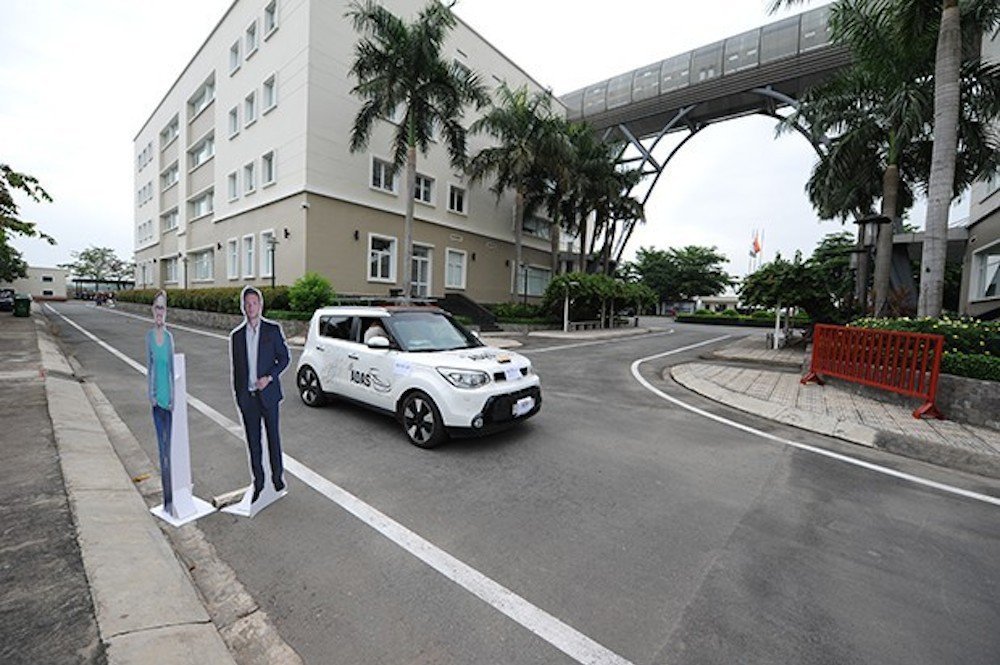
    FPT had introduced the first self-propelled car in Vietnam on October 31, 2017.

    The Hanoi-based company has been operating autonomous cars around the FPT complexes in the central city of Da Nang and F-town campus within the Saigon High Tech Park.

    The self-driving vehicles have an average speed of 20-25kph and can reach up to 40kph on straight stretches. They can self-align, change lanes and avoid obstacles or tripping when needed. The vehicles have had over 1,000 hours of self-steering, with no problems in weathering different conditions including sunshine, rain and low light.

    FPT is working to perfect the vehicle’s brake system and other functions like GPS, direction guide and built-in voice response control.

    The new initiative builds on FPT Software’s work in implementing more than 150 projects in the automotive industry for more than 20 clients in Japan, South Korea, Europe and the United States.

    It aims to reach $200 million in automotive-related sales by 2020, including software, design, analysis and IC design.

    The corporation also aims to supply 10 per cent of the world’s self-propelled automotive software by 2025.

  • HK’s first ever Lipstick Tasting Bar at Harbour City

    HK’s first ever Lipstick Tasting Bar at Harbour City

    Women use lipstick as a statement; Lipstick Lex as a tool to create art.

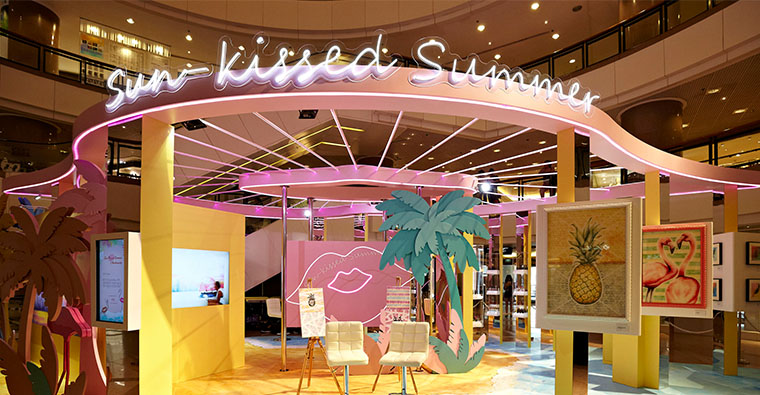
    Until 22 July, Harbour City presents “Sun Kissed Summer – lipstick art exhibition” in the Atrium II of Gateway Arcade.

    The renowned American lipstick artist Lipstick Lex is holding her first solo exhibition in Hong Kong.

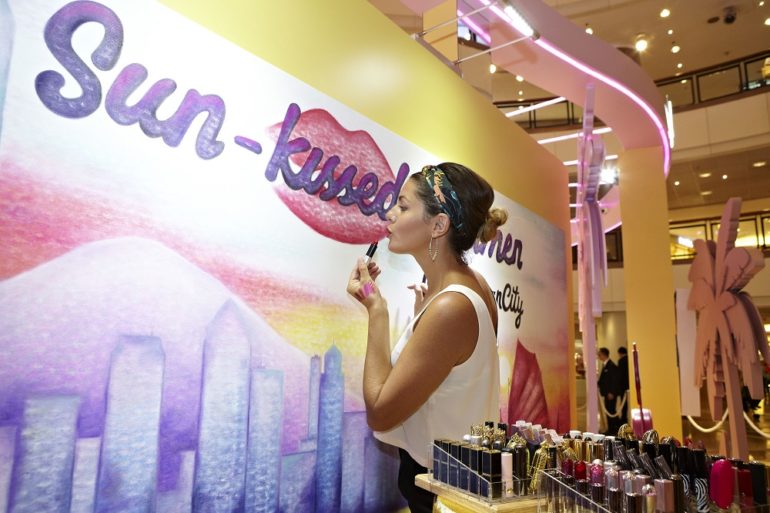
    Lex demonstrates how to use over ten thousand kisses to create her largest piece of kiss print “Victoria Harbour Sunset” in Harbour City.

    Harbour City, as the mall with the largest number of beauty brands (over 320 brands) in Hong Kong, also holds the first ever “Lipstick Tasting Bar” which have 34 brands and over 200 shades of lipsticks in one stop for trial.

    To create a better customer experience, Harbour City is using Facebook Chatbot and digital panel to make an interactive game for customers try on the desired lip colors according to the game result.

    “Sun Kissed Summer – lipstick art exhibition” will now exhibit 22 pieces of Lex artworks of which more than half is newly created for this exhibition.

    The inspiration behind this new series comes from the animals and plantations in Florida’s tropical environment such as Flamingo, Sea Turtles, Plum trees and pineapples etc. Her artwork combines the colorful lipstick colors and kiss prints in order to spread a positive message of love, merriment, beauty and feel-good vibes all around.

    Besides, Lex is using the theme of “Victoria Harbour” to tailor make her giant artwork – “Victoria Harbour Sunset” for this exhibition. This is the largest piece which she has ever created, 3-meters long, made by more than ten thousand kiss prints and lipsticks from over 20 brands. The drawing is about a beautiful sunset scene with a sailboat sailing to Victoria Harbour.

    Alexis Fraser, a.k.a. Lipstick Lex, is an artist from the United States, Florida. Starting at an early age, Lex enjoyed and excelled at creating art in fun and interesting methods. Back in 2012 Lex was challenged to create a portrait of Marilyn Monroe, utilizing a non-traditional method that would still correlate with Marilyn.

    Utilizing 100% lipstick and her fair share of kiss prints, Lex soon launched her alternative contemporary art brand, “Lipstick Lex”. Videos showing her unique lipstick painting skills have also gone viral in Youtube and other social media platforms. Lex has previously exhibited her works in Japan, Europe, Canada and the United States; and has held speaking engagements discussing her artworks mission.

  • Chinese’s Pinduoduo seeks US$1 billion

    Chinese’s Pinduoduo seeks US$1 billion

    Chinese e-commerce startup Pinduoduo is seeking US$1 billion in a US IPO, going head to head with industry giants such as Alibaba.

    The company’s business model, in which users recruit friends via social media to enjoy group-discount offers direct from manufacturers, has seen its transaction volumes reach 141.2 billion yuan (US$21.3 billion) in 2017, tripling the company’s revenue. It was founded by ex-Google engineer Colin Huang and is backed by Tencent and Sequoia Capital, among others.

    Pinduoduo raised more than US$1 billion in its last fundraising round in April, against a valuation of around US$15 billion. Its sales have been strongly supported by its large user base in lower-tier Chinese cities. The site’s daily active users reached 55.9 million last month, more than 20 million more than the popular JD e-commerce platform.

  • Vietnam textile firm bets on eco-friendly products

    Vietnam textile firm bets on eco-friendly products

    For price conscious Vietnamese consumers, an organic product more expensive than its normal version is not an attractive option, but one firm has decided to be persistent.

    The Phong Phu Textile and Garment Company introduced its made-in-Vietnam eco-friendly towel brand last December, attracting media attention as one of the first firms in the country to produce an organic textile product.

    The Mollis Organic towels are made from 100 percent organic cotton. No genetically modified organism, chemical fertilizer or pesticides are used in the making of this product, the company asserts.

    The company would strive to bring organic products to its customers although their production costs are high and profits uncertain, Pham Xuan Trinh, CEO of the Phong Phu Textile and Garment Company said.

    The company prices its organic towels from VND60,000-250,000 ($2.62-$10.91) depending on the size, about 20 percent higher than conventional products, while made-in-China towels are sold for just VND15,000 ($0.65).

    Since awareness of the importance and advantages of organic products is relatively low among a majority of Vietnamese consumers, Phong Phu is struggling to sell its organic towels to local customers.

    “We’ll continue to invest in organic products despite low profits with the hope that one day Vietnamese customers will see the true value of organic products,” he said.

    The company spent VND4 billion ($174,600) last year on research and development for its organic products.

    As Vietnam’s conditions are not currently suitable for growing organic cotton, the company imports its material from Bangladesh, India and Israel. The processing and manufacturing processes happen in Vietnam.

    The company has so far exported its organic towels to Japan and South Korea, aiming at the high-income customers in these countries.

    Phong Phu recorded a profit of VND149 billion ($6.5 million) in the first half this year, a growth of 7 percent from the same time last year, but most of it came from conventional non-organic products, including towels and denim jeans.

  • CBRE appoints appointed Tom Gaffney for The Greater Bay Area and Hong Kong

    CBRE appoints appointed Tom Gaffney for The Greater Bay Area and Hong Kong

    CBRE has appointed Tom Gaffney as Regional Managing Director for The Greater Bay Area and Hong Kong with immediate effect. In this newly created role, Gaffney oversees all CBRE’s business activities in the newly-formed economic hub.

    Gaffney joined CBRE in 2016 as the Managing Director for CBRE Hong Kong, Macau and Taiwan.

    The establishment of CBRE’s new business geography reflects the firm’s goals to enhance its market leadership in the fast-growing area.

    The Greater Bay Area, comprised of Hong Kong, Macau, Guangzhou, Shenzhen, Zhuhai, Foshan, Zhongshan, Dongguan, Huizhou, Jiangmen and Zhaoqing, represents the growth of a connected economic powerhouse and offers vast business opportunities.

    CBRE currently runs three corporate offices in the region: Hong Kong, Guangzhou and Shenzhen with numerous site offices across the other cities in the region.

    Ben Duncan, CEO, Greater China, CBRE, said, “Tom has been a tremendous leader who has grown our businesses across all metrics. The new role speaks to his capabilities and our firm’s commitment to deepen our roots in the Greater Bay Area. It is already the world’s the largest bay area in terms of land area and population and presents unprecedented potential for our clients and for CBRE.”

    Gaffney has more than a decade of experience in the real estate industry. Prior to joining CBRE, Gaffney was at JLL as Head of Retail, Hong Kong and China. Before JLL, he worked for Hongkong Land in Commercial and Retail Asset Management in Hong Kong, Singapore and Thailand.

    Tom Gaffney, Regional Managing Director, The Greater Bay Area & Hong Kong, CBRE, said, “I am honoured to have been given this responsibility to drive the firm’s growth in the Greater Bay Area. These are exciting times for the region and the firm, and we are confident that our team will effectively leverage on the opportunities opened to us from the Southern China economic powerhouse.”

  • Gucci to launch limited-edition tattooed handbag

    Gucci to launch limited-edition tattooed handbag

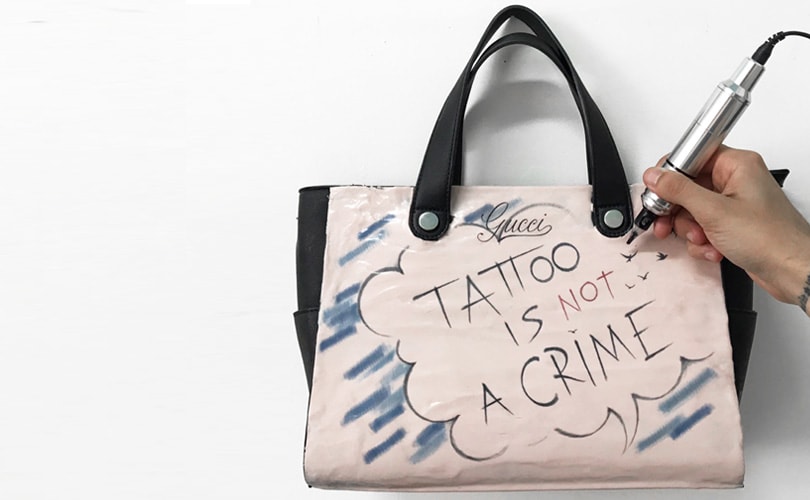
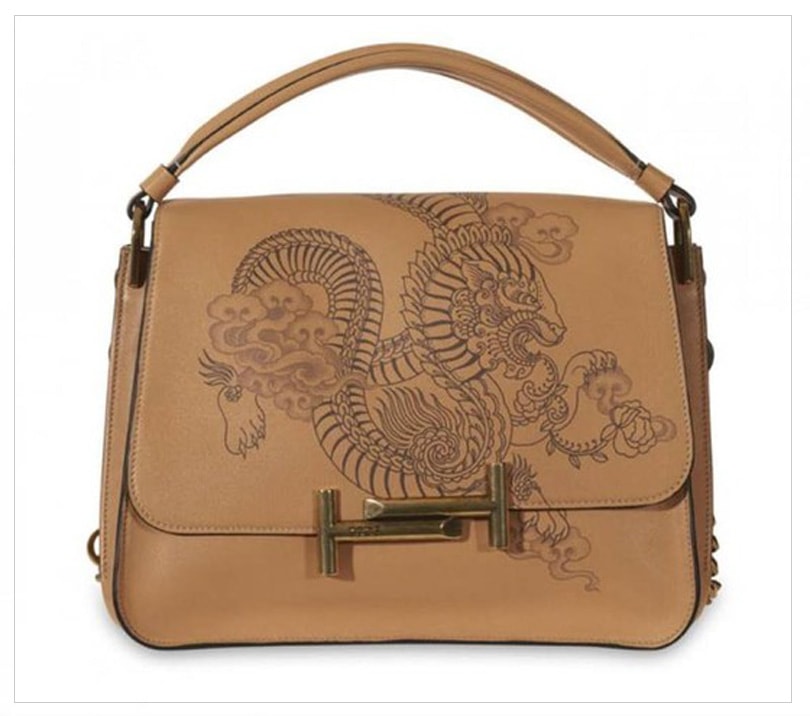
    Gucci is launching a faux-leather tattooed handbag collection with Italian artist Gabriele Pellerone, best known for his cutting-edge paintings.

    The fashion house will take orders for 100 handbags from next January.

    Customers will be able to choose from a set of designs developed by the Gucci design team with Pellerone and displayed on Gucci’s website.

    Prices have not yet been disclosed.

    There will be a demonstration of the tattooed handbags at the “Autumn Equinox: Collective Visions in Abstraction and Figuration” exhibition on September 21 at the Agora Gallery in New York City.

  • Alibaba and Guess’ FashionAI Concept Store unveiled in HK

    Alibaba and Guess’ FashionAI Concept Store unveiled in HK

    GUESS is global strategic partner of Alibaba’s FashionAI project, an initiative to give shoppers a glimpse of what the future of fashion retail will look like.

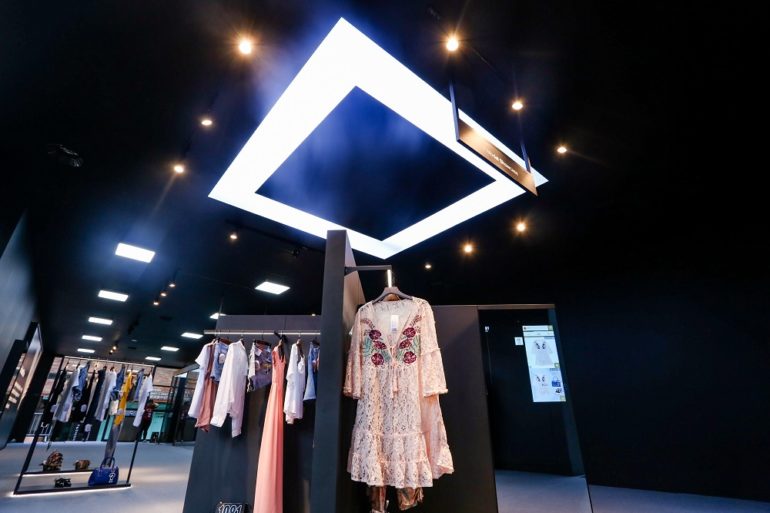
    Alibaba rolled out a pilot FashionAI concept store on the Hong Kong Polytechnic University (PolyU) campus pairing GUESS’ retail knowledge and latest collections with advanced Alibaba AI and other technology.

    “By partnering with Alibaba, a dominant technology leader, we are changing the retail experience as our customers also evolve,” said José Blanco, CEO of Greater China for GUESS. “It is important that we continuously invest in new technology and platforms. This entire project came together in just five months thanks to a strong partnership between our two companies. At GUESS, we believe in the need to innovate in real time. We plan to extend this project in the region as the future of retail.”

    Besides the FashionAI concept store’s futuristic appeal, the project is aimed at providing a better retail experience for shoppers and to use analytics to help brands be smarter in ordering and maintaining inventory.

    “GUESS and Alibaba share the same vision to understand customer behaviors through technologies, ” said Zhuoran Zhuang, Vice President, Alibaba Group. “With GUESS’ retail expertise, we are able to train and refine our FashionAI system, and marry technology with fashion in a way that’s never been done before. We are looking forward to deepening our partnership to innovate personalized services offered in retail shops.”

    The FashionAI concept store features smart racks, smart mirrors and next-generation fitting rooms.

    Alibaba’s FashionAI system underpins the stores, offering up mix-and-match clothing and accessory suggestionsfor customers from the GUESS line, as well as items sold by others on Tmall and Taobao, China’s biggest B2C and C2C platforms, respectively.

    GUESS launched its store on Tmall at the end of 2013 and the brand has been one of the most popular brands in the fashion apparel category. GUESS’ store has achieved more than 100% growth over the last 3 consecutive years.

    GUESS collaborates with Alibaba closely in the New Retail concept since 2016 with the
    implementation of the O2O project in both online and offline stores.

    The FashionAI concept store, located at the Logo Square of PolyU campus, will be open to the public from July 5-7. It is being set up on the sidelines of the Artificial Intelligence on Fashion and Textile Conference 2018, co-hosted by Alibaba and PolyU.

  • Take a look inside the new Apple store at Sands Cotai Central

    Take a look inside the new Apple store at Sands Cotai Central

    The newly opened Apple Macau store has been designed to offer “a calm complement to the buzz and excitement of Macau,” says its creator, Foster + Partners.

    “We wanted to create something very simple and pure – a beautiful and elegant building that complements the sounds, sights and colors of Macau, while embodying a sense of clarity and quietude,” explains Stefan Behling, head of studio at London-headquartered practice.

    “The design creates two distinct spaces, one inside and one outside, imbued with a sense of authentic beauty arising from the innovative use of natural materials.”

    The new store anchors the extension of the Sands Cotai Central retail space, which houses 25 stores. It opened last Friday.

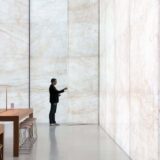
    Technology, entertainment and arts come together in the new store, giving locals and tourists alike an inviting, contemplative space. Behling says its timeless design reinvigorates a corner of Cotai with a distinctive addition – a luminescent cube, whose pure geometry and warm ‘beacon-like’ glow draws passers-by closer, set within a quiet bamboo grove and an external plaza.

    Apple Cotai Central is conceptualised as a ‘paper lantern’ that glows mysteriously. Visitors entering the store are treated to a magical experience, surrounded by glowing stone panels that shimmer throughout the day as the sun brings them to life, while at night the cube radiates a warm glow, contrasting against the bright lights of Macau. The first-of-its-kind glass-stone composite facade comprises five layers of glass integrated with wafer-thin layers of stone, which gives the building its distinctive materiality – appearing as translucent stone walls, akin to stained-glass, explains Behling.

    The structural frame is supported by just three corner columns wrapped in mirrored stainless-steel that reflect the patterns and colors of the facade, dematerialising the structure and blending seamlessly with the surrounding environment.

    Inside, a quiet bamboo grove has been taken from the ‘forest’ outside and placed under a soaring central atrium. It is capped by a large central skylight with punched pyramidical apertures that brings natural light deep into the interior. The ground level is wrapped in a glazed facade that looks onto a layered bamboo screen, providing a heightened sense of enclosure, while blurring the boundaries between the inside and outside.

    At the far end of the store is a 10.6m by 4.5m video wall, alongside an entrance from the adjacent retail shopping mall and casino.

    Two grand stone staircases lead to the upper level, lit by skylight strips that bring in filtered natural light.

    Display tables are arranged around the central atrium looking onto the bamboo grove below. The composite glass-stone facade wraps around the entire upper level, creating what Behling describes as a soft internalised environment that exudes a sense of calm and serenity.

    The Apple Macau store design is the result of a close collaboration between the Apple team led by chief design officer, Sir Jonathan Ive and Angela Ahrendts, senior VP of retail and online stores, and Foster + Partners.

    Full images of the store can be viewed below :

  • Department store in Nagoya ends 400-year history

    Department store in Nagoya ends 400-year history

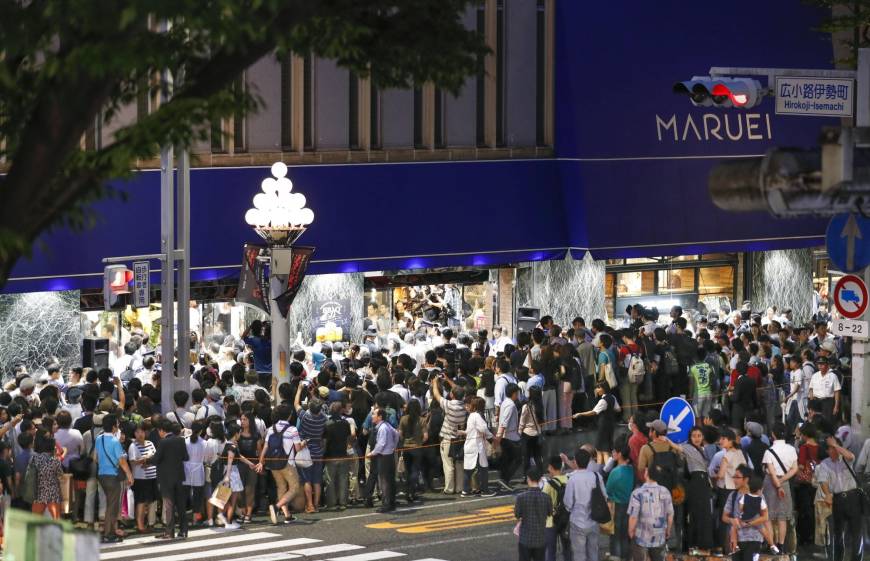
    A 400-year-old department store in Nagoya has closed.

    Maruei Department Store, which opened as Juichiya kimono shop in 1615 and was renamed in 1943 when it merged with another retailer, was once the largest stores of its kind in Western Japan. It was hit by hard economic times in the early 1990s but was kept operational until sales dropped to an all-time low last year.

    Under new ownership since being acquired by Nagoya pharmaceuticals firm Kowa in 2010, the store failed to overcome the rise of e-commerce and became obsolete, with some observers noting a base inconsistency in its various product lineups. Kowa is planning to reopen a commercial facility on the same site several years from now.

    Yoshimitsu Hamajima, the president of Maruei Department Store, thanked the crowds of well-wishers who showed up for the grand closing ceremony.

  • Indonesia’s June Annual Inflation Rate Slows to 3.12%

    Indonesia’s June Annual Inflation Rate Slows to 3.12%

    Indonesia’s annual inflation rate slowed less than expected in June from a year ago and stayed within Bank Indonesia’s target range, the Central Statistics Agency said on Monday (02/07).

    June’s annual inflation rate came in at 3.12 percent, compared with May’s 3.23 percent. Analysts surveyed by Reuters had expected a rate of 2.88 percent.

    Suhariyanto, the head of the statistics bureau, said the consumer price index rose 0.59 percent on a monthly basis in June, due to rising demand during the Muslim fasting month.

    However, the annual rate fell because of the base effect of high prices during last year’s Ramadan, he said.

    The annual core inflation rate, which excludes government-controlled and volatile food, eased slightly to 2.72 percent in June, from 2.75 percent in May. Bank Indonesia targets inflation at 2.5-4.5 percent this year.

  • Korea’s cosmetics exports in January-May up 36.7 percent on year

    Korea’s cosmetics exports in January-May up 36.7 percent on year

    South Korea’s beauty exports remain unfazed, gaining nearly 40 percent in the first five months of the year against a year-ago period.

    According to data released by the Korea Customs Service on 28 June, K-beauty exports between January and May this year amounted to US$2.06 million, up 36.7 percent against a year ago and showing little signs of softening.

    Last year, cosmetics exports reached an all-time high of US$3.92 billion, nearly quadrupling from US$1.05 billion in 2013 and overwhelming imports of US$1.17 billion.

    The bulk went to ethnic Chinese – 37.4 percent in the mainland and 24.6 percent in Hong Kong. Of the remainder, 9.4 percent was consumed by Americans, 5.0 percent by Japanese, and 3.4 percent Thais.

    Chinese have been the biggest non-Korean consumers of K-beauty products since 2000. Exports reached US$1.47 billion last year alone, also helped by a sales tax cut on cosmetics in China.

    Korean beauty products are rapidly gaining ground in Vietnam. Exports to Vietnam hit US$123 million last year, up a whopping 109.5 percent on year. Shipments to traditional beauty powerhouses of France and the United Kingdom have also been on a steady rise.

    Basic skin care products accounted for the largest 50.7 percent of the country’s total cosmetics exports last year while makeup products made up 9.5 percent, those for eye makeup 3.6 percent, and lipsticks 3.2 percent.

    The Korea Customs Service forecast cosmetics exports to extend strong growth this year, fueled by renewed popularity of K-pop and Korean entertainers.

  • Vietnam stock market hits new low, could go lower

    Vietnam stock market hits new low, could go lower

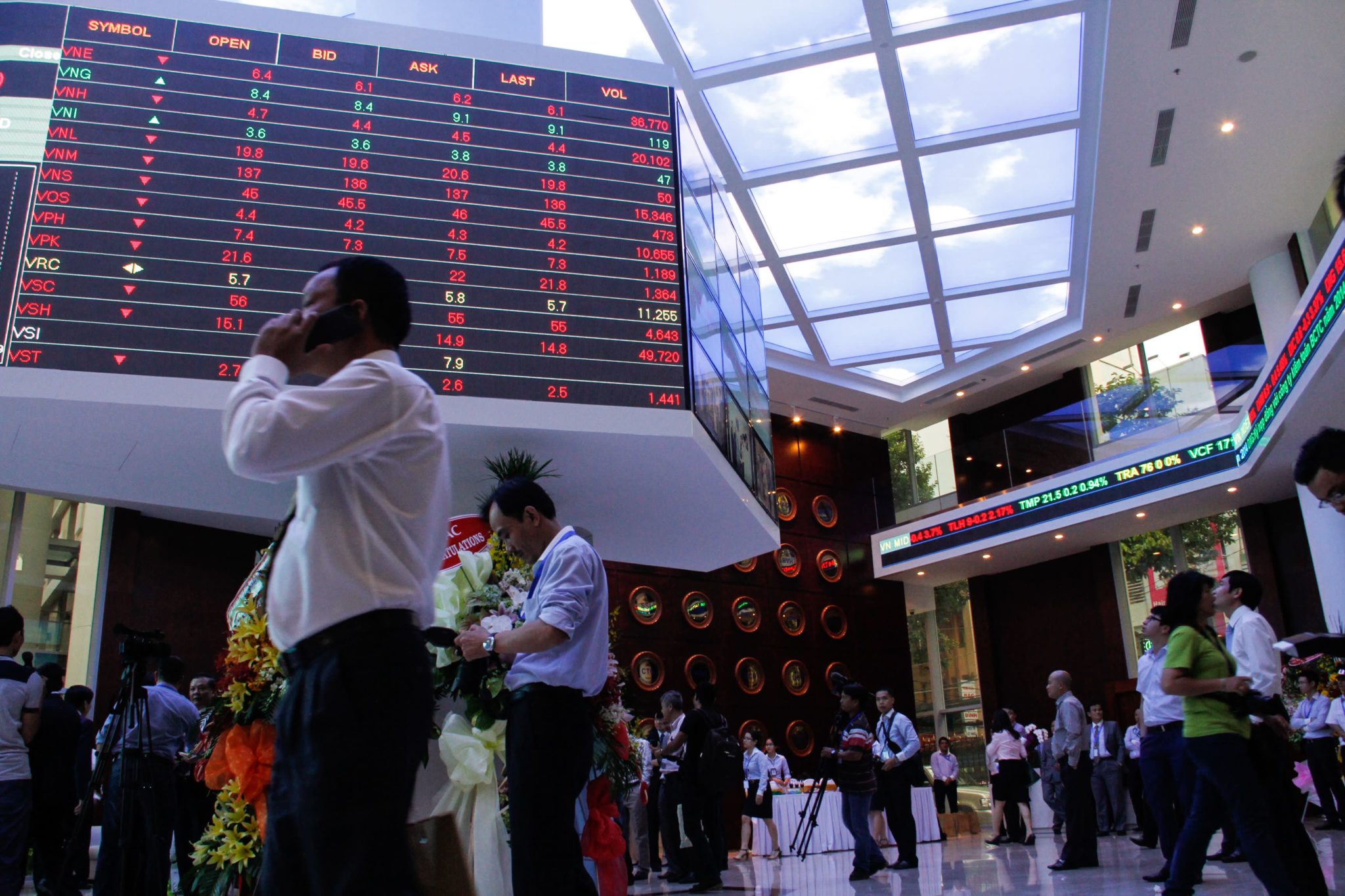
    Vietnam’s stock market fell 4.11 percent on Tuesday afternoon, hitting its lowest point this year, following a dramatic plunge in the second quarter.

    The country’s benchmark stock index, VN-Index, fell 39 points to 908.26 by 2:25 p.m. Tuesday, while the VN30-Index, representing a group of 30 largest capitalization stocks in the country, also fell by 3.7 percent to 895.86.

    The smaller HNX-Index on the Hanoi Stock Exchange and the UPCoM-Index for unlisted companies also dipped 3.7 percent and more than two percent, respectively.

    Shares of banks, including Vietcombank and ACB, plunged 4-5 percent.

    Meanwhile, blue chip stocks like Vinhomes JSC (VHM), Vingroup JSC (VIC), and steelmaker Hoa Sen Group (HSG) were being sold en masse, driving down the entire market.

    This marks a further drop in Vietnam’s stock market after it plunged 18.19 percent in the second quarter this year, making it the worst-performing market in the world.

    Local stock companies have anticipated that the VN-Index could fall to 900 points and even further.

    Vietnam’s stock market had experienced its heyday since last year, when it hit a 10-year high and reached 984.24 points in the last trading session of 2017. It had not broken the 800-point barrier since 2008.

    Continuing its good run, the VN-Index grew 19.33 percent in the first three months of this year, becoming the best-performing market in the world.

    It passed the 1,200-point level on April 9, and has hovered at above 900 since then.

  • Innisfree Vietnam, Malaysia to go bigger

    Innisfree Vietnam, Malaysia to go bigger

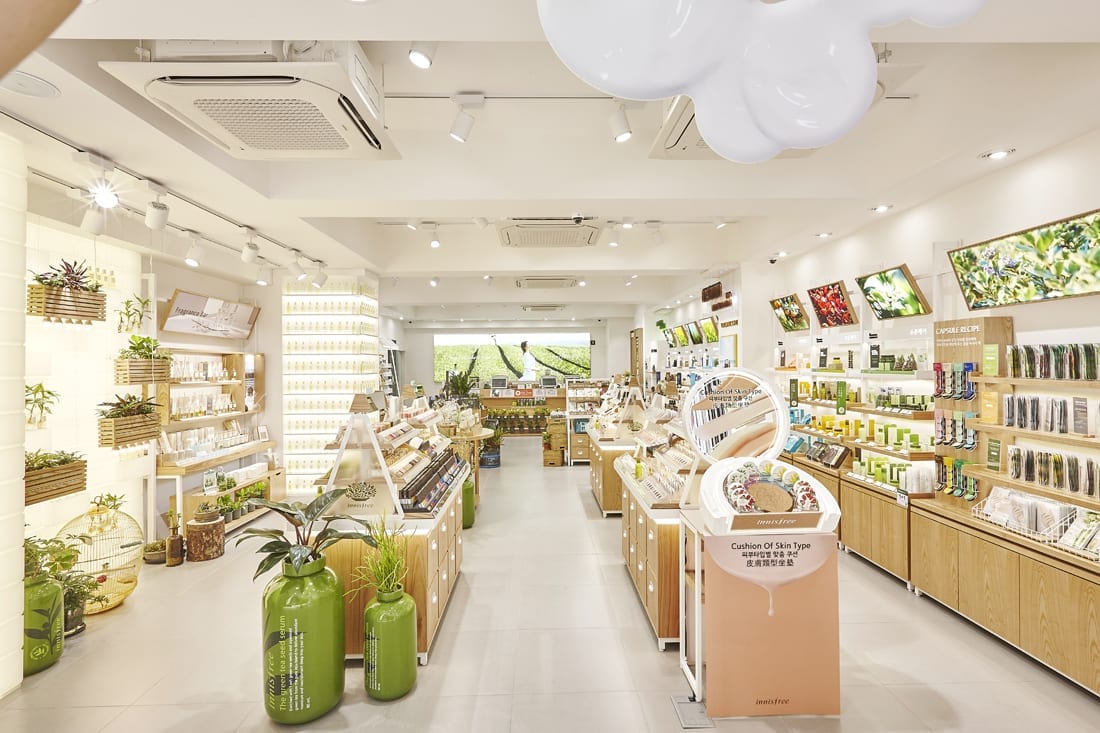
    Amorepacific-owned Innisfree Vietnam has opened its first store in Hanoi, the brand’s fifth in the country.

    Located at 290 Ba Trieu Street, Innisfree Hanoi ranges skincare and makeup products for men and women.

    Opening day saw long queues of the brand’s fans who had been looking forward to the brand having a Hanoi presence for two years.

    In Malaysia, Innisfree has teamed with travel retailer Dimensi Eksklusif to make its debut at Kuala Lumpur International Airport.

    KLIA is Innisfree’s latest airport store outside Korea after Singapore’s Changi and Hong Kong International Airport.

    Sales of perfumes and cosmetics at KLIA in the first quarter of this year grew by 29 per cent and are expected to continue to grow, attracting more world-renowned brands to open there.

    Innisfree has nine stores in Malaysia.