Tag: asia

  • Lulu opens new hypermarket concept in Abu Dhabi

    Lulu opens new hypermarket concept in Abu Dhabi

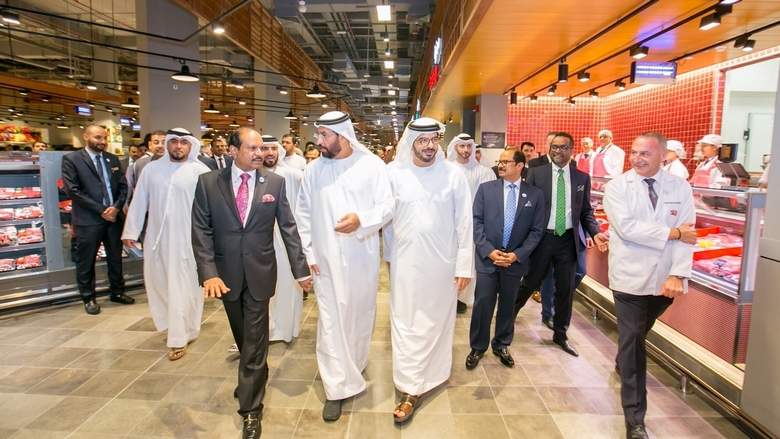
    LuLu Group launched a new hypermarket concept and revamped store design at The Mall in World Trade Center Abu Dhabi on Monday.

    LuLu’s 148th store was inaugurated by Aldar Properties chief executive officer Talal Al Dhiyebi along with LuLu Group chairman and managing director Yusuff Ali M.A., executive director Ashraf Ali M.A. and CEO Saifee Rupawala.

    Situated within Abu Dhabi’s central business district, the store has more than 100,000 square feet area.

    Yusuff Ali said the newly launched hypermarket significantly adds to the portfolio of LuLu Hypermarket chains. “LuLu has been the shopping partner of different nationalities and we will continue to preserve this identity with our new store. This new hypermarket introduces a newly improved design and space, which will further strengthen the world-class shopping experience.”

    Talal Al Dhiyebi welcomed the opening of LuLu Hypermarket. “Aldar has an enviable portfolio of retail assets including malls and retail community centres throughout Abu Dhabi and Al Ain. We constantly review our retail mix to ensure we provide residents and visitors alike with the right balance of brands. This hypermarket, along with the nine other new brands that have opened at The Mall so far this year, expands the existing mix of retailers and will drive further footfall while responding to local resident demand.”

    10 new hypermarkets, China expansion plans

    Yusuff Ali said the group saw tremendous growth opportunities in Abu Dhabi where 10 new hypermarkets are in the construction stage.

    “It will be operational within the next 18 to 24 months. This includes Al Falaha, Reem, Khalifa City, Sadiyat, Beda Zayed etc.”

    Two more hypermarkets will be opened in the coming weeks  – one in Umm Al Quwain and Saudi Arabia  – that will make total number of outlets to 150.

    LuLu also plans to enter the retail scenario in China where it has sourcing and logistics facility since 2000. A memorandum of understanding on co-operation on various areas of mutual interest was signed recently between Lin Yi, Party Secretary of Communist Party of China, Yiwu, in Zhejiang province and Yusuff Ali.  As per the MoU, LuLu will increase its yearly exports from China which stands currently at $220 million to $300 million. 

    Apart from this, LuLu will also look into the possibility of investment to set up Hypermarkets in Yiwu and other major cities at an investment of $200 million. 

  • DHL boosts offerings for e-commerce

    DHL boosts offerings for e-commerce

    Charles Brewer, chief executive officer of DHL eCommerce, said that Thailand has huge potential for growth in the logistic and e-commerce sector.

    Brewer, who said the company also aimed to have up to 2,500 service points by the end of next year, said that e-commerce accounted for 2.4 per cent of the total retail market in Thailand, and this segment was expected to grow 22 per cent a year until 2020.

    “The country therefore has the potential for e-commerce to grow by more than three to four times. Thailand’s e-commerce market will reach 4 billion euros in 2020,” Brewer said.

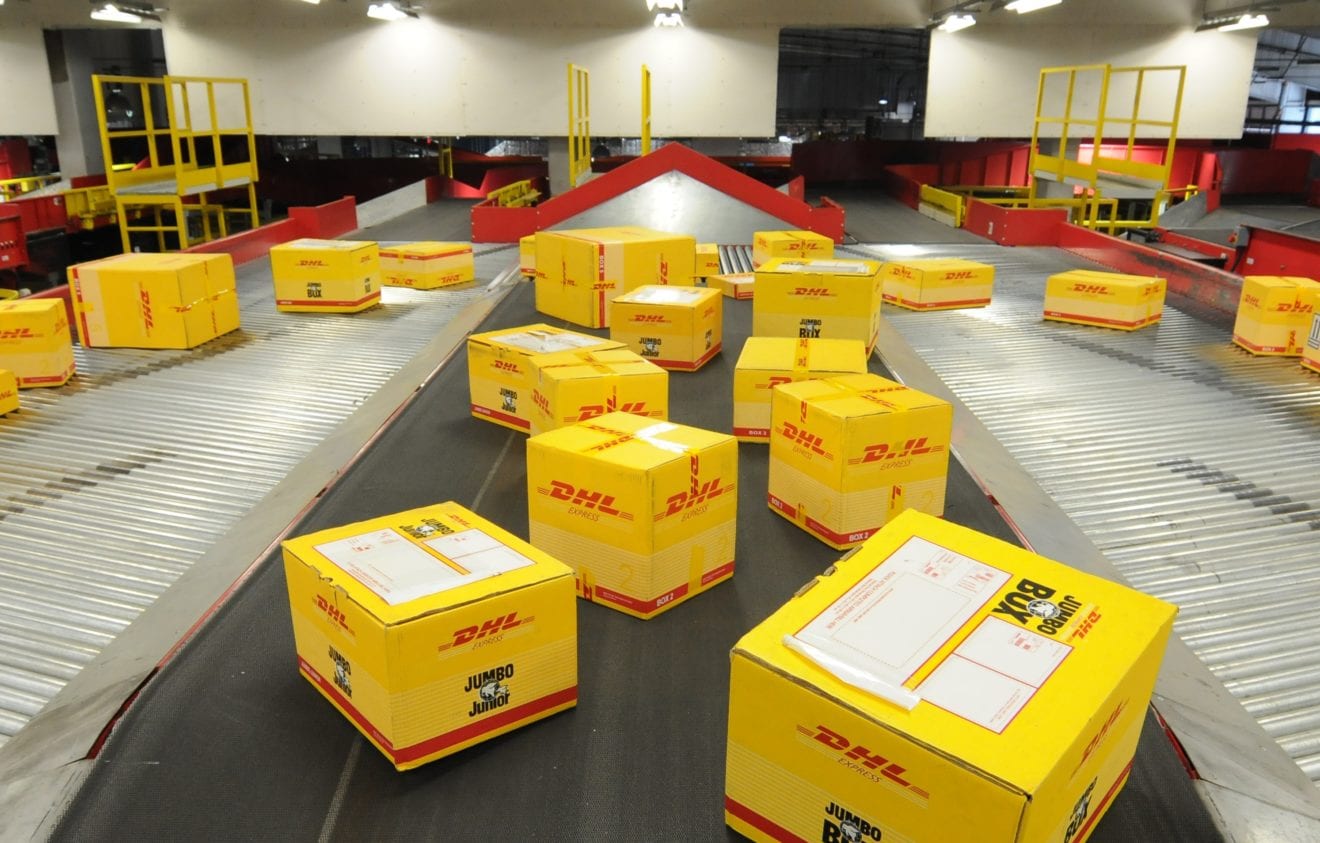
    The company’s same-day service, DHL Parcel Metro, will ship parcels of up to 20 kilograms from retailers to their customers.

    The service allows customers to enjoy a late cut-off of up to 12 pm for same-day delivery within Bangkok, Pathumthani, Nonthaburi and Samut Prakan provinces. The service fee charge starts at Bt100.

    “Thailand is a fantastic country to do business in and not only e-commerce,” Brewer said. “Thailand is now the second country in which we provide same-say deliveries to the market. The firm announced same-day deliveries in Ho Chi Minh City and Hanoi in Vietnam last month and expects to provide this service in Kuala Lumpur in the next step.”

    He said that the same-day delivery service in global market in 2016 accounts for less than 1 per cent of the total and that this is expected to jump to 22 per cent by 2025. McKinsey reports that demand for same-day delivery is expected to increase by over 43 per cent a year worldwide and that retailers that offer this service see significant advantages in e-commerce.

    Brewer said that the firm would later provide new services that use drones, artificial intelligence, robotics and PostBot.

    Kiattichai Pitpreecha, managing director for Southeast Asia at DHL |e-Commerce, said the firm will have around 1,000 e-commerce shops by the end of the year.

  • Starbucks to increase number of cashless stores in Korea

    Starbucks to increase number of cashless stores in Korea

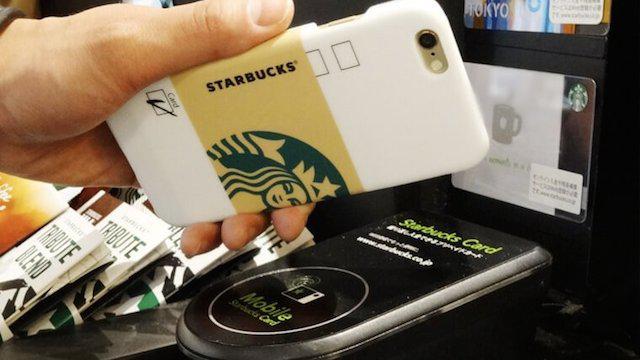
    Starbucks Coffee Korea Co. said Monday it will increase the number of cashless stores to over 100 across South Korea this month amid rising use of credit cards and mobile payment systems in the tech-savvy country.

    Earlier in April, the coffee giant began a test run of three cashless stores in major office districts in and around Seoul.

    The proportion of cash transactions at these stores has since dropped from 3 percent to 0.2 percent, according to the joint venture between Starbucks Coffee International Inc. and South Korean retail giant Shinsegae.

    The company will turn 100 more outlets into cashless stores from July 16 in addition to the three under the trial system.

    Starbucks said the decision is part of its broader digital innovation drive as cash payment has been constantly declining at stores in South Korea, from 31 percent of the total in 2010 to 15 percent in 2013 and 7 percent last year.

    “South Korea has a high utilization rate of credit cards and mobile payments. That coupled with the country’s well-established digital infrastructure enabled our latest expansion decision,” Starbucks Korea CEO Lee Seock-koo said in a statement.

    The total daily average amount of electronic financial transactions came to a record 581.53 billion won (US$521.6 million) in the first quarter of this year, up 13.2 percent from a quarter earlier, according to government data.

  • Weakening won poses new risks to Korean economy

    Weakening won poses new risks to Korean economy

    The weakening of the won in recent weeks carries both benefits and risks for the Korean economy that is being held back by a simultaneous downturn in investment, consumption and exports.

    Policymakers therefore face a thorny task to take proper steps in response to the weakening won that is set to have contradictory effects on the economy.

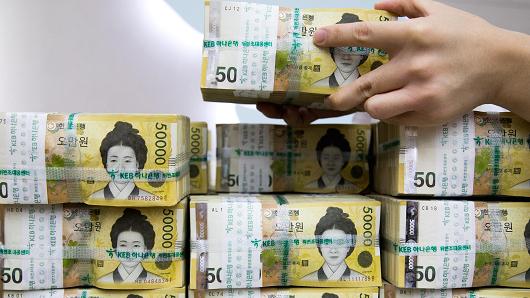
    The value of the Korean currency against the dollar fell to an eight-month low of 1,124.2 won per dollar in the Seoul foreign exchange market on June 28 before rising somewhat to 1,114.5 won the following day. Over the previous 14 trading days, the won lost its value against the greenback by 5.1 percent.

    Under usual conditions, the depreciation of the won can be seen as bringing more positive than negative effects to Korea’s export-dependent economy by enhancing the price competitiveness of the country’s exporters.

    What is concerning, analysts note, is the steep pace with which the won has been weakening.

    A comparison by Bloomberg of changes in the value of 20 major currencies against the dollar from May 31 to June 26 showed the won depreciated at the third-fastest pace of 3.32 percent.

    The Argentine peso and South African rand were the only two currencies that lost more value than the won. The Turkish lira and Brazilian real depreciated 1.91 percent and 2.05 percent, respectively, against the greenback.

    While the currency volatilities that hit most emerging economies earlier this year have lessened, the won is now in tune with the trend of depreciation against the dollar after remaining relatively strong partly due to reduced geopolitical risks on the Korean Peninsula.

    According to data from the Bank of Korea, day-to-day changes in the won-dollar exchange rate widened from an average 0.34 percent in May to an average 0.44 percent during the period of June 1-27.

    Analysts note a set of factors will likely precipitate the weakening of the won down the road, calling for measures to prevent a possible massive outflow of capital from the country.

    “The won could weaken to 1,150 won per dollar within the year, if the trade tensions between the US and China continue to intensify,” said Ha Kun-hyung, an economist at Shinhan Investment Corp.

    China’s move to devalue the yuan against the dollar to counter President Donald Trump’s trade pressure has served to push down the value of the won against the greenback in recent weeks. Experts note the local currency market is increasingly synchronized with the yuan’s movement as Korea depends on the Chinese market for nearly a quarter of its goods shipments abroad.

    Concerns are growing that the escalating trade friction between the world’s two-biggest economies will weigh on the country’s exports.

    According to government data released Sunday, Korea’s outbound shipments dropped 0.9 percent from a year earlier in June, marking the second monthly decrease this year following a 1.5 percent dip in April. A recent study by the Korea Institute for Industrial Economics and Trade forecast that the rate of on-year growth in the country’s exports would slide from 15.6 percent last year to 6 percent this year.

    The prospect of a slowdown in exports coupled with deteriorating profits of Korea’s major companies has prompted foreign investors to sell off Korean shares.

    Foreign investors have net-sold 3.8 trillion won ($3.4 billion) worth of Korean shares so far this year — nearly 1.6 trillion won in June alone.

    “One of the fundamental reasons for the capital outflow is the weakening of confidence in local companies’ long-term profitability,” said Lee Jae-man, an analyst at Hana Financial Investment.

    According to FnGuide, a financial information provider, the latest estimate of the combined operating profits of 132 major listed firms in the second quarter of the year reached 46.2 trillion won, down 8 percent from the 50.2 trillion won forecast at the start of the year.

    A widening gap between interest rates in Korea and the US may also add to accelerating the capital outflow.

    Policymakers seem ready to let the won continue to weaken.

    “At some point, measures may need to be taken to stabilize the market,” said a Finance Ministry official, asking not to be named. But he added it would not be worrisome that the value of the won might fall further below the current level.

    Pressured by the US and the International Monetary Fund, Seoul announced last month it would begin disclosing records on currency market interventions next year.

    It may well expect measures to push up the value of the won will not be subject to punitive action from the US, which has focused on curbing moves by trading partners to devalue their currencies to help bolster exports.

    What concerns policymakers is the possibility that the weakening won will be coupled with rising international oil prices to raise inflation. Korea’s consumer price hikes, which remained at 1 percent in January, reached 1.6 percent in April and 1.5 percent in May.

    The upward trend in prices may lead the BOK to increase its base rate, which has been held at 1.5 percent since November.

    The move may also be needed to narrow the rate gap with the US but would run the risk of further dampening domestic consumption and investment.

    According to recent data from Statistics Korea, the country’s retail sales and facility investment decreased 1 percent and 3.2 percent on-month in May, respectively, marking the second and third monthly decline in a row.
  • New VR amusement park for Korea

    New VR amusement park for Korea

    As virtual reality becomes recognized as a viable film technology internationally, the Korean film industry is not hesitating to join the trend: film tech labs and visual effects houses are producing VR content more aggressively than ever, while major exhibitors are developing new technologies to screen this material.

    Until quite recently, VR content was rarely available in cinemas as most VR productions have been designed for theme parks and experiential games. But now South Korea is catching up the global trend – a movement in which VR animation such as Eugene Chung’s “Arden’s Wake” draw wide attention and leading film festivals launch competition sections specifically for VR films.

    South Korea has showcased quite a few notable VR film projects: in 2017, Gina Kim’s VR documentary “Bloodless” competed in the Venice film festival’s VR competition and won the best VR Story Award. Based on a true event in 1992, the film is about the murder of a Korean sex worker by an American soldier.

    More recently, VR romance drama “Stay With Me” opened in the immersive 4DX format at the CJ-CGV cinema chain. Directed by Bryan Ku, “Stay” revolves around the relationship between a boy who dreams of becoming a musician but is too afraid to go on stage, and a girl who aspires to become an actress.

    “When you think about VR, most of the time it would be either adventure, action or horror films,” Ku said at a press event for “Stay.” “I believe the greatest quality of VR lies in its capacity to let the audiences relate to the film emotionally, and romance drama is the genre that corresponds the most to this quality,” he continued.

    The world’s first film production that was both shot in VR and screened in 4DX format, “Stay” was specifically designed for 4DX screening from the beginning and was shot in 360 degrees, for which CGV’s 4DX effect team joined the project from the development stage.

    “4DX effects for VR should be different from those for other movies,” says Yoo Young-gun of CGV. “Visual elements are not enough to accomplish what VR is up to, which is to expand to a form of storytelling with its immersive characteristics maximized. With 4DX technology, the audiences can touch, smell and feel the films, meaning that virtual reality in its literal sense can be achieved.”

    CJ CGV is aiming to globally introduce 4DX VR by applying VR technology to its 500 4DX theaters across the world.

    “We are planning a VR add-on package, which allows exhibitors to show VR films, and are offering it to the 500 4DX theaters across the globe,” says Yoo.

    On the other hand, Lotte Cinema, South Korea’s second-largest exhibition chain, arranged a special program dedicated to VR content earlier this year. The program’s selection included Patrick Kwon’s “Nine Days,” South Korea’s first VR movie designed for theatrical release.

    “For this event we collaborated with Samsung and could use its HMDs and smartphones, but if we start regular VR screenings, it will be a lot costlier,” says Lotte’s Kang Seung-hyuk. “We will need to determine whether there’s enough content in VR that can cover these costs.”

    Since VR is still at an early stage and barely has a stable market, most VR productions rely on support funds. The Ministry of Culture, Sport and Tourism and institutes such as Korea Creative Content Agency and National IT Industry Promotion Industry are funding VR projects. Also, the Korean Academy of Film Arts launched a special course for VR production.

    At the same time, companies in the private sector are also making investments. Leading visual-effects house Dexter Studios is running a digital human virtual reality research lab and is working on a string of VR films that are set for theatrical releases at CGV within this year. The studio’s lineup includes sci-fi animation “From the Earth” and live-action horror picture “Trapped.”

  • VivoCity mall extension start operating

    VivoCity mall extension start operating

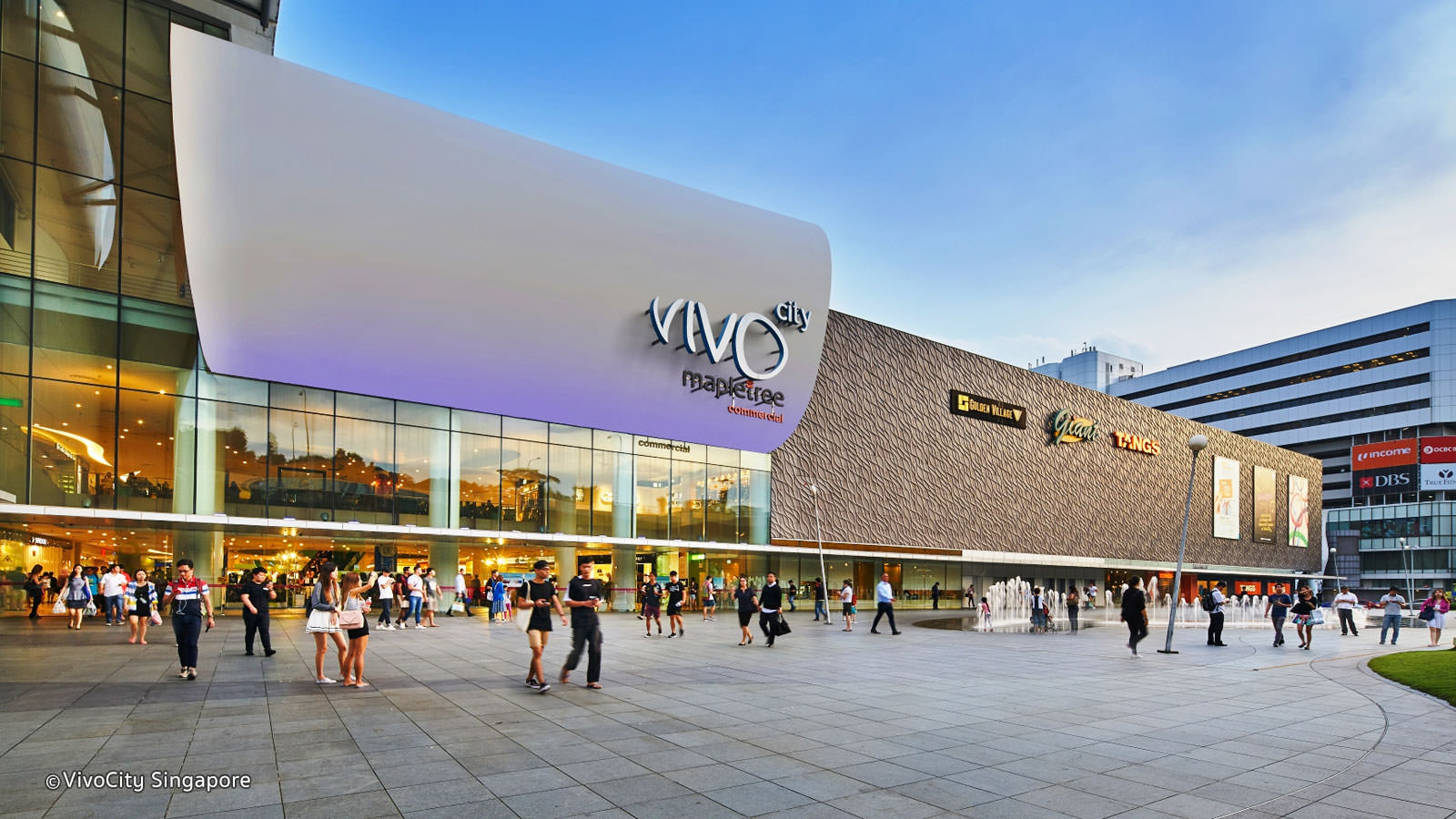
    Singapore’s VivoCity mall has opened a new 3000sqm basement extension housing 10 fashion, athleisure and lifestyle brands.

    Mapletree Commercial Property Management VP for marketing communications Gwen Au said the new extension will allow shoppers to discover new retail concepts and expanded fashion and lifestyle collections.

    A new escalator lobby has been constructed leading through the extension to improve access to and from the Harbourfront MRT station.

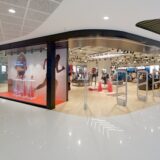
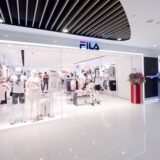
    One of the new tenants in VivoCity B1 is Fila, which is launching three concepts under the one roof – Fila, Fila Kids, and Fila Fusion – offering buyers a range of performance, sport couture, and lifestyle collections. Adidas will also present multiple store formats in the extension, unveiling its stadium concept store (featuring performance wear) next to a new Adidas Originals flagship (offering street style fashion trends).

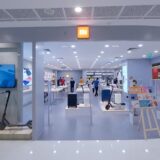
    Other brands opening in the extension include New Era, Nike, L.E. Underground, Weston Corp and Xiaomi.

    Images of the retail stores open can be viewed below :


  • Dell becomes public company five years after buyout

    Dell becomes public company five years after buyout

    Dell, the onetime leader in personal computers and tech industry stalwart, said Monday it will become publicly traded five years after a contentious private equity buyout.

    The company announced a stock swap deal with its software subsidiary VMware that will result in a reorganized tech giant that returns to the stock market, with founder Michael Dell retaining control as chairman and chief executive.

    The move comes after a 2013 private equity buyout led by Michael Dell aiming to revive the company that fell behind when consumers turned to mobile devices instead of PCs.

    “I am proud to lead this great company into its next chapter as we continue to evolve and grow to the benefit of our customers, partners, investors and team members,” Michael Dell said in a statement.

    “Unprecedented data growth is fueling the digital era of IT, and we are uniquely positioned with our portfolio of technologies and services.”

    The new Dell is far from the maker of personal computers that helped ignite the personal computer market in the 1990s.

    It acquired the data storage group EMC in 2016 for a whopping US$67 billion (RM271 billion) and is a major player in software, security and cloud computing in addition to its PC business.

    Michael Dell, who currently owns 72% of Dell Technologies common shares, struck a deal with the private equity firm Silver Lake to take the company private in 2013 in an effort to reorganize without pressure from public shareholders.

    The move came amid fierce opposition from some shareholders led by billionaire investor Carl Icahn, who called the plan a “giveaway.”

    Dell will trade on the New York Stock Exchange after completion of the deal, expected later this year, the company said.

  • Avon expands on digital world

    Avon expands on digital world

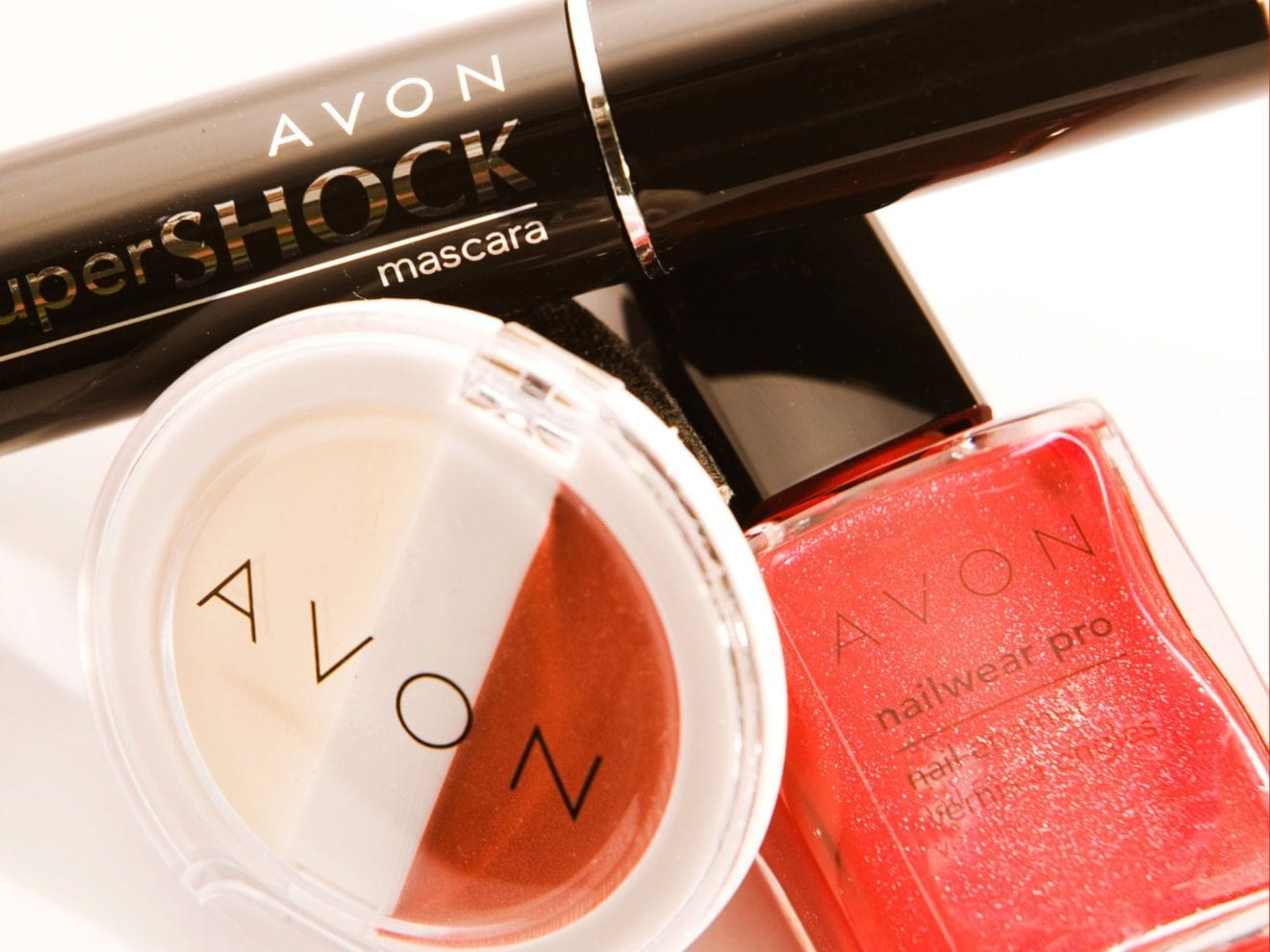
    Beauty & home goods direct seller Avon has announced advancements in its digital sales tools.

    Avon’s digitised mobile-enabled shoppable brochure has now gone live in 12 countries, attracting 500,000 users in the first 48 hours of trading. The company has launched a new global sales centre to support 6 million of its registered beauty entrepreneurs, and set up a new team to integrate insight-led digitisation across Avon’s business model.

    After refinement, the program will be expanded into other markets, including in Asia.

    Sales representatives for the firm will use the tools to create personalised digital shopping carts that are directly shareable to targeted buyers’ mobile phones. Real-time consumer analytics will be used to refine product offerings according to customer needs and preferences, as well as to tweak the training and incentives for representatives.

    According to CEO Jan Zijderveld, “Digitisation is at the heart of our strategy as we build a new, modern and relevant Avon that is both high-touch and high-tech.

    “We are working intensely to build the right tools to support our 6 million-strong network of beauty entrepreneurs to help them provide a personal service to their customers that is underpinned by strong digital capability. This pilot is off to a promising start with huge potential as we implement more broadly.”

  • Walmart India gets half of biz via out-of-store sale channels

    Walmart India gets half of biz via out-of-store sale channels

    US retail major Walmart is now getting nearly half of its business through non-store or out-of-store sales channels, which include B2B e-commerce, associates’ driven sales and call centres, a company official has said.

    According to a report: While, the rest half of its business still comes through in-store walk-ins, where its members visit its stores and purchase.

    Besides, Walmart India is also going to open another fulfilment centre soon at Lucknow after opening its first such facility in Mumbai last year.

    “Almost 50 percent of our business comes through in-store walk-ins where our kirana members can discover new products and in-store demos also allow them to experience new food products made by our supplier partners, mostly small and regional,” Rajneesh Kumar, Chief Corporate Affairs Officer, Walmart India said.

    He further said: “We have been helping these kiranas through our B2B Omnichannel efforts and rest of the business comes through ‘out of store’ sales, which include B2B e-commerce, sales associates driven sales (who take the tablets carrying virtual stores to help take orders from our members) and call centres.”

    Walmart had started B2B e-commerce in July 2014 from its Lucknow and Hyderabad ‘Best Price Store’ and was later extended to other stores.

    It was among one of the first companies in India, which had adopted the omni channel retail system by integrating online and offline formats here.

    “This way not only our members are able to focus on running their stores more efficiently and serving their customers better but also get the convenience of placing orders from their stores, easy payment solutions and doorstep delivery, while growing their business,” Kumar further said.

    Walmart, as per its strategy to strengthen presence in the Indian market and also compete head-on with global rival Amazon, had last month announced a mega deal to pick up 77 percent stake in Flipkart.

    Walmart India, a wholly owned subsidiary of Walmart Inc, operates 21 cash and carry stores here under the brand name of ‘Best Price’ in 9 states across the country.

  • Zilingo hopes to get $50 million more fund

    Zilingo hopes to get $50 million more fund

    Southeast Asian fashion startup Zilingo is set to raise a further US$50 million as it strengthens its operations in Singapore, Indonesia and Thailand and beyond.

    Zilingo was founded in October 2015 by Dhruv Kapoor and Ankiti Bose, who were inspired by the clothing stalls in labyrinthine markets they saw while backpacking across Indonesia and Thailand. Their idea was to connect a fragmented landscape of fashion supply for buyers across Asia.

    Now the company aggregates small fashion retailers in the three Southeast Asian markets on a single platform. With more than 10,000 merchants now on board, the site has evolved into a service attractive to both B2B and B2C customers.

    Users can upload and manage their inventory in any language, using any currency, connecting them through 25 interfaces with logistics, warehousing and payment providers, as well as services like loans, cataloguing and insurance.

    “Nowhere in the world has a horizontal e-commerce company also cracked fashion,” says Bose. “It’s a unique, high-margin category that is highly dependent on fast-moving cycles and has its own nuances. Unlike buying detergent or electronics, fashion is much more about your choice, individuality and trends. It requires a different approach than the rest of e-commerce.”

    Besides selling in Indonesia, Singapore and Thailand, Zilingo ships to four further countries and has supply bases in Bangladesh, Cambodia, China and Vietnam.

    The latest fundraising follows a $54 million round in March.

  • US to import Vietnamese mangoes

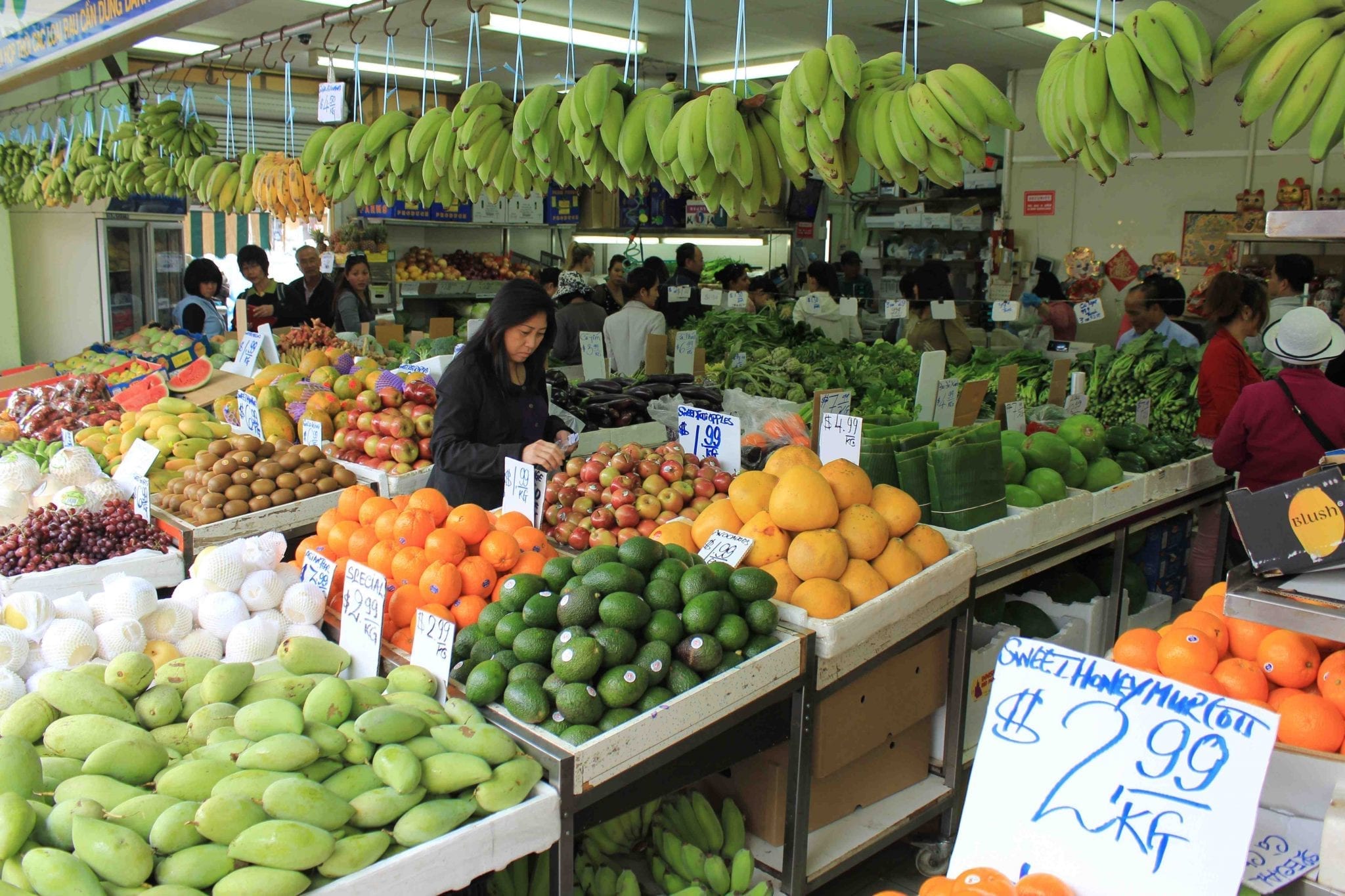
    US to import Vietnamese mangoes

    The United States is completing procedures to approve import of Vietnamese mangoes, U.S. Secretary of Agriculture Stephen Censky said at a meeting in Washington D.C. on Tueday.

    The U.S. will also start importing star apples form Vietnam soon, Censky told Vietnamese Deputy Minister Vuong Dinh Hue, who is on an official visit to the U.S.

    Censky proposed that Vietnam considers importing fruits like blueberry and several citrus varieties from the U.S.

    At the meeting, Hue said that the U.S., as one of Vietnam’s top trade partners, should increase its agriculture cooperation with Vietnam towards supporting low emission production models.

    He also suggested that the U.S. considers importing grapefruit and other fruits from Vietnam.

    Vietnam’s exports to the U.S. last year reached $41.61 billion, an increase of 8.2 percent in over 2016. Fruit exports of $102 million accounted for just 0.2 percent of total export to the U.S., according to Vietnam Customs.

    The U.S. was Vietnam’s third largest trade partner last year, behind Korea in second place and China at the top.

  • BreadTalk sets expansion plan for China, Indonesia

    BreadTalk sets expansion plan for China, Indonesia

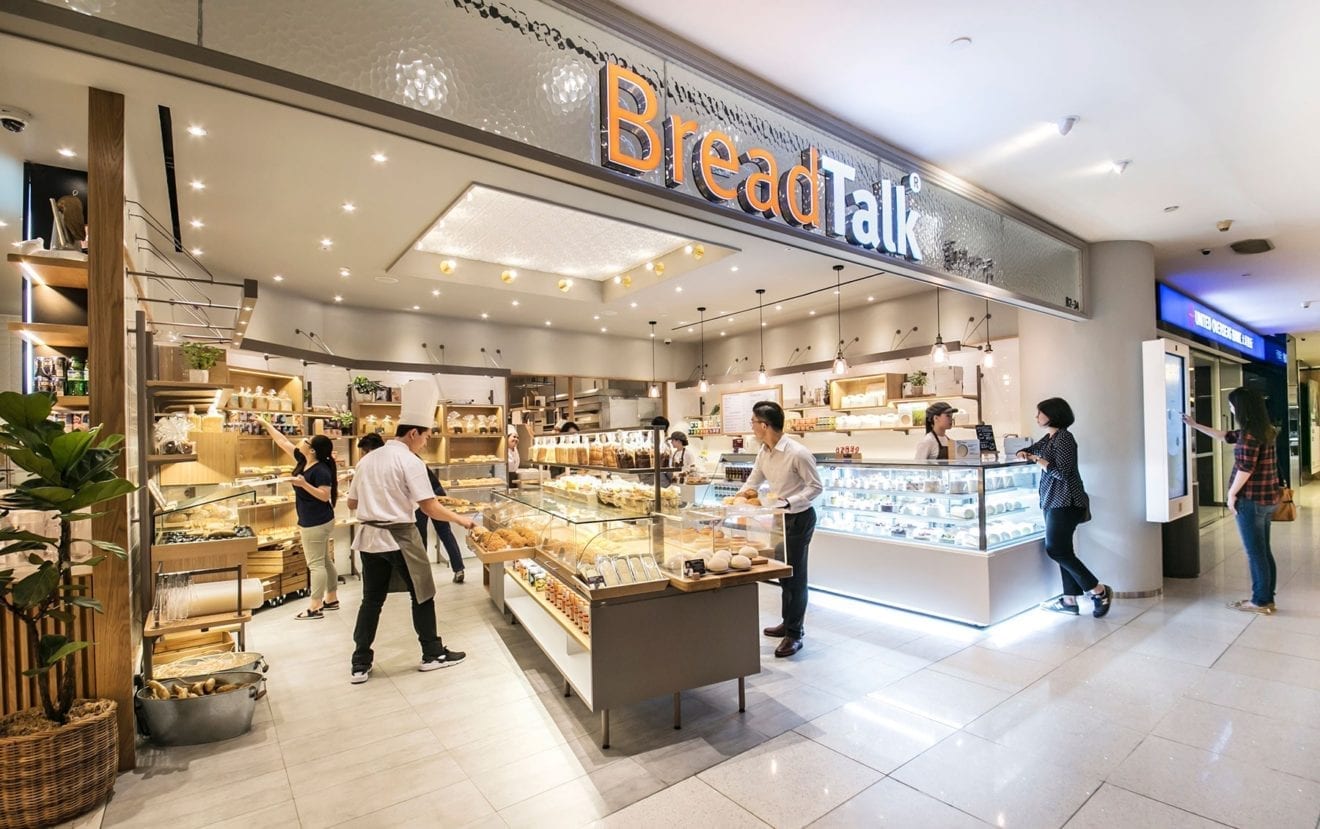
    BreadTalk Group is expanding through new joint ventures in China and Indonesia.

    Using a wholly owned subsidiary, Shanghai BreadTalk Gourmet, the Singapore-listed food chain operator has formed a joint venture with Ge Ying to operate BreadTalk bakeries in Chongqing, China.

    “This strategic partnership combines BreadTalk Group’s wealth of experience in managing and developing franchisee relationships with Ge Ying’s strong understanding of Chinese consumers’ preferences,” BreadTalk Group said in a statement.

    Ge Ying has been managing the BreadTalk brand of bakeries in Tibet for the last six years. “With proven track records, the group is confident of his team’s capabilities to lead the growth plans for Chongqing, China.”

    BreadTalk Group will hold a 30 per cent stake in the joint venture, which will potentially expand across southwestern China.

    Tan Aik Peng, BreadTalk Group’s bakery division CEO said adopting a joint venture approach rather than a franchising agreement was in line with the group’s long-term direction of increasing directly owned outlets in Mainland China.

    “Our strong product development and innovative brand promotion, coupled with Mr Ge Ying and his team’s proven track record in BreadTalk operational management and strong local knowledge will create a win-win situation for us in Chongqing. Looking ahead, it will serve as a good foundation for us to build a strong southwestern China base in Chongqing, enabling us the opportunity to penetrate further into other southwestern markets like Yunnan and Guiyang provinces.

    “We are fully committed to the Chinese bakery market in which we have full confidence to meet the discerning tastes of the Chinese consumers,” concluded Peng.

    Toast Box expands into Indonesia

    Meanwhile, through its BreadTalk International subsidiary, the company has formed another joint venture in Indonesia.

    It has a 70 per cent stake in BTG – Pura Indah Berkat Venture, with partner Pura Indah Berkat, which operates the Toast Box brand and chain of outlets in Indonesia.

    The first Toast Box outlet is scheduled to open this year in central Jakarta. Currently, PIB manages a Toast Box outlet at Soekarno-Hatta International Airport Terminal 3.

    In a statement announcing the venture, Peng described Indonesia as “a strategic and important market for the company” and that the Toast Box format is “highly relevant” to Indonesian consumers.

    “We are confident that with our insights and experience from operating Toast Box in Singapore and other regions, our consumers will be able to enjoy our quality Nanyang coffee, toast products and local delicacies in Indonesia,” said Tan.

  • IKEA India to use electric vehicles for home deliveries

    IKEA India to use electric vehicles for home deliveries

    Swedish furniture maker IKEA is planning to use electric vehicles for home deliveries across the country, said a senior official of the company.

    IKEA initially aims at using electric vehicles, upto 20 percent of its total customer delivery fleet and subsequently increase them up 60 percent over three years.

    Deputy Country Manager of IKEA India, Patrik Antoni said the company will be installing charging pods at its store in Hyderabad to encourage both employees and customers to switch to electric vehicles.

    “To meet the Indian customers’ service expectations home delivery will be an important component of our offer. As a company, we have ambitious plans to adopt electric vehicles across our operations and in our first year in India, around 20 percent of our customer delivery fleet will comprise electric vehicles.

    That number is planned to increase to 40 percent in the second year and 60 percent in the third year of IKEA’s operations,” the Ikea official said.

    “We will be installing charging pods at our IKEA store in Hyderabad to encourage both our employees and customers to switch to electric vehicles.

    The initiative concerns our own vehicles at our stores and offices, but also includes our partners who take care of our home deliveries,” he further said.

    Meanwhile IKEA said it has chosen Gati-KWE, an express distribution services firmas logistic partner for its upcoming store here.

    The store is expected to be open next month here.

    The press release issued by Gati,the partnership will enable Ikea to efficiently manage home deliveries of its products (Do-It-Yourself) sold from its first ever India store to customer homes across Telangana.

    The overall scope of partnership is a combination of contract logistics, last-mile distribution and reverse logistics, it said.

  • Texas Chicken Malaysia to open new stores

    Texas Chicken Malaysia to open new stores

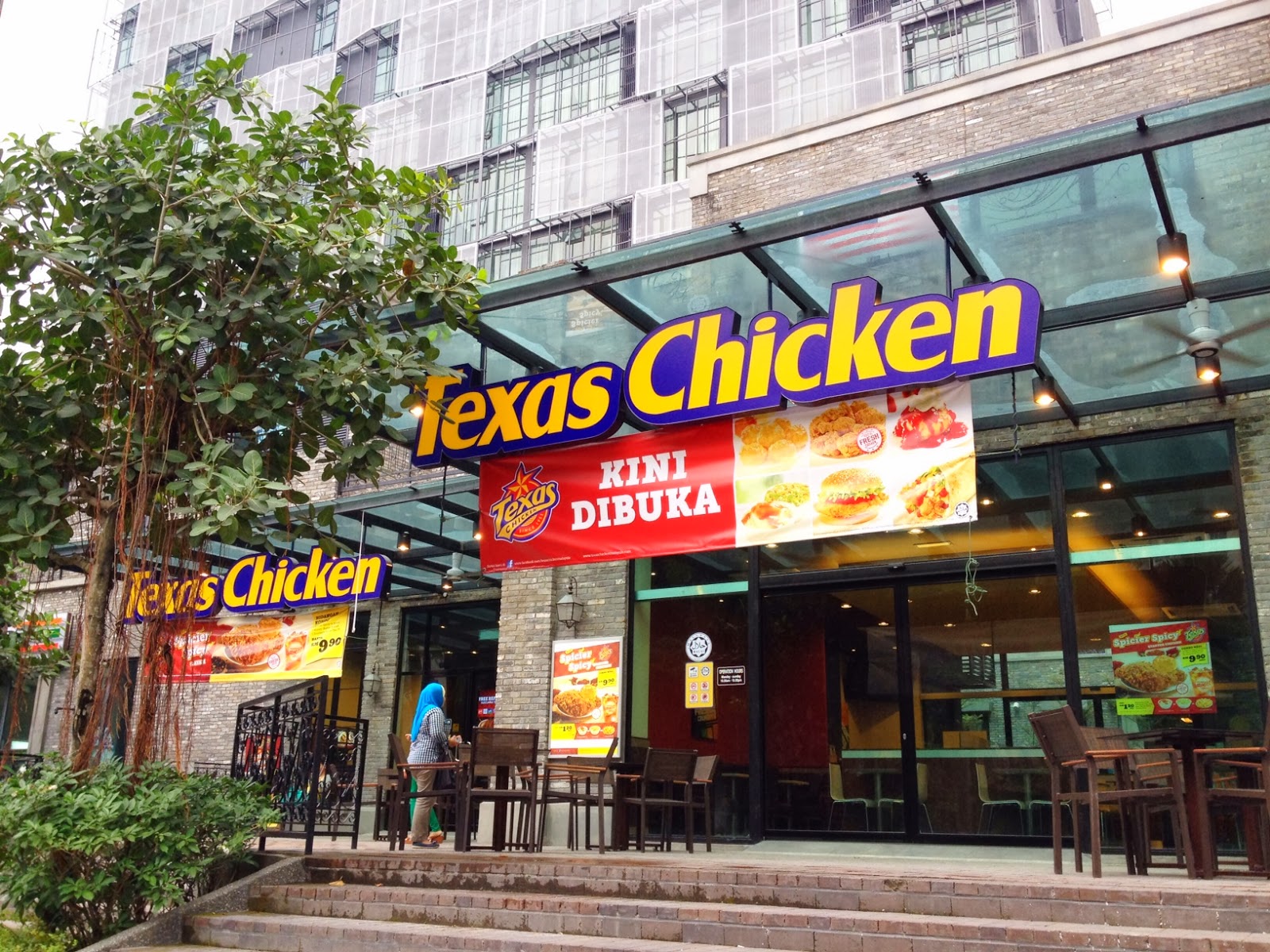
    Fast-food chain Texas Chicken Malaysia has opened its first outlet on the Southern Peninsular with its new store in Johor Bahru’s City Square Shopping Mall.

    The new outlet, Texas Chicken’s 48th restaurant nationwide, is managed by local franchisee Envictus International Holdings Limited (Envictus Group), which plans to open further locations within the region shortly. It already operates outlets in Klang Valley, Selangor, Penang, and Negeri Sembilan.

    According to Envictus chairman Dato’ Jaya Tan, “The Johor Bahru City Square is the kind of location every restaurant dreams of. The new Texas Chicken will be right in the heart of the city, close to corporate offices, local and international colleges, and just minutes from the customs and immigration checkpoint between Malaysia and Singapore”.

    Executive VP of international business for Texas Chicken Tony Moralejo said this was an opportunity that was “identified and cultivated by a veteran franchisee”.

    The new restaurant should seat 111 guests with a retail space of 1123sqft.

  • Emart’s take on Don Quijote opens in COEX

    Emart’s take on Don Quijote opens in COEX

    Emart’s Pierrot Shopping store has opened inside Coex mall, in southern Seoul.

    Aiming to be a “Fun and Crazy” destination, the 2513sqm two-storey store targets consumers in their 20s and 30s with a diverse range of 40,000 products.

    On basement floor, there is a large collection of alcohol and snacks from Korean and foreign brands, along with wigs, costumes and a discreet space for ‘adult toys’.

    On the first floor, customers will find goods as diverse as leather bags from brands such as Prada and Fendi, fresh food, cordless vacuum cleaners, smoking pipes, fake eyelashes and pet food.

    One curious feature in the store is a smoking room which resembles the interior of a subway train. An information desk and electronic kiosks offer tax refunds for foreign customers.

    A Korean version of Japanese Don Quijote chain, Pierrot Shopping store is designed “to be a place where young people can come to play and look around without a clear shopping purpose”.

    “You can come here to find relief from everyday stress, casually pick up things that look intriguing and buy them just because they’re affordable,” said Pierrot Shopping’s brand manager, Yoo Jin-cheol.

    While other large-scale retailers prioritise space and neatly arranged products so that consumers can easily find what they are looking for, at Pierrot Shopping the aisles are narrow and in some places it’s difficult for two people to pass.

    The staff wear uniforms with “I don’t know where that is either” printed on the back.

    Emart explained the intention was to make consumers venture more around the aisles, make unexpected discoveries and have a“fun experience”.

    Emart will open two more branches of Pierrot Shopping this year with smaller footprints than at Coex; at the Doota Mall and in Nonhyeon, in Gangnam District.