Tag: asia

  • Mon Purse Launches New Retail Strategy

    Mon Purse Launches New Retail Strategy

    Design-your-own handbag business Mon Purse is revamping its bricks-and-mortar presence in the US market.

    After a much-publicised expansion to America through a deal with Bloomingdale’s in November 2016, the Australian e-commerce company has pulled out of the upmarket department store chain, and is gearing up to launch its first standalone store in New York City in a matter of weeks.

    Mon Purse last year opened a store at a mall in New Jersey, which was billed as the company’s first standalone store in the US, according to a press release at the time. But COO Andrew Shub said the store was actually a pop-up. It closed in January.

    Shub refuted the suggestion that Mon Purse has exited the US, although no mention of US stores appeared on the website at the time of this writing.

    The e-commerce company currently lists its concessions in Selfridges in the UK and Myer in Australia, alongside its boutique in Paddington.

    Shub said the company is “evaluating” its strategy in the US, the company’s biggest online market outside Australia, but was not willing to discuss it publicly.

    “It’s not something we want cited for our competitors,” he said, “but we are very much committed to the US market.”

    Shub said Mon Purse is about to open a new store in New York City, which will be listed on the website in the next few weeks.

    He added that the business is committed to its concession model.

    “It’s all part of the strategy as to how one rolls out. I wouldn’t want to create any misconception that we’re not committed to our concession business,” he said.

    The revamp comes two months after Mon Purse founder Lana Hopkins announced her intention to step down as co-CEO and cease running the day-to-day operations of the company. She is still on the board and holds a minority stake in the business.

    Hopkins said she made the difficult decision to step down to pursue other ventures, but according to an April report in the AFR, some shareholders believe she was pushed out. The value of the company has plunged from more than $30 million to $5 million.

    “I cannot share any of those financial details from that point of view,” Shub said.

    “All I can say is that we continue to grow and have very exciting times ahead both from a digital and bricks-and-mortar strategy.”

    Toni Fourie, who was recently named as the new chairman of Mon Purse, is reportedly leading the search for a new CEO.

  • Pizza Hut Exmployee fined for exploiting driver

    Pizza Hut Exmployee fined for exploiting driver

    A Gold Coast Pizza Hut operator has been hit with a $216,000 fine for exploiting an Indian delivery driver and trying to cover it up.

    The Fair Work Ombudsman took action against against Dong Zhao after one of his drivers complained he’d suffered anxiety and anguish from being underpaid, and had to borrow money from his family to support his student wife.

    Zhao, who operates an Upper Coomera Pizza Hut franchise, was fined $36,700 and his company $180,000 after admitting breaking sham contracting laws, designed to stop employers from misrepresenting workers as independent contractors.

  • Guess Jeans taking Farmers Market bigger

    Guess Jeans taking Farmers Market bigger

    Guess Jeans is expanding its Farmers Market concept to global stores until the end of next month.

    Created by Guess and vintage streetwear collector Sean Wotherspoon, the collection features reworked items from the Guess archives developed in the ’80s and ’90s, with a colour palette derived from the Californian landscape.

    Key pieces include hoodies, denim jackets and tracksuits, with original Guess graphics featuring the classic logo on T-shirts and accessories.

    Launched in central Los Angeles last month, the limited-edition merchandise are available through key retailers and pop-up stores. In Asia, expect pop-up stores in Singapore’s Dover Street Market, Tokyo’s GR8 and Hong Kong’s Juice. Items can also be bought through the Chinese Innersect App.

  • Diebold Nixdorf and Mastercard launch cardless ATMs

    Diebold Nixdorf and Mastercard launch cardless ATMs

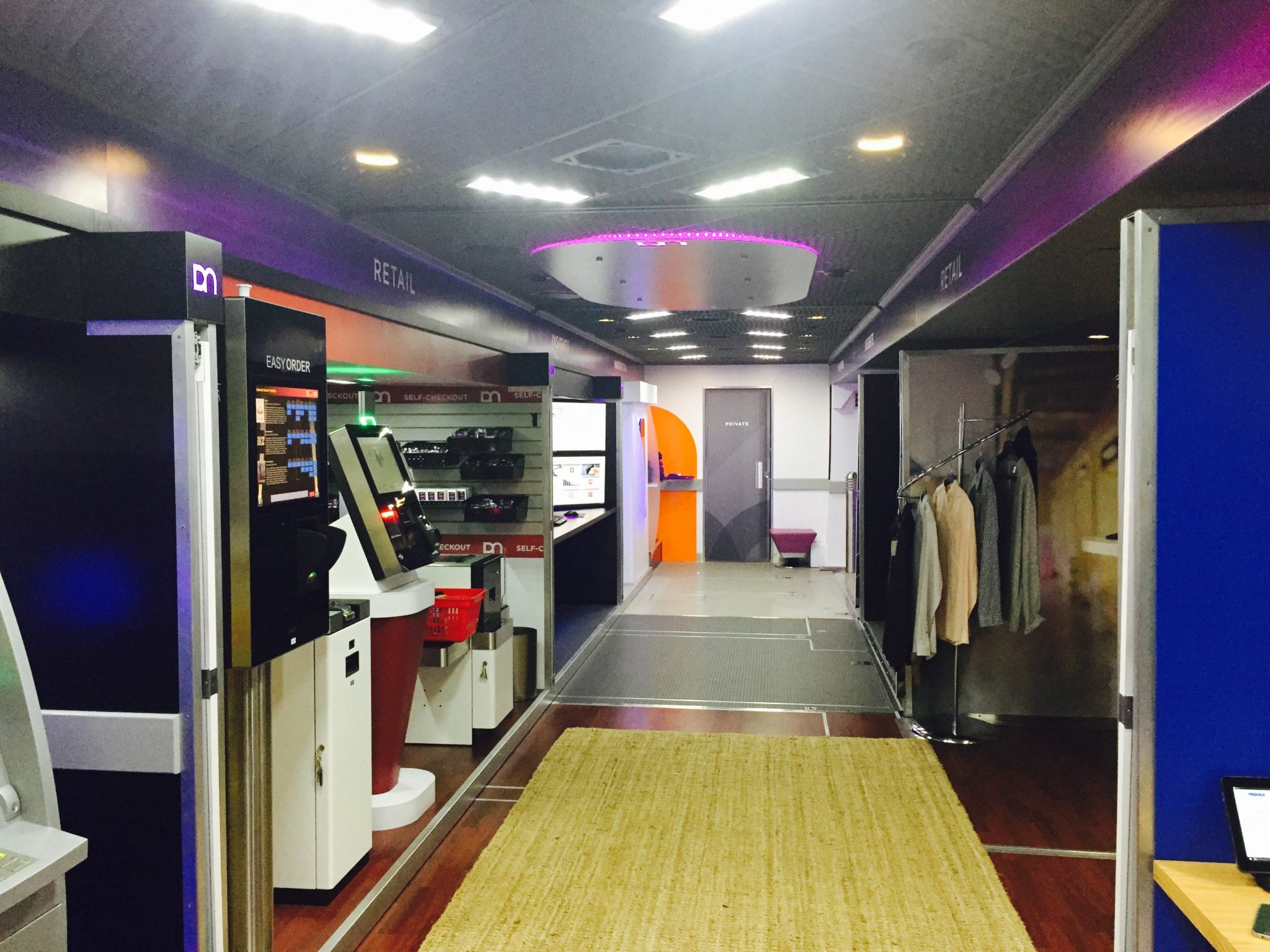
    Diebold Nixdorf is teaming up with Mastercard to trial two services that provide cash banking users on the go – Mastercard Cash Pick-Up and Cardless ATM powered by Mastercard.

    The cash pick-up service allows banks to deliver cash more quickly, securely and easily to any authenticated consumer – banked or unbanked – through enabled ATMs, without the use of a card. This opens the ATM channel to even the under-banked consumers and allows financial institutions and ATM deployers to increase their revenue through new transaction volumes.

    Cardless ATM powered by Mastercard meanwhile allows account holders to withdraw cash from the nearest ATM using the convenience of their mobile banking app.

    Once consumers are at the ATM, they can quickly move through the authentication process to receive their cash. Since the majority of the transaction is handled through the banking app and the cloud, sensitive information is never exposed.

    “As a technology company, we are always considering what the future can bring, and today we have a great opportunity with Diebold Nixdorf to define the next wave of digital products to the ATM channel,” Mastercard SVP of ATM product management Daniel Goodman said.

    “By bringing together the Mastercard network and Diebold Nixdorf’s large global scale, we can help move the ATM industry towards a globally scalable standard for driving digital innovation in the ATM channel.”

    “This partnership with Mastercard is another way we are continuing to securely bridge the digital and physical worlds of cash by innovating the ATM experience for consumers through our Vynamic suite of software solutions,” Diebold Nixdorf SVP for software Alan Kerr said.

    “Many of our customers are looking to retain consumers and drive incremental transactions to their self-service channels, and this partnership with Mastercard delivers on both of these fronts.”

  • Carrefour and Google to partner in online shopping initiative

    Carrefour and Google to partner in online shopping initiative

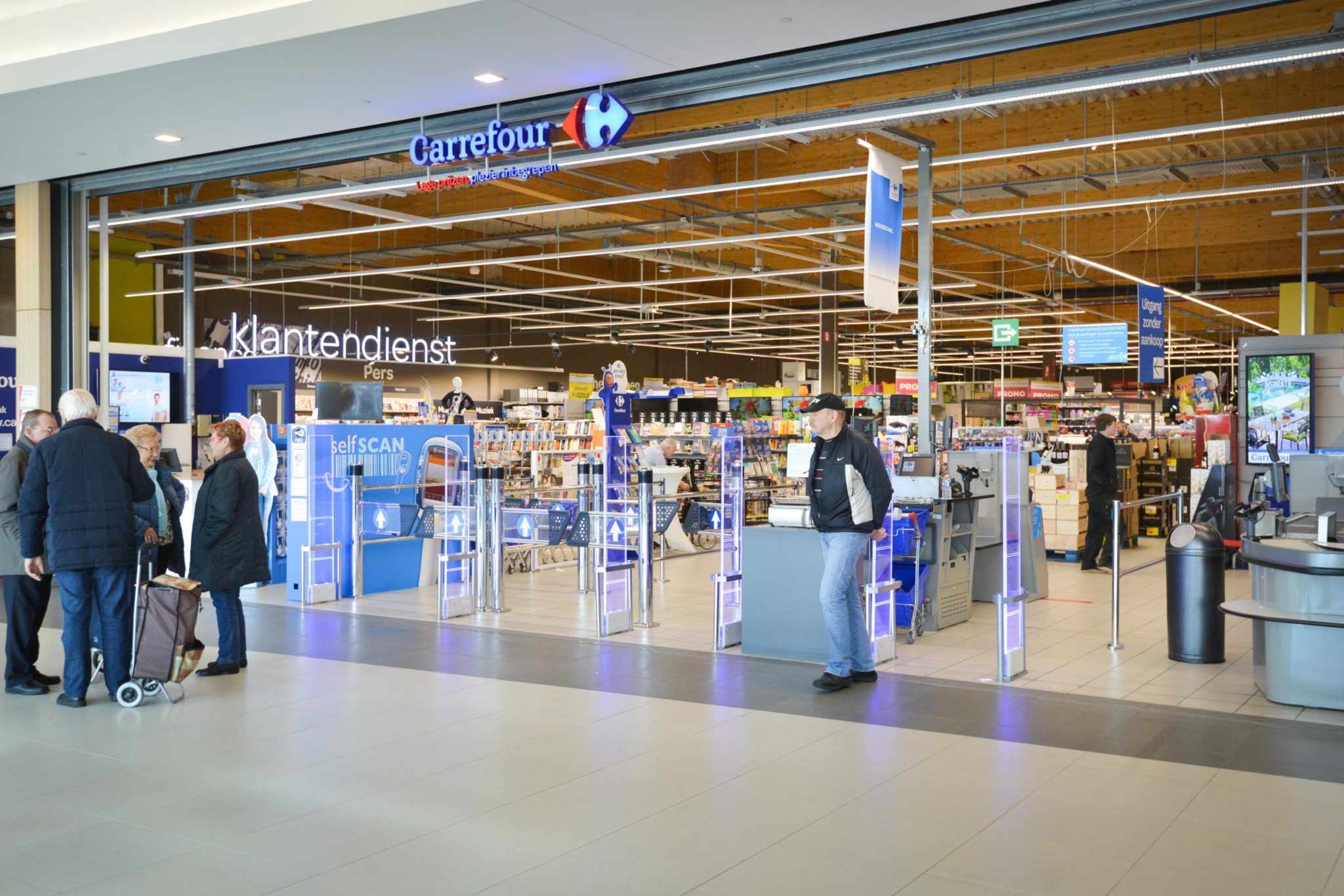
    Carrefour and Google have formed a strategic partnership to develop innovative online shopping solutions.

    The two companies say Google will contribute its technology and skills in AI, cloud computing and new consumer shopping interfaces like the Google Assistant, while Carrefour will bring its product expertise and know-how in logistics and sales.

    The partnership will focus on three initiatives: the availability of Carrefour on a new Google shopping website and Google Assistant in France, the creation of a Carrefour-Google innovation lab and the acceleration of Carrefour Group’s digitalisation.

    “The common objective of this partnership is to bring together the expertise of both companies to offer consumers new and innovative commerce experiences in France, whether that’s in a store, online, on smartphones, or with voice,” the two companies said in a statement.

    New buying experience

    The cooperation will see “a new buying experience from Carrefour across Google platforms” including Google Assistant, Google Home and a new Google Shopping website in France, expanding Carrefour’s footprint in the digital realm.

    “The common goal of both companies is to provide users with simplified and intuitive buying experiences. By early next year, users in France will be able to shop for groceries through a variety of channels including on Google Home, via the Google Assistant on their mobile phone, or on the web through the new Google shopping destination in France. Items can be delivered to their homes or made available for pick up in-store.”

    At the new innovation lab in Paris, Carrefour engineers will work side-by-side with Google Cloud AI experts to co-create new consumer experiences.

    Meanwhile, Carrefour will deploy Google Cloud’s G Suite productivity and collaboration solutions (including Gmail, calendar, drive, Hangouts, Docs) to more than 160,000 Carrefour employees.

    “This alliance makes Carrefour the first partner of Google on grocery e-commerce in Europe, creating a strong bond between the two companies,” said Alexandre Bompard, CEO of Carrefour.

    “It also marks an important step in the new story written by Carrefour since the announcement of the Carrefour 2022 plan. It allows us to accelerate our digital evolution and get a head start in deploying the omni-channel approach we want to offer our customers.”

    Sébastien Missoffe, VP and MD of Google France, said shoppers today are saddled with disconnected experiences through the online shopping journey, which often lead to abandoned shopping carts and low customer satisfaction and loyalty.

    “Customers want assistive, simple and personalised experiences that help them make decisions on what to buy, assist with easily building baskets across surfaces, and provide a seamless checkout. With Alexandre Bompard and his team, we wanted to explore new distribution models and e-commerce technologies to deliver simple, frictionless and deeply relevant experiences for shoppers in France.”

    Carrefour has a network of 12,300 stores across more than 30 countries.

  • Singapore Sales stays under the Expectations

    Singapore Sales stays under the Expectations

    Falling sales of electronics and apparel muted the overall figure for Singapore retail sales in April.

    The year-on-year headline figure rose by just 0.7 per cent after sales of motor vehicles were excluded from the data. Sales of computers and phones fell by 9.8 per cent, while apparel and footwear sales fell by 3.4 per cent.

    Supermarkets and hypermarkets slipped by 2.3 per cent and department stores by 1.7 per cent.

    Categories which improved were led by petrol service stations, up 8.5 per cent, and medical goods and toiletries, up 7.8 per cent.  Sales of furniture and household goods rose 4.8 per cent.

    Month-on-month retail sales declined 1.7 per cent and Statistics Singapore estimated online shopping accounted for just 4.4 per cent of total retail sales in April.

    Food retailers also had a forgettable month, with total sales falling 1.7 per cent year on year. Within that category, fast-food outlets boosted sales by 5.4 per cent, at the expense of restaurants and cafes, which declined 4.3 per cent.

  • Japan studies regular mandatory closings in the Retail Industry

    Japan studies regular mandatory closings in the Retail Industry

    Large-scale specialty stores such as Daiso and Ikea may be subject to mandatory closings every two weeks as the South Korean government studies the validity of such a regulation.

    Research on the appropriateness of the regulation on large-scale specialty stores will start this month, says the Korea Small Business Institute. It will examine whether the big retailers are hurting small shops, and whether the regular closures are necessary. Requested by the Ministry of SMEs and Startups, the study will determine if the regulation is necessary.

    The restriction on such large-scale specialty stores has become the thorniest issue in the retail industry. Large retail outlets such as E-mart, Home Plus and Lotte Mart are subject to restrictions on working hours following a revision of the Distribution Industry Development Act in 2012, aimed at protecting small shops. Local governments adopted ordinances based on the Act, forcing large retail outlets to close on the second and fourth Sunday of each month.

    However, critics say it is unfair as only retail outlets are subject to the regulation while shopping malls such as Shinsegae Group’s Starfield and specialty shops like Ikea were exempted.

  • One Raffles Place Shopping Mall is The Place to be to Start The Singapore Sales

    One Raffles Place Shopping Mall is The Place to be to Start The Singapore Sales

    Work will start soon on a revamp of One Raffles Place Shopping Mall aimed at improving shopper circulation and opening up the retail space for better visibility.

    As the mall will trade throughout the renovation, work is being phased to minimise disruption.

    At the same time, the mall will introduce a co-working space covering more than 35,000sqft across several levels. A flagship for IWG’s Spaces, the venue will be able to host and launch retail and fashion-related events.

    Its multi-level layout is also expected to improve vertical traffic at the mall, with direct access to Raffles Place Park. A strong F&B offering on the first level will make it ideal for corporate gatherings and casual meetings after work.

    “As the mall attracts high shopper traffic of nearly one million people each month, services and F&B tenants will remain the mainstay of the retail offering,” says CEO Tan Shu Lin of OUE Commercial Reit Management, which runs the mall.

  • Huawei releases SAP HANA TDI solution

    Huawei releases SAP HANA TDI solution

    Huawei has launched a tailored data center integration (TDI) solution for SAP HANA designed to meet the data center and business consolidation needs of large enterprises.

    The HANA TDI solution is based on Huawei’s all-flash high performance storage platforms, and has been designed to support up to 200 SAP HANA nodes, each expandable to 32TB.

    The solution is designed to allow SAP HANA databases to be seamlessly integrated into existing data enter infrastructure to improve flexibility, reliability, management and maintenance and allow for the reuse of existing data center IT investments.

    Dedicated management plugins allow the solution to work with the SAP Landscape Management platform.

    The solution is also capable of automatically manage SAP applications, databases, networks and IT infrastructures, and uses Huawei storage snapshots to greatly improve setup speeds.

    “Huawei’s all-flash storage meets the storage requirements of enterprise-class applications such as databases, virtual desktops, and server virtualization. This allows it to effectively meet solid-reliability and high-performance standards in SAP HANA scenarios,” Huawei president of storage products Meng Guangbin said.

    “This allows it to effectively meet solid-reliability and high-performance standards in SAP HANA scenarios. Huawei will work with SAP to build a high-performance data processing platform that helps enterprises accelerate core data processing.”

  • Launch of Rail and Road Freight Services from China to Central Asia

    Launch of Rail and Road Freight Services from China to Central Asia

    New cross-border rail and trucking services launched by Kerry Logistic connects China through Kazakhstan to Caucasus and Turkey. This would expand the company’s preexisting presence in Armenia, Azerbaijan, and Georgia in Caucasus.

    Starting from Lianyungang, the well-known bridgehead of the New Eurasian Land Bridge in China, the new westbound rail freight service will bring shipments across Kazakhstan and Caspian Sea to multiple destinations in Turkey through the newly-bulit Baku–Tbilisi–Kars railway. To offer greater flexibility to customers with different volume needs, both block train and single wagon services are being offered. With a transit time of 18-20 days, the main products to be moved by the new cross-border services will include electronic parts, electrical appliances, minerals, auto parts, and other industrial goods.

    In addition to the rail freight service, trucking service along the same trade route from China to Caucasus and Turkey has also been launched with an addition of 50 trucks to the company’s existing fleet. With a transit time of around 12-14 days, this will provide an alternative solution for customers who look for a faster way of getting their cargoes to the destinations.

    Edwardo Erni, Managing Director – China & North Asia of Kerry Logistics, said, “We are excited about the launch of this new cross-border service. With our rail freight and trucking capabilities extending their reach to the strategic locations of Turkey and Caucasus, we will be able to grasp the immense market opportunities presented by the Belt and Road initiative with our enhanced position in the region.”

  • FCC’s C-Band plan prompts fresh concerns

    FCC’s C-Band plan prompts fresh concerns

    Those with a vested interest in C-Band spectrum, which is being eyed for terrestrial wireless use, continue to cite concerns about harmful interference if the US FCC decides to change the rules.

    Comcast and NPR are two of the more recent entities to reiterate concerns with the FCC. In separate meetings and filings, they’re talking about the central role that C-Band spectrum plays in their distribution networks.

    NPR executives who met with FCC Chairman Ajit Pai on June 5 discussed concerns about possible changes to the commission’s rules regarding the use and licensing of C-Band spectrum—the 3.7-GHz to 4.2-GHz band—on which the public radio system depends for reliable distribution of programming to the 475+ public radio earth station downlinks.

    They also explained that sharing of individual C-Band frequencies with commercial wireless services can’t be accomplished without causing harmful interference.

    “There is no panacea for the interference created by wireless mobile devices, whose roaming, dynamic signals cannot be coordinated with the fixed, low-power downlinks on which public radio stations depend,” NPR said in an ex parte filing(PDF), echoing previous statements (PDF).

    “Instead, opening up C-band frequencies for co-frequency sharing by wireless broadband devices will result in widespread interference that will disrupt public radio broadcasts and could significantly impair the PRSS [Public Radio Satellite System] as a reliable, cost-effective means of program distribution across the nation.”

    NPR has recommended that the FCC subdivide the C-Band rather than enforce co-frequency sharing to ensure a portion for exclusive use of fixed satellite service without harmful interference. It also suggests reserving a portion of C-Band spectrum exclusively for PRSS.

    For its part, Comcast says (PDF) it receives the majority of the primary signals of its cable channels via C-Band spectrum—about 84%—but it also has agreements with 11 programmers, in addition to NBC Universal, to receive their primary content via fiber. In those situations, the programmers continue to use C-Band for redundant delivery of the content to their systems.

    Pai has said he will put the C-Band item on the FCC’s agenda for July 12, with the aim of making more intensive use of the 500 MHz of spectrum, including seeking additional input on making it available for commercial terrestrial use.

  • Nokia completes 4G/5G dual connectivity data call

    Nokia completes 4G/5G dual connectivity data call

    Nokia has announced the successful completion of a 5G New Radio (5G NR) data call based on 4G/5G dual connectivity during a demonstration in China.

    The demonstration, conducted as part of China’s Ministry of Industry and Information Technology’s (MIIT) 5G R&D trials, involved a dual connectivity call conducted using a 5G NR system on the 3.5-GHz spectrum band as well as LTE in the 2.1-GHz frequency band.

    Nokia said the successful demonstration is an important step in the verification of 5G in sub 6-GHz frequency bands, which will be required for wide-area coverage.

    The data call used the Nokia AirScale Cloud RAN, Nokia AirScale baseband unit, Nokia 5G Massive MIMO Active Antenna, Nokia Cloud Packet Core and Nokia home subscriber service. PRISMA Telecom Testing provided a 5G end user equipment simulator.

    As well as the 3.5-GHz trials, Nokia also plans to work with the MIIT to trial 5G in the 4.9-GHz frequency bands.

    “We are pleased to showcase our end-to-end capabilities in 5G in this successful call and trial with MIIT,” Nokia president of mobile networks Marc Rouanne said.

    “Nokia is ready to support dual connectivity with the AirScale radio access portfolio as it is upgradeable via software to 5G and provides single RAN support for 4G, 4.5G Pro and 4.9G as well as legacy technologies. As a result we can help our customers meet their early 5G deployment schedules and initial coverage demands.”

  • BlackBerry to secure operations centers for G7 Summit

    BlackBerry to secure operations centers for G7 Summit

    BlackBerry is collaborating with the government of Canada to modernize their operations centers during international ministerial meetings and the 2018 G7 Summit.

    Using BlackBerry AtHoc, a crisis communication platform that includes AtHoc Alert for mass notification and AtHoc Collect for field reports, the operations centers are able to efficiently mobilize and secure the flow of critical information by delivering updates to targeted lists of recipients in real-time.

    “We are honored that the government of Canada has chosen BlackBerry to support their operations,” BlackBerry AtHoc SVP and GM Sanjay Saini said.

    “Whether in times of crisis or during a high-profile event like the G7 Summit, reliable and secure communications are crucial. BlackBerry AtHoc technology enables real-time information exchange across organizations, their people and devices, providing them with the necessary details to make informed and safety-critical decisions.”

    Additionally, BlackBerry is one of the companies that has been selected to demonstrate its innovative solutions at the 2018 G7 Innovation Showcase.

    Many G7 government departments and agencies, including the Parliament of Canada, US Department of Homeland Security, US Department of Defense and New Zealand Parliamentary Service, use BlackBerry security software.

  • The rise and rise of Spendless Cosmetics in China

    The rise and rise of Spendless Cosmetics in China

    In just five years, Singapore-based Leza Parker (pictured)’s life has transformed from stay-at-home mum to being the founder/CEO of a US$50 million company selling 15,000 beauty products online.

    Her Spendless Cosmetics has evolved into a world-first social e-commerce business platform, empowering women all over Asia to earn money working from home with no technology or retail skills.

    At first the venture was a straightforward e-commerce site, selling beauty products and cosmetics. Then she expanded it by developing a world-first concept: empowering women at home or social-media enthusiasts seeking a secondary income to open their own sites drawing on her brand’s stock and distribution system and selling to family and friends in their social circles. She called it the SC Beauty Network.

    “Right now you are a student, a mother, an individual struggling to pay bills… and you think: I need to make money right now. You can go into our website and sign up as an SC seller. Our system automatically creates your website in 30 seconds, personalised for you, with your picture, your name, integrating the social media of your choice, using your own personal domain. And you control this website with 15,000 beauty products.

    Share the link

    “You can share that domain with your friends and families, so when someone tells you they are looking for a hair straightener you can share them the link of a hair straightener on your e-commerce site that we maintain for you, and then that person will start shopping on your website.”

    An SC seller can wake up each day to 10 orders on their site. They can immediately go to their back office online to see the customer details, the transactions and the commission they are about to earn. Spendless Cosmetics fulfills the order, not the SC seller.

    The whole concept is based on relationship-building by the sellers. SC Beauty does not advertise or send email newsletters.

    “So if you want to buy any makeup product, you have to select a reseller,” says Parker. “And you have a reseller you like, because it’s your sister you’re trying to support, or your neighbour, so you’re going to keep on buying because you know that person.

    “So now the suppliers can stop pumping so much money into macro influencers. They start to believe in micro influencers – online distributors that can build closer engagement with smaller circles because the conversion of sale is much higher than that of a paid advertisement.”

    Free webinars

    Would-be sellers can take free webinars run by sister company SC Academy to upskill in social-media skills and boost their customer traffic. Similarly, SC Academy trains small brands in marketing and even has a creative studio to help with digital branding.

    “We are trying to develop an ecosystem, which is still the first in the world, and we are pioneering technology in Southeast Asia. We’re big particularly in the Philippines, Indonesia, Malaysia and Singapore, but the thing we’re so proud of is that people we don’t know in countries we’ve never been to can now earn money from us.”

    Brands that Spendless Cosmetics works with include Bobby Brown, Christian Dior, Issey Miyake, L’Oreal and Revlon.

    Parker says the real challenge for everyone in the retail industry moving into the future is that finding, acquiring and retaining customers does not get easier.

    “The fact that technology has already been around in our lives for while means it’s so easy to be compared with online competitors you don’t even know. Your customer knows who your competitor is, trust me. They see you and they go to Google, which is going to give them five other competitors, direct-pricing competition, yet you actually have better customer service. You work harder than your competitors, but who gets the sales? Someone else, because technology allowed that comparison to happen.

    “So lastly, the real challenge for an entrepreneur is to constantly and consistently instill personal touch despite transacting more than 1000 orders a day. That is going to be the real challenge of businesses.”

    Value beyond monetary

    Parker advocates creating a business that offers value beyond monetary returns and offers people a long-lasting effect more than short-term gratification.

    And, says Parker, constantly refine your business and its offer, because the world is ever changing…

    “When I started my business from home five years ago, I did not think I’d be a CEO. I did not think I would own a $50 million company. We weren’t thinking we were going to penetrate globally, but we did – not because we’re experts, but because every day we paid attention to small things then we tweaked our strategies to match exactly what was demanded. And then we continued to do the same thing again and again and again, and the business made only good decisions from them on.”

    Meanwhile, Parker cautions against an over-reliance on data, because people tend to change. “Data tells you what the customer thought in the past. Although it helps you with future campaigns, it’s less significance than current data.

    Parker wants retailers to think more laterally about the sort of information they seek from their customers and what they do with it.

    “This is why engaging with your community is best. What is the point of knowing what a person bought the last 10 times when I can just ask her what she wants to buy now? She is going to tell me, for instance, that tomorrow she intends to buy a pink top. So as a retailer, what do I do? I am going to show her a pink top. But the last five times she wasn’t buying a pink top – she was buying blue, she was buying red, she was buying purple. If I follow all the past data to tell me what she’s going to buy tomorrow, guess what? It doesn’t help.”

    Works both ways

    Parker believes there are two things that will drive customers to retailers. For short-term customers, interest and interest alone. For long-term customers, interest that builds into trust. “That is the future of shopping or customer behaviour.”

    Trust, says Parker, runs both ways and is grounded in mutual understanding. “So when you want to build a community where you interact with people, where they know your brand, they should not feel forced into giving you their information then regret it later, because they’re going to hate you. They have to feel that they want to do it.

    “If  go to a bar you’re not asked for your age, name or email address. So why are you asking your customers these questions?

    “That’s why people don’t want to tell – you could be a stalker. So people start to reserve more data, and in the end you get nothing out of them, absolutely nothing. They don’t even want to tell you their favourite colour. They don’t want you to waste their energy. So when you want to ask, ask in an engaging way, because not everybody is into perks, rewards or remunerations.”


  • Cirque du Soleil to create mall-based events with ‘Creactive Centres’

    Cirque du Soleil to create mall-based events with ‘Creactive Centres’

    Circus-cum-theatre company Cirque du Soleil has developed a family entertainment concept suited to shopping malls.

    The first show will open in Toronto in September next year after a deal was struck with property group Ivanhoe Cambridge. Talks are ongoing about additional locations inside Canada and the entertainment company is also scouting for locations internationally.

    Cirque du Soleil is renowned for stunning multi-sensory shows featuring combinations of dance and traditional human circus acts like high-wire walking, trapeze stunts, trampoline acts, juggling and clown performances. Traditionally its shows are held in giant circus tents which travel the world for short-term runs and longer-term contracts in casinos. The image above is from a Russian show.

    The family entertainment centre is the latest example of traditional shopping centre operators looking for a new drawcard to malls suffering from declining foot traffic and shrinking department store chains.

    The Cirque du Soleil ‘Creactive Centres’ will help the company diversify, build its brand recognition and most importantly help landlords fill empty spaces once filled by department stores. It will also sell Cirque-branded merchandise.

    Marie-Josee Lamy, Creactive’s producer, says the centres will take up about 2200sqm of space (24,000sqft).

    “Our fans regularly express their wish to experience Cirque du Soleil from an insider’s perspective. We make that possible by inviting families to jump on stage, offering them another way to explore our creativity beyond our live shows.”