Tag: asia

  • Fatburger and Buffalo’s Express expanding Restaurants in Indonesia

    Fatburger and Buffalo’s Express expanding Restaurants in Indonesia

    Fat Brands will open five more outlets of co-branded restaurant chain Fatburger and Buffalo’s Express in Indonesia.

    Set to open in Bali and Jakarta, the co-branded chain will be operated by Fat Brands’ local partner Global Food Indonesia.

    “We’ve loved every aspect of growing in the Indonesia marketplace. Fatburger and Buffalo’s Express are thriving members of their respective communities, and we can only continue to grow on this strong foundation,” said Andy Wiederhorn, CEO of Fat Brands.

    The Hollywood burger chain and sister wing brand are best known for their juicy, made-to-order burgers and wings.

    The brands have more than 200 locations in 32 different countries with recent openings in Southern California, Canada, and Japan.

    More restaurants will open in the near future.

  • 3 HK calls for transparent 5G spectrum roadmap

    3 HK calls for transparent 5G spectrum roadmap

    Hutchison Telecommunications Hong Kong Holdings’ (HTHKH) mobile division 3 Hong Kong has joined the call for reforms to the market’s spectrum policy and roadmap to expedite the launch of 5G services.

    In a submission to the government’s consultation on arrangements for the allocation of spectrum in the 3.4-GHz to 3.6-GHz band, 3 Hong Kong urged the government to introduce a transparent and long-term spectrum policy with a 10-year rather than 3-year spectrum supply plan.

    The operator raised concerns about issues including the Communications Authority’s proposal to establish large scale 5G restriction zones to minimize interference to the satellite services operated in the band for satellite remote testing, tracking and control.

    3 Hong Kong said such zones would have a negative impact on both 5G communications and the deployment of M2M connectivity across Hong Kong, which will be a key component of the HKSAR government’s smart city ambitions.

    Mobile operators have proposed a number of alternatives to the restriction zones, including relocating the telemetry, tracking and control station from Tai Po Industrial Estate to a remote area, adding shielding coverage to telemetry stations and optimizing radiation from mobile base station antennae.

    The operator also opposed a suggested spectrum cap of 100MHz at the upcoming auction, citing concerns it may lead to a scenario of only two successful licensees dominating 5G markets.

    Meanwhile the reserve price should be set at a minimal level to encourage 5G infrastructure investment, the submission states.

    Finally, 3 Hong Kong joined HKT in urging the government to provide operators with a right of access to enter buildings, shopping malls, MTR premises and road tunnels to install 5G equipment.

    But in its own submission, Asia’s top satellite operator AsiaSat has expressed significant concerns about the proposal to reallocate the C band to 5G services, and argued that the proposed exclusion zones are not an adequate solution.

    The C-band provides a variety of services including contribution and distribution of TV services, broadcasting data and information such as meteorological data, maritime/aeronautical related safety, disaster relief and emergency communications services, AsiaSat said.

    Reallocating the band will significantly limit Hong Kong and Greater China’s satellite operators’ ability to control and monitor their satellite fleet and earth stations, the submission states.

    Links for safe monitoring and operation of satellites may be lost and numerous satellite TV dishes mounted on buildings across Hong Kong would need to be readjusted.

    AsiaSat has recommended that the government require operators to find alternative mitigation methods to minimize interference, and that operators should bear the cost of implementing these methods.

  • KFC Singapore finally Drops Plastic Straws in Restaurants

    KFC Singapore finally Drops Plastic Straws in Restaurants

    KFC Singapore is jettisoning plastic straws and drink-cup lids in its restaurants in a sustainability initiative it says will cut 17.9 tonnes of single-use plastic waste in a year.

    Dine-in guests of its 84 restaurants in Singapore will not be served lids and straws from June 20, but they will be supplied with takeaway orders.

    “We acknowledge the strain that single-use plastics put on our environment and are taking steps to do our part in endeavouring a change,” said KFC Singapore GM Lynette Lee in a statement.

    “We recognise that every little bit counts and are proud to be the first fast-food restaurant in Singapore to champion this movement, one straw at a time.”

    Lee says the company will also investigate more biodegradable packaging for its products.

    KFC Singapore’s move comes at the same time as Starbucks in Hong Kong starts to phase out disposable plastic items, although the items will be available on request.

    And McDonald’s has confirmed it is looking at more environmentally friendly disposable items in its stores.

  • Southeast Asian online shoppers are big spenders via apps

    Southeast Asian online shoppers are big spenders via apps

    Southeast Asian online shoppers are leading the world when it comes to spending on shopping apps, according to research by tech company Criteo.

    Across Asia Pacific, 54 per cent of all online transactions are made in-app, 18 per cent on mobile web and 28 per cent on desktop.

    In its Q1 2018 Global Commerce Review (South East Asia), for which the company analysed browsing and purchasing data from more than 5000 retailers in more than 80 countries, Criteo also says shoppers in Southeast Asia are moving across multiple browsing environments before making a purchase.

    “Native mobile-shopping apps are now a prerequisite for success in retail and customer engagement,” said the Criteo report.

    “Our latest data reinforces how it is no longer just about having multiple channels available to consumers, but about how those channels are connected to offer a comprehensive and consistent shopping experience,” said Alban Villani, GM Southeast Asia, Hong Kong and Taiwan at Criteo.

    “Compared to other regions, the Asia-Pacific region now has the highest share of transactions on shopping apps – a natural progression from regional consumers’ mobile-first mindset. To engage shoppers, especially in countries like Indonesia and Vietnam, retailers must make mobile apps the centrepiece of their omnichannel strategies and integrate data across channels, at scale, to personalise content for consumers and drive sales,” said Villani.

    “It is crucial for retailers in the region to invest in the optimisation of shopping apps to effectively drive online and offline sales. This includes integrating native mobile-shopping apps into in-store shopping experiences and enabling mobile payments and customer loyalty programs within the app.”

    As they move to apps, Southeast Asian online shoppers are buying less on PCs. Year-on-year, online shopping on smartphones has grown 38 per cent while purchases via computers have fallen by 12.5 per cent in the region.

    Additional highlights

    The report also found:

    • Conversion rates on shopping apps in Asia Pacific are five times higher than on mobile websites.
    • Omnichannel consistency is key: Southeast Asian omnichannel customers generate 27 per cent of all sales, despite representing only seven per cent of all customers.
    • Southeast Asian omnichannel retailers that combine their online and offline data can apply more than four times as much sales data to optimise their marketing efforts.
    • Globally, 67 per cent of marketing leaders say that creating a connected customer journey across all touchpoints and channels is critical to the success of their overall marketing strategy.
    • In Southeast Asia, 62 per cent of customers worldwide check reviews or ratings before visiting a store.
    • The proportion of transactions made on smartphones and tablets in Southeast Asia increased from 28 per cent to 37 percent between last year and this year.
    • In Asia Pacific, 72 per cent of all online transactions are made on mobile devices. While desktop usage still dominates in online sales during working hours, mobile wins during nights and weekends.
  • Singapore telcos expect partner ecosystem boom

    Singapore telcos expect partner ecosystem boom

    Half of communications service providers in Singapore expect to improve revenue by at least 16% in just two years by leveraging partner ecosystems, according to a new study from BearingPoint.

    Over 80% believe that partner ecosystems can help them remain competitive and 70% expect that ecosystems can improve the customer experience.

    But most operators are yet to embark on the execution of ecosystem strategies due to a series of technological challenges, including lacking  the right technology in place to manage monetization across the partner ecosystem.

    Other significant challenges include overcoming complex IT environments that may not be able to support minimum viable products and having the right technology to manage the partner ecosystem.

    Only 30% of operators in Singapore have embarked on partner system execution, while 40% are about to do so, 10% are analyzing their options and 20% are at the very start of their journey, the survey found.

    “Based on our research, companies leveraging digital platform-based business models have already doubled their growth rate compared to businesses that have stayed stagnant in their CSP transformation efforts,” BearingPoint Asia Pacific senior representative Dr Chris Stephenson said.

    “That only a fifth of CSPs appear to be in the initial stage is a matter of concern.  A lot of CSPs today continue to rely on rapid product commoditization rather than proactively taking steps to create new more compelling products that will drive profits now and in the future.”

  • Huawei tests 3GPP R16 standards

    Huawei tests 3GPP R16 standards

    Huawei has announced it has completed verification testing for a series of new technologies and functions due to be introduced in the 3GPP Release 16 5G phase 2 standards.

    The company has tested and verified ultra-reliable and low latency communications (URLLC) scenarios including cellular vehicle to everything (C-V2X), as well as massive machine type communication (mMTC) and enhanced mobile broadband (eMBB).

    The C-V2X test involved a roadside unit and mobile edge computing technologies in a self-driving vehicle scenario including reacting to a car in front conducting an emergency lane change.

    Video signals were sent to a vehicle-to-everything control center to make a decision such as implementing a lane change or braking, and transmitted back to the vehicle as instructions.

    Meanwhile mMTC involved using 5G NR for uplink to enable video enabled services over 5G networks as well as 5G-enabled AI on university campuses.

    “Currently, the formation of 5G standards is at a critical juncture. June 2018 is a pivotal moment in history with the formation of standalone (SA) standards and the release of R15,” Huawei said in a statement.

    “It also serves as a great starting point for researches on R16 study items and work items. December 2019 is expected to see the completion of a full set of 5G standards meeting all ITU. Huawei is fully committed to preparing for the finalization of R16 standards and supporting the standardization of 5G enhanced technologies.”

  • Bank Cards are the New King in Australia

    Bank Cards are the New King in Australia

    Australian consumers are accelerating their shift towards digital payments and away from cash and cheques, with new figures showing paying by card has surged while people make fewer trips to the ATM for cash.

    Consumers made more than 8.3 billion card payments in 2017 – equal to a rate of almost 23 million transactions a day, according to a report from electronic payments industry group AusPayNet.

    The bulk of those card payments – 5.6 billion – were made on debit cards, AusPayNet said, with credits tending to be used on more expensive purchases but still showing an increase in volume and value.

    At the same time the number of cheques used fell almost 20 per cent to 89.7 million for the year, and the number of ATM withdrawals made fell 5.9 per cent to 610.1 million.

    AusPayNet CEO Leila Fourie said the high uptake of technology and internet use in Australia, where almost 90 per cent of the population own a smartphone, was behind the increase in new ways of conducting transactions.

    “This is driving uptake in digital payments and laying down a powerful base for the next wave of payments innovation,” she said.

    AusPayNet said more 60 per cent of consumers with a smartphone used their device to make payments.

    Among the technological shifts aiding the uptake of digital payments is the New Payments Platform launched in February – a digital and near-real-time payments system allowing instant peer-to-peer payments.

    AusPayNet also found Australia has a relatively high number of EFTPOS terminals and low number of ATMs compared to other countries.

    Australia has 39,337 EFTPOS terminals per million inhabitants and 1,355 ATMs, while Canada has 38,892 EFTPOS terminals and 1,888 ATMS, the report said.

    Australia ranked above Canada, Italy, Singapore and the UK on EFTPOS point concentration, while it lagged Korea, Canada, Belgium and Russia on the ATM count.

  • AirAsia to start flights to Ipoh

    AirAsia to start flights to Ipoh

    Low-cost carrier AirAsia Group Bhd is adding services to Ipoh and also looking at restarting flights to Kuantan, according to its group chief executive Tan Sri Tony Fernandes.

    He said this in a tweet this morning from his handle @tonyfernandes: “We opening IPOH soon and also looking to restart Kuantan. Would mean we would fly to all local destinations.”

    AirAsia had initially introduced flights to Kuantan in June 2008, but dropped it later.

    At 11.49am, AirAsia fell 1.25% or 4 sen to RM3.15 with 1.9 million shares done.

  • Retail interest in Myanmar robust, but foreign investment is lacking

    Retail interest in Myanmar robust, but foreign investment is lacking

    When RHB, a Singapore brokerage, first selected Singapore Exchange-listed Yoma Strategic Holdings as one of its top five stock picks for retail clients on May 2, shares of the company soared 15 percent, hitting a 4-month high of 48 cents on May 9 as investors hurried to get onboard.

    “Yoma Strategic offers a pure play on Myanmar, and is well positioned to capture growth opportunities in the country,” wrote RHB analyst Vijay Natarajan in his report.

    While prospects could be “clouded” because of Rakhine, Mr Natarajan believes Myanmar holds long-term growth potential and views “the stock as the best proxy for investors to get exposure to Myanmar.”

    With GDP growth projected to hit 6.8pc in 2018-19 and rise further to 7pc in the next fiscal year, according to the World Bank’s latest estimates, Myanmar remains one of the most promising emerging economies in Asia and retail investors have been keen for a slice of the pie.

    Yet, Myanmar’s economy also remains one of the most difficult to access, with few avenues available for retail investors to tap. “Many Maybank clients have been asking about opportunities to invest in Myanmar. But other than Yoma Strategic, there are hardly any other options for retail investors to enter the country,” said Chua Hak Bin, senior economist at Maybank Kim Eng Research.

    Mr Chua added that there is still a lack of statistics and data available on Myanmar compared to other countries, which has made it hard to generate reports that will help his clients make investment decisions.

    Consequently, many have been channeling funds into Vietnam instead. “Vietnam has opened up its economy, signed on to the Trans-Pacific Partnership [of 11] and attracted a flood of foreign direct investments,” Mr Chua said.

    Vietnam is also experiencing a tourism boom, led by tourists from China, as well as a remittance boom, as overseas Vietnamese re-invest their earnings, including into the property market. This has driven the current account and balance of payments into a surplus, even though imports have been on the rise.

    Notably, Vietnam’s push to equitise its State-owned enterprises has also helped to boost interest and liquidity in the country’s stock market. “Vietnam has been the rockstar in ASEAN. There are lessons for Myanmar from Vietnam’s experience,” Mr Chua said.

    ‘Many Maybank clients have been asking about opportunities to invest in Myanmar. But other than Yoma Strategic, there are hardly any other options for retail investors to enter the country.’ Chua Hak Bin, Maybank Kim Eng Research

    Companies Law

    While efforts to reform the economy have been slower than expected to materialise, Myanmar, for its part, has taken credible measures to liberalise its market with the enactment of several new laws, including the Myanmar Companies Law, which was signed last December.

    Among the most anticipated regulations is one that will allow foreigners to own stakes of up to 35pc in local companies, including the five listed on the Yangon Stock Exchange.

    “The purpose of this regulation is to allow foreigners to own shares in local firms and for local companies to benefit from access to foreign capital,” said U Aung Naing Oo, director general of the Directorate of Investment and Company Administration (DICA), during the Myanmar’s Business Leaders Summit in Yangon last week.

    At the summit, U Aung Naing Oo reaffirmed that the process of enforcing the Company Law “is going well. The key aim is to make it easier for foreign investors to invest in Myanmar. As promised, we will be able to fully enforce the law by August 1,” he said.

    In fact, the YSX has seen a spike in interest from local companies to list on the exchange since the Companies Law was approved. Within a year, investors should be able to trade shares of three more firms – engineering company Great Hor Kham, Myanmar Agro Exchange Public Limitedand logistics player Ever Flow River  -on the exchange.

    Still, some say it could take a while yet before the equity market opens up to retail investors. Pedro Jose Bernando, a partner at law firm Kelvin Chia, warns that while the Company Registration Office has already circulated draft rules on the Companies Law, it appears“they are more concerned now with the implementation of the e-registration system, and not so much with how the substance of the law, including the 35pc threshold will be implemented,” he told The Myanmar Times.

    He added that the 35pc rule will like be rolled out incrementally, to privately-owned Myanmar companies first, before being extended to public-listed companies, if at all.

    Stocks to watch

    In the meantime, investors still keen on placing their bet on Myanmar still have a few other stock options to consider. Singapore-listed Memories Group, the vehicle which holds Yoma Strategic and Yangon-listed First Myanmar Investments’ tourism businesses, is one.

    The company, which came to market in January, operates Balloons over Bagan and the Hpa-an Lodge and Pun Hlaing Lodge businesses. In March, it also bought a luxury yacht business in Mergui.

    London-listed Myanmar Strategic Holdings (MSH) is another option. Just last week, the company took up a $150,000 minority stake in Myanmar-based digital consulting firm, nexlabs. This came a month after MSH and Auston Institute of Management announced a joint venture to set up and operate a private school in Yangon. It is also invested in the Ostello Bello hostel chain in Bagan, Mandalay and Inle Lake.

    Then, there is London-listed Myanmar Investment International, an investment holding company with stakes across the financial services, telecommunications, healthcare and tourism sectors.

    Investors can also consider a handful of other companies which operate businesses in Myanmar, including Thai national oil and gas company PTT Exploration and Production Public Company Limited (PTTEP) as well as Thai Beverage, which is listed in Singapore.

    Last year, Thai Bev bought a 50pc stake in Myanmar Distillery Co, which makes Grand Royal whisky. In 2013, it acquired Singapore’s beverage maker Fraser & Neave (F&N), which this year received Myanmar Investment Commission approval to manufacture and distribute beer in the country, three years after it sold its 55pcstake in Myanmar Brewery to Japan’s Kirin Holdings for $560 million.

    In the meantime, Yoma Strategic is already upping its game. Last week, the company announced a joint venture with Pernod Ricard, which makes Chivas and Ballentine’s, to produce and distribute whisky in Myanmar.

  • No betting on World Cup matches in Vietnam allowed

    No betting on World Cup matches in Vietnam allowed

    Sports betting is legal, but a betting operator has not been selected for premier football event. Football fans and punters in Vietnam cannot bet on World Cup matches this year, even though sports betting has been legalized.

    Only a few companies have shown interest in operating a betting business in Vietnam, and none of them have actually submitted bidding documents.

    The lack of agreement between relevant ministries on how to organize the bidding process is among the reasons for the delay, an unnamed Finance Ministry source told Tuoi Tre.

    Limited betting options are another reason. Vietnam only allows betting on international soccer games recognized by the governing body FIFA and approved by the sports ministry. These include the World Cup, the Confederations Cup, Copa America, Champions League and Europa League. These are all short tournaments with limited number of matches, leaving a lot of “idle time.”

    Meanwhile, the most popular football leagues in Vietnam, the English Premier League (EPL), La Liga (Spanish League), German Bundesliga, Serie A (Italia) and Ligue 1 (France), are out of the betting pool.

    If a bookmaker were to operate for just FIFA recognized tournaments, they would suffer heavy losses, said economist Nguyen Tri Hieu.

    According to a government decree that took effect on March 31, 2017, Vietnamese citizens can bet on international football games and horse and greyhound races. Only those above 21 years old are allowed to gamble and bookmakers have to be at least 500 meters away from schools and other public venues for children. The minimum bet value is VND1,000 (4.42 cents) and the daily maximum limit is VND1 million ($44).

    Bookmakers will have to meet strict charter capital requirements: VND1 trillion ($44.2 million) for horse racing and soccer and VND300 billion ($13.2 million) for greyhound racing. It is planned that one soccer betting provider will be selected for a five-year trial phase through a bidding process.

    On Thursday, Vietnam’s National Assembly approved a new law that allows locals to bet on sports events. The law is based on the 2017 government decree. Under the new law, betting will be allowed for other sports when the government approves a decree proposed by the Ministry of Culture, Sports and Tourism. The new law will not come into effect until next year.

    Vietnamese are known for their love of gambling. It is estimated that they spend at least $800 million a year on gambling overseas, mainly in Macau, Singapore and Hong Kong.

    Official figures show that Vietnamese citizens spent $13 billion on the lottery between 2011 and 2015, driving an average 12 percent gain in annual revenues of lottery companies over that period, according to Nikkei.

    The Tuoi Tre report quoted a source from the Ministry of Culture and Information as saying that for now, “It is unclear when soccer betting will start.”

  • Internet streaming one up on traditional TV in Vietnam

    Internet streaming one up on traditional TV in Vietnam

    Industry insiders say local Over-The-Top service providers should act together instead of against each other. Vietnam is seeing a trend of people switching from traditional TV to over-the-top (OTT) media services which allow them to watch movies and other shows on the internet.

    In a recent survey done by Kantar Media Vietnam, an information and consultancy group, 84 percent of the respondents aged 15-54 said they use the internet every day. In Hanoi, people spend 229 minutes each day on the internet, almost an hour and a half higher than the time for TV, which is only 145 minutes, the survey found.

    A significant 45 percent of respondents in Hanoi, Ho Chi Minh City, the central city of Da Nang and southern Can Tho said they watched video on demand (VOD).

    Vietnam is one the leading countries in the online video trend, with 90 percent of the respondents saying they watch online videos every week, said market research firm Nielsen.

    “People nowadays want to watch what they want, whenever and wherever they want,” said Bui Huy Nam, CEO of state-owned cable TV provider VTVCab, adding that this trend makes the transition from traditional TV to OTT inevitable.

    YouTube remains the largest OTT service in the country, with 87.3 percent of respondents in the Kantar Media survey saying they use this website frequently to watch videos online.

    Local sites such as PhimMoi.net [New Movie] and ZingTV rank second and third with 28.9 percent and 26.4 percent respectively, the report said.

    With such a large market demand, local OTT providers are adopting different strategies to eke out an advantage in this tight race.

    National broadcaster VTVCab is looking to work with internet service providers to provide free content to users, earning revenue from advertisements. The company’s ambition is to create a platform where users can share their own video content.

    FPT Play, a cross-platform application which allows users to watch TV shows and movies online, is focusing on improving its content by working with strong media production companies in the country.

    While there is strong competition between legal OTT providers, they also need to fight the battle with illegal ones. Illegal content makes up about 95 percent of OTT services in Vietnam, said Ngo Thi Bich Hanh, vice chairwoman of media firm BHD.

    “There is an intense competition between OTT firms in the country. It’s a competition between local firms and between them and foreign providers,” Hanh said.

    To ensure the success of OTT services in Vietnam, local businesses need to cooperate on a shared platform, said Nguyen Thanh Lam, director of the Department of Radio and Television Communication and Electronic Information. “They should not go alone in this market,” he added.

    Echoing Lam, Le Quang Minh, director of the VTV24 News Center, said that working together will keep OTT businesses from “hitting the bottom.”

    “We want local OTT providers to sit down together to create a sustainable market which is strong enough to compete with the leading video streaming services in the region and in the world instead of racing against each other,” Minh said.

    A study by OTT provider Muvi estimates Southeast Asia market revenues reaching $650 million a year in the next three years. On the global scale, Netflix, Hulu, Amazon and Youtube have a total of 2 billion subscriptions, taking 40 percent of the world’s OTT market share, the study said.

  • Thailand Post to launch e-commerce service offering local products

    Thailand Post to launch e-commerce service offering local products

    Thailand Post is to add e-commerce to its logistics services, offering locally made products from across the country.

    From the fourth quarter, the enterprise will pilot exports of community-made products to Japan by collaborating with Japanese online marketplaces. The move aims to capitalise on cross-border e-commerce to compete with Chinese internet giants dumping their products in Thailand.

    “The company spent 10 million baht to launch Thailandpostmart.com, helping local communities sell their products in a marketplace with special delivery costs,” says Thailand Post president Samorn Terdtampiboon. The website, co-developed with BEC Tero, gathers local products nationwide into a “digital community”, aiming to be the largest distribution channel for agricultural products, crafts, food and One Tambon One Product items.

    The site’s eight categories are halal products, health and beauty, mail products, best cuisine in Thailand, best provincial products, locally made products, home and garden, and automotive.

    In the next phase, the site will integrate with at least 5000 points of sale in communities by year-end through collaboration with the Ministries of Commerce, Industry, Interior, Energy and Agriculture, as well as the Bank for Agriculture and Agricultural Co-operatives, to bring more local products to the e-marketplace.

    After the official launch, there will be an estimated 12,000 stock-keeping units of locally made products by April next, with THB200 million (US$6.2 million) in sales revenue through the website.

    Products can be delivered to buyers within two days after order and payment, and mobile apps for both Android and iOS will be available soon.

    By the fourth quarter, Thailand Post will pilot cross-border products to Japan’s largest e-marketplace for items like crafts, jewellery and locally made goods.

    Thailand Post will next month launch an e-wallet developed with partner 2C2P.

  • Katong Plaza up for increased sales

    Katong Plaza up for increased sales

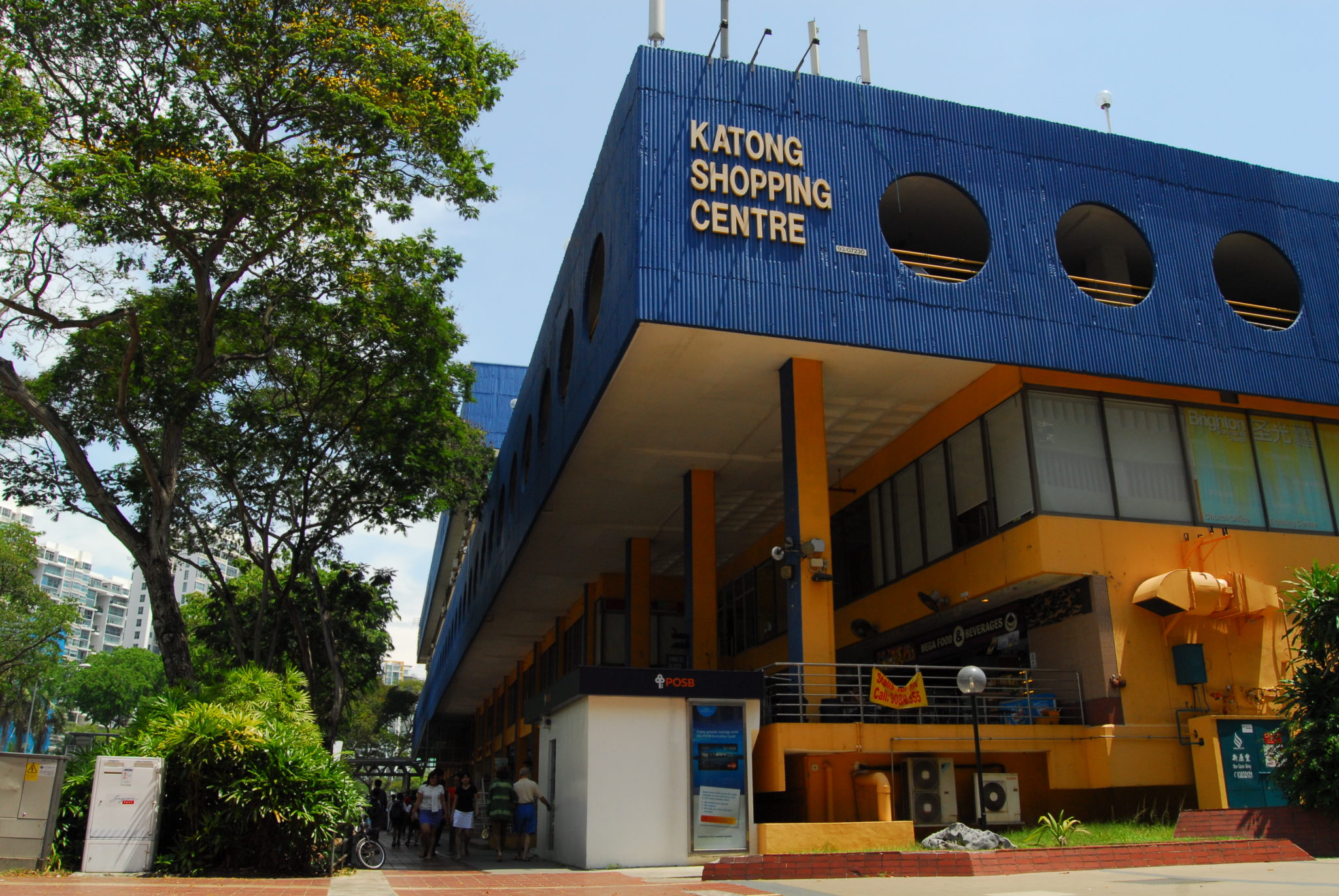
    Freehold Katong Plaza is up for collective sale at S$188 million, the expected price translating to $1969 a square foot per plot ratio.

    Sole marketing agent Huttons Asia says the mixed commercial and residential development has a land area of 34,044sqft and can yield a possible 102,133sqft of gross floor area after redevelopment.

    It is 120m from the future Marine Parade MRT station, says Huttons Asia’s head of investment sales Terence Lian. It is also close to schools.

    “Katong Plaza is strategically nestled within an established F&B and retail belt in the heart of Katong. We see a huge potential for the site to be transformed as the successful developer could introduce lifestyle cafes and eateries along the plot’s 150m frontage along Brooke Road,” says Huttons Asia’s deputy-head of investment sales Angela Lim.

    The public tender for Katong Plaza closes on Saturday next.

  • Cash boost for Wineries in the Philippines

    Cash boost for Wineries in the Philippines

    Online marketplace startup Winery Philippines has raised an undisclosed amount in a new round of financing.

    It says it will use the cash to boost its sales and marketing efforts and grow its customer and vendor base. The second round of funding, backed by a consortium of private investors, gives the company a seven-digit USD valuation, tripling its value a year after its initial funding round.

    Winery Philippines was conceived in 2016 by a group of wine lovers who wanted to improve access to quality wine for Filipinos, the company says. It has become a curated online wine marketplace that sells product from boutique wine importers.

    According to company data, retail wine revenue in the Philippines is expected to increase annually by 9 per cent to reach US$400 million in 2021.

    Winery Philippines founder/MD Chris Urbano says that while venture capital has poured into Chinese wine and spirits marketplaces over the past five years, smaller but promising markets like the Philippines are still off the radar for many investors. “Our backers see the chance to establish early market leadership amid thinner competition, higher margins and a small but profitable and fast-growing segment.”

    Most of Winery Philippines’ customers are in Metro Manila, but Urbano says it is growing order volume from provincial areas and second-tier cities.

  • UPS broadens delivery options in Hong Kong

    UPS broadens delivery options in Hong Kong

    UPS Hong Kong will partner with EF Lockers or SF Stores to offer greater flexibility for cross-border e-commerce deliveries, with the introduction of alternative delivery locations (ADLs).

    Shoppers will receive a text alert as the shipment arrives in Hong Kong, and be given the option to collect it from a designated alternative location – either an EF Locker or SF Store.

    “Our retail-industry research tells us that 81 per cent of Hong Kong’s online shoppers are interested in having their purchases shipped to an ADL with extended hours if fees are less than shipping the package to their home,” says UPS Hong Kong and Macau MD Lauren Zhao.

    “Cross-border e-commerce is accounting for an increasingly large proportion of all e-commerce sales in Asia, particularly with the growing popularity of online marketplaces,” says UPS Asia Pacific president Ross McCullough.

    He says it is crucial to develop the necessary infrastructure now, with the Apac e-commerce logistics market expected to more than double from US$108 billion to $232 billion by 2021.