Tag: asia

  • Made-in-Vietnam woodwork conquering international premium markets

    Made-in-Vietnam woodwork conquering international premium markets

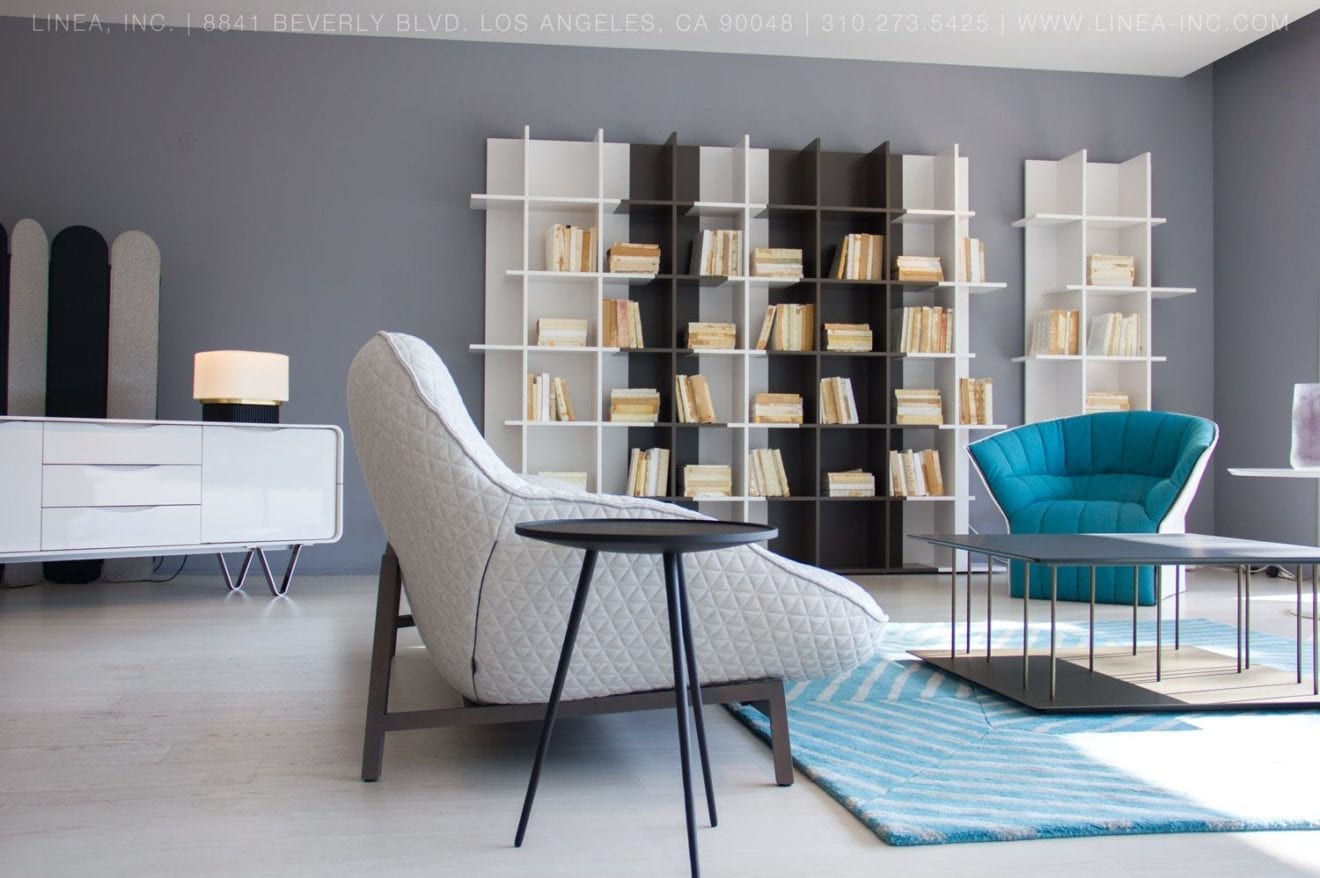
    With high quality and reasonable price, made-in-Vietnam woodwork has made its presence felt in luxury interior design projects worldwide.

    Last year, a team of 70 workers from Vietnam of design and construction company AA Corp were sent to the Caribbean to construct the interior of the luxury Park Hyatt St. Kitts resort. The $16 million project included components on interior design, millwork and loose furniture.

    Dubai based airline Emirates, the largest in the Middle East, also used Vietnamese-made woodwork for the interior of their first class cabins.

    “The U.S., Japan, Dubai, Singapore, Myanmar and Laos all have premium constructions with signature material from Vietnam,” said Nguyen Quoc Khanh, chairman of the Handicraft and Wood Industry Association of Ho Chi Minh City (HAWA).

    Premium hotel and resort corporations in the world such as Starwood, Accor, IHG, Marriott, Hilton and Fairmont all want to select Vietnamese businesses to design and construct the interior of their buildings, Khanh said, adding that these companies like made-in-Vietnam wood products because of their high quality and reasonable prices.

    With world class craftsmanship, Vietnamese wood businesses can now offer complete five-star woodwork instead of just selling individual products, said Nguyen Chanh Phuong, CEO of Danh Moc Limited Company, which designs kitchens.

    Approaching the high-end segment of the market is what local businesses have been aiming for for years, Phuong said, adding that with improved customer service and advertising, Vietnam can penetrate even further into the premium market.

    Vietnamese wood companies also need to thrive to achieve better product value instead of running after revenue goals and export targets, said Tran Viet Tien, CEO of Lavanto Home Décor, which manufactures a variety of home products.

    Businesses also need to invest more in automation, human resources and design to reach new heights, Tien said.

    Vietnam is currently world’s top five exporter of wood, behind China, Germany, Italy and Poland. Last year, Vietnam exported $8 billion worth of wood and forest products and the country aims to reach a $9 billion target this year.

  • New US tariffs a headache for foreign automakers

    New US tariffs a headache for foreign automakers

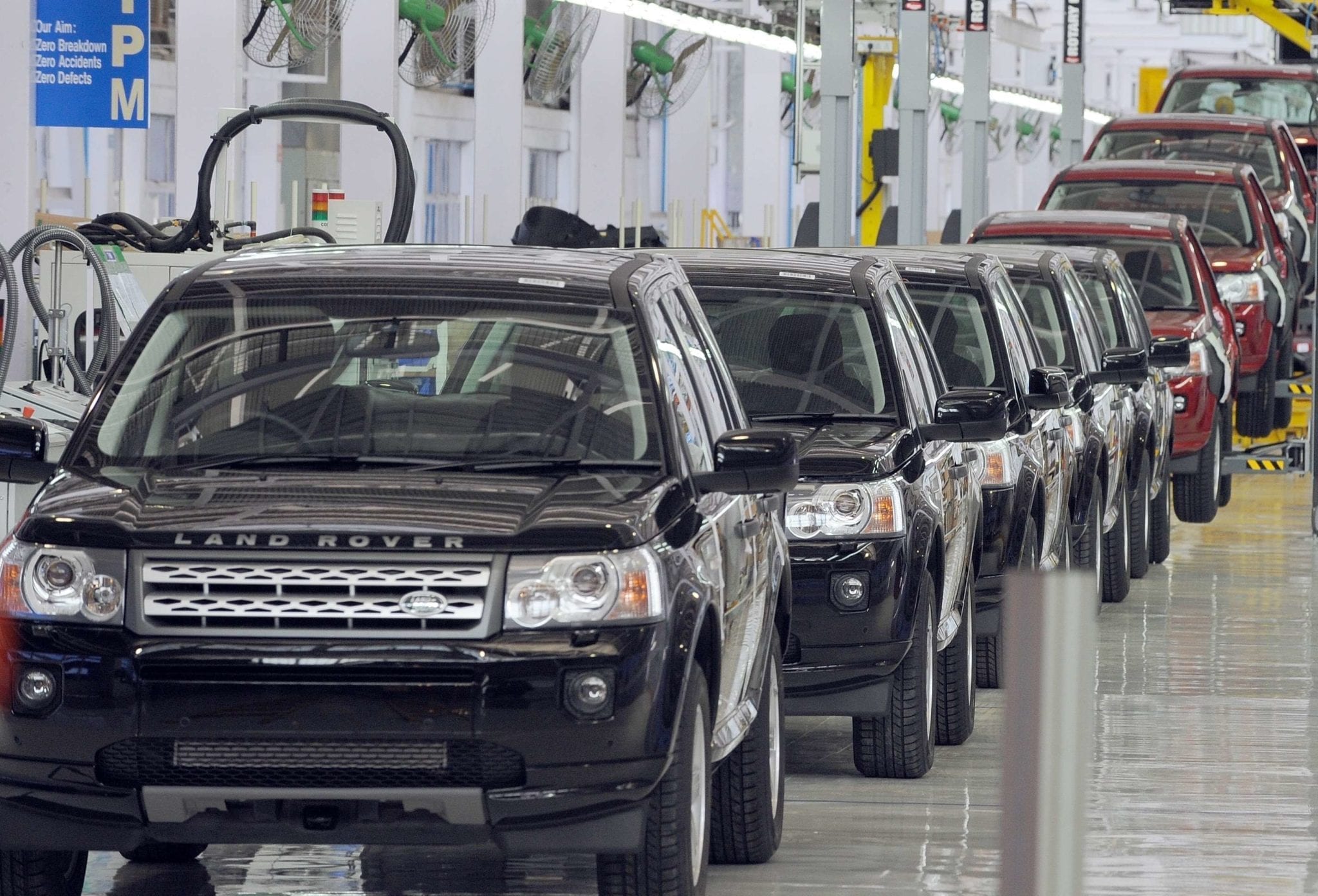
    US President Donald Trump’s threat to impose steep tariffs on auto imports will hit foreign automakers that export a large number of vehicles to the US market, but many also manufacture cars domestically.

    Most of these brands, such as Mercedes and BMW as well as Nissan, Honda and Volkswagen, have at least one auto plant on US soil, where they employ tens of thousands of workers.

    These automakers have invested billions of dollars in their US facilities. Toyota and Mazda announced at the start of the year plans to build a US$1.6 billion joint facility in Alabama that will be capable of producing 300,000 vehicles a year.

    Volvo Cars, which plans to open a plant in South Carolina by the end of the year, has warned that new import duties would affect its investment plans.

    US auto market

    In 2017, about 17.2 million vehicles were sold in the United States, according to AutoData, which compiles figures from manufacturers and dealers.

    Nearly 8.7 million of these were imports, according to the Center for Automotive Research, mostly from Mexico and Canada — partners in the North American Free Trade Agreement — as well as from Japan, Germany and South Korea.

    Since the start of this year, the share of domestically-manufactured autos sold in the US has fallen to 50.1%, down from 51.1% over the same period in 2017, according to Edmunds.com.

    At least 82% of Volkswagens sold in the US were imports, according to Edmunds, as well as 55% of Toyotas, 57% of Hyundais, 70% of Mercedes-Benz and 68% for BMW.

    On the other hand, more than half the cars sold in the US by the “Big Three” in Detroit were made locally: 80% for Ford, 60% for General Motors and 55% for Fiat Chrysler.

    Honda is the sole foreign automaker manufacturing a large majority of its locally-sold cars in the United States.

    Major exporter

    The US auto industry is the largest US manufacturing sector which employs about eight million workers, directly or indirectly through related industries.

    It also is one of the largest export sectors, according to the American Automotive Policy Council, an industry body representing the major US manufacturers, General Motors, Ford and Fiat Chrysler, and foreign automakers.

    Auto exports virtually doubled between 2009 and 2015 to US$137.7 billion from US$74.1 billion, according to AAPC, supporting 771,000 US jobs.

    BMW and Daimler, maker of the Mercedes-Benz, notably send US-built cars to the European Union and China.

    BMW, which says its Spartanburg, South Carolina plant is the world’s largest, exported 70% of the 371,284 autos manufactured at the site last year, or about 272,346, representing about US$10 billion in total exports.

    Domestic manufacturing

    Toyota, which employs more than 36,000 people, has 10 factories at locations in Alabama, California, Mississippi and Texas. It produces 1.2 million cars and sells 2.4 million, according to 2017 figures, with the difference made up by imports.

    Honda, which employs 4,000, has factories in Alabama, George, Indiana and Ohio and produces 1.2 million, selling 1.6 million.

    German giant Volkswagen, which has a Tennessee factory with the capacity to produce 150,000 units annually, did not disclose production figures but sold 339,679 autos. It employs 2,444 workers.

    Daimler maintains auto plants in Alabama, Indiana, and South Carolina and has 4,900 local workers. In 2017, it produced more than 286,000 cars and sold 337,246.

    BMW, which employs nearly 9,0000 workers, produced 371,284 automobiles in 2017 in the US, and sold 305,685.

    Nissan maintains two factories in Mississippi in Tennessee and produced 930,000 autos, selling US$1.6 million. It employed 14,400 workers.

    Auto imports

    Volkswagen luxury brands Audi and Porsche have no US factories and as a result import all the vehicles sold in the US market. In 2017, Audi sold 226,511 units while Porsche brought 55,420 to market.

  • Flont and Adrian Cheng to launch Asia’s jewellery rental service

    Flont and Adrian Cheng to launch Asia’s jewellery rental service

    Chow Tai Fook has partnered with Flont and Adrian Cheng’s venture capital firm C Ventures to launch a jewellery rental service in Asia.

    Flont, which touts itself as the pioneer of the ‘Jewellery as a Service’ concept, describes the deal as a “massive expansion” of its jewellery-sharing platform creating an “unparalleled luxury network” across Asia, including 2500 Chow Tai Fook stores and Cheng’s growing network of K11 art malls.

    Flont, headquartered in New York, enables consumers to discover and wear high-end jewellery they may not be able to afford to buy. Its sharing model targets millennials and Gen Zers, and has been likened to the Uber or Airbnb concepts merged with e-commerce. Consumers can borrow, experience and even buy fine jewellery, with insurance and shipping included, through rental or membership subscription services.

    Cheng, who is executive director of Chow Tai Fook, orchestrated the partnership through C Ventures, which he co-founded with Clive Ng. Besides the retail and mall networks, Flont gains a gateway to more than 9 million VIP members of the Chow Tai Fook and K11 organisations.

    Flont will open a standalone lounge in Hong Kong’s in Victoria Dockside, where customers can view new pieces added to the catalogue, return rented pieces or exchange them for new ones.

    “In our first year, Flont surpassed 10,000 members in the US, by forging meaningful partnerships with brands and businesses in the fashion, beauty, travel and retail industries,” said Cormac Kinney, founder and CEO.

    He describes C Ventures and Chow Tai Fook as the best-possible partners in the region. “Their consumer relationships, retail network, logistics and luxury heritage, will enable Flont to grow rapidly, and provide exceptional service.”

    Cheng says Flont’s jewellery-as-a-service offer has “amazing potential in China and the rest of Asia, where luxury rental is still at its infancy”.

    Through Chow Tai Fook, Flont will gain rapid access to consumers in China, Hong Kong, Macau, Singapore and Taiwan.

  • Aeon Malaysia share price jumps 6.52% on higher Q1 earnings

    Aeon Malaysia share price jumps 6.52% on higher Q1 earnings

    Aeon Co (M) Bhd rose as much as 6.52% in early trade to RM2.45 after reporting a 6.63% jump in net profit for the first quarter ended March 31, 2018.

    At 11.23am, the stock was trading at RM2.42 with 941,700 shares done.

    Aeon’s net profit for the first quarter stood at RM27.94 million compared with RM26.20 million recorded a year ago.

    Revenue for the period grew to RM1.11 billion from RM1.07 billion on the back of higher revenue from its retail and property management service businesses.

  • DB Schenker Scores a Hat-trick for Rail Logistics in Asia Pacific

    DB Schenker Scores a Hat-trick for Rail Logistics in Asia Pacific

    DB Schenker has been crowned for the third year in a row, as the Best Logistics Service Provider – Rail, at the Asian Freight, Logistics & Supply Chain (AFLAS) Awards ceremony held in Shanghai on 15th May 2018.

    The award, organized by freight and logistics publication Asia Cargo News, is conferred based on votes cast by more than 10,000 of its readers and subscribers. It recognizes expertise, innovation, technology application, service standards leadership and bespoke solutions for shippers. “Thousands of shippers and industry experts have voted, making the results a true reflection of industry expertise.” said Asia Cargo News publisher Darren Barton.

    Having pioneered Rail Freight services a decade ago with its first Asia – Europe rail link from China to Germany in 2008, DB Schenker has continually developed an extensive portfolio of market-leading rail solutions in Asia Pacific, offering Full-Container-Load (FCL), Less-than-Container-Load (LCL), Blocktrains, multi-customer, reefer services and so on, to customers in the Automotive, Electronics, Industrial/Chemicals, Consumer Goods, and other sectors.

    Apart from the highly-established China-Euro rail services, Rail solutions are also offered in Australia (Pan-Australia Rail solutions network linking Sydney to Melbourne, Adelaide, Brisbane, Darwin and Perth), Indonesia (Trans-Java Rail solutions in Indonesia linking Jakarta with Surabaya and Semarang), and recently also developed rail solutions in Vietnam and India as well.

    This hat-trick of awards for Rail, is complemented with past AFLAS Awards won for Best Logistics Service Provider in Sea Freight, Air Freight, and Best Road Haulier.

    “We are indeed thankful and humbled by the recognition from the industry and customers past and present. This inspires us continuously to strive and offer our customers an unmatched suite of award-winning solutions for their supply chains. Additionally, DB Schenker’s heritage and pedigree in Rail is testimony to our unique proposition in inter-modal supply chain solutions for businesses in Asia”, said Mr Peter Hult, Executive Vice-President for Contract Logistics/Supply Chain Management in Asia Pacific.


  • BOLLORÉ LOGISTICS Participates in the Breakbulk Europe Conference & Exhibition 2018

    BOLLORÉ LOGISTICS Participates in the Breakbulk Europe Conference & Exhibition 2018

    Bolloré Transport & Logistics, one of the 10 world’s leading transport and logistics groups, will be present as an exhibitor at the next Breakbulk Conference, from 29-31 May in Bremen, Germany.

    This major event in Europe gathers companies involved in the shipping of heavy-lift, project cargo and traditional breakbulk cargoes. On this occasion, Bolloré Transport & Logistics is showcasing its tailormade solutions through its different brands: Bolloré Logistics, for industrial projects logistics, and Bolloré Ports for cargo handling and shipping services.

    BOLLORÉ LOGISTICS, an expert in Industrial Projects Logistics

    It is the 10th participation to the Breakbulk Europe Conference for Bolloré Logistics. This event will be the opportunity to share the latest news on our global project activities.

    Within the Project organization Bolloré Logistics continues to establish greater synergies, both commercially and operationally, between its regional project divisions in Europe, Asia, The Americas and Africa. In Europe the Industrial Projects teams are striving to mirror the organization of their key project customers and markets by increasing their footprint and expertise throughout the continent. The result of this can be seen today in terms of the dedicated industrial project branches implemented in the majority of key countries.

    “2017 saw more investment in specialized personnel, for example within our Engineering and Solutions department and we continue to invest in people with strong industry expertise and Project Logistics skills who can add value to our European Project organization.” said Philippe LEJEUNE, Industrial Projects Europe Director.

    “We strongly believe, as showcased in our recent advertising campaign that People are the key to our success, and this is especially so in the Industrial Project field. “added Philippe LEJEUNE.

    Bolloré Logistics proposes tailor-made solutions in sectors such as oil and gas, petrochemical and chemical, mining, construction and equipment and in various other industries.

    Its unique operational solutions meet stringent specifications requested by the major global players and the success of each project is supported, among other things, by this network of experts in Europe as well as all over the Bolloré Logistics network in the world.


  • Henderson to buy Japanese retailer FamilyMart’s Hong Kong stores for US$38 million

    Henderson to buy Japanese retailer FamilyMart’s Hong Kong stores for US$38 million

    Property developer Henderson Land plans to acquire the Hong Kong unit of FamilyMart UNY, Japan’s second-largest convenience store chain, for HK$300 million (US$38 million) through its investment subsidiary, it announced on Thursday.

    UNY (HK) owns and operates three outlets in the city – described as hybrids of merchandise stores and supermarkets – under the brand names Apita, UNY and Piago, respectively in Taikoo Shing, Lok Fu and Kowloon Bay, as well as a discount store named Watashi to Seikatsu in North Point, which is due to close when the lease runs out in September.

    The acquisition is expected to strengthen the company’s position in the local retail market, expand its store coverage to Hong Kong Island and enhance its reach to the city’s middle-class households, according to a statement from Henderson Investment, a subsidiary of Henderson Land Development. Henderson Land is the property flagship of real estate tycoon Lee Shau-kee, Hong Kong’s second richest man according to Forbes magazine.

    The companies expect to complete the transaction by May 31, after which Henderson will be granted the use of certain trademarks of UNY for 10 years.

    UNY’s Hong Kong stores have been rooted in the local retail scene for around 30 years with a focus on offering Japanese food and fresh produce. UNY HK reported a net income of HK$31 million in the fiscal year ending November 2017, down 22.5 per cent from the same period a year ago.

    Henderson Investment’s presence in Hong Kong’s retail landscape includes its operation of local department chain, Citistore, which the company acquired for HK$934.5 million from its parent company in 2014. Citistore currently has six department stores, in Tsuen Wan, Yuen Long, Ma On Shan, Tuen Mun, Tseung Kwan O and Tai Kok Tsui.

    Listed in Hong Kong, Henderson Investment halted its trading in the local bourse on Thursday morning with its shares at 68 HK cents, and expected to resume trading on Friday.

  • Del Monte seeks to raise up to $333m via IPO

    Del Monte seeks to raise up to $333m via IPO

    Del Monte Philippines Inc, the wholly-owned Philippine subsidiary of global branded food and beverage firm Del Monte Pacific Limited, has received approval from the Securities and Exchange Commission (SEC) to raise up to P17.55 billion (about $333 million) via an initial public offering (IPO).

    This would mark the second IPO in the Philippines so far this year following the approval by the SEC of the IPO application of construction and property developer DM Wenceslao early this month. The Philippine Stock Exchange (PSE) is still optimistic of having eight IPOs in the entire year.

    In a statement released on Thursday, the SEC said it has approved Del Monte’s IPO, which involves 587.437 million secondary shares to be sold at P29.88 ($0.57) per share. This represents 21 per cent of the firm’s outstanding capital stock.

    “The company will not directly receive any net proceeds from the offer… no amount of the proceeds will be used to reimburse any officer, director, employee for services rendered, assets previously transferred, money loaned or advanced, or otherwise,” the country’s corporate regulator said.

    Del Monte Pacific earlier said it intends to use the proceeds from the offer to partially prepay or repay certain loan facilities.

    “The balance of proceeds, if any, will be used for general corporate purposes. The prepayment of such loans will allow the Del Monte Pacific Limited Group to deleverage and strengthen its balance sheet,” Del Monte Pacific said.

    According to the SEC document, about 70 per cent of the offer shares is earmarked to be sold to domestic investors, while the remaining 30 per cent will be sold to foreign institutional and retail investors.

    Del Monte Philippines is engaged in the production and sale of food and beverage products – such as fruit juices and juice drinks, packaged pineapple and mixed fruit, various tomato, spaghetti sauces and culinary mixes – in the Philippines under the Del Monte brand and exports these products under the S&W brand.

    It also operates one of the world’s largest fully-integrated pineapple operations and has been growing and processing pineapple for over 90 years.

    The PSE expressed confidence that at least eight IPOs will be conducted this year even as only two firms have filed IPO applications with the SEC so far – Del Monte and DM Wenceslao.

    The PSE posted a net income of Php825 million ($16 million) for the full-year 2017, an increase of 18 per cent from the Php702 million it generated in 2016, according to the unaudited consolidated financial statement posted on its website.

  • Singapore’s Economy Grows By 4.4 Pct In Q118

    Singapore’s Economy Grows By 4.4 Pct In Q118

    Singapore’s economy grew by 4.4 per cent on a year-on-year basis in the first quarter (Q118), higher than the 3.6 per cent recorded in the previous quarter.

    On a quarter-on-quarter seasonally-adjusted annualised basis, the economy expanded by 1.7 per cent, moderating from the 2.1 per cent growth in the preceding quarter.

    In releasing the latest economic figures, the Ministry of Trade and Industry (MTI)  expects the republic’s Gross Domestic Product (GDP) growth for 2018 to come in at “2.5 to 3.5 per cent”.

    This is after taking into account the strong performance of the Singapore economy in the first quarter and the slightly improved external demand outlook for the country.

    The manufacturing sector grew by 9.8 per cent year-on-year, extending the 4.8 per cent growth in the previous quarter.

    The sector’s growth was primarily driven by the electronics, precision engineering and chemicals clusters, which expanded 19.2 per cent, 14.0 per cent and 10.0 per cent respectively.

    The construction sector contracted by 5.0 per cent year-on-year – the same pace of decline as in the previous quarter.

    Construction output was weighed down by continued weakness in both the public and private sector construction activities, said the Ministry.

    The wholesale & retail trade sector expanded by 3.0 per cent year-on-year, unchanged from the growth recorded in the previous quarter.

    Growth was driven by the wholesale trade segment, which was in turn supported by an increase in the wholesale sales volume of petroleum products.

    On the other hand, the retail trade segment contracted, weighed down by a fall in the volume of motor vehicle sales.

    Growth in the transportation & storage sector came in at 2.8 per cent year-on-year,moderating from the 5.3 per cent in the previous quarter.

    According to the MTI, the water and air transport segments were the main drivers of the sector’s growth, given the healthy expansions in container throughput and air passengers handled respectively.

    The accommodation & food services sector grew by 2.0 per cent year-on-year, slowing from the 2.9 per cent growth in in the preceding quarter.

    Growth was driven by the accommodation segment, which expanded on the back of higher gross lettings at gazetted hotels in line with the rise in visitor arrivals.

    On the other hand, the food services segment contracted, weighed down by a fall in sales volume at restaurants, food caterers and other eating places.

    The MTI said the information & communications sector expanded by 5.7 per cent year-on-year, easing from the 6.0 per cent growth in the previous quarter.

    The sector’s growth was supported by the IT & information services and telecommunications segments.

    Growth in the finance & insurance sector accelerated to 9.1 per cent year-on-year, from 6.3 per cent in the previous quarter.

    The sector’s strong performance was due to robust growth in the fund management, financial intermediation and insurance segments.

    The business services sector grew by 2.8 per cent year-on-year, faster than the 0.4 per cent growth in the preceding quarter.

    Growth was supported by the professional services and “others” segments, even as the contraction in the real estate segment eased.

    The “other services industries” expanded by 1.9 per cent year-on-year, slower than the 2.7 per cent growth in the preceding quarter.

    The sector’s growth was primarily supported by the arts, entertainment & recreation and education, health & social services segments.

    On economic outlook for 2018, the MTI said the pace of growth in the Singapore economy is expected to remain firm in 2018, with growth supported primarily by outward-oriented sectors.

    In particular, the manufacturing sector is likely to continue to expand on the back of sustained growth in the electronics and precision engineering clusters, albeit at a more moderate pace as compared to 2017.

    Likewise, outward-oriented services sectors such as finance & insurance, transportation & storage and wholesale trade are projected to continue to benefit from healthy external demand.

  • SGX holds carnival at VivoCity this weekend for new investors

    SGX holds carnival at VivoCity this weekend for new investors

    The  Singapore Exchange (SGX) on Thursday said it will be holding its retail education event this weekend (May 26-27) at VivoCity’s Outdoor Plaza Atrium, as part of its ongoing efforts to educate new investors and encourage them to start investing.

    Targeted at NIBIs (not invested but interested) aged between 18 and 35 years old, the SGX “My First Stock Carnival” will take on a hands-on and interactive approach to educate investors on how to embark on their financial literacy journey, the Singapore bourse said.

    CGS-CIMB, iFAST Singapore, Lim & Tan, Maybank Kim Eng, PhillipCapital and RHB Securities will be setting up booths at the carnival to help participants open accounts, or answer any questions they may have about investing.

    An SGX “My First Stock Guidebook” will also be distributed along with a goodie bag at the carnival, and attendees will have the opportunity to interact with industry specialists and retail brokers, as well as familiarise themselves with SGX’s investing resources.

    Chan Kum Kong, SGX’s head of research and products, equities and fixed income, noted that there has been a trend of young investors becoming more active in investing.

    Added Mr Chan: “Our data shows that the traded value per month per investor aged 25 years old and younger saw an increase of 32 per cent in the first quarter of 2018 over the same quarter in 2016; the number of trades per month for the same group also saw an increase of 17 per cent over the same time period.”

    The carnival, which marks its fifth edition this weekend, will also be complemented by a week of investment workshops.

    The “My First Stock Carnival Investment Week” to be held at the SGX Auditorium, will feature speakers from SGX Academy and broking firms in a series of panel discussions held on May 28, May 30 and June 1.

  • Walmart India, Flipkart top executives meet CCI

    Walmart India, Flipkart top executives meet CCI

    Top executives of Walmart India and Flipkart on Wednesday met fair trade regulator CCI to explain their activities in the country, days after submitting an application seeking approval for their $16-billion mega merger deal.

    While there was no official word on the meeting, sources said it was a “courtesy call” by the executives of the two companies during which they also apprised the regulatory authority of Walmart’s global sourcing from India, including from the farmers, and its work towards kirana stores and supplier development programmes.

    Those present in the meeting included Walmart India president and CEO Krish Iyer and the company’s senior vice president and chief corporate affairs officer Rajneesh Kumar, besides Flipkart CEO Kalyan Krishnamurthy and its group legal head R Baweja, sources said.

    In their meeting with CCI member Sudhir Mittal, the officials of the two companies briefly explained about their individual businesses, development programmes and other activities.

    The meeting comes days after Walmart approached the Competition Commission of India (CCI) for approval of its proposed acquisition of a majority stake in e-commerce major Flipkart. In their application filed last week, the two companies have said the acquisition, proposed through Walmart International Holdings, deal doesn’t raise any competition concerns.

    Mergers and acquisitions beyond a certain threshold require the approval of the CCI.

    In their plea, Walmart has told the regulator that Flipkart is a Singapore-based investment holding firm, which along with its direct and indirect subsidiaries, both in India and elsewhere, is primarily engaged in the business of wholesale cash and carry of goods and providing marketplace based e-commerce platforms to facilitate trade between customers and sellers in India.

    According to the notice submitted to the CCI by Wal-Mart International Holdings, the proposed transaction will be effected pursuant to the share purchase agreement and the share issuance and acquisition agreement entered into on May 9 by and among Walmart’s subsidiary and Flipkart.

    Retailers have joined hands to approach CCI against $16 billion Walmart-Flipkart deal as they apprehend that it would lead to massive job loss and be a “nightmare for retail trade” of the country.

    Earlier this week, traders body CAIT also said it will approach the CCI to file objections on the proposed Walmart-Flipkart deal, claiming that the agreement would lead to an uneven playing field and massive job losses.

    On the other hand, an online sellers industry body has already moved the CCI against Flipkart India Pvt Ltd, a wholesale company, for allegedly abusing its dominant position on Flipkart’s online marketplace.

    Walmart seeks to acquire 77 percent stake in the homegrown e-commerce firm with a buyout of $16 billion.

    Opposing the deal, the Confederation of All India Traders (CAIT) has also written to Commerce Minister Suresh Prabhu, seeking to know the steps being taken by the government to scrutinise the deal.

    CAIT alleged that the deal involves important issues related to FDI policy, cyber security, apprehension of using e-commerce for entering retail trade by circumventing the law etc.

  • Aeon adopts wait-and-see approach over GST

    Aeon adopts wait-and-see approach over GST

    Japanese retailer AEON Co (M) Bhd is adopting a wait-and-see approach when it comes to the upcoming abolishment of the Goods and Services Tax (GST) on June 1.

    Executive director Poh Ying Loo said Aeon was still seeking greater clarity from the Pakatan Harapan government.

    “The GST question was something that was also posed by shareholders earlier and our stand right now is that it is too early to decide right now,” Poh said at a press briefing after the group’s 33rd annual general meeting here today.

    “We understand that other policies and tax regime such as the Sales and Services Tax (SST) will be reintroduced. We can’t really comment on whether of not our pricing would be cheaper until those things are made more clear,” he added.

    The group has allocated between RM300 million and RM500 million in capital expenditures (capex) this year.

    According to Poh, this was slightly lower than last year’s capex of some RM500 million.

    “The capex is inclusive of our newest mall in Kuching, Sarawak which we have already opened in April this year,” said Poh.

    With three levels of retail floors and four levels of car park, the Kuching mall is AEON’s debut presence in East Malaysia.

    The remaining capex will be for the expansion of Taman Maluri Shopping Centre and the refurbishment of Tebrau City, Bandar Utama and Bandar Sunway.

    As of the end of 2017, AEON has 26 malls across the country.

    A big part of AEON’s drive this year is to further strengthen its omni-channel strategy that will leverage onto its physical stores for offline experiences, logistics and convenience.

    “We had partnered with online concierge and delivery service Honestbee in January, and the response has been encouraging. We expect this business will grow with time,” said managing director Shinobu Washizawa.

    The firm is also set to roll out a “groceries drive-thru” service in Bukit Indah, Johor whereby customers can order groceries online from Aeon and pick them up themselves through a drive-thru window, starting next month.

    Aeon posted a net profit of RM105 million on the back of RM4 billion revenue for the year ended 31 December 2017.

  • Ralph Lauren shines bright in Asia, only

    Ralph Lauren has reported another decline in net sales, but the overall results confirm the company is headed in the right direction, albeit slowly.

    The company says its fourth-quarter sales decreased by 2.3 per cent to US$1.5 billion on a reported basis and were down 7 per cent in constant currency, driven by initiatives to increase quality of sales, reduce promotional activity, and elevate our distribution, as well as brand exits and lower consumer demand.

    But that is an improvement on the full-year Ralph Lauren sales figures of a 7 per cent decline to $6.2 billion on a reported basis and 8 per cent in constant currency.

    Fourth-quarter sales in Asia rose by 17 per cent to $257 million on a reported basis and by 11 per cent in constant currency, driven by strength in both retail and wholesale channels. Same-store sales were up 4 per cent.

    That’s significantly better than the full-year figure of 6 per cent on both a reported and constant currency basis to $934 million.

    Ralph Lauren’s big problem is the North American market, where sales continue to fall – in the last quarter, by 13.9 per cent, a greater rate than the 11.4 per cent of the same period a year ago.

    Some of this decline was deliberately engineered as Ralph Lauren reduced sales through wholesale channels that it believes damage its brand.

    “We applaud this corrective effort, though we think there is still much further to go.

    Stores like Macy’s still stock and sell Ralph Lauren product, and merchandising and general retail standards fall short of what the brand should be aiming for. While we do not think it is necessary for Ralph Lauren to withdraw from a retailer like Macy’s, we do think that it should work more closely with the buying and store teams there to create an elevated in-store experience. Until it does, the inconsistency between what Ralph Lauren wants its brand to be and the reality on the ground will remain.”

    Ralph Lauren is now more operationally stable. The partnership between Ralph Lauren himself and Patrice Louvet appears to be working well, and there is a sense that the company is serious about resolving its various issues. We are also encouraged by the appointment of Angela Ahrendts (former CEO of Burberry and current head of Apple’s retail business) and Mike George to the board.

    George’s expertise in e-commerce will be valuable as this is an area where Ralph Lauren seriously underperforms. and Ahrendts’ experience in luxury and her ability to create coherent retail brands and propositions will be extremely beneficial to Ralph Lauren.

    Overall, while we believe Ralph Lauren is a long way from full health, it is most certainly recovering nicely.

  • Positive performance for Parkson Retail China

    Positive performance for Parkson Retail China

    Parkson Retail China has been able to parlay a string of modest first-quarter increases into an 181.7 per cent boost in operating profit.

    Same-store sales for the quarter, to the end of March, grew by 1.7 per cent; total operating revenues rose 2.9 per cent to RMB1.2 billion (US$187.7 million) while merchandise gross margin increased by 0.2 points to 15.7 per cent.

    Its operating profit jumped to RMB87.9 million, despite a 1.9 per cent drop in gross sales proceeds to RMB4.3 billion. The group attributes the decline mainly to the closure of six
    underperforming stores last year as part of its continuing effort to optimise.

    However, the 1.7 per cent rebound in same-store sales was encouraging following the 2.2 per cent drop in the same period 12 months earlier.

    Strong direct sales in the cosmetics and accessories category saw total operating revenues jump by 2.9 per cent to RMB1.2 billion.

    At the end of March, the group ran and managed a diverse range of retail formats including 44 department stores, a shopping mall, two Parkson Newcore Citymalls, supermarkets, fashion and F&B outlets in more than 30 major cities across China.

  • Bic Camera Inc.’s profits come from Chinese tourists

    Bic Camera Inc.’s profits come from Chinese tourists

    Japanese retail tycoon Ryuji Arai can thank a growing flock of Chinese spenders for his swelling fortune.

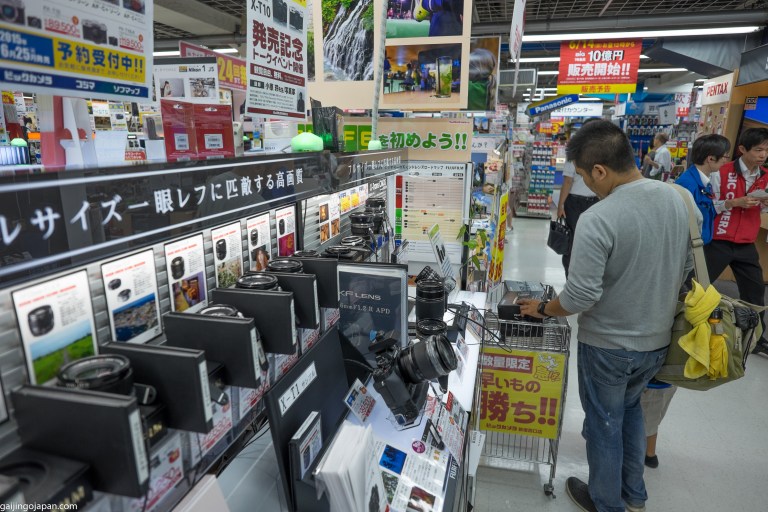
    Bic Camera Inc., the Tokyo-based consumer electronics retailer that sells everything from cosmetics to liquor at discounted prices, has become a sought-after destination for tourists shopping in Japan. Profit has jumped to a record, sending its shares up by more than 50 percent over the past year.

    The surge has given 71-year-old Arai a $1.8 billion fortune. Arai, who founded the retailer four decades ago and steered the company to its initial public offering in 2006, is now chairman at the company. He owns a 43 percent stake in the shares through a set of trusts and his asset management company La Holdings.

    Bic Camera has won tourists over with bargain prices offered in its stores along with duty-free desks, and by giving overseas shoppers the option to make online reservations for products they wish to purchase. The company is also trying to woo Chinese shoppers by accepting payment methods such as Alipay, Wechat and even Bitcoin — which is helping boost sales, said Bloomberg Intelligence Consumer Analyst Thomas Jastrzab.

    “Bic Camera’s early adoption of new payment options could give it an edge over more cautious rivals,” said Jastrzab.

    Not much is known about the reclusive businessman. Bic Camera declined to make him available for comment for this story. He started his first company in his early twenties and later spun out the camera sales division into its own company, according to local media reports. He then went on to form Bic Camera in his early thirties with the opening of a store in Tokyo’s Ikebukuro shopping district.

    Arai is an anti-nuclear advocate, and Bic Camera displayed huge banners in 1995 to protest France’s plan at the time to resume nuclear tests in the South Pacific.

    In 2009, Arai stepped down as chairman of Bic Camera after the company became embroiled in a scandal over false earnings reports. After the shares lost almost half their value in January that year, they rallied when the company was allowed to retain its listing on the Tokyo Stock Exchange and it restated earnings for the fiscal years 2006 to 2008. The company was fined $1.3 million. He retook the role of chairman, without any directors role, several years later. Since then, Bic Camera shares have climbed eight-fold.

    After relinquishing the chairman role, Arai remained the largest shareholder of Bic Camera.

    Bic Camera has teamed up with Haneda Airport’s terminal operator, Japan Airport Terminal Co., to launch stores in airport terminals as well as Tokyo’s Odaiba shopping and entertainment district, according to Masanari Matsumoto, a spokesman for the company. Those stores are stocked with goods popular with inbound tourists to let them quickly find what they want, Matsumoto said. Inbound tourists shoppers to the electronics retailer have more than tripled in three years, according to the company.

    In recent years, the company has also ramped up sales through its own website and stores on e-commerce sites such as Rakuten and Amazon.com. Online sales accounted for about 10 percent of overall revenue in the six-month period ended Feb. 28, according to company filings.

    Bic Camera’s net income jumps more than five-fold over past four years.

    The company’s net income climbed fivefold to a record 13.5 billion yen ($122.6 million) in the financial year ended Aug. 31, according to figures from the company. Bic Camera predicts profit will increase to 16.4 billion yen this fiscal year.

    That strategy has helped Bic Camera become Japan’s third-biggest electronics and appliance retailer while offsetting the impact of a declining population at home. Bic Camera will benefit more than other big-box electronics retailers such as its competitors Yamada Denki Co. and Edion Corp. from the recovery in demand for digital consumer electronics, according to a Nomura Holdings Inc. research note last month.

    Online sales, with an increase in the weighting of sales on the company’s own website, will drive growth over the longer term, according to Nomura. While customers using Bitcoin have yet to account for a significant portion of sales, the option could help attract more foreign customers, especially during the 2020 Tokyo Olympics.

    ‘‘Quickly adding additional payment options is a good way to achieve differentiation,’’ said Bloomberg Intelligence’s Jastrzab. ‘‘It also helps to boost brand equity by creating a buzz with potential customers.’’