Tag: asia

  • Park N Parcel secures 648,000$ in seed funding

    Park N Parcel secures 648,000$ in seed funding

    Singapore’s last-mile logistics startup Park N Parcel plans offshore expansion after raising US$648,000 in a seed funding round.

    Park N Parcel’s service provides “parking” for online purchases. Packages are delivered to a registered residential or commercial “parker” within a 1km radius of the buyer’s home for collection when convenient. After two years, the startup has more than 1500 parkers.

    The fresh funding will be used to strengthen the company’s core leadership team and for expansion into Thailand, Hong Kong and Japan by the fourth quarter of this year, says Park N Parcel co-founder Bryan See Toh.

    As well, the team plans to expand its client base through partnerships with e-commerce platforms and logistics companies.

    “Last-mile has always been a problem for big e-commerce players across Asia, and we believe Park N Parcel has resolved this issue,” says managing partner Christopher Quek of Tri5 Ventures, which led the funding round with a group of angel investors. “There is a huge opportunity in the $701 billion logistics market across Asia.”

    Park N Parcel, along with seven other startups, are heading to Thailand this month to attend the Bangkok Immersion Program organised by Enterprise Singapore under the Ministry of Trade and Industry.

  • StarHub appoints Peter Kaliaropoulos as CEO

    StarHub appoints Peter Kaliaropoulos as CEO

    Singaporean telecoms operator StarHub has appointed Peter Kaliaropoulos (pictured)  as its next chief executive officer.

    In a statement, StarHub said Kaliaropoulos will take over as Group CEO on July 9. He replaces Tan Tong Hai, who will step down from his roles as CEO and executive director from May 1.

    Kaliaropoulos, who was most recently CEO of Zain Saudi Arabia, has 35 years of experience in the global Information and communication technology sector.

    He has previously worked at telcos across Asia Pacific and the Middle East including BT, Telstra, Optus, Clear, Batelco and Ooredoo. Kaliaropoulos was even with StarHub way back in 2000 when the company began operations in Singapore, the Singapore telco said.

    Kaliaropoulos has also led a significant number of acquisitions and contributed as a board director to a number of telcos and ICT start-ups in Australia, USA, Singapore, India and the Middle East.

    In selecting its new CEO, StarHub said key criteria included strong leadership beyond conventional frameworks; understanding of the new market dynamics around intense competition; and one with diverse experience in the telco industry to better lead the team to deal with the rapid changes in the highly competitive environment.

    “This appointment is the result of an extensive and rigorous global executive search. As a telco veteran with a proven track record of achievements across a wide range of markets, and broad industry knowledge, the board is confident that Peter is well qualified to lead StarHub in pursuing new opportunities and managing the challenges that operators face today,” Terry Clontz, chairman of StarHub, commented.

    “My fellow directors and I are delighted to welcome Peter to the StarHub Group and look forward to working closely with him.”

  • Cebu Pacific to cancel flights during 6-month Boracay closure

    Cebu Pacific to cancel flights during 6-month Boracay closure

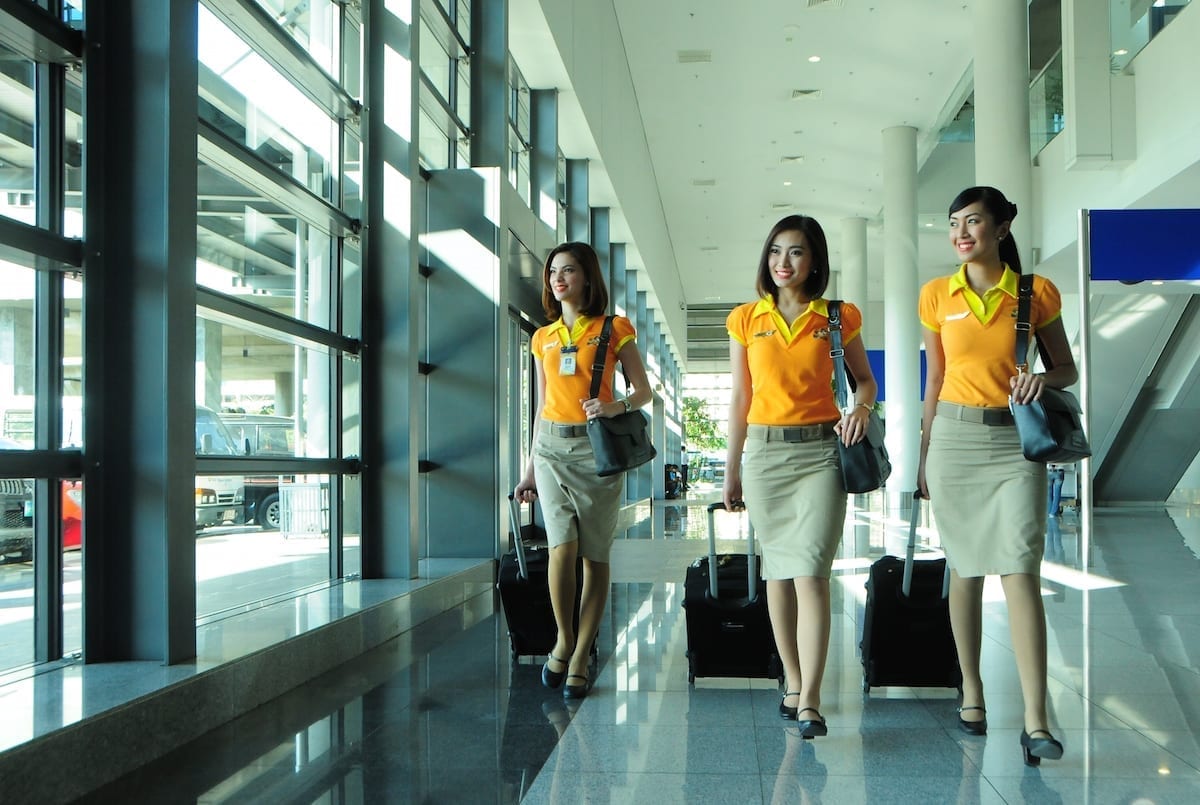
    Cebu Pacific will cancel its flights to and from Caticlan and Kalibo over the 6-month period that Boracay Island, the world-famous tourist destination, will be closed.

    The airline made the announcement close to midnight of Thursday, April 5, a few hours after President Rodrigo Duterte announced in a Cabinet meeting that he had accepted the recommendation of 3 agencies to shut down the island amid environmental concerns.

    In a statement on April 5, Cebu Pacific listed 19 flights – mostly catering to tourists – that would be stopped from April 26 to October 27.

    However, there are 6 flights it would retain “to serve local residents and ensure continuity of commerce in Northern Panay island” during the period.

    Flights canceled from April 26 to October 27:

    Manila-Caticlan-Manila (daily)

    • 5J 891/892
    • 5J 895/896
    • 5J 899/900
    • 5J 901/902
    • 5J 905/906
    • DG 6241/6242
    • DG 6243/6244
    • DG 6247/6248

    Cebu-Caticlan-Cebu (daily)

    • 5J 132/133

    Caticlan-Clark-Caticlan (daily)

    • DG 6298/6299

    Manila-Kalibo-Manila (daily)

    • 5J 331/332
    • DG 6317/6318

    Manila-Kalibo (Sunday-Thursday)

    • 5J 339

    Kalibo-Cebu

    • 5J 413 (daily)
    • 5J 415 (Sunday/Friday)

    Cebu-Kalibo-Cebu

    • 5J 416/417 (Sunday)

    Clark-Kalibo

    • 5J 351 (Tuesday/Thursday/Saturday)

    Kalibo-Clark

    • 5J 352 (Monday/Wednesday/Friday)

    Kalibo-Incheon-Kalibo (starting June 1)

    • 5J 180/181 (daily)
    • 5J 182/183 (daily)

    Cebu Pacific will operate the following flights from April 26 to October 27:

    • Manila-Kalibo 5J 337 – daily (except May 1-4)
    • Kalibo-Manila 5J 338 – daily (except May 1-4)
    • Manila-Caticlan DG 6245 – daily
    • Caticlan-Manila DG 6246 – daily
    • Cebu-Caticlan DG 6272 – daily
    • Caticlan-Cebu DG 6273 – daily

    The airline advised affected passengers to take any of the following options:

    • Get a full refund
    • Place the full value of the ticket in a travel fund for future use
    • Rebook the flight, subject to seat availability (via the ”Manage Booking” section in the Cebu Pacific website)
    • Reroute to any domestic destination, subject to seat availability

    “Guests who booked through a travel agent or any other third party are encouraged to provide us with their own contact details so they are directly advised about any flight changes,” Cebu Pacific said.

  • HKBN profit surges 423.4% in 1H18

    HKBN profit surges 423.4% in 1H18

    Hong Kong’s HKBN has reported a strong 423.4% increase in net profit for the six months ending in February to HK$241 million ($30.7 million), partly as a result of strong residential and enterprise growth.

    Adjusted for amortisation and non-recurring finance costs, profit grew 70% year-on-year to HK$295.4 million, the operator said.

    Revenue for the six month period increased 22% to HK$1.86 billion, with residential revenue up 17% to HK$1.1 billion and enterprise revenue growing 19% to HK$679.2 million.

    Total residential customers grew 8% to just over 1 million. HKBN’s mobile customer base grew fourfold year-on-year to 222,000, but broadband subscriptions declined 1% to 872,000 and voice subscriptions fell 2% to 515,000 over the same period.

    The company attributed its strong performance to the introduction of its quad-play broadband, voice, mobile services and OTT video strategy.

    HKBN’s enterprise customer base meanwhile increased 10% to 56,000, and enterprise ARPU increased 4% to HK$1,526.

    “We are proud to have delivered remarkable, across-the-board growth in the industry, executing in line with our pledged J-curve strategy,” HKBN CEO William Yeung said.

    “We are moving full steam ahead to harvest higher returns for our investors in the years to come, and simultaneously bring exceptional value for our customers.”

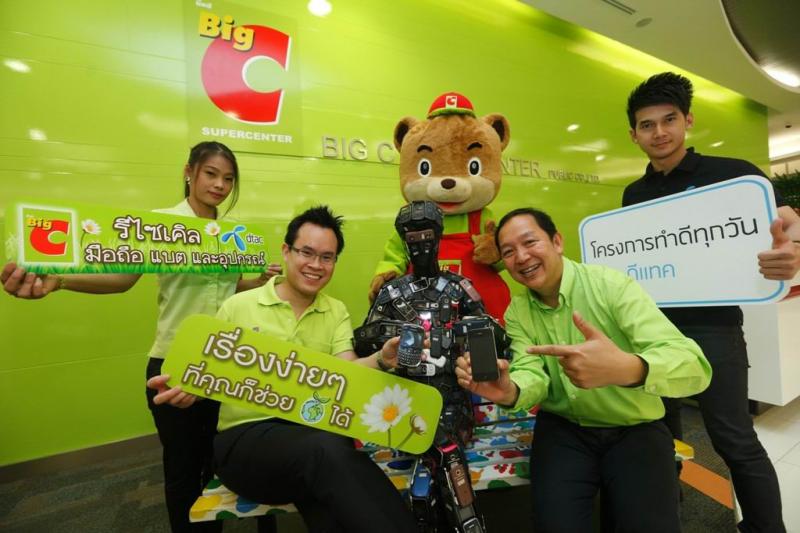
  • Big C Engages Its Customers Across Southeast Asia with Personalized Marketing

    Big C Engages Its Customers Across Southeast Asia with Personalized Marketing

    Symphony RetailAI, the leading global provider of Artificial Intelligence-enabled decision platforms, solutions and customer-centric insights that drive validated growth for retailers and CPG manufacturers, today announced that Big C is implementing its SR Personalized Marketing solution.

    Headquartered in Bangkok, Thailand, Big C is a leading omnichannel retailer in Thailand and Southeast Asia with hypermarkets, supermarkets, convenience, health and beauty formats, and online and ecommerce channels. With Asia accounting for four out of the top 15 countries globally where internet users spend the most time on social media worldwide, the region’s consumers are highly connected, tech-savvy, socially fluid and vocal. They want personalization, crave rewarding experiences and have a strong desire for convenience and immediacy.

    Shifting strategic engagement to meet cultural changes in what consumers want

    Thailand is undergoing significant lifestyle changes. Urbanization, millennial influence, mobile technology, and rising incomes are driving demand for and the rapid growth of the convenience channel, with Big C alone opening two new convenience outlets every three days. Already one of the leading nations for eating away from home, Thais have significantly increased their appetite for ready-to-eat options from convenience channels. Adding to these significant shifts, the country currently has one of the highest social-media adoption rates worldwide. With this as a backdrop, Big C relaunched its loyalty program which had been initiated years prior, but wanted to engage its 6.2 million customers on a deeper, more emotional level.

    The company is now aggressively moving to build a new personalization program founded around the customer lifecycle. It is working towards personalization at basket and/or category level(s) and sending personalized digital offers via text, a mobile app and a program website. In addition to using SR Personalized Marketing — an omni-channel solution that leverages embedded algorithms and a relevancy engine to ensure that each shopper’s communication is appropriate, timely and individualized — Big C is adopting the solution’s mobile capabilities. This will allow the retailer to leverage a geofencing mobile app that interacts with shoppers at the right moment and in the right place, delivering timely and relevant messages. This is a key component of the Big C strategy around its changing customer demographic.

    “The Southeast Asia region is one of the most rapidly changing regions of the world when we consider grocery,” said Gary Hardy, Chief Operating Officer, Big C. “Our customers are demanding more variety, convenience, flexibility, and an enhanced service. They want ‘round-the-clock omnichannel experiences that match their changing lifestyles. As a result, we need to engage customers on a more 1:1 basis, focusing on digital touchpoints and moment marketing to improve the entire shopping experience for our customers.”

    “We’ve had a great working partnership with Big C for over six years,” said Oscar Garcia-Velasco, Regional Vice President, Symphony RetailAI, Asia. “We are very excited to see Big C taking this next step in their ongoing evolution to serve their customers. Understanding how to best use customer data to enhance relationships through more relevant, personalized offers is key to success. Embracing the role of mobile in how their customers want to engage with them, will help Big C create a competitive edge and increase customer loyalty.”

  • Sequential Brands signs deal for Chinese market

    Sequential Brands signs deal for Chinese market

    Sequential Brands Group has signed a multi-year deal that will take its Avia sports shoes to Greater China.

    Its agreement with Beiying Sports Technology, a manufacturer and distributor, involves the companies developing and distributing men’s, women’s and children’s footwear, apparel and accessories. The new collection will launch this year across all retail channels.

    Beiying also plans to open Avia stores, including flagship outlets in key metropolitan Chinese cities, over the next few years.

    China is an important market with its growing sports industry, says Sequential’s active division president Eddie Esses.

    “With a rich heritage since 1979, the brand resonates extremely well with the Chinese consumer,” says Beiying MD Jinzhang Lin.

    Advisory group Symphony Investment Partners, helped the US group with the transaction.
    Based in Fujian Province, Beiying is a subsidiary of the industrial group Hengchong.

  • Castelbajac Taiwan planning its third store

    Castelbajac Taiwan planning its third store

    Korean golf-wear brand Castelbajac Taiwan plans to open its third store within the next two months.

    The brand also plans 20 more stores over the next five years.

    The company hopes to make Taiwan a springboard into other new markets across the region.

    “The Taiwanese market would serve as the gateway to expand further into the new countries including Hong Kong, Vietnam and China,” an official from the company said.

    In order to enhance its image as an upscale brand, Castelbajac will open stores only within department stores.

    Castelbajac entered Taiwan in March, with the first store at Taipei’s Pacific Sogo Department Store and the second at Hanshin Department Store in Kaohsiung.

  • Luxba Group selected as the new partner for Sergio Rossi

    Luxba Group selected as the new partner for Sergio Rossi

    A new strategic partnership with brand management company Luxba Group will help Sergio Rossi open franchise stores across China.

    Following a full relaunch, the Italian women’s luxury shoe company has also signed an agreement with Hong Kong billionaire entrepreneur Adrian Chen to help achieve growth in China.

    Sergio Rossi last year closed its 10 franchise stores in China it had opened with another distributor. In changing partners, it hopes to make a “solid relaunch” in the country.

    “We chose a partner with the resources, experience and a vision in line with ours to help us go further,” says Sergio Rossi CEO Riccardo Sciutto. “The Luxba Group, with Adrian’s network, makes for such a partnership.”

    Details of the agreement have not been disclosed.

    Cheng, who is also executive director of jewellery manufacturer/retailer Chow Tai Fook Jewellery Group, six months ago launched C Ventures with the aim of creating a stable of brands and digital platforms specifically aimed at millennials and generation Z, a target market for Sergio Rossi. Already the venture has attracted brands like Disquared2 and Moschino.

  • DHL Vietnam appoints Drew Duncan as Managing Director

    DHL Vietnam appoints Drew Duncan as Managing Director

    DHL Supply Chain, the global market leader for contract logistics solutions, today announced the appointment of Drew Duncan as Managing Director of DHL Supply Chain Vietnam. In his new role, Drew will manage the strategic development of DHL Supply Chain Vietnam, steering growth in warehouse management, transportation management and value added supply chain services.

    Drew has more than 13 years’ experience in the logistics industry and has spent six years with DHL Supply Chain Thailand. Prior to this appointment, Drew was the Vice President — Retail, managing a combined workforce of over 6,000 personnel, 30 distribution centers and a fleet in excess of 3,000 vehicles. Drew is a pioneering leader of change, and has employed many globally tested supply chain innovations in our local operations, yielding significant improvements in cost and service for our customers.

    Kevin Burrell, CEO, DHL Supply Chain Thailand Cluster (Thailand, Vietnam, Cambodia and Myanmar), said: “Vietnam’s economy is growing rapidly, and this dynamic environment demands a leader who drives constant improvement across all areas of our business. We are pleased to announce the appointment of Drew Duncan as Managing Director of our operations in Vietnam. Having worked in Southeast Asia for half of his career, Drew has a keen understanding of regional and local culture. With his illustrious track record and rich experience working within DHL, we are confident of fulfilling our promise of being the leading enabler for our customers in the country and contributing to improving our consumers’ daily lives. We have huge ambitions for our business in Vietnam, and look forward to capitalizing new opportunities under Drew’s stewardship”.

    DHL aims to provide a one-stop service for logistics supply chain integration to global standards, supporting local and international customers in various sectors — Retail, Consumer, Technology, Automotive, Life Sciences, Chemical, Engineering and Manufacturing. Its diverse expertise enables speedy operational set-up for customers from all sectors using DHL’s multi-user warehouses and transport networks. DHL Supply Chain sees a real opportunity in Vietnam to help its customers grow successfully and constantly improve safety, quality and cost management through innovation and market differentiated services.

  • Shiseido recently started buying up tech start-ups

    Shiseido recently started buying up tech start-ups

    Japanese personal care company Shiseido has started buying up tech companies as a gambit to cater to a younger generation of buyers.

    Shiseido last year sold ¥1 trillion (US$9.3 billion) worth of beauty products last year, mostly in traditional stores. However, CEO Masahiko Uotani says consumers in their teens and 20s often prefer to shop online, which is why the brand is seeking to invest in expertise in such technologies as artificial intelligence and augmented reality.

    Uotani’s ambition is to help shoppers replicate online the experience of trying on cosmetics in a store, and use data from smart devices to create personalised make-up for customers.

    He says the younger generation does not often go into stores. “The way they buy, the way they share their excitement with their friends, is completely different from older generations.”

    Shiseido has already acquired for an undisclosed sum of the R&D team and other assets of Olivo Laboratories, a US start-up specialising in artificial skin technology, and earlier bought MatchCo, a California start-up that develops software customers can use with their smartphones to create customised foundation products matching their skin tones.

    Another acquisition has been Giaran, a startup that develops AI technology.

  • Google Singapore goes online

    Google Singapore goes online

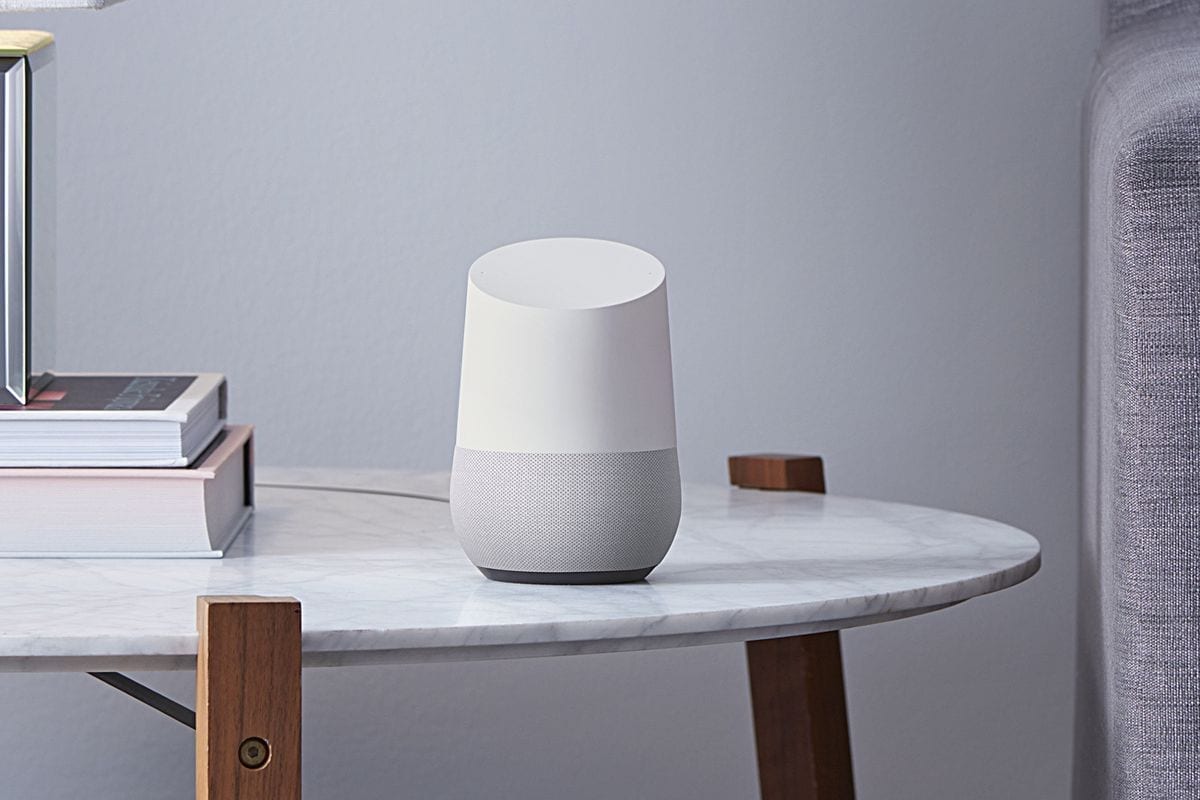
    After launching its online store, Google Singapore has introduced its smart speaker Google Home.

    It has taken the technology 16 months to reach SouthEast Asia, and alongside the Google Home Mini the speaker will be sold through retail stores such as Challenger, Courts and StarHub, as well as online from tomorrow.

    There is no word on when the newer Google Home Max will be made available, reports CNet, nor if Google Home will be rolled out elsewhere in Southeast Asia. However, it was launched in India last week and in Japan late last year.

    Singapore’s version of the speaker will support Singlish, and have access to local services such as public transportation chatbot Bus Uncle.

    Google has also enabled multi-user support for Singapore, and will be able to deliver personalised schedules or music based on who is asking.

    “We’re seeing a transition from a mobile-first world to an AI-first world,” says Google VP of product management Rishi Chandra. “We’re looking to reinvent all of our products to make it more natural to use them, and we think voice is going to be a big part of that. Voice can fundamentally change how you interact with computers.”

    He says Home has been designed around Google’s privacy framework. “We want to be transparent and give user control.”

    User data across all Google platforms, including Search and Home, can be managed on a single backend, enabling users to easily view and delete their information.

  • Telin Singapore enters partnership with SGIX

    Telin Singapore enters partnership with SGIX

    Telin Singapore has teamed up with the Singapore Internet Exchange (SGIX) to enhance internet connectivity for business customers.

    Under the agreement, SGIX has set up a PoP within the Telin-3 data center to provide low latency internet peering services to customers using the data center.

    Telin Singapore, a wholly-owned subsidiary of Indonesia’s PT Telkom, operates Singapore’s only Uptime Institute Tier-IV certified data center.

    Telin-3 is operated on a carrier neutral basis and has been designed to support growing demand for reliable and secure interconnectivity among customers operating in Singapore.

    Carrier-neutral internet exchange service SGIX was meanwhile established by key players from Singapore’s infocomm industry and has the support of regulator IMDA. The company offers internet peering services to customers including ISPs, CDN providers, cloud service providers and carriers.

    “We’re delighted to come on-board SGIX. With the ever-increasing business demand for higher bandwidth and better performance, this partnership will enhance Telin-3’s suite of services and value-add to its world-class facilities,” Telin Singapore CEO  Andreuw Th. A.F said.

  • Huawei chief downplays 5G expectations

    Huawei chief downplays 5G expectations

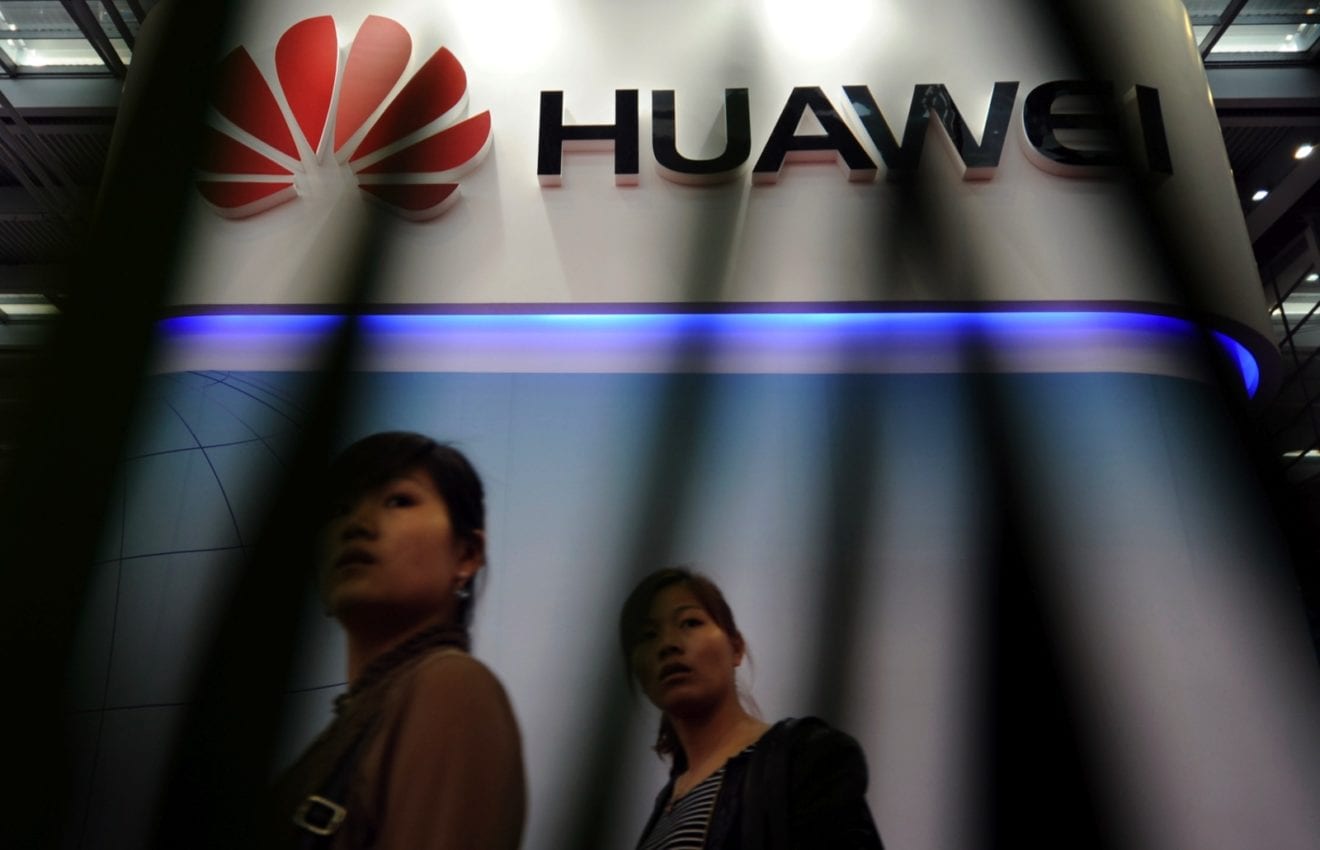
    Eric Xu, rotating chairman of Huawei, has downplayed the expectations on 5G, warning that consumers will not likely see a fundamental difference between 5G and 4G.

    “Over the last couple years the entire industry, especially governments around the world, regards 5G too high, as if it’s a digital infrastructure for everything, Xu told attendees at Huawei’s Analyst Summit in Shenzhen on Tuesday.

    He said Huawei did have expectations on 5G, but they were not as big as some people might think. “[5G]It’s just a natural evolution of technology, from 2G to 3G to 4G, and now 5G,” he said. “If you look across the entire portfolio of Huawei business, 5G is just one product.”

    “We’re going to have 5G, but you don’t have a fundamental difference between 5G and 4G… you don’t’ have a material difference between 4G and 5G.” he said

    For the average consumer, he noted, they would only perceive a difference in speed.

    He pointed out that the full 3GPP Release 15 – which is expected in June this year – will only address part of future use cases for 5G, which is the enhanced mobile broadband for consumers. Only until 2019 will the industry have full 5G-compliant standards that cover massive connectivity and lower latency.

    Xu said the current 4G infrastructure is “pretty robust” and good enough to support most use cases and he doesn’t see many clear use cases or applications which can only be supported with 5G.

    That said, Xu is not expecting 5G to be used for nationwide coverage, at least to begin with. Instead, he expects 5G to be used for specific, more localized deployments where there is a need for increased speed and bandwidth.

    However, he noted, this doesn’t mean it’s not worth investing in 5G. “If you’re not investing in 5G, your customers won’t invest in your 4G,” Xu said.

    “It’s the same case for telecoms operators. They are driven by competition, if one telco in the market says, ‘I have 5G-enabled services,’ the other service providers will have to launch 5G, for marketing and branding reasons.”

    Xu said Huawei will continue to be committed in 5G investment and the company’s progress in this area is quite “encouraging.”

    “By the second half of this year we will launch end to end 5G solution to cater our operators customers who do have requirements for 5G. And we are going to launch 5G-capable smartphones in the third quarter of next year.”

  • M1 reports flat profit for 1Q18

    M1 reports flat profit for 1Q18

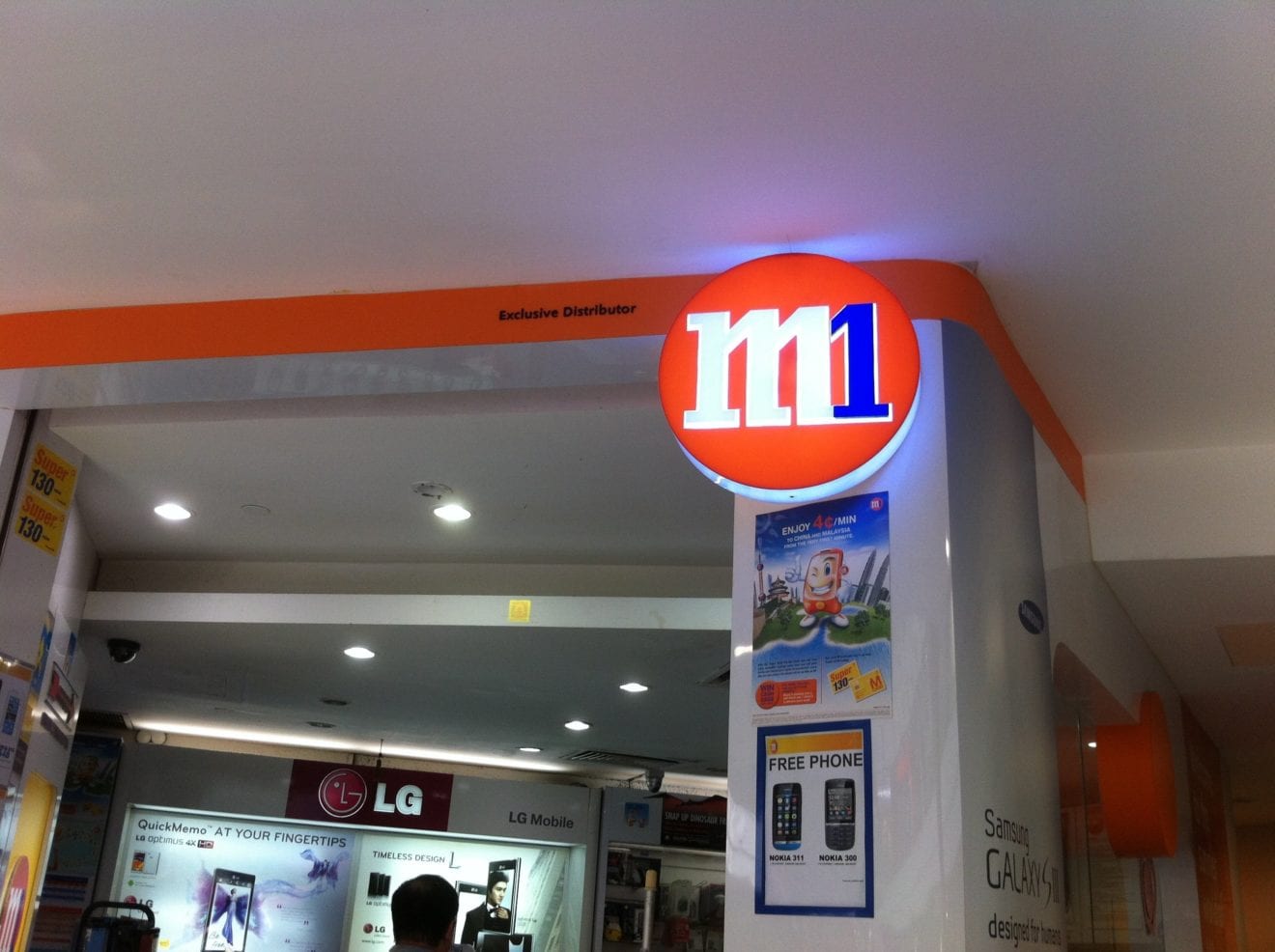
    Singapore’s M1 has reported flat profit for the first quarter despite a 3% year-on-year increase in service revenue.

    The operator’s net profit stayed stable year-on-year at S$34.8 million ($26.5 million), but this represented an 8.3% increase compared to the previous quarter.

    Service revenue meanwhile grew 3% year-on-year to S$184.7 million, driven by higher fixed and postpaid mobile revenue. But overall operating revenue grew just 0.5% year-on-year and fell 15.8% sequentially to S$254.1 million.

    Fixed service revenue was up a strong 13.9% compared to the same quarter a year ago to S$31.9 million, with M1 adding 5,000 fiber customers to take its total base to 194,000.

    By contrast, mobile revenue increased just 2.6% over the same period, and total mobile subscribers decreased by 2.6% to 1.99 million.

    Mobile data grew to account for 61.3% of mobile service revenue, up from 54% a year ago, with average postpaid smartphone data usage reaching 4.5GB per month.

    Despite the lackluster results, M1 CEO Karen Kooi said the operator is in a position to pursue new growth opportunities looking ahead.

    “We will continue to strengthen our telco core with enhanced value propositions and customer experience,” she said.

    “With our scaled up ICT and digital capabilities, we are well placed to capture the growth opportunities in the Corporate and Government segment driven by corporate digital transformation and Smart Nation initiatives.”

  • Cebu Pacific Less Profitable in 2017

    Cebu Pacific Less Profitable in 2017

    Cebu Air operator of the country’s largest carrier Cebu Pacific, said net income in 2017 dropped by 18.9 percent to P7.91 billion from P9.75 billion in 2016 due to higher fuel prices and operating expenses.

    Operating expenses swelled by 16.6 percent to P57.90 billion in 2017 from the P49.65 billion recorded in the previous year.

    “The increase was primarily due to the rise in fuel prices in 2017 coupled with the weakening of the Philippine Peso against the US Dollar,” the company said in a disclosure.

    Cebu Air Inc is the parent company of airline brands Cebu Pacific and Cebgo.

    Cebu Air said that the Philippine peso ended 2017 at an average of P50.40 per US dollar compared to the previous year’s P47.50 per US dollar.

    “The growth in the airline’s seat capacity from the acquisition of new aircraft also contributed to the increase in expenses,” Cebu Air added.

    The airline company said revenues went up by 9.9 percent from P61.90 billion in 2016 to P68.03 billion in 2017, as passenger revenues increased by 7.2 percent to P49.931 billion.

    “This was mainly attributable to the 3.2 percent growth in passenger volume to 19.7 million from 19.1 million last year, driven by the increase in number of flights by 3.6 percent in 2017 as the Group added more aircraft to its fleet,” the company said.

    Cargo revenues reached P4.60 billion, increasing by 29.2 percent from the previous year, while ancillary revenues went up by 14.9 percent to P13.49 billion.