Tag: asia

  • Urban Indonesians consumed more non-animal sources of protein

    Urban Indonesians consumed more non-animal sources of protein

    It seems the widespread move away from meat is not only happening in Europe or the US, but also here in Asia Pacific. New research from global market intelligence agency Mintel reveals that as many as two in five (39%) urban Indonesians and one in three (34%) urban Thais consumed more non-animal sources of protein (eg plant, dairy, grains) in 2017, compared to the previous year.

    While still in early stages, this trend has also infiltrated meat-loving Australia. Indeed, 16% of urban Australians said they avoided or intended to avoid red meat in 2017, while one in five (19%) consumed more non-animal sources of protein. Of those who avoided or planned to avoid red meat, half (51%) said that they believe it was healthier if they did so.

    Michelle Teodoro, Global Food Science and Nutrition Analyst, at Mintel said:

    “Traditional agriculture is unable to meet the protein needs of the world. The current levels of demand for meat supplies globally, and the relative growth of meat production on this scale will have a significant, negative impact on the environment. At the same time, more and more consumers are moving away from meat and looking towards alternative sources of protein instead, offering some relief and creating new opportunities in the global consumer marketplace.”

    “Pressure on the natural environment is forcing consumers and companies to rethink what they take and make. Meanwhile, new technologies are redefining how we create and use food and drink. While developments that engineer rather than harvest food and drink staples, such as laboratory-grown meat, have grabbed headlines, the resulting products are still years away from mass commercial availability. This showcases the potential for more innovative, sustainable and alternative protein sources. The world is changing and food scientists have a big role to play in the future of food. Companies and brands should be looking across industries for inspiration and opportunities for collaboration with scientists and food engineers,” Teodoro added.

    Mintel research shows that one in four (24%) urban Indonesians planned to follow a plant-based/vegetarian diet in 2017, while 61% of urban Thais and over half (54%) of urban Australians planned to eat more vegetables/fruits. Furthermore, nutritious or health-related reasons (56%) are the top factor influencing urban Thai consumers when choosing food or drink products to buy.

    “With high animal protein intake associated with health concerns, any reduction in consumption will have positive health outcomes. Today’s consumers are also starting to include more vegetables and fruits in their diets, or adopting plant-based or vegetarian diets, given the numerous health benefits that come along with them. Along with a shift to plant and lab-based proteins, the world’s reliance on factory-farmed animals will also be reduced—contributing to animal welfare globally,” Teodoro continued.

    This is all reflected in Mintel Trend ‘Hungry Planet’ which discusses how consumer purchasing decisions are being influenced by issues surrounding sustainability and ethics, as well as Mintel Trend ‘Bannedwagon’ which details how consumers are focusing on ingredients and production methods, embracing once-niche ways of living and eating.

    Delon Wang, Trends Manager, Asia Pacific, at Mintel concluded:

    “Moving forward, we will see aspects of environmentalism penetrate various lifestyle goals. With the mantra ‘you are what you eat’ top of mind today, consumers are assessing their lifestyle, everyday purchases and surroundings. Additionally, the idea of inclusivity and accepting niche lifestyles of global consumers has popularised, to a certain extent. We are seeing more understanding about unique diets and living habits, creating new guidelines to live as the benefits are exhorted.”

  • Restaurant Brands’ profit spikes on further expansion

    Restaurant Brands’ profit spikes on further expansion

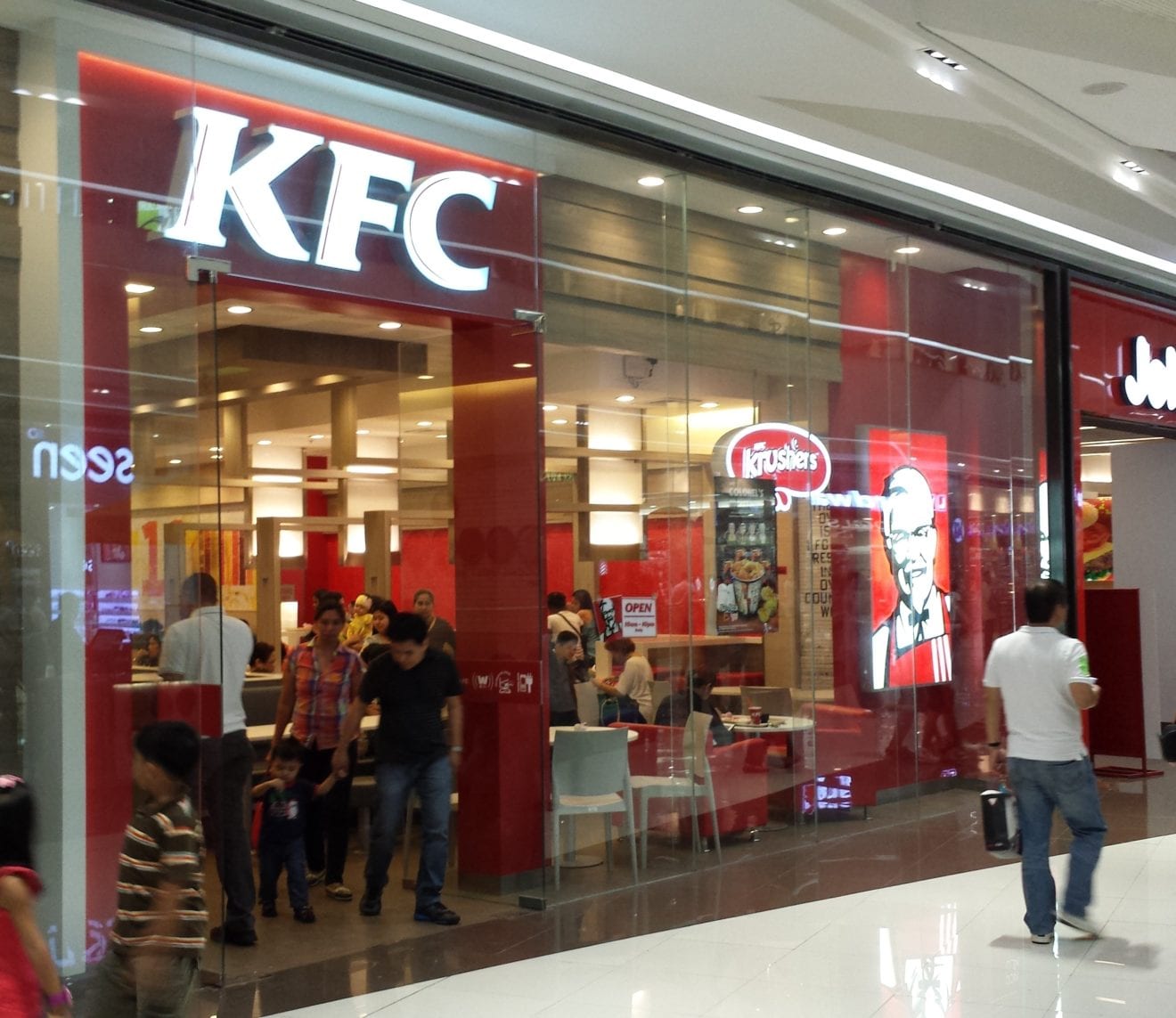
    Restaurant Brands has unveiled a 36 per cent increase in its full year profit to NZ$35.5 million on strength in its home market of New Zealand and expansion of its KFC network in Australia.

    Top line sales increased by 49 per cent to NZ$740 million in the 52 weeks to February 26, while combined earnings across the company’s portfolio were up 41.5 per cent to NZ$121.9 million.

    RBD owns a network of KFC stores in Australia and NZ, as well as Pizza Hut and Taco bell stores in Hawaii and Starbucks and Carl’s Jr. stores in NZ.

    KFC Australia, which now operates across 61 stores, booked a 50.9 per cent increase in sales on the acquisition of an additional 18 outlets, while earnings were up 42.1 per cent to NZ$20.2 million.

    Sales in NZ were up 6.3 per cent to NZ$446.8 million, driven by KFC New Zealand, which saw earnings increase by 7.4 per cent to NZ$66 million.

    RBD expects at least a 10 per cent increase in profits next year, revealing that it will look to further expand its KFC business in Australia and New Zealand while also possibly investing in KFC stores in Hawaii and the US.

    The business recently acquired a network of 82 Taco Bell and Pizza Hut stores in Hawaii, which contributed $68.3 million in sales for the year, buoying confidence for a possible expansion of the brands into New Zealand.

    “The full effects of two major acquisitions is evident in this year’s financial results with sales almost doubling over the last two years,” RBD said in an ASX release.

    “From a sound, established position in both the Australian and US (Hawaii) markets the company now has significant scope to expand further in both these geographies through acquisition, store refurbishments and organic growth.”

    Operating cash flows were up NZ$19.9 million for the year while net cash outflows spiked to $173.3 million, reflecting the impact of its Hawaii and Australian acquisitions.

    “The company is not anticipating any significant changes in the economic and competitive environment or unusual costs in the new financial year. With a consistent performance from the existing store network and the full year effect of additional stores acquires in Australia in the second half of the 2018 financial year,” RBD said.

  • Robots the future of customer service?

    Robots the future of customer service?

    When consumers walk through physical aisles of a supermarket or browse online catalogues these days, it is easy to overlook a vital and emerging trend – robots in retail.

    Robotics play a crucial role in cultivating a holistic retail experience for consumers in ways that have not been seen or thought of before. In warehouses, robots boost productivity and speed up the shipping of goods to stores and customers. Robots have also been drafted in stores, ready to serve customers with efficient inventory management. As the role of robotics in retail advances, we will see the same increase in speed and efficiency apply to the shopping experience as it has for industrial applications.

    Robots are making a timely appearance in the retail landscape as businesses today face pressure from multiple angles. Besides facing intense competition, they are also having to cater to a business environment that is being turned topsy-turvy as e-commerce grows.

    Consumer preference is also going through rapid transformation as shoppers become accustomed to e-commerce experiences that allow for cross-site comparisons, competitive prices and the convenience of shopping anytime, anywhere as they are connected via a computer or mobile device.

    The retail industry stands to gain as a whole with the entrance of robotics technology. Robots are being deployed, both in e-commerce businesses and brick-and-mortar establishments, to enhance efficiency and strengthen logistical and operational functions. Indirectly, this should translate to improved service levels and shopping experiences, and perhaps even lower costs.

    Workers in the retail industry too stand to benefit as robots can take on menial, mundane or dangerous tasks, freeing them up for knowledge-driven work.

    “Can.I.Help.You.Mdm?… Beep”

    Robots in retail can take on frontline, customer-facing roles too. As artificial intelligence capabilities grow, robots are emerging from beyond behind-the-scenes operations. Retailers have started to accommodate in-store robot assistants, able to direct traffic and perform important roles such as inventory management, freeing staff to handle more complex tasks.

    One such retailer is Walmart, which has installed robots into 50 of its stores across the US. These robots cruise along supermarket aisles checking shelves for items that need to be restocked, as well as merchandise that is misplaced or incorrectly priced. This vital information is then communicated to store staff who take necessary action. Equipped with cameras, these robots scan shelves three times faster than humans and are more accurate in picking irregularities. The engagement of robots is a pivotal component of Walmart’s plan to boost efficiency and accessibility of shoppers.

    Warehouses and delivery: hardwired for efficiency

    To satisfy today’s customer expectations of receiving goods faster, and with low or no delivery charges, retailers must develop an effective logistics system. Robots can help ease the pressure on retailers by improving logistical functions that are otherwise time-consuming. One example is how automation and robotics are used in smart warehouses to move large volumes of items through storage systems in a quick and reliable fashion, while still monitoring the exact location of each item at all times.

    Global retail stalwart Amazon built its success on automating its warehouse operations while maintaining its top-10 status in the ranks of the biggest employers. Fuelled by the support of the 55,000 robots employed last year, Amazon offered quicker deliveries at lower costs and led the retail industry in sales growth.

    Closer to home, robots have progressively proven themselves at Alibaba. The company recently introduced ‘Steel Soldiers’, a film about human and robots fighting shoulder-to-shoulder together. Its renowned smart warehouse is laden with sensor-charged robots who perform 70 per cent of tasks and can each carry up to 500kg of goods.

    Its competitor JD.com has also started using robots for the transportation of goods within 20km. Using robots has reduced JD’s unit delivery cost by 80 per cent and it’s fully automated sorting centre handles 9000 online shopping orders per hour – an operation previously performed by 180 human sorters.

    Alibaba and JD are testament to the idea that robotics can add value to shoppers by reducing delivery costs and speeding up logistical processes, even if they never meet them.

  • PAL readies nonstop flights to New York, India

    PAL readies nonstop flights to New York, India

     Philippine Airlines (PAL) will mount nonstop flights to New York and India as well as boost its operations in Davao, Cebu, and Clark in Pampanga, as the flag carrier expects the arrival of 21 new planes by 2019.

    PAL, the country’s only 4-star airline, will have 15 new aircraft within the year, and another 6 planes in 2019, to mount more long-haul flights.

    “We are no longer just a Manila-centric airline,” PAL president and chief operating office Jaime Bautista said in a statement.

    New routes and increased flight frequencies will be introduced, as the flag carrier is set to receive 5 additional Next-Generation Bombardier Q400s and 6 new Airbus A321neos starting in May, along with 4 Airbus A350-900 trans-oceanic aircraft starting in June. 

    “Our new aircraft and our new hubs are a winning combination that will help expand our market reach both domestically and worldwide. This is imperative for a global airline, and we must sustain and build on our hard-won 4-star rating,” Bautista said.

    He added that introducing new routes to India is the airline’s response to the call of Tourism Secretary Wanda Teo for a direct link to the country – a potentially rich source of future tourists for the Philippines.

    PAL’s expansion in 2018 also includes the following new routes:

    • Manila to New York (John F. Kennedy Airport), nonstop flights beginning October 28
    • Manila to New Delhi and Mumbai (Bombay) in India, nonstop flights by last quarter of 2018
    • Manila to Sapporo (Chitose) in Japan’s northernmost island of Hokkaido, by last quarter of 2018
    • Davao to Siargao, 4 flights per week since March 25

    Bautista said PAL also plans to add more flights between Cebu and Siargao, Davao and Tagbilaran, Davao and Clark, Cebu and Bangkok, Cagayan de Oro and Clark, Cebu and Busuanga, Clark and Busuanga, as well as Cebu and Clark.

    The airline will also add frequencies from Manila going to Dumaguete, Cagayan de Oro, Iloilo, Cebu, Puerto Princesa, and Bacolod, starting in April or May. 

    100 planes by 2020

    PAL is also planning to launch international routes directly from the Davao International Airport to Bangkok or a point in Japan.

    The flag carrier flies to 16 domestic and 7 international destinations from Cebu, 14 domestic and one international from Clark, 6 domestic from Davao, as well as one international from Tagbilaran.

    “Comprehensive marketing and sales studies are ongoing for the introduction of new destinations in Europe and the US mainland, including Chicago and Seattle,” PAL said.

    Aircraft expected to join the PAL fleet in 2019 include two more Next-Generation Q400s, two A350s, and two more A321neos.

    “Our current fleet of 85 aircraft is already the largest in the Philippines,” Bautista said.

    “We are aiming for 100 aircraft by 2020, which places us in the category of a major carrier. But we are not merely adding more planes, we are constantly upgrading the cabins, seats, amenities, inflight entertainment, and technology,” he added.

    The airline’s fleet upgrade will continue until 2024, as it aims to become a 5-star airline. PAL is the country’s first and only 4-star airline, joining the ranks of 42 other carriers, like British Airways, Emirates, KLM, and Japan Airlines. 

  • True customers’ identity records exposed in data leak

    True customers’ identity records exposed in data leak

    Thailand’s True Corp has fixed a data leak involving the exposure of identity records on up to around 45,000 of its customers.

    Security researcher Niall Merrigan discovered personal data on customers of True Corp’s e-commerce subsidiary iTrueMart (now WeMall) stored in a public-facing Amazon S3 bucket in March.

    The 32GB data cache included 45,736 files, consisting mainly of JPG and PDF scans of identity documents including scanned ID cards, drivers licenses and possibly passports.

    In a blog post, Merrigan said he informed True Corp’s mobile unit True Move H about the breach on March 10, but the company took no action until he went to the media in early April. The files were finally made private on April 12.

    Merrigan indicated that True Corp seems to be misrepresenting the incident as a hack, but there was no security on the data bucket and anybody could have found and downloaded all the files.

    Telecoms regulator NBTC is investigating the incident, and may impose penalties on True Corp for exposing customer information. The stored identity records may have been collected as part of the Thai government’s mandatory SIM registration scheme, which has already been a target of identity thieves and has been opposed by privacy advocates.

  • AirAsia X won’t buy “too expensive” Airbus A350

    AirAsia X won’t buy “too expensive” Airbus A350

    AirAsia X group co-chief executive Tony Fernandes has thrown the carrier’s order for 10 Airbus A350-900s into doubt.

    Speaking in a Facebook video he says, “The A350 is not an aircraft we will buy. Too expensive. Fares would go up.”

    AirAsia X is understood to have been eyeing an order for additional A350s or Boeing 787s to complement its fleet of A330-300s, and 66 on-order A330-900s.

    Its 10 A350-900s on order are scheduled to start delivering in 2019, Flight Fleets Analyzer shows.

    In the same video, however, Fernandes also appeared to throw cold water on a return to flying to London, saying that there were “no plans” to resume services to the UK capital.

    His comments appear to contradict comments from carrier’s head of network and regulatory Venggatarao Niadu, who recently indicated that the carrier would look to expand its network to Europe and the United States “in about 2019”.

    AirAsia X previously flew from Kuala Lumpur to London and Paris using A340s, but those routes were dropped in 2012.

    Airbus indicates that an A350-900 costs around $317 million at list prices.

  • Asia fastens L’Oreal first-quarter sales

    Asia fastens L’Oreal first-quarter sales

    With dynamic markets in China and Hong Kong, Asia has driven L’Oreal first-quarter sales.

    Asia Pacific also shone among new markets for the French cosmetics company, where sales grew by 14.9 per cent overall.

    Chairman/CEO Jean-Paul Agon describes the return to strong growth in new markets, especially Asia Pacific, as the highlight of the first quarter.

    He says consumer aspirations for iconic brands remains just as strong in China, which again delivered an outstanding performance in the brand’s consumer products division.

    “Growth is being driven by northern Asia, thanks to the strong dynamism in China and Hong Kong where all the divisions are growing, with a strong performance by the major brands such as Lancome, Yves Saint Laurent and L’Oreal Paris, the number-one beauty brand in China.”

    In southern Asia, particularly India, the active cosmetics division’s skincare brands have been performing well.

    Asia Pacific posted growth of 21.1 per cent like-for-like and 10 per cent based on reported figures, with first-quarter sales reaching €1.8 billion.

    Again, the region drove acceleration for L’Oreal Luxe and active cosmetics with new markets seeing 14.9 per cent growth.

    Rapid increase

    E-commerce sales continue to increase rapidly, says L’Oreal, with 33.8 per cent growth to now account for 8.8 per cent of sales.

    Overall, the group’s sales grew 6.8 per cent like-for-like, or 7.4 per cent at constant exchange rates.

    Based on reported figures, sales reached €6.78 billion, down 1 per cent, excluding The Body Shop. The disposal of The Body Shop was completed in September. The group’s reported sales for the first quarter of last year included The Body Shop sales amounting to €197.2 million.

    For the first quarter, the consumer products division had growth of 2.6 per cent like-for-like but dropped 4.9 per cent based on reported figures. L’Oreal Paris has good momentum in China and India while maintaining strong growth in e-commerce.

    At the end of March, L’Oreal Luxe achieved growth of 14 per cent like-for-like and 4.4 per cent based on reported figures, driven strongly by Asia, especially China and Hong Kong, as well as by travel retail.

    The active cosmetics division began the year strongly with growth of 10.2 per cent like-for-like and 9.1 per cent based on reported figures. All zones contributed to growth, with “striking acceleration” in Asia.

    SkinCeuticals sales posted “outstanding” growth figures with sales doubling in Asia.

  • Vodafone New Zealand accused of misleading conduct

    Vodafone New Zealand accused of misleading conduct

    New Zealand’s Commerce Commission has filed 27 charges against Vodafone New Zealand, accusing the operator of engaging in false and misleading conduct with its FibreX hybrid fibre coaxial (HFC) service.

    The charges filed in the Auckland District Court allege that Vodafone NZ has been misleading customers since October 2016 by using the name FibreX in advertising and marketing.

    The Commerce Commission alleges that by using the name FibreX Vodafone mislead customers into thinking that FibreX is a full fiber to the home service comparable to the services delivered over the state-subsidized Ultrafast Broadband (UFB) network.

    Vodafone NZ has announced it will defend the charges in court, and insisted it has been clear in its communications throughout the life of the service.

    New Zealand’s Advertising Standards Authority has already ruled that the company’s advertising of FibreX has not been misleading, and noted that customers are more interested in the speed their broadband service can provide than the technology behind it.

    “The single biggest pain point our customers are facing is fiber installation delays by local fibre companies, and FibreX offers an alternative for customers who want to avoid these delays while enjoying the benefits of ultra-fast broadband,” the company said in a statementhttps://news.vodafone.co.nz/article/vodafone-defend-fibrex-charges

    “For consumers wanting broadband services at the highest available speeds, FibreX represents an extremely competitive option. We are proud of being able to offer this over our own network and this is why we will stand up to the charges.”

  • Malaysia 4G service performance below global average

    Malaysia 4G service performance below global average

    The race for LTE dominance in Malaysia is still in its infancy as operators scramble to deliver consistent quality of service nationwide.

    Statista data points to smartphone penetration in Malaysia of 62.8% in 2017 with a forecast of 68.46% by 2022. Adoption is fueled by nationwide mobile connectivity with usage in areas such as mobile shopping, social media and general internet surfing according to market research firm GfK.

    “Shopping apps, especially, are also gaining popularity, paving the path for mobile payments. More consumers today are contributing to the growth of mobile commerce (m-commerce) in Malaysia, making payments through their mobile devices for retail items, airline tickets, and services such as Grab and Uber,” observed Stanley Kee, Managing Director for Southeast Asia, GfK.

    According to the EY report “Decoding the Malaysian digital DNA: from smart to savvy” 78% of surveyed Malaysians use of the technology has improved their communication with friends and family, albeit at the expense of sleep (25%).

    As more consumers turn to their smartphones to research new products or services (83%) or make purchases online rather than in person (38%), experience and speed will trump convenience as a metric for selecting the best service provider. That said, price remains an important factor in Malaysian buying psyche.

    With more operators defaulting to LTE or 4G as the solution to consumer’s appetite for connectivity, OpenSignal published a comparative study of the performance of the mobile operators in the country.

    Four years since Maxis launched the first LTE service in Klang Valley (January 2013), five operators now claim to offer 4G service although OpenSignal reported only two operators as having LTE availability scores higher than 75%. 4G services aren’t yet ubiquitous, but they’re getting there.

    “Yes held onto our 4G availability award with a score of 92.5%, but Unifi Mobile (the new brand name for Telekom Malaysia’s Webe) and Celcom demonstrated the biggest growth spurts in our availability results. Unifi’s 4G availability increased by 10 percentage points in six months, while Celcom’s score increased by more than 7 percentage points,” said Kevin Fitchard, Open Signal lead analyst.

    Maxis has extended its lead in 4G speed metric, averaging LTE downloads to 24.4Mbps. Celcom came in second with a 16.3Mbps LTE download average. But Malaysia’s other operators fell short of the global 4G average of 16.9Mbps. U Mobile and Unifi in particular are struggling to boost LTE speeds. Both scored below 10Mbps in OpenSignal test.

    Asked about the growing interest among operators for 5G service Fitchard took a pragmatic view saying: “Countries that are still building out their 4G networks and services like Malaysia will likely be occupied with that task for the next several years. But today 5G isn’t really an option for any operator globally, so everyone has to wait,” he concluded.

  • Unexpected revelation by H&M and Moschino

    Unexpected revelation by H&M and Moschino

    An Instagram call has revealed a designer collaboration by Swedish fast-fashion brand H&M and Moschino.

    Projected on digital screens at the Italian fashion brand’s annual party in Coachella, California, the Instagram conversation was between US model Gigi Hadid and her friend Jeremy Scott, creative director at Moschino.

    They discussed the release of the Moschino + H&M collection online and in selected H&M stores worldwide from 8 November.

    Hadid’s call and the news surprised guests at the event. The two friends were dressed in the first looks from the collection, designed by Scott for both women and men, as well as a full range of accessories and extra surprises.

    “It is the perfect collaboration for fashion right now, mixing together pop, street culture, logos and also glamour,” says H&M creative adviser Ann-Sofie Johansson. “Jeremy Scott is amazing – he knows how to have fun with fashion.”

    An innovative TV concept is being used for the collection’s campaign, enmeshing social and traditional media.

  • KDDI sets up fund to boost 5G capabilities

    KDDI sets up fund to boost 5G capabilities

    Japan’s KDDI has teamed up with venture capital firm Global Brian to establish a new fund to support startups which can boost the operator’s capabilities in 5G and other technologies.

    The Japanese telco plans to invest 20 billion yen ($186 million) over the next five years via KDDI Open Innovation Fund 3 (KOIF3) in startups in areas such as AI, IoT and big data, which KDDI says will grow ever more crucial in the 5G era.

    The new fund will operate for 10 years and be managed by Global Brian, targeting startups “that hold promise for generating synergy with KDDI group companies in the coming 5G era,” KDDI says.

    The formation of the new fund, KDDI adds, is “in anticipation of the changes that will be brought about as 5G technology comes into widespread use”.

    KDDI and its group companies will use their networks, experience and knowledge to seek out promising venture firms in fields such as AI and IoT, the operator said, adding that there are already three programs being launched around AI, IoT and data marketing technologies.

    “The investment programs will also make it possible not just for KDDI but also for its group companies to proactively undertake joint development efforts with venture firms,” KDDI noted.

  • GM workers storm Korea CEO’s office after company holds back bonus

    GM workers storm Korea CEO’s office after company holds back bonus

    General Motors workers in South Korea forced their way into company executive offices, destroying and removing furniture, shortly after the automaker’s local unit told employees that there will be no bonuses due to a cash crisis.

    A video posted on YouTube showed about a dozen union members storming the CEO’s office in Incheon on Thursday, kicking and throwing chairs before removing a large desk.

    The union, whose representative could not be reached for comment, was protesting the company’s decision and urged the CEO to resign, according to GM Korea’s spokesman.

    Separately, the company confirmed in a statement what it called a “violent incident” at its executive offices that “resulted in significant damage to company property.”

    GM, which is seeking concessions from the union to revive its South Korean business after mounting losses, has proposed a $2.8 billion new investment plan and a $2.7 billion debt-for-equity swap to turn around the unit. After threatening to exit the country altogether earlier, the subsidiary last month said it intends to file for bankruptcy if the union fails to agree to a restructuring plan, putting pressure on employees and the government to help it stay afloat.

    The incident was reported to the police, the company said, adding that it will take legal action against the workers.

    Government reaction

    South Korea on Friday urged GM and the union to reach a wage deal swiftly, saying the government will be able to discuss support for the money-losing unit on condition of an agreement.

    The latest comments, made by the industry minister during a meeting with GM Korea’s CEO, came after the union’s protest over nixed bonuses.

    “Should the industrial conflict seen yesterday and today happen again, it will be difficult for (GM Korea) to gain public support and government support,” Paik Un-gyu, minister of trade, industry and energy, said in a statement.

    GM’s union accepted the company’s demand for a wage freeze and no bonuses for this year, but opposes a proposal to cut benefits as well as its plan to shut down the Gunsan plant.

    “We appreciate the ministry’s interest and encouragement,” a GM Korea spokesman said.

  • La Chapelle group buys Naf Naf

    La Chapelle group buys Naf Naf

    A Chinese investment group led by Shanghai La Chapelle Fashion has paid €52 million (US$64 million) to acquire French fashion chain Naf Naf, part of the Vivarte group.

    European clothing retailer Vivarte has owned Naf Naf since buying it from Parisian brothers Patrick Patrick and Gérard Pariente, who founded the brand in 1973, for €200 million.

    It is the first foreign investment for La Chapelle, China’s largest cheap women’s apparel retailer, which has 9448 stores, 37,544 employees and a €1.2 billion turnover in China itself.

    Vivarte says La Chapelle will open 500 Naf Naf stores in China over the next five years and another 30 in Europe. Naf Naf now has 474 points of sale and 1200 employees.

    The Naf Naf sale is part of a major restructuring program for Vivarte. The French retail group needs to clear a €600 million debt and already sold shoe chains Andre and Pataugas and women’s clothing brand Kookai. It is also ready to sell Besson (shoes) and Chevignon (men’s fashion).

    CEO Patrick Puy wants to turn Vivarte’s attention to five core brands: Caroll, Cosmoparis, La Halle, Minelli and San Marina. The money from the Naf Naf sale will go toward its most important asset, La Halle, which generates €1 billion in turnover (on overall €1.8 billion group turnover), but faces competition from H&M, Primark and e-commerce outlets.

  • Starbucks CEO apologises

    Starbucks CEO apologises

    Starbucks has found itself in the middle of a public relations disaster in the United States after an incident in one of its Philadelphia stores last week that saw two African American men arrested went viral.

    Starbucks chief executive Kevin Johnston has issued a statement unreservedly apologising to the men, who were handcuffed by half a dozen police officers in an outlet last Thursday following a dispute with a store manager.

    The men, who were waiting for a friend, were asked to leave after using the bathroom without making a purchase but refused, at which time the manager called 991, local police said.

    A video of the arrest was shared millions of times on social media over the weekend, sparking calls to boycott the coffee chain and protests outside of its stores.

    In a public statement Johnstone said the incident led to a “reprehensible outcome” and that he would be personally overseeing a review of Starbuck’s training processes.

    “We have immediately begun a thorough investigation of our practices. In addition to our own review, we will work with outside experts and community leaders to understand and adopt best practices,” he said.

    “The video shot by customers is very hard to watch and the actions in it are not representative of our Starbucks mission and values.

    “Regretfully, our practices and training led to a bad outcome—the basis for the call to the Philadelphia police department was wrong,” Johnston continued.

    Johnstone has offered to meet the two men in person to offer a face-to-face apology.

    Philadephia mayor Jim Kenney said the incident exemplified an example of racial discrimination, adding that he has referred the matter to the Philadelphia commission on human relations.

    “I am heartbroken to see Philadelphia in the headlines for an incident that — at least based on what we know at this point — appears to exemplify what racial discrimination looks like in 2018,” he said in a statement.

  • Amway Global launches app for Artistry brand

    Amway Global launches app for Artistry brand

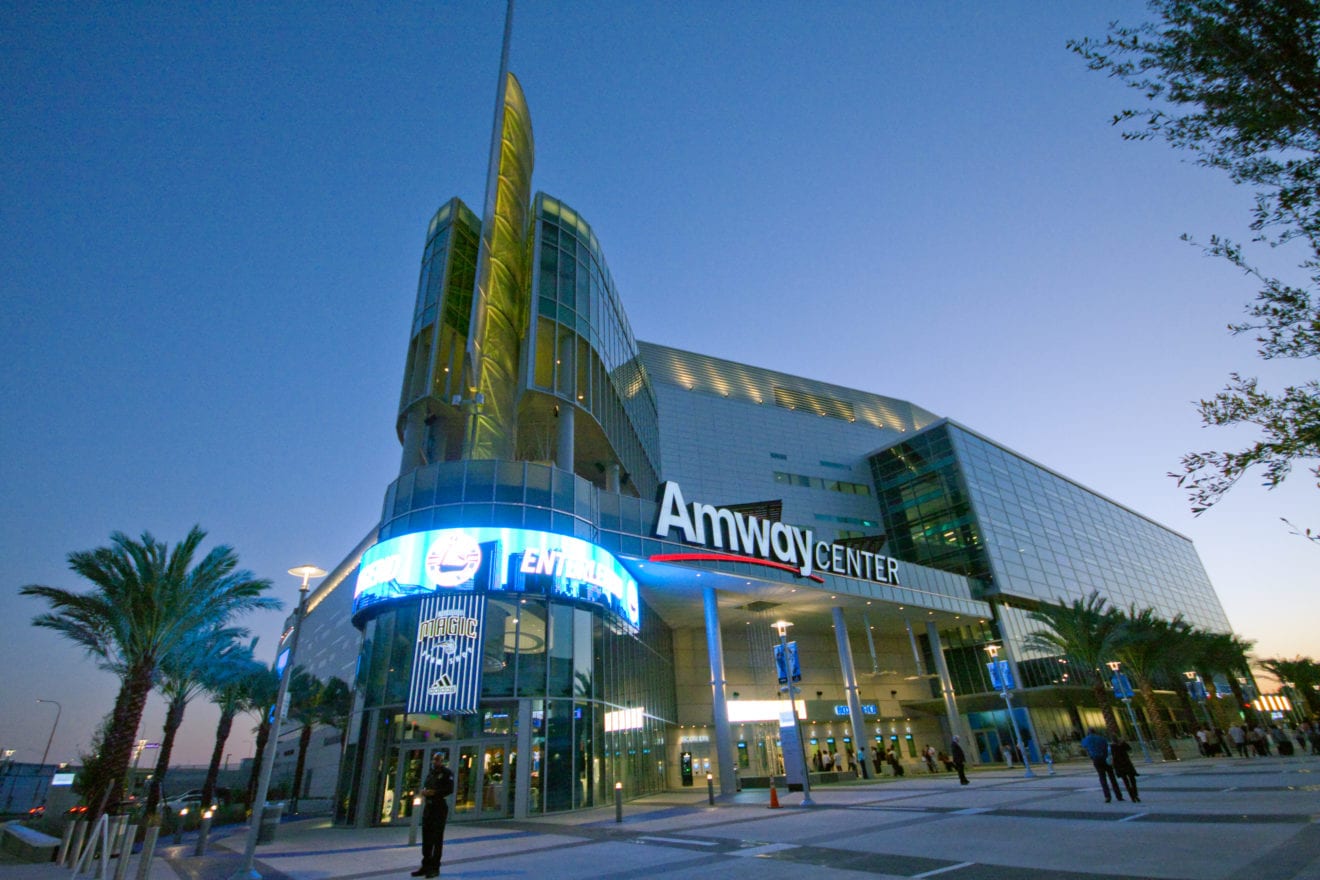
    Multi-level marketing health-and-beauty company Amway has launched a mobile app for its beauty brand Artistry in partnership with technology company Perfect Corporation.

    The global rollout starts in Korea this month, with Japan, Thailand, and the US to follow.

    Using YouCam Makeup’s award-winning AR beauty technology, Artistry Virtual Beauty App users will be able to find products and see how they would look. The virtual experience draws on more than 150 global makeup SKUs that shoppers can test and instantly buy, along with the brand’s top-selling skincare products.

    Personalised product recommendations based on user skin concerns will be available through the integration of YouCam’s AI technology and the Artistry skin assessment tool.

    Amway VP of global beauty for Artistry Kelli Templeton describes the app as a fun and engaging way for Amway business owners and their customers to explore Artistry products.

    “It puts the beauty counter right in their hands for personalised beauty recommendations.”
    The app can be downloaded free in the App Store and Google Play.

    Amway is a US$8.6 billion global direct-selling business based in Michigan, while Artistry was founded in 1958 by an entrepreneurial husband and wife team, its portfolio featuring skincare, make-up and holistic beauty products. The brand has an advisory network of more than 900 scientists and skin doctors from universities.

    Perfect Corporation has had more than 550 million downloads globally of its beauty apps.