Tag: asia

  • Alibaba teams up with Singapore university on AI

    Alibaba teams up with Singapore university on AI

    Chinese tech giant has set up a joint research facility at Singapore’s Nanyang Technological University to develop artificial intelligence-based technologies in retail, transportation and healthcare

    Chinese e-commerce and technology giant Alibaba has partnered Singapore’s Nanyang Technological University (NTU) in a joint research facility aimed at harnessing artificial intelligence (AI) to solve societal issues such as Singapore’s ageing population.

    The first of its kind outside China, the Alibaba-NTU Singapore Joint Research Institute will bring together NTU’s AI capabilities, including efforts to develop an artificial companion for the elderly, and Alibaba’s expertise in natural language processing, machine learning and cloud computing.

    The multimillion-dollar partnership between Alibaba and NTU is expected to involve 50 scientists and engineers from both parties over five years. Besides addressing the needs of ageing societies, they will also develop AI technologies in areas such as retail, urban transport and healthcare.

    For example, NTU’s expertise in healthcare research and Alibaba’s knowhow in AI to diagnose and prevent diseases will be pooled to achieve breakthroughs in health-related AI. Both parties will also conduct research to improve urban mobility and reduce Singapore’s carbon footprint.

    Alibaba said its contribution to the research facility will come from a $15bn fund earmarked for its Damo research and development (R&D) programme, which includes establishing research labs across the globe, including one in Singapore.

    The joint research institute is located on the NTU campus, but it is open to researchers and academics worldwide. Alibaba will also build a crowdsourcing platform to connect researchers and industry practitioners in an AI-focused R&D community.

    Jeff Zhang, Alibaba’s chief technology officer, said the AI technology developed by the institute will first be rolled out in NTU, followed by other parts of Singapore and Southeast Asia at a later date.

    “By launching our first joint research institute in Singapore, we hope to work with talent in Singapore and researchers worldwide to explore technology innovation that can address common issues faced by the society at large,” said Zhang.Alibaba’s efforts to develop AI capabilities in Singapore follows the recent launch of Chinese facial recognition specialist Yitu’s regional headquarters in Singapore that will mainly serve as a sales, marketing and operations outfit for now.

    Yitu said plans are also in the pipeline to establish R&D capabilities in the city-state by the end of 2018.

    In May 2017, Singapore’s National Research Foundation said it would invest up to S$150m (US$107m) over five years in a programme called AI.SG to drive adoption of AI to solve business problems.

    To nurture a local AI community, AI.SG will also work with startups and corporate laboratories through new facilities that will provide software tools, anonymised datasets and high-performance computing resources.

  • Park Hyatt hotel to occupy top floors at Malaysia’s PNB 118, the world’s 3rd tallest building

    Park Hyatt hotel to occupy top floors at Malaysia’s PNB 118, the world’s 3rd tallest building

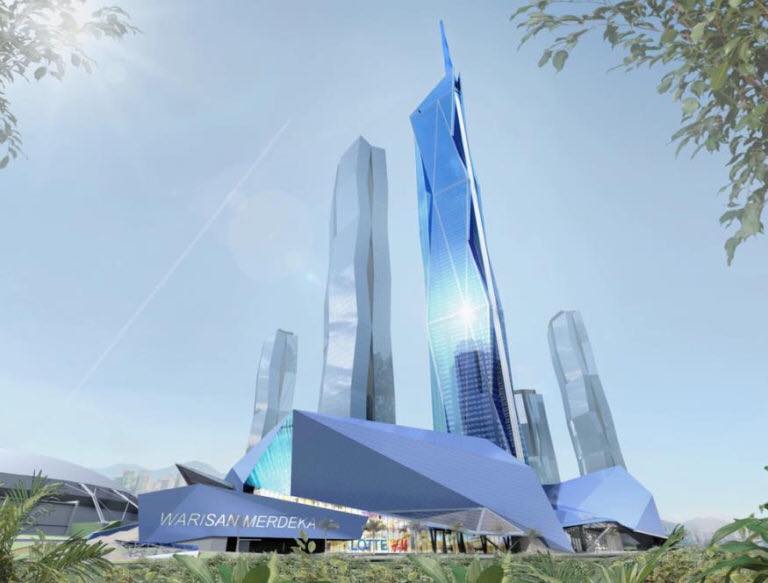
    Malaysia’s largest government-linked fund management firm, Permodalan Nasional Bhd (PNB), has signed Hyatt Hotels & Resorts as the hotel operator for its tower development, expected to be the third tallest in the world when completed.

    The luxury hotel operator’s Park Hyatt brand will occupy the top 17 floors of the tower, called PNB 118, PNB said on Tuesday. Aimed for completion in 2020, the 118-storey building will be the tallest in Southeast Asia.

    PNB 118 will have 1.65 million square feet of rentable office space, a retail mall and other entertainment amenities. The fund itself will take up around half of the office space, and is looking to have its portfolio companies take tenancy as well.

    “From our perspective, this is an investment into real estate, in a historic location,” group chairman Abdul Wahid Omar said at a press briefing.

    In November, PNB said it was looking to raise 2 billion ringgit ($512.03 million) via a green sukuk programme to finance the tower project. The fund’s real estate portfolio also include British and Australian assets.

    Malaysia’s capital has been experiencing an oversupply of office space in recent years. However, new office buildings continue to enter the market. Notably, the construction of a 106-storey building, Exchange 106, is underway in the Tun Razak Exchange and targeted for completion this year.

  • Esprit posts H1 net loss of 954 mn Hong Kong dollars on weak sales

    Esprit posts H1 net loss of 954 mn Hong Kong dollars on weak sales

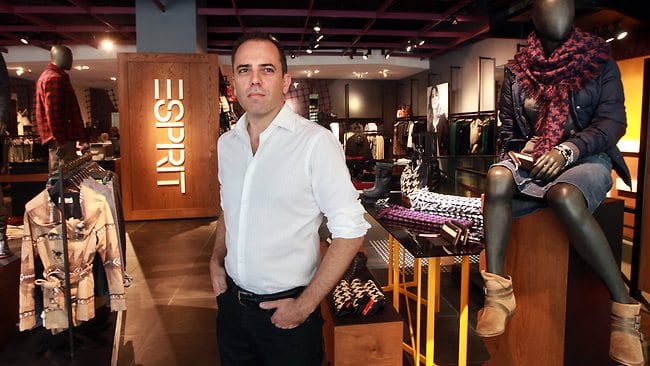
    Esprit Holdings swung to a net loss in the first half, hit by weak sales at its brick-and-mortar retail stores and goodwill impairment due to a decline in its China business.

    The fashion group is in the midst of an ambitious multi-year revamp that has included store closures, price adjustments, and technology and distribution improvements.

    “Given the weaker-than-expected sales performance in 1H FY17/18, we remain cautious about the expectations for the second half of this financial year,” the company said in a filing to the Hong Kong stock exchange.

    The Europe-focused retailer on Wednesday reported a net loss of HK$954 million ($121.85 million) for the six months ended December, compared with a profit of HK$61 million in the year-ago period.

    Revenue slid to HK$8.04 billion from HK$8.32 billion.

    Esprit had in January flagged a net loss of up to HK$980 million for the July-December period.

    Bigger rival Sweden’s H&M, the world’s second-largest clothes retailer behind Zara owner Inditex , has seen sales growth stall in recent years as it has struggled to adapt to the shift online and fend off increased competition from other budget brands.

  • Higher provisions push AmBank Group’s Q3 earnings down

    Higher provisions push AmBank Group’s Q3 earnings down

    AMMB Holdings Bhd’s net profit dropped 30.1 per cent in the third quarter ended December 2017 to RM218.97 million from RM313.16 million a year earlier partly due to rise in provisions toward bad loans.

    Revenue for the quarter under review grew 9.18 per cent to RM2.15 billion from RM1.97 billion in the previous year.

    For the nine-month period, net profit was down 11.1 per cent at RM878.72 million while revenue rose 3.6 per cent to RM6.36 billion.

    Group chief executive officer Datuk Sulaiman Mohd Tahir said its net interest income increased by RM149.0 million or 8.8 per cent in the nine-month period mainly from customer lending and interest on fixed income securities.

    The 5.4 per cent year-on-year growth in total income was underpinned by consistent growth momentum in net interest income.

    “Interest income from customer lending was boosted by several factors, primarily, robust growth recorded in residential mortgages as well as increased interest income from securities.

    “In addition, cost of funds was lower mainly as a result of the repayment of medium term debt and from diversifying our funding sources towards retail deposits,” he said in a statement.

    Moving forward, Sulaiman said the bank’s net interest income will continue to drive its top line growth with mortgage, small and medium enterprises, credit card loans maintaining their growth momentum.

    Non-interest income from investment banking and money market activities may still be lumpy but wealth management, corporate and commercial banking will continue to propel non-interest income growth,” he added.

    “We expect credit cost to continue to normalise for us with reduced recoveries relative to financial year 2017 as impairment allowances are expected to commensurate with our loans growth.

    “We will continue to manage our funding mix, grow current account savings account and diversify our portfolio for sustainable net interest margins. Our capital position is constantly being assessed and we continuously strive to improve its efficiency,” he said.

    Sulaiman added that a mutual separation scheme offered in January 2018 will allow them to further optimise the group’s organisational structure, which will in the long run, translate into greater savings and efficiency.

  • Visa expands global partner network in contactless payments push

    Visa expands global partner network in contactless payments push

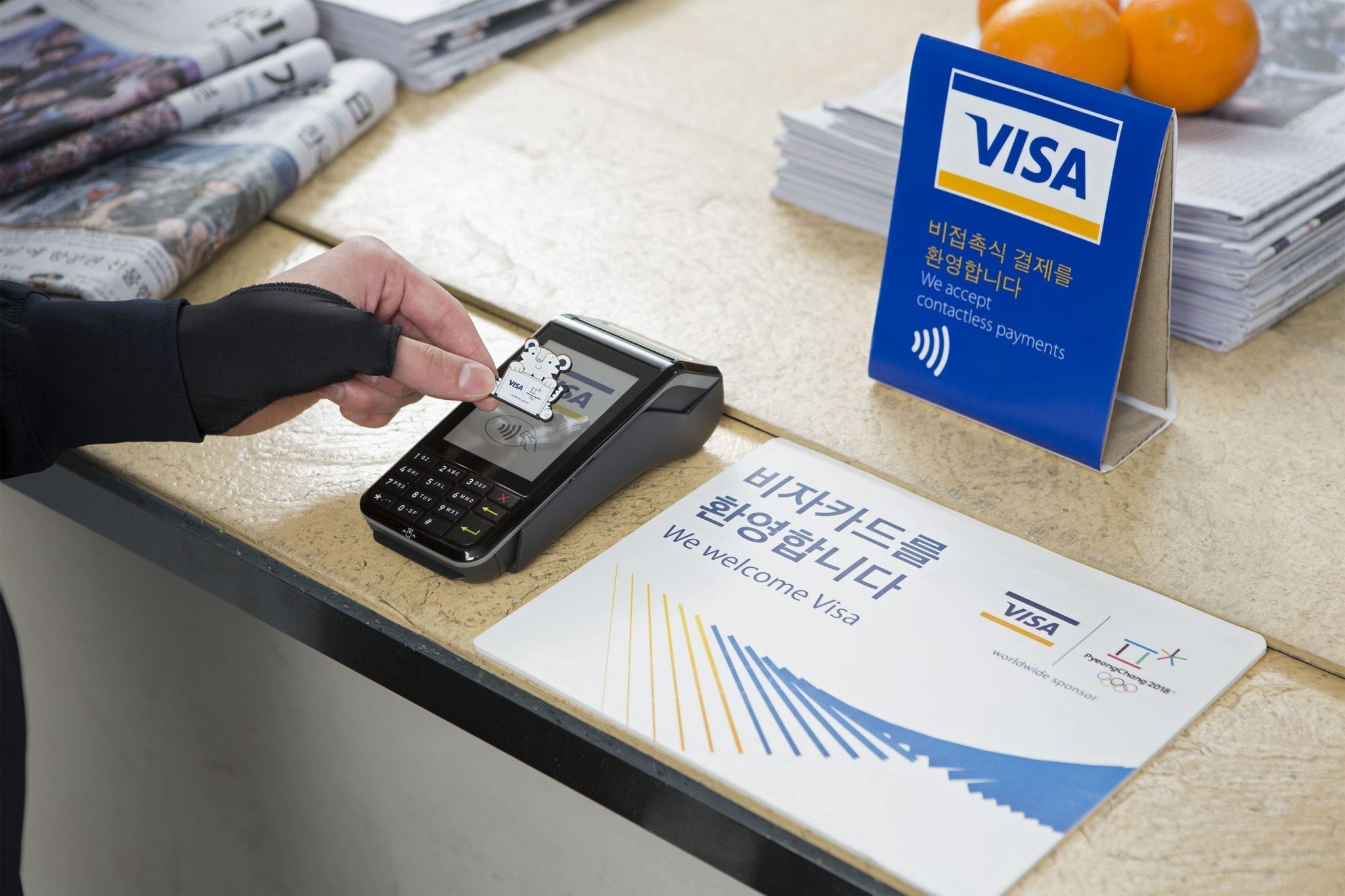
    Visa Inc said this week that 14 technology partners have joined its Visa Ready for Transit programme, as part of a move to promote contactless payments on public transport around the world.

    Companies from ten different countries are included on the list, joining Vix and Worldline, the initial members of the scheme when it launched in November 2017.

    As part of the programme, Visa is looking to work with companies that have hardware and software “to support a more seamless commute for people around the world”. It is part of a wider Visa Ready initiative, which allows developers to ensure their biometrics, transit or internet-of-things solutions meets Visa’s security standards and specifications.

    The new technology company partners announced by Visa this week are, as follows:

    AS Ridangoa transit solutions and services provider from Estonia.

    BBPOS International: a mobile point-of-sale technology distributor from Hong Kong.

    Conduent Business Solutionsa business process services provider from France, offering capabilities in transaction processing, automation and analytics.

    Digicon: a Brazilian company specialising in the provision of turnstiles, traffic controllers, parking meters, electronic time clocks and automatic ticketing systems for urban transportation.

    FIMEa France-based organisation that works with transit operators to deliver interoperability of fare collection systems.

    Mennica Polska: a Polish ticketing operator and automatic fare collection solutions integrator.

    Paycraft: an Indian contactless, open-loop products provider with capabilities of processing online and offline transactions.

    Pertoa Brazilian technology products and services developer for banks and retailers.

    Planeta Informáticaanother Brazilian company which provides solution for secure online and offline payment systems and devices.

    Quadraca Japanese provider of ultra-high-speed payment servers and proximity communication devices.

    Schiedt&Bachmannan intelligent ticketing and information systems provider from Germany.

    Spire Paymentsa Luxembourg-based point-of-sale hardware and software provider.

    Smartrana smart business solutions provider in the UK, which utlises contactless EMV and NFC mobile applications.

    T-Systemsa UK-based information and communication technology systems operator for multinationals and public-sector institutions.

    Jason Blackhurst, senior vice president for innovation & strategic partnerships at Visa, commented: “We’re seeing renewed interest from transit-related companies around the world to learn how new innovations in payments can improve their customer experiences.

    “Since launching Visa Ready for Transit, we’ve welcomed 16 world-class technology partners to the programme, ranging from small tech companies to multinational organisations. Each of these partners are empowered to help extend the benefits of Visa’s digital payment technology to transit companies around the globe.”

  • Alibaba, JD.Com Could Clash in US

    Alibaba, JD.Com Could Clash in US

    Two Chinese behemoths in online retailing that have battled at home may now take their rivalry to the U.S.—and challenge Amazon. Alibaba Group Holding has reportedly held talks with grocer Kroger (KR) to form a U.S. partnership to better compete with Amazon.com (AMZN).

    Alibaba’s competitor, JD.Com (JD), is also looking to plant a flag here. Richard Liu, JD’s chief executive, has said he plans to expand his e-commerce platform to the U.S. later this year, with a distribution presence starting in Los Angeles. He could partner with Walmart (WMT), a major JD shareholder and retail partner in China.

    To call Alibaba and JD the Amazons of China is an understatement. China mostly skipped the big-box store era that dominated U.S. retail before e-commerce took off, which means few powerful players stand in the way of Alibaba and JD. The two battle each other—sometimes bitterly.

    Late last year, after about 100 domestic clothing brands left JD ahead of the Nov. 11, 2017, Singles Day shopping rush, the company blamed “coercive tactics from our competition, which if proven true would be illegal.” Alibaba denied any wrongdoing.

    JD management recently told analysts that a few of the companies had come back, and that others said they didn’t receive enough traffic from Alibaba during Singles Day to make up for lost JD business. JD posts fourth-quarter results on Friday.

    Last fall, Barron’s said investors should prefer JD shares. Since then, JD has gained 23%, versus 6% for Alibaba and 8% for the Standard & Poor’s 500 index.

    The two companies differ in significant ways. Alibaba is larger and more prosperous. JD’s profits are held down by its spending to build its own end-to-end logistics network. That’s an important competitive advantage; JD does better in high-trust items like baby products and scores higher on customer-satisfaction surveys.

    One concern for JD is that it will stretch too far, too fast. It is expanding in Southeast Asia. It is building a distribution network in France, and says it wants to make a European push as soon as next year. JD recently opened a brick-and-mortar store in Beijing selling high-end food. For financing, the company last year created a subsidiary called JD Logistics, in which it’s sold an 18.6% stake.

    Profits are slim today. Looking out to 2020, estimates for JD earnings range from $1 to $2.30 a share. That’s adjusted for “extraordinary items,” which, for a company in such fast motion, can become all too ordinary.

    Assume the high end of earnings forecasts, factor in remaining growth, and consider low interest rates, then squint and perhaps have a belt of whiskey, and the $47 share price might look reasonable, maybe even cheap. It’s becoming difficult to tell.

    But one thing we liked about JD is that its stock gain lagged behind Alibaba’s last year for no good reason.

    It has since caught up. Time to sell.

  • HSBC names new retail head

    HSBC names new retail head

    HSBC Holdings has named Charlie Nunn as chief executive of its retail banking and wealth management business to replace John Flint, who will take over as the British lender’s overall chief executive.

    Nunn joined the bank in 2011 and is already acting head of HSBC’s retail banking and wealth management business.

    In Hong Kong, Kerry Properties (0683) announced that Wong Siu Kong, 66, will relinquish his position as chief executive and will remain chairman and an executive director.

    Wong has been the chairman of the board since 2013 and chief executive since 2015.

    Ho Shut Kan, 69, who has been an executive director of the company since 1998, will be re-designated chief executive and will become a member of the remuneration committee and the nomination committee of the company. He is also a director of Kerry Holdings Limited, the controlling shareholder of the company, and a director of China World Trade Center Co.

    TV operator i-Cable Communications (1097) announced that Irene Leung Shuk-yee has been named chief operating officer with effect from tomorrow.

    The 48-year-old is an experienced senior manager in the telecommunications industry, having developed her expertise in fixed and mobile telecom services, i-Cable said in a filing to the Hong Kong stock exchange.

  • Property still drives SM’s healthy financials in 2017

    Property still drives SM’s healthy financials in 2017

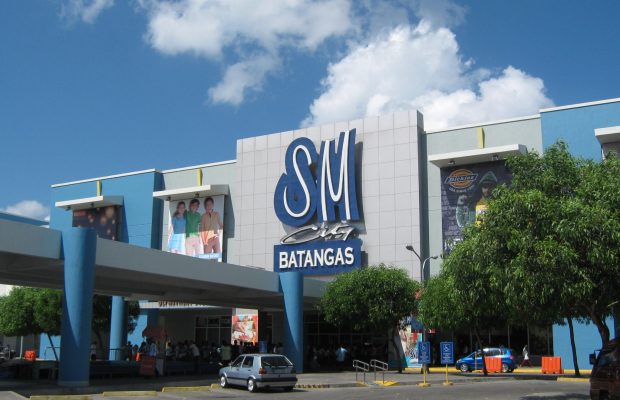
    SM Investments Corporation (SMIC), the conglomerate of Henry Sy Sr, saw its net income increase by 6% to P32.9 billion in 2017, with its property business continuing to contribute most to its earnings.

    SM told the local bourse on Wednesday, February 28, that its consolidated revenues rose by 9% to P396.1 billion in 2017, from P363.4 billion in 2016.

    “Our core businesses continued to deliver strong results in 2017 with recurring net income growth of 9%, driven by overall growth in the economy and our nationwide expansion plans,” SM president Frederic DyBuncio said in a statement.

    The listed conglomerate reported that property accounted for 40% of its total earnings, banks 38%, and retail 22%.

    “Our property and specialty retail businesses delivered particularly strong results,” DyBuncio said.

    Main driver: property

    SM Prime Holdings Incorporated, the conglomerate’s property holding firm, saw its recurring net income grow by 16% in 2017 to P27.6 billion, driven by the increase in rental revenue from malls as well as the strong sales take-up of housing units.

    Consolidated revenues of SM Prime surged by 14% to P90.9 billion in 2017, compared to the level recorded in 2016.

    Revenues of its mall business – which includes rentals, cinema and event ticket sales, and other revenues – increased by 9% to P53.2 billion in 2017, thanks to the rising contribution of rentals from new and expanded malls that were launched in 2016 and 2017.

    SM Prime has 67 shopping malls in the Philippines and 7 in China, as of end-2017.

    The residential group led by SM Development Corporation (SMDC) saw an 18% surge in its consolidated revenues, which ended at P30 billion in 2017.

    “The growth was largely due to higher construction accomplishments of projects launched between 2013 and 2016, namely Shore Residences and Shore 2 Residences in Pasay City, Air Residences in Makati, and Fame Residences in Mandaluyong City as well as continued increase in sales take-up of ready-for-occupancy units,” SM said.

    Meanwhile, BDO Unibank Incorporated posted a net income of P28.1 billion in 2017, from P26.1 billion in 2016.

    Its net interest income grew by 25% to P81.8 billion last year, driven by the 18% growth in gross customer loans to P1.8 trillion.

    China Banking Corporation, meanwhile, saw a 15% net income growth to P7.4 billion in 2017, on the back of sustained growth in core and fee-based businesses.

    China Bank’s net interest income was up 17% to P20 billion in 2017, while gross loans grew 17% to P454 billion on strong demand across all segments.

    Operations under SM Retail Incorporated, which consist of non-food and food stores, saw total revenues grow 7% to P297.4 billion in 2017. Its net income stood at P10.4 billion in 2017.

    “The underlying performance of our retail operations remained good, led by strong growth in our higher margin specialty retailing and with the addition of the successful Miniso variety store chain during the year,” DyBuncio said.

    In 2017, SM’s total assets grew by P100 billion to P960.1 billion.

    SM participated in the rights offerings of BDO and China Bank and invested in the country’s largest integrated supply chain operator, 2GO Group Incorporated, as well as dormitory developer Philippine Urban Living Solutions.

    SM maintains a healthy balance sheet with a conservative gearing ratio of 43% net debt to 57% equity.

    “During 2017, SM made substantial investments in its banks and in new business opportunities, which we expect to contribute to higher earnings growth in future years,” DyBuncio said.

  • Beijing maintained steady economic growth in 2017

    Beijing maintained steady economic growth in 2017

    The Beijing Municipal Bureau of Statistics and the Survey Office of the National Bureau of Statistics in Beijing released the “2017 Statistical Communique on the Economy and Social Development of Beijing” on Feb. 27. According to the report, Beijing last year kept at a steady momentum of economic development and maintained social harmony and stability. The report lists new achievements made by the capital city in economic development, social progress, urban construction and improvements in people’s livelihood over the past year.

    The city’s annual GDP totaled 2.8 trillion yuan (US$443.6 billion); the per capita GDP of its registered residents reached 129,000 yuan. It added 422,000 more jobs across the urban regions, and registered urban unemployment rate stayed at 1.5 percent. The consumer price index rose modestly, by 2 percent year on year.

    Upgrading economic structure 

    At the end of 2017, Beijing formulated guidelines on accelerating scientific and technological innovation to build a series of industries with high-grade, precision and advanced economic structures. The guidelines emphasized on constructing a national center for scientific discovery and technology innovation with worldwide influence and brought forward accelerating the development of 10 high-grade, precision and advanced industries. One of these emerging industries of strategic importance is driverless vehicles, for which Beijing boasts resources, competitive advantages and development potentials. Earlier this February, the city began field testing driverless cars, developed by companies including Baidu, BAIC BJEV and FOTON, in Haidian district.

    Beijing’s industrial structure continuously improved to be more high-grade, precise and advanced, with the development mode changing from accumulation of resources to phasing-out of non-capital functions. According to the new report, the value added of the high-tech industry accounted for 22.8 percent of the city’s GDP, a 0.1 percentage point increase over the previous year; the value added of the strategic emerging industry contributed to 16.2 percent of the city’s GDP, with a rise of 0.2 percentage points over the previous year. The service sector accounted for over 80 percent of the city’s economy, to which finance, information services, and science and technology services contributed over 50 percent.

    Meanwhile, the city continued to upgrade the makeup of its consumer spending. Spending on services accounted for 51.3 percent of total consumer spending, and contributed to 70 percent of the growth in total spending. Infrastructure investment saw rapid growth, which continued to prioritize on public transportation and people’s living standard. Investment in commercial services and information services as key sectors increased by 120 percent and 42.8 percent respectively. Foreign investment in information services, commercial services, and science and technology services accounted for 54.2 percent, 9.4 percent, and 8.3 percent respectively.

    Improving development quality

    In 2017, Beijing saw more blue skies than previous years as its air quality continued to improve. The annual average concentration of fine particles (PM2.5) reached 58 micrograms per cubic meter, a drop of 20.5 percent over the previous year. Annual average concentration of nitrogen dioxide and sulfur dioxide in Beijing reached 46 micrograms per cubic meter and 8 micrograms per cubic meter respectively, down by 4.2 percent and 20 percent over the previous year.

    Better efficiency and more effectiveness from businesses had also led to improvement in residents’ sense of gain. In 2017, the per capita disposable income of Beijing residents was 57,230 yuan, up by 8.9 percent year on year, or 6.9 percent after adjustment to inflation, outperforming economic growth by 0.2 percentage points. Social security also improved, with minimum wage standard for employees and minimum standard for unemployment insurance benefits up by 110 yuan and 80 yuan respectively over the previous year. Basic pension and welfare payment standard for urban and rural residents increased twice in 2017.

    In addition, Beijing maintained effort in accelerating the construction of a livable city with convenient life, bountiful services and beautiful environment. Its subway routes extended 35 kilometers in 2017, reaching a total of 609 kilometers at the end of the year. About 5 percent more households began using natural gas for heating, bringing the total to 9.45 million households. Moreover, the city increased its 100,000-square meter central heating locations to cover 630 million square meters.

    The city built 34 more kindergartens in 2017, bringing the total to 1,604. It added 349 health institutions, totaling 10,986. The book collection of its public libraries grew by 2.9 percent, and it opened one more museum to the public free of charge. The treatment rate of municipal sewage reached 92 percent, up by 2 percentage points, and the per capita green park area reached 16.2 square meters, up by 0.1 percent.

    Seeking innovation

    The value added of the new economy in 2017 accounted for 32.4 percent of Beijing’s GDP with an increase of 0.2 percentage points over the previous year. The added value of the high-tech industry and the strategic emerging industry among industries above a designated scale were both up by double digits, each contributing to over 50 percent of the city’s industrial growth.

    The online retail volume of wholesale and retail enterprises above the designated scale accounted for 20.5 percent of the total retail sales of consumer goods, up by 1.9 percentage points over the previous year. The business income of the financial information services and non-financial institutions payment services in the internet financial services sector increased by 35.1 percent and 62.7 percent respectively.

    “Beijing has yielded fruitful results in scientific and technological innovation, laying a foundation for the establishment of a science and technology innovation center with international influence,” said an official from the Beijing Municipal Bureau of Statistics. The R&D expenditure in the city amounted for 5.7 percent of its GDP, staying atop the country.

    According to the report, the enthusiasm for innovation and entrepreneurship was strong owing to Beijing’s favorable policies. The number of various innovative and entrepreneurial service institutions such as shared workspaces, incubators, accelerators and university science parks reached 400 in the city in 2017, with a total area of 6 million square meters, offering services to over 30,000 enterprises and teams.

  • IRVINS Salted Egg opens store in Hong Kong

    IRVINS Salted Egg opens store in Hong Kong

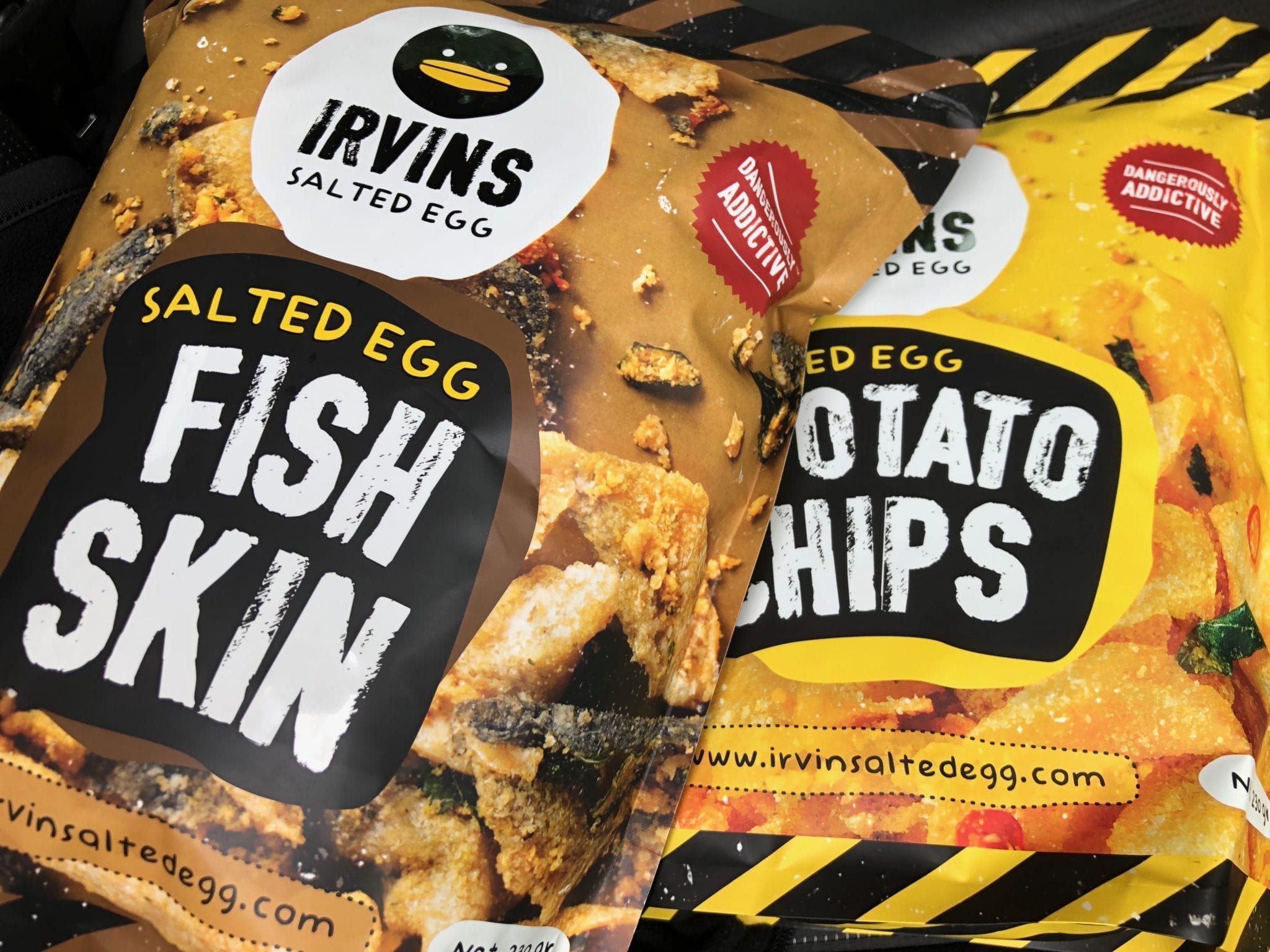
    Local brand IRVINS Salted Egg, which is popular with both Singaporeans and Hong Kong tourists, have taken their famous potato chip and fish skin snacks to Hong Kong.

    The company opened its first pop-up store in Harbour City in Tsim Sha Tsui on Tuesday (Feb 27), it said in a Facebook post.

    The store aims to “meet the expected huge demand in Hong Kong”, the head of the Hong Kong branch Jeslin Low added in a statement released by the Hong Kong government.

    “As many of our customers are also based in Hong Kong, expanding to the city is in line with our vision to deliver our salted egg snacks and delightful customer experience.

    “That motivated us to build our own team in Hong Kong and deliver the same retail experience as in Singapore,” said Ms Low.

    The brand also hopes to use Hong Kong to launch their snacks within the region.

    “Hong Kong has a robust economy with a high number of international and mainland Chinese visitors,” Hong Kong’s associate director-general of investment promotion Dr Jimmy Chiang was cited as saying in the press release, as he offered reasons to support why Hong Kong is an ideal choice for IRVINS.

    According to the brand’s Facebook page, the Hong Kong team will be built from the “ground up”.

    “Hong Kong is a very business-friendly city and we find the incorporation and opening process here very smooth. These really support our vision and passion to serve our customers here,” added Ms Low.

  • Toys ‘R’ Us planning to close more stores

    Toys ‘R’ Us planning to close more stores

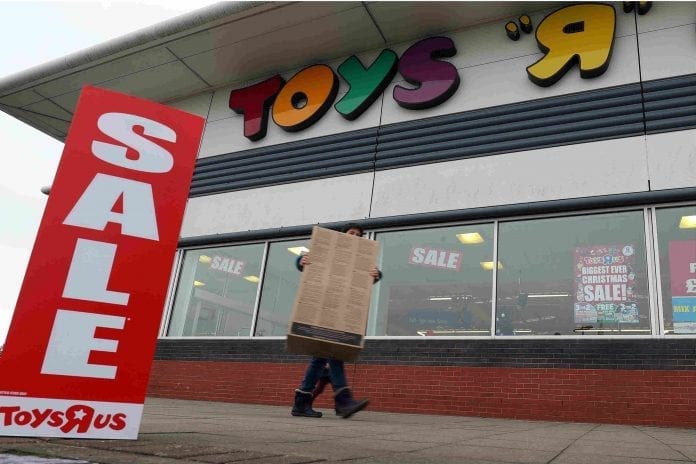
    Toys “R” Us, the beleaguered chain under pressure from Amazon and bigger toy sellers, may close dozens more stores as it struggles to find a path out of bankruptcy and return to financial viability.

    The toy retailer has not recovered from a dismal holiday selling season, making the company’s difficult situation even worse. Now, it is under pressure to demonstrate to its lenders that it has a realistic strategy for flourishing in the ultracompetitive toy industry.

    One plan under discussion includes shutting down close to 200 stores, and possibly more, according to people briefed on the matter, who were not authorized to speak publicly.

    While the planning is fluid and far from completion, the possible store closings, reflect the serious challenges that Toys “R” Us faces.

    “If you look at the numbers, it doesn’t look good,” said Richard Gottlieb, an analyst and the publisher of Global Toy News. “And it appears that some dramatic action is going to have to take place.’’

    Toys “R” Us has already been taking steps to stabilize its business. Last month, the company said it was shutting down 182 stores, affecting 4,500 workers.

    It is not clear whether any additional closings would occur in the United States, or overseas. The company operates about 800 stores in the United States.

    Even as other retailers experienced strong holiday sales, Toys “R” Us cited undisclosed “operational missteps” in explaining its poor performance.

    Analysts say that a primarily bricks-and-mortar toy retailer can succeed, but that its stores have to be smaller, unlike the hulking Toys “R” Us facilities that dot suburban strip malls.

    “A toy store needs to be fun and engaging and interactive,” said Mr. Silver. “Toys “R” Us has been talking about better customer service and experiences, but they never really transpired.”

  • Charlotte Olympia US to stop business

    Charlotte Olympia US to stop business

    Charlotte Olympia US has collapsed, with all of its store closed.

    The US retail arm of the UK-headquartered luxury fashion and shoe retailer is believed to have debts amounting to US$19.2 million, and assets of just $3.2 million. It had four stores: in New York, Las Vegas, Beverly Hills and Orange County. A fifth store in Bel Harbour, Florida, was closed last year.

    In its bankruptcy filing, the company cited “unprecedented disruption in the retail market”.

    The stores were operated by Pinktoe Tarantula and its affiliates Desert Blonde Tarantula and Red Pump Tarantula.

    “The brick-and-mortar retail environment has been experiencing, and continues to experience, unprecedented disruption due to a confluence of factors, including the proliferation of online retailers, changing consumer tastes and demographics, and increased competition,” the companies said in the filing. “Despite selling the iconic Charlotte Olympia brand and taking steps to reduce their expenditures, the debtors’ operations are not profitable due to the widespread disruption in the retail industry.”

    Charlotte Olympia’s US wholesale business is unaffected by the bankruptcy of the retail operations.

    The fashion label was founded in 2007 by Charlotte Olympia Dellal and also has stores in the UK, Dubai, Thailand and Russia. Its clothes and shoes are stocked by upmarket department atores around the world, including MyTheresa, Saks and Bloomingdale’s, and online on Net-a-Porter.

  • Alibaba Cloud Expands Europe Offering With Eight New Products

    Alibaba Cloud Expands Europe Offering With Eight New Products

    Alibaba Cloud on Tuesday launched eight of its products in Europe, covering areas from big data and artificial intelligence to infrastructure and security, as it targets new business in an important market for cloud services.

    Announced during the Mobile World Congress, underway in Barcelona, Spain, the products aim to deliver efficiencies in online-offline retail integration, smart manufacturing and smart-city development for European businesses.

    “Alibaba Cloud wants to be an enabler for technology innovation in Europe helping enterprises do business,” said Wang Yeming, general manager of Alibaba Cloud Europe, in a statement. “These advanced solutions will enable organizations in a wide range of sectors and will bring them true connectivity, both locally and globally.”

    Previously, these products were available only to Alibaba Cloud clients in China. The company pointed to three that may prove popular among enterprises, including Image Search, a chatbot called Intelligent Services Robot and Dataphin, a smart data engine used to link businesses working together from different sectors.

    According to Alibaba Cloud, Image Search, which allows for research both online and offline using pictures, is used widely in China, including in sectors such as New Retail. The chatbot for businesses served more than 40 million customers in a single day during last year’s 11.11 Global Shopping Festival, the company said. Dataphin is now managing 95% of Alibaba Group’s data and being used to drive improvements and new applications in retail, finance, logistics, transportation and health.

    In addition, Alibaba Cloud launched the ECS Baremetal Instance; the Super Computer Cluster; its next-generation Cloud Enterprise Network; the Vulnerability Discovery security service; and the Apsara Stack, a cloud-services platform adopted by 120 clients so far in China. These infrastructure and security products are typically used by enterprises undertaking important tasks, such as migrating data and applications to the cloud.

    Alibaba Cloud said the product launches were a sign of continued commitment to the European market that build on other initiatives already underway there. The company opened its first availability zone in Frankfurt Germany in November 2016 and recently began operating a second one in the same region. It has partnered with Vodafone in Germany, as well as the U.K.’s Met Office and Station F, an innovation hub in France.

    “The Mobile World Congress in Barcelona is a great opportunity for us refresh our European strategy and consider how we can make an increasing contribution to the digital transformation of enterprises in this market from different sectors with our offerings and expertise,” Wang said.

    Alibaba Cloud, the leading cloud provider in China, services both Alibaba Group’s operations and other enterprise clients. The company has expanded overseas in recent years to Singapore and Malaysia in Southeast Asia, Frankfurt, London and Paris in Europe, New York and San Mateo in the U.S., Dubai in the Middle East, as well as Seoul, Tokyo and Sydney. It currently has over 2.3 million customers worldwide.

  • American Eagle Outfitters to exit Singapore by end Feb

    American Eagle Outfitters to exit Singapore by end Feb

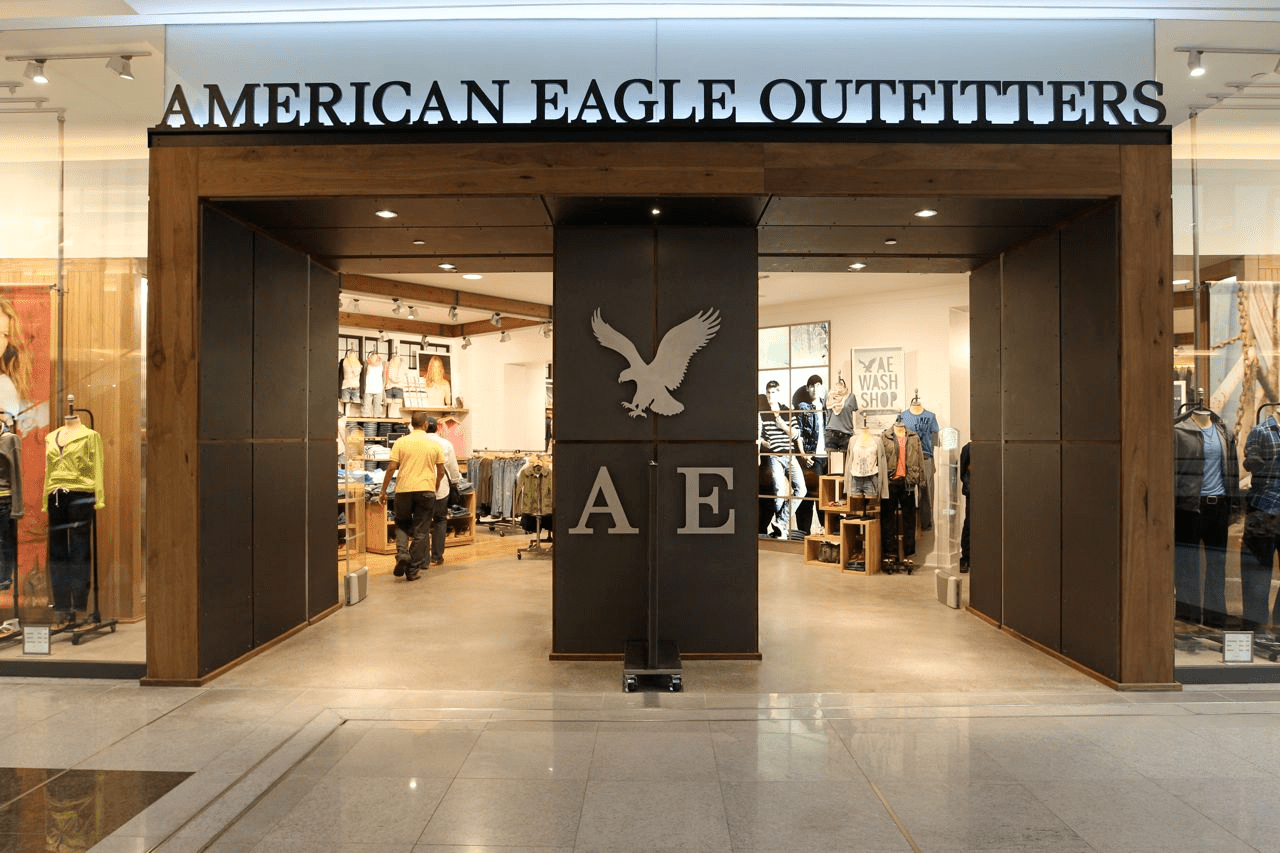
    US fashion retailer American Eagle Outfitters is about to quit the Singapore market.

    At a closing-down sale at at its Suntec City outlet, staff members have confirmed that the store’s closure on Wednesday will mark the end of the brand’s presence in Singapore.

    Its VivoCity flagship store closed last week.

    The brand’s departure comes within days of rival US brands Gap and Banana Republic signalling a retreat from the city after FJ Benjamin decided to drop the franchises.

    American Eagle Outfitters entered Singapore less than three years ago when local firm Star 360 Holdings scored exclusive retail and distribution rights for the brand in Singapore and Malaysia. Star 360 represents brands such as Birkenstock, Cole Haan and Onitsuka Tiger as well as running multi-label footwear and apparel stores.

    A spokesman for subsidiary Trendz 360 says the company will be refocusing on its strategic business in footwear both in Singapore and around the region, and its core business of footwear brands will not be affected by the exit of American Eagle Outfitters.

  • Parkson Holdings’s second-quarter looks bad

    Parkson Holdings’s second-quarter looks bad

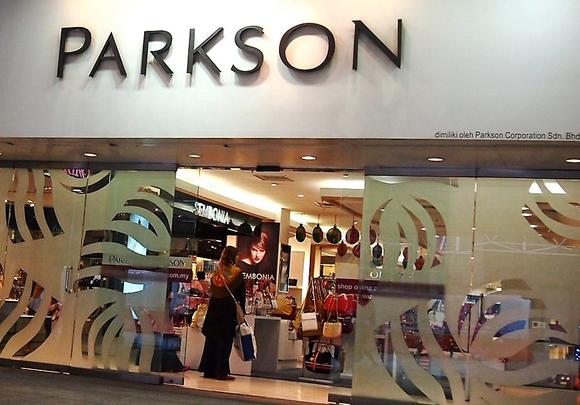
    Despite slight revenue growth, Parkson Holdings’ retailing division ended its second quarter with a loss.

    For the first half, its interim financial report shows there was 3 per cent growth in revenue to RM1.9 billion (US$485.9 million) with an operating loss of RM9 million.

    For the second quarter, to the end of December, the department store group’s revenue grew by 16 per cent to RM1 billion, mainly from higher consumer spending for year-end festivities and holiday seasons. The higher revenue coupled with continued business efficiencies enabled the group to move out of the red with an operating profit of RM27 million.

    After accounting for impairment losses of RM36 million, the group had a loss before tax of RM3 million for the quarter.

    Performance by location:

    Malaysia

    Parkson Malaysia had 4 per cent revenue growth to RM505 million for the six months thanks to the contribution of new stores. However, same-store sales shrank 4 per cent, attributed mainly to the absence of Hari Raya buying following a shift in the festive calendar. This meant the operating loss of RM20 million was higher than a year ago.

    Parkson Malaysia had 45 stores at the end of December after opening two stores and closing two underperforming stores.

    China

    Parkson China, the major contributor of the group’s retail business, had encouraging returns from its transformation strategies, says the company. Same-store sales growth was 3 per cent and 2 per cent respectively for the quarter and year to date, with revenue increasing by 4 per cent to RM1.3 billion for the first half.

    This enabled Parkson China to report an operating profit of RM32 million against a loss of RM85 million a year earlier.

    At the end of December, the group had a network of 48 stores in 30 cities.

    Myanmar/Vietnam

    Same-store sales growth for Parkson Vietnam sagged 5 per cent for the first half amid intense competition, while the contribution of the Myanmar business remained negligible.

    The group had six stores in Vietnam and one in Myanmar at the reporting date. However, the group is about to close its fourth location in Vietnam, Parkson Flemington in Ho Chi Minh City.

    This follows the closure of Parkson Keangnam (Hanoi) in 2015, and Parkson Paragon (Ho Chi Minh City) and Parkson Viet Tower (Hanoi) the following year.

    Indonesia

    Same-store sales were also negative for the first half in Indonesia, falling 8 per cent with revenue lower at RM86 million, largely impacted by the absence of festive spending following the shift in the Lebaran celebration. There was an operating loss of RM13 million.

    Following the closure of two stores in Jakarta during the first half, the group ended the year with 15 outlets in Indonesia.