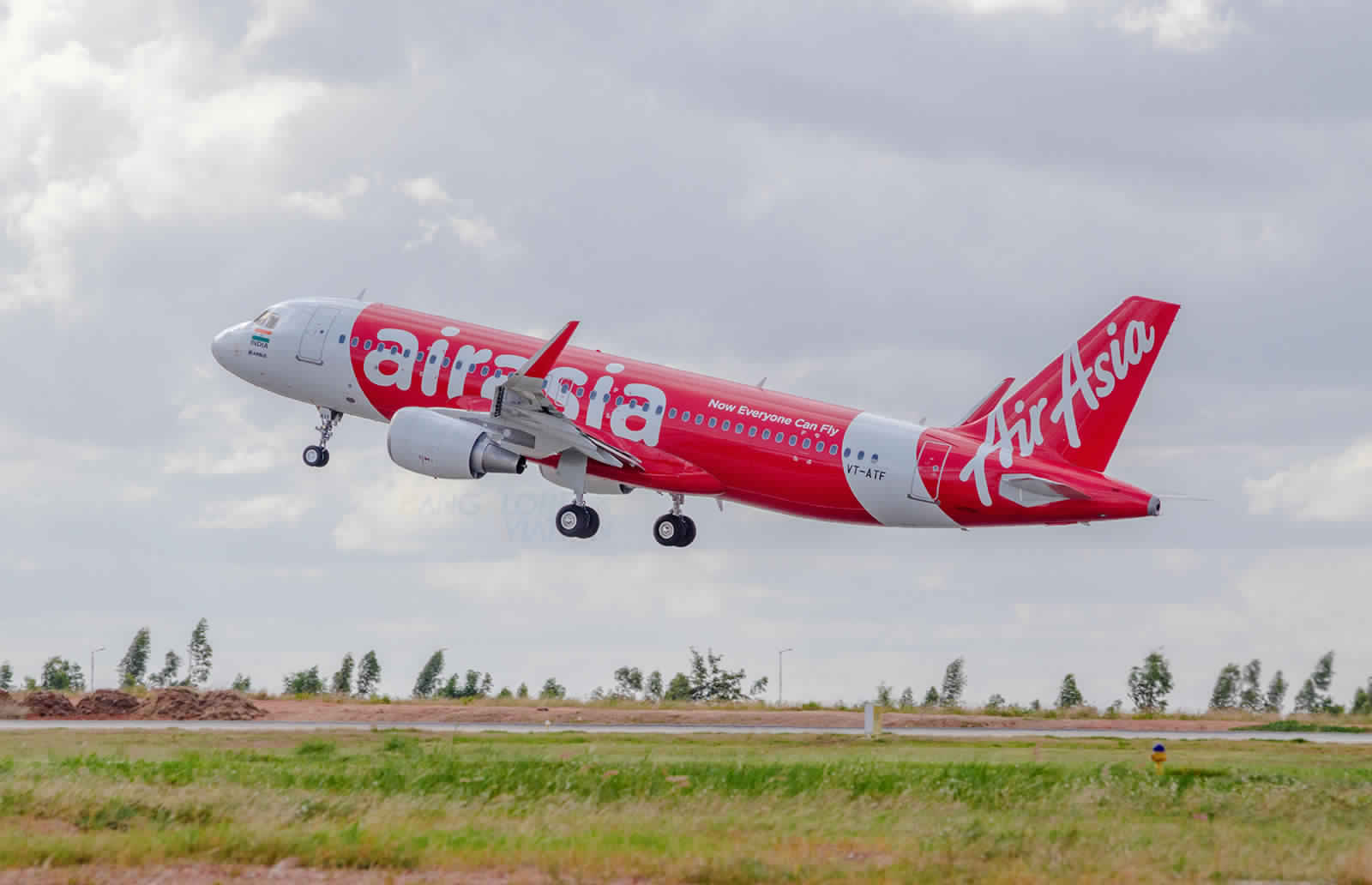
AirAsia is flying to brand new destinations — Iloilo, Tacloban, Puerto Princesa — from Clark Airport in Pampanga starting next year. The world’s best low cost carrier for nine consecutive years will begin to fly from Clark to Palawan, Iloilo, and Tacloban starting January 26, 2018 with introductory fares now on sale from as low as P990 only. Captain Dexter Comendador, chief executive officer of AirAsia Philippines, said the airlines support the growth and development of cities outside Metro Manila.
“We feel strongly by supporting this by providing more options and added convenience for travelers to fly to their desired destinations without going to the main airport in Manila,” Comendador added. AirAsia’s newest flights from Clark bring brighter, bigger, and better opportunities for Northern and Central Luzon, according to him.
To celebrate, AirAsia is offering promo fares from as low as P990, all-in, and up for grabs now until December 10, 2017 at www.airasia.com for travel period between January 26, 2018 to January 31, 2019. Clark – Puerto Princesa and Clark – Iloilo routes will operate three times a week or every Tuesday, Thursday, and Saturday while Clark – Tacloban route is every Monday, Wednesday, Friday and Sunday. AirAsia also flies to Davao, Kalibo, and Caticlan from Clark International Airport using Airbus 320s that can accommodate up to 180 passengers. Aside from Clark, AirAsia also offers flights to Iloilo, Tacloban, and Puerto Princesa from the airline’s hub in Manila, Cebu, and Davao.
The campaign will begin 24 November and continue through to 4 January 2018, as the retailer aims to drive sales over the holiday season and New Year.
Around 40 brands including fashion and accessories from Bally, Coach, Vivienne Westwood, Marc Jacobs and Tory Birch are on promotion for discounts between 20% and 80% at major downtown Lotte Duty Free shops in South Korea.
The festive promotion includes the opportunity to win prizes such as tickets to film and music events with minimum purchase. Customers spending over US$2,000 at the Lotte Myeongdong store will be entered into a draw for tickets to the Gwanghwamun Sonata.
At the Lotte World Tower and COEX stores, tickets to Hamlet: Alive are on offer. Customers spending over US$700 by 10 December at the three stores mentioned will also have the opportunity to attend the movie premiere of With God. VIP tickets for 70 winners (and a guest) to attend the premiere at the Lotte Cinema World Tower Hotel on 18 December are available.
Lotte’s seasonal programme for customers also includes activities with Korean Wave (hallyu) models and the opportunity to collect pre-paid discount cards.
Customers spending over US$300 at the Myeongdong, World Tower and COEX stores will receive pre-paid discount cards of up to KRW280,000 (US$221) depending on amount spent.
For customers who spend more than US$150 with the retailer at either Incheon International and Kimpo Airports, Lotte will present a prepaid discount card of up to KRW140,000 (US$129) and KRW240,000 (US$221) respectively.
Shoppers spending more than US$200 at Lotte stores can also receive additional discount cards by collecting stamps each time they visit.
On 1 December, the retailer will present its ‘Lotte Duty Free Shop 2018 Play Calendar’ at the Myeongdong, World Tower, COEX, Busan and Jeju stores. The calendar features images of hallyu stars Lee Min Ho, Lee Jong-suk, Exo and Twis that customers can colour-in with pencils provided.
The retailer is also running a lottery for five winners to win a flight to Vietnam in celebration of the launch of flights between Incheon and Nha Trang airports. Customers need only spend US$1 at the airport Lotte Duty Free store to enter.
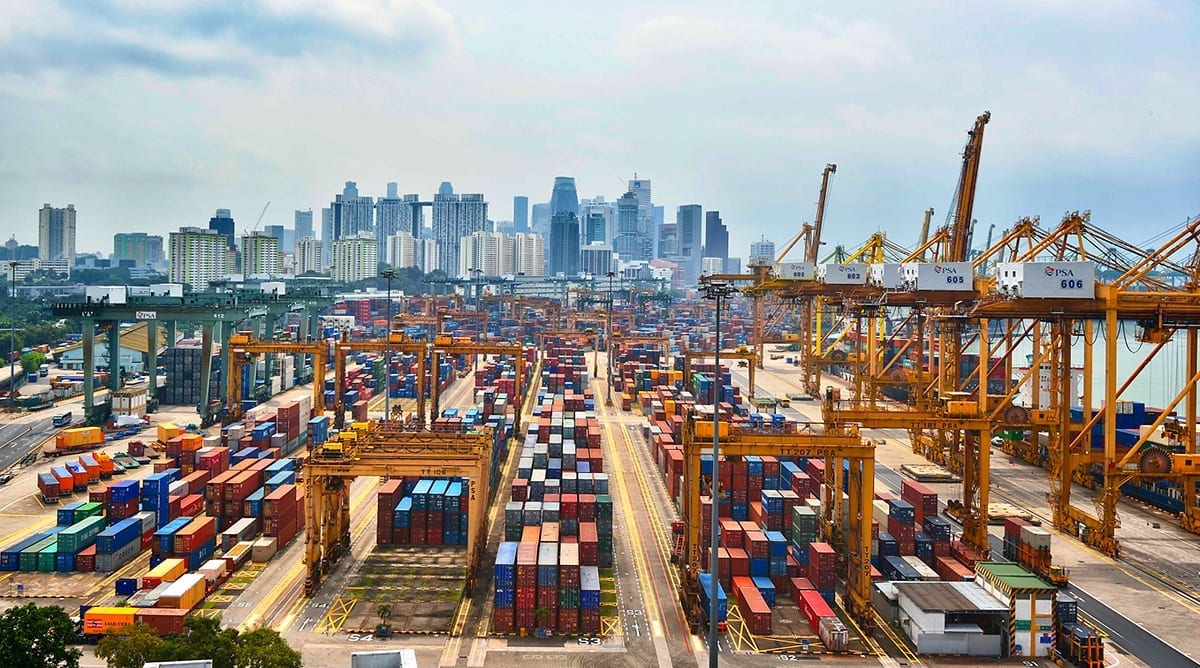
Singapore raised its economic growth forecast for this year to 3 percent to 3.5 percent after third-quarter data beat projections on the back of stronger exports and manufacturing.
Highlights of GDP Report
Gross domestic product rose at a seasonally adjusted, annualized rate of 8.8 percent in the third quarter from the previous three months, higher than an earlier estimate of 6.3 percent
Median estimate of nine economists in a Bloomberg survey was for 7.8 percent gain
GDP increased 5.2 percent from year earlier, the fastest pace in more than three years, versus median estimate of 5 percent
Economy seen expanding 1.5-3.5 percent next yearPrime Minister Lee Hsien Loong
A healing in global trade this year has helped boost export-reliant economies like Singapore’s, with manufacturing buoyed by demand for electronics goods. Growth has started to broaden out to other industries, such as services, giving economists and the government reason to upgrade their full-year projections. said earlier this week that growth could exceed 3 percent in 2017.
The trade ministry said on Thursday global growth is expected to improve next year, on the back of a pick-up in the U.S. and some emerging markets.
“We also see signs that the recovery is broadening,” with business services and retail looking better even though third-quarter growth was “primarily supported by manufacturing,” Loh Khum Yean, permanent secretary at the trade ministry, told reporters.
Manufacturing surged almost 35 percent in the third quarter from the previous three months, while the services industry, which makes up about two-thirds of economy, grew an annualized 3.2 percent. Construction continued to suffer, contracting for a third quarter by 5.3 percent.
Southeast Asia Boom
Growth has been surprisingly strong across Southeast Asia, with third-quarter data from the Philippines and Malaysia last week and Thailand this week exceeding forecasts, providing a more upbeat tone to the region as the U.S. Federal Reserve tightens monetary policy.
Jacqueline Loh, deputy managing director at Singapore’s central bank, told reporters the monetary policy stance from October remains appropriate and the regulator will continue to monitor developments. The Monetary Authority of Singapore left its policy stance unchanged last month, but gave itself room to tighten if necessary.
In a separate report, International Enterprise Singapore forecast export growth of 6.5-7 percent for this year, compared with a previous estimate of 5-6 percent, and estimated 0-2 percent expansion next year.
“The pace of growth of the Singapore economy is expected to moderate in 2018 as compared to 2017, but remain firm,” the trade ministry said.
— With assistance by Myungshin Cho, and Ailing Tan
In the middle of London’s Camden Market, a trader from China hands red-bean cakes to a group of tourists from Sweden, as tattooed locals dressed in black leather weave their way between food stalls cooking up dishes including barbecued meat and fish and chips.
The market, which has been at the heart of London’s punk scene since the 1970s, has evolved into one of the capital’s busiest tourist attractions. It draws hundreds of thousands of people every week to its maze of clothing shops, tattoo and piercing parlors, and food stands.
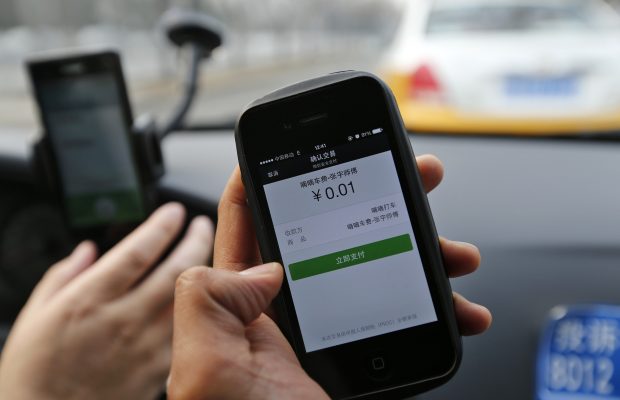
And starting this month, Chinese visitors will be able to buy goods with the help of mobile payment platform WeChat Pay.
Camden Market is a sharp contrast to luxury shopping hotspots such as Bicester Village and Oxford Street where Chinese tourists spend millions of pounds each year and might not seem the obvious choice for the United Kingdom launch of WeChat’s hugely popular digital wallet, which accounts for 40 percent of the Chinese mobile payment market.
However, the number of Chinese visitors to Camden is climbing. In September 2016, 5 percent of visitors were Chinese. The proportion doubled to 10 percent in March.
“In terms of demographics, the number of Chinese tourists in Camden is certainly growing, and in terms of a brand, Camden was an obvious choice. It’s iconic in London,” said Craig Jacoby, head of retail payments at SafeCharge.
WeChat has worked with SafeCharge, a British payment technology company, to make WeChat Pay available at point-of-sale locations in the UK for the first time.
During the next four months, SafeCharge will provide more than one thousand Camden Market vendors with a software update that enables in-store payment terminals to generate QR codes and perform transactions.
Chinese tourists spent 513 million pounds ($681 million) in the UK last year, according to tourism authority VisitBritain. Camden Market’s management wants to better accommodate those bigspenders.
Jacoby said WeChat Pay will soon be available at other shopping destinations in London, and it is also launching at six large retailers in Paris as WeChat moves forward with its international expansion.
WeChat Pay rival Alipay has also made recent moves in Europe. In October, Alipay expanded its partnership with Dutch payment company Adyen to facilitate in-store mobile payments at retail partners in the UK.
In Camden, merchants and customers were upbeat about the development. Yi-yin Wei, a shopkeeper from Taiwan who sells red-bean cakes at Wheel Cake Island, thought the update will be useful.
“Chinese people are used to paying for things with their phones, so it will be like home for them,” Wei said.
And Angel Chow, a tourist from Hong Kong, said Chinese shoppers will likely spend more now they have WeChat Pay as an option.
“They will find it convenient if they can use their phones and will buy more. I think they will be excited to be able to use it in England,” Chow said.
Other Camden merchants were not sure there would be enough demand. Vari McGeachy, manager of Books Iconica, said fewer than 5 percent of her customers are from Asia.
“We don’t have many Chinese people coming through the doors, and when they do they don’t have a problem paying with cash or card,” McGeachy said. “It wouldn’t be worth having to train my staff about a new system.”
SafeCharge Chief Executive David Avgi said in general there is great motivation to accommodate Chinese consumers in Europe, where 50 percent of luxury purchases are made by Asian tourists.
And he said it is a matter of time before the mobile payment systems that are ubiquitous in China catch on in the West.
“This innovative payment method is seen as the next big payment phenomenon in Europe,” Avgi said.
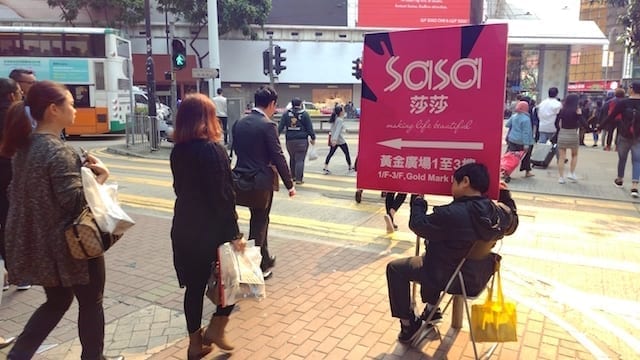
Skincare and cosmetics retailer Sa Sa International Holdings Ltd on Thursday posted a 14.5 percent rise in first-half net profit as consumer sentiment and mainland tourist arrivals improved.
The Hong Kong-based retail chain operator’s net profit rose to HK$109.9 million ($14.1 million) for the six months ended in September from HK$96 million a year earlier. Analysts were expecting HK$118 million, according to Thomson Reuters SmartEstimate.
Revenue climbed to HK$3.66 billion from HK$3.60 billion a year earlier.
“We aim to capitalise on weakness in the rental cycle to establish more strategic locations to improve our brand exposure and stimulate sales,” Chairman Simon Kwok said in a filing to the Hong Kong bourse.
Retail sales in Hong Kong and Macau rose 2.2 percent, while gross profit margin improved to 42.2 percent from 41.4 percent. The company operated a network of 283 stores and counters as of end-September, unchanged from the year-ago period.
Sa Sa had earlier said that for the July-September quarter its retail and wholesale turnover rose 1.1 percent year-on-year, narrowing from a 2.1 percent growth in the previous quarter.
In its home base of Hong Kong, retail sales grew in September at the fastest year-on-year pace in more than 30 months, government data showed, as increasing numbers of mainland visitors helped boost spending, particularly on watches and jewellery.
Benefiting from improved consumer sentiment, China’s top jeweller Chow Tai Fook Jewellery on Tuesday posted a 46 percent profit rise in the first half and said it aimed to continue expanding in mainland China in the second.
Sa Sa shares rose 2.5 percent on Thursday prior to the results announcement, outpacing a 0.1 percent gain in the benchmark index.
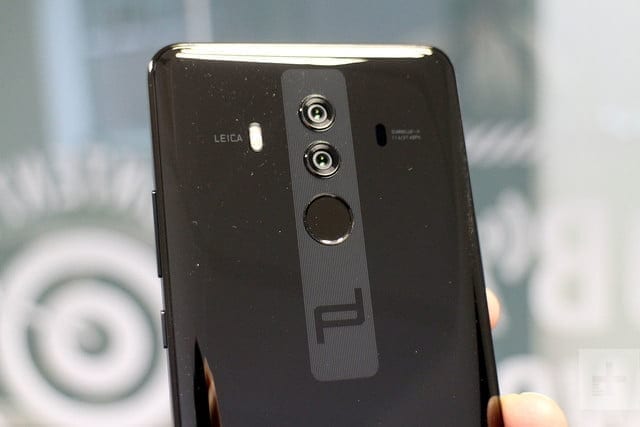
Even if you don’t intend to buy one, there’s a good chance you know how much the iPhone X costs, due to its $1,000-plus price gaining plenty of attention. Despite being one of the most expensive phones you can buy, it’s apparently not the one that’s most expensive, in-demand phone in China right now. That dubious honor goes to Huawei, and its Porsche Design-branded spin-off of the Mate 10 Pro.
Even at standard retail price the Huawei Mate 10 Pro Porsche Design is more expensive than the iPhone X, but a high degree of demand has seen prices double, as people clamor to get their hands on the phone. In China, the Porsche Design version costs 9,000 yuan, or about $1,370 at today’s exchange rate. That’s if you can find one for sale at all.
The limited edition phone has found plenty of buyers, and its rarity is pushing prices on the resale market up. Online retailers are selling the phone for between 18,500 yuan and 27,000 yuan, or $2,800 and $4,100. By comparison, the iPhone X is readily available on Taobao and JD.com for around 9,000 yuan, only slightly more than its official, cheapest retail price.
A retailer selling the Mate 10 Pro Porsche Design on Chinese online site Taobao said he has received many enquires for the device, but few have been able to actually buy it. A 38 year-old who tried, but ultimately failed, to buy the phone through the official Huawei sales channel said the phone sold out in seconds. Huawei and Porsche Design have never said how many of the phone will be produced.
In addition to China, the Porsche Design phone is sold in Europe, where it’s priced at 1,395 euros and is expected to ship at the beginning of December if you pre-order now. The European Porsche Design store also sells a Chinese version of the device, and orders will ship in January if placed now.
Is the Porsche Design Mate 10 Pro worth not only the trouble of finding one, but also paying considerably more than the regular price, or even the standard Huawei Mate 10 Pro? We’ve used the phone, and definitely concluded that you’re better off saving some cash and just buying the superb standard Mate 10 Pro.
Singles Day may be an invented holiday, but Nov. 11 in China gives an indication of how retail will evolve globally over the next decade. And Alibaba is the company to watch. The numbers posted by e-commerce giant Alibaba on Singles Day — a holiday created as an antidote to China’s Valentine’s Day, which has caught on big time — in 2017 are mind-boggling. Alipay, the company’s payments system, processed $25B of payments, more than four times what the entire U.S. spent on Black Friday weekend and Cyber Monday in 2016.
That is 1.5 billion individual transactions, 325,000 orders per second, at the day’s peak. Cainaio, the logistics company owned by Alibaba, processed 812 million delivery orders. The opportunity for brands is clear, and Alibaba said 167 companies each generated more than $15M in sales, 17 companies surpassed $75M, and six companies surpassed $150M.
But as important as the numbers Alibaba posted was the way it posted them, because this gives an insight into how the worlds of online and physical retail will intertwine. “More than $25B of orders in one day is not just a sales figure,” Alibaba Chief Executive Daniel Zhang said in a statement. “It reflects how merchants and consumers alike have now fully embraced the integration of online and offline retail.”
Ahead of Singles Day, Alibaba, founded by Chairman Jack Ma, sent an army of technicians across China to help more than 600,000 independent retailers — mom-and-pop stores, convenience stores and independents selling everything from clothes to hardware — upgrade their computer systems.
Those stores were able to sell goods through one of Alibaba’s online platforms, Tmail.com, and now serve as delivery and storage centres for goods sold on Alibaba. Wikimedia Commons Alibaba Chairman Jack Ma Convenience stores use an Alibaba app that helps manage these sales and deliveries, but also gives store owners advice on what they should be stocking to maximise profits and how their wares should be displayed. This is part of Alibaba’s wider effort to have deeper links into the world of physical retail.
It is also working on the conversion of 100,000 retail stores into Alibaba-linked smart stores. If customers go into a shop and cannot find a product, they can find other stores nearby that might sell it, or have it delivered at home. “Alibaba plans to use these retailers to reach the elderly and children, who largely aren’t engaging with Tmail online,” said Henry Mason, managing director of consumer insights firm Trend Watching.
“This move demonstrates that the future of retail is not a simple battle between online and offline. It is far more nuanced than that. As Alibaba in China and Amazon in the U.S. have noted, a purely online presence is not enough. “Because despite the proclamations of many online-obsessed, future-focused trend watchers, there are still hundreds of millions of consumers who aren’t pressing Amazon Dash buttons or using WeChat to order toilet paper via drone delivery on a daily basis.”
Courtesy of Trend Watching Henry Mason Alibaba also has a chain of department stores called Intime, which double as fulfilment centres. Alibaba’s Singles Day numbers also highlight how smartphones will play an increasing role in retail, both online and offline — 90% of the payments Alibaba took were from mobile phones. “In major Chinese cities you hardly see cash machines anywhere,” Value Retail Chairman Scott Malkin said. “You pay for goods using your phone everywhere, whether it is at the street food stall or in the store.”
Of course, the innovations being pushed by Alibaba will not be replicated exactly in other markets. The company has the advantage of working in a market which, because of the rapid pace of economic development and recent political history, does not have the pre-existing infrastructure and methodology of Western countries. “If you don’t have legacy companies like Marks & Spencer operating then you can go straight to what people want,” Malkin said. Its methods will not be adopted wholesale, but the way Alibaba is creating a platform that connects physical stores and online retailing is a development that will surely be replicated around the globe.
American fashion brand Guess’ third quarter turnover grew more than 3 %, mainly thanks to excellent sales in Asia and Europe. It did post a net profit loss however.
Drop in America
Guess’ total third quarter turnover reached 554.1 million dollars (470 million euro), which represents a 3.3 % turnover growth. European and Asian sales grew 19 and 17 % respectively, thanks to new stores and a good wholesale performance. North and South American sales did not fare as well: retail turnover dropped 13.4 % and wholesale turnover even dropped 16.8 %.
“Looking at our company’s future, I can see more opportunities in Europe and Asia and we should achieve strong growth there next year as well”, CEO Victor Herrero said
Despite that higher turnover, Guess did not manage a profit in the third quarter: it published a 2.9 million dollars (2.5 million euro) net loss, compared to a 9.1 million dollars (7.7 million euro) net profit the year before.
China’s frosty economic relationship that includes the travel and tourism exchange with South Korea started to show early signs of a turnaround in recent days.
According to reports, the long-stagnant economic relationship between South Korea and China, prompted by tensions over the controversial missile defense system that was deployed is showing early signs of a revival, especially in sectors such as investment, tourism, and retail.
Myeongdong, a well-renowned shopping street in Seoul, was often packed with Chinese tourists, but after the two countries’ relationship went sour, Myeongdong became more and more deserted. Recently a slight increase of Chinese tourists at Myeongdong are noticeable.
A report by the Seoul-based Aju Business Daily published on Monday noted that a 25-people tour group from Shanghai will arrive at Jeju Island in South Korea around November 28, the first tour group from China to South Korea since political disputes cut off organized commercial tourism between the two countries. It did not give details about the organizers and participants of the tour.
China’s trade with South Korea also rose by 11.4 percent year-on-year in the first ten months of this year, customs data showed on November 8.
According to an Aju Business Daily report published on October 26, in the first nine months of this year, South Korea received about 3.19 million visitors from China, down almost 50 percent compared to a year ago.
As revival signs emerged over recent days, South Korean retailers rolled up their sleeves to cater to Chinese consumers. For example, in mid-November, the Seoul-based Shinsegae duty-free store welcomed some Chinese Internet celebrities to help advertise some of their products, with the aim of attracting more Chinese customers to the country.
Furthermore, the Seoul-based Shilla duty-free store has also designed a special app for Chinese tourists where they can exchange their tax bills for shopping coupons.
A customer service staff member from Utourworld.com Inc, a Shanghai-based travel agency specializing in overseas tourism, said that the company canceled all its tours to South Korea around May and has not yet restarted them. She also said she is not sure whether those tours will be re-launched in the future.
China CYTS Tours Holding Co, also a travel agency, made similar comments.
Shanghai-based Spring Airlines, said that his company is running 32 flights to South Korea in the 2017 winter/spring season, compared with 46 flights in the same period in 2016.
“Recently, we have not added new routes to South Korea .
A representative from Lotte China, whose business has slumped a lot due to the company’s deep involvement with the THAAD issue, said that so far, the company’s business in China has not seen any significant improvements. She also said that the company is formulating new plans concerning the Chinese market, but has not confirmed the plans yet.
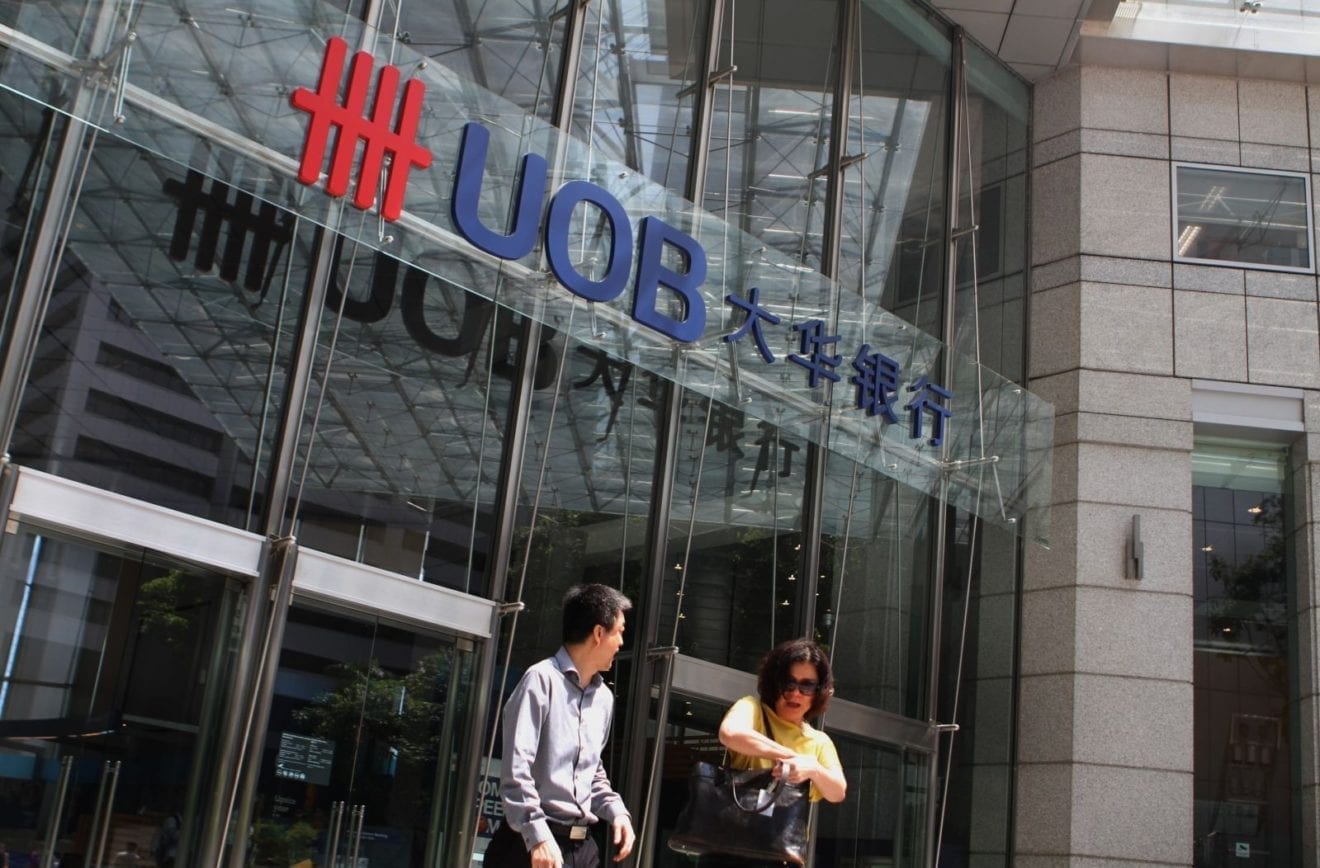
UNITED Overseas Bank (UOB) has introduced two robots, or ‘virtual employees’, that will support its wholesale banking and retail businesses.
In a press statement to Human Resources, the bank said its first robot employees, named Amy and Eve, started working at UOB three weeks ago, and have since cut the time taken to process a transaction by more than half.
Amy and Eve have been taking on tasks that UOB’s human employees have found repetitive and time-consuming, allowing their human teammates to focus on more stimulating and challenging work.
Feedback from the robots’ human colleagues have been positive, with most noting that they have been helpful and productive.
Lim Ann Liat, managing director and head of markets and enterprise technology, group technology and operations, UOB, said: “By introducing robots into our workforce, we can improve our process using technology yet maintain a human touch. This also lifts the load off our people which in turn makes their jobs more fulfilling.”
UOB plans to take onboard more robots in the coming months for other processes such as card operations, cash management and trade and remittance.
Separately, in a whitepaper published today (Nov 23) by The Economist Corporate Network (ECN), it was reported that business leaders recognise the need for their leadership on automation and AI both inside and outside the company.
The paper, based on a survey and focus group interviews with CEOs and other C-suite executives based in the Asia-Pacific region, revealed that 81% of CEOs would lead by example and automate parts of their job.
According to the findings, CEOs find it difficult to clearly communicate their company’s automation and AI strategy to their employees.
Dr Florian Kohlbacher, ECN Director for North Asia, commented: “We are talking too much about the potential negative impact of AI and automation on the workplace. What is needed instead is a proactive discussion on how companies can harness technology in order to strategically manage the transformation and systematically shape the workplace of the future.”
Stores are upping the ante for Black Friday, the sales extravaganza that begins on Friday (Nov 24).
The yearly American shopping affair has gained traction in Singapore and both online and bricks-and-mortar stores are pulling out the stops to attract consumers to their offerings.
Country chief executive of Courts Singapore Ben Tan said: “Black Friday is one of the biggest shopping events of the year and a great platform to offer shoppers and bargain hunters unbeatable deals in both the online and offline space.”
He added: “This year, our Black Friday promises to be bigger and better with discounts ranging between 12 per cent and 90 per cent off the recommended retail price, across IT, electrical and furniture products, and we plan for this annual sales event months ahead as an integral part of our retail calendar.”
Courts began participating in Black Friday in Singapore in 2013, and signs advertising the event went up at its Tampines megastore on Thursday.
Other stores are lengthening their sales period to give customers more time to shop and spend.
All Robinsons stores will open at 7am on Friday and close at 1am on Saturday, instead of its normal opening hours of 10.30am to 10pm.
When Robinsons opened at 7am last Black Friday, queues had already formed outside its store at The Heeren before dawn. Robinsons then said the turnout was “overwhelming”.
Robinsons said the turnout last Black Friday was “overwhelming”, with queues already forming outside its store at The Heeren before dawn.
This year, Robinsons offers will last till Sunday, though the stores will resume their normal operating hours on Saturday.
A spokesman said: “Preparation for this Black Friday Sale has taken us around six months. We have also added more cashier counters and installed additional fitting rooms to cater to the expected increase in customer traffic across all three Robinsons stores.”
Other retailers are extending their sales periods to before Black Friday. For example, a Wing Tai Retail spokesman said: “Following overwhelming response to our offers last year, we are extending our main sale from two days to four days – so from Thursday to Sunday.”
Wing Tai’s brands here include G2000, Topshop, Topman and Dorothy Perkins, and the spokesman added that this year, Fox Kids and Baby will enter the fray for the first time.
Other stores participating in Black Friday for the first time include beauty firm Fujifilm Astalift. Fujifilm Asia-Pacific’s life science brand manager Joyce Foo said that the company plans to mark its first year by giving customers “a very attractive discount of 25 per cent storewide with a minimum purchase of two products”.
Other industry players are expanding their Black Friday discounts to the offline space. Harvey Norman, for instance,has lined up hundreds of offers across all of its departments at all its bricks-and-mortar stores, in addition to its website.
Some, however, are choosing to limit their promotions to their websites despite their bricks-and-mortar presence.
Managing director of Gain City, Mr Kenny Teo, said: “We are running Black Friday specials on the Gain City website as we believe there is more traction for this campaign via e-commerce.”
He said that for the home-grown electronics chain, “more people are willing to purchase bigger ticket items such as washing machines and refrigerators on our e-commerce website. This is in stark contrast to many e-marketplaces which tend to see smaller cart values and smaller ticket items being sold”.
Pure e-commerce players want a slice of the pie too, with retailers such as Qoo10, Lazada and Beauty Carousel making more products available for the promotional sales period. Ms Cindy Leong, assistant manager of sales and marketing at Beauty Carousel, said: “We have expanded the categories for the Liberta Armpit Care Range, now covering all needs from head to toe.”
However, not everyone is taking part in the sales frenzy, such as furniture giant Ikea.
An Ikea spokesman said: “Low price has always been a part of the Ikea offer and we aim to provide a wide range of well-designed, functional home furnishing products that are affordable to as many people as possible.”
He explained that the store constantly strives to reduce prices yearly, saying: “This way, we are able to offer low prices all year long, and will not participate in one-off discount events.”
For those looking to snap up the best Black Friday deals, the Wing Tai Retail spokesman gave some advice.
“Shop early. Very often, you get the best selection and offers on the first day of the sale.”
Beauty Carousel’s Ms Leong went further, saying: “We recommend that consumers act fast to secure their purchases as products may sell out within seconds.”
With digital payment methods taking the world by storm, Visa is taking it in a new direction.
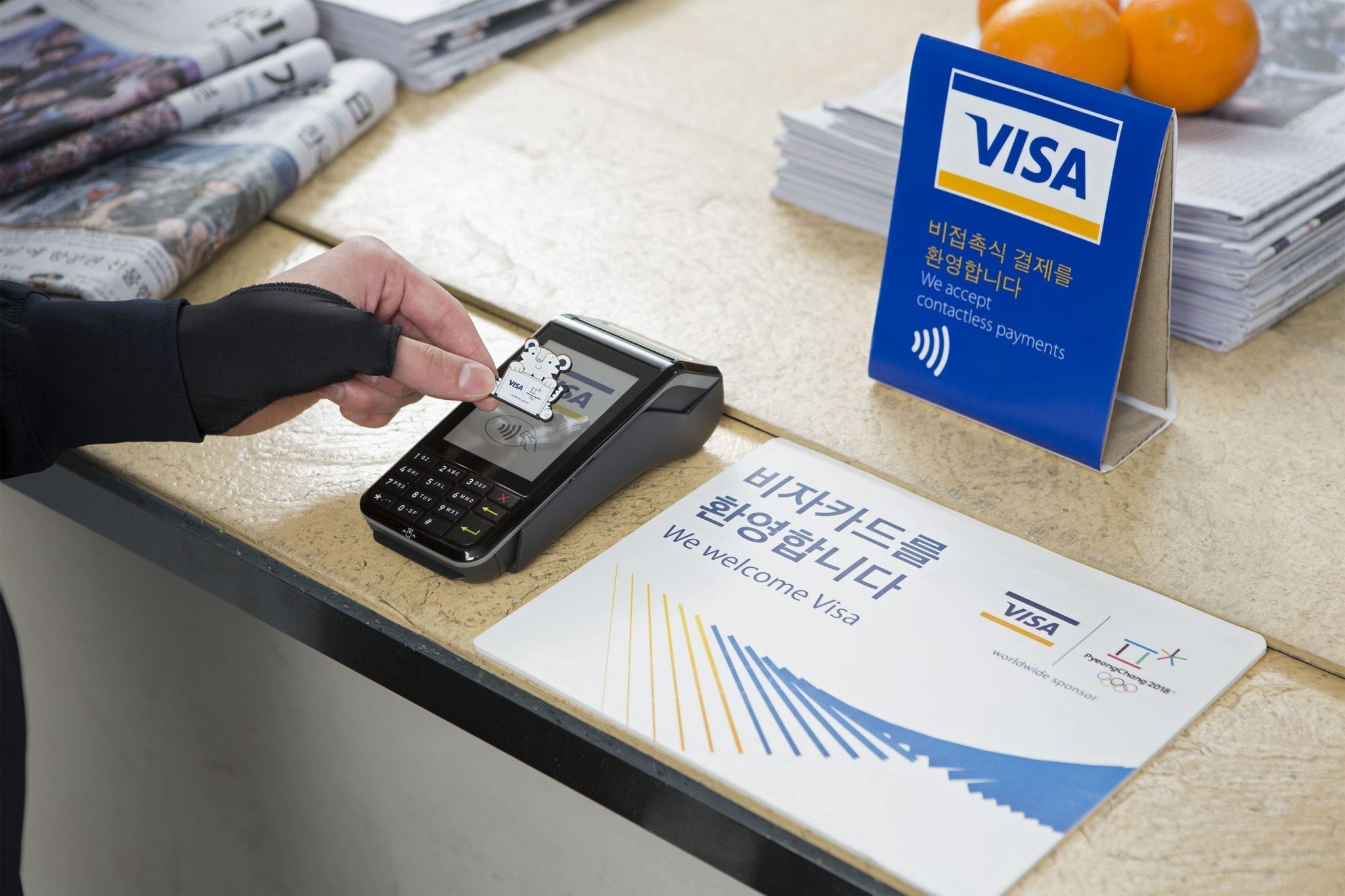
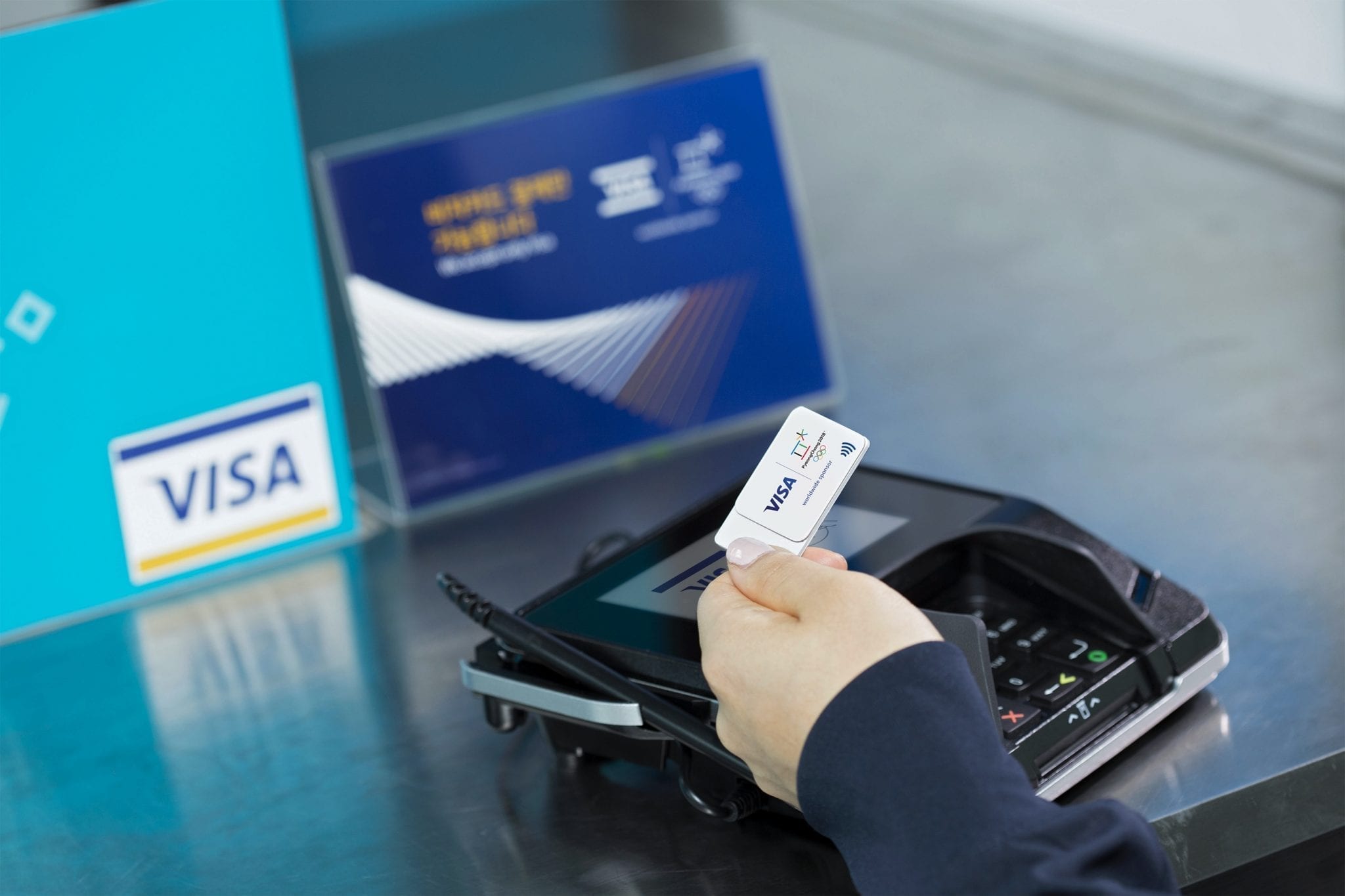
The company is launching a line of three wearable devices that support contactless payments for fans and athletes attending the 2018 Winter Olympics in PyeongChang, South Korea in February.
The line, which was produced in partnership with the financial arm of South Korean-based retail giant Lotte Department Store, includes payment-enabled gloves, as well as commemorative stickers and Olympic pins.
“We are looking forward to transforming the payment experience for everyone who attends the upcoming Games in PyeongChang,” Iain Jamieson, Korea and Mongolia country manager at Visa, says in a Nov. 8 press release. “At Visa, we have been working tirelessly to ensure all of the Olympic venues are equipped with the very latest payment capabilities to provide the best experience possible for all those on-site.”
With the average temperature in PyeongChang in February averaging around -4 or -5°C, the Visa gloves will allow fans to pay without getting cold hands. The gloves will have a dual interface chip with a contactless antenna built in, and come with prepaid amounts on them (KRW30,000 or KRW50,000, which is equivalent to approximately $35 or $60 CAD).
Commemorative pins at Olympic games is a long-standing tradition, so Visa has introduced four unique designs that can be used to pay and then saved as a collectible. They will cost KRW5,000 (approximately $6 CAD), plus any amount fans want to load onto them.
The Visa stickers will also have dual interface chips and antennas embedded in them, and can be stuck to almost anything. There will be eight distinct designs, and available in denominations of KRW30,000 ($35), KRW50,000 ($60), KRW100,000 ($117), and KRW200,000 ($235).
While security is a concern, Visa said that its wearables “use the same EMV contactless standards, meaning it leverages the EMV crytogram security function to validate the authenticity of the wearables and the transaction.”
“The wearables are powered by pre-paid products, there is no personal information attached to the wearable – no account number or token are used in the transaction process. If a wearable is stolen or lost, users should contact the Lotte Card call centre,” it adds.
This is not the first time Visa has introduced wearables for the Olympics. At the 2016 Summer Games in Rio de Janeiro, Brazil, the company was selling payment-enabled rings that worked in a similar way to these new wearables for PyeongChang.
“Growing up in South Korea, I am proud that my home country is hosting the 2018 Games, and is using this opportunity to introduce Visa payment innovations to the rest of the world,” Seung-Hi Park, a South Korean Olympic speed skating and Team Visa athlete, says in the release. “These payment gloves provide a hassle-free way to pay, even when it’s cold!”
Available now, the gloves, pins, and stickers are available for purchase at Lotte Card’s customer centres in South Korea and online. During the games, they will also be available at Olympic Superstores in Visa vending machines.
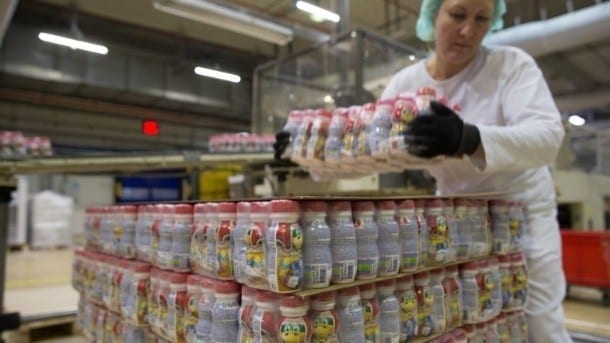
Danone Waters China, a subsidiary of Danone Group, is tapping into the distribution network of China’s largest retailer and e-commerce giant JD.com as the French company expands its coverage of Southwest China.
A shared warehouse will be built in Chengdu, the capital of China’s southwestern Sichuan province, that will store and manage inventory, merging Danone’s online and offline operations.
“China is a market with both huge opportunities and major challenges when it comes to managing distribution across our many sales channels,” said Hanbin Lyu, vice president of Danone Waters China. The company has seven factories in China across six regions.
Lyu said JD.com’s in-house logistics network and supply chain management technology would help Danone improve demand planning, inventory placement, warehouse and transportation management to increase efficiency across different sales channels.
The Danone tie-up furthers JD Group’s push into the logistics business following the creation of JD Logistics earlier this year as a stand-alone business unit. JD operates China’s largest in-house fulfillment and last-mile delivery network with 405 warehouses.
As part of the joint effort, JD will leverage its big data capabilities through the analyzing of billions of data points. The technology enables JD to help suppliers more accurately predict the ebb and flow of demand, and more efficiently manage stock. JD’s expertise in the area can help limit stock outs, waste, and higher logistics costs for last-minute replenishment that have traditionally plagued retail as a result of multiple layers of handling by a mix of third-party providers.
“We believe our infrastructure and technology will benefit shippers and industries, including those that don’t sell directly on our platform,” said Wei Tang, vice president of logistics at JD. “Online retailers like JD can lead the way to more efficiency, transparency and reliability in commerce, benefitting both customers and suppliers.”
A rapidly developing trend in China is the fast-growing demand for fresh products. During its Single’s Day promotion, JD.com sold over 20,000 tons of fresh products that included highly perishable items such as 500,000 tiger shrimp from Thailand and 2 million hairy crabs. There was also huge demand for Australian sirloin, Chilean frozen salmon, and Vietnamese base fish.
The efforts in logistics are part of JD’s broader “retail as a service” strategy. As changing consumer demands force changes throughout global retail models, large-scale e-commerce companies are working on the development of an efficient and advanced supply chain.
The need for efficiency is crucial to facilitate the growing cross-border e-commerce sales in China that are expected to reach $100.17 billion by the end of 2017, with the average spend per cross-border digital buyer at $882, according to eMarketer research. Average spend per buyer has increased because of growing awareness of overseas brands in China, as well as better logistics and the perception that foreign goods are of better quality.
“The factors fueling the trend toward greater cross-border shopping are nothing new, as the average Chinese consumer is now more tech savvy, more exposed to foreign brands through overseas travel and the internet and, crucially, more willing to spend,” said Shelleen Shum, senior forecasting analyst at eMarketer.
“With shopping sites such as TMall Global, JD Worldwide, and Kaola adding more brands to their offerings and improving cross-border logistics and processing times, there is an opportunity for foreign brands to tap into the demand for high-quality products, especially in categories like baby, maternity, health, and beauty.”
Asia is expected to dominate the global grocery retail market as it is projected to add $1.2t in sales which is more than Africa, Europe and Latin America combined, according to Institute of Grocery Distribution (IGD).
IGD forecasts that Asia will enjoy a compound annual growth rate (CAGR) of 6.6%.
Levels of consumer spending from Asia account for nearly half of additional sales generated until 2022 as the region’s grocery retail market is significantly boosted by its continuously rising population.
Six countries from Asia secured a spot in the top 20 largest grocery markets by 2022, led by China at second place with a projected value of $1.67b.
India follows at third place with an expected $812b value by 2022.
Japan is at fifth place with a projected value of $455b; Indonesia notched seventh with $313b; Philippines at $153b and South Korea at $141b.
“With China, India and Japan all in the top five, Asia’s grocery market continues to be in rude health thanks to growing populations and shoppers with more disposable income. Innovations in this market also continue apace, especially in China, where retailers are experimenting to drive the online and convenience channels,” said John Wright of IGD.
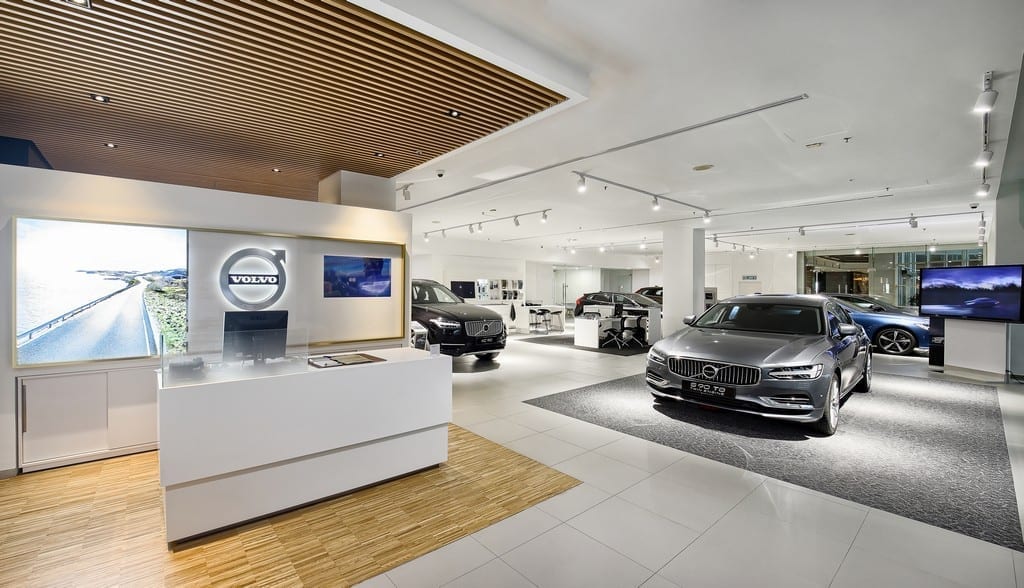
The Volvo brand just got a new shot-in-the-arm with Sisma Auto, Volvo Car Malaysia’s newly appointed authorised dealer, officially opening its city centre showroom at Menara Worldwide on Jalan Bukit Bintang.
Located in the heart of Kuala Lumpur’s premier residential and commercial district, the showroom is set to offer a touch of Swedish luxury to the Golden Triangle by featuring a luxurious retail environment influenced by Scandinavian design, known also as Volvo Retail Experience (VRE).
“VRE is designed to reflect our Scandinavian-inspired values of calm with cleans lines that exude a cool and refreshing visual exterior appeal whilst the interior offers customers a warm and inviting feeling,” said Lennart Stegland, managing director of Volvo Car Malaysia.
Sisma Auto managing director Syed Khalil Syed Ibrahim added that the new showroom would help enhance the visibility and awareness of Volvo’s latest range of highly acclaimed luxury cars.
“We are very proud to be associated with Volvo, a brand that is clearly on the ascent after releasing an amazing range of new models from the XC90 to the new S90 T8 Twin Engine. With this new showroom, we hope to bring the Volvo experience closer to those who live or work in the city,” he said.
Volvo owners who reside or work in the vicinity could also enjoy a premium ownership experience, a signature of Sisma Auto. The new showroom will feature Sisma Auto’s Concierge Service, which offers home or office vehicle pick-up and drop-off for customers.
In conjunction with the opening of this new showroom, Sisma Auto is offering customers purchasing any new Volvo model from them, a chance to win an all-expense paid trip to Sweden.
The new Sisma Auto Volvo Bukit Bintang showroom is located on Ground Floor, Menara Worldwide, 198 Jalan Bukit Bintang, 55100 Kuala Lumpur. Its opening hours are from 9am till 7pm, Monday to Friday and from 10am till 5pm on Saturday and Sunday.