Tag: asia

  • More online super sales for Asia online market

    More online super sales for Asia online market

    While the US formulated online super sales, such as this week’s Black Friday, Asia has adopted the concept with a vengeance.

    In fact, China has increasingly been exporting Alibaba’s Singles Day (11.11) event, which this month racked up a massive US$35 billion in sales. November is the favoured month for this new consumer mania, offering the Singles Day, Black Friday and Cyber Monday sales.

    Both Black Friday and Cyber Monday themselves have been catching on in the Asia Pacific, growing by 29 per cent last year, according to global payments company WorldPay.

    It says that despite forking out $17.8 billion on Singles Day last year, Chinese consumers still went hunting Black Friday bargains, with overall spending on the day up by 37 per cent from the previous year. In Hong Kong, the rate of growth was 32 per cent, and in Singapore 21 per cent.

    While retailers are among the biggest Black Friday winners, new WorldPay data suggests this year could also be a great opportunity for savvy APAC businesses in the travel and digital sectors. In Hong Kong, spending with travel and airlines saw a 30 per cent surge last year, with Singapore figures up 20 per cent as travellers jumped online to search for flight and hotel deals.

    Not just retailers

    Shoppers are also increasingly seeking out bargains for digital content such as subscriptions, e-books and on-demand box sets. Black Friday spending in this sector last year grew 62 per cent in Hong Kong and 14 per cent in Singapore.

    Not just retailers can benefit from Black Friday, but also a range of e-commerce businesses, says WorldPay Asia Pacific GM Phil Pomford.

    “While Black Friday and Cyber Monday have typically been the realm of retailers, a more diverse range of businesses are now recognising they can also take can take advantage of this special online opportunity.

    Shoppers during this time are highly engaged, proactive and looking for a wide range of online deals, so the potential to reach new customers and strengthen brand loyalty is huge, regardless of sector.

    “E-commerce businesses should set themselves up for success by ensuring their websites are prepared for heavy traffic, and offer simple payment options to drive shopping-cart conversions. They might also consider following the example of Amazon and kickstart Black Friday deals a week early.”

    Black Friday online sales surpassed $3 billion last year and are expected to rise this week, says Adobe Digital Insights, as buyers seek to avoid long queues and lost hours in retail stores.

    In Southeast Asia, Google searches for “Black Friday” have surged over the past five years, and 12 months ago major offline/online retailers like Robinsons, Sephora and Zalora offered generous discounts for the event.

    “Many industries rely on this event to make up a large portion of their fourth-quarter sales, in particular toys and games,” says Euromonitor International senior toys and games analyst Matthew Hudak.

    ‘Sure to jump on’

    Digital campaign company RTB House says Black Friday last year attracted 106 per cent more people to online stores, with 204 per cent more transactions.

    “We anticipate conversion rates surging this time,” says RTB House Southeast Asia country director Chandra Kuncara. “Customers who missed out on Singles Day will be sure to jump on this event.”

    He says personalised retargeting is an important selling tool during Black Friday. With AI technology and deep-learning algorithms, marketers can highlight most-desired products for each individual customer.

    More purchases mean more packages being shipped, and international courier service FedEx is again expecting to handle a record number of packages over the peak holiday shopping period, which starts on Monday and runs to December 24. This year it is expecting 380 to 400 million packages.

    The growth of cross-border e-commerce is turning the peak shipping season into a global phenomenon, says FedEx. For instance, 37 per cent of Singles Day purchases in China last year were from international brands or merchants. Cross-border shopping is expected to make up 20 per cent of e-commerce sales by 2022, led by Asia Pacific.

    “While an online purchase takes just a few clicks, logistics providers are working hard behind the scenes powering every moment,” says FedEx Express AsiaPacific president Karen Reddington. “Our business is the backbone of the e-commerce market.”

    Meanwhile, while shoppers scramble for Black Friday bargains this week, outdoor retailer REI is closing its 154 US stores for the third consecutive year, offering its nearly 12,000 employees a paid holiday. It is truly going against the tide by also putting a hold on online orders.


  • Bursa Malaysia to push retail participation to 25%

    Bursa Malaysia to push retail participation to 25%

    Bursa Malaysia aims to boost retail investors’ participation to 25 per cent in the near term from the current 23.3 per cent with 80 programmes underway to increase financial literacy.

    Bursa Malaysia chief executive officer Datuk Seri Tajuddin Atan said only four percent out of the 853 respondents had chosen to invest in shares while the rest opted for less traditional investment tools.

    “The public should consider share investment as part of their investment portfolio and change the perception that share investments are too risky.

    “Investment in shares will help diversify portfolio with the opportunity to get higher returns compared to fixed deposit, current and savings account,” he said after launching the “What’s Your Goal” campaign to raise awareness on share investment opportunities today.

    “Besides shares, there are also other investmeny products on Bursa Malaysia like Exchange Trade Funds (ETFs), structured warrants and real estate investment trusts, which are attractive and can meet different risk appetite of investors,” he added.

    Tajuddin said ETFs did not have sales charge and have significantly lower management fee compared to other managed unit trust funds.

    “Stamp duty exemptions announced in Budget 2018 will further enhance the attractiveness of ETFs as a low cost investment product,” he added.

    As of September 27 this year, the trading average daily volume currently stands at RM572 million, 16 per cent higher that RM385 million last year.

    The campaign will run for three months from November 21 to February 2018.

  • JYUNKA, Homegrown Anti-Aging Skincare Brand, Opens Their First Concept Center in Singapore

    JYUNKA, Homegrown Anti-Aging Skincare Brand, Opens Their First Concept Center in Singapore

    Singapore’s best kept anti-aging secret, JYUNKA, has opened their first Concept Center for clients to fully experience the brand’s skin transformation products and pampering facial treatments.
    The intimately-appointed boutique at Pacific Plaza includes three facial rooms and carries the comprehensive range of JYUNKA’s revolutionary and efficacious products.

    “Aging skin is a key concern that everyone faces, and our products are designed to not just heal and restore but also to prevent and protect from deep within the skin. With the opening of our first JYUNKA Concept Center, we are pleased to offer our clients the complete pampering and skin-changing experience through our face treatments, complemented by our range of products that they can use at home,” shares Brand Founder Ms Jennifer Leng.

    JYUNKA aspires to bring out the inner beauty and confidence in everyone through a perfect harmony of science and nature. The products are created with patented technology that combines the safety of mass-market products and the effectiveness of professional treatment products, so skin can attain a luminous glow from within.

  • ‘Robo-taxis’ hold promise, and perils, for automakers

    ‘Robo-taxis’ hold promise, and perils, for automakers

    Are ‘Robo-taxis’ the future of public traffic?

    It’s November 22, 2028 and Sarah, a young mother, gives her two children a kiss goodbye before buckling them into the driverless car that will bring them to school.

    Sarah doesn’t have a car and has no plans to buy one. Living in a suburb, she has run the numbers and the result is clear: It’s much cheaper to order a car only when she needs one.

    The “robo-taxi” has also made her life easier, but only after such vehicles upended the business models which carmakers had relied on for decades.

    The revolution is already underway, with every major brand racing to create autonomous electric cars and trucks that will always be just a few clicks of a smartphone away.

    Fully electric cars are expected to make up 12 percent of the global market in 2025, before jumping to 34 percent in 2030 and 90 percent by 2050, analysts at Bank of America Merrill Lynch forecast last month.

    Adapt or perish

    The motivations are clear: Smog is becoming a serious menace in cities around the world, with China in particular demanding cleaner vehicles for its rapidly growing market.

    Traffic jams are also eating up hours of commuters’ time, meaning car ownership is already no longer a given for many city dwellers.

    And carmakers have nimble new rivals: Apple, Google and Tesla — which last week unveiled an all-electric semi truck — see a chance to dominate a market that will soon depend as much on software as on engineering.

    Industry chiefs aren’t waiting: France’s PSA is betting on car-sharing and other “services” with its Free2Move division, which it hopes will let it get back into the huge US market.

    In Germany, Daimler is working with Bosch to develop self-driving electric cars that could be on the road by the early 2020s, and has already launched its own car-sharing service, Car2Go, in some two dozen cities worldwide.

    Its German rival Volkswagen has created Moia, a “social movement” unit exploring e-shuttles, ride pooling and car hailing.

    “Even if in the future not everyone is going to own a car, with Moia we’re trying to make sure everyone will be a client of ours one way or another,” VW’s chief Matthias Mueller said.

    Robo-taxis could generate 40 percent of auto industry profits by 2030, according to German consulting firm Roland Berger, which expects demand for private vehicles to drop 30 percent in the period.

    And industry experts warn that the automakers which fail to adapt to the shift risk might not survive.

    Lagging behind Asia

    But that means investing billions in batteries, charging infrastructure and autonomous driving technologies with little prospect of seeing a payoff anytime soon.

    VW announced Friday a plan to spend 34 billion euros ($40 billion) over the next five years on hybrid and electric cars and services in a bid to “reinvent” the automobile.

    But for now, so-called “zero emission” vehicles remain a tough sell: Renault’s Zoe range of electric cars, which is has offered since 2012, made up just 1 percent of its sales last year.

    Its chief, Carlos Ghosn, is hoping that figure will reach 5 percent by 2022.

    The contest will be costly for all automakers, with PriceWaterhouseCoopers estimating that production costs for the next generation of electric cars will be 20 percent higher than traditional models, while warning of “serious problems” for returns on investment.

    “The speed” of the shift toward an electric future “will have to be taken on by all automotive companies,” PSA’s chief executive Carlos Tavares said at the Frankfurt auto show in September.

    Yet Western carmakers and government officials already fear they are lagging behind Asian rivals, with China in particular making headway on electric motors and batteries.

    That led the EU Commission to urge the creation of an “Airbus for batteries”, with European companies joining forces for large-scale battery production.

    “This technology is too important to import it from overseas,” the commission’s vice president charge of energy, Maros Sefcovic, warned.

  • Salvatore Ferragamo revamps its website in Europe and China

    Salvatore Ferragamo revamps its website in Europe and China

    Florentine luxury label Salvatore Ferragamo is busy deploying its new, revamped www.ferragamo.com website.

    After being first introduced in the USA and Canada, the new-look site, featuring fresh design and content, is now also available in Italy, the rest of Europe and China.

    “We wanted to blend the contemporary style of the Ferragamo world today with its brand’s unique heritage,” said Eraldo Poletto, the Ferragamo group’s CEO.

    The website will go live in the rest of Asia, in Australia and Latin America in 2018.

    Once fully deployed, it will be active in 28 countries, making it possible to buy and pay for the label’s products in 13 different currencies.

    The new site hosts all of Ferragamo’s collections: menswear, womenswear, accessories, handbags and footwear.

    The site’s omni-channel functionalities allow direct access to products available in-store, with the possibility of ordering online and picking up the items at the customer’s preferred store.

    The site is mobile and tablet-friendly and also features a news section with up-to-date information on the label’s initiatives and its history.

    As of the end of September 2017, the Ferragamo group employed about 4,000 people and, through its parent company and its US and Asian subsidiaries, it operated a network of 687 monobrand stores worldwide.

  • Urban Outfitters sales more by online

    Urban Outfitters sales more by online

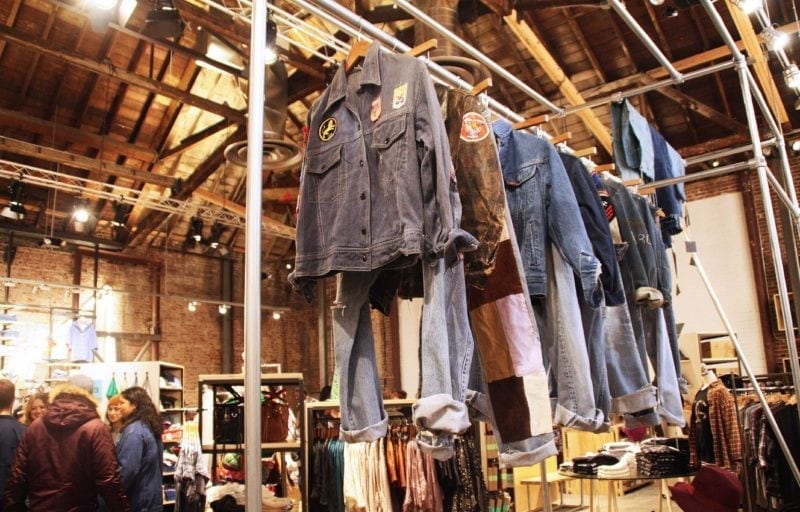
    The latest Urban Outfitters sales figures make for happier reading, coming after a string of poor results.

    A 3.5 per cent uplift in total sales in the third quarter is welcome, but it is the return of all brands to positive comparable sales that is most agreeable. This rise came despite the negative impact of the hurricanes on some stores: without this, comparable Urban Outfitters sales would have risen by 2 per cent rather than the reported 1 per cent.

    As good as the numbers are, there are still some weaknesses in Urban Outfitters’ performance. Foremost among these is the growing disparity between stores and the online operation. The latter continues to grow strongly, while the former is still in decline. Although the two trends balance each other out in sales terms, the impact on profit is negative because of the higher costs associated with fulfillment. This is not a new dynamic, but it is one that Urban Outfitters is still largely failing to address.

    The impact of online joined with a couple of other trends in depleting gross margin by 142 basis points over the period. One of these was the higher proportion of lower-margin furniture products in the sales mix. The other was a higher percentage of lower-profit international sales. Taken together, these things contributed to the 4.8 per cent decline in net income over the prior year. While this is a lot better than the 31 per cent decline posted over the nine months to-date, it is still one that leaves Urban Outfitters in the red when it comes to profit growth.

    Putting these issues to one side, the better performance was also delivered against a more positive backdrop for apparel where demand was stronger than it has been for most of the year. This is not to take away from some of the progress made by Urban Outfitters, but it does suggest that when put in context, the company still has some work to do to lift its performance.

    While Urban Outfitters and Anthropologie stores are not unpleasant places to shop, they do not make the process of buying easy. The customer has to do a lot of work to find the right product, which is one of the reasons increasing numbers are opting to buy online where sorting and filtering options make it easier to identify items of interest.

    Furthermore, while the fall and winter apparel ranges appear to have a little more cohesion, the overall clothing offer is too eclectic. That’s the reason Urban Outfitters, and to a lesser extent Anthropologie, are still dropping off the radar of some consumers. To remedy this, both brands need to develop a much clearer and more compelling handwriting that resonates with the core customer.

    Free People does a much better job at creating a unique and interesting offer, which is one of the reasons its performance has been so much better. However, the Urban Outfitters’ over-reliance on this brand – where comparable sales rose by 5 per cent – is problematic. If it is to sustainably boost performance, the company needs to be firing on all cylinders, not just one.

  • Tappoo Group opens Bobbi Brown Cosmetics store at Nadi International

    Tappoo Group opens Bobbi Brown Cosmetics store at Nadi International

    Bobbi Brown Cosmetics has opened its first outlet at Nadi International Airport, Fiji, in partnership with traveller retailer Tappoo Group.

    The store officially opened on 19 November and offers Bobbi Brown’s range of colour cosmetics, brushes, accessories and skincare products.

    Tappoo Group Director Harnish Tappoo said: “Tappoo is extremely proud to be representing Bobbi Brown in Fiji; it is one of the best make-up brands. We have highly trained make-up artists who are fully geared up to offer the best service and advice to customers.”

    Bobbi Brown Travel Retail Asia Pacific Regional Education Manager Carina Choo said: “We are a unique brand; we are focused on building the team so that they are able to confidently talk to customers and to do it very well. The beauty industry is always very competitive but we always have to know what are our unique styling points.”

  • GM’s Cadillac expects China sales to jump 60 percent in 2017

    GM’s Cadillac expects China sales to jump 60 percent in 2017

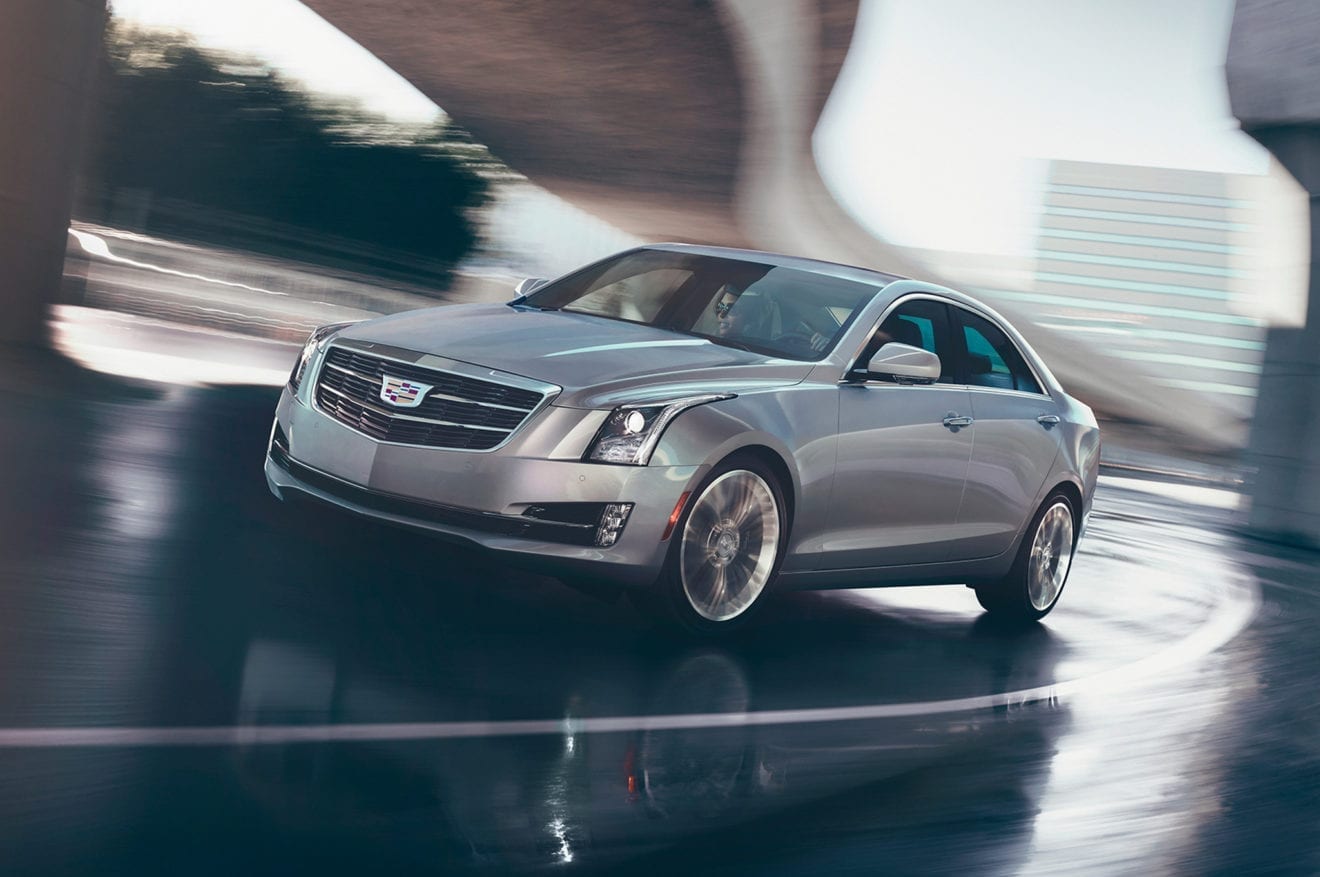
    General Motors’ Cadillac luxury brand expects its China sales to surge 60 percent in 2017, faster than it had projected at the start of the year, on strong demand from younger buyers, the brand’s country chief said.

    The GM premium brand, which saw a sharp spike in sales after it opened its first dedicated factory in the country last year, had said in January that China sales would continue growing at a double-digit rate but at a slower pace than the roughly 50-percent growth it posted in 2016.

    Cadillac, relatively late to introduce local production in the world’s biggest auto market, is among a second wave of luxury car brands in China that seek to take market share from established brands such as BMW (BMWG.DE), Daimler’s (DAIGn.DE) Mercedes-Benz, and Volkswagen’s (VOWG_p.DE) Audi.

    In order to sustain the momentum in Cadillac sales in China, the brand plans to double the number of retail stores over the next five years to more than 300, from the current 180.

    “A lot of younger people in China are looking for something different to stand out of the crowd. We have a very young target audience. That is a significant difference to the other countries in the world,” Cadillac’s China chief, Andreas Schaaf, told Reuters in an interview on Friday.

    The average age of Cadillac buyers in China is 33 years, compared to 50 years in Europe and the United States combined, Schaaf said.

  • L’Occitane ‘bullish’ on China

    L’Occitane ‘bullish’ on China

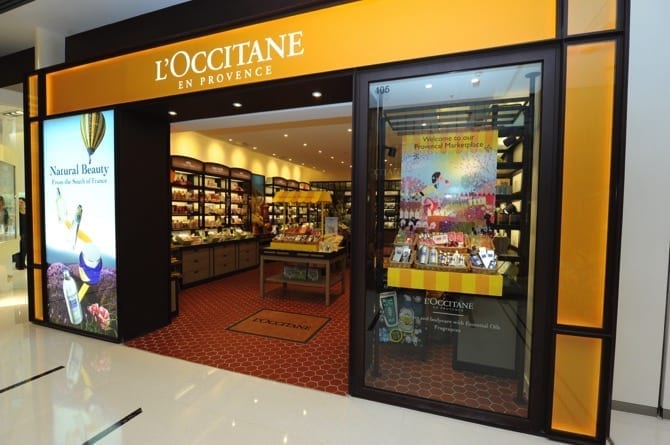
    L’Occitane International, the French cosmetics and personal-care products company, said it was optimistic on its outlook for mainland China, despite what it called a “challenging” global retail environment.

    “We are still very bullish on China,” Andre Hoffmann, vice chairman and managing director, said at a press conference in Hong Kong.

    “Today, China is the No. 3 market globally for the L’Occitane group,” Hoffman said. “We expect by the end of the fiscal year it could reach the No. 2 market status after Japan,” surpassing the U.S.

    The comments came as the Hong Kong-listed company reported a drop in fiscal first-half net income for the period ended 30 September 2017.

    Net sales in China for the first half were 60 million euros ($70.7 million), up 18.2% from a year earlier, boosted primarily by a 15.8% increase in same-store sales, the company said in a statement, adding that a marketing campaign featuring Chinese singer Lu Han “continued to draw traffic both online and offline.”

    While the company maintains its own e-commerce website in China, Hoffmann noted that “it really cannot compete in terms of traffic and awareness with the major marketplaces like [Alibaba Group Holding’s] Tmall.”

    “It is better that we focus our energy and investments to build up the brand through Tmall,” he said.

    L’Occitane said first-half net profit fell 59.4% to 10.7 million euros compared with 26.4 million euros in the same period a year earlier.

    Thomas Levilion, executive director and group deputy general manager of finance and administration, attributed the drop to unfavorable exchange rates, one-off costs and seasonal effects.

    Those included expenses related to the opening of two new flagship stores in London and Paris, marketing and promotional costs in preparation for the important Christmas shopping season, and a tax credit of 6.5 million euros in the year-earlier period.

  • Dolce & Gabbana Vietnam flagship store opens

    Dolce & Gabbana Vietnam flagship store opens

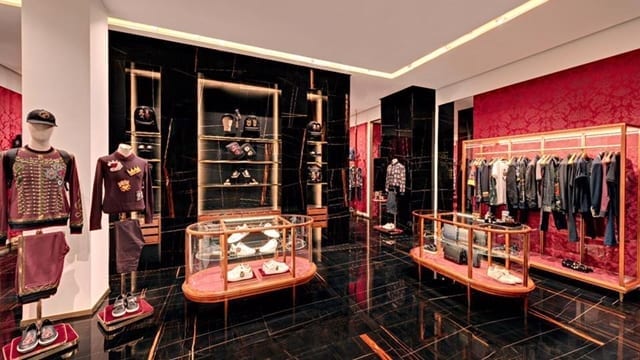
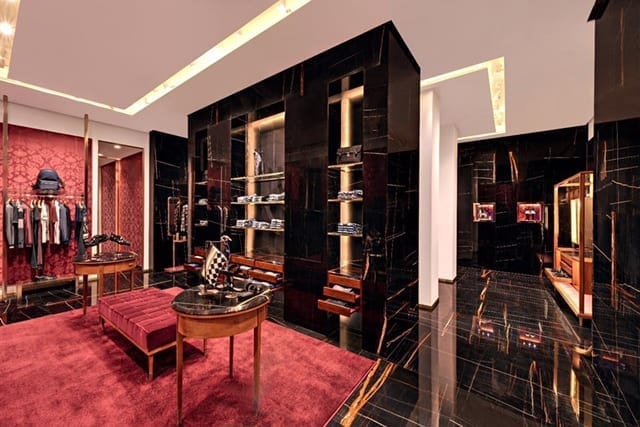
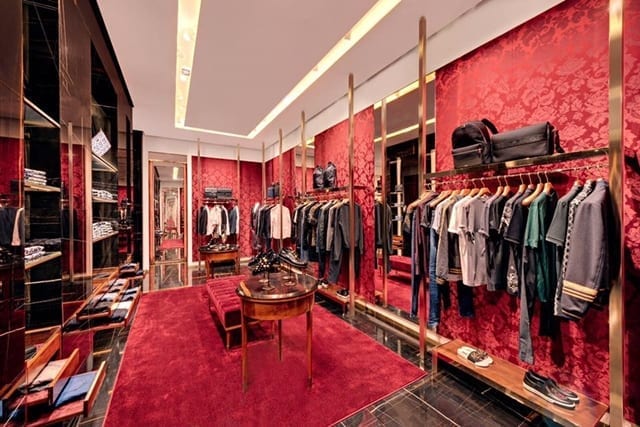
    Dolce & Gabbana Vietnam has officially opened its flagship store after testing the market with a pop-up in January.

    In Rex Arcade inside Ho Chi Minh City’s Rex Hotel, the Italian luxury fashion brand’s store offers women’s and men’s ready-to-wear, shoes and accessories.

    Dolce & Gabbana was brought to Vietnam by ACFC, a subsidiary of distribution company Imex Pan Pacific (IPP) Group, which also handles such brands as Burberry, Chanel, CK and Salvatore Ferragamo.

    To celebrate the flagship’s opening, Dolce & Gabbana Vietnam hosted a party attended by D&G CEO Alfonso Dolce and senior VP for Asia Pacific Grace Zhao, plus IPP executives and celebrities.

    Along with the opening, D&G introduced its international campaign #DGclone to Vietnam. The campaign is built around a world tour by the brand’s two mascots – lifesize characters representing D&G founders Domenico Dolce and Stefano Gabbana.

  • Vietnam’s top taxi firm wheels out motorbike service in the race against online taxi

    Vietnam’s top taxi firm wheels out motorbike service in the race against online taxi

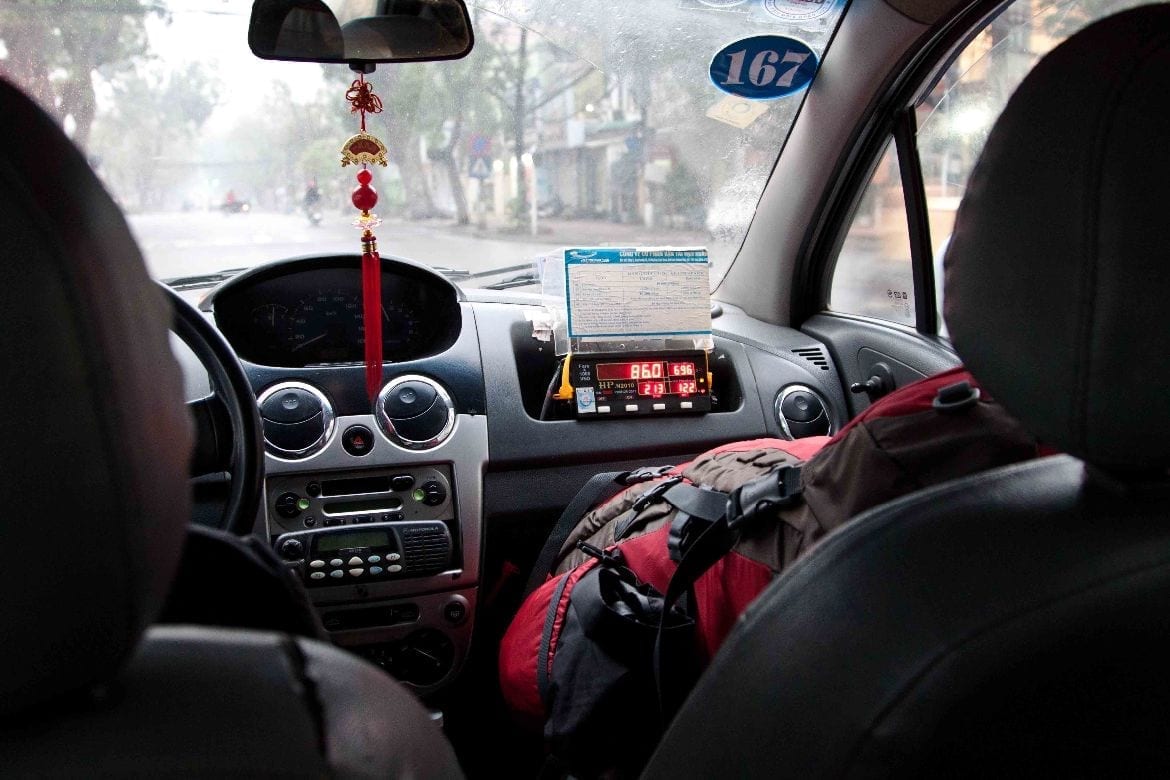
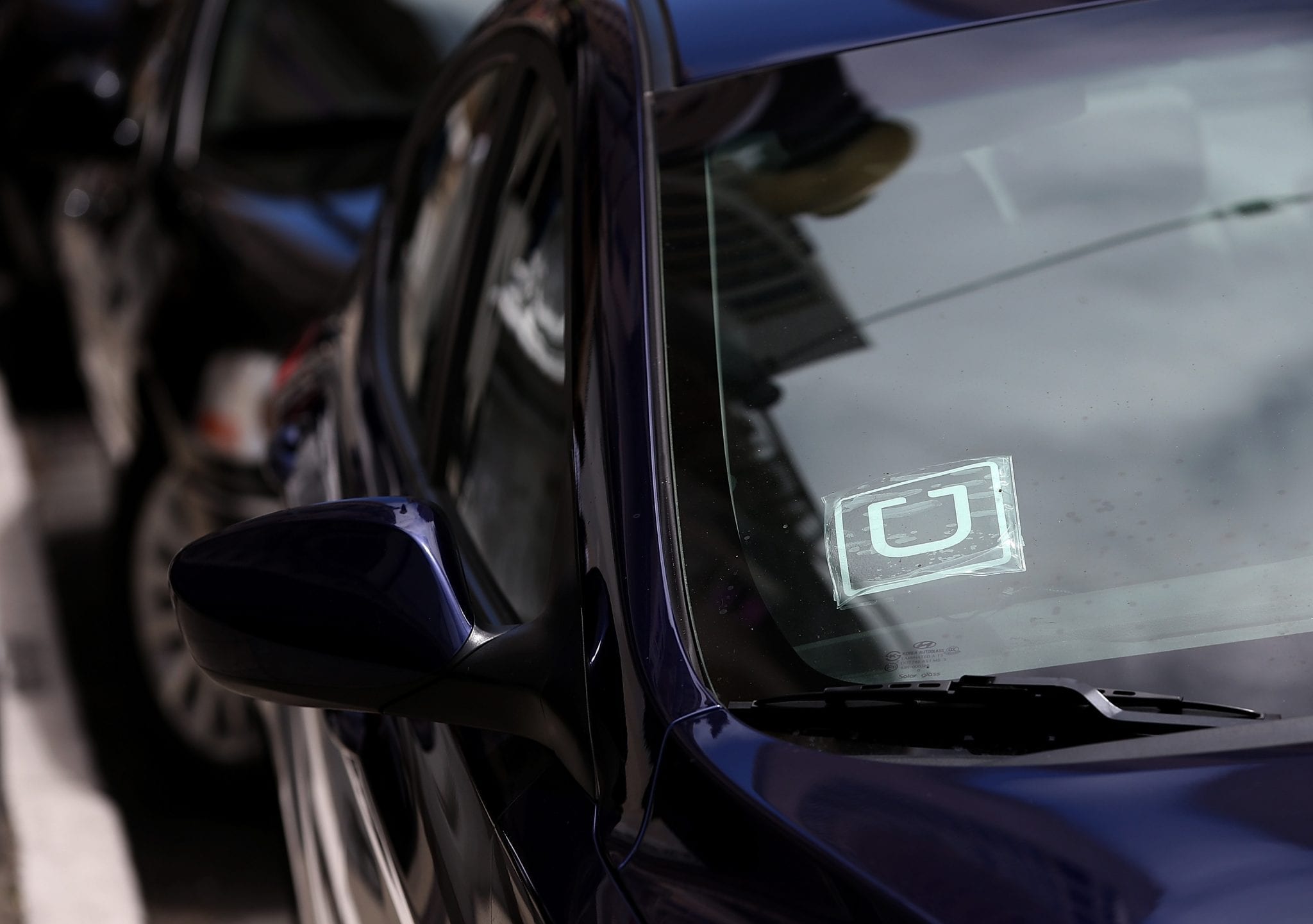
    Major Vietnamese taxi company Mai Linh on Monday launched its own motorbike hailing app in its latest attempt to claw back customers from Uber and Grab, the ride-hailing firms from the U.S. and Malaysia that have been outshining local cab firms.

    The app, Taxi Mai Linh, is now available in Ho Chi Minh City, Hanoi and Da Nang, and has around 5,500 drivers.

    Ho Huy, Mai Linh’s chairman, said what makes his company’s new service different from Uber and Grab is that the fare is kept constant at VND11,000 (48 cents) for the first two kilometers and then drops to VND3,800 per kilometer from the third kilometer onwards.

    Uber and Grab charge their passengers similar rates but raise fares during rush hours and bad weather.

    He also said the company will run a campaign to encourage traditional xe om drivers to join its team in an effort to avoid fights between them and tech-savvy drivers, something that both Grab and Uber have experienced.

    So far, the strategy seems to be working, and many Uber and Grab drivers have shown up at Mai Linh’s door to switch sides.

    “I applied because I heard Mai Linh is offering a better deal for its drivers,” said Cuong, who has worked as a GrabBike driver for over a year.

    “My income has fallen because Grab now deducts up to 20 percent of the fares that drivers receive from passengers instead of 15 percent as before, and more and more people are working as GrabBike drivers, which means more competition,” he said.

    Uber takes a cut of 25 percent from its drivers.

    Mai Linh’s drivers will not have to hand over any of their earnings for the first two months, after which time the company will take a 15 percent share.

    Mai Linh reported that it lost 6,000 employees in the first half of this year, or 20 percent of its total drivers.

    Its business results did not read much better during the same period, with revenue falling more than 5 percent on-year to VND1.72 trillion ($75.8 million).

    In all, Mai Linh suffered a loss of VND47.5 billion from its taxi business, twice as much as last year, the company said.

    Its rival Vinasun, the biggest taxi firm in Vietnam, lost 10,000 employees in the first nine month, and its  revenue in that period only reached 58 percent of the company’s annual target.

    They have both pointed the finger at Uber and Grab, saying the two foreign firms enjoy preferential policies as they are classed as transport software providers which, unlike traditional taxis, are not accountable for passenger and traffic safety.

    In its latest attempt to battle Uber and Grab, Vinasun has rolled out a hailing servicevia Facebook Messenger.

  • Retailers embrace e-commerce as customers shop more online

    Retailers embrace e-commerce as customers shop more online

    Helping pave the way to business success in e-commerce is the Electronic Transactions Development Agency (Public Organisation), or ETDA.

    The agency, an arm of the Ministry of Digital Economy of Society, conducts annual surveys profiling the actions of Internet users in Thailand. This year’s survey found that the top five most popular activities are: 1) communication through social network sites such as Facebook, Line, etc., 2) searching for information, 3) email correspondence, 4) watching TV or listening to online radio, and 5) online shopping.

    “It is a delight to say that online shopping was the fifth most popular activity for this year, while last year this activity was in the eighth ranking,” said the agency’s executive director, Surangkana Wayuparb.

    Surangkana said the Internet Market Report provided by the Office of National Broadcasting and Telecommunications Commission (NBTC), revealed that about 43.87 million people in Thailand accessed the Internet last year.

    “With compound annual growth rate at 20.2 per cent from 2000 to 2016, we expect that in the next five years the number of Internet users in Thailand will reach 46.48 million by 2021,” she said.

    Surangkana said that the value of e-commerce in Thailand is projected to increase by not less than 10 per cent per annum over the next five years. Her agency is working to maintain that momentum.

    “Last year, we at ETDA, in cooperation with the Office of SMEs Promotion (OSMEP), launched the ‘SMEs Go Online’ campaign to encourage small and medium entrepreneurs to rely on e-commerce activity as another tool to boost sales,” said Surangkana.

    An e-directory would be established this year, she added, with individual entrepreneurs contributing to verify business details and build the confidence of international business contacts.

    She said that Thailand is seen as a country ready to participate in e-commerce after changing its business operations to support Internet-related activities. Already, most entrepreneurs are increasingly using social media to support their businesses, including Facebook and Line.

    Surangkana said that private companies in Thailand are facing up to the challenge of orienting themselves to the government’s Thailand 4.0 initiative, and finding commercial benefit from Internet use.

    Surangkana said both retailers and consumers are increasingly attracted to e-commerce, to the tune of Bt2.5 trillion in transactions in 2016. Leading the pack in value is retail e-commerce (B2C), where Thailand is out front within the Asean block. Buyers are increasingly embracing this new way of shopping, raising expectations that the Thai e-commerce market will grow to Bt2.8 trillion this year, up 9.86 per cent.

    “This year, we aim to support Thai e-commerce entrepreneurs to move into the bigger marketplaces,” said Surangkana. “Business matching activity will be organised to help the strong Thai e-commerce entrepreneurs meet with major international buyers such as importers from China and Hong Kong who need quality products and services from Thailand.”

    As well, her agency will help create networks, connecting e-commerce beginners to those with knowledge to share. “Those who are thinking of starting an e-commerce business will be able to get started properly under the guideline and guidance of e-commerce gurus,” said Surangkana.

    ETDA will host “Thailand e-Commerce Week 2017” between November 24 and 26 at the Plenary Hall 1-3, Queen Sirikit National Convention Centre. The forum will be a platform for all kinds of entrepreneurs to learn how to create business opportunities and potential success through developing their e-commerce. The week’s opening ceremony will be presided over by Deputy Prime Minister Air Chief Marshal Prajin Juntong, who will also speak on the topic of “How could the national strategy support e-commerce?”

    Prajin will also chair a “people’s choice” awards ceremony honouring e-commerce entrepreneurs.

    Speakers from leading Thai and foreign companies, including Central Group and Thai Beverage, will share their e-commerce experiences with participants.

  • Victoria’s Secret gala stumbles across the line in China

    Victoria’s Secret gala stumbles across the line in China

    The glitzy Victoria’s Secret fashion show stumbled across the finish line Monday night in its first-ever China staging after a run-up marred by setbacks and reports of political interference by Beijing.

    Models breezed down the catwalk sporting elaborate feathered wings and billowing trains as the US brand held the racy show in Shanghai in hopes of making a splash in the country’s growing lingerie market to offset declining American profits.

    But the show, now in its 23rd year, suffered a blow when top US model Gigi Hadid announced Friday she was withdrawing.

    She gave no reason for the decision but it came after Chinese internet users savaged the 22-year-old over a video clip showing her squinting her eyes in an apparently derogatory facial expression.

    US media also reported that singer Katy Perry was expected to headline the musical acts but was denied a visa by China. Instead, England’s Harry Styles led the way.

    The reports suggested that China was upset that Perry had previously draped herself in the flag of diplomatic rival Taiwan and performed in colors implying support for those on the island opposing closer relations with China.

    Neither Perry, Victoria’s Secret, nor China’s government have confirmed the reports but the state-aligned Global Times suggested in an editorial Sunday that Hadid and Perry had “dropped a stone” on their own feet.

    “Payback was unavoidable. Those who are serious about developing careers in the Chinese market can draw lessons from this case and learn to abide by the rules in China,” it said.

    Tripped up

    The stumbles continued Monday night at Shanghai’s Mercedes-Benz arena, whose exterior was bathed in garish pink.

    A system breakdown slowed the entry of the thousands of invited guests, delaying the show’s start, and the Chinese crowd largely resisted entreaties to show much enthusiasm.

    According to reports, as part of its China charm offensive Victoria’s Secret selected a record seven Chinese women to be among the 55 models.

    But one of them, Ming Xi, tripped on her costume and went down hard on the catwalk, triggering an outpouring of sympathy on the Chinese internet.

    Read also: Victoria’s Secret to charm China with fashion gala

    The scene is certain to be excised when the edited production airs in more than 190 countries on November 28.

    Earlier during make-up, China’s top model Liu Wen, a veteran of several Victoria’s Secret shows, told AFP that Monday’s version was “even more special” to her this year because it was held at home.

    “We can be thankful that China is such a big market, so there could be so many Chinese faces appearing. So personally I feel proud of my own country,” Liu, 29, said.

    Victoria’s Secret is hoping to win a slice of that market, opening its first two super-stores in China this year, in Shanghai and Chengdu.

    The company’s US sales have sagged, with analysts blaming its slow-footed response to a trend away from constructed bras towards more comfortable intimate wear.

    Victoria’s Secret is banking on its name recognition and on top models like Adriana Lima and her Chinese counterparts winning over women in China who are increasingly interested in expressing their sexuality, say social and fashion analysts.

    Lingerie is one of the fastest-growing segments in Chinese women’s apparel, according to market-intelligence firm Mintel.

    Mintel predicts it will grow to 148 billion yuan ($22 billion) by 2020, up 32 percent from 2015 numbers.

    The show’s priciest piece of lingerie was the annual “Fantasy Bra”.

    This year’s version, worn by Brazil’s Lais Ribeiro, was a $2 million creation by Swiss-based luxury-goods company Mouawad, studded with nearly 6,000 gemstones.

    Matthew Crabbe, Mintel’s regional trends director, said the fashion show was “a great way to raise consumer awareness”.

    But he added that Victoria’s Secret was entering “a tough retail market with many competitors”, both foreign and domestic.

    US fashion media have also run unconfirmed reports that three Russian and one Ukrainian model were denied visas.

  • Alibaba to buy major stake in Taiwan’s RT-mart business in China

    Alibaba to buy major stake in Taiwan’s RT-mart business in China

    Alibaba Group Holding Ltd., China’s biggest e-commerce company, agreed to acquire a stake in a hypermarket chain partly owned by the Taiwan-based company Ruentex Group in its effort to push into offline retail.

    Alibaba said on Monday that it would invest US$2.87 billion for a 36.16 percent stake in China’s top hypermarket operator, the Hong Kong-based Sun Art Retail Group, which operates more than 440 RT-Mart and Auchan stores in China, reported CNA.

    Under the agreement between the three companies, the deal would give French retailer Groupe Auchan, China’s Alibaba Group and Taiwanese conglomerate Ruentex 36.18 percent, 36.16 percent and 4.67 percent stakes respectively in Sun Art.

    According to Financial Times, the investment is the latest in a series of deals by Alibaba designed to blur the lines between online shopping and physical stores and explore new opportunities in China’s food retail sector.

    Ruentex, meanwhile, said the deal will help the three partners to create a strategic alliance in the retail market in China.

    Ruentex Vice Chairman Peter Huang said in a statement: “Ruentex is delighted to see the win-win collaboration between Sun Art and Alibaba with high synergies in online and offline that will meet the needs of consumers for a better life with better products and services and higher efficiency.”

    Ruentex Group is a Taiwan-based company principally engaged in the manufacture of textile products, the wholesales of commodities and investment businesses.

  • Global coal price hike could cost Vietnam $1.27 billion per year

    Global coal price hike could cost Vietnam $1.27 billion per year

    The global price of coal has doubled since the beginning of 2016 and could result in Vietnam spending an additional $1.27 billion per year on the fuel by 2021, new analysis has revealed.

    The current market price of thermal coal has risen to $100 per ton, twice the amount recorded earlier last year, according to research from the Australia-based Institute for Energy Economics and Financial Analysis (IEEFA).

    Last year, Vietnam imported a net volume of 12 million tons of coal, a staggering increase of 131 percent against 2015, and the country’s net coal imports will stand at 35 million tons per year by 2021, according to the International Energy Agency (IEA).

    At current market prices, that would cost Vietnam $3.5 billion per year.

    Compared with projections made last year, which said Vietnam would have to spend $2.8 billion at a predicted price of $80 per ton, the country will end up spending an extra $1.27 billion every year on importing foreign coal by 2021, the IEEFA calculated.

    According to the institute, rising coal imports create commodity price and currency risks for Vietnamese electricity consumers that have a negative impact on the current account deficit.

    “The doubling of the coal price from $50 in January 2016 to almost $100 today is largely as a result of a Chinese policy aimed at an orderly coal market transition by maintaining a degree of profitability for domestic Chinese coal miners, while the central government forges ahead with an accelerating transition to clean energy. China is set to install 50 gigawatts of solar in 2017 alone, a global record for a single country in a single year,” it said.

    “The fluctuating market of 2017 illustrates the extent to which coal is a major threat to the health of the Vietnamese budget,” said Tim Buckley, director of Energy Finance Studies at the IEEFA.

    “For countries experiencing significant sustained economic growth, it also further validates the imperative to diversify Vietnam’s electricity sector generation base to incorporate more alternative sources of domestic supply, namely renewable energy infrastructure, which continues to see cost reductions of more than 10 percent every year,” he was quoted as saying in a statement released on Wednesday by the IEEFA.

    In Vietnam, which has switched from a coal exporter to a coal importer over the years due to overexploitation, the development of green-power projects has only just started and investors are still struggling due to low buying prices.

    The Ministry of Industry and Trade in September asked the government to raise the buying price for wind power in an effort to help investors cover high input costs.

    Tran Vinh Thong, an official from Thuan Binh Wind Power Joint Stock Company that operates a wind power plant in south-central Vietnam, told VnExpress in September that “the biggest problem about investing in wind farms is the low buying prices and the time it takes to recover the investment”.

    The ministry suggested that the price should be lifted to 8.7 cents per kilowatt-hour (kWh) for wind energy projects on land and 9.95 cents per kWh for offshore plants.

    Since 2011, the buying price for wind energy has stood at 7.8 cents for all land-based projects in Vietnam, with 6.8 cents paid by State-run power monopoly Vietnam Electricity (EVN) and the rest coming from the country’s Environment Protection Fund.

    For the country’s only offshore plant in the southern province of Bac Lieu, the current price is 9.8 cents per kWh.

    The total wind power capacity in Vietnam is predicted to reach 206MW this year, 456MW next year and 800MW in 2020.

    The country is trying to generate enough energy to sustain national growth and to connect the millions of people who still do not have access to power, while gradually shifting towards clean and low-carbon energy.

    Last year, the government revised down its output target for coal-fired power plants to 53.2 percent of the country’s total power generation by 2030 from the 56.4 percent previously projected.

    Vietnam is aiming to produce 10.7 percent of its total electricity through renewable energy by 2030, mainly through solar and wind energy, up from 6 percent as previously planned.

    Nguyen Anh Tuan, a senior energy official at the industry and trade ministry, told VnExpress in June that the government had raised the buying price for solar power from 7.8 cents to 9.35 cents per kWh, offered investors tax incentives and cut land use fees in an effort to reach this goal.

    He said investors in wind power projects will likely have the same incentives in the near future.