Tag: asia

  • Singaporean auto firm ups stake in Vinamilk

    Singaporean auto firm ups stake in Vinamilk

    Singapore’s biggest auto group Jardine Cycle & Carriage has bought an additional 1.1 percent stake in Vietnamese dairy firm Vinamilk, raising its current share in Vietnam’s biggest listed company to 10 percent.

    The investor bought 16.4 million more shares for VND3.1 trillion ($136.5 million) over the weekend.

    Last Monday, Jardine Cycle & Carriage spent $400 million on 48.8 million shares in Vinamilk after purchasing 48.3 million of shares for $396 million on November 10.

    The two deals gained it a 8.9 percent stake in the company, and with the latest deal it now owns 145.6 million Vinamilk shares, representing a 10 percent stake, the company announced on its website.

    Foreign investors currently hold a 56.4 percent stake in the dairy firm.

    Jardine Cycle & Carriage is now the third biggest shareholder after Singapore’s Fraser&Neave, which has a 18.74 percent stake.

    Vietnam’s State Capital Investment Corporation holds the majority share with a 36 percent stake.

    The government is trying to divest from hundreds of state-owned enterprises, including brewers Hanoi Beer Alcohol and Beverage JSC (Habeco) and Saigon Beer Alcohol Beverage Corp (Sabeco) in which it owns a combined $7.8 billion worth of shares by market value.

  • Facebook launches Creator app for influencers

    Facebook launches Creator app for influencers

    Facebook wants to turn mindless, passive video consumption into “time well spent,” and now it is giving social media stars a powerful tool to foster communities around their content.

    On 17 November 2017 Facebook launches Facebook Creator, offering influencers Live Creative Kit for adding intros and outros to broadcasts, a unified inbox of Facebook and Instagram comments plus Messenger chats, cross-posting to Twitter and expansive analytics.

    Facebook promised the Creator app back in June at VidCon and today it launches globally on iOS with Android planned for the coming months. It is actually a rebrand and update of the 2014 Facebook Mentions app that was only available to verified public figures and Pages, but now is open to everyone. Weirdly, it still appears as “Mentions” in the App Store for now.

    Any individual profile or Page can download Creator for access to the enhanced fan engagement tools. Facebook is also launching a Facebook for Creators website with best practices for growing fan bases, examples of what other stars are doing and access to answers of frequently asked questions.

    “It is a big priority for us to bring people closer together around meaningful content and the people who are meaningful to them,” Facebook’s VP of video product Fidji Simo tells me. “Creators are right at the intersection of everything we think is pretty unique about Facebook.”

    And after CEO Mark Zuckerberg declared on this month’s earnings call that “time well spent” via video is Facebook’s new objective, the Creator app could help it make Facebook video a lot less isolating than watching TV.

    “The idea was there to give them a one-stop-shop for all the functionality to manage their presence on the go,” Simo explains about the Creator app, which breaks down into four parts.

    Live Creative Kit

    This bundle of tools lets users add intros, outros and custom emoji reactions to their live broadcasts. Creators go on Facebook’s site, upload an intro like a theme song or welcome, and an outro like a call to follow them across social media.

    Those can then be enabled in the Creator app so they play at the start and end of the broadcast. Simo notes that “[Creators] were saying Live is cool because it’s raw and authentic, but they’d like to be able to introduce every time what their show is about or what the theme is about.”

    Graph frames let makers add a pretty border to their videos for a more immersive feel. And custom reactions let creators replace one of the six default “haha,” “‘angry” or “wow” alternatives to the standard “Like” with a graphic of their choice.

    That could tie in with the theme of their broadcast or personality. For example, Simo says feel-good video star Markian could add an especially toothy smile reaction to entertain his fan club group on Facebook, the #SmileSquad.

    These features push Facebook Live well beyond the capabilities of Twitter’s Periscope, and could make it more viable than YouTube Live.

    Unified inbox & Unified Sharing

    Rather than having to constantly jump between Facebook, Instagram and Messenger, Facebook is putting all of a creator’s comments and messages in a single inbox with Creator. That could make it much more streamlined to actually hold a conversation with fans or respond to comments instead of just being an old-school one-way broadcaster. Same will work for the dissemination of the content, which could be automatically shared on different platforms, Twitter included.

    For Creators trying to moderate their comments reels, combining Instagram and Facebook could reduce the time it takes to scrub abusive trolls. And the more ravenous the community and clean the comments, the more interested brands will be to advertise on Facebook video and sponsor the stars.

    One thing sorely missing from Facebook Creator is new ways for influencers to monetize. There’s no subscriptions or tipping, and they cannot even inject revenue-sharing ad breaks into their videos.

  • Casino investors counting on a full house in Vietnam’s fledgling gaming industry

    Casino investors counting on a full house in Vietnam’s fledgling gaming industry

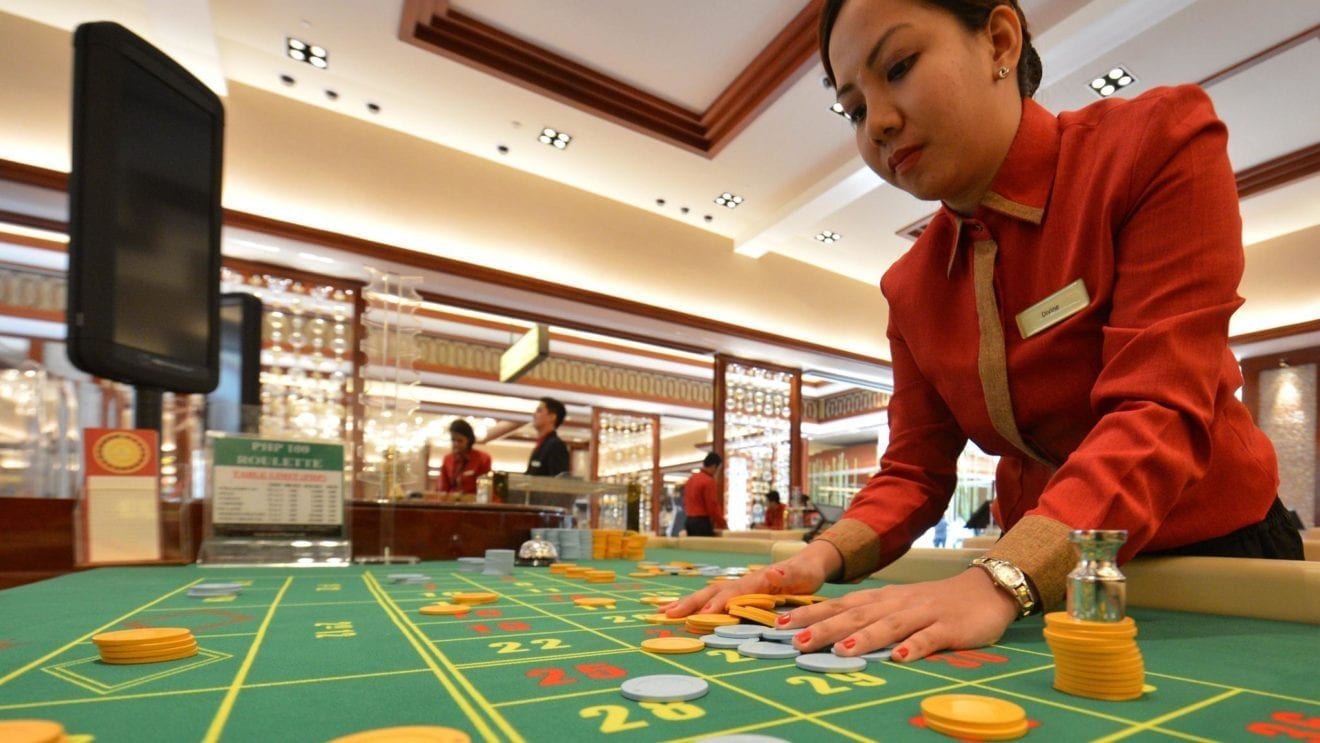
    Macau’s biggest junket operator Suncity Group plans to pour billions of dollars into building a resort in Vietnam’s popular resort town of Hoi An, Bloomberg reported.

    The group has teamed up with Vietnam-based closed end fund VinaCapital and Hong Kong-based conglomerate Chow Tai Fook to build the $4 billion integrated resort and casino in the coastal town, which is scheduled to open in 2019.

    Suncity owns 34 percent of the coastal project through its Hong Kong-listed subsidiary and has a management contract to operate the casino.

    The group is one of a number of companies that have been eying Vietnam’s gaming business expansion, especially now the country has loosened regulations on gambling.

    Singaporean resort developer Banyan Tree Holdings has also asked the government to license a casino at the Laguna Lang Co resort development.

    The resort, located about an hour by road north of Da Nang International Airport, has more than 300 hotel rooms and villas plus a golf course, spas, residences and a conference center. The second phase of development at the complex will include more hotel rooms, residences and a casino, if permission is granted.

    Vietnam’s decision to allow locals to roll the dice in casinos for the first time is one of the reasons for the surge in gaming investment. Before the law was changed only foreigners were allowed in casinos.

    Earlier this year, the Vietnamese government announced that from mid-March and for a three-year trial period, citizens aged over 21 with a monthly income of at least VND10 million ($445) will be allowed to gamble in local casinos. Similar to rules governing gambling in Singapore, Vietnamese people are charged VND1 million per day or VND25 million per month as an entry fee.

    The country’s average annual income was around $2,200 last year.

    Vietnamese people are big fans of gambling, so the new regulation was expected to help casinos attract more customers.

    A study by Augustine Ha Ton Vinh, an academic who has researched Vietnam’s gaming industry extensively, showed Vietnamese spend an estimated $800 million each year gambling abroad in places such as Macau, Singapore and just across the border in Cambodia.

    Hoping to tap tourists and possibly domestic gamblers, local property conglomerate FLC Group has plans to build a casino resort in the Van Don Special Economic Zone in northern Vietnam. Quang Ninh Province’s People’s Committee has recently given the firm the go-ahead to build the 4,000-ha complex, including a casino, five-star hotel, convention center and golf course on the islands of Ngoc Vung and Van Canh at a cost of $2 billion.

    Gaming companies are interested in the casino business in Vietnam because the industry is still new and there’s little competition, said Nguyen Ngoc Thanh, vice chairman of the Vietnam Property Association.

    Those that arrive here first could easily dominate the market and maximize their profits, he added.

    In addition, the Vietnamese government has recently reduced obstacles for would-be casino developers. Hanoi used to require a minimum investment threshold of $4 billion, but that figure has been revised down to $2 billion as part of a recent decree.

    With about 30 gaming facilities, Vietnam could generate as much as $1.2 billion in gross gaming revenue each year, according to a Grant Govertsen, an analyst with Macau-based Union Gaming Securities Asia.

    Vietnam’s eight recently-licensed casinos, mostly small, generate an estimated $300 million in gaming revenue, according to Forbes magazine.

    Vietnam unwavering on casino ban for locals

    Motorists ride past a sign for Do Son Casino, made of images of playing cards, in Vietnam’s northern port city of Hai Phong.

    Not a surefire bet

    Despite investors’ eagerness to open casinos in Vietnam, it has not been that easy to attract gamblers, and many casinos have been performing below expectations.

    The Grand Ho Tram Strip is an example.

    In 2016, the Ba Ria-Vung Tau-based resort, which opened in July 2013 with 541 hotel rooms and a casino with 90 tables and about 500 gaming machines, was losing up to $3 million a month, Nikkei Asian Review quoted Ben Lee, who acted as a consultant for Ho Tram in its early stages, as saying.

    Former head of the Foreign Investment Agency under the Ministry of Planning and Investment Phan Huu Thang said casino complexes have failed to attract gamblers because of poor services.

    Most casino complexes in Vietnam are small-scale and only offer gaming. They do not provide entertainment or shopping services, he said.

    Meanwhile, some casino managers have blamed their losses for a lack of Chinese gamblers, the main clientele for most casinos in Vietnam, citing the case of the Royal International Corporation.

    The firm, which runs the only casino in Vietnam’s famous Ha Long Bay, said in a new financial report that its losses in the third quarter had jumped 23 times from a year ago to more than VND69 billion ($3.04 million).

    That added to a VND100 billion ($4.4 million) loss in the first nine months, a fourfold increase from 2016, the company said.

    Most of the losses were incurred by its casino operation, but its villa business also played a small part, it said.

    Some experts have warned that Vietnam needs to carefully consider licensing more new casinos as they could saturate the market.

  • Vietnam approves Alibaba’s online payment platform

    Vietnam approves Alibaba’s online payment platform

    Chinese e-commerce conglomerate Alibaba has signed an agreement with the National Payment Corporation of Vietnam (NAPAS) that will allow Chinese tourists to use its online payment platform in Vietnam.

    The agreement with Ant Financial, Alibaba’s financial services arm, will enable Chinese travelers to use the Alipay platform throughout Vietnam via NAPAS member banks and its intermediary payment service networks, according to business technology websites.

    Under the agreement, people with cards issued by NAPAS member banks in Vietnam will be able to use Alipay to make purchases on Alibaba’s websites, such as AliExpress and Taobao.

    NAPAS is the only intermediary payment service provider licensed by the central bank to provide electronic payment services in Vietnam. The corporation operates an inter-bank connection system with tens of thousands of ATMs run by 43 banks, including Vietnam’s top lenders Vietcombank, Vietinbank and BIDV.

    “The collaboration with Alipay is part of our strategy to expand international cooperation and to explore new payment solutions,” NASPAS chairwoman Nguyen Tu Anh said.

    Official figures showed that more than 3.2 million Chinese tourists visited Vietnam in the first 10 months this year, up 45.6 percent from a year ago and accounting for nearly a third of foreign arrivals. Alipay, which has more than 520 million daily users globally, has been expanding its global presence along with China’s rising outbound travel. A Bloomberg report last December, citing Credit Suisse figures, said a 30 percent increase in spending by Chinese tourists would boost Vietnam’s gross domestic product by nearly 1 percentage point.

    The payment service entered the Australian market late last year under a similar agreement with the Commonwealth Bank of Australia.

    News of the deal with NAPAS comes a week after Alibaba founder Jack Ma visited Hanoi and spoke at a prominent e-payment forum co-hosted by NAPAS.

    At a meeting with Vietnamese Prime Minister Nguyen Xuan Phuc, Ma said he would consider establishing a store for Vietnam on Alibaba’s e-commerce app.

  • Grana Group bulks up with venture debt

    Grana Group bulks up with venture debt

    After raising US$16 million in venture funding from backers including Alibaba, online apparel brand Grana Group has boosted its coffers with an undisclosed amount in venture debt.

    The three-year-old online fashion startup will use the funds, from Hong Kong asset manager STI Financial Group, to improve its cash-flow management and advance its use of artificial intelligence for customer engagement. Using venture debt means the company can grow its business without having to dilute its share capital while working toward series-B funding at the end of next year, reports Deal Street Asia.

    Based in Hong Kong, the startup was founded by Australian entrepreneur Luke Grana. Its earlier funding included $6 million in seed money and $10 million as a series-A round.

    The company has an 18,000sqft (1700sqm) global distribution centre that ships to 67 markets. It has also opened 15 pop-up showroom-experience centres across Hong Kong, Singapore, the US and Australia.

  • Abercrombie opens eyes after a long sleep

    Abercrombie opens eyes after a long sleep

    After an extended run of decline, Abercrombie & Fitch is finally back with a market-beating 4.5 per cent uplift in total sales.

    Although the result comes off the back of a weak prior year comparable, it nevertheless provides comfort that the group’s strategies are starting to bear fruit.

    As good as the headline figure is, it masks disparities between A&F’s two core brands. Hollister’s 8 per cent increase in comparable sales is impressive and represents a significant acceleration from the first half of the year. Meanwhile, Abercrombie is still in the red with a 2 per cent drop in same-store numbers – a disappointing outcome, but one that marks a significant improvement over the double-digit declines the brand was previously recording.

    That Hollister is performing better than Abercrombie is not surprising. Hollister’s brand reinvention program is more advanced, and initiatives like the Club Cali loyalty program have had much longer to play out. As a result, the brand is engaging far more with its customer base and enticing them with relevant on-trend product across categories like denim and intimates.

    Abercrombie has not been neglected, but the division’s reinvention is at an earlier stage and so financial results are nowhere near as positive. Arguably, the task of finding a new voice and pitch for a brand that carries so much baggage has been far more difficult than Hollister’s reasonably gentle evolution. However, having seen the work undertaken at Abercrombie, it is clear that progress is being made and that the direction of travel is correct.

    Ditching the logos

    On the product front, there have been significant improvements in quality, especially to fabric and stitching. Subtle detailing, like more stylish buttons on shirts, has also helped to give basic garments a lift. On top of this, the big logos of the past have been firmly ditched in favour of no-branding or very subtle A+F monograms. The net effect is a range that is more mature and sophisticated, with much more emphasis on fit and function than branding.

    The new Abercrombie prototype store, which has been opened in a select number of locations, is impressive. It is revolutionary rather than evolutionary and is a significant step forward for the brand. The two most immediately striking things about the new design are how light and open it is, and how subtle the branding is. Alone, these make the shops almost unrecognisable as A&Fs.

    Beyond these significant shifts, there are more subtle changes, foremost among them a smaller footprint, with some new prototypes being around half the size of older stores. This is made possible by a much more efficient use of space and also because ranges have been thinned out.

    A&F is now putting more weight behind key items and cutting back on slower, less relevant lines.

    The consumer impact of all these changes is positive. The new format is more pleasant to shop, and the ‘less is more’ approach makes putting outfit ideas together easier. From A&F’s perspective, the new format provides financial benefits, with higher sales densities and lower rents.

    With only a few new stores open so far, the impact on Abercrombie’s sales is currently small.

    However, this should grow as the concept is rolled out further. In the meantime, there is much more work to do to reconnect the brand with customers. While initiatives like the loyalty scheme are working well, Abercrombie needs to communicate its new essence more effectively and more widely.

    Overall, Abercrombie & Fitch is still a company in transition and is not back to full health.

    However, it is now showing some encouraging signs of life.

  • Vietnam to tighten credit for high-end property developments

    Vietnam to tighten credit for high-end property developments

     Vietnam’s central bank plans to issue a circular to the country’s commercial banks instructing them to prioritize credit for low-cost housing and social housing projects while slashing loans for high-end and mid-level developments.

    Governor of the State Bank of Vietnam Le Minh Hung made the remark at a National Assembly Q&A session on Friday.

    Banks will be allowed to use no more than 50 percent of their short-term funds for medium- to long-term purposes including mortgages until the end of this year. The ratio will be slashed to 45 percent in 2018 and 40 percent in 2019, according to the draft circular revised by the central bank.

    According to the central bank, long and medium-term credit accounts for 53-55 percent of the total loans offered by commercial banks, while long and medium-term funds make up only 13-15 percent of their total mobilized capital. The unbalance in using short-term funds for medium-to long-term purposes could pose huge risks to banks, said experts.

    The central bank has also raised the risk ratio of property loans at commercial banks to 200 percent from 150 percent.

    Property loans have reached VND400 trillion ($176.12 million), accounting for 6.5 percent of total outstanding loans in the country, Hung said.

    Some legislatures have expressed concerns that banks could offer more property loans in a bid to reach the credit growth target for this year. Governor Hung quashed these remarks, saying the target was set by the government and banks are not under pressure to reach it at all costs.

    Credit growth reached 10.6 percent in the first nine months of this year, leaving the annual growth target of 18-20 percent seemingly out of reach.

  • Europe turns on Facebook, Google for digital tax revamp

    Europe turns on Facebook, Google for digital tax revamp

    With public coffers still strained years after the worst of the debt crisis, EU leaders have agreed to tackle the question, spurred on by French President Emmanuel Macron who has slammed the likes of Google, Facebook and Apple as the “freeloaders of the modern world”.

    As recently as March, five of the world’s top 10 valued companies were Silicon Valley behemoths: Apple, Google’s Alphabet, Microsoft, Amazon and Facebook. (Germany’s SAP was Europe’s biggest and 56th on the global list).

    But tax rules today are designed for yesterday’s economy when U.S. multinationals — such as General Motors, IBM or McDonald’s– entered countries loudly, with new factories, jobs and more taxes for the taking.

    These firms had what tax specialists call “permanent establishment”, when companies showed a clear physical presence measured and taxed through tangible, real world assets.

    But today in most EU nations, the U.S. tech titans exist almost exclusively in the virtual world, their services piped through apps to smart phones and tablets from designers and data servers oceans away.

    Ghost-like, Silicon Valley has turned Europe’s economies upside down, but often with just a skeleton staff and some office space in markets with millions of users or customers.

    Nation-less 

    According to EU law, to operate across Europe, multinationals have almost total liberty to choose a home country of their choosing. Not surprisingly, they choose small, low tax nations such as Ireland, the Netherlands or Luxembourg.

    Thus, it is through Ireland that Facebook draws its wealth from millions of accounts across Europe. There are 33 million accounts in France and 31 million in Germany, according to recent data.

    While users enjoy the platform, Facebook tracks likes, comments and page views and sells the data to companies who then target consumers.

    But unlike the economy of old, Facebook sells its data to French companies not from France but from a great, nation-less elsewhere, with no phone number, address or physical “presence” for a customer who probably cares little.

    It is in states like Ireland, whose official tax rate of 12.5 percent is the lowest in Europe, that the giants have parked their EU headquarters and book profits from revenues made across the bloc.

    Indeed, actual revenues from advertising are minimal in France and Germany, but at Facebook HQ Ireland they grew to 7.9 billion euros, even though the vast majority does not come from the tiny EU island-nation of a mere 2.5 million users.

    Google follows the same pattern: in Germany in 2015, it had a little over 71 million users, in France just over 55 million. But in both nations, revenues are minimal.

    Yet, in Ireland, where the number of search engine users is less than five million, revenues for Google-parent Alphabet reached 22.6 billion euros in 2015.

    According to an analysis by Paul Tang, a specialist on tax issues at the European Parliament, France lost 741 million euros in tax revenue and Germany 889 million euros between 2013 and 2015 due to so-called “tax planning” by Google and Facebook.

    ‘No transparency’

    The Organisation for Economic Cooperation and Development believes that such tax schemes cost governments around the world as much as $240 billion a year in lost revenue, according to a 2015 estimate.

    “The actual activity of each company, including U.S. tech giants, is not known,” said Manon Aubry, spokeswoman for the NGO Oxfam.

    “Beyond the number of accounts or users in each country, it would be necessary to know in the case of Google for example, the amount of advertising sales in each country. We do not have it.”

    For car-ride smartphone service Uber, “we need to know the number of rides, but we don’t have it,” she said.

    “One of the first issues, therefore, is that of transparency: to rule that large companies publish data on activities and taxes paid in all the countries where they are present.”

    To the European Commission, the digital shortfall on tax is clear. The effective tax rate on the profit of digital giants in the EU averages only nine percent, while that of traditional companies exceeds 20 percent, it said.

    ‘Political crap’ 

    Apple, also based in Ireland, became one of the EU’s most emblematic tax cases when Competition Commissioner Margarethe Vestager ordered the iconic iPhone maker to pay 13 billion euros in back-taxes.

    Vestager said the U.S. giant had benefitted from illegal state aid, a gift from Ireland in exchange for choosing Dublin as its headquarters, with thousands of jobs at stake in the deal.

    Brussels says Dublin’s red carpet treatment accorded Apple an effective corporate tax rate of one percent on its European profits in 2003 — a rate that decreased to a scant 0.005 percent in 2014 — just a fraction of the official rate.

    “It’s total political crap,” Apple chief executive Tim Cook barked at the time.

    Undeterred, Vestager has gone after similar arrangements, such as those revealed in the Luxleaks scandal that exposed deals struck between Luxembourg and a long list of multinationals, including online U.S. retail giant Amazon.

    Faced with this situation, several solutions are under study.

    Driven by Macron, France has proposed an unusual idea that has so far divided Europe: tax the U.S. tech giants on sales generated in each European country, rather than on the profits that are cycled through low-tax countries.

    France says this proposal, presented by French Finance Minister Bruno Le Maire in September, has received the support of some 20 countries, including Germany, Italy and Spain.

    But there is fierce opposition from states like Cyprus, Malta, Ireland or Luxembourg — countries that have linked their EU membership to low corporate tax and thus transformed their economies from rural backwaters to financial hubs in a globalised world.

    Global, not EU, solution 

    Member states now agree that the problem would be best addressed at the international level, in the G20 or by the OECD, in order to prevent a high-tech exodus from the EU.

    Caught by surprise by the French initiative, the European Commission announced at the end of September that it will also propose solutions in 2018.

    Ideally, Brussels agrees that there needs to be a major reform of international tax rules, which would establish a closer link between the way value is created and the place where it is taxed.

    Without rejecting the French proposal, the commission wants to dust off an old project from 2011 — for a long time deadlocked because of the differences among the 28.

    Relaunched in October 2016, the idea has one of the most cumbersome acronyms ever to come out of Brussels: the Common Consolidated Corporate Tax Base or CCCTB — an ambitious bid to consolidate a company’s tax base across the EU.

    This draft legislation is currently being examined by the 28 EU member states and taxation of the digital economy could easily be included in the scope of the rules that may be adopted.

    Under the plan, all multinationals operating in the EU with total sales of more than 750 million euros would be fixed at only one place of taxation, with one tax administration.

    However, this tax would be distributed in all the countries where the company operates, and not according to the level of booked profit in each of these states, but according to the level of activity.

    This level of activity in each member state would be measured using a combination of factors, including the number of employees, the importance of tangible assets (buildings, machinery, etc.) and sales.

    French MEP Alain Lamassoure, co-rapporteur of the project, proposes to add a fourth idea: the volume of personal data collected and used by a digital platform wherever its services are used.

    But in Europe, all is made infinitely more complicated since the adoption of new European legislation on tax matters requiring unanimity of the EU’s current 28 members.

    In addition to these European proposals, the OECD is working on a global solution, which it must present to the G20 finance ministers at their next meeting in April in Washington.

    This initiative would have the merit of including Europe as well as the United States, Japan and emerging countries.

    Until last October, the United States had dragged its feet in efforts to better tax its national champions, but changed attitude. Specifically, it agreed to set up a working group with France in the OECD.

    “The Americans are in the same situation as us: their own tax system is not adapted to the current economy and they too are experiencing very substantial revenue losses that must be compensated,” EU economics commissioner Pierre Moscovici said.

    “Taxation of the U.S. tech giants is a global problem and the answer should be as well.”
  • Volkswagen to invest $27 billion in core brand until 2022

    Volkswagen to invest $27 billion in core brand until 2022

    Volkswagen will invest 22.8 billion euros ($26.9 billion) in its main car brand over the next five years, it said on Saturday, a day after it announced a spending program aimed at bolstering its position as a maker of electric cars.

    Most of that sum, around 14 billion euros, will be spent in Germany, Volkswagen said, adding that one of the key measures included a 1 billion euro injection to transform the carmaker’s Zwickau plant into a pure e-mobility facility.

    “The investment package which has now been adopted will give a decisive boost to the largest product and technology offensive in the history of the brand,” Herbert Diess, Chief Executive of the Volkswagen brand and a VW management board member, said.

    Analysts see reviving the VW brand, which has long suffered from high staff and development costs, as crucial to the group’s ability to recover from a diesel emissions scandal that has gripped the carmaker. [nL8N1N51ST]

    The investments unveiled on Saturday are part of Volkswagen’s 72 billion euro spending plan for the 2018-2022 period that was announced on Friday.

  • Japan’s FamilyMart to go to Outer Space

    Japan’s FamilyMart to go to Outer Space

    Japan’s FamilyMart is going to great heights for promotion – in fact, as far as space.

    The Japanese convenience store franchise is joining airline JAL as a sponsor for an artificial “shooting star” project that involves a satellite dropping pellets that will make a display as they burn up on re-entering the atmosphere.

    It will be a world first produced by Ale, a company founded and run by former investment banker and mother-of-two Lena Okajima, who has a PhD in astronomy. A trial run of its satellite will likely be held in 2019 over the Setouchi (Seto Inland Sea) area of Hiroshima prefecture.

    Its pellets will be designed to burn brighter and longer than natural shooting stars in a colour of the client’s choosing. The display, lasting between five and 10 seconds, will be visible within a 100km radius.

    For its “Shooting Star Challenge”, a satellite will be placed in orbit about 500km above Australia. From there it will release pellets toward Japan. These will take about 15 minutes to fall to a height of 60km above Setouchi and begin to burn. This part of Hiroshima was chosen as the test site for its popularity, scenery and clear skies.

    A single 60cm satellite is expected to hold up to 400 pellets, which it is hoped will last until the end of the craft’s year in orbit. As well as providing a pyrotechnic display, the project will also gather data on upper-atmosphere physics.

  • Shiseido Japan and China sales jump, despite Q3 net loss

    Shiseido Japan and China sales jump, despite Q3 net loss

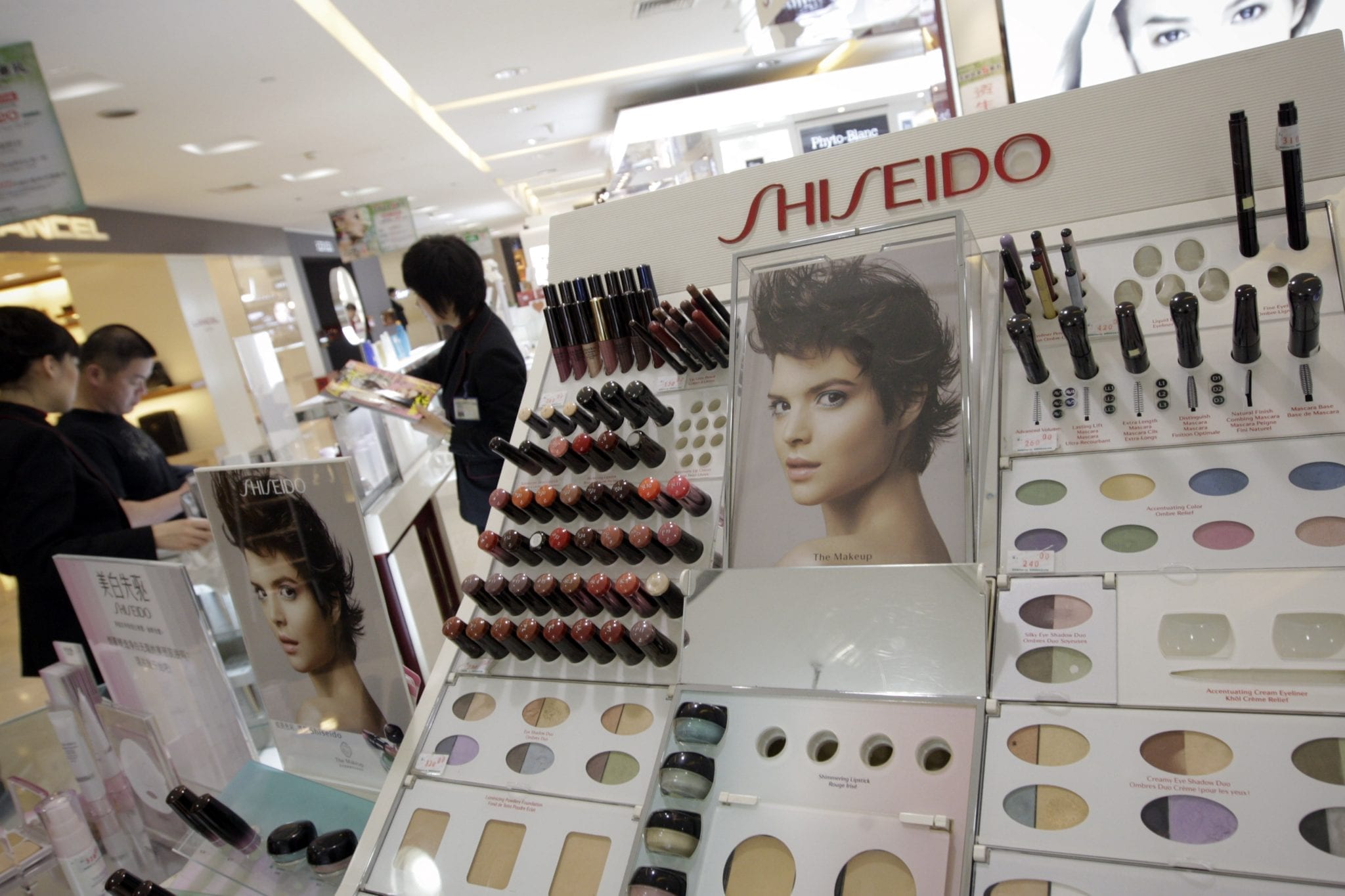
    Shiseido published a third quarter net loss, despite notable growth for the first nine months of 2017, pushed on by Asia revenues, particularly in Japan and China.

    The Japanese cosmetics group said combined turnover over the nine months rose 17.4% to 731.2 billion yen, close to 6 billion euros, according to a press release.

    However, depreciation of assets related to its struggling American subsidiary Bare Escentuals pushed Shiseido into a net loss of 17 billion yen over the nine months, compared to a net profit of 37.2 billion yen the year before,

    For the same period, operating profit jumped 82.4% to 70.7 billion yen over nine months (567 million euros), highlighting the US subsidiary sale’s negative impact on profits.

    Japan remained its strongest market, accounting for 44% of sales and revenues surged in China – which makes up 14% of total sales –as well as the rest of Asia, which continued to grow at a constant rate, said the press release.

    Conversely, European growth remained weak and sales slowed in the Americas, making up13.5% of total turnover.

    Looking ahead, Shiseido is predicting a modest annual net improvement of 5 billion yen (38 million euros).

    Earlier in the month, Shiseido relinquished firm Zotos— its Professional business division in North America to consumer goods firm Henkel for $485 million, saying at the time it plans to hone in on Asia’s professional market.

    Shiseido said in a press release the group would use the funds gained from the Zotos sales “to further pursue its strategic objectives of continuing to nurture its Prestige brands, reinforcing production capability and other activities.”

    Earlier in 2017, Shiseido appointed Nathalie Broussard to the newly created post of Scientific Communications Director EMEA, with the mission of bolstering relationships with the science and technology community in Europe, the Middle East and Africa.

  • Alibaba, Auchan, Sun Art partnership goal in China market

    Alibaba, Auchan, Sun Art partnership goal in China market

    A new Alibaba, Auchan, Sun Art partnership will further strengthen Alibaba’s efforts to integrate online and offline, say analysts.

    China’s Alibaba Group Holding, France’s Auchan Retail and Taiwan’s Ruentex Group have formed a strategic alliance to bring together their online and offline expertise to explore opportunities in China’s food-retail sector.

    As part of the deal, Alibaba is investing HK$22.4 billion (US$2.8 billion) to obtain an aggregate direct and indirect stake of 36.16 per cent in Chinese food retailer Sun Art Retail Group by acquiring shares from Ruentex.

    Auchan Retail is also increasing its stake in Sun Art, with the transaction giving it, Alibaba and Ruentex about 36.18, 36.16 and 4.67 per cent economic interest respectively in the multi-format offline food retailer.

    Sun Art had a total gross floor area of about 12 million sqm in China at June 30. It has 446 hypermarkets as large as 17,000sqm across China under the Auchan and RT-Mart banners. It also has superstores and unmanned stores under the Auchan Minute brand.

    Alibaba says the alliance reflects its “new retail” concept, while Auchan Retail says it aligns with its “Auchan changes lives” vision.

    Alibaba Group CEO Daniel Zhang says the move aims to redefine traditional retail through digital transformation. “Physical stores serve an indispensable role in the consumer journey, and should be enhanced through data-driven technology and personalised services in the digital economy.”

    ‘Positive impact’

    “Bringing together the leaders of instore retail and of online retail will allow us to offer hundreds of millions of Chinese consumers a fully integrated, world-class shopping experience,” says CEO Wilhelm Hubner of Auchan Retail, which has a presence in 17 countries with 3715 points of sale.

    “Consumer demands have changed tremendously with the rapid growth of the mobile internet, and Sun Art is also trying to move from offline to online,” says Ruentex Group vice-chairman Peter Huang.

    “I think this deal will have a positive impact for all involved,” says OC&C Strategy Consultants associate partner Veronica Wang.

    “It will further strengthen Alibaba’s efforts to integrate online and offline,” says Wang. “Alibaba has been quite aggressive in investing offline in the past two to three years with its continuous investments in the likes of retailer Suning and mall company Intime, as well as its own launch of Hema supermarkets.”

    She says the alliance could help Sun Art build digital capabilities, with the company trying to tap into e-commerce and build an O2O business since 2014, but with limited success. “Feiniu.com was the first attempt, which is still losing money after three years, and Sun Art launched cashier-free self-service convenience stores this year which are still in the stage of trial and error.”

    OC&C associate partner Steven Kwok says the move is no surprise “especially when retailers in general are finding that grocery retailing, unlike other categories thus far, has encountered greater barriers to the shift online”.

    He says Sun Art’s reach across China not only gives Alibaba an enhanced distribution network, but also serves as a testing ground for digital initiatives.

  • Ikea Malaysia’s third store attracts more Singaporeans

    Ikea Malaysia’s third store attracts more Singaporeans

    Ikea Malaysia’s new third store in Johor Baru has attracted crowds of shoppers who hopped over the border from Singapore attracted by cheaper prices.

    Southeast Asia retail director Mike King says Ikea Tebrau is accessible to about 1.8 million Malaysians living within a 60-minute drive from the outlet. It is also 16km from the Woodlands Checkpoint, but some Singaporeans who drove across the causeway at the weekend faced congestion lasting up to two hours.

    Before too long, Ikea Tebrau’s 1771 parking bays were fully occupied, with some customers resorting to parking illegally along the main road outside the store, which is the largest in Southeast Asia at 46,730sqm.

    With 54 showrooms, the store offers more than 8000 home-furnishing products. It has a 750-seat restaurant featuring the brand’s signature Swedish meatballs, and this was packed on Sunday from 11am until 3pm, with some customers queueing two hours to enter.

    Meanwhile, in another Singapore connection, the BBH Singapore agency created a humorous campaign for the new store with the tagline “Now, there’s choice”.

    The campaign features four videos, supported by digital, TV, print, outdoor and radio.

    Capturing everyday domestic life, the films were shot by Argentinian director Augusto G Zapiola.

  • Deliveroo Singapore plans its own restaurant

    Deliveroo Singapore plans its own restaurant


    Food-delivery service Deliveroo Singapore may soon run its own table-service restaurant, a potential first for a delivery app.

    The London-based startup, which launched into Singapore in late 2015, will open remote kitchens across the island next year, one of which could evolve into a fast-casual eatery, The Business Times reports.

    Known as Deliveroo Editions, these remote kitchens produce food for delivery only. They house multiple restaurant brands under one roof and can quickly make meals on order and access zones where particular restaurants do not have a presence.

    Deliveroo unsuccessfully applied for a dine-in permit at its Katong Editions site, its first kitchen, with the concept of a casual-dining food court with an alfresco area where customers could have dishes from any onsite restaurant. Now the company will explore the dine-in concept at its new Editions sites. It will also consider offering pick-up services, allowing customers to place orders through the app then collect their meals from one of the sites.

    GM Siddharth Shanker says the new Editions sites are likely to be in the heartlands. “It’s a data-driven bet. The first decision is usually where to open, which depends on restaurants and cuisines already in the area. The second is what restaurants to take on to the site, which will depend on food trends in the area.”

    He says that because Editions are designed for delivery only, the average time taken for food to reach customers is 23 minutes, shaving about 10 minutes off Deliveroo’s citywide average delivery time.

    The Katong Editions site is home to five restaurants. Each has its own kitchen and pays zero rent or utility fees. Instead, they pay a cut of their revenues to Deliveroo in exchange for using the space.

    Singapore is the first market outside London to have the Deliveroo Editions concept.

  • Singapore Q3 GDP Growth Seen Revised up on Exports Boon

    Singapore Q3 GDP Growth Seen Revised up on Exports Boon

    Year-on-year, third quarter final gross domestic product (GDP) was forecast to show growth of 5.0 percent, according to the poll’s median estimate of 11 economists, an improvement from the 2.9 percent growth for April-June.

    The data will be released on Thursday, November 23.

    “Growth prospects are getting brighter for the Singapore economy after two years of sub-par performance,” analysts at ANZ bank said in a research note to clients.

    Recent data pointed to a more broad based recovery for the city-state, dispelling previous worries that Singapore was too dependent on its tech products.

    Earlier on Friday, Singapore reported that its exports rose the most in 2-1/2 years in October, thanks to growth in both its electronics and non-electronics exports.

    “The composition of growth (in 2018) is going to be more balanced,” compared to that so far this year, said Credit Suisse economist, Michael Wan.

    Singapore and other trade-dependent Asian economies enjoyed a strong tailwind from improved global demand in the past year, particularly for electronics products and components such as semiconductors.

    “This year was more about exports, but as we move to 2018, you would see more support from things like retail sales and private consumption,” Wan said.

    The positive growth and inflationary impulse from the trade sector has raised the prospect of tighter monetary policy next year.

    The Monetary Authority of Singapore held policy steady last month but changed a reference to maintaining current settings for an extended period, a shift that analysts said created room for a tightening next year.

    “We expect the Monetary Authority of Singapore (MAS) to exit from their neutral policy stance at their October 2018 meeting,” ANZ analysts said.

    Reuters