Tag: asia

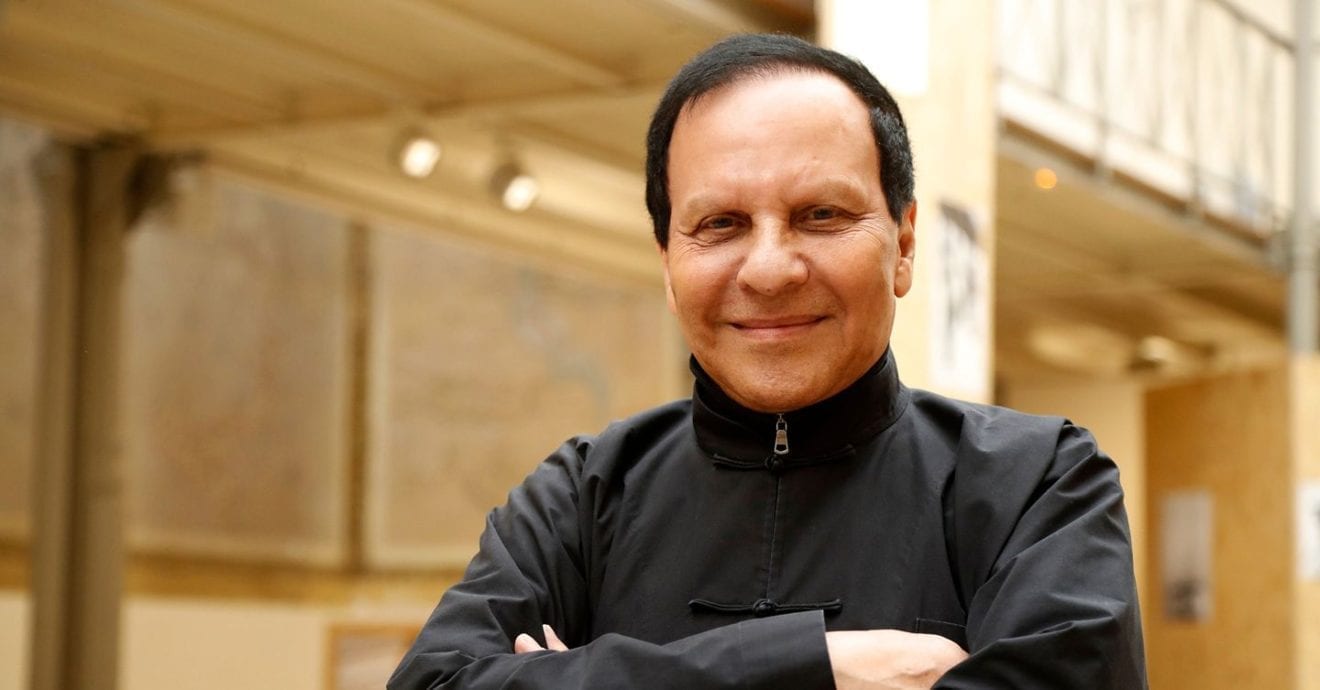
  • Azzedine Alaïa dies at the age of 77

    Azzedine Alaïa dies at the age of 77

    Alaïa was one of the industry’s few designers willing to follow his own conventions and ignore fashion schedules, creating his collections at his own pace.

    His ability to do so stemmed from his prodigious talent and fashion’s seemingly insatiable appetite for his designs.

    His skill at cutting and his idiosyncratic takes on classic silhouettes have made Alaïa popular for decades; his designs remain the aspirational zenith for many.

    “It is with great sadness that I learned of the passing of Azzedine Alaïa,” François-Henri Pinault, Kering’s chairman and chief executive, told BoF. “In the fashion world, he was a great, a major couturier. Everything was at the top with him: couture, art, the standards he aimed at, his dedication to his work, his mastering of techniques, and all the women he dressed. He was an artisan in the noble sense of the term, and a man fiercely attached to his freedom. He was a friend.”

    Alaïa’s love of fashion began through his reading of Vogue at a young age.

    Lying about his age to attend the École des Beaux-Arts in Tunis, he began working as a dressmaker after graduating, before electing to move to Paris in 1957.

    There he started his career at Christian Dior as a tailleur, but soon moved to work for Guy Laroche for two seasons and then on to Thierry Mugler.

    He opened his first atelier in his Rue de Bellechasse apartment in the late 1970s, from which he dressed his private clientele, which included Marie-Hélène de Rothschild, Louise Lévêque de Vilmorin and Greta Garbo.

    In 1980 he produced his first ready-to-wear collection, which was championed by the then doyennes of fashion, Melka Tréanton of Depeche Mode and Nicole Crassat of French Elle, who both regularly featured his work in their respective magazines.

    That same year the designer moved to larger premises in Paris and by 1988 Alaïa had opened boutiques in Beverly Hills and New York, and was soon dubbed the “King of Cling” by the media.

    During the mid-’90s Alaïa partially retired from the fashion scene for personal reasons.

    In 2000, Alaïa signed a partnership with the Prada Group. He then bought his brand back from the group in 2007 before entering an agreement with Richemont.

  • More stores for Berluti Asia

    More stores for Berluti Asia

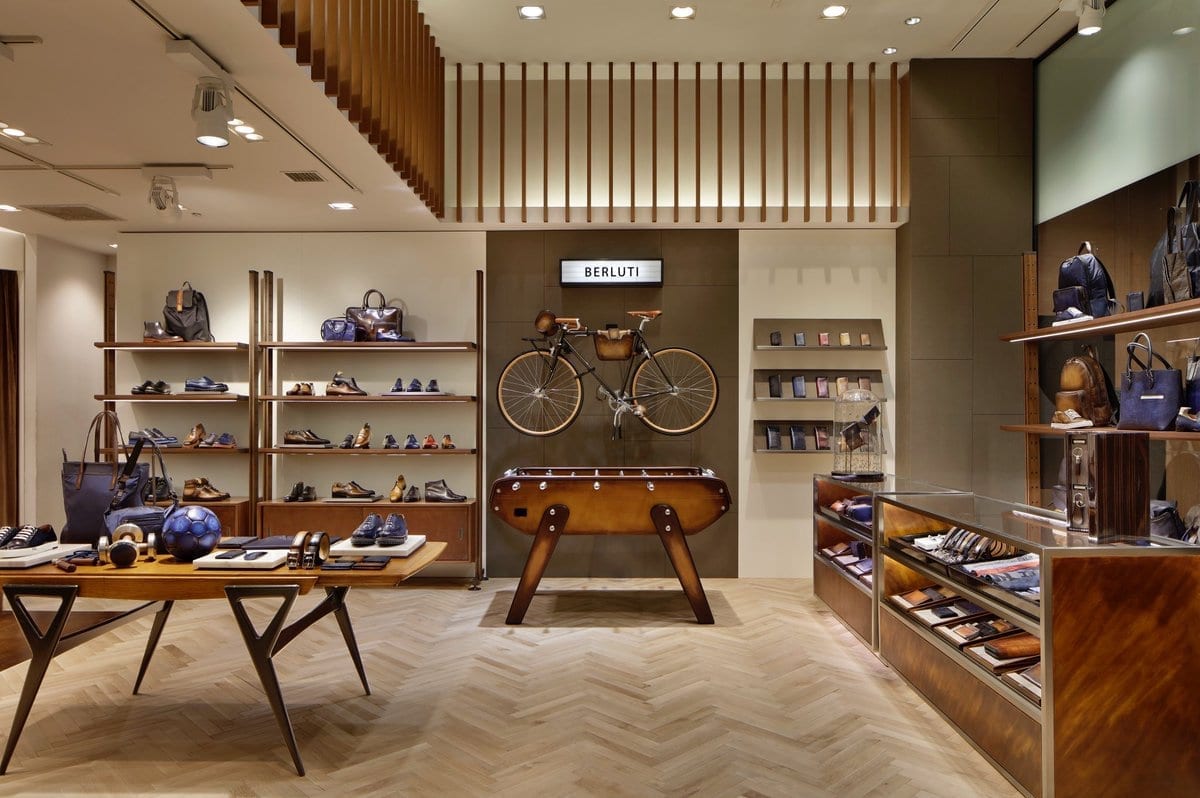
    Berluti Asia will open in India before year’s end, to be followed by a third store in Macau next year.

    It has stores in Macau Galaxy (pictured) and Macau One Central, with the third location yet to be revealed.

    In India, it is being introduced through an exclusive partnership with luxury retail group Bequest, reports Fashion Network. Bequest has exclusive rights in India already for such brands as Bang & Olufsen, and also has plans to expand the presence of UK cosmetics brand Molton Brown and Paris-based perfume house Creed.

    “Berluti is our first association with LVMH,” says Bequest group CEO Gaganmeet Singh. “We are also in advanced talks with Brunello Cucinelli and other brands.”

    Berluti will launch at Emporio mall in Delhi.

    The luxury shoe brand, which has 53 monobrand stores internationally, was founded in Paris in 1895, adding menswear to its range in 2011 as well as a bespoke service. Bought by LVMH in 2012, ,the label started to roll out globally the following year with stores in Shanghai and Tokyo as well as London and New York.

    In September last year the label appointed Colombian ready-to-wear fashion designer Haider Ackermann as creative director.

    His collections are working well with clients in all geographical areas, says Berluti CEO Antoine Arnault. “Chinese clients are swarming back, and Japan too is going very well.”

  • South Korea eyes artificial intelligence partners in BC

    South Korea eyes artificial intelligence partners in BC

    Future Robot’s latest model at the company’s headquarters in Seongnam, near Seoul, South Korea. The company creates “social AI”: robots that interact with people by interpreting emotional responses, either through facial expressions or tone of speech, and then respond with emotive answers | Chuck Chiang

    At Seoul’s Incheon International Airport – one of the world’s largest international flight hubs – two new “stars” are capturing the attention of passengers who cross their paths.

    They’re not stars of “K-pop,” South Korea’s increasingly ubiquitous cultural exports of boy bands and girl groups that are now household names in most of Asia. Rather, they are robots – one that guides passengers to their flights by scanning their boarding passes, another a giant Roomba-like floor cleaner that asks politely, in Korean and English, to pass pedestrians in the machine’s cleaning path.

    “Where are you going? Have a nice flight!” the robot says cheerfully when a passenger leaves the view of its camera, while another group of travellers inevitably blocks the robot’s path and starts a new wave of photo-taking and hand-waving. (The scene bears a striking resemblance to one of the futuristic scenarios introduced in the Vancouver International Airport’s solicitation for public opinions for its 2037 master plan, although airport representatives said no robots are planned at this time.)

    This is the next industrial revolution as envisioned by leading observers around the world: the advent of artificial intelligence (AI) not only in people’s daily lives, but also in the overall global economy. And South Korea, deeming itself several years behind industry leaders like China and the United States, is looking for like-minded partners such as Canada to help it get back in the race.

    “It’s very hard for Canada and Korea to develop [large-scale] AI technologies in isolation from other markets,” said Kim Deogtae of the Korea Artificial Intelligence Association, who is also a university professor and president of his own AI tech firm DTWARE Inc. “But I do think that there’s an opportunity for companies on the two sides to co-operate, preferably with corresponding government support.”

    That partnership can happen in a number of ways, Kim said. Either Canadian investors can bring Korean-developed technologies like Incheon airport’s robots (made by conglomerate LG) to the North American and European markets through the North American Free Trade Agreement and the Canada-European Union Comprehensive Economic and Trade Agreement  or B.C.-based AI developers and startups can use South Korea’s market access to China, Japan and Southeast Asia to expand.

    B.C. and the rest of Canada can also be the answer for South Korea’s lack of AI-development talent. Kim said the East Asian nation struggles in that area because its traditional education system focuses on memorization rather than critical thinking.

    Canada, in turn, could be a partner in directly supplying AI developers or providing adequate space for Korean students to study the technology.

    “It is difficult to develop high-level AI in the Korean educational environment,” he said. “But Korean students are diligent and fast-learning; that is our strength. So if there’s an environment to learn AI, I believe Koreans will be fast to adopt and excel … and we have to look overseas.”

    The key, Kim said, would be to join forces to overcome each side’s smaller domestic market for sales, capital and talent when compared with the aforementioned “big two,” China and the U.S.

    There are already cases happening in other parts of Canada: a month ago, Korean conglomerate Samsung (KRX:005930) announced it will open its own AI research laboratory in Montreal after three years of working with Canadian teams.

    Major players from other countries have also started moving into Canada to mine its AI-technology talent. Google’s (Nasdaq:GOOGL) DeepMind research team – based in Great Britain – chose Edmonton as its first international lab in July. All this is happening with the backdrop of $125 million in earmarked Canadian federal funding for attracting AI development to Canada, as outlined in the federal Liberal government’s 2017 budget.

    Most of Ottawa’s effort is concentrated in three metropolitan areas: Edmonton, Montreal and Toronto-Waterloo. But one executive from a Vancouver financial technology (fintech) company that uses AI in its proprietary platform connecting lenders and borrowers said B.C. does have its niche in that sector, and it is up to B.C. companies to spearhead collaborations in markets like South Korea.

    “It’s important for anyone who’s not well known in the global market to go out and explain the model and its value proposition,” said Alex Mateesco, CEO of Lendery, which plans to open an office in South Korea to expand its lending platform to Asia.

    “I don’t think we should expect other people to know us more than what we know about ourselves. We have to do our own parts to be present internationally … because if we don’t take initiative on that market [fintech], someone else will go carve it out.”

    Focusing on a niche market to excel is a good idea for Vancouver’s AI sector, said the CEO of one of South Korea’s leading AI startups. Song Sekyong, who has built Future Robot Co. Ltd. from its launch in 2009 to a company with a market valuation of US$20 million this year, said it was able to succeed by carving out a space within AI that’s underserved by American and Chinese companies, which tend to focus on massive, cloud-storage-based systems that process an enormous amount of data over a wide network. Two examples of the latter are Google’s AlphaGo and Amazon’s (Nasdaq:AMZN) AWS.

    Song’s company, however, found its market in creating “social AI”: robots that interact with people by interpreting emotional responses, either through facial expressions or tone of speech, and then responding in kind with emotive answers. In some cases, these “soul-ware” robots even have animated faces to respond with their own emotive reactions.

    Up to 30 of these robots will be deployed at the 2018 Pyeongchang Winter Olympic Games. Other applications could include seniors care, personal organizer/living assistance and front-line customer service in various retail settings.

    “Most people think of AI as one thing,” Song said. “But that’s not true. It’s a lot more than just Amazon and Google, and there are a lot of variations within the potential market. What interests us is how we can apply AI so that people and AI live together and having the technology fill a very human need – a ‘warm’ technology, if you will.”

    Song, whose company employs approximately 35 people, is anticipating Future Robot’s valuation to double next year and hit US$100 million by 2025.

    He is also eyeing an initial public offering in a western market – again, an area that could bring Future Robot’s brand to Canada. But Song also noted that he and other AI developers are aware of some people’s fear of AI and its potential to eliminate human jobs. To those concerns, Song said it’s not that jobs will disappear with AI, but rather they will transform.

    “If you look at history, technology shifts and labour trends have always happened in tandem,” he said, noting AI will require a large number of programmers and technicians to maintain. “A robot can replace human labour, but it can’t replace a human being.”

    Lendery’s Mateesco added that any B.C. companies looking to jump into transpacific AI co-operation deals must always consider the human element to achieve market acceptance.

    “The mistake a lot of companies make is to push a technology and make it a top-down decision, which can be hard on consumers who are not ready. The point of technology is to serve people, to make lives more comfortable; so you have to let people decide what makes them comfortable.”

    cchiang@biv.com

    @BIVnews

    Note: Some interviews conducted for the story were completed at Invest Korea in Seoul, for which the reporter’s airfare and accommodations were provided by the Korea Trade-Investment Promotion Agency.

  • In search of Arabica in Vietnam’s war-scarred soil

    In search of Arabica in Vietnam’s war-scarred soil

    Quang Tri is one of the poorest provinces in Vietnam. Straddling the D.M.Z. that cut Vietnam in half during the American War, the province was pounded by one of the heaviest bombardments in history, and 80 percent of its soil was poisoned with landmines.

    Much has changed over the decades, but Quang Tri’s residents continue to fight the legacy of the war as well as the poverty that overshadows the lives of many.

    Bordered by the sea on one side and the Sepon River separating Vietnam and Laos on the other, Quang Tri’s driving force for economic development is agriculture. But farmers here frequently bear the brunt of the harsh monsoon season, and the rugged terrain only makes it harder to grow crops.

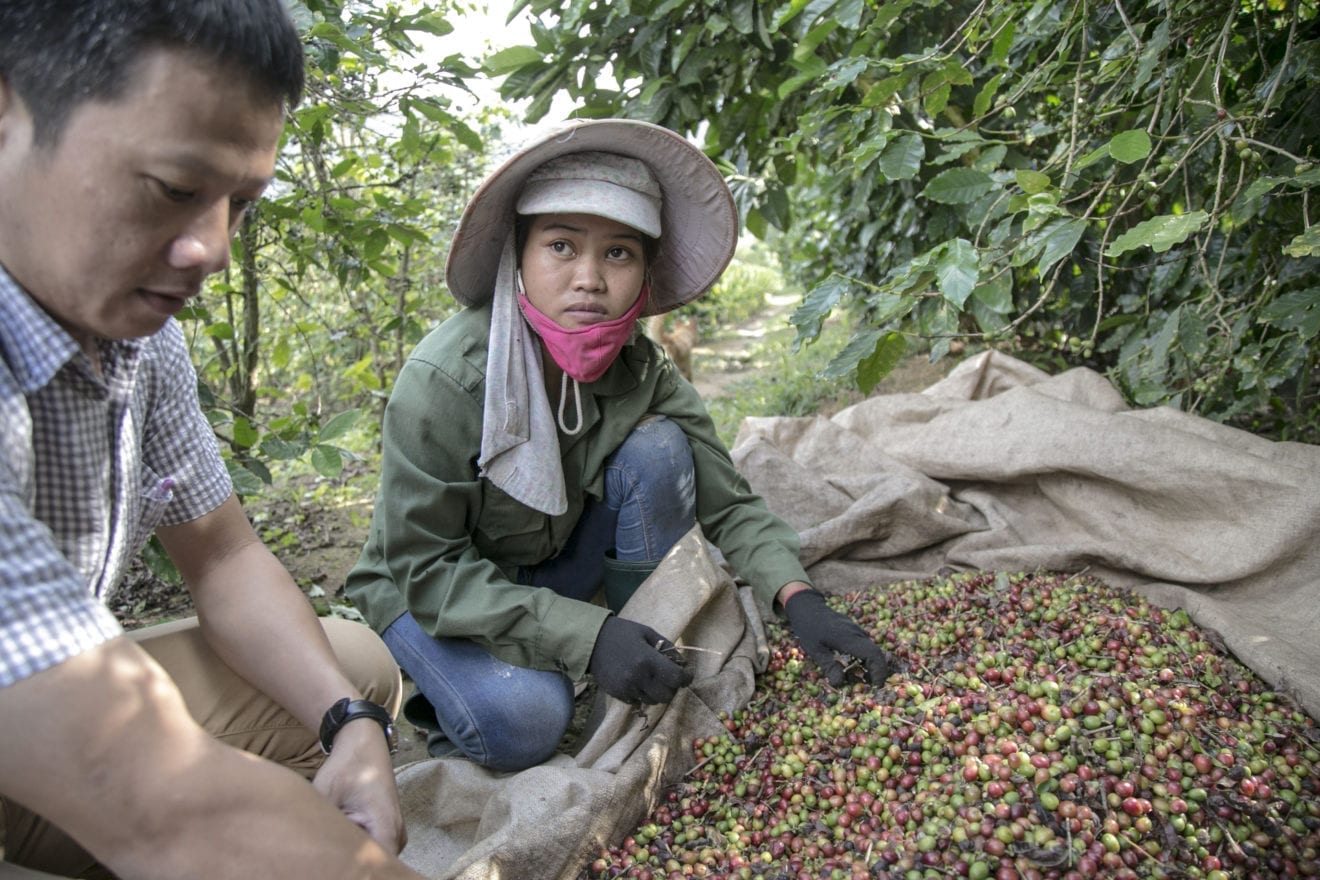
    Up in the highland district of Huong Hoa, which witnessed some of the deadliest days of the war during the battle of Khe Sanh, hundreds of farmers are joining forces to produce premium arabica beans, a surprisingly rare move in a country widely seen as a coffee giant.

    Growing arabica in Vietnam

    Coffee production has contributed greatly to Vietnam’s economic transformation in the post Doi Moi (renovation) period since 1986. Vietnam is now the second largest coffee exporter in the world after Brazil.

    But statistics from Vietnam’s General Customs Department last year showed that robusta accounted for nearly 80 percent of exports, while arabica staggered to less than 5 percent.

    Robusta beans, though considered cheaper and of lower quality than arabica, are hardier and can still thrive in difficult conditions, making them ideal for cultivation in Vietnam. But robusta beans, mainly ground to make instant coffee, are not often found in high-end chains across the world, which favor the high-quality arabica.

    In the world’s second biggest robusta producer, arabica can only be found in the northern and central highlands due to the tough requirements in terms of altitude, soil and temperature required to cultivate the variety.

    Will Frith, a coffee specialist who has done much research on Vietnamese arabica coffee, said robusta dominates Vietnam’s exports as it is much easier to grow at low elevations, has higher disease and pest resistance and has much higher crop yield.

    “Robusta has easier requirements on the market, so defects are more tolerated by buyers, who are usually buying for large commodity companies not looking for high quality,” he said.

    “Arabica is more susceptible to disease and pests, and as the highlands begin to warm up, these pests will travel up to higher elevations and make it more difficult to manage good quality arabica plants. Only the most quality-oriented growers who have good buyers will continue to grow quality arabica,” Will added.

    In Vietnam, unskilled and fragmented labor are major hurdles to growing coffee that meets international requirements. At the same time, shifting cultivation can also be a problem in Vietnam’s rural areas, as it takes an average of three years to harvest coffee, which can prompt poor farmers to abandon it for other short-term alternatives.

    According to an annual coffee country report released last May by the USDA’s Foreign Agriculture Service, as coffee prices fall, more Vietnamese coffee farmers will switch to cash crops such as black pepper, avocado or passion fruit to generate higher incomes.

    Smallholdings are also struggling to reach out to buyers. Many coffee roasters have strict requirements about the quality of the coffee beans, and traders can reject deliveries if they do not meet the 4C standard, which is a baseline level aimed at sustainable coffee production and sourcing. While most 4C robusta beans come from Vietnam, 4C arabica beans are mainly sourced from Brazil or Columbia.

    Land of arabica

    In Quang Tri, coffee accounts for a third of the province’s total plantations at nearly 5,000 hectares, according to a report released last April by the provincial People’s Committee. In just a decade, Quang Tri has been transformed into a hub for arabica coffee, accounting for one seventh of the country’s total arabica production.

    In Huong Hoa District alone, 90 percent of families rely on coffee to make a living.

    Coffee plants were originally brought to Quang Tri by the French, said Nguyen Nhat An, project team leader of the Vietnam branch of the Mekong Institute. “In the beginning, they grew liberica, then residents here switched to robusta. Liberica has a low value yield, while robusta cannot thrive in this soil. Out of the three beans, arabica has proven to be the most suitable.”

    The Mekong Institute (MI), an intergovernmental organization that supports sustainable economic and social development in the Greater Mekong Sub-region, came up with an initiative to support coffee farmers in Quang Tri under the Regional and Local Economic Development – East West Economic Corridor project (RLED-EWEC), by building a model that connects farmers with a fertilizer company, a processing company and an agricultural bank in order to produce coffee that reaches the 4C standard.

    The goal is to bring “systemic and sustainable changes in the coffee sector” in Quang Tri, the MI says, as the project targets poor provinces along the economic corridor under a masterplan to help them integrate into the ASEAN Economic Community.

    An said the group’s focus on coffee is based on its potential to transform local economic development. At the same time, “sustainable coffee production” is part of Quang Tri’s strategic agricultural plan, drawing a state budget of up to $11 million within the period from 2017 to 2025.

    After a few years of research in the area, the MI decided to launch the project that promises to transform the lives of Quang Tri’s coffee farmers. It started off with 40 farmers in 2014, and later expanded to 470 in 2017, with around 22 percent of its members coming from poor families and nearly one third from the Pacoh and Bru-Van Kieu ethnic minorities.

    Ho La Ngang, a Pacoh farmer in Huong Phung Commune, Huong Hoa, said some of the difficulties that farmers often face are capital and fertilizer, which can account for up to 35 percent of total production costs.

    “Just five or six years ago, I was working in the field and only making enough for a subsistent living,” he added. “But then in 2002, after being employed at another plantation, I followed other families and started growing coffee on my own 10 hectares of land.”

    Smallholding farmers often relied on loans to buy fertilizer, which can be harmful due to the high interest rates.

    The MI’s model helps farmers access loans from an agricultural bank at low interest rates that enable them to buy the fertilizer they need from a partner company. These companies are also providing training on the proper use of fertilizer.

    Le Tuan Dung, director of Binh Dien Fertilizer JSC, said his company delivers fertilizer directly to farmers in remote areas, selling for around $417 per ton, while the market price stands at $456/ton. “But it’s more like a win-win model,” he said. “The distribution chain used to be very cumbersome, and farmers suffered. The MI’s intervention helps them cut indirect costs.”

    “Traders used to come to us directly but would only offer below market price for our coffee,” said 58-year-old farmer Nguyen Huu Xao. Xao said the MI is encouraging smallholders in his commune to work in groups while offering training to produce clean coffee cherries and helping farmers to sell them directly to processors rather than traders.

    The initiative may be new as it only started in 2014, but farmers have been reporting certain changes to their coffee output and practices. “I’m able to sell my coffee for 5-8 percent more now,” Xao said, adding that he had no experience of growing coffee before he moved to Huong Hoa.

    “After joining the farmers group, I was trained about market prices and fertilizer costs, and was able to get a loan from the bank,” he added.

    According to the MI’s 2016 report, the initiative to establish a four-party cooperative model capitalizes on the interdependencies between actors in the value chain, enabling 99 farmers to take out bank loans and increasing incomes for both farmers and processors.

    But more importantly, by aiming at a sustainable sourcing and production chain, the ultimate objective is to ensure food security in the region.

    “In 2015 we suffered major losses. The coffee cherries were threatened by pests and there were a lot of droughts, so productivity was low and the coffee price fluctuated,” said Tran Ngoc Vu, 42, a coffee plantation owner.

    A viable option? 

    In reality, it might take years to see more radical transformations to the lives of farmers in Huong Hoa, as most still struggle to make ends meet growing arabica in a robusta-dominated country.

    “The reasons could be that the quality of the coffee here only stops at being acceptable, mainly due to the low altitude,” An said. “Additionally, the arabica we grow here is the catimor strain, which is the lowest quality variety of arabica.”

    As part of the coffee value chain, Dung’s fertilizer company also relies on farmers’ coffee output to protect his company’s profits. “Unlike other countries in the region, our farmers are not supported by protectionist policies, and as a result, Vietnamese farmers often have to sell their crops at really low prices.”

    “Not to mention how climate change can also have a huge impact on productivity,” he added.

    In 2015, Vietnam’s coffee farmers suffered major losses as exports dropped by 40 percent due to rising temperatures and drought. Intensive pesticide use, deforestation and monocropping have also left coffee crops more vulnerable to climate change, land degradation and depleted water resources, according to the Guardian.

    The prolonged drought had a major impact on provinces across the Central Highlands, which produces 60 percent of Vietnam’s coffee exports.

    Quang Tri’s farmers did not escape the fall-out, Nguyen Huu Hao shared, and many growers in Huong Hoa fell into debt and were forced to switch to turmeric, ginger or black pepper.

    “Most farmers are still in debt with the banks, and many do not know if they’ll be able to take out more loans due to the losses from previous crops ,” An said. “So what the MI wants to achieve is to support sustainable development by making the market work for the poor.”

    Yet within the market, Quang Tri coffee is still traded at lower prices in compared with arabica in Da Lat or Son La, experts say.

    Will, the coffee specialist, said Quang Tri has favorable conditions to grow coffee but has not yet been as developed in terms of quality compared with Da Lat or Son La, and it is also more difficult to access. But there is “good quality arabica from Quang Tri,” he emphasized. “4C standards are nearly impossible to achieve at the prices that buyers are willing to pay, so it’s not worth it to the majority of growers.”

    “Until price corrections are made in the market, this problem will remain for all growing areas. Training is lacking and inconsistent, so it’s difficult to collect a consistent supply of high quality arabica, thus compounding the problem in a vicious cycle,” Will said.

    “I earn VND4 mln/month ($176) harvesting coffee cherries. But normally, I’m a farmer in the plains,” said Nguyen Thi Lien, 59.

    Huong Phung farmers are being taught how to produce “clean coffee” that reaches the 4C standard, which includes avoiding soaking or mixing foreign matters to increase the weight, practices that can affect the quality of the coffee beans, and explain why Vietnamese coffee beans are sold at low prices internationally.

    Nearly half of the families in Huong Hoa District come from ethnic minority groups including the Pacoh and Bru-Van Kieu. Most are poor or extremely poor and, for a long time, have been accustomed to switching crops. But Ho La Ngang, a Pacoh coffee farmer, says 70 percent of the Pacoh here are now growing coffee thanks to encouragement from local authorities.

    Trucks are sent to collect harvested cherries and deliver them to processors, which saves the farmers time and money.

    One of the reasons why Quang Tri coffee only fetches a low price is because there are only a few local processing factories. An said the Mekong Institute’s long-term goal is to boost trade and investment in the region to help farmers gain access to regional and international markets.

    Inside a coffee processing factory in Quang Tri. The coffee cherries will later be transported to Hanoi for roasting and packaging.
  • Daimler to invest $755 million in China for electric car, battery production

    Daimler to invest $755 million in China for electric car, battery production

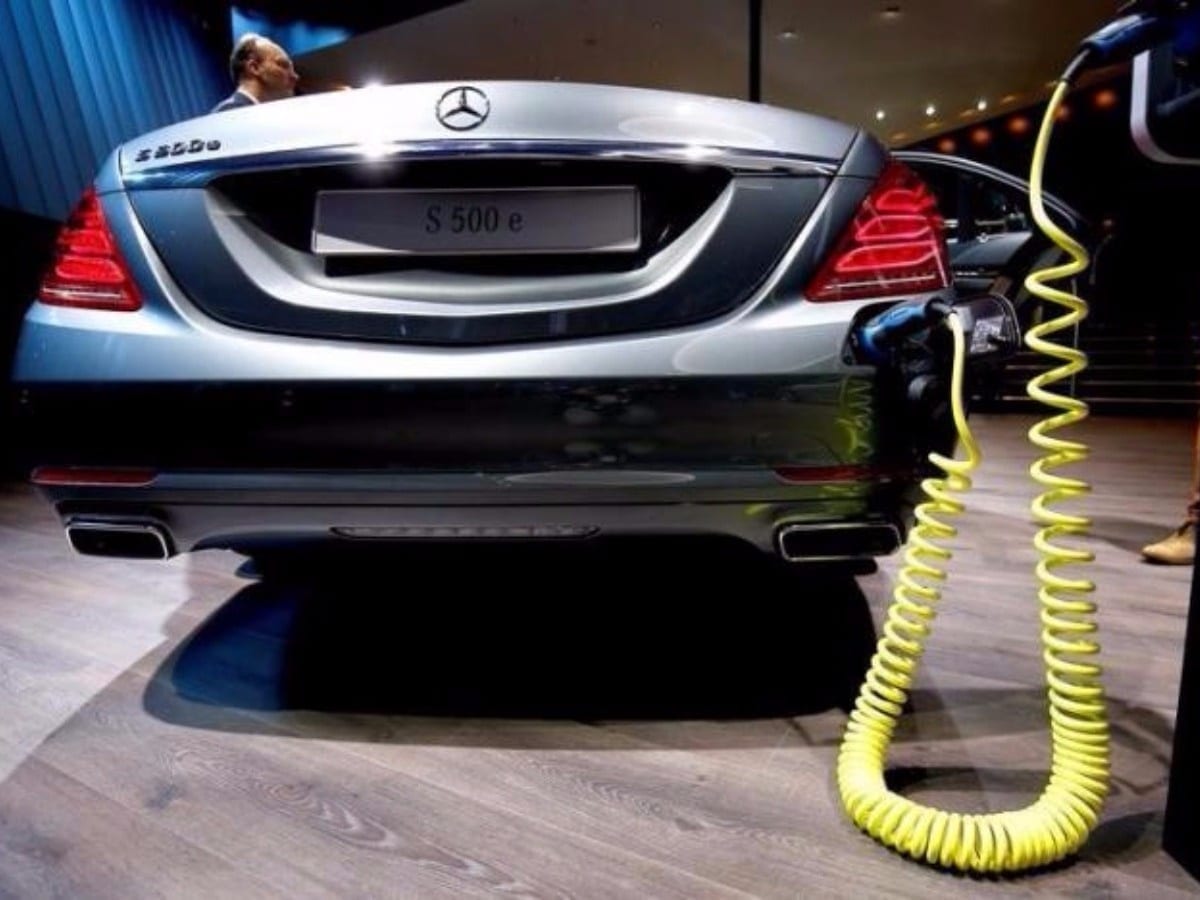
    Germany’s Daimler AG plans to invest 5 billion yuan ($755 million) in China for factory capacity to manufacture electric cars and the batteries that power them, part of an effort to help its Mercedes-Benz and Smart brands comply with the country’s green car production and sales quotas.

    Hubertus Troska, head of Daimler’s greater China operations, told reporters that the investment was part of Daimler’s previously announced 10 billion euros ($11.8 billion) global green car initiative.

    China has set strict quotas for electric and plug-in hybrid cars that come into effect from 2019. It has an ambitious target of 2 million NEV sales by 2020 and has signaled longer-term it will phase out the sale of conventional petrol-engine cars.

    This seismic shift towards NEVs has prompted a flurry of electric car deals and new launches as manufacturers worldwide race for a share of the world’s largest auto market.

  • Why SingPost’s logistics segment is a drag to its growth

    Why SingPost’s logistics segment is a drag to its growth

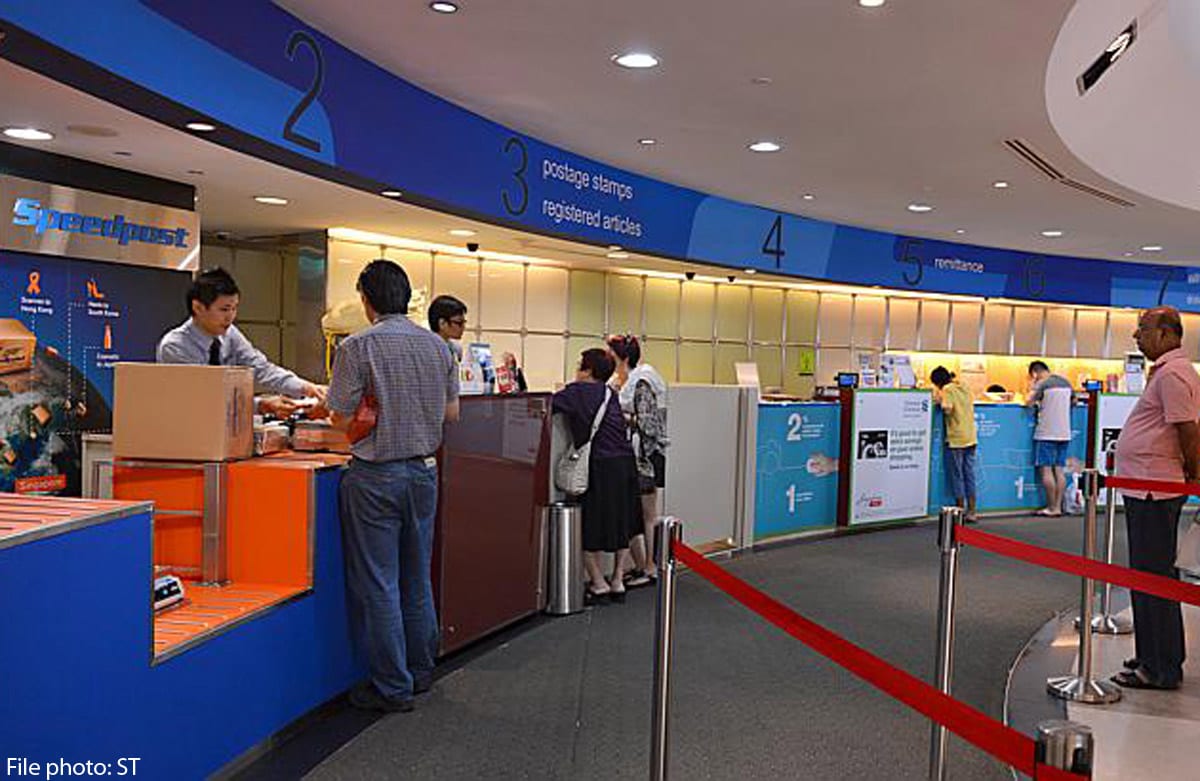
    Intense pricing competition resulted in losses. Singapore Post’s (SingPost) logistics segment went into the red as operating profits turned into a loss of $4.2m in Q2.

    According to Maybank Kim Eng, even excluding provisions, the operating profit would have been $1m, which is much lower than the operating profit of $5m for 1Q2017.

    The segment was in bad debt for a key customer, Quantium Solutions HK.

    Intense pricing competition has also resulted in the loss of business.

    Further weakening of logistics segment could offset the turnaround of mail and logistics segments.

    Whilst the logistics business turned into a weight for the company’s earnings, the drag should still be manageable, the bank said. SingPost’s mail, e-commerce, and associate earnings could still gain momentum, Maybank Kim Eng said.

  • Seoul stocks inch down as retail investors sell

    Seoul stocks inch down as retail investors sell

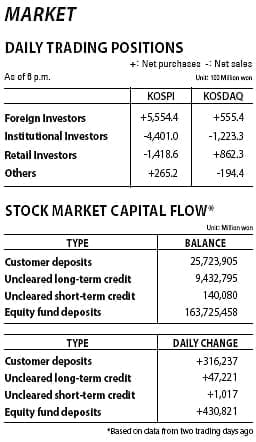
    Korean stocks closed slightly lower Friday as institutions and retail investors dumped local stocks offsetting a buying spree by foreign traders. The South Korean won extended its rally against the U.S. dollar.

    The benchmark Kospi slipped 0.8 point, or 0.03 percent, to close at 2,533.99. Trade volume was moderate as 355.21 million shares worth 6.46 trillion won ($5.88 billion) changed hands, with gainers barely beating losers 404 to 394.

    The index started higher on an upbeat mood after a U.S. tax reform bill made some progress in Congress, but institutions expanded their selling as the strengthening local currency raised the concerns of major exporters.

    Oil prices also ended lower again on Thursday on increased concerns about rising U.S. supply despite major producers’ efforts to tighten the market.

    “If the Korean won continues to strengthen against the U.S. dollar, it could burden major exporters in the short term,” Kim Byung-yeon, an analyst at NH Investment & Securities, said.

    Offshore traders bought a net 549 billion won worth of local stocks, while institutions and retail investors sold a net 442 billion and 127 billion won, respectively.

    Auto shares were down as the rising value of the local currency raised concern over their price competitiveness in overseas markets.

    Industry leader Hyundai Motor declined 1.57 percent to 157,000 won, and its auto-parts maker Hyundai Mobis dropped 3.04 percent to 255,000 won.

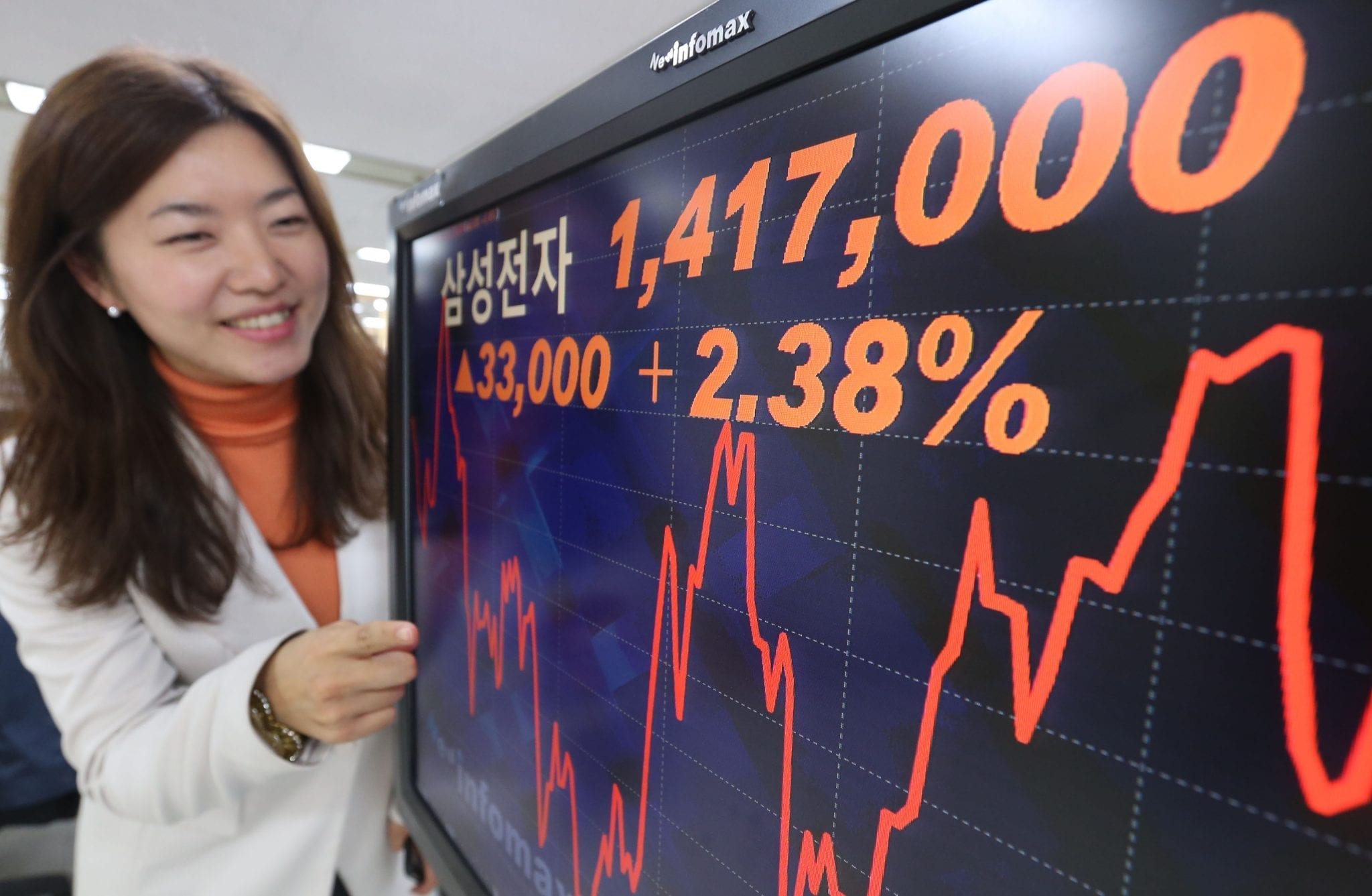
    Tech shares were in positive terrain. Market bellwether Samsung Electronics inched up 0.07 percent to 2,791,000 won, and SK Hynix, the world’s No. 2 chipmaker, edged up 0.61 percent to 83,000 won.

    Airlines were among best performing stocks as lower oil prices and the stronger local currency are expected to lower their financial burden and costs.

    Korean Air, Korea’s largest airline, jumped 5.48 percent to 32,750 won, and its smaller rival Asiana Airlines shot up 11.26 percent to 4,840 won.

    Secondary Kosdaq closed at 775.85, down 4.37 points or 0.56 percent from the previous trading day.

    Top-listed Celltrion lost slipped 0.09 percent to close at 218,800 won.

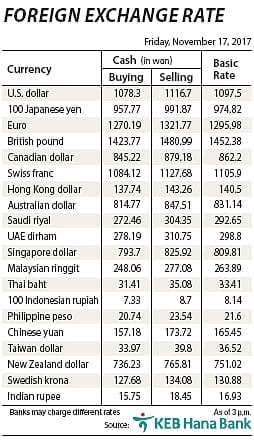
    The Korean won closed at 1,097.5 won against the U.S. dollar, up 3.9 won from the previous session’s close, which rose to the highest level since September 2016.

    Bond prices, which move inversely to yields, fell. The yield on three-year bonds gained 0.3 basis point to 2.174 percent, and the return on the benchmark five-year government bonds added 0.8 basis point to 2.383 percent.


  • It Is All About Tencent In China

    It Is All About Tencent In China

    Asia has been the best performing region globally this year as China 2.0 kicked in as a theme with China (at the MSCI level) being the best performing market and tech being the best performing sector. As Mark Tinker, responsable de AXA IM Framlington Equities Asia, comments: “In Hong Kong the story has all been about Tencent, while in Korea it has been about Samsung.”

    In fact, in Hong Kong in particular the impact of Tencent has been extra-ordinary as the largest stock in the market with a current weighting of almost 12% has effectively doubled over the last 12 months, while the second biggest, HSBC, is up a mere 17% – albeit with a significant dividend to yield a total return of 23%. In South Korea, where Samsung Electronics is more than 20% of the index, it has risen by 83%. Probably not since Apple became the biggest stock in the US market back in 2011/2 and then doubled has the index effect had such a big impact on so many active institutional investors.

    “Of course the argument threatens to become circular” says Tinker.  Therefore, he wonders if Tencent or Samsung are up so much because people are buying the index or vice versa?

    For Tencent there may well be some influence from the fact that mainland Chinese investors can buy it through the Southbound Stock Connect, which continues to expand its influence on Hong Kong markets. Tencent is affecting the real economy in China as well as here in Hong Kong.

    As previously noted by Will Chuang in Hong Kong, “it is not only possible but actually significantly easier to spend a weekend in Shanghai without using either cash or a credit card, simply using WeChat pay by Tencent. Tinker adds that “all you have to do is click on your phone to call up a quick response (QR) code that the merchant scans and you are done.”

    It is now said that you can always spot the tourists in Shanghai as they are the ones using credit cards, or if they are really old fashioned, cash.The fact that the largest note in China is RMB100, which is the equivalent of around EUR15 is probably a factor in using WePay to replace cash, but even here in Hong Kong it is increasingly being used.

    Tencent is mainly Chinese but it is also having something of a wealth effect here in Hong Kong as the number of people trading the stock and several of the connected spin-offs that have recently IPO’d here are clearly celebrating their ‘success’ in the bars and restaurants in Central. The expert of AXA IM in Asia explains:

    The retail offering of Tencent spin-off China Literature for example was 625 times oversubscribed and effectively doubled on opening, having caused a huge spike in interbank rates as money was locked up in anticipation.

    Former Hong Kong Chief Executive Chun-ying Leung used to refer to Hong Kong as “where the rest of the country meets the rest of the world” and as well as offering an outbound conduit for mainland investors through its H share listing, the company itself is, like a number of others, investing overseas, most notably when it picked up around 12% of SNAP as that particular stock continued to slide. Many have noticed the contrast between the performance of US tech IPOs and their Chinese equivalents.

  • China faces waste hangover after Singles’ Day buying binge

    China faces waste hangover after Singles’ Day buying binge

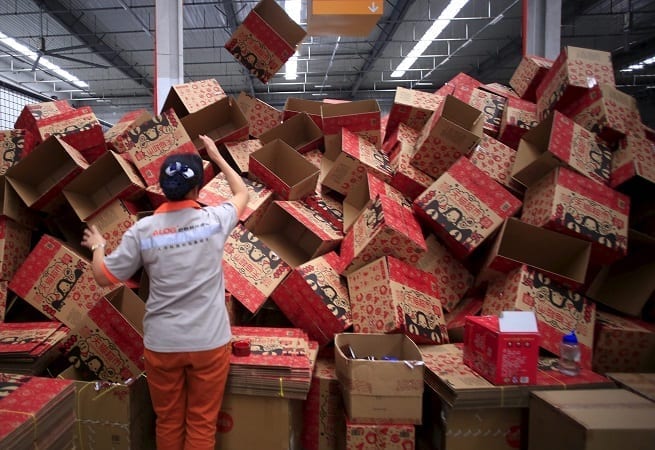
    China’s Singles’ Day online discount sales bonanza on Saturday saw bargain-hungry buyers spend over $38 billion, flooding the postal and courier businesses with around 331 million packages – and leaving an estimated 160,000 tonnes of packaging waste.

    The annual Nov. 11 buying frenzy is a regular fillip for giant online retailers like Alibaba and JD.com, but the mountains of trash produced from just one day of conspicuous consumption have angered environmentalists.

    “Record-setting over-consumption means record-setting waste,” said Nie Li, toxics campaigner at Greenpeace, which estimates this year’s orders will produce more than 160,000 tonnes of packaging waste, including plastic, cardboard and tape.

    Total sales from Singles’ Day hit 254 billion yuan ($38.25 billion), with 1.38 billion orders placed, state media reported. Around a quarter of the total sales involved household electric devices or mobile phones.

    China’s State Post Bureau (SPB) said postal and courier companies are having to deal with at least 331 million packages, up 31.5 percent from last year.

    Greenpeace described the annual promotion as a “catastrophe for the environment” that not only creates waste, but leads to a surge in carbon emissions from manufacturing, packaging and shipping. In a report published last week, it estimated that total orders last year produced 52,400 tonnes of additional climate-warming carbon dioxide.

    E-commerce firms have drawn up measures aimed at solving the problem, and aim to replace cardboard boxes with reusable plastic ones that courier companies can share. They have also experimented with biodegradable delivery bags and tape-free boxes, but Nie said the efforts were still not enough.

    “China’s online retail giants have taken few real steps to reduce delivery packaging waste,” she said. “Ultimately, packaging that we throw out after one use is not a sustainable option.”

    A spokesman for JD.com said it is “continually improving ways to better reduce waste and pollution” and, among other measures, aims to raise the proportion of biodegradable materials in its packaging materials to 80 percent by 2020.

    Alibaba’s Cainiao logistics arm said in emailed comments that it had launched initiatives aimed at minimising its environmental impact. “We are committed to work closely with different stakeholders to protect the environment and contribute to the sustainable development of the industry,” it said.

    MOUNTAINS OF WASTE

    China’s packaging waste problems are not confined to Singles’ Day.

    Official data shows China’s courier firms delivered around 20 billion orders in 2015, using 8.27 billion plastic bags, 9.92 billion packing boxes and enough sticky tape to go around the globe more than 400 times.

    Overall deliveries continue to surge, with the number of packages expected to hit 50 billion next year, up from 30 billion in 2016, according to forecasts by the SPB.

    But even that’s only a small part of China’s mounting waste problem, with large sections of the country’s soil and water contaminated by untreated industrial, rural and household trash.

    With China’s major cities producing around 2 billion tonnes of solid waste a year, they are already surrounded by circles of landfill known in Beijing as the “seventh ring road”.

    China has also struggled to finance the infrastructure required to handle surging volumes of discarded white goods, consumer electronics and batteries.

    Despite massive production volumes that have left the country dependent on imported raw materials, overall recycling rates in industries like steel, glass or textiles remain way behind their international counterparts.

    On top of that, China has only just started to impose restrictions on imported waste, which stood at 47 million tonnes in 2015.

    Recycling of foreign and domestic trash was traditionally handled by migrant workers, known as “scavengers”, who ripped apart discarded goods in back-street workshops.

    But rising economic prosperity means fewer people seek to make a living recycling waste, and tougher environmental regulations have forced small-scale recyclers to close.

  • Black Friday bargain hunting to benefit more than just retailers

    Black Friday bargain hunting to benefit more than just retailers

    Worldpay, a global leader in payments, has predicted that Black Friday and Cyber Monday mania will continue this year, but with a wider range of businesses expected to get in on the online action. Although the shopping event has traditionally been the realm of US retailers, the shopping event grew by 29% in Asia Pacific last year.

    Despite forking out $17.8bn on China Singles Day, Chinese consumers were still hunting Black Friday bargains, with overall spending on the day up by 37% compared to the previous year. The event is also growing fast in Singapore and Hong Kong, at a rate of 21% and 32% respectively.

    While retailers are among the biggest Black Friday winners, new data from the payments processor suggests this year could also be a great opportunity for savvy APAC businesses in the travel and digital sectors. In Singapore, spending with travel & airlines was up 20%3 compared to 2015. And in Hong Kong, travel and airlines saw a 30%4 surge, with eager travellers jumping online to search for great flight and hotel deals.

    Shoppers are also increasingly seeking out bargains for digital content such as subscriptions, e-books, and on-demand box sets, with Black Friday spending in this sector experiencing year on year growth of 62%5 in Hong Kong and 14%6 in Singapore.

    Phil Pomford, General Manager for Asia Pacific at Worldpay said based on the data, 2017 seems set to be another solid year for the shopping event and a fantastic opportunity for a variety of e-commerce businesses, not just retailers.

    “While Black Friday and Cyber Monday have typically been the realm of retailers, a more diverse range of businesses are now recognising that they too can take can take advantage of this unique online opportunity. Shoppers during this time are highly engaged, proactive, and looking for a wide range of online deals, so the potential to reach new customers and strengthen brand loyalty is huge, no matter what sector you operate in.

    “E-commerce businesses should ensure they set themselves up for success by making sure their websites are prepared for heavy traffic and offer simple payment options to drive shopping cart conversions online. They might also consider following the example of US retail giant Amazon and kickstart Black Friday deals a week early in order to generate excitement early on.”

  • Kerry Logistics Named Care & Positive Work Environment of the Year at Supply Chain Asia Awards 2017

    Kerry Logistics Named Care & Positive Work Environment of the Year at Supply Chain Asia Awards 2017

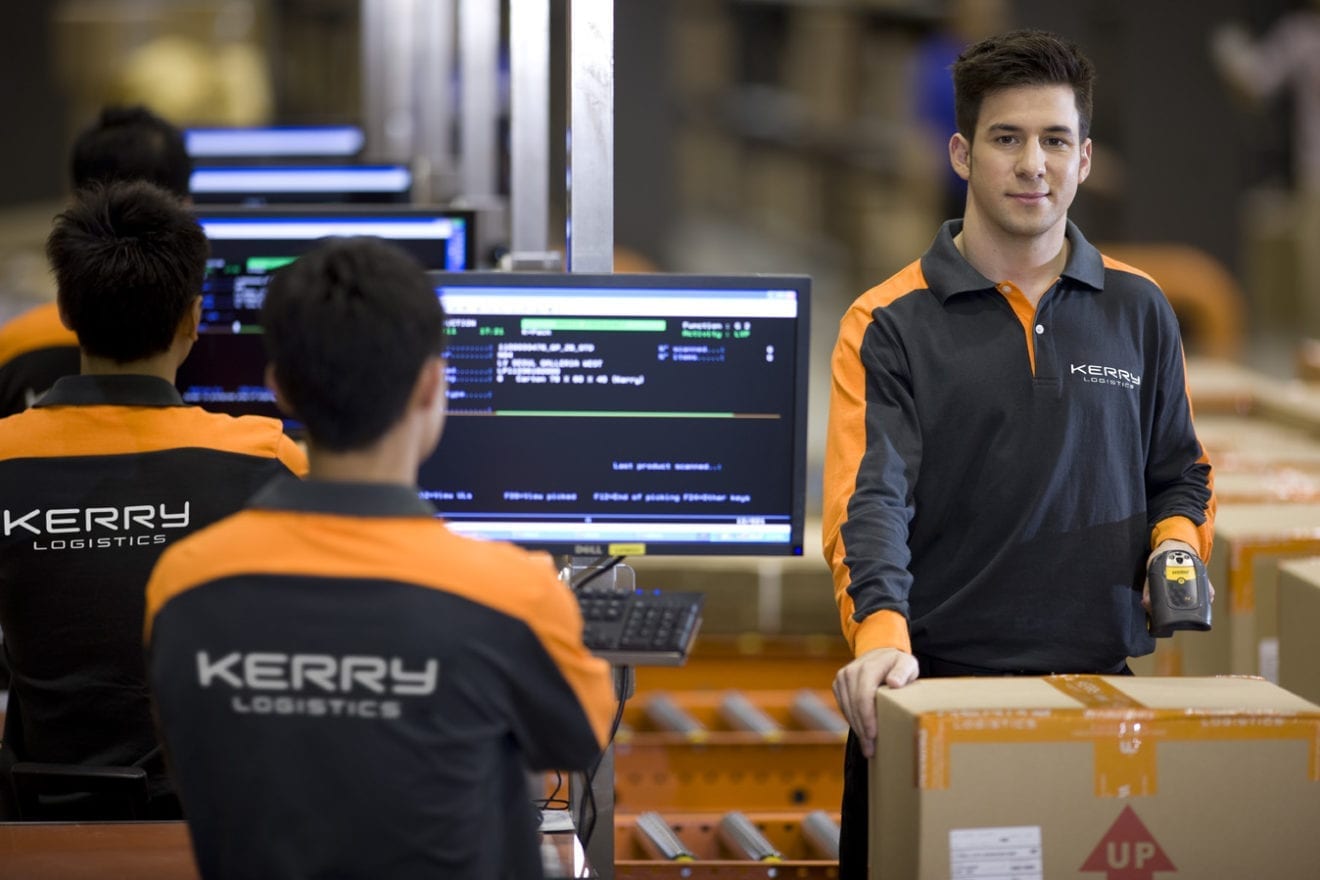
    Kerry Logistics Network Limited was named Care & Positive Work Environment of the Year at the Supply Chain Asia Awards 2017 (the ‘Awards’) in Singapore.

    Kerry Logistics was commended for its commitment to creating value for its employees through rewarding careers, an embracing workplace, and a healthy work-life balance. As the Group continues to expand, it will constantly invest in people development and recruit industry professionals as well as young talents of different cultures to build a winning team.

    Robert Tan, Managing Director of South and Southeast Asia, Kerry Logistics, said, “The esteemed award is a testament to our dedication in nurturing the growth of our staff. We are thankful for the trust and support our customers, business partners, and the entire staff force have put in us. We will continue to meet the needs of our stakeholders by holding the best business practices in pursuing business development.”

    Organised by Supply Chain Asia magazine (‘SCA’), the annual Awards celebrate businesses and industry practitioners for their distinguished contributions in the supply chain and logistics industry. Winners must be nominated by SCA readers, community members as well as the Awards Committee. The Awards are managed by an independent team of judges and the process of voting and counting is supervised by an Ernst & Young team.

  • Joyce Boutique loses more from stagnant market

    Joyce Boutique loses more from stagnant market

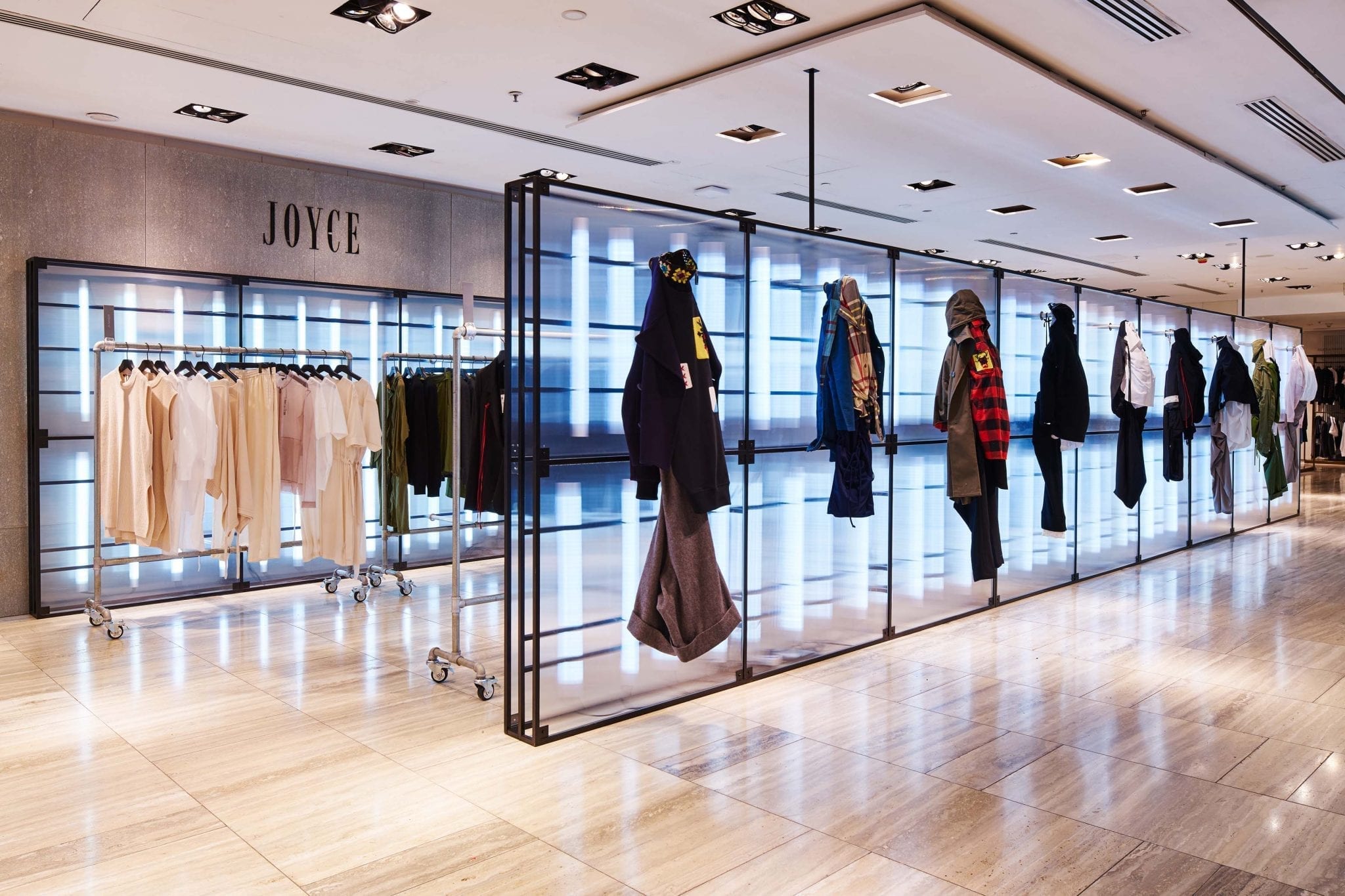
    A stagnant luxury market has made it a tough half-year for fashion retailer Joyce Boutique Holdings, its interim results showing an HK$28.1 million (US$3.5 million) net loss.

    This follows a HK$16.6 loss for the same period last year.

    The group says its results were also impacted by low visitor traffic from Mainland China as well as the closure of shops in the previous financial year. This was mitigated by the inclusion of a $5.8 million write-back of an “onerous contract provision” made for the Joyce shop at Shanghai IAPM plus the savings in running costs.

    Turnover dropped by 19.4 per cent to $386.7 million for the six months. Gross margin also fell by 1.5 points, mainly a result of a higher number of warehouse outlet sales during the period.
    Hong Kong turnover dropped by 15.8 per cent and accounted for 88.7 per cent of group turnover.

    The division pushed out its operating loss from $8.5 million the previous first half to $27.2 million, primarily caused by the decline in turnover coupled with the drop in gross margin.

    With difficult trading conditions and the closure of loss-making shops in previous year, China turnover dropped 40 per cent, but with cost efficiencies and the contract write-back, the division managed to make an operating profit of $1.6 million, a turnaround from a $6.9 million loss for the same period last year.
    Loss contribution from the Marni JV business increased from $400,000 to $600,000, mainly because of a drop in turnover.

    In July, the group opened Joyce Beauty shop in Yuen Long Yoho Mall to extend its customer base to the West and North Territories and Shenzhen. At the same time, two non-performing shops were closed when their lease expired.

    The group says its expects the retail environment will stay challenging in the near term as online specialty fashion retailing continues to impact on its core retail business. Rental levels in prime shopping malls, meanwhile, remain high relative to turnover.

  • Mr. Moncler takes over the city

    Mr. Moncler takes over the city

    Italian luxury brand Moncler has readied a special Hong Kong-based art-performance piece, entitled ‘Moncler | Destination Hong Kong.’

    The event is to celebrate the relocation of its local flagship store, the label is debuting a city activation centered around brand ambassador Mr. Moncler. With Moncler’s established history of collaborative endeavors with modern creatives and artists in mind, the energy and mix of cultures in Hong Kong has inspired this latest undertaking.

    Taking place under the city’s futuristic skyline, over 10,000 Mr. Moncler figures will be located at various landmarks throughout Hong Kong.

    At each spot, guests will be offered a chance to take home their very own collectible, with 350 sporting custom detailing, making them certified collector’s items.

    In the spirit of multiculturalism and borderless art, the silver duvet jacket worn by Mr. Moncler features the locations of and distances to Moncler’s five other flagship stores — Tokyo, St. Moritz, Melbourne, Berlin, and Los Angeles.

    Emblazoned on road signs, the locations of Moncler’s stores form a road map around the globe, which all leads to the new Hong Kong location.

    The new store, located in Canton Road, Harbour City, will feature a window display evocative of the event’s worldliness.

    The store’s exterior is decorated in white Calacatta marble and burnished brass, in accordance with the interior design, and features two large shop windows, one facing onto Canton Road and the other on the shopping mall.

    The ceilings and furniture are accented in fine woods and beige leather, creating an intriguing contrast with the white Calacatta and Nero Marquina marbles used for the floors. These fine materials contribute to creating a warm, sophisticated atmosphere inside the store, consistent with the label’s design codes and tradition.

    Alongside the contest, Moncler will release a special commemorative collection. This offering will be exclusive to the Hong Kong storefront, each item sporting the road sign motif seen on the rear of Mr. Moncler’s jacket.

    Encompassing a grey sweater, silver, down-filled gilet and duvet jacket featuring white hardware, the capsule even includes a dog-sized gilet for man’s best friend.

  • Gap results to be saved by Old Navy

    Gap results to be saved by Old Navy

    At headline level, the latest Gap Inc results are not too bad. Overall revenue rose by 1.1 per cent, a respectable increase that is some way above that posted over the last two quarters. Net income also increased by 12.3 per cent compared to the previous year.

    Unfortunately, behind the headline, it is the same old story. Old Navy is driving group performance while the other two leading brands are struggling. Admittedly, the 0.8 per cent US revenue decline at Gap and the 2.6 per cent dip at Banana Republic are better than recent reporting periods, but neither demonstrates a fully-fledged recovery.

    Management has been keen to emphasise the changes that are being made to revitalize the challenged brands. On the ground, there is some evidence of this happening. At Gap, for example, there have been marginal improvements in quality and greater emphasis has been placed on in-demand products like athletic wear. However, the majority of the offer remains samey, as do things like store environments and point of sale material. In our view, Gap has very little newness to communicate and, as such, is still finding it difficult to inspire customers.

    The new marketing campaign, ‘Meet me in the Gap’, is not terrible, but neither is it particularly compelling. As such, while it has helped rather than hindered sales, it has not succeeded at pulling in new shoppers or getting lapsed shoppers to take a fresh look. Given the offer has not shifted very much, perhaps this is just as well.

    In essence, the change at Gap is lacklustre – especially when compared to a brand like Abercrombie & Fitch which has ripped up the rulebook and completely reinvented itself. Gap needs to emulate this bravery and do something radical to put the business back on a sustainable growth trajectory.

    Stuck in a rut

    If Gap has made some progress, Banana Republic still seems stuck in a rut. Despite a change of leadership, the proposition still lacks energy and focus. As such, it is hard to understand who the brand is targeted towards or what needs it is trying to address. Until these things are resolved, Banana Republic will remain on the back foot. To be fair, management always said that the latter part of this year would be about stabilising the brand rather than reinventing it, but this could amount to a tacit admission of not knowing what changes to make or how to make them.

    Fortunately, Gap Inc has been able to rely on Old Navy to push up performance. While sales growth moderated this quarter, the brand remains a popular destination for younger and family shoppers. The new winter and fall collections are compelling, which should benefit sales over the holiday quarter.

    There has been good progress within Gap’s stable of smaller brands like Athleta and Intermix. Both of these concepts have significant potential, with Athleta in particular positioned to grow its market share. Unfortunately, the revenue contribution of these divisions is insufficient to make a material difference to the group’s overall numbers.

    In summary, Gap has become a more stable business and sales declines appear to be starting to bottom out. However, the company has no real sense of direction or ambition for two of its major brands.

  • Korea domestic fashion market to grow in 2018

    Korea domestic fashion market to grow in 2018

    Korea domestic fashion market is expected to reach 44.32 trillion won, up 3 percent in 2018.

    Korea Federation of Textile Industries predicted that the fashion market will recover  in the next year as the Consumer Confidence Index is improving in the second half of 2017.

    Thus, Korea domestic fashion market is expected to grow by 3 percent thanks to the recovery in consumer sentiment index affected by the 2018 PyeongChang Winter Olympics and the growth of online and outlet distribution.

    As consumers are showing signs of improvement in the second half compared to the first half of the year, this trend will last until 2018.

    In addition, the fashion product purchasing index has been steadily declining compared to 2016, but the trend is gradually rising from the bottom of 2016, which is why we are looking at the domestic fashion market in 2018 positively.

    When it comes to categories, casuals are expected to continue to grow positive thanks to global SPA and online street-based casuals, and the market is expected to exceed 15 trillion won in 2018.

    In particular, the new bag market, which is emerging as a market, is also positively analyzed. On the other hand, the price of sportswear, men’s wear and women’s wear has been declining steadily, so they will have difficult time in 2018.

    Meanwhile, 2017 domestic fashion market is expected to fall by 0.3 percent compared to last year to 43.38 trillion won, as the economic instability caused by the North Korea’s provocation and THAAD e has also affected the domestic fashion market negatively.