Tag: asia

  • Michelin Guide Street Food Festival for Macau

    Michelin Guide Street Food Festival for Macau

    Macau’s inaugural Michelin Guide Street Food Festival launches at the Studio City entertainment resort in October.

    Being organised by Michelin Guide Hong Kong and Robert Parker Wine Advocate, the four-day event features chefs from Michelin-starred restaurants and Bib Gourmand (a relatively new Michelin award for less formal restaurants) and Michelin-recommended eateries across Asia. Free, the festival runs from October 5 to 8 at Studio City’s Macau Gourmet Walk, which resembles the enclave’s historic streets.

    Supported by Melco Resorts and Entertainment, the festival will feature decorated stalls showcasing some of Asia’s best street-food offerings including Singapore’s hawker stalls, Shanghainese dim sum, Japanese little eats and Macau’s Chinese classics.

    Signature dishes and special festival creations will be available starting from MOP40 (US$5) and using a coupon system.

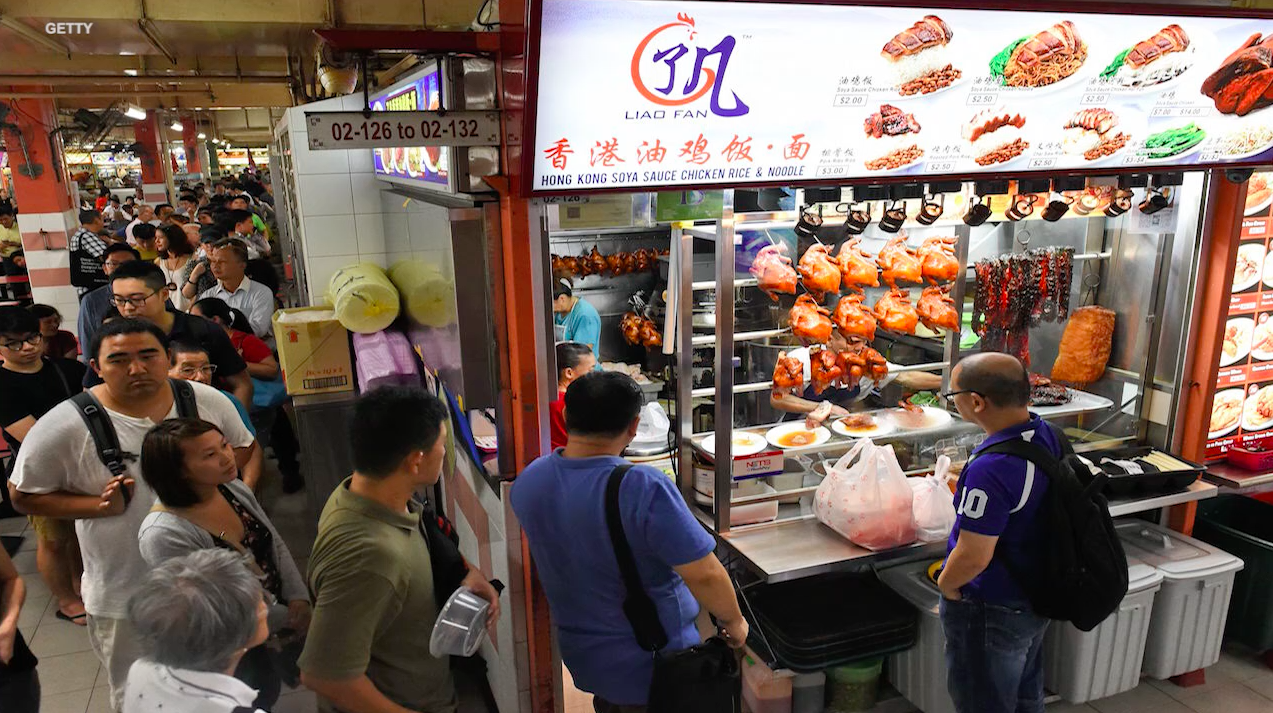
    Eateries from Japan and Singapore will offer their food in Macau for the first time, including the world’s first-ever street-food stall to have been awarded a Michelin Star, Hong Kong Soya Sauce Chicken Rice & Noodle from Singapore. Its chef Chan Hon Meng will be cooking alongside fellow Singaporean Wayne Liew from Keng Eng Kee, the street-food stall known for its fusion of Hainanese cuisine with Malaysian-style Zi Char homestyle food.

    Other chefs coming from Singapore include Manjunath Mural from the one-star Song of India, Han Liguang from Labyrinth, which has just been awarded one star in the new Michelin Guide Singapore 2017, and Malcolm Lee from one-star Candlenut, the world’s only Michelin-starred Peranakan restaurant.

    Coming from Japan is Yoshihiro Tanaka from Kougaryu Honten, who will be preparing his Bib Gourmand-awarded takoyaki in three different flavours.

    Three of Studio City’s signature restaurants, one-star Cantonese restaurant Pearl Dragon, Michelin-recommended Shanghainese restaurant Shanghai Magic and Michelin-recommended Bi Ying, which serves northern and southern Chinese flavours, will present delicacies made specially for the festival.

  • Lululemon fined for violating guarantee rights

    Lululemon fined for violating guarantee rights

    Sportswear retailer, Lululemon Athletica Australia, has paid penalties totalling $32,400 following the ACCC issuing three infringement notices for violating consumer guarantee rights.

    In May earlier this year, Lululemon listed sale items on its website under the heading “We Made Too Much”. The web page read “We made a little extra – don’t be shy, help yourself. It’s yours for keeps so no returns and no exchanges”.

    The ACCC said that, by this statement, Lululemon represented that consumers were not entitled to return and obtain a refund for, or exchange, these products under any circumstances.

    Lululemon has also posted this return policy on its website stating: “Final sale items like underwear, water bottles + We Made Too Much gear are yours for keeps”.

    The statements, according to the consumer watchdog, represented that consumers were not entitled to a remedy for these products under any circumstances.

    The ACCC also mentioned in November last year, a customer has contacted Lululemon requesting a refund for products she considered were faulty but received an e-mail from a Lululemon representative that said “We do not offer refunds for quality affected garments”.

    “The ACCC alleges that Lululemon made representations to customers that they were not entitled to a refund or replacement for products under any circumstances, when that was not the case,” ACCC deputy chair Delia Rickard said.

    Rickard said if a product or service fails to meet a consumer guarantee, people are automatically entitled to a remedy under the Australian Consumer Law.

    “If products develop a fault which constitutes a major failure, customers are entitled to a refund, even if the product was purchased on sale,” she said.

    “Businesses must ensure their refund and returns policy do not breach consumer law, and that representations they make about consumers’ rights to return goods or obtain a refund accurately reflect the consumer guarantee rights under the Australia Consumer Law,” Rickard said.

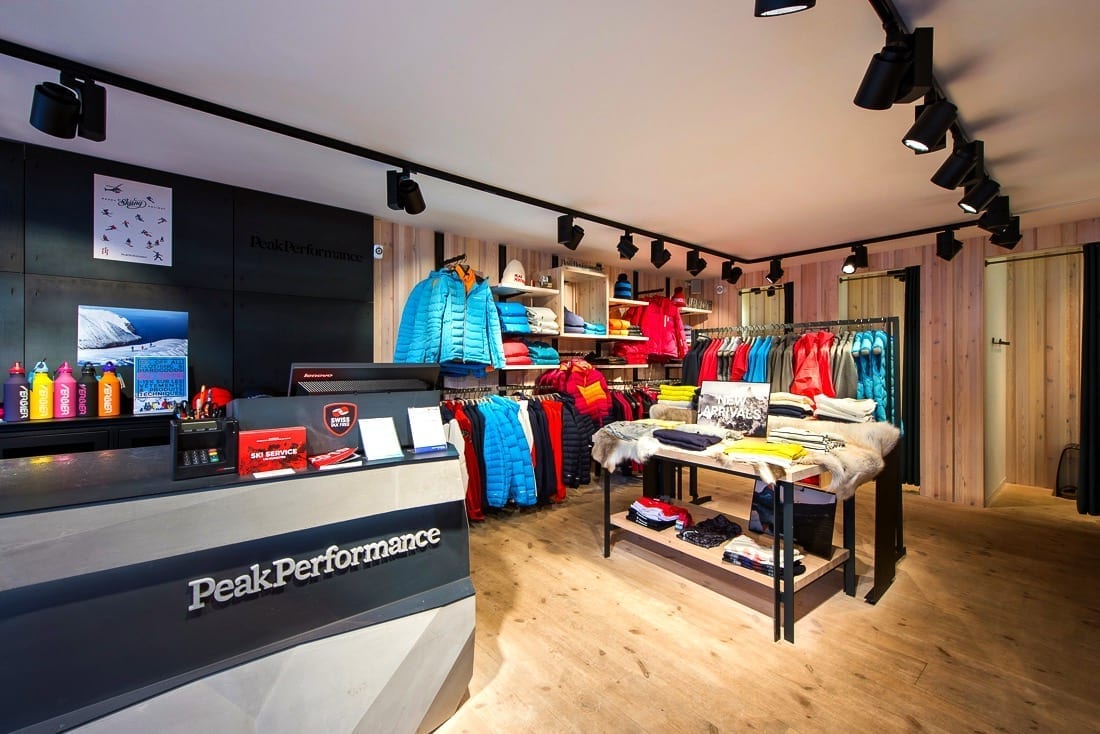
  • Peak Philippines launches concept store

    Peak Philippines launches concept store

    After 10 years in the market, activewear brand Peak Philippines has opened its first concept store, at Robinsons Place Manila.

    Fuelled internationally with collaborations with such entities as the US National Basketball Association and world basketball governing body FIBA, the Chinese brand has widened its product offering to include training, running and women’s gear, all of which are featured in the new concept store.

    “As Peak is competing with the big brands, it is time to position ourselves,” says store owner Jonathan Chenglay, who also owns the Peak outlet store at Riverbanks Center in Marikina City.

    “Some of the items in the concept store you will not find in shopping malls carrying the Peak brand, like Gaisano, Robinsons and SM, or sports shops like Olympic Village and Toby’s.”

    To mark the opening of the store, Peak brought in NBA player and brand ambassador Matthew Dellavedova of the Milwaukee Bucks, who also promoted his first signature Peak shoes, the Delly 1. Featuring Peak’s latest technology in design and cushioning, it is available in different colors.

    Chenglay says more Peak concept stores will be added down the line. “There is definitely still room for expansion.”

  • Second generation Vietnamese-built smartphone to hit shelves next month

    Second generation Vietnamese-built smartphone to hit shelves next month

    If the company spent as much time working on the phone as it did on the invites, customers are in for a treat. Vietnam’s leading cyber security firm Bkav will host the launch of its second generation smartphone, currently known as the Bphone 2, in Hanoi on August 8.

    The event will be held at the National Convention Center, the same venue that hosted the launch of the Bphone, Bkav’s first smartphone.

    Over 2,000 invitation letters for the event designed as gilded circuit boards, believed to be based on the new smartphone’s real circuit board, have been sent out to users and members of the press, with “Designed by Bkav – Made in Vietnam” printed on the bottom.

    The invites also featured the time and date of the event on a watermark that was only visible when the cards themselves were submerged. Unlike its predecessor, the new phone will be sold both online and through mobile phone retailer The Gioi Di Dong.

    The Bphone 2 was scheduled for launch last year, but Bkav said it had to delay the event while it was developing new technology.

    Last month, a source from the company said it was possible Bkav would have to drop its new smartphone completely due to the difficulties it had faced creating a truly homegrown smartphone.

    Bkav debuted the Bphone in May 2015. While initially warmly welcomed, the phone’s launch was disappointing to many buyers as it was only available online and the company had to delay delivery four times.

    The phone also caused controversy because despite being Vietnamese-made, 30 percent of the phone was manufactured by a Chinese firm.

    In its 2017 report, Statista, a market research firm based in Germany, said the number of smartphone users in Vietnam stands at 28.5 million, or 30 percent of the country’s population. It predicts that will rise to 40 percent by 2021.

  • Dell Thailand launches concept store

    Dell Thailand launches concept store

    Dell Thailand, in partnership with Chiangrai Technocom, has launched the first Dell Concept Store in Chiang Rai.

    Dell products at the store include desktop and laptop computers and peripherals for both consumer lifestyle and professional needs.

    Chiang Rai provincial mayor Wanchai Chongsutnamani presided over the store’s official opening.

    Dell EMC Indochina VP Anothai Wettayakorn says the company is confident in its partnership with Chiangrai Technocom, which has been selling Dell products through its six branches in the northern region of Thailand.

  • Blockchain: Revolution in supply chain?

    Blockchain: Revolution in supply chain?

    Supply chains revolutionized how our society runs, now supply chains are being revolutionized. The name of the NEW game: blockchain! Supply chains can lack transparency and traceability. Two things at which blockchain is great at.

    Systems work based on transactions. They are built on a distributed blockchain ledger can record the transfer of goods as transactions. This transparency can ensure the cost of goods will more accurately reflect the actual cost of manufacturing them. Issues such as use of forced labor and illegal sourcing of materials can potentially disappear. But despite the hype and its potential, it could take a decade or more before the technology achieves its full potential.

    We have a few interesting examples. Provenance, a UK-based startup, works with clients so they can use its blockchain-based technology to “share your product’s journey and your business impact on environment and society.” Mining giant BHP Billiton is using the technology to track mineral analysis done by outside vendors. The startup Everledger has uploaded unique identifying data on a million individual diamonds to a blockchain ledger system to build quality assurances and help jewelers comply with regulations barring “blood diamond” products.

    Walmart is working with IBM and Tsinghua University, in Beijing. They want to follow the movement of pork in China with a blockchain.

    Long term what we should have in mind:

    Potential to disrupt many industries
    There are parallels between this global-scale distributed technology and previous technology-driven transformative waves, such as the web and the internet. Early technology adoption of blockchain will progress over the next three to seven years, but mainstream adoption across the supply chain and at scale is likely 10 or more years away. Similar to RFID in its early days, business processes and standards must be resolved before blockchain can reach its potential.

    It is not a replacement for database tech
    Many believe, but they are wrong, that blockchain is a replacement for traditional database technologies — it lacks the ability to create, read, update and delete information. For the immediate future, traditional database management tools and platforms will continue to prevail in supply chain, where data is created, maintained and consumed largely internally. Database capabilities, however, will increasingly need to scale and integrate across a broader number of supply chain network partners and ultimately customers. There is where blockchain is best.

    You can’t just buy a solution!
    There is no blockchain solutions to buy for supply chain use at the moment. There continues to be a lot of hype, with few even partially deployed and very limited prototypes, for which firmer results or tangible uses cases are still be reported. Only organizations that are especially risk-tolerant and early adopters of technologies should consider supply chain management blockchain initiatives over the next two to five years.

    Stormy waters ahead
    There are more challenges than we can mention here. Blockchain technologies and associated supply chain best practices bring adoption challenges, including a lack of standards, robust platforms, scalable distributed consensus systems and interoperability mechanisms.Scalability across supply chains will need to be carefully planned.

    Laws and regulations — which vary from country to country — also pose a challenge to global scaling of blockchain. Before governments can be convinced to support this effort, industry must agree on best practices and standards of technology.

    Adoption too late or too early as part of an extended supply chain and supply chain maturity progression may do damage to the entire organisation.

    Also there’s the need to overcome embedded corporate thinking. Business leaders and organizations need to open up to the sharing of information with mainly unseen network partners.

    In conclusion
    Blockchain is presently at the peak of Gartner’s Hype Cycle, which means the next stop is the Trough of Disillusionment. In supply chain circles the technology is suddenly drawing serious interest, in part because of IBM’s recent push to go public with pilots including one with Maersk and another with Walmart.

    As RFID promised to do, blockchain could one day provide certainty on the exact source of every ingredient in every jar, in every case, on every shelf and at all times. Was your palm oil sustainably sourced? Are the cherries in your ice cream organic? Are the avocados in your salad imported from Mexico? Also reminiscent of RFID, however, is a decent amount of uncertainty about the timing of the business case.

    Envisioning a digitally enabled supply chain strategy is a must-do activity for everyone. Fitting blockchain into that strategy now means listening more than talking. Listen to your colleagues in corporate IT who are likely ahead of you since they’ve often faced this topic already with financial transactions. Also, listen also to vendors like IBM who are invested in establishing a market for this technology and can afford to find and foster pioneering users like Walmart and Maersk.

    Blockchain may still be down the road, but its potential demands your attention now.

  • Britain launches fund to boost electric battery technology

    Britain launches fund to boost electric battery technology

    Britain launched a 246 million-pound ($320 million) fund on Monday to boost the development and manufacturing of electric batteries, a major growth area for the car and energy sectors.

    The scheme, which allows those in business and academia to apply for government funds to work on a range of possible electric battery schemes, is part of Britain’s industrial strategy which Prime Minister Theresa May published in January.

    It is designed to take a more hands-on approach to developing key industries to help protect the economy as Britain leaves the European Union.

    Automakers are racing to build greener vehicles and improve charge times in a bid to meet rising customer demand and meet air quality targets but Britain lacks sufficient manufacturing capacity, an area ministers are keen to build up.

    The first tranche comprises a 45 million-pound pot of money which will help to establish a ‘Battery Institute’ for research to help improve the affordability of the technology, which needs to bolster charge and use times, reduce storage sizes and boost capacity.

    Business minister Greg Clark also wants to establish a “National Battery Manufacturing Development facility” which would support the building of electric batteries for the automotive sector.

    “Joining together the research, development, application and manufacture of energy storage technologies – and specifically battery storage – is a huge opportunity for the energy sector and the automotive sector alike,” Clark said in a speech in Birmingham.

    In May, representatives from politics, academia and business in the central English city of Coventry pitched plans to receive part of the funds for a “National Battery Prototyping Centre” which would focus on research and development and testing.

    Japan’s Nissan already builds its electric Leaf at its north of England plant but Britain’s biggest carmaker Jaguar Land Rover is building its first low-emissions model in Austria.

    Its chief executive told Reuters last year that a number of factors needed to be put in place before JLR would build electric models in Britain, including pilot testing and support from science.

    Germany’s BMW favors building its first electric model at its Oxford plant, two sources told Reuters last week, in a decision which is due to be announced in September.

    Clark also said that up to 40 billion pounds could be saved by 2050 with a range of measures designed to better manage energy use, including allowing users to control their appliances from their smartphones.

    But businesses have become more cautious about future investment in Britain ahead of Brexit, worried that the country may lose unfettered and free trade with its biggest export partner at the end of two-year divorce talks in March 2019.

    Many companies have urged the government to push the European Union to agree to a clear and lengthy transitional arrangement to help them make investment decisions.

    Asked on Monday when the government would set out the kind of transitional arrangement it would be seeking, Clark said:

    “During the autumn… and as the negotiations move forward, we hope from their initial discussion, then that’s the time to say more about that.”

  • Balmain Singapore launches at Marina Bay Sands

    Balmain Singapore launches at Marina Bay Sands

    Balmain Singapore has launched the first Southeast Asian outpost for the French fashion house with an emporium at The Shoppes at Marina Bay Sands.

    It houses men’s and women’s ready-to-wear pieces from Balmain’s seasonal collections, including bags, shoes and accessories.

    Echoing the brand’s historic Parisian flagship store, the 153 sqm space features parquet flooring, gold accents, floor-to-ceiling mirrored pillars and marble displays set against cream walls.

    Balmain was founded by Pierre Balmain in 1946. Starting as a fashion assistant to master Parisian couturier Lucien Lelong, he worked alongside Christian Dior and Hubert de Givenchy. His signature style soon attracted the world’s great actresses including Audrey Hepburn, Ava Gardner, Brigitte Bardot, Josephine Baker, Katharine Hepburn, Marlene Dietrich and Sophia Lauren.

  • Japan Airlines and Vietjet Launch Comprehensive Partnership

    Japan Airlines and Vietjet Launch Comprehensive Partnership

    Japan Airlines (JAL) and Vietjet today reached a formal partnership agreement that offers greater customer convenience and better quality of operations and services while enhancing the corporate value of both companies.

    The two airlines have held a series of discussions on expanding their networks in response to the travel needs of people in neighboring Asian countries next to Vietnam, in addition to meeting the growing demand for air travel between Japan and destinations in Vietnam. With the rapid economic growth in Vietnam, demand for air travel between the two countries has been growing strongly. JAL is already operating daily non-stop services between Tokyo (Narita) and Ho Chi Minh City and Hanoi respectively, as well as between Tokyo (Haneda) and Ho Chi Minh City.

    Vietjet, the first privately owned airline in Vietnam, began its flight services in 2011. It now operates an expanding network that covers all Vietnam and most parts of Asia. Offering convenient and friendly services with reasonable fares, Vietjet has succeeded in creating new travel demands in Vietnam. And as a new-age carrier, it has evolved to offer higher-class service “SkyBoss”, which has been very well received among passengers expecting quality service.

    As a first step, JAL and Vietjet have agreed to start a code-share cooperation for all flight services between Japan and Vietnam as well as the domestic flights of both airlines. Vietjet’s domestic flights, as well as flights between Vietnam and the other Asian countries will also be included. These   add-ons are expected to create more customer convenience. The two airlines will further explore opportunities to develop partnerships in various areas, including a frequent flyer partnership, aircraft operations and maintenance as well as ground handling services and training.

    “The launch of this partnership with Vietjet represents a significant milestone for the two airlines to provide customers with better access to destinations between Japan and Vietnam and beyond, and we believe it will contribute to generate more passenger and cargo traffic between the two countries and open up commercial opportunities on the two airlines’ international networks,” said Tadashi Fujita, JAL Executive Vice President.

    Luu Duc Khanh, Managing Director of Vietjet, said: “Through the agreement signed with JAL today, Vietjet once again affirms the airline’s commitment to innovation, leading market trends, and offering new services following the global integration and international standards. Japan is our key market as we expand the airline’s flight network in the Asia-Pacific region. The partnership between Vietjet and JAL will diversify our air transportation products and the market segment while stimulating the movement of people between the two countries as well as developing the two airlines’ relationship in line with our international commercial operation capabilities in the coming time.”

    More details will be announced at a later date on both airlines’ websites.

    Together with Vietjet, JAL will be striving to deliver greater conveniences and variety of choices to customers with a more comprehensive network in Asia.

  • Facebook traders face taxation anxieties

    Facebook traders face taxation anxieties

    Le Ha of Hanoi, who has been selling clothes on Facebook, is stressed and worried after receiving a message from tax authorities inviting her to come and declare her income.

    Ha is one of over 13,400 Facebook account holders in Hanoi who’ve been identified by the Hanoi Taxation Department as online traders.

    “I have been selling clothes through Facebook for years, getting about 10 orders each day with maximum daily sales of around VND5 million (US$220),” Ha told us, admitting that unlike other shop owners, she doesn’t have to declare her business or pay taxes.

    She was satisfied with her earnings and not having to bother about any intervention from State management agencies.

    The promise of attractive profits has prompted many people to jump on the bandwagon, catching the attention of authorities trying to reduce tax losses from State budget collection.

    A tax administration project for e-commerce business has been drawn up, with the two taxation departments of Hanoi and HCM City functioning as pioneers in bringing business owners selling merchandise on social media, especially Facebook, into the tax bracket.

    Vien Viet Hung, deputy director of Hanoi Taxation Department, told Vietnam News that the department had collected information on the identity and telephone numbers of the 13,422 Facebook traders.

    Since late June, the department has been sending SMS messages to these traders, encouraging and instructing them to voluntarily register their operations, declare income and pay taxes.

    However, after sending messages twice, only 1,000 of the 13,422 phone numbers have replied, and only around 500 have approached the department on their own to register to pay taxes, Hung said.

    In a recent interview with the Vietnam News Agency, Chairwoman of the Vietnam Tax Consultant Association, Nguyen Thi Cuc, said that under current laws, all institutions and individuals that are doing businesses, whether through traditional channels or via e-commerce platforms, are required to declare income and pay taxes.

    However, she also conceded that in the current situation, the tax collection was totally based on the willingness of traders, their authenticity, honesty and integrity.

    Income bracket

    According to the law, only online sellers with revenues over VND100 million a year will be subject to taxation.However, many Facebook merchants are afraid that the taxation process will be fair.

    “If paying tax is an obligation, we are ready to fulfill it, as long as it is fair to everyone. What if I tell the truth, while other Facebook sellers lie about their revenue? They will pay less or no tax, which is unfair,” Le Ha told us.

    Regarding income declaration, many argue that was very difficult to determine the exact revenue of those who do business on internet, so it is not possible to ensure fair treatment of honest sellers and those who deliberately evade taxes.

    But Ta Thi Phuong Lan, deputy head of the division in charge of personal income tax under the General Department of Taxation, said tax authorities can assess Facebook sellers’ revenue by checking their sources of goods, post offices, delivery companies, and bank payments.

    One of the most difficulties in determining Facebook traders’ income is the low rate of non-cash transactions in Vietnam, said Truong Thanh Duc, chairman of the Basico Law Firm.

    In other countries, buyers make payments via banks, so it is not difficult to identify the revenue from online business. Therefore, it is necessary to apply measures to encourage Vietnamese to use non-cash payment methods for online transactions, Duc said.

    Recently, the General Department of Taxation issued Document No. 2623/TCT-CS, asking local taxation departments to co-ordinate with network operators to gather information on online sellers, including identity and bank number accounts, so that they can monitor all online transactions.

    However, in response to the Vietnam News Agency, CMC Telecommunication Infrastructure Joint Stock Co (CMC Telecom) said they haven’t received any communication from tax authorities.

    The company said that if needed, they can explain and persuade customers to provide them with necessary and detailed information, but they can’t ensure that all the customers will agree to supply this.

    Step by step

    Transactions on the Internet are difficult to control and tax collection procedures can’t be comprehensively introduced in a short time, it should be done step by step, said Nguyen Huu Tuan, Head of the E-commerce Management Division of the E-commerce and Information Technology Department under the Ministry of Industry and Trade.

    To collect taxes, authorities should understand each business as they have their own specific characteristics, Tuan said.

    With millions of Facebook accounts, tax authorities should classify them based on the nature of their operations and key products, he said.

    In the first phase, the tax authority should target large and professional businesses. It is easy to identify these account holders as they will have popular Facebook pages with a large numbers of followers, likes, posts and comments, he said.

    The rest are likely to be individuals selling things online as a side job or even seasonal business. They do not sell goods regularly, so tax departments should carefully review the list before inviting them to their offices, Tuấn said.

    “There are petty traders with modest monthly incomes. If we try to control all Facebook sellers, we will use up significant resources and end up being inefficient,” he said.

    Sharing the same idea, Vien Viet Hung, deputy director of Hanoi Taxation Department, said to obtain necessary information on online businesses, tax departments nationwide should have enough staff who are well versed with social media networks.

    The Hanoi Taxation Department will seek co-operation and support from many concerned agencies like commercial banks, post offices, especially social networks like Facebook, to provide information about account holders, Hung said.

    Late last month, reporters of the Vietnam News Agency contacted the Facebook representative office in Vietnam with questions about the tax collection issue, but hadn’t  received any response at the time of going to print.
  • BMW denies collusion on diesel emissions

    BMW denies collusion on diesel emissions

    BMW said that none of its models had been ‘manipulated’ or violated industry regulations. German luxury carmaker BMW on Sunday denied any collusion with industry rivals on emissions from its diesel engines, saying none of its models had been “manipulated” or violated industry regulations.

    As revelations about polluting exhaust continue to buffet Germany’s all-important auto sector, the Munich-based giant sought to distance itself from what it called the “scandaliation of diesel motors”.

    “The fact is that automobiles from the BMW group are not manipulated and comply with the relevant legal requirements,” the company said in a statement.

    “This of course also applies to diesel automobiles. This is confirmed by the relevant results from tests by national and international authorities.”

    Der Spiegel magazine had reported Friday that German carmakers Volkswagen, Audi, Porsche, BMW and Daimler had secretly worked together from the 1990s onwards on issues including polluting emissions from diesel vehicles.

    Volkswagen, which is facing tens of billions of dollars in compensation and fines after admitting in 2015 to cheating on diesel emissions, had reported the cartel to German competition authorities in a letter seen by the weekly, as did Mercedes-Benz maker Daimler.

    According to the report, carmakers held “innumerable meetings” from 2006 onwards about diesel exhaust processing systems designed to reduce emissions of harmful nitrogen oxides (NOx).

    Carmakers agreed to install only small tanks of a treatment solution, AdBlue, used to convert the gases into harmless water and nitrogen, as larger tanks would have been more expensive.

    The size of the AdBlue tanks agreed on was too small to clean exhaust gases by the necessary amount — “laying the foundations for the diesel scandal,” Spiegel reported.

    However BMW said it “firmly dismissed the accusation” that its AdBlue tanks were insufficient, meaning that any “recall or retrofitting for the Euro 6 diesel cars is unnecessary”.

    Volkswagen admitted in September 2015 to installing software in 11 million cars worldwide that reduced NOx emissions when it detected that cars were undergoing regulatory tests.

    More recently, authorities’ suspicion fell on Mercedes-Benz and Smart maker Daimler, with investigators raiding sites belonging to the group in late May.

    The firm recalled some three million cars last week for a software update designed to reduce emissions.

    Meanwhile, VW subsidiary Audi on Friday recalled up to 850,000 cars fitted with its diesel engines for a similar software update.

  • Transport ministry reconsiders ride-sharing service ban

    Transport ministry reconsiders ride-sharing service ban

    The Ministry of Transport has sought opinions from ministries, localities and transportation associations on its recently imposed ban on app-based taxi ride-sharing service.

    The ministry recently sent a document to the ministries of police, justice, finance, industry and trade, information and communications; authorities of Hanoi, HCM City, Danang, Quang Ninh and Khanh Hoa and the Vietnam auto transport association and Hanoi and HCM City taxi associations.

    In the document, the Ministry of Transport admitted that earlier the ministry requested Grab to stop its ride-sharing service called GrabShare. However, now, the ministry needed to gather the opinion after receiving Grab’s reports on advantages of the GrabShare. Grab has asked for the ministry’s permission for the firm to continue the service.

    The Ministry of Transport noted that the ministry wants to get the opinion about Grab’s proposal and also needs recommendations about fines for the violation in this service.

    Both Grab and Uber launched GrabShare and UberPool respectively in May this year. The services allow drivers to add additional passengers to their journey in addition to the person who makes the original booking. The service can help save customers around 30% compared to the original booking.

    But traditional taxi companies strongly oppose the service, saying that it is illegal and unfair competition.

    In June this year, the Ministry of Transport requested the ban on the ride-sharing service, explaining that under the ministry’s Circular 63, transport firms are only permitted to sign one contract per trip. If a GrabCar driver carries two passengers that agree to share their ride with each other, it means they are fulfilling two separate contracts, and therefore in breach of regulations, the ministry explained.

    The ministry spuriously claimed that sharing a car with a stranger may result in possible risks for passengers, although such practices are very common among traditional taxi companies at airports.

  • CCI clears Vodafone-Idea merger

    CCI clears Vodafone-Idea merger

    The Competition Commission of India has approved the proposed merger between Indian operators Vodafone India and Idea Cellular, which would create the market’s largest mobile operator by subscribers.

    The regulator has cleared a proposal that would see Vodafone initially holding a 50% stake in the combined company, Idea’s major shareholder the Aditya Birla Group holding 21.1% and public shareholders owning 28.9%, the Economic Timesreported.

    Under the plan, Vodafone would then sell a 4.9% stake in the combined operator to the Aditya Birla Group for 39 billion rupees ($605.8 million) in cash upon completion of the merger.

    But both companies still require approval from the Securities and Exchange Board of India, which is investigating whether the deal would trigger an open offer under India’s takeover regulations.

    These rules require entities acquiring at least 25% of a listed company to make an open offer for an additional 26% from public shareholders.

    The proposed $23 billion merger between Vodafone and Idea Cellular was first announced in March. The combined company will have nearly 400 million subscribers and a revenue market share of around 40%, dethroning Bharti Airtel as the current market leader.

    High debts accumulated from spectrum purchases and the entry of Reliance Jio Infocomm into the market with its deep pockets and disruptive pricing have triggered a wave of consolidation in India’s telecoms sector. Reliance Communications and Aircel are also pursuing a merger, while Bharti Airtel  last month secured required approvals to acquire Telenor India.

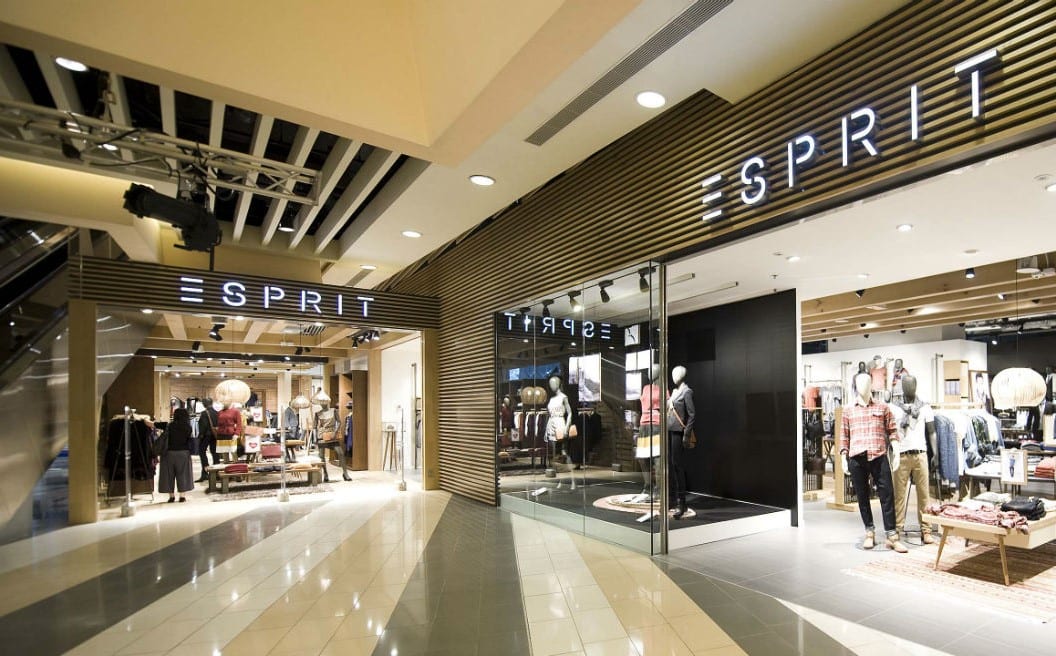
  • Esprit restructures its marketing division

    Esprit restructures its marketing division

    Back in April, Vincent Jeanniard already joined the Esprit fashion group as Head of Global Marketing. The 46-year-old executive is leading the fusion of the company’s brand and go-to-market marketing teams into one department.

    The move is intended to ramp up Esprit’s marketing efforts and make them more dynamic to be able to react more quickly to customer needs and a younger target group. The fusion is also part of the restructuring program Esprit has rolled out to fight its recent decline in sales.

    “Vincent and the merged team will be responsible for the development and implementation of the marketing strategy and activities across all departments, markets and channels,” the company said in a statement.

    Vincent Jeanniard has held various positions in the global brand and marketing sector, especially executive roles in the beauty and fashion industry. Most recently Jeanniard was vice president of Burberry Beauty in London.

    Between 2006 and 2013, he worked as a general manager in the beauty industry for companies like Christian Dior in the UK and Ireland, L’Oréal Luxury Division in Brazil and Shu Uemura in Tokyo.

    He will be assisted by Rob McIntosh, who will join the brand as Chief Brand Officer on 1 August 2017 and a member of the Executive Management Team (EMT) at Esprit.

    McIntosh has already worked in various creative positions for major brands such as Apple, J.Crew and BMW. Most recently, he was Head of Experience Design at AKQA London, an innovative creative agency.

    Esprit Holdings Ltd. currently operates 6,137 stores in 40 countries. Its recent sales posted a double-digit loss when adjusted for exchange rates, which management says will continue unchanged in the fourth quarter as well.

    Further changes under the restructuring plan include the closure of unprofitable stores, the reduction of advertising measures, price reductions and streamlining of operating costs.

    Esprit’s headquarters are located in Ratingen near Düsseldorf, Germany and in Hong Kong. The brand will be celebrates its 50th anniversary in 2018.

  • Digitalisation of supply chains in India

    Digitalisation of supply chains in India

    The digital B2B marketplace for warehousing, Log-hub AG from Switzerland, and the Indian Supply Chain specialist 3SC are now collaborating on the Indian market. Both companies are technology based and offer advanced analytics based transportation and warehousing solutions. Log-hub and 3SC have agreed to combine their capabilities to provide seamless service offerings for those companies who want to identify and implement the savings potential of the new Indian tax regime.

    Log-hub AG and 3SC Solutions Ltd provide complete supply chain management services in terms of planning and execution throughout entire India. Their transportation and warehouse network is rendered by a control tower set up of more than 200 experts and the digital marketplace for warehousing space.