Tag: asia

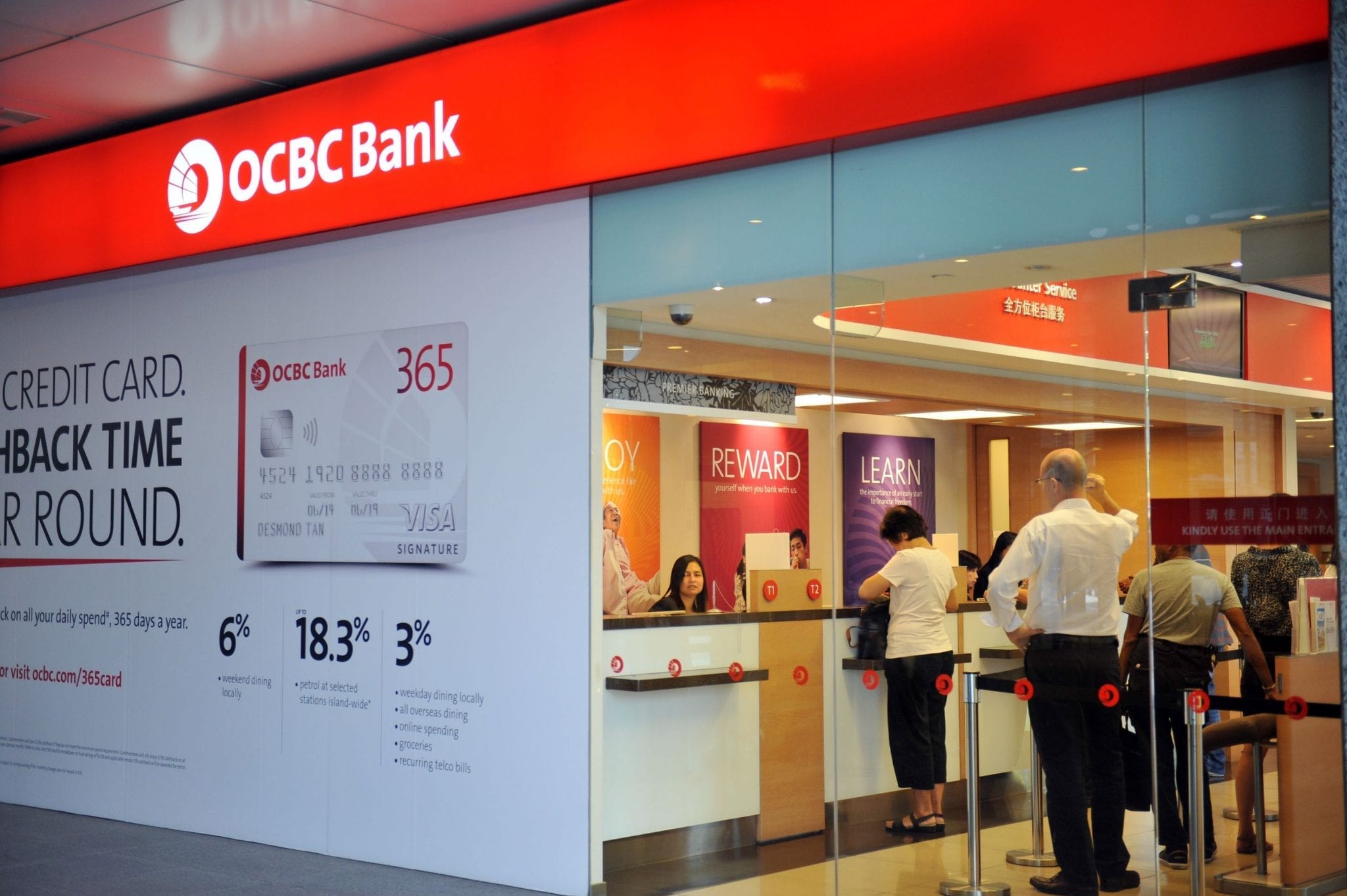
  • OCBC Bank subsidiary launches private onshore banking in Indonesia

    OCBC Bank subsidiary launches private onshore banking in Indonesia

    OCBC Bank has launched onshore private banking in Indonesia through its 85 per cent-owned subsidiary, OCBC NISP, the company said on Monday.

    OCBC NISP has obtained regulatory approval to establish the private banking unit to manage the wealth of Indonesians with assets under management of more than US$1 million (S$1.38 million) with a comprehensive range of wealth management solutions.

    The unit will leverage OCBC Bank’s uniquely integrated wealth management platform that draws on the combined product expertise of the Bank and its subsidiaries – insurance products from Great Eastern Holdings, equities and bond funds from Lion Global Investors, brokerage services from OCBC Securities and private banking services from Bank of Singapore.

    The launch team includes four other private bankers who have an average of 18 years of onshore and offshore private banking experience and deep knowledge of regional markets. The team is expected to double in size by the end of the year.

    OCBC NISP private banking clients who are business owners will be able to draw on the commercial banking solutions offered by OCBC NISP and leverage OCBC Bank’s global network of more than 610 branches and offices across 18 countries and regions.

    “We are pleased to offer our wealthy clients alternative wealth management and investment options to help them manage their funds with the launch of our private banking business,” said Ms Parwati Surjaudaja, president director of OCBC NISP. “We will be introducing more sophisticated solutions that are tailored to our clients’ unique wealth planning and investment needs as we grow our business.”

    Calling the launch an important milestone in the expansion of OCBC’s wealth management franchise, Mr Samuel Tsien, group CEO of OCBC Bank, said the new business will help broaden client coverage of high net worth individuals. “We will leverage our strong product development, distribution and execution capabilities across the OCBC group to support this new customer segment in Indonesia.”

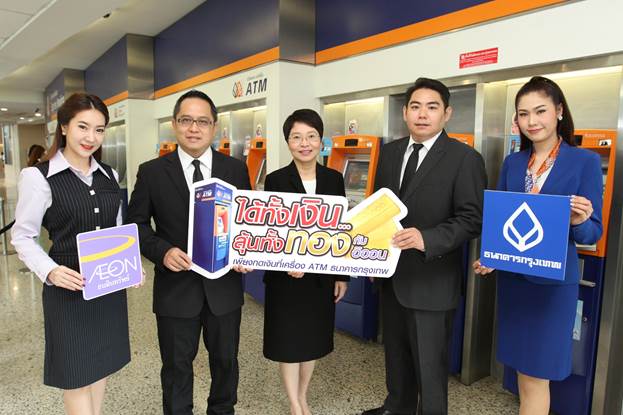
  • AEON in Collaboration with Bangkok Bank launches “Get A Chance to Win Gold with AEON”

    AEON in Collaboration with Bangkok Bank launches “Get A Chance to Win Gold with AEON”

    Mr.Nuntawat Chotvijit, Marketing Director of AEON Thana Sinsap (Thailand) Public Company Limited (second left) together with Ms. Prassanee Ouiyamaphan, Executive Vice President of Bangkok Bank (center), and Mr. Arjharn Petchdee, Senior Vice President of Bangkok Bank (second right), announced the launch of “Get A Chance to Win Gold with AEON” promotional campaign, which runs until June 30.

    AEON Your Cash cardholders are eligible to participate in the campaign by making cash withdrawals of at least 1,000 baht at Bangkok Bank ATMs. The prizes, worth 753,750 baht in total, include 5 gold bars worth 100,000 baht each and 25 (50 Satang) gold necklaces valued at 10,150 baht each.

  • Korea emerges as top Asian importer of Benz, BMW

    Korea emerges as top Asian importer of Benz, BMW

    Korea has become Asia’s largest importer of Mercedes-Benz and BMW vehicles this year, as the two German carmakers sold more vehicles in Korea than Japan for the first time ever.

    Chinese motorists buy more Mercedes-Benz and BMW vehicles than Koreans do. But both firms roll out and sell their models through joint ventures with local Chinese firms. Hence, Korea is the populous continent’s de facto leader in terms of Mercedes-Benz and BMW vehicle imports.

    The Korea Automobile Importers and Distributors Association (KAIDA) said that Mercedes-Benz sold 24,877 cars in the first fourth months of this year, while BMW sold 18,115, up 48 percent and 32.4 percent from a year earlier, respectively.

    The luxury carmakers sold 21,365 and 15,818 cars respectively in Japan during the January-April period, up just 0.7 percent and 2.2 percent from the previous year.

    Based on its larger population and higher income, Japan has remained the largest Asian importer of the two luxury brands. Japan’s population is more than double that of Korea and its GDP per capita is 20 percent higher than that of Korea.

    But Korea dethroned Japan this year because of a months-long sales ban on Audi-Volkswagen vehicles here. The carmaker stopped selling its vehicles in Korea after the emissions scandal last summer but it did not face such troubles in Japan.

    During the sales suspension, Mercedes-Benz and BMW increased their sales in Korea’s import car market.

    The two combined to sell 57 percent of the import cars in Korea over the four months, up from 41 percent last year. In Japan, however, the figure only edged up from 38 percent to 40 percent.

    Analysts expect Mercedes-Benz and BMW will dominate the market for a while. The KAIDA also said BMW sold more cars than Mercedes-Benz in April.

    Mercedes-Benz maintained its top position until this March but fell to second place due to a short supply of its popular new E-class model. Lexus came in third in the number of sales, followed by Toyota and Honda.

  • Vietnamese footwear manufacturers ignore local market

    Vietnamese footwear manufacturers ignore local market

    Doan Ngoc Hieu, managing director of Leedo, confirmed that foreign countries were the target markets for most companies. Very few companies try to exploit the domestic market because they think big Vietnamese footwear manufacturers such as Asia and Biti’s hold much of the market share.

    However, there is still large room for Vietnamese manufacturers in the home market, as there is high demand for footwear makers.

    Hieu noted that the majority of Vietnamese footwear companies are household-run ones which follow old management ways. However, the companies need new management technologies to do business more effectively.

    Doan Ngoc Hai, the father of Hieu, established Le Doan Company in 1990, the predecessor of Leedo. By the end of 2015, Leedo had 300 workers and two workshops, one in Long An province and the other in Binh Chanh district of HCMC.

    Leedo provides 40 percent of PU soles in HCM City, churning out 4 million soles and 1 million pairs of footwear products a year.

    Hieu noted that with the old management method, companies didn’t pay much importance to marketing or sales. They just focused on wholesaling, supplying products to wholesalers at markets.

    However, he believes that companies need to change, because it is now the digital era, when Facebook and internet are popular.

    Hieu and his father argue about whether to bring Leedo’s products to international trade fairs to promote the brand. He also thinks that it is necessary to spend money on ISO and other certificates.

    “One cannot go far in the world market if he does not have certificates,” he commented, adding that footwear companies need to reform management to catch up with the times.

    According to the Taiwan Footwear Manufacturers Association, Vietnam’s footwear exports will increase by 20 percent this year thanks to free trade agreements, including TPP.

    Its shoe and handbag exports increased by 16 percent in 2015 with turnover of $15 billion in 2015, including $12 billion from footwear and $3 billion from handbags.

    Vietnam is the world’s third-largest shoe manufacturer, after China and India, and is the third largest exporter, after China and Italy.

    Vietnam expects a 20 percent growth rate in footwear exports in 2016 due to a number of new free trade agreements including the Transpacific Partnership (TPP).

  • Discovery signs up new partners in China, Japan

    Discovery signs up new partners in China, Japan

    Discovery Networks Asia Pacific has entered into two new partnerships across Asia, with VS Media and Tabilabo.

    VS Media is a multichannel network that super-serves digital natives in Greater China with more than 120 million subscribers and 320 million video views a month. Tabilabo is a digital media businesses in Japan.

    These initiatives are in keeping with Discovery’s ambitions to transform and accelerate its big growth across Asia Pacific, by providing access to amazing content that is being customized for “mobile-first” millennial audiences.

    Last August Discovery took a minority investment in VS Media. Together, they are now launching Tan Ba, a digital brand solution specifically targeting millennials who make up over a quarter of the Chinese population.

    Tan Ba aims to deliver smart entertainment through highly customized short-form video content that stimulates curiosity and new learning every day. Content is sourced exclusively from Discovery’s extensive global catalogue and localized by VS Media

    The partnership between Discovery and Tabilabo includes a commercial agreement that will enable collaboration to bring solutions to advertisers to reach their desired audience via true 360 opportunities across linear, digital, and on social platforms leveraging Tabilabo innovative advertising technology and formats, and Discovery’s world-class stable of advertisers.

    “These exciting digital-first initiatives are the first steps in Discovery’s long-term strategy to accelerate our growth in Asia with digital at the core,” said Arthur Bastings, president and managing director of Discovery Networks Asia Pacific.

  • TV as a Service market to reach $1.5b in 2021

    TV as a Service market to reach $1.5b in 2021

    In a recent video software market report, ABI Research evaluates expectations of the new TV as a Service (TVaaS) business model and finds that TVaaS revenues will grow from 10% in 2016 to 35% of video software revenues in 2021. The TVaaS model states that recurring revenues based on video consumption, transactions, or subscriber-related metrics will take over traditional hardware sales, software and IP licenses, and service-related revenues. TVaaS opportunities will grow to $1.5 billion in 2021.

    “Companies that wish to succeed in the TVaaS realm need to commit to customer-oriented solutions, including investing in 24/7 operational capabilities and robust engineering organizations,” said Sam Rosen, managing director and vice president at ABI Research.

    “Solutions need to support the hybrid cloud methodology where they can be deployed in public cloud infrastructure, as well as customer’s own data centers. Also important to operators is the use of microservice-based architectures that allow larger customers to adopt one or two components of a solution around a specific pain point.”

    Most major vendors now demonstrate products with TVaaS components. Major examples include Cisco’s Infinite Video suite, Nagra’s intuiTV product, and Ericsson’s MediaFirst suite. Similar TVaaS trends are also occurring in product lines outside of middleware, including DRM, guide licensing and metadata, transcoding and QoE measurement.

    In terms of readiness to transition to TVaaS architectures and business models, DRM leads the movement at a 56% transition rate by 2021, followed by transcoding and its 36% transition rate within the same time. Middleware, as well as guide licensing and metadata, will only transition to 20% and 12%, respectively.

    “Video software markets are in a period of rapid disruption, highlighted most aggressively by Ericsson’s revelation that its media unit’s operating income showed a loss of 25% of revenues in 2016, accelerating to 33% in the fourth quarter,” said Rosen.

    “To survive the upheaval, these markets must adopt models that showcase a unique balance of service-oriented integration and development offerings, intellectual property (IP) licensing, traditional software licensing and TVaaS.”

  • Introducing BistroChat, Hong Kong-based restaurant booking app

    Introducing BistroChat, Hong Kong-based restaurant booking app

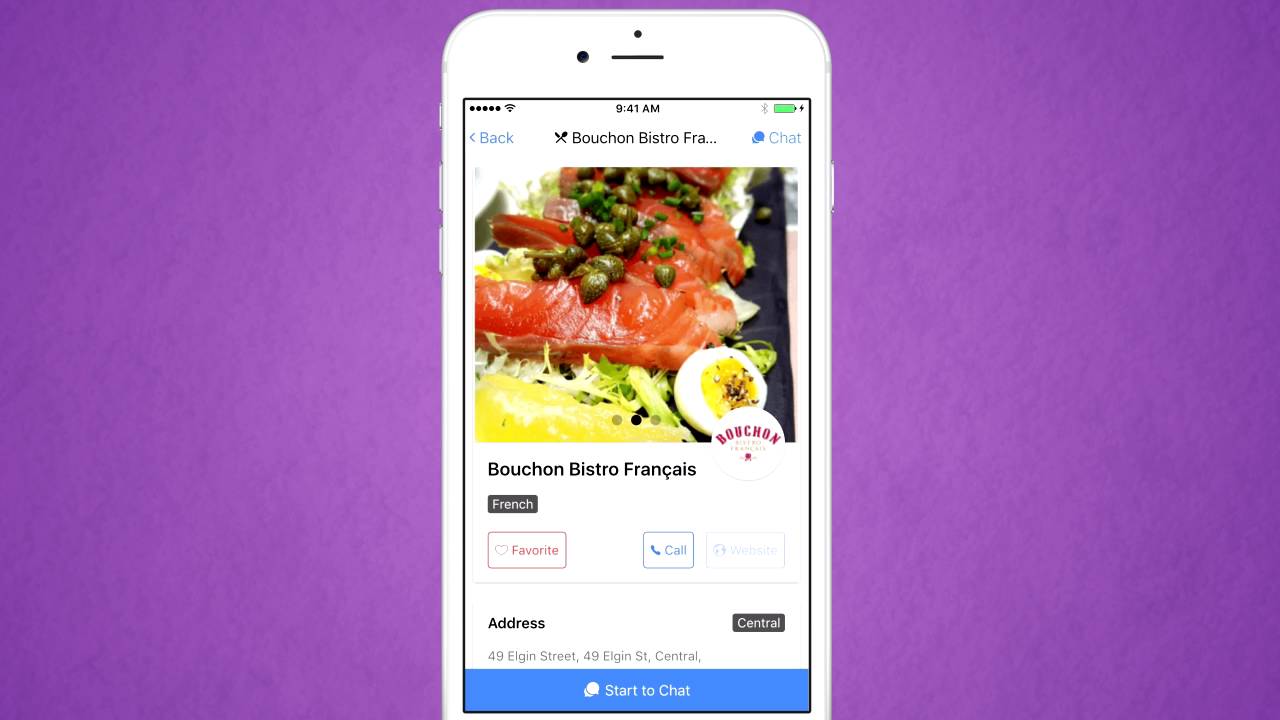
    An innovative restaurant booking app by chat recently penetrated the Hong Kong market. Alexandre Sonier, co-founder of the application BistroChat, defines it as being similar to “having WhatsApp, but with restaurant contacts instead”. Its features let its users chat directly with the staff to make restaurant bookings easy, hence making it unique in Asia Pacific.

    Today, BistroChat mainly seduces expatriates living in Hong Kong, and especially women. People aged from 25 to 40 years old with high standards of living generally use this app. According to Alexandre, settling in Hong Kong was a choice. In his vision of the industry, trends are different from a market to another. He justifies his point by saying that it is difficult to launch a new application in China, as everything is concentrated on QQ and WeChat platforms. In the same way, “the US is saturated, as the app offer is too wide”. This is in opposition with Asia Pacific, and especially Hong Kong, as BistroChat co-founder says “people buy more and more smartphones, while constantly looking for new apps. We think this it is the right time to launch a new app in this region”.

    This application is the work of three men who used to work in different startups across the world for a few years. As app developers, they managed to cover all the skills needed to launch their project, making it possible to build it in-house. Raised investments led to the creation of an MVP, allowing the company to grow within the industry.

    The particularity of BistroChat is that it is hassle-free. Today, two options are possible when it comes to booking a table in a restaurant: calling; or online reservation, which can take more time because of a longer process. By entering the market, BistroChat offers an instant connection between restaurants and its customers. Making a reservation via this app is done through chat, hence directly relating the client to the staff.

    Furthermore, competitors send an email to the restaurant in order to notify them of a new booking. Alexandre notes that this cannot work with last minute bookings, hence justifying that chat is more convenient. According to him, instant confirmation can be made, and name and phone number spellings are no problems anymore. Those features make the app more appropriate for special requests.

    It is thus with the objective of standing out from the broad app offer on the market that BistroChat maintains its efforts and innovation processes. As its co-founder states: “we don’t see an app as a one-time development but as a continuous process of improvement”. This leaves plans for building new features such as the AI, which would suggest and recommend to users new and trending restaurants, based on their preferences.

  • Yusen Logistics standardises global fulfilment operations on Manhattan Associates

    Yusen Logistics standardises global fulfilment operations on Manhattan Associates

    Yusen Logistics is deploying Manhattan Associates, warehouse and distribution management solution Manhattan SCALE as the fulfilment engine to power its expanding global logistics services operation. The Manhattan solution being implemented on the Microsoft Azure cloud platform, is driving revenue, profitability and efficiency improvements for Yusen Logistics and its customers and will support Yusen Logistics’ ongoing business growth across the Europe, Middle East and Africa (EMEA), Asia-Pacific (APAC) and Americas regions.

    Yusen Logistics serves a broad spectrum of industry sectors, offering an extensive range of capabilities including air, sea and road freight services. One of the key business imperatives for Yusen Logistics is an unwavering commitment to delivering solutions that meet the unique requirements of each client. Having operated previously with a number of vendor systems, Yusen Logistics made the decision to standardise on a single Warehouse Management Solution (WMS) that could be deployed globally and provide the requisite level of consistency in service levels its customers increasingly demand.

    Tony Gudger, CIO at Yusen Logistics Europe explains: “We chose Manhattan SCALE as our strategic fulfilment solution based on a number of factors including functionality, extensibility, ease and speed of implementation, global support capability and total cost of solution ownership. Our long-term partnership with Manhattan, which stretches back 14 years and has involved multiple deployments of its various WMS technologies across the globe, also counted significantly in our selection process.”

    Having relied on Microsoft Azure as a cloud services platform since 2012, the deployment of Manhattan SCALE on Azure was a logical decision. During the initial implementations in Southern Europe, Yusen Logistics reported zero issues relating to either Azure or Manhattan SCALE. The company plans to use Manhattan SCALE for the full gamut of local and global customer order fulfilment operations, spanning relatively small, single site distribution hubs to multi-site, multi-channel, high volume throughput supply networks.

    Henri Seroux, senior vice president, EMEA, at Manhattan Associates, commented, “Yusen Logistics’ customers across the globe are increasingly pressured to fulfil orders profitably across multiple sales channels and geographies while simultaneously maximising product availability and customer satisfaction. We are excited to provide the technology, services and support capabilities to drive the next phase of Yusen Logistics’ global success story.”

  • AIS projecting 5% revenue growth for 2017

    AIS projecting 5% revenue growth for 2017

    Thailand’s AIS is projecting a 5% increase in revenue and a 44% growth in ebitda this year as a result of strong growth in 4G customers.

    AIS VP of investor relations Nattiya Poapongsakorn as stating that the operator is expecting service revenue for the year of 129 billion baht ($3.75 billion), with the majority expected to come from data services.

    AIS’ total 4G customer base roughly doubled in the past 12 months to reach 12 million by the end of March, which compares to a 3G customer base of 24.6 million and a 2G subscriber base of 4 million.

    AIS aims to increase its revenue market share to 50% this year, up from 48% as of March. She said the operator’s 4G users have an ARPU of 400 baht, compared to just 250 baht overall.

    For the first quarter, AIS reported service revenue of 31.4 billion baht, with data services accounting for 57% of this.

    The operator meanwhile plans to spend around 45 billion baht to expand its networks in 2017, with 40 billion to be spent on mobile networks and the remainder on fiber infrastructure. But the company plans to reduce its handset subsidy budget after incurring subsidy costs of 10 billion baht last financial year.

  • Cebu Pacific Air begins new service to Busuanga

    Cebu Pacific Air begins new service to Busuanga

    Cebu Pacific Air added another domestic route on 15 May. On that day it began three times weekly (Mondays, Wednesdays and Fridays) service between Cebu (CEB) and Busuanga (USU).

    The 467-kilometre sector will be operated by CebGo using its ATR 72s. Competition is provided by Philippine Airlines which already serves the route daily with a Q400. Cebu Pacific now serves over 30 destinations from Cebu of which just five are outside of the Philippines. It and CebGo account for 42% of scheduled seat capacity at the airport.

    This makes it the biggest carrier at the airport ahead of Philippine Airlines (28%) and Philippines AirAsia (12%).

  • Vietnam’s candy market experiences shakeup

    Vietnam’s candy market experiences shakeup

    In late March, four individual investors spent tens of millions of dollars acquiring major stakes Huu Nghi and Hai Ha. This comes after their parent company, the state-owned Vietnam Tobacco Corporation (Vinataba), registered to exit from the firms.

    Two individual investors, Vu Hai and Nguyen Thi Duyen, became the new major shareholders of Hai Ha Confectionery JSC, with respective ownership stakes of 23.7% and 50.9%. Meanwhile two others, Nguyen Van Dung and Luu Thanh Tam, acquired a 20% and 10% stake in Huu Nghi Food JSC. The participation of individual shareholders could now create favourable conditions for the two firms.

    Sweeping changes on the horizon

    In 2014, Kinh Do JSC, a major player in the domestic food scene, was acquired by US-based Mondelez International. The duration of the power transfer process was considered an opportunity for smaller local players such as Huu Nghi, Hai Ha, Bibica, Trang An, or Pham Nguyen to take their chance in the market.

    As state-owned enterprises, these firms were given an opportunity to shorten the development gap with market number one, Kinh Do. However, none of them were able to, least of all Hai Ha and Huu Nghi.

    When Vinataba unveiled its plan to fully divest from the two confectionery producers, local giants such as Vingroup, Masan, and Hoa Phat expressed interest. They later withdrew interest however, opening the door for individual private investors to take on the major share.

    Huu Nghi Food chairman, Trinh Trung Hieu recalls that rigid state mechanisms had hindered the company’s operation. “If owned by a private investor, Huu Nghi could have capital to invest in brand building to reach a higher market position,” Hieu told his employees.

    With the recent move, Huu Nghi is now completely in the hands of individual investors. A company representative said, “We had to set out year-by-year growth, following the state mechanism. The company paid taxes and contributed to the state budget every year, leaving little money for reinvestment. The space is now wide open. There will surely be changes in our growth strategy in the future, focusing on market expansion.”

    “The participation of private investors is important to make use of new development opportunities after the state capital divestment. We are eager to take on the opportunity and have made preparations for future changes,” the source unveiled.

    Present in the market for more than two decades, Huu Nghi is well known for its assortment of quality confectionery products, including mid-autumn cakes.

    In terms of revenue, the company lies just behind Kinh Do, with revenue reaching VND1.44 trillion (US$65.7 million) in 2016. After Mondelez International bought Kinh Do, Huu Nghi took the lead in revenue among domestic firms, claiming an 8% market share.

    The company’s goal is to solidify its position in the local confectionery market behind Kinh Do, and maintain pole position among local firms.

    A disadvantage is that Huu Nghi has, until now, mainly served the southern market. A company representative recently admitted that winning the northern market has been very challenging due to a different consumption culture. However, it invested in building a modern confectionery plant in the southern province of Binh Duong several years ago.

    Huu Nghi is also reported to be making sauces (fish sauce, soy sauce and chilli sauce) now. The company has built a sauce production plant in the northern province of Bac Ninh.

    Huu Nghi is also accelerating exports to China, which generates VND300 billion (US$13.6 million) in annual revenue for the company. The firm is also looking to expand to other ASEAN countries, the Republic of Korea, Japan, the US, and India.

    Meanwhile, Hai Ha enjoys strong brand recognition and boasts a 60-year track record. Having been on the verge of going bankrupt several times in its history, the company is now operating well, particularly in the northern market.

    Despite having established branch offices in the central and southern regions, the company’s key market is the north, and some candy products, such as Jelly and Chewy candies have witnessed fast growth rates and become the company’s major income earners.

    To its rivals, Hai Ha is a confectionary heavyweight. However, the company has lagged behind in recent years because it lacked a strong sales network and the human resources required to work towards market expansion.

    Market analyses also show that Hai Ha has applied copying tactics in the past, trying to make its own versions of successful products. After time, these products disappeared from the market as it reached saturation however.

    The company is now working to improve its product lines, focusing on high-grade products to boost its market share. Last year, pie products made up 48.7% of production and the candy line consumed the remaining 51.3%. The company plans to balance these products out in upcoming years.

    Hai Ha also produces food supplements, teaming up with several large pharmaceutical firms.

    Growing pressure from imports

    Vietnam is now home to about 20 large-scale confectionery businesses, and several hundred small enterprises, with some major importers and distribution companies also joining the market.

    Established brands such as Mondelez, Kinh Do, Bibica, Hai Ha, Huu Nghi, Trang An, Hanobaco, and Pham Nguyen currently hold a 60-65% market share.

    There are also several foreign businesses operating in the field, such as Kraft, Meiji, Glico, Orion, and Lotte.

    Since January 1, 2015, imported confectionery from ASEAN countries enjoyed a zero percent tax rate in the Vietnamese market, under the ASEAN-India Free Trade Agreement (AIFTA). The products from Thailand, Indonesia, Malaysia, and Singapore have therefore inundated the domestic market.

    According to the market observers, Vietnam’s confectionery market still remains very lucrative to foreign players. Mergers and acquisitions (M&A) are expected to take place more frequently in the future, putting significant pressure on local firms like Hai Ha and Huu Nghi.
  • Nokia recently announced its first Nokia smartphone – Nokia 3,5,6

    Nokia recently announced its first Nokia smartphone – Nokia 3,5,6

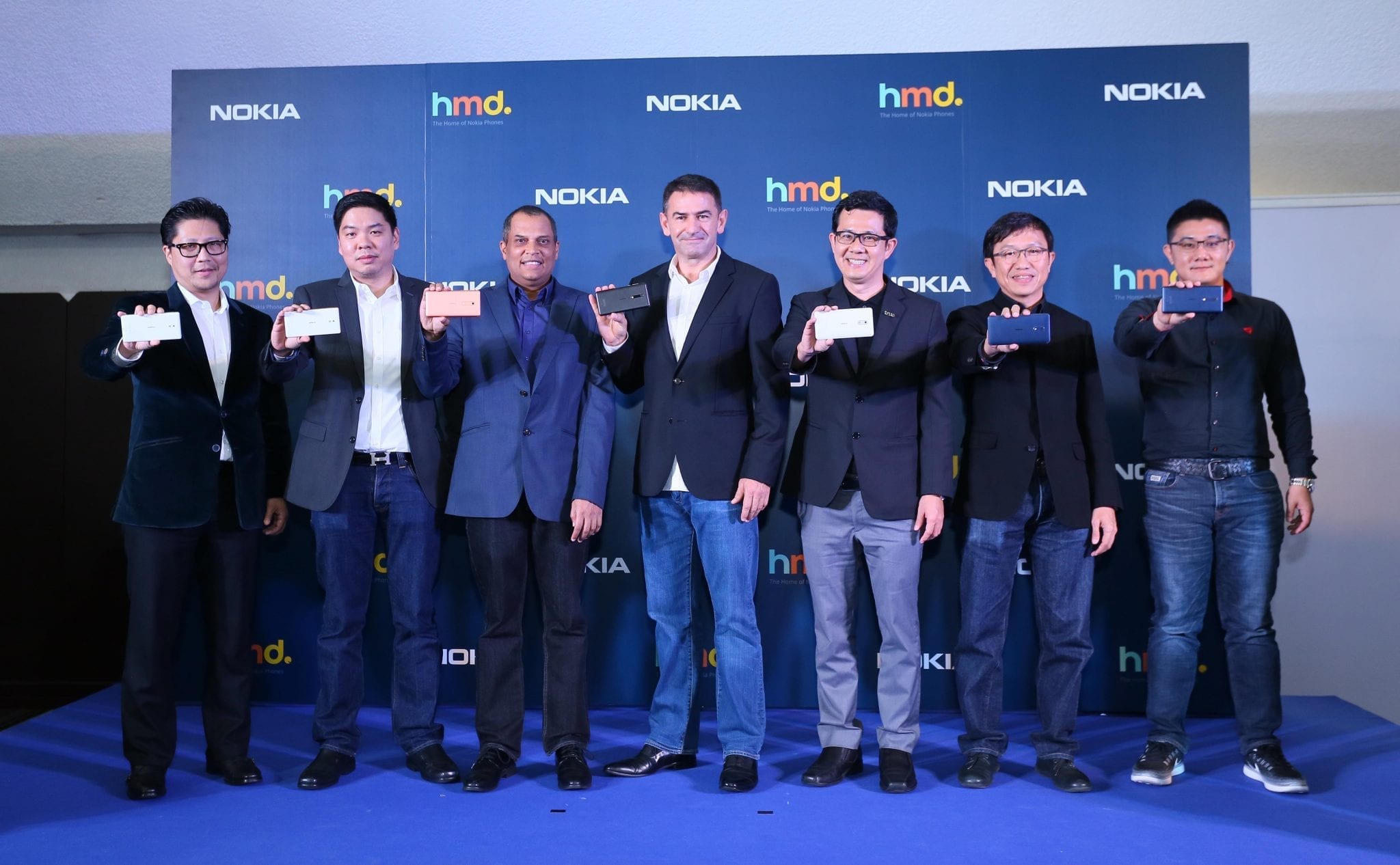
    HMD Global, the home of Nokia phones, recently announced at Thailand Mobile Expo 2017 that its first Nokia smartphone range, comprising of the Nokia 3, Nokia 5 and Nokia 6, will be available in all major operators and retailers in Thailand by end of June in 2017.

    Executives who attended the launch include (from left to right): Ponskorn Bencharongkul, Managing Director, Y.A.S Company, Arkapong Linpisarn, SVP, Head of Device Management Division,Total Access Communication, Sandeep Gupta, Regional General Manager, Thailand and Emerging Asia, HMD Global, James Rutherfoord, Vice President Asia Pacific at HMD Global, Tuantong Srivichian, Director, Device Product, True Corporation, Pairoj Thavornsapanant, Assistant Managing Director, TG Fone and Dusit Sukumvitaya , Vice President, Product, Jaymart Mobile

  • Minister Ibrahim opens CommunicAsia2017

    Minister Ibrahim opens CommunicAsia2017

    “They say ‘change is the only constant’, but change has never come at a faster rate,” said Ibrahim. “Convergence and disruption are transforming the way we operate. Every so often, we see another Airbnb or Uber come along, up-ending the way our economies function.”

    Global upheaval

    “Across the world, we see greater calls for protectionism,” he said. “I am sure we recognize this reality in our countries. But how do we deal with such upheaval?”

    “We can, of course, try to protect our economies and close them off-take the easier path. But history has shown that those who resist change eventually fall behind and end up playing catch-up.”

    Digital strategies

    “As ministers and policy-makers, we have been looking at the policies to prepare our country, so that we are digitally ready to thrive in the future economy,” said Ibrahim. “The TechSkills Accelerator, or TeSA, we launched last year aims to deepen skills and capabilities. Over 10,000 ICT professionals have gained from TeSA so far.”

    “We will be training another 10,000 public servants in data science to improve capabilities in the public service. We are also reaching out to the small medium enterprises. With the SMEs Go Digital program, we want to help our small businesses scale up and boost productivity through technology.”

    Culture of experimentation

    “We want to encourage a culture of collaborating, sharing and experimenting,” said the Minister. “One way we are doing this is to provide dedicated spaces and tools for people to tinker around with innovative projects, and exchange ideas with others in the community.”

    “The PIXEL Lab at the Jurong Regional Library is one such space. Tools and equipment like 3D printers and micro-controllers are available for anyone who wants to play around with them.”

    Regulation without stifling innovation

    “How do we regulate without stifling innovation? Last year, the Monetary Authority of Singapore, or MAS, launched a regulatory sandbox for financial institutions and FinTech players. The idea is to provide a conducive space where certain regulatory requirements are relaxed for a period of time, to encourage firms to test their solutions. If the experiment fails-and there will be some that do, it does so within a confined space, without major impact on our financial system.”

    “Digital is the future, but the future is not only digital,” said Ibrahim. “I believe analogue will remain for some time in many of our countries. We must look into harnessing the benefits of digital to transform older, analogue processes and sectors. This is one way to ensure a more inclusive and equitable distribution of benefits we gain from technology.”

  • How brands use short videos for marketing in China

    How brands use short videos for marketing in China

    As the luxury industry discusses Snapchat’s marketing possibilities and, more recently, Instagram’s latest filter feature, brands looking toward the China market are facing a completely different short video industry. It’s one that has witnessed rapid development thanks to the popularity of smartphones and upgraded communication networks in China.

    In March this year, Kuaishou, a popular short video app, was on the receiving end of a US$350 million investment from Tencent, and Alibaba put RMB 2 billion toward the transformation of Tudou from a large, formerly popular online video platform to a short video community. Also, Yixia Technology, owner of Miaopai and Xiaokaxiu, both popular short video apps in China, has already spent RMB 2 billion to encourage short video content creators and producers by building several video creation bases and providing professional studios.

    Short videos are perfect for young, tech savvy consumers who take their phone with them everywhere and use it to access social media or to fill in short breaks in the day between other activities.

    But which short video apps are the most popular in China? Who are the viewers of these short videos? How can brands market to them? What should brands take into consideration when launching short video campaigns?

    China’s short video apps

    Similar to short video platforms like Viddy and Instagram, there are numerous short video platforms and apps in China where users can record real-time short videos and share them with friends. As for users, there were 153 million regularly watching China’s short videos in 2016. This is estimated to reach 242 million by 2017, an increase of 58.2 percent.

    CIWEEK, an internet content magazine, released a list of their top 10 short video apps in China in the first half year in 2016 and Kuaishou, Miaopai, and Meipai were the most popular.

    Of these, there are actually two types of short video platform in China:

    1. Comprehensive platforms: professional short video platforms

    These platforms, such as Meipai, Miaopai, and Xiaokaxiu, provide a one-stop user experience. Users can use various shooting tools, effect settings, and formats while filming or editing a video. They also offer a community for users to share their videos with friends. Short videos uploaded on those platforms can also be shared with WeChat friends, WeChat Moments, and Weibo.

    2. Content recommendation: news apps

    These platforms, such as Toutiao, NetEase, Tencent News, and Yidian Zixun, focus on suggesting popular or professional short videos. These platforms were originally news-based and mass communication oriented. They have millions of viewers and short videos recommended on these platforms can get huge amounts of traffic.

    Who are the viewers?
    The main users of China’s short video apps are young. Most of them belong to the post-90s generation. According to a report published in March 2017 by JIGUANG, a big data provider, users ages 16 to 25 make up 39.7 percent of the total, while users aged 26-35 are at 33.3 percent. Meanwhile, over half of the users are female, making them 69.4 percent of the total number of users.

    In terms of regions, 66.9 percent of the total come from third-tier and below third-tier cities in China. The top 3 provinces for viewer numbers are Guangdong, Henan, and Shandong.

    How are brands using short video?
    Short video is becoming a new favorite marketing tool for brands for several reasons. Short videos can be used for various types of promotional materials, such as product reviews, product seeding, promoting brand culture and more. With interesting and meaningful content, short videos can deliver specific brand messages to a target audience while avoiding the annoyance that longer videos may cause. The production cycle of short videos is quick with great flexibility, which works well with brands’ marketing plans and budgets. Through audience interactions with short videos, brands can better understand their preferences, rapidly improve their user experience, and come up with effective marketing plans quickly. Integrated campaigns launched on short video platforms can be creative and diverse.

  • Renault, Peugeot commit to raise orders from troubled parts maker

    Renault, Peugeot commit to raise orders from troubled parts maker

    French car makers Renault and Peugeot have committed to increasing their orders from ailing components-maker GM&S Industry after their chief executives spoke with Economy Minister Bruno Le Maire, his ministry said on Sunday.

    The future of the company, which employs 277 people in central France and is facing liquidation, was a priority of President Emmanuel Macron’s new administration, a government spokesman said on Wednesday.

    Renault agreed to raise its orders by 5 million euros to 10 million while PSA committed to lifting its purchases by 2 million euros to 12 million, the ministry said in a statement.

    “These commitments will allow the firm in 2017 to reach a turnover close to 25 million euros, and make it possible for it to continue operations and pursue takeover discussions,” it said.