Tag: asia

  • China, South Korea Meet in World Cup Qualifier Amid Tensions

    China, South Korea Meet in World Cup Qualifier Amid Tensions

    Thousands of riot police were deployed for a soccer showdown Thursday night that was more than the average grudge match.

    The World Cup qualifying game in Changsha pitted hosts China against South Korea. It also whipped up Chinese nationalist sentiment at a time of high political tension over the rollout of a U.S.-made missile defense system in Asia.

    Officials were so worried about clashes that the Hunan provincial sports administration urged fans to show “rational patriotism” to avoid trouble.

    To ensure that, a 10,000-strong security force was deployed to watch over the capacity crowd of 55,000.

    Dozens of trucks carrying paramilitary and riot police were stationed around the stadium.

    Chinese fans were given free red T-shirts with the slogan “Changsha War” in Chinese characters.

    In the sea of red, only around 150 South Korean supporters were in the 250 seats designated and guarded for them.

    Image: Police and South Korea fans during World Cup qualifier on March 23, 2017
    Police (seen top) sit behind South Korean fans during the World Cup qualifer against China on Thursday. 

    The event illustrated the extent to which China’s relationship with South Korea has deteriorated since the first components of the Terminal High Altitude Area Defence, or THAAD, anti-missile system arrived to the region earlier this month.

    THAAD is designed to protect U.S.-ally South Korea and American bases there from the growing threat of North Korea’s weapons programs.

    Kim Jong Un’s regime has stepped up testing of its missiles as a protest of the U.S. joint military drills with South Korea, and there is concern preparations for a sixth nuclear test are underway.

    China is fiercely opposed to THAAD, arguing a system to intercept short-and-intermediate range ballistic missiles installed so close to North Korea’s launch sites will only serve to undercut China’s strategic defenses.

    The longer term concern for China’s military: If THAAD expands to Japan, it creates a common operating picture for U.S. allies in Asia.

    “Even if North Korea collapses, missile defencs would not go away,” a former U.S. national security adviser said. “The worry [for China] is that THAAD is a basis for a collective security system… that does not include China.”

    THAAD was among the issues on the agenda during Secretary of State Rex Tillerson’s recent visit to Asia.

    Experts stress that THAAD is a major concern for China’s government.

    The issue has stoked nationalist fervor in China, and triggered an anti-South Korean backlash with state media urging a boycott.

    “Some critics in the West have said that China, as a country under the rule of law, has no reason to punish South Korean enterprises that are doing businesses in the Chinese market,” a Global Times op-ed published earlier this month read. “However, all states have the right to sanction those that have posed a threat to their national sovereignty and strategic security interests.”

    Some Chinese travel companies have already stopped booking tours there, causing a drop in crucial tourism business.

    China has also blocked streaming of popular South Korean television shows and soap operas, and K-pop stars have cancelled concerts on the mainland because of problems getting travel visas.

    Across China, there have been protests at outlets of Lotte Group, the South Korean retail giant that gave up its golf course as a THAAD deployment site.

    A few days after it agreed to the deal, a cyberattack took down its online shopping sites. Other Lotte stores have been mysteriously closed by Chinese authorities for various municipal infractions.

    Officially, China hopes it can pressure Seoul to reconsider.

    The snap election in May could bring the country’s opposition Democratic Party to power. Its leader Moon Jae-in has expressed reservations about hosting an anti-missile system that might reinforce South Korea as a North Korean target.

    The regional rivalry came to a head on the soccer field, in the city where Mao Zedong, the late Communist leader and founder of modern China, started his political career.

    The sheer size of the security force showed that authorities had no tolerance for violence, even if nationalist protests had been allowed in the past.

    In the end, China won the game, 1-0. The only commotion: cheering by surprised Chinese fans who became more distracted by the World Cup qualifier than global affairs.

    -NBC

  • Emilio Pucci launches into Korea

    Emilio Pucci launches into Korea

    Italian fashion label Emilio Pucci has opened in Seoul its first store in South Korea, in Seoul.

    On the third floor of Galleria Luxury Hall East, the store carries the brand’s ready-to-wear range, silk accessories, handbags, shoes, small leather goods and beachwear collections.

    Emilio Pucci has stores in Bangkok, Hong Kong, Kuala Lumpur and Tokyo.

    The brand was founded by Don Emilio Pucci, the Marchese di Barsento, a Florentine Italian fashion designer and politician.

  • Next faces a downturn

    Next faces a downturn

    Next profits have fallen for the first time in nearly a decade.

    The UK high street fashion retailer said pre-tax profits fell 3.8 per cent to  £790.2 million last fiscal year.

    Emily Stella, a senior retail analyst with GlobalData, says the company has faced numerous challenges over the last year: erratic weather, rising import costs as the pound depreciated, and Next Directory being hit by increased competition from online pure-plays Asos and Boohoo.

    “Not to mention a more general shift away from clothes buying in favour of spending on leisure,” she commented.

    “Next’s stance on discounting – only marking down items during sale periods – has been a good thing for the retailer, sustaining consumer perceptions of product value and allowing Next to retain high margins. However, full-price retail sales were down 4.6 per cent, indicating that shoppers are not buying into its current proposition – and Next admits it has not been fast enough at responding to new trends.”

    But she says the retailer remains one of the best-run brands on high street – the issue is that the clothing market is “far tougher than before”.

    Next says it anticipates a difficult first half of the new trading year with improved performance in the latter half.

    “But the retailer could find the next few years a challenge as competition intensifies and Next struggles to keep up,” concludes Stella.

  • Why Apple’s red iPhones are not ‘Red’ in China

    Why Apple’s red iPhones are not ‘Red’ in China

    Apple’s latest iPhone might be red, but it’s not Red in China. The special-edition version of the iPhone 7 and 7plus goes on sale in more than 40 countries, but China has done it slightly differently. The BBC explains why.

    What is Red about?

    Red is a charity looking to combat Aids and was originally founded by U2 musician Bono and activist Bobby Shriver. It gives the money it raises to the Global Fund for HIV/Aids that doles out grants.

    This includes providing testing and treatment for patients with the aim of wiping out transmission of HIV. Apple is the world’s largest corporate donor to the Global Fund.

    The special-edition devices celebrate Apple’s long-running partnership with Red and a portion of the sales will go towards its relief operations in Africa.

    But Apple’s Chinese-language sites don’t mention the product or cause. This left some perplexed.

    Internet users were among the first to spot that there was different branding on Apple’s landing page depending on the Chinese territory.

    When translated from Mandarin, Apple’s China retail website for the Red devices simply read as “now in red” while the Taiwanese site used the words “product” Red which the US and other countries have as well.

    Some analysts read this as yet another example of Chinese politics interfering with Western brands looking to do business in the world’s most populous nation.

    Apple had no comment on the matter.

    So why the different name?

    One possibility is that Apple is looking to navigate sensitivities in a state where messages are controlled: HIV/Aids and homosexuality remain taboo topics in China.

    The first case of HIV in China was recorded in 1989. By 2000 the disease was found in most of China, and as it continued to spread, the government kept denying the problem.

    Today discrimination against Aids patients is common.

    Any other contentious issues?

    Well there’s the Dalai Lama.

    Earlier this year Red’s Instagram page showed a picture of the Tibetan spiritual leader, whom China considers a dangerous separatist.

    This has led some to point to how the post was trolled.

    How will Red do in China?

    Apple has faced numerous challenges in China of late, which may be one of the reasons why it is offering the Red iPhones as a colour option as opposed to a product.

    Last year Apple’s online film and book services were shut down in China. Apple was also made to pull the New York Times from the China App store following a request from the authorities.

    But the red iPhones are poised to sell well because the colour is considered to be the most auspicious in Chinese culture and it is considered a prestige product there.

    The tech behemoth is clearly trying to maintain relations with its fastest-growing sales region.

    Apple chief executive Tim Cook has been making semi-regular trips to China and is opening four research and development centres later this year.

  • SEA consumers online at least 16 hours a week

    SEA consumers online at least 16 hours a week

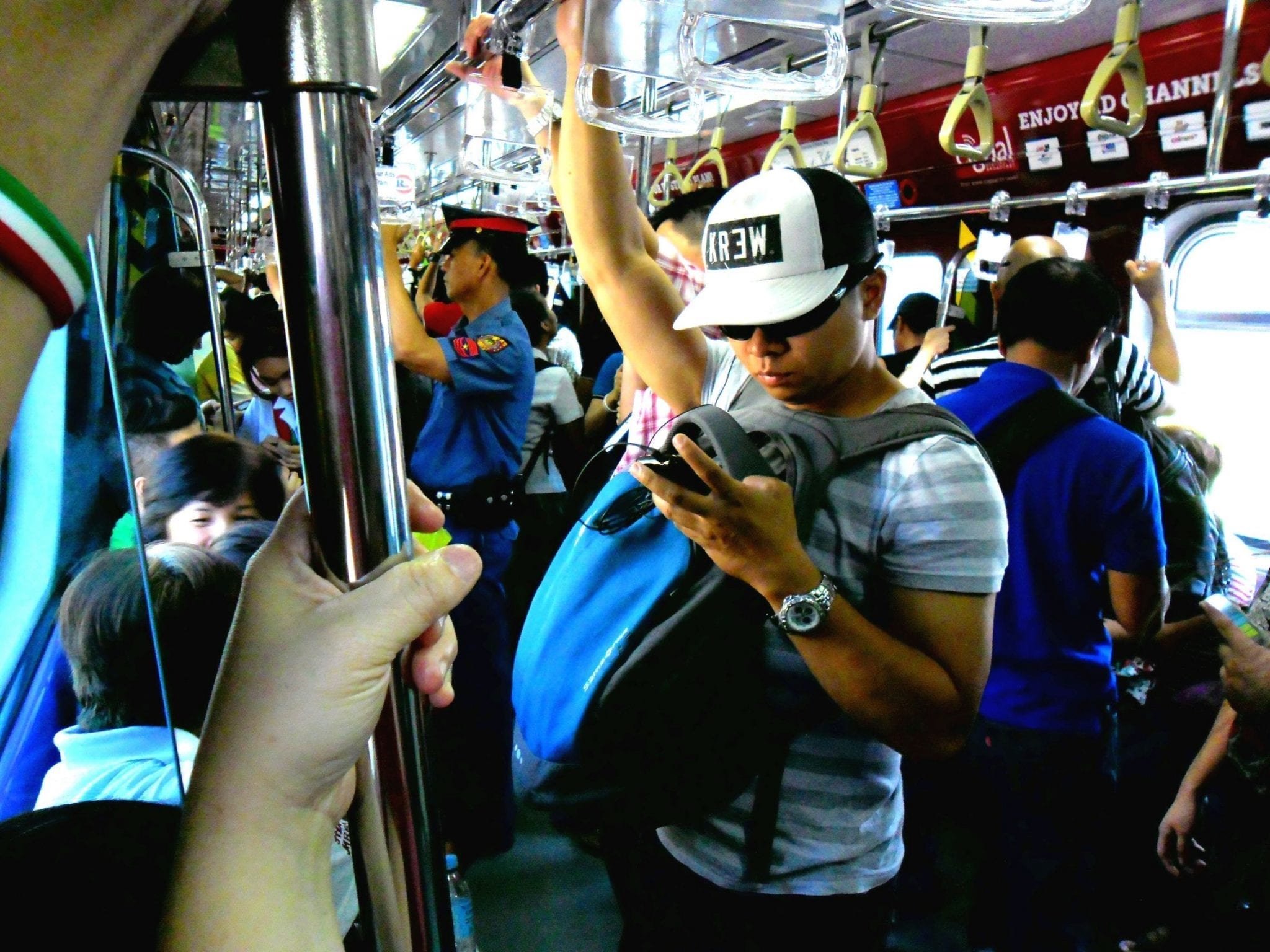
    Smartphones are the go-to device for accessing the internet throughout South East Asia, and consumers expect fast performance of websites across all devices.

    This is among the key findings of a new “State of the user experience” research report released by Limelight Networks.

    “Our new research shows that nearly half of adult consumers in South East Asia are online 16 hours or more each week, outside of work, and they have high expectations for website performance, especially when it comes to e-commerce,” said Jaheer Abbas, Regional Sales Director at Limelight.

    “Nearly everyone surveyed said that they’re likely to recommend a brand to a friend if they have a positive web experience, and on the flip side, that they’ll leave and go to a competitor if it isn’t a good experience.”

    While there is a great deal of behavioral consistency throughout the region, some interesting regional differences were identified. Personalized web experiences were ranked as very important in all countries, but were slightly less so in Singapore. Also, while the majority of respondents regionally will abandon a website if the experience is slow, there is slightly more tolerance in the Philippines.

    Despite these differences, the report clearly illustrates the need for organizations to prioritize the optimization of mobile experiences, understand the expectations of consumers within each country rather than implementing a “one-size-fits-all” approach, and accelerate website performance to keep visitors engaged.

    Time spent online varies by country and generation. People in the Philippines spend the most time online closely followed by those in Malaysia. People in Singapore are online the least. In Thailand, millennials are online the least, with 34% online 16 hours or more a week compared to 42% for all other age groups. The gap is even greater in the Philippines, where 39% of millennials versus 56% of all other age groups are online this amount of time.

    The survey also suggests that nearly half (43%) of consumers will leave a website and go to a competitor if a webpage takes too long to load. Websites should also load quickly on all connected devices as 84% of respondents report they expect equally fast load times on any device.

    Social media is the top online activity closely followed by online video, and fresh and updated content ranks as the top expectation for web experiences. Most consumers (67%) surveyed want a website to remember them and make recommendations based on previous visits.

  • Giant panda Bao Bao arrives in Chengdu onboard FedEx Boeing 777F

    Giant panda Bao Bao arrives in Chengdu onboard FedEx Boeing 777F

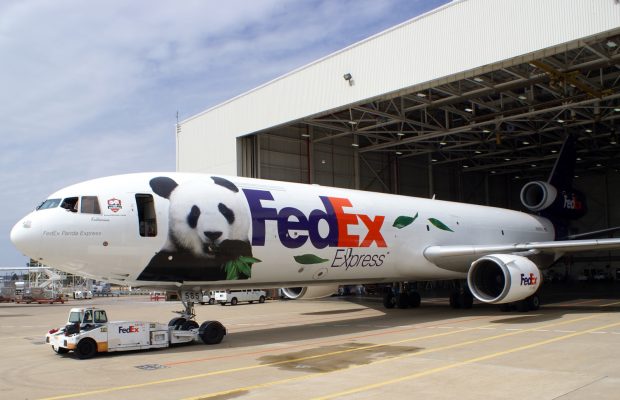
    FedEx Express, a subsidiary of FedEx Corp., has donated the use of its extensive global transportation network to ship a giant panda from the United States to Chengdu, China.

    The giant panda Bao Bao landed at China’s Chengdu Shuangliu Airport on 22 February 2017 at 6:59 pm onboard a custom-decaled FedEx B777 Freighter (B777F)—known as the FedEx Panda Express—from Washington D.C. in the US. Upon arrival, the panda was transported to her new home in Sichuan province, the China Conservation and Research Center for the Giant Panda’s Dujiangyan City Reserve.

    “It’s a great honor for FedEx Express to be able to support this latest mission by donating our expertise and resources, and to be entrusted once again with such a valuable and symbolic shipment,” said Karen Reddington, president, FedEx Express Asia Pacific. “We’ve assisted with giant panda shipments several times in the past and have considerable experience of managing the process, which involves months of planning and cross-disciplinary teamwork. Transporting Bao Bao is also an act of good global citizenship that leverages our unique network and specialized capabilities to help connect the world.”

    Bao Bao, a three-and-a-half-year-old female panda born in August 2013 at the Smithsonian’s National Zoo, is the offspring of Mei Xiang and Tian Tian, both currently living in the US.


    FedEx provided a dedicated aircraft to bring Bao Bao’s brother Tai Shan to China in 2010, and her parents, Mei Xiang and Tian Tian, to the United States in 2000.

  • Esprit announces branded jewelry collection from Versteegh

    Esprit announces branded jewelry collection from Versteegh

    Esprit has concluded a new license partnership in the area of fashion jewelry with Versteegh modeaccessoires effective 1 July 2017. With more than 60 years of experience in the wholesale trade, Versteegh brings to the cooperation valuable know-how and important expertise in the field of fashion accessories. Thanks to their excellent supplier network, Versteegh is able to guarantee short and reliable delivery times. The Esprit branded jewelry collection from Versteegh will be available internationally in Esprit’s own retail stores and e-shop.
    Maria Pambori, VP Head of Global Licenses/Product Esprit: “Together with our new partner, we want to excite our customers with a product portfolio that reflects the latest trends and interprets them through the philosophy of our brand Esprit. With Versteegh we have found a partner who attaches great importance to quality, has a keen sense of trends and thus perfectly meets our high requirements.”

    “Due to its positioning, the brand Esprit offers an ideal platform for our products. We are excited about the cooperation and are looking forward to making a great impression on Esprit customers with our collections” says Frans Lenting, Director of Versteegh.

  • Huawei unveils All-Cloud Network architecture

    Huawei unveils All-Cloud Network architecture

    Huawei unveiled its All-Cloud Network architecture for enterprises at last week’s CeBIT 2017, in a bid to help enterprises accelerate their digital transformation.

    The vendor’s new architecture is comprised of three parts – ubiquitous connections, an open cloud platform and a social technology industry application.

    The architecture consists of CloudFabric – designed to build a simple, efficient, and open cloud data center network as well as CloudDCI to build an on-demand and smart data center interconnection network based on cloud services.

    The portfolio also includes CloudCampus, which aims to enable cloud management of the network throughout the entire lifecycle, from network deployment to O&M, as well as all Wi-Fi access in the campus network. CloudEPN meanwhile includes on-demand value-added network services for enterprises.

    Finally, Edge-Computing-IoT (EC-IoT) is a security solution designed to meet predictive maintenance requirements and enable digital transformation for vertical industries.

    “Digital transformation not only means applying new technologies such as cloud computing, SDN, and NFV, but also involves reforming business models, operational modes, and thinking patterns,” said Kevin Hu, president of Huawei Switch & Enterprise Gateway product line.

    “The All-Cloud Network architecture will deliver ubiquitous connections, an open cloud platform, and social technology industry applications to enterprises. In addition, it will simplify network resource management and enhance the value of network data. All of these factors will create an open network for enterprises to reap business benefits with tremendous potential.”

  • Accor Hotels to operate 200 hotels in Indonesia by 2020

    Accor Hotels to operate 200 hotels in Indonesia by 2020

    Global hotel management chain AccorHotels is seeking to operate a total of 200 hotels in Indonesia by 2020 on the back of the country’s rapid development.

    At the end of 2016, the company was managing 106 hotels, an increase of 11 units compared to 2015.
    “We aim to have 200 hotels in Indonesia by 2020,” AccorHotels Malaysia-Indonesia-Singapore chief operating officer Garth Simmons said in Makassar on Saturday after launching its latest addition, Ibis Styles Makassar Sam Ratulangi.

    In 2017 alone, it plans to open between 15 and 20 new hotels, five of which will be located in the eastern part of Indonesia, mostly on Sulawesi.

    The chain is planning to make Sulawesi its eastern hub to help expand operations to the other parts of the country, especially Papua.

    “Frankly, we really want to expand to Papua, but we have to strengthen the distribution network first,” Simmons said.

    In 2016, the group had a 70 percent average occupancy rate, with Bali and Jakarta as its strongest bases, where the rate reached 90 percent.

    The Sumatra region has a 70 percent occupancy rate, while eastern Indonesia had around a 55 percent occupancy rate.

  • Globe taps NuRAN for rural broadband trial

    Globe taps NuRAN for rural broadband trial

    The Philippines’ Globe Telecom has selected Canadian wireless broadband provider NuRAN Wireless to conduct the next phase of its trial rural connectivity program.

    Globe will use NuRAN’s equipment within 50 sites at various villages in across the Philippines. These sites will use NuRAN’s LiteCell 1.5 base stations, connected using a de-centralized GSM network topology.

    Globe will also be able to make use of the ecently-announced NuRAN Open Access (NOA) software suite, which includes the Community Cellular Manager (CCM) solution.

    Globe will be able to use this software to manage prepaid charging and forge business partnerships with local and regional organizations, NuRAN said.

    The agreement marks the next stage of a trial that commenced with the deployment of the same equipment at two sites in the Philippines in the fourth quarter of last year.

    During the same period, Globe also worked with NuRAN on a trial involving using TV white space spectrum with wireless backhaul. Both initiative form part of Globe’s goal of improving connectivity for remote or underserved regions of the Philippines.

    “We are proud to be partnering with Globe Telecom on this important initiative. The Philippines is an important market for NuRAN with a large rural and remote population desperate for connectivity,” NuRAN Wireless CEO Martin Bedard said.

    “This deployment further strengthens our relationship with Globe Telecom, the number one mobile brand in the Philippines.”

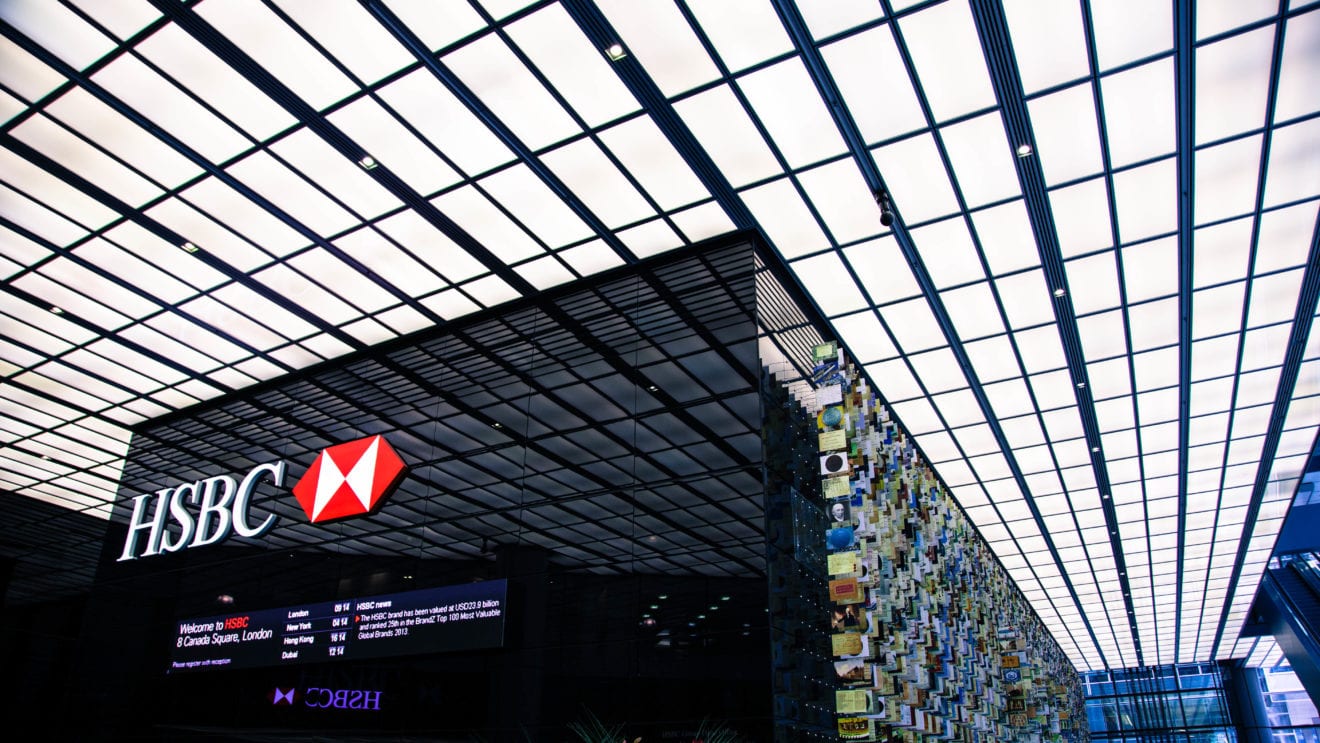
  • HSBC to add up to 1000 in China staff

    HSBC to add up to 1000 in China staff

    HSBC plans to add as many as 1,000 new employees to its Chinese retail banking and wealth management arm this year, the business’s regional head said, most of them in the Pearl River Delta, the heart of the bank’s growth strategy in China.

    If that target is hit, the new additions will mean HSBC will have hired twice as many people as it did last year for this part of the business. They will join an existing team for this unit of 2,400 employees in the world’s second-largest economy.

    HSBC has made the southern Pearl River Delta region – home to 11 industrial cities that are set to fuse into one megalopolis – its focus in China, betting on its growth and its own Hong Kong heritage.

    This region already has an economy larger than Indonesia’s and is shifting from a manufacturing base to a tech powerhouse.

    But since the strategy to reinvigorate profit growth after years of restructuring was announced in 2015, China’s economic growth has slowed, delaying the bank’s plans. HSBC makes more than half of its profit in Asia, the bulk of it in Hong Kong and China.

    “As of this point, we are very pleased with the progress in the Pearl River Delta. We certainly aren’t taking any backward steps,” Kevin Martin, HSBC’s Asia Pacific head of retail banking and wealth management, told Reuters.

    HSBC’s latest numbers for China retail and wealth management business suggest growth remained strong, with its customer base as well as mortgage volume expanding by 51 percent in the Pearl River Delta last year. It issued over 100,000 credit cards since launching it in December across all cities in the Pearl River Delta and 30 other cities in the country, Martin said.

    “We have done a lot of things in the Pearl River Delta … It remains one of the key opportunities for us.”

    Of the total 2,400 staff for retail and wealth management in China, about 800 are in the Pearl River Delta, the bank said, adding 60 percent of the hiring last year was for the southern region that counts Shenzhen and Guangzhou among its biggest cities.

    HSBC Group Finance Director Iain Mackay said last month the bank’s operating profit in China in 2016 was about $200 million lower than the previous year. That was mainly due to investments to grow the Pearl River Delta business and in financial-crime risk-management standards in China, he said.

    CHINA CALLING

    The bank’s outgoing top management campaigned heavily to promote the region and its role in HSBC’s China strategy.

    Chief Executive Stuart Gulliver, took analysts and investors on a tour of its operations there a year ago, promoting the region’s role as a gateway to tech businesses like Alibaba Group Holding and Tencent Holdings as well as new start-ups.

    Although investors have supported the plan, there has been increasing concern over the last few months about risks the lender faces in its Asia “pivot” strategy, due to the sluggish pace of China’s economic recovery and the patchy pace of development in the Pearl River Delta.

    Some sectors have struggled in the face of falling exports and tighter credit conditions.

    Gulliver said in February 2016 that the bank, which is facing downward pressure on its revenue in 2017 due to regulatory costs and lower rates in Britain, planned to hire 4,000 new staff in the region over five years instead of its initial three-year target.

    But Martin brushed aside concerns that HSBC’s investment could be scaled back as China’s economic growth slows, saying the bank remained committed to the region.

    HSBC’s newly appointed chairman, Mark Tucker, has also had an intense focus on Asia, most recently as head of insurer AIA Group.

    “We will see and we have seen it already even at 6.5 percent growth rate, (there is) massive underlying growth for China,” Martin said. “Clearly there’s real upside on that for us.”

  • South Korea becomes Vietnam’s biggest foreign investor in Q1

    South Korea becomes Vietnam’s biggest foreign investor in Q1

    South Korea has taken over Singapore to become Vietnam’s biggest foreign investor in the first quarter, with investment totaling $3.74 billion, or 48.6 percent of the total foreign direct investment (FDI) pledged for the period, the Vietnamese government said Friday.

    Singapore, which held the top position in January and February, came second with $911 million, followed by China with $823.6 million, the Foreign Investment Agency under the Planning and Investment Ministry said in a monthly report.

    Actual FDI inflow in the first three months rose 3.4 percent from a year ago to $3.62 billion, while new pledges rose 6.5 percent to $2.92 billion, the report said.

    FDI is a major source of foreign exchange, which along with overseas remittances, helps Vietnam improve its trade balance.

    During the period, foreign firms from 71 countries and territories have new pledges and additional funds in 18 sectors, with the manufacturing and processing industry attracting $6.54 billion, or 84.9 percent of the total.

    The real estate sector comes second, while the wholesale and retail sector has the third position.

    Foreign investments have been poured into 52 cities and provinces in the three-month period, with the northern province of Bac Ninh, 30 kilometers (18 miles) northeast of Hanoi, attracting $2.61 billion, or 33.86 percent of the total.

    Binh Duong Province, about 40 km north of Ho Chi Minh City, ranks second with 18 percent and Ho Chi Minh City comes third with 7.78 percent.

    As of March 20, Vietnam has had more than 23,000 FDI projects in operation, with a combined registered capital of $300.7 billion.

    Most of them are in the manufacturing and processing industry, making up 59.3 percent of the total investment.

    Overall, South Korea also led the foreign investor list, with investment totaling $54 billion, followed by Japan with $42.49 billion.

    Large-scale FDI projects in the first quarter include a $2.5 billion expansion project of Samsung Display Vietnam, a subsidiary of Samsung Display South Korea, in Bac Ninh Province.

    Taiwan’s Polytex Far Eastern Ltd, which manufactures polyester fiber and cotton spinning in Binh Duong Province, got the green-light to increase its registered capital by $485.8 million to $760 million.

  • Indonesia’s First Green Airport Ready for Operations

    Indonesia’s First Green Airport Ready for Operations

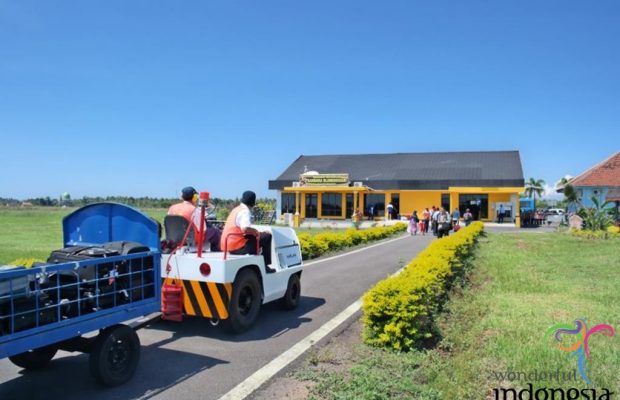
    Indonesia’s first airport built on the green concept in Banyuwangi, East Java, is ready to start operations, Banyuwangi District Head Abdullah Azwar Anas stated on Saturday.

    “It has been ready. God willing, before Eid, it will become operational with the realization of a direct flight service on the Jakarta-Banyuwangi route. There are some technical matters that need to be addressed,” he noted during a visit to the Blimbingsari Airport in the district.

    He explained that the new airport will become a tourism icon to offer sufficient room to accommodate passengers following an increase in the number of air travelers by more than 1,300 percent in the past five years.

    Anas said the architectural concept of a public space must not be made arbitrarily, adding that so far, it has been difficult to implement architectural principles that break standards in projects funded by the government due to a conventional concept or administrative constraints.

    “However, in Banyuwangi, we have given room to work that goes beyond the mainstream. Besides the airport, other public facilities, such as parks, campus, halls, marketplace, and tourist destinations, have been built based on thoroughly considered architectural principles,” he emphasized.

    Anas pointed out that the concept for the airports development was aimed at meeting three goals, with the first being a tourism icon and secondly, ensuring a transfer of knowledge from national to local architects.

    It was hoped that in future, all buildings, including restaurants and shop houses, would have a clear architectural concept, Anas stated.

    “Buildings, with characteristic architectural designs, can serve as examples for public and private parties. People can follow concepts that are simple but iconic,” he noted.

    The third goal is that they will be functionally effective and sustainable as well as efficient, he remarked, adding that the new terminal will be energy efficient in line with the concept of a tropical house that uses natural air for ventilation.

    He pointed out that the new terminal will be iconic, as it adopts the concept of the local traditional Osing communitys house.

    “Local wisdom has been adopted to boost Banyuwangis local arts and culture by providing a large gallery, so that all will be accommodated,” he stated.

    A public building is not just a project but must also offer economic benefits to the community and help in social-cultural development, Anas added.

  • Ted Baker stronger on America and China

    Ted Baker stronger on America and China

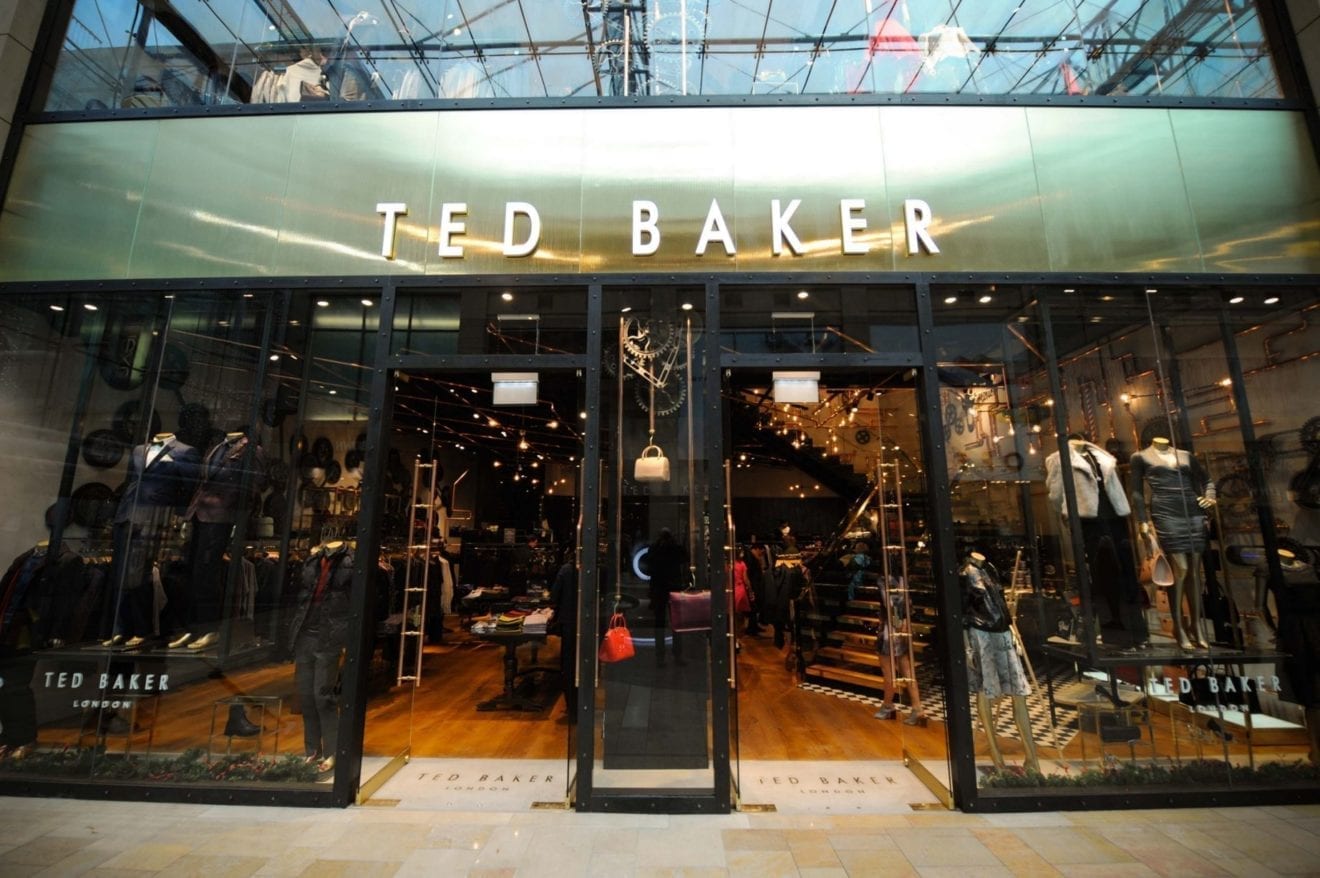
    New stores in North America and China have paid off for British fashion retailer Ted Baker, which has reported a 4.4 per cent increase in pre-tax profit, despite the challenging global retail environment.

    It achieved a profit of £63 million for the year to January 28, as total revenues rose 16.4 per cent to £531 million.

    Online sales rose 35.1 per cent, while 14 new stores in the US and Canada fuelled a 28.3 per cent increase in sales there.

    Ted Baker also commenced a new focus on Greater China, opening a store in Beijing.

    Fiona Paton, an associate retail analyst with GlobalData, says the falling demand for premium goods presents challenges in Asia.

    “However with British heritage brands remaining popular in the region, Ted Baker should lean upon this trait through its marketing and store environment while working hard to gain more exposure.”

    Even in the tough UK and European markets, Ted Baker thrived last year, sales rising 10.7 per cent.

    Observers can expect to see even better results next year, Paton believes.

    “While it has a measured approach to expansion, new stores and concessions are planned throughout Europe, North America and Asia in 2017-18, bolstering growth amid difficult domestic trading conditions.”

    In range terms, womenswear was a highpoint for Ted Baker achieving 19.7 per cent growth for the year, accounting for 57.3 per cent of sales, while menswear grew 12.2 per cent.

    “Menswear will simultaneously be a challenge and an opportunity for Ted Baker. While men are becoming more interested in fashion and buying more regularly, the sector is also becoming increasingly competitive as players such as Superdry extend their menswear ranges,” says Paton.

    “Unlike rivals such as Whistles, Ted Baker benefits from unisex appeal but will need to monitor the competition to ensure that its designs remain distinctive enough to differentiate itself.”

  • Cebu Pacific earned P9.8B in profits, up 122%, in 2016

    Cebu Pacific earned P9.8B in profits, up 122%, in 2016

    Budget carrier Cebu Pacific has vowed to increase inter island connectivity within the Philippines to stimulate trade and tourism within the country.

    Cebu Pacific Vice President for Corporate Affairs Paterno S. Mantaring said this commitment comes on the heels of the company registering a 122-percent increase in net income in 2016.

    A filing with the stock exchange showed Cebu Air Inc. booked P9.8 billion in profits last year, thanks to the strong demand for low-cost air travel and robust growth in ancillary revenues.

    Total revenues, including that of subsidiary Cebgo, rose by 9.6 percent to P61.9 billion, while expenses inched up by a mere 1 percent to P54.06 billion.

    “The year 2016 was a great year for Cebu Pacific, as we continue to enable every Juan to fly to more destinations around the Philippines and to key destinations in Asia, the Middle East, Australia and the US,” Mantaring said. “Cebu Pacific remains committed to further increase inter-island connectivity within the Philippines to promote trade and tourism and help more people connect with their families and friends all around the world, while consistently providing our trademark best-value fares.”

    In 2016 Cebu Pacific flew to 36 domestic and 30 international destinations through 102 routes and more than 2,820 flights weekly. It boosted its intra-regional network in the Visayas with flights from Cebu to Ormoc, Roxas and Calbayog.

    The airline also launched direct service between Kalibo and Incheon, Korea, as well as its first US destination, Guam. It also teamed up with some of the world’s leading low-cost carriers to form Value Alliance, the world’s largest budget-carrier alliance, which aims to provide greater value, connectivity and choice for travel throughout Southeast Asia, North Asia and Australia.

    In total, the airline flew 19.1 million passengers in 2016, up by 4.1 percent versus the 18.4 million passengers carried in 2015.

    The Gokongwei-led carrier capped 2016 with 57 aircraft, adding two brand-new ATR 72-600 aircraft in February 2017, to bring its current fleet to 59.

    For the rest of 2017, CEB expects to take delivery of one Airbus A330, two Airbus A321neo, and four more ATR 72-600; and delivering out three of its four Airbus A319 to end the year with 63 aircraft.