Tag: asia

  • 80 Mln Indonesia’s Cell Phone Users Become Opportunities for Fintech Industry

    80 Mln Indonesia’s Cell Phone Users Become Opportunities for Fintech Industry

    Minister of Communications and Informatics Rudiantara says financial technology, or fintech will be used as an effort to expand access of financial services to public, or financial inclusion. This relates to the use of mobile technology amid Indonesia society.

    Rudiantara revealed in Indonesia there are 170 million people own mobile phones and 130 million people access the internet. Of the figure, as many as 100 million people access the internet via mobile phones. However, a number of people in Indonesia who have a bank account, based on data from Bank Indonesia, only reach 90 million.

    “This means there are 80 million people have cell phones but are not given access of application related to finance and banking. Incredible,” said Rudiantara as quoted from the official page of Communications Ministry, Saturday (3/4/2017).

    Based on the fact, Rudiantara said, the banking sector in Indonesia now needs to formulate new technology-based business model.

    He said this in ‘Cooperation of National Movement of 1000 Digital Startups’ event initiated by PT Bank Bukopin Tbk (BBKP) at the Ministry of Communications, Jakarta, last week.

    “For Indonesian banking it is only a matter of time to think of new business model, especially for consumer banking. Bank management must think to integrate itself to the new banking technology wave, that is, financial technology (fintech),” he explained.

    The application of technology in the banking aspects is very diverse. Therefore, the Minister of Communication and Informatics expects the banking world to understand the characteristics of consumer.

    “Fintech is diverse, but that much developing is virtual lending which relates to consumer banking. Why, people prefer to use fintech to borrow money rather than go to the bank? The reason is that in terms of time, because the process is fast,” Rudiantara explained.

    He said that currently there are more or less 140 facilities of fintech services that have been registered. Indeed, the cost or interest is higher than that of traditional banking. But it is much better than moneylenders.

    “This indicates that SMEs that borrow can count, although getting larger interests but there is assurance to be able to get a loan more quickly to develop business,” he explained.

    He also expressed his appreciation for bank role, especially Bank Bukopin Tbk, which helped develop the startups and joint fintech.

    “Because there remain few banks that want to get involved. This is a national program, not a program of Communications and Informatics Ministry. In 2020 we expect to reach 1000 qualified startups that go through a phase that has been determined,” he concluded.

  • CC Containers boosts technology, efficiency and safety with United’s world class equipment

    CC Containers boosts technology, efficiency and safety with United’s world class equipment

    In a non-stop industry like container handling, efficiency is king and downtime can be costly. One company that knows this first-hand is Port of Melbourne- based CC Containers, which prides itself on efficiency, reliability and safety.

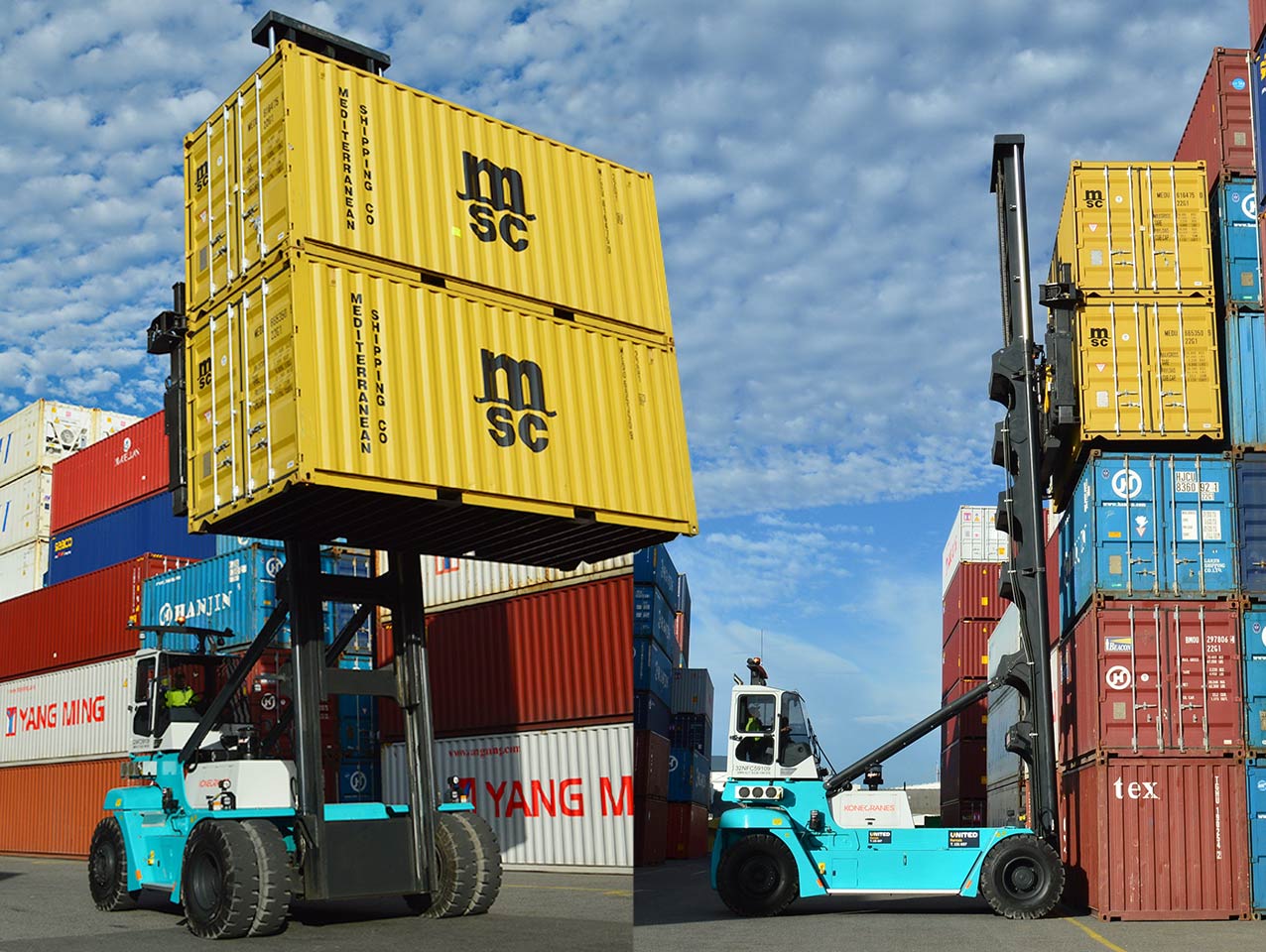
    CC Containers selected United Forklift and Access Solutions to provide the company with Konecranes empty container handling lift trucks to expand its container handling fleet with world-class equipment built tough to cope with high-pace demands and to optimise efficiency for its customers.

    United Forklift and Access Solutions, which is national distributor for Konecranes forklift and container handling equipment also backed the new technology with a dedicated full-time technician on-site for the maintenance, repair and upkeep of the new units, as well as other existing units.

    United supplied a total of five Konecranes SMV empty container handlers to suit CC Container’s expanding operational needs.

    “The container handlers are reliable robust pieces of equipment,” said Mr David Muir, managing director of CC Containers, whose company places a high emphasis on standards of reliability and safety.

    “The other major bonus for us is that the drivers like using them. They have good visibility and comfort and are easy to use, which makes a big difference to staff performance,” says Muir.

    In addition to the advanced container handling technologies, United also provided CC Containers with an experienced full-time technician, Gene Roberts, who is on-site and can respond to any maintenance or repair issues quickly and effectively.

    “Mr Roberts has been a great help to us at CC Containers. He has helped with servicing, monitoring and OH&S requirements, which means we are always meeting or exceeding compliance and standards objectives,” said Muir.

    Konecranes is a major global player in the design and manufacture of heavy duty forklifts, reach stackers and container handling equipment, with its SMV series purpose-built to quickly lift, move and sort both empty and full containers in and around ports. Designed to cope with high demands with both speed and efficiency, the Konecranes empty container handlers in service with CC Containers offer a very fast total operating speed as a function of lifting, lowering and driving speed based on load-sensing hydraulics to cope with extreme demands. The container lift trucks also feature the new Optima cabin – which has enhanced cabin space and visibility – and an extensive range of innovative features which optimise quality, productivity and life cycle cost.

    CC Containers’ expanded Konecranes empty container handlersfleet includes:

    • The ECB 80 empty container handler, which can stack six containers high up to eight tonnes
    • The ECB 90 empty container handler, which can stack seven-eight containers highup to nine tonnes
    • The ECB 100DS empty container handler which can lift two boxes at the same time, up to 10 tonnes capacity, and stack six-seven containers high.
  • Uber agreed to, then scrapped, a non-compete deal with Indonesian unicorn Go-Jek

    Uber agreed to, then scrapped, a non-compete deal with Indonesian unicorn Go-Jek

    Uber may have a reputation for steamrolling its competitors, but it can be conciliatory at times. In 2015, a year before its retreat from China via the sale of its Chinese business to rival Didi, the U.S. company agreed to a non-compete deal with Go-Jek, a fast-growing on-demand service from Indonesia that’s valued at over $1 billion, TechCrunch has learned.

    In a bid to strengthen their collective battle against Grab, the Singapore-based firm represent in six countries, the two companies floated a collaboration that would ensure they didn’t compete directly in Indonesia, the largest economy in Southeast Asia, according to a person who was involved in discussions. In practical terms, it meant Uber would stick to offering private cars in the country, while Go-Jek would focus only on two-wheeled motorbikes on-demand.

    The agreement fell apart when Uber CEO Travis Kalanick was made aware of the arrangement. Our source said the Uber chief didn’t want to miss out on potential marketshare and thus scrapped the deal. It wasn’t long before they did invade each other’s spaces: Uber introduced ‘Motor,’ its bike taxi service, in Indonesia in April 2016, while Go-Jek announced its GoCar service the following month.

    Uber declined to comment. Go-Jek did not respond to multiple requests for comment.

    Indonesia, and its capital city Jakarta, has become a hot battleground for Uber, Grab and Go-Jek. The country is the largest in Southeast Asia with a population of 250 million people, and it is currently estimated to account for one-third of the region’s ride-sharing market based on revenue, according to figures from a report co-authored by Google. The same study predicts that ride sharing across Southeast Asia will grow by more than five-fold to reach $13.1 billion by 2015, with Indonesia alone worth $5.6 billion.

    Agreeing to an alliance might have made sense for a young Go-Jek, but times have changed. The company, which specializes in motorbike taxis on-demand, had a breakout 2016 in which it attracted investment dollars from major firms Warburg Pincus, DST and Sequoia Capital, all of which took part in its recent $500 million financing round. Now valued at $1.3 billion, the company’s stock has continued to soar as it fends off the challenge from Grab and Uber, two vastly larger companies that have raised billions of dollars more. Today, Go-Jek is arguably Indonesia top ride-sharing firm, and it is reported to be in talks with Chinese tech giant Tencent over a new investment that could bring in as much as $1 billion at a pre-money valuation of $2 billion.

    Beyond imitating its business by expanding into motorbikes, Uber and Grab have also taken a leaf out of its monetization playbook. Grab has copied Go-Jek’s by introducing non-transportation services via motorbike and developing its own mobile payments service, which is designed to seed its platform beyond the initial early adopters that have registered and used it thus far.

  • Vietnam’s caffeine thirst puts it in world’s top growing coffee markets

    Vietnam’s caffeine thirst puts it in world’s top growing coffee markets

    The Southeast Asian nation ranks only behind Indonesia, Turkey and India in retail value growth.

    Vietnam has one of the world’s fastest growing retail coffee markets, trailing only behind Indonesia, Turkey and India, a global market intelligence agency said in its latest report.

    The compound annual growth rate (CAGR) of Vietnam, measuring the average value growth in the 2012-2016 period, stood at 14.9 percent, while Indonesia’s market jumped 19.6 percent, followed by 17.5 percent in Turkey and 15.1 percent in India, Mintel said in the report.

    vietnams-caffeine-thirst-puts-it-in-worlds-top-growing-coffee-markets

    Asian markets, where growth is being driven by a surge in innovative coffee products, make up the majority of the world’s fastest growing coffee markets, while European markets plus Australia are among the slowest, the report said. It did not give any market values.

    Even though Germany, the United States, Italy and Spain top the 2016 list of importers of Vietnamese green coffee beans based on Vietnam’s government data, Mintel’s findings suggest that European nations mostly process the bitter variety and re-export the finished products.

    Instant coffee dominates the retail market in Asia. Out of the new coffee products launched in 2016, 42 percent were soluble coffee granule products in Asia Pacific, while the figure was 20 percent in Europe and a mere 6 percent in North America.

    The global coffee market’s retail volume grew 2.7 percent last year from 2015, slightly up from an annual rise of 2.5 percent the previous year, Mintel said.

    “The global coffee industry continues to experience healthy growth, driven by Asian markets in particular,” said Jonny Forsyth, Global Drinks Analyst at Mintel. “Asia has far more growth potential as traditionally tea drinking consumers are converted slowly but surely into coffee drinkers.”

    The International Coffee Organization estimated the CAGR of Vietnam’s coffee consumption at 8 percent for the four-year period ending in 2015/2016, the second-fastest growth rate among the world’s coffee exporting nations after the Philippines. The crop year lasts between October and September.

    The London-based ICO estimated Vietnam’s coffee consumption at around 140,000 tons in the 2015/2016 season, or 8 percent of output, up slightly from 130,000 tons used domestically the previous season.

  • Volkswagen to unveil self-driving car as part of post-dieselgate shift

    Volkswagen to unveil self-driving car as part of post-dieselgate shift

    Volkswagen will show off a fully self-driving car at the Geneva auto show, as part of the German carmaker’s drive to be at the forefront of new technologies in the wake of its diesel emissions scandal.

    Europe’s biggest carmaker has said it will invest billions of euros in electric cars, ride-hailing and automated driving, and launch over 30 electric models by 2025 as it battles to recover from its emissions test cheating.

    The self-driving concept car called Sedric – a so-called Level 5 vehicle capable of fully automated operation – is a precursor for more such models from the Volkswagen (VW) group in years to come, Chief Executive Matthias Mueller said on Monday on the eve of car executives’ annual gathering in Geneva.

    VW is hiring top specialists and plans to spend several billions of euros on automated driving alone, Mueller said, without being more specific.

    Sedric can carry 4 passengers and could be used for ride-sharing fleets as well as for individual consumers, VW said.

    Internet giant Google was a forerunner in self-driving technology with its 2015 prototype vehicle, but has since been challenged by companies ranging from Uber to Apple, as well as traditional carmakers.

    Manufacturers and their suppliers are working on different technology suites – including cameras, radar and laser imaging technology lidar – to enable vehicles to drive themselves, but it will take years for these vehicles to come to market.

    Mercedes-Benz unveiled its fully autonomous F 015 luxury concept two years ago. But Toyota has said it does not expect to see Level 5 cars in widespread use for another 10-15 years, while Ford does not plan to offer such vehicles for consumers until 2025 or later.

  • Vietnam sees full state exit from sugar mills by end 2017

    Vietnam sees full state exit from sugar mills by end 2017

    Sugar output in 2015-2016 drops to 1.2 million tons as a drought damaged sugarcane areas last year. The Vietnamese government has set a target to fully divest from sugar mills by the end of this year, which is aimed at raising the competitiveness of the sugar industry, a local newspaper reported Monday.

    The government has started reducing state stakes in domestic sugar refineries since 2014 and at present only has investment in one company, quoting chairman Pham Quoc Doanh of the Vietnam Sugar and Sugarcane Association as saying.

    He said the government has planned to sell all its 70-percent stake in the Vietnam Sugarcane and Sugar Corporation II by the end of this year to complete its divestment from the sugar industry.

    “Thanks to (the divestment), production and business of the sugar industry will be the fairest compared with other industries,” Doanh was quoted by the newspaper as saying.

    Vietnam’s sugar industry, primarily based on sugarcane, is considered less competitive than Thailand, which ranks as the world’s second-largest exporter of the sweetener.

    Doanh said prices and the quality of sugarcane, rather than the processing technology, are placing Vietnam’s sugar industry behind Thailand.

    Thai plants are buying a ton of sugarcane at $26 while Vietnamese refiners have to pay $40-$53 a ton, and Thai sugarcane also has a higher sugar content, he said.

    Vietnam refined 1.24 million tons of sugar in the cane crushing season that ended September 2016, down 12.7 percent from the previous 2014-2015 season, due to a drought and salination in the southern region. The sugar production year lasts from October to September.

    The country’s 2016-2017 sugar output has been projected to rise 13 percent to 1.4 million tons, the sugar association has said.

  • SK Telecom, Nokia team on quantum cryptography

    SK Telecom, Nokia team on quantum cryptography

    SK Telecom and Nokia have teamed up to conduct joint research and development in the field of quantum cryptography for network transport.

    The operators are collaborating to achieve interworking between SK Telecom’s Quantum Key Distribution System (QKD) and Nokia’s next-generation optical transport system by the second half of 2017.

    The first prototype from the collaboration – the Quantum Transport System – was shown off at Nokia’s booth at Mobile World Congress 2017 last week.

    SK Telecom said quantum cryptography is expected to replace existing security mechanisms in all areas at risk of data hacking, including national defense, finance, autonomous vehicles and the IoT.

    In line with this projection, SK Telecom and Nokia have also agreed to cooperate in the area of quantum random number generation, which will be required to apply quantum cryptography to IoT devices.

    SK Telecom has developed a quantum random number generator within the world’s smallest CMOS Image Sensor (CIS) based silicon, measuring just 5x5mm. The company expects to tape out engineering samples of the chip in the second quarter and commercially launch it by the end of the year.

    “Since opening Quantum Tech Lab in 2011, SK Telecom has been making constant efforts to develop quantum cryptography technologies,” SK Telecom CEO Park Jung-ho said.

    “Based on the cooperation with Nokia, SK Telecom will create a new paradigm and ecosystem in the field of ICT.”

  • Indonesia Signs Currency Swap Deal with Korea

    Indonesia Signs Currency Swap Deal with Korea

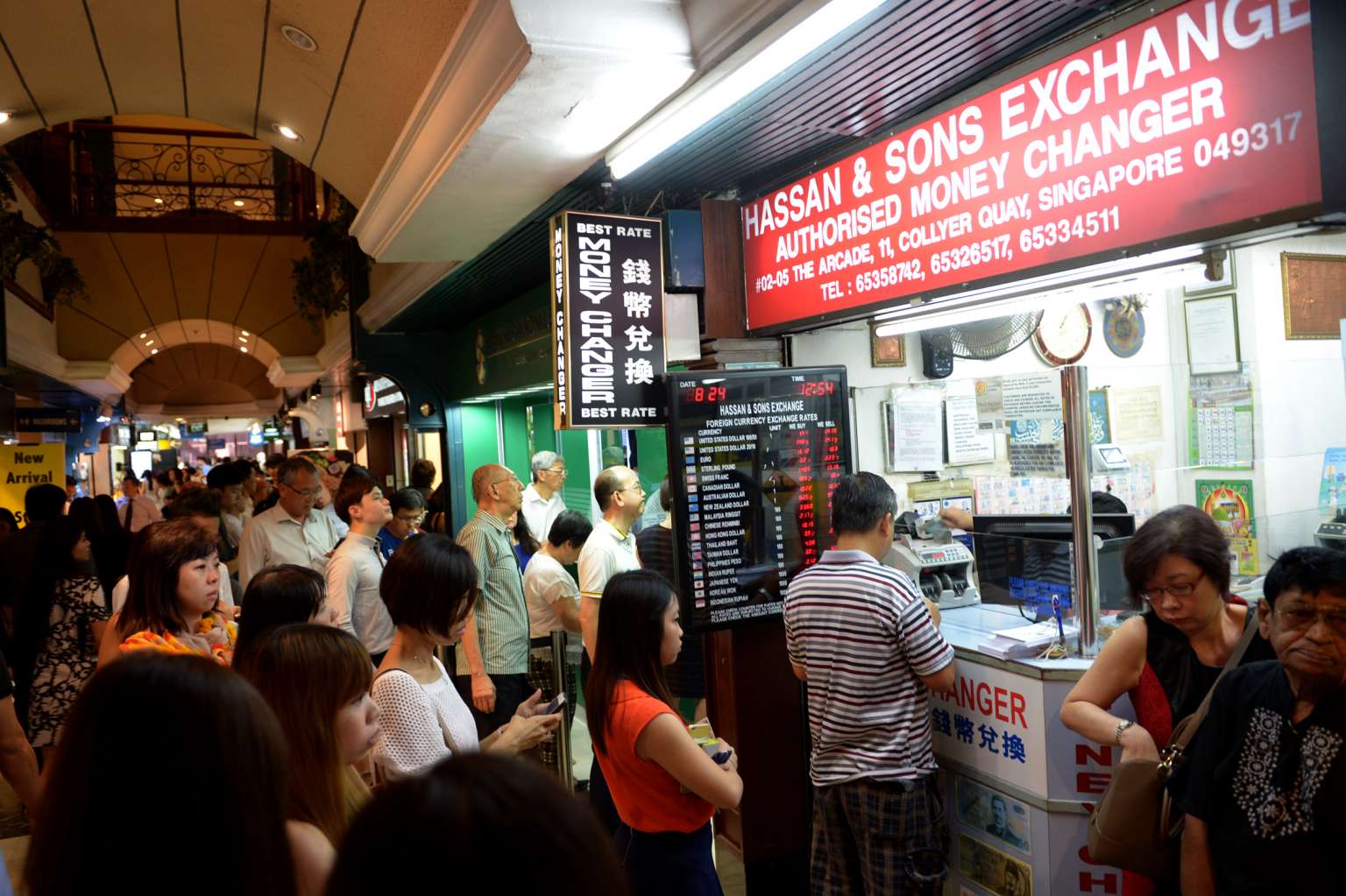
    Bank Indonesia (BI) and the Bank of Korea signed a bilateral currency swap arrangement (BCSA). Through the deal, both central banks will be able to swap currencies for a value of KRW 10.7 trillion or Rp115 trillion.

    The agreement was signed by BI governor Agus D.W. Martowardojo and Bank of Korea governor Lee Ju-Yeo, March 6. Agus said the BCSA extension will economic ties between the two nations through the use of their respective currencies.

    “The goal is to reduce our dependency on using a certain currency,” Agus said on Monday, March 6, 2017.

    According to Agus, the BCSA is part of the government’s initiative to deepen the financial market and support economic defense “especially in facing today’s economic uncertainties,” Agus said.

    The BCSA also guarantees the use of Indonesia and South Korea’s currencies in trading, to support the regional financial stability.

    Agus said the deal is valid for three years and can be extended if the two countries agree.

    The first BCSA between BI and Bank of Korea was signed on March 6, 2014, based on economic ties—especially in trade—between the two nations.

    South Korea is Indonesia’s fourth import destination with an average market share of 6.5 percent a year from 2010-2015. Korea is also Indonesia’s sixth export destination, with an annual market share of 6.8 percent in the same period.

    However, most transactions are denominated in US dollar. “That’s why we need to diversify the use of our own currency when trading with regional countries, to stabilize the rupiah,” Agus said.

  • Australia Eyes Indonesian Mining and Tourism

    Australia Eyes Indonesian Mining and Tourism

    Head Of the Indonesian Investment Coordinating Board (BKPM), Thomas Trikasih Lembong, predicted that Australia’s investment in Indonesia could increase up to USD 3 billion (around Rp 40 trillion) throughout the next three to five years. Most of Australia’s investment is predicted to be centered on the mining and tourism sector.

    “That’s the sum total of the projects we are trying to develop. Two-thirds will be in the mining industry and one-third in the tourism sector, lifestyle, and others,” Thomas said on Tuesday, March 7, 2017.

    Thomas explained that Australia’s has an exceptional mining industry. A number of the largest mining companies in the world is owned by Australia, such as EMR Capital, who purchased a gold and silver mine in North Sumatera, and Newcrest, who is currently operating the gold mine in North Maluku.

    In addition, Thomas said that the Indonesian government is really interested in cooperating with Australia in the tourism sector.

    “Many tourists from Japan, China, and Indonesia travel to Australia. They have great taste, management, and good designs. We need that in order to develop Indonesian tourism sector,” Thomas said.

    Currently, according to Thomas, Indonesian and Australian officials are committed to developing both countries’ tourism sector, especially coastal and maritime tourism. Thomas stated that Indonesia owns a varied number of islands and diving tourist destinations.

    “But we don’t have a maritime tourism industry, while Australia has a good reputation in yacht spots,” Thomas said.

    Australian Minister for Trade, Tourism, and Investment Steven Ciobo, stated that Indonesia could develop many tourist destinations in addition to Bali. Ciobo asserted that by having investments reeling in and the development of various infrastructures across regions, the number of tourists entering Indonesia can significantly increase.

  • Vietnam’s high demand for IT professionals shoots up salaries

    Vietnam’s high demand for IT professionals shoots up salaries

    The country could become one of the next outsourcing hubs for software development, industry players said.

    Vietnam’s growing information technology (IT) is seen driving recruitment demand and boost salaries for tech jobs, a recent survey found.

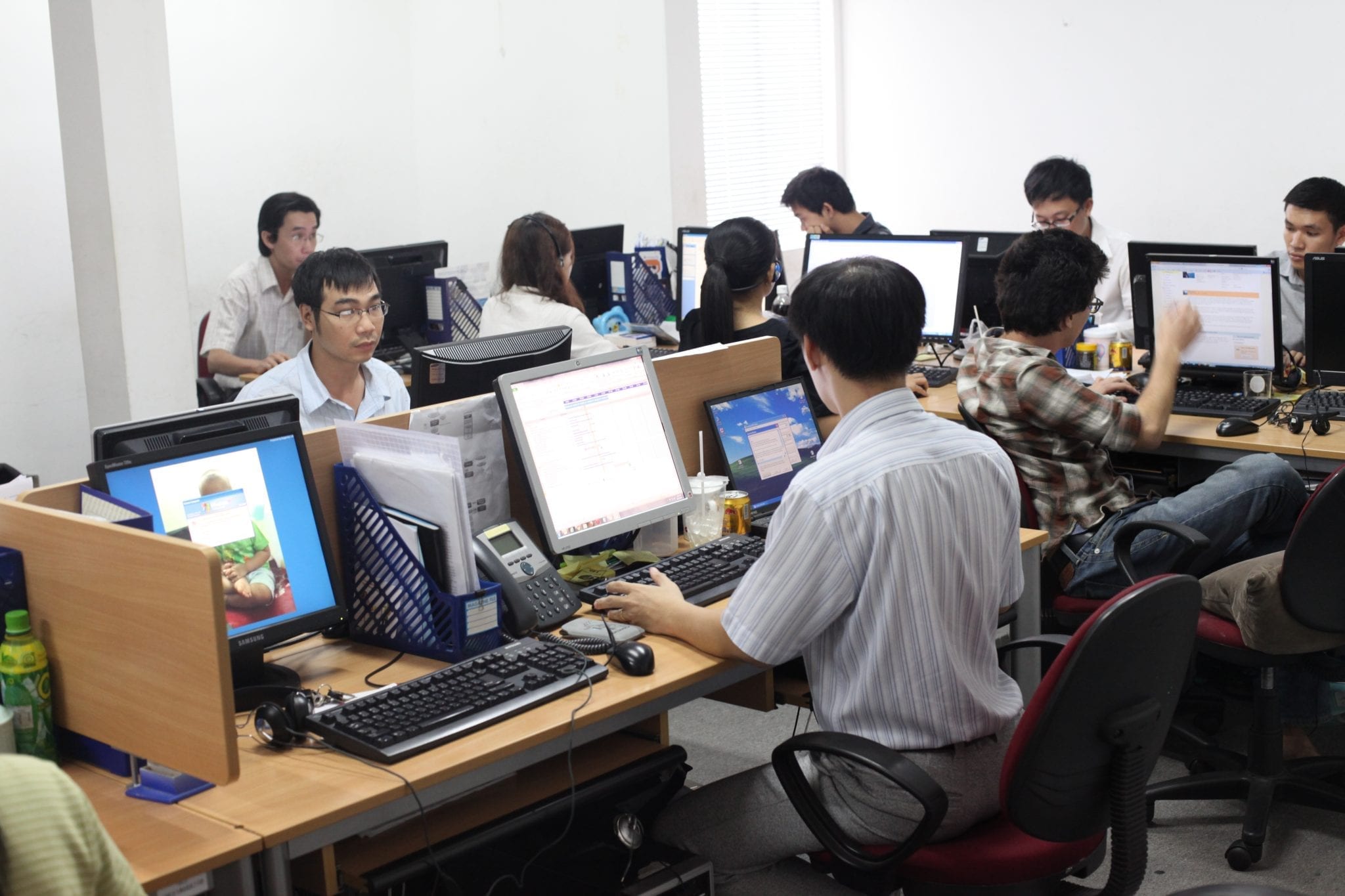
    As many as 81 percent of IT companies said they planned an annual payroll rise of between 6 percent and 20 percent this year, professional recruitment firm VietnamWorks said in the survey conducted late last year with thousands of IT professionals, specialists and companies.

    The industry’s job demand is higher than ever, and the trend will continue over the next years, the survey said.

    The number of tech jobs has doubled over the last three years, VietnamWorks data showed, adding that Vietnam currently has around 250,000 engineers, but will need more than 400,000 by the end of 2018.

    Experienced software developers and managers continue to be in high demand, said the survey.

    Salaries have increased significantly in recent years and many companies have even offered generous bonuses to attract and retain employees.

    Up to 80 percent of the jobs that requires IT professionals with at least two years experience would pay a maximum $1,160 per month, said the survey.

    Vietnam first began offering software development services 15 years ago as global companies started to look outside India for a low-cost technology outsourcing opportunities.

    NeoIT estimated Vietnam’s IT labor costs are 40 percent less expensive than in China and India. A.T. Kearney’s Global Services Location Index and KPMG Advisory forecast Vietnam will be one of the next outsourcing hubs for software development.

    Local technology companies, however, are increasingly diversifying into other services, said the survey, adding this will drive recruitment for specialists in other fields such as business intelligence and information security.

    Currently, software engineers with at least two years of experience are still in highest demand, according to VietnamWorks.

    In terms of high tech development, Ho Chi Minh City is to Hanoi what Silicon Valley is to Seattle. But Hanoi tech scene is growing amid more intense competition in the southern hub.

    Ho Chi Minh City still remains the country’s IT hub with 53 percent of the country’s recruitment demand. Hanoi accounted for 43 percent and the central city of Da Nang took up 4 percent, according to the survey.

    Experts forecast a growing demand for specialist in cloud computing, big data, business intelligence and information security.

    The IT industry’s significant trends in 2017 will drive recruitments for professionals in big data, VietnamPlus cited Vinh Nguyen, an executive from PYCO Group, as saying.

    The survey revealed that 44 percent of the respondents said they would consider changing jobs with a better salary and benefits on offer.

  • Garuda Indonesia Increases Flight Frequency of Routes to Australia

    Garuda Indonesia Increases Flight Frequency of Routes to Australia

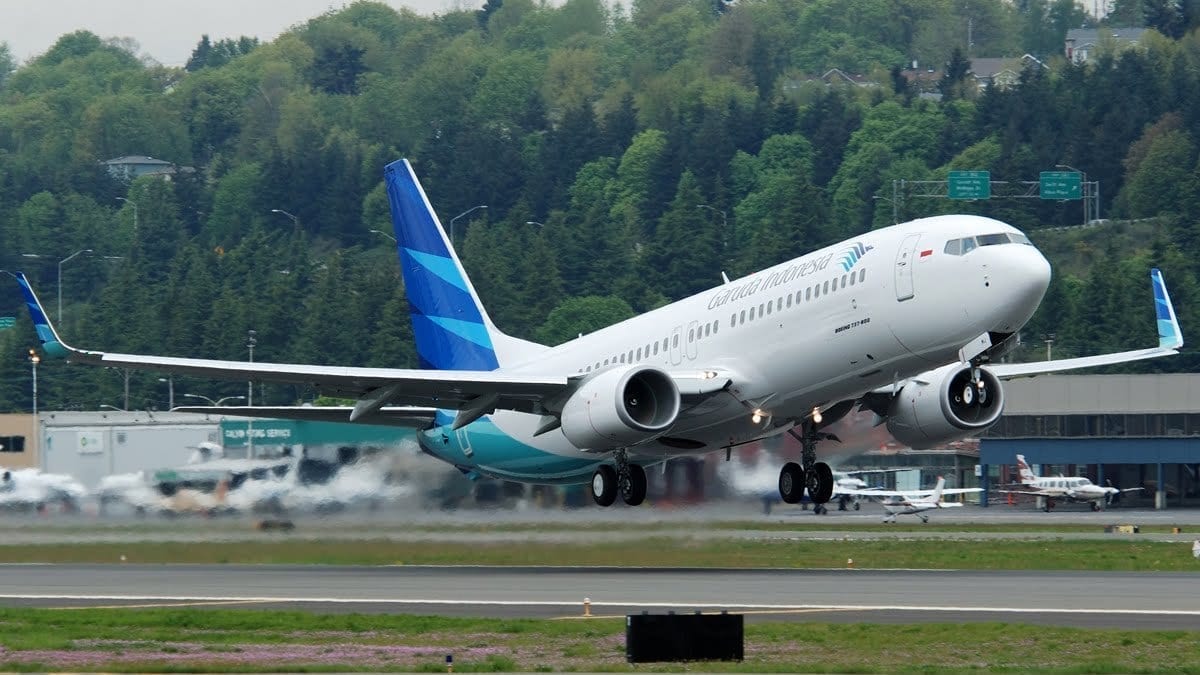
    National airliner Garuda Indonesia (GIAA.JK) will increase its flight frequency to destinations in Australia during the holiday period from May to October, 2017.

    The company targets its passenger growth from flights to Australia to reach 650,000 passengers this year.

    “Flight frequency from Jakarta to Australia is increased to five times from four times each week, while the frequency for Bali-Australia route is raised to seven times from six times per week,” said M Arif Wibowo, President Director of Garuda Indonesia on Tuesday (3/7).

    He said the addition of frequency on flights to Australia will be adjusted with market demand during the holiday period. Thus the flight frequency will be different each period.

    The addition of frequency is part of Garuda Indonesia’s effort in meeting demands and rising market growth, and is line with the synergy commitment the company has implemented with Tourism Australia. The cooperation has boosted the number of passengers on Australia flights to more than 644,237 passengers in 2016.

  • Indian telcos to start their 5G journeys this year

    Indian telcos to start their 5G journeys this year

    India’s plan of utilizing 5G technology to keep up with the rest of the world may soon become a reality.

    Indian operators will start the process of upgrading to 5G technology from this year. According to Huawei India CEO Jay Chen, 5G technology in present form can deliver up to 1Gbps download speed.

    “I can tell you Massive MIMO (Multiple Input Multiple Output) technology (part of 5G technology) will go to India this year. We have had discussions with leading telecoms operators who are interested and right now it is only available with Huawei for commercial deployment,” Chen said in an interview. Wide-scale commercial deployment of 5G is expected to start in India in the next three years.

    Bharti Airtel Chairman Sunil Bharti Mittal had earlier said that the MIMO technology available with Huawei and ZTE can increase current capability of spectrum by up to 8 times at an additional cost of only about 20%.

    Chen said that 5G standards are expected to be firmed up next year when wide scale commercial deployment of 5G will begin.

    “We have already deployed 4.5G networks in 13 circles across India which with minor upgrades can be transformed to 5G. With 4G subscriber base in India increasing, the download speed will reduce for which operators will need to begin start 4.5G services,” said Chen.

    5G will bring advanced technology which will change the way network coverage is provided to subscribers.

    “At present, subscribers runs to connect with the network. We are ready with pilots for multi MIMO technology that will follow subscribers. Dedicated spectrum frequency (beam forming) will connect with device of the subscribers and follow them wherever they go,” explained Chen.

    He added that the Indian industry is improving significantly with consolidation in the sector and end of spectrum shortage which provides good opportunity for telecoms equipment companies.

    “Earlier their was spectrum scarcity in India. There were 13 operators who were involved in tariff war. Since last year we have not seen operators complaining about spectrum scarcity. Availability of spectrum gives them opportunity to deploy latest technologies like 5G. With Huawei we see this a very positive move. Our growth has also improved in India in last two years,” Chen said.

    He said that Indian operators are now moving in the direction where they can catch up with rest of the world.

  • Value of Vietnam’s ‘bikini airline’ overtakes national carrier

    Value of Vietnam’s ‘bikini airline’ overtakes national carrier

    Vietnamese private budget airline VietJet’s market cap surpassed that of state-owned Vietnam Airlines on Monday.

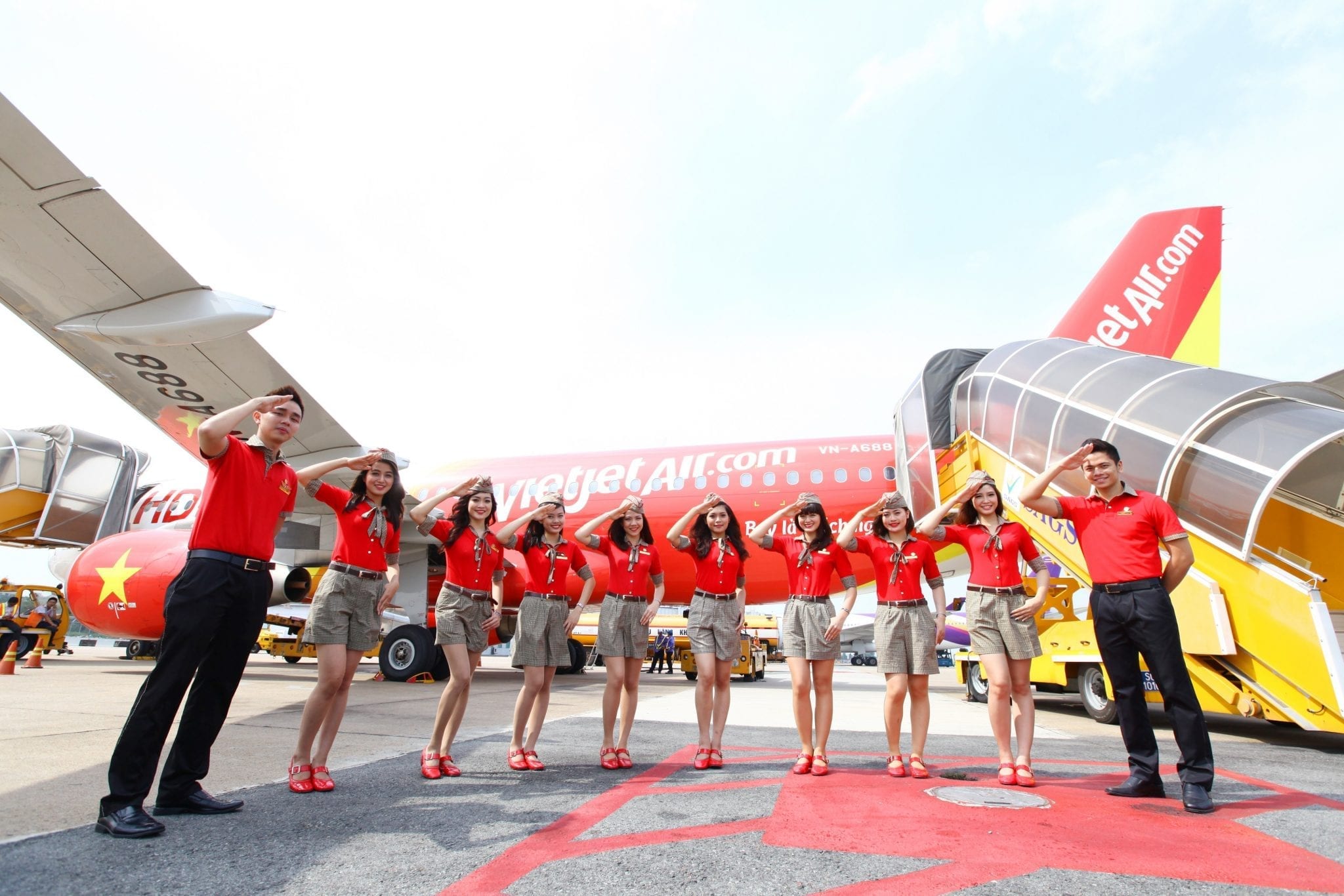
    VietJet grabbed headlines with bikini-clad flight attendants when it was launched in 2011 and its success on the Ho Chi Minh stock exchange reflects its rapid ascent since.

    It has become known in Vietnam as the “bikini airline” and female crew do still wear them, but only on some flights.

    Its market share is expected to top that of Vietnam Airlines this year, a feat it has achieved by tapping into a fast-growing economy and a young population starting to travel more.

    VietJet shares hit VND137,400 ($6.03) each, valuing it at $1.8 billion, ahead of Vietnam Airlines at $1.7 billion.

    On its first trading day VietJet was valued at $1.4 billion and its rival, which listed in January, at $2.1 billion.

    Growth in the Vietnamese market, which is one of the fastest in Asia Pacific, and a relatively small free-float in VietJet shares for retail investors, had driven the price of the shares, brokers said.

    VietJet’s stock has a lower price-to-earnings (PE) ratio of 15.75 compared with 16.63 for Vietnam Airlines, Thomson Reuters data showed.

    The CAPA Centre for Aviation has said that VietJet, which currently commands 40 percent of Vietnam’s domestic market, will likely become the country’s biggest domestic carrier this year.

    Future growth

    Some analysts forecast VietJet shares will jump to more than VND143,000 per share.

    “(The) VietJet story just begins so investors still have a lot of expectation on its shares,” Nguyen Van Dung, manager of the securities consulting department at Saigon Securities, said.

    “But if from investing perspective, I will buy Vietnam Airlines share as the firm has much potential to grow sustainably in (the) long-term and the price now is very good to buy,” he added.

    The listings of VietJet and Vietnam Airlines were part of the government’s push on privatization to boost investment.

    Vietnam, which is slowly opening up its domestic market amid considerable investment interest, has completed several major share sales and listings in recent months, including a $3.72 billion flotation of its top brewer Sabeco SAB.HM in which the government owns nearly 90 percent.

  • Arvato provides trade logistics for shoes and accessories by Marc O’Polo

    Arvato provides trade logistics for shoes and accessories by Marc O’Polo

    Arvato SCM Solutions and MARC O’POLO have expanded their cooperation: as of December 2016, the supply chain and e-commerce specialist is now also responsible for the trade logistics of the premium fashion brand’s shoes and accessories, using RFID technology. As well as storage, order picking and shipping, Arvato will be providing special value-added services from its distribution site in Dortmund. From now on, MARC O’POLO products will be sent from there to trade partners in 16 countries. Goods will be sent to both MARC O’POLO shops and franchise stores, as well as wholesale partners such as Zalando, Amazon, Görtz or Breuninger. The partnership between Arvato and MARC O’POLO was established in 2010. The full service provider initially supported the fashion brand with comprehensive services in the international e-commerce sector. Then, in 2015, Arvato organised a comprehensive omnichannel integration with processes such as Click&Collect, Reserve&Collect and cross docking, as well as introducing a new CRM system and the ‘MARC O’POLO for members’ loyalty scheme.

    Providing trade logistics contributes to a further link of the process chain. Arvato will be in charge of storage, order picking and preparing goods for shipment, all from its 32,000 square metre distribution centre. This task includes comprehensive value-added services such as the allocation of filling material and customer-specific labelling. The goods are then sent to trading partners in countries such as France, Croatia, Sweden, Russia or China.

    Furthermore, since the MARC O’POLO merchandise in both the high street and online shops is equipped with RFID tags, RFID technology has been introduced in the loading docks. This means that items are no longer scanned individually – instead, ready-packed product ranges can simply be recorded in bulk before shipping. This significantly reduces processing time and costs.

    “Storage area and transport costs can also be reduced, thanks to the consolidation of the B2B and B2C business. This is because the journey between the B2B and B2C warehouses in Munich and Dortmund has been respectively cut,” says Niels Weithe, Managing Director for Consumer.

    Products at Arvato SCM Solutions, pointing out another advantage. Karl-Heinz Lauterbach, Managing Director of MARC O’POLO Shoes, is also impressed by the advantages of an even tighter cooperation with Arvato: “Creating closer ties between the online shop and B2B warehouses will optimise our stock in the long term and increase availability in the online shop. Trading partners will benefit from this shelf extension through an optimised sales ratio and turnover.”

  • Telstra forms SDN alliance with VeloCloud

    Telstra forms SDN alliance with VeloCloud

    Australian operator Telstra has entered a strategic partnership with US-based Cloud-Delivered SD-WAN company VeloCloud to help accelerate the adoption of SDN in enterprise networking.

    The partnership, which includes an investment from Telstra Ventures into VeloCloud, will enhance Telstra’s SDN and NFV capabilities in the APAC region.

    As part of the agreement, Telstra’s Chinese joint venture Telstra PBS will add VeloCloud SD-WAN solutions to its product suite.

    Telstra Ventures managing director Mark Sherman said the investment is consistent with Telstra’s overall network strategy, which reflects the increasing role SDN and NFV are playing in enterprise networking.

    “We expect SDN will continue to transform enterprise networking around the world and VeloCloud SD-WAN can help companies achieve more agile and responsive networks as well as reduce costs,” he said.

    “We are excited about the opportunity to work with VeloCloud on solutions for our enterprise customers, particularly in the Asia-Pacific region where their technology can help businesses manage their networks in dynamic environments across multiple locations. Our first step will be to offer VeloCloud technology to customers in mainland China.”