Tag: asia

  • Uber & Grab hit roadblock in Da Nang

    Uber & Grab hit roadblock in Da Nang

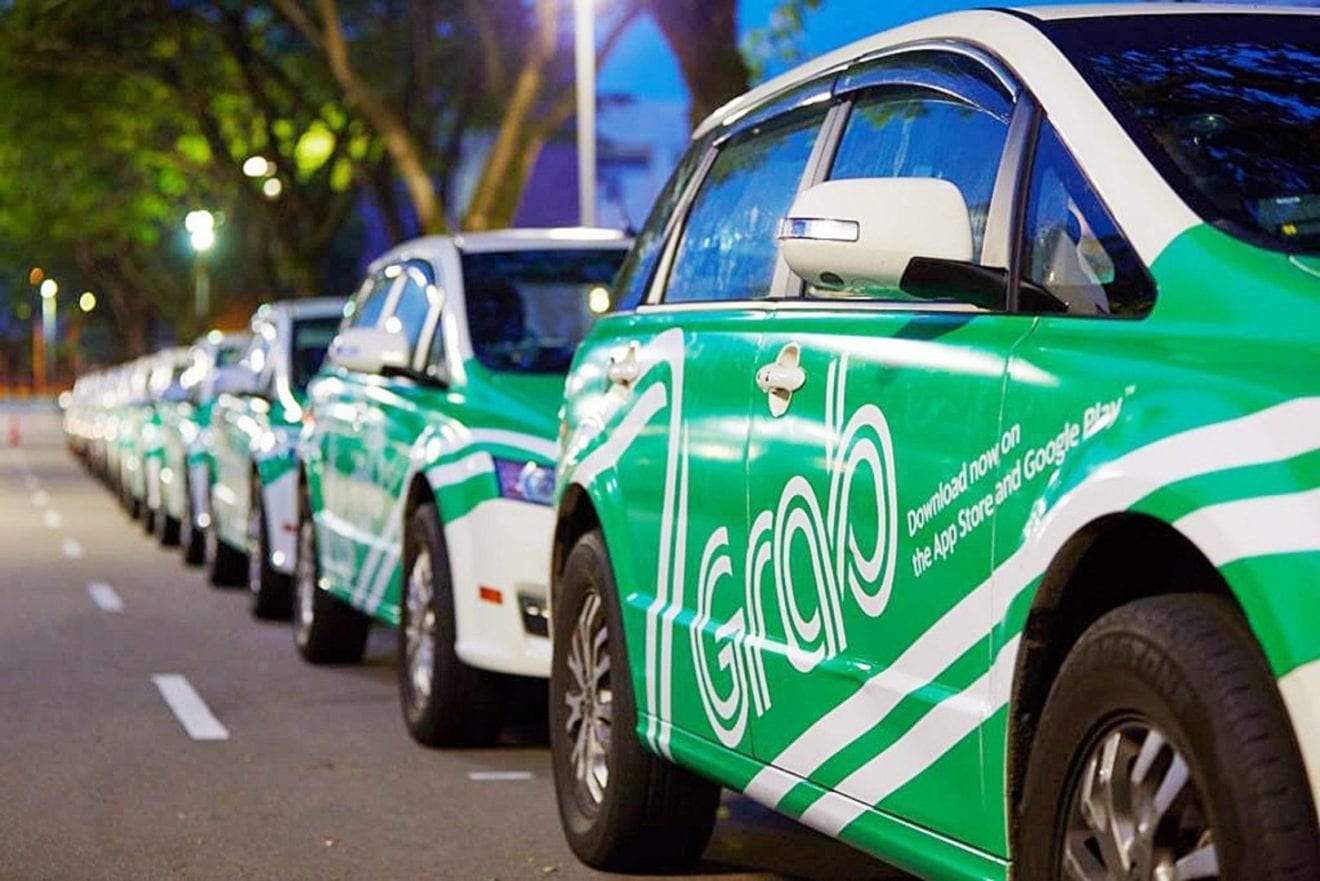
    In a proposal submitted to the Da Nang Department of Information and Communications, the local Traffic Safety Committee wrote that the unauthorized operations of Uber and Grab could worsen traffic in the city.

    The committee asked the department to have internet providers block access to Uber and Grab apps and also asked police to investigate and punish any individual or organization found to be offering transport services illegally in the city.

    Department Director Mr. Nguyen Quang Thanh confirmed with local media on March 4 that the proposal is under consideration but more time is needed for study before advising the city’s government on a final decision.

    The latest move comes after Da Nang, on November 25, declined to run a pilot car hailing project by Grab. In a statement sent to the Ministry of Transport, Da Nang said Grab’s presence in the city would cause a sharp rise in the number of private cars and taxis, worsening congestion.

    The ministry had earlier that month asked Da Nang, Hanoi, Ho Chi Minh City, the northern province of Quang Ninh and the central province of Khanh Hoa to allow Grab to launch trial operations.

    Mr. Nguyen Tuan Anh, General Manager of Grab Vietnam, told local media the company hopes to meet with Da Nang officials to find a solution to the city’s concerns.

    Meanwhile, a representative from Uber said the company has not received any notice from Da Nang authorities and is actually focusing on Hanoi and Ho Chi Minh City and does not have plans to expand to Da Nang just yet.

    The arrival of Singaporean transport app Uber and the Malaysian-based Grab over the last two years has put traditional taxi drivers, generally made up of men with few resources, under threat.

    Accustomed to negotiating the price with passengers before hitting the road, many motorcycle taxi drivers are unable to compete with the rates offered by these apps or with the convenience of booking the service and knowing the price in advance.

    Although Grab and Uber have recruited thousands of existing taxi drivers for their fleets, many refuse to join because of an unfamiliarity with new technology or simply because they refuse to give a percentage of their income to the companies.

    Last month, Uber had its application to operate on a trial basis rejected for a second time.

    The company applied for a license after local regulators outlawed its smartphone app-based services in November 2015, due mainly to its failure to establish an independent legal entity in Vietnam.

    Market regulators declared that the company behind the ride-sharing service that controls Uber in Vietnam should be held responsible for the app rather than its Vietnamese business unit, which is yet to be recognized as a legal entity by local authorities.

    Transport authorities have also asked Uber Vietnam to make changes to its app by registering itself as licensed ride service provider, apart from existing services such as “consulting and management” and “market research and public opinion polling”.

    GrabTaxi is the only foreign-run transport service allowed to operate in five cities in Vietnam using registered private vehicles between 2016 and 2018.

    Uber, however, has been singled out for providing ride-hailing services without legal permission.

  • Orange taps Huawei for public cloud services for MNCs

    Orange taps Huawei for public cloud services for MNCs

    Orange Business Services, the B2B arm under Orange Group, has contracted Huawei to support the delivery of a new global public cloud offering to multinational corporations.

    Under the agreement, Huawei will provide a turnkey solution, including the hardware, develop the technology platform and OpenStack operating system, as well as level-three support. Orange will provide the data center facilities, network and security infrastructure, customers’ infrastructure and applications management, and professional services to support cloud migrations.

    Announcing the partnership at Mobile World Congress in Barcelona this week, Philippe Laplane, director of Orange Cloud for Business at Orange Business Services, said initially the company will target three major verticals – healthcare, public transportation and smart cities – for the new offering.

    With the new offering, Orange is extending its international cloud strategy with a portfolio of advice, integration and managed services for cloud infrastructure and applications.

    The new offering is aimed at helping multinational corporations migrate their legacy enterprise application to the cloud. It is designed to complement the company’s existing private cloud portfolio, Laplane added.

    Orange plans to roll out new services across Western Europe and Southeast Asia in April, followed by the US in October. The Middle East and Africa are scheduled for next year.

    Laplane said the French operator will host two sites in Western Europe and an additional one in Singapore for MNCs with a presence in Asia.

    “Our customers have a genuine need for an international public cloud offering that will allow them to adapt to the uses imposed by new technologies and meet the challenges of transforming their IT services on a global scale,” the executive said.

    “To continue to support them, it is essential for us to have the best technology, combined with the highest levels of security and services, that can meet the challenges of both digital transformation and international development.”

  • Qatar Airways Cargo introduces additional pharma express flights

    Qatar Airways Cargo introduces additional pharma express flights

    In a non-stop industry like container handling, efficiency is king and downtime can be costly. One company that knows this first-hand is Port of Melbourne- based CC Containers, which prides itself on efficiency, reliability and safety.

    CC Containers selected United Forklift and Access Solutions to provide the company with Konecranes empty container handling lift trucks to expand its container handling fleet with world-class equipment built tough to cope with high-pace demands and to optimise efficiency for its customers.

    United Forklift and Access Solutions, which is national distributor for Konecranes forklift and container handling equipment also backed the new technology with a dedicated full-time technician on-site for the maintenance, repair and upkeep of the new units, as well as other existing units.

    United supplied a total of five Konecranes SMV empty container handlers to suit CC Container’s expanding operational needs.

    “The container handlers are reliable robust pieces of equipment,” said Mr David Muir, managing director of CC Containers, whose company places a high emphasis on standards of reliability and safety.

    “The other major bonus for us is that the drivers like using them. They have good visibility and comfort and are easy to use, which makes a big difference to staff performance,” says Muir.

    In addition to the advanced container handling technologies, United also provided CC Containers with an experienced full-time technician, Gene Roberts, who is on-site and can respond to any maintenance or repair issues quickly and effectively.

    “Mr Roberts has been a great help to us at CC Containers. He has helped with servicing, monitoring and OH&S requirements, which means we are always meeting or exceeding compliance and standards objectives,” said Muir.

    Konecranes is a major global player in the design and manufacture of heavy duty forklifts, reach stackers and container handling equipment, with its SMV series purpose-built to quickly lift, move and sort both empty and full containers in and around ports. Designed to cope with high demands with both speed and efficiency, the Konecranes empty container handlers in service with CC Containers offer a very fast total operating speed as a function of lifting, lowering and driving speed based on load-sensing hydraulics to cope with extreme demands. The container lift trucks also feature the new Optima cabin – which has enhanced cabin space and visibility – and an extensive range of innovative features which optimise quality, productivity and life cycle cost.

    CC Containers’ expanded Konecranes empty container handlersfleet includes:

    • The ECB 80 empty container handler, which can stack six containers high up to eight tonnes
    • The ECB 90 empty container handler, which can stack seven-eight containers highup to nine tonnes
    • The ECB 100DS empty container handler which can lift two boxes at the same time, up to 10 tonnes capacity, and stack six-seven containers high.
  • Japanese, Vietnamese cooperation in finance, banking a successful marriage

    Japanese, Vietnamese cooperation in finance, banking a successful marriage

    Japanese enterprises in banking and finance are now the biggest foreign shareholders in Vietnamese banks, financial and financial leasing companies, and their Vietnamese partners highly regard their expertise and support.

    Recently, Sumitomo Mitsui Trust Bank (SMTB)—the largest trust bank in Japan with total assets of $585.4 billion—has bought 49 per cent of BIDV Financial Leasing Company and renamed it BIDV-SuMi TRUST Leasing Limited Company. The joint venture took place as an expansion of their strategic cooperation since 2013.

    According to a VIR source, another investor from Japan is negotiating to buy 49 per cent of VPBank Finance Company Limited (FE Credit). These two examples evidence Japanese investors’ attention on the Vietnamese financial market and Vietnamese banks’ interest in cooperating with them.

    Previously, Military Bank (MB) transferred 49 per cent of Mcredit Consumer Finance Company’s shares to Shinsei Bank and HDBank transferred 49 per cent of HDFinance’s shares to Credit Saison Co., Ltd. Le Huu Duc, chairman of MB’s board of directors, said the reason for the cooperation was that Japanese investors “have the advantage of modern technology and experience in consumer finance.”

    Because of the interest from Japanese investors and their strong finances, there are more cooperation deals in the making.

    Currently, numerous banks and financial companies in Vietnam, including giants like BIDV and soon maybe Agribank, are calling for investment from strategic foreign investors.

    Increasing cooperation with Japanese investors

    Besides transferring shares, a range of big Vietnamese banks also cooperate with Japanese banks to look for business opportunities as Japanese FDI is increasing.

    At the end of February 2017, BIDV signed a memorandum of understanding (MoU) on serving Japanese customers in Vietnam with Fukuoka Bank, the 16th biggest bank in Japan.

    Similarly, VietinBank and Vietcombank also signed dozens of MoUs with Japanese partners. In particular, Vietcombank signed with approximately 60 Japanese banks.

    Following the trend, other commercial banks also seek Japanese partners and have even established a new service called Japan Desk to support clients form Japan.

    Besides VietinBank, Vietcombank, and BIDV, Sacombank, HDBank, TPBank, and others offer this service.

    “There are more and more Japanese firms entering the Vietnamese market. The two countries have similar cultures and retail banking strategies, so the cooperation can promote both parties’ strengths and often results in high efficiency,” said a leader of Sacombank.

    Japanese clients require perfect and diversified services, while capital and the range of services in Vietnam is limited.

    One can expect an increasing trend of teaming up among Japanese and Vietnamese banks in the coming time. This will be beneficial for all parties.

  • SOEs to divest from banks on positive market outlook

    SOEs to divest from banks on positive market outlook

    Both The Vietnam Posts and Telecommunications Group (VNPT) and Vietnam Bank for Agriculture and Rural Development (Agribank) plans to auction their holdings in Maritime bank and Ocean Bank (OCB) in March.

    VNPT has registered to offload its entire holding of 71.6 million shares in Maritime Bank at the starting price of VND11,900 (US$0.52) per share, equivalent to 6.09 per cent of the bank’s capital, in an auction scheduled for March 10.

    The move is in line with the direction of Prime Minister Vuong Dinh Hue to urge the telecommunication group to divest from its listed member companies.

    On a smaller sale, Agribank will sell 390,665 shares in Ocean Bank during an auction in mid-March. The starting price is set at VND10,200 per share.

    Mobifone, one of the three largest network operators in Viet Nam, also plans to divest from Southeast Asia Commercial Bank Bank (SeaBank) and Tien Phong Bank (TPBank) this year, after the failure in 2016.

    In April last year, Mobifone put up its entire holding of 33.4 million shares of SeABank, equivalent to 6.12 per cent of the bank’s capital, for sale at the initial price of VND9,600 per share, but no investors registered to buy.

    It also registered to sell 14.28 million shares, or 2.57 per cent of TPBank’s capital in April 2016, and successfully sold 61 per cent of this amount. Before the sale, the network company held 4.76 per cent of TPBank’s capital.

    According to VP Bank Securities Company (VPS), banks could be among top best performers on the securities market this year, driven by the intense restructuring process in the financial system, as well as the Government’s support policy of easing foreign ownership limits in commercial banks.

    In addition, many small banks have plans of debuting shares on the stock market this year, and this would facilitate divestment from these banks.

    “The VN-Index could climb to 780 points this year, on the average price-earnings (P/E) ratio of 17,” VPS wrote in a report.

    The benchmark VN-Index gained 14.8 per cent in 2016, ending the year at 664.87 points. It has gained 7.2 per cent this year.

    In the third quarter of last year when the stock market had perked up, dairy firm Vinamilk (VNM) successfully sold over 2 million shares in An Bình Bank (ABBank).

    In December, Tan Thuan Industrial Promotion Co Ltd (IPC) and Saigontourist also successfully offloaded their entire holdings in SaigonBank.

  • Ooredoo launches 10Gbps FTTH services

    Ooredoo launches 10Gbps FTTH services

    Ooredoo has used Mobile World Congress 2017 to announce it is launching a new 10Gbps FTTH service.

    The company has been offering 10Gbps fiber speeds to select VIP customers in Doha in Qatar, ahead of a planned wider nationwide commercial rollout later this year.

    Ooredoo has been trialing the service since December. In Doha, itt currently costs 7,500 rial ($2,059) per month, bundled with the Ooredoo tv service.

    Ooredoo Qatar CEO Waleed Al Sayed said the ongoing 10Gbps upgrade will also support Ooredoo’s broader strategy involving introducing 5G services, offering 8K TV streaming and positioning Qatar as the world’s best-connected country.

    “We’re delighted to be officially launching our 10Gpbs Fibre service for Qatar at Mobile World Congress,” he said.

    “This week is all about demonstrating Ooredoo’s data experience leadership, and we continue to set new milestones by expanding and enhancing the Ooredoo Supernet for mobile and fiber customers.”

  • Ford exploring 3D printing of one-piece auto parts

    Ford exploring 3D printing of one-piece auto parts

    US based car manufacturer Ford Motor Company is exploring how large-scale one-piece auto parts, like spoilers, could be printed for prototyping and future production vehicles, as the first automaker to pilot the Stratasys Infinite Build 3D printer.

    Capable of printing automotive parts of practically any shape or length, the Stratasys Infinite Build system could be a breakthrough for vehicle manufacturing claims the company. It will provide more efficient and affordable way to create tooling, prototype parts and components for low-volume vehicles such as Ford Performance products, as well as personalized car parts.

    The new 3D printer system is housed at Ford Research and Innovation Center in Dearborn.

    “With Infinite Build technology, we can print large tools, fixtures and components, making us more nimble in design iterations,” said Ellen Lee, Ford technical leader, additive manufacturing research. “We’re excited to have early access to Stratasys’ new technology to help steer development of large-scale printing for automotive applications and requirements.”

    Wider adoption of 3D printing has been driven by recent technology advances, new areas of application and government support, according to Global Industry Analysts.

    By 2020, the global market for this emerging technology is expected to reach $9.6 billion, the organization reports. As 3D printing becomes increasingly efficient and affordable, companies are employing it for manufacturing applications in everything from aerospace to education to medicine.

    3D printing could bring immense benefits for automotive production, including the ability to produce lighter-weight parts that could lead to greater fuel efficiency. A 3D-printed spoiler, for instance, may weigh less than half its cast metal counterpart.

    The technology is more cost efficient for production of low-volume parts for prototypes and specialized race car components. Additionally, Ford could use 3D printing to make larger tooling and fixtures, along with personalized components.

    How it works
    With 3D printing, specifications for a part are transferred from the computer-aided design program to the printer’s computer, which analyzes the design. The device then goes to work, printing one layer of material at a time, then gradually stacking layers into a finished 3D object.

    When the system detects the raw material or supply material canister is empty, a robotic arm automatically replaces it with a full canister. This allows the printer to operate unattended for hours – days, even.

    Using traditional methods to develop, say, a new intake manifold, an engineer would create a computer model of the part, then have to wait months for prototype tooling to be produced. With 3D printing technology, Ford can print the intake manifold in a couple of days, at a significant cost reduction.

    3D printing is not yet fast enough for high-volume manufacturing, but it is more cost efficient for low-volume production. Additionally, minus the constraints of mass-production processes, 3D-printed parts can be designed to function more efficiently.

  • Spring into the New Shopping Season at Galaxy Macau

    Spring into the New Shopping Season at Galaxy Macau

    It’s a magical time of the year, when the warmer weather brings forth bursts of flowers and puts a spring in everyone’s step. This March, visit The Promenade Shops at Galaxy Macau™ for “A Beautiful Spring”, where the mall will be transformed into a cornucopia of blossoms to welcome the arrival of the new fashion and shopping season. Better yet, get carried away at T Galleria Beauty by DFS at The Promenade Shops, where any purchase entitles you to a hand-painted floral tote bag designed by local artists*! 

    From now to 7 May, the hydrangea-themed Living Indoor Garden comes to life as spectacular, fresh blooms take over the Pearl Lobby of The Promenade Shops. More than 8,000 colorful hydrangeas – one of Asia’s most popular native flowers – will form a sea of blossoming, authentic pink flowers nestled alongside lush greenery and many other floral-themed decorations, taking your breath away and ushering in a romantic spring season. It’s the perfect place to celebrate the arrival of spring and take memorable photos of your loved ones.

    Spring is also the time when new 2017 Spring/Summer collections hit the racks, and skincare and beauty routines change for the warmer weather. From 25 March through 7 May, make any purchase at DFS and receive a free hand-painted floral tote bag, and have the Macau Local Ginger Talent’s artists to add personalized touches for you! Each bag features a hand painting by a talented local artist, ensuring a unique shopping experience. It’s all part of an exclusive collaboration between The Promenade Shops and DFS. 

    There’s even more springtime beauty at the UA Galaxy Cinemas, where shoppers will discover a Beauty and The Beast Movie ticket promotion in collaboration with The Promenade Shops and floral boutique Le Sean Seasons Florist. Starting 16 March, cinema-goers will receive a voucher for 5% off at Le Sean, The Promenade Shops, upon purchasing two Beauty and the Beast 3D movie tickets. Along with this exclusive voucher, ticketholders can also enter a lucky draw for the chance to win one of five The Little Prince box sets, a charming prize worth a retail value of MOP$1,580/each.

    And that’s not all. Shop DFS now for price match guaranteed with the lowest price in Asia on the best sellers#. Visit the more than 200 luxury and lifestyle brands at The Promenade Shops to discover all the floral-themed spring arrivals in store, many of which are exclusive offerings found only at Galaxy Macau. So make your way to The Promenade Shops and celebrate the arrival of “A Beautiful Spring”!

  • Uber still unable to see eye-to-eye with regulators

    Uber still unable to see eye-to-eye with regulators

    On March 3, Uber lost to Transport for London (TfL), the local government agency managing the city’s transport system, in its case to challenge the latter’s requiring all taxi drivers to take a written English test.

    TfL introduced the requirement, which is applicable for taxi drivers seeking to obtain or renew their private hire licence to drive inside London after 1 April 2017, in June 2016.

    Accordingly, drivers will have to pass a written English exam, including a 120-word essay.

    Uber did succeed in getting the TfL to apply the requirement to all drivers including those from English speaking country on grounds of discrimination. However, it failed to get the TfL to drop the requirement.

    In London, drivers who drive for Uber have to have the private-hire license issued by TfL.

    As reported by The Guardian, general manager of Uber London, Tom Elvidge, earlier called the requirement a “deeply disappointing outcome for tens of thousands of drivers who will lose their livelihoods because they cannot pass an essay writing test”.

    “We’ve always supported spoken English skills, but writing an essay has nothing to do with communicating with passengers or getting them safely from A to B,” Elvidge added.

    On the other hand, the mayor of London, Sadiq Khan, said drivers being able to speak English and understand information from passengers and licensing requirements is a vital part of ensuring passengers get the high standard of service they need and deserve.

    “This could include discussing a better route, talking about a medical condition, or ensuring every driver is fully up to date with new regulations,” he said.

    In another instance, Uber has been found using a tool called Greyball to deceive law enforcement officials in cities where its service is not legal.

    As reported by The New York Times, Greyball used geolocation data, credit card information, social media accounts and other data points to identify government officials.

    As a result, officials attempting to hail an Uber might see icons of cars within the app navigating nearby, but no one would come pick them up.

    The programme helped Uber drivers avoid being ticketed. Greyball has been used in Portland (Oregon), Philadelphia, Boston, and Las Vegas, as well as France, Australia, China, South Korea and Italy.

    According to a statement from Uber, the programme is aimed at violators of its terms of service. “This programme denies ride requests to users who are violating our terms of service—whether that’s people aiming to physically harm drivers, competitors looking to disrupt our operations, or opponents who collude with officials on secret ‘stings’ meant to entrap drivers,” the company said.

    In 2016, Uber was estimated to be valued at $66 billion. CEO Travis Kalanick in an interview with Vanity Fair in October last year said that Uber is not going to have an initial public offering (IPO) soon.

    With Uber not being on the good books of governments in many countries and territories around the world, coupled with a host of recently revealed controversies, one may wonder whether the company is still valued $66 billion.

  • Connectivity is not an asset, MWC told

    Connectivity is not an asset, MWC told

    Serial telecoms entrepreneur Alexey Reznikovich says that building an “enabled gateway” to customers is the key to survival for traditional telecoms players, who need to stop relying on the diminishing returns from connectivity.

    Speaking at a keynote session at Mobile World Congress in Barcelona last week, Rezhikovich outlined how his company VimpelCom, now re-branded at VEON, planned to build that “enabled gateway” as he announced a free downloadable app which was a platform combining payments, entertainment and information services.

    NASDAQ listed but headquartered in Amsterdam, VEON has more than 200 million global customers. VEON is both the new name for VimpelCom and for the “new personal internet platform” which integrates data analytics and artificial intelligence and includes partnerships with brands such as Mastercard, Deezer, and STUDIO+.

    The company claims the app, which is free from data charges on VEON’s mobile networks, “tears down the archaic and inefficient bricks and mortar service model.”

    In his keynote, Reznikovich painted a dark vision of the current state of the telecoms industry, claiming that its “corporate and bureaucratic” culture was scaring away young talented people, who much preferred to work at internet companies such as Google and Amazon.

    “Young people don’t want to work for us,” he said.

    The telecoms industry had worked “very very hard” in the last five years but “nothing has moved the needle.” He likened the industry to a “squirrel in a wheel” that was going as fast as it could, but not getting anywhere and was now exhausted.

    “What are the three big lies of the telecoms industry?” Reznikovich said.

    “The first lie is that data monetisation is coming. Well we are still waiting.

    “The second is that we have billions of customers. Well are they really our customers or are they people who just tolerate us and are really customers of someone else?”

  • South Korea dominate Vietnam entertainment industry

    South Korea dominate Vietnam entertainment industry

    They include YG Entertainment, which manages many of Korea’s biggest stars like Big Bang, 2NE1, PSY, Epik High, Choi Ji Woo, Black Pink and Lee Jong Suk, its subsidiary YGKplus, the country’s leading modelling agency, and Naver.com, the country’s biggest search engine and online media and entertainment channel.

    The Korean companies are seeking to tie up with Multimedia JSC in entertainment and fashion.

    They will send their stars to participate in major entertainment events in Vietnam like the Vietnam International Fashion Week and also create opportunities for Vietnamese models in Korea.

    Besides YG Entertainment and Naver.com, many other Korean companies in movies, the media and entertainment also have plans to enter the Vietnamese entertainment market.

    The Vietnam Film Distribution Association said the market was dominated by foreign distributors, many of them Korean.

    Vietnam now has more than 50 cinema chains. Korean-owned CJ CGV Vietnam is the largest in the market with 30 cinemas in 10 major cities. Lotte Cinema, also owned by South Korea, has 16 cinemas.

    A CJ CGV executive said each year the company opened around 10 cinemas in Vietnam and expected to reach 60 by next year.

    Market observers said South Korean investors saw plenty of opportunities in the Vietnamese entertainment industry.

    They find that the Vietnamese entertainment market is still in a fledgling state while the demand for entertainment has skyrocketed in step with living standards, meaning the sky could be the limit for investors.

    The fact that Vietnam and Korea have many cultural similarities means Korean entertainment investors with their quality products can attract Vietnamese audiences easily.

    On the commercial side of things, there are several trade agreements Vietnam has signed which offer opportunities to foreign investors, including those in the entertainment industry.

    Analysts said all this meaned pressure on domestic entertainment companies, who could lose the market completely to the Koreans if they were slow to react.

    In 2005 CJ CGV and Vietnamese company VIFA established a joint venture called CJ-VIFA whose first project was the drama “Mui Ngo gai”.

    Then CJ CGV bought out Megastar, the largest chain of cinemas in Vietnam at that time. At the beginning of 2014, after closing the acquisition, Megastar was renamed CGV.

    CGV now accounts for over a half the Vietnamese cinema market.

    It also dominates the film import market, and by showing more movies than its rivals, including blockbusters, CGV has become popular among the public.

    CJ CGV’s strategy is a vital lesson for local entertainment companies.

  • AirAsia to introduce fourth daily flight to Trichy from Kuala Lumpur

    AirAsia to introduce fourth daily flight to Trichy from Kuala Lumpur

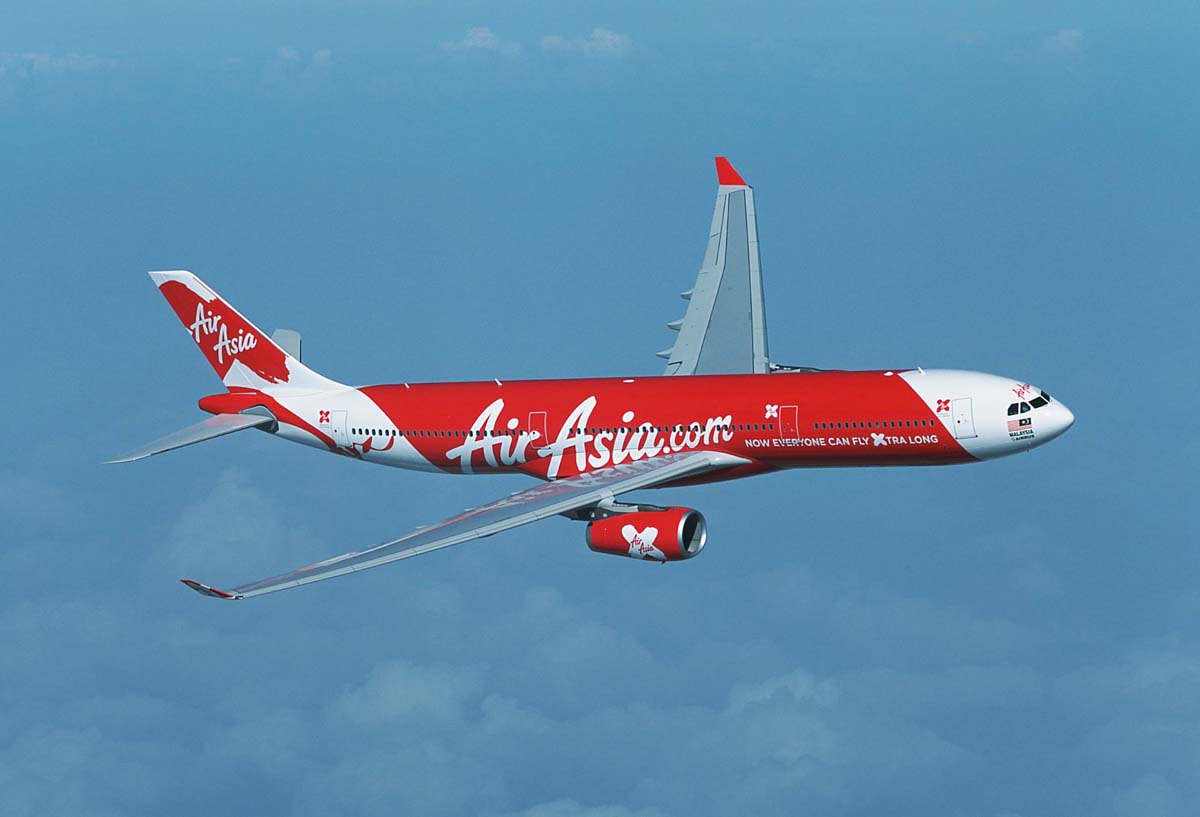
    Low-fare carrier AirAsia will introduce its fourth direct daily flight between Kuala Lumpur and Trichy from April 26th.

    This will make the Tamil Nadu town the receiver of the highest number of flights in India from the Malaysian capital.

    The Trichy-Kuala Lumpur-Trichy sector will now have 46 weekly flights–four daily by Air Asia and 18 weekly by Malindo Air.

  • Ant Financial invests in Globe Telecom’s Mynt

    Ant Financial invests in Globe Telecom’s Mynt

    Alibaba’s Ant Financial is making its first foray into the Philippines via partnership with Ayala and an investment into Globe Telecom’s Fintech business unit Mynt.

    The fresh capital infusion will help Mynt achieve its vision of becoming a world-class online and offline payment provider as well as scale up its mobile wallet services and quickly expand its digital financial services.

    Mynt is a wholly-owned subsidiary of Globe Capital Venture Holdings (GCVHI) under Globe Telecom. Upon closing of the transaction, Ant Financial will own a substantial minority interest in Mynt, while Ayala Corp will acquire a minority interest. GCVHI will hold the remaining equity interest.

    Ernest Cu, Globe President and Chief Executive Officer, Ernest Cu said the capital infusion from will help position Mynt to democratize financial services in the Philippines.

    Mynt is pioneering mobile and digital initiatives that provide financial services that previously were not available to most Filipinos. It is currently the biggest mobile money base in the Philippines with over 3 million registered customers and 1 billion pesos ($19.9 million) worth of transactions per week.

    Mynt claims to be the only company in the country that serves as a one-stop shop for Fintech services for consumers, merchants, and organizations through GCash and Fuse Lending.

    Mynt operates GCash and Fuse Lending. GCash is a micropayment service used to buy prepaid load, pay bills, send money, make donations, shop online, and purchase goods without the need for cash.

    Fuse Lending offers personal and business loans to unbanked and underserved Filipinos through the use of mobile technology, alternative data, as well as innovative credit scoring methods.

  • Mobile commerce in Singapore to pass $850m in 2017

    Mobile commerce in Singapore to pass $850m in 2017

    Despite a slower economic outlook, more than a third (38%) of online adults in Singapore interviewed in a 2016 study by PayPal say they will be spending more online this year, largely due to the convenience it brings.

    Notably, another 78% who predicated an increase in their online spend also cited convenience as the reason.

    Specifically, survey results showed that Singaporeans are turning their attention to spending on day-to-day items, with predicted growth for household goods (21%), groceries, food and beverage, and alcohol (15%), and baby and children’s supplies (12%) topping the list.

    Results indicate an increasing growth in mobile spend as Singaporeans spend more time on their mobile devices, with mobile shopping spend predicted to increase by 42% this year over 2016. This amounts to more than S$1.2 billion ($848 million), almost a third of the forested total online spend of S$3.5 billion in the country.

    The numbers explain the mobile first attitudes of firms in the region, and makes sense when one considers that the Asia Pacific is the leading region in terms of mobile connection penetration.

    In addition, two thirds (68%) of all cross-border shoppers interviewed in the region have made a cross-border purchase on a smartphone in the past 12 months, which is the highest net incidence out of all regions surveyed.

    “2017 looks to be a year of growth and opportunities for savvy businesses that are equipped to take their sales online, on mobile and in-app. This in turn provides endless choices and possibilities for the mobile-savvy generation as they live their lives on the go,” said Rahul Shinghal, general manager for PayPal Southeast Asia.

    PayPal’s study dovetails with another study late last year which concluded that the Asia Pacific region leads the world in mobile payment. Conducted by Kantar TNS, the study of over 70,000 consumers found that over half of connected users use their smartphones to pay for goods or services at point of sales via apps.

  • Crocs store is closing door

    Crocs store is closing door

    One in four Crocs stores will be closed globally as the maker of the world’s ugliest shoes plots a survival plan.

    The store cull was announced along with another quarterly loss: the shoemaker finished its last three months US$44.4 million in the red, albeit a better performance than the same period a year earlier when it lost $73.9 million.

    Global sales were down 10.2 per cent to $187.4 million but in Asia the company says its retail sales declined by a whopping 16.6 per cent.

    Total Asian revenue was $68.8 million, down 9.8 per cent year-on-year, with wholesale revenues down 5.3 per cent (explained as a result of the sale of the South African business in April 2016). Retail sales in Asia declined 16.6 percent, despite the opening of nine stores since 2015. Online sales declined 7 per cent in Asia, which Crocs says was the result of weak sales in China on Singles’ Day.

    In Europe, revenue was down 14.2 per cent.

    As it restructures to ensure its survival, Crocs CEO Gregg Ribatt will step down on June 1, to be replaced by Andrew Rees who has for the past two years been president. The two roles will now be combined and Ribatt will remain on the company’s board.

    Rees told an analysts’ briefing that customers are responding favorably to new colors and prints added to the core Crocs molded product line.

    “We’ve also confirmed the importance of any newness to our iconic molded footwear through new color and graphic introductions, and through the expanded use of licensed characters,” he said.

    “Our spring/summer 2017 collection rolled out to warm-weather doors in November and early reads are encouraging. Going forward, our innovation and newness will be most heavily concentrated on core clogs and sandal, slips and slides where we see the greatest opportunity for growth.”

    Crocs is also banking on the endorsement of the product by celebrities Drew Barrymore, John Cena, Yoona Lim and Henry Lau who will feature in the brand’s latest Come As You Are marketing campaign launching in April.

    Full year figures

    Crocs’ full-year picture was nowhere near as bad as the last quarter’s. Total sales were $1.04 billion, down only a little from the $1.09 billion of a year earlier. On a constant currency basis, revenues declined 4.7 per cent.

    The company recorded a full-year net loss of $16.5 million, far better than the $83.2 million of 2015. Excluding non-recurring charges, the adjusted loss was $26.9 million.

    Rabat says Crocs has been reshaped into a company that :”functions more efficiently and effectively” and is in “a far better place now than two years ago”.

    “And while the operational work is critical, it is not yet, and I emphasise yet, translating into the financial gains we continue to believe are achievable.”

    Since 2014, Crocs has halved its SKU count, boosted the appeal of core sellers and added new collections.

    Once the store cull is complete in 2018, Crocs will operate about 400 outlets, adding $35 million to its bottom line in 2019. At the end of 2016 it had 558 stores.

    Carrie Teffner, Crocs EVP and CFO, says that given volatile market conditions, the company is not setting mid-term revenue and margin targets.

    “That said, we continue to believe that… longer term, the business can deliver EBIT margins in the 10 per cent range.”